US Business

Inflation-hit Turkey sticks to Erdogan's war on higher rates

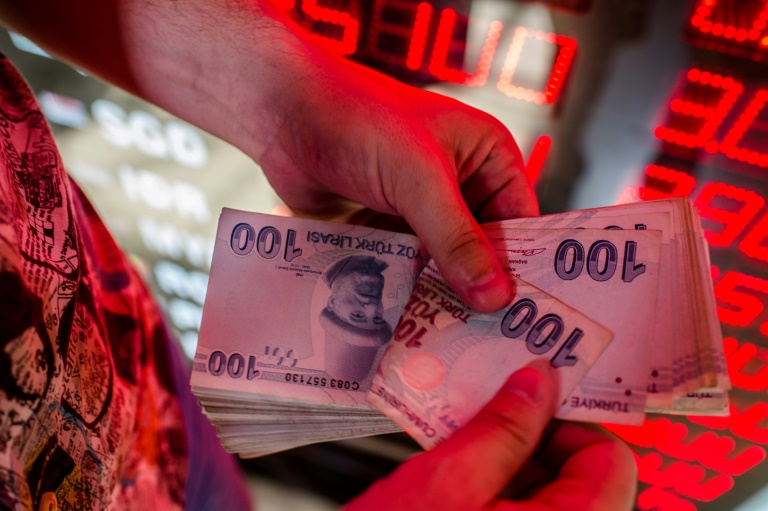
Turkey’s central bank on Thursday bucked global trends once again and kept its benchmark interest rate stable despite one of the highest levels of consumer price increases in the world.

The decision at a monthly policy meeting came two weeks after President Recep Tayyip Erdogan — a lifelong opponent of high interest rates — denied that Turkey had an “inflation problem”.

Turkey’s official annual rate of consumer price increases has edged above 70 percent and is on course to keep breaking records last set in the late 1990s.

Independent estimates by Turkish economists suggest the real figure could be substantially higher.

The inflationary spiral has decimated Turks’ living standards and helped push Erdogan’s public approval ratings to one of the lowest levels of his two-decade rule.

But Erdogan has vowed not to raise rates before a general election due in June 2023.

“We do not have an inflation problem. We have a cost-of-living problem,” Erdogan said this month.

The central bank blamed higher prices on “temporary” global factors and kept its policy rate at 14 percent for the sixth month in a row.

Economists warn that Ankara’s refusal to join most other countries in raising rates to fight the spike in food and energy prices caused by Russia’s invasion of Ukraine could see the Turkish lira collapse.

“High inflation, falls in the lira and aggressive monetary tightening elsewhere are clearly not enough to persuade Turkey’s central bank to lift interest rates,” Capital Economics said in a research note.

“Disorderly falls in the lira are a major risk, which would probably be met with capital controls rather than rate hikes.”

The lira has lost half its value against the dollar in the past year alone.

Those losses have accelerated in the past few weeks despite indirect market inteventions and other currency support measures that have depleted state reserves to their lowest point of Erdogan’s rule.

– Disbelief –

Economists struggle to understand how Erdogan’s government intends to combat consumer price increases in the runup to next year’s vote.

Erdogan argues that high interest rates cause inflation — the opposite of conventional economic beliefs that more expensive borrowing brings down prices by slowing down spending and dampening demand.

The pious Turkish leader also notes that charging interest violates Islamic rules against usury and that his policies will make Turkey into a global production engine that thrives on cheap exports.

But the lira’s depreciation has made Turkey’s dependence on energy and commodity imports much more expensive to maintain.

Turkish economists suspect the government may try to circumnavigate Erdogan’s ban on interest rate hikes by trying to rein in spending in other ways.

“They may try to cool the economy by further tightening credit conditions,” University of Economist and Technology’s associate professor Atilim Murat.

“But we have seen in the past eight to 10 months that it is not possible to reduce inflation through these measure,” he said.

Foreign economists are even more blunt.

OANDA trading platform analyst Craig Erlam said Erdogan was conducting a dangerous economic “experiment at arguably the worst moment in decades” because of soaring global inflation rates.

“This is like saying that I am going to drink a bottle of vodka because my doctor tells me I have liver disease, but I know better even though I have no medical qualifications,” BlueBay Asset Management analyst Timothy Ash quipped in a note.

Euro retreats as recession prospects grow

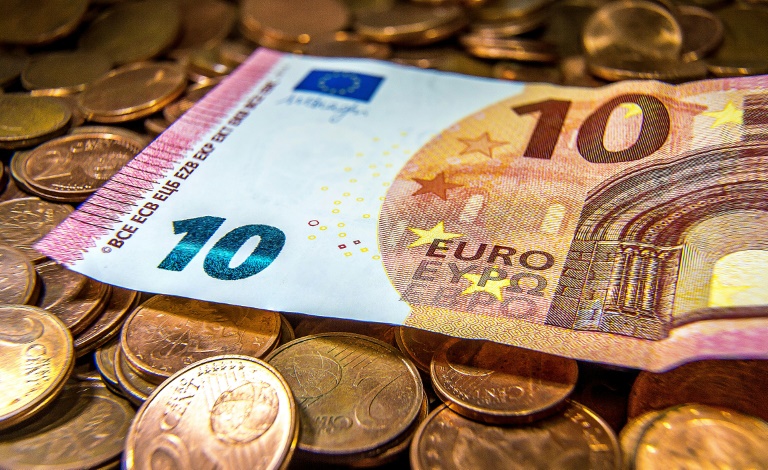
The euro retreated against the dollar Thursday as economic data pointed to increased prospects of recession in Europe.

Global stock markets wobbled after another battering this week, while oil prices slid further.

Economic growth in the eurozone plummeted in June, a key survey showed, as high prices took the wind out the strong recovery from the deep lows of the coronavirus pandemic.

The closely-watched monthly purchasing managers’ index by S&P Global slumped to 51.9 from 54.8 in May. A figure above 50 indicates growth.

PMI data also revealed that Britain’s private sector business activity is languishing at its lowest level for more than a year on decades-high inflation.

“The latest PMI numbers from France and Germany have weighed on the euro, with economic activity slowing more than expected in June, raising concerns that both countries are heading into a recession,” said market analyst Michael Hewson at CMC Markets. 

“While ECB (European Central Bank) policymakers continue to insist that a recession isn’t their base case, all the evidence points to exactly that,” he added.

European stocks also fell, with London ending the day down 1.0 percent and Paris shedding 0.6 percent. Frankfurt tumbled 1.8 percent after Germany hiked its alert level about natural gas supplies, taking it one step closer to rationing.

Government bond yields also fell in another indication that investors are more worried about the prospect of a recession, removing some of the financial sting on governments from rising interest rates.

“The global economy continues to be afflicted by severe supply shocks, which are pushing up inflation and driving down growth,” noted Citi analyst Nathan Sheets.

“We see the aggregate probability of recession as now approaching 50 percent,” he added.

Commentators have warned for some time that the world economy could be heading for contracting growth owing to the sharp increase in global interest rates aimed at cooling inflation.

Federal Reserve boss Jerome Powell on Wednesday said recession in the short term was “certainly a possibility”.

He said “inflation has obviously surprised to the upside over the past year, and further surprises could be in store”.

The Fed this month hiked US interest rates by 75 basis points and is expected to do the same in July, with some observers predicting two more such moves after that.

US PMI data also showed a slowdown in growth similar to that in Europe, but Wall Street stocks rose in morning trading as US Treasury bond yields fell.

“A retreat in the US 10-year yield has sparked buying,” said David Madden at Equiti Capital.

Patrick O’Hare at Briefing.com called this a “myopic” move by investors as “long-term rates are dropping because growth prospects are dropping — and if growth prospects are dropping, so are earnings prospects” for companies.

The prospect of a retreat in the global economy continued to drag on oil prices as traders fretted over slowing demand. 

Brent and WTI, the international and US benchmarks, have slumped over the past week, even with sanctions on Russian crude exports and China’s gradual reopening from lockdowns.

Adding to the selling of crude was data Wednesday indicating a jump in US stockpiles.

– Key figures at around 1530 GMT –

Euro/dollar: DOWN at $1.0516 from $1.0570 late Wednesday

Pound/dollar: DOWN at $1.2258 from $1.2263

Euro/pound: DOWN at 85.77 pence from 86.17 pence

Dollar/yen: DOWN at 134.64 yen from 136.22 yen 

New York – Dow: UP 0.1 percent at 30,517.27 points

EURO STOXX 50: DOWN 0.6 percent at 3,442.31

London – FTSE 100: DOWN 1.0 percent at 7,020.45 (close)

Frankfurt – DAX: DOWN 1.8 percent at 12,912.59 (close)

Paris – CAC 40: DOWN 0.6 percent at 5,883.33 (close)

Tokyo – Nikkei 225: UP 0.1 percent at 26,171.25 (close)

Hong Kong – Hang Seng Index: UP 1.3 percent at 21,273.87 (close)

Shanghai – Composite: UP 1.6 percent at 3,320.15 (close)

Brent North Sea crude: DOWN 0.6 percent at $111.13 per barrel

West Texas Intermediate: DOWN 0.8 percent at $105.38 per barrel

burs-rl/lth

Supreme Court says Americans have right to carry guns in public

The US Supreme Court ruled on Thursday that Americans have a fundamental right to carry firearms in public in a landmark decision that came just weeks after another deadly school shooting.

The 6-3 decision strikes down a century-old New York law that required a person to prove they had a legitimate self-defense need, or “proper cause,” to receive a gun permit.

Several other states, including California, have similar laws — and the court’s ruling will curb their ability to restrict people from carrying guns in public.

Despite a growing call for limits on firearms after two horrific mass shootings in May, the court sided with gun advocates who said the US Constitution guarantees the right to own and carry guns.

The ruling is the first by the court in a major Second Amendment case in over a decade, when it ruled in 2008 that Americans have a right to keep a gun at home.

It was a stunning victory for the National Rifle Association gun lobby group, which brought the case along with two New York men who had been denied gun permits.

“Today’s ruling is a watershed win for good men and women all across America and is the result of a decades-long fight the NRA has led,” NRA executive vice president Wayne LaPierre said in a statement.

“The right to self-defense and to defend your family and loved ones should not end at your home.”

But New York Governor Kathy Hochul called the ruling a “dark day.”

“It is outrageous that at a moment of national reckoning on gun violence, the Supreme Court has recklessly struck down a New York law that limits those who can carry concealed weapons,” Hochul said.

Justice Clarence Thomas wrote the majority opinion and was joined by the other five conservatives on the court, three of whom were nominated by former president Donald Trump.

“Because the State of New York issues public-carry licenses only when an applicant demonstrates a special need for self-defense, we conclude that the State’s licensing regime violates the Constitution,” Thomas said.

“The Second and Fourteenth Amendments protect an individual’s right to carry a handgun for self-defense outside the home.”

Thomas said the New York law prevents “law-abiding citizens with ordinary self-defense needs from exercising their Second Amendment right to keep and bear arms in public for self-defense.”

The ruling comes as the US Senate is considering a rare bipartisan bill that includes modest gun control measures.

– A country of mass shootings –

On May 14, an 18-year-old used an AR-15-type assault rifle to kill 10 African Americans at a supermarket in Buffalo, New York.

Less than two weeks later 19 children and two teachers were shot and killed at an elementary school in Uvalde, Texas, by another teen with the same type of high-powered, semi-automatic rifle.

The New York law said that to be given a permit to carry a firearm outside the home, a gun owner must clearly demonstrate that it is explicitly needed for self-defense.

Gun-rights advocates said that violated the Second Amendment of the Constitution, which says “the right of people to keep and bear arms shall not be infringed.”

The three liberal justices on the court dissented from the ruling.

“Many states have tried to address some of the dangers of gun violence… by passing laws that limit, in various ways, who may purchase, carry, or use firearms of different kinds,” Justice Stephen Breyer said.

“The Court today severely burdens states’ efforts to do so.”

More than half of US states already allow permitless carry of firearms, most of them only doing so in the past decade.

But more than 20 still maintain restrictions which they could now be forced to abandon based on the court’s ruling.

The New York state law dated to 1913 and had stood based on the understanding that individual states had the right to regulate gun usage and ownership.

Over the past two decades more than 200 million guns have hit the US market, led by assault rifles and personal handguns, feeding a surge in murders, mass shootings and suicides.

Freedom and fear: the foundations of America's deadly gun culture

It was 1776, the American colonies had just declared their independence from England, and as war raged the founding fathers were deep in debate: should Americans have the right to own firearms as individuals, or just as members of local militia?

As a landmark Supreme Court decision expanded gun rights Thursday, just weeks after a mass killing of 19 children in their Texas school, the debate rages on and outsiders wonder why Americans are so wedded to the firearms used in such massacres with appalling frequency.

The answer, experts say, lies both in the traditions underpinning the country’s winning its freedom from Britain, and most recently, a growing belief among consumers that they need guns for their personal safety.

Over the past two decades — a period in which more than 200 million guns hit the US market — the country has shifted from “Gun Culture 1.0,” where guns were for sport and hunting, to “Gun Culture 2.0” where many Americans see them as essential to protect their homes and families.

That shift has been driven heavily by advertising by the nearly $20 billion gun industry that has tapped fears of crime and racial upheaval, according to Ryan Busse, a former industry executive.

Recent mass murders “are the byproduct of a gun industry business model designed to profit from increasing hatred, fear, and conspiracy,” Busse wrote in May in the online magazine The Bulwark.

Yet in the wake of the May mass shootings of Black people at a supermarket in New York state and children and teachers at their school in Uvalde, Texas, consensus emerged for US lawmakers to advance some modest new gun control measures.

Nearly simultaneously the US Supreme Court struck down Thursday a New York state law restricting who can carry a firearm, a significant expansion of gun rights.

– Guns and the new nation –

For the men designing the new United States in the 1770s and 1780s, there was no question about gun ownership.

They said the monopoly on guns by the monarchies of Europe and their armies was the very source of oppression that the American colonists were fighting.

James Madison, the “father of the constitution,” cited “the advantage of being armed, which the Americans possess over the people of almost every other nation.”

But he and the other founders understood the issue was complex. The new states did not trust the nascent federal government, and wanted their own laws, and own arms.

They recognized people needed to hunt and protect themselves against wild animals and thieves. But some worried more private guns could just increase frontier lawlessness.

Were private guns essential to protect against tyranny? Couldn’t local armed militia fulfil that role? Or would militia become a source of local oppression?

In 1791, a compromise was struck in what has become the most parsed phrase in the Constitution, the Second Amendment guaranteeing gun rights:

“A well regulated militia, being necessary to the security of a free state, the right of the people to keep and bear arms, shall not be infringed.”

– 1960s gun control –

Over the following two centuries, guns became an essential part of American life and myth.

Gun Culture 1.0, as Wake Forest University professor David Yamane describes it, was about guns as critical tools for pioneers hunting game and fending off varmints — as well as the genocidal conquest of native Americans and the control of slaves.

But by the early 20th century, the increasingly urbanized United States was awash with firearms and experiencing notable levels of gun crime not seen in other countries. 

From 1900 to 1964, wrote the late historian Richard Hofstadter, the country recorded more than 265,000 gun homicides, 330,000 suicides, and 139,000 gun accidents. 

In reaction to a surge in organized crime violence, in 1934 the federal government banned machine guns and required guns to be registered and taxed. 

Individual states added their own controls, like bans on carrying guns in public, openly or concealed.

The public was for such controls: pollster Gallup says that in 1959, 60 percent of Americans supported a complete ban on personal handguns.

The assassinations of John F. Kennedy, Robert F. Kennedy and Martin Luther King, brought a push for strenuous regulation in 1968.

But gunmakers and the increasingly assertive National Rifle Association, citing the Second Amendment, prevented new legislation from doing more than implement an easily circumvented restriction on direct mail-order gun sales.

– The holy Second Amendment –

Over the next two decades, the NRA built common cause with Republicans to insist that the Second Amendment was absolute in its protection of gun rights, and that any regulation was an attack on Americans’ “freedom.”

According to Matthew Lacombe, a Barnard College professor, achieving that involved the NRA creating and advertising a distinct gun-centric ideology and social identity for gun owners.

Gun owners banded together around that ideology, forming a powerful voting bloc, especially in rural areas that Republicans sought to seize from Democrats.

Jessica Dawson, a professor at the West Point military academy, said the NRA made common cause with the religious right, a group that believes in Christianity’s primacy in American culture and the constitution.

Drawing “on the New Christian Right’s belief in moral decay, distrust of the government, and belief in evil,” the NRA leadership “began to use more religiously coded language to elevate the Second Amendment above the restrictions of a secular government,” Dawson wrote.

– Self-defense –

Yet the shift of focus to the Second Amendment did not help gunmakers, who saw flat sales due to the steep decline by the 1990s in hunting and shooting sports. 

That paved the way for Gun Culture 2.0 — when the NRA and the gun industry began telling consumers that they needed personal firearms to protect themselves, according to Busse.

Gun marketing increasingly showed people under attack from rioters and thieves, and hyped the need for personal “tactical” equipment.

The timing paralleled Barack Obama becoming the first African American president and a rise in white nationalism.

“Fifteen years ago, at the behest of the NRA, the firearms industry took a dark turn when it started marketing increasingly aggressive and militaristic guns and tactical gear,” Busse wrote.

Meanwhile, many states answered worries about a perceived rise in crime by allowing people to carry guns in public without permits. 

In fact, violent crime has trended downward over the past two decades — though gun-related killings have surged in recent years.

That, said Wake Forest’s Yamane, was a key turning point for Gun Culture 2.0, giving a sharp boost to handgun sales, which people of all races bought, amid exaggerated fears of internecine violence.

Since 2009, sales have soared, topping more than 10 million a year since 2013, mainly AR-15-type assault rifles and semi-automatic pistols.

“The majority of gun owners today — especially new gun owners — point to self-defense as the primary reason for owning a gun,” Yamane wrote.

Freedom and fear: the foundations of America's deadly gun culture

It was 1776, the American colonies had just declared their independence from England, and as war raged the founding fathers were deep in debate: should Americans have the right to own firearms as individuals, or just as members of local militia?

As a landmark Supreme Court decision expanded gun rights Thursday, just weeks after a mass killing of 19 children in their Texas school, the debate rages on and outsiders wonder why Americans are so wedded to the firearms used in such massacres with appalling frequency.

The answer, experts say, lies both in the traditions underpinning the country’s winning its freedom from Britain, and most recently, a growing belief among consumers that they need guns for their personal safety.

Over the past two decades — a period in which more than 200 million guns hit the US market — the country has shifted from “Gun Culture 1.0,” where guns were for sport and hunting, to “Gun Culture 2.0” where many Americans see them as essential to protect their homes and families.

That shift has been driven heavily by advertising by the nearly $20 billion gun industry that has tapped fears of crime and racial upheaval, according to Ryan Busse, a former industry executive.

Recent mass murders “are the byproduct of a gun industry business model designed to profit from increasing hatred, fear, and conspiracy,” Busse wrote in May in the online magazine The Bulwark.

Yet in the wake of the May mass shootings of Black people at a supermarket in New York state and children and teachers at their school in Uvalde, Texas, consensus emerged for US lawmakers to advance some modest new gun control measures.

Nearly simultaneously the US Supreme Court struck down Thursday a New York state law restricting who can carry a firearm, a significant expansion of gun rights.

– Guns and the new nation –

For the men designing the new United States in the 1770s and 1780s, there was no question about gun ownership.

They said the monopoly on guns by the monarchies of Europe and their armies was the very source of oppression that the American colonists were fighting.

James Madison, the “father of the constitution,” cited “the advantage of being armed, which the Americans possess over the people of almost every other nation.”

But he and the other founders understood the issue was complex. The new states did not trust the nascent federal government, and wanted their own laws, and own arms.

They recognized people needed to hunt and protect themselves against wild animals and thieves. But some worried more private guns could just increase frontier lawlessness.

Were private guns essential to protect against tyranny? Couldn’t local armed militia fulfil that role? Or would militia become a source of local oppression?

In 1791, a compromise was struck in what has become the most parsed phrase in the Constitution, the Second Amendment guaranteeing gun rights:

“A well regulated militia, being necessary to the security of a free state, the right of the people to keep and bear arms, shall not be infringed.”

– 1960s gun control –

Over the following two centuries, guns became an essential part of American life and myth.

Gun Culture 1.0, as Wake Forest University professor David Yamane describes it, was about guns as critical tools for pioneers hunting game and fending off varmints — as well as the genocidal conquest of native Americans and the control of slaves.

But by the early 20th century, the increasingly urbanized United States was awash with firearms and experiencing notable levels of gun crime not seen in other countries. 

From 1900 to 1964, wrote the late historian Richard Hofstadter, the country recorded more than 265,000 gun homicides, 330,000 suicides, and 139,000 gun accidents. 

In reaction to a surge in organized crime violence, in 1934 the federal government banned machine guns and required guns to be registered and taxed. 

Individual states added their own controls, like bans on carrying guns in public, openly or concealed.

The public was for such controls: pollster Gallup says that in 1959, 60 percent of Americans supported a complete ban on personal handguns.

The assassinations of John F. Kennedy, Robert F. Kennedy and Martin Luther King, brought a push for strenuous regulation in 1968.

But gunmakers and the increasingly assertive National Rifle Association, citing the Second Amendment, prevented new legislation from doing more than implement an easily circumvented restriction on direct mail-order gun sales.

– The holy Second Amendment –

Over the next two decades, the NRA built common cause with Republicans to insist that the Second Amendment was absolute in its protection of gun rights, and that any regulation was an attack on Americans’ “freedom.”

According to Matthew Lacombe, a Barnard College professor, achieving that involved the NRA creating and advertising a distinct gun-centric ideology and social identity for gun owners.

Gun owners banded together around that ideology, forming a powerful voting bloc, especially in rural areas that Republicans sought to seize from Democrats.

Jessica Dawson, a professor at the West Point military academy, said the NRA made common cause with the religious right, a group that believes in Christianity’s primacy in American culture and the constitution.

Drawing “on the New Christian Right’s belief in moral decay, distrust of the government, and belief in evil,” the NRA leadership “began to use more religiously coded language to elevate the Second Amendment above the restrictions of a secular government,” Dawson wrote.

– Self-defense –

Yet the shift of focus to the Second Amendment did not help gunmakers, who saw flat sales due to the steep decline by the 1990s in hunting and shooting sports. 

That paved the way for Gun Culture 2.0 — when the NRA and the gun industry began telling consumers that they needed personal firearms to protect themselves, according to Busse.

Gun marketing increasingly showed people under attack from rioters and thieves, and hyped the need for personal “tactical” equipment.

The timing paralleled Barack Obama becoming the first African American president and a rise in white nationalism.

“Fifteen years ago, at the behest of the NRA, the firearms industry took a dark turn when it started marketing increasingly aggressive and militaristic guns and tactical gear,” Busse wrote.

Meanwhile, many states answered worries about a perceived rise in crime by allowing people to carry guns in public without permits. 

In fact, violent crime has trended downward over the past two decades — though gun-related killings have surged in recent years.

That, said Wake Forest’s Yamane, was a key turning point for Gun Culture 2.0, giving a sharp boost to handgun sales, which people of all races bought, amid exaggerated fears of internecine violence.

Since 2009, sales have soared, topping more than 10 million a year since 2013, mainly AR-15-type assault rifles and semi-automatic pistols.

“The majority of gun owners today — especially new gun owners — point to self-defense as the primary reason for owning a gun,” Yamane wrote.

US orders all Juul vaping products off the market

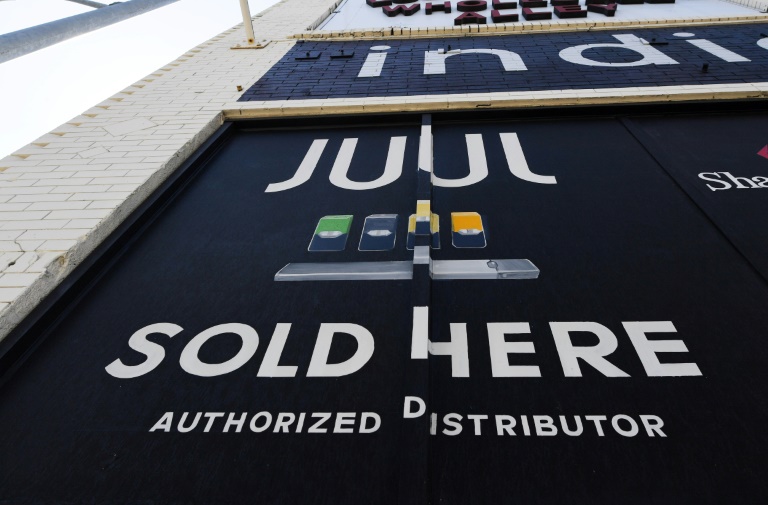
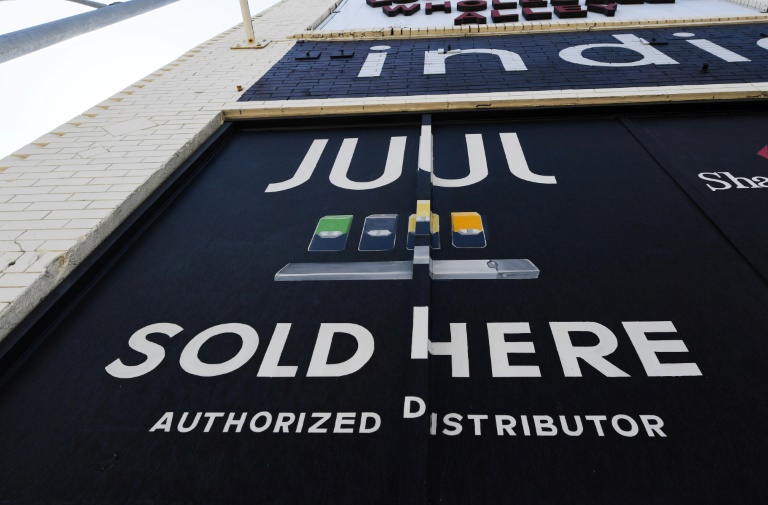
The US Food and Drug Administration on Thursday said it was ordering all vaping products produced by Juul Labs off the market after finding the former industry leader had failed to address certain safety concerns.

The decision clears the way for rival brands to increase their share of the market, which Juul once dominated.

“Today’s action is further progress on the FDA’s commitment to ensuring that all e-cigarette and electronic nicotine delivery system products currently being marketed to consumers meet our public health standards,” said FDA Commissioner Robert Califf in a statement. 

Products affected include the Juul device and its pods, which currently come in the flavors Virginia tobacco and in menthol, at nicotine concentrations of five and three percent.

After completing a two-year review of the company’s marketing application, the FDA found the data presented “lacked sufficient evidence regarding the toxicological profile of the products,” it said.

“In particular, some of the company’s study findings raised concerns due to insufficient and conflicting data – including regarding genotoxicity and potentially harmful chemicals leaching from the company’s proprietary e-liquid pods,” it added.

Juul was blamed for a surge in youth vaping over its marketing of fruit and candy flavored e-cigarettes, which it stopped selling in 2019.

In January 2020, the FDA said sale of e-cigarettes in flavors other than tobacco or menthol would be illegal unless specifically authorized by the government.

The agency has approved some e-cigarette products from other makers such as Reynolds American, the current market leader, NJOY and Logic Technology Development.

Juul has argued that vaping products can provide a solution to the harmful health impacts from conventional cigarettes.

Juul’s products “exist only to transition adult smokers away from combustible cigarettes,” Chief Executive KC Crosthwaite said on the company’s website, adding that the company is “working hard” to rebuild its reputation following an “erosion of trust over the past few years.”

On Tuesday, President Joe Biden’s administration announced it would develop a new policy requiring cigarette producers to reduce nicotine to non-addictive levels.

The initiative requires the FDA to develop and then publish a rule, which will likely be contested by industry.

US orders all Juul vaping products off the market

The US Food and Drug Administration on Thursday said it was ordering all vaping products produced by Juul Labs off the market after finding the former industry leader had failed to address certain safety concerns.

The decision clears the way for rival brands to increase their share of the market, which Juul once dominated.

“Today’s action is further progress on the FDA’s commitment to ensuring that all e-cigarette and electronic nicotine delivery system products currently being marketed to consumers meet our public health standards,” said FDA Commissioner Robert Califf in a statement. 

Products affected include the Juul device and its pods, which currently come in the flavors Virginia tobacco and in menthol, at nicotine concentrations of five and three percent.

After completing a two-year review of the company’s marketing application, the FDA found the data presented “lacked sufficient evidence regarding the toxicological profile of the products,” it said.

“In particular, some of the company’s study findings raised concerns due to insufficient and conflicting data – including regarding genotoxicity and potentially harmful chemicals leaching from the company’s proprietary e-liquid pods,” it added.

Juul was blamed for a surge in youth vaping over its marketing of fruit and candy flavored e-cigarettes, which it stopped selling in 2019.

In January 2020, the FDA said sale of e-cigarettes in flavors other than tobacco or menthol would be illegal unless specifically authorized by the government.

The agency has approved some e-cigarette products from other makers such as Reynolds American, the current market leader, NJOY and Logic Technology Development.

Juul has argued that vaping products can provide a solution to the harmful health impacts from conventional cigarettes.

Juul’s products “exist only to transition adult smokers away from combustible cigarettes,” Chief Executive KC Crosthwaite said on the company’s website, adding that the company is “working hard” to rebuild its reputation following an “erosion of trust over the past few years.”

On Tuesday, President Joe Biden’s administration announced it would develop a new policy requiring cigarette producers to reduce nicotine to non-addictive levels.

The initiative requires the FDA to develop and then publish a rule, which will likely be contested by industry.

Germany raises gas alert level after Russia cuts supply

Germany moved closer to rationing natural gas on Thursday as it raised the alert level under an emergency plan after Russia slashed supplies to the country.

“Gas is now a scarce commodity in Germany,” Economy Minister Robert Habeck told reporters at a press conference.

Russia was using gas “as a weapon” against Germany in retaliation for the West’s support for Ukraine following Moscow’s invasion, Habeck said, with the aim of “destroying” European unity.

But the Kremlin dismissed Germany’s suggestion there were political motives behind the limits to supply as “strange”.

Germany, like a number of other European countries, is highly reliant on Russian energy imports to meet its needs.

Triggering the “alarm” level — the second of three steps under the emergency plan — brings Germany a step closer to the final stage that could see gas rationing in Europe’s top economy.

The increased level reflected a “significant deterioration of the gas supply situation”, Habeck said.

“If we do nothing now, things will get worse,” Habeck said.

– Russian rebuttal –

Russian energy giant Gazprom cut supplies to Germany via the Nord Stream pipeline by 60 percent last week, blaming the new limits on delayed repairs.

Germany has dismissed the technical justification provided by Gazprom, instead calling the move a “political decision”. 

Kremlin spokesman Dmitry Peskov said Thursday there was “no double meaning” in the supply decision.

“Our German partners are well aware of the technological servicing cycles of a pipeline,” he said.

“It’s strange to call it politics.”

In recent weeks, Gazprom has stopped deliveries to a number of European countries, including Poland, Bulgaria, Finland and the Netherlands.

Supplies of gas to Europe’s largest economy were “secure”, Habeck said, but action was still required to prepare for the winter ahead.

To mitigate the risks from a supply cut, the government mandated gas storage facilities be filled to 90 percent by the beginning of December.

Currently, the country’s stores stand just under 60 percent full, above the average level of previous years.

In France, the government said Thursday it aimed to fill its natural gas storage reserves by autumn as it too braces for a drop in supply from Russia.

France will also build a new floating methane terminal to receive more energy supplies by ship, Prime Minister Elisabeth Borne announced.

– Supply stoppage –

The German government expects supply to stop between July 11 and July 25 for annual maintenance on the Nord Stream pipeline.

If deliveries do not resume after the service period, Germany could face a shortage of gas as soon as “mid-December”.

Since the outbreak of the war in Ukraine, Germany has managed to reduce the share of its natural gas supplied by Russia from 55 percent to around 35 percent.

The government has found new sources of supply, accelerated plans to import gas in the form of LNG by sea, and put aside 15 billion euros ($15.8 billion) to buy gas to fill storage facilities.

Germany also decided to reactivate mothballed coal-fired power plants to take the burden for electricity generation off gas.

In contrast, the government shrugged off calls to extend the operational lifetime of its nuclear power plants.

Prolonging the use of the final reactors set to be taken off the grid at the end of the year was “not an option”, it said Wednesday.

Germany had to look to see what “energy saving potential” existed, Habeck said Thursday. 

Households could “make a difference” by conserving energy, after Germany launched a campaign to encourage fuel-saving measures, he said, while industry could also make a further contribution.

Ukraine hopes for EU nod as Russia warns resistance 'futile'

EU leaders met Thursday to discuss Ukraine’s long-sought bid to join the bloc, even as tensions between Brussels and Moscow deepened over gas supplies and Russia closed in on key cities in the embattled Donbas region.

“This is a decisive moment for the European Union… A choice must be made today that will determine the future of the union, our stability, our security and our prosperity,” EU council president Charles Michel told journalists ahead of the talks.

“We are waiting for the green light, Ukraine has earned candidate status,” the head of the Ukrainian presidency Andriy Yermak said on Telegram.

But joining the EU is still years away, and the potential consequences for Ukraine’s allies loomed large over the talks, and ahead of the G7 and NATO meetings in the following days.

Western officials denounced Moscow’s “weaponising” of its key gas and grain exports in the conflict, with a US official warning of further retaliatory measures at the G7 summit in Germany starting Sunday.

Germany ratcheted up an emergency gas plan to its second alert level, just one short of the maximum that could require rationing in Europe’s largest economy after Russia slashed its supplies.

“Gas is now a scarce commodity,” Economy Minister Robert Habeck told reporters, urging households to cut back on use.

France is now aiming to have its gas storage reserves at full capacity by early autumn, and will build a new floating methane terminal to get more energy supplies by sea, Prime Minister Elisabeth Borne said.

A Kremlin spokesman reiterated its claim that the supply cuts were due to maintenance and that necessary equipment from abroad had not arrived.

In Ankara meanwhile, British Foreign Secretary Liz Truss accused Russian President Vladimir Putin of “weaponising hunger” by preventing grain shipments from leaving Ukraine ports, raising the spectre of shortages particularly in Africa and the Middle East.

“We are very clear that this grain crisis is urgent, that it needs to be solved within the next month. Otherwise we could see devastating consequences,” Truss said after talks with her Turkish counterpart Mevlut Cavusoglu.

– Russia presses gains –

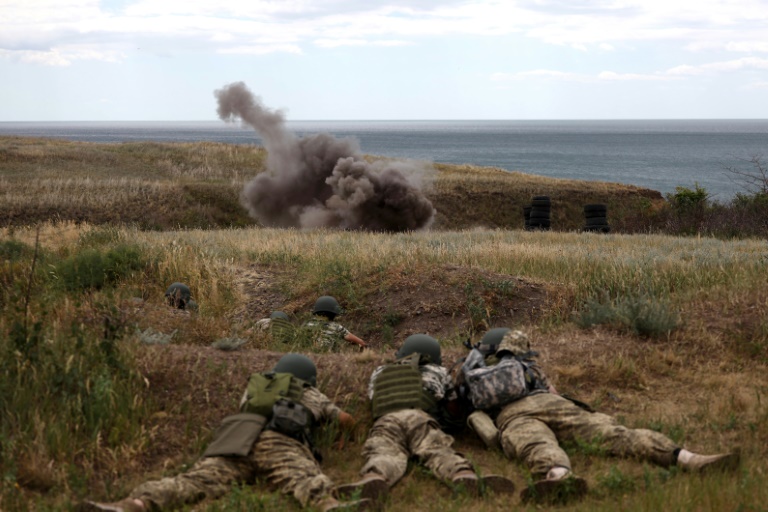
On the ground in the Donbas, the situation was becoming increasingly urgent as Russian forces tightened their grip on the strategically important cities of Severodonetsk and its twin Lysychansk across the Donets river.

Taking the cities would give Moscow control of the whole of Lugansk, allowing Russia to press further into the Donbas and potentially further west.

Ukraine acknowledged Thursday that it had lost control of two areas from where it was defending the cities, with Russian forces now closer to encircling the industrial hubs.

Britain’s defence ministry said some Ukrainian units had probably been forced to withdraw “to avoid being encircled” as troops advanced slowly but steadily toward Lysychansk.

“Russia’s improved performance in this sector is likely a result of recent unit reinforcement and heavy concentration of fire,” it said in its latest intelligence update.

A representative of pro-Russian separatists in Ukraine told AFP the resistance of Ukrainian forces trying to defend Lysychansk and Severodonetsk was “pointless and futile.”

“At the rate our soldiers are going, very soon the whole territory of the Lugansk People’s Republic will be liberated,” said Andrei Marochko, a spokesman for the army of Lugansk.

The Russian army also said Thursday that its bombings in the southern city of Mykolaiv had destroyed 49 fuel storage tanks and three tank repair depots, after strikes killed several Ukrainian troops Wednesday.

But Kyiv, which is urging allies to send heavier weaponry, welcomed Thursday the delivery of high-precision Himars rocket artillery from the US.

“Himars have arrived to Ukraine… Summer will be hot for Russian occupiers. And the last one for some of them,” Ukraine’s Defence Minister Oleksiy Reznikov wrote on Twitter.

– ‘Only grannies left’ –

After being pushed back from Kyiv and other parts of Ukraine in the initial weeks of the invasion launched on February 24, Moscow is seeking to seize a vast eastern swathe of the country.

But daily bombardments also continue elsewhere.

The northeastern city of Kharkiv near the Russian border was near empty on Wednesday, AFP reporters said, a day after shelling by Moscow’s forces killed five people there.

“Last night the building next to mine collapsed from the bombardment while I was sleeping,” said Leyla Shoydhry, a young woman in a park near the opera house.

Roman Pohuliay, a 19-year-old in a pink sweatshirt, said most residents had fled the city.

“Only the grannies are left,” he said.

In the central city of Zaporizhzhia, meanwhile, women were training to use Kalashnikov assault rifles in urban combat as Russian forces edged nearer.

“When you can do something, it’s not so scary to take a machine gun in your hands,” said Ulyana Kiyashko, 29, after moving through an improvised combat zone in a basement.

– Lithuania in cross-hairs –

Away from the battlefield, Moscow this week summoned Brussels’ ambassador in a dispute with EU member Lithuania over the country’s restrictions on rail traffic to the Russian outpost of Kaliningrad.

The coastal territory, annexed from Germany after World War II, is about 1,000 miles (1,600 kilometres) from Moscow, and borders Lithuania and Poland but has no land border with Russia.

By blocking goods arriving from Russia, Lithuania says it is simply adhering to European Union-wide sanctions on Moscow.

The United States made clear its commitment to Lithuania as a NATO ally, while Germany urged Russia not to “violate international law” by retaliating.

burs-sr/js/jh/gw

Prosecutors seek at least 30 years in jail for Ghislaine Maxwell

US prosecutors have asked a judge to sentence former socialite Ghislaine Maxwell to at least 30 years in prison for helping Jeffrey Epstein sexually abuse girls.

Maxwell, 60, was convicted in December of sex trafficking minors for the late disgraced financier and is scheduled to be sentenced in Manhattan on Tuesday.

Her lawyers have argued for leniency, citing a traumatic childhood and claiming that Maxwell is being unfairly punished because Epstein escaped trial.

They called for Judge Alison Nathan to hand down a sentence less than the probation department’s recommended 20 years.

But in a court filing late Wednesday, the government argued that Maxwell should go to jail for somewhere between 30 and 55 years.

She has shown an “utter lack of remorse” for her crimes, wrote Damian Williams, the US attorney for the Southern District of New York.

“Instead of showing even a hint of acceptance of responsibility, the defendant makes a desperate attempt to cast blame wherever else she can,” he said.

“Maxwell was an adult who made her own choices. She made the choice to sexually exploit numerous underage girls.

“She made the choice to conspire with Epstein for years, working as partners in crime and causing devastating harm to vulnerable victims,” Williams added.

Maxwell, the Oxford-educated daughter of the late British press baron Robert Maxwell, has already been held in detention for some two years following her arrest in New Hampshire in the summer of 2020.

During her high-profile trial, prosecutors successfully argued that Maxwell was “the key” to Epstein’s scheme of enticing young girls to give him massages, during which he would sexually abuse them.

She was found guilty on five of six sexual abuse counts and her sentence could amount to an effective life term behind bars.

It will cap a dramatic fall for the former international jetsetter who grew up in wealth and privilege as a friend to royalty.

Her circle included Britain’s Prince Andrew, former US president and real estate baron Donald Trump and the Clinton family.

Epstein killed himself in 2019 while awaiting his own sex crimes trial in New York.

In February, Prince Andrew settled a sexual abuse lawsuit with Virginia Giuffre, who said she had been trafficked to the royal by Epstein and Maxwell.

Close Bitnami banner
Bitnami