US Business

Biden seeks three-month federal gas tax holiday as prices skyrocket

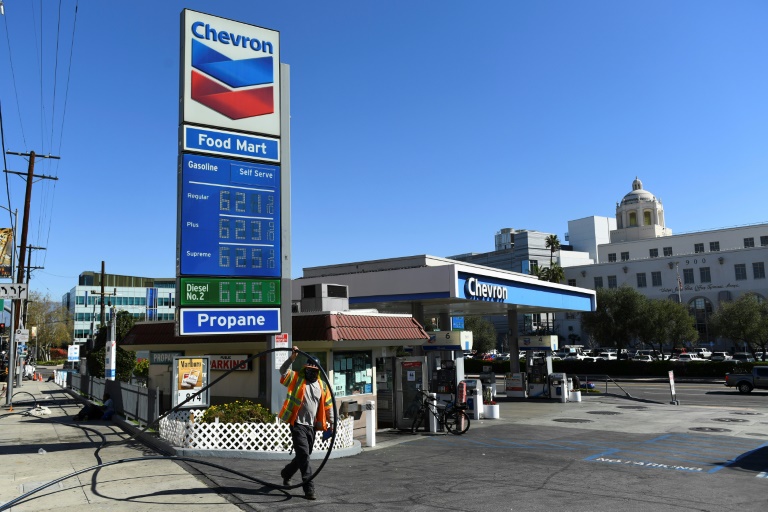
US President Joe Biden will ask Congress Wednesday to suspend the federal gas tax for three months as skyrocketing prices cause widespread anger among Americans just months before crucial mid-term elections. 

The White House wants to discontinue the 18 cents per gallon tax until September and will call on state governments to do the same to “provide direct relief to American consumers who have been hit with Putin’s price hike,” a senior administration official said.

The official noted that gas prices — now averaging near $5 per gallon (3.78 liters) — had gone up almost $2  since Russian President Vladimir Putin began building up forces on the Ukrainian border earlier this year.

“The president recognizes the significant challenge that high gas prices pose to working families,” the official said, while conceding the tax suspension alone would not offset household costs that are rising at the fastest rate in a generation.

Biden, whose popularity has plummeted alongside soaring inflation, has made tackling surging prices his top domestic priority while finding few ready tools at his disposal to directly impact them.

Facing growing public anger over the rising cost of gas, several states including New York and Connecticut have already suspended fuel taxes, while others have delayed planned tax increases.

But according to analysts, some 46 states have yet to act, including California, where gasoline is the most taxed and the most expensive, at well over $6 a gallon.

Federal tax revenues on gas and diesel help pay for the Highway Trust Fund, which maintains roads and supports public transport, but Biden will call on Congress to ensure the estimated $10 billion gap in funding is made up from other sources.

– A dollar less per gallon –

Biden will also urge retailers at gas stations to apply any tax cuts immediately, as well as push refiners to expand their crude-processing capacity in the hope the combined measures could cut the price of gasoline by as much as a dollar per gallon.

Biden has previously taken a number of steps to alleviate the pain at the pump since Russia’s February invasion of Ukraine sent fuel prices soaring not just in the United States, but globally.

Those measures include releasing a million barrels of oil per day from the Strategic Petroleum Reserve, negotiating the release of an additional 60 million barrels from international partners and expanding access to biofuels.

The White House recently called out major oil groups including ExxonMobil and Chevron, denouncing their profit margins as “well above normal” and calling it their patriotic duty to up output.

“Exxon has made more money than God this quarter,” Biden quipped.

Energy Secretary Jennifer Granholm is due to meet with refiners Thursday to urge them to contribute to these measures, including increasing their production output.

Annual inflation in the United States peaked at 8.6 percent in May, a 40-year high. It is 34.6 percent for energy alone.

Stocks, oil dive as recession fears return after brief market respite

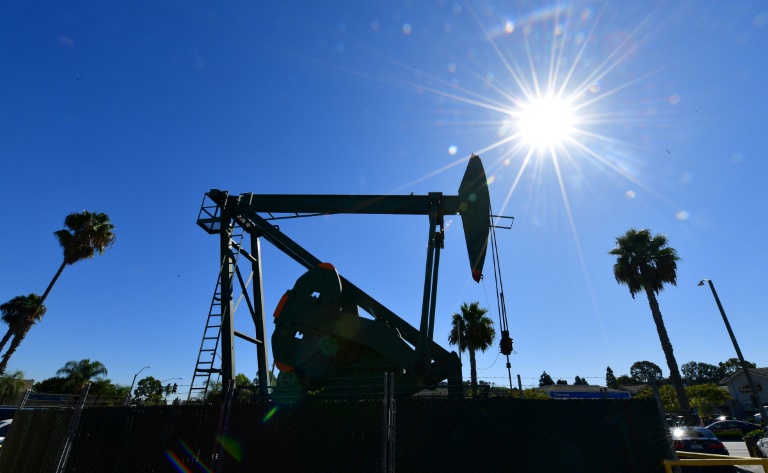
Equities and oil prices tumbled Wednesday after a brief respite from last week’s painful rout across world markets, with recession fears continuing to build as central banks hike interest rates to combat decades-high inflation.

While Asia, Wall Street and Europe all enjoyed healthy gains on Tuesday, analysts warned the downbeat mood on trading floors means the selling is unlikely to end any time soon.

Federal Reserve boss Jerome Powell’s two-day testimony to Congress this week will be pored over for an idea about officials’ plans for fighting runaway prices, which are being fanned by supply chain snarls, China’s lockdowns and the war in Ukraine.

Most observers expect them to hike rates by three-quarters of a point several more times this year, having announced such a move in June — the sharpest lift in almost 30 years.

However, while many believe the Fed’s front-loaded tightening drive is needed — allowing it to begin cutting sooner as price rises settle back — there is a building consensus that the world’s top economy is heading for a contraction next year.

“The Fed has entered into a policy cocktail that we would describe as hammer time,” Gene Tannuzzo, at Columbia Threadneedle Investments, told Bloomberg Television.

“You have to be planning defensively at this point. There are a lot of questions on all risk assets.”

In Asian trade, Hong Kong, Tokyo, Shanghai, Sydney, Singapore, Seoul, Manila, Taipei, Jakarta and Bangkok were all deep in the red.

London followed suit, dropping more than one percent after official data showed UK inflation had reached a fresh 40-year high.

– Crude prices hammered –

Stephen Innes at SPI Asset Management said that while the selling from last week had abated, traders continued to fret over a recession and the prospect of more rate hikes, adding that the Fed could be more compelled to respond if oil prices surge again and push up inflation further.

“One cause of the market malaise could be the thought of business confidence catching down to consumer confidence; hence the risk in equities is for an earnings downgrade,” he wrote in a note.

“We could see that play out in the context of weaker University of Michigan sentiment on Friday, which could lead investors to conclude US consumers will start tightening their purse strings.

“Indeed, an extremely powerful equity market sell signal.”

Oil prices were feeling the heat from recessionary fears, with both main contracts tanking Wednesday on demand worries caused by any recession, despite China’s reopening moves, the US holiday driving season and tight supplies. 

Still, Goldman Sachs said that with demand still outpacing supplies, the market remains tight.

“Investors should remember that Fed-induced slowdowns are simply a short-term abatement of the symptom, inflation, and not a cure for the problem, underinvestment,” it added.

Bets on the Fed’s rate hikes and the Bank of Japan’s refusal to move from its policy of ultra-low rates continue to pile pressure on the yen, which is sitting at a 24-year low above 136.50 to the dollar.

Japanese Prime Minister Fumio Kishida’s comment that it “is up to the central bank” how to maintain its easy money policy added to pressure on the country’s currency, though famed economist Nouriel Roubini said he expects Tokyo to take action if the yen hits 140.

“If you go well above 140, the BoJ will have to change policy and the first change in policy is going to be yield curve control,” he said referring to a policy of keeping long-term rates artificially at a chosen level.

“So I think another 10 percent fall in the yen will imply a change in policy,” he told Bloomberg Television at the Qatar Economic Forum.

– Key figures at around 0720 GMT –

Tokyo – Nikkei 225: DOWN 0.4 at 26,149.55 (close)

Hong Kong – Hang Seng Index: DOWN 2.4 percent at 21,040.37

Shanghai – Composite: DOWN 1.2 percent at 3,267.20 (close)

London – FTSE 100: DOWN 1.3 percent at 7,057.87

West Texas Intermediate: DOWN 5.1 percent at $103.92 per barrel

Brent North Sea crude: DOWN 5.6 percent at $108.62 per barrel

Euro/dollar: DOWN at $1.04.86 from $1.0535 late Tuesday

Pound/dollar: DOWN at $1.2218 from $1.2273

Euro/pound: UP at 85.81 pence from 85.80 pence

Dollar/yen: DOWN at 136.54 yen from 136.64 yen

New York – Dow: UP 2.2 percent at 30,530.25 (close)

UK inflation hits fresh 40-year high

British annual inflation has hit a fresh 40-year high, official data showed Wednesday, further eroding workers’ wages and pressuring the Bank of England to keep on raising interest rates.

The rate edged higher to 9.1 percent in May from 9.0 percent in April, remaining at the highest level since 1982, the Office for National Statistics (ONS) said in a statement.

UK inflation is set to top 11 percent before the end of the year according to the Bank of England, fuelled by soaring energy prices that have raised the prospect of a global recession.

UK inflation increased in May on “continued steep food price rises and record high petrol prices”, said ONS chief economist Grant Fitzner.

This was offset by clothing costs rising by less than a year earlier and a drop in prices of computer games, he added.

Decades-high inflation is causing a cost-of-living crisis.

Britain’s railway workers are this week staging the sector’s biggest strike action in more than 30 years, as soaring prices erode the value of wages.

– ‘Severe pressure’ –

“The further increase in Consumer Prices Index inflation to 9.1 percent underscores the severe pressure that businesses and households are under,” said David Bharier, head of research at the British Chambers of Commerce.  

“This inflationary surge sits alongside a poor economic outlook and unless the government acts with urgency to encourage businesses to invest, the chances of a recession will only increase.”

Countries around the world are being hit by soaring inflation as the Ukraine war and the easing of Covid restrictions fuel energy and food price hikes.

That has forced central banks to hike interest rates, risking the prospect of recession as higher borrowing costs hit investment and consumers further in the pocket.

The Bank of England has raised its key interest rate five times since December.

“The modest rise in CPI inflation… won’t prevent the Bank of England from raising interest rates further, but it may encourage it to opt again for a quarter-point rate hike at its next meeting in August rather than upping the ante” with a half-point rise, predicted Paul Dales, chief UK economist at Capital Economics.

It comes as Britain faces strikes across other sectors. Lawyers in England and Wales having voted to walk out from next week in a row over legal aid funding.

Teaching staff, workers in the state-run National Health Service and the postal service are also mulling strike action.

Sri Lanka bets on casino magnate to revive wrecked economy

Sri Lankan casino magnate Dhammika Perera entered parliament on Wednesday with a mandate to revive the bankrupt island nation’s wrecked economy — working alongside a premier who once accused him of corruption.

The 54-year-old Perera is a long-time loyalist of the powerful Rajapaksa clan, whom protesters have accused of mismanaging the country into its current predicament.

He replaces President Gotabaya Rajapaksa’s youngest brother, Basil, who resigned from parliament this month after stepping down as finance minister in April.

“He was nominated by the president and will shortly take over the investment promotion portfolio and enter the cabinet,” a ruling party official told AFP. 

Perera will serve in a unity government formed to tackle the crisis alongside Prime Minister Ranil Wickremesinghe, who in 2015 accused the casino boss of being a “demon who protected the corrupt regime of Rajapaksas”.

Wickremesinghe has also described Perera as one of four most corrupt businessmen in the country.

Both men shook hands on Wednesday soon after Perera was sworn into parliament before the chamber’s speaker. 

Perera — who also has interests in banking, hotels, manufacturing, logistics and exports — takes office at a time when Sri Lanka is suffering through months-long shortages of food, fuel and other essential goods. 

Long queues form outside gas stations each day for scarce petrol supplies, while regular blackouts and runaway inflation have made life difficult for the island nation’s 22 million people.

The government has defaulted on its $51 billion foreign debt and is seeking an International Monetary Fund bailout. 

Perera has claimed to have devised a plan to raise Sri Lanka’s per capita income more than threefold to $12,000 — a figure higher than China’s.

He has also pledged to address Sri Lanka’s critical foreign currency shortage by selling 10-year visas to foreigners willing to deposit at least $100,000 in local bank accounts — a scheme already in place since April. 

Air tickets set to keep climbing from pandemic low: experts

Propelled by inflation, the price of air tickets has begun to take off again after tumbling during the pandemic, a reversal that looks set to intensify due to environmental pressures, experts say.

For members of the International Air Transport Association, gathered in Doha for their annual meeting this week, minds are focused on how far such increases risk undermining passenger growth targets.

The IATA is also pleading for government support in reconciling the long-term commitment to net zero carbon emissions with those ambitious targets.

The aviation industry has just gone through two years where planes flew with rows of empty seats, even as they offered fares much lower than before the Covid-19 pandemic.

But with the sector still mired in the red despite movement restrictions being largely lifted, the bargain bonanza for passengers is very much over.

In the United States, the average price of an internal flight has shot up, from $202 in October 2021 to $336 in May this year, according to the Federal Reserve Bank of Saint Louis.

In the European Union, the price of a return ticket before tax in April returned to that seen in the same month of 2019, after a near-20 percent fall in 2020, according to aviation research specialists Cirium.

The oil price shock stoked by Russia’s invasion of Ukraine is the most obvious factor in these price rises.

Airlines estimate that fuel prices will account for 24 percent of their total costs this year, up five percentage points from last year.

Ticket prices are also being stoked by wider inflation — now at 40-year-highs in developed markets — as well as stronger-than-expected demand for tickets and labour shortages.

– Reality check –

But Scott Kirby, chief executive of United Airlines, said despite the trend clearly rising, prices had yet to shoot beyond historical norms.

“In real terms, pricing is back to 2014 levels… and it’s lower than it was essentially every year before” then, he said.

“So… I don’t think we’re going to see demand destruction.”

But Vik Krishnan, a partner at McKinsey & Co, is cautious about how long the current high demand will last.

“Some of the travel that we’re seeing right now is a function of all the stimulus that governments” pumped into economies during the pandemic, boosting citizens’ spare income, he said.

“The number one discretionary income spending is travel and that’s what people are doing.

But “how long that lasts remains to be seen”, he added.

– Climate crisis versus cheap holidays –

Beyond rising costs and fears that government stimulus will fade, airlines face commitments that sit very uneasily alongside each other.

On the one hand, they target carrying a total of 10 billion passengers by 2050, up from 4.5 billion in 2019.

And yet over the same time horizon, they are beholden to achieving “net zero” carbon emissions.

The total cost of transitioning the sector to “net zero” is estimated by the IATA at an eye-watering $1.55 trillion.

“Airlines don’t have the ability to absorb” the cost of that transition, IATA director general Willie Walsh said this week.

To reduce carbon emissions, the industry focus is on sustainable aviation fuels (SAFs), which are currently two to four times more expensive than fossil-based aviation fuel.

Some governments have already imposed SAF quotas, albeit in small quantities, resulting in airlines in turn imposing surcharges.

On Tuesday, the IATA urged governments to provide subsidies to ensure SAF production reaches 30 billion litres in 2030, up from 125 million litres in 2021. It also wants price curbs.

But even if such subsidies are forthcoming, “the transition to net zero will have to be reflected in ticket prices,” Walsh said.

Could that reverse the long-standing global trend of air travel progressively extending beyond the wealthy?

Krishnan believes such “democratisation” will become “harder”.

But he also said “low cost airlines have unleashed a world where people living in Northern Europe took it for granted that they could go on cheap vacations in Southern Europe”.

It would be “very hard for governments to unwind” such entrenched expectations, he warned.

Key Ukrainian city under 'massive' Russian bombardment

Ukrainian forces are facing “massive” and relentless artillery attacks in a battleground eastern city, Kyiv warned, as Russian troops gained ground throughout the Donbas region.

Moscow’s troops have been pummelling eastern Ukraine for weeks and are slowly advancing, despite fierce resistance from the outgunned Ukrainian military. 

With President Vladimir Putin’s forces tightening their grip on the strategically important city of Severodonetsk in the Donbas, its twin city of Lysychansk is now coming under heavier bombardment.

“The Russian army is massively shelling Lysychansk,” Sergiy Gaiday, governor of the Lugansk region, which includes both cities, wrote on Telegram.

“They are just destroying everything there… They destroyed buildings and unfortunately there are casualties.”

Russian forces have been occupying villages in the area, and taking control of the two cities would give Moscow control of the whole of Lugansk, allowing them to press further into the Donbas.

After being pushed back from Kyiv and other parts of Ukraine following their February invasion, Moscow is seeking to seize a vast eastern swathe of the country.

In Lysychansk, a Russian strike had left a gaping hole in a police station, and damaged nearby apartment blocks, according to AFP journalists in the city. 

The direct hit on the station, on Monday night, wounded 20 police officers, according to authorities.

“Partition walls fell down and the doors were blown out,” said a policeman who gave his nickname as Petrovich, showing the damage to the building. 

– ‘Simply destroys’ –

In his daily address Tuesday, Ukrainian President Volodymyr Zelensky also accused the Russian army of “brutal and cynical” shelling in the eastern Kharkiv region. 

“The Russian army is deaf to any rationality. It simply destroys, simply kills,” he said. 

Fifteen people were killed by Russian shelling in Kharkiv Tuesday, its governor said. 

Away from the battlefield, Moscow was locked in an increasingly bitter dispute with EU member Lithuania over the country’s restrictions on rail traffic to the Russian outpost of Kaliningrad.

The territory is around 1,000 miles (1,600 kilometres) from Moscow, bordering Lithuania and Poland.

By blocking goods arriving from Russia, Lithuania says it is simply adhering to European Union-wide sanctions on Moscow.

But Moscow accused Brussels of an “escalation” and summoned the EU’s ambassador to Russia.

The United States made clear its commitment to Lithuania as an ally in NATO, which considers an attack against one member an attack on all.

“We stand by our NATO allies and we stand by Lithuania,” State Department spokesman Ned Price told reporters in Washington.

With US-Russia tensions soaring, the State Department on Tuesday confirmed a second American, 52-year-old Stephen Zabielski, was killed fighting for Ukraine.

Two other Americans were captured last week in eastern Ukraine. 

A White House spokesman, John Kirby, voiced alarm at Russian statements that it would not apply the Geneva Conventions on the humane treatment of prisoners to the pair.

“It’s appalling that a public official in Russia would even suggest the death penalty for two American citizens that were in Ukraine,” Kirby told reporters.

Ukraine has been seeking membership in the European Union after earlier failing to join NATO.

Ministers on Tuesday were united in granting candidate status to Ukraine as well as Moldova before a formal greenlight later this week, said France’s Europe minister, Clement Beaune, whose country holds the EU’s rotating presidency

Zelensky, who has found hero status in Europe for resisting the invasion, said that he was working the phones to drum up support for EU membership.

“I will do everything for a historic decision of the European Union to be approved. It is important for us,” he said.

– ‘Fight for weapons’ –

Western nations have been pumping billions of dollars of weapons into Ukraine, where Defence Minister Oleksiy Reznikov tweeted that powerful German-made Panzerhaubitze 2000 howitzer artillery had reached his country’s forces.

But Zelensky reiterated Ukrainian calls for faster deliveries of weapons. 

“We fight every day for the supply of modern weapons for our country,” he said in his daily address. “The lives of thousands of people depend directly on the speed of our partners.”

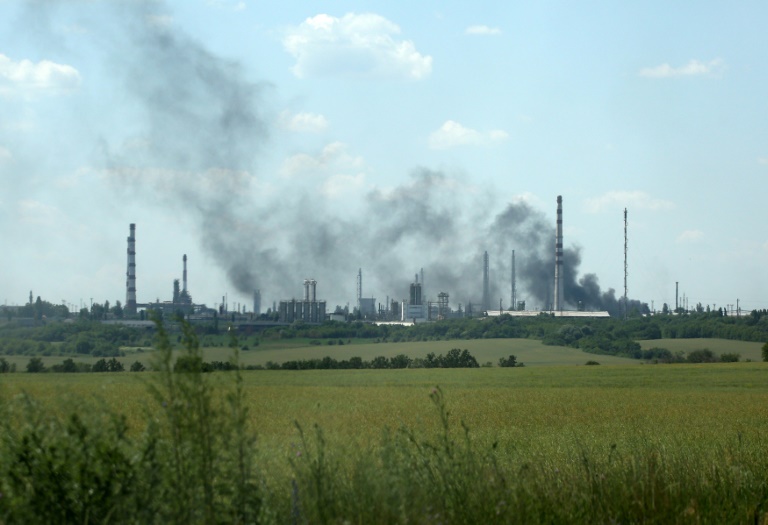
Ukraine meanwhile said it struck a Black Sea oil drilling platform off the Crimea peninsula because Russia was using it as a military installation. 

The rig had Russian garrisons and equipment for air defence, radar warfare and reconnaissance, Sergiy Bratchuk of Odessa’s regional military administration told an online briefing.

Ukraine, its Western backers and the International Criminal Court have all vowed to seek accountability over the war.

US Attorney General Merrick Garland visited Ukraine on Tuesday to discuss prosecution of individuals involved in war crimes.

“There is no place to hide,” Garland said.

burs-sr/je

Spain bets on green hydrogen in clean energy push

As Europe seeks to move way from fossil fuels, Spain is racing ahead in developing green hydrogen, aided by a growing wind and solar power complex in efforts to decarbonise its economy.

Spain accounted for 20 percent of the world’s green hydrogen projects in the first quarter, second only to the United States, home to more than half of them, according to Wood Mackenzie consulting firm.

“A lot of countries are interested in green hydrogen, but in Spain the sector has rapidly accelerated” in recent months, said Rafael Cossent, research associate professor in energy economics at Comillas Pontifical University in Madrid.

The sector is still in its infancy, but the war in Ukraine has prompted the European Union to double its production goal for 2030 as part of efforts to reduce its dependence on Russian energy supplies.

“Spain has become a very attractive country for green hydrogen,” EU chief Ursula von der Leyen said during a visit to the country in May. “A shift is happening … to mass-scale competitive hydrogen”.

Green hydrogen is produced by passing an electric current through water to split it between hydrogen and oxygen, a process called electrolysis. It is considered green because the electricity comes from renewable sources of energy that don’t create any harmful emissions.

And while fossil fuels emit harmful greenhouse gases when they burn, hydrogen only emits harmless water vapour.

The technology is part of EU efforts to become climate neutral by 2050.

– ‘Great potential’ –

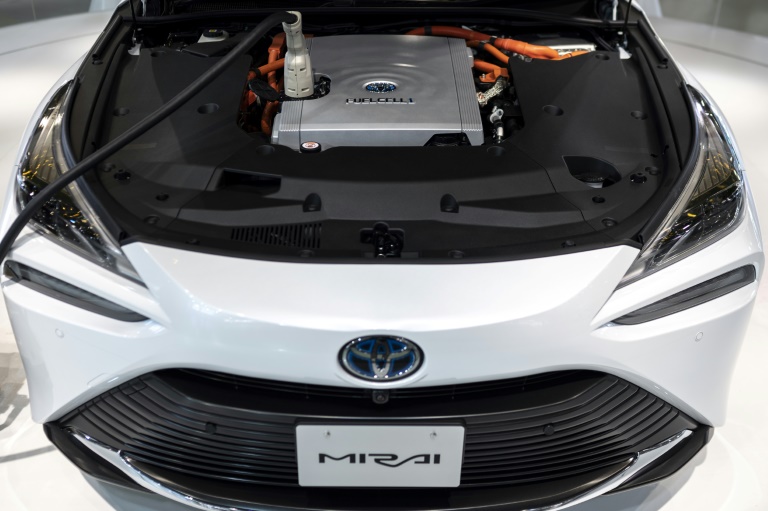
Green hydrogen could replace coal in heavy industries such as steel mills. It can also be used to make fertiliser and is being considered as a potential fuel for buses, trains and aircraft in the future.

A major drawback for green hydrogen, however, has been the high cost of producing it. It is much cheaper to make “grey” hydrogen, but its production requires using fossil fuels that emit greenhouse gases.

But technological progress and the surge in prices of fossil fuels has made green hydrogen more competitive.

Spain has “great potential” because it has a well-developed renewables sector, with important solar and wind resources, said Javier Brey, president of the Spanish Hydrogen Association (AeH2).

Cossent said that Spain has another advantage in its vast natural gas network and LNG terminals, which could be transformed to export hydrogen.

The government launched last year a 1.5-billion-euro ($1.8-billion) plan to support green hydrogen projects over the next three years, tapping a European Union Covid recovery fund to do so.

Adding private investments, close to nine billion euros will be spent by 2030.

– Future energy hub? –

Spanish energy companies such as Iberdrola, Repsol and Enagas have all launched green hydrogen projects. 

Enagas teamed up with global steel giant ArcelorMittal and fertiliser maker Fertiberia for a huge project dubbed HyDeal Espana in northern Asturias region.

The site will have around 15 solar parks that could produce 330,000 tonnes of hydrogen per year by 2030, making it the biggest project of this type in the world, according to the International Renewable Energy Agency.

“This shows the sector has matured,” said Brey of AeH2. “2030 may appear far away, but in reality it’s tomorrow.”

Spain “holds all the cards to become an energy hub,” he added.

But the country still has some obstacles to clear before it can become a leader in the burgeoning sector.

“To win, Spain will have to speed up the deployment of solar and wind farms, as electrolysis consumes a lot of electricity,” Cossent said, adding that projects were stuck in “administrative bottlenecks.”

Spain also lacks energy connectivity with the rest of Europe, but the government has revived a gas pipeline project linking Catalonia and France, which Madrid wants to use to ship hydrogen.

Ecuadoran Indigenous protester dies in anti-government demos

An Indigenous protester died Tuesday in clashes with law enforcement during a ninth day of demonstrations against the Ecuadorian government, which the military described as a “grave threat.”

The man, a member of the Quichua Indigenous group, was participating in a road block in the Amazon town of Puyo, when there was “a confrontation and this person was hit in the face, apparently with a tear gas bomb,” lawyer Lina Maria Espinosa of the Alliance for Human Rights organization told AFP.

Since June 13, multiple roads have been barricaded nationwide at a cost of hundreds of millions of dollars to the economy, in demonstrations over fuel prices called by the powerful Confederation of Indigenous Nationalities of Ecuador (Conaie).

Dozens of people — police and civilians — have been injured in clashes. 

The death of the protester, identified as Byron Guatatoca, 40, came after a young man died overnight when he fell into a ravine “trying to flee from the military” in a protest on the outskirts of Quito, said Guillermo Churuchumbi, the Indigenous mayor of Cayambe municipality.

The episode prompted the prosecutor’s office to open an investigation into possible homicide. The office was also stoned by protesters, and its glass doors were smashed.

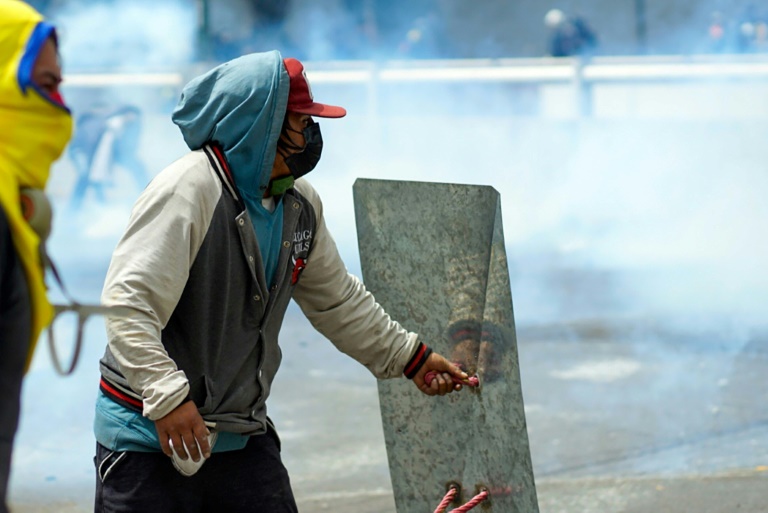
In Quito proper some 500 protesters — among around 10,000 who arrived in the capital from around the country in recent days — were teargassed Tuesday as they blockaded a street with burning tree branches.

They quickly regrouped to march on the CCE culture center — traditionally used by Indigenous people to launch protests but requisitioned by police over the weekend to use as a base. 

“The objective of today is to retake the Casa de la Cultura,” protester Wilson Mazabanda told AFP before police used spray to break up the group.

Earlier in the day, Defense Minister Luis Lara said Ecuador’s democracy “faces a grave threat from… people who are preventing the free movement of the majority of Ecuadorans” with widespread blockades.

Flanked by the heads of the army, navy and air force, Lara warned the military “will not allow attempts to break the constitutional order or any action against democracy and the laws of the republic.”

Quito Mayor Santiago Guarderas said on Twitter the demonstrations “continue to escalate” and that the capital’s markets were running out of supplies.

– ‘Tired of this government’ –

Conaie — credited with helping topple three presidents between 1997 and 2005 — called the demonstrations as Ecuadorans increasingly struggle to make ends meet.

Indigenous people comprise more than a million of Ecuador’s 17.7 million inhabitants and wield much political clout, but are disproportionately affected by rising inflation, unemployment and poverty exacerbated by the coronavirus pandemic.

Thousands of protesters, many of whom had traveled to Quito on foot or on the backs of trucks, took to the streets wielding sticks, fireworks and makeshift shields made of road signs.

“We are already tired of this government,” said Mazabanda, a university student, of ex-banker President Guillermo Lasso’s one-year-old term.

Tito Zamora, a small-scale farmer, added that costs have risen sharply, “but not the price we get for our products.”

Lasso said on Twitter he was ready to participate in “a frank and respectful dialogue process with Conaie and other civil organizations.” 

“It is our duty to reach consensus for the good of the country,” the president said.

– State of emergency –

Fuel prices have risen sharply since 2020, almost doubling for diesel from $1 to $1.90 per gallon and rising from $1.75 to $2.55 for gasoline.

Conaie is demanding a price cut to $1.50 a gallon for diesel and $2.10 for gasoline.

It also wants jobs and food price controls.

The movement has since been joined by students, workers and other Ecuadorans feeling the economic pinch.

Dozens have been arrested, according to human rights observers.

Lasso on Monday extended a state of emergency to cover six of the country’s 24 provinces, with a nighttime curfew in Quito.

Ecuador is losing about $50 million a day as a result of the protests,  without counting oil production — the country’s main export product.

The CEO of state-owned Petroecuador, Italo Cedeno, said Tuesday output had dropped by about 100,000 barrels a day during the protests, in part because demonstrators have targeted both oil wells and power plants.

Ecuador’s parliament voted Monday in favor of a resolution urging the government to conduct a “serious, clear and honest” dialogue with protesters, mediated by the United Nations, the Red Cross, universities and the powerful Catholic Church.

In 2019, Conaie-led protests left 11 people dead and more than 1,000 injured but forced then-president Lenin Moreno to abandon plans to eliminate fuel subsidies.

Spain bets on green hydrogen in clean energy push

As Europe seeks to move way from fossil fuels, Spain is racing ahead in developing green hydrogen, aided by a growing wind and solar power complex in efforts to decarbonise its economy.

Spain accounted for 20 percent of the world’s green hydrogen projects in the first quarter, second only to the United States, home to more than half of them, according to Wood Mackenzie consulting firm.

“A lot of countries are interested in green hydrogen, but in Spain the sector has rapidly accelerated” in recent months, said Rafael Cossent, research associate professor in energy economics at Comillas Pontifical University in Madrid.

The sector is still in its infancy, but the war in Ukraine has prompted the European Union to double its production goal for 2030 as part of efforts to reduce its dependence on Russian energy supplies.

“Spain has become a very attractive country for green hydrogen,” EU chief Ursula von der Leyen said during a visit to the country in May. “A shift is happening … to mass-scale competitive hydrogen”.

Green hydrogen is produced by passing an electric current through water to split it between hydrogen and oxygen, a process called electrolysis. It is considered green because the electricity comes from renewable sources of energy that don’t create any harmful emissions.

And while fossil fuels emit harmful greenhouse gases when they burn, hydrogen only emits harmless water vapour.

The technology is part of EU efforts to become climate neutral by 2050.

– ‘Great potential’ –

Green hydrogen could replace coal in heavy industries such as steel mills. It can also be used to make fertiliser and is being considered as a potential fuel for buses, trains and aircraft in the future.

A major drawback for green hydrogen, however, has been the high cost of producing it. It is much cheaper to make “grey” hydrogen, but its production requires using fossil fuels that emit greenhouse gases.

But technological progress and the surge in prices of fossil fuels has made green hydrogen more competitive.

Spain has “great potential” because it has a well-developed renewables sector, with important solar and wind resources, said Javier Brey, president of the Spanish Hydrogen Association (AeH2).

Cossent said that Spain has another advantage in its vast natural gas network and LNG terminals, which could be transformed to export hydrogen.

The government launched last year a 1.5-billion-euro ($1.8-billion) plan to support green hydrogen projects over the next three years, tapping a European Union Covid recovery fund to do so.

Adding private investments, close to nine billion euros will be spent by 2030.

– Future energy hub? –

Spanish energy companies such as Iberdrola, Repsol and Enagas have all launched green hydrogen projects. 

Enagas teamed up with global steel giant ArcelorMittal and fertiliser maker Fertiberia for a huge project dubbed HyDeal Espana in northern Asturias region.

The site will have around 15 solar parks that could produce 330,000 tonnes of hydrogen per year by 2030, making it the biggest project of this type in the world, according to the International Renewable Energy Agency.

“This shows the sector has matured,” said Brey of AeH2. “2030 may appear far away, but in reality it’s tomorrow.”

Spain “holds all the cards to become an energy hub,” he added.

But the country still has some obstacles to clear before it can become a leader in the burgeoning sector.

“To win, Spain will have to speed up the deployment of solar and wind farms, as electrolysis consumes a lot of electricity,” Cossent said, adding that projects were stuck in “administrative bottlenecks.”

Spain also lacks energy connectivity with the rest of Europe, but the government has revived a gas pipeline project linking Catalonia and France, which Madrid wants to use to ship hydrogen.

Ancient Afghan Buddhist city threatened by Chinese copper mine

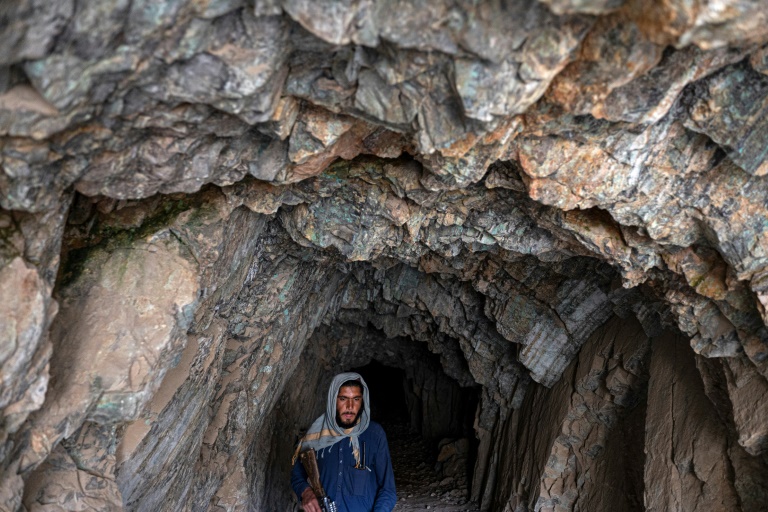
An ancient Buddhist city carved out of immense peaks near Kabul is in danger of disappearing forever, swallowed up by a Chinese consortium exploiting one of the world’s largest copper deposits.

Located at the confluence of Hellenistic and Indian cultures, Mes Aynak — believed to be between 1,000 and 2,000 years old — was once a vast city organised around the extraction and trade of copper.

Archaeologists have uncovered Buddhist monasteries, stupas, fortresses, administrative buildings and dwellings, while hundreds of statues, frescoes, ceramics, coins and manuscripts have also been unearthed.

Despite looting at the beginning of the century, Mes Aynak is “one of the most beautiful archaeological sites” in the world, says Bastien Varoutsikos, an archaeologist for the French company Iconem, which is working to digitise the city and its heritage.

But the need for the Taliban — who returned to power in August last year — to find new revenue streams after international aid was frozen has made mining the project a priority, and could put an end to further archaeological work.

– Mining consortium –

Objects discovered date mainly from the 2nd to 9th century AD, but an earlier occupation is also believed likely, and pottery dating back to the Bronze Age — well before the birth of Buddhism — has also been found.

Forgotten for centuries before being rediscovered by a French geologist in the early 1960s, Mes Aynak, in Logar province, has been compared to Pompeii and Machu Picchu in size and significance.

The ruins, which cover 1,000 hectares, are perched high on a massive peak whose brown flanks betray the presence of copper.

But in 2007 the Chinese mining giant Metallurgical Group Corporation (MCC) headed a state-owned consortium — that later took the name MJAM — and signed a $3 billion contract to mine ore over 30 years.

Fifteen years later, the mine still does not exist — insecurity and disagreements between Beijing and Kabul over financial terms of the contract have caused delays.

The project is once again a priority for both parties, however, and talks are ongoing on how to proceed.

– Duty of preservation –

Fears are rising that a place once considered one of the most prosperous trade hubs on the Silk Road could disappear without oversight.

In the early 2010s, it was “one of the largest archaeological projects in the world”, Varoutsikos told AFP.

MJAM originally suspended the start of operations for three years to allow archaeologists to focus on the area directly threatened by the mine.

That period was inadvertently lengthened as the security situation prevented the Chinese from building planned infrastructure.

As a result, thousands of objects were unearthed — some were taken to the Kabul museum, others kept nearby.

When it was last in power the Taliban shocked the world by dynamiting the giant Buddhas of Bamiyan in March 2001, but today they say they are determined to preserve the findings of Mes Aynak.

“It is the duty of the Ministry of Information and Culture to protect them,” Esmatullah Burhan, the spokesman for the Ministry of Mines and Petroleum, told AFP.

But while the rhetoric seems sincere, many of the remains are simply too bulky or fragile to be moved and seem destined to disappear.

The Chinese favour open-pit rather than underground mining. If this goes ahead, it would open up the copper mountain and bury all the fragments of the past.

– Environmental consequences –

Afghanistan is sitting on huge mineral resources of copper, iron, bauxite, lithium and rare earths estimated to be worth more than a trillion dollars.

The Taliban hope to earn more than $300 million a year from Mes Aynak — about 60 percent of the full state budget for 2022 — and now want to speed up the process.

“This project must begin, it must not be delayed any longer,” they have repeatedly told MJAM in recent weeks, according to Burhan.

The discussions are about “80 percent finished”, says the spokesman, with only technical points remaining to be settled, which should be done soon.

The Taliban are demanding that the contract — which includes the construction of a power station to supply the mine and Kabul, and a railroad to Pakistan — be respected. 

They also insist that the copper be processed locally with an Afghan workforce.

China, whose economy is in dire need of copper, is reluctant to meet these demands.

MJAM, which did not respond to AFP, also continues to demand a reduction in royalties due.

The project is also coupled with concerns about its environmental consequences. 

Copper mining is polluting and requires large quantities of water, and Logar is already an arid region.

According to Burhan, the Taliban are paying “strict attention” to these issues and will ensure that the consortium meets its obligations in this regard.

For now, the delay is some salvation for archeologists.

While there is currently no work going on at the site, Varoutsikos hopes to restart the excavation before the start of mining operations.

But even that will depend on international collaboration and funding, he notes.

Close Bitnami banner
Bitnami