US Business

Iran's oldest pistachio trader readies daughter to one day take over

Tucked away in Tehran’s famed Grand Bazaar, Iran’s oldest pistachio wholesaler quietly prepares a small revolution — he will hand his business to his youngest daughter, in a trade dominated by men.

Abbas Emami, 88, began working for his own father at the age of 15. More than seven decades on, bags of pistachios at the family shop are emblazoned with the slogan “over a century of experience”.

He doesn’t know exactly when his family first got into the business.

But “my father worked in the nut shop of my maternal grandfather, before striking out on his own,” Emami recalled.

“I helped my father during the day and I studied by night,” he said. “It took me a decade to learn the secrets of the trade.”

Emami is now in the process of transferring that expertise to his 50-year-old daughter Marjan, who will also take over his firm, Shams Roasted Nuts.

The pistachios are generally grown in the provinces of Kerman and Semnan.

Every two or three months, agents working on behalf of the growers come and place orders.

Competitors attest to the fact that Emami — who took over the business from his father in 1975 — is the oldest pistachio wholesaler in town.

“We buy five types of pistachios,” Emami said. “They differ in appearance, taste, size, quality and therefore price.”

“The best-tasting variety, in my opinion, is the Ahmad-Aghaei, which sells at 495,000 tomans ($16) per kilogram,” he said.

Iran’s last pistachio harvest, in October, yielded 280,000 tonnes, of which half was consumed at home and the rest exported to around 75 countries.

The exports brought in the equivalent of $900 million, making the industry a sizeable contributor to Iran’s economy.

– Tricks of the trade –

Emami is reluctant to divulge too much about the know-how he is passing on to Marjan.

“It’s important to buy at the right moment,” he said, adding that adequate refrigeration was also important.

Marjan, who first took on duties in her father’s shop owing to concerns about his vulnerability to coronavirus, was a little more forthcoming.

“Sourcing the product at the right price is not easy,” she said. “It’s crucial also to monitor processing, hygiene and storage.”

Iran is one of the top three global consumers of pistachios, after Turkey and China, and demand is particularly high during Nowruz, the Persian new year celebrations.

“With the spread of the coronavirus, my father was not able to come” to the shop, said Marjan. “So during Nowruz, I stood in for him with my own two daughters, starting as a cashier and then staying on.”

Roasting the nuts is a crucial part of the process.

A few streets away from Emami’s shop, in the Ahangaran district of the capital, 80 kilogram bags of raw pistachios are piled high.

“Once the drum has been cleaned with coarse salt, we roast the pistachios before mixing them in a blender with salted water or saffron, before drying them,” said Majid Ebrahimi, 31, who roasts two tonnes per day.

The pistachio trade has evolved considerably since the 1950s, according to Emami. 

“At the time, the pistachio trade was a domain of the rich. When I was an adolescent, there were only four wholesale trading houses. Today, there are 10 times that number,” he said.

“It became more accessible in the 1950s. Part of the population grew wealthy and so the clientele grew. I still have around 100 clients,” he added, sitting in the back of his shop, below a black-and-white photo of his father.

But despite working for more than 70 years, he is not quite ready to relinquish the reins to his daughter yet.

“First of all, it is necessary to learn,” he said, with a mischievous smile.

“It is not an easy trade, but she will learn.”

Markets struggle as recession fears weigh heavily

Equities struggled Wednesday after a brief respite from last week’s painful rout across world markets, with recession fears continuing to build as central banks hike interest rates to combat decades-high inflation.

While Asia, Wall Street and Europe all enjoyed healthy gains on Tuesday, analysts warned the downbeat mood on trading floors means the selling is unlikely to end any time soon.

Fears about a global contraction have also put downward pressure on oil prices, despite China’s reopening moves, the US holiday driving season and tight supplies. 

Federal Reserve boss Jerome Powell’s two-day testimony to Congress this week will be pored over for an idea about officials’ plans for fighting runaway prices, which are being fanned by supply chain snarls, China’s lockdowns and the war in Ukraine.

Most observers expect them to hike rates by three-quarters of a point several more times this year, having announced such a move in June — the sharpest lift in almost 30 years.

However, while many believe the Fed’s front-loaded tightening drive is needed — allowing it to begin cutting sooner as price rises settle back — there is a building consensus that the world’s top economy is heading for a contraction next year.

“The Fed has entered into a policy cocktail that we would describe as hammer time,” Gene Tannuzzo, at Columbia Threadneedle Investments, told Bloomberg Television.

“You have to be planning defensively at this point. There are a lot of questions on all risk assets.”

– Crude prices drop –

In early Asian trade, Hong Kong, Singapore, Sydney, Seoul, Taipei, Jakarta and Manila all fell, while Tokyo and Shanghai were barely moved. There were small gains in Wellington.

Stephen Innes at SPI Asset Management said that while the selling from last week had abated, traders continued to fret over a recession and the prospect of more rate hikes, adding that the Fed could be more compelled to respond if oil prices surge again and push up inflation further.

“Even more worryingly from a policy perspective is that virtually every recession in the past three decades has been a function of a demand shock, but this is a supply shock; hence monetary policy is less potent,” he added.

“Despite the uptick in risk sentiment, it still feels we are eons away from shaking the event-driven bear market blues due to prevailing recession obsession headwinds.”

Oil prices were feeling the heat from recessionary fears, with both main contracts down more than three percent Wednesday, though Goldman Sachs said that with demand still outpacing supplies, the market remains tight.

“Investors should remember that Fed-induced slowdowns are simply a short-term abatement of the symptom, inflation, and not a cure for the problem, underinvestment,” it added.

Bets on the Fed’s rate hikes, and the Bank of Japan’s refusal to move from its policy of ultra-low rates, continues to pile pressure on the yen, which is sitting at a 24-year low above 136.50 to the dollar.

Japanese Prime Minister Fumio Kishida’s comment that it “is up to the central bank” how to maintain its easy money policy adding to pressure on the country’s unit though famed economist Nouriel Roubini said he expects Tokyo to take action if the yen hits 140.

“If you go well above 140, the BoJ will have to change policy and the first change in policy is going to be yield curve control,” he said referring to a policy of keeping long-term rates artificially at a chosen level.

“So I think another 10 percent fall in the yen will imply a change in policy,” he told Bloomberg Television at the Qatar Economic Forum.

– Key figures at around 0230 GMT –

Tokyo – Nikkei 225: FLAT at 26,255.95 (break)

Hong Kong – Hang Seng Index: DOWN 0.6 percent at 21,424.70

Shanghai – Composite: FLAT at 3,307.00

Euro/dollar: DOWN at $1.0508 from $1.0535 late Tuesday

Pound/dollar: DOWN at $1.2238 from $1.2273

Euro/pound: UP at 85.87 pence from 85.80 pence

Dollar/yen: DOWN at 136.25 yen from 136.64 yen

West Texas Intermediate: DOWN 3.5 percent at $105.70 per barrel

Brent North Sea crude: DOWN 3.4 percent at $110.76 per barrel

New York – Dow: UP 2.2 percent at 30,530.25 (close)

London – FTSE 100: UP 0.4 percent at 7,152.05 (close)

US lawmakers agree bipartisan bill on gun safety

US senators unveiled a bill Tuesday addressing the epidemic of gun violence plaguing the country as they locked down a narrow set of reforms that were nevertheless hailed as the first significant firearms controls in a generation.

The cross-party group, which had been working for weeks on the wording of the legislation, voiced confidence that it would have enough support to pass the Senate, and it could be signed into law by President Joe Biden as soon as next week.

The limited proposals don’t go as far as reforms called for by Biden, such as an all-out ban on assault rifles.

But Chris Murphy, the senator leading negotiations for Democrats, hailed the bill as the “most significant piece of anti-gun violence legislation in nearly 30 years.”

“This bill is going to save thousands of lives,” he tweeted.

The lawmakers had been up against the clock — aware that any delay risked losing the sense of urgency ignited by the fatal shooting of 19 children in Uvalde, Texas and of 10 Black people at a supermarket in Buffalo, upstate New York, both last month.

The last significant federal gun control legislation was passed in 1994, banning the manufacture for civilian use of assault rifles and large capacity ammunition clips.

But it expired a decade later and there has been no serious effort at reform since, despite rising gun violence.

“This bipartisan gun-safety legislation is progress and will save lives. While it is not everything we want, this legislation is urgently-needed,” Democratic Senate leader Chuck Schumer said in a statement.

A cross-party group of senators agreed on a framework on June 12 that includes enhanced background checks for buyers aged under 21, $11 billion in funding for mental health and $2 billion for school safety programs.

The blueprint also calls for funding to incentivize states to implement “red flag” laws to remove firearms from people considered a threat.

However the National Rifle Association, America’s powerful gun rights lobby, rejected the deal.

“We will oppose this gun control legislation because it falls short at every level,” the NRA said in a statement. “It does little to truly address violent crime while opening the door to unnecessary burdens on the exercise of Second Amendment freedom by law-abiding gun owners.”

– Gun rights –

Multiple issues had been holding up the talks but appeared to have been resolved, with both sides making concessions.

The first was “red flag” programs that many conservatives see as violating the due process rights of those accused of being a threat.  

The Senate Democrats agreed the final gun control bill would extend funding for states with red flag policies to also include states with other crisis intervention programs.

And Democrats got the Republicans to agree to closing the so-called “boyfriend” loophole.

Under federal law, individuals are banned from buying firearms if they are convicted of domestic violence and have been married to, lived with or have a child with the victim.

Democrats ensured that law will now include other kinds of dating partners.

“I am proud that this mental health and school safety bill places NO NEW RESTRICTIONS on law-abiding gun owners,” said lead Republican negotiator, Texas Senator John Cornyn.

The Senate Democratic leadership is hoping to pass the bill by the weekend, when members leave town for a two-week recess. 

The House — which is also off next week — would likely stay in session into the weekend or bring representatives back during the break to send the legislation to Biden. 

Republicans in Texas booed Cornyn as he tried to defend the bill at a convention over the weekend, underlining the peril conservatives face in appearing open to any gun control reform.

Biden had pushed for more substantial reforms, including a ban on assault rifles — which were used in both the Texas and New York shootings — and high-capacity magazines.

But the political challenge of legislating in a 50-50 Senate, where most bills require 60 votes to pass, means that more wide-ranging reforms are unrealistic.

Delayed Tokyo 2020 Olympics cost double original estimate

The final price tag for last year’s Tokyo Olympics was more than double the city’s original 2013 estimate after a one-year coronavirus postponement added to the already hefty bill.

The organising committee said Tuesday the Games had cost 1.42 trillion yen, the equivalent of $13 billion at the time. At today’s rates, with the yen at a 24-year low against the dollar, the figure would be $10.4 billion.

Tokyo 2020 was held a year later than planned because of the pandemic — the first Olympics postponed in peacetime — and spectators were banned from nearly all events, which were held under strict Covid-19 countermeasures.

The Games cost twice the 734 billion yen that the Tokyo Games organisers had predicted in their bid to the International Olympic Committee in 2013, but less than the final pre-Games budget unveiled in December 2020.

Despite losing out on ticket sales, organisers saved some cash by simplifying events and avoiding the cost of hosting millions of fans.

The organising committee, which disbands at the end of June, said the event’s final cost was 200 billion yen less than projected in its pre-Games budget in 2020 and 29 billion yen less than the final slimmed-down costs prediction in December 2021.

“It’s up to everyone involved in this event to pass on the legacy of the Tokyo Olympics to the next generation,” said Tokyo 2020 chief Seiko Hashimoto.

Tokyo experienced a Covid-19 surge last year as the Olympics approached, fuelling fears the event could worsen outbreaks in Japan and possibly the world.

The northern Japanese city of Sapporo is bidding to host the Winter Olympics in 2030.

A March survey of Sapporo and the surrounding region showed that a majority of the public are in favour of holding the event.

Officials have ruled out holding a public referendum on the 2030 bid.

US seeks to drastically cut nicotine content in cigarettes

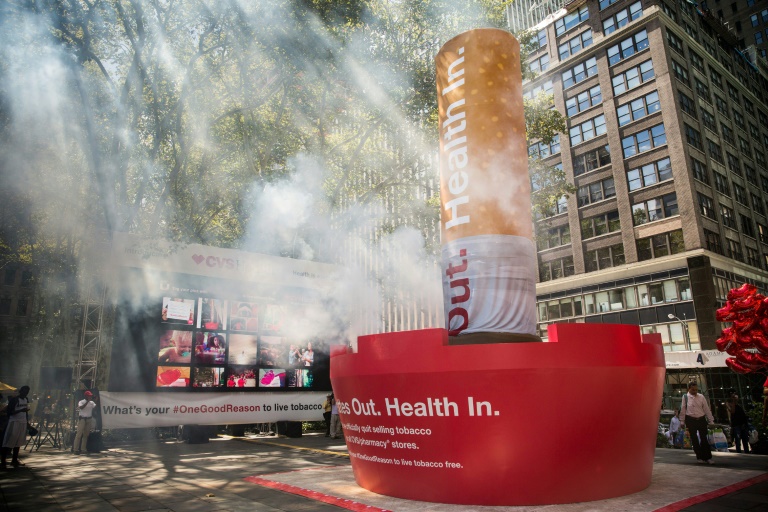
President Joe Biden’s administration on Tuesday announced it would develop a new policy requiring cigarette producers to reduce nicotine to non-addictive levels — a move that would deal a powerful blow to the tobacco industry.

If successful in its aims, the new US standard could save millions of lives by the end of the century, and shape a future where cigarettes are no longer responsible for addiction and debilitating disease.

The initiative requires the Food and Drug Administration to develop and then publish a rule, which will likely be contested by industry.

“Nicotine is powerfully addictive,” said FDA Commissioner Robert Califf in a statement. “Making cigarettes and other combusted tobacco products minimally addictive or non-addictive would help save lives.”

The process is expected to take several years and could be delayed or derailed by litigation, or reversed by a future administration sympathetic to the tobacco lobby.

Nicotine is the “feel good” chemical that hooks people to cigarettes, chewing tobacco, vaping devices and other tobacco products. 

“Addiction to nicotine in combusted products is the main driver of sustained use of these products,” the FDA added in its statement.

Thousands of other chemicals contained in tobacco and its smoke are responsible for diseases such as cancer, heart disease, stroke, lung diseases, diabetes and more.

Though smoking is less prevalent in the United States than in Europe, and has been declining for years, it is still responsible for 480,000 deaths a year in the country, according to the Centers for Disease Control and Prevention.

Some 12.5 percent of all US adults are current cigarette smokers, according to the FDA.

– Backed by research –

The announcement was welcomed by tobacco control groups.

“The American Lung Association is pleased to hear that a proposal is coming to reduce the levels of addictive nicotine in cigarettes,” said the group’s CEO Harold Wimmer. 

“Reducing nicotine to non-addictive levels in cigarettes is an important step forward for public health, and we urge FDA to extend this proposal to include all tobacco products, including e-cigarettes.” 

Reducing the nicotine content of cigarettes has been a topic under discussion for years among US authorities.

The FDA funded a randomized trial published in 2018 that found “reduced-nicotine cigarettes versus standard-nicotine cigarettes reduced nicotine exposure and dependence and the number of cigarettes smoked.”

Another FDA-funded study found that if a nicotine reduction policy were enacted in 2020, it could result in more than 33 million people not becoming regular smokers, and prevent more than eight million deaths from tobacco-related illnesses by 2100.

The tobacco industry rejects these studies and says people would in fact smoke more.

Biden has made a “cancer moonshot” a centerpiece of his agenda and nicotine-reduction policy would fit within its goals, at minimal cost.

The total economic cost of smoking is more than $300 billion a year, according to US data, including more than than $225 billion in direct medical care for adults, and more than $156 billion in lost productivity due to premature death and exposure to secondhand smoke.

US high court denies Bayer bid to block Roundup weedkiller lawsuits

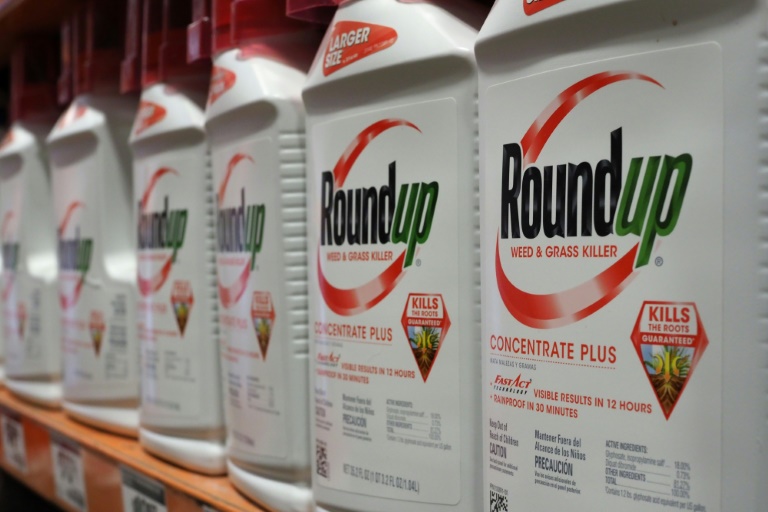
The US Supreme Court on Tuesday declined an appeal from Bayer-owned Monsanto that aimed to challenge thousands of lawsuits claiming its weedkiller Roundup causes cancer — a potentially costly ruling.

The high court did not explain its decision not to take the case, which left intact a $25 million ruling in favor of a California man who alleged he developed cancer after using the chemical for years.

The decision marks a major blow to the German conglomerate’s legal fight against some 31,000 Roundup-related cases.

“Bayer respectfully disagrees with the Supreme Court’s decision,” the company said in a statement.

“The company believes that the decision undermines the ability of companies to rely on official actions taken by expert regulatory agencies,” it added, referring to a 2020 federal finding that Roundup’s active ingredient is not risky.

Plaintiffs’ attorneys welcomed the justices’ decision as setting a clear path for people to seek compensation in these cases.

Matthew Stubbs said his firm Duncan Stubbs “continues to represent thousands of Roundup plaintiffs, with a wave of cases set for trial in the coming months and more behind them for as long as Bayer wants to delay.”

Bayer has been plagued by problems since it bought Monsanto, which owns Roundup, in 2018 for $63 billion and inherited its legal woes around the chemical’s ingredient glyphosate.

The German firm says it has not committed any wrongdoing, and maintains that scientific studies and regulatory approvals show glyphosate is safe.

Glyphosate is nonetheless classified as a “probable carcinogen” by the International Agency for Research on Cancer at the World Health Organization (WHO).

However, the United States Environmental Protection Agency, on its website, says “there are no risks of concern to human health when glyphosate is used in accordance with its current label.”

A California-based appeals court last week ordered the EPA to reconsider that finding.

– Billions at stake –

The Supreme Court’s ruling not to intervene leaves in place a judgment in the lawsuit filed by Edwin Hardeman, who was diagnosed with non-Hodgkin’s lymphoma in 2015.

In addition to the some 31,000 cases about alleged health problems against the weedkiller, Bayer’s own shareholders have taken legal action as well.

Investors are seeking 2.2 billion euros ($2.5 billion) in damages in a German court for losses incurred following its troubled takeover of Monsanto, their lawyers said in January.

The investors accuse Bayer of having “misled capital markets about the economic risks from pending consumer lawsuits in the United States in connection with glyphosate and the herbicide Roundup,” law firm Tilp said in a statement.

Tilp said around 320 investors have submitted complaints, most of them institutional investors such as banks, wealth managers, insurers and pension funds.

In the United States, Bayer signed a $10 billion settlement with plaintiffs in June 2020, with the parties agreeing to add $2 billion to settle future claims, but this part of the agreement was rejected by a California judge. 

In an attempt to put an end to all proceedings, the firm presented a five-point plan in the summer of 2021 stating that if it lost the Hardeman case in the Supreme Court, it would begin discussions on the claims not included in the 2020 agreement.

Bayer said it is transitioning its glyphosate-based products in the US residential market to new formulations that have alternative active ingredients beginning in 2023.

“The company is taking this action exclusively to manage litigation risk in the US and not because of any safety concerns,” it said in a statement.

Bayer says it has resolved around 107,000 of a total of 138,000 cases related to the herbicide.

Bayer’s share price closed down about two percent after the court’s decision on Tuesday.

US high court denies Bayer bid to block Roundup weedkiller lawsuits

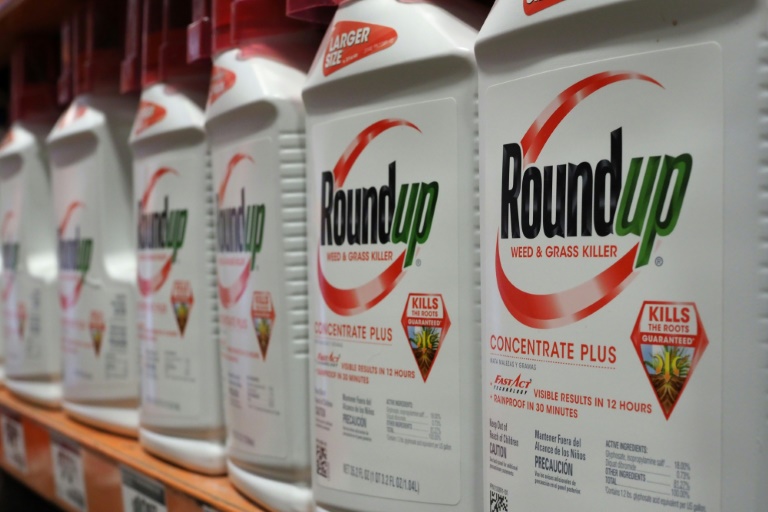
The US Supreme Court on Tuesday declined an appeal from Bayer-owned Monsanto that aimed to challenge thousands of lawsuits claiming its weedkiller Roundup causes cancer — a potentially costly ruling.

The high court did not explain its decision not to take the case, which left intact a $25 million ruling in favor of a California man who alleged he developed cancer after using the chemical for years.

The decision marks a major blow to the German conglomerate’s legal fight against some 31,000 Roundup-related cases.

“Bayer respectfully disagrees with the Supreme Court’s decision,” the company said in a statement.

“The company believes that the decision undermines the ability of companies to rely on official actions taken by expert regulatory agencies,” it added, referring to a 2020 federal finding that Roundup’s active ingredient is not risky.

Plaintiffs’ attorneys welcomed the justices’ decision as setting a clear path for people to seek compensation in these cases.

Matthew Stubbs said his firm Duncan Stubbs “continues to represent thousands of Roundup plaintiffs, with a wave of cases set for trial in the coming months and more behind them for as long as Bayer wants to delay.”

Bayer has been plagued by problems since it bought Monsanto, which owns Roundup, in 2018 for $63 billion and inherited its legal woes around the chemical’s ingredient glyphosate.

The German firm says it has not committed any wrongdoing, and maintains that scientific studies and regulatory approvals show glyphosate is safe.

Glyphosate is nonetheless classified as a “probable carcinogen” by the International Agency for Research on Cancer at the World Health Organization (WHO).

However, the United States Environmental Protection Agency, on its website, says “there are no risks of concern to human health when glyphosate is used in accordance with its current label.”

A California-based appeals court last week ordered the EPA to reconsider that finding.

– Billions at stake –

The Supreme Court’s ruling not to intervene leaves in place a judgment in the lawsuit filed by Edwin Hardeman, who was diagnosed with non-Hodgkin’s lymphoma in 2015.

In addition to the some 31,000 cases about alleged health problems against the weedkiller, Bayer’s own shareholders have taken legal action as well.

Investors are seeking 2.2 billion euros ($2.5 billion) in damages in a German court for losses incurred following its troubled takeover of Monsanto, their lawyers said in January.

The investors accuse Bayer of having “misled capital markets about the economic risks from pending consumer lawsuits in the United States in connection with glyphosate and the herbicide Roundup,” law firm Tilp said in a statement.

Tilp said around 320 investors have submitted complaints, most of them institutional investors such as banks, wealth managers, insurers and pension funds.

In the United States, Bayer signed a $10 billion settlement with plaintiffs in June 2020, with the parties agreeing to add $2 billion to settle future claims, but this part of the agreement was rejected by a California judge. 

In an attempt to put an end to all proceedings, the firm presented a five-point plan in the summer of 2021 stating that if it lost the Hardeman case in the Supreme Court, it would begin discussions on the claims not included in the 2020 agreement.

Bayer said it is transitioning its glyphosate-based products in the US residential market to new formulations that have alternative active ingredients beginning in 2023.

“The company is taking this action exclusively to manage litigation risk in the US and not because of any safety concerns,” it said in a statement.

Bayer says it has resolved around 107,000 of a total of 138,000 cases related to the herbicide.

Bayer’s share price closed down about two percent after the court’s decision on Tuesday.

US jury finds Bill Cosby sexually assaulted teen in 1970s

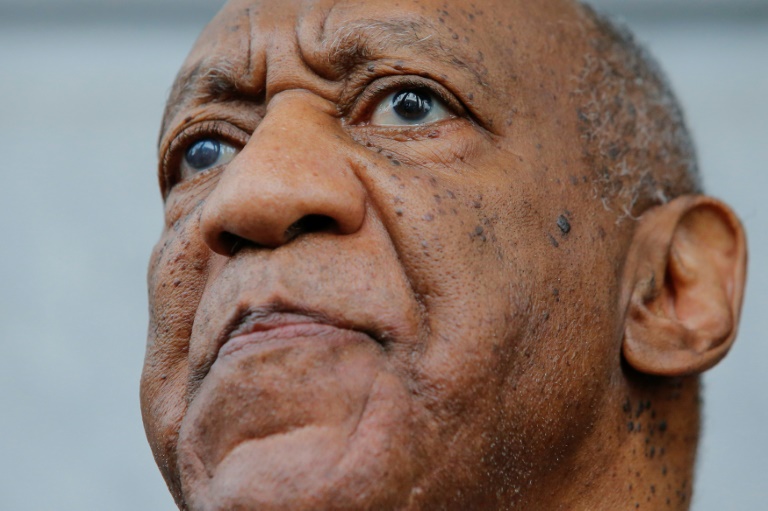
Bill Cosby sexually assaulted a teenager at the Playboy Mansion almost 50 years ago, a jury in California found Tuesday, in the first civil ruling against the veteran entertainer following dozens of allegations.

Judy Huth, now aged 64, was awarded $500,000 in damages after the jury in Santa Monica determined that Cosby had molested her in 1975 when she was just 16 years old after meeting her on a movie set and plying her with alcohol.

The case is the only successful legal action against Cosby, 84, who has been accused of using his fame to prey on women over several decades.

The man formerly known as “America’s Dad” was jailed in Pennsylvania for drugging and molesting a woman in a separate criminal case in 2018, but was freed last year when his conviction was overturned on a technicality.

Over a two-week civil hearing, which Cosby did not attend, lawyers said he escorted Huth and her then-17-year-old friend, Donna Samuelson, to Hugh Hefner’s mansion after meeting them on a movie set.

The jury heard how when Huth was alone with Cosby, the actor began kissing her and tried to put his hands inside her clothes.

They were told how he then allegedly pulled down his own trousers and forced her to perform a sex act on him.

Lawyer Nathan Goldberg said for many years Huth had repressed memories of the assault but that it came to the fore for her when other women began accusing him of assaulting them.

– Much-loved star –

“It was like a cork popped out of a bottle,” said Goldberg at the start of the case. “Memories came rushing to the surface… she became overwhelmed by memories of Mr Cosby and what he had done.”

She originally filed her lawsuit in December 2014, but the case was put on hold while various criminal investigations played out.

The civil trial was shown a videotaped deposition of Cosby taken in 2015 in which he denied the assault, and insisted that he would never engage in sexual activity with an underage girl.  

His lawyers made much of apparent discrepancies in Huth’s story, including that both teens spent up to 12 hours at the mansion after the alleged assault.

They also argued that Huth originally claimed the attack happened in 1974 when she was 15, but later said it had happened the following year.

The case was never prosecuted criminally as the statute of limitations had passed by the time Huth spoke to police.

California law allows adults who say they were sexually abused as minors, but have only recently become aware of the damage, to bring civil cases years after the statute of limitations would normally have expired.

Cosby was a towering figure in late-20th century American popular culture, and hit the big time as affable obstetrician and father Cliff Huxtable on “The Cosby Show,” which ran from 1984-92.

But around 60 women, many of them onetime aspiring actresses and models, have publicly branded Cosby a calculating, serial predator who plied victims with sedatives and alcohol to bed them over four decades.

US jury finds Bill Cosby sexually assaulted teen in 1970s

A jury in California found Tuesday that entertainer Bill Cosby sexually assaulted a teenager at the Playboy Mansion almost five decades ago.

Judy Huth, now aged 64, was awarded $500,000 in damages after the jury in Santa Monica determined that Cosby had molested her in 1975 when she was just 16 years old.

The case is one of the few remaining legal actions against Cosby, 84, who has been accused of assault by dozens of women. 

He was jailed in Pennsylvania in a separate criminal case in 2018, but was freed last year when his conviction was overturned on a technicality.

Over a two-week civil hearing, which Cosby did not attend, lawyers said the man once known as “America’s Dad” escorted Huth and her then-17-year-old friend, Donna Samuelson, to the mansion after meeting them on a movie set.

Cosby denied any wrongdoing, and his lawyers made much of apparent discrepancies in Hutch’s story, including that both teens spent up to 12 hours at the mansion after the alleged assault.

They also argued that Huth originally claimed the attack happened in 1974 when she was 15, but later said it had happened the following year.

The case was never prosecuted criminally as the statute of limitations had passed by the time Huth spoke to police.

Huth was able to bring the civil suit under a California law allowing adults who say they were victims of sexual abuse as minors, but repressed what happened to them for years, to pursue such cases.

Long wait over as US vaccinates youngest against Covid

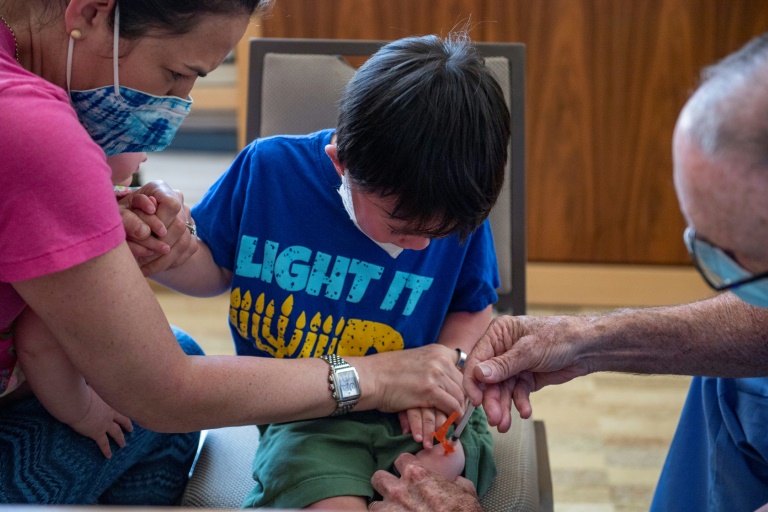
US hospitals, clinics and pharmacies began vaccinating the nation’s youngest children against Covid-19 on Tuesday, a milestone that was welcomed by parents eager to protect kids from the worst impacts of the virus.

Rollout of millions of shots was underway across the country, 18 months after the elderly became the first group eligible for immunization. 

Children aged from six months through four years aren’t at as great a risk as adults. 

But the sheer level of infections has seen more than 45,000 hospitalizations and nearly 500 deaths in the 0-4 group in America since the start of the pandemic — outcomes that vaccination could have prevented in many cases.

“We’re super thrilled,” said Amisha Vakil, mother of two three-year-old boys, who wore matching Spiderman tee shirts as they got their Moderna shots at Texas Children’s Hospital in Houston.

One of the twins had three open heart surgeries within his first five months. 

“He’s super high risk so you know, we’ve been living in a little bubble,” said Vakil.  “Now he has little armor that helps a lot.”

The moment was also hailed by President Joe Biden, whose administration made 10 million shots of the Moderna and Pfizer vaccines available to states after they were authorized last week.

“The United States is now the first country in the world to offer safe and effective Covid-19 Vaccines for children as young as six months old,” said Biden, calling it a “monumental step forward.”

A handful of other countries and territories including Argentina, Bahrain, Chile, China, Cuba, Hong Kong and Venezuela were previously offering Covid shots for toddlers, but these did not include mRNA vaccines, regarded as the leading technology for the purpose.

The European Medicines Agency is reviewing the Moderna vaccine for use in under-sixes and could follow the US decision. 

– Born in pandemic –

Many children being brought in Tuesday were born after the pandemic started and had only known a life of restrictions.

Anna Farrow, who came to the same hospital with her husband Luke, said she saw a new start for their son George, aged three, and Hope, aged 10 months.

“This is sort of the beginning of a regular childhood. And we’re very excited about that,” she said.

On the other side of the country in Needham, Massachusetts, Ellen Dietrick, an administrator at Temple Beth Shalom was preparing to welcome 300 children on the first day.

Daniel Grieneisen, the father of a three-year-old girl who got the vaccine, said: “It means that we are now just a couple weeks from being able to take her indoors places, and kind of get back to living our lives, it’s pretty exciting.”

Last week, a panel of experts called by the Food and Drug Administration reviewed data from clinical trials involving thousands of children that were conducted by Pfizer and Moderna, and deemed both of the vaccines safe and effective.

However, a survey carried out by the Kaiser Family Foundation in May found only one-in-five parents of children under five were eager to get them vaccinated right away. A slightly higher proportion, 38 percent, said they would wait and see how well the vaccine worked for others.

New Yorker Rita Saeed, 29, said she was concerned about side effects and planned to wait a couple of years before deciding whether to vaccinate her two-year-old son.

“Each to their own, I think it should be optional, not mandatory,” she said, pushing her son in a stroller through Central Park.

Hal Moore, a 32-year-old teacher who lives in New York City, said he was “definitely relieved” that he will be able to vaccinate his 10-month-old daughter Lucy, but “we’ll probably wait until her next normal appointment to get it.”

In a sign of the ongoing politicization surrounding vaccines in America, Florida governor and possible Republican presidential candidate Ron DeSantis refused to place an order with the federal government for vaccines for the youngest children, leaving private practices and parents to fend for themselves.

“These are the people who have zero risk of getting anything,” he said at a press conference last week.

burs-ia/jh

Close Bitnami banner
Bitnami