US Business

Russia warns Lithuania, pushes into Ukraine's Donbas

Moscow on Tuesday warned Lithuania of “serious” consequences over its restriction of rail traffic to Russia’s Kaliningrad exclave, as Kremlin forces made gains in Ukraine’s strategic Donbas region.

The row over Lithuania, the arrival of sophisticated German weaponry in Ukraine’s arsenal, and an imminent decision on Kyiv’s candidacy to join the EU threaten to further ratchet up tensions between the West and Moscow.

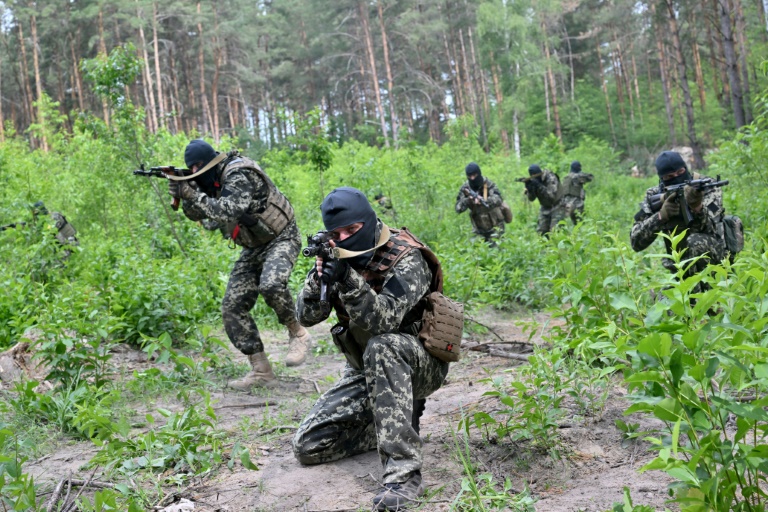
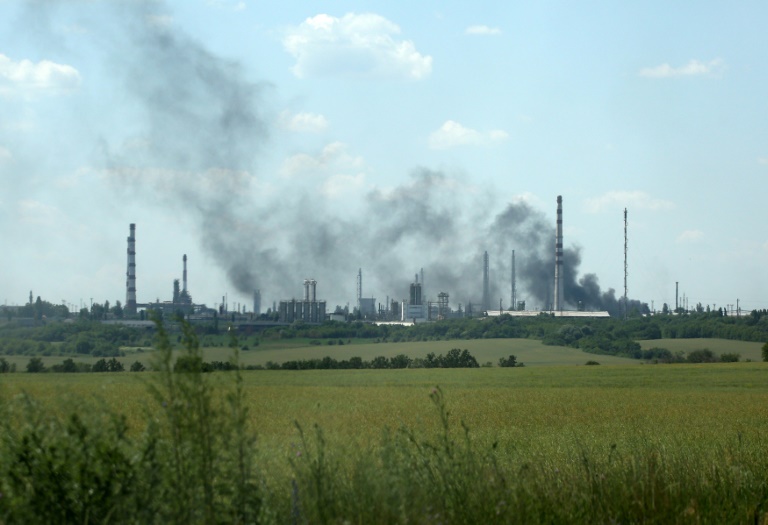
Kremlin troops were meanwhile gaining ground in the Donbas, causing “catastrophic destruction” in Lysychansk, an industrial city at the forefront of recent clashes, the region’s governor said. Ukraine confirmed Russia had taken the frontline village of Toshkivka.

Governor Sergiy Gaiday said “every town and village” in Ukrainian hands in the Lugansk region was “under almost non-stop fire”. 

Since being repelled from Kyiv and other parts of Ukraine following its invasion in February, Moscow has been focusing its offensive on the Donbas region.

In the eastern city of Sloviansk, which could become a flashpoint as Russian troops advance from the north, local people were preparing to withstand attacks and the authorities said the community would defend itself.

“We believe they’ll beat the Russian scum,” resident Valentina, 63, said of local Ukrainian forces.

– ‘Serious’ consequences –

Russia’s war of words with EU member Lithuania escalated on Tuesday, with Moscow vowing “serious” consequences over Vilnius’ restrictions on rail traffic to the exclave of Kaliningrad that borders Lithuania and Poland. 

Lithuania says it is simply adhering to EU-wide sanctions on Moscow but Russia countered, accusing Brussels of “escalation”.

Moscow summoned the EU’s ambassador to Russia. Its foreign ministry said Lithuania’s actions “violate the relevant legal and political obligations of the European Union”.

“Russia will certainly respond to such hostile actions,” security council chief Nikolai Patrushev said at a regional security meeting in Kaliningrad.

Ukraine’s Defence Minister Oleksiy Reznikov tweeted that powerful German-made Panzerhaubitze 2000 howizter artillery pieces had reached his country’s forces.

Russia said Tuesday it had repelled a Ukrainian attempt to re-take the symbolic Snake Island, a small territory in the Black Sea captured by Russian forces on the first day of the invasion. 

– ‘Significant losses’ –

In addition to Toshkivka, Ukraine said it had lost control of the eastern village of Metyolkine, a settlement adjacent to Severodonetsk, which has been a focus of fighting for weeks and is now largely under Russian control.

A chemical plant in Severodonetsk where hundreds of civilians are said to be sheltering was being shelled constantly, Ukraine warned.

But defence ministry spokesman Oleksandr Motuzyanyk told Ukrainian television that Russian forces had suffered “significant losses in the area of Severodonetsk”.

Ukraine on Tuesday said it struck a Black Sea oil drilling platform off the Crimea peninsula because Russia was using it as a military installation. 

The rig had Russian garrisons and equipment for air defence, radar warfare and reconnaissance, Sergiy Bratchuk of Odessa’s regional military administration told an online briefing.

Crimea’s Moscow-backed leader Sergey Aksyonov had said three people were injured and seven more were missing after the first reported strike against offshore energy infrastructure in the Russian-annexed peninsula since the war began.

Russian shelling killed 15 people including an eight-year-old in eastern Ukraine’s Kharkiv region on Tuesday, its governor said.

On the maritime front, Russia’s navy is blockading ports, which Ukraine says is preventing millions of tonnes of grain from being shipped to world markets, contributing to soaring food prices.

Prior to the war, Ukraine was a major exporter of wheat, corn and sunflower oil.

With European officials due to gather this week at a summit expected to approve Ukraine’s candidacy to join the EU, Brussels foreign policy chief Josep Borrell called the Russians’ port blockade “a real war crime”.

Moscow denies responsibility for the disruption to deliveries and, following Borrell’s comments, blamed the West’s “destructive” position for surging grain prices. 

Turkish media reported that Russian, Ukrainian and UN officials would meet in Istanbul next week to try to unblock Black Sea grain exports.

– $100-million medal –

In New York, Dmitry Muratov, the Russian editor-in-chief of the independent newspaper Novaya Gazeta, auctioned off his Nobel Peace Prize gold medal for $103.5 million to benefit children displaced by the war.

It was sold to an unidentified phone bidder.

Muratov won the prize in 2021 alongside journalist Maria Ressa of the Philippines.

With US-Russia tensions soaring, the US State Department on Tuesday confirmed a second American, 52-year-old Stephen Zabielski, was killed fighting for Ukraine.

Kremlin spokesman Dmitry Peskov earlier told NBC News that two Americans captured in Ukraine while fighting with Kyiv’s military were “endangering” Russian soldiers and should be “held accountable for those crimes”.

On the ground, the police chief of the Kyiv region said victims of the Russian attempt to seize Ukraine’s capital continued to be found. 

So far, the bodies of 1,333 civilians have been discovered and 300 people remain missing.

US Attorney General Merrick Garland visited Ukraine on Tuesday to discuss prosecution of individuals involved in war crimes.

“There is no place to hide,” Garland said, vowing to hold to account those responsible for “atrocities” and war crimes.

Spain said one of its citizens fighting for Ukraine had been killed, without giving further detail.

Denmark and Sweden meanwhile became the latest European countries to warn of potential gas supply problems. Their energy agencies issued early warnings, due to uncertainty over hydrocarbon imports from Russia.

Ukraine has called the reasons given for Russia’s reduction of gas supply to European customers “far-fetched” and “illegal”.

burs-sr/imm/ah

US vows enforcement as ban on Xinjiang imports takes effect

The United States on Tuesday promised enforcement as a landmark ban took effect on most imports from Xinjiang, the Chinese region where rights groups say the Uyghur people are being forced into slave labor.

The Uyghur Forced Labor Prevention Act, which will be felt especially in the textile industry, took effect six months after it was signed into law by President Joe Biden following bipartisan support in Congress.

“We are rallying our allies and partners to make global supply chains free from the use of forced labor,” Secretary of State Antony Blinken said in a statement.

The US Customs and Border Protection service, which will enforce the new law, issued guidance that said it would presume products from Xinjiang involve forced labor and are therefore banned unless businesses can document otherwise.

The act “requires that importers demonstrate due diligence, effective supply chain tracing and supply chain management measures to ensure that they do not import any goods made, in whole or in part, by forced labor,” its advisory said.

It said it would look at the complete supply chain and not exempt goods shipped from other parts of China or third countries.

An estimated 20 percent of garments imported into the United States each year include some cotton from Xinjiang, according to labor rights groups.

The vast western region is also a major center of tomatoes canned for export.

Senator Marco Rubio, a Republican hawk who teamed up with liberal Democrats to push for the legislation, called the act “the most significant change in America’s relationship with China since 2001.”

“No longer will we look at images of bareheaded prisoners in shackles and blindfolds, lined up like animals for slaughter, and shrug,” he wrote in an opinion piece for Real Clear Politics.

– ‘Undermines free market principles’ –

China entered the World Trade Organization in 2001, helping usher in soaring growth as it became the manufacturing hub for the world.

US policymakers across party lines have gradually come to reject their bet that trade integration would moderate Beijing, which the Biden administration has identified as the top global competitor of the United States.

China again voiced anger over the trade ban and said it went against global efforts to decrease inflation and stabilize supply chains. 

“The act is solid evidence of the US’s arbitrariness in undermining international economic and trade rules,” foreign ministry spokesman Wang Wenbin said.

“The US move is against the trend of the times and bound to fail.”

But Omer Kanat, executive director of the Uyghur Human Rights Project, called the law a “huge win” for the movement and said it would push other governments to take similar action.

Rights groups, citing witness accounts, say that well more than one million Uyghurs and other predominantly Muslim Turkic-speaking people have been locked up in re-education camps in a bid to integrate them forcibly into China’s Han majority.

Beijing denies the charges and says it is providing vocational training to reduce the allure of Islamist extremism following violence.

Elon Musk's child seeks name change in break from dad

A transgender child of Elon Musk has asked a California court to recognize her as female and change her name as part of a new gender identity and to sever ties with the billionaire, records show.

A hearing is set for Friday in Los Angeles to consider a request by Xavier Alexander Musk to change names to Vivian Jenna Wilson and be legally acknowledged as female, according to a court filing.

Court papers state the reason for the change as “gender identity, and the fact that I no longer live with or wish to be related to my biological father in any way, shape or form.”

The request was filed a day after the child turned 18 years old, gaining the legal rights of an adult.

The world’s richest person, Elon Musk has fathered eight children, one of whom died shortly after birth.

The chief of Tesla and SpaceX, Musk early this year launched a $44 billion bid to buy Twitter.

Musk is known for attention-getting tweets, including one saying he supports transgender people but that those asking to be identified by specific pronouns “are aesthetic nightmares.”

Texas school shooting response deemed 'abject failure'

The police response to the Uvalde school massacre in Texas last month was an “abject failure,” a top law enforcement official told a hearing into the tragedy Tuesday, saying police wasted vital time looking for a classroom key that was “never needed.”

Nineteen young children and two teachers were killed when a teenage gunman went on a rampage at Robb Elementary on May 24 in America’s worst school shooting in a decade.

Local police have been under intense scrutiny since it emerged that more than a dozen officers waited outside a classroom door and did nothing as children lay dead or dying inside.

Steve McCraw, Texas’s public safety chief, told state senators probing the handling of the tragedy that police had enough officers to stop the shooter three minutes after he entered the school.

But instead they waited over an hour to confront the 18-year-old gunman as he carried out his attack.

McCraw said on-scene commander Pete Arredondo —  who has said in interviews since the tragedy he did not believe he was in charge of the overall police response — had “decided to place the lives of officers before the lives of children.”

“The officers had weapons, the children had none. The officers had body armor, the children had none. The officers had training, the subject had none,” he testified.

Arredondo had claimed that the classroom door was locked, delaying their move on the shooter, but McCraw told the inquiry that was not believed to be the case.

“He waited for a key that was never needed,” said the official.

McCraw told the inquiry that Arredondo had made “terrible decisions.”

He said the response ran counter to lessons learned since the Columbine high school shooting that left 13 people dead in 1999. 

“There’s compelling evidence that the law enforcement response to the attack at Robb Elementary was an abject failure and antithetical to everything we’ve learned over the last two decades since the Columbine massacre,” said McCraw.

“Obviously, not enough training was done in this situation, plain and simple,” he added.

More strike calls cloud summer for European low-cost airlines

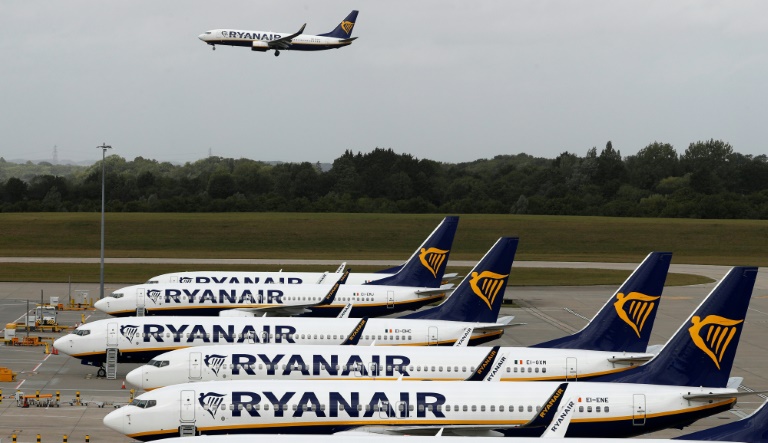
Europe’s low-cost airlines face a summer of discontent as staff in Spain and France announced new strikes over labour conditions on Tuesday.

Trade unions representing Ryanair cabin crew in Belgium, France, Italy, Portugal and Spain have called for strikes this coming weekend, while easyJet’s operations in Spain face a nine-day strike next month.

Damien Mourgues, a representative of the SNPNC trade union at Ryanair in France, said the airline did not respect rest-time laws. The union was also calling for a raise for cabin crew, still paid at the minimum wage.

Cabin crew will walk out on Saturday and Sunday.

Strike action on the weekend of June 12-13 already prompted the cancellation of about 40 Ryanair flights in France — about a quarter of the total.

Ryanair’s low-cost rival easyJet also faces nine days of strikes through July at the Barcelona, Malaga and Palma de Mallorca airports.

The union said Tuesday that Spanish easyJet cabin crew, with a base pay of 950 euros per month, have the lowest wages of the airline’s European bases.

An easyJet spokeswoman said: “should the industrial action go ahead we would expect some disruption to our flying programme” and “we would like to reassure customers that we will do everything possible to minimise any disruption.”

– Aviation sector ‘chaos’ –

The strikes come as air travel has rebounded since Covid-19 restrictions have been lifted.

But many airlines, which laid off staff during the pandemic, are having trouble rehiring enough workers, forcing them to cancel flights. That includes easyJet, which has been particularly hard hit by employee shortages.

On Monday, the European Transport Workers’ Federation called “on passengers not to blame the workers for the disasters in the airports, the cancelled flights, the long queues and longer time for check-ins, and lost luggage or delays caused by decades of corporate greed and a removal of decent jobs in the sector”.

The Federation said it expected “the chaos the aviation sector is currently facing will only grow over the summer as workers are pushed to the brink”.

In Spain, trade unions have urged Ryanair cabin crews to strike from June 24 to July 2 to secure their “fundamental labour rights” and “decent work conditions for all staff”.

Ryanair staff in Portugal plan to go on strike from Friday to Sunday to protest work conditions, as do employees in Belgium.

Ryanair boss Michael O’Leary has been dismissive of the strikes.

“We operate two and half thousand flights every day,” he said earlier this month in Belgium.

“Most of those flights will continue to operate even if there is a strike in Spain by some Mickey Mouse union or if the Belgian cabin crew unions want to go on strike over here,” told journalists.

– Airport staff discontent –

But Ryanair pilots in Belgium decided over the weekend to join cabin crew in a strike from Friday.

Meanwhile, staff at Brussels Airlines, a Lufthansa unit, have called a three-day strike from Thursday.

In Italy, a 24-hour strike is set to hit Ryanair operations on Saturday with pilots and cabin crew calling for the airline to respect the minimum wages set for the sector under a national agreement.  

Ryanair continued to dismiss the strike threat, saying they were being called by minority unions. 

“We do not expect widespread disruption this summer,” an airline spokeswoman told AFP, adding it had collective workplace agreements in place covering 90 percent of its European staff and was in talks to improve labour conditions.

“These minority union strikes are not supported by our crews,” said the spokeswoman.

Airports have also been plagued by staff shortages, which have caused long lines at check-in counters and security checks, provoking the ire of travellers.

On Monday, a strike by security agents caused the cancellation of all departures from Brussels’ Zaventem airport.

Cleaning staff at Amsterdam’s Schiphol airport temporarily stopped working on Monday after missing out on a bonus.

And at Paris’ Charles de Gaulle airport, one of Europe’s largest, staff are set to strike from July 1.

Meanwhile, London moved Tuesday to halt a spate of cancellations at its airports by relaxing the requirement that airlines use their landing and takeoff slots or risk losing them.

The move will enable “airlines to plan ahead and deliver a realistic summer schedule that minimises disruption at the airports”, said the government.

NASA Moon rocket test met 90% of objectives

NASA’s fourth attempt to complete a critical test of its Moon rocket achieved around 90 percent of its goals, but there’s still no firm date for the behemoth’s first flight, officials said Tuesday.

Known as the “wet dress rehearsal” because it involves loading liquid propellant, it is the final item to cross off the checklist before the Artemis-1 mission slated for this summer: an uncrewed lunar flight that will eventually be followed by Moon boots on the ground, likely no sooner than 2026.

Teams at the Kennedy Space Center began their latest effort to complete the exercise on Saturday. 

Their objectives were to load propellant into the rocket’s tanks, conduct a launch countdown and simulate contingency scenarios, then drain the tanks.

Three previous bids, starting in March, were plagued by glitches and failed to fuel up the rocket with hundreds of thousands of gallons of supercooled liquid hydrogen and liquid oxygen.

On Monday, engineers finally succeeded in fully loading up the tanks. But they also encountered a new hydrogen leak issue they were unable to resolve.

“I would say we’re in the 90th percentile in terms of where we need to be overall,” Artemis mission manager Mike Sarafin told reporters Tuesday.

He added NASA was still deciding whether it needed another rehearsal, or could proceed straight to launch. The agency previously said an August window for Artemis-1 was possible.

NASA officials have repeatedly emphasized that delays involving the testing of new systems was common during the Apollo and Space Shuttle era, and the issues affecting SLS are not of major concern.

With the Orion crew capsule fixed on top, the Space Launch System (SLS) Block 1 stands 322 feet (98 meters) high — taller than the Statue of Liberty, but a little smaller than the 363 feet Saturn V rockets that powered the Apollo missions to the Moon.

It will produce 8.8 million pounds of maximum thrust (39.1 Meganewtons), 15 percent more than the Saturn V, meaning it’s expected to be the world’s most powerful rocket at the time it begins operating.

Artemis-1 is set to journey around the far side of the Moon sometime this summer on a test flight.

Artemis-2 will be the first crewed test, flying around the Moon but not landing, while Artemis-3 will see the first woman and first person of color touch down on the lunar south pole.

NASA wants to build a permanent presence on the Moon, and use it as a proving ground for technologies necessary for a Mars mission, sometime in the 2030s.

UK hit by biggest rail strike in over 30 years

Travel across British railway stations ground to a halt Tuesday as widespread strike action billed as the biggest in more than three decades plunged commuters into chaos and persuaded many to stay at home.

The RMT rail union argues the strikes are necessary as wages have failed to keep pace with UK inflation, which has hit a 40-year high and is on course to keep rising.

Last-ditch talks to avert the work stoppage broke down Monday, prompting more than 50,000 RMT members to walk out.

But negotiations will resume Wednesday, the RMT announced. Network Rail, which looks after the country’s rail tracks, told AFP discussions would begin at 10:00 am (0900 GMT).

Railway and London Underground stations, normally a sea of people for the morning and evening rush hours, were deserted or even locked, with just a skeleton service running on many networks across the country.

Passengers were warned not to travel all week, with two more days of strike action scheduled for Thursday and Saturday playing havoc with schedules.

Cab firms reported a surge in demand, while the main roads were packed with buses and cars, with cyclists weaving in between.

Long queues formed at bus stops on the outskirts of London shortly after 6:00 am (0500 GMT), but many gave up as services carried on without stopping, already full.

Commuters trying to make their way home faced similar struggles.

– ‘Frustrating’ –

Amber Zito, 24, a canine hydrotherapist from Holmfirth, West Yorkshire, called the strikes “frustrating” after missing her morning train, but supported the rail workers. 

“Everything is kind of going tits up at the moment — planes, trains, everything.

“I blame the government. I don’t blame the people who work for train companies at all, they are only trying to do what everyone wants for their job.”

The country appeared divided over the strikes, with 37 percent in favour this week compared with 45 percent against, according to a snap YouGov survey.

The government maintains the issue must be resolved by the private train operators and the unions.

Transport Secretary Grant Shapps said he “deplored” the strikes, which he said evoked the “bad old days of the 1970s” when industrial action was far more common.

“The people that are hurting are people who physically need to turn up for work, maybe on lower pay, perhaps the cleaners in hospitals,” he told Sky News. 

– ‘Stay the course’ – 

Prime Minister Boris Johnson, addressing his cabinet, urged “the union barons to sit down with Network Rail and the train companies” to thrash out a deal.

The country needed to “stay the course”, defending reforms to the rail network as needed and in the public interest.

RMT general-secretary Mick Lynch has described as “unacceptable” offers of below-inflation pay rises by both overground train operators and London Underground, which runs the Tube in the capital.

The walkouts risk causing significant disruption to major events including the Glastonbury music festival.

Thousands of teenagers taking national school exams were also hit. Some decided to leave at least an hour earlier to make it in time, while others took taxis.

The strikes are the biggest dispute on Britain’s railway network since 1989, according to the RMT. And rail operators warn of disruption throughout the week.

Only about 20 percent of services are running during the walkouts and half of all lines are closed. Those lines that are still open are running at reduced capacity.

And as well as the above-ground rail strike, RMT members on the London Underground are staging a 24-hour Tube train stoppage Tuesday.

Service is expected to reach 60 percent Wednesday, threatening further disruption.

– Teachers, lawyers, NHS –

Countries around the world are being hit by decades-high inflation as the Ukraine war and the easing of Covid restrictions fuel energy and food price hikes.

Unions also warn railway jobs are at risk, with passenger traffic yet to fully recover after the lifting of coronavirus pandemic lockdowns.

The strikes are compounding wider travel chaos after airlines were forced to cut flights owing to staff shortages, causing long delays and frustration for passengers.

Thousands of workers were sacked in the aviation industry during the pandemic, and the sector is struggling to recruit workers back as travel demand rebounds following the lifting of lockdowns.

The Criminal Bar Association, representing senior lawyers in England and Wales, have voted to strike from next week in a row over legal aid funding.

Teaching staff, workers in the state-run National Health Service and the postal service are also mulling strike action.

US to drastically reduce nicotine content in cigarettes: reports

President Joe Biden’s administration is set to announce a new policy requiring cigarette producers to reduce nicotine to non-addictive levels, US media reported Tuesday — a move that would deal a powerful blow to the tobacco industry.

If successful, the policy could save millions of lives by the end of the century, and shape a future where cigarettes are no longer responsible for addiction and debilitating disease.

The initiative could be announced as soon as Tuesday, the Washington Post said, quoting a person familiar with the matter. 

It would require the Food and Drug Administration to develop and then publish a rule, which could then be contested by industry, added the Wall Street Journal, which first reported on the issue.

The entire effort is expected to take several years and could be delayed or derailed by litigation, or reversed by a future administration unsympathetic to its aims.

Nicotine is the “feel good” chemical that hooks millions to tobacco products. Thousands of other chemicals contained in tobacco and its smoke are responsible for diseases such as cancer, heart disease, stroke, lung diseases, diabetes and more.

Though smoking is less prevalent in the United States than Europe and has been declining for years, it is still responsible for 480,000 deaths a year in the country, according to the Centers for Disease Control and Prevention.

Some 13.7 percent of all US adults are current cigarette smokers, according to CDC data.

Reducing the nicotine content of cigarettes has been a topic under discussion for years among US authorities.

Former FDA commissioner Scott Gottlieb in 2017 announced he wanted to move forward on the issue, and funded a study published in the New England Journal of Medicine in 2018 that found “reduced-nicotine cigarettes versus standard-nicotine cigarettes reduced nicotine exposure and dependence and the number of cigarettes smoked.”

The FDA found that if the policy were enacted in 2020, it would prevent eight million premature deaths from tobacco by 2100.

The tobacco industry rejects the findings and says people would in fact smoke more.

Biden has made a “cancer moonshot” a centerpiece of his agenda and nicotine-reduction policy would fit within its goals, at minimal cost.

The total economic cost of smoking is more than $300 billion a year, according to the CDC, including more than than $225 billion in direct medical care for adults, and more than $156 billion in lost productivity due to premature death and exposure to secondhand smoke.

US confirms death of second citizen in Ukraine

The United States on Tuesday confirmed that a second American was killed fighting for Ukraine, as it warned of risks amid worries over two other US citizens captured battling Russia.

The State Department said that 52-year-old Stephen Zabielski died in Ukraine and that it was providing his family with consular assistance.

“We once again reiterate US citizens should not travel to Ukraine due to the active armed conflict and the singling out of US citizens in Ukraine by Russian government security officials,” a State Department spokesperson said.

The spokesperson called on US citizens in Ukraine to “depart immediately if it is safe to do so using any commercial or other privately available ground transportation options.”

Zabielski is the second American known to be killed fighting for Ukraine since Russia attacked its neighbor in February.

A 22-year-old former Marine, Willy Joseph Cancel, was confirmed as the first American killed fighting for Ukraine in late April.

A newspaper in upstate New York, where Zabielski used to live, ran an obituary saying that he died on May 15 “while fighting the war in Village of Dorozhniank, Ukraine.”

Zabielski, who went by Steve, was employed in construction for 30 years and was survived by a wife and five stepchildren, said the obituary in The Recorder.

“Steve enjoyed life to the fullest. He enjoyed hunting, fishing, & riding his Harley,” it said.

The obituary said that he was born in Amsterdam, New York, near the state capital Albany, and lived in the area until 2018 before moving to Florida.

The death was confirmed amid US concerns about two US military veterans volunteering for Ukraine who were captured earlier this month in the east of the war-wracked country.

Alexander Drueke and Andy Huynh, who had both been living in Alabama, were seen in videos aired by Russian state media but it was unclear where they were being held.

The State Department has said that Russia is required to treat volunteers humanely as they would other prisoners of war in accordance with the Geneva Conventions.

Kremlin spokesman Dmitry Peskov, in an interview with NBC News released on Monday, called them “soldiers of fortune” and said they should be “held responsible for those crimes that they have committed.”

Peskov also said the Geneva Conventions would not apply to the pair.

Reacting to Peskov’s remarks, a senior US official said Tuesday, “We obviously disagree vigorously.”

The official said that Russia has not yet provided any information directly about the pair.

In communication with Russia, the official said, “One of the asks was — who have you got, if any, and where are they? And if you’ve got anybody, you’re obliged to treat them consistently with the Geneva Conventions.”

Reversing Trump, US reimposes near total ban on landmine use

The United States said Tuesday it will return to a ban on landmines other than on the Korean peninsula, reversing course from former president Donald Trump as it drew a contrast with Russia’s use of the explosives in Ukraine.

President Joe Biden’s administration said it would stop the use and production of anti-personnel landmines, which kill thousands of civilians a year.

It said it will destroy the US stockpile of three million mines except when judged to be needed in Korea.

“The administration’s actions today are in sharp contrast to Russia’s actions in Ukraine,” senior State Department official Stanley Brown told reporters.

In Ukraine, “there’s compelling evidence that Russian forces are using explosive munitions including landmines in an irresponsible manner, which is causing extensive harm to civilians and damage to vital civilian infrastructure there,” he said.

The policy shift puts the United States closer to compliance but still outside the 1997 Ottawa Convention that banned anti-personnel landmines — a treaty rejected by US adversaries Russia and China as well as historic enemies India and Pakistan.

The Biden administration returned to a policy of former president Barack Obama and reversed the position of Trump, who in 2020 gave the green light again to use and produce landmines, saying the United States had put itself at a competitive disadvantage.

The changes reflect Biden’s “belief that these weapons have disproportionate impact on civilians, including children, long after fighting has stopped,” a White House statement said.

Adrienne Rich, spokeswoman for the National Security Council, said that the United States has invested more than $4.2 billion since 1993 to destroy landmines and other conventional weapons.

“We will continue this important work as we take another step to reclaim American leadership on the world stage,” she said in a statement.

– Korean exception –

The major exception is on the Korean peninsula, where many of North Korea’s 1.2 million troops are stationed near the Demilitarized Zone just 50 kilometers (30 miles) north of Seoul, the South’s capital and a global economic hub.

“The unique circumstances on the Korean peninsula and the US commitment to the defense of the Republic of Korea preclude the United States from changing anti-personnel landmine policy on the Korean peninsula at this time,” the White House said.

The United States does not actively control minefields on the peninsula as it has transferred control to South Korea, which is not party to the Ottawa Convention.

The Trump administration argued that the United States could develop smarter landmines that could be deactivated remotely.

But anti-mine campaigners — who famously included Princess Diana — have long pointed to the deaths and maiming of civilians years after conflicts.

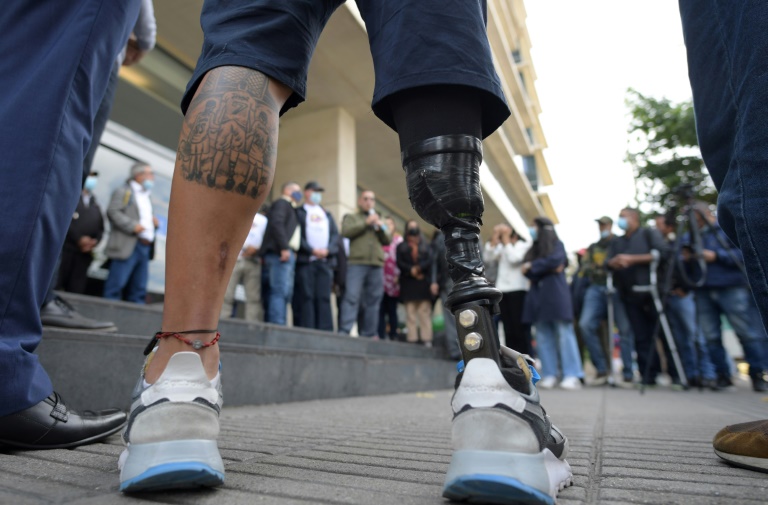
In 2019, landmines killed at least 2,170 people and injured another 3,357 people, nearly half of them believed to be children, according to the annual Landmine Monitor researched by non-governmental groups.

Non-governmental group Humanity and Inclusion praised the Biden shift but called on the United States to join the Ottawa treaty.

“Civilians can breathe a little easier today, because the leader of one of the world’s largest militaries just promised to avoid future use of these weapons outside of the Korean peninsula,” said Jeff Meer, the group’s US executive director.

But the US refusal to join the treaty — even though it has not used antipersonnel mines since the 1991 Gulf War — “is an ironic and historical oddity” that “leaves thousands of lives at risk,” Meer said.

– Mines in Ukraine —

Human Rights Watch in a recent report said that Russia has deployed at least seven kinds of mines in Ukraine since invading, including new types making their battlefield debut.

The landmines include booby-traps laid as Russian forces retreat that are set off by victims, it said.

The mines have stopped Ukrainian civilians — whose own country is party to the Ottawa Convention — from accessing homes and fields, it said.

The United States has shipped Claymore mines — designed to ambush enemy infantry — to Ukraine.

Brown argued that Claymore mines comply with the Ottawa Convention as they are detonated by command of a person.

Close Bitnami banner
Bitnami