US Business

US high court denies Bayer bid to block Roundup weedkiller lawsuits

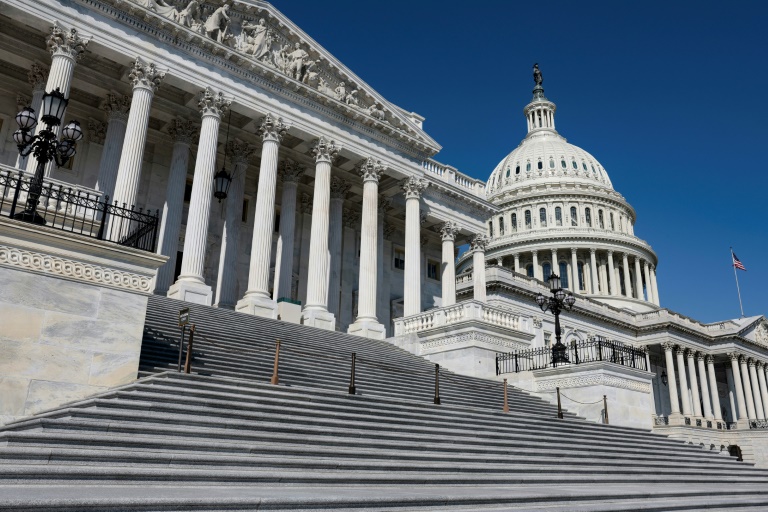
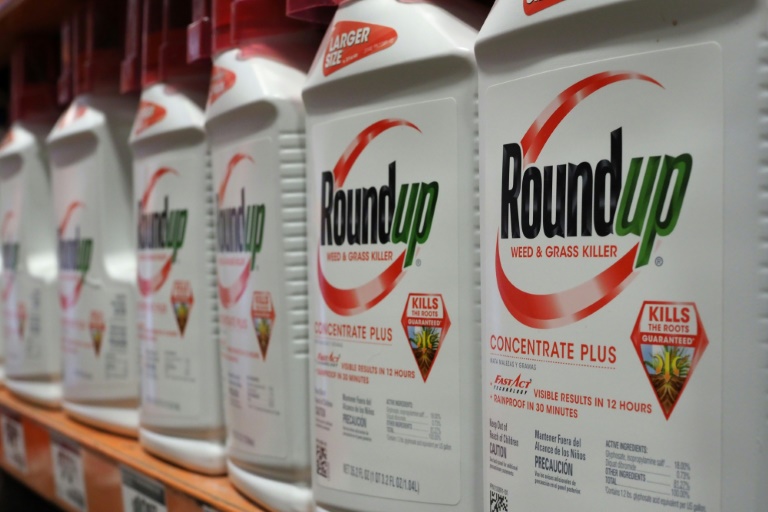
The US Supreme Court on Tuesday declined to hear a bid from Bayer-owned Monsanto that aimed to challenge thousands of lawsuits claiming its weedkiller Roundup causes cancer — a potentially costly ruling.

The high court did not explain its decision, which left intact a $25 million ruling in favor of a California man who alleged he developed cancer after using the chemical for years.

The decision marks a major blow to the German conglomerate’s legal fight against Roundup-related cases, and Bayer has set aside more than $15 billion to deal with a wave of US lawsuits linked to the weedkiller.

“Bayer respectfully disagrees with the Supreme Court’s decision,” the company said in a statement.

“The company believes that the decision undermines the ability of companies to rely on official actions taken by expert regulatory agencies,” it added, referring to a 2020 federal finding that Roundup’s active ingredient is not risky.

Bayer has been plagued by problems since it bought Monsanto, which owns Roundup, in 2018 for $63 billion and inherited its legal woes around the chemical’s ingredient glyphosate.

The German firm says it has not committed any wrongdoing, and maintains that scientific studies and regulatory approvals show glyphosate is safe.

Glyphosate is nonetheless classified as a “probable carcinogen” by the International Agency for Research on Cancer at the World Health Organization (WHO).

– Billions in claims –

However, the United States Environmental Protection Agency, on its website, says “there are no risks of concern to human health when glyphosate is used in accordance with its current label.”

The Supreme Court’s decision not to intervene leaves in place Monsanto’s appellate conviction in the lawsuit filed by Edwin Hardeman, who was diagnosed with non-Hodgkin’s lymphoma in 2015.

In addition to the some 30,000 cases about health problems allegations against the weedkiller, Bayer’s own shareholders have taken legal action as well.

Investors are seeking 2.2 billion euros ($2.5 billion) in damages in a German court for losses incurred following its troubled takeover of Monsanto, their lawyers said in January.

The investors accuse Bayer of having “misled capital markets about the economic risks from pending consumer lawsuits in the United States in connection with glyphosate and the herbicide Roundup,” law firm Tilp said in a statement.

Tilp said around 320 investors have submitted complaints, most of them institutional investors such as banks, wealth managers, insurers and pension funds.

Some three-quarters of the claims targeting Roundup originate with residential consumers, and not large-scale farmers.

Bayer executives have argued that its agricultural users know the proper use of the product better than residential ones.

The firm said it is transitioning its glyphosate-based products in the US residential market to new formulations that have alternative active ingredients beginning in 2023.

“The company is taking this action exclusively to manage litigation risk in the US and not because of any safety concerns,” it said in a statement.

Bayer says it has resolved around 107,000 of a total of 138,000 cases related to the herbicide.

Bayer’s share price was down just under two percent after the court’s decision on Tuesday.
US high court denies Bayer bid to block Roundup weedkiller lawsuits

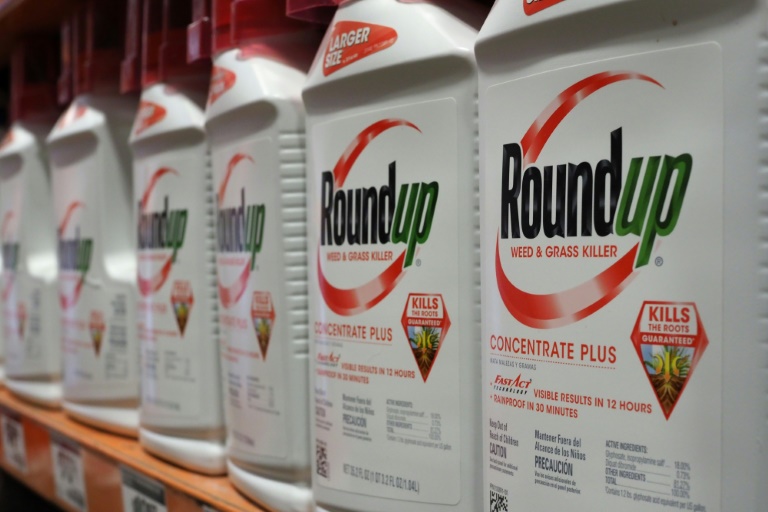
The US Supreme Court on Tuesday declined to hear a bid from Bayer-owned Monsanto that aimed to challenge thousands of lawsuits claiming its weedkiller Roundup causes cancer — a potentially costly ruling.

The high court did not explain its decision, which left intact a $25 million ruling in favor of a California man who alleged he developed cancer after using the chemical for years.

The decision marks a major blow to the German conglomerate’s legal fight against Roundup-related cases, and Bayer has set aside more than $15 billion to deal with a wave of US lawsuits linked to the weedkiller.

“Bayer respectfully disagrees with the Supreme Court’s decision,” the company said in a statement.

“The company believes that the decision undermines the ability of companies to rely on official actions taken by expert regulatory agencies,” it added, referring to a 2020 federal finding that Roundup’s active ingredient is not risky.

Bayer has been plagued by problems since it bought Monsanto, which owns Roundup, in 2018 for $63 billion and inherited its legal woes around the chemical’s ingredient glyphosate.

The German firm says it has not committed any wrongdoing, and maintains that scientific studies and regulatory approvals show glyphosate is safe.

Glyphosate is nonetheless classified as a “probable carcinogen” by the International Agency for Research on Cancer at the World Health Organization (WHO).

– Billions in claims –

However, the United States Environmental Protection Agency, on its website, says “there are no risks of concern to human health when glyphosate is used in accordance with its current label.”

The Supreme Court’s decision not to intervene leaves in place Monsanto’s appellate conviction in the lawsuit filed by Edwin Hardeman, who was diagnosed with non-Hodgkin’s lymphoma in 2015.

In addition to the some 30,000 cases about health problems allegations against the weedkiller, Bayer’s own shareholders have taken legal action as well.

Investors are seeking 2.2 billion euros ($2.5 billion) in damages in a German court for losses incurred following its troubled takeover of Monsanto, their lawyers said in January.

The investors accuse Bayer of having “misled capital markets about the economic risks from pending consumer lawsuits in the United States in connection with glyphosate and the herbicide Roundup,” law firm Tilp said in a statement.

Tilp said around 320 investors have submitted complaints, most of them institutional investors such as banks, wealth managers, insurers and pension funds.

Some three-quarters of the claims targeting Roundup originate with residential consumers, and not large-scale farmers.

Bayer executives have argued that its agricultural users know the proper use of the product better than residential ones.

The firm said it is transitioning its glyphosate-based products in the US residential market to new formulations that have alternative active ingredients beginning in 2023.

“The company is taking this action exclusively to manage litigation risk in the US and not because of any safety concerns,” it said in a statement.

Bayer says it has resolved around 107,000 of a total of 138,000 cases related to the herbicide.

Bayer’s share price was down just under two percent after the court’s decision on Tuesday.

US Supreme Court says state cannot deny public funds to religious schools

The US Supreme Court ruled on Tuesday that public funds can be used to support families sending their children to religious schools, in a case that challenged longstanding principles of separation of church and state.

The case was brought by two evangelical Christian families in the northeastern state of Maine who sued to be able to use state-provided education subsidy funds to send their kids to schools with religion as the basis of their teachings.

In a 6-3 ruling, the court said religious schools cannot be excluded from the tuition assistance program.

“There is nothing neutral about Maine’s program,” Chief Justice John Roberts wrote in an opinion joined by the other five conservative justices.

“The State pays tuition for certain students at private schools — so long as the schools are not religious. That is discrimination against religion,” Roberts said.

As Maine is sparsely populated, more than half of its school districts have no publicly funded high schools.

So families receive subsidies that allow them to send their children to schools of their choice, including privately-run schools.

But schools where religious beliefs are at the core of instruction are not covered in the aid program, because, under the regulations for the program — and those similar in other states — the teaching is “sectarian.”

One of the families wanted to send their children to a school that was disqualified because, local authorities argued, it “teaches children that the husband is the leader of the household” and encourages kids to recognize “God as Creator of the world.” 

The school chosen by the second family in the case makes use of the Bible in all academic subjects. 

And both schools do not accept LGBTQ students or employees.

The parents who sued — with the backing of Republican senators, 20-odd conservative-led states and many religious institutions — argued that the Constitution’s First Amendment freedom of religion clause gives them the right to choose a school that reflects their values.

If they are denied the subsidies, they claimed, they are suffering discrimination because of their religious views.

The state of Maine argued that under the Constitution government funds cannot be used to support religious schools that discriminate, for example, against LGBTQ students.

– ‘Social conflict’ –

The administration of President Joe Biden, Democratic-run states and teachers and human rights associations backed Maine.

The three liberal justices on the Supreme Court dissented with Justice Stephen Breyer saying there would be an “increased risk of religiously based social conflict when government promotes religion in its public school system.”

Sonia Sotomayor, another liberal, said “what a difference five years makes.

“In 2017, I feared that the Court was ‘leading us … to a place where separation of church and state is a constitutional slogan, not a constitutional commitment,” she said.

“Today, the Court leads us to a place where separation of church and state becomes a constitutional violation.”

The case is a part of a much wider US debate on the role of parents and school choice in education, and how tax funds dedicated to schools are allocated.

Issues of Covid-19 policies, acceptance of transgender students, and teaching about African-American history have deepened divides and encouraged some parents to look to private and religious schools for their children.

Markets climb as calm returns after sharp selloff

Stock markets rose Tuesday as calm returned following last week’s rout, but analysts warned that recession fears have not gone away and will cause more turmoil.

After a three-day holiday weekend, Wall Street burst higher, with the Dow up 1.9 percent while the broad-based S&P 500 gained 2.6 percent and the tech-heavy Nasdaq shot up 3.2 percent in late morning trading.

European equities rose for a second straight day, but pared down some of their gains from the morning.

Oil prices extended gains on hopes of improving energy demand in key consumers China and the United States, while the euro climbed on the prospect of rising eurozone borrowing costs.

“Risk appetite has managed to recover for now, perhaps because we get a much needed-break from central bank decisions this week,” IG analyst Chris Beauchamp told AFP.

“But while a bounce is overdue, it is probably only temporary.”

There remains an overarching sense of gloom as traders speculate that the sharp lift in borrowing costs around the world will tip economies into recession.

The focus this week is on Federal Reserve boss Jerome Powell’s two days of testimony to lawmakers in Washington, which will be closely watched for clues regarding the bank’s plans for fighting surging consumer prices.

“Where we go from here depends largely on whether Federal Reserve Chair Powell spooks the markets with his pre-released comments and what inflation data from the UK shows tomorrow (Wednesday),” City Index analyst Fiona Cincotta told AFP.

The Fed announced a hefty interest rate hike last week, days after inflation data had smashed forecasts and hit a four-decade high. 

Several officials — including at the Fed, Bank of England, Reserve Bank of Australia and European Central Bank — have come out in recent days to flag a further tightening of borrowing costs.

Inflation has rocketed to multi-decade highs around the world on a host of factors, including the global supply crunch and the Ukraine conflict, which has fuelled strong gains for food and energy prices.

“These small recoveries in stock markets shouldn’t provide any comfort,” said Craig Erlam, senior analyst at OANDA trading platform.

“Recession is increasingly becoming the base case and so equities are vulnerable to further losses,” he said.

In currency trading, the yen struck a 24-year dollar low of 136.34 yen following comments by Prime Minister Fumio Kishida that it “is up to the central bank” how to maintain its easy money policy while central banks elsewhere are raising rates. 

“The market is clearly looking to test the resolve of the Bank of Japan in terms of how much they are prepared to tolerate further currency weakness,” said market analyst Michael Hewson at CMC Markets UK.

In corporate news, shares in German chemicals group Bayer fell by 4.7 percent following the US Supreme Court declining to hear a bid from Bayer-owned Monsanto to quash lawsuits claiming its weedkiller Roundup causes cancer, before clawing back part of the drop.

The decision marks a major blow to the German conglomerate’s legal fight against Roundup-related cases, and Bayer has set aside more than $15 billion to deal with a wave of US lawsuits linked to the weedkiller.

– Key figures at around 1530 GMT –

New York – Dow: UP 1.9 percent at 30,445.23 points

EURO STOXX 50: UP 0.7 percent at 3,494.00

London – FTSE 100: UP 0.4 percent at 7,152.05 (close)

Frankfurt – DAX: UP 0.2 percent at 13,292.40 (close)

Paris – CAC 40: UP 0.8 percent at 5,964.66 (close)

Tokyo – Nikkei 225: UP 1.8 percent at 26,246.31 (close)

Hong Kong – Hang Seng Index: UP 1.9 percent at 21,559.59 (close)

Shanghai – Composite: DOWN 0.3 percent at 3,306.72 (close)

Euro/dollar: UP at $1.0558 from $1.0511 late Monday

Pound/dollar: UP at $1.2276 from $1.2253

Euro/pound: UP at 86.00 pence from 85.78 pence

Dollar/yen: UP at 136.18 yen from 135.07 yen

Brent North Sea crude: UP 0.6 percent at $114.84 per barrel

West Texas Intermediate: UP 1.4 percent at $111.13

burs-rl/lth

Ecuador military calls Indigenous protests a 'grave threat'

Thousands of Ecuadorans took to the streets Tuesday for a ninth day of Indigenous-led fuel price protests, as the military vowed to defend the country’s democracy against what it called a “grave threat.” 

Called by the powerful Confederation of Indigenous Nationalities of Ecuador (Conaie), the demonstrations have seen roads barricaded countrywide, cost the economy tens of millions of dollars and left dozens injured. 

“Ecuador’s democracy faces a grave threat from the concerted actions of… people who are preventing the free movement of the majority of Ecuadorans,” Defense Minister Luis Lara told a press conference, flanked by the heads of the army, navy and air force.

The armed forces, he warned, “will not allow attempts to break the constitutional order or any action against democracy and the laws of the republic.”

Conaie — credited with helping topple three presidents between 1997 and 2005 — called the demonstrations as Ecuadorans increasingly struggle to make ends meet.

Indigenous people comprise more than a million of Ecuador’s 17.7 million inhabitants and wield much political clout, but are disproportionately affected by rising inflation, unemployment and poverty exacerbated by the coronavirus pandemic.

– 10 Demands –

Thousands of protesters entered Quito from the south and north on Monday, on foot and on the backs of trucks, to reinforce protesters in the capital, where they burnt tires and tree branches in the streets — and were back out in the streets on Tuesday morning.

At least some in the crowd, many wielding sticks and others draped in the Ecuadoran flag, or carrying children in their arms, said the president’s ouster was precisely what they sought.

“We are the people and we will stay here until the end,” Victor Taday, a 50-year-old Indigenous resident of Quito originally from Chimborazo province, told AFP Monday night — as similar marches took place in other parts of the country.

It was time for Lasso to “go away,” he said.

Fuel prices have risen sharply since 2020, almost doubling for diesel from $1 to $1.90 per gallon and rising from $1.75 to $2.55 for gasoline.

Conaie is demanding a price cut to $1.50 a gallon for diesel and $2.10 for gasoline.

It also wants jobs, food price controls and a commitment to renegotiating the personal bank loans of about four million families.

The movement has since been joined by students, workers and other Ecuadorans also feeling the economic pinch.

Police said Monday 63 armed forces personnel have been wounded in clashes and 21 others briefly held hostage since the protests began, while human rights observers reported 79 arrests and 55 civilians wounded.

President Guillermo Lasso extended a state of emergency to cover six of the country’s 24 provinces, with a night-time curfew in the capital Quito, as he sought to curtail the countrywide show of anger.

The state of emergency empowers Lasso to mobilize the armed forces to maintain order, suspend civil rights and declare curfews.

Conaie has vowed to maintain its blockade until the government meets 10 demands.

– ‘They seek chaos’ –

The president, a former banker in power since May 2021, said in a video on Twitter Monday that the protesters “do not want peace” and have rejected government calls for dialogue.

“They seek chaos. They want to eject the president,” he charged.

Ecuador’s parliament Monday evening voted 81 to 56 in favor of a resolution demanding the government conduct a “serious, clear and honest” dialogue with the protesters.

It proposed the convening of a “round table” of talks including the UN, Red Cross, universities and the powerful Catholic Church to find a solution to the stalemate.

US home prices top $400,000 for first time, crimping May sales

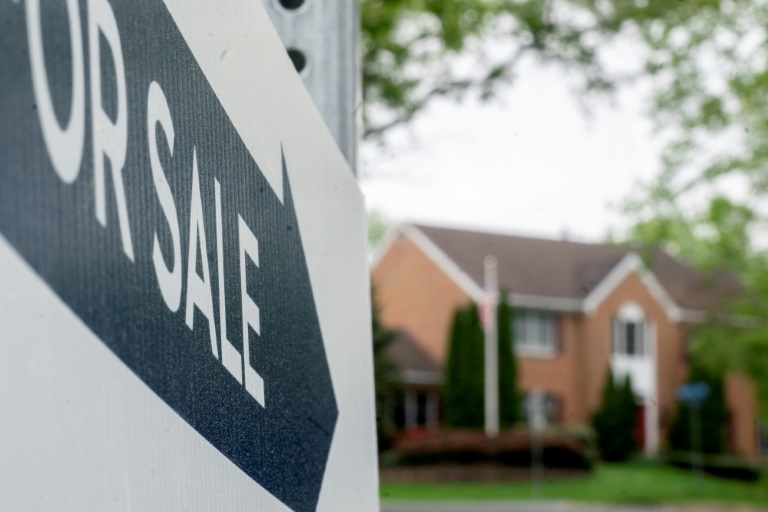
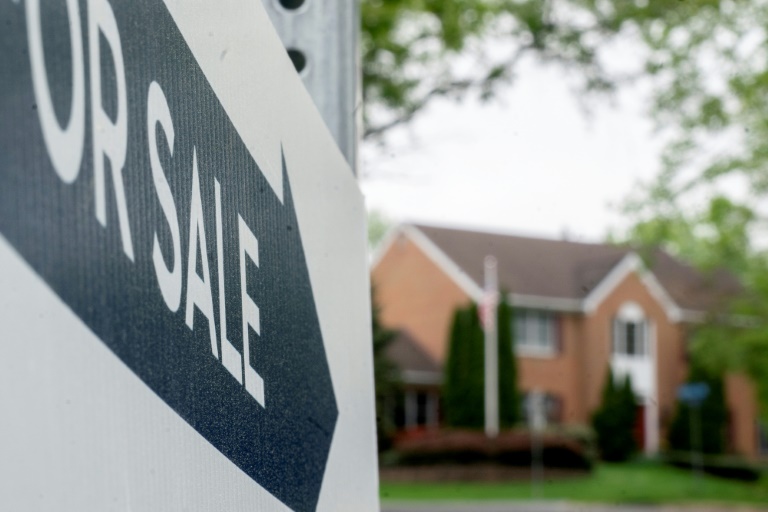
The median US home price broke above $400,000 for the first time, sending existing home sales in May falling for the fourth straight month, according to industry data released Tuesday.

Sales toppled 3.4 percent compared to April as the median sales price hit $407,600, a 14.8 percent surge compared to a year ago, the National Association of Realtors (NAR) reported.

The sales pace slowed to a seasonally adjusted annual rate of 5.41 million last month, which was 8.6 percent lower than May 2021, the report said.

“Home sales have essentially returned to the levels seen in 2019 — prior to the pandemic — after two years of gangbuster performance,” said NAR Chief Economist Lawrence Yun.

“Further sales declines should be expected in the upcoming months given housing affordability challenges from the sharp rise in mortgage rates this year,” he said.

Home loan rates jumped to 5.23 percent in May for a 30-year, fixed-rate mortgage, from 4.98 percent in April, according to Freddie Mac, as the Federal Reserve cranks up the benchmark borrowing rate to tamp down surging inflation.

The sales slowdown caused the inventory of homes on the market to jump 12.6 percent to a 2.6-month supply — just above the level of May 2021, according to the report.

Bargain borrowing rates had helped fuel the strong demand for home buying during the pandemic, driving prices ever higher as builders have struggled to keep up due to supply backlogs for lumber and other materials and a shortage of workers.

Now, “the market is adjusting, rapidly and painfully, to the surge in mortgage rates, which has pushed up the monthly payment on a median home by more than 50 percent since last August,” said Ian Shepherdson of Pantheon Macroeconomics.

He said prices normally would not begin to fall until inventories grew to a seven-month supply, but “the speed of the dislocation in the market in recent months, thanks to the suddenness of the spike in rates, means that a period of falling prices is a good bet.”

Sales fell throughout the United States, except in the Northeast, while prices rose nationwide.

All-cash buyers accounted for a quarter of sales in May, NAR said.

Yun noted trends in condominium sales may indicate that “the preference towards suburban living over city life that had been present over the past two years is fading with a return to pre-pandemic conditions.”

US home prices top $400,000 for first time, crimping May sales

The median US home price broke above $400,000 for the first time, sending existing home sales in May falling for the fourth straight month, according to industry data released Tuesday.

Sales toppled 3.4 percent compared to April as the median sales price hit $407,600, a 14.8 percent surge compared to a year ago, the National Association of Realtors (NAR) reported.

The sales pace slowed to a seasonally adjusted annual rate of 5.41 million last month, which was 8.6 percent lower than May 2021, the report said.

“Home sales have essentially returned to the levels seen in 2019 — prior to the pandemic — after two years of gangbuster performance,” said NAR Chief Economist Lawrence Yun.

“Further sales declines should be expected in the upcoming months given housing affordability challenges from the sharp rise in mortgage rates this year,” he said.

Home loan rates jumped to 5.23 percent in May for a 30-year, fixed-rate mortgage, from 4.98 percent in April, according to Freddie Mac, as the Federal Reserve cranks up the benchmark borrowing rate to tamp down surging inflation.

The sales slowdown caused the inventory of homes on the market to jump 12.6 percent to a 2.6-month supply — just above the level of May 2021, according to the report.

Bargain borrowing rates had helped fuel the strong demand for home buying during the pandemic, driving prices ever higher as builders have struggled to keep up due to supply backlogs for lumber and other materials and a shortage of workers.

Now, “the market is adjusting, rapidly and painfully, to the surge in mortgage rates, which has pushed up the monthly payment on a median home by more than 50 percent since last August,” said Ian Shepherdson of Pantheon Macroeconomics.

He said prices normally would not begin to fall until inventories grew to a seven-month supply, but “the speed of the dislocation in the market in recent months, thanks to the suddenness of the spike in rates, means that a period of falling prices is a good bet.”

Sales fell throughout the United States, except in the Northeast, while prices rose nationwide.

All-cash buyers accounted for a quarter of sales in May, NAR said.

Yun noted trends in condominium sales may indicate that “the preference towards suburban living over city life that had been present over the past two years is fading with a return to pre-pandemic conditions.”

More strike calls cloud summer for European low-cost airlines

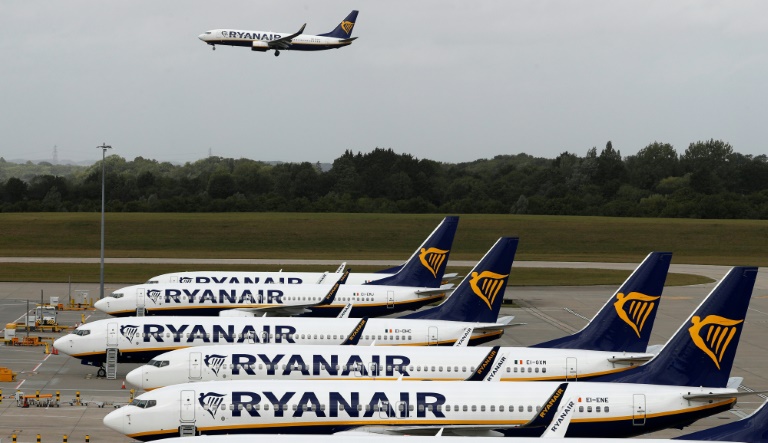
Europe’s low-cost airlines face a summer of discontent as staff in Spain and France announced new strikes over labour conditions on Tuesday.

Trade unions representing Ryanair cabin crew in Belgium, France, Italy, Portugal and Spain have called for strikes this coming weekend, while easyJet’s operations in Spain face a nine-day strike next month.

Damien Mourgues, a representative of the SNPNC trade union at Ryanair in France, said the airline doesn’t respect rest time laws and is calling for a raise for cabin crew still paid at the minimum wage.

Cabin crew will go on strike on Saturday and Sunday.

A strike on the weekend of June 12-13 already prompted the cancellation of about 40 Ryanair flights in France, or about a quarter of the total.

Ryanair’s low-cost rival easyJet also faces nine days of strikes on different days in July at the Barcelona, Malaga and Palma de Mallorca airports.

The union said Tuesday that Spanish easyJet cabin crew, with a base pay of 950 euros per month, have the lowest wages of the airline’s European bases.

The strikes come as air travel has rebounded since Covid-19 restrictions have been lifted.

But many airlines, which laid off staff during the pandemic, are having trouble rehiring enough workers and have been forced to cancel flights, including easyJet, which has been particularly hard hit by employee shortages.

On Monday, the European Transport Workers’ Federation called “on passengers not to blame the workers for the disasters in the airports, the cancelled flights, the long queues and longer time for check-ins, and lost luggage or delays caused by decades of corporate greed and a removal of decent jobs in the sector.”

The Federation said it expects “the chaos the aviation sector is currently facing will only grow over the summer as workers are pushed to the brink.”

– Aviation sector ‘chaos’ –

In Spain, trade unions have urged Ryanair cabin crews to strike from June 24 to July 2 to secure their “fundamental labour rights” and “decent work conditions for all staff”.

Ryanair staff in Portugal plan to go on strike from Friday to Sunday to protest work conditions, as are employees in Belgium.

Ryanair boss Michael O’Leary has been dismissive of the strikes.

“We operate two and half thousand flights every day,” he said earlier this month in Belgium.

“Most of those flights will continue to operate even if there is a strike in Spain by some Mickey Mouse union or if the Belgian cabin crew unions want to go on strike over here,” he added in a media conference.

But Ryanair pilots in Belgium decided over the weekend to join cabin crew in a strike from Friday.

Meanwhile, staff at Brussels Airlines, a Lufthansa unit, have called a three-day strike from Thursday.

In Italy, a 24-hour strike is set to hit Ryanair operations on Saturday with pilots and cabin crew calling for the airline to respect the minimum wages set for the sector under a national agreement.  

Airports have also been plagued by staff shortages, which have caused long lines at check-in counters and security checks, provoking the ire of travellers.

On Monday, a strike by security agents caused the cancellation of all departures from Brussels’ Zaventem airport.

Cleaning staff at Amsterdam’s Schiphol airport temporarily stopped working on Monday after missing out on a bonus.

At Paris’ Charles de Gaulle airport, one of Europe’s largest, staff are set to strike from July 1.

Kellogg pops as it plans spin-off of legacy cereal business

Iconic breakfast food brand Kellogg became the latest US corporate giant to announce a breakup, unveiling plans Tuesday to split into three companies in a move that lifted its share price.

The company — known for such ubiquitous brands as Corn Flakes and Pop-Tarts — will spin off its North American cereal business into a new company, while a second venture will house Kellogg’s plant-based businesses.

The remaining corporation will be positioned as a higher-growth snacks business with exposure to emerging markets. This unit — which will also house the international cereal operation — accounted for roughly 80 percent of Kellogg’s $14.1 billion in 2021 revenues.

“This will unlock and create opportunity for all three businesses,” Kellogg Chief Executive Steve Cahillane said on a conference call with analysts.

The yet-to-be-named entities will initially be known as Global Snacking Co., North America Cereal Co., and Plant Co. The latter two will be created through tax-free spin-offs.

North American Cereal, covering the United States, Canada and the Caribbean, “will be solely dedicated to winning cereal and will not have to compete for resources with a fast-growing snack business,” said Cahillane, who will lead the new snacks company. 

North American Cereal and Plant Co. would remain headquartered in Battle Creek, Michigan, while Global Snacking will have dual headquarters — in Battle Creek and Chicago.

Leadership for the other two ventures has not yet been announced.

Kellogg’s announcement comes on the heels of earlier corporate break-ups including General Electric’s November 2021 announcement of a split into three ventures, which was followed a few weeks later and by Johnson & Johnson saying it will break in two.

– Growth markets –

The company’s origins date to 1894 when WK Kellogg created Corn Flakes breakfast cereal, launching the Kellogg company 12 years later in Battle Creek, Michigan. 

Subsequent products included Rice Krispies, released in 1928, and Frosted Flakes, which was unveiled in 1952 with the Tony the Tiger character on the box, which became famous for his “They’re gr-r-reat!” tagline.

But the bulk of the company’s revenues now come from global snacks, where about 50 percent of sales come from emerging markets and developed international markets.

Snack brands include Pringles, Pop-Tarts and Rice Krispies Treats, while the group also houses Eggo and other frozen breakfasts and products such as noodles in Africa, which Kellogg described as a “rapidly expanding business.”

Kellogg is aiming to complete the split by late 2023, subject to approval by US regulators.

Kellogg will continue to report as one company throughout 2022, said Chief Financial Officer Amit Banati.

The company expects to produce the required three years of audited financial statements for each of the ventures in the second half 2023.

Cahillane said it will be “business as usual over the next 18 months” while the company moves through the process.

He said Plant Co., which will house the MorningStar Farms alternative meat products, could also be acquired by another company if such an option arises and is better than an initial public offering.

Shares rose 2.9 percent to $69.60 in morning trading.

Kellogg pops as it plans spin-off of legacy cereal business

Iconic breakfast food brand Kellogg became the latest US corporate giant to announce a breakup, unveiling plans Tuesday to split into three companies in a move that lifted its share price.

The company — known for such ubiquitous brands as Corn Flakes and Pop-Tarts — will spin off its North American cereal business into a new company, while a second venture will house Kellogg’s plant-based businesses.

The remaining corporation will be positioned as a higher-growth snacks business with exposure to emerging markets. This unit — which will also house the international cereal operation — accounted for roughly 80 percent of Kellogg’s $14.1 billion in 2021 revenues.

“This will unlock and create opportunity for all three businesses,” Kellogg Chief Executive Steve Cahillane said on a conference call with analysts.

The yet-to-be-named entities will initially be known as Global Snacking Co., North America Cereal Co., and Plant Co. The latter two will be created through tax-free spin-offs.

North American Cereal, covering the United States, Canada and the Caribbean, “will be solely dedicated to winning cereal and will not have to compete for resources with a fast-growing snack business,” said Cahillane, who will lead the new snacks company. 

North American Cereal and Plant Co. would remain headquartered in Battle Creek, Michigan, while Global Snacking will have dual headquarters — in Battle Creek and Chicago.

Leadership for the other two ventures has not yet been announced.

Kellogg’s announcement comes on the heels of earlier corporate break-ups including General Electric’s November 2021 announcement of a split into three ventures, which was followed a few weeks later and by Johnson & Johnson saying it will break in two.

– Growth markets –

The company’s origins date to 1894 when WK Kellogg created Corn Flakes breakfast cereal, launching the Kellogg company 12 years later in Battle Creek, Michigan. 

Subsequent products included Rice Krispies, released in 1928, and Frosted Flakes, which was unveiled in 1952 with the Tony the Tiger character on the box, which became famous for his “They’re gr-r-reat!” tagline.

But the bulk of the company’s revenues now come from global snacks, where about 50 percent of sales come from emerging markets and developed international markets.

Snack brands include Pringles, Pop-Tarts and Rice Krispies Treats, while the group also houses Eggo and other frozen breakfasts and products such as noodles in Africa, which Kellogg described as a “rapidly expanding business.”

Kellogg is aiming to complete the split by late 2023, subject to approval by US regulators.

Kellogg will continue to report as one company throughout 2022, said Chief Financial Officer Amit Banati.

The company expects to produce the required three years of audited financial statements for each of the ventures in the second half 2023.

Cahillane said it will be “business as usual over the next 18 months” while the company moves through the process.

He said Plant Co., which will house the MorningStar Farms alternative meat products, could also be acquired by another company if such an option arises and is better than an initial public offering.

Shares rose 2.9 percent to $69.60 in morning trading.

Close Bitnami banner
Bitnami