US Business

Russia stepping up attacks, Ukraine says, ahead of EU decision

Russian forces have stepped up their shelling in Ukraine’s Kharkiv and Donetsk regions, Kyiv said Monday, after President Volodymyr Zelensky warned to expect greater hostilities ahead of a historic EU decision on Ukraine’s bid for candidate status.

Nearly four months after Russia launched a bloody invasion of his country, Zelensky said in his evening address on Sunday there had been “few such fateful decisions for Ukraine” as the one it expects from the European Union this week.

“Obviously, we expect Russia to intensify hostile activity this week … We are preparing. We are ready,” he said. 

Leaders of the EU’s 27 member states will discuss at a summit on Thursday and Friday whether to add Ukraine to the list of countries vying for membership.

EU foreign ministers gathering in Luxembourg kicked off the week urging Moscow to stop blocking the export of vitally needed grain from Ukraine, a top global supplier.

“One cannot imagine that millions of tonnes of wheat remain blocked in Ukraine while in the rest of the world people are suffering hunger. This is a real war crime,” the bloc’s top diplomat Josep Borrell said.

Moscow has denied responsibility for the food crisis, and blames Western sanctions for the disrupted deliveries that have pushed up cereal prices and fanned fears of famines in vulnerable regions. 

– Heavy bombardment –

On the ground, Russia appeared to be making some battlefield advances in the east.

In its daily update on Monday, Ukraine’s presidency reported heavier Russian shelling in the Kharkiv region in the northeast.

In the Donetsk region, the intensity of the attacks “is growing along the entire frontline” it said, leaving at least one person dead and injuring seven people, including a child.

Fighting also continued in the key industrial city of Severodonetsk in the east, with Ukraine saying it had lost control of the adjacent village of Metyolkine.

“Unfortunately, we do not control Metyolkine anymore. And the enemy continues to build up its reserves,” the Lugansk regional governor Sergiy Gaiday said in a statement on social media.

Moscow’s forces have for weeks been battling to seize the eastern Donbas region, after being repelled from other parts of the country following their February invasion.

A chemical plant in Severodonetsk where hundreds of civilians are said to be sheltering was being shelled “constantly”, Gaiday said.

NATO’s chief Jens Stoltenberg meanwhile warned on Sunday that the war could grind on “for years” and urged Western countries to be ready to offer long-term military, political and economic aid.

Ukraine has repeatedly urged Western countries to step up their deliveries of arms, despite warnings from nuclear-armed Russia that it could trigger wider conflict.

– Energy crisis –

Russia’s defence ministry said Sunday it launched missile strikes during the past 24 hours, with one attack on a top-level Ukrainian military meeting near the city of Dnipro killing “more than 50 generals and officers”.

It said it also targeted a building housing Western-provided weapons in Mykolaiv, destroying Ukrainian artillery and armoured vehicles.

There was no independent verification of the claims.

Mykolaiv is a key target for Russia as it lies on the route to the strategic port of Odessa.

With Russia maintaining a blockade of Odessa that has trapped grain supplies, residents have turned their attention to rallying the home front effort.

“Every day, including the weekend, I come to make camouflage netting for the army,” said Natalia Pinchenkova, 49, standing by a large Union flag, a show of thanks to Britain for its support for Ukraine.

The Ukraine war is fuelling not only a global food crisis but an energy crisis too. 

Hit by punishing sanctions, Moscow has turned up the pressure on European economies by sharply reducing gas supplies, which has in turn sent energy prices soaring. 

Germany on Sunday announced emergency measures including increased use of coal to ensure it meets its energy needs after a drop in the supply of Russian gas in recent days.

Austria announced it will reopen a mothballed coal power station to combat shortages, and Italian company Eni joined a huge Qatari project to expand production from the world’s biggest natural gas field.

China’s imports of oil from Russia meanwhile jumped by 55 percent year on year in May, customs data showed Monday, as Beijing continued to refuse to condemn Moscow’s war.

Natalia Khalaimova, 54, a resident in Lysychansk, across the river from Severodonetsk, said she wanted Russia and Ukraine to negotiate an end to the war. 

“Every war in any country ends — but the sooner, the better,” she told AFP. “So many civilians are killed. Most of them were not involved in the war at all.”

burs-mfp/yad

Boy killed, three wounded in shooting after Washington concert

A 15-year-old boy was killed and three other people, including a police officer, were wounded in a shooting after a concert in Washington Sunday night, the local police chief said.

The shooting was preceded by two other incidents which caused panic at the unpermitted “Moechella” concert celebrating Juneteenth, with several people injured while running away, DC police chief Robert Contee told reporters.

Police then shut down the sidewalk concert on safety grounds but shortly afterwards, despite a heavy police presence, the shooting occurred nearby in which the boy was killed, Contee said.

“Unfortunately things like this can happen when you have the wrong mix of people, or people who introduce firearms into a situation,” he said.

The officer and two other wounded people were recovering in hospital, he added.

There was no exchange of fire and the gun used had not been recovered, Contee said.

It was not clear if the teenager was targeted but before the incident police had seized two illegal firearms nearby and were chasing another individual with an illegal firearm, the police chief said.

“There’s a theme that you see here: illegal firearms in the hands of people who should not have them make events like this unsafe for people who just want to enjoy the beautiful weather, who want to enjoy Father’s Day, who want to enjoy our city. This is unacceptable,” he said.

“When you have large gatherings in a dense area, all it takes is one person introducing a gun to the situation that makes it deadly. In this case, unfortunately, a 15-year-old lost his life,” Contee added.

The United States is in the midst of a particularly gruesome chapter in its epidemic of gun violence. The most fatal incident in this stretch was a shooting at an elementary school in Uvalde, Texas that left 19 children and two teachers dead on May 24.

Since the start of the year more than 20,000 people have died from firearm violence in the United States, according to an NGO called the Gun Violence Archive. This includes deaths by suicide.

Stock markets mixed as recession worries persist

Markets were mixed Monday having pared earlier losses but sentiment continues to be clouded by fears that central bank moves to rein in soaring inflation will induce a recession.

The tepid performances come after a sell-off last week fuelled by the Federal Reserve’s sharp interest rate hike — the biggest in nearly 30 years — and a warning of more to come, while increases in Britain and Switzerland added to the gloom.

And while the S&P 500 and Nasdaq saw gains on Friday, there is a sense that indexes still have some way down to go before they find a bottom, with economic data suggesting economies are beginning to feel the pinch.

Cleveland Fed chief Loretta Mester added to the worry, saying that the risk of a recession in the United States was increasing and it would take several years to bring inflation down from four-decade highs to the bank’s two percent target.

She told CBS’s “Face The Nation” on Sunday that while she was not predicting a contraction, the Fed’s decision not to act sooner to fight rising prices was hurting the economy.

In Asian trade Monday, Tokyo, Shanghai Sydney, Seoul, Taipei, Bangkok and Wellington were all in the red, though there were gains in Hong Kong, Mumbai, Singapore, Manila and Jakarta.

London edged up, Paris fell and Frankfurt was flat.

Analysts warned there was likely to be more pain ahead for traders as the Ukraine war drags on and uncertainty continues to reign.

“Central banks’ hawkish rhetoric and concerns over a global economic slowdown/recession (are) not helping sentiment and at this stage it is hard to see a turn in fortunes until we see evidence of a material ease in inflationary pressures,” said National Australia Bank’s Rodrigo Catril.

And Stephen Innes of SPI Asset Management added: “Most of these major central banks are praying for some relief from inflation and hoping the data falls in line, but unless there is a detente in the Ukraine-Russia war, escalation will continue to drive energy price fears so it could be a tough road ahead.”

Oil prices were also mixed Monday after suffering a hefty drop Friday over demand worries caused by a possible recession.

However, US Energy Secretary Jennifer Granholm said prices could continue to surge if the European Union cuts off imports of the commodity from Russia in response to the Ukraine war.

She said Joe Biden had called on global suppliers to ramp up output to help temper the price rises, with the president to discuss the issue during an upcoming visit to Saudi Arabia next month.

Bitcoin remained stuck below $20,000 but was up from the $17,599 touched at the weekend, its lowest level since December 2020.

“Rising interest rates, an acute risk-off mood across markets, a thinning of liquidity is all to blame: in short the end of free money from the Fed means the artificial pump that created these assets is no longer working,” said Neil Wilson at Markets.com.

– Key figures at around 0810 GMT –

Tokyo – Nikkei 225: DOWN 0.7 percent at 25,771.22 (close)

Hong Kong – Hang Seng Index: UP 0.4 percent at 21,163.91 (close)

Shanghai – Composite: FLAT at 3,315.43 (close)

London – FTSE 100: UP 0.1 percent at 7,023.44

Dollar/yen: DOWN at 134.73 yen from 134.99 yen late Friday

Pound/dollar: UP at $1.2227 from $1.2221

Euro/dollar: UP at $1.0513 from $1.0493

Euro/pound: UP at 85.97 pence from 85.83 pence

West Texas Intermediate: UP 0.3 percent at $109.85

Brent North Sea crude: DOWN 0.1 percent at $113.00 a barrel

New York – Dow: DOWN 0.1 percent at 29,888.78 (close)

— Bloomberg News contributed to this story —

Air industry recovery gathering pace despite uncertainty: IATA

Air passengers are expected to hit 83 percent of pre-pandemic levels this year and the aviation industry’s return to profit is “within reach” in 2023 despite ongoing uncertainty, the International Air Transport Association said on Monday.

Industry losses are expected to drop to $9.7 billion this year, a “huge improvement” from $137.7 billion in 2020 and $42.1 billion in 2021, IATA said in an upgraded industry outlook ahead of its annual general meeting in Doha.

“Airlines are resilient. People are flying in ever greater numbers. And cargo is performing well against a backdrop of growing economic uncertainty,” the document quoted IATA director general Willie Walsh as saying.

The aviation industry was sent reeling by the pandemic, with passenger numbers plunging 60 percent in 2020 and remaining 50 percent down in 2021. Airlines lost nearly $200 billion over two years.

While some firms in the sector went bankrupt, others — backed often by states — have emerged from the pandemic with profits intact.

IATA said industry-wide profitability “appears within reach” in 2023, adding that North American airlines were expected to return an $8.8 billion profit this year.

More than 1,200 aircraft are expected to be delivered in 2022, while cargo volumes should reach a record 68.4 million tonnes “despite economic challenges”, it added.

“Strong pent-up demand, the lifting of travel restrictions in most markets, low unemployment in most countries, and expanded personal savings are fueling a resurgence in demand that will see passenger numbers reach 83 percent of pre-pandemic levels in 2022,” IATA said.

Airlines, desperate to put the coronavirus pandemic behind them, go into the talks in Doha ahead of a potential summer of chaos with shortages and strikes that could threaten their recovery.

While trade is roaring back to life, representatives from the aviation sector meeting until Tuesday in Qatar have a packed agenda with multiple geopolitical crises including the war in Ukraine and the environment.

Cracks are already showing in the sector’s recovery, though industry figures are optimistic about the future despite the issues.

In the past few weeks, delays and cancellations caused by a lack of staff at airports and strikes for better pay have wreaked havoc upon travellers.

The problems originate with the pandemic when airlines and airports laid off thousands of workers during its worst-ever crisis. Now, they are scrambling for employees.

Also reflecting the enduring disruption, IATA was forced to move its annual general meeting from Shanghai to Qatar as China continues to grapple with the pandemic.

The global association represents 290 airlines, accounting for 83 percent of air travel worldwide.

Stock markets mixed as recession worries persist

Markets were mixed Monday having pared earlier losses but sentiment continues to be clouded by fears that central bank moves to rein in soaring inflation will induce a recession.

The tepid performances come after a sell-off last week fuelled by the Federal Reserve’s sharp interest rate hike — the biggest in nearly 30 years — and a warning of more to come, while increases in Britain and Switzerland added to the gloom.

And while the S&P 500 and Nasdaq saw gains on Friday, there is a sense that indexes still have some way down to go before they find a bottom, with economic data suggesting economies are beginning to feel the pinch.

Cleveland Fed chief Loretta Mester added to the worry, saying that the risk of a recession in the United States was increasing and it would take several years to bring inflation down from four-decade highs to the bank’s two percent target.

She told CBS’s “Face The Nation” on Sunday that while she was not predicting a contraction, the Fed’s decision not to act sooner to fight rising prices was hurting the economy.

In Asian trade Monday, Tokyo, Shanghai Sydney, Seoul, Taipei, Bangkok and Wellington were all in the red, though there were gains in Hong Kong, Mumbai, Singapore, Manila and Jakarta.

London, Paris and Frankfurt edged up in early trade.

Analysts warned there was likely to be more pain ahead for traders as the Ukraine war drags on and uncertainty continues to reign.

“Central banks’ hawkish rhetoric and concerns over a global economic slowdown/recession (are) not helping sentiment and at this stage it is hard to see a turn in fortunes until we see evidence of a material ease in inflationary pressures,” said National Australia Bank’s Rodrigo Catril.

And Stephen Innes of SPI Asset Management added: “Most of these major central banks are praying for some relief from inflation and hoping the data falls in line, but unless there is a detent in the Ukraine-Russia war, escalation will continue to drive energy price fears so it could be a tough road ahead.”

Oil prices edged up Monday after suffering a hefty drop Friday over demand worries caused by a possible recession.

However, US Energy Secretary Jennifer Granholm said prices could continue to surge if the European Union cuts off imports of the commodity from Russia in response to the Ukraine war.

She said Joe Biden had called on global suppliers to ramp up output to help temper the price rises, with the president to discuss the issue at an upcoming visit to Saudi Arabia next month.

– Key figures at around 0720 GMT –

Tokyo – Nikkei 225: DOWN 0.7 percent at 25,771.22 (close)

Hong Kong – Hang Seng Index: UP 0.4 percent at 21,150.87

Shanghai – Composite: FLAT at 3,315.43

London – FTSE 100: UP 0.2 percent at 7027.78

Dollar/yen: DOWN at 134.86 yen from 134.99 yen late Friday

Pound/dollar: UP at $1.2243 from $1.2221

Euro/dollar: UP at $1.0529 from $1.0493

Euro/pound: UP at 85.98 pence from 85.83 pence

West Texas Intermediate: UP 0.4 percent at $109.98

Brent North Sea crude: UP 0.5 percent at $113.65 a barrel

New York – Dow: DOWN 0.1 percent at 29,888.78 (close)

— Bloomberg News contributed to this story —

'Huge uncertainty' for EU firms over China's Covid curbs, chamber warns

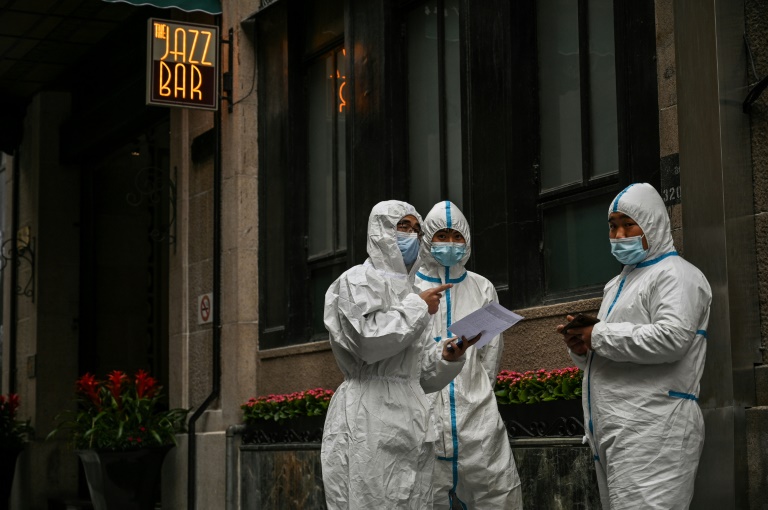
Many European firms are rethinking their investments in China because of its strict Covid controls, a top business group said Monday, warning that disruptions had pummelled operations.

While the rest of the world has steadily removed coronavirus curbs, China has remained committed to its zero-Covid strategy, using lockdowns and mass testing to stamp out all infections.

But this strategy has hammered businesses and snarled supply chains — 60 percent of respondents in a survey of European businesses said it has become harder to do business in China, in large part due to Covid controls.

“We hope that China is really waking up,” Bettina Schoen-Behanzin, vice president of the European Union Chamber of Commerce in China, told AFP.

“(We hope) that they find a way to get out of this zero-tolerance Covid strategy because it causes huge uncertainty and this is for sure not good for investment.”

The chamber conducted the survey on over 600 member firms in February and March just as strict lockdowns were imposed in several areas to control China’s worst Covid outbreak in two years — from business hub Shanghai to the northern breadbasket province of Jilin.

The body also did a follow-up in April to assess the impact of the lockdowns and the Russian invasion of Ukraine.

It found that 92 percent of member companies were hit by supply chain problems, and three-quarters said their operations were negatively impacted by the Covid controls.

Further, 60 percent of respondents said in April that they had lowered their 2022 revenue projections.

The Ukraine war also impacted confidence — a third of the firms surveyed cited geopolitical tensions as a reason for the Chinese market becoming less attractive.

“The role China played over the last two years in bolstering European companies’ global revenues looks set to diminish,” the report released on Monday said.

“And recent events have led many to question just how many eggs they are willing to keep in their China basket.”

The Covid containment measures also hampered European firms’ ability to recruit international and local talent, the chamber said.

Its annual survey found that 58 percent of companies faced difficulties in recruiting international and local talent, pointing to the Covid controls and “a wealth of ever-changing visa and work permit procedures and extreme limitations on travel in and out of China”.

– ‘The world does not wait’ –

China is the world’s second-biggest economy with a huge market, however, making it difficult for firms to walk away.

“Companies, businesses are not leaving China, because the market is too big, the market is too important, and there are for sure many growth opportunities ahead,” Schoen-Behanzin told AFP.

“But they are localising, they are onshoring, and they are rethinking their footprint in China, in Asia,” she added.

“They are shifting, especially future investments.”

However, if the Covid restrictions drag on for another year, companies could start to feel even more pain.

“The world does not wait for China,” Schoen-Behanzin said.

“If there is no change, then definitely companies will start to think about backup plans and they obviously would go into other markets.”

Bankrupt Sri Lanka opens IMF talks, begins shutdown

Sri Lanka closed schools and halted all non-essential government services on Monday, beginning a two-week shutdown to conserve fast-depleting fuel reserves as the International Monetary Fund opened talks with Colombo on a possible bailout.

The country of 22 million people is in the grip of its worst economic crisis after running out of dollars to finance even the most essential imports, including fuel.

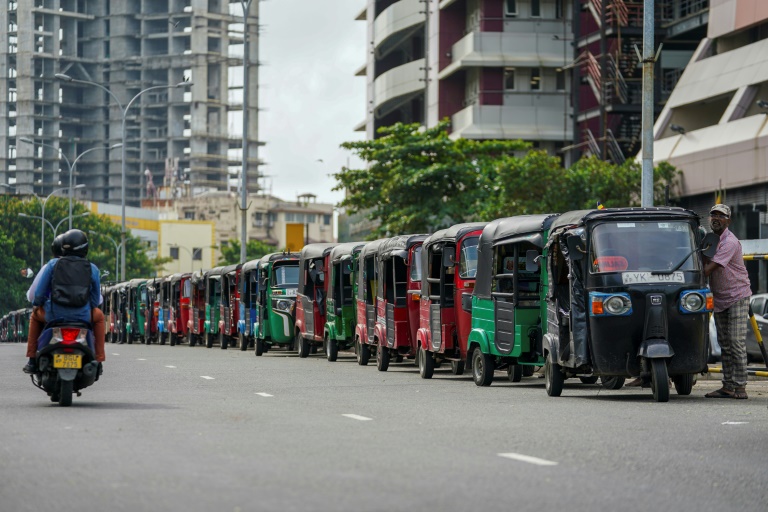
On Monday schools were shut and state offices worked with skeleton staff as part of government plans to reduce commuting and save precious petrol and diesel. Hospitals and the main seaport in Colombo were still operating. 

Hundreds of thousands of motorists remained in miles-long queues for petrol and diesel even though the energy ministry announced they will not have fresh stocks of fuel for at least three more days.

The country defaulted on its $51 billion foreign debt in April and went cap-in-hand to the IMF.

The first in-person talks with the IMF on Sri Lanka’s bailout request commenced in Colombo on Monday and will continue for 10 days, the lender and the government said in brief statements.

Prime Minister Ranil Wickremesinghe was also due to meet visiting Australian Home Affairs Minister Clare O’Neil to “deepen cooperation and assist Sri Lanka as the country faces very difficult economic times,” Canberra said in a statement.

It said O’Neil will also discuss strengthening engagement on transnational crime, including people-smuggling following a surge in would-be illegal immigrants by boat in the past month.

Sri Lanka is facing record-high inflation and lengthy power blackouts, all of which have contributed to months of protests — sometimes violent — calling on President Gotabaya Rajapaksa to step down. 

Police arrested 21 student activists who blocked all gates to the presidential secretariat building after declaring Monday, Rajapaksa’s 73rd birthday, a “day of mourning”.

The shutdown order came last week as the United Nations launched its emergency response to feed thousands of pregnant women who were facing food shortages.

Four out of five people in Sri Lanka have started skipping meals as they cannot afford to eat, the UN has said, warning of a looming “dire humanitarian crisis” with millions in need of aid.

Australian PM hopes for 'diplomatic' progress in Assange legal saga

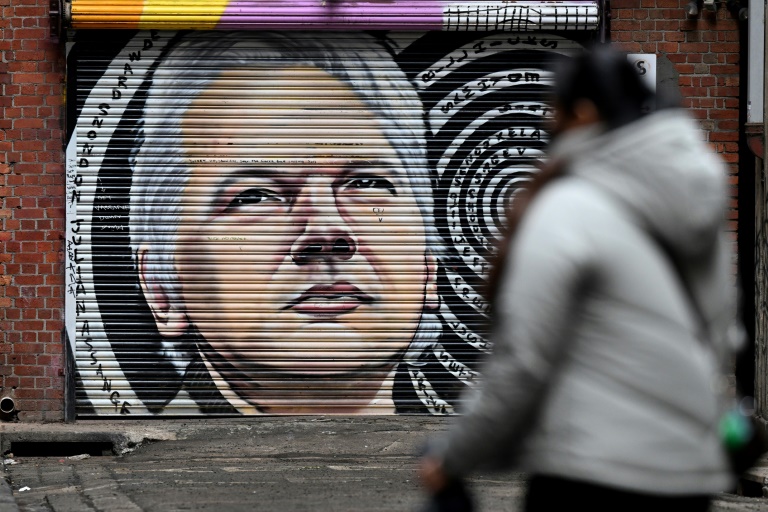
Australia’s prime minister said Monday he will engage “diplomatically” over the US prosecution of Julian Assange, but he is standing by earlier remarks questioning the purpose of further legal action.

As domestic pressure mounted on him to intervene in the WikiLeaks founder’s case, Prime Minister Anthony Albanese said he is sticking to comments he made while in opposition last year that “enough is enough”.

“I do not see what purpose is served by the ongoing pursuit of Mr Assange,” Albanese said at the time.

But the Australian leader took a swipe at “people who think that if you put things in capital letters on Twitter and put an exclamation mark, then that somehow makes it more important”.

Instead, he said: “I intend to lead a government that engages diplomatically and appropriately with our partners.”

Assange’s wife Stella Assange told ABC radio Monday that she understood the Albanese government was raising her husband’s case with US President Joe Biden’s administration.

“That is extremely welcome news,” she said, adding that she had not been able to see Assange since a British court last week cleared the path for his extradition to the United States.

“When I heard the news I just wanted to give him a hug,” she said.

Assange’s long-running legal saga began in 2010 after WikiLeaks published more than 500,000 classified US documents about the wars in Iraq and Afghanistan.

He has been held on remand at a top-security jail in southeast London since 2019 for jumping bail in a previous case accusing him of sexual assault in Sweden.

That case was dropped but he was not released on grounds he was a flight risk in the US extradition case.

As Assange’s potential US extradition looms, several high profile Australians, including former foreign minister Bob Carr, have called on Albanese to demand the US drop the prosecution.

“If Albanese asks, my guess is America will agree,” Carr wrote Monday in an op-ed in the Sydney Morning Herald.

Carr argued Assange’s prosecution stood in sharp contrast to the US pardoning former military intelligence officer Chelsea Manning, who had leaked the secret files to WikiLeaks. 

“Our new prime minister can say: ‘We’re not fans of the guy either, Mr President, but it’s gone on long enough. We’re good allies. Let this one drop’.”

While campaigning for May elections that swept his Labor Party to power, Albanese said that Assange had “paid a big price for the publication of that information already”.

Carr was serving as foreign minister in 2012 when Assange, who was facing sexual assault allegations, sought refuge in the Ecuadorian embassy in London.

For much of the past decade, Australia’s previous conservative government did not publicly advocate for Assange’s release.

Russia to 'intensify' fighting, Zelensky warns as EU decision looms

Ukrainian President Volodymyr Zelensky warned Russia was likely to intensify its “hostile activity” this week, as Kyiv awaits a historic decision from the European Union on its bid for candidate status.

Nearly three months after Russia launched a bloody invasion of his country, Zelensky said there had been “few such fateful decisions for Ukraine” as the one it expects from the EU this week.

“Only a positive decision is in the interests of the whole of Europe,” he said in his evening address Sunday.

“Obviously, we expect Russia to intensify hostile activity this week … We are preparing. We are ready,” he continued. 

Moscow’s forces have been pummelling eastern Ukraine for weeks as they try to seize the Donbas region, after being repelled from other parts of the country following their February invasion.

On Friday, Brussels backed Kyiv’s bid for EU candidate status after the heads of the bloc’s biggest members — France, Germany and Italy — paid a visit to the Ukrainian capital.

Ukraine could join the list of countries vying for membership as early as this week, when member state leaders meet at a Brussels summit. 

But officials and leaders in the bloc caution that, even with candidacy status, membership could take years.

NATO’s chief Jens Stoltenberg meanwhile warned that the war could grind on “for years” and urged Western countries to be ready to offer long-term military, political and economic aid.

“We must not weaken in our support of Ukraine, even if the costs are high — not only in terms of military support but also because of rising energy and food prices,” Stoltenberg told German daily newspaper Bild.

Ukraine has repeatedly urged Western countries to step up their deliveries of arms, despite warnings from nuclear-armed Russia that it could trigger wider conflict.

– Energy crisis –

Zelensky made a rare trip outside Kyiv Saturday to the hold-out Black Sea city of Mykolaiv, where he visited troops nearby and in the neighbouring Odessa region for the first time since the invasion.

“We will not give away the south to anyone, we will return everything that’s ours and the sea will be Ukrainian and safe,” he said in a video posted on Telegram as he made his way back to Kyiv.

Russia’s defence ministry said Sunday it launched missile strikes during the past 24 hours, with one attack on a top-level Ukrainian military meeting near the city of Dnipro killing “more than 50 generals and officers”.

It said it also targeted a building housing Western-provided weapons in Mykolaiv, destroying Ukrainian artillery and armoured vehicles.

There was no independent verification of the claims.

Mykolaiv is a key target for Russia as it lies on the route to the strategic port of Odessa.

With Russia maintaining a blockade of Odessa that has trapped grain supplies and threatens a global food crisis, residents have turned their attention to rallying the home front effort.

“Every day, including the weekend, I come to make camouflage netting for the army,” said Natalia Pinchenkova, 49, standing by a large Union flag, a show of thanks to Britain for its support for Ukraine.

The Ukraine war is fuelling not only a global food crisis but an energy crisis too. 

Hit by punishing sanctions, Moscow has turned up the pressure on European economies by sharply reducing gas supplies, which has in turn sent energy prices soaring. 

Germany on Sunday announced emergency measures including increased use of coal to ensure it meets its energy needs after a drop in the supply of Russian gas.

Austria announced it will reopen a mothballed coal power station to combat shortages, and Italian company Eni joined a huge Qatari project to expand production from the world’s biggest natural gas field.

– Attack repelled –

The worst of the fighting is in the industrial Donbas region, with battles raging in villages outside the city of Severodonetsk, under unrelenting Russian fire for weeks.

Regional governor Sergiy Gaiday said the Russians had targeted the settlement of Toshkivka, south of Severodonetsk.

“But our artillery worked, and we can say the attempt to break through was not successful, even though they tried very powerfully to break our defence,” he wrote on Telegram.

Lysychansk, across a river from Severodonetsk, is also under heavy bombardment, with some residents sheltering in basements in dire conditions, with limited supplies of food and water. 

Natalia Khalaimova, 54, urged Russia and Ukraine to negotiate an end to the war. 

“Every war in any country ends — but the sooner, the better,” she told AFP. “So many civilians are killed. Most of them were not involved in the war at all.”

burs-sr/

Beverly Hills 9021…oh: Planning row pits new against old in ritzy US zip code

It’s a dispute that plays out in towns the world over: a new property owner wants to alter a much-loved landmark against the wishes of locals. It’s his money. It’s their community.

So far, so familiar.

But this is Beverly Hills, where the perfectly manicured mansions of celebrities and socialites populate one of the world’s most desirable zip codes. Oh, and the property in question is worth $40 million.

“It is extremely beautiful,” said preservationist Alison Martino, who grew up four blocks away from the North Roxbury Drive house bought in 2020 by Eric Baker, the co-founder of internet-based ticket empire StubHub.

“It’s on a double lot, which makes it very stately and it’s pushed back from the street. It almost looks like a park. It’s the most beloved house in Beverly Hills.”

To the visitor, the whole city looks a little like a park; lavish homes nestle on tree-lined streets that are peopled chiefly by Lululemon joggers and the occasional member of household staff.

– Elvis, Sinatra, Madonna – 

The enclave of Beverly Hills began life a little over a century ago, and soon established itself as byword for luxury; an oasis for the well-heeled who made their money in the newly burgeoning film industry, but found nearby Hollywood a bit tawdry.

Over the years, it has been home to a Who’s Who of entertainment, counting Douglas Fairbanks, Mary Pickford, Elvis Presley, Frank Sinatra, Madonna and Jennifer Aniston as residents.

Today, minibuses ferrying star-spotting tourists whizz through the neighborhood, with guides pointing out the present and former homes of the famous.

Roxbury Drive is a particularly rich vein, with lots once owned by Lucille Ball, Peter Faulk, Jack Benny, Jimmy Stewart, and Rosemary Clooney.

“When Lucille Ball moved to Beverly Hills, she wanted that house, but it wasn’t for sale, so she bought the house across the street so she could look at it,” said Martino.

– $39.1 million –

The object of Ball’s desire is a Regency Revival home constructed 80 years ago by Beverly Hills master builder Carleton Burgess.

The 9,000-square-foot spread sits among fabulous lawns and boasts its own full-size tennis court, a pavillion and a swimming pool.

Previous owners annually festooned the house with Christmas decorations, Martino says, welcoming the neighbors over to see.

But in 2020, Baker slapped down $39.1 million for it — almost double its previous sale price — adding a glistening centerpiece to a property portfolio that reportedly already included two swanky Beverly Hills spots.

Now, he appears set on making changes to his North Roxbury Drive pad — despite what the neighbors think.

Last year he applied for a “certificate of ineligibility,” a pass that would allow major work on the house without the need to get a green light from the city’s cultural heritage commission.

His exact plans for the property are not known, and his Los Angeles-based lawyer did not respond to AFP requests for comment, but locals fear he wants to take a wrecking ball to the place.

“They want to tear it down so they can build a bigger, more modern house with the latest architecture,” wrote one commentor on Martino’s Vintage Los Angeles Facebook page.

“The thought of this impeccably well-maintained historical building and grounds being demolished sickens me.”

Others mutter darkly about not wanting something that “looks like an embassy compound” with a building that goes right up to the street.

“Even with all the money in the world, you don’t get to do whatever you want,” said life-long Beverly Hills resident Rebecca Pynoos. “Our cultural heritage shouldn’t be sold to the highest bidder.”

– 2am meeting –

Feelings are running so high that a recent planning meeting went on until 2am.

After seven hours of back-and-forth, much of which hinged on whether or not the house was sufficiently well-known to merit preservation, councillors voted to bring the matter back for further consideration on June 21.

The discussion on Tuesday night looks set to be lengthy — councillors have been presented with a 727-page document that includes a missive from actor Diane Keaton.

“I am pleading with you… This charming and historic home needs to be preserved for us and future generations,” she writes.

For campaigner Jill Tavelman Collins, the argument over the North Roxbury Drive house is emblematic of a larger issue in Beverly Hills.

“We’ve lost Lucille Ball’s house, we’ve lost Jimmy Stewart’s house… there’s so little left on Roxbury that is from that time and I think it’s pulling at everyone’s heartstrings,” she said.

“I think it’s like the straw that broke the camel’s back.”

Close Bitnami banner
Bitnami