US Business

Russia to 'intensify' fighting, Zelensky warns as EU decision looms

Ukrainian President Volodymyr Zelensky warned that Russia was likely to intensify its “hostile activity” this week, as Kyiv awaits a historic decision from the European Union on its membership application.

Nearly three months after Russia launched a bloody invasion of his country, Zelensky said there had been “few such fateful decisions for Ukraine” as the one it expects from the EU this week.

“Only a positive decision is in the interests of the whole of Europe,” he said in his evening address Sunday.

“Obviously, we expect Russia to intensify hostile activity this week … We are preparing. We are ready,” he continued. 

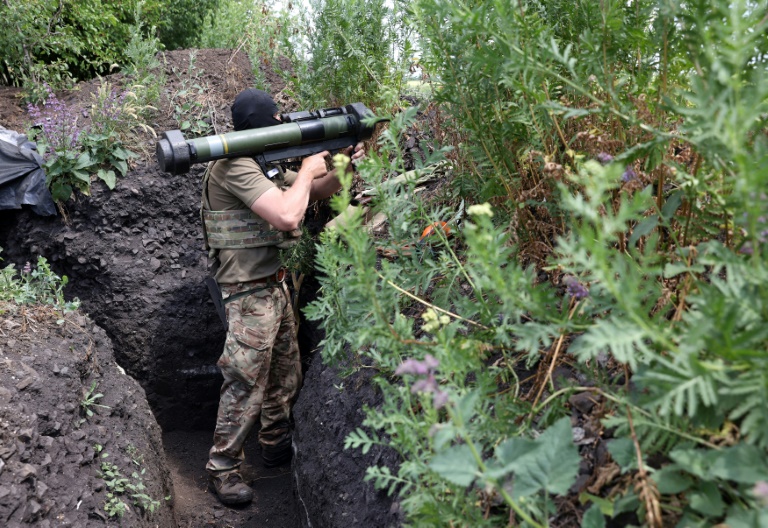
Moscow’s forces have been pummelling eastern Ukraine for weeks as they try to seize the Donbas region, after being repelled from other parts of the country following their February invasion.

On Friday, Brussels backed Kyiv’s bid for EU candidate status after the heads of the bloc’s biggest members — France, Germany and Italy — paid a visit to the Ukrainian capital.

Ukraine could join the list of countries vying for membership as early as this week, when member state leaders meet at a Brussels summit. 

NATO’s chief Jens Stoltenberg meanwhile warned that the war could grind on “for years” and urged Western countries to be ready to offer long-term military, political and economic aid.

“We must not weaken in our support of Ukraine, even if the costs are high — not only in terms of military support but also because of rising energy and food prices,” Stoltenberg told German daily newspaper Bild.

Ukraine has repeatedly urged Western countries to step up their deliveries of arms, despite warnings from nuclear-armed Russia that it could trigger wider conflict.

– Residents rally –

Zelensky made a rare trip outside Kyiv Saturday to the hold-out Black Sea city of Mykolaiv, where he visited troops nearby and in the neighbouring Odessa region for the first time since the invasion.

“We will not give away the south to anyone, we will return everything that’s ours and the sea will be Ukrainian and safe,” he said in a video posted on Telegram as he made his way back to Kyiv.

Russia’s defence ministry said Sunday it launched missile strikes during the past 24 hours, with one attack on a top-level Ukrainian military meeting near the city of Dnipro killing “more than 50 generals and officers”.

It said it also targeted a building housing Western-provided weapons in Mykolaiv, destroying Ukrainian artillery and armoured vehicles.

There was no independent verification of the claims.

Mykolaiv is a key target for Russia as it lies on the route to the strategic port of Odessa.

With Russia maintaining a blockade of Odessa that has trapped grain supplies and threatens a global food crisis, residents have turned their attention to rallying the home front effort.

“Every day, including the weekend, I come to make camouflage netting for the army,” said Natalia Pinchenkova, 49, standing by a large Union flag, a show of thanks to Britain for its support for Ukraine.

– ‘So many killed’ –

The Ukraine war is fuelling not only a global food crisis but an energy crisis too. 

Hit by punishing sanctions, Moscow has turned up the pressure on European economies by sharply reducing gas supplies, which has in turn sent energy prices soaring. 

Germany on Sunday announced emergency measures including increased use of coal to ensure it meets its energy needs after a drop in the supply of Russian gas.

Austria announced it will reopen a mothballed coal power station to combat shortages, and Italian company Eni joined a huge Qatari project to expand production from the world’s biggest natural gas field.

The worst of the fighting is in the industrial Donbas region, with battles raging in villages outside the city of Severodonetsk, under unrelenting Russian fire for weeks.

Ukraine’s armed forces said Sunday they had pushed back Russian attacks on villages near Severodonetsk.

Lysychansk, which sits across a river from Severodonetsk, is also under heavy bombardment. 

Some residents have taken shelter in basements in dire conditions, with limited supplies of food and water. 

Natalia Khalaimova, 54, urged Russia and Ukraine to negotiate an end to the war. 

“Every war in any country ends — but the sooner, the better,” she told AFP. “So many civilians are killed. Most of them were not involved in the war at all.”

burs-sr/dhc

Asian markets, oil prices extend losses on recession worries

Asian markets fell again Monday and oil prices extended losses on growing fears that central bank moves to rein in soaring inflation will induce a recession.

The losses come after a sell-off last week fuelled by the Federal Reserve’s sharp interest rate hike last week — the biggest in nearly 30 years — and a warning of more to come, while increases in Britain and Switzerland added to the gloom.

And while the S&P 500 and Nasdaq saw gains on Friday, there is a sense that indexes still have some way down to go before they find a bottom, with economic data suggesting economies are beginning to feel the pinch.

Cleveland Fed chief Loretta Mester added to the worry, saying that the risk of a recession in the United States was increasing and it would take several years to bring inflation down from four decade highs to the bank’s two percent target.

She told CBS’s “Face The Nation” on Sunday that while she was not predicting a contraction, the Fed’s decision not to act sooner to fight rising prices was hurting the economy.

In early trade, Asian traders were struggling, with Tokyo, Hong Kong, Shanghai, Sydney, Singapore, Seoul, Taipei, Jakarta and Wellington all in the red.

Analysts warned there was likely to be more pain ahead for traders as the Ukraine war drags on and uncertainty continues to reign.

“Central banks’ hawkish rhetoric and concerns over a global economic slowdown/recession (are) not helping sentiment and at this stage it is hard to see a turn in fortunes until we see evidence of a material ease in inflationary pressures,” said National Australia Bank’s Rodrigo Catril.

And Stephen Innes of SPI Asset Management added: “Most of these major central banks are praying for some relief from inflation and hoping the data falls in line, but unless there is a detent in the Ukraine -Russia war, escalation will continue to drive energy price fears so it could be a tough road ahead.”

Still, oil prices fell further Monday after suffering a hefty drop Friday caused by demand worries caused by a possible recession.

However, US Energy Secretary Jennifer Granholm said prices could continue to surge if the European Union cuts off imports of the commodity from Russia in response to the Ukraine war.

She said Joe Biden had called on global suppliers to ramp up output to help temper the price rises, with the president to discuss the issue at an upcoming visit to Saudi Arabia next month.

– Key figures at around 0245 GMT –

Tokyo – Nikkei 225: DOWN 1.7 percent at 25,534.68 (close)

Hong Kong – Hang Seng Index: DOWN 0.4 percent at 21,001.43

Shanghai – Composite: DOWN 0.3 percent at 3,308.08

Dollar/yen: DOWN at 134.85 yen from 134.99 yen late Friday

Pound/dollar: DOWN at $1.2219 from $1.2221

Euro/dollar: UP at $1.0509 from $1.0493

Euro/pound: UP at 86.00 pence from 85.83 pence

West Texas Intermediate: DOWN 0.5 percent at $108.98

Brent North Sea crude: DOWN 0.5 percent at $112.56 a barrel

New York – Dow: DOWN 0.1 percent at 29,888.78 (close)

London – FTSE 100: DOWN 0.4 percent at 7,016.25 (close) 

— Bloomberg News contributed to this story —

Abortion: how things stand in US as court prepares to rule

The Supreme Court is expected to deliver an opinion by the end of June that could roll back 50 years of abortion rights in the United States.

This is the state of affairs in the country ahead of the much-anticipated ruling by the nation’s highest court:

– Roe v. Wade –

In the absence of any federal laws, it is the 1973 ruling in the landmark Supreme Court case known as Roe v. Wade that guarantees a woman’s right to an abortion in the United States.

A 1992 court decision, in Planned Parenthood v. Casey, protects access to abortion until “viability,” when the fetus can survive outside the womb, typically between 22 and 24 weeks of pregnancy.

States are also not allowed to enact any laws that would impose an “undue burden” on a woman seeking an abortion.

This legal framework could be upended soon.

According to a draft opinion leaked in May, the conservative majority on the nine-member court is prepared to overturn Roe v. Wade.

“We hold that Roe and Casey must be overruled,” the author of the opinion, Justice Samuel Alito, wrote. “It is time to heed the Constitution and return the issue of abortion to the people’s elected representatives.”

Anticipating a reversal, lawmakers in 13 Republican-ruled states have already adopted so-called “trigger” laws that would ban abortion if the Supreme Court overturns Roe v. Wade.

– Patchwork –

Conservative states have long tested the limits of the “undue burden” standard to impose laws restricting abortion, forcing many clinics to close their doors.

The states of West Virginia and Mississippi, for example, each have only one abortion clinic, while there are more than 150 in California.

Some states force minors to have parental consent before undergoing an abortion or to listen to the heartbeat of the embryo.

Since September 1, Texas, following a long legal battle, has banned abortions after six weeks, before many women even know they are pregnant.

Money is another factor.

Nearly a dozen states ban private medical insurance plans from reimbursing abortions.

But 15 other states dip into public funds to help low-income women pay for the procedure.

– Poverty and minorities –


There were more than 930,000 abortions in the United States in 2020, according to the latest statistics from the Guttmacher Institute, which has noted a recent increase after 30 years of steady decline.

This amounts to 14.4 abortions for every 1,000 women of procreative age, about the same as in most developed countries.

Nearly 50 percent of the women seeking abortions live below the poverty line and Black and Hispanic women are overrepresented as a proportion of the population — 29 percent and 25 percent respectively.

According to the US Centers for Disease Control and Prevention, 92.2 percent of abortions in the United States take place in the first trimester.

– Divided opinion – 

More than 60 percent of Americans believe abortion should remain legal in all or most cases, a figure that has remained relatively stable for the past few years, according to a survey by the Pew Research Center.

But there are enormous differences based on political persuasion: 80 percent of Democrats believe abortion should remain legal in all or most cases while just 35 percent of Republicans do.

And the divide is widening. Those figures were 72 percent and 39 percent, respectively, in 2016.

Religious conviction also plays a large role. Seventy-seven percent of white evangelicals believe abortion should be illegal in most cases.

– A conservative offensive –

During the 2016 presidential campaign, Republican Donald Trump managed to attract many voters on the religious right with his promise to name justices to the Supreme Court who shared their values and would notably be prepared to strike down Roe v. Wade.

During his four years in the White House, Trump nominated three justices to the court, giving conservatives a solid 6-3 majority.

Their arrival spurred Republican state lawmakers to pass increasingly restrictive abortion laws, several of which eventually made their way to the nation’s highest court.

'Jurassic' is again top draw in N.American theaters

“Jurassic World Dominion” again stomped to the top on North American movie screens this weekend, while new release “Lightyear” didn’t quite make it to infinity, or beyond.

Universal’s latest dinosaur frightfest — the sixth in the “Jurassic Park” franchise — took in an estimated $58.7 million for the Friday-through-Sunday period, industry watcher Exhibitor Relations reported. It stars Chris Pratt, Bryce Dallas Howard, Laura Dern and Jeff Goldblum.

“Lightyear,” Pixar and Disney’s latest computer-animated offering from the “Toy Story” empire, earned $51 million. David A. Gross of Franchise Entertainment Research called that “a soft opening for a spinoff of one of the most successful animation series of all time.”

Chris Evans voices title character Buzz Lightyear, who battles evil Emperor Zurg while trying to find his way home from a hostile planet. “Lightyear”, which features a same-sex kiss, has been denied release in more than a dozen mainly Muslim countries, a source close to Disney told AFP this week. 

Still soaring in third place was Paramount’s “Top Gun: Maverick,” with a $44 million take that Variety called “mammoth” for a film in its fourth week. 

With total earnings of $466 million domestically and $419 million overseas, the action adventure sequel to the original 1986 film has become the biggest hit of Tom Cruise’s not-too-shabby career.

Fourth spot went to Disney’s “Doctor Strange in the Multiverse of Madness,” at $4.2 million. Domestic earnings for the Benedict Cumberbatch sci-fi film are now just north of $400 million.

And in fifth place was “The Bob’s Burgers Movie” from 20th Century. Based on the popular TV series, it took in $1.1 million.

Rounding out the top 10 were:

“The Bad Guys” ($980,000)

“Everything Everywhere All at Once” ($960,000)

“Downtown Abbey: A New Era” ($830,000)

“Sonic the Hedgehog 2” ($228,000)

“Brian and Charles” ($198,000)

New US Capitol riot hearings promise fresh drama

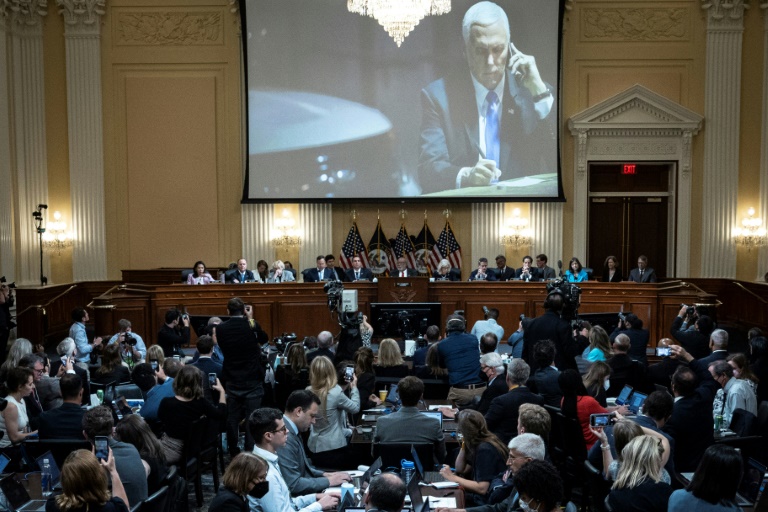
A new round of hearings this week by the congressional committee probing the January 6, 2021 US Capitol riot promises further drama, with one member saying former vice president Mike Pence might be subpoenaed. 

As the House select panel works to focus attention on what it says was an illegal scheme backed by Donald Trump to overturn the results of the 2020 elections, a new poll shows most Americans believe the former president should face charges.

In three earlier hearings, a series of Trump advisers were shown saying they had warned him of the illegality of attempting to overturn Democrat Joe Biden’s victory by persuading Pence to block a normally pro forma process.

One committee member, Adam Schiff, told CNN on Sunday that subpoenaing Pence was “certainly a possibility,” adding, “We’re not excluding anyone or anything at this point.”

Pence faced intense pressure from Trump to break with history and refuse on January 6 to formally certify Biden’s victory.

But even after Trump supporters violently stormed the building, with some chanting “Hang Mike Pence,” he refused to leave the complex and returned to the Senate chamber late at night to carry out the certification.

– ‘A hero’ –

The committee would be keenly interested to hear from Pence exactly what pressure Trump placed on him in their private contacts. If Pence is ultimately deposed, however, it could be weeks or months away.

While the conservative Pence was never a favorite of Democrats, “on that day he was a hero for resisting all the pressure campaigns,” Jamie Raskin, a committee member, told NBC’s “Meet the Press.”

“In a time of absolutely scandalous betrayal of people’s oaths of office and crimes being committed all over the place, somebody who does their job and sticks to the law will stand out as a hero.”

The pressure campaign, Schiff said, “put the vice president’s life in danger.”

The committee, in hearings Tuesday and Thursday, will also explore “how a similar pressure campaign directed against state and local elections officials put their lives in danger.”

Trump, in a taped call, famously called Georgia secretary of state Brad Raffensperger, a Republican, and asked him to “find” enough votes to overturn Biden’s victory in that key Southern state.

Raffensperger, who refused to do so, is to be among the committee’s witnesses this week.

– Divided public –

Raffensperger is among several election officials who have received anonymous death threats for refusing to alter vote outcomes in Trump’s favor.

Adam Kinzinger — one of two Republicans on the House committee, and one of 10 who voted last year to impeach Trump because of the insurrection — said Sunday he had received a menacing message only days ago.

“It threatens to execute me, as well as my wife and 5-month-old child,” he told ABC’s “This Week.” 

Trump remains as divisive a political figure as ever, inspiring furious loyalty among followers and equally passionate disdain from his critics.

The public’s division came through starkly in a new ABC News/Ipsos poll about the committee’s work.

The poll, taken June 17 and 18, found that 58 percent of Americans believed Trump should be charged with a crime for his role in the January 6 events, up from 52 percent in April.

It also found that 60 percent of respondents believed the committee was conducting a fair and impartial inquiry, up substantially from 40 percent in April.

But while nearly all Democrats said Trump bore considerable responsibility for the January 6 riot, only a quarter of Republicans agreed. 

And significantly, only nine percent of Americans said they were following the hearings very closely.

NATO chief warns Ukraine war could last 'years'

NATO’s chief warned that the war in Ukraine could last “for years” as President Volodymyr Zelensky vowed Sunday his forces would not give up the south of the country to Russia after he visited the frontline there.

Ukraine said it had also repulsed fresh attacks by Russian forces on the eastern front, rocked by weeks of fierce battles as Moscow tries to seize the industrial Donbas region.

While Ukraine remained defiant, NATO Secretary-General Jens Stoltenberg urged Western countries must be ready to offer long-term military, political and economic support to Kyiv during a grinding war.

“We must be prepared for this to last for years,” Stoltenberg told German daily newspaper Bild.

“We must not weaken in our support of Ukraine, even if the costs are high — not only in terms of military support but also because of rising energy and food prices.”

British Prime Minister Boris Johnson issued a similar warning, urging sustained support for Kyiv or risk “the greatest victory for aggression” since World War II.

“Time is now the vital factor,” Johnson wrote in an article for the Sunday Times after making his second visit to Kyiv, calling for the West to ensure Ukraine has the “strategic endurance to survive and eventually prevail”.

Ukraine has repeatedly urged Western countries to step up their deliveries of arms since the February 24 invasion, despite Russian warnings that it could trigger wider conflict.

– ‘Mood is confident’ –

Zelensky made a rare trip outside Kyiv Saturday to the hold-out Black Sea city of Mykolaiv, and visited troops nearby and in the neighbouring Odessa region for the first time since the Russian invasion.

“We will not give away the south to anyone, we will return everything that’s ours and the sea will be Ukrainian and safe,” he said in a video posted on Telegram as he made his way back to Kyiv.

He said he talked with troops and police during his visit.

“Their mood is confident, and looking into their eyes it is obvious that they all do not doubt our victory,” he said.

But Zelensky admitted that losses were “significant”, adding: “Many houses were destroyed, civilian logistics were disrupted, there are many social issues.”

Russia’s defence ministry said on Sunday it launched missile strikes during the past 24 hours, with one attack by Kalibr missiles on a top-level Ukrainian military meeting near the city of Dnipro killing “more than 50 generals and officers”.

It said it also targeted a building housing western-delivered weapons in Mykolaiv, destroying “ten 155 mm howitzers and around 20 armoured vehicles supplied by the West to the Kyiv regime over the last ten days”, the Russian defence ministry said.

There was no independent verification of the claims.

Mykolaiv is a key target for Russia as it lies on the way to the strategic port of Odessa.

With Russia maintaining a blockade of Odessa that has trapped grain supplies and is threatening a global food crisis, Odessa residents have turned their attention to rallying the home front effort.

“Every day, including the weekend, I come to make camouflage netting for the army,” said Natalia Pinchenkova, 49, behind a large Union flag, a show of thanks to Britain for its support for Ukraine.

– ‘Hero’ –

The Ukraine war is fuelling not only a global food crisis but an energy crisis too. 

Germany on Sunday announced emergency measures including increased use of coal to ensure it meets its energy needs after a drop in supply of Russian gas.

Hit by punishing sanctions, Moscow has turned up the pressure on European economies by sharply reducing gas supplies, which has driven up energy prices. 

Italian company Eni meanwhile joined a huge Qatari project to expand production from the world’s biggest natural gas field, days after Russia slashed supplies to Italy.

Back in Kyiv, thousands gathered to pay tribute to one young man — Roman Ratushny, a leading figure in Ukraine’s pro-European Maidan movement, who was killed fighting Russians in the country’s east earlier this month aged just 24.

In front of the coffin draped in a yellow and blue Ukrainian flag at the foot of a monument that overlooks the sprawling Independence Square in the capital, people of all ages saluted his memory.

“I think it is important to be here because he is a hero of Ukraine and we must remember him,” Dmytro Ostrovsky, a 17-year-old high school student, told AFP. 

The loss put a human face on the shared grief of Ukrainians, as the bloodshed continues.

The worst of the fighting continues to be in the eastern industrial Donbas region, with battles raging in villages outside the city of Severodonetsk, which Russia has been trying to seize for weeks.

“There’s an expression: prepare for the worst and the best will come by itself,” the governor of the eastern Lugansk region, Sergiy Gaiday, told AFP in an interview from the Ukrainian-controlled city of Lysychansk across the river from Severodonetsk.

“Of course, we need to prepare,” he said, wearing a flak jacket and carrying gun cartridges and a tourniquet.

Ukraine’s armed forces said Sunday they had pushed back Russian attacks on villages near Severodonetsk.

“Our units repulsed the assault in the area of Toshkivka,” the Ukrainian army said on Facebook, adding that Russian forces were also “storming” towards the village of Orikhove.

burs-dk/har

NATO chief warns Ukraine war could last 'years'

NATO’s chief warned that the war in Ukraine could last “for years” as President Volodymyr Zelensky vowed Sunday his forces would not give up the south of the country to Russia after he visited the frontline there.

Ukraine said it had also repulsed fresh attacks by Russian forces on the eastern front, rocked by weeks of fierce battles as Moscow tries to seize the industrial Donbas region.

While Ukraine remained defiant, NATO Secretary-General Jens Stoltenberg urged Western countries must be ready to offer long-term military, political and economic support to Kyiv during a grinding war.

“We must be prepared for this to last for years,” Stoltenberg told German daily newspaper Bild.

“We must not weaken in our support of Ukraine, even if the costs are high — not only in terms of military support but also because of rising energy and food prices.”

British Prime Minister Boris Johnson issued a similar warning, urging sustained support for Kyiv or risk “the greatest victory for aggression” since World War II.

“Time is now the vital factor,” Johnson wrote in an article for the Sunday Times after making his second visit to Kyiv, calling for the West to ensure Ukraine has the “strategic endurance to survive and eventually prevail”.

Ukraine has repeatedly urged Western countries to step up their deliveries of arms since the February 24 invasion, despite Russian warnings that it could trigger wider conflict.

– ‘Mood is confident’ –

Zelensky made a rare trip outside Kyiv Saturday to the hold-out Black Sea city of Mykolaiv, and visited troops nearby and in the neighbouring Odessa region for the first time since the Russian invasion.

“We will not give away the south to anyone, we will return everything that’s ours and the sea will be Ukrainian and safe,” he said in a video posted on Telegram as he made his way back to Kyiv.

He said he talked with troops and police during his visit.

“Their mood is confident, and looking into their eyes it is obvious that they all do not doubt our victory,” he said.

But Zelensky admitted that losses were “significant”, adding: “Many houses were destroyed, civilian logistics were disrupted, there are many social issues.”

Russia said on Sunday it launched missile strikes during the past 24 hours, including some targeting western-delivered weapons in Mykolaiv.

The strikes on a building in the city destroyed “ten 155 mm howitzers and around 20 armoured vehicles supplied by the West to the Kyiv regime over the last ten days”, the Russian defence ministry said.

There was no independent verification of the claims.

Mykolaiv is a key target for Russia as it lies on the way to the strategic port of Odessa.

With Russia maintaining a blockade of Odessa that has trapped grain supplies and is threatening a global food crisis, Odessa residents have turned their attention to rallying the home front effort.

“Every day, including the weekend, I come to make camouflage netting for the army,” said Natalia Pinchenkova, 49, behind a large Union flag, a show of thanks to Britain for its support for Ukraine.

– ‘Hero’ –

The Ukraine war is fuelling not only a global food crisis but an energy crisis too. 

Germany on Sunday announced emergency measures including increased use of coal to ensure it meets its energy needs after a drop in supply of Russian gas.

Hit by punishing sanctions, Moscow has turned up the pressure on European economies by sharply reducing gas supplies, which has driven up energy prices. 

Italian company Eni meanwhile joined a huge Qatari project to expand production from the world’s biggest natural gas field, days after Russia slashed supplies to Italy.

Back in Kyiv, thousands gathered to pay tribute to one young man — Roman Ratushny, a leading figure in Ukraine’s pro-European Maidan movement, who was killed fighting Russians in the country’s east earlier this month aged just 24.

In front of the coffin draped in a yellow and blue Ukrainian flag at the foot of a monument that overlooks the sprawling Independence Square in the capital, people of all ages saluted his memory.

“I think it is important to be here because he is a hero of Ukraine and we must remember him,” Dmytro Ostrovsky, a 17-year-old high school student, told AFP. 

The loss put a human face on the shared grief of Ukrainians, as the bloodshed continues.

The worst of the fighting continues to be in the eastern industrial Donbas region, with battles raging in villages outside the city of Severodonetsk, which Russia has been trying to seize for weeks.

“There’s an expression: prepare for the worst and the best will come by itself,” the governor of the eastern Lugansk region, Sergiy Gaiday, told AFP in an interview from the Ukrainian-controlled city of Lysychansk across the river from Severodonetsk.

“Of course, we need to prepare,” he said, wearing a flak jacket and carrying gun cartridges and a tourniquet.

Ukraine’s armed forces said Sunday they had pushed back Russian attacks on villages near Severodonetsk.

“Our units repulsed the assault in the area of Toshkivka,” the Ukrainian army said on Facebook, adding that Russian forces were also “storming” towards the village of Orikhove.

burs-dk

US recession not 'inevitable,' Treasury secretary says

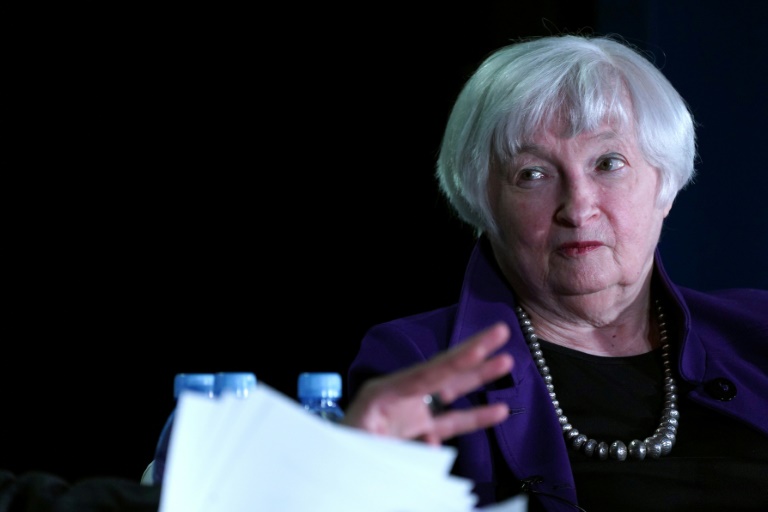
A recession in the United States is not “inevitable” but the economy is likely to slow, Treasury Secretary Janet Yellen said Sunday, days after the US Federal Reserve hiked interest rates, raising fears of a contraction.

“I expect the economy to slow” as it transitions to stable growth, she said on ABC’s “This Week,” but “I don’t think a recession is at all inevitable.”

The US economy has recovered strongly from the damage wrought by Covid-19, but soaring inflation and supply-chain snarls made worse by the war in Ukraine have increased pessimism.

Wall Street stocks tumbled after the US central bank, seeking to cool inflation, on Wednesday raised the benchmark borrowing rate by 0.75 percentage points, the sharpest rise in nearly 30 years.

And economists see worrying signs that consumer confidence is weakening, with spending on services affected most sharply.

People are beginning to hold off on vacation plans — domestic flight bookings were down 2.3 percent last month, Adobe Analytics reported — and are cutting back on restaurant visits, haircuts and home repairs.

– Inflation ‘unacceptably high’ –

Yellen conceded that “clearly inflation is unacceptably high,” attributing it partly to the war in Ukraine, which has pushed up energy and food prices.

But she said she did not believe “a dropoff in consumer spending is the likely cause of a recession.” 

The US labor market is “arguably the strongest of the postwar period,” Yellen said, and she predicted a slowing of inflation in coming months.

For Fed chair Jerome Powell — who succeeded Yellen in that position — to control inflation without weakening the labor market will take “skill and luck,” she said, before adding, “but I believe it’s possible.”

The US economy contracted by 1.5 percent in the first quarter of this year, its first drop since 2020, and early indications point to a continued slowing in key sectors including manufacturing, real estate and retail sales.  

A recent survey of 750 company executives by the Conference Board found 76 percent believed a recession is looming, or has already begun.

A recent analysis from the non-profit business group predicted a period of “stagflation” — stagnant growth coupled with inflation — in 2023.

Economist Larry Summers, who served as Treasury secretary from 1999 to 2001, said a wide range of indicators — market volatility, interest rates and inflation among them — suggest a recession on the horizon.

“All of that tells me that… the dominant probability would be that by the end of next year we would be seeing a recession in the American economy,” Summers told NBC’s “Meet the Press.”

– ‘Pain’ at the pump –

For now, Americans are trying to cope with some historically sharp price increases. The cost of gas at the pump, now around $5 a gallon, has roughly doubled in only two years. 

Yellen was asked about proposals for a temporary suspension in federal gas taxes, and expressed openness.

US President Joe Biden “wants to do anything he possibly can to help consumers,” she said. “And that’s an idea that’s certainly worth considering.”

The White House recently confirmed Biden will travel to major oil producer Saudi Arabia during a Mideast trip next month.

The president is “very concerned about what people are experiencing at the pump,” Energy Secretary Jennifer Granholm told CNN Sunday. 

“Saudi Arabia is head of OPEC and we need to have increased production so that everyday citizens in America will not be feeling this pain that they’re feeling.”

US recession not 'inevitable,' Treasury secretary says

A recession in the United States is not “inevitable” but the economy is likely to slow, Treasury Secretary Janet Yellen said Sunday, days after the US Federal Reserve hiked interest rates, raising fears of a contraction.

“I expect the economy to slow” as it transitions to stable growth, she said on ABC’s “This Week,” but “I don’t think a recession is at all inevitable.”

The US economy has recovered strongly from the damage wrought by Covid-19, but soaring inflation and supply-chain snarls made worse by the war in Ukraine have increased pessimism.

Wall Street stocks tumbled after the US central bank, seeking to cool inflation, on Wednesday raised the benchmark borrowing rate by 0.75 percentage points, the sharpest rise in nearly 30 years.

And economists see worrying signs that consumer confidence is weakening, with spending on services affected most sharply.

People are beginning to hold off on vacation plans — domestic flight bookings were down 2.3 percent last month, Adobe Analytics reported — and are cutting back on restaurant visits, haircuts and home repairs.

– Inflation ‘unacceptably high’ –

Yellen conceded that “clearly inflation is unacceptably high,” attributing it partly to the war in Ukraine, which has pushed up energy and food prices.

But she said she did not believe “a dropoff in consumer spending is the likely cause of a recession.” 

The US labor market is “arguably the strongest of the postwar period,” Yellen said, and she predicted a slowing of inflation in coming months.

For Fed chair Jerome Powell — who succeeded Yellen in that position — to control inflation without weakening the labor market will take “skill and luck,” she said, before adding, “but I believe it’s possible.”

The US economy contracted by 1.5 percent in the first quarter of this year, its first drop since 2020, and early indications point to a continued slowing in key sectors including manufacturing, real estate and retail sales.  

A recent survey of 750 company executives by the Conference Board found 76 percent believed a recession is looming, or has already begun.

A recent analysis from the non-profit business group predicted a period of “stagflation” — stagnant growth coupled with inflation — in 2023.

Economist Larry Summers, who served as Treasury secretary from 1999 to 2001, said a wide range of indicators — market volatility, interest rates and inflation among them — suggest a recession on the horizon.

“All of that tells me that… the dominant probability would be that by the end of next year we would be seeing a recession in the American economy,” Summers told NBC’s “Meet the Press.”

– ‘Pain’ at the pump –

For now, Americans are trying to cope with some historically sharp price increases. The cost of gas at the pump, now around $5 a gallon, has roughly doubled in only two years. 

Yellen was asked about proposals for a temporary suspension in federal gas taxes, and expressed openness.

US President Joe Biden “wants to do anything he possibly can to help consumers,” she said. “And that’s an idea that’s certainly worth considering.”

The White House recently confirmed Biden will travel to major oil producer Saudi Arabia during a Mideast trip next month.

The president is “very concerned about what people are experiencing at the pump,” Energy Secretary Jennifer Granholm told CNN Sunday. 

“Saudi Arabia is head of OPEC and we need to have increased production so that everyday citizens in America will not be feeling this pain that they’re feeling.”

Italy's Eni joins giant Qatar gas project after Russian cuts

Italian company Eni on Sunday joined Qatar Energy’s $28.75 billion project to expand production from the world’s biggest natural gas field, days after Russia slashed supplies to Italy.

Eni will own a stake of just over three percent in the North Field East project, Qatar Energy’s CEO told a signing ceremony in Doha.

Qatar announced last week that France’s TotalEnergies will be its first, and largest, foreign partner on the development, with a 6.25 percent share. 

An unknown number of companies are also set to be named.

“Today I’m pleased… to announce the selection of Eni as a partner in this unique strategic project,” said Qatar’s Energy Minister Saad Sherida al-Kaabi, who is also president and CEO of state-owned Qatar Energy.

The project’s LNG — the cooled form of gas that makes it easier to transport — is expected to come on line in 2026. It will expand Qatar’s LNG production from 77 million tonnes a year to 110 million, Qatar Energy said.

The Qatari company estimates that the North Field, which extends under the Gulf sea into Iranian territory, holds about 10 percent of the world’s known gas reserves.

Russia’s invasion of Ukraine has injected urgency into efforts around the world to develop new energy sources as Western countries try to reduce their reliance on Russia.

On Friday, Eni said it would receive only 50 percent of the gas requested from Russia’s Gazprom, the third day running of reduced supplies. Rome has accused Gazprom of peddling “lies” over the cuts.

“We have a lot of things to learn from your leadership and also from your standards and from your ability to adapt to very difficult circumstances,” Eni CEO Claudio Descalzi told his Qatari counterpart.

– ‘Geopolitical vision’ –

Kaabi refused to divulge how many more partners will be announced. “We signed with everybody. We’re just not telling you,” he told reporters. 

More announcements are due this week. Industry sources have discussed ExxonMobil, Shell and ConocoPhillips, while Bloomberg has reported that Chinese companies are in talks.

Qatar, which is one of the world’s biggest LNG exporters, is “sharing the risks of commercialisation” by bringing partners on board, said Thierry Bros, a professor at Paris’s Sciences Po and an expert on energy and climate. 

“There could also be a geopolitical vision,” he added.

South Korea, Japan and China have been the main markets for Qatar’s LNG but since an energy crisis hit Europe last year, the Gulf state has helped Britain with extra supplies and also announced a cooperation deal with Germany.

Europe has in the past rejected the long-term deals that Qatar seeks for its energy but the Ukraine war has forced a change in attitude.

Poland, Bulgaria, Finland and The Netherlands have had their natural gas deliveries from Russia suspended for refusing to pay in rubles.

“In the near-term, we see LNG demand being all about Europe as those European buyers look to wean themselves off Russian gas,” Daniel Toleman, an analyst at resources consultancy Wood Mackenzie, told AFP.

“But in the longer term, it does switch back to Asia, and Qatar has a shipping advantage over those US projects and it will be able to supply the Asian (customers).”

Close Bitnami banner
Bitnami