US Business

Warehouse business catches fire, boosted by pandemic, e-commerce

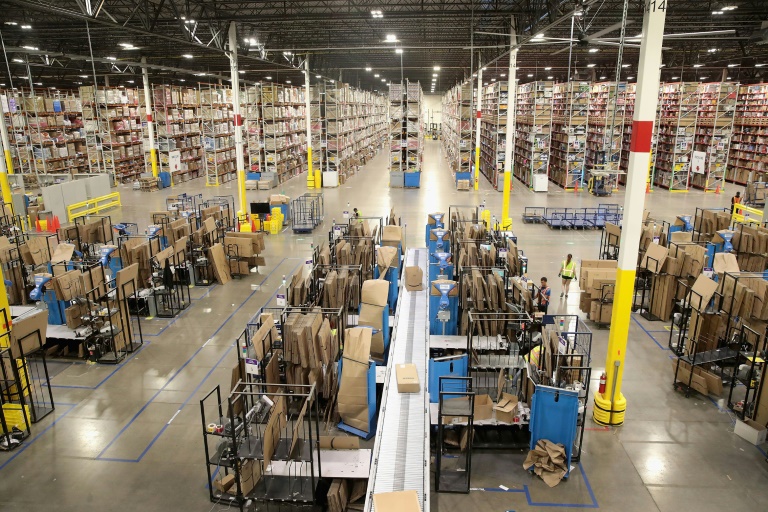
The rise of e-commerce and the logistical nightmare created by the Covid-19 pandemic have caused a surge in demand for warehouse space in the United States, and big investment funds have taken note.

“It’s been a tremendous struggle to find the appropriate location for clients,” said Michael Schipper of Blau & Berg, a commercial real estate specialist in New Jersey and New York.

Available space has been dwindling steadily for a year and a half, and the vacancy rate is now 3.4 percent, although developers delivered 90 million square feet of new warehouse space in the first three months of the year, according to commercial real estate firm Jones Lang LaSalle.

Demand is so strong that purchase prices have tripled or quadrupled in just six years in northern New Jersey. 

Nationally, average rental costs have jumped 22 percent in two years, according to analytics firm Beroe. 

“Demand for space from logistics and distribution activities driven by e-commerce industry” is the major factor in the US market, according to Beroe, which notes that demand has exceeded supply for 18 months. 

In addition, unlike traditional storage sites, fulfilling online orders requires technologically advanced warehouses, said Mark Manduca, chief investment officer at GXO, a supply chain management company.

Beroe said this equipment, which requires massive investments, allows firms “to improve warehouse efficiency and to speed up warehouse activities to meet the same-day delivery demands.” 

Pioneered by Amazon, other retailers were obliged to scramble to catch up to the new standard of immediate delivery set by the Seattle-based online sales giant.

In recent years, a lot of those companies have been rapidly ramping up their own e-commerce efforts, Manduca said. 

“Those are the people that are really driving that demand for last mile warehousing,” he said.

The demands of instant delivery have forced many sellers to acquire multiple storage locations to get closer to customers, especially in urban areas where real estate was already expensive.

The coronavirus pandemic accelerated that trend, as e-commerce sales surged by 56 percent between early 2020 and early 2022.

– A correction coming?-

Another pandemic effect was the logistical mess caused by Covid-lockdowns and health restrictions. 

That revealed storage capacity “in the wrong place, supply chain issues, and more recently, inventory rebuilds that have kind of almost overshot to a certain degree,” Manduca said.

To address those issues, he says, many companies are “now looking at facilities closer to home, which is naturally increasing the demand for warehousing,” he said. 

Amid the rise in demand, private equity firm Blackstone has invested heavily in the sector, and currently owns $170 billion worth of warehouses. It now rivals Prologis, the world’s number one.

“We’re also now seeing a surge in corporations increasing inventory holdings to mitigate supply chain issues” and are therefore looking for additional storage space, Blackstone President Jon Gray said in April. 

Other private equity giants, such as KKR, Carlyle, Apollo or Sweden’s EQT have all bought sites to ride the wave. 

But Schipper cautions that while the warehousing industry “has a long term positive trajectory, … I think that there needs to be a pause.” 

“You cannot run up in parabolic fashion forever,” he said, noting that the current tightening of credit conditions also could play a role. 

One sign of a possible correction coming: Amazon’s decision to sublet or renegotiate the rent for 30 million square feet of warehouse space. 

“You’re going to see demand for space go down and rental rates will stop going up at the pace that they’re going up. There’s just not any way around it,” Ward Fitzgerald, chief executive of EQT Exeter Property Group, warned in the Wall Street Journal.

“They’ll continue their trajectory maybe 12 months from now, but … there’s going to be a correction.”

While demand could keep rising for some time, Schipper said, “The question really is how much? And for how long?  

“I don’t think anybody knows the answer.”
Sudan wheat harvest waits to rot as hunger crisis looms

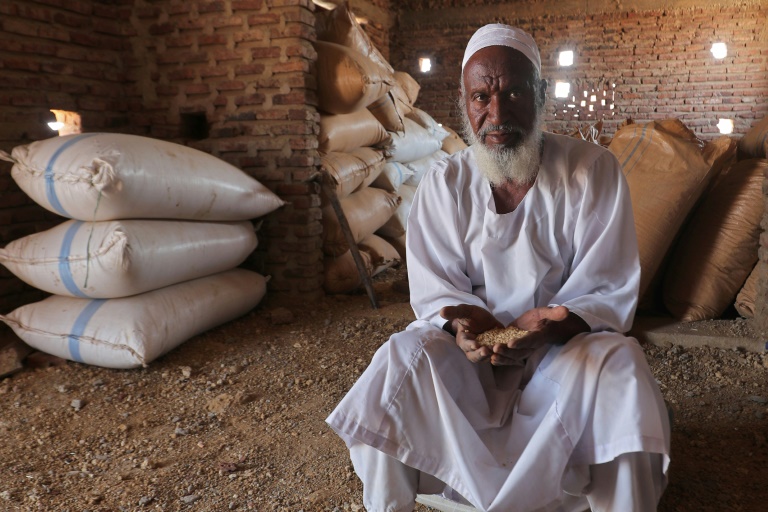
Looking at the sacks of wheat stacked in Imad Abdullah’s small home, no one would guess that Sudan’s food security is hanging by a thread after an October coup and Russia’s invasion of Ukraine.

But the wheat farmer fears that the grain will soon rot, after his country’s cash-strapped government backed out of promises to purchase it at incentivising prices.

“It has been two months since I harvested the wheat and I can’t store it in the house anymore,” said Abdullah, pointing to the large sacks filled with ripened wheat crammed into his small house in Al-Laota, in Gezira state, south of Sudan’s capital.

He is one of thousands of farmers who have cultivated the grain as part of Sudan’s largest agricultural scheme, named Al-Gezira.

When Abdullah harvested in March, he was promised 43,000 Sudanese pounds ($75) per sack –- a price set by the government to encourage farmers to cultivate the grain.

“We used to sell the government our entire harvest. We never had to bring it home. We don’t even have adequate storage places.”

Sudanese officials have however declared in recent weeks that they will not be able to buy this season’s entire harvest due to lack of funds.

Impoverished Sudan has for years been grappling with a grinding economic crisis, which deepened after last year’s military coup prompted Western governments to cut crucial aid.

The October coup derailed a fragile transition put in place following the 2019 ouster of president Omar al-Bashir.

Over 18 million people, nearly half the Sudanese population, are expected to be pushed into extreme hunger by September, according to United Nations estimates.

Russia’s invasion of Ukraine, both key grain suppliers, threatens to compound Sudan’s existing food security troubles.

Wheat imports from both nations make up between 70 and 80 percent of Sudan’s local market needs, according to a 2021 UN report.

– Empty coffers –

Last month, dozens of wheat farmers from Sudan’s Northern State staged a protest outside the agricultural bank after it refused to take their harvest.

“I grew 16 acres of wheat this season, filling some 120 sacks amounting to a total of 12 tonnes,” farmer Modawi Ahmed told AFP.

He said the bank only agreed to buy less than half of his harvest, and he now fears the rest will spoil.

Farmers working the fields as part of the Al-Gezira scheme have over the years contributed only a small portion of Sudan’s annual wheat needs of 2.2 million tonnes.

This year, local wheat production was forecast to cover only a quarter of the country’s needs, according to the UN’s Food and Agriculture Organisation (FAO).

The finance ministry earlier this month said it was committed to building a strategic wheat reserve of up to 300,000 tonnes. 

But the government “does not have the money to buy the harvest”, said an official with Sudan’s agricultural bank, which procures the wheat from farmers.

“We have asked the finance ministry and the central bank for funds but we got no response,” the official told AFP on condition of anonymity.

An official with Sudan’s finance ministry, who also spoke on condition of anonymity, confirmed the lack of funds.

Properly stored wheat can last up to a year and a half in silos with controlled temperature and humidity levels, according to agricultural expert Abdulkarim Omar.

But it “could spoil within as little as three months” in inadequate storage, he said.

Traders have offered to buy the farmers’ wheat, but at far lower prices that barely cover the cost of production, according to Omar Marzouk, the governor of the Al-Gezira scheme.

As a result, he predicted that “farmers will opt against cultivating the grain next season”.

– Risk to food security –

Now, as the new growing season starts, many frustrated farmers are leaving their lands untilled and unprepared.

Kamal Sari, leader of the farmers’ association, fears that reluctance to prepare for the new season could affect “food provision for the Sudanese people”.

Last week, two children in Sudan’s Darfur region died “due to hunger-related causes”, UK-based aid group Save the Children said, warning it was “an ominous sign of what is to come”.

Sudanese households have come under increasing pressure in recent months due to spiralling fuel and electricity prices.

Prices of staple food items have also skyrocketed, with inflation recently surpassing 200 percent.

Rising bread prices due to slashed wheat subsidies sparked the political turmoil and mass rallies that led to the ouster of Bashir in 2019.

Given the economic crisis and the ongoing war in Ukraine, economist Mohamed al-Nayer said “the government should buy the wheat from farmers at any price”.

Otherwise, he warned, “it complicates the situation in Sudan far more than it already is.”

Indigenous protesters in Ecuador defy state of emergency

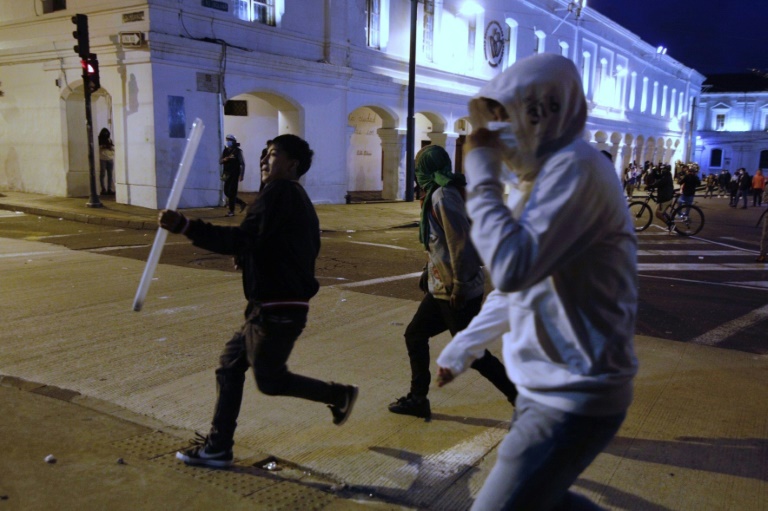
Indigenous protesters demanding cheaper fuel in Ecuador defied a state of emergency Saturday, pressing on with road blockages now in their sixth day.

A day after President Guillermo Lasso announced the restrictive measures in a bid to end the sometimes violent demonstrations, police said Indigenous people kept up protests in most of the country’s 24 provinces, including three where the president declared the state of emergency. One includes the capital, Quito.

Oil producer Ecuador has been hit by rising inflation, unemployment and poverty exacerbated by the coronavirus pandemic.

Fuel prices have risen sharply since 2020, almost doubling for diesel from $1 to $1.90 per gallon and rising from $1.75 to $2.55 for petrol.

Demonstrators from the country’s Indigenous community — which makes up over a million of Ecuador’s 17.7 million inhabitants — launched an open-ended anti-government protest this week that has since been joined by students, workers and others.

The demonstrations have blocked roads across the country, including highways leading into the capital Quito.

Talks with the president failed to end the demonstrations.

Clashes with security forces during the protests have left at least 83 people injured, and 40 have been arrested.

In response, Lasso’s decree empowers him to mobilize the armed forces to maintain order, suspend civil rights and declare curfews. 

“I am committed to defending our capital and our country,” Lasso said on television. 

“I called for dialogue and the response was more violence. There is no intention to seek solutions.”

The demonstrations have largely been concentrated in the northern region of Pichincha which includes Quito, and neighboring Cotopaxi and Imbabura.

In Quito, nearly 1,000 protesters tried to tear down metal fences that surround the presidential headquarters this week.

In a bid to ease grassroots anger, Lasso announced in his address late Friday a small increase in a monthly subsidy paid to Ecuador’s poorest, as well as a program to ease the debt of those who have loans from state-run banks.

But Saturday, Indigenous activists urged national lawmakers to step in to end the state of emergency.

Ecuador’s legislature has the authority to end it constitutionally.

Lasso, a rightwing ex-banker who took office a year ago, met Thursday with Indigenous leaders to assuage discontent but the discussions collapsed.

Producers of flowers, one of Ecuador’s main exports, complained Friday that due to the roadblocks, their wares were rotting.

But the powerful Confederation of Indigenous Nationalities of Ecuador (Conaie), which called the protests, has said it will maintain the road blockades until the government meets 10 demands.

Conaie — which has been credited with helping topple three Ecuadoran presidents between 1997 and 2005 — wants prices reduced to $1.50 for diesel and $2.10 for petrol, a demand the government has so far rejected.

Its other demands include food price controls and renegotiating the personal bank loans of about four million families.

“It’s about time the president did this because it’s not fair that a group of Indigenous people want to run the country as they please,” Elsa Proano, a 64-year-old street vendor who considers herself harmed by the demonstrations. “I am against the strike,” she added.

Ukraine's Zelensky visits southern front as battles rage

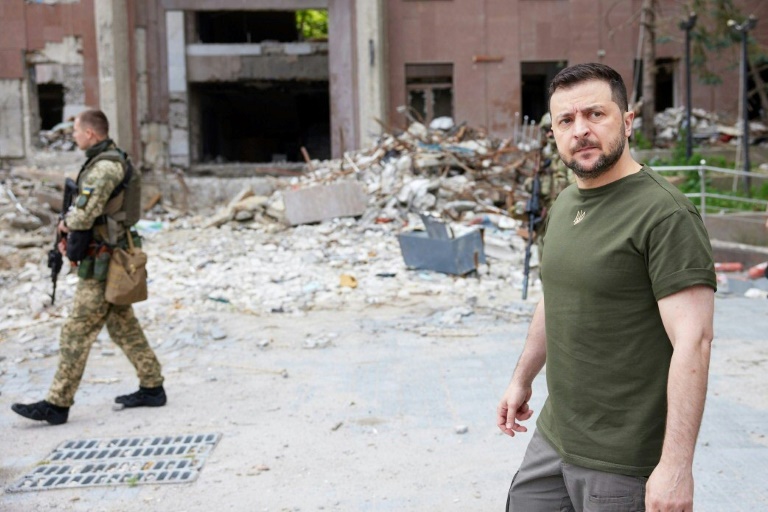
Ukrainian President Volodymyr Zelensky visited the war-torn southern frontline on Saturday for the first time since the Russian invasion as “fierce battles” raged again in the eastern Donbas region.

Making a rare trip outside Kyiv, where he is based for security reasons, Zelensky travelled to the hold-out Black Sea city of Mykolaiv and visited troops nearby and in the neighbouring Odessa region.

Russian forces have directed their firepower on the east and south of Ukraine in recent weeks since failing in their bid to take the capital Kyiv after the lightning February 24 invasion.

“It is important that you are alive. As long as you live there is a strong Ukrainian wall that protects our country,” Zelensky told soldiers in the Odessa region. 

“I want to thank you from the people of Ukraine, from our state for the great work you are doing, for your impeccable service.” 

Mykolaiv is a key target for Russia as it lies on the way to the strategic Black Sea port of Odessa. It is around 100 kilometres (62 miles) northwest of Kherson, which fell to Russia in the first weeks of the war.

Zelensky surveyed the badly damaged regional administration building in Mykolaiv and met officials in what appeared to be a basement where he handed out awards to soldiers, in a video released by his office.

Soldiers in Mykolaiv meanwhile are trying to keep their pre-war routines alive, with one saying he will not give up his vegan diet on the frontlines.

Oleksandr Zhuhan said he had received a package from a network of volunteers to keep up his plant-based diet. 

“There was pate and vegan sausages, hummus, soya milk… and all this for free,” the 37-year-old drama teacher said happily.

– ‘Hero’ –

Back in Kyiv, with shockwaves from the war continuing to reverberate around the world, thousands gathered to pay tribute to one young man — Roman Ratushny, a leading figure in Ukraine’s pro-European Maidan movement, who was killed fighting Russians in the country’s east earlier this month aged just 24.

In front of the coffin draped in a yellow and blue Ukrainian flag at the foot of a monument that overlooks the sprawling Independence Square in the capital, people of all ages saluted his memory.

“I think it is important to be here because he is a hero of Ukraine and we must remember him,” Dmytro Ostrovsky, a 17-year-old high school student, told AFP. 

The loss put a human face on the shared grief of Ukrainians, as the bloodshed continues.

The worst of the fighting continues to be in the eastern industrial Donbas region, with battles raging in villages outside the city of Severodonetsk, which Russia has been trying to seize for weeks.  

“There’s an expression: prepare for the worst and the best will come by itself,” the governor of the eastern Lugansk region, Sergiy Gaiday, told AFP in an interview Ukrainian-controlled city across the river from Severodonetsk.

“Of course, we need to prepare.”

Wearing a flak jacket and carrying gun cartridges and a tourniquet, he said Russian forces “are just shelling our troop positions 24 hours a day.”

Earlier, Gaiday said on Telegram that there was “more destruction” at the besieged Azot chemical plant in Severodonetsk, where hundreds of civilians are sheltering.

He also said Lysychansk is being “heavily shelled”. 

In Lysychansk, there are signs of preparations for street fighting: soldiers digging in, putting up barbed wire and police placing burnt-out vehicles sideways across roads to slow traffic, as residents were preparing to be evacuated. 

“We’re abandoning everything and going. No one can survive such a strike,” said history teacher Alla Bor, waiting with her son-in-law Volodymyr and 14-year-old grandson.

Meanwhile, pro-Russian officials in the eastern, separatist-held city of Donetsk said five civilians were killed and 12 injured by Ukrainian bombardment.

And Russian state television aired social media videos of two US military veterans who went missing last week while fighting alongside the Ukrainian army, stating they had been captured by Russian forces.

US President Joe Biden had said on Friday he did not know the whereabouts of Alexander Drueke and Andy Huynh, after their relatives lost contact with the pair. A third American is also missing.

In Lysychansk, the governor Gaiday admitted that watching his home city, Severodonetsk, be shelled and people he knew dying was “painful.”

“It’s all painful, I’m a human being but I bury this deep inside me,” he said, adding that his task is to “help people as much as possible”.

burs-st/caw

'I am good': Biden falls from bike but is unhurt

US President Joe Biden took a tumble as he was riding his bicycle near his beach home in the state of Delaware Saturday morning, but was unhurt.

A video from a White House pool report showed the 79-year-old president immediately getting up after his fall. He then says: “I’m good.” 

He was biking with First Lady Jill Biden in a state park near their beach home in Rehoboth Beach, Delaware and had stopped to talk to onlookers when he fell.

The president told a small crowd of well-wishers and reporters that he had lost his balance as he tried to pull a foot out of a bike clip.

The result: “a mad scramble of Secret Service and press,” a White House pool report said, adding there were no visible scrapes or bruises from the fall.

“No medical attention is needed,” a White House official said. “The President looks forward to spending the rest of the day with his family.”

Videos posted to social media later in the afternoon showed the president seeking to prove his agility. 

Reporters and onlookers called out as Biden left a church service, asking if had suffered any injuries from his spill. 

Biden didn’t answer but took three quick hops and raised his fists in a demonstration of strength.

As the oldest US president, Biden’s health is the subject of constant attention, particularly as speculation rises on whether he will seek a second term in 2024. 

In November 2020, shortly after his election but before taking office, Biden broke a foot while playing with his pet German shepherds.

But a year later, in November 2021, his doctor gave Biden a clean bill of health, describing him as “healthy” and “vigorous.”

Taking a few questions from reporters on Saturday, Biden said he was “in the process of making up my mind” about easing some Trump-era tariffs on Chinese goods in order to soften inflationary pressures.

He said he would be speaking to Chinese President Xi Jinping soon.

And asked if he was satisfied with progress on gun legislation — after mass shootings in Texas and New York brought new demands for action — Biden said only that he was happy with action by his home state of Delaware, which passed a ban on assault-style weapons.

US approves Covid vaccines for youngest kids

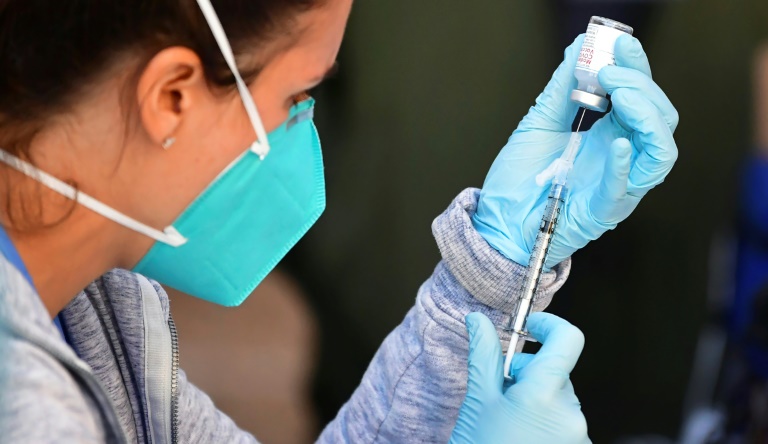
US health authorities on Saturday cleared the Pfizer and Moderna Covid-19 vaccines for children aged five and younger, in a move President Joe Biden greeted as a “monumental step” in the fight against the virus.

The United States thus became the first country to approve use of the so-called mRNA vaccines for children as young as six months.

The US Food and Drug Administration (FDA) had on Friday authorized their emergency use for young children — who previously had to be at least five to receive the vaccine.

But the vaccines required further clearance from the US Centers for Disease Control and Prevention (CDC), the country’s leading public health agency — and they received that on Saturday.

“We know millions of parents and caregivers are eager to get their young children vaccinated, and with today’s decision, they can,” CDC Director Rochelle Walensky said in a statement Saturday.

Once the green light was received from the FDA, the US government began distributing millions of doses of the vaccine across the country.

Biden promised that parents could begin scheduling appointments as early as next week to have their young children vaccinated at hospitals, clinics, pharmacies and doctor’s offices. 

In a statement Saturday, he touted the vaccines as “safe (and) highly effective,” and said that “for parents all over the country, this is a day of relief and celebration.”

In coming weeks, with more and more doses shipped out, “every parent who wants a vaccine will be able to get one,” he said.

The Moderna vaccine, administered in two doses a month apart, will be available to children aged six months to five years in reduced doses of 25 micrograms (half the amount given children aged six to 11, and a quarter the dose for those 12 and older).

The Pfizer-BioNTech vaccine is now authorized for children aged six months to four years, and will be given in doses of three micrograms per injection — one-tenth the adult dosage.

The difference, however, is that children will receive three shots — the first two three weeks apart, followed by a third eight weeks later.

So, children receiving it will not have full protection for the first few months. 

Its side effects, however, have appeared less serious in drug trials than those of the Moderna vaccine.  

About a quarter of young children receiving Moderna have developed fevers, particularly after the second dose — but they generally lasted no more than a day. 

About 20 million US children are now eligible, by age, for the new vaccines. 

While children have generally proved less vulnerable to Covid-19, some 480 in the US in this age group have died of the virus.

So-called long Covid is also a concern, as is multisystem inflammatory syndrome, a rare but serious post-viral condition.

Pfizer has said it hopes to apply in early July to the European Medicines Agency for authorization to provide its vaccines to children in this youngest age group.

Lunch with Warren Buffett goes for a whopping $19 mn … tip included?

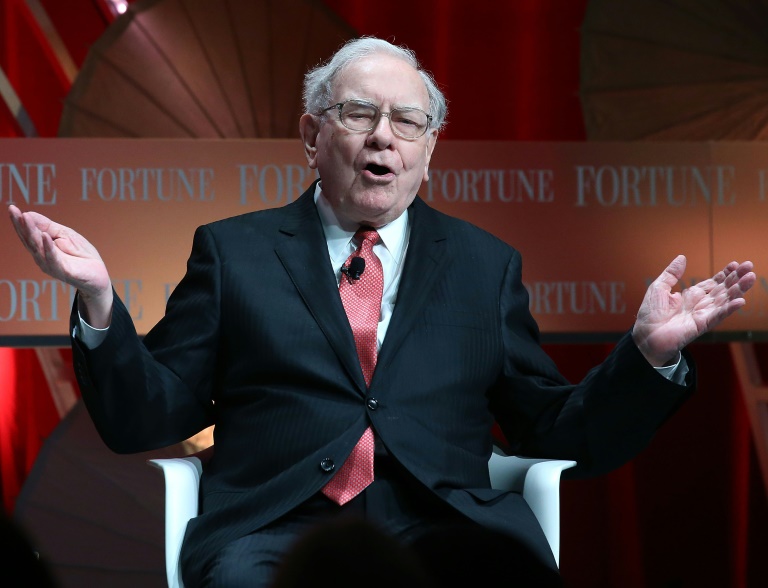
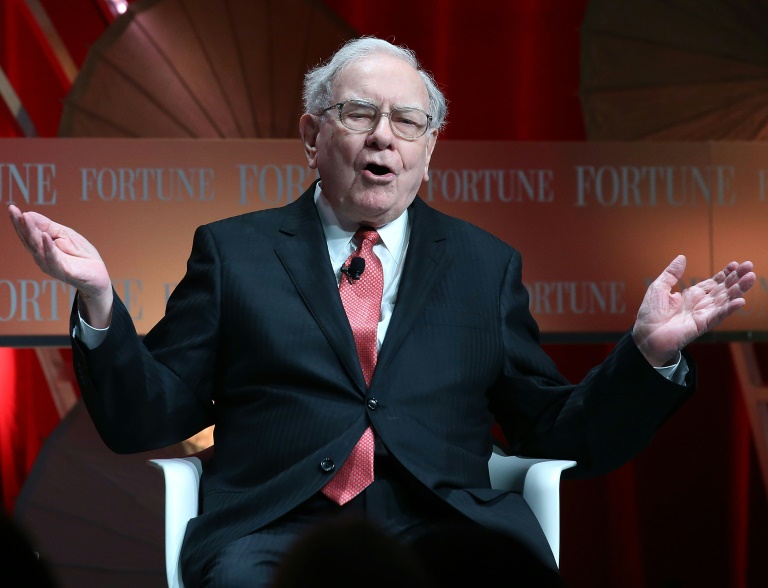
Talk about an expensive date: a mystery bidder will be spending a record $19 million for the right to have lunch with legendary American investment guru Warren Buffett. 

That whopping bid, announced by eBay, came in the 21st — and last — such charity luncheon with the aging multibillionaire, who is chairman and CEO of Berkshire Hathaway.

Bidding on the eBay website opened last Sunday at a modest $25,000. But it shot up rapidly as rival bidders tried to outdo one another, finally ending Friday at a total of just over $19 million.

The auction — held annually, though canceled by Covid-19 concerns for the past two years — raises funds for Glide, which fights poverty in San Francisco. It distributes food to the homeless and helps them find shelter, medical assistance and training.

San Francisco, a place of income extremes, has struggled for years with a large homeless population. 

This year’s still-anonymous winner of the charity auction “has not only made history, but will spend an unforgettable afternoon with American legend Warren Buffett at a private lunch with up to seven guests at Smith & Wollensky Steakhouse in New York City,” said an announcement posted by eBay.

The last pre-pandemic auction was won by Justin Sun, an American entrepreneur active in cryptocurrencies, who spent $4.6 million for the right to dine with Buffett, an outspoken critic of bitcoin.

The eBay statement quoted the 91-year-old Buffett — revered throughout the investment community as the “Oracle of Omaha” — as saying he had “met a lot of interesting people all over the world” through the auctions.

“The one universal characteristic,” he added, “is that they feel the money is going to be put to very good uses.”

Buffett’s net worth was estimated in March at $117 billion, according to Forbes.com. 

He joined Bill and Malinda Gates in forming a group of the ultra-wealthy who have vowed to give away half their fortunes. Buffett is estimated to have already donated some $48 billion.

Lunch with Warren Buffett goes for a whopping $19 mn … tip included?

Talk about an expensive date: a mystery bidder will be spending a record $19 million for the right to have lunch with legendary American investment guru Warren Buffett. 

That whopping bid, announced by eBay, came in the 21st — and last — such charity luncheon with the aging multibillionaire, who is chairman and CEO of Berkshire Hathaway.

Bidding on the eBay website opened last Sunday at a modest $25,000. But it shot up rapidly as rival bidders tried to outdo one another, finally ending Friday at a total of just over $19 million.

The auction — held annually, though canceled by Covid-19 concerns for the past two years — raises funds for Glide, which fights poverty in San Francisco. It distributes food to the homeless and helps them find shelter, medical assistance and training.

San Francisco, a place of income extremes, has struggled for years with a large homeless population. 

This year’s still-anonymous winner of the charity auction “has not only made history, but will spend an unforgettable afternoon with American legend Warren Buffett at a private lunch with up to seven guests at Smith & Wollensky Steakhouse in New York City,” said an announcement posted by eBay.

The last pre-pandemic auction was won by Justin Sun, an American entrepreneur active in cryptocurrencies, who spent $4.6 million for the right to dine with Buffett, an outspoken critic of bitcoin.

The eBay statement quoted the 91-year-old Buffett — revered throughout the investment community as the “Oracle of Omaha” — as saying he had “met a lot of interesting people all over the world” through the auctions.

“The one universal characteristic,” he added, “is that they feel the money is going to be put to very good uses.”

Buffett’s net worth was estimated in March at $117 billion, according to Forbes.com. 

He joined Bill and Malinda Gates in forming a group of the ultra-wealthy who have vowed to give away half their fortunes. Buffett is estimated to have already donated some $48 billion.

Argentine leader denies grounded plane has any terror link

Argentine President Alberto Fernandez insisted Saturday that a cargo plane with Iranian and Venezuelan crew members had been grounded due only to fueling difficulties, not because of any alleged link to Iran’s elite Quds Force.

There is “no irregularity” with the Venezuelan plane, Fernandez told Radio 10, adding that the sole problem was refueling difficulties linked to US sanctions on Venezuela. 

Paraguay’s intelligence chief had said Friday that one man aboard the plane, which has been grounded since Wednesday at an airport near Buenos Aires, had ties to the Quds Force. 

Intelligence chief Esteban Aquino told AFP that Captain Gholamreza Ghasemi did not merely share a name with a member of the Force — an arm of Iran’s Revolutionary Guards which the US lists as a terrorist organization — but is in fact the same man.

But Fernandez blamed his political opponents for spreading that notion, saying they wanted to show “something that is not — something dark” by suggesting a link to terrorism.

The Boeing 747 cargo plane is reportedly carrying car parts. Its 14 Venezuelan and five Iranian crew members have been prevented from leaving the country pending an investigation.

The plane arrived in Argentina from Mexico on June 6, before trying to fly to Uruguay two days later, where it was refused entry.

Uruguay’s Interior Minister Luis Alberto Heber said his country had received a “formal warning from Paraguayan intelligence.”

The plane then returned to Argentina where it has been grounded ever since.

The plane belongs to Emtrasur, a subsidiary of Venezuela’s Conviasa, which is under US sanctions. Conviasa purchased the plane from Tehran’s Mahan Air last year, Iranian officials said.

The United States has accused Mahan Air of links to the Revolutionary Guards.

Paraguay said Tuesday it had information that seven crew on the Emtrasur plane, which stopped in that country in May, were Quds Force members.

Bitcoin plunges below $20,000

Bitcoin plunged below $20,000 on Saturday, shedding nine percent from the previous day to fall to $18,740, its lowest level since December 13, 2020.

With investors increasingly wary of risk, the world’s most popular crypto asset has lost more than 72 percent of its value since reaching a high of $68,991 on November 10, 2021.

After sinking to $18,740 on Saturday, Bitcoin rose to $18,941 at 1550 GMT, down eight percent from Friday.

Other major digital currencies were also down on Saturday, including ether, which lost nearly 10 percent of its value.

World stock markets plunged this week amid fears that inflation-fighting interest rate hikes by the US Federal Reserve and other central banks could trigger a recession.

Cryptocurrencies have paid the biggest price.

The value of the global crypto market fell below the symbolic $1 trillion mark on Monday after reaching $3 trillion in November of last year.

Bitcoin’s fall has been accelerated by the suspension of withdrawals by two cryptocurrency platforms.

The Celsius Network said it was pausing “all withdrawals, swap, and transfers between accounts” due to “extreme market conditions.”

Babel Finance said it was facing “unusual liquidity pressures.”

Major exchange Binance temporarily suspended bitcoin withdrawals and advised customers to use other networks.

Coinbase said Monday that it was trimming 18 percent of its workforce, about 1,100 jobs, citing tight economic conditions and overly rapid expansion.

“We appear to be entering a recession after a 10+ year economic boom,” Coinbase founder and CEO Brian Armstrong said.

In recent years, the crypto sector benefited from a vast infusion of cash due to easy money policies from the world’s biggest central banks.

However, rampant inflation has sparked tighter monetary policy across the globe, helping to send the industry crashing.

Close Bitnami banner
Bitnami