US Business

Italy's Eni joins giant Qatar gas project after Russian cuts

Italian company Eni on Sunday joined Qatar Energy’s project to expand production from the world’s biggest natural gas field, days after Russia slashed supplies to Italy.

Eni will own a stake of just over three percent in the $28 billion North Field East project, Qatar Energy’s CEO said at a signing ceremony in Doha.

Qatar announced France’s TotalEnergies as its first, and largest, foreign partner on the development last week, with a 6.25 percent share. 

More companies are set to be named. 

“Today I’m pleased… to announce the selection of Eni as a partner in this unique strategic project,” said Energy Minister Saad Sherida al-Kaabi, who is also president and CEO of state-owned Qatar Energy.

The project’s LNG — the cooled form of gas that makes it easier to transport — is expected to come on line in 2026. It will help Qatar increase its liquefied natural gas production by more than 60 percent by 2027, TotalEnergies chief executive Patrick Pouyanne told AFP last week.

Russia’s invasion of Ukraine has injected urgency into efforts around the world to develop new energy sources as Western countries try to reduce their reliance on Russia.

On Friday, Eni said it would receive only 50 percent of the gas requested from Russia’s Gazprom, the third day running of reduced supplies. Rome has accused Gazprom of peddling “lies” over the cuts.

“We have a lot of things to learn from your leadership and also from your standards and from your ability to adapt to very difficult circumstances,” Eni CEO Claudio Descalzi told his Qatari counterpart.

Qatar Energy estimates that the North Field, which extends under the Gulf sea into Iranian territory, holds about 10 percent of the world’s known gas reserves.

Kaabi refused to divulge how many more partners will be announced. Industry sources have discussed ExxonMobil, Shell and ConocoPhillips, while Bloomberg reported this week that Chinese companies were in talks.

South Korea, Japan and China have become the main markets for Qatar’s LNG but since an energy crisis hit Europe last year, the Gulf state has helped Britain with extra supplies and also announced a cooperation deal with Germany.

Europe has in the past rejected the long-term deals that Qatar seeks for its energy but the Ukraine conflict has forced a change in attitude.

“Qatar is the lowest cost source of supply at the moment and  therefore it’s attractive to the majors (companies),” Daniel Toleman, an analyst at resources consultancy Wood Mackenzie, told AFP.

“So these companies want to be involved in those projects.”

Ukraine war could last 'years', NATO chief warns

NATO’s chief warned that the war in Ukraine could last “for years” as President Volodymyr Zelensky vowed Sunday that his forces would not give up the south of the country to Russia after his first visit to the frontline there.

Ukraine said it had also repulsed fresh attacks by Russian forces on the eastern front, where there have been weeks of fierce battles as Moscow tries to seize the industrial Donbas region.

While Ukraine remained defiant, NATO Secretary-General Jens Stoltenberg warned Western countries must be ready to offer long-term support to Kyiv during a grinding war.

“We must be prepared for this to last for years,” Stoltenberg told German daily newspaper Bild.

“We must not weaken in our support of Ukraine, even if the costs are high — not only in terms of military support but also because of rising energy and food prices.”

British Prime Minister Boris Johnson issued a similar warning, urging sustained support for Kyiv or risk “the greatest victory for aggression” since World War II.

“Time is now the vital factor,” Johnson wrote in an article for the Sunday Times after making his second visit to Kyiv, calling for the West to ensure Ukraine has the “strategic endurance to survive and eventually prevail”.

– ‘Return everything’ –

Russian forces have directed their firepower at the east and south of Ukraine in recent weeks since failing in their bid to take the capital Kyiv after the lightning February 24 invasion. 

Zelensky made a rare trip outside Kyiv Saturday to the hold-out Black Sea city of Mykolaiv, and visited troops nearby and in the neighbouring Odessa region for the first time since the Russian invasion.

“We will not give away the south to anyone, we will return everything that’s ours and the sea will be Ukrainian and safe,” he said in a video posted on Telegram as he made his way back to Kyiv.

He said he talked with troops and police during his visit.

“Their mood is confident, and looking into their eyes it is obvious that they all do not doubt our victory,” he said.

But Zelensky admitted that losses were “significant”, adding: “Many houses were destroyed, civilian logistics were disrupted, there are many social issues.”

Mykolaiv is a key target for Russia as it lies on the way to the strategic Black Sea port of Odessa.

Blockaded by Russia, Odessa residents have turned their attention to rallying the home front effort.

“Every day, including the weekend, I come to make camouflage netting for the army,” said Natalia Pinchenkova, 49, behind a large Union flag, a show of thanks to Britain for its support for Ukraine since the conflict erupted.

Soldiers in Mykolaiv meanwhile were trying to keep their pre-war routines alive, with one saying he would not give up his vegan diet on the frontlines.

Oleksandr Zhuhan said he had received a package from a network of volunteers to keep up his plant-based diet. 

“There was pate and vegan sausages, hummus, soya milk… and all this for free,” the 37-year-old drama teacher said happily.

– ‘Hero’ –

Back in Kyiv, with shockwaves from the war continuing to reverberate around the world, thousands gathered to pay tribute to one young man — Roman Ratushny, a leading figure in Ukraine’s pro-European Maidan movement, who was killed fighting Russians in the country’s east earlier this month aged just 24.

In front of the coffin draped in a yellow and blue Ukrainian flag at the foot of a monument that overlooks the sprawling Independence Square in the capital, people of all ages saluted his memory.

“I think it is important to be here because he is a hero of Ukraine and we must remember him,” Dmytro Ostrovsky, a 17-year-old high school student, told AFP. 

The loss put a human face on the shared grief of Ukrainians, as the bloodshed continues.

The worst of the fighting continues to be in the eastern industrial Donbas region, with battles raging in villages outside the city of Severodonetsk, which Russia has been trying to seize for weeks.

“There’s an expression: prepare for the worst and the best will come by itself,” the governor of the eastern Lugansk region, Sergiy Gaiday, told AFP in an interview from the Ukrainian-controlled city of Lysychansk across the river from Severodonetsk.

“Of course, we need to prepare,” he said, wearing a flak jacket and carrying gun cartridges and a tourniquet.

Ukraine’s armed forces said Sunday they had pushed back Russian attacks on villages near Severodonetsk.

“Our units repulsed the assault in the area of Toshkivka,” the Ukrainian army said on Facebook. “The enemy has retreated and is regrouping.”

It said Russian forces were “storming” towards the village of Orikhove, but that it had “successfully repulsed” an assault near the village.

In Lysychansk, the governor Gaiday said watching his home city, Severodonetsk, be shelled and people he knew dying was “painful”.

“I’m a human being but I bury this deep inside me,” he said, adding that his task is to “help people as much as possible”.

burs-dk/raz

Zelensky vows to retake south, NATO warns of long war

President Volodymyr Zelensky vowed Sunday that his forces “will not give away the south to anyone” after his first visit to the southern frontline, as NATO’s chief warned the war in Ukraine could last “for years”.

Making a rare trip outside Kyiv, where he is based for security reasons, Zelensky travelled to the hold-out Black Sea city of Mykolaiv and visited troops nearby and in the neighbouring Odessa region for the first time since the Russian invasion.

“We will not give away the south to anyone, we will return everything that’s ours and the sea will be Ukrainian and safe,” he said in a video posted on Telegram as he made his way back to Kyiv.

He said he talked with troops and police during his visit.

“Their mood is confident, and looking into their eyes it is obvious that they all do not doubt our victory,” he said.

While Zelensky remained defiant, NATO Secretary-General Jens Stoltenberg warned that “we must be prepared for this to last for years.”

Speaking to German daily newspaper Bild, Stoltenberg said “We must not weaken in our support of Ukraine, even if the costs are high — not only in terms of military support but also because of rising energy and food prices.”

Russian forces have directed their firepower at the east and south of Ukraine in recent weeks since failing in their bid to take the capital Kyiv after the lightning February 24 invasion. 

“The losses are significant. Many houses were destroyed, civilian logistics were disrupted, there are many social issues,” Zelensky said.

“I have commissioned to make assistance to people who have lost loved ones more systemic. We will definitely restore everything that was destroyed. Russia does not have as many missiles as our people have the desire to live.”

Mykolaiv is a key target for Russia as it lies on the way to the strategic Black Sea port of Odessa. 

Zelensky surveyed the city’s badly damaged regional administration building and met officials in what appeared to be a basement where he handed out awards to soldiers, in a video released by his office.

Soldiers in Mykolaiv meanwhile were trying to keep their pre-war routines alive, with one saying he would not give up his vegan diet on the frontlines.

Oleksandr Zhuhan said he had received a package from a network of volunteers to keep up his plant-based diet. 

“There was pate and vegan sausages, hummus, soya milk… and all this for free,” the 37-year-old drama teacher said happily.

– ‘Hero’ –

Back in Kyiv, with shockwaves from the war continuing to reverberate around the world, thousands gathered to pay tribute to one young man — Roman Ratushny, a leading figure in Ukraine’s pro-European Maidan movement, who was killed fighting Russians in the country’s east earlier this month aged just 24.

In front of the coffin draped in a yellow and blue Ukrainian flag at the foot of a monument that overlooks the sprawling Independence Square in the capital, people of all ages saluted his memory.

“I think it is important to be here because he is a hero of Ukraine and we must remember him,” Dmytro Ostrovsky, a 17-year-old high school student, told AFP. 

The loss put a human face on the shared grief of Ukrainians, as the bloodshed continues.

The worst of the fighting continues to be in the eastern industrial Donbas region, with battles raging in villages outside the city of Severodonetsk, which Russia has been trying to seize for weeks.

“There’s an expression: prepare for the worst and the best will come by itself,” the governor of the eastern Lugansk region, Sergiy Gaiday, told AFP in an interview from the Ukrainian-controlled city of Lysychansk across the river from Severodonetsk.

“Of course, we need to prepare.”

Wearing a flak jacket and carrying gun cartridges and a tourniquet, he said Russian forces “are just shelling our troop positions 24 hours a day.”

Earlier, Gaiday said on Telegram that there was “more destruction” at the besieged Azot chemical plant in Severodonetsk, where hundreds of civilians are sheltering.

He also said Lysychansk was being “heavily shelled”. 

There are signs of preparations for street fighting in the city: soldiers digging in, putting up barbed wire and police placing burnt-out vehicles sideways across roads to slow traffic, as residents were preparing to be evacuated. 

“We’re abandoning everything and going. No one can survive such a strike,” said history teacher Alla Bor, waiting with her son-in-law Volodymyr and 14-year-old grandson.

Meanwhile, pro-Russian officials in the eastern, separatist-held city of Donetsk said five civilians were killed and 12 injured by Ukrainian bombardment.

In Lysychansk, the governor Gaiday said watching his home city, Severodonetsk, be shelled and people he knew dying was “painful.”

“I’m a human being but I bury this deep inside me,” he said, adding that his task is to “help people as much as possible”.

burs-ssy/mtp

Layoffs and exits: Firms in China teeter under zero-Covid pressure

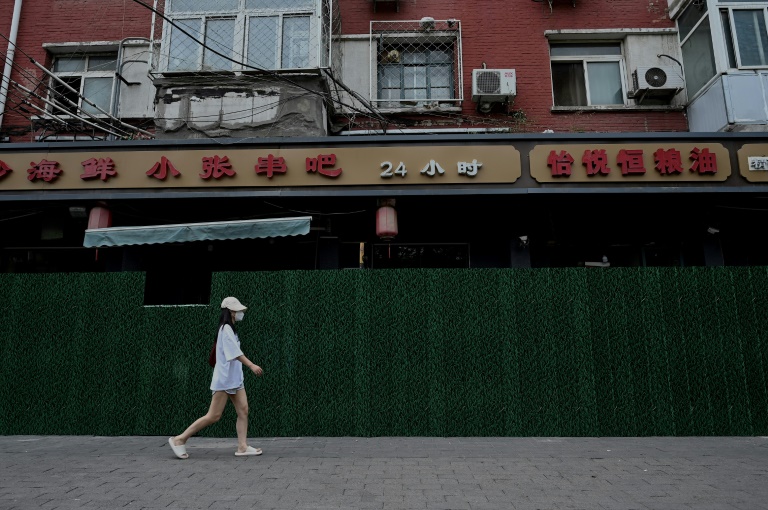
Fiona Shi lost her job twice during the pandemic — first, in 2020 when Covid ravaged the travel industry, and then this year as China’s strict virus controls hammered businesses in the world’s number two economy.

China is the last major economy welded to a zero-Covid strategy — putting firms and workers at risk of snap lockdowns, freezing activity in the services sector and tangling supply chains crucial for factories to sell their goods.

As the country battles its worst outbreak since 2020, its urban jobless rate has surged to the highest level in two years and the pain is being felt by both blue- and white-collar workers.

“Many places say they are not recruiting people aged above 35,” said Shi, 38, who pointed to the difficulty of returning to entry-level positions after managerial roles.

She worked in a management role in the hospitality industry in 2020 when the coronavirus brought nearly all travel to a halt as governments imposed social distancing and movement restrictions.

Two years later, the Beijinger found herself in the same position after losing her job at a multinational firm.

“The pandemic has also made it harder… many places have frozen headcounts,” she told AFP. “I’m really anxious.”

Months of unpredictable Covid restrictions — including snap lockdowns and severe travel curbs — have hit dozens of cities from business hub Shanghai to the northern breadbasket province of Jilin.

An American Chamber of Commerce survey released this week showed that almost all respondents cut their revenue projections, while in a separate study 11 percent of European firms said they would downsize their China operations because of Covid measures.

Domestic firms have also been tightening their purse strings.

Ride-hailing platform Caocao Chuxing has let go of staff, with Chinese media reports pegging the proportion at 40 percent.

Some staff at e-commerce giant Alibaba were also reportedly asked to leave, according to state outlet Legal Daily.

– ‘The situation is grim’ –

The imposition of restrictions to stamp out Covid outbreaks this year has intensified pressure on firms already grappling with a slowdown in the economy and regulatory crackdowns on sectors including property and tech.

Bai, 27, told AFP she was laid off by a US tech company that was preparing to end its business in China.

“In some ways, we saw it coming,” she said, only giving her surname. “Its China operations have been losing money.”

“It’s not the first to leave the China market and won’t be the last.”

Beijing-based Bai said it was the second time she lost her job because of the pandemic.

In 2020, as the virus raged in China, she was let go by a cruise line operator over fears tied to her nationality, she said.

Andrea Zhang, 24, who handled events planning, said his employer shuttered its clothing shops in March and April when outbreaks flared this year.

“Our bosses wanted to understand the situation at various stores (across the country) but realised they could not due to quarantine requirements,” said Zhang.

The company eventually closed its offline operations, and Zhang left.

Around 1.3 million entities cancelled their business registrations in China in March alone, a 24 percent spike on-year, according to official numbers.

With President Xi Jinping repeatedly backing the government’s zero-Covid strategy, observers do not expect authorities to pivot away from it even as the economy suffers.

But the restrictions have made life unbearable for some.

“Working from home, especially in an industry such as ours known for overtime practices, has made work-life boundaries even more blurred,” said Ning, who works in marketing at a tech firm in Beijing and only gave his surname.

The 26-year-old typically left work around 11 pm.

But his hours stretched past midnight and into weekends after the capital ordered people in his district to stay home last month as Covid cases surged.

“I was too exhausted, and left my job,” Ning said.

He has since submitted more than 200 job applications. Only three of these translated into job interviews.

“The situation is grim,” Ning told AFP. “But we will have to find a way to survive.”

Central banks walk inflation-recession tightrope

Central banks have ramped up their battle against runaway inflation, a necessary remedy that could have the adverse side effect of tipping countries into recession, analysts say.

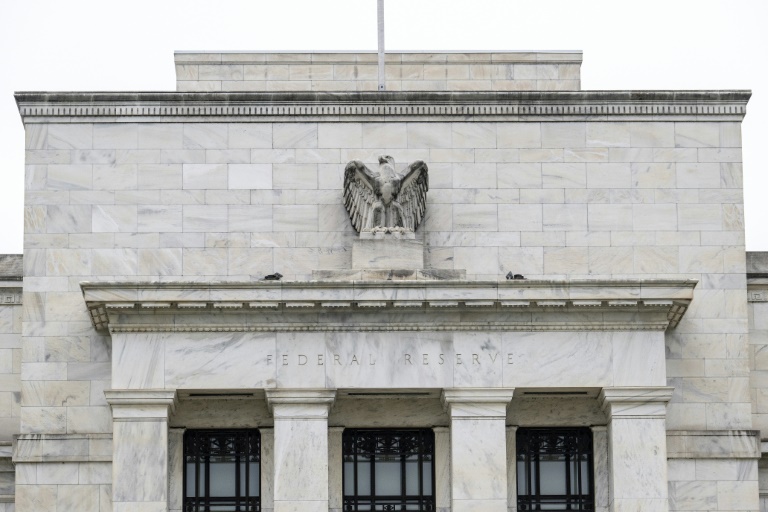
Just this past week, the US Federal Reserve announced its biggest interest rate hike in almost 30 years, followed by the fifth straight increase by the Bank of England and the first in 15 years in Switzerland.

“This week was a first. The craziest in my experience,” said Frederick Ducrozet, chief economist at Pictet Wealth Management.

The moves rattled stock markets as investors fear that while the rate increases are needed, they could put the brakes on economic growth if the tightening of monetary policy becomes too aggressive.

“Recessions are increasingly likely as central banks race to dramatically raise rates before inflation spirals out of control,” said Craig Erlam, an analyst at online trading platform OANDA.

Capital Economics, a research group, said it does not anticipate a recession in the United States.

“But the Fed is deliberately tempering demand in order to reduce price pressures. This is a difficult line to tread and there is clearly a risk that it goes too far and the economy tips into recession,” it said in a note.

Emerging countries could be collateral victims from rate hikes. The dollar rises when the US Fed raises its rates.

“A strong dollar will complicate (debt repayments) of countries with deficits, which borrow often in that currency,” Ducrozet said.

– Swiss surprise –

Central banks had insisted last year that inflation was only “transitory” as prices were driven up by bottlenecks in supply chains after governments emerged from lockdowns.

But energy and food prices have soared in the wake of Russia’s invasion of Ukraine, pushing inflation higher and prompting economists to lower the world’s growth prospects for this year.

This has left central banks with no other choice but to move more aggressively than planned.

Australia’s central bank raised rates more than expected earlier this month while Brazil last week lifted its benchmark rate for the 11th straight time. More hikes are looming in the United States and Europe.

But it is the Swiss National Bank that caused the biggest shock on Thursday when it announced a rate increase of 0.5 percentage points, the first since 2007.

The SNB had focused on keeping the Swiss franc from being too strong until now.

“The actions of the SNB are notable in that they mark a significant shift in policy (away) from a very dovish position,” said Michael Hewson, chief market analyst at CMC Markets UK.

The European Central Bank has been slower to act than its peers. It is putting an end to its massive bond-buying scheme and will finally raise rates next month for the first time in a decade.

The eurozone faces another problem: The yields paid by its governments to borrow money have surged, with indebted countries such as Italy being charged a premium compared to Germany, a safer bet for investors.

This “spread” revived memories of the eurozone’s debt crisis, prompting the ECB to hold an emergency meeting on Thursday after which it said it would design a tool to prevent further stress in the bond market.

The Bank of Japan bucked the global trend on Friday as it stood by its decision not to raise its rate, sending the yen close to the lowest level against the dollar since 1998.

But even the Bank of Japan could adjust its policy, said Stephen Innes, managing partner at SPI Asset Management.

“BoJ members are considering public dissatisfaction with inflation and the rapid depreciation of the yen,” Innes said.

“While they plan to maintain the current easing policy, they may look to make some tweaks to support the currency,” he said.

– No immediate fix –

Consumers will have to be patient before they see the rate hikes have an effect on prices.

ECB chief Christine Lagarde said it bluntly when announcing plans for a rate increase next month: “Do we expect that July interest rate hikes will have an immediate effect on inflation? The answer to that is no.”

Central banks do not have control over some of the problems that are lifting inflation, such as soaring energy and food prices, and the supply chain snarls.

Capital Economics said energy and food prices accounted for 4.1 percentage points of the 7.9 percent rise in consumer prices in major advanced economies over the past year.

It expects oil, gas, and agricultural commodity prices to start falling later this year, which would bring inflation down sharply, but core inflation rates will remain elevated.

Store workers vote to form first US Apple union

A majority of employees at a US Apple store have voted to form the tech giant’s first union, in the wake of similar unionization drives at Starbucks and Amazon locations.

Of the 110 employees at the Towson, Maryland shop, 65 voted in favor and 33 against, according to a live count broadcast Saturday by the federal agency overseeing the vote.

The vote comes after a group of employees called AppleCORE (Coalition of Organized Retail Employees) campaigned for unionization, demanding a say in deciding on wages, hours and safety measures. 

“We did it Towson! We won our union vote! Thanks to all who worked so hard and all who supported! Now we celebrate… Tomorrow we keep organizing,” AppleCORE tweeted.

Saturday’s result means that the shop’s employees, who have been voting since Wednesday, should form their own branch of the International Association of Machinists and Aerospace Workers (IAM) union, once the agency has certified the results. 

Saturday’s vote result follows several symbolic victories — including among workers for giants such as Amazon and Starbucks — by the country’s unions, on the decline for decades, to which President Joe Biden has lent his support. 

It was not the first time employees at an Apple store have tried to unionize, but it was the first attempt that resulted in a vote. 

Apple’s director of distribution and human resources, Deirdre O’Brien, visited the shop in May to address employees.

“I want to start out by saying it’s your right to join a union, but it’s equally your right not to join a union,” O’Brien said, according to audio published by Vice. 

“If you’re faced with that decision, I want to encourage you to consult a wide range of people and sources to understand what it could be like to work at Apple under a collective bargaining agreement.” 

The presence of an intermediary would complicate relations between Apple and its employees, she said.

“I’m worried about what it would mean to put another organization in the middle of our relationship, an organization that does not have a deep understanding of Apple or our business,” O’Brien said. 

“And most importantly, one that I do not believe shares our commitment to you.”

– ‘Courage’ –

The vote comes in wake of a broader unionization push at some of the United States’ biggest companies. 

After a union was formed at two Starbucks coffee shops in December in the northern city of Buffalo, employees at more than 160 of the chain’s locations have filed for similar votes. 

At Amazon, employees at a New York warehouse surprised everyone in early April by voting overwhelmingly to form a union, a first for the online retail colossus in the United States.

But the company has asked for the result to be cancelled and a second vote to be held. 

Apple declined to comment on the news when reached by AFP.

The IAM union slammed the Silicon Valley giant’s efforts to discourage employees from voting yes. 

A video from the group, released by pro-union media outlet More Perfect Union, shows AppleCORE supporters in Maryland accusing the company of “union-busting” tactics, including “intimidation,” which the employees called “disgusting.”

IAM International President Robert Martinez Jr said he applauded the workers’ “courage.”

“They made a huge sacrifice for thousands of Apple employees across the nation who had all eyes on this election,” he said in a statement. “I ask Apple CEO Tim Cook to respect the election results and fast-track a first contract for the dedicated IAM CORE Apple employees in Towson.”

“This victory shows the growing demand for unions at Apple stores and different industries across our nation.”

Store workers vote to form first US Apple union

A majority of employees at a US Apple store have voted to form the tech giant’s first union, in the wake of similar unionization drives at Starbucks and Amazon locations.

Of the 110 employees at the Towson, Maryland shop, 65 voted in favor and 33 against, according to a live count broadcast Saturday by the federal agency overseeing the vote.

The vote comes after a group of employees called AppleCORE (Coalition of Organized Retail Employees) campaigned for unionization, demanding a say in deciding on wages, hours and safety measures. 

“We did it Towson! We won our union vote! Thanks to all who worked so hard and all who supported! Now we celebrate… Tomorrow we keep organizing,” AppleCORE tweeted.

Saturday’s result means that the shop’s employees, who have been voting since Wednesday, should form their own branch of the International Association of Machinists and Aerospace Workers (IAM) union, once the agency has certified the results. 

Saturday’s vote result follows several symbolic victories — including among workers for giants such as Amazon and Starbucks — by the country’s unions, on the decline for decades, to which President Joe Biden has lent his support. 

It was not the first time employees at an Apple store have tried to unionize, but it was the first attempt that resulted in a vote. 

Apple’s director of distribution and human resources, Deirdre O’Brien, visited the shop in May to address employees.

“I want to start out by saying it’s your right to join a union, but it’s equally your right not to join a union,” O’Brien said, according to audio published by Vice. 

“If you’re faced with that decision, I want to encourage you to consult a wide range of people and sources to understand what it could be like to work at Apple under a collective bargaining agreement.” 

The presence of an intermediary would complicate relations between Apple and its employees, she said.

“I’m worried about what it would mean to put another organization in the middle of our relationship, an organization that does not have a deep understanding of Apple or our business,” O’Brien said. 

“And most importantly, one that I do not believe shares our commitment to you.”

– ‘Courage’ –

The vote comes in wake of a broader unionization push at some of the United States’ biggest companies. 

After a union was formed at two Starbucks coffee shops in December in the northern city of Buffalo, employees at more than 160 of the chain’s locations have filed for similar votes. 

At Amazon, employees at a New York warehouse surprised everyone in early April by voting overwhelmingly to form a union, a first for the online retail colossus in the United States.

But the company has asked for the result to be cancelled and a second vote to be held. 

Apple declined to comment on the news when reached by AFP.

The IAM union slammed the Silicon Valley giant’s efforts to discourage employees from voting yes. 

A video from the group, released by pro-union media outlet More Perfect Union, shows AppleCORE supporters in Maryland accusing the company of “union-busting” tactics, including “intimidation,” which the employees called “disgusting.”

IAM International President Robert Martinez Jr said he applauded the workers’ “courage.”

“They made a huge sacrifice for thousands of Apple employees across the nation who had all eyes on this election,” he said in a statement. “I ask Apple CEO Tim Cook to respect the election results and fast-track a first contract for the dedicated IAM CORE Apple employees in Towson.”

“This victory shows the growing demand for unions at Apple stores and different industries across our nation.”

The battle to build a child-friendly metaverse

As a young woman straps on her vest and headset and becomes immersed in a virtual world, Mainak Chaudhuri talks excitedly about the potential of the technology.

“This is the first step towards the metaverse,” Chaudhuri of French start-up Actronika told AFP at this week’s VivaTech trade show in Paris.

The vest can give users the sensation of being buffeted by the wind or even feel a monster’s breath on their back, and it can be used to enhance movie watching, education or gaming.

It is a family-friendly vision of the 3D immersive internet, now widely known as the metaverse, and sits well with some interactive experiences already widely available for children — like virtual trips to museums.

But campaigners and experts are increasingly warning that the wider ecosystem needs to start acting on child safety to ensure the benign vision is realised.

“The biggest challenge is kids are getting exposed to content that is not intended for them,” said Kavya Pearlman, whose NGO XR Safety Initiative campaigns to ensure immersive technology will be safe for everyone.

The problems she envisages range from children being exposed to sexual and violent material, to worries over young people being used as content creators or having inappropriate contact with adults.

Even though the metaverse has not yet been widely adopted and the technology is still in development, early users have already brought to light serious issues.

One woman’s allegation that her avatar was sexually assaulted in the metaverse sparked global outrage.

Worries about the future of the technology have only grown as the economic opportunities have become clearer.

– ‘Colossal’ money –

Metaverse-linked investments topped $50 billion last year, according to research firm McKinsey, which predicts the figure could more than double this year. 

“We’re talking about absolutely colossal amounts of money, that’s three times more than the investment in artificial intelligence in 2017,” McKinsey partner Eric Hazan told AFP. 

Chief among the investors is tech giant Meta, which owns the likes of Instagram, Facebook and WhatsApp.

The firm has already rolled out measures to give parents more control over the content their children interact with while using VR headsets.

Meta and many of its competitors market immersive products with a lower age limit of 13 — though it is widely accepted that younger children will use the tech.

Pearlman raises a broader concern that very little is known about the possible effects on young people’s development.

“Organisations have not yet validated these experiences from a scientific perspective,” she said.

“Yet they are allowing kids to be exposed to these new technologies, practically experimenting on children’s developing brains.”

The metaverse has shifted the paradigm, according to Valentino Megale, a neuropharmacologist who researches the issue.

While the public has so far merely consumed what others have created, in the metaverse “we are going to be part of the digital content”, he said.

“This makes everything that we experience in that world more compelling,” he told the RightsCon digital rights conference last week, adding that it was particularly true for children. 

Experts worry that the industry needs scrutiny before the rot sets in.

– ‘Ethical basis’ –

The solution, they argue, is to make sure the builders of these new virtual worlds instil child protection measures into the ethos of their work.

In other words, each piece of software and hardware should be constructed on the understanding that children might use it and will need safeguarding.

“We are potentially going to have a huge impact on their behaviour, their identity, their emotions, their psychology in the exact moment when they are forming their personality,” said Megale. 

“You need to provide an ethical basis and safety by design from the beginning.”

One of the most controversial areas of product design is the kind of suit that will allow users to feel all sorts of sensations — even pain.

Such suits are already being manufactured, simulating pain through electric shocks.

The products are intended for military or other professional training.

Chaudhuri said the products developed by his firm Actronika use vibrations rather than electric shocks and were perfectly safe for anyone to use.

“We’re about engaging the audience and not necessarily doing a real-time firefighting scenario or a battlefield scenario,” he said.

“We don’t cause pain.”

Inflation, subsidy reform hit stomachs in isolated Iran

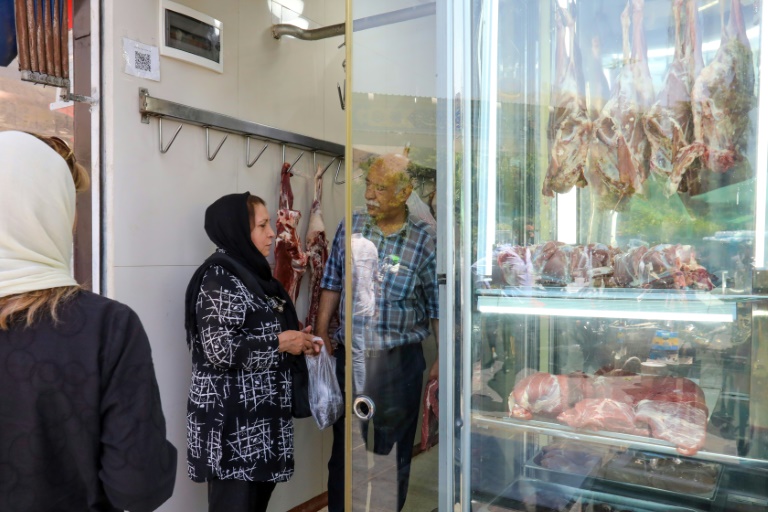
Outside his butchery in the south of Iran’s capital, Ali cuts up a sheep carcass for customers who, like him, have seen inflation and subsidy reform devour their purchasing power.

“My sales have fallen significantly — almost by half,” Ali, 50, told AFP.

“What can I say? I am a butcher and you may not believe me, but sometimes I don’t eat meat for a week,” he added. “Everything has gone up in price.”

Inflation is making an unwelcome comeback globally — stoked by high energy and food prices, driven largely by Russia’s invasion of Ukraine, a major wheat producer, and by related sanctions on Moscow.

But Iran has been wrestling with rampant price growth for years, exceeding 30 percent annually every year since 2018, according to the International Monetary Fund.

That was the year US president Donald Trump yanked Washington out of a nuclear deal between Iran and world powers and began reimposing biting sanctions, sending the currency into a tailspin even before he unilaterally banned Iran’s oil exports.

Negotiations over the last year or so have sought to bring the US — under Trump’s successor Joe Biden — back inside the deal and convince Tehran to re-adhere to nuclear commitments it has progressively walked away from.

But those ever-delicate efforts have been deadlocked since March, and an escalating spat between Iran and the UN’s nuclear watchdog could reduce chances of reviving the agreement.

– Subsidy cuts compound misery –

After dividing the cuts of meat, Ali hands Asghar, a retired government employee, a plastic bag containing enough for him and his wife.

“The price of everything has gone up, including meat,” lamented Asghar, 63.

“We used to buy more. Now everyone is buying less — everyone is under pressure.”

Economic analyst Saeed Laylaz believes price growth in Iran has exceeded 40 percent annually since 2018 — higher than that calculated by the IMF.

It has lately been fuelled further, he says, by “the sharp increase in global inflation” driven by fallout from the war in Ukraine and by Iran’s cash-strapped government in mid-May enacting the “radical reform” of slashing subsidies.

The expert, who has in the past advised Iranian presidents, said the main policy shift by the government of President Ebrahim Raisi was to abolish a subsidised exchange rate for imports of household essentials — wheat, cooking oil and medicine.

Introduced in mid-2018, this “preferential” rate was fixed at 42,000 rials to the dollar, cushioning citizens from the savage black market depreciation of the local currency that stemmed from the US withdrawing from the nuclear deal.

But with the exchange rate on the black market exceeding 300,000 rials to the greenback and global food prices soaring, the arrangement became unaffordable.

“It is estimated that if Iran wanted to continue reckless spending of hard currencies this year like the previous years, the country would have needed $22 billion dollars at the preferential rate,” he said.

“Even in the event of reviving the nuclear agreement… the government had no choice but to cancel the preferential rate,” he added.

Red meat prices have risen 50 percent, chicken and milk prices have doubled, spaghetti has tripled and cooking oil prices have quadrupled since early May, according to figures published by Iranian media.

– Protests over prices –

Hundreds of Iranians have taken to the streets of several cities to protest against the spiralling prices, on top of months-long demonstrations by professionals and pensioners demanding wages and pensions be adjusted for inflation.

On Tuesday, Labour Minister Hojjatollah Abdolmaleki stepped down in the hope of “strengthening cooperation within the government and improving the provision of services to the people,” according to government spokesman Ali Bahadori-Jahromi.

But reformist newspaper Etemad linked his resignation to “heavy criticism” from the protesting pensioners.

In Tehran’s marketplaces, attention is focused on the consequences and effects of inflation, rather than its causes.

President Raisi, an ultra-conservative who took office last August, pledged from the outset that the painful subsidy reform would not affect bread, fuel and medicine prices.

Demand for bread is therefore increasing.

“The queues at the bakeries have become longer because the price of rice has risen, and people are resorting to bread,” Shadi, a housewife wearing the Islamic chador told AFP near a traditional bakery in southern Tehran.

Inside, the baker Mujtaba agrees.

“People… are no longer able to buy rice, cooking oil, spaghetti and tomato paste,” said the 29-year-old, his face drenched in sweat as he took a break from preparing dough.

The subsidy reform has so far done little to steady the black market exchange rate, which slipped to an all-time low of more than 330,000 to the dollar on June 12, and hopes for a restoration of the nuclear deal have receded.

Warehouse business catches fire, boosted by pandemic, e-commerce

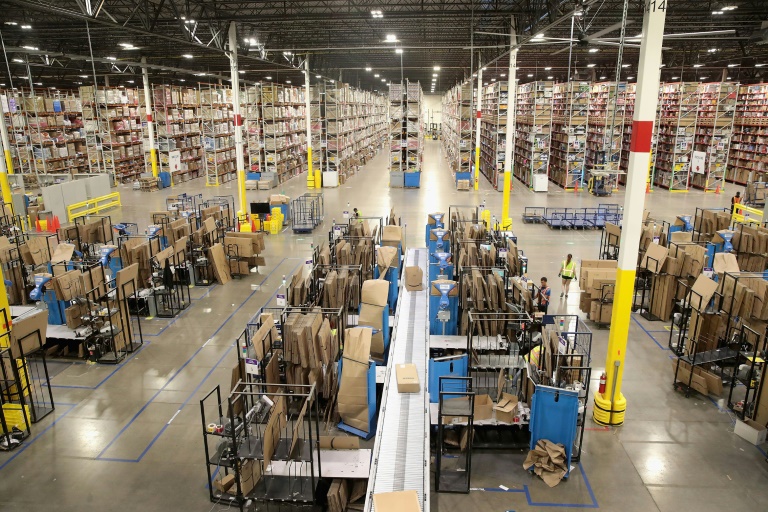
The rise of e-commerce and the logistical nightmare created by the Covid-19 pandemic have caused a surge in demand for warehouse space in the United States, and big investment funds have taken note.

“It’s been a tremendous struggle to find the appropriate location for clients,” said Michael Schipper of Blau & Berg, a commercial real estate specialist in New Jersey and New York.

Available space has been dwindling steadily for a year and a half, and the vacancy rate is now 3.4 percent, although developers delivered 90 million square feet of new warehouse space in the first three months of the year, according to commercial real estate firm Jones Lang LaSalle.

Demand is so strong that purchase prices have tripled or quadrupled in just six years in northern New Jersey. 

Nationally, average rental costs have jumped 22 percent in two years, according to analytics firm Beroe. 

“Demand for space from logistics and distribution activities driven by e-commerce industry” is the major factor in the US market, according to Beroe, which notes that demand has exceeded supply for 18 months. 

In addition, unlike traditional storage sites, fulfilling online orders requires technologically advanced warehouses, said Mark Manduca, chief investment officer at GXO, a supply chain management company.

Beroe said this equipment, which requires massive investments, allows firms “to improve warehouse efficiency and to speed up warehouse activities to meet the same-day delivery demands.” 

Pioneered by Amazon, other retailers were obliged to scramble to catch up to the new standard of immediate delivery set by the Seattle-based online sales giant.

In recent years, a lot of those companies have been rapidly ramping up their own e-commerce efforts, Manduca said. 

“Those are the people that are really driving that demand for last mile warehousing,” he said.

The demands of instant delivery have forced many sellers to acquire multiple storage locations to get closer to customers, especially in urban areas where real estate was already expensive.

The coronavirus pandemic accelerated that trend, as e-commerce sales surged by 56 percent between early 2020 and early 2022.

– A correction coming?-

Another pandemic effect was the logistical mess caused by Covid-lockdowns and health restrictions. 

That revealed storage capacity “in the wrong place, supply chain issues, and more recently, inventory rebuilds that have kind of almost overshot to a certain degree,” Manduca said.

To address those issues, he says, many companies are “now looking at facilities closer to home, which is naturally increasing the demand for warehousing,” he said. 

Amid the rise in demand, private equity firm Blackstone has invested heavily in the sector, and currently owns $170 billion worth of warehouses. It now rivals Prologis, the world’s number one.

“We’re also now seeing a surge in corporations increasing inventory holdings to mitigate supply chain issues” and are therefore looking for additional storage space, Blackstone President Jon Gray said in April. 

Other private equity giants, such as KKR, Carlyle, Apollo or Sweden’s EQT have all bought sites to ride the wave. 

But Schipper cautions that while the warehousing industry “has a long term positive trajectory, … I think that there needs to be a pause.” 

“You cannot run up in parabolic fashion forever,” he said, noting that the current tightening of credit conditions also could play a role. 

One sign of a possible correction coming: Amazon’s decision to sublet or renegotiate the rent for 30 million square feet of warehouse space. 

“You’re going to see demand for space go down and rental rates will stop going up at the pace that they’re going up. There’s just not any way around it,” Ward Fitzgerald, chief executive of EQT Exeter Property Group, warned in the Wall Street Journal.

“They’ll continue their trajectory maybe 12 months from now, but … there’s going to be a correction.”

While demand could keep rising for some time, Schipper said, “The question really is how much? And for how long?  

“I don’t think anybody knows the answer.”

Close Bitnami banner
Bitnami