US Business

Russia strikes depot in west Ukraine, battle for Severodonetsk rages

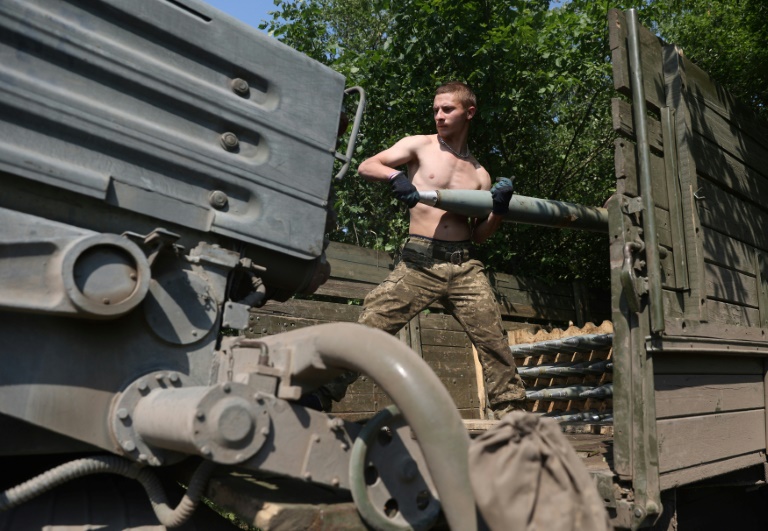
Russian forces said Sunday they had struck a site in western Ukraine storing large amounts of weapons supplied by the United States and European countries, as the battle intensified for the key eastern city of Severodonetsk.

The strike on the town of Chortkiv, a rare attack by Russia in the relatively calm west of Ukraine, left 22 people injured, the regional governor said.

Meanwhile the situation in Severodonetsk was “extremely difficult”, after the Russian army destroyed a second bridge into the city and was heavily bombarding the last one, regional governor Sergiy Gaiday said.

Away from the battlefield, the head of the European Commission on Saturday promised it would provide a clear signal by the end of next week on Ukraine’s bid to become a candidate to join the European Union.

“Ukraine has achieved a lot in the past ten years and much still needs to be done. Our opinion will reflect this carefully,” Ursula von der Leyen said after a surprise trip to the capital Kyiv.

Despite reservations among some member states, EU leaders are expected to approve the bid at a summit later this month, although with strict conditions attached.

“The challenge will be to come out of the (EU) council with a united position, which reflects the enormity of these historic decisions,” von der Leyen said as she travelled back to Poland. 

Ukraine’s geopolitical vulnerability has been laid bare by Russia’s February 24 invasion, which has killed thousands, sent millions fleeing and reduced swathes of the country to rubble.

Ukrainian President Volodymyr Zelensky said Saturday that it was a “decisive time”.

“Russia wants to ruin European unity, wants to leave Europe divided and wants to leave it weak. The entirety of Europe is a target for Russia. Ukraine is only the first stage in this aggression,” he said.

– Extremely difficult –

The United States and EU have sent weapons and cash to help Ukraine fend off the Russian advance, alongside punishing Moscow with unprecedented economic sanctions.

Russia’s defence ministry said the strike on Chortkiv destroyed a “large depot of anti-tank missile systems, portable air defence systems and shells provided to the Kyiv regime by the US and European countries”.

Regional governor Volodymyr Trush said that four missiles fired from the Black Sea had partially destroyed a military installation in the town, about 140 kilometres (85 miles) from the border with Romania, on Saturday evening.

Residential buildings were also damaged and 22 people were hurt, all of them — including seven women and a 12-year-old — taken to hospital, he said in a Facebook post.

It was a rare attack in western Ukraine, with the east and south of the country having borne the brunt of Russian firepower.

The cities of Severodonetsk and Lysychansk, which are separated by a river, have been targeted for weeks as the last areas still under Ukrainian control in the region of Lugansk.

“The situation in Severodonetsk is extremely difficult,” said Lugansk governor Gaiday on Sunday, adding that by attacking the bridges, Russian forces wanted to cut off the city completely.

“Most likely, today or tomorrow, they will throw all reserves to capture the city and also possibly in other directions to cut and fully control the road” southwest to Bakhmut.

He said the Azot chemical plant was being shelled, with fighting around the area.

About 800 civilians have taken refuge in the plant’s bunkers, according to the tycoon whose company owns the facility. 

– Crisis and famine –

The war has caused a spike in the global prices of energy — Russia is a major producer of oil and gas — and basic food stuffs.

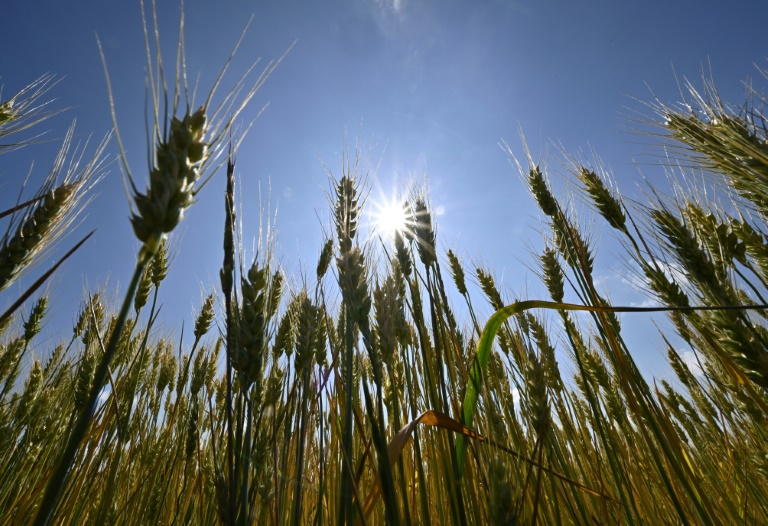
Before the war, Russia and Ukraine produced 30 percent of the global wheat supply, but grain is stuck in Ukraine’s ports and Western sanctions have disrupted exports from Russia.

Addressing the Shangri-La Dialogue security summit in Singapore on Saturday, Zelensky warned of an acute food crisis, adding that the “shortage of foodstuffs will inexorably lead to political chaos”.

Also Saturday, Gaiday cited reports of Russians loading trucks with Ukrainian wheat and taking it to Russian-controlled areas.

At the summit, Zelensky urged international pressure to end the blockade, speaking to delegates including Chinese Defence Minister Wei Fenghe, who on Sunday reiterated Beijing’s position on the crisis.

“On the Ukrainian crisis, China has never provided any material support to Russia,” he said, adding that it supported peace negotiations and hoped “NATO will have talks with Russia”.

– Delicious –

The sanctions against Moscow have hit the Russian economy, and also caused major Western brands to leave the country, with US fast-food chain McDonald’s selling its businesses there.

Its iconic restaurant on Moscow’s Pushkin Square — where the very first McDonald’s opened its doors to long queues and great fanfare in January 1990 — was set to reopen Sunday under new ownership.

It was named “Vkusno i tochka” (“Delicious. Full Stop”), Oleg Paroyev, the boss of the new group, told a press conference.

Separately, Ukrainian nuclear operator Energoatom announced that the connection between the Zaporizhzhia plant, now part of Russian-held territory in the south, and the UN’s nuclear watchdog had been restored after a month and a half.

The Russian shelling of the plant — the largest in Europe — had sparked international outrage and fears over Ukraine’s 15 operational reactors.

Energoatom said the Russians had cut off the mobile phone operator at the site on May 30, but the connection with the UN’s International Atomic Energy Agency (IAEA) had finally been restored on Friday.

The IAEA said this week it was planning to visit the Zaporizhzhia plant to carry out essential safety work. 

However, Energoatom said that such a trip would legitimise Russia’s control of the site, and said a visit would only be possible once Ukraine regained control.
burs-ar/gw

WTO chief says 'cautiously optimistic' ahead of high-stakes meet

The World Trade Organization chief voiced cautious optimism Sunday as global trade ministers gather to tackle food security threatened by Russia’s invasion of Ukraine, overfishing and equitable access to Covid vaccines.

Speaking just hours before the opening of the WTO’s first ministerial meeting in nearly five years, Ngozi Okonjo-Iweala acknowledged that “the road will be bumpy and rocky, there may be a few landmines on the way.”

But she told journalists she was “cautiously optimistic that we’ll get one or two deliverables”, adding she would consider that “a success”.

With its first ministerial meeting in years, the WTO faces pressure to finally eke out long-sought trade deals and show unity amid the still raging pandemic and an impending global hunger crisis.

Top of the agenda as the four-day meeting kicks off is the toll Russia’s war in Ukraine, traditionally a breadbasket that feeds hundreds of millions of people, is having on food security. 

EU trade commissioner Valdis Dombrovskis said the bloc had been “working hard with all the members to prepare a multilateral food security package,” and slammed Russia for “using food and grain as a weapon of war”.

The WTO is hoping to keep criticism of Russia’s war in Ukraine to the first day of talks, when many of the more than 100 ministers due to attend are expected to issue blistering statements.

But with many flatly refusing to negotiate directly with Moscow, there are fears this could bleed into the following days, when the WTO wants to focus on nailing down elusive trade deals.  

“There is a real risk that things could go off the rails next week,” a Geneva-based diplomatic source said.

– Fisheries deal in sight? –

The tensions have not curbed Okonjo-Iweala’s zeal to press for agreements on a range of issues during the first ministerial gathering on her watch, especially as the global trade body strives to prove its worth after nearly a decade with no new large trade deals.

There is cautious optimism that countries could finally agree on banning subsidies that contribute to illegal and unregulated fishing, after more than 20 years of negotiations.

The WTO says talks have never been this close to the finish line, but diplomats remain cautious.

The negotiations “have made progress recently, but these remain difficult subjects,” a diplomatic source in Geneva told AFP.

One of the main sticking points has been so-called special and differential treatment (SDT) for developing countries, like major fishing nation India, which can request exemptions.

A draft text sent to the ministers for review proposes exemptions should not apply to member states accounting for an as yet undefined share of the global volume of fishing.

The duration of exemptions also remains undefined.

Environmental groups say anything beyond 10 years would be catastrophic. India has demanded a 25-year exemption.

– India ‘creating problems’ –

“Twenty-five years is an unreasonable length of time,” Isabel Jarrett, head of the Pew Charitable Trusts’ project to end harmful fisheries subsidies, told AFP, warning so much leeway would be “devastating for fish stocks”.

Colombian Ambassador Santiago Wills, who chairs the WTO fisheries subsidies negotiations, stressed the urgency of securing a deal.

“The longer we wait, the more the fish lose. And the more the fish lose, the more we all lose,” he said in a statement Saturday.

India however appears to be stubbornly sticking to its demands on fisheries and in other areas, jeopardising the chances of reaching deals since WTO agreements require full consensus backing.

“There is not a single issue that India is not blocking,” a Geneva-based ambassador said, singling out WTO reform and agriculture.

A source with knowledge of the negotiations towards a text on food security also said “the Indians are still creating problems”.

Elvire Fabry, a senior research fellow at the Jacques Delors Institute, said India had appeared eager to “throw more weight around” in international organisations, warning New Delhi was capable of scuppering talks.

– Patent waiver? –

The ministers are also set to seek a joint WTO response to the pandemic, although significant obstacles remain. 

Back in October 2020, India and South Africa called for intellectual property rights on Covid-19 vaccines and other pandemic responses to be suspended in a bid to ensure more equitable access in poorer nations.

After multiple rounds of talks, the European Union, the United States, India and South Africa hammered out a compromise that has become the basis for a draft text sent to ministers.

The text, which would allow most developing countries, although not China, to produce Covid vaccines without authorisation from patent holders, is still facing opposition from both sides.

Britain and Switzerland are reluctant to sign up, arguing along with the pharmaceutical industry that the waiver would undermine investment in innovation.

Public interest groups meanwhile say the text falls far short of what is needed by covering only vaccines and not Covid treatments and diagnostics.

“The negotiations are still aeons away from ensuring access to lifesaving Covid medical tools for everyone, everywhere,” medical charity Doctors Without Borders warned.

Global media giants battle for IPL cricket rights

Global media giants including Disney and Sony and Asia’s richest man reportedly battled Sunday for the broadcast rights for the Indian Premier League cricket tournament, one of the world’s most-watched sporting events.

The winning bidders were expected to pay up to $7.7 billion in an online auction held by India’s cricket board on Sunday to show and stream the two-month contest for five seasons from 2023 to 2027, according to analysts.

This dwarfs the $2.55 billion shelled out by Star India, owned by US behemoth Disney, for the previous five-year deal which ended last month with the 15th edition of the tournament involving an expanded 10 franchises playing 74 matches.

Attracting some of cricket’s top stars from India and abroad with large salaries, the league has helped make Twenty20, a shorter and more exciting format of the sport, hugely popular, spawning copycat events worldwide.

This time the Board of Control for Cricket in India (BCCI) is selling off four different packages including domestic and international television and online streaming rights as well as for special matches.

Besides Disney and Sony, bidders in the auction, which could stretch into Monday, include a consortium including Viacom as well as Reliance, owned by Asia’s wealthiest man Mukesh Ambani, reports said.

Fellow tycoon Jeff Bezos’s Amazon, which has spent hundreds of millions of dollars on rights for European soccer and American football and had earlier shown interest in the IPL, pulled out of the contest, reports said on Friday.

In Kyiv, EU chief promises a signal on Ukraine's bid next week

The European Commission will provide a clear signal next week on Ukraine’s EU candidate status bid, its chief Ursula von der Leyen has said, as fighting rages in the east and south of the country.

Von der Leyen said talks she held with Ukrainian President Volodymyr Zelensky on Saturday “will enable us to finalise our assessment by the end of next week” — the first time the bloc has publicly given a sense of timing.

Zelensky has pressed for rapid admission to the European Union, but officials and leaders in the bloc caution that, even with candidacy status, membership could take years or even decades.

Despite reservations among some member states, EU leaders are expected to approve Ukraine’s candidate status, though with strict conditions attached.

“Russia wants to ruin European unity, wants to leave Europe divided and wants to leave it weak. The entirety of Europe is a target for Russia. Ukraine is only the first stage in this aggression,” Zelensky said, warning it was a “decisive time” for his country and the EU.

– Crisis and famine –

Addressing the Shangri-La Dialogue security summit in Singapore on Saturday, Zelensky highlighted the dangers of a food crisis posed by Russia’s blockade of Ukrainian Black Sea ports.

He warned of an acute food crisis, adding that the “shortage of foodstuffs will inexorably lead to political chaos”.

Also Saturday, Lugansk regional governor Sergiy Gaiday cited reports of Russians loading trucks with Ukrainian wheat and taking it to Russian-controlled areas.

Before the war, Russia and Ukraine produced 30 percent of the global wheat supply, but grain is stuck in Ukraine’s ports and Western sanctions have disrupted exports from Russia.

At the summit, Zelensky urged international pressure to end the blockade, speaking to delegates including Chinese defence minister Wei Fenghe, who on Sunday reiterated Beijing’s position on the crisis.

“On the Ukrainian crisis, China has never provided any material support to Russia,” he said, adding that it supported peace negotiations and hoped “NATO will have talks with Russia”.

– ‘Ruined’ –

In attempts to conquer eastern Ukraine, Russian troops have been pushing for control of the key industrial city of Severodonetsk for weeks. 

On Sunday, Ukraine’s general staff said Russia was conducting “unsuccessful” assaults on the city, where about 800 civilians have taken refuge in the Azot chemical plant’s bunkers, according to the tycoon whose company owns the facility. 

Gaiday said Saturday that the Azot plant had been “shelled intensely for hours” and the city had been “ruined” by Russian forces.

“This is their tactics — people are not needed, the infrastructure is not needed, houses are not needed, everything should be simply ruined,” he said.

The number of civilian victims would be “enormous and terrible”, he added.

Gaiday said Ukrainian fighters in Severodonetsk were winning street battles, but that Russian artillery would then destroy the buildings those fighters were using for cover — “storey by storey”.

In Donetsk, two civilian deaths and 11 injuries were reported across the region on Saturday, its governor said.

According to the area’s military administration, “all major cities in the free territory” of Donetsk “have been without electricity” since Saturday.

In the south, a man died in Odessa after coming into contact with an explosive object while swimming at a beach with his wife and son, the regional Ukrainian command said. Visiting beaches there is currently banned due to the risks of mines. 

For residents in nearby Mykolaiv, every day brings a brush with death.

Igor Karputov, 31, recalled how his neighbourhood was hit last week, shaking his apartment, and how he helped a bleeding man to an ambulance.

“Then I went to another place which had been hit, where emergency services were already taking care of someone,” he told AFP.

“But they were dead. And the one I had helped died in an ambulance.”

Mykolaiv regional governor Vitaliy Kim stressed the urgent need for international military assistance.

“Russia’s army is more powerful, they have a lot of artillery and ammo… and we are out of ammo,” he said Saturday.

On Sunday, the southern command said the Ukrainian Air Force had destroyed ammunition depots and equipment in three air strikes in the last 24 hours, without naming their locations.

– Russian passports issued –

In areas now controlled by its forces, Moscow has sought to impose its authority.

Officials in the occupied city of Kherson handed out Russian passports to residents for the first time on Saturday, local news agencies reported.

Russia’s TASS agency said 23 Kherson residents received a Russian passport at a ceremony through a “simplified procedure” allowed by a decree from President Vladimir Putin.

Ukraine has called the passports “legally void”.

burs-ar/bbk/dva/leg

Sanctioned Ukraine tycoon seeks to support war effort

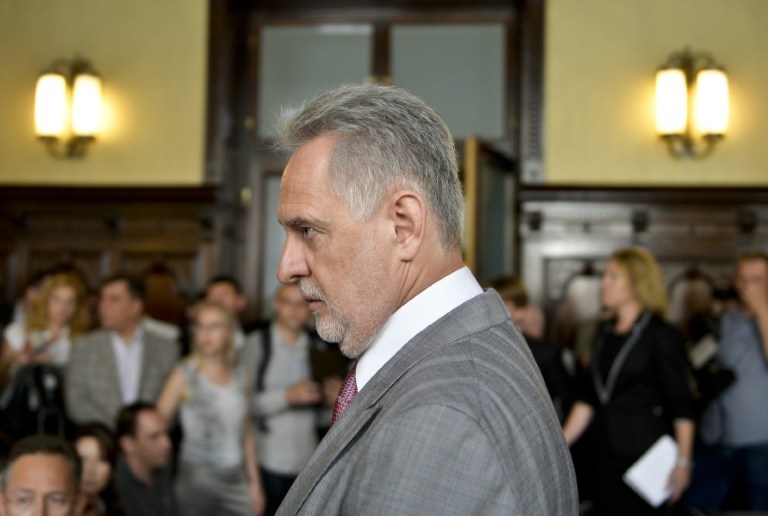
Sanctioned by Ukraine in the past over his close ties to Russia, Dmytro Firtash, one of the country’s wealthiest citizens, made international headlines this week for saying he is sheltering hundreds of Ukrainians in his chemical factory.

“This war is completely pointless and cannot be justified in any way, it only brings suffering and misery on all sides. This humanitarian tragedy is intolerable,” the 57-year-old said in a statement on his company’s website.

A one-time ally of ousted pro-Russian Ukrainian president Viktor Yanukovych, Firtash, who is currently in Austria and fighting extradition to the US on bribery accusations, has a controversial history. 

– Providing refuge –

In June 2021, Ukraine President Volodymyr Zelensky signed a decree imposing sanctions on Firtash, including the freezing of his assets and withdrawal of licences from his companies, after accusing him of selling titanium products to Russian military companies.

But now some 800 civilians, including 200 factory workers, have taken refuge in the bunkers of the Azot chemical plant, owned by Firtash’s Group DF, in Ukraine’s strategic eastern city of Severodonetsk, the tycoon’s lawyer Lanny Davis said this week. 

Russian troops have been pushing for control of the key city over the past weeks as part of their effort to conquer eastern Ukraine. 

Russian President Vladimir Putin “is never going to come out victorious… No matter what happens, Russia will lose,” Firtash said in an NBC News interview in April.

Since Russia invaded Ukraine in February, Firtash’s Inter has also joined the pool of several main Ukrainian news channels, which broadcast news 24/7 and fully reflect the official position of the Ukrainian authorities.

Before the invasion, Inter, one of the largest Ukrainian national TV channels, was considered pro-Russian.

Firtash insists he has always been pro-Ukrainian, telling NBC that he was “never pro-Russian”.

“But you have to understand that I am a businessman. And my goal is to earn money. That’s my job,” he said in the interview.

An AFP request to interview Firtash is pending.

– Wanted by US –

Firtash is also wanted on bribery and racketeering charges in the United States.

In the case, Indian officials allegedly received $18.5 million in bribes to secure titanium mining licences in 2006.

The United States argues it has jurisdiction because the conspiracy involved using US financial institutions, travel to and from the US, and use of US-based communications — computers, telephones, and the internet.

Firtash, who denies the charges and says he is the victim of a smear campaign, was detained in Austria in March 2014.

He had to pay bail of 125 million euros ($130 million) — reportedly a record high for Austria — and has since not been able to leave the country.

Austria’s supreme court ruled in 2019 that he could be extradited. But Firtash is still fighting the extradition and can remain in Austria while court proceedings continue.

In an interview with CNN in May, Firtash said he had requested prosecutors to be allowed to return to Ukraine while the war is going on — but his request was denied.

He has also been accused of being involved in alleged efforts by Rudy Giuliani, former New York mayor and a personal lawyer of former US president Donald Trump, to dig up dirt on Joe Biden before he became president, but Firtash denies ever having met with Giuliani.

Born in a village in western Ukraine, Firtash’s father was a diver and his mother an accountant, and for additional income the family grew tomatoes.

Firtash began his business career by organising commodity trading in Ukraine and Russia.

In 1993, he established business ties in Central Asia and organised the supply of consumer goods in exchange for natural gas.

In 2004, he set up a joint venture with Russia’s Gazprom to supply natural gas from Central Asia to Ukraine and other European countries.

Three years later, Firtash set up Group DF, growing it into a business empire, employing some 100,000 people.

The group is involved in energy, chemicals, media, banking and property in Ukraine and other countries.

In Kyiv, EU chief promises a signal on Ukraine's bid next week

The European Commission will provide a clear signal next week on Ukraine’s EU candidate status bid, its chief Ursula von der Leyen has said, as fighting rages in the east and south of the country.

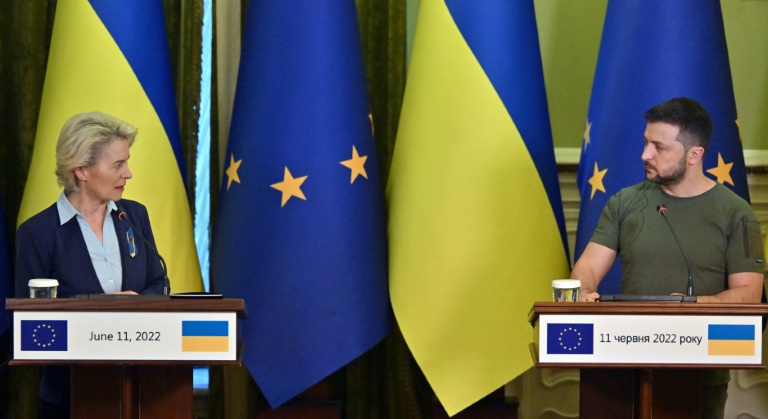
Making a surprise visit to Kyiv on Saturday, von der Leyen said talks she held with Ukrainian President Volodymyr Zelensky “will enable us to finalise our assessment by the end of next week” — the first time the bloc has publicly given a sense of timing.

Zelensky has pressed for rapid admission into the EU to reduce Ukraine’s geopolitical vulnerability, which was brutally exposed by Russia’s February 24 invasion.

But officials and leaders in the bloc caution that, even with candidacy status, EU membership could take years or even decades.

Von der Leyen, appearing alongside Zelensky during her second visit to Kyiv since the war began, made no promises, noting further reforms were needed.

The Ukrainian president warned it was a “decisive time” for his country and the EU.

“Russia wants to ruin European unity, wants to leave Europe divided and wants to leave it weak. The entirety of Europe is a target for Russia. Ukraine is only the first stage in this aggression,” he said.

Despite reservations among some member states, EU leaders are expected to approve Ukraine’s candidate status at a summit on June 23-24, though with strict conditions attached.

– Crisis and famine –

Addressing the Shangri-La Dialogue security summit in Singapore on Saturday, Zelensky highlighted the dangers of a food crisis posed by Russia’s blockade of Ukrainian Black Sea ports.

He warned of “an acute and severe food crisis and famine”, adding that the “shortage of foodstuffs will inexorably lead to political chaos” — all of it “the direct consequence of the acts of the Russian state”.

Also Saturday, Lugansk regional governor Sergiy Gaiday cited reports of Russians loading trucks with Ukrainian wheat and taking it to Russian-controlled areas.

Before the war, Russia and Ukraine produced 30 percent of the global wheat supply, but grain is stuck in Ukraine’s ports and Western sanctions have disrupted exports from Russia.

At the summit, Zelensky urged international pressure to end the blockade, speaking to delegates including Chinese defence minister Wei Fenghe, who on Sunday reiterated Beijing’s position on the crisis.

“On the Ukrainian crisis, China has never provided any material support to Russia,” he said, adding they supported peace negotiations and hoped “NATO will have talks with Russia”.

Ukraine’s Western allies have warned China, which has yet to condemn Russia’s invasion, against offering any form of support for Moscow.

– ‘Ruined’ –

Since withdrawing from Kyiv, Russian forces have concentrated their firepower on the eastern Donbas region and the south.

Two civilian deaths and 11 injuries were reported Saturday in locations across Donetsk, the regional governor said.

“All major cities in the free territory” of Donetsk “have been without electricity” since Saturday evening, according to the area’s military administration.

Moscow has particularly focused on the key industrial city of Severodonetsk, in Lugansk, which Gaiday said Saturday was “ruined” by Russian forces.

“This is their tactics — people are not needed, the infrastructure is not needed, houses are not needed, everything should be simply ruined,” he said in an interview posted on Telegram.

Gaiday said later on television that Ukrainian fighters in Severodonetsk were winning street battles, but that Russian artillery would then destroy the buildings those fighters were using for cover — “storey by storey”.

Gaiday said the number of civilian victims would be “enormous and terrible”. 

In Odessa, a man died after coming into contact with an explosive object while swimming at a beach with his wife and son, the regional Ukrainian command said. Visiting beaches there is currently banned due to the risks of mines. 

The city of Chortkiv in the country’s west was shelled Saturday, regional governor Volodymyr Trush said on Telegram, while his counterpart in the Mykolaiv region in the south, governor Vitaliy Kim, stressed the urgent need for international military assistance.

“Russia’s army is more powerful, they have a lot of artillery and ammo… and we are out of ammo,” he said.

On Sunday, the southern command said the Ukrainian Air Force had destroyed ammunition depots and equipment in three air strikes in the last 24 hours, without indicating their locations.

“In order to discourage our troops, the enemy is shelling our positions and trying to win the battle of artillery fire,” the command’s statement said. 

For residents in Mykolaiv, every day brings a brush with death.

Igor Karputov, 31, recalled how his neighbourhood was hit last week, shaking his apartment, and how he helped a bleeding man to an ambulance.

“Then I went to another place which had been hit, where emergency services were already taking care of someone,” he told AFP.

“But they were dead. And the one I had helped died in an ambulance.”

– Russian passports issued –

In areas now controlled by its forces, Moscow has sought to impose its authority.

Officials in the occupied southern city of Kherson handed out Russian passports to residents for the first time on Saturday, news agencies reported.

Russia’s TASS agency said 23 Kherson residents received a Russian passport at a ceremony through a “simplified procedure” allowed by a decree from President Vladimir Putin. 

Ukraine has called the passports “legally void”.

Last month, Russian authorities introduced the ruble in the Kherson region as an official currency alongside the Ukrainian hryvnia.

burs-ar/bbk/dva/cwl

Is AI the future of art?

To many they are art’s next big thing — digital images of jellyfish pulsing and blurring in a dark pink sea, or dozens of butterflies fusing together into a single organism.

The Argentine artist Sofia Crespo, who created the works with the help of artificial intelligence, is part of the “generative art” movement, where humans create rules for computers which then use algorithms to generate new forms, ideas and patterns.

The field has begun to attract huge interest among art collectors — and even bigger price tags at auction. 

US artist and programmer Robbie Barrat — a prodigy still only 22 years old — sold a work called “Nude Portrait#7Frame#64” at Sotheby’s in March for £630,000 ($821,000). 

That came almost four years after French collective Obvious sold a work at Christie’s titled “Edmond de Belamy” — largely based on Barrat’s code — for $432,500.

– A ballet with machines –

Collector Jason Bailey told AFP that generative art was “like a ballet between humans and machines”. 

But the nascent scene could already be on the verge of a major shake-up, as tech companies begin to release AI tools that can whip up photo-realistic images in seconds. 

Artists in Germany and the United States blazed a trail in computer-generated art during the 1960s. 

The V&A museum in London keeps a collection going back more than half a century, one of the key works being a 1968 piece by German artist Georg Nees called “Plastik 1”. 

Nees used a random number generator to create a geometric design for his sculpture. 

– ‘Babysitting’ computers –

Nowadays, digital artists work with supercomputers and systems known as Generative Adversarial Networks (GANs) to create images far more complex than anything Nees could have dreamed of. 

GANs are sets of competing AIs –- one generates an image from the instructions it is given, the other acts as a gatekeeper, judging whether the output is accurate. 

If it finds fault, it sends the image back for tweaks and the first AI gets back to work for a second try to beat the gamekeeper. 

But artists like Crespo and Barrat insist that the artist is still central to the process, even if their working methods are not traditional.

“When I’m working this way, I’m not creating an image. I’m creating a system that can create images,” Barrat told AFP. 

Crespo said she thought her AI machine would be a true “collaborator”, but in reality it is incredibly tough to get even a single line of code to generate satisfactory results.

She said it was more like “babysitting” the machine.

Tech companies are now hoping to bring a slice of this rarefied action to regular consumers. 

Google and Open AI are both touting the merits of new tools they say bring photorealism and creativity without the need for coding skills. 

– Enter the ‘transformers’ –

They have replaced GANs with more user-friendly AI models called “transformers” that are adept at converting everyday speech into images. 

Google Imagen’s webpage is filled with absurdist images generated by instructions such as: “A small cactus wearing a straw hat and neon sunglasses in the Sahara desert.”

Open AI boasts that its Dalle-2 tool can offer any scenario in any artistic style from the Flemish masters to Andy Warhol. 

Although the arrival of AI has led to fears of humans being replaced by machines in fields from customer care to journalism, artists see the developments more as an opportunity than a threat. 

Crespo has tried out Dalle-2 and said it was a “new level in terms of image generation in general” — though she prefers her GANs.

“I very often don’t need a model that is very accurate to generate my work, as I like very much when things look indeterminate and not easily recognisable,” she said. 

Camille Lenglois of Paris’s Pompidou Centre — Europe’s largest collection of contemporary art — also played down any idea that artists were about to be replaced by machines.

She told AFP that machines did not yet have the “critical and innovative capacity”, adding: “The ability to generate realistic images does not make one an artist.” 

Turkey bets on modern cruise hub to boost tourism

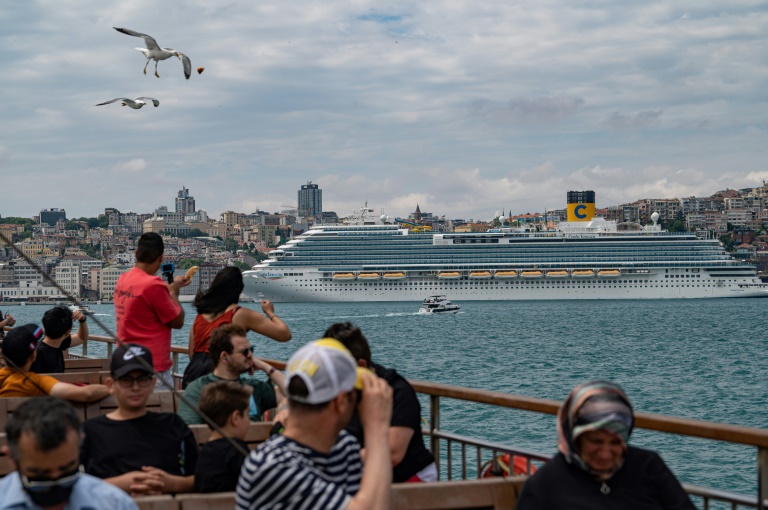
A state-of-the-art port in Istanbul with an underground terminal, a celebrity chef’s restaurant and a shopping centre, welcomes yet another 5,000-passenger cruise ship, bringing more cash to Turkey’s struggling tourism industry.

Hit hard by Covid, Turkey’s tourism sector could get a shot in the arm from the revenue generated at Galataport, which opened in 2021 — a year later than planned due to the pandemic.

The port could also provide a boost to an economy that has been weighed down by double-digit inflation and a currency in free fall, though the project has drawn criticism over the destruction of historical monuments and the potential environmental impact.

Figen Ayan, chief port officer at Galataport, said “ships began to arrive one after the other” after the facility opened in October. 

“Galataport has become the face of tourism,” she told AFP.

The 20-story Costa Venezia vessel from Italy was taking passengers from an 11-day voyage to the Aegean Sea when it docked in Galataport, its gangway connecting directly to the futuristic underground customs terminal.

The port is home to a shopping centre, a hotel, cultural venues and a restaurant owned by Turkish butcher Nusret Gokce, better known as Salt Bae, the social media star who sprinkles salt on steaks in front of celebrity customers.

“Galataport Istanbul is much more than a cruise port,” Ayan said.

– High-spending passengers –

Around 30 cruise ships have so far anchored at Galataport and 200 more are expected by the end of the year, which amounts to 450,000 passengers. 

The pandemic caused havoc in the global cruise ship industry as vessels were hit by outbreaks and vessels were banned in several countries.

“Now we can say that we have left the pandemic behind and that the cruise sector, which is an important segment of tourism, has revived and is on the move,” Ayan said.

The target is 1.5 million cruise passengers and 25 million visitors annually.

“If a regular tourist spends $62 daily, a cruise passenger spends $400. He spends up to eight times more in one day,” she said. 

– Environmental cost –

The project also opened up a 1.2-kilometre (three-quarter-mile) coastline that had been closed to public use for 200 years.

But critics, including some urban planners and architects, say the gentrification of the area destroyed old neighbourhoods, with the shopping centre replacing a historical post office building, and also posed a risk to the environment.

Cruises threaten marine life, discharging large quantities of sewage and other waste, said Muharrem Balci, associate professor of biology at Istanbul University.

“The environmental cost of cruises is seven times higher than the financial return they provide,” Balci told AFP.

“The consumption level of each traveller is higher than in the host cities, therefore, cruise tourism has the potential to create stress (for the environment) for the regions they visit.”

Large ships were banned from Venice last year after years of warnings that the giant floating hotels risked causing irreparable damage to the lagoon city.

Burak Caliskan, country manager for MSC Cruises, said no such danger awaited Istanbul. 

“We don’t think Istanbul will face a similar situation. We don’t have a city structure like Venice,” he told AFP. 

Caliskan also said newly built ships addressed environmental concerns. 

“To give a few examples, the exhaust gases from the ships are filtered. The paints used on the ships have been completely changed. Paints that will not harm the sea are used,” he said. 

“We even have efforts to reduce the sound of the ships’ engine so that while our ships are navigating in the open seas, they do not cause any disturbance to the living things, especially the whales.”

Ministers gather for high-stakes WTO meet

The World Trade Organization gathers ministers in Geneva Sunday to tackle pressing issues including global food security threatened by Russia’s invasion of Ukraine, overfishing and equitable access to Covid vaccines.

With its first ministerial meeting in years, WTO faces pressure to finally eke out long-sought trade deals and show unity amid the still raging pandemic and an impending global hunger crisis.  

Top of the agenda as the four-day meeting kicks off is the toll Russia’s war in Ukraine — traditionally a breadbasket that feeds hundreds of millions of people — is having on food security.

EU trade commissioner Valdis Dombrovskis said the bloc had been “working hard with all the members to prepare a multilateral food security package,” slamming Russia for “using food and grain as a weapon of war”.

The WTO is hoping to isolate criticism of Russia’s war in Ukraine to the first day of talks, when many of the more than 100 ministers due to attend are expected to issue blistering statements.

But with many flatly refusing to negotiate directly with Moscow, there are fears the issue could bleed into the following days, when WTO wants to focus on nailing down long-elusive trade deals.  

“There is a real risk that things could go off the rails next week,” a Geneva-based diplomatic source said.

– Fisheries deal in sight? –

The tensions have not curbed WTO chief Ngozi Okonjo-Iweala’s zeal to press for agreements on a range of issues during the first ministerial gathering on her watch, especially as the global trade body strives to prove its worth after nearly a decade with no new large trade deals.

There is cautious optimism that countries could finally agree on banning subsidies that contribute to illegal and unregulated fishing, after more than 20 years of negotiations.

The WTO says talks have never been this close to the finish line, but diplomats remain cautious.

The negotiations “have made progress recently, but these remain difficult subjects,” a diplomatic source in Geneva told AFP.

One of the main sticking points has been so-called special and differential treatment (SDT) for developing countries, like major fishing nation India, which can request exemptions.

A draft text sent to the ministers for review proposes exemptions should not apply to member states accounting for an as yet undefined share of the global volume of fishing.

The duration of exemptions also remains undefined.

Environmental groups say anything beyond 10 years would be catastrophic. India has demanded a 25-year exemption.

– India ‘creating problems’ –

“Twenty-five years is an unreasonable length of time,” Isabel Jarrett, head of the Pew Charitable Trusts’ project to end harmful fisheries subsidies, told AFP, warning so much leeway would be “devastating for fish stocks”.

Colombian Ambassador Santiago Wills, who chairs the WTO fisheries subsidies negotiations, stressed the urgency of securing a deal.

“The longer we wait, the more the fish lose. And the more the fish lose, the more we all lose,” he said in a statement Saturday.

India however appears to be stubbornly sticking to its demands on fisheries and in other areas, jeopardising the chances of reaching deals since WTO agreements require full consensus backing.

“There is not a single issue that India is not blocking,” a Geneva-based ambassador said, singling out WTO reform and agriculture.

A source with knowledge of the negotiations towards a text on food security meanwhile said “the Indians are still creating problems”.

Elvire Fabry, a senior research fellow at the Jacques Delors Institute, said India had appeared eager to “throw more weight around” in international organisations, warning New Delhi was capable of scuppering talks.

– Patent waiver? –

The ministers are also set to seek a joint WTO response to the pandemic, although significant obstacles remain. 

Back in October 2020, India and South Africa called for intellectual property rights on Covid-19 vaccines and other pandemic responses to be suspended in a bid to ensure more equitable access in poorer nations.

After multiple rounds of talks, the European Union, the United States, India and South Africa hammered out a compromise that has become the basis for a draft text sent to ministers.

The text, which would allow most developing countries, although not China, to produce Covid vaccines without authorisation from patent holders, is still facing opposition from both sides.

Britain and Switzerland are reluctant to sign up, arguing along with the pharmaceutical industry that the waiver would undermine investment in innovation.

Public interest groups meanwhile say the text falls far short of what is needed by covering only vaccines and not Covid treatments and diagnostics.

“The negotiations are still aeons away from ensuring access to lifesaving Covid medical tools for everyone, everywhere,” Doctors Without Borders warned.

Resurging US inflation puts Fed on track for more big rate hikes

Red-hot US inflation is showing few signs of cooling, putting the Federal Reserve on track to continue its aggressive interest rate increases to help cool high prices that are challenging Joe Biden’s presidency.

The hoped-for signs of relief for American families did not materialize in May as consumer prices hit a new four-decade high, rising 8.6 percent and topping what economists thought was the peak in March.

With Russia’s war on Ukraine continuing to pressure global fuel and food prices, and amid ongoing supply chain uncertainties due to Covid-19 lockdowns in Asia, analysts now say the expected easing of inflationary pressures will take much longer to materialize.

The US central bank already had signaled plans for more big increases in the benchmark borrowing rate this week and next month, but chances are rising that the Fed might have to be even more aggressive — which increases the risk the economy might tip into a recession.

The latest inflation report — the last major data point before the Fed’s policy meeting Tuesday and Wednesday — also douses hopes central bankers will be able to call a ceasefire in September ahead of key congressional elections, where Biden’s Democrats are widely expected to suffer damaging losses.

Prices continued to rise last month for a range of goods, including housing, groceries, airline fares and used and new vehicles, setting new records in multiple categories, according to the Labor Department data.

Energy has soared 34.6 percent over the past year, the fastest since September 2005, while food jumped 10.1 percent, and the cost of fuel oil more than doubled, jumping 106.7 percent, the largest increase in the history of CPI, which dates to 1935.

The CPI surge “raises the probability of even more aggressive Fed rate hikes to tamp down on inflationary expectations,” said Mickey Levy of Berenberg Capital Markets

If the policy-setting Federal Open Market Committee decides on a giant step — three quarters of a point rather than the expected half-point increase — it would be the first 75 basis point rate hike since November 1994.

Diane Swonk of Grant Thornton indicated such a move is possible. 

“They are behind the curve and eager to catch up,” she said on Twitter. “Fed has to reduce demand to meet a supply-constrained world. Ugly in many ways.”

Economists at Barclays are now calling for a 0.75-point increase, though Ryan Sweet at Moody’s says chances are low, and Karl Haeling at LBBW expects three more half-point hikes.

– Political considerations? –

Biden is facing growing political backlash as high prices increase the pain for American families, who are seeing daily records at the gas pump and higher grocery bills due to the fallout from Russian leader Vladimir Putin’s invasion of Ukraine.

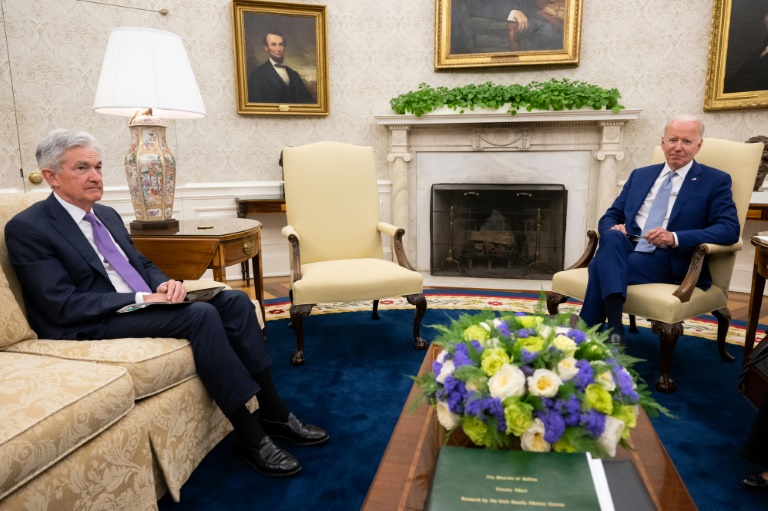
Unlike his predecessor Donald Trump, who relentlessly attacked the Fed and its chair Jerome Powell, Biden has publicly endorsed the central bank’s efforts.

Biden, who blames “Putin’s Price Hike” for the acceleration in inflation, said Washington “must do more — and quickly — to get prices down here in the United States.” 

Hoping to avoid a devastating setback in November elections that could return control of the legislature to opposition Republicans, Biden has urged Congress to approve legislation to bring down costs of key products such as medicines and services such as shipping to soften the blow for US consumers.

Some analysts had speculated that Powell might call for a timeout in the interest rate moves at the FOMC’s September meeting, but economist Levy echoed the prevailing view that a pause in rate hikes is now “looking increasingly unlikely.”

Powell has always insisted that central bankers eschew political considerations and focus on what’s best for the economy.

The Fed, which has already acknowledged that slowing demand will entail some pain, is hoping to cool price pressures without choking off economic growth — but that is looking increasingly difficult.

Gita Gopinath, the number two at the International Monetary Fund, last week said US central bankers are treading an “incredibly narrow path” to achieve a soft landing and avoid a sharp increase in unemployment.

“It will be a real challenge to bring down inflation… without turbulence,” she said at a Financial Times conference, adding that it could “require much steeper increases in rates.”

Close Bitnami banner
Bitnami