US Business

Ukraine hits Russian targets, France offers Odessa help

Ukraine tried to push back Russian troops in the east and south on Friday as France offered to help ensure access to the port of Odessa and ease a global grain crisis.

The United Nations and Western countries meanwhile raised fresh concerns over death sentences handed by pro-Russian separatists to two Britons and a Moroccan who were captured while fighting for Ukraine. 

Kyiv said Friday it had launched new air strikes on Russian positions in the captured southern region of Kherson, one of the first areas to be taken by Russia after the February 24 invasion.

Fierce fighting continued in the eastern Donbas region, where President Volodymyr Zelensky said that Ukrainian forces were “holding on” despite Moscow concentrating its firepower there.

The fiercest fighting remains around the eastern industrial city of Severodonetsk, a battle that Zelensky has said is pivotal for the fate of the Donbas region.

Local governor Sergiy Gaiday said on Friday that Russian forces had destroyed a major sports centre, adding: “One of the symbols of Severodonetsk was destroyed. The Ice Palace burned down.”

People in the town of Lysychansk, which is located just across a river from Severodonetsk, spoke to AFP about the stark choices the war has forced on them: either stay and brave the shelling, or flee and abandon their homes. 

Yevhen Zhyryada, 39, said the only way to access water was by heading to a water distribution site in the town.

“We have to go there under shelling, and under fire,” he said. “This is how we survive.”

– ‘Victory for Ukraine’ –

With the world still facing shockwaves from the war, an adviser to French President Emmanuel Macron said France was ready to assist in an operation to allow safe access to Ukraine’s Black Sea port of Odessa.

The port has been subject to a de facto blockade by Russia, and grain is waiting to be exported amid mounting fears of global food shortages, especially in developing countries.

“We are at the disposal of the parties to put in place an operation which would allow access in complete safety to the port of Odessa, in other words for boats to pass through despite the fact that the sea is mined,” said the advisor, who asked not to be named.

Macron will travel to Ukraine’s neighbours Moldova and Romania next week but no date had been set for him to visit Kyiv, the advisor said.

France wants “victory for Ukraine”, the advisor added, after Macron sparked controversy by suggesting Russia should not be humiliated.

Russia’s invasion has put European countries on edge, and nine of them urged NATO on Friday to beef up its eastern flank.

The meeting of the leaders of Bulgaria, the Czech Republic, Estonia, Hungary, Latvia, Lithuania, Poland, Romania and Slovakia was held in the Romanian capital Bucharest less than three weeks ahead of a NATO summit meeting in Madrid.

“In view of the increased security risks in Romania and the Black Sea, consolidating NATO on its eastern flank… becomes all the more urgent and crucial,” said Romanian President Klaus Iohannis.

– ‘Shocking’ death sentences –

Western countries reacted with fresh outrage after the separatist authorities in the Donetsk region of the Donbas on Thursday ordered the death penalty for Aiden Aslin, Shaun Pinner and Brahim Saadun.

Germany’s foreign ministry said the “shocking” sentences show “once more Russia’s complete disregard for international humanitarian law”.

British Prime Minister Boris Johnson’s office said he was “appalled”, as London pressed the case with Kyiv. Ukraine’s prosecutor general said she was probing the issue.

The United Nations warned that unfair trials of prisoners of war amounted to war crimes.

Zelensky separately praised British leadership and its support for Kyiv’s fight against Russia during an unannounced visit from UK Defence Secretary Ben Wallace.

“Words turn into actions. That’s the difference between Ukraine’s relationship with Great Britain and other countries,” Zelensky said in a video statement. “Weapons, finance, sanctions — on these three issues, Britain shows leadership.”

Kyiv has been critical of countries including Germany and France for the slow delivery of aid and for giving too much credence to negotiations with Russia’s President Vladimir Putin.

– ‘Take back and strengthen’ –

Russia has repeatedly warned the West against getting involved, with some officials warning of the risk of nuclear war.

The world’s chemical weapons watchdog said Friday it was keeping a close eye on Ukraine to monitor “threats of use of toxic chemicals as weapons”.

Putin, who has said that what Russia calls its special military operation is meant to “de-Nazify” Ukraine, appeared to compare himself to Peter the Great’s 18th century war against Sweden, in remarks on Thursday.

After visiting an exhibition in Moscow dedicated to the 350th birthday of the tsar, Putin said “you get the impression that by fighting Sweden he was grabbing something. He wasn’t taking anything, he was taking it back”.

In an apparent reference to Ukraine, Putin added: “It is our responsibility also to take back and strengthen.”

Moscow on Friday officially announced its withdrawal from the United Nations World Tourism Organization, which suspended Russia in April over the invasion.

burs-dk/ah/ach
US Capitol probe skewers Trump but faces battle to sway voters

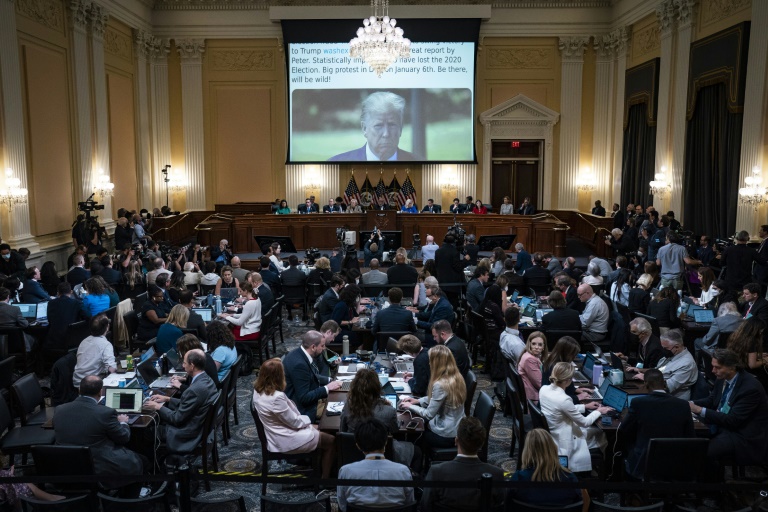
Americans were served up an engrossing night of television as a congressional panel laid out damning evidence of Donald Trump’s culpability in last year’s US Capitol insurrection.

Yet 17 months after the mayhem, the biggest challenge for the House of Representatives committee investigating the riot could be ensuring the brutal images of violence it played in prime time will pack the intended political punch.

Thursday’s presentation was devastating for Trump, who has been characterized as an ongoing threat to US democracy — bidding to carry a campaign to steal the last election into the next.

“It’s important the American people understand what truly happened, and to understand that the same forces that led to January 6 remain at work today,” President Joe Biden said Friday as he was discussing the hearing — a reference in part, at least, to Trump’s transgressions.

The committee’s footage of hand-to-hand combat between police and the mob Trump sent to the Capitol to stop the 2020 vote being certified in Biden’s favor, made for gut-wrenching viewing.

Capitol Police officer Caroline Edwards was shown being knocked unconscious and gave evidence in person about “slipping in people’s blood” as the assault turned to “carnage.”

The hearing concluded with video of several members of the mob saying they marched on the Capitol simply because Trump had asked them to. 

Liz Cheney — a rising Republican star until she refused to accept Trump’s false claims of a stolen election — carefully filleted every aspect of the former president’s so-called “Big Lie.”

She repeatedly referred to the “illegality” of his “sophisticated seven-point plan” to overturn the election.

Testimony from Trump’s closest allies — including his attorney general Bill Barr and daughter Ivanka — underscored that he had been made aware again and again how dangerous his conspiracy theories were.

– Images of carnage –

The night got progressively worse for Trump, who didn’t lift a finger for hours to help quell the insurrection, according to the committee.

And there were gasps in the room when Cheney quoted a witness claiming that Trump had said vice president Mike Pence deserved to be hanged by the mob storming the Capitol.

The challenge for Democrats — burned by the lukewarm public reaction to Trump’s two impeachments and numerous other revelations of misconduct — will be to ensure that his latest calumny registers with voters.  

While powerful images of the riot may have jogged memories, much of the outrage appears to have dissipated since January last year, with voters increasingly focused on pocketbook issues such as soaring inflation.

In a YouGov/University of Massachusetts poll in May, just 42 percent of respondents backed the drive to hold the insurrectionists accountable — a drop of 10 points in a year. 

“Trump is still doing well with his followers at the grassroots level,” Ahmed Zohny, a political science professor at Coppin State University in Baltimore, told AFP.

“So unless the congressional committee on January 6 comes up with criminal evidence that prevents him from running again, it is unlikely that the (Republicans) in both the House and Senate will go against him.”

– ‘Facts still do matter’ –

Meanwhile, the refusal by Fox News — the go-to network for America’s cable-viewing conservatives — to air the presentation live and unabridged severely curtailed its reach among right-wing voters.

“Gas is over five bucks. Inflation is higher than it’s been in the lifetime of most Americans,” host Tucker Carlson complained as he glossed over the most damning testimony.

“Violent crime is making cities impossible to live in, and more than 100,000 Americans ODed on drugs last year. Why isn’t there a prime-time hearing about any of that?”     

While experience has taught activists in deeply-polarized America not to rest their hopes in scandals changing minds, political analyst Mike Hernandez believes that “facts still do matter.”

“The facts that the January 6 committee will be presenting will either offer evidence that the president of the United States directed thousands of his supporters to disrupt the certification of the Electoral College or it will not,” Hernandez, who works for the Telemundo 51 South Florida network, told AFP.

“It will either result in proof that there was coordination from elected officials in the House and Senate with the president and the efforts to overturn the 2020 election or not.”

One thing we know for sure: another pundit from South Florida was keeping a particularly keen eye on proceedings — and he wasn’t enjoying what he saw.

“A one sided, totally partisan, POLITICAL WITCH HUNT,” Trump wrote in a nine-post tirade on his Truth Social platform. 

US health authority says Moderna vaccine effective in under-fives

US health authorities confirmed on Friday that data provided by drug-maker Moderna on the efficacy of its Covid-19 vaccine among very young children were accurate, ahead of a decision next week on whether to authorize two inoculations against the virus in kids aged six months to five years.

The Food and Drug Administration (FDA), which independently analyzed data from clinical trials conducted by Moderna, said vaccine efficacy against symptomatic cases of Covid-19 was 51 percent in babies aged six months to less than two years old, and 37 percent in children aged two to five years.

The figures are lower than those recorded during clinical trials on adults, but that is only because the trials for the very young children were conducted during a wave linked to the Omicron variant, according to the FDA.

“Although the VE (vaccine efficacy) … in children six months to five years is lower than that observed in the pivotal adult or older pediatric studies, it is highly consistent with real-world vaccine effectiveness observed against Omicron in adults,” the FDA said in a statement.

Even though Moderna’s vaccine has proven less effective against the Omicron variant, it remains very good at protecting against severe cases of the disease, the FDA pointed out. 

That is why the FDA concluded that the Moderna data “support the administration” of the vaccine in two doses of 100 micrograms each in adolescents aged 12 to 17, 50 micrograms for six to 11 year olds, and 25 micrograms in children aged six months to five years. 

In the United States, Moderna’s vaccine is currently only authorized for people aged 18 and older. 

The latest document, stretching to more than 100 pages and published by the US agency, will serve as a basis for the authorization discussions next week. 

An advisory committee of experts must meet over two days to study the request for authorization of the vaccine, as well as that of Pfizer, and make its recommendation. 

The FDA is expected to publish its independent analysis of data from Pfizer early next week.

Pfizer has filed an application for authorization for children aged six months to four years, although its vaccine will be administered in three doses.

US inflation skyrockets, piling pressure on Biden

US inflation surged to a new four-decade high in May, defying hopes that price pressures had peaked and deepening President Joe Biden’s political troubles as Americans struggle to meet the cost of essentials like food and gas.

Government data released Friday put inflation at 8.6%, extending increases not seen for a generation, with gas prices hitting daily records fueled by Russia’s invasion of Ukraine and supply chain challenges related to the pandemic.

Biden, whose popularity has taken a hit as prices surge just months before November’s midterm elections, has made fighting inflation his top domestic priority but is finding he has few tools to directly affect prices.

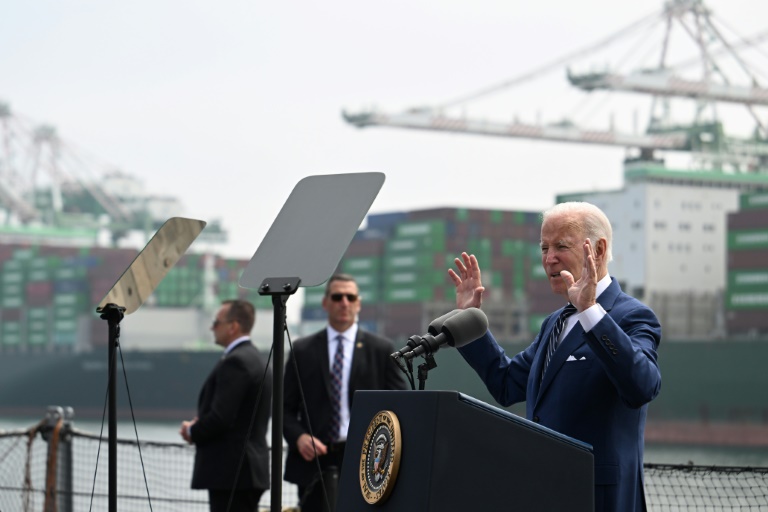
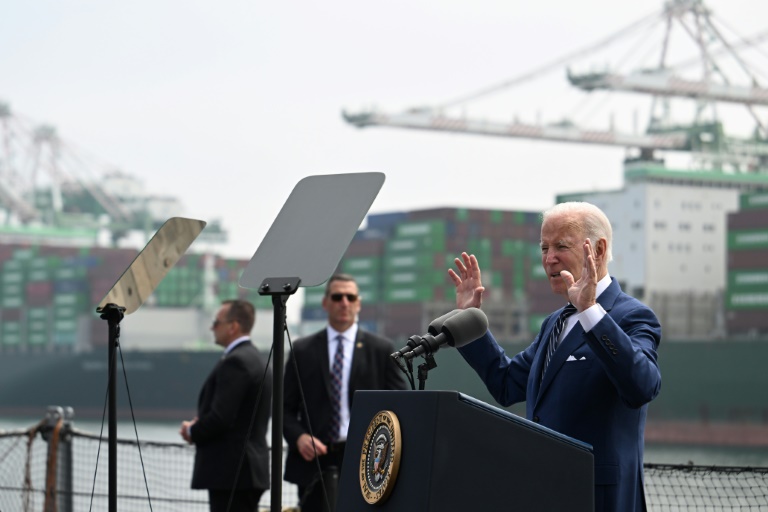
“I’m doing everything in my power to blunt Putin’s price hike and bring down the price of gas and food,” he said Friday while speaking at the Port of Los Angeles.

“We’re better positioned (than) just about any country in the world to overcome the global inflation we’re seeing and to take the next step towards forming a historic recovery.”

The president has tried to hammer home his optimistic message about economic progress in the wake of the pandemic, including rapid GDP growth and record job creation, while pressing Congress to take action to lower costs on specific products.

Biden cited releasing 30 million barrels of reserve oil and repeated his call to approve legislation to go after firms such as shipping companies that are taking advantage of limited competition to impose steep price hikes.

But he acknowledged the rising inflation was a severe problem, saying in an earlier statement the United States “must do more — and quickly — to get prices down.”

The new data dealt a crushing blow to Biden’s efforts, as the consumer price index (CPI) jumped 8.6 percent compared to May 2021, up from 8.3 percent in the 12 months ending in April and topping what most economists thought was the peak of 8.5 percent in March.

Prices continued to rise last month for goods including housing, groceries, airline fares and used and new vehicles, setting new records in multiple categories, according to the Labor Department report.

“The headline inflation numbers are dreadful. Strip away some special factors & they’re merely bad,” Harvard economist and former White House advisor Jason Furman said on Twitter.

Some economists expected the easing of pandemic restrictions to cause a shift of US consumer demand towards services and away from goods, which they said would ease inflation pressures, but prices for services increased as well.

– Soaring energy costs –

CPI rose one percent compared to April, after the modest 0.3 percent gain in the prior month, the Labor Department reported, far higher than expected by analysts.

Energy has soared 34.6 percent over the past year, the fastest since September 2005, while food jumped 10.1 percent — the first increase of more than 10 percent since March 1981, the report said.

Fuel oil more than doubled, jumping 106.7 percent, the largest increase in the history of CPI, which dates to 1935.

“The price of fuel oil and natural gas is working its way through the economy,” Biden economic advisor Brian Deese told CNBC. “The issue now is how can we actually make progress… that would improve that?”

“We’re calling on Congress to move on shipping legislation that would bring down the cost of moving goods overseas.”

The United States has come roaring back from the economic damage inflicted by the Covid-19 pandemic, helped by bargain borrowing costs and massive government stimulus measures.

But with the pandemic still gripping other parts of the world, global supply chain snarls have caused demand to far outstrip resources. 

Food and fuel prices have accelerated in recent weeks since the Russian invasion of Ukraine sent global oil and grain prices up, and American drivers are facing daily record gas prices, with the national average hitting $4.99 a gallon on Friday, according to AAA.

The University of Michigan consumer sentiment index — which measures how American consumers feel about the economy, personal finance and business and buying conditions — fell sharply Friday from 58.4 to 50.2, its lowest recorded value.

The Federal Reserve has begun raising interest rates aggressively, with another big hike expected next week, and more ahead in coming months as policymakers attempt to combat inflationary pressures without triggering a recession.

The CPI surge “raises the probability of even more aggressive Fed rate hikes to tamp down on inflationary expectations,” said Mickey Levy of Berenberg Capital Markets, adding that a pause in rate hikes in September is “looking increasingly unlikely.”

US inflation skyrockets, piling pressure on Biden

US inflation surged to a new four-decade high in May, defying hopes that price pressures had peaked and deepening President Joe Biden’s political troubles as Americans struggle to meet the cost of essentials like food and gas.

Government data released Friday put inflation at 8.6%, extending increases not seen for a generation, with gas prices hitting daily records fueled by Russia’s invasion of Ukraine and supply chain challenges related to the pandemic.

Biden, whose popularity has taken a hit as prices surge just months before November’s midterm elections, has made fighting inflation his top domestic priority but is finding he has few tools to directly affect prices.

“I’m doing everything in my power to blunt Putin’s price hike and bring down the price of gas and food,” he said Friday while speaking at the Port of Los Angeles.

“We’re better positioned (than) just about any country in the world to overcome the global inflation we’re seeing and to take the next step towards forming a historic recovery.”

The president has tried to hammer home his optimistic message about economic progress in the wake of the pandemic, including rapid GDP growth and record job creation, while pressing Congress to take action to lower costs on specific products.

Biden cited releasing 30 million barrels of reserve oil and repeated his call to approve legislation to go after firms such as shipping companies that are taking advantage of limited competition to impose steep price hikes.

But he acknowledged the rising inflation was a severe problem, saying in an earlier statement the United States “must do more — and quickly — to get prices down.”

The new data dealt a crushing blow to Biden’s efforts, as the consumer price index (CPI) jumped 8.6 percent compared to May 2021, up from 8.3 percent in the 12 months ending in April and topping what most economists thought was the peak of 8.5 percent in March.

Prices continued to rise last month for goods including housing, groceries, airline fares and used and new vehicles, setting new records in multiple categories, according to the Labor Department report.

“The headline inflation numbers are dreadful. Strip away some special factors & they’re merely bad,” Harvard economist and former White House advisor Jason Furman said on Twitter.

Some economists expected the easing of pandemic restrictions to cause a shift of US consumer demand towards services and away from goods, which they said would ease inflation pressures, but prices for services increased as well.

– Soaring energy costs –

CPI rose one percent compared to April, after the modest 0.3 percent gain in the prior month, the Labor Department reported, far higher than expected by analysts.

Energy has soared 34.6 percent over the past year, the fastest since September 2005, while food jumped 10.1 percent — the first increase of more than 10 percent since March 1981, the report said.

Fuel oil more than doubled, jumping 106.7 percent, the largest increase in the history of CPI, which dates to 1935.

“The price of fuel oil and natural gas is working its way through the economy,” Biden economic advisor Brian Deese told CNBC. “The issue now is how can we actually make progress… that would improve that?”

“We’re calling on Congress to move on shipping legislation that would bring down the cost of moving goods overseas.”

The United States has come roaring back from the economic damage inflicted by the Covid-19 pandemic, helped by bargain borrowing costs and massive government stimulus measures.

But with the pandemic still gripping other parts of the world, global supply chain snarls have caused demand to far outstrip resources. 

Food and fuel prices have accelerated in recent weeks since the Russian invasion of Ukraine sent global oil and grain prices up, and American drivers are facing daily record gas prices, with the national average hitting $4.99 a gallon on Friday, according to AAA.

The University of Michigan consumer sentiment index — which measures how American consumers feel about the economy, personal finance and business and buying conditions — fell sharply Friday from 58.4 to 50.2, its lowest recorded value.

The Federal Reserve has begun raising interest rates aggressively, with another big hike expected next week, and more ahead in coming months as policymakers attempt to combat inflationary pressures without triggering a recession.

The CPI surge “raises the probability of even more aggressive Fed rate hikes to tamp down on inflationary expectations,” said Mickey Levy of Berenberg Capital Markets, adding that a pause in rate hikes in September is “looking increasingly unlikely.”

US seeks way forward on migration at close of contested summit

The United States on Friday promised to do more to manage migration and hoped for growing consensus around the Americas at a summit in Los Angeles that was beset from the start by disputes.

The Summit of the Americas wound down with words of praise from the top diplomat of neighboring Mexico, whose leader marred the week-long event with a boycott in protest over President Joe Biden’s invitation list.

Foreign Secretary Marcelo Ebrard said he saw “some results of the summit which are very positive in our view,” pointing to Biden’s calls for economic cooperation and a “regional approach on migration.”

US officials said that the summit would produce the Los Angeles Declaration on Migration and Protection that will formalize many of the arrangements already in place.

The countries will agree to reinforce systems to process claims for asylum on their soil and also to share costs with nations that have been on the frontlines of taking in migrants, officials said.

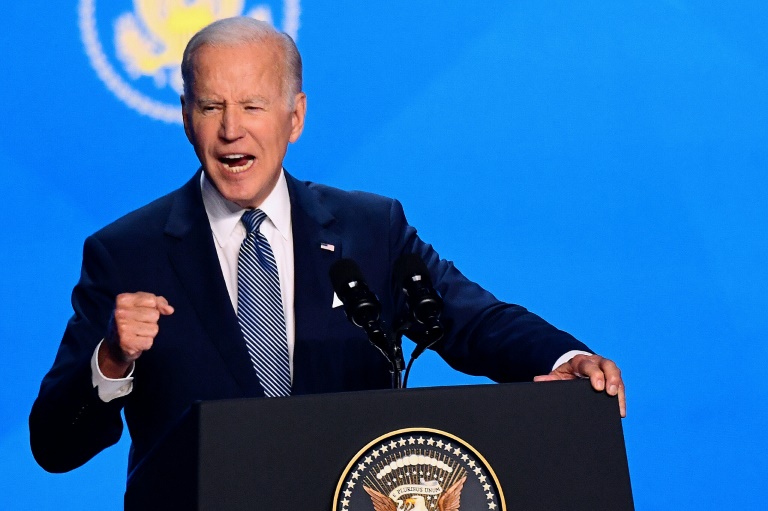
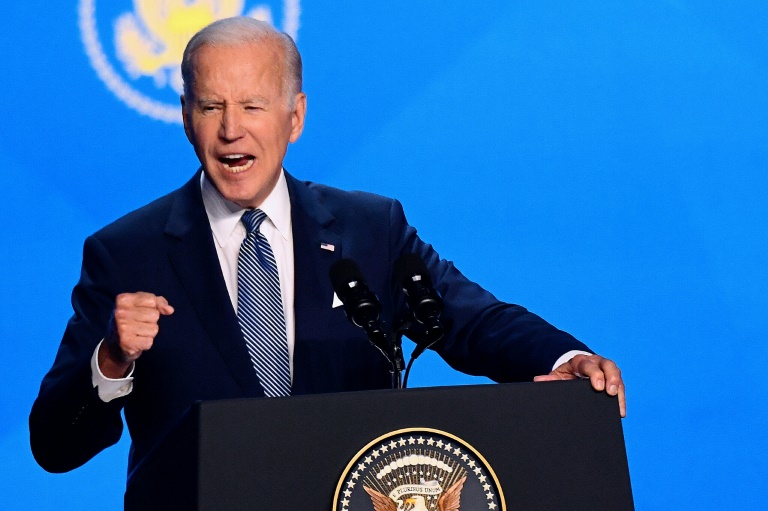
“Each one of our countries has been impacted by unprecedented migration, and I believe it’s our shared responsibility to meet this challenge,” Biden told the summit on Thursday.

Countries across the Americas will seek to boost “safe and orderly migration” and to “coordinate specific, concrete actions to secure our borders,” Biden said.

Extreme poverty, rising violence and natural disasters worsened by climate change have triggered to a sharp rise in Central Americans and Haitians seeking to enter the United States.

Former president Donald Trump’s Republican Party has seized on the issue ahead of congressional elections, denouncing migrants from developing countries and accusing Biden of failing to act effectively.

In an announcement timed for the summit, the State Department said the United States would resettle 20,000 verified refugees from the Americas over the next two years — a three-fold increase but a far cry from the 100,000 Ukrainian refugees that Biden, mostly with Republican support, has pledged to take in.

The United States also announced $314 million in new funding to support some of the more than six million Venezuelans who have fled their country, whose economy has been in freefall.

– Friction over invitations –

US Secretary of State Antony Blinken, known for his love of music, put Biden’s message in more colorful language while chairing the summit as he replied to the prime minister of Barbados, who quoted Bob Marley in saying “there is so much trouble in the world.”

“In the words of Bob, no woman, no cry,” Blinken said. “Don’t shed no tears, let’s act. We can sing a ‘Redemption Song’ together.”

But the summit was also marked by discord, largely over Biden’s refusal to invite the leftist leaders of Cuba, Nicaragua and Venezuela on the grounds that they are authoritarians.

The prime minister of tiny Belize directly criticized Biden on the invitations and pointedly asked him if he will follow up on lofty promises, pointing to the $40 billion package from the United States to support Ukraine in its war.

“We know that money is not the problem,” Prime Minister John Briceno told him.

Biden, who applauded politely and greeted each leader, returned to the podium to say that his agenda was on track.

“Notwithstanding some of the disagreements relating to participation, on the substantive matters, what I heard was almost unity and uniformity,” the US president said.

Biden called the summit in the face of rising Chinese influence in a region that the United States has long considered its home turf.

But the Biden administration has steered clear of big-dollar announcements and instead focused on broad declarations and pledged to work out specifics later.

The administration promised earlier in the summit to help train 500,000 health workers in the Americas and unveiled $1.9 billion in private funding for Central America to create jobs and stem some of the factors motivating migration.

Biden also met at the summit with Brazilian President Jair Bolsonaro, a first encounter with a far-right leader who has questioned not only the legitimacy of upcoming elections at home but also of the US polls in which Biden defeated Trump.

Bolsonaro, who was one of Trump’s closest international allies, told the summit that his meeting with Biden was “simply fantastic.”

US seeks way forward on migration at close of contested summit

The United States on Friday promised to do more to manage migration and hoped for growing consensus around the Americas at a summit in Los Angeles that was beset from the start by disputes.

The Summit of the Americas wound down with words of praise from the top diplomat of neighboring Mexico, whose leader marred the week-long event with a boycott in protest over President Joe Biden’s invitation list.

Foreign Secretary Marcelo Ebrard said he saw “some results of the summit which are very positive in our view,” pointing to Biden’s calls for economic cooperation and a “regional approach on migration.”

US officials said that the summit would produce the Los Angeles Declaration on Migration and Protection that will formalize many of the arrangements already in place.

The countries will agree to reinforce systems to process claims for asylum on their soil and also to share costs with nations that have been on the frontlines of taking in migrants, officials said.

“Each one of our countries has been impacted by unprecedented migration, and I believe it’s our shared responsibility to meet this challenge,” Biden told the summit on Thursday.

Countries across the Americas will seek to boost “safe and orderly migration” and to “coordinate specific, concrete actions to secure our borders,” Biden said.

Extreme poverty, rising violence and natural disasters worsened by climate change have triggered to a sharp rise in Central Americans and Haitians seeking to enter the United States.

Former president Donald Trump’s Republican Party has seized on the issue ahead of congressional elections, denouncing migrants from developing countries and accusing Biden of failing to act effectively.

In an announcement timed for the summit, the State Department said the United States would resettle 20,000 verified refugees from the Americas over the next two years — a three-fold increase but a far cry from the 100,000 Ukrainian refugees that Biden, mostly with Republican support, has pledged to take in.

The United States also announced $314 million in new funding to support some of the more than six million Venezuelans who have fled their country, whose economy has been in freefall.

– Friction over invitations –

US Secretary of State Antony Blinken, known for his love of music, put Biden’s message in more colorful language while chairing the summit as he replied to the prime minister of Barbados, who quoted Bob Marley in saying “there is so much trouble in the world.”

“In the words of Bob, no woman, no cry,” Blinken said. “Don’t shed no tears, let’s act. We can sing a ‘Redemption Song’ together.”

But the summit was also marked by discord, largely over Biden’s refusal to invite the leftist leaders of Cuba, Nicaragua and Venezuela on the grounds that they are authoritarians.

The prime minister of tiny Belize directly criticized Biden on the invitations and pointedly asked him if he will follow up on lofty promises, pointing to the $40 billion package from the United States to support Ukraine in its war.

“We know that money is not the problem,” Prime Minister John Briceno told him.

Biden, who applauded politely and greeted each leader, returned to the podium to say that his agenda was on track.

“Notwithstanding some of the disagreements relating to participation, on the substantive matters, what I heard was almost unity and uniformity,” the US president said.

Biden called the summit in the face of rising Chinese influence in a region that the United States has long considered its home turf.

But the Biden administration has steered clear of big-dollar announcements and instead focused on broad declarations and pledged to work out specifics later.

The administration promised earlier in the summit to help train 500,000 health workers in the Americas and unveiled $1.9 billion in private funding for Central America to create jobs and stem some of the factors motivating migration.

Biden also met at the summit with Brazilian President Jair Bolsonaro, a first encounter with a far-right leader who has questioned not only the legitimacy of upcoming elections at home but also of the US polls in which Biden defeated Trump.

Bolsonaro, who was one of Trump’s closest international allies, told the summit that his meeting with Biden was “simply fantastic.”

Court sets date for Weinstein sex assault trial in Los Angeles

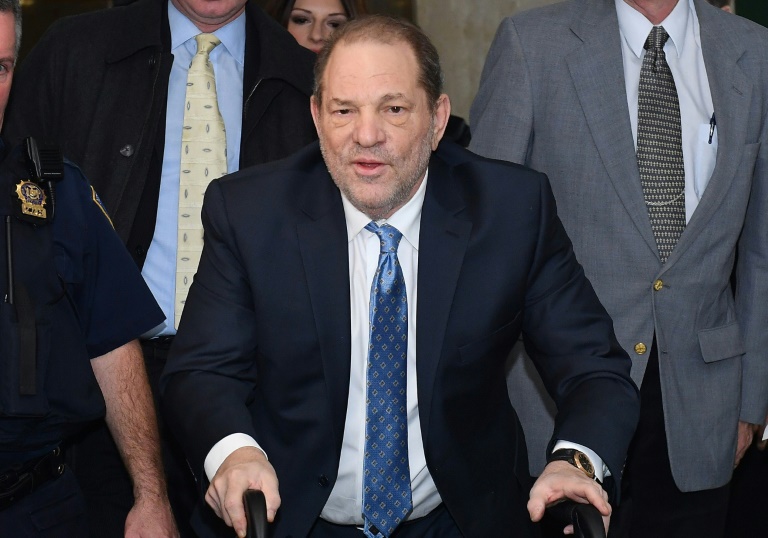
Disgraced movie producer Harvey Weinstein will go on trial in October in Los Angeles over alleged assaults on five women, a judge ruled Friday.

Weinstein, who was charged in Britain this month with the 1996 indecent assault of a woman in London, faces 11 felony charges in California.

The 70-year-old appeared in a Los Angeles court wearing brown prison clothes to be told the date for his next hearing.

Prosecutors initially charged the Oscar winner in January 2020 with a number of sex crimes against two women, with the assaults alleged to have taken place years earlier.

They added further counts later in the year involving three other women, dating back as far as 2004.

The trial in Los Angeles Superior Court will begin on October 10. It is expected to last around eight weeks.

Weinstein was brought to California from a New York prison where he was serving 23 years for raping an aspiring actress and for a criminal sex act against a former production assistant.

His jailing was a landmark in the #MeToo movement, which exploded after a media expose of his behavior.

In total, nearly 90 women including Angelina Jolie, Gwyneth Paltrow and Salma Hayek have accused Weinstein of harassment or assault.

The “Pulp Fiction” producer has maintained that all his sexual encounters were consensual.

As allegations poured in, London’s Metropolitan Police said it was investigating a string of sexual assault claims against him.

Before the allegations against Weinstein emerged, he and his brother Bob were Hollywood’s ultimate power players.

They co-founded Miramax Films, a distribution company named after their mother Miriam and father Max, in 1979. It was sold to Disney in 1993.

Their hits included 1998’s “Shakespeare in Love,” for which Weinstein shared a best picture Oscar. Over the years, Weinstein’s films received more than 300 Oscar nominations and 81 statuettes.

Tiger joins LeBron, Jordan on sport billionaire list: Forbes

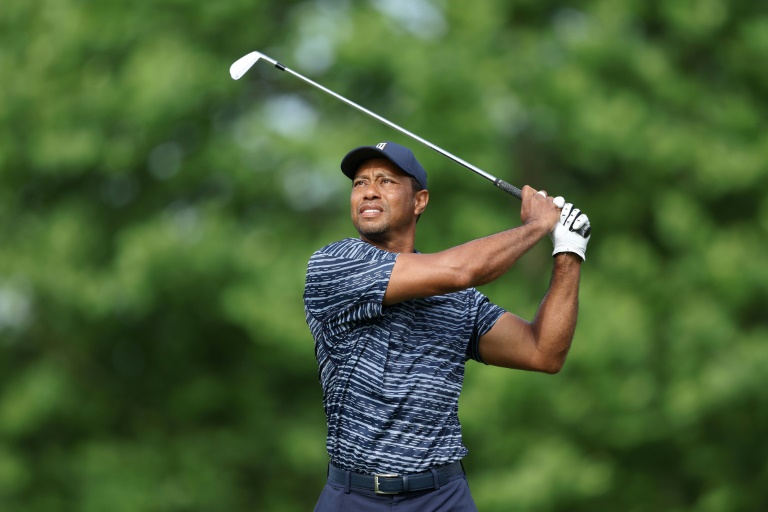
Tiger Woods, a 15-time major golf champion, has joined NBA icons Michael Jordan and LeBron James as athletes with a net worth of $1 billion, Forbes magazine reported Friday.

Woods, making a comeback at age 46 from severe leg injuries suffered in a February 2021 car crash, has made about $1.7 billion in prize money, endorsements and business deals over his 27-year career, Forbes reported.

The earnings update said that was the most money of any athlete the magazine has tracked, with less than 10% of revenues for Woods coming from his winnings.

Jordan, who won six NBA crowns in the 1990s with the Chicago Bulls, was the first sportsman to reach the milestone, his endorsement pitchman role and Jumpman logo products setting standards for athletes.

Los Angeles Lakers playmaker James, a four-time NBA champion and four-time NBA Most Valuable Player, crossed the $1 billion figure only last week, according to the magazine, which said he made $121.1 million gross in the past year.

Woods, whose 82 career US PGA Tour victories is level with Sam Snead for the all-time record, ended a 14-month injury layoff in April at the Masters, making the cut in a fightback effort where simply walking 72 holes at hilly Augusta National was considered a major effort.

Woods made the cut last month at the PGA Championship but withdrew before the final round after limping his way over Southern Hills in the third round.

While he will skip next week’s US Open, Woods plans to play in next month’s British Open at St. Andrews.

Greg Norman, commissioner of the new Saudi-backed LIV Golf Invitational Series, said Woods was pitched an offer in the “high nine digits” to join the upstart tour, but Woods said at the PGA Championship he prefers the PGA, built upon the legacy of legends such as Arnold Palmer and Jack Nicklaus.

In addition to endorsement income, Woods owns event staging and course design companies.

Woods made $68 million in off-course income over the past 12 months, Forbes reported, noting that figure alone would rank him 14th on the global world athlete income list.

US seeks way forward on migration at close of contested summit

The United States on Friday promised to do more to manage migration and looked for consensus around the Americas as it wound down a summit in Los Angeles that has been beset from the start by disputes.

The leaders of Mexico, which shares a 3,145-kilometer (1,954-mile) border with the United States, and of three Central American nations that have seen a spike in people fleeing declined to attend the week-long Summit of the Americas.

But lower-level officials attended, and President Joe Biden insisted that he largely saw common purpose on migration — a heated political issue at home.

US officials said that the summit would produce the Los Angeles Declaration on Migration and Protection that will formalize many of the arrangements already in place.

The countries will agree to reinforce systems to process claims for asylum on their soil and also to share costs with nations that have been on the frontlines of taking in migrants, officials said.

“Each one of our countries has been impacted by unprecedented migration, and I believe it’s our shared responsibility to meet this challenge,” US President Joe Biden told the summit on Thursday.

Countries across the Americas will seek to boost “safe and orderly migration” and to “coordinate specific, concrete actions to secure our borders,” Biden said.

Extreme poverty, rising violence and natural disasters worsened by climate change have triggered to a sharp rise in Central Americans and Haitians seeking to enter the United States.

Former president Donald Trump’s Republican Party has seized on the issue ahead of congressional elections, denouncing migrants from developing countries and accusing Biden of failing to act effectively.

In announcement timed for the summit, the State Department said the United States would resettle 20,000 verified refugees from the Americas over the next two years — a three-fold increase but a far cry from the 100,000 Ukrainian refugees that Biden, mostly with Republican support, has pledged to take in.

The United States also announced $317 million in new funding to support some of the more than six million Venezuelans who have fled their country, whose economy has been in freefall.

– Friction over invitations –

The Summit of the Americas was hit by discord even before it began, as Biden refused to invite the leftist leaders of Cuba, Nicaragua and Venezuela on the grounds that they are authoritarians.

Mexican President Andres Manuel Lopez Obrador boycotted the summit to protest the exclusions, and leaders criticized the decision to Biden’s face in a plenary session on Thursday.

“Being the host country of the summit doesn’t grant the ability to impose a right of admission on member countries of the continent,” said Argentina’s center-left president, Alberto Fernandez, who attended after a personal appeal by Biden.

The prime minister of tiny Belize directly criticized Biden on Cuba and Venezuela and pointedly asked him if he will follow lofty up on lofty promises, pointing to the $40 billion package from the United States to support Ukraine in its war.

“We know that money is not the problem,” Prime Minister John Briceno told him.

Biden, who applauded politely and greeted each leader, returned to the podium to say that his agenda was on track.

“Notwithstanding some of the disagreements relating to participation, on the substantive matters, what I heard was almost unity and uniformity,” the US president said.

Biden called the summit in the face of rising Chinese influence in a region that the United States has long considered its home turf.

But the Biden administration has steered clear of big-dollar announcements and instead focused on broad declarations and pledged to work out specifics later.

The administration promised earlier in the summit to help train 500,000 health workers in the Americas and unveiled $1.9 billion in private funding for Central America to create jobs and stem some of the factors motivating migration.

Biden also met at the summit with Brazilian President Jair Bolsonaro, a first encounter with a far-right leader who has questioned not only the legitimacy of upcoming elections at home but also of the US polls in which Biden defeated Trump.

Bolsonaro, who was one of Trump’s closest international allies, is trailing in polls ahead of October elections.

But he said that he was pleasantly surprised by his meeting Thursday with Biden and looked forward to further talks.

Close Bitnami banner
Bitnami