US Business

US seeks way forward on migration at close of contested summit

The United States on Friday promised to do more to manage migration and looked for consensus around the Americas as it wound down a summit in Los Angeles that has been beset from the start by disputes.

The leaders of Mexico, which shares a 3,145-kilometer (1,954-mile) border with the United States, and of three Central American nations that have seen a spike in people fleeing declined to attend the week-long Summit of the Americas.

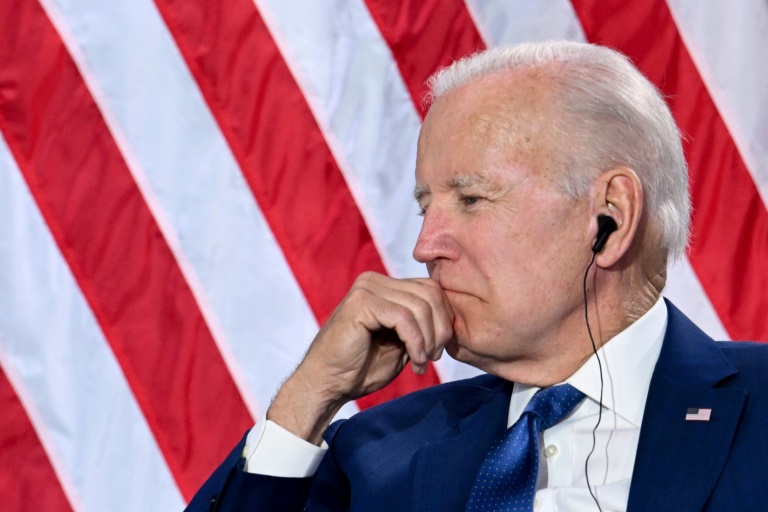
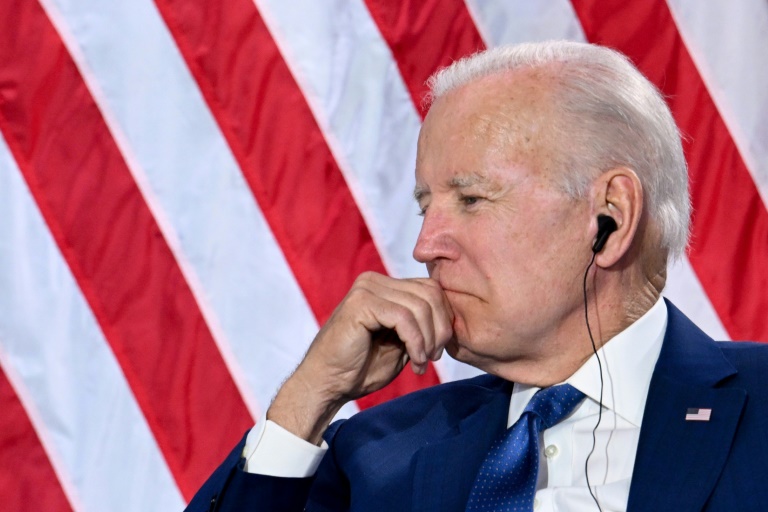
But lower-level officials attended, and President Joe Biden insisted that he largely saw common purpose on migration — a heated political issue at home.

US officials said that the summit would produce the Los Angeles Declaration on Migration and Protection that will formalize many of the arrangements already in place.

The countries will agree to reinforce systems to process claims for asylum on their soil and also to share costs with nations that have been on the frontlines of taking in migrants, officials said.

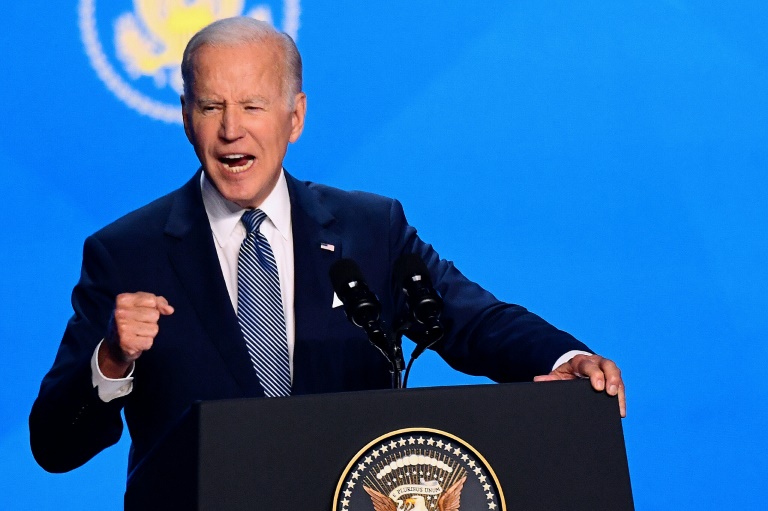
“Each one of our countries has been impacted by unprecedented migration, and I believe it’s our shared responsibility to meet this challenge,” US President Joe Biden told the summit on Thursday.

Countries across the Americas will seek to boost “safe and orderly migration” and to “coordinate specific, concrete actions to secure our borders,” Biden said.

Extreme poverty, rising violence and natural disasters worsened by climate change have triggered to a sharp rise in Central Americans and Haitians seeking to enter the United States.

Former president Donald Trump’s Republican Party has seized on the issue ahead of congressional elections, denouncing migrants from developing countries and accusing Biden of failing to act effectively.

In announcement timed for the summit, the State Department said the United States would resettle 20,000 verified refugees from the Americas over the next two years — a three-fold increase but a far cry from the 100,000 Ukrainian refugees that Biden, mostly with Republican support, has pledged to take in.

The United States also announced $317 million in new funding to support some of the more than six million Venezuelans who have fled their country, whose economy has been in freefall.

– Friction over invitations –

The Summit of the Americas was hit by discord even before it began, as Biden refused to invite the leftist leaders of Cuba, Nicaragua and Venezuela on the grounds that they are authoritarians.

Mexican President Andres Manuel Lopez Obrador boycotted the summit to protest the exclusions, and leaders criticized the decision to Biden’s face in a plenary session on Thursday.

“Being the host country of the summit doesn’t grant the ability to impose a right of admission on member countries of the continent,” said Argentina’s center-left president, Alberto Fernandez, who attended after a personal appeal by Biden.

The prime minister of tiny Belize directly criticized Biden on Cuba and Venezuela and pointedly asked him if he will follow lofty up on lofty promises, pointing to the $40 billion package from the United States to support Ukraine in its war.

“We know that money is not the problem,” Prime Minister John Briceno told him.

Biden, who applauded politely and greeted each leader, returned to the podium to say that his agenda was on track.

“Notwithstanding some of the disagreements relating to participation, on the substantive matters, what I heard was almost unity and uniformity,” the US president said.

Biden called the summit in the face of rising Chinese influence in a region that the United States has long considered its home turf.

But the Biden administration has steered clear of big-dollar announcements and instead focused on broad declarations and pledged to work out specifics later.

The administration promised earlier in the summit to help train 500,000 health workers in the Americas and unveiled $1.9 billion in private funding for Central America to create jobs and stem some of the factors motivating migration.

Biden also met at the summit with Brazilian President Jair Bolsonaro, a first encounter with a far-right leader who has questioned not only the legitimacy of upcoming elections at home but also of the US polls in which Biden defeated Trump.

Bolsonaro, who was one of Trump’s closest international allies, is trailing in polls ahead of October elections.

But he said that he was pleasantly surprised by his meeting Thursday with Biden and looked forward to further talks.

Stocks slide as US inflation soars

Stock markets plunged deeper into the red on Friday after data showed that US inflation soared to highest level in 40 years in May, outpacing analysts’ expectations. 

In Europe, all of the major stock indices ended the week sharply lower. 

Paris’s blue-chip CAC 40 lost 2.7 percent on Friday, Frankfurt’s DAX index was down 3.1 percent, Milan’s FTSE MIB shed 5.1 percent, Madrid’s IBEX tumbled 3.7 percent and London’s FTSE dropped by 2.1 percent. 

On Wall Street, stocks also were deep in negative territory after US government data showed inflation reached 8.6 percent in May, the steepest rise in consumer prices since December 1981, on the back of surging energy and food prices.

“US CPI for May has come in stronger than expected,” said Stephen Innes of SPI Asset Management. “Inflation is back on the highs; critically, it’s across the board.”

The data had been eagerly anticipated as investors hungrily look for clues as to the direction of US interest rates at next week’s meeting of the Federal Reserve.

“Today’s release of US CPI underscores the need for tighter monetary policy,” said Fawad Razaqzada at Forex.com.

“As the Fed and others have admitted the need for ‘more forceful’ monetary tightening to address surging inflation around the world, this should keep the Nasdaq and other risk assets under pressure and support the US dollar against weaker currencies and gold,” he said. 

Inflation is soaring across the world, prompting the European Central Bank to finally join the Fed in tightening its monetary policy as it announced on Thursday that it would raise rates next month.

Economists warn that surging inflation, driven by rocketing energy prices, could push top economies into recession.

Adding to the unease was news that officials in China had once again locked down millions of people for Covid testing owing to another flare-up in cases, dealing a blow to hopes for an economic reopening.

“Warning signs about the economy are emerging as weekly (US) jobless claims are starting to rise, China’s Covid situation will prove troublesome for supply chains over the next couple of quarters, and as inflationary pressures broaden and show no sign of easing,” said Edward Moya, analyst at OANDA trading group.

“It seems reductions in global growth forecasts will become a steady theme over the next few months and that should complicate how much more tightening we see from central banks,” he said.

The World Bank and Organisation for Economic Co-operation and Development both lowered their global economic growth forecasts for this year earlier in the week.

– Key figures at around 1535 GMT –

New York – Dow: DOWN 2.5 percent at 31,476.37 points

London – FTSE 100: DOWN 2.1 percent at 7,317.52 (close)

Frankfurt – DAX: DOWN 3.1 percent at 13,761.83 (close)

Paris – CAC 40: DOWN 2.7 percent at 6,187.23 (close)

EURO STOXX 50: DOWN 3.4 percent at 3,599.20

Tokyo – Nikkei 225: DOWN 1.5 percent at 27,824.29 (close)

Hong Kong – Hang Seng Index: DOWN 0.3 percent at 21,806.18 (close)

Shanghai – Composite: UP 1.4 percent at 3,284.83 (close)

Euro/dollar: DOWN at $1.0516 from $1.0620 late Thursday

Euro/pound: UP at 85.37 pence from 84.98 pence

Dollar/yen: DOWN at 134.15 yen from 134.40 yen

Pound/dollar: DOWN at $1.2317 from $1.2495

Brent North Sea crude: DOWN 1.3 percent at $121.48 per barrel

West Texas Intermediate: DOWN 1.2 percent at $120.04 per barrel

burs/spm/pvh

Ukraine hits Russian targets, France offers Odessa help

Ukraine tried to push back Russian troops in the east and south on Friday as France offered to help ensure access to the port of Odessa and ease a global grain crisis.

The UN and Western countries meanwhile raised fresh concerns over death sentences handed by pro-Russian separatists to two Britons and a Moroccan who were captured while fighting for Ukraine. 

Kyiv said Friday it had launched new air strikes on Russian positions in the captured southern region of Kherson, one of the first areas to be taken by Russia after the February 24 invasion.

Fierce fighting continued in the eastern Donbas region, where President Volodymyr Zelensky said that Ukrainian forces were “holding on” despite Moscow concentrating its firepower there.

The fiercest fighting remains around the eastern industrial city of Severodonetsk, a battle that Zelensky has said is pivotal for the fate of the Donbas region.

Local governor Sergiy Gaiday said on Friday that Russian forces had destroyed a major sports centre, adding: “One of the symbols of Severodonetsk was destroyed. The Ice Palace burned down.”

People in the town of Lysychansk, which is located just across a river from Severodonetsk, spoke to AFP about the stark choices the war has forced on them: either stay and brave the shelling, or flee and abandon their homes. 

Yevhen Zhyryada, 39, said the only way to access water was by heading to a water distribution site in the town.

“We have to go there under shelling, and under fire,” he said. “This is how we survive.”

– ‘Victory for Ukraine’ –

With the world still facing shockwaves from the war, an adviser to French President Emmanuel Macron said France was ready to assist in an operation to allow safe access to Ukraine’s Black Sea port of Odessa.

The port has been subject to a de facto blockade by Russia, and grain is waiting to be exported amid mounting fears of global food shortages, especially in developing countries.

“We are at the disposal of the parties to put in place an operation which would allow access in complete safety to the port of Odessa, in other words for boats to pass through despite the fact that the sea is mined,” said the advisor, who asked not to be named.

Macron will travel to Ukraine’s neighbours Moldova and Romania next week but no date had been set for a visit by Macron to Kyiv, the advisor said.

France wants “victory for Ukraine”, the advisor added, after Macron sparked controversy by suggesting Russia should not be humiliated.

Russia’s invasion has put European countries on edge, and nine of them urged NATO on Friday to beef up its eastern flank.

The meeting of the leaders of Bulgaria, the Czech Republic, Estonia, Hungary, Latvia, Lithuania, Poland, Romania and Slovakia was held in the Romanian capital Bucharest less than three weeks ahead of a NATO summit meeting in Madrid.

“In view of the increased security risks in Romania and the Black Sea, consolidating NATO on its eastern flank… becomes all the more urgent and crucial,” said Romanian President Klaus Iohannis.

– ‘Shocking’ death sentences –

Western countries reacted with fresh outrage after the separatist authorities in the Donetsk region of the Donbas on Thursday ordered the death penalty for Aiden Aslin, Shaun Pinner and Saadun Brahim.

Germany’s foreign ministry said the “shocking” sentences show “once more Russia’s complete disregard for international humanitarian law”.

British Prime Minister Boris Johnson’s office said he was “appalled”, as London pressed the case with Kyiv. Ukraine’s prosecutor general said she was probing the issue.

The United Nations warned that unfair trials of prisoners of war amounted to war crimes.

Zelensky separately praised British leadership and its support for Kyiv’s fight against Russia during an unannounced visit from UK Defence Secretary Ben Wallace.

“Words turn into actions. That’s the difference between Ukraine’s relationship with Great Britain and other countries,” Zelensky said in a video statement. “Weapons, finance, sanctions — on these three issues, Britain shows leadership.”

Kyiv has been critical of countries including Germany and France for the slow delivery of aid and for giving too much credence to negotiations with Vladimir Putin.

– ‘Take back and strengthen’ –

Russia has repeatedly warned the West against getting involved, with some officials warning of the risk of nuclear war.

Putin, who has said that what Russia calls its special military operation is meant to “de-Nazify” Ukraine, appeared to compare himself to Peter the Great’s 18th century war against Sweden, in remarks on Thursday.

After visiting an exhibition in Moscow dedicated to the 350th birthday of the tsar, Putin said “you get the impression that by fighting Sweden he was grabbing something. He wasn’t taking anything, he was taking it back”.

In an apparent reference to Ukraine, Putin added: “It is our responsibility also to take back and strengthen.”

In the southern Russian city of Volgograd — which in the Soviet era was known as Stalingrad, and was the scene of the bloodiest battle of World War II — many Russians rally behind the invasion.

“Back then there was fascism, now there is neo-fascism,” said local resident Alexander Grachev, 50, referring to Ukraine’s authorities.

burs-dk/har

Climate: Africa's energy future on a knife's edge

With more than half its population lacking mains electricity and still using charcoal and other damaging sources for cooking, Africa’s energy future –- torn between fossil fuels and renewables — is up for grabs.

As nations discuss the climate crisis at the UN’s mid-year negotiations in Bonn, AFP spoke to Mohamed Adow, founder of think tank Power Shift Africa, about the forces pulling the continent in opposing directions. 

The stakes, he warns, are global.

Q. You have said rich nations owe the rest of the world a climate debt

“The prosperity they enjoy was, in effect, subsidised by the rest of the world because they polluted without paying the cost for doing so.

“Africa is home to 17 percent of Earth’s population but accounts for less than four percent of global greenhouse-gas emissions and only half-a-percent of historic emissions. The continent emits less than 1 tonne of CO2 per person, compared to seven in Europe or China, and more than 15 in the United States.

“If the least-developed continent on our planet is going to leapfrog fossil fuels to renewables, rich nations must pay the climate debt they owe.”

Q. How will Africa’s energy choices impact the rest of the world?

“My continent is at a crossroads with two possible futures. Africa can become a clean energy leader with decentralised renewables powering a more inclusive society and a greener economy, or it can become a large polluter that is burdened with stranded assets and economic instability. 

“We have the opportunity to make a difference for Africa and for the world.”

Q. US envoy John Kerry says climate change in Africa could see “hundreds of millions of people looking for a place to live.” Is he right?

“Absolutely. It is important to acknowledge that climate-induced migration is a threat. As climate impacts increase, people in Africa — where almost all agriculture is rain-fed — will be forcefully displaced from their land. 

“In wealthy nations, that is seen mostly as a security issue. But this is a humanitarian disaster in which people are already losing lives, homes and livelihoods.

“The only way to prevent climate-induced migration in the long-run is to reduce carbon pollution at the scale needed.”

Q. Is the war in Ukraine affecting energy development in Africa?

“To attain energy security after Russia’s invasion, Europe is effectively pushing Africa to pour its limited financial resources into developing its fossil gas extraction and export industry, primarily for consumers in Europe.”

“Last month German Chancellor Olaf Scholz, during a three-day tour of Senegal, said his country wants to ‘intensively pursue’ projects to develop and import Senegal’s huge gas reserves. Germany, of course, has been especially dependent on Russian gas.

“So now Europe wants to shackle Africa with new fossil fuel infrastructure that we know will be redundant within a few years, not to mention self-harming for the continent. And lest we forget: gas from Africa will emit the same amount of emissions as gas from Russia.”

Q. What is the balance of power in Africa between fossil-fuel interests and those striving to leapfrog to renewables?

“Last month, the Sustainable Energy for All summit in (Rwandan capital) Kigali issued a communique supporting ‘Africa in the deployment of gas as a transition fuel’.  But only 10 out of 54 African countries signed that statement. 

“I think the majority of African nations recognise the tremendous opportunity that renewables present for job creation, innovation, reduced air pollution and sustainable industrialisation. But this majority is a silent majority — they have not yet leveraged their moral voice to make a case for a cleaner, sustainable Africa.

“There are some leaders. My country, Kenya, is currently powered by 90-percent renewable energy and has set a target of 100 percent by 2030.”

Q. The trillions needed to engineer a rapid transition to renewables will not come from public sources alone. How do you mobilise private capital?

“We need to think about long-term investment security in Africa. This is the most expensive continent for securing loans or credit. We need to introduce payment guarantee schemes that are backed by international finance to facilitate safe investment in renewable energy.

“But you still need public money to leverage international investment and finance. We also have to unlock Africa’s domestic sources — public funds, sovereign wealth funds. And then there’s debt. If we could swap some foreign debt for the kinds of investment Africa needs, it could make a big difference.”

US inflation skyrockets, piling pressure on Biden

US inflation surged to a new four-decade high in May, defying hopes price pressures had peaked and deepening President Joe Biden’s political troubles as Americans struggle to meet the ever rising cost of essentials like food and gas.

Consumer prices in the world’s largest economy have soared by the fastest pace since 1981, with gas prices at the pump hitting new records daily amid the fallout from Russia’s invasion of Ukraine as well as ongoing supply chain challenges due to the Covid-19 pandemic.

Biden, whose popularity has taken a hit as prices surge, has made fighting inflation his top domestic priority, but is finding he has few tools to directly impact prices.

The president has tried to hammer home his optimistic message about the economic progress in the wake of the pandemic, including rapid GDP growth and record job creation, while pressing Congress to take action to lower costs on specific products.

He is due to speak later Friday about the inflation challenge, and likely will renew his call to approve legislation to go after firms such as shipping companies that are taking advantage of limited competition to impose steep price hikes.

But the latest inflation data dealt a crushing blow to his efforts, as the consumer price index (CPI) jumped 8.6 percent compared to May 2021, up from 8.3 percent in the 12 months ending in April and topping what most economists thought was the peak of 8.5 percent in March.

Prices continued to rise last month for a range of goods, including housing, groceries, airline fares and used and new vehicles, setting new records in multiple categories, according to the Labor Department report.

“The headline inflation numbers are dreadful. Strip away some special factors & they’re merely bad,” Harvard economist and former White House advisor Jason Furman said on Twitter.

Some economists expected the easing of pandemic restrictions to cause a shift of US consumer demand towards services and away from goods, which they said would ease inflation pressures, but prices for services increased as well.

– Soaring energy –

And CPI rose one percent compared to April, after the modest 0.3 percent gain in the prior month, the Labor Department reported, far higher than expected by analysts who were looking for inflation pressures to ebb slightly.

Energy has soared 34.6 percent over the past year, the fastest since September 2005, while food jumped 10.1 percent — the first increase of more than 10 percent since March 1981, the report said.

Fuel oil in particular more than doubled, jumping 106.7 percent, the largest increase in the history of CPI, which dates to 1935, according to the report.

“The price of fuel oil and natural gas is working its way through the economy,” Biden economic advisor Brian Deese told CNBC. “The issue now is how can we actually make progress… that would improve that?”

“We’re calling on Congress to move on shipping legislation that would bring down the cost of moving goods overseas.”

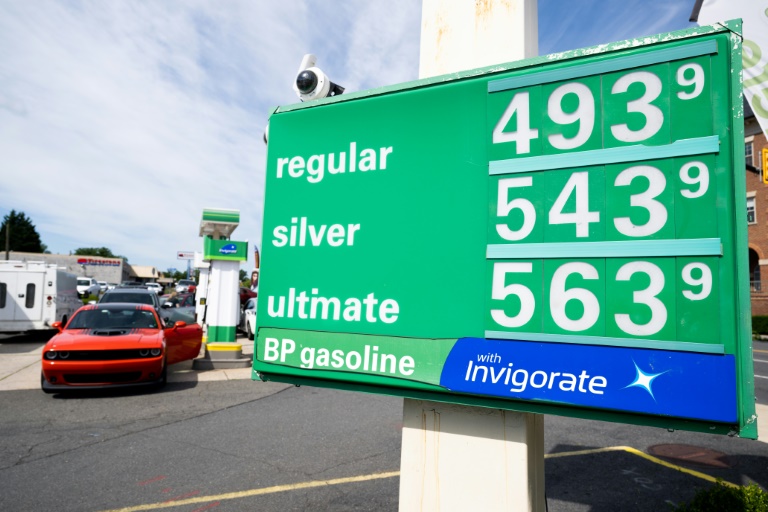
Food and fuel prices have accelerated in recent weeks since the Russian invasion of Ukraine sent global oil and grain prices up, and American drivers are facing daily record gas prices, with the national average hitting $4.99 a gallon on Friday, according to AAA.

The United States has come roaring back from the economic damage inflicted by the Covid-19 pandemic, helped by bargain borrowing costs and massive government stimulus measures.

But with the pandemic still gripping other parts of the world, global supply chain snarls have caused demand to far outstrip resources. Meanwhile, the conflict in Ukraine has sent global oil prices above $100 a barrel.

The Federal Reserve has begun raising interest rates aggressively, with another big hike expected next week, and more ahead in coming months as policymakers attempt to combat inflationary pressures without triggering a recession.

The CPI surge “raises the probability of even more aggressive Fed rate hikes to tamp down on inflationary expectations,” said Mickey Levy of Berenberg Capital Markets, adding that a pause in rate hikes in September is “looking increasingly unlikely.”

US inflation skyrockets, piling pressure on Biden

US inflation surged to a new four-decade high in May, defying hopes price pressures had peaked and deepening President Joe Biden’s political troubles as Americans struggle to meet the ever rising cost of essentials like food and gas.

Consumer prices in the world’s largest economy have soared by the fastest pace since 1981, with gas prices at the pump hitting new records daily amid the fallout from Russia’s invasion of Ukraine as well as ongoing supply chain challenges due to the Covid-19 pandemic.

Biden, whose popularity has taken a hit as prices surge, has made fighting inflation his top domestic priority, but is finding he has few tools to directly impact prices.

The president has tried to hammer home his optimistic message about the economic progress in the wake of the pandemic, including rapid GDP growth and record job creation, while pressing Congress to take action to lower costs on specific products.

He is due to speak later Friday about the inflation challenge, and likely will renew his call to approve legislation to go after firms such as shipping companies that are taking advantage of limited competition to impose steep price hikes.

But the latest inflation data dealt a crushing blow to his efforts, as the consumer price index (CPI) jumped 8.6 percent compared to May 2021, up from 8.3 percent in the 12 months ending in April and topping what most economists thought was the peak of 8.5 percent in March.

Prices continued to rise last month for a range of goods, including housing, groceries, airline fares and used and new vehicles, setting new records in multiple categories, according to the Labor Department report.

“The headline inflation numbers are dreadful. Strip away some special factors & they’re merely bad,” Harvard economist and former White House advisor Jason Furman said on Twitter.

Some economists expected the easing of pandemic restrictions to cause a shift of US consumer demand towards services and away from goods, which they said would ease inflation pressures, but prices for services increased as well.

– Soaring energy –

And CPI rose one percent compared to April, after the modest 0.3 percent gain in the prior month, the Labor Department reported, far higher than expected by analysts who were looking for inflation pressures to ebb slightly.

Energy has soared 34.6 percent over the past year, the fastest since September 2005, while food jumped 10.1 percent — the first increase of more than 10 percent since March 1981, the report said.

Fuel oil in particular more than doubled, jumping 106.7 percent, the largest increase in the history of CPI, which dates to 1935, according to the report.

“The price of fuel oil and natural gas is working its way through the economy,” Biden economic advisor Brian Deese told CNBC. “The issue now is how can we actually make progress… that would improve that?”

“We’re calling on Congress to move on shipping legislation that would bring down the cost of moving goods overseas.”

Food and fuel prices have accelerated in recent weeks since the Russian invasion of Ukraine sent global oil and grain prices up, and American drivers are facing daily record gas prices, with the national average hitting $4.99 a gallon on Friday, according to AAA.

The United States has come roaring back from the economic damage inflicted by the Covid-19 pandemic, helped by bargain borrowing costs and massive government stimulus measures.

But with the pandemic still gripping other parts of the world, global supply chain snarls have caused demand to far outstrip resources. Meanwhile, the conflict in Ukraine has sent global oil prices above $100 a barrel.

The Federal Reserve has begun raising interest rates aggressively, with another big hike expected next week, and more ahead in coming months as policymakers attempt to combat inflationary pressures without triggering a recession.

The CPI surge “raises the probability of even more aggressive Fed rate hikes to tamp down on inflationary expectations,” said Mickey Levy of Berenberg Capital Markets, adding that a pause in rate hikes in September is “looking increasingly unlikely.”

US to drop Covid tests for incoming air travel

The United States announced Friday that Covid-19 tests would no longer be required for international travelers arriving by air, a major step in the country’s gradual lifting of pandemic restrictions.

White House Assistant Press Secretary Kevin Munoz confirmed the news on Twitter, with US media saying the measure would end this weekend after strong lobbying from the travel industry.

All passengers had needed to show a negative Covid viral test taken shortly before travel — or proof of having recovered from the virus in the past 90 days — before boarding a flight.

Munoz said President Joe Biden’s work on vaccines and treatments had been “critical” to easing the travel restrictions, and added that the Centers for Disease Control and Prevention would continue to evaluate Covid data amid a recent rise in cases.

Last month, the United States crossed the threshold of one million Covid deaths, with Biden acknowledging the “unrelenting” pain of bereaved families, and urging Americans to remain vigilant.

America recorded its first Covid death in early February 2020 on the West Coast.

– Welcome move –

“We believe we have made the progress that we need to make in having protocols in place around Covid that we can lift this requirement,” presidential economics advisor Brian Deese told CNBC.

“I think that will be good news for business travel, good news for American commerce and companies as well.”

Many mask mandates across the United States have been lifted, but the country has recently seen an uptick in the number of daily virus cases, largely due to new Omicron subvariants.

About 300 people die every day in the country from Covid, down from the latest surge in February, when the daily average jumped to 2,700.

Vaccines have been free and widely available, but take-up rates vary widely between states.

Nationwide, 66.7 percent of the population is fully vaccinated, rising to 91.2 percent in those aged 65 and over.

With the US economy hit by rocketing inflation, the travel sector welcomed the move.

“The airline industry appreciates the administration’s decision to lift the pre-departure testing requirement in accordance with the current epidemiological environment,” the Airlines 4 America industry federation said in a statement.

“Lifting this policy will help encourage and restore air travel to the United States… We are eager to welcome the millions of travelers who are ready to come to the US for vacation, business and reunions with loved ones.”

China will 'not hesitate to start war' over Taiwan, Beijing tells US

Beijing will “not hesitate to start a war” if Taiwan declares independence, China’s defence minister warned his US counterpart Friday, the latest salvo between the superpowers over the island. 

The warning from Wei Fenghe came as he held his first face-to-face meeting with US Defence Secretary Lloyd Austin on the sidelines of the Shangri-La Dialogue security summit in Singapore.

Beijing views democratic, self-ruled Taiwan as its territory and has vowed to one day seize the island, by force if necessary, and US-China tensions over the issue have soared in recent months. 

Wei warned Austin that “if anyone dares to split Taiwan from China, the Chinese army will definitely not hesitate to start a war no matter the cost”, defence ministry spokesman Wu Qian quoted the minister as saying during the meeting. 

The Chinese minister vowed that Beijing would “smash to smithereens any ‘Taiwan independence’ plot and resolutely uphold the unification of the motherland”, according to the Chinese defence ministry.

He “stressed that Taiwan is China’s Taiwan… Using Taiwan to contain China will never prevail”, the ministry said. 

Austin “reaffirmed the importance of peace and stability across the (Taiwan) Strait, opposition to unilateral changes to the status quo, and called on (China) to refrain from further destabilising actions toward Taiwan”, according to the US Department of Defense.

Tensions over Taiwan have escalated in particular due to increasing Chinese aircraft incursions into the island’s air defence identification zone (ADIZ).

US President Joe Biden, during a visit to Japan last month, appeared to break decades of US policy when, in response to a question, he said Washington would defend Taiwan militarily if it is attacked by China. 

The White House has since insisted its policy of “strategic ambiguity” over whether or not it would intervene has not changed. 

– Japan PM issues warning –

With concerns mounting over China-Taiwan tensions, Japanese Prime Minister Fumio Kishida issued a stark warning at the summit: “Ukraine today may be East Asia tomorrow”.

The world must be “prepared for the emergence of an entity that tramples on the peace and security of other countries by force or threat without honouring the rules,” he said. 

He did not mention China by name in his address, but repeatedly called for the “rules-based international order” to be upheld.

Austin is the latest senior US official to visit Asia as Washington seeks to shift its foreign policy focus back to the region from the Ukraine war.

As well as on Taiwan, China and the United States have been locked in a range of other disputes. 

They have been at loggerheads over Russia’s invasion of Ukraine, with Washington accusing Beijing of providing tacit support for Moscow.

China has called for talks to end the war, but has stopped short of condemning Russia’s actions and has repeatedly criticised American arms donations to Ukraine.

China’s expansive claims in the South China Sea have also stoked tensions with Washington.

Beijing claims almost all of the resource-rich sea, through which trillions of dollars in shipping trade passes annually, with competing claims from Brunei, Malaysia, the Philippines, Taiwan and Vietnam.

Austin arrived in Singapore late Thursday, and held a series of meetings with his counterparts on Friday. 

At a meeting with Southeast Asian defence ministers, he spoke about Washington’s “strategy in maintaining an open, inclusive and rules-based regional security environment”, according to a statement from the Singapore government. 

His comments were a veiled reference to countering China’s increasing assertiveness in the region. 

Austin will deliver a speech at the forum on Saturday, followed by Wei on Sunday. The summit runs from June 10 to 12 and is taking place for the first time since 2019 after twice being postponed due to the Covid-19 pandemic.

Italy's Pompeii tests new guard dog — a robot named Spot

Under the amused gaze of many tourists, a robot dog wanders the ancient stone alleys of Pompeii’s famous archaeological park.

Meet Spot, a friendly, yellow-and-black remote-controlled creature with a gangly gait who looks like a dog crossed with an insect — all wrapped up in a robot’s body. 

Spot’s current mission at Pompeii is to inspect hard-to-access areas of the sprawling ruins, to collect data and alert his handlers to safety and structural problems. 

“Particularly underground structures where safety conditions won’t allow (staff) to enter, such as in the park’s many very narrow and dangerous tunnels,” Pompeii’s general director, Gabriel Zuchtriegel, told AFP. 

His purvey includes surveying tunnels dug out in clandestine excavations, which Zuchtriegel said “unfortunately still take place in the area”. 

With its excavated ruins spread out over 44 hectares (109 acres), the archaeological site preserves the remains of the ancient wealthy city south of Naples, buried by ash after the eruption of nearby Mount Vesuvius in 79 AD. 

Spot — who weighs 70 kilograms (154 pounds) and is about the size of a Golden Retriever — is controlled remotely with a tablet and better equipped than people to survey certain areas of the park.  

The robot is made by US company Boston Dynamics, which specialises in robotics, including for the military. The company’s website says Spot can be used in industries such as construction, mining and manufacturing, among others, carrying out inspections and capturing data.   

Controlling Spot this week in Pompeii was Valerio Brunelli, business developer for Leica Geosystem, which makes a 3D flying scanner, resembling a drone, that accompanies the robot in its rounds.

Brunelli made Spot bow and wiggle for the crowd.

“Spot is an amalgamation of technology that makes it a robot capable of exploring very complicated places, such as those found here,” said Brunelli.

“It’s a leap into the future for a thousand-year-old park”.

The robot is being used on a trial basis and comes with a $75,000 price tag.

Director Zuchtriegel said a decision on whether or not to buy Spot had not yet been made, but that rapid changes in the technology sector made choosing expensive, high-tech purchases difficult. 

“People are always needed, so there will never be a robot dog to be the guardian inside the Pompeii site. That is not the goal.” 

US inflation skyrockets, prolonging pain for consumers

US inflation resurged in May, defying hopes price pressures would slow, and posting the largest increase since December 1981 as Americans continue to shell out ever more for food and gas, according to data released Friday.

Consumer prices in the world’s largest economy have soared by the fastest pace in more than four decades, with gas prices at the pump hitting new records daily amid the fallout from Russia’s invasion of Ukraine as well as ongoing supply chain challenges due to the Covid-19 pandemic.

US President Joe Biden, whose popularity has taken a hit as prices surge, has made fighting inflation his top domestic priority, but is finding he has few tools to directly impact prices.

Biden has tried to hammer home his optimistic message about the economic progress in the wake of the pandemic, including rapid GDP growth and record job creation, while pressing Congress to take action to lower costs on specific products.

But the latest inflation data dealt a crushing blow, as the consumer price index (CPI) jumped 8.6 percent compared to May 2021, up from 8.3 percent in the 12 months ending in April and topping what most economists thought was the peak of 8.5 percent in March.

Prices continued to rise last month for a range of goods, including housing, groceries, airline fares and used and new vehicles, with annual gains setting new records in multiple categories, according to the Labor Department report.

“The headline inflation numbers are dreadful. Strip away some special factors & they’re merely bad,” Harvard economist and former White House advisor Jason Furman said on Twitter.

Some economists expected the easing of pandemic restrictions to cause shift of US consumer demand towards services and away from goods, which they said would ease inflation pressures, but prices for services increased as well.

“This report tells a pessimistic story of a broader rise in prices, and the shift in price pressures from goods (which reflects many pandemic-related pressures) to services (where inflation was yet to really emerge),” said Justin Wolfers, an economics professor at the University of Michigan, on Twitter.

– Soaring energy –

CPI rose one percent compared to April, after the modest 0.3 percent gain in the prior month, the Labor Department reported, far higher than expected by analysts who were looking for inflation pressures to ebb slightly.

Energy has soared 34.6 percent over the past year, the fastest since September 2005, while food jumped 10.1 percent — the first increase of more than 10 percent since March 1981, the report said.

Fuel oil in particular more than doubled, jumping 106.7 percent, the largest increase in the history of CPI, which dates to 1935, according to the report.

Food and fuel prices have accelerated in recent weeks since the Russian invasion of Ukraine sent global oil and grain prices up, and American drivers are facing daily record gas prices, with the national average hitting $4.99 a gallon on Friday, according to AAA.

The United States has come roaring back from the economic damage inflicted by the Covid-19 pandemic, helped by bargain borrowing costs and massive government stimulus measures.

But with the pandemic still gripping other parts of the world, global supply chain snarls have caused demand to far outstrip resources. Meanwhile, the conflict in Ukraine has sent global oil prices above $100 a barrel.

The Federal Reserve has begun raising interest rates aggressively, with another big hike expected next week, as policymakers attempt to combat inflationary pressures without triggering a recession.

“This report kills any last vestiges of hope that the Fed could pivot to 25bp in July,” said Ian Shepherdson of Pantheon Economics, referring to a quarter-point rate hike. “But we remain hopeful” to see such a shift in September.

Close Bitnami banner
Bitnami