US Business

US warns of copycat attacks after Texas school shooting

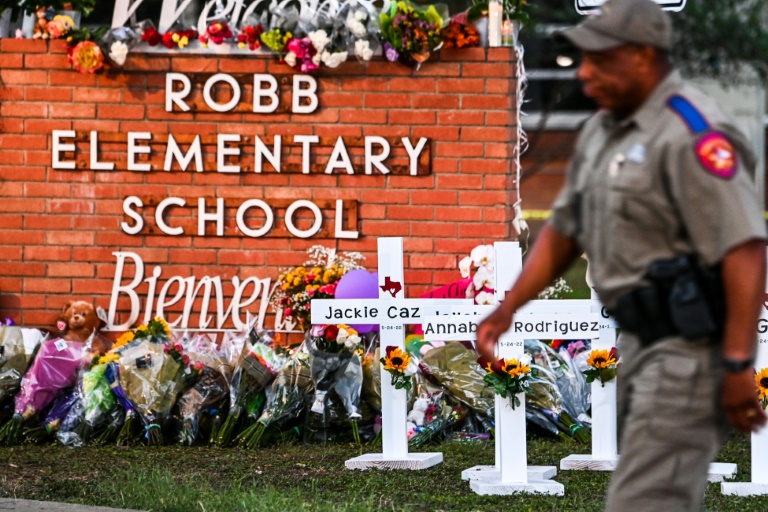
US authorities warned Tuesday of possible copycat mass shootings after an 18-year-old gunman slaughtered 19 children and two teachers at a primary school in Texas, two weeks ago.

In an updated advisory, the Department of Homeland Security also highlighted the risk of violence tied to upcoming events including a Supreme Court ruling on abortion rights, the loosening of border controls, and the November Congressional elections.

“The United States remains in a heightened threat environment,” DHS said.

“In the coming months, we expect the threat environment to become more dynamic as several high-profile events could be exploited to justify acts of violence against a range of possible targets.”

It said targets of attack could include public gatherings, religious institutions, minority groups and ideological opponents.

It said recent attacks by men acting alone demonstrated the challenge of protecting vulnerable targets and also outlined the possibilities to potential attackers.

“Individuals in online forums that routinely promulgate domestic violent extremist and conspiracy theory-related content have praised the May 2022 mass shooting at an elementary school in Uvalde, Texas and encouraged copycat attacks,” the DHS advisory said.

“Others have seized on the event to attempt to spread disinformation and incite grievances, including claims it was a government-staged event meant to advance gun control measures.”

DHS also mentioned the attack in Buffalo, New York, in which a racist 18-year-old with an assault rifle murdered 10 African-Americans, and a 2019 attack in El Paso, Texas that targeted Hispanics.

“Both the Buffalo and El Paso attackers indicated they were inspired by the 2019 attacker of two mosques in Christchurch, New Zealand,” DHS said.

The warning also said foreign groups like Al-Qaeda and the Islamic State Group, and people backed by the Chinese, Iranian and Russian government, could encourage and amplify violence and conspiracy theories to deepen divisions in US society.

“As the US 2022 mid-term elections approach, malign foreign actors could bolster their messaging to sow discord and influence US audiences in keeping with practices during previous election cycles,” DHS said.

Horsemeat traffickers on trial in France in new industry scandal

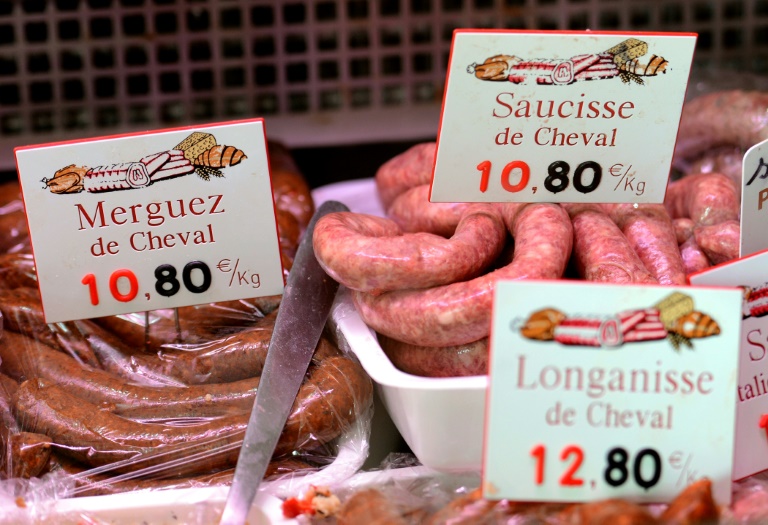
Eighteen people went on trial in France on Tuesday accused of running a Europe-wide giant horsemeat trading network involving produce not cleared for human consumption.

Mostly shunned by consumers in the United States and Britain, horsemeat — typically cheaper than beef — has long been part of culinary habits across European countries, including France, but its production and distribution are strictly regulated.

The case coming to trial in the southern port city of Marseille is the biggest horsemeat scandal since 2013, when millions of ready meals were withdrawn from stores across Europe after they were found to contain horsemeat instead of only beef as indicated on the label.

Standing trial are French, Belgian and Dutch nationals charged with violating EU sanitary rules governing the horsemeat trade, and with forging official documents between 2010 and 2015.

They are also accused of duping the owners of ageing horses into believing that their beloved animals would live out their days in the countryside when in reality they were taken straight to the slaughterhouse.

The specific charges in the trial, which is set to last for three weeks, are fraud, conspiracy to commit fraud, and misleading consumers and endangering their health.

– ‘They tricked everybody’ –

The members of the group, which includes licenced horse meat traders and veterinary surgeons, are believed to have violated a number of EU rules about the import of horses, including by forging certificates of origin.

The main suspect is 58-year-old Belgian Jean-Marc Decker, who prosecutors say supplied the network with horses whose meat was unfit for consumption.

In addition to the accused individuals, mostly in the 50s or 60s, a horsemeat wholesale company based in southern France is also in the dock for distributing the meat, falsely claiming that it was French.

The company, according to prosecutors, “was indifferent to the health imperatives governing the sector”.

Court proceedings were to start with the testimony of the top veterinary official at the municipal abattoir in Ales, southern France, where the investigation started in 2013.

Former horse owner Aline Oudin, due to testify Wednesday, told AFP she had handed her horse over to one of the defendants in 2013 in exchange for a promise of a “happy retirement” for the animal. Two weeks later she found out that the horse had been slaughtered and its meat sold.

“They tricked owners, they tricked consumers, they tricked everybody,” she said.

Plaintiffs also include France’s veterinary association, the cattle and meatpacking association ANBV and the Ales municipality.

EU agrees single charger standard, in blow to Apple

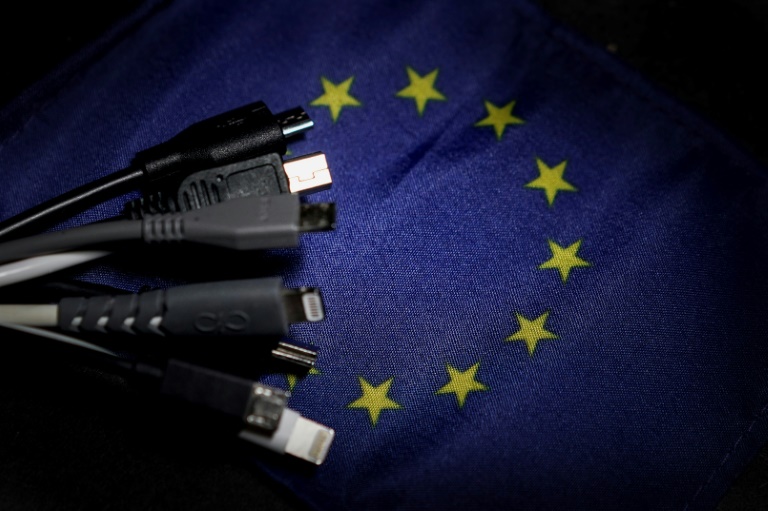
European officials on Tuesday agreed the text of a proposed EU law imposing a standard charger for smartphones, tablets and laptops sold in the bloc, in a blow to Apple.

EU member states and MEPs believe a standard cable for all devices will cut back on electronic waste, but iPhone juggernaut Apple argues a one-size-fits-all charger would slow innovation and create more pollution.

For most portable devices the requirement for charging via a USB Type-C port will come into effect from late 2024, negotiators said, while laptops will be given more time.

The USB-C rule will also stretch to digital cameras, headphones, headsets, portable speakers and E-readers, they said.

Lawmakers agreed on the common charger based on a proposal that was made by the EU executive — the European Commission — in September, but came more than a decade after the European Parliament first pushed for it.

The decision will be formally ratified by European Parliament and among EU member states later this year before entering into effect.

“We have been able to do it in nine months, that means that we can … move fast when there is a political will,” the EU internal market commissioner Thierry Breton said.

“We are able to say to the lobbies, ‘sorry, but here it is Europe and we’re working for our people’,” he said.

The 27-nation union is home to 450 million people, some of the world’s richest consumers, and the imposition of the USB-C as standard could affect the entire global market.

“This is a rule which will apply to everyone,” said MEP Alex Agius Saliba, who led the negotiations for the European Parliament.

“If Apple … or anyone wants to market their product, sell their products within our internal market, they have to abide by our rules and their device has to be USB-C,” he said. 

The rules will also give shoppers the option to opt out of receiving a new charging cable when purchasing an electronic device.

– ‘Planning ahead’ –

And in order to prepare for the future, the law has provisions to set a standard on wireless charging.

This was “not to end up … legislating for a technology which is basically dying out, so we are also planning ahead,” Saliba said.

Apple, which already uses USB-C connectors on some of its iPads and laptop computers, has insisted any legislation to force a universal charger for all mobiles in the European Union is unwarranted.

“The proposal is vastly disproportionate to any perceived problem,” the company said in its response to the commission when the law was being drafted.

Imposing a charger standard, it argued, would stifle innovation and “reduce European consumer choice by removing more affordable older models from the market”.

Consumers currently have to decide between phones served by three main chargers: “Lightning” for Apple handsets, the micro-USB widely used on most other mobile phones and the newer USB-C that is increasingly coming into use.

That range is already greatly simplified from 2009, when dozens of different types of chargers were bundled with mobile phones, creating piles of electronic garbage when users changed brands.

In making its proposal last year, the EU said the current situation remained wasteful and that European consumers spent approximately 2.4 billion euros ($2.8 billion) annually on standalone chargers they bought separately.

The European Commission had long defended a voluntary agreement it made with the device industry that was set in place in 2009 and saw a big reduction in cables, but Apple refused to abide by it.

Russia claims partial control of flashpoint Ukraine city

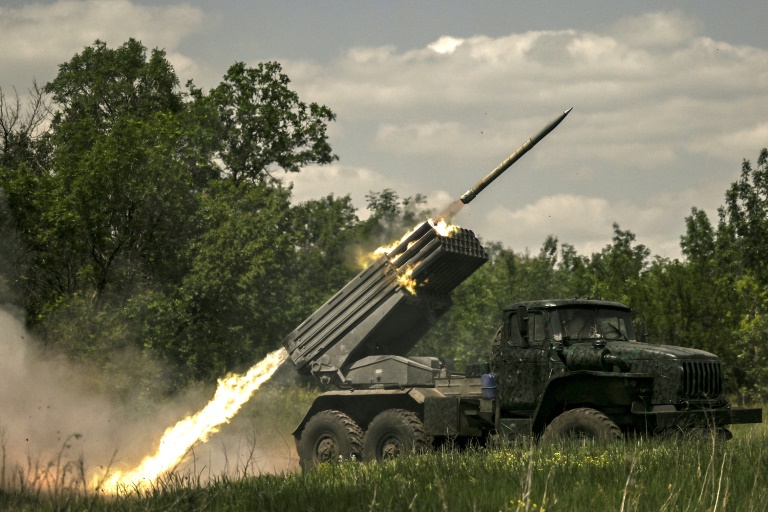
Russia on Tuesday reported its forces had taken full control of residential neighbourhoods in Ukraine’s flashpoint city of Severodonetsk, after Kyiv said its troops were fighting on in the eastern hub despite being outnumbered.

“The residential areas of the city of Severodonetsk have been fully liberated,” Russian Defence Minister Sergei Shoigu told a defence ministry meeting.

The Russian army was still seeking to establish control over the city’s “industrial zone and the nearest settlements”, he added, amid conflicting reports of who is in control of what.

Moscow has been pushing for control of the strategic industrial hub as part of its bid to conquer a vast swathe of eastern Ukraine but Kyiv’s forces have so far managed to hold out, 

“Our heroes are holding their positions in Severodonetsk. Fierce street fights continue in the city,” Ukrainian President Volodymyr Zelensky said in a video address late Monday.

Zelensky warned Ukrainian forces in the key city were outnumbered and the Russians “are stronger”. He was speaking to journalists after visiting frontline positions in Lysychansk, across the river from Severodonetsk.

Thousands of civilians have been killed and millions forced to flee their homes since President Vladimir Putin ordered Russian troops into Ukraine on February 24.

After being repelled from other parts of the country, including Kyiv, Russia has concentrated its assault on the eastern Donbas region and had been making slow but steady progress.

Severodonetsk — the largest city still in Ukrainian hands in the Lugansk region of the Donbas — has been the focal point in recent weeks.

– ‘General killed’ –

The leader of Ukraine’s pro-Russian separatists in Donetsk, Denis Pushilin, on Tuesday confirmed the death of another Russian general in the fighting.

Pushilin expressed on Telegram his “sincere condolences to the family and friends” of Major General Roman Kutuzov, “who showed by example how to serve the fatherland”.

Ukraine’s forces have claimed to have killed several of Russia’s top brass but their exact number is not known as Moscow is tight-lipped on  losses. 

Defence Minister Shoigu said Russia had completed demining of the eastern port city of Mariupol, the second busiest in Ukraine before the conflict.

“It is operating as normal and has accepted the first cargo ships,” Shoigu said.

With fighting raging in the east of Ukraine, Kyiv hit out at the UN’s nuclear watchdog for trying to visit Europe’s largest nuclear reactor in the south of the country while it is under Russian occupation.

The head of the International Atomic Energy Agency (IAEA), Rafael Grossi, said on Monday his agency was preparing an expert mission to the Zaporizhzhia nuclear plant.

Grossi said on Twitter the visit was arranged after Ukraine had “requested” it. 

But Ukraine’s nuclear agency, Energoatom on Tuesday accused Grossi of lying and said it did not greenlight the trip.  

“The visit to the plant will only become possible when Ukraine takes back control of the site,” Energoatom wrote on Telegram.

“We consider this declaration a new attempt to gain access to the Zaporizhzhia power plant to legitimise the presence of the occupiers and approve their actions.” 

Russian forces took control of the plant at the beginning of March and Moscow has threatened to cut Ukraine off from Zaporizhzhia unless Kyiv pays Moscow for the electricity produced. 

– Sexual violence concerns –

In 2021 — well before Russia’s invasion of Ukraine — the plant represented 20 percent of Ukraine’s annual electricity production and nearly half of all nuclear power produced in Ukraine.

The Russian invasion, combined with supply chain snarls and climate change, has triggered stark warnings of global food shortages. 

Moscow has blockaded the key black sea port of Odessa, and Zelensky said Ukraine had up to 25 million tonnes of grain that could not be exported. 

“In the autumn that could be 70 to 75 million tonnes,” said the president, whose country was the world’s fourth biggest grain exporter before the war.

In Washington, US Secretary of State Antony Blinken said that reports Russia had stolen grain from Ukraine for export are “credible”.

At a meeting of the UN Security Council, the United States and Europe urged Russia to stop alleged sexual violence by its army and proxies in Ukraine, allegations that Moscow denounced as “lies”.

With the West seeking to tighten sanction screws on Russian oligarchs, the US Justice Department on Tuesday ordered the seizure of two aircraft owned by former Chelsea Football Club owner Roman Abramovich.

The US says the Boeing 787-8 Dreamliner and Gulfstream G650ER executive jet were flown into Russian territory earlier this year in violation of US export controls.

And in Fiji, a court ruled a $300-million superyacht linked by the US to sanctioned Russian oligarch Suleiman Kerimov could be handed over to US authorities.

The Amadea, which boasts a helipad, pool, jacuzzi and “winter garden”, was impounded in Fiji in April at Washington’s request.

burs-cjo/bp

European stock market plans tech-only index

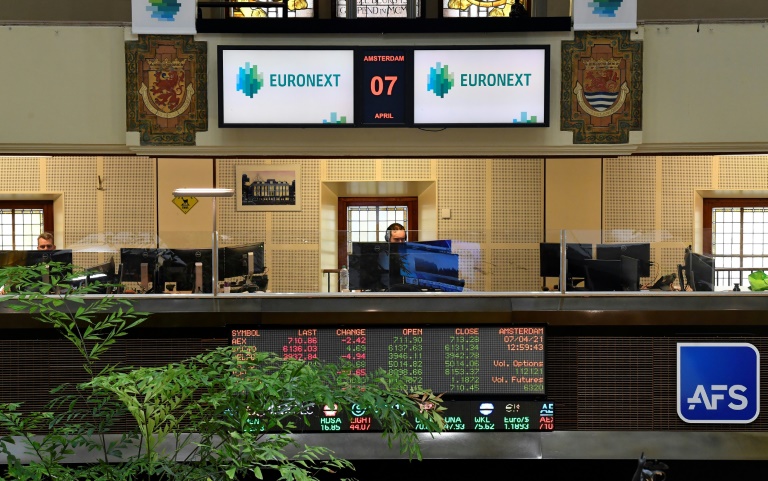
Europe’s biggest stock exchange on Tuesday set out its plan for an index focused on tech firms to boost a sector that has long lagged behind US competitors.

Euronext announced 108 firms will be part of its Euronext Tech Leaders “segment”, an initiative that has drawn comparisons to the Nasdaq in New York, an exchange housing many top tech companies.

The European tech index, set to be launched in July, includes Finnish telecom giant Nokia, French software developer Ubisoft and the Netherlands-based food delivery firm Just Eat Takeway.com.

The 108 firms have a total market capitalisation of 258 billion euros ($276 billion) and include 41 French companies.

By comparison, Google parent Alphabet, the biggest firm on the Nasdaq, has a market capitalisation of more than $1.5 trillion.

The pan-European exchange said its ambition was “to strengthen the European tech sector and be a catalyst for the next generation of tech leaders”.

As well as listing firms on its new index, the exchange said it would offer a “suite” of other services to tech companies including help with initial public offerings.

“In Europe and particularly in France, we need a platform that is able to offer initial investors… and growing companies a capacity to raise equity capital,” Euronext boss Stephane Boujnah told a press conference.

Boujnah dismissed the comparison with the Nasdaq, telling reporters his exchange was aiming for a completely different approach.

The desire to forge a tech sector to compete with Silicon Valley has long consumed European leaders, with French President Emmanuel Macron at the forefront. 

He has invested heavily in initiatives like incubator hubs designed to foster start-ups.

Stocks retreat, as yen hits 20-year dollar low

Major stock markets mostly retreated Tuesday, while the yen struck a fresh 20-year low against the dollar.

While investors worry over decades-high inflation, the Bank of Japan (BoJ) has decided against hiking interest rates to combat surging prices, weighing on the country’s currency.

The yen also hit a seven-year low against the euro, with the single currency benefitting from expectations that the European Central Bank will soon embark on its own rate-tightening.

“The BoJ stands out among its global peers in not tightening policy, which is leading to a widening interest rate differential as other central banks continue hiking,” noted Deutsche Bank analyst Jim Reid.

Sydney’s stock market closed down more than one percent Tuesday after the Australian central bank announced a bigger-than-forecast rate hike to quell inflation.

London equities steadied approaching the half-way stage after British Prime Minister Boris Johnson survived a vote of no confidence from his own Conservative MPs.

The pound — seen as a better indicator of UK economic health and political stability — dropped versus the dollar and euro. 

“Although the leader came out victorious, the triggering of the confidence vote itself along with the fact that 41 percent of Tory MPs failed to back him are both politically corrosive, leaving the prime minister wounded,” noted Victoria Scholar, head of investment at Interactive Investor.

“History suggests that this could mark the beginning of the end of his time as prime minister.”

The vote on Johnson was brought after a string of scandals that have left the Tory party’s standing in tatters.

Chief among them was the “Partygate” controversy over Covid lockdown-breaking events at Downing Street that caused public outrage and saw him become the first serving UK prime minister to have broken the law.

The government is under pressure also over its handling of a cost-of-living crisis in the UK after the country’s inflation rate soared to the highest level in four decades.

An easing of Covid lockdown measures in China is helping to offset some of the worries over inflation, which is being fuelled by high oil prices following the invasion of Ukraine by key crude producer Russia.

– Key figures at around 1030 GMT –

London – FTSE 100: FLAT at 7,609.50 points

Frankfurt – DAX: DOWN 0.9 percent at 14,517.59

Paris – CAC 40: DOWN 0.8 percent at 6,496.82

EURO STOXX 50: DOWN 0.9 percent at 3,803.78

Tokyo – Nikkei 225: UP 0.1 percent at 27,943.95 (close)

Hong Kong – Hang Seng Index: DOWN 0.6 percent at 21,531.67 (close)

Shanghai – Composite: UP 0.2 percent at 3,241.76 (close)

New York – Dow: UP 0.1 percent to 32,915.78 (close)

Dollar/yen: UP at 132.69 yen from 131.88 yen late Monday

Euro/dollar: DOWN at $1.0681 from $1.0699 

Pound/dollar: DOWN at $1.2514 from $1.2528

Euro/pound: DOWN at 85.35 pence from 85.37 pence

Brent North Sea crude: DOWN 0.1 percent at $119.35 per barrel

West Texas Intermediate: DOWN 0.3 percent at $118.19 per barrel

burs/bcp/jj

Norway princess announces engagement to US shaman partner

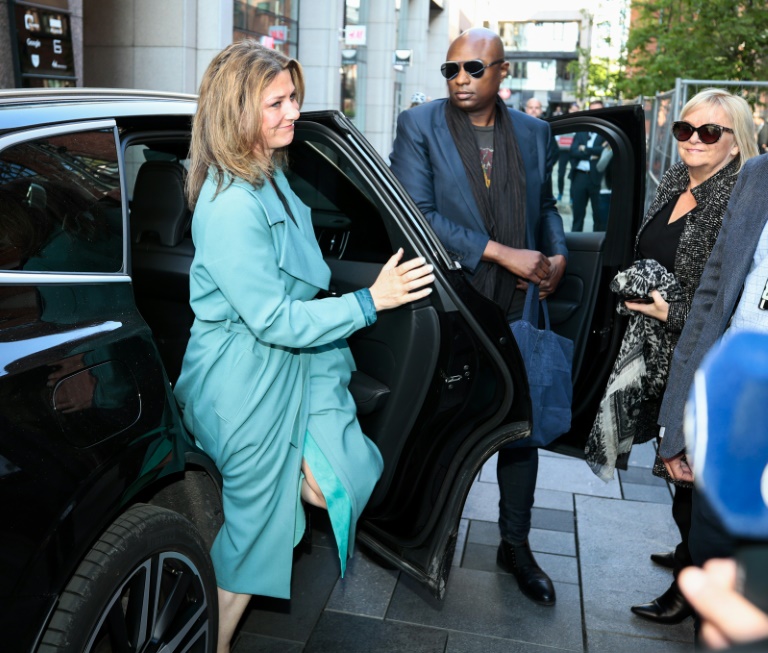
Norway’s royal court on Tuesday announced the engagement of Princess Martha Louise to her US boyfriend Durek Verrett, a self-professed shaman and guru to celebrities such as Gwyneth Paltrow.

Fourth in the order of succession behind her brother Prince Haakon and his children, Princess Martha Louise, 50, has previously relinquished most of her official titles and duties in order to devote herself to her private activities. 

“His Majesty the King and Her Majesty the Queen send their most heartfelt congratulations and wish them all the best in the future,” the Royal House of Norway said in a statement.

Martha Louise has three daughters from a previous marriage to Norwegian author Ari Behn, who committed suicide in December 2019. The couple had divorced in 2016.

The princess confirmed her relationship to Verrett, 47, also known as Shaman Durek, in 2019.

Martha Louise has been an enthusiast of “alternative therapies” and has an eccentric image in Scandinavia, claiming to communicate with angels, a gift she tries to share through courses and books.

Verrett, who is based in California, has become known as a celebrity shaman, serving as a guru to likes of Paltrow, the Oscar-winning actress turned businesswoman, who founded the lifestyle brand, Goop.

Verrett also confirmed the engagement on social media.

“She said YES!” Verrett said in a post to Instagram.

The couple’s relationship has been scrutinised in the Norwegian media, and the princess was criticised for mixing business and royal affairs when she promoted a speaking tour called “The Princess and the Shaman”.

Cambodia, China deny naval base reports as Australia voices concern

Cambodia and Beijing on Tuesday denied a report that they are building a secret naval facility for the Chinese fleet, as Australia’s new prime minister voiced concern and called for transparency.

The Washington Post, citing unnamed Western officials, said a new facility at Cambodia’s Ream base — strategically located on the Gulf of Thailand — was being built for the “exclusive” use of the Chinese navy.

The base has been a running sore spot in US-Cambodian relations for years, with Washington long suspecting it is being converted for use by China as it seeks to buttress its international influence with a network of military outposts.

Phnom Penh rejected the report, saying the base’s development was “not a secret”.

“Cambodia won’t allow the Chinese military to use it exclusively or to develop the site as its military base,” government spokesman Phay Siphan told AFP.

The Cambodian defence minister and China’s ambassador will be attending a ground-breaking ceremony Wednesday for new facilities at Ream, including a boat repair shop and a pier.

But Australia’s new Prime Minister Anthony Albanese, in Indonesia for a visit to shore up diplomatic ties to counter growing Chinese assertiveness in the region, labelled the reports “concerning”.

“We encourage Beijing to be transparent about its intent and to ensure that its activities support regional security and stability,” he told reporters, saying Cambodia had assured Canberra that no foreign military would be given exclusive access to the Ream base.

Australia has grown increasingly worried about Beijing’s growing influence in the Pacific region.

A leaked draft of a Soloman Islands-China pact in April raised concerns that it would allow Chinese naval deployments to the Pacific island nation — less than 2,000 kilometres (1,200 miles) from Australia.

– Denials from China, Cambodia –

Prime Minister Hun Sen has repeatedly insisted the work is nothing more than modernising the base with a new boat maintenance facility developed with Chinese aid.

“Cambodia doesn’t need the presence of a foreign military on its territory,” he said in a speech last month.

China also denied that the base would be solely for their navy’s use. 

“The transformation of Ream Naval Base is only to strengthen Cambodian naval forces’ capabilities to uphold maritime territorial sovereignty and crack down on sea crimes,” foreign ministry spokesman Zhao Lijian told reporters in Beijing Tuesday.

He added that Washington’s criticisms were “malicious conjectures to attack and smear” Cambodia.

Concerns about the base go back as far as 2019, when the Wall Street Journal reported a secret draft deal allowing Beijing to dock warships there.

Cambodia has since dismantled facilities at the base that were built partly with American money and played host to US exercises.

US VP Harris announces migration funds after Mexico snubs Americas summit

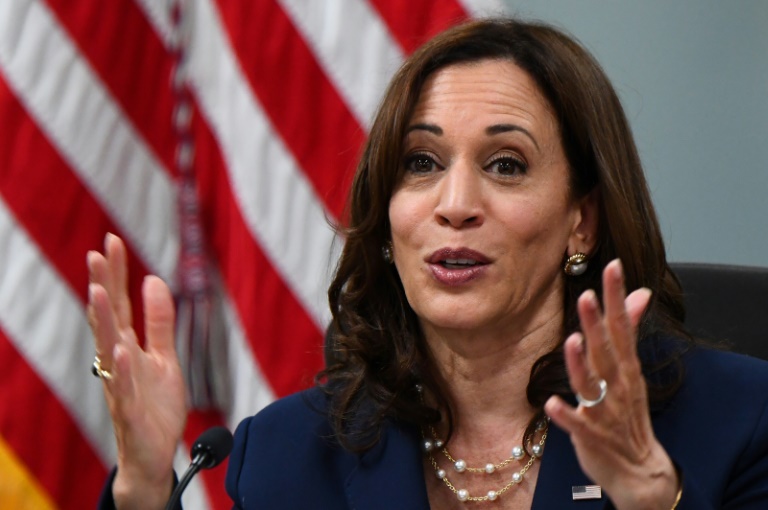
US Vice President Kamala Harris on Tuesday announced another $1.9 billion in private-sector funding to boost jobs in hopes of reducing migration from Central America, at a Latin America summit in Los Angeles snubbed by the leaders of Mexico and other affected countries. 

Harris has been given the unenviable task of tackling the root causes of rising migration into the United States, an issue seized upon by the rival Republican Party that has become a top priority for President Joe Biden at a week-long Summit of the Americas. 

A day before Biden’s arrival, the White House said that Harris was unveiling another $1.9 billion in commitments — in addition to $1.2 billion announced last year — from businesses with the aim of creating economic opportunity in the impoverished so-called Northern Triangle of El Salvador, Guatemala and Honduras. 

Harris will also give details on the “Central American Service Corps” funded through US aid to provide opportunities for young people. 

The investments aim “to provide hope for people in the region to build safe and prosperous lives at home,” a White House statement said.

– Creating jobs at home –

On the visit to her home state, Harris held a dinner Monday with regional business leaders and was due to meet Tuesday with civil society leaders to promote women’s empowerment in Central America. 

But none of the Northern Triangle leaders are attending the summit, nor is President Andres Manuel Lopez Obrador of Mexico, the crucial US partner on migration policy due to the 2,000-mile (3,200-kilometer) shared border. 

The White House said 23 heads of state were coming to Los Angeles, including the leaders of key players such as Argentina, Brazil, Chile and Colombia. Mexico and the Northern Triangle nations will still participate at a lower level. 

The new funding announced by Harris included a commitment by credit card giant Visa to invest more than $270 million over five years with an aim of bringing one million more businesses and 6.5 million people into a formal financial system in a region rife with corruption.

The North America branch of Yazaki, the Japanese autoparts maker, will invest $110 million, hiring more than 14,000 new employees in Guatemala and El Salvador, the White House said. 

Other companies making commitments include clothing maker Gap and Millicon, a telecommunications company that plans to invest $700 million to expand mobile and broadband networks across the three countries.

– ‘Lack of respect’ –

Lopez Obrador, a leftist populist who had developed a surprisingly close relationship with Biden’s predecessor Donald Trump, on Monday made good on threats to boycott the summit due to Biden’s refusal to invite the leaders of Cuba, Nicaragua and Venezuela on the grounds that the summit is only for democracies. 

“You cannot have a Summit of the Americas if you do not have all the countries of the Americas attending,” Lopez Obrador said, complaining of US “hegemony” and “lack of respect for nations.”

US Secretary of State Antony Blinken sought until the last minute to woo Lopez Obrador, including by seeking lower-level participation by Cuba and easing some restrictions including on US flights to the communist island.

But US officials said they saw no reciprocation from Cuban authorities, who recently went ahead with the trial of two dissident artists, making an invitation politically unpalatable in Washington where anti-communist Cuban-Americans hold sway.

“The challenges that these three regimes pose,” State Department spokesman Ned Price said, “were just insurmountable when you talk about bringing together a summit where democratic governance — democratic values — is on the agenda.”

Cuba — an arch-enemy of Washington since the aftermath of its 1959 communist revolution despite tentative attempts at a thaw by former president Barack Obama — denounced its exclusion from the summit as “anti-democratic.”

Venezuelan President Nicolas Maduro — considered illegitimate by Washington due to a 2018 election in which wide irregularities were reported — accused the United States of “discrimination.” 

But Bob Menendez, a Cuban-American Democrat and chairman of the Senate Foreign Relations Committee, hailed the administration for standing firm.

“I join those increasingly concerned by President Lopez Obrador’s decision to stand with dictators and despots over representing the interests of the Mexican people in a summit with his partners from across the hemisphere,” Menendez said.

US VP Harris announces migration funds after Mexico snubs Americas summit

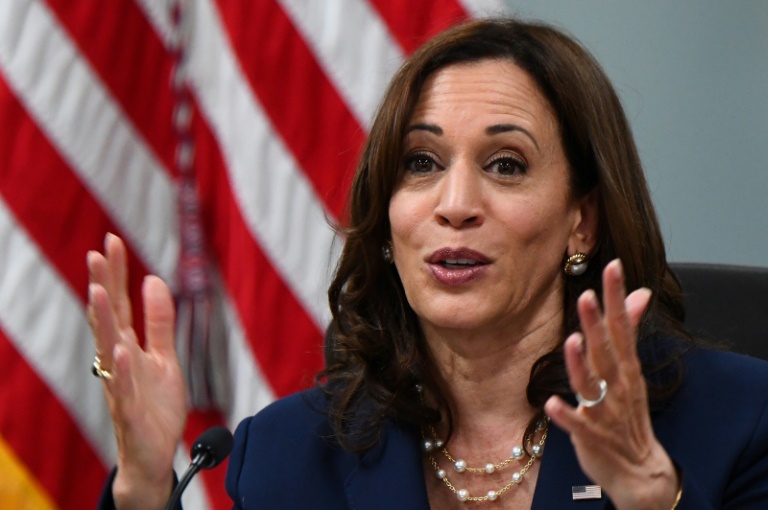
US Vice President Kamala Harris on Tuesday announced another $1.9 billion in private-sector funding to boost jobs in hopes of reducing migration from Central America, at a Latin America summit in Los Angeles snubbed by the leaders of Mexico and other affected countries. 

Harris has been given the unenviable task of tackling the root causes of rising migration into the United States, an issue seized upon by the rival Republican Party that has become a top priority for President Joe Biden at a week-long Summit of the Americas. 

A day before Biden’s arrival, the White House said that Harris was unveiling another $1.9 billion in commitments — in addition to $1.2 billion announced last year — from businesses with the aim of creating economic opportunity in the impoverished so-called Northern Triangle of El Salvador, Guatemala and Honduras. 

Harris will also give details on the “Central American Service Corps” funded through US aid to provide opportunities for young people. 

The investments aim “to provide hope for people in the region to build safe and prosperous lives at home,” a White House statement said.

– Creating jobs at home –

On the visit to her home state, Harris held a dinner Monday with regional business leaders and was due to meet Tuesday with civil society leaders to promote women’s empowerment in Central America. 

But none of the Northern Triangle leaders are attending the summit, nor is President Andres Manuel Lopez Obrador of Mexico, the crucial US partner on migration policy due to the 2,000-mile (3,200-kilometer) shared border. 

The White House said 23 heads of state were coming to Los Angeles, including the leaders of key players such as Argentina, Brazil, Chile and Colombia. Mexico and the Northern Triangle nations will still participate at a lower level. 

The new funding announced by Harris included a commitment by credit card giant Visa to invest more than $270 million over five years with an aim of bringing one million more businesses and 6.5 million people into a formal financial system in a region rife with corruption.

The North America branch of Yazaki, the Japanese autoparts maker, will invest $110 million, hiring more than 14,000 new employees in Guatemala and El Salvador, the White House said. 

Other companies making commitments include clothing maker Gap and Millicon, a telecommunications company that plans to invest $700 million to expand mobile and broadband networks across the three countries.

– ‘Lack of respect’ –

Lopez Obrador, a leftist populist who had developed a surprisingly close relationship with Biden’s predecessor Donald Trump, on Monday made good on threats to boycott the summit due to Biden’s refusal to invite the leaders of Cuba, Nicaragua and Venezuela on the grounds that the summit is only for democracies. 

“You cannot have a Summit of the Americas if you do not have all the countries of the Americas attending,” Lopez Obrador said, complaining of US “hegemony” and “lack of respect for nations.”

US Secretary of State Antony Blinken sought until the last minute to woo Lopez Obrador, including by seeking lower-level participation by Cuba and easing some restrictions including on US flights to the communist island.

But US officials said they saw no reciprocation from Cuban authorities, who recently went ahead with the trial of two dissident artists, making an invitation politically unpalatable in Washington where anti-communist Cuban-Americans hold sway.

“The challenges that these three regimes pose,” State Department spokesman Ned Price said, “were just insurmountable when you talk about bringing together a summit where democratic governance — democratic values — is on the agenda.”

Cuba — an arch-enemy of Washington since the aftermath of its 1959 communist revolution despite tentative attempts at a thaw by former president Barack Obama — denounced its exclusion from the summit as “anti-democratic.”

Venezuelan President Nicolas Maduro — considered illegitimate by Washington due to a 2018 election in which wide irregularities were reported — accused the United States of “discrimination.” 

But Bob Menendez, a Cuban-American Democrat and chairman of the Senate Foreign Relations Committee, hailed the administration for standing firm.

“I join those increasingly concerned by President Lopez Obrador’s decision to stand with dictators and despots over representing the interests of the Mexican people in a summit with his partners from across the hemisphere,” Menendez said.

Close Bitnami banner
Bitnami