US Business

Markets mixed as rate hike woes offset China tech hopes

Stock markets struggled Tuesday on long-running worries over surging inflation and rising interest rates, which overshadowed hopes that China would ease off its regulatory drive against the country’s beleaguered tech giants.

A spike in US Treasury yields took the wind out of the sales for Wall Street, with focus now on the release of inflation data from the United States and China at the end of the week.

Analysts are tipping the Federal Reserve to lift borrowing costs by half a point at its next three meetings as officials try to get a grip on runaway prices.

But that is causing discomfort on trading floors as investors fret over the impact on economic growth and firms’ bottom lines.

“Inflation concerns are not going anywhere fast,” Fiona Cincotta, at City Index, said. “Rising crude oil prices and a strong labour report have lifted bets that the Fed may need to act aggressively to rein in inflation.”

And SPI Asset Management’s Stephen Innes added: “Investors are hyper-focused on inflation, economic growth, and future Fed policy.

“Most assume the worst and think a financial tsunami will hit the US and global markets thanks to the quorum of US-based bank CEOs that have given the gloomy growth narrative their imprimatur. Anything less than that outcome is going to surprise a lot of folks.”

Equity markets were mixed in Asia and Europe. 

Tokyo rose, helped by a softening of the yen to a two-year low owing to expectations the Bank of Japan will not tighten monetary policy just as US rates climb.

Manila and Jakarta also edged up but there were losses in Seoul, Singapore, Mumbai, Bangkok, Wellington and Taipei.

Sydney dropped more than one percent after the Australian central bank announced a bigger-than-forecast half-point rate hike to quell inflation.

Hong Kong fell and Shanghai ticked slightly higher, even as heavyweights Alibaba and JD.com led a rally among tech firms following a report that China was close to ending a painful crackdown on ride-hailing app Didi Global and restoring its main apps this week. Didi’s US-listed notes soared more than 20 percent.

The Wall Street Journal added that probes into two other firms — Full Truck Alliance and recruitment platform Kanzhun — fanning optimism for the sector’s outlook after a long period of hefty selling pressure.

“This was seen as a signal that the regulatory crackdown on Chinese tech firms was starting to end… as China focuses on stabilising the economy following Covid restrictions,” said National Australia Bank’s Tapas Strickland.

London was flat in early trade but Paris and Frankfurt fell.

Markets have seen some levelling out in recent weeks as the easing of lockdown measures in China helps to offset some of the worries about higher rates and the impact of the Ukraine war.

But market-watcher Louis Navellier warned there was still plenty more volatility to come.

“If history repeats, we could be down tomorrow, then up on Wednesday, then down on Thursday, and possibly up on Friday,” he said in a commentary. 

“So just get used to these up-down, up-down oscillations because they are going to continue.

“I want to remind investors to not get too excited when the market rallies because it is going to continue to oscillate. There is just too much uncertainty out there.”

– Key figures at around 0810 GMT –

Tokyo – Nikkei 225: UP 0.1 percent at 27,943.95 (close)

Hong Kong – Hang Seng Index: DOWN 0.6 percent at 21,531.67 (close)

Shanghai – Composite: UP 0.2 percent at 3,241.76 (close)

London – FTSE 100: FLAT at 7610.50

Brent North Sea crude: UP 0.4 percent at $120.03 per barrel

West Texas Intermediate: UP 0.5 percent at $119.05 per barrel

Dollar/yen: UP at 132.80 yen from 131.88 yen late Monday

Euro/dollar: DOWN at $1.0686 from $1.0699 

Pound/dollar: DOWN at $1.2489 from $1.2528

Euro/pound: UP at 85.56 pence from 85.37 pence

New York – Dow: UP 0.1 percent to 32,915.78 (close)

Markets mixed as rate hike woes offset China tech hopes

Stock markets struggled Tuesday on long-running worries over surging inflation and rising interest rates, which overshadowed hopes that China would ease off its regulatory drive against the country’s beleaguered tech giants.

A spike in US Treasury yields took the wind out of the sales for Wall Street, with focus now on the release of inflation data from the United States and China at the end of the week.

Analysts are tipping the Federal Reserve to lift borrowing costs by half a point at its next three meetings as officials try to get a grip on runaway prices.

But that is causing discomfort on trading floors as investors fret over the impact on economic growth and firms’ bottom lines.

“Inflation concerns are not going anywhere fast,” Fiona Cincotta, at City Index, said. “Rising crude oil prices and a strong labour report have lifted bets that the Fed may need to act aggressively to rein in inflation.”

And SPI Asset Management’s Stephen Innes added: “Investors are hyper-focused on inflation, economic growth, and future Fed policy.

“Most assume the worst and think a financial tsunami will hit the US and global markets thanks to the quorum of US-based bank CEOs that have given the gloomy growth narrative their imprimatur. Anything less than that outcome is going to surprise a lot of folks.”

Equity markets were mixed in Asia and Europe. 

Tokyo rose, helped by a softening of the yen to a two-year low owing to expectations the Bank of Japan will not tighten monetary policy just as US rates climb.

Manila and Jakarta also edged up but there were losses in Seoul, Singapore, Mumbai, Bangkok, Wellington and Taipei.

Sydney dropped more than one percent after the Australian central bank announced a bigger-than-forecast half-point rate hike to quell inflation.

Hong Kong fell and Shanghai ticked slightly higher, even as heavyweights Alibaba and JD.com led a rally among tech firms following a report that China was close to ending a painful crackdown on ride-hailing app Didi Global and restore its main apps this week. Didi’s US-listed notes soared more than 20 percent.

The Wall Street Journal added that probes into two other firms — Full Truck Alliance and recruitment platform Kanzhun — fanning optimism for the sector’s outlook after a long period of hefty selling pressure.

“This was seen as a signal that the regulatory crackdown on Chinese tech firms was starting to end… as China focuses on stabilising the economy following Covid restrictions,” said National Australia Bank’s Tapas Strickland.

London opened slightly higher but Paris and Frankfurt fell.

Markets have seen some levelling out in recent weeks as the easing of lockdown measures in China helps to offset some of the worries about higher rates and the impact of the Ukraine war.

But market-watcher Louis Navellier warned there was still plenty more volatility to come.

“If history repeats, we could be down tomorrow, then up on Wednesday, then down on Thursday, and possibly up on Friday,” he said in a commentary. “So just get used to these up-down, up-down oscillations because they are going to continue.

“I want to remind investors to not get too excited when the market rallies because it is going to continue to oscillate. There is just too much uncertainty out there.”

– Key figures at around 0720 GMT –

Tokyo – Nikkei 225: UP 0.1 percent at 27,943.95 (close)

Hong Kong – Hang Seng Index: DOWN 0.5 percent at 21,552.23

Shanghai – Composite: UP 0.2 percent at 3,241.76 (close)

London – FTSE 100: UP 0.1 percent at 7,611.56

Brent North Sea crude: UP 0.8 percent at $120.41 per barrel

West Texas Intermediate: UP 0.7 percent at $119.38 per barrel

Dollar/yen: UP at 132.73 yen from 131.88 yen

Euro/dollar: DOWN at $1.0686 from $1.0699 

Pound/dollar: DOWN at $1.2468 from $1.2528

Euro/pound: UP at 85.70 pence from 85.37 pence

New York – Dow: UP 0.1 percent to 32,915.78 (close)
English-language students swerve UK post Brexit

At the top of Calton Hill overlooking Edinburgh and the North Sea, a visiting English language student from France is in no doubt about the view: “Amazing!” he exclaims.

Covid has meant that the number of foreign students on such visits to the UK has fallen sharply.

But Britain’s departure from the European Union is not helping the recovery, as post-Brexit administrative requirements have raised travel costs.

About 50 college students from France’s Alsace region have taken advantage of the lifting of UK Covid restrictions. Others, however, have opted to learn English in EU nations such as Ireland or Malta — or simply sign up for language courses at home.

Teacher Sarah Lepioufle, accompanying her college’s Edinburgh trip, said the changes introduced since Brexit — the extra paperwork involved — had made applying for courses an “obstacle course”.

Non-EU students living in France are suddenly facing visa costs of £100 (118 euros, $126), whereas before Brexit they could travel on a collective travel document.

“I had to give up because I am Russian,” said Elisabeth Shpak, left out of the Scotland trip because of the fees involved.

– Major financial losses –

The British Educational Travel Association, whose members help organise such visits, estimates that Brexit could cost the sector up to £3 billion annually. 

Having spoken to stakeholders in the sector, they felt voyages would be 60 to 70 percent down compared to before Brexit and the pandemic, said Steve Lowy at BETA.

Before Britain’s EU exit, Britain welcomed “well over one million” such students per year, he said.

Now “there is a perception of us not being welcoming, and not open to people from Europe. And that is a harder thing to overcome”.

While a BETA poll showed Britons favoured relaxing the post-Brexit travel rules, Lowy argued that overcoming the new negative perception was “potentially a long-term issue”.

For those students who have managed to travel to Scotland, the experience is celebrated, especially coming out of Covid restrictions.

“There have been no trips, everything has been cancelled because of lockdowns,” said 13-year-old Aaron Schaetzel.

– Collective travel –

The UK authorities say they can already offer students a so-called “collective passport”.

But this document — the product of a 1961 European treaty — has not been signed by all current EU members.

As for the French travel sector, it is waiting on its own government’s guidance regarding use of the collective passport for the first time.

The UK government, meanwhile, cites security risks for some students now needing individual visas, something Lowy finds hard to accept.

“Youth travel is low risk,” he insisted.

“These students and their teachers are here for cultural and educational purposes, and that is only good for the UK — not just the initial revenue they bring but for the long-term impact.” 

On Calton Hill, tour guide Marilyn Hunter passionately tells the French students about Scotland’s landscape, its history and major exports whisky and salmon.

But Brexit seems to have spoiled the opportunity for some EU-based students to visit the UK.

The previous week, a group visiting from Germany had been forced to leave behind four students who had not obtained their visas in time.

Mexico snub throws Americas summit into disarray

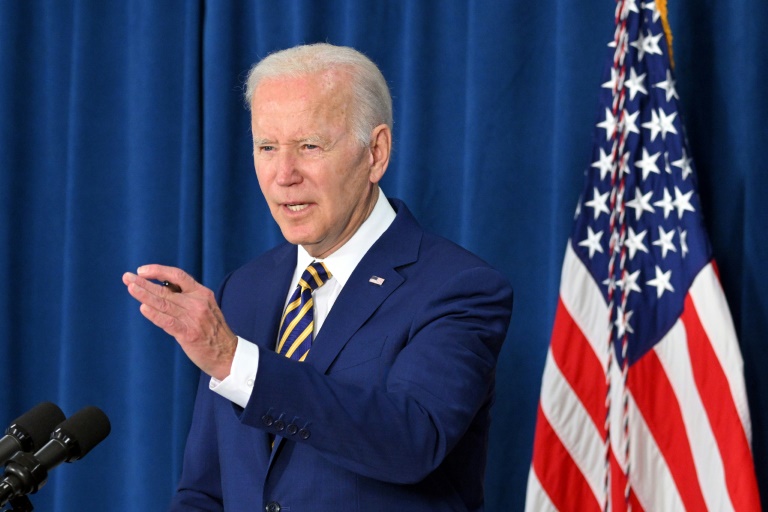
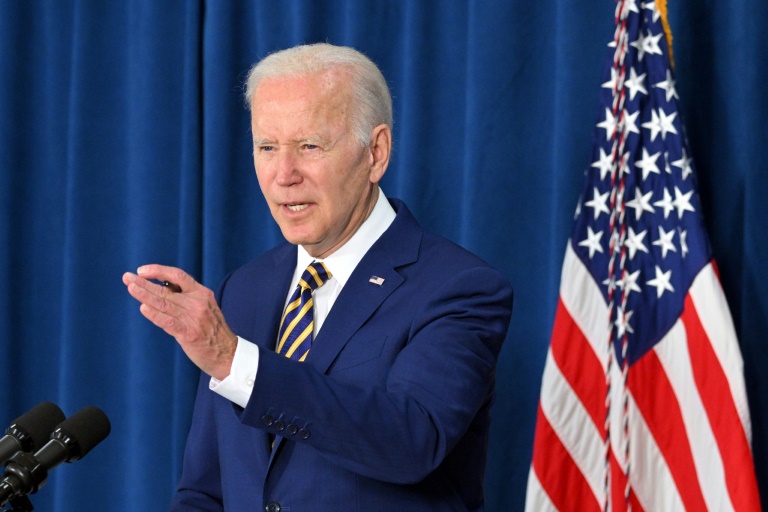
President Joe Biden’s plan to reboot US engagement with Latin America — especially on critical topics like migration — took a hit after key partner Mexico snubbed a regional summit opening Monday in Los Angeles to protest Washington’s exclusion of three far-left countries.

What was meant to be a week-long showcase of cooperation risks becoming a display of division, underlining diminishing US clout over a region where Washington’s long-time economic and diplomatic influence faces a growing Chinese challenge.

A senior White House official confirmed that Cuba, Nicaragua and Venezuela were barred from the Summit of the Americas due to “lack of democratic space and the human rights situations.”

In response, Mexican President Andres Manuel Lopez Obrador said he too would stay away.

“You cannot have a Summit of the Americas if you do not have all the countries of the Americas attending,” Lopez Obrador announced, complaining of US “hegemony” and “lack of respect for nations.”

Although Foreign Minister Marcelo Ebrard will represent Mexico instead, the leftist populist leader’s absence will diminish the impact of a summit where US-Mexico relations are at the heart of major immigration and trade issues.

The White House downplayed the spat, saying Biden was sticking up for principles, but that there was no bad blood between the neighbors.

“We do not believe that dictators should be invited,” Press Secretary Karine Jean-Pierre told reporters.

But she noted that Lopez Obrador was set to visit Washington in July and said Biden had not been blindsided. “He was aware” ahead of the Mexican president’s announcement, she said.

Venezuelan President Nicolas Maduro said Monday that the US decision to exclude three nations’ leaders from the summit was “an act of discrimination.”

In Havana, the communist Cuban government issued a statement calling its exclusion “anti-democratic and arbitrary.”

Biden, who flies to Los Angeles on Wednesday, will be announcing numerous “deliverables” at the summit, Jean-Pierre said.

The agenda on Wednesday will focus on regional economic and health issues, then climate change on Thursday.

Friday will be devoted to the surge of migration to the United States — a major concern for US voters and an area where Republican opponents see Biden as vulnerable in upcoming midterm elections.

As the summit kicked off, another thousands-strong migrant caravan departed southern Mexico for the US border, with some chanting “Freedom!” and “We want visas!” as they started the 3,000-kilometer (1,860-mile) journey.

– Argentina, Brazil show up –

State Department spokesman Ned Price insisted that Lopez Obrador’s absence did not doom the summit, praising Mexico as “an important hemispheric player.”

The Biden administration said it had secured the presence of key regional players, including Argentina’s left-leaning Alberto Fernandez and Brazil’s Jair Bolsonaro.

Biden will have a bilateral meeting with Bolsonaro, a senior US official told reporters. The far-right Brazilian leader was previously close with Biden’s predecessor Donald Trump, who attempted to overturn his election defeat in 2020.

Uruguay’s President Luis Lacalle Pou was due to attend the summit, but canceled after contracting Covid-19, he tweeted Monday.

Benjamin Gedan, who heads the Latin America program at the Woodrow Wilson International Center for Scholars, said Lopez Obrador’s absence would mark a “significant void.”

The snub has been “a really unfortunate subplot in the run-up to the summit because it has drained an enormous amount of US diplomatic energy for a bizarre cause celebre,” Gedan said.

Biden has crafted a positive agenda, avoiding simply summoning Latin American leaders to lecture them on democracy, corruption and China, he said.

But, he added, it was unclear whether Biden will bring substantial resources to the table, in contrast to China’s lavish infrastructure spending and trade privileges.

“I think, inevitably, the United States will disappoint,” Gedan said.

– ‘Progressively less ambitious’ –

The Summit of the Americas is the first held by the United States since the inaugural 1994 meeting in Miami, where then-US president Bill Clinton sought the creation of a trade area to cover the whole continent except communist Cuba.

The United States has since soured on free trade, with Biden following the lead of Trump, who said such pacts hurt US workers.

Eric Farnsworth, vice president of the Council of the Americas, recently told a congressional hearing that each summit has become “progressively less ambitious.”

Los Angeles, he said, “offers the perfect opportunity for Washington to announce a commitment to regional growth and recovery.”

Michael Shifter, a senior fellow at the Inter-American Dialogue, said the drama over summit attendance showed Washington’s waning hold over the region as China muscles in.

The United States “still has a lot of soft power,” Shifter said. “As for political and diplomatic influence, it is diminishing by the day.”

Mexico snub throws Americas summit into disarray

President Joe Biden’s plan to reboot US engagement with Latin America — especially on critical topics like migration — took a hit after key partner Mexico snubbed a regional summit opening Monday in Los Angeles to protest Washington’s exclusion of three far-left countries.

What was meant to be a week-long showcase of cooperation risks becoming a display of division, underlining diminishing US clout over a region where Washington’s long-time economic and diplomatic influence faces a growing Chinese challenge.

A senior White House official confirmed that Cuba, Nicaragua and Venezuela were barred from the Summit of the Americas due to “lack of democratic space and the human rights situations.”

In response, Mexican President Andres Manuel Lopez Obrador said he too would stay away.

“You cannot have a Summit of the Americas if you do not have all the countries of the Americas attending,” Lopez Obrador announced, complaining of US “hegemony” and “lack of respect for nations.”

Although Foreign Minister Marcelo Ebrard will represent Mexico instead, the leftist populist leader’s absence will diminish the impact of a summit where US-Mexico relations are at the heart of major immigration and trade issues.

The White House downplayed the spat, saying Biden was sticking up for principles, but that there was no bad blood between the neighbors.

“We do not believe that dictators should be invited,” Press Secretary Karine Jean-Pierre told reporters.

But she noted that Lopez Obrador was set to visit Washington in July and said Biden had not been blindsided. “He was aware” ahead of the Mexican president’s announcement, she said.

Venezuelan President Nicolas Maduro said Monday that the US decision to exclude three nations’ leaders from the summit was “an act of discrimination.”

In Havana, the communist Cuban government issued a statement calling its exclusion “anti-democratic and arbitrary.”

Biden, who flies to Los Angeles on Wednesday, will be announcing numerous “deliverables” at the summit, Jean-Pierre said.

The agenda on Wednesday will focus on regional economic and health issues, then climate change on Thursday.

Friday will be devoted to the surge of migration to the United States — a major concern for US voters and an area where Republican opponents see Biden as vulnerable in upcoming midterm elections.

As the summit kicked off, another thousands-strong migrant caravan departed southern Mexico for the US border, with some chanting “Freedom!” and “We want visas!” as they started the 3,000-kilometer (1,860-mile) journey.

– Argentina, Brazil show up –

State Department spokesman Ned Price insisted that Lopez Obrador’s absence did not doom the summit, praising Mexico as “an important hemispheric player.”

The Biden administration said it had secured the presence of key regional players, including Argentina’s left-leaning Alberto Fernandez and Brazil’s Jair Bolsonaro.

Biden will have a bilateral meeting with Bolsonaro, a senior US official told reporters. The far-right Brazilian leader was previously close with Biden’s predecessor Donald Trump, who attempted to overturn his election defeat in 2020.

Uruguay’s President Luis Lacalle Pou was due to attend the summit, but canceled after contracting Covid-19, he tweeted Monday.

Benjamin Gedan, who heads the Latin America program at the Woodrow Wilson International Center for Scholars, said Lopez Obrador’s absence would mark a “significant void.”

The snub has been “a really unfortunate subplot in the run-up to the summit because it has drained an enormous amount of US diplomatic energy for a bizarre cause celebre,” Gedan said.

Biden has crafted a positive agenda, avoiding simply summoning Latin American leaders to lecture them on democracy, corruption and China, he said.

But, he added, it was unclear whether Biden will bring substantial resources to the table, in contrast to China’s lavish infrastructure spending and trade privileges.

“I think, inevitably, the United States will disappoint,” Gedan said.

– ‘Progressively less ambitious’ –

The Summit of the Americas is the first held by the United States since the inaugural 1994 meeting in Miami, where then-US president Bill Clinton sought the creation of a trade area to cover the whole continent except communist Cuba.

The United States has since soured on free trade, with Biden following the lead of Trump, who said such pacts hurt US workers.

Eric Farnsworth, vice president of the Council of the Americas, recently told a congressional hearing that each summit has become “progressively less ambitious.”

Los Angeles, he said, “offers the perfect opportunity for Washington to announce a commitment to regional growth and recovery.”

Michael Shifter, a senior fellow at the Inter-American Dialogue, said the drama over summit attendance showed Washington’s waning hold over the region as China muscles in.

The United States “still has a lot of soft power,” Shifter said. “As for political and diplomatic influence, it is diminishing by the day.”

Fierce battle for key Ukraine city changing 'every hour'

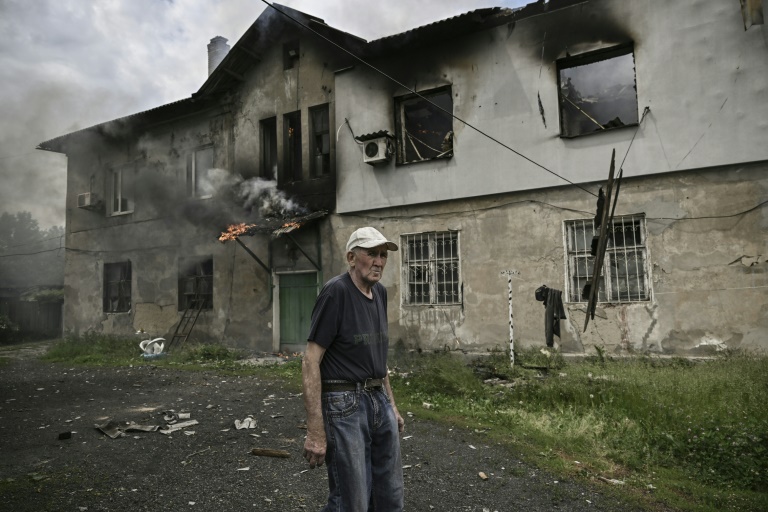
Street fighting raged Tuesday for control of Ukraine’s flashpoint city of Severodonetsk, with the situation changing “every hour”, an official said, as Kyiv warned its troops were outnumbered by Russian forces.

Just days ago, Moscow seemed close to taking the strategic industrial hub in the east but Ukrainian forces have managed to hold out.

“Our heroes are holding their positions in Severodonetsk. Fierce street fights continue in the city,” Ukrainian President Volodymyr Zelensky said in a video address late Monday.

Concerns about a global food crisis also grew as Zelensky warned of tightening grain supplies — Ukraine is a top producer of the commodity — due to what Washington described as a Russian strategy of “blackmail”.

Thousands of civilians have been killed and millions forced to flee their homes since President Vladimir Putin ordered Russian troops into Ukraine on February 24.

After being repelled from other parts of the country, including Kyiv, Russia has concentrated its assault on the eastern Donbas region and had been making slow but steady progress.

Severodonetsk — the largest city still in Ukrainian hands in the Lugansk region of the Donbas — has been the focal point in recent weeks, and officials described a fast-changing situation on the ground.

“The situation is changing every hour, but at the same time there’s enough forces and resources to repel attacks,” said mayor Oleksandr Striuk on Monday. 

“We have hope, we have faith in our armed forces, no one’s going to abandon” Severodonetsk, he added.

– ‘More and stronger’ –

Zelensky warned Ukrainian forces in the key city were outnumbered and the Russians “are stronger,” speaking to journalists after visiting frontline positions in Lysychansk, across the river from Severodonetsk.

Days earlier, officials said the Russians controlled more than 70 percent of the city but then Moscow’s forces were pushed back, and see-saw battles have been raging since.

The US-based Institute for the Study of War said the Ukrainians’ successful counterattacks highlighted “the declining combat power of Russian forces in Ukraine”.

The Russian invasion of Ukraine, combined with supply chain snarls and climate change, has triggered stark warnings of global food shortages. 

Moscow has blockaded the key black sea port of Odessa, and Zelensky said Ukraine had up to 25 million tonnes of grain that could not be exported. 

“In the autumn that could be 70 to 75 million tonnes,” said the president, whose country was the world’s fourth biggest grain exporter before the war.

In Washington, US Secretary of State Antony Blinken added his voice to the criticism.

“Right now a Russian naval blockade in the Black Sea is preventing Ukraine’s crops from being shipped to their normal destinations,” he said.

Blinken said it was a deliberate strategy by Putin to force the rest of the world “to give in to him,” and eliminate sanctions on Russia.

“In other words, quite simply put, it’s blackmail,” Blinken said

Speaking at a State Department conference on food security issues arising from the invasion of Ukraine, he also described as “credible” reports that Russia has stolen grain from Ukraine for resale.

Britain followed the United States by announcing Monday it would supply longer-range, mobile missile launchers to Ukraine’s forces, which could improve Kyiv’s fight against Russian firepower.

The British defence ministry said it would be supplying track-mounted M270 multiple rocket artillery units, which can strike targets up to 80 kilometres (50 miles) away with precision-guided rockets, double the reach of standard battlefield artillery.

The announcement came after Putin had warned that Moscow would hit new targets in Ukraine if the West supplied Kyiv with such weapons — but did not specify which targets.

– Sexual violence concerns –

Russian forces pressed their offensive on several other fronts in the east of Ukraine, with Kyiv saying it had repulsed seven attacks around Donetsk and Lugansk.

The Russian defence ministry said its aircraft had hit three arms depots and a fuel storage facility near the village of Kodema, in the Donetsk region.

On Monday, Russian Foreign Minister Sergei Lavrov hit out at European countries that prevented his plane passing through their airspace, forcing him to cancel a visit to ally Belgrade.

Serbian daily Vecernje Novosti reported that NATO-members Bulgaria, North Macedonia and Montenegro had refused access to their airspace.

At a meeting of the UN Security Council, the United States and Europe urged Russia to stop alleged sexual violence by its army and proxies in Ukraine, allegations that Moscow denounced as “lies.”

And in Washington, officials accused Russia of trying to “intimidate” American correspondents in Moscow, who were summoned by the Russian foreign ministry and threatened with reprisals because of US sanctions.

burs-sr/mtp

Australian KFC patrons clucking mad over lettuce-cabbage switch

Fried chicken chain KFC said Tuesday that high lettuce prices in Australia have forced it to switch to a cabbage mix in burgers and other products, prompting customers to complain the result is less than “finger lickin’ good”.

The local price of the verdant leaf has soared by as much as 300 percent in recent months, forcing the fast-food chain to tweak the Colonel’s recipe in some stores.

“We’re currently experiencing a lettuce shortage. So, we’re using a lettuce and cabbage blend on all products containing lettuce until further notice,” the company told customers.

The company blamed widespread flooding in the country’s east for the problem.

But supply chain expert Flavio Macau of Edith Cowan University said Russia’s invasion of Ukraine was also a factor, pushing up diesel and fertiliser prices.

A single head of iceberg lettuce in Sydney or Melbourne that once sold for about $2 now goes for close to $8.

The company told customers: “If that’s not your bag, simply click ‘customise’ on your chosen product and remove lettuce from the recipe :)”

The change was certainly not the “bag” of some social media users.

“The fact that you are replacing lettuce with cabbage makes me rethink my whole meal at KFC. There’s 4 or 5 other things I would eat before cabbage Its such a weird choice,” said one disgruntled tweeter.

“Feels like a sign of the apocalypse,” said another.

Mexico snub throws Americas' summit into disarray

President Joe Biden’s plan to reboot US engagement with Latin America — especially on critical topics like migration — took a hit after key partner Mexico snubbed a regional summit opening Monday in Los Angeles to protest Washington’s exclusion of three far-left countries.

What was meant to be a week-long showcase of cooperation risks becoming a display of division, underlining diminishing US clout over a region where Washington’s long-time economic and diplomatic influence faces a growing Chinese challenge.

A senior White House official confirmed that Cuba, Nicaragua and Venezuela were barred from the Summit of the Americas due to “lack of democratic space and the human rights situations.”

In response, Mexican President Andres Manuel Lopez Obrador said he too would stay away.

“You cannot have a Summit of the Americas if you do not have all the countries of the Americas attending,” Lopez Obrador announced, complaining of US “hegemony” and “lack of respect for nations.”

Although Foreign Minister Marcelo Ebrard will represent Mexico instead, the leftist populist leader’s absence will diminish the impact of a summit where US-Mexico relations are at the heart of major immigration and trade issues.

The White House downplayed the spat, saying Biden was sticking up for principles, but that there was no bad blood between the neighbors.

“We do not believe that dictators should be invited,” Press Secretary Karine Jean-Pierre told reporters.

However, she noted that Lopez Obrador was set to visit Washington in July and said Biden had not been blindsided. “He was aware” ahead of the Mexican president’s announcement.

In Havana, the communist Cuban government issued a statement calling its exclusion “anti-democratic and arbitrary.”

Biden, who flies to Los Angeles on Wednesday, will be announcing numerous “deliverables” at the summit, Jean-Pierre said.

The agenda on Wednesday will focus on regional economic and health issues, then climate change on Thursday.

Friday will be devoted to the surge of migration to the United States — a major concern for US voters and an area where Republican opponents see Biden as vulnerable in upcoming midterm elections.

As the summit kicked off, another thousands-strong migrant caravan departed southern Mexico for the US border, with some chanting “Freedom!” and “We want visas!” as they started the 3,000-kilometer (1,860-mile) journey.

– Argentina, Brazil show up –

State Department spokesman Ned Price insisted that Lopez Obrador’s absence did not doom the summit, praising Mexico as “an important hemispheric player.”

The Biden administration also notes it has secured the presence of other key regional players, including Argentina’s left-leaning Alberto Fernandez and Brazil’s Jair Bolsonaro.

Biden will have a bilateral meeting with Bolsonaro, a senior US official told reporters. The far-right Brazilian leader was previously close with Biden’s predecessor Donald Trump, who attempted to overturn his election defeat in 2020.

Uruguay’s President Luis Lacalle Pou was due to attend the summit, but cancelled after contracting Covid-19, he tweeted Monday.

Benjamin Gedan, who heads the Latin America program at the Woodrow Wilson International Center for Scholars, said Lopez Obrador’s absence would mark a “significant void.”

The snub has been “a really unfortunate subplot in the run-up to the summit because it has drained an enormous amount of US diplomatic energy for a bizarre cause celebre,” Gedan said.

Biden has crafted a positive agenda, avoiding simply summoning Latin American leaders to lecture them on democracy, corruption and China, he said.

But, he added, it was unclear whether Biden will bring substantial resources to the table, in contrast to China’s lavish infrastructure spending and trade privileges.

“I think, inevitably, the United States will disappoint,” Gedan said.

– ‘Progressively less ambitious’ –

The Summit of the Americas is the first held by the United States since the inaugural 1994 meeting in Miami, where then-US president Bill Clinton sought the creation of a trade area to cover the whole continent except communist Cuba.

The United States has since soured on free trade, with Biden following the lead of Trump, who said such pacts hurt US workers.

Eric Farnsworth, vice president of the Council of the Americas, recently told a congressional hearing that each summit has become “progressively less ambitious.”

Los Angeles, he said, “offers the perfect opportunity for Washington to announce a commitment to regional growth and recovery.”

Michael Shifter, a senior fellow at the Inter-American Dialogue, said the drama over summit attendance showed Washington’s waning hold over the region as China muscles in.

The United States “still has a lot of soft power,” Shifter said. “As for political and diplomatic influence, it is diminishing by the day.”

Mexico snub throws Americas' summit into disarray

President Joe Biden’s plan to reboot US engagement with Latin America — especially on critical topics like migration — took a hit after key partner Mexico snubbed a regional summit opening Monday in Los Angeles to protest Washington’s exclusion of three far-left countries.

What was meant to be a week-long showcase of cooperation risks becoming a display of division, underlining diminishing US clout over a region where Washington’s long-time economic and diplomatic influence faces a growing Chinese challenge.

A senior White House official confirmed that Cuba, Nicaragua and Venezuela were barred from the Summit of the Americas due to “lack of democratic space and the human rights situations.”

In response, Mexican President Andres Manuel Lopez Obrador said he too would stay away.

“You cannot have a Summit of the Americas if you do not have all the countries of the Americas attending,” Lopez Obrador announced, complaining of US “hegemony” and “lack of respect for nations.”

Although Foreign Minister Marcelo Ebrard will represent Mexico instead, the leftist populist leader’s absence will diminish the impact of a summit where US-Mexico relations are at the heart of major immigration and trade issues.

The White House downplayed the spat, saying Biden was sticking up for principles, but that there was no bad blood between the neighbors.

“We do not believe that dictators should be invited,” Press Secretary Karine Jean-Pierre told reporters.

However, she noted that Lopez Obrador was set to visit Washington in July and said Biden had not been blindsided. “He was aware” ahead of the Mexican president’s announcement.

In Havana, the communist Cuban government issued a statement calling its exclusion “anti-democratic and arbitrary.”

Biden, who flies to Los Angeles on Wednesday, will be announcing numerous “deliverables” at the summit, Jean-Pierre said.

The agenda on Wednesday will focus on regional economic and health issues, then climate change on Thursday.

Friday will be devoted to the surge of migration to the United States — a major concern for US voters and an area where Republican opponents see Biden as vulnerable in upcoming midterm elections.

As the summit kicked off, another thousands-strong migrant caravan departed southern Mexico for the US border, with some chanting “Freedom!” and “We want visas!” as they started the 3,000-kilometer (1,860-mile) journey.

– Argentina, Brazil show up –

State Department spokesman Ned Price insisted that Lopez Obrador’s absence did not doom the summit, praising Mexico as “an important hemispheric player.”

The Biden administration also notes it has secured the presence of other key regional players, including Argentina’s left-leaning Alberto Fernandez and Brazil’s Jair Bolsonaro.

Biden will have a bilateral meeting with Bolsonaro, a senior US official told reporters. The far-right Brazilian leader was previously close with Biden’s predecessor Donald Trump, who attempted to overturn his election defeat in 2020.

Uruguay’s President Luis Lacalle Pou was due to attend the summit, but cancelled after contracting Covid-19, he tweeted Monday.

Benjamin Gedan, who heads the Latin America program at the Woodrow Wilson International Center for Scholars, said Lopez Obrador’s absence would mark a “significant void.”

The snub has been “a really unfortunate subplot in the run-up to the summit because it has drained an enormous amount of US diplomatic energy for a bizarre cause celebre,” Gedan said.

Biden has crafted a positive agenda, avoiding simply summoning Latin American leaders to lecture them on democracy, corruption and China, he said.

But, he added, it was unclear whether Biden will bring substantial resources to the table, in contrast to China’s lavish infrastructure spending and trade privileges.

“I think, inevitably, the United States will disappoint,” Gedan said.

– ‘Progressively less ambitious’ –

The Summit of the Americas is the first held by the United States since the inaugural 1994 meeting in Miami, where then-US president Bill Clinton sought the creation of a trade area to cover the whole continent except communist Cuba.

The United States has since soured on free trade, with Biden following the lead of Trump, who said such pacts hurt US workers.

Eric Farnsworth, vice president of the Council of the Americas, recently told a congressional hearing that each summit has become “progressively less ambitious.”

Los Angeles, he said, “offers the perfect opportunity for Washington to announce a commitment to regional growth and recovery.”

Michael Shifter, a senior fellow at the Inter-American Dialogue, said the drama over summit attendance showed Washington’s waning hold over the region as China muscles in.

The United States “still has a lot of soft power,” Shifter said. “As for political and diplomatic influence, it is diminishing by the day.”

Asian markets mixed as rate hike woes offset China tech hopes

Asian markets struggled Tuesday on long-running worries over surging inflation and rising interest rates, which overshadowed hopes that China would ease off its regulatory drive against the country’s beleaguered tech giants.

A spike in US Treasury yields took the wind out of the sales for Wall Street, with focus now on the release of inflation data from the United States and China at the end of the week.

Analysts are tipping the Federal Reserve to lift borrowing costs by half a point at its next three meetings as officials try to get a grip on runaway prices.

But that is causing discomfort on trading floors as investors fret over the impact on economic growth and firms’ bottom lines.

“Inflation concerns are not going anywhere fast,” Fiona Cincotta, at City Index, said. “Rising crude oil prices and a strong labour report have lifted bets that the Fed may need to act aggressively to rein in inflation.”

And SPI Asset Management’s Stephen Innes added: “Investors are hyper-focused on inflation, economic growth, and future Fed policy.

“Most assume the worst and think a financial tsunami will hit the US and global markets thanks to the quorum of US-based bank CEOs that have given the gloomy growth narrative their imprimatur. Anything less than that outcome is going to surprise a lot of folks.”

Equity markets were mixed in early trade.

Tokyo rose, helped by a softening of the yen to a two-year low owing to expectations the Bank of Japan will not tighten monetary policy just as US rates climb.

Manila and Jakarta also edged up but there were losses in Sydney, Seoul, Singapore, Wellington and Taipei.

Hong Kong dipped and Shanghai was flat, even as heavyweights Alibaba and JD.com led gains among tech firms following a report that China was close to ending a painful crackdown on ride-hailing app Didi Global and restore its main apps this week. Didi’s US-listed notes soared more than 20 percent.

The Wall Street Journal added that probes into two other firms — Full Truck Alliance and recruitment platform Kanzhun — fanning optimism for the sector’s outlook after a long period of hefty selling pressure.

“This was seen as a signal that the regulatory crackdown on Chinese tech firms was starting to end… as China focuses on stabilising the economy following Covid restrictions,” said National Australia Bank’s Tapas Strickland.

Markets have seen some levelling out in recent weeks as the easing of lockdown measures in China helps to offset some of the worries about higher rates and the impact of the Ukraine war.

But market-watcher Louis Navellier warned there was still plenty more volatility to come.

“If history repeats, we could be down tomorrow, then up on Wednesday, then down on Thursday, and possibly up on Friday,” he said in a commentary. “So just get used to these up-down, up-down oscillations because they are going to continue.

“I want to remind investors to not get too excited when the market rallies because it is going to continue to oscillate. There is just too much uncertainty out there.”

– Key figures at around 0230 GMT –

Tokyo – Nikkei 225: UP 0.4 percent at 28,031.15 (break)

Hong Kong – Hang Seng Index: DOWN 0.2 percent at 21,609.25

Shanghai – Composite: FLAT at 3,237.14

Brent North Sea crude: UP 0.6 percent at $120.28 per barrel

West Texas Intermediate: UP 0.7 percent at $119.29 per barrel

Euro/dollar: DOWN at $1.0675 from $1.0699 

Pound/dollar: DOWN at $1.2500 from $1.2528

Euro/pound: UP at 85.42 pence from 85.37 pence

Dollar/yen: UP at 132.60 yen from 131.88 yen

New York – Dow: UP 0.1 percent to 32,915.78 (close)
London – FTSE 100: UP 1.0 percent at 7,608.22 (close)

Close Bitnami banner
Bitnami