US Business

Baby formula plant linked to US shortage resumes production

Production resumed Saturday at an Abbott Nutrition baby formula plant in the US whose closure helped fuel a crippling nationwide shortage.

The facility in Sturges, Michigan has met initial government sanitary requirements for reopening, the company said in a statement. 

The plant, a major producer of formula, shut down and issued a product recall in February after the death of two babies raised concerns over contamination.

Subsequent shortages were particularly worrying to parents of infants with allergies or with certain metabolic conditions. They desperately scoured stores and online sources for the specialized formulas.

Their concerns became so acute that President Joe Biden met virtually this week with infant-food executives and insisted his administration was doing everything it could to help.

The crisis, coming at a time when soaring inflation and supply-chain delays have fanned a growing sense of unease among many ordinary Americans, has been seized on by Biden critics to question the competence of his administration.

– ‘Working hard’ –

Abbott, which controls about 40 percent of the US baby food market, said Saturday that it was restarting production of its hypoallergenic EleCare formula and that the product should be back on store shelves around June 20.

“We’re also working hard to fulfill the steps necessary to restart production of Similac and other formulas,” Abbott said. “We will ramp production as quickly as we can while meeting all requirements.”

The formula shortages, initially caused by supply chain blockages and a lack of workers due to the pandemic, were exacerbated when Abbott closed its Sturges plant.

The plant was shut down amid complaints the plant lacked adequate protections against contamination from bacteria — complaints echoed after a six-week inspection by US Food and Drug Administration agents.

“Frankly, the inspection results were shocking,” FDA chief Robert Califf told members of a House subcommittee last month.

There was standing water in key equipment that presented “the potential for bacterial contamination,” plus leaks in the roof and a lack of basic hygiene facilities, he said.

But Abbott officials, while apologizing for the formula shortage, have said there is no conclusive evidence linking the formula to infant illnesses or deaths.

For Biden, the issue had blown up into a political maelstrom.

He told reporters Wednesday that he was only informed about the looming problem in early April and that he had pulled all the levers of government to resolve shortages ever since.

“I don’t think anyone anticipated the impact of the shutdown of one facility,” Biden said at a virtual meeting with the executives from five companies helping to take up the slack caused by Abbott’s problems.

“Once we learned the extent of it and how broad it was, it kicked everything into gear,” Biden said.

However, some executives said they had been able to tell immediately in February that a crisis was imminent.

“We knew from the very beginning,” said Robert Cleveland, a senior vice president at Reckitt.

Other executives taking part in the video session represented Gerber, ByHeart, Bubs Australia and Perrigo. Notably absent was anyone from Abbott.

Swiatek brushes aside Gauff to win second French Open title

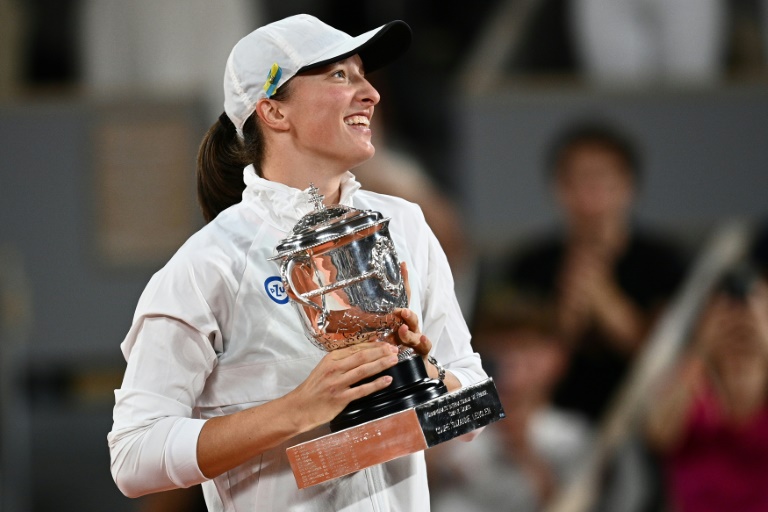
Iga Swiatek cruised to her second French Open title by dominating teenager Coco Gauff in the final on Saturday, as the world number one claimed her 35th successive victory.

The 21-year-old Polish star stormed to a 6-1, 6-3 win in only 68 minutes on Court Philippe Chatrier, equalling Venus Williams’ record for the longest winning run by a woman in the 21st century.

Swiatek celebrated her sixth straight title this year in the players’ box with her friends and family.

“I told Coco ‘Don’t cry’ and that’s what I am doing. Congrats to Coco,” said an emotional Swiatek.

“You are doing an amazing job. At your age, I was on my first year on tour and I did not know what I was doing. You will find it, I am sure of that.”

A disconsolate Gauff was left sitting on her seat in tears after a nervous performance, punctuated by 23 unforced errors and three double faults.

The 18-year-old American came up short in her bid to become the youngest Grand Slam singles champion since Maria Sharapova won Wimbledon in 2004.

“I want to congratulate Iga, what you’ve done on tour in these past couple of months has been amazing,” said Gauff, as the tears flowed again when she thanked her team.

“I hope we can play in more finals and maybe I can win one… I want to thank my team, I’m sorry I couldn’t get this one today.”

Swiatek, only the 10th woman to win multiple French Opens in the Open era, lost just one set in the tournament — against China’s Zheng Qinwen in the fourth round.

She has now won all three of her career meetings with Gauff, who was playing in her first major final.

Gauff will now turn her attentions to Sunday’s doubles final, where she will face home favourites Caroline Garcia and Kristina Mladenovic alongside compatriot Jessica Pegula.

Swiatek improved her remarkable record in finals, having won her last nine on the WTA Tour.

Swiatek expressed her support for Ukraine during the trophy presentation, despite saying before the final that she does not feel ready to speak about off-court issues.

“I want to say to Ukraine, ‘Stay strong’. The war is still there,” she said, to cheers from the stands.

– Nervous Gauff –

Gauff looked nervous in the opening exchanges and a flurry of unforced errors handed Swiatek a break in the very first game.

The 18th seed found herself 3-0 and a double break down just 16 minutes into the match, as Swiatek’s powerful backhand helped her win a lengthy third game on her fifth break point.

Gauff finally got on the board with a scrappy hold to the delight of the crowd, but she had dropped a set for the first time in the tournament just minutes later.

Swiatek was not playing her best, but a cross-court backhand winner brought up two set points and she took the second opportunity when Gauff fired wide.

The Pole gifted her opponent a potential route back into the match, making four unforced errors to throw away her serve in the first game of the second set.

Swiatek recomposed herself though as the mistakes continued to come from Gauff, breaking back to level at 2-2.

She made it five straight games to move within one of the title, losing only five points in the process.

Gauff dug deep to force Swiatek to serve for the trophy.

But the top seed did just that on her first match point, dropping to the red clay in celebration as Gauff sent a return flying long.

Later Saturday, Marcelo Arevalo of El Salvador became Central America’s first Grand Slam champion when he teamed with Jean-Julien Rojer of the Netherlands to win the men’s doubles title.

The 12th seeds saved three match points in defeating Ivan Dodig of Croatia and Austin Krajicek of the United States 6-7 (4/7), 7-6 (7/5), 6-3 in a little over three hours.

Mariah Carey sued for $20 mn over Christmas smash hit

Mariah Carey has been sued in the United States for alleged copyright infringement over her global hit 1994 song “All I Want for Christmas Is You,” court documents show.

The plaintiff, a musician named Andy Stone, says he co-wrote and recorded a festive song of the same name in 1989 and never gave permission for it to be used.

In the suit filed on Friday in Louisiana, Stone alleges that Carey and her co-writer Walter Afanasieff “knowingly, willfully, and intentionally engaged in a campaign to infringe” his copyright.

He is seeking damages of $20 million for alleged financial loss.

Carey’s song is one of the most successful music singles of all time, topping the charts in more than two dozen countries and enjoying considerable airtime every Christmas.

It features prominently in the 2003 Christmas-themed romantic comedy film “Love Actually.”

The song has sold an estimated 16 million copies worldwide and earned Carey a reported $60 million in royalties over the last three decades.

Stone’s song, released with his band Vince Vance and the Valiants, enjoyed moderate success on Billboard’s country music charts.

Despite having the same titles, the songs sound different and have different lyrics. 

Stone, though, accuses Carey and Afanasieff of aiming to “exploit the popularity and unique style” his song, causing “confusion.”

“Defendants’ unauthorized use of the ‘All I Want for Christmas is You’ in association with their exploitation of the derivative work acts to capitalize on the goodwill and unique talent of Plaintiff in an effort to obtain commercial advantage,” the suit says.

It was unclear why Stone has filed the suit almost 30 years after Carey released her song.

The document states that Stone’s lawyers first contacted Carey and Afanasieff last year but the parties were “unable to come to any agreement.”

Carey’s publicist did not immediately respond to a request for comment from AFP.

It is not uncommon for songs to have the same title. Some 177 works are listed under the title “All I Want for Christmas Is You” on the website of the United States Copyright Office.

Bezos's Blue Origin makes 5th crewed flight into space

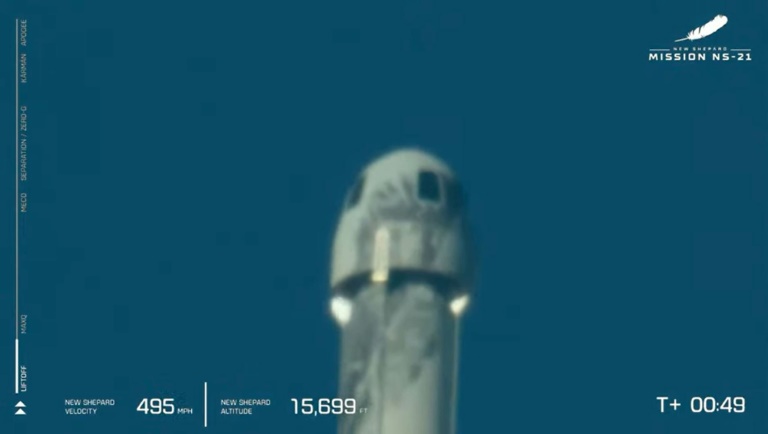
Jeff Bezos’s company Blue Origin flew six tourists into space for a 10-minute ride Saturday, successfully carrying out its fifth crewed mission.

The white spacecraft called New Shepard lifted off with a roar from a desert spot in west Texas at 8:26 local time (1326 GMT).

The crew hooted with glee as the rocket reached space, a Blue Origin webcast showed.

The flight included engineer Katya Echazarreta, who at 26 became the youngest American woman in space. The Guadalajara native also became the first Mexican-born woman to go into space.

Her spot was sponsored by Space for Humanity, a program which seeks to democratize access to space and selected her from among 7,000 candidates.

The crew also included the first Brazilian to go into space, Victor Correa Hespanha, as well as businessmen Hamish Harding, Jaison Robinson, Victor Vescovo and Evan Dick.

Dick also flew on New Shepard’s third crewed flight in December.

Ticket prices are a closely guarded secret.

The gumdrop-shaped capsule holding the crew detached from the rocket once the latter took them into the heavens.

The rocket booster part then eased down vertically, letting off a sonic boom at one point, and landed to be reused.

The capsule kept going up until it crossed the so-called Karman line at an altitude of about 100 km (60 miles), which by international convention is considered the boundary between Earth’s atmosphere and space.

At that height the crew experienced weightlessness for a few minutes and could observe Earth’s curvature through big windows in New Shepard.

The capsule then fell back to Earth, with three giant parachutes and retro engines helping it make a gentle landing that kicked up a big cloud of dust.

This flight had been scheduled for May 20 but was delayed because of a problem with one of the spacecraft’s back-up systems. Blue Origin did not give details of the problem.

Blue Origin is a leading player in the nascent space tourism market.

It flew Bezos on its maiden crewed flight in July 2021, and has also flown Star Trek icon William Shatner and Laura Shepard Churchley, the daughter of the first American in space.

Blue Origin’s competitor for this kind of thing is Virgin Galactic.

But since its maiden voyage last July carrying its founder, the business tycoon Richard Branson, the spacecraft has stayed on the ground to undergo modifications.

Ukraine says Russia using 'all its power' to capture eastern city

Ukraine said Saturday its forces were managing to push back against Russian troops in fierce fighting in Severodonetsk despite Russia “throwing all its power” into capturing the strategic eastern city.

At least seven civilians were reported killed in the Lugansk region where Severodonetsk is located and in the southern city of Mykolaiv, while a revered wooden church was reported to be on fire because of the fighting.

Lugansk regional governor Sergiy Gaiday said in an interview posted online that the invading forces had captured most of Severodonetsk, but that the Ukrainian military was pushing them back.

“The Russian army, as we understand, is throwing all its power, all its reserves in this direction,” said Gaiday, who on Friday claimed Ukrainian troops had managed to win back a fifth of the city.

Russia’s army however claimed some Ukrainian military units were withdrawing from the city.

The press service of Ukraine’s presidential office said that “street fighting” was continuing in Severodonetsk and “assault operations are underway” in an industrial part of the city.

Severodonetsk is the largest city still in Ukrainian hands in the Lugansk region, where Russian forces have been gradually advancing in recent weeks after retreating or being repelled from other areas, including around the capital Kyiv.

Thousands of people have been killed, millions forced to flee and towns turned into rubble since Russian President Vladimir Putin ordered an all-out assault on his pro-Western neighbour on February 24.

Western powers have slapped increasingly stringent sanctions on Russia and supplied arms to Ukraine but divisions have emerged on how to react.

French President Emmanuel Macron on Friday said Putin had committed a “fundamental error” but said Russia should not be “humiliated” so that a diplomatic solution could be found.

Ukrainian Foreign Minister Dmytro Kuleba reacted on Saturday saying such calls “only humiliate France” and any country taking a similar position.

“It is Russia that humiliates itself. We all better focus on how to put Russia in its place. This will bring peace and save lives,” he said.

– Foreign volunteers killed –

Regardless of diplomatic efforts, the conflict has raged in the south and east of the country.

Ukrainian officials on Saturday announced the death of four foreign military volunteers fighting Russian forces but did not specify when or under what circumstances they died.

The International Legion of Defence of Ukraine, an official volunteer brigade, named the men and published photos of them, saying they were from Germany, the Netherlands, Australia and France.

The deaths of the two men named from the Netherlands and Australia had already been reported and France’s foreign ministry on Friday said a French volunteer fighter had been killed in combat.

Ukraine also reported two victims from a Russian missile strike on Odessa in the southwest, without specifying if they were dead or injured.

Russia’s defence ministry said it had struck a “deployment point for foreign mercenaries” in the village of Dachne in the Odessa region.

It also claimed a missile strike in the northeastern Sumy region on an artillery training centre with “foreign instructors”.

Apart from the human toll, the conflict has caused widespread damage to Ukraine’s cultural heritage.

On Saturday, Ukrainian officials reported that a large Orthodox wooden church, a popular pilgrim site, was on fire and blamed Russian forces.

Russia continues to prove “its inability to be part of the civilized world,” Culture Minister Oleksandr Tkachenko said in a statement.

Russia’s defence ministry blamed “Ukrainian nationalists” for the blaze and said its forces were not operating in the area.

The church was built in 2009 on the site of another church that was blown up in 1947.

– Grain exports ‘no problem’? –

Russian troops now occupy a fifth of Ukraine’s territory and Moscow has imposed a blockade on its Black Sea ports.

The blockade has sparked fears of a global food crisis since Ukraine and Russia are among the top wheat exporters in the world.

The United Nations said it was leading intense negotiations with Russia to allow Ukraine’s grain harvest to leave the country.

Putin in a televised interview Friday said there was “no problem” to export grain from Ukraine, via Kyiv- or Moscow-controlled ports or even through central Europe.

The UN has warned that African countries, which normally import more than half of their wheat consumption from Ukraine and Russia, face an “unprecedented” crisis.

Food prices in Africa have already exceeded those in the aftermath of the 2011 Arab Spring uprisings and the 2008 food riots.

On Friday, Putin met the head of the African Union, Senegalese President Macky Sall, at his Black Sea residence in Sochi.

After the meeting, Sall said he was “very reassured”, adding that Putin was “committed and aware that the crisis and sanctions create serious problems for weak economies”.

burs-dt/ah

Ukraine claims Russian forces pushed back in east in fierce fighting

Ukraine said Saturday its forces were managing to push back against Russian troops in fierce fighting in Severodonetsk despite Russia “throwing all its power” into capturing the strategic eastern city.

Lugansk regional governor Sergiy Gaiday said in an interview posted on his official social media that the invading forces had captured most of the city “but now our military have moved them”.

“The Russian army, as we understand, is throwing all its power, all its reserves in this direction,” said Gaiday, who on Friday claimed that Ukrainian troops had won back a fifth of the city.

Severodonetsk is the largest city still in Ukrainian hands in the Lugansk region, where Russian forces have been making gradual advances in recent weeks.

Thousands of people have been killed, millions sent fleeing and towns turned into rubble since President Vladimir Putin ordered Russian troops into Ukraine 101 days ago.

The advance of Russian forces has been slowed by stiff Ukrainian resistance, repelling them from around the capital Kyiv and forcing Moscow to focus on capturing the east.

The press service of Ukraine’s presidential office on Saturday said Russian attacks killed four civilians in the Lugansk region as a whole.

The situation in Lysychansk — Severodonetsk’s twin city, which sits just across a river — looked increasingly dire.

About 60 percent of infrastructure and housing had been destroyed, while internet, mobile networks and gas services had been knocked out, said its mayor Oleksandr Zaika.

In the city of Sloviansk, about 80 kilometres (50 miles) from Severodonetsk, the mayor has urged residents to evacuate in the face of intense bombardment, with water and electricity cut off.

Ukraine also reported two victims from a missile strike on the port of Odessa in the southwest, without specifying if they were dead or injured.

Russia’s defence ministry said it had struck a “deployment point for foreign mercenaries” in the village of Dachne in the Odessa region.

It also claimed a missile strike in the northeastern Sumy region in a place where it said Ukrainian soldiers were receiving training from foreign instructors on using howitzers.

– ‘Shame and hatred’ –

Russian troops now occupy a fifth of Ukraine’s territory and Moscow has imposed a blockade on its Black Sea ports.

But Ukrainian President Volodymyr Zelensky was defiant on Friday.

“Victory will be ours,” he said in a video speech marking the 100th day of the war.

Later, in his nightly address, he dismissed the Russian army as being reduced to “war crimes, shame and hatred” after failing military objectives.

But Kremlin spokesman Dmitry Peskov said “certain results have been achieved”, pointing to the “liberation” of some areas from what he called the “pro-Nazi armed forces of Ukraine”.

The West has sent ever-more potent weapons to Ukraine and piled on ever more stringent sanctions against Moscow, with the European Union on Friday formally adopting a ban on most Russian oil imports.

Putin’s alleged girlfriend, former gymnast Alina Kabaeva, was also added to an assets freeze and visa-ban blacklist.

– Food crisis –

The war has sparked fears of a global food crisis — Ukraine and Russia are among the top wheat exporters in the world.

The United Nations said it was leading intense negotiations with Russia to allow Ukraine’s grain harvest to leave the country.

Putin in a televised interview Friday said there was “no problem” to export grain from Ukraine, via Kyiv- or Moscow-controlled ports or even through central Europe.

The UN has warned that African countries, which imported more than half of their wheat consumption from Ukraine and Russia, face an “unprecedented” crisis.

Food prices in Africa have already exceeded those in the aftermath of the 2011 Arab Spring uprisings and the 2008 food riots.

On Friday, Putin met the head of the African Union, Senegalese President Macky Sall, at his Black Sea residence in Sochi.

After the meeting, Sall said he was “very reassured”, adding that Putin was “committed and aware that the crisis and sanctions create serious problems for weak economies”.

French President Emmanuel Macron, meanwhile, said Putin had made a “historic” error in starting the war.

But he said the Russian leader should not be “humiliated”, and to leave room for diplomacy.

– Media driver killed –

A driver transporting two Reuters journalists in eastern Ukraine was killed and the two reporters were lightly wounded, a spokesman for the international news agency said.

A French volunteer fighter in Ukraine was also killed in combat, the French foreign ministry said.

In areas around the capital Kyiv, which Russian troops retreated from at the end of March, some residents remain in desperate need of assistance.

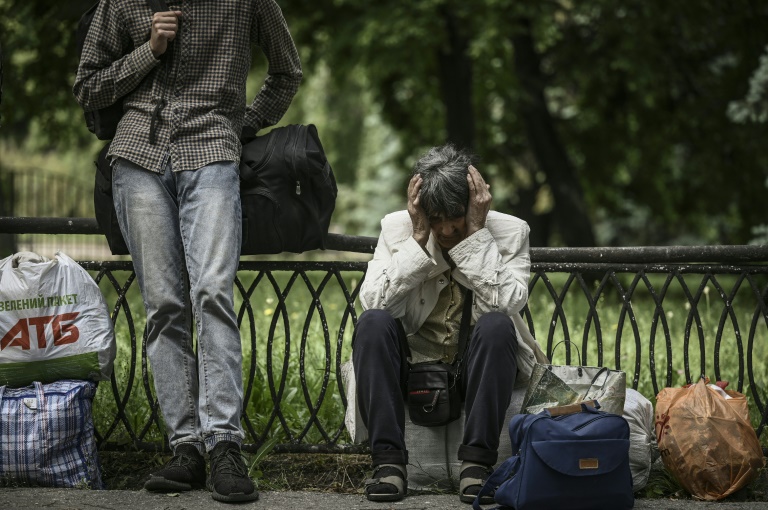
At an aid distribution point in Horenka, northwest of Kyiv, on Friday a tearful Hanna Viniychuk, 67, said she had joined the long queue in search of some basic necessities after losing her home to Russian bombardment.

“I’m grateful for this help,” she said.

Arkadiy Maznychenko, 75, said: “A lot of houses were burnt, damaged, so people have nothing at all. Everything is shattered, destroyed.”

burs-dt/ach

Bosphorus sea trade unaffected by Ukraine war, sanctions

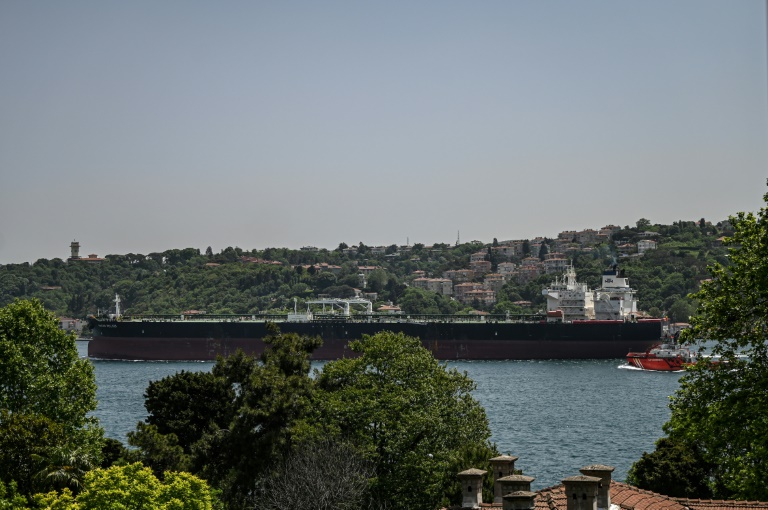
At the gates of the Black Sea, trade is in full swing as freighters and oil tankers sail from the heart of Istanbul to Russian and Ukrainian ports. 

Just after the Russian offensive in Ukraine on February 24 and the first Western sanctions, the largest vessels of international companies plying on these waters were replaced by smaller ships.

The total number of ships on the route remains around the pre-war level of 40,000, according to experts.

“Russia shamelessly steals Ukrainian grain and sends it overseas from Crimea, including to Turkey,” said Vasyl Bodnar, Ukraine’s ambassador to Ankara.

“In May alone, we counted at least 10 passages including two round trips from three vessels flying the Russian flag… Not to mention those that we would have collectively missed.”

From his terrace overlooking the Bosphorus, Yoruk Isik has been a passionate observer of ship movements on this key waterway between the Black Sea and the Mediterranean for a decade now.

While swiftly condemning the Russian offensive in Ukraine, Turkey positioned itself as a neutral mediator and refused to join Western sanctions against Moscow. 

Although Ankara has banned the passage of military vessels through its straits of the Dardanelles and Bosphorus since late February under the Montreux Treaty of 1936, it is not legally entitled to intercept commercial ships or to search them, a diplomatic source said in Ankara.

“We don’t follow the ships on their way out of the Straits. We monitor them 10 kilometres before they enter and 10 kilometres after they leave,” the source said on condition of anonymity.

Elizabete Aunina, a researcher at Amsterdam University, said: “If we look at the vague words of the Montreux treaty it leaves a lot up for interpretation. 

“It did not foresee that merchant vessels could be carrying stolen goods… Turkey has before showed a certain commitment to stick to the very basic interpretation of the Convention as a way to also protect itself from entering deeper into the conflict”.

The European Union imposed an embargo on Russian imports but tankers flying the Greek or Maltese flags are seen sailing through the Bosphorus up to the Black Sea to the Russian ports. 

– Maritime corridors – 

Thanks to real-time tracking applications, a strong network of observers, Russian and Ukrainian activists and satellite images, no vessel escapes Isik’s radar. 

“We can see from end to end, where the ship is getting loaded by the ship,” he said. 

Some freighters loaded the wheat in Ukrainian ports under Russian blockade such as Odessa, Chornomorsk or Mariupol, he said. 

The destination?  Syria — where Russia retains an operational base — and then Lebanon or Egypt.

Isik also identified a flotilla of old Turkish boats, “never seen before in the area” suddenly appearing under a flag of convenience in the Russian port of Novorossiysk — “likely under contract with the Russian government”.

He lists a few names: Kocatepe (now Tanzanian), Barbaros (Equatorial Guinea), Hizir (Malta) and Sampiyon Trabzonsport (Cameroon).

Russian Foreign Minister Sergei Lavrov will visit Turkey on Wednesday to discuss a possible establishment of “sea corridors” — although Ukrainian wheat is being covertly exported to Russia’s benefit, according to experts. 

“This is the information we get but we cannot stop, or check, or question the intention of any cargo ship except if we feel a threat to  Turkish peace or security,” the diplomatic source said. 

But for Isik who keeps the list of cargo ships belonging to the Russian defence ministry and those of private companies operating on its behalf, “what is happening is unacceptable”.

– EU mulling tighter sanctions –

Before the war, Ukraine was on track to becoming the world’s third biggest exporter of wheat and many countries in Africa and the Middle East depend on it.

“If Russia exports Ukrainian products, nobody authorises Turkey to stop the vessels,” said Yucel Acer, professor of international law at the University of Ankara, adding “unless there is a United Nations resolution” — a futile move as long as Russia holds a veto power in the Security Council.

Without openly admitting it, the European Commission has found holes in the current sanctions regime and is preparing to tighten the screws again, said a source in Brussels.

These foresee a new set of sanctions targeting Moscow plans to deprive the European operators of their insurance if their vessels are caught red-handed.

“Most of these vessels are covered by European and British insurance: with this new package, they will no longer be able to use them,” said the source.

“This should have a significant impact.”

But Turkey could do more, said Aunina, from Amsterdam university.

“Following the annexation of Crimea, Turkey technically banned ships from Crimea in its ports: This could be done as well!”

More than 700 monkeypox cases globally, 21 in US: CDC

The US Centers for Disease Control and Prevention (CDC) said Friday it was aware of more than 700 global cases of monkeypox, including 21 in the United States, with investigations now suggesting it is spreading inside the country.

Sixteen of the first 17 cases were among people who identify as men who have sex with men, according to a new CDC report, and 14 were thought to be travel associated.

All patients are in recovery or have recovered, and no cases have been fatal.

“There have also been some cases in the United States that we know are linked to known cases,” Jennifer McQuiston, deputy director of the CDC’s Division of High Consequence Pathogens and Pathology, told reporters on a call. 

“We also have at least one case in the United States that does not have a travel link or know how they acquired their infection.”

Monkeypox is a rare disease that is related to but less severe than smallpox, causing a rash that spreads, fever, chills, and aches, among other symptoms.

Generally confined to western and central Africa, cases have been reported in Europe since May and the number of countries affected has grown since.

Canada also released new figures Friday, counting 77 confirmed cases — almost all of them detected in Quebec province, where vaccines have been delivered.

Though its new spread may be linked to particular gay festivals in Europe, monkeypox is not thought to be a sexually transmitted disease, with the main risk factor being close skin-to-skin contact with someone who has monkey pox sores. 

A person is contagious until all the sores have scabbed and new skin is formed. 

– ‘More than enough vaccine’ –

Raj Panjabi, senior director for the White House’s global health security and biodefense division, added that 1,200 vaccines and 100 treatment courses had been delivered to US states, where they were offered to close contacts of those infected.

There are currently two authorized vaccines: ACAM2000 and JYNNEOS, which were originally developed against smallpox. 

Though smallpox has been eliminated, the United States retains the vaccines in a strategic national reserve in case it is deployed as a biological weapon. 

JYNNEOS is the more modern of the two vaccines, with fewer side effects.

“We continue to have more than enough vaccine available,” Dawn O’Connell, assistant secretary for preparedness and response in the Department of Health and Human Services, told reporters. 

In late May, the CDC said it had 100 million doses of ACAM200 and 1,000 doses of JYNNEOS available, but O’Connell said Friday the figures had shifted, though she could not divulge precise numbers for strategic reasons.

The CDC has also authorized two antivirals used to treat smallpox, TPOXX and Cidofovir, to be repurposed to treat monkeypox.

“Anyone can get monkeypox and we are carefully monitoring for monkeypox that may be spreading in any population, including those who are not identifying as men who have sex with men,” said McQuiston. 

That being said, the CDC is undertaking special outreach in the LGBT community, she added.

A suspected case “should be anyone with a new characteristic rash,” or anyone who meets the criteria for high suspicion such as relevant travel, close contact, or being a man who has sex with men. 

Texas fugitive dies in shootout after allegedly killing five

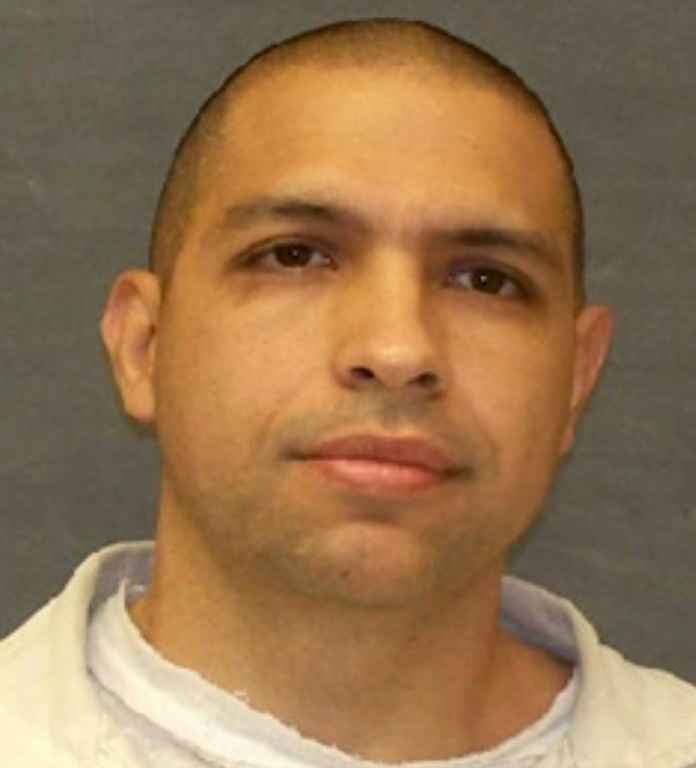
An escaped murderer suspected of killing five people while on the run was gunned down by Texas police, bringing an end to a three-week-long manhunt after the fugitive’s dramatic escape from a prison bus. 

Gonzalo Artemio Lopez, 46, was serving a life sentence for murder, when he escaped from a prison bus on May 12.

Three weeks after a search that involved local, state and federal officers — as well as a $50,000 reward offered to the public for his capture — police said late Thursday that Lopez was killed during a shootout with authorities.

Texas Department of Criminal Justice (TDCJ) spokesman Jason Clark said that on the day of Lopez’s getaway, he had escaped his restraints and sawed through a metal cage in which he was being held on the bus before assaulting the driver and fleeing.

Authorities became aware of his whereabouts after police were contacted Thursday by someone who had not heard from relatives who were visiting a vacation home in Centerville.

When police went to the home, they discovered the bodies of an adult and four boys — three brothers and their cousin, aged between 11 and 18, as well as their grandfather — and put out an alert for a Chevy Silverado pickup truck that was missing from the residence.

The stolen truck was located later that evening in Jourdanton, about 200 miles (320 kilometers) from where Lopez escaped, authorities said, and was disabled with “spike strips.”

Lopez, who was armed with an AR-15 assault rifle and a handgun, was shot and killed during a gun battle with law enforcement, TDCJ spokesman Clark said.

“Those officers very swiftly shot and killed Lopez, bringing this whole ordeal to an end,” he said, adding that it was “an absolute tragedy” that five individuals have lost their lives.

“We are very saddened that the murders happened but I will tell you that we are breathing a sigh of relief that Lopez will not be able to hurt anyone else,” he said.

– Massive manhunt –

The shaven-headed and heavily-tattooed Lopez, a Mexican mafia gang member, was sentenced to life in prison in 2006 for a murder committed with a pickaxe and kidnapping.

Lopez was being transported some 160 miles by bus from one prison facility to another in Leon County for a medical appointment when he escaped.

There were 15 other prisoners on the bus at the time, according to the authorities, and Lopez was being held in a special metal cage for “high-risk” inmates.

He somehow managed to free himself from restraints, escape from the cage and cut open a gate to attack the bus driver.

Lopez stabbed the driver in the hand and chest in a fight and took the wheel of the bus, authorities said.

Another prison guard shot out the back tires of the bus.

Lopez lost control of the bus less than a mile away and crashed it into a cow pasture. He fled into nearby woods.

He managed to escape detection until late Thursday despite a manhunt that involved hundreds of officers, helicopters, dogs, house-to-house searches and even agents on horseback.

Ukraine claims Russian forces pushed back in east in fierce fighting

Russian artillery slammed Ukraine’s eastern Donbas region with fierce fighting over the city of Severodonetsk, but the local governor said there was some progress in pushing back invading forces.

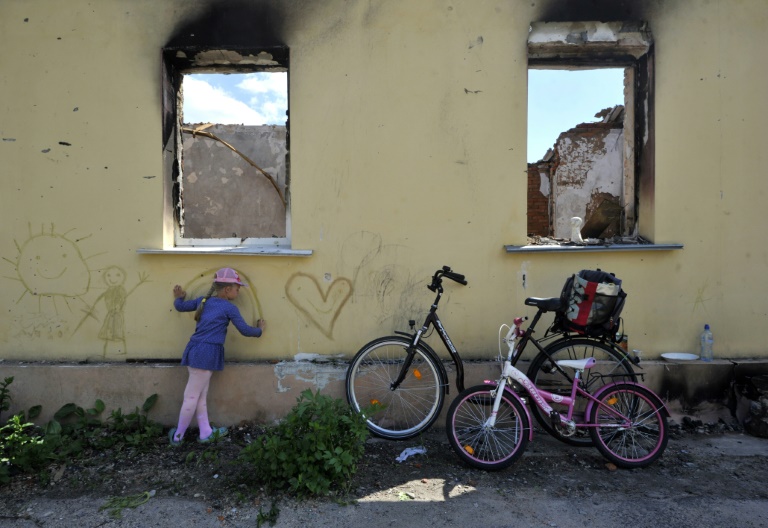
More than 100 days since President Vladimir Putin ordered Russian troops into Ukraine, thousands of people have been killed, millions sent fleeing and towns turned into rubble.

The advance of Russian forces has been slowed by stiff Ukrainian resistance, repelling them from around the capital Kyiv and forcing Moscow to focus on capturing the east, including the Donbas.

Some of the fiercest fighting has been centred on Severodonetsk, where Ukrainian troops are resisting a complete takeover.

“They (Russians) didn’t seize it fully,” Lugansk regional governor Sergiy Gaiday said Friday, saying the invading forces had been pushed back “20 percent”.

“As soon as we get a big amount of Western long-range weapons, we will push their artillery back… and then Russian infantry will run.”

Ukrainian troops were still holding an industrial zone in Severodonetsk, Gaiday had said, a scenario reminiscent of Mariupol, where a steelworks was the port city’s last holdout.

The situation in Lysychansk — Severodonetsk’s twin city, which sits just across a river — looked increasingly dire.

About 60 percent of infrastructure and housing had been destroyed, while internet, mobile networks and gas services had been knocked out, said its mayor Oleksandr Zaika.

In the city of Sloviansk, about 80 kilometres (50 miles) from Severodonetsk, the mayor has urged residents to evacuate in the face of intense bombardment, with water and electricity cut off.

“The situation is getting worse,” student Gulnara Evgaripova told AFP as she boarded a minibus to leave the city.

Ekaterina Perednenko, a paramedic, said: “I am scared that there will be nothing to come back to.”

– ‘Shame and hatred’ –

Russian troops now occupy a fifth of Ukraine’s territory and Moscow has imposed a blockade on its Black Sea ports.

But Ukrainian President Volodymyr Zelensky was defiant on Friday.

“Victory will be ours,” he said in a video speech.

Later, in his nightly address, he dismissed the Russian army. 

“At first it looked threatening. Then dangerous… And now probably just a bitter smile,” he said.

“Because what’s left of it? … War crimes, shame and hatred.”

But Kremlin spokesman Dmitry Peskov said “certain results have been achieved”, pointing to the “liberation” of some areas from what he called the “pro-Nazi armed forces of Ukraine”.

The West has sent ever-more potent weapons to Ukraine and piled on ever more stringent sanctions against Moscow, with the European Union on Friday formally adopting a ban on most Russian oil imports.

Putin’s alleged girlfriend, former gymnast Alina Kabaeva, was also added to an assets freeze and visa-ban blacklist.

– Food crisis –

The war has sparked fears of a global food crisis — Ukraine and Russia are among the top wheat exporters in the world.

The United Nations said it was leading intense negotiations with Russia to allow Ukraine’s grain harvest to leave the country.

Putin in a televised interview Friday said there was “no problem” to export grain from Ukraine, via Kyiv- or Moscow-controlled ports or even through central Europe.

The UN has warned that African countries, which imported more than half of their wheat consumption from Ukraine and Russia, face an “unprecedented” crisis.

Food prices in Africa have already exceeded those in the aftermath of the 2011 Arab Spring uprisings and the 2008 food riots.

On Friday, Putin met the head of the African Union, Senegalese President Macky Sall, at his Black Sea residence in Sochi.

After the meeting, Sall said he was “very reassured”, adding that Putin was “committed and aware that the crisis and sanctions create serious problems for weak economies”.

French President Emmanuel Macron, meanwhile, said Putin had made a “historic” error in starting the war.

But he said the Russian leader should not be “humiliated”, and to leave room for diplomacy.

– Media driver killed –

A driver transporting two Reuters journalists in eastern Ukraine was killed and the two reporters were lightly wounded, a spokesman for the international news agency said.

A French volunteer fighter in Ukraine was also killed in combat, the French foreign ministry said Friday.

In areas around the capital Kyiv, which Russian troops retreated from at the end of March, some residents remain in desperate need of assistance.

At an aid distribution point in Horenka, northwest of Kyiv, a tearful Hanna Viniychuk, 67, said she had come for some basic necessities after losing her home to Russian bombardment.

“I’m grateful for this help,” she said.

burs-qan/mtp

Close Bitnami banner
Bitnami