US Business

Oklahoma shooter killed surgeon treating him for back pain: police

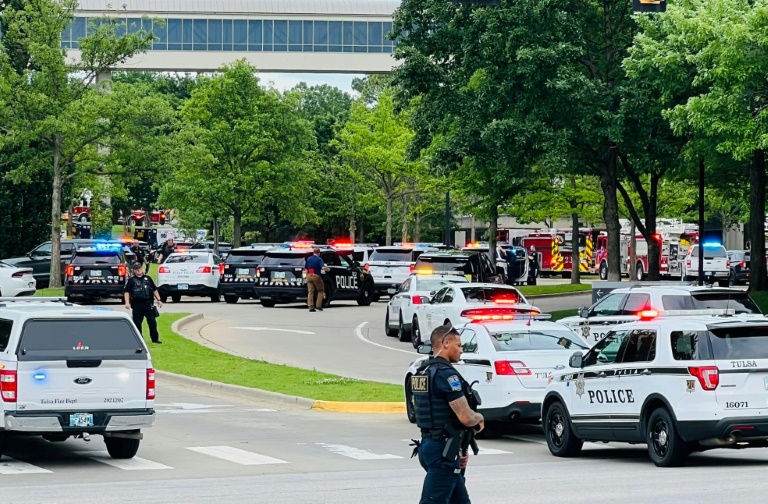
The gunman who shot dead four people at a hospital in the US state of Oklahoma killed the surgeon whom he blamed for pain after back surgery, police said Thursday.

The suspect, identified as Michael Louis, stormed into the Saint Francis hospital in the city of Tulsa on Wednesday with a rifle and a handgun, in the latest mass shooting in the United States in recent weeks.

Louis had recently been operated on by surgeon Preston Phillips at the hospital and had called the clinic to complain of continuing back pain, Tulsa Police Chief Wendell Franklin said during a press conference.

Police found “a letter on the suspect, which made it clear that he came in with the intent to kill Dr. Phillips and anyone who got in his way,” Franklin said.

“He blamed Dr. Phillips for the ongoing pain following the surgery.”

As well as Phillips, the other victims included another physician, a receptionist and a patient.

“They stood in the way and Lewis gunned them down,” Franklin said, adding Louis then shot himself.

The suspect purchased an semi-automatic gun at a local gun shop shortly before the shooting, police said.

The killings come as families in Texas bury their dead after a school shooting left 19 young children and two teachers dead last week.

The tragedies have prompted calls for tighter gun control legislation but US lawmakers have failed to pass significant new laws despite years of worsening gun violence.

According to the Gun Violence Archive, there have been 233 mass shootings this year in the United States. It defines mass shootings as when four or more people are injured or killed in a single event, not including the shooter.

'Russia controls fifth of Ukraine' as war's 100th day looms

Russian forces hammered Ukrainian positions in the Donbas region on Thursday, as Kyiv said Moscow was in control of 20 percent of Ukrainian territory on the eve of the war’s 100th day.

Vladimir Putin’s troops have set their sights on capturing eastern Ukraine since being repelled from around the capital Kyiv after their invasion began on February 24.

While their advance has been much slower than Moscow expected, Russian troops have expanded their control beyond the 43,000 square kilometres (16,600 square miles) taken when Russia seized Crimea and parts of the Donbas in 2014.

“Today, about 20 percent of our territory is under the control of the occupiers,” Ukrainian President Volodymyr Zelensky said in an address to Luxembourg lawmakers.

The invasion, which enters its 100th day on Friday, has allowed Moscow to capture territory that was “much greater” than the Netherlands, Belgium and Luxembourg combined, added the president.

Thousands of people have been killed and millions forced to flee, with Ukraine’s east now bearing the brunt of Russia’s assault which Zelensky said was killing up to 100 Ukrainian soldiers every day.

Street fighting was raging in the industrial hub of Severodonetsk in Lugansk, part of the Donbas.

The strategic city is a key target for Moscow which already controls 80 percent of the area, but Lugansk regional governor Sergiy Gaiday vowed Ukrainian forces would fight “until the end”.

Severodonetsk’s Azot factory, one of Europe’s biggest chemical plants, was targeted by Russian soldiers who fired on one of its administrative buildings and a warehouse where methanol was stored.

– ‘Shooting is everywhere’ –

Ukrainian troops were still holding an industrial zone, Gaiday said, a situation reminiscent of Mariupol where a huge steel works was the south-eastern port city’s last holdout until Ukrainian troops finally surrendered in late May.

In the city of Sloviansk, about 80 kilometres (50 miles) from Severodonetsk, residents recounted constant bombardments by Russian troops. 

Paramedic Ekaterina Perednenko, 24, said she had only just returned to the city five days ago but realises that she will have to leave again.

“It’s very difficult here. Shooting is everywhere, it’s scary. No water, electricity or gas,” she said.

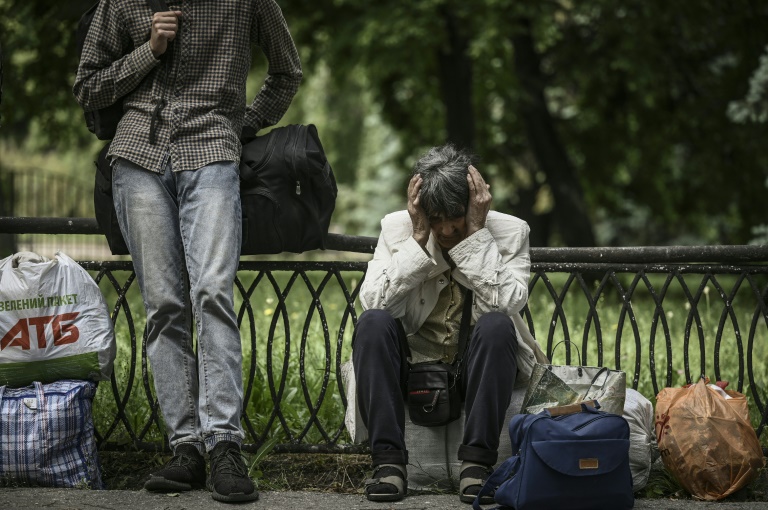
Retiree Leonid, 79, said he was also leaving the city and would seek refuge elsewhere in Europe.

“I feel pain. The most prominent feeling I have is that we didn’t deserve this. We don’t understand why we are punished like this,” he told AFP.

Valeriy Zaluzhnyi, the commander in chief of Ukraine’s armed forces assessed that “the most difficult situation is in the Lugansk region, where the enemy is trying to displace our units”. 

He pleaded for modern armaments from NATO, telling France’s top general, Thierry Burkhard that “the enemy has a decisive advantage in artillery.”

“It will save the lives of our people”.

– Financial squeeze –

Bridget Brink, the new US ambassador to Kyiv, promised Thursday that the United States would “help Ukraine prevail against Russian aggression” after presenting her credentials to Zelensky.

Earlier this week, US President Joe Biden announced that Washington was sending more advanced, Himar multiple rocket lunch systems to Ukraine.

The mobile units can simultaneously launch multiple precision-guided missiles up to 80 kilometres away.

They are the centrepiece of a $700 million package that includes air-surveillance radar, more Javelin short-range anti-tank rockets, artillery ammunition, helicopters, vehicles and spare parts.

Kremlin spokesman Dmitry Peskov accused Washington of “adding fuel to the fire,” although US officials insist Ukraine has promised not to use them to strike inside Russia.

Beyond plying Ukraine with armaments, Western allies have also sought to choke off Russia’s financial lifeline in a bid to get Putin to change course.

Ramping up an already long list of embargoes, the United States blacklisted Putin’s money manager and a Monaco company that provides luxury yachts to Moscow’s elite.

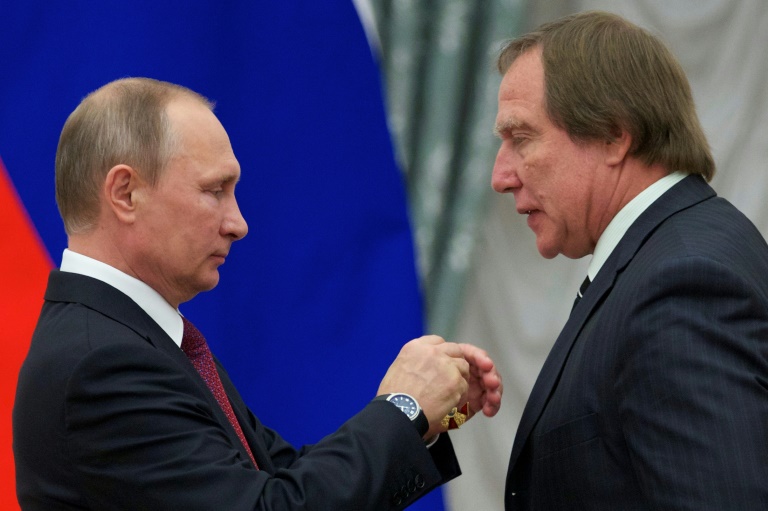
Washington hit Sergei Roldugin, labelled “Putin’s middle-man,” Roldugin’s opera singer wife Elena Mirtova, and Foreign Affairs Ministry spokeswoman Maria Zakharova with sanctions, as well as several large yachts in which Putin allegedly has an interest, the Treasury said.

Across the Atlantic, EU nations agreed new sanctions that would halt 90 percent of Russian oil imports to the bloc by the end of the year. 

– Hunger crisis –

Russia warned that European consumers would be the first to pay the price for the partial oil embargo.

EU ambassadors dropped, however, the leader of Russia’s Orthodox church, Patriarch Kirill, from a proposed blacklist to win over opposition from Hungary.

But some relief was in view for the overheated oil market as top producers including Saudi Arabia agreed to add 648,000 barrels per day to the market in July, up from 432,000.

The war has wrecked Ukraine’s economy, forcing the central bank to more than double its key interest rate in an unprecedented action on Thursday to prop up the hryvnia. 

But it carries far wider consequences too, with risks that it could trigger a global food crisis growing.

Ukraine — one of the world’s main producers — will likely export only half the amount of grain that it did in the previous season, the Ukrainian Grain Association said.

The conflict was already translating into higher costs for consumers purchasing essentials from cereals to sunflower oil to maize, with the poorest among the hardest hit.

The head of the African Union, Senegalese President Macky Sall, is to visit Russia on Friday for talks with Putin.

The visit is aimed at “freeing up stocks of cereals and fertilisers, the blockage of which particularly affects African countries”, along with easing the Ukraine conflict, Sall’s office said. 

burs-hmn/jm

Weinstein loses sex crimes conviction appeal

Disgraced Hollywood mogul Harvey Weinstein on Thursday lost a bid to have his 2020 sex crimes conviction in New York overturned.

In a ruling, five judges from a New York appeals court unanimously upheld the guilty verdicts and resulting 23-year sentence.

They rejected Weinstein’s argument that the jury had been prejudiced by hearing allegations from women who were not part of the charges.

Judge Angela Mazzarelli, writing the ruling, said the witnesses had provided “useful information,” which had helped jurors “fully understand the dynamics” between Weinstein and his victims.

“We perceive no basis for reducing the sentence, and we have considered defendant’s remaining arguments and find them unavailing,” she wrote.

“Pulp Fiction” producer Weinstein was convicted of rape and sexual assault in February 2020 in a landmark verdict for the #MeToo movement.

He is currently awaiting trial on separate sexual assault charges in California.

Weinstein, 70, pleaded not guilty in September in a Los Angeles court to counts involving alleged abuse of five women.

Widespread sexual abuse and harassment allegations against Weinstein exploded in 2017.

In total, nearly 90 women including Angelina Jolie, Gwyneth Paltrow and Salma Hayek have accused Weinstein of harassment or assault.

He has maintained that all his sexual encounters were consensual.

Ford to invest $3.7 bn, boosting legacy Midwestern plants

Ford on Thursday announced fresh multi-billion-dollar capital projects in Midwestern factories near its Detroit home, as the auto giant spreads new investments throughout the United States.

The 119-year-old carmaker plans to spend $3.7 billion to add manufacturing capacity for a mix of electric vehicles (EVs) and conventional gasoline-powered autos in the states of Michigan, Ohio and Missouri, much of it at existing plants that have been in the company’s portfolio for years.

The move follows an announcement last September of an $11.4-billion push with SK Innovation, a South Korean battery company, to build greenfield car production and battery plants in Tennessee and Kentucky.

Major car companies are investing billions of dollars in a race to bring EVs to market, develop driver-assistance programs and outfit their products with the latest and greatest digital equipment.

“We’re investing in American jobs and our employees to build a new generation of incredible Ford vehicles,” said Ford Chief Executive Jim Farley. 

Thursday’s announcement was made jointly with the United Auto Workers, which agreed to the new projects outside of standard union contract negotiations.

Ford will add more than 6,200 new manufacturing jobs and convert around 3,000 temporary UAW employees to permanent status.

“This announcement is a testament to UAW members who contribute their skill, experience, and knowledge to the success of Ford Motor Company,” said UAW President Ray Curry.

“We are always advocating to employers and legislators that union jobs are worth the investment. Ford stepped up to the plate by adding these jobs and converting 3000 UAW members to permanent, full-time status with benefits.”

About $2 billion of the investment will go to projects in Michigan, including boosting production of the new F-150 Lightning electric truck and the production of new pickup and coupe vehicles.

The company will spend $1.5 billion in Ohio on assembly of new EV models and other projects, and $95 million in Missouri to add a shift at a plant that makes commercial vans and will add an electric van.

Ford to invest $3.7 bn, boosting legacy Midwestern plants

Ford on Thursday announced fresh multi-billion-dollar capital projects in Midwestern factories near its Detroit home, as the auto giant spreads new investments throughout the United States.

The 119-year-old carmaker plans to spend $3.7 billion to add manufacturing capacity for a mix of electric vehicles (EVs) and conventional gasoline-powered autos in the states of Michigan, Ohio and Missouri, much of it at existing plants that have been in the company’s portfolio for years.

The move follows an announcement last September of an $11.4-billion push with SK Innovation, a South Korean battery company, to build greenfield car production and battery plants in Tennessee and Kentucky.

Major car companies are investing billions of dollars in a race to bring EVs to market, develop driver-assistance programs and outfit their products with the latest and greatest digital equipment.

“We’re investing in American jobs and our employees to build a new generation of incredible Ford vehicles,” said Ford Chief Executive Jim Farley. 

Thursday’s announcement was made jointly with the United Auto Workers, which agreed to the new projects outside of standard union contract negotiations.

Ford will add more than 6,200 new manufacturing jobs and convert around 3,000 temporary UAW employees to permanent status.

“This announcement is a testament to UAW members who contribute their skill, experience, and knowledge to the success of Ford Motor Company,” said UAW President Ray Curry.

“We are always advocating to employers and legislators that union jobs are worth the investment. Ford stepped up to the plate by adding these jobs and converting 3000 UAW members to permanent, full-time status with benefits.”

About $2 billion of the investment will go to projects in Michigan, including boosting production of the new F-150 Lightning electric truck and the production of new pickup and coupe vehicles.

The company will spend $1.5 billion in Ohio on assembly of new EV models and other projects, and $95 million in Missouri to add a shift at a plant that makes commercial vans and will add an electric van.

Oil price rises as OPEC boosts output more than expected

Oil prices rose Thursday even as major crude producers agreed to boost output by more than the usual amount following an EU ban on Russian imports.

European shares closed higher, with Paris leading the way at 1.3 percent and Frankfurt rising 1.0 percent. London’s FTSE 100 was shut for a holiday.

Wall Street stocks were little changed early on following mixed labour data and a Microsoft earnings warning, but they edged slightly higher in later trading.

Equities fell in Asia as traders grow increasingly worried that central bank moves to rein in inflation could tip economies into recession.

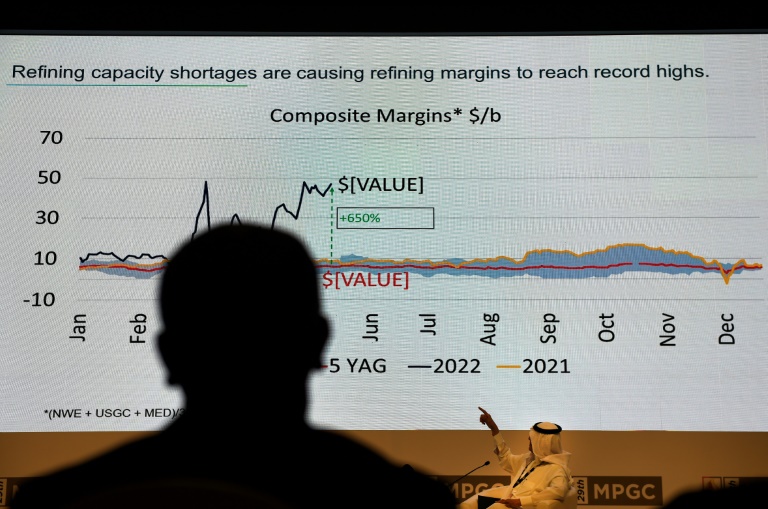
All eyes were on Vienna where the OPEC+ group of major oil producers, led by Saudi Arabia and Russia, agreed to boost oil output more than expected in light of the Russian invasion of Ukraine.

Producers had been expected to stick to their policy of only increasing output modestly, as they have done since May 2021.

But, amid soaring prices and hard on the heels of the EU ban on most Russian oil imports, pressure has been rising for the 23-member cartel to boost output to stabilise prices.

In the end, the group agreed to add 648,000 barrels per day to the market in July, up from 432,000 in previous months.

The move did not appear to be enough to calm oil markets, with the benchmark Brent crude up just under 1.0 percent at $117.42 per barrel and West Texas Intermediate also 1.2  percent higher at $116.58.

Soaring energy prices have fuelled growing inflation around the world, hampering economic growth and prompting central banks to hike rates. 

Jeffrey Halley, an analyst at Oanda, said the move by OPEC+ would not alleviate the crude supply crunch from sanctioned Russian oil, calling it a “huge disappointment to oil consuming nations”. 

Earlier in the day, oil prices had fallen more than two percent after a Financial Times report said that Saudi Arabia was considering a plan to boost output as Russia struggles to meet targets owing to Ukraine war-linked sanctions.

The FT report followed a Wall Street Journal article saying OPEC was considering removing Russia from an agreement that has locked producers into limited output increases, which analysts said could lead to an early end of the pact and allow nations to open the taps more.

Concerns about tighter Russian supplies have sent crude soaring this year, just as demand picks up owing to the reopening of economies but Riyadh has ignored previous calls to pump more. 

“One can expect trading activity involving oil to remain volatile,” Patrick J. O’Hare of Briefing.com said.

– ‘Brace yourself’ –

Asia was mostly in negative territory. Hong Kong shed one percent, while Tokyo, Sydney, Seoul, Singapore, Wellington, Manila, Jakarta and Taipei were also well down. Shanghai and Mumbai edged up.

Concern over the outlook was shared by Wall Street titan Jamie Dimon, who warned that the wave of unprecedented crises were combining to cause an economic superstorm.

“That hurricane is right out there down the road coming our way,” the JPMorgan Chase & Co boss said. “We don’t know if it’s a minor one or Superstorm Sandy. You better brace yourself.”

However, in sign of the huge uncertainty coursing through markets, a top strategist at the bank, Marko Kolanovic, painted a more positive picture, forecasting a market recovery through 2022.

“We remain positive on risky assets due to near record-low positioning, bearish sentiment, and our view that there will be no recession given support from US consumers, global post-Covid reopening, and China stimulus and recovery,” he wrote in a note.

– Key figures at around 1455 GMT –

Brent North Sea crude: UP 0.97 percent at $117.42 per barrel

West Texas Intermediate: UP 1.2 percent at $116.58 per barrel

Frankfurt – DAX: UP 1.0 percent at 14,485.17  (close)  

Paris – CAC 40: UP 1.3  percent at 6,500.44 (close)

EURO STOXX 50: UP 0.95  percent at 3,795.13   

London – FTSE 100: Closed for a holiday

New York – Dow: UP 0.2 percent at 32,891.92   

Tokyo – Nikkei 225: DOWN 0.2 percent at 21,413.88 (close)

Hong Kong – Hang Seng Index: DOWN 1.0 percent at 21,082.13 (close)

Shanghai – Composite: UP 0.4 percent at 3,195.46 (close)

Euro/dollar: UP at $1.0734 from $1.0658 on Wednesday

Pound/dollar: UP at $1.2558 from $1.2492

Euro/pound: UP at 85.47 pence from 85.25 pence

Dollar/yen:  DOWN at 129.82 yen from 130.15 yen

burs-kjm/har

Rolex worn during WWII 'Great Escape' up for auction in New York

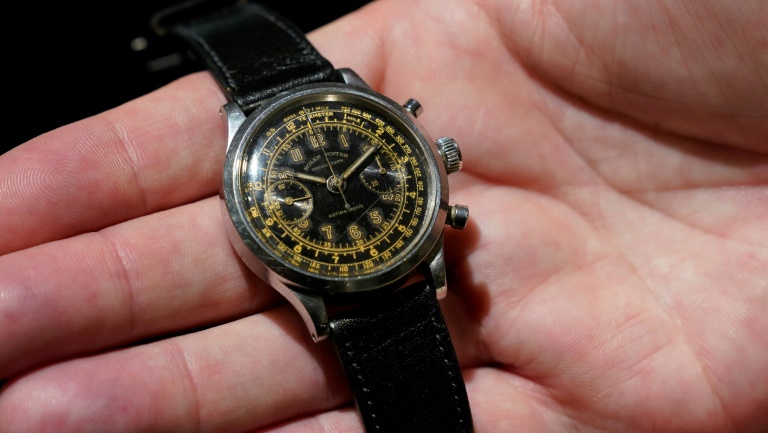
A Rolex watch worn by a British prisoner during the real-life “Great Escape” from the Nazi Stalag Luft III concentration camp is going on sale in New York.

Christie’s expects the timepiece to fetch between $200,000 and $400,000 at auction on June 9.

The watch was worn by Gerald Imeson on the night of March 24, 1944 when a group of Allied soldiers undertook the daring escape that inspired the 1963 movie starring Steve McQueen.

The steel watch with a black luminous dial and hands was “instrumental in the planning and execution” of their bid for freedom, Christie’s said.

The auction house said it believed Imeson’s watch helped calculate the time it would take the prisoners to crawl through tunnels used in the breakout as well as timing the patrols of the camp guards.

Imeson wore the Oyster Chronograph watch as he waited 172nd in line to escape, according to Christie’s.

Of the 200 prisoners who participated in the plan, 76 briefly escaped. Imeson was not among them. All but three of the men were captured and 50 were executed.

Imeson was liberated from another POW camp at the end of the war in 1945.

He wore the watch until his death in 2003 at the age of 85. It was first auctioned in Britain in 2013.

US Senate targets modest deal on gun control

A cross-party group of US senators was set to renew talks Thursday on a narrow package of firearms controls, as lawmakers face calls to tackle soaring gun violence including recent massacres in Texas and New York State.

Nine senators have been meeting this week to discuss a response to the mass shootings that have appalled the nation, projecting optimism over the prospects for modest reforms.

The group has focused on school security, bolstering mental health services and incentives for states to grant to courts “red flag” authority to temporarily remove guns from owners considered a threat.

Moderate Republican Susan Collins said the group was making “rapid progress” while Democratic Senator Chris Murphy said he had “never seen more Republicans at the table willing to talk.” 

“There’s something different happening right now and I hope it ends in a piece of legislation before the Senate,” Murphy told MSNBC on Wednesday. 

Even as lawmakers were mulling responses to the racist murders of 10 Black supermarket shoppers in Buffalo and a school shooting in Texas that killed 19 children and two teachers, another attack took place in Oklahoma on Wednesday.

A man with a pistol and a rifle murdered four people in a Tulsa hospital complex before reportedly killing himself as police arrived.

Lawmakers are aware that they risk wasting momentum as the urgency for reforms sparked by the killings dissipates, and another smaller group of senators is holding parallel discussions on expanding background checks on gun sales.

The political challenge of legislating in a 50-50 Senate, where most bills require 60 votes to pass, means that more wide-ranging reforms are unrealistic.

Mitch McConnell, leader of the Senate Republicans, told reporters that senators were trying to “target the problem,” which he said was “mental illness and school safety,” not firearms. 

– ‘Leading cause of death’ –

House Democrats are nevertheless set to pass a much broader but largely symbolic “Protecting Our Kids Act,” a package of gun control proposals that includes raising the purchasing age for semi-automatic rifles from 18 to 21.

Other highlights include a ban on high-capacity magazines and background checks on so-called “ghost guns,” do-it-yourself, homemade guns made from easily available kits.

The package will likely pass the Democratic-led House next week before dying amid Republican opposition in the Senate.

With regulation being so difficult at the federal level, an effort is also underway among state legislatures to push for tighter gun laws.

California lawmakers advanced a gun control package in the aftermath of the Uvalde shooting that included proposals to open up gunmakers to civil legal liability in certain cases.

“Guns are now the leading cause of death for kids in America,” California’s Democratic governor Gavin Newsom said in a statement. 

“While the US Senate stands idly by and activist federal judges strike down commonsense gun laws across our nation, California will act with the urgency this crisis demands.”

The proposals echo action by lawmakers in New York state, who passed a law last year allowing civil suits against gun manufacturers and dealers for improper marketing or sales.

A permit-to-buy bill is moving through the Delaware state legislature, while in Texas, Governor Greg Abbott asked lawmakers in the pro-gun rights state to “make legislative recommendations” in response to the Uvalde shooting.

Activists for greater gun restrictions fear a setback at the federal level however as the Supreme Court is set to issue its first major Second Amendment opinion in more than a decade.

Justices are expected to rule in the coming weeks in a dispute over New York state’s stringent limits on the concealed carry of handguns outside the home.

A narrow opinion could affect just a few states with similar laws, but campaigners fear the conservative majority will make a broader ruling clearing the way for constitutional challenges to gun safety laws across the country.

OPEC+ agrees bigger output boost amid Russian isolation

Major oil producers led by Saudi Arabia and Russia agreed on Thursday to open the taps wider than expected amid soaring prices and hard on the heels of an EU ban on Russian oil imports.

Analysts had foreseen OPEC+ producers sticking to their policy of modest output increases, as they have done since May 2021.

However, pressure has been rising for the 23-strong group to boost output further to try to stabilise prices, which have hit record highs since Russia invaded Ukraine, drawing heavy Western sanctions.

OPEC+ has decided to add 648,000 barrels per day to the market in July, up from 432,000 in previous months, it announced after monthly videoconference meetings that lasted about an hour.

“The meeting highlighted the importance of stable and balanced markets for both crude oil and refined products,” the cartel said in a statement.

– ‘Maintaining unity’ –

Ahead of the meeting, speculation had swirled about a break in the agreement between the 13 members of the Organization of the Petroleum Exporting Countries, chaired by Saudi Arabia, and their 10 partners, led by Russia.

The Wall Street Journal reported on Monday that OPEC was considering suspending Russia from the output deal. 

OPEC+ drastically slashed output in 2020 as demand slumped when the world locked down under the coronavirus pandemic.

They have increased output modestly to the tune of around 400,000 barrels per day each month since last year, resisting pressure by top consumers, including the United States, to open the taps wider, until now.

But Jeffrey Halley, an analyst at Oanda, said the move would not alleviate the crude supply crunch from sanctioned Russian oil, calling it a “huge disappointment to oil consuming nations”. 

“It seems that OPEC has thrown the US and Europe a few bones… whilst also maintaining OPEC+ unity,” he said. 

“Russia will walk away happy as prices will remain firm.”

Russia’s invasion of Ukraine has exacerbated concerns about oil supplies, sending prices to record highs this year.

As the economic screws have tightened around Russia, prices have further soared, putting pressure on the cartel to open the valves more widely and relieve the market.

European Union leaders agreed on Monday to ban more than two-thirds of Russian oil imports as part of a sixth package of sanctions on Moscow over the Ukraine war.

Britain has already announced plans to phase out Russian oil imports by the end of 2022 and eventually stop importing its gas.  

The United States, too, banned Russian oil and gas days after Russia’s invasion began on February 24.

– Political crossroads? –

Ipek Ozkardeskaya, a senior analyst at Swissquote Bank, called Thursday’s decision a “very unexpected development.”

“It is rather a sign that the ice between Saudi and the US could finally melt after two years of freezing cold relations,” she said.

“We may be at a political crossroads. If the US could strengthen its ties with Saudi, Saudi would pump more to make up for the Russian oil. That could isolate Russia even more, and change the course of the war,” she added.

Ahead of the meeting, some analysts had predicted Saudi Arabia and United Arab Emirates could fill some of the gap as Russia is hit by Western oil sanctions.

“Russia has now transformed into a pariah,” Seb analyst Bjarne Schieldrop said. 

“More oil from Saudi and the UAE will allow the West to implement sharper bans forcing Russian oil exports lower while not blowing up the oil price,” Schieldrop added.

Several other OPEC+ members have been struggling to meet the output quotas, falling short month after month. 

Members of the G7 club of industrialised nations last week underlined OPEC+’s “key role” in the face of the tightening of international markets.

Soaring oil prices have stimulated the Gulf region’s economies, with Saudi Arabia recording its highest growth rate in 10 years over the first quarter of 2022.

OPEC was set up in 1960 and joined by the 10 partners through a 2016 declaration. Its mission is to “ensure the stabilisation of oil markets”.

burs-jza/kjm

US blacklists Putin money-manager, luxury yacht brokerage for Russian elite

The United States placed Russian President Vladimir Putin’s money-manager and a Monaco company that provides luxury yachts to Moscow’s elite on its sanctions blacklist Thursday, stepping up pressure over Russia’s invasion of Ukraine.

Washington hit Sergei Roldugin, labelled “Putin’s middle-man,” Roldugin’s opera singer wife Elena Mirtova, and Foreign Ministry spokeswoman Maria Zakharova with sanctions, as well as several large yachts in which Putin allegedly has an interest, the Treasury said.

The sanctions also included several senior government officials and powerful businessmen, and aircraft and a luxury yacht tied to Andrei Kostin, the chief executive of VTB Bank, one of the country’s largest.

And, in parallel, the US Commerce Department placed some 70 Russian companies on a list that blocks them from obtaining crucial US technologies and goods.

The sanctions are designed to “degrade the key networks used by Russia’s elites, including President Vladimir Putin, to attempt to hide and move money and anonymously make use of luxury assets around the globe,” the Treasury said.

The White House said the action was meant to step up pressure on Moscow more than three months after it invaded Ukraine.

“The United States, alongside over 30 partners around the world, has imposed unprecedented sanctions and export controls to hold President Putin to account for his war against Ukraine, restrict Russia’s access to critical technology it needs to fund its war machine, and turn Russia into a global financial pariah,” the White House said in a statement.

The Treasury said it declared four luxury yachts linked to Putin and on which he has taken numerous trips as “blocked property,” meaning they can be seized.

In addition, it took aim at Imperial Yachts, based in Monaco and operating a Moscow office serving Russian tycoons, and its owner Evgeniy Kochman.

Imperial both leases yachts to the Russian elite and manages yachts owned by Russian oligarchs, the Treasury said. 

The sanctions on Imperial include placing a block on its largest yacht, the three-year-old, 136-meter “Flying Fox,” which was raided by authorities in the Dominican Republic on April 1 on a US request as part of an investigation on alleged money laundering and arms trafficking.

Roldugin and his wife were blacklisted by the US for the first time, after having been placed on European sanctions lists in February.

He is better known as a cellist and the artistic director of the St. Petersburg Music House, and has been a friend of Putin for more than four decades. Roldugin is godfather to one of the Russian president’s daughters.

But the Treasury says he is a key figure in managing Putin’s personal wealth offshore.

“Russia’s elites, up to and including President Putin, rely on complex support networks to hide, move, and maintain their wealth and luxury assets,” said Treasury Under Secretary Brian Nelson. 

“Today’s action demonstrates that Treasury can and will go after those responsible for shielding and maintaining these ill-gotten interests,” Nelson said.

Close Bitnami banner
Bitnami