US Business

Heard 'absolutely not' able to pay Depp $10.35 million in damages: lawyer

Actress Amber Heard is unable to pay her ex-husband Johnny Depp more than $10 million in damages, her lawyer said Thursday, after a US jury took the side of the “Pirates of the Caribbean” star in a bitter defamation trial.

The high-profile televised court battle ended Wednesday when a seven-person jury found that Depp and Heard had defamed each other, but weighed in far more strongly with Depp.

The jury, after a six-week trial featuring claims and counterclaims of domestic abuse, awarded him $10.35 million in damages, in contrast with $2 million awarded to Heard.

Asked on NBC’s TODAY show if Heard will be able to pay up, her attorney Elaine Bredehoft said: “Oh no, absolutely not.”

She added that the “Aquaman” star wants to appeal the verdict and “has some excellent grounds for it.”

The 58-year-old Depp, who lost a libel case against the British tabloid The Sun in London in 2020 for calling him a “wife-beater,” celebrated the split verdict in the case as a victory while Heard said she was “heart-broken.”

Depp sued Heard over an op-ed she wrote for The Washington Post in December 2018 in which she described herself as a “public figure representing domestic abuse.”

The Texas-born Heard did not name Depp in the piece, but he sued her for implying he was a domestic abuser and sought $50 million in damages.

The 36-year-old Heard countersued for $100 million, saying she was defamed by statements made by Depp’s lawyer, Adam Waldman, who told the Daily Mail her abuse claims were a “hoax.”

– ‘Horrible message’ –

Bredehoft said Depp’s legal team worked to “demonize” Heard and suppressed crucial evidence in the trial, preventing the jurors from examining evidence of Depp’s alleged abuse.

“A number of things were allowed in this court that should not have been allowed, and it caused the jury to be confused,” she said.

“We had an enormous amount of evidence that was suppressed in this case that was in the UK case,” she said. “In the UK case when it came in, Amber won, Mr. Depp lost.”

The lawyer said the ruling bodes ill for the MeToo movement and will discourage women from reporting sexual harassment and abuse.

“It’s a horrible message,” Bredehoft said. “It’s a significant setback, because that’s exactly what it means.

“Unless you pull out your phone and you video your spouse or your significant other beating you, effectively you won’t be believed.”

Bredehoft was asked by TODAY about Heard’s immediate reaction to the verdict in the trial, which took place in Fairfax County Circuit Court near the US capital.

“One of the first things she said is that, ‘I am so sorry to all those women out there,'” she said. “This is a setback for all women in and outside the courtroom, and she feels the burden of that.”

– ‘Zoo’ –

In a statement, Heard said “the disappointment I feel today is beyond words.

“I’m heartbroken that the mountain of evidence still was not enough to stand up to the disproportionate power, influence, and sway of my ex-husband,” she said.

For his part, Depp welcomed the verdict, saying “The jury gave me my life back.”

“The best is yet to come and a new chapter has finally begun,” Depp said in a statement.

Bredehoft said social media may have had an impact on the case although jurors had been instructed not to look at it.

“There’s no way they couldn’t have been influenced by it, and it was horrible,” she said. “It really, really was lopsided.”

Heard’s attorney also said she opposed having the trial televised.

“I was against cameras in the courtroom, and I went on record with that and had argued against it because of the sensitive nature of this, but it made it a zoo,” she said.

Heard 'absolutely not' able to pay Depp $10.4 million in damages: lawyer

Actress Amber Heard is unable to pay her ex-husband Johnny Depp more than $10 million in damages, her lawyer said Thursday, after a US jury took the side of the “Pirates of the Caribbean” star in a bitter defamation trial.

The lengthy, high-profile televised court battle ended Wednesday, when a seven-person jury found that Depp and Heard had defamed each other, but weighed in far more strongly with Depp.

The jury awarded him $10.35 million in damages, in contrast with $2 million awarded to Heard.

Asked on NBC’s TODAY show if Heard will be able to pay up, her attorney Elaine Bredehoft answered: “Oh no, absolutely not.”

She added that Heard wants to appeal the verdict.

The 58-year-old Depp, who lost a libel case against The Sun tabloid in London in 2020 for calling him a “wife-beater,” celebrated the split verdict in the case as a victory while Heard said she was “heart-broken.”

Depp sued Heard over an op-ed she wrote for The Washington Post in December 2018 in which she described herself as a “public figure representing domestic abuse.”

The Texas-born Heard, who had a starring role in “Aquaman,” did not name Depp in the piece, but he sued her for implying he was a domestic abuser and sought $50 million in damages.

The 36-year-old Heard countersued for $100 million, saying she was defamed by statements made by Depp’s lawyer, Adam Waldman, who told the Daily Mail her abuse claims were a “hoax.”

Bredehoft said Depp’s legal team worked to “demonize” Heard and suppressed crucial evidence in the trial, preventing the jurors from examining evidence of Depp’s alleged abuse.

“A number of things were allowed in this court that should not have been allowed, and it caused the jury to be confused,” she said.

The lawyer said the ruling bodes ill for the MeToo movement and will discourage women from reporting sexual harassment and abuse.

“It’s a horrible message,” Bredehoft said. “It’s a significant setback, because that’s exactly what it means.

“Unless you pull out your phone and you video your spouse or your significant other beating you, effectively you won’t be believed.” 

For his part, Depp welcomed the verdict, saying “The jury gave me my life back.”

“The best is yet to come and a new chapter has finally begun,” Depp said in a statement.

OPEC debates oil output boost amid Russian isolation

Major oil producers led by Saudi Arabia and Russia began talks Thursday on whether to adjust output, hard on the heels of an EU ban on Russian oil imports.

Analysts had expected OPEC+ producers to likely stick to their policy of only increasing output modestly, as they have done since May 2021.

However, a Wall Street Journal report on Monday that said OPEC was considering suspending Russia from the output deal has sown doubts.

“Such a move would effectively bring a premature end to the group’s supply agreement and pave the way for an unrestricted increase in output,” Stephen Brennock, an analyst at PVM Energy, said.

Oil prices sank more than two percent early Thursday on a similar Financial Times report that said Saudi Arabia was considering a plan to boost output as Russia struggles to meet targets owing to Ukraine war-linked sanctions.

The 13 members of the Organization of the Petroleum Exporting Countries, chaired by Saudi Arabia, and their 10 partners, led by Russia, drastically slashed output in 2020 as demand slumped because of the coronavirus pandemic and worldwide lockdowns.

They have increased output modestly to the tune of around 400,000 barrels per day each month since last year, resisting pressure by top consumers, including the United States, to open the taps wider.

The expectation was that output would increase by another 432,000 barrels per day in July.

“OPEC will likely stick to its production increase plan and won’t make miracles at this week’s meeting,” said Ipek Ozkardeskaya, a senior analyst at Swissquote Bank.

She added, however, that the group may revise its strategy “by the end of September”, with Saudi Arabia and United Arab Emirates possibly filling some of the gap. 

“The quota system doesn’t make sense when Russia is held back from increasing its production due to the fresh European sanctions,” she said.

– Russia a ‘pariah’ –

Talks by videoconference began at the technical level around 1225 GMT coordinated by the OPEC headquarters in Vienna, before moving into a plenary session.

European Union leaders agreed on Monday to ban more than two-thirds of Russian oil imports as part of a sixth package of sanctions on Moscow over its offensive in Ukraine.

Britain has already said it plans to phase out Russian oil imports by the end of 2022 and eventually stop importing its gas.  

The United States, too, banned Russian oil and gas days after Russia’s invasion began on February 24.

“Russia has now transformed into a pariah… Apparent elevated US-Saudi shuttle diplomacy lately may indicate that change in OPEC+ may be near,” Seb analyst Bjarne Schieldrop commented.

“More oil from Saudi and the UAE will allow the West to implement sharper bans forcing Russian oil exports lower while not blowing up the oil price,” Schieldrop added.

– OPEC ‘reticence’ –

Russia’s invasion of Ukraine has exacerbated concerns about oil supplies, sending prices to record highs this year.

As the economic screws have tightened around Russia, prices have further soared, putting pressure on the cartel to open the valves more widely and relieve the market.

But Saudi Arabia, OPEC+’s de facto leader, has given no indication it is inclined to make such a move.

Saudi Foreign Minister Prince Faisal bin Farhan told last week’s World Economic Forum in Davos that the kingdom had “done what it could” for the oil market.

“It’s more complex than simply adding barrels to the market,” he added.

Members of the G7 club of industrialised nations last week underlined OPEC+’s “key role” in the face of the tightening of international markets.

Soaring oil prices have stimulated the Gulf region’s economies, with Saudi Arabia recording its highest growth rate in 10 years in the first quarter of 2022.

Susannah Streeter, an analyst at Hargreaves Lansdown, said there “is likely to still be reticence about turning on the taps too freely” as a result.

“OPEC has also previously warned that it will be impossible to replace all the volumes lost from Russia due to sanctions, which is still likely to stem further significant drops in crude prices.”

burs-jza/kjm

Eurozone markets rise as oil prices fall on production increase reports

Eurozone markets rose Thursday as oil prices fell on reports of an increase in output to make up for a Russian shortfall.

The Frankfurt DAX index was up by 0.6 percent at 14,423.36 points, while the Paris CAC 40 rose 0.8 percent at 6,469.92 points. London’s FTSE 100 was shut for a holiday.

Equities fell in Asia as traders grow increasingly worried that central bank moves to rein in inflation could tip economies into recession.

Energy prices have soared since Russia invaded Ukraine on February 24, fuelling a sharp rise in inflation.

The OPEC+ group of major oil producers, led by Saudi Arabia and Russia, is expected to continue its policy of modestly raising production when it meets to discuss output later on Thursday, days after the EU agreed to ban most Russian crude.

But there was some relief for those concerned about inflation as oil sank more than two percent on a Financial Times report that Saudi Arabia was considering a plan to boost output as Russia struggles to meet targets owing to Ukraine war-linked sanctions.

The benchmark Brent crude was down 2.6 percent at $113.26 per barrel, with West Texas Intermediate also down 2.6 percent at $112.25.

Concerns about tighter Russian supplies have sent crude soaring this year, just as demand picks up owing to the reopening of economies but Riyadh has ignored previous calls to pump more. 

The FT report follows a Wall Street Journal article saying OPEC was considering removing Russia from an agreement that has locked producers into limited output increases, which analysts said could lead to an early end of the pact and allow nations to open the taps more.

“Everything rests on the OPEC+ meeting today,” said Jeffrey Halley, analyst at online trading platform OANDA.

“If Russia is sidelined, I mean exempted from its production quotas, with other members stepping up, European markets could find themselves with a decent tailwind today. A business-as-usual outcome is likely to see a disappointing reaction,” he said.

– ‘Brace yourself’ –

After a weak lead from Wall Street, Asia was mostly in negative territory. Hong Kong shed one percent, while Tokyo, Sydney, Seoul, Singapore, Wellington, Manila, Jakarta and Taipei were also well down. Shanghai and Mumbai edged up.

Concern over the outlook was shared by Wall Street titan Jamie Dimon, who warned that the wave of unprecedented crises were combining to cause an economic superstorm.

“That hurricane is right out there down the road coming our way,” the JPMorgan Chase & Co boss said. “We don’t know if it’s a minor one or Superstorm Sandy. You better brace yourself.”

However, in sign of the huge uncertainty coursing through markets, a top strategist at the bank, Marko Kolanovic, painted a more positive picture, forecasting a market recovery through 2022.

“We remain positive on risky assets due to near record-low positioning, bearish sentiment, and our view that there will be no recession given support from US consumers, global post-Covid reopening, and China stimulus and recovery,” he wrote in a note.

– Key figures at around 1030 GMT –

Frankfurt – DAX: UP 0.6 percent at 14,423.36 

Paris – CAC 40: UP 0.8 percent at 6,469.92

EURO STOXX 50: UP 0.5 percent at 3,778.16 

London – FTSE 100: Closed for a holiday

New York – Dow: DOWN 0.5 percent at 32,813.23 (close)

Tokyo – Nikkei 225: DOWN 0.2 percent at 21,413.88 (close)

Hong Kong – Hang Seng Index: DOWN 1.0 percent at 21,082.13 (close)

Shanghai – Composite: UP 0.4 percent at 3,195.46 (close)

Euro/dollar: UP at $1.0686 from $1.0658 on Wednesday

Pound/dollar: UP at $1.2547 from $1.2492

Euro/pound: DOWN at 85.19 pence from 85.25 pence

Dollar/yen: DOWN at 129.77 yen from 130.15 yen

Brent North Sea crude: DOWN 2.6 percent at $113.26 per barrel

West Texas Intermediate: DOWN 2.6 percent at $112.25 per barrel

Russia tightens noose around key Ukraine city on 99th day of war

Russian forces on Thursday hammered the last Ukrainian defences holding a strategic city in the Donbas region as the war approached its 100th day and Washington warned it could still last for months.

Vladimir Putin’s troops have set their sights on capturing eastern Ukraine since Ukrainian forces repelled them from seizing Kyiv after the Russian invasion began on February 24.

Defending the east has come at a high cost for Ukraine, with President Volodymyr Zelensky reportedly admitting that up to 100 Ukrainian soldiers are dying daily.

Russia’s invasion — set to enter its 100th day on Friday — has killed thousands of people and sent millions of Ukrainians fleeing.

The industrial hub of Severodonetsk in Lugansk, part of the Donbas, has become a key target for Moscow, and the local governor said that 80 percent of the city was already now under Russian control.

“The most difficult situation is in the Lugansk region, where the enemy is trying to displace our units,” said Valeriy Zaluzhnyi, the commander in chief of Ukraine’s armed forces in a statement.

“Street fighting continues” in Severodonetsk, said Lugansk regional governor Sergiy Gaiday on Telegram, vowing that Ukrainian forces would fight “until the end”.

Severodonetsk’s Azot factory, one of Europe’s biggest chemical plants, was targeted by Russian soldiers who fired on one of its administrative buildings and a warehouse where methanol was stored.

Ukrainian troops were still holding an industrial zone, Gaiday said, a situation reminiscent of Mariupol where a huge steel works was the south-eastern port city’s last holdout until Ukrainian troops finally surrendered in late May.

– ‘Fuel to the fire’ –

Ukraine’s commander in chief pleaded for modern armaments from NATO, telling France’s top general, Thierry Burkhard that “the enemy has a decisive advantage in artillery.”

“It will save the lives of our people”.

This week, US President Joe Biden announced that more advanced rocket systems were on the way.

The Himars multiple launch rocket system, or MLRS, is a mobile unit that can simultaneously launch multiple precision-guided missiles up to 80 kilometres (50 miles) away.

They are the centrepiece of a $700 million package unveiled Wednesday that includes air-surveillance radar, more Javelin short-range anti-tank rockets, artillery ammunition, helicopters, vehicles and spare parts.

But analysts caution against a sudden battlefield game changer, not least because Ukrainian troops need time to learn how to use them effectively.

Kremlin spokesman Dmitry Peskov accused Washington of “adding fuel to the fire” with the new weapons, although US officials insist Ukraine has promised not to use them to strike inside Russia. 

US Secretary of State Antony Blinken said there were no signs of Russia pulling back its forces: “As best we can assess right now, we are still looking at many months of conflict.”

Overnight, a missile struck railway infrastructure near the comparatively stable western city of Lviv, injuring five people, regional governor Maksym Kozytsky said Thursday.

West of Severodonetsk, in the city of Sloviansk, AFP journalists saw buildings destroyed by a rocket attack.

On Wednesday, at least one person died and two others were injured in Soledar, between Sloviansk and Severodonetsk, AFP saw.

The European Union has also sent weapons and cash for Ukraine, while levelling unprecedented economic sanctions on Moscow.

– Hunger crisis –

Germany said Wednesday it would deliver an air defence system capable of shielding a major city from Russian air raids, although it will take months to get to the frontline.

EU leaders agreed this week to ban most Russian oil imports but played down the prospects of shutting off Russian gas on which many member states are hugely dependent.

The sanctions are biting — a panel of investors said Wednesday Russia has failed to pay $1.9 million of accrued interest on a sovereign bond.

Russian energy giant Gazprom said its gas exports to countries outside the former Soviet Union dropped by more than a quarter year-on-year between January and May after losing several European clients.

The war also risks triggering a global food crisis.

Ukraine — one of the world’s main producers — will likely export only half the amount of grain that it did in the previous season, the Ukrainian Grain Association said.

The conflict was already translating into huge costs for consumers purchasing essentials from cereals to sunflower oil to maize, with the poorest among the hardest hit.

The head of the African Union, Senegalese President Macky Sall, was preparing to travel to Russia for talks with Putin to avert a hunger crisis.

The visit on Friday is aimed at “freeing up stocks of cereals and fertilisers, the blockage of which particularly affects African countries”, along with easing the Ukraine conflict, Sall’s office said Thursday. 

burs-hmn/jm

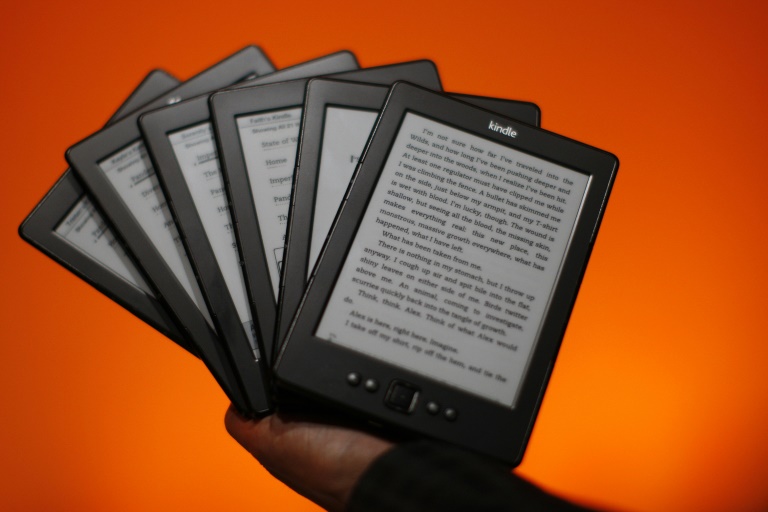
Amazon to close Kindle e-bookstore in China

US tech giant Amazon said Thursday that it will stop operating its Kindle e-bookstore in China from next year, closing the chapter on a massive consumer market.

The e-commerce pioneer has in recent years appeared to admit defeat to local Chinese rivals such as Alibaba and JD.com, ending its online retail operations for Chinese consumers in 2019.

Amazon’s decision to pull the Kindle service comes about eight years after it first set up an official store for the e-book reader on Alibaba’s Tmall platform.

“Amazon will stop operating its Kindle e-bookstore in China a year from now on June 30, 2023,” the company said Thursday in a statement on Chinese social media platform Weibo.

This means that customers can no longer buy new e-books, although those that have been purchased can still be downloaded until June 2024 and will remain readable afterwards, it said.

It did not give a reason for ending the service, but said its remaining China businesses would “continue to innovate and invest”.

“As a global business, we periodically evaluate our offerings and make adjustments, wherever we operate,” it added.

Customers can still buy Kindle devices from other Tmall retailers, but not from its official online store.

Amazon said in a separate notice that although it announced “the adjustment of Kindle-related business in China”, this does not change its long-term commitment to the market.

“Millions of Kindle reading devices” were sold in China between 2013 and 2018, according to state media outlet China Daily.

The report added that by end-2016, China became the biggest market for these devices.

Kindle’s exit is the latest among global brands, after US internet services giant Yahoo! pulled out of mainland China last year and Microsoft said it would close its career-oriented social network LinkedIn in the country.

Microsoft cited a “challenging operating environment” as Beijing tightened control over tech firms.

While e-commerce is very popular with Chinese consumers, Amazon has struggled to make headway in the country.

Local competitors such as Alibaba and JD.com have capitalised on their supplier networks and understanding of Chinese consumers to gain market share, before Amazon could acquire a foothold.

Asked about Kindle’s exit, Chinese commerce ministry spokesman Gao Feng said was “normal… to adjust products and services according to market development”.

Amazon has more than 10,000 staff and offices in 12 cities across China including Beijing, Shanghai, Hangzhou and Shenzhen, the company said.

OPEC debates oil output boost amid Russian isolation

Major oil producers led by Saudi Arabia and Russia hold talks Thursday on whether to adjust output, hard on the heels of an EU ban on Russian oil imports.

Analysts had expected OPEC+ producers to likely stick to their policy of only increasing output modestly, as they have done since May 2021.

However, a Wall Street Journal report on Monday that said OPEC was considering suspending Russia from the output deal has sown doubts.

“Such a move would effectively bring a premature end to the group’s supply agreement and pave the way for an unrestricted increase in output,” Stephen Brennock, an analyst at PVM Energy, said.

Oil prices sank more than two percent on Thursday on a similar Financial Times report that Saudi Arabia was considering a plan to boost output as Russia struggles to meet targets owing to Ukraine war-linked sanctions.

The 13 members of the Organization of the Petroleum Exporting Countries, chaired by Saudi Arabia, and their 10 partners, led by Russia, drastically slashed output in 2020 as demand slumped because of the coronavirus pandemic and worldwide lockdowns.

They have increased output modestly to the tune of around 400,000 barrels per day each month since last year, resisting pressure by top consumers, including the United States, to open the taps wider.

The expectation was that output would increase by another 432,000 barrels per day in July.

“OPEC will likely stick to its production increase plan and won’t make miracles at this week’s meeting,” said Ipek Ozkardeskaya, a senior analyst at Swissquote Bank.

She added, however, that the group may revise its strategy “by the end of September” with Saudi Arabia and United Arab Emirates possibly filling some of the gap. 

“The quota system doesn’t make sense when Russia is held back from increasing its production due to the fresh European sanctions,” she said.

– Russia a ‘pariah’ –

Talks by videoconference begin at the technical level at 1200 GMT coordinated by the OPEC headquarters in Vienna, before moving into a plenary session.

European Union leaders agreed on Monday to ban more than two-thirds of Russian oil imports as part of a sixth package of sanctions on Moscow over its offensive in Ukraine.

Britain has already said it plans to phase out Russian oil imports by the end of 2022 and eventually stop importing its gas.  

The United States, too, banned Russian oil and gas days after Russia’s invasion began on February 24.

“Russia has now transformed into a pariah… Apparent elevated US-Saudi shuttle diplomacy lately may indicate that change in OPEC+ may be near,” Seb analyst Bjarne Schieldrop commented.

“More oil from Saudi and the UAE will allow the West to implement sharper bans forcing Russian oil exports lower while not blowing up the oil price,” Schieldrop added.

– OPEC ‘reticence’ –

Russia’s invasion of Ukraine has exacerbated concerns about oil supplies, sending prices to record highs this year.

As the economic screws have tightened around Russia, prices have further soared, putting pressure on the cartel to open the valves more widely and relieve the market.

But Saudi Arabia, OPEC+’s de facto leader, has given no indication it is inclined to make such a move.

Saudi Foreign Minister Prince Faisal bin Farhan told last week’s World Economic Forum in Davos that the kingdom had “done what it could” for the oil market.

“It’s more complex than simply adding barrels to the market,” he added.

Members of the G7 club of industrialised nations last week underlined OPEC+’s “key role” in the face of the tightening of international markets.

Soaring oil prices have stimulated the Gulf region’s economies, with Saudi Arabia recording its highest growth rate in 10 years in the first quarter of 2022.

Susannah Streeter, an analyst at Hargreaves Lansdown, said there “is likely to still be reticence about turning on the taps too freely” as a result.

“OPEC has also previously warned that it will be impossible to replace all the volumes lost from Russia due to sanctions, which is still likely to stem further significant drops in crude prices.”

burs-jza/lth

Gunman kills four at Tulsa hospital in US mass shooting: police

A gunman has killed at least four people at a hospital building in Tulsa, Oklahoma, police said — the latest in a string of mass shootings across the United States in recent weeks.

The killings come as Texas families bury their dead after a school shooting left 19 young children dead just eight days earlier.

The Tulsa shooting suspect, who was armed with a rifle and a handgun during his attack on the Saint Francis hospital campus, died by suicide, police said Wednesday.

“Right now we have four civilians that are dead, we have one shooter that is dead, and right now we believe that is self-inflicted,” Tulsa Police Department Deputy Chief Eric Dalgleish told reporters.

He said officers responded immediately after emergency calls came in reporting that a gunman had stormed into the second floor of the Natalie Building, which houses a clinic on the Saint Francis campus.

Police “were hearing shots in the building” when they arrived, according to Dalgleish, who said officers then searched each room and floor while trying to clear the building during what authorities described as an active shooter situation.

Police Captain Richard Meulenberg said officers treated the scene as “catastrophic,” with “several” people shot and “multiple injuries.”

It was not clear how many other people might have been wounded. 

Dalgleish said the entire assault — from the moment emergency calls came in, to the time officers engaged the shooter — lasted about four minutes.

He also noted that the suspect had yet to be identified.

US President Joe Biden has been briefed on the shooting, the White House said in a statement, adding that the administration has offered support to Tulsa officials.

According to the Gun Violence Archive, there have been 233 mass shootings this year in the United States — more than one such incident per day in 2022 so far.

US media reported the country was hit by a dozen mass shootings over the recent Memorial Day weekend.

The United States generally counts mass shootings as involving four or more deaths.

– ‘Preventable’ –

Elizabeth Buchner, a legal assistant who lives behind the building where the shooting occurred, said she rushed out of her house when she heard helicopters and a loud commotion coming from the direction of the hospital.

“It was the most law enforcement I’ve ever seen at one place in my entire life,” Buchner, 43, told AFP by telephone.

She said she witnessed a tactical team rush inside as part of a response that she described as “fast and strong,” with “no hesitation.”

Melissa Provenzano, an Oklahoma state legislator, also praised the officers’ swift response.

“It could have been so much worse,” she told CNN.

But she expressed frustration at how such tragedies keep happening in the country.

“These things are preventable, and it’s time to wake up and address this.”

– Uvalde funerals –

The shooting is the latest in a spate of deadly assaults by gunmen that have rocked the United States in the past month.

On May 14 a white supremacist targeting African Americans killed 10 people at a grocery store in Buffalo, New York. The shooter survived and is facing charges.

Ten days later an 18-year-old gunman armed with an AR-15 burst into an elementary school in the small Texas town of Uvalde and killed 21 people — 19 of them young children — before being shot dead by law enforcement.

On Wednesday one of the two teachers killed in that attack was laid to rest in Uvalde, a day after the first funerals for the children.

Gun regulation faces deep resistance in the United States, from most Republicans and some rural-state Democrats.

But Biden — who visited Uvalde over the weekend — vowed earlier this week to “continue to push” for reform, saying: “I think things have gotten so bad that everybody is getting more rational about it.”

Some key federal lawmakers have also voiced cautious optimism and a bipartisan group of senators worked through the weekend to pursue possible areas of compromise.

They reportedly were focusing on laws to raise the minimum age for gun purchases or to allow police to remove such weapons from people considered a threat to themselves or others — but not on an outright ban on high-powered rifles like those used in Uvalde and Buffalo.

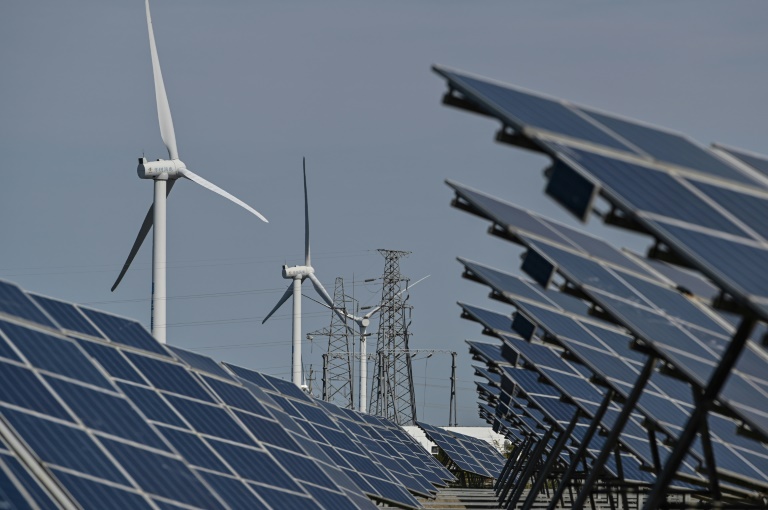
China to double wind, solar energy capacity by 2025

China aims to double its wind and solar capacity by 2025, according to a new road map that also allows for more coal-fired power plants to bolster energy security.

The world’s biggest polluter earlier estimated it needs to double wind and solar use by 2030 to deliver on its pledges under the Paris climate accord.

The latest plan — if implemented — means China might reach that goal earlier.

But Beijing has also ramped up reliance on coal-fired power plants in recent months to support its ailing economy as the Ukraine war pushes up global energy prices.

The country’s central economic planner said 33 percent of power supply to the national grid will come from renewable sources by 2025, up from 29 percent in 2020, in a document released Wednesday.

“In 2025, the annual power generation from renewable energy will reach about 3.3 trillion kilowatt-hours… and the wind power and solar power generation will double,” the plan said.

China, already the world’s largest producer of renewable energy, has accelerated investment in solar and wind projects to tackle pollution at home, which researchers say kills millions every year.

Beijing has pledged to peak emissions by 2030 and become carbon neutral by 2060.

Investment in solar energy nearly tripled in the first four months of the year to 29 billion yuan ($4.3 billion) compared with January to April investment in the previous year, data from the National Energy Administration shows.

But China’s energy policy has remained a two-headed beast, with the country burning about half the coal used globally each year to power its economy.

Policymakers further embraced coal as the Ukraine war pushed up prices of oil and natural gas.

Premier Li Keqiang said coal underpinned China’s energy security in an emergency meeting last week to address economic woes, and the central bank has approved a $15 billion credit line to fund coal mining and coal-fired plants.

In March, the cabinet ordered miners to dig up 300 million tons of extra coal this year.

Local governments started building new power plants last year that will boost capacity from coal by the most since 2016, after an energy crunch paralysed swathes of the economy.

Lauri Myllyvirta, lead analyst at the Centre for Research on Energy and Clean Air, said “energy security — avoiding another energy shortage and managing geopolitical risks — is the overwhelming priority” for China with the economic outlook uncertain.

The latest energy plan says renewables will supply “50 percent of the growth in power consumption” to 2025, lower than previous official estimates and signalling more room to expand coal power.

“The planners are projecting, or preparing for, faster demand growth which would see fossil fuel use and emissions still increase,” Myllyvirta said.

Amazon to close Kindle bookstore in China

US tech giant Amazon said Thursday that it will stop operating its Kindle e-bookstore in China from next year, closing the chapter on a massive consumer market.

The e-commerce pioneer has in recent years appeared to admit defeat to local Chinese rivals such as Alibaba and JD.com, ending its online retail operations for Chinese consumers in 2019.

Amazon’s decision to pull the Kindle service comes about eight years after it first set up an official store for the e-book reader on Alibaba’s Tmall platform.

“Amazon will stop operating its Kindle e-bookstore in China a year from now on June 30, 2023,” the company said Thursday in a statement on Chinese social media platform Weibo.

This means that customers can no longer buy new e-books, although those that have been purchased can still be downloaded until June 2024 and will remain readable afterwards, it said.

It did not give a reason for ending the service.

Customers can still buy Kindle devices from other Tmall retailers, but not from its official online store.

Amazon said in a separate notice that although it announced “the adjustment of Kindle-related business in China”, this does not change its long-term commitment to the market.

“Millions of Kindle reading devices” were sold in China between 2013 and 2018, according to state media outlet China Daily.

The report added that by end-2016, China became the biggest market for these devices.

Kindle’s exit is the latest among global brands, after US internet services giant Yahoo pulled out of mainland China last year and Microsoft said it would close its career-oriented social network LinkedIn in the country.

Microsoft cited a “challenging operating environment” as Beijing tightened control over tech firms.

While e-commerce is very popular with Chinese consumers, Amazon has struggled to make headway in the country.

Local competitors such as Alibaba and JD.com have capitalised on their supplier networks and understanding of Chinese consumers to gain market share, before Amazon could acquire a foothold.

Asked about Kindle’s exit, Chinese commerce ministry spokesman Gao Feng said was “normal… to adjust products and services according to market development”.

Currently, Amazon China has more than 10,000 staff and offices in 12 cities including Beijing, Shanghai, Hangzhou and Shenzhen, the company said.

Close Bitnami banner
Bitnami