US Business

Jubilee boost then brake predicted for UK economy

Queen Elizabeth II’s Platinum Jubilee should provide a boost to Britain’s beleaguered retail and tourism sectors, but could also then slow the stuttering economy, analysts said on Wednesday.

Thursday sees the start of four days of festivities to mark the 96-year-old monarch’s record-breaking 70 years on the throne.

With two public holidays on Thursday and Friday, then the weekend, supermarket chain Co-op predicted “a bigger sales period than Christmas”.

“Sales are set to be booming in the run-up to the bank holiday weekend, with shoppers set to flock to the stores on Wednesday,” it added.

It forecast a 10-percent increase in wine sales alone, and was expecting to sell 500,000 bottles of sparkling wine and 30,000 bottles of Champagne.

Double the amount of English fizz was also predicted to fly off the shelves, as people look to toast the occasion with a taste of patriotism.

The UK government said more than 200,000 local events and street parties were expected to be held across the country over the four days.

VisitBritain, which promotes British tourism, said the celebrations could bring in some £1.2 billion ($1.5 billion, 1.4 billion euros) to the economy.

Some 5.3 million Britons are likely to take time off work, it added.

Co-op is expecting to sell 500,000 sausages and 400,000 packets of crisps and other snacks — 25 percent more than normal.

“The key lines such as bunting and flags have done very well this week along with beers, spirits and crisps,” the Morrisons chain said.

“Jubilee-themed products” such as corgi-shaped cakes, cupcakes and pies were also proving popular, a spokeswoman told AFP.

– ‘Hangover’ –

Susannah Streeter, an analyst at Hargreaves Lansdown, said grocers were “set to get a mini-boost in sales”.

At the same time, hotels and restaurants as well as tourist activities that were hit badly during the pandemic will benefit, she added.

VisitBritain estimates that Covid cost the UK tourism sector up to £97.1 billion in 2020 and 2021, mostly due to a lack of foreign visitors.

But Streeter said the extra-long weekend would likely see a “drop in productivity, as flag-waving, parties and barbecues replace hours punching keyboards and on factory floors”.

The Golden Jubilee celebrations in 2002 saw production fall by 5.4 percent, and it dipped again in 2012 for the queen’s 60th anniversary, she added.

“So don’t be surprised if a hangover comes in the form of a knock to economic output in June’s GDP (gross domestic product) snapshot after all the fun.”

But Michael Hewson, an analyst at CMC Markets, said historical data showed that any retraction would be temporary and productivity would bounce back.

In 2002 and 2012, he said, “we saw a strong rebound the following month”.

“If, as seems likely, the UK economy contracts in Q2 (second quarter) this year, the jubilee bank holiday is unlikely to be the primary reason,” he added.

Greater blame should be attached to consumers spending and travelling less in the midst of a cost-of-living crisis, as government taxes also go up, Hewson said.

US, Taiwan launch trade talks in challenge to China

The United States and Taiwan launched talks on Wednesday aimed at deepening their trade ties, in a clear challenge to Beijing.

The process, labeled the US-Taiwan Initiative on 21st-Century Trade, follows an agreement President Joe Biden announced last week with 12 Asian economies, which excluded Taiwan.

Like that effort, the discussions with Taiwan will not involve tariffs or market access — items that would require congressional approval, officials said.

“Both sides will work at pace… to develop an ambitious roadmap for negotiations for reaching agreements with high-standard commitments and economically meaningful outcomes,” the US Trade Representative said in a statement.

Despite the limited scope of the talks, which a senior administration official said was in keeping with the “unofficial” relationship with Taipei, they are likely to anger Beijing which bristles at any sign Washington is treating the self-governing democracy as an independent nation.

China claims sovereignty over Taiwan and opposes its participation in international fora including a Pacific trade pact.

Beijing has engaged in frequent saber rattling to show its displeasure: China on Monday made the second largest incursion into Taiwan’s air defense zone this year with Taipei reporting 30 jets entering the area, including more than 20 fighters.

US Secretary of State Antony Blinken accused China of “increasingly provocative rhetoric and activity.” 

Biden also is under pressure to deepen ties with the island after a bipartisan group of 52 senators urged him to include Taiwan in the Indo-Pacific Economic Framework (IPEF) launched last week, which includes about 40 percent of the global economy.

They argued in a letter to Biden that leaving an important trading partner out would “allow the Chinese government to claim that the international community does not in fact support meaningful engagement with Taiwan.”

– ‘Robust’ relationship –

A senior official said there is still time to add Taiwan to that effort.

“We didn’t include Taiwan in the initial launch. However, going forward, we intend to take a flexible and adaptable approach to IPEF participation,” the official told reporters.

The official reiterated Washington’s “long-standing one China policy,” but said the Biden administration also maintains a “robust unofficial relationship with Taiwan and… is committed to deepening it.”

Deputy USTR Sarah Bianchi and Taiwan’s lead trade negotiator John Deng met on Wednesday to launch the new initiative, which the trade agency said “is intended to develop concrete ways to deepen the economic and trade relationship, advance mutual trade priorities based on shared values, and promote innovation and inclusive economic growth for our workers and businesses.”

The first meeting under the initiative will be held in Washington later in June, and will cover customs procedures and regulations, including rules governing agriculture trade, worker rights and the fight against “harmful non-market policies” — a clear reference to China.

Another administration official said the goal is to produce a “high framework, binding agreement,” but gave no timeframe for reaching a deal.

Taiwan is the 10th largest export market for the United States as well as a vital source of semiconductors which are seeing a global shortage, hitting industries that rely on them from autos to smartphones and pushing inflation higher.

The US Commerce Department has launched a separate dialogue with Taipei on technology and investment — two other areas covered by IPEF.

Ukraine braces for Severodonetsk fall, awaits new US weapons

Ukraine looked close to losing the key eastern city of Severodonetsk to Russian forces but was boosted Wednesday by the US decision to send more advanced rocket systems to help with its defence.

“The Russians control 70 percent of Severodonetsk,” Lugansk region governor Sergiy Gaiday announced on Telegram, adding that Ukrainian forces were withdrawing to prepared positions.

“If in two or three days, the Russians take control of Severodonetsk, they will install artillery and mortars and will bombard more intensely Lysychansk,” the city across the river, which Gaiday said remained held by Kyiv.

One of the industrial hubs on Russia’s path to taking the eastern Lugansk region, Severodonetsk has become a target of massive Russian firepower since the failed attempt to capture Kyiv.

But in a boost for the outgunned Ukrainian military, President Joe Biden confirmed that more US weaponry was on the way to allow them to “more precisely strike key targets” in Ukraine.

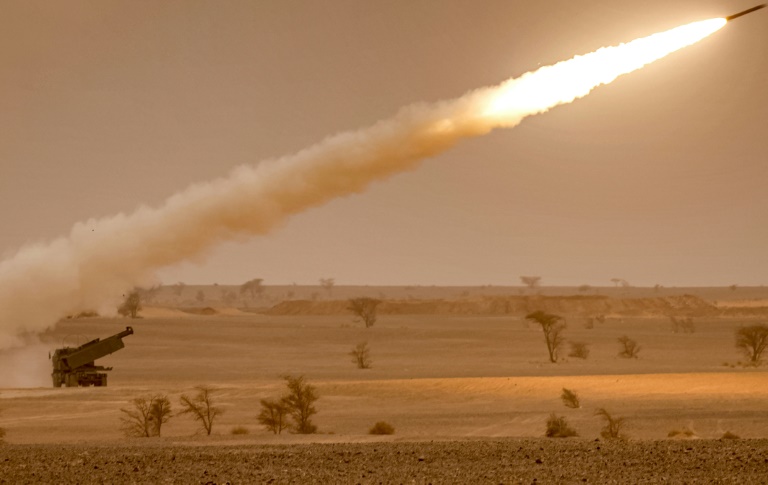
The new weapon is the Himars multiple launch rocket system, or MLRS: a mobile unit that can simultaneously launch multiple precision-guided missiles.

They are the centrepiece of a $700 million package being unveiled Wednesday that includes air-surveillance radar, more Javelin short-range anti-tank rockets, artillery ammunition, helicopters, vehicles and spare parts, a US official said.

With a range of about 50 miles (80 kilometres), they will allow Ukrainian forces to strike further behind Russian lines.

– ‘Fuel to the fire’ –

Kremlin spokesman Dmitry Peskov accused Washington of “adding fuel to the fire”, saying “such supplies” did not encourage Kyiv to resume peace talks.

In an article in the New York Times, Biden insisted: “We are not encouraging or enabling Ukraine to strike beyond its borders.”

He wrote: “We do not seek a war between NATO and Russia. As much as I disagree with Mr. (President Vladimir) Putin, and find his actions an outrage, the United States will not try to bring about his ouster in Moscow. 

“So long as the United States or our allies are not attacked, we will not be directly engaged in this conflict, either by sending American troops to fight in Ukraine or by attacking Russian forces.”

While some analysts have suggested the Himars could be a “game-changer”, others caution they should not be expected to suddenly turn the tables, not least because Ukrainian troops need time to learn how to use them effectively.

What they may do is improve morale, according to one Ukrainian soldier getting pummelled on the front line.

“If you know you have a heavy weapon behind you, everyone’s spirits rise,” one fighter who uses the nom de guerre Luzhniy told AFP before the announcement.

– ‘Just crazy’ –

On Tuesday, Russian forces struck a tank containing nitric acid at a chemical plant in Severodonetsk, prompting the local governor to warn people to stay indoors. 

Ukrainian President Volodymyr Zelensky said Russia’s strikes in the area, “including blind air bombing, are just crazy”.

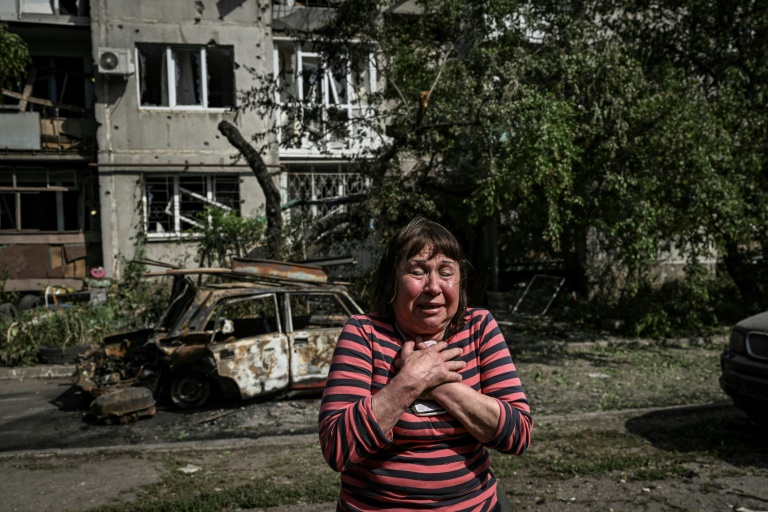
West of Severodonetsk, in the city of Sloviansk, AFP journalists saw buildings destroyed by a rocket attack in which three people died and six others were hurt.

And on Wednesday, at least one person died and two others were injured in Soledar, between Sloviansk and Severodonetsk, AFP saw.

The European Union has also sent weapons and cash for Ukraine, while levelling unprecedented economic sanctions on Moscow.

Leaders this week agreed a ban on most Russian oil imports but played down the prospects of shutting off Russian gas on which many member states are hugely dependent.

Russia has sought to get around sanctions by demanding payment for gas in rubles, cutting off countries that refuse. Denmark was set to become the latest target Wednesday, after the Netherlands, Finland, Poland and Bulgaria.

Russia’s Gazprom said Wednesday its gas exports to countries outside of the former Soviet Union had dropped by more than a quarter year-on-year between January and May.

Danes meanwhile were voting on whether to overturn the country’s opt-out on the EU’s common defence policy.

The referendum came just weeks after neighbouring Finland and Sweden abandoned decades of military non-alignment by applying to join NATO as a defence against Russian aggression.

Moscow said Wednesday it had no information on the death of a French journalist in Ukraine. 

Frederic Leclerc-Imhoff, of French broadcaster BMFTV, was killed on Monday while covering the evacuation of civilians in the east of the country.

– A ‘few thousand’ war crimes –

On the eastern frontline in Donbas, Ukrainian towns were being subjected to near-constant shelling from Russian forces.

Ukraine’s prosecutor general Iryna Venediktova said authorities had identified a “few thousand” cases of war crimes in the Donbas, including murder, torture and the forced displacement of children.

The key Zelensky aide, who met international counterparts in The Hague on Tuesday, said Kyiv was already set to prosecute 80 suspects for alleged war crimes on Ukrainian soil.

A Ukrainian court on Tuesday jailed two Russian soldiers for 11 and a half years for shelling two villages in the northeastern Kharkiv region.

Earlier this month, another was jailed for life for murdering a civilian, although he has appealed.

Russia’s invasion of its pro-Western neighbour is also threatening a global food crisis, with Ukraine’s huge grain harvest effectively taken off the world market. 

French President Emmanuel Macron, German Chancellor Olaf Scholz and Italian Prime Minister Mario Draghi have all urged Putin to end Russia’s blockade of the port of Odessa.

But Russian Foreign Minister Sergei Lavrov said it was up to the West and Kyiv to resolve the crisis, starting with the lifting of sanctions.

In Kyiv, meanwhile, Ukrainian football fans were set to watch their national side play its first official match since Russia’s invasion, facing Scotland in a World Cup qualifier later Wednesday in Glasgow.

“I am hoping for victory,” 44-year-old army serviceman, Andriy Veres, told AFP. 

“These days it is very important for the country, for all people, for all those who are fans and even for those who are not.”  

burs-ar/jj

Markets waver on inflation worry; oil rebounds from losses

Asian and European stock markets wavered on Wednesday, as traders digested Wall Street losses and data showing that runaway inflation shows no sign of easing.

Oil however rallied after sinking sharply on reports that OPEC was considering suspending Russia from an output deal, which observers said could allow producers to pump more.

Equities have enjoyed a largely healthy run of late on hopes that inflation could be nearing a peak and a sell-off across markets may have run its course.

The easing of some lockdown measures in China added to the optimism.

Yet investors were brought down to earth with a bump Tuesday after data showed that eurozone inflation hit a record high in May on rocketing energy costs.

The news puts extra pressure on the European Central Bank to act quicker to rein in prices by hiking interest rates, along with the Bank of England and the US Federal Reserve.

Markets remain fearful as the Ukraine conflict fuels massive price gains for energy and food, translating into spiking inflation — and damaging the post-pandemic global economic recovery.

“There are heightened concerns around inflation and where central banks are likely to go trying to combat inflation,” Kristina Hooper, of Invesco Advisers, told Bloomberg Radio.

“This has gone from just an inflation scare to a growth scare. Uncertainty has grown.”

– Oil rebounds – 

Equities were also mixed in Asia, with traders shrugging off a further easing of lockdown restrictions in China that many hope will give a much-needed boost to the world’s number two economy.

Hong Kong and Shanghai slipped along with Taipei, Bangkok, Mumbai and Manila, though Tokyo, Sydney, Singapore and Wellington rose.

Back in Europe, London fell and Frankfurt rose, while Paris flatlined.

The oil market rebounded somewhat after tanking by more than four percent late Tuesday in reaction to a Wall Street Journal report that OPEC was considering removing Russia from an agreement that has locked producers into limited output increases.

Moscow’s removal would mean an early end to the pact and allow major crude nations such as Saudi Arabia to open the taps, analysts said.

“If there’s any confirmation from OPEC+ members that the absence of Russia is being discussed, then prices can drop to as low as $100,” said Will Sungchil Yun, at VI Investment Corp. 

– Key figures at around 1115 GMT –

London – FTSE 100: DOWN 0.4 percent at 7,580.33 points

Frankfurt – DAX: UP 0.3 percent at 14,431.51

Paris – CAC 40: FLAT at 6,468.99

EURO STOXX 50: FLAT at 3,788.16

Tokyo – Nikkei 225: UP 0.7 percent at 27,457.89 (close)

Hong Kong – Hang Seng Index: DOWN 0.6 percent at 21,294.94 (close)

Shanghai – Composite: DOWN 0.1 percent at 3,182.16 (close)

New York – Dow: DOWN 0.7 percent at 32,990.12 (close)

Euro/dollar: DOWN at $1.0720 from $1.0734 on Tuesday

Pound/dollar: DOWN at $1.2586 from $1.2602

Euro/pound: UNCHANGED at 85.18 pence

Dollar/yen: UP at 129.39 yen from 128.67 yen

Brent North Sea crude: UP 1.5 percent at $117.33 per barrel

West Texas Intermediate: UP 1.5 percent at $116.35

Asian markets mixed on inflation worry, oil bounces after drop

Asian markets fluctuated Wednesday following losses on Wall Street and data reminding traders that inflation shows no sign of easing.

Oil rallied after seeing a sharp drop earlier on reports that OPEC was considering suspending Russia from an output deal, which observers said could allow producers to pump more.

Regional equities have enjoyed a largely healthy run of late on hopes that inflation could be nearing a peak and a sell-off across markets may have run its course, while the easing of some lockdown measures in China added to the optimism.

However, investors were brought down to earth with a bump Tuesday with figures showing eurozone inflation hit a record high in May owing to rocketing energy costs.

The news puts extra pressure on the European Central Bank to act quicker to rein in prices by hiking interest rates along with the Federal Reserve.

There is a fear that acting too late could mean policymakers will have to announce harder, more painful increases later on.

“There are heightened concerns around inflation and where central banks are likely to go trying to combat inflation,” Kristina Hooper, of Invesco Advisers, told Bloomberg Radio.

“This has gone from just an inflation scare to a growth scare. Uncertainty has grown.”

Equity markets were mixed in Asian trade, with traders shrugging off a further easing of lockdown restrictions in China that many hope will give a much-needed boost to the world’s number two economy.

Hong Kong and Shanghai slipped along with Taipei, Bangkok, Mumbai and Manila, though Tokyo, Sydney, Singapore and Wellington rose. London fell in early trade but Paris and Frankfurt were in the green.

But ACY Securities chief economies Clifford Bennett remained wary.

“After this brief euphoria stock prices are again vulnerable to a mass ‘get-out’ frenzy as the reality of the already in full swing global slow-down accompanied by ever-higher interest rates begin to take their toll,” he said in a commentary.

Oil prices struggled to rebound after falling more than four percent late Tuesday in reaction to a Wall Street Journal report that OPEC was considering removing Russia from an agreement that has locked producers into limited output increases.

Moscow’s removal would mean an early end to the pact and allow major crude nations such as Saudi Arabia to open the taps, analysts said.

“If there’s any confirmation from OPEC+ members that the absence of Russia is being discussed, then prices can drop to as low as $100,” said Will Sungchil Yun, at VI Investment Corp. 

“There’s a need for OPEC+ to come up with a plan, as oil prices are likely to keep surging and boost inflationary pressure.”

Matthew Simpson of StoneX Financial said that it was debatable whether such a move would offset a partial European Union embargo on Russia and the expected pick-up in Chinese demand as lockdowns are eased.

But he added that “it can also be argued that much of the drivers behind oil’s recent rally has been priced in. Regardless, we can see that some wind has been taken out of the oil rally sails”.

– Key figures at around 0810 GMT –

Tokyo – Nikkei 225: UP 0.7 percent at 27,457.89 (close)

Hong Kong – Hang Seng Index: DOWN 0.6 percent at 21,294.94 (close)

Shanghai – Composite: DOWN 0.1 percent at 3,182.16 (close)

London – FTSE 100: DOWN 0.1 percent at 7,599.78

Euro/dollar: DOWN at $1.0731 from $1.0739 on Tuesday

Pound/dollar: UP at $1.2605 from $1.2603

Euro/pound: DOWN at 85.14 pence from 85.18 pence

Dollar/yen: UP at 129.24 yen from 128.72 yen

Brent North Sea crude: UP 1.9 percent at $117.76 per barrel

West Texas Intermediate: UP 1.9 percent at $116.87 per barrel

New York – Dow: DOWN 0.7 percent at 32,990.12 (close)

— Bloomberg News contributed to this story —

Shanghai euphoria tempered by deep wound to China's economy

Orders have evaporated at Zhou’s textile company based just outside Shanghai, a city now stumbling free from a two-month lockdown that has left small businesses on life support.

Sales are on “a very serious downward slope” and layoffs are imminent at his factory, owner Zhou told AFP, asking for his company to remain unidentified.

The firm is based in Zhejiang province, the anteroom to Shanghai’s cavernous consumer and manufacturing market.  

His is one of tens of thousands of small enterprises clinging to life as China’s strict zero-Covid policies drive a crippling economic slowdown.

Shanghai, a city of 25 million, is the centre for innumerable supply lines that radiate across the country’s eastern seaboard, including Tesla cars and iPhones.

For Zhou, survival will be his only thought over the next two months in an economy whose growth forecast has been clipped by rating agencies.

“I will have to fire people,” Zhou said, as he scours for customers to fill his order book.

– Supply chains chained –

Beijing is tied to a strategy of eliminating Covid outbreaks through harsh lockdowns and mass testing, even as most of the rest of the world has chosen to live with the virus.

That has meant closing factories, disrupting logistics, and squeezing travel to almost zero for weeks on end in major manufacturing hubs including Shenzhen and Shanghai, home to the world’s busiest container port.

Factory activity nationwide plummeted to a two-year low in April after Shanghai shut its 25 million residents at home while multiple Omicron-driven outbreaks bubbled up elsewhere, with activity continuing to shrink — albeit at a slower pace — into May.

The slowdown has choked entire supply lines.

“Downstream factories, stores and businesses are all affected,” Xu Xuebing, owner of Shanghai-based wood supplier Sam Wood told AFP.

“The impact is big… I didn’t even (try to) evaluate how much I have lost during the lockdown,” Xu said, adding he hopes the next two to three months could see a bounce-back.

Shanghai’s lockdown has calcified businesses across China, analysts say, with fears any new virus clusters could see swathes of the country once more plunged into lockdown.

“Lingering uncertainties” are bad for business confidence, Peiqian Liu, China Economist at NatWest Markets, told AFP.

 – Constant uncertainty –

Reopening also does not guarantee total recovery, Zhaopeng Xing, senior China strategist at ANZ Research, warned.

“Mobility inside Shanghai is lifted,” Xing said. 

“But the restrictions when you go outside of Shanghai are still there.” 

“A lot of logistics issues haven’t been restored 100 percent to previous levels,” Xing said, adding “the losses of the past two months” would not be easy to recover from.

Spooked by the unpredictability and harshness of the Shanghai lockdown, foreign businesses have also raised fears over their futures in China.

Meanwhile, experts say smaller enterprises will shy away from hiring “due to the uncertainty of business environment from future lockdowns,” Iris Pang, chief economist for Greater China at ING, told AFP. 

China’s urban youth unemployment rate hit 18.2 percent in April, according to the National Bureau of Statistics.

– Staying alive –

Sagging economic indicators have alarmed Chinese authorities, who are now rushing to inflate confidence and prop up ailing sectors.

The central government has said it will offer tax relief and a bond drive to help industries while increasing government procurement from smaller businesses.

But analysts are cautious about China’s growth in the coming months, with Moody’s on Monday lowering its annual growth forecast to 4.5 percent. 

Beijing is likely to “hand out its stimulus as fast as possible”, Natixis economist Gary Ng said.

“But the rebound may not arrive in Q3 2022 and it is unlikely to see a big change in the Covid-19 policy until the year-end,” he added.

For Zhou the textile maker, survival trumps profit in zero-Covid China.

“I don’t need to make more money than my competitors, but I need to be able to hold on for longer than them over this difficult period,” he said. “This is my short-term plan.”

Asian markets mixed on inflation worry, oil bounces after drop

Asian markets fluctuated Wednesday following losses on Wall Street and data reminding traders that inflation shows no sign of easing.

Oil rose around one percent after seeing a sharp drop earlier on reports that OPEC was considering suspending Russia from an output deal, which observers said could allow producers to pump more.

Regional equities have enjoyed a largely healthy run of late on hopes that inflation could be nearing a peak and a sell-off across markets may have run its course, while the easing of some lockdown measures in China added to the optimism.

However, investors were brought down to earth with a bump Tuesday with figures showing eurozone inflation hit a record high in May owing to rocketing energy costs.

The news puts extra pressure on the European Central Bank to act quicker to rein in prices by hiking interest rates along with the Federal Reserve.

There is a fear that acting too late could mean policymakers will have to announce harder, more painful increases later on.

“There are heightened concerns around inflation and where central banks are likely to go trying to combat inflation,” Kristina Hooper, of Invesco Advisers, told Bloomberg Radio.

“This has gone from just an inflation scare to a growth scare. Uncertainty has grown.”

Equity markets were mixed in Asian trade, with traders shrugging off a further easing of lockdown restrictions in China that many hope will give a much-needed boost to the world’s number two economy.

Hong Kong and Shanghai slipped along with Taipei, Bangkok and Manila, though Tokyo, Sydney, Mumbai, Singapore and Wellington rose. London, Paris and Frankfurt opened on a positive note.

But ACY Securities chief economies Clifford Bennett remained wary.

“After this brief euphoria stock prices are again vulnerable to a mass ‘get-out’ frenzy as the reality of the already in full swing global slow-down accompanied by ever-higher interest rates begin to take their toll,” he said in a commentary.

Oil prices struggled to rebound after falling more than four percent late Tuesday in reaction to a Wall Street Journal report that OPEC was considering removing Russia from an agreement that has locked producers into limited output increases.

Moscow’s removal would mean an early end to the pact and allow major crude nations such as Saudi Arabia to open the taps, analysts said.

“If there’s any confirmation from OPEC+ members that the absence of Russia is being discussed, then prices can drop to as low as $100,” said Will Sungchil Yun, at VI Investment Corp. 

“There’s a need for OPEC+ to come up with a plan, as oil prices are likely to keep surging and boost inflationary pressure.”

Matthew Simpson of StoneX Financial said that it was debatable whether such a move would offset a partial European Union embargo on Russia and the expected pick-up in Chinese demand as lockdowns are eased.

But he added that “it can also be argued that much of the drivers behind oil’s recent rally has been priced in. Regardless, we can see that some wind has been taken out of the oil rally sails”.

– Key figures at around 0720 GMT –

Tokyo – Nikkei 225: UP 0.7 percent at 27,457.89 (close)

Hong Kong – Hang Seng Index: DOWN 0.5 percent at 21,307.40

Shanghai – Composite: DOWN 0.1 percent at 3,182.16 (close)

London – FTSE 100: UP 0.3 percent at 7,626.80

Euro/dollar: DOWN at $1.0724 from $1.0739 on Tuesday

Pound/dollar: DOWN at $1.2601 from $1.2603

Euro/pound: DOWN at 85.12  pence from 85.18 pence

Dollar/yen: UP at 129.38 yen from 128.72 yen

Brent North Sea crude: UP 1.0 percent at $116.76 per barrel

West Texas Intermediate: UP 1.0 percent at $115.85 per barrel

New York – Dow: DOWN 0.7 percent at 32,990.12 (close)

— Bloomberg News contributed to this story —

US to send Ukraine advanced weapons, as battle for east rages

President Joe Biden has said the United States will send more advanced rocket systems to Ukraine, as Russian troops press their ferocious bid to complete the capture of a key eastern city.

The battle for Severodonetsk has grown in intensity in recent days, with heavy casualties on both the Ukrainian and Russian sides.

“The Russians are storming, consolidating in the centre of Severodonetsk, while continuing to destroy infrastructure and industrial facilities,” Lugansk region governor Sergiy Gaiday wrote on Telegram early Wednesday. 

One of the industrial hubs on Russia’s path to taking the eastern Lugansk region, Severodonetsk has become a target of massive Russian firepower since the failed attempt to capture Kyiv.

The Russians now control most of the destroyed city, according to regional authorities.

But in a boost for the outgunned Ukrainian military, Biden has confirmed that more US weaponry is on the way.

“We will provide the Ukrainians with more advanced rocket systems and munitions that will enable them to more precisely strike key targets on the battlefield in Ukraine,” Biden wrote in The New York Times.

A US official told reporters the weapons being sent are Himars, or the High Mobility Artillery Rocket System, which have precision-guided munitions and a longer range than those currently deployed by Ukraine.

The Himars are the centrepiece of a $700 million package being unveiled Wednesday that includes air surveillance radar, more Javelin short-range anti-tank rockets, artillery ammunition, helicopters, vehicles and spare parts, the official said.

The US is attempting to help Kyiv’s war effort while not being seen as a direct belligerent, and the official stressed that while the weapons would be used to “repel Russian advances on Ukrainian territory”, they would not be “used against Russia”. 

While some analysts have suggested the Himars could be a “game-changer”, others say they should not be expected to suddenly turn the tables for Ukrainian forces struggling under Russian artillery fire.

– ‘Just crazy’ –

The US announcement came shortly after Russian forces struck the nitric acid tank in Severodonetsk, prompting the local governor to warn people to stay indoors. 

Ukrainian President Volodymyr Zelensky said that “given the presence of large-scale chemical production in Severodonetsk, the Russian army’s strikes there, including blind air bombing, are just crazy”.

Meanwhile, in Brussels, European Union leaders were split over banning natural gas from Moscow after agreeing to embargo two-thirds of its oil to tighten the economic screws.

Denmark on Wednesday was set to become the latest European country to be targeted by Russia over gas exports, following the Netherlands, Finland, Poland and Bulgaria.

Danish energy firm Orsted said Russian monopoly Gazprom Export would cut gas supplies after the Danes refused to pay in rubles, a demand Moscow is making of “unfriendly countries” in a bid to sidestep crippling Western sanctions. 

Also on Wednesday, residents of Denmark will vote on whether to overturn the country’s opt-out on the EU’s common defence policy, a referendum that comes on the heels of neighbouring Finland’s and Sweden’s historic applications for NATO membership  

The situation on the eastern frontline in Donbas, meanwhile, has become increasingly desperate, with Ukrainian towns facing near-constant shelling from Russian forces.

French journalist Frederic Leclerc-Imhoff was killed Monday while covering civilian evacuations in the Donbas.

– A ‘few thousand’ war crimes –

Ukraine’s prosecutor general Iryna Venediktova said authorities had identified a “few thousand” cases of war crimes in the Donbas, including murder, torture and the forced displacement of children.

The key Zelensky aide, who met with international counterparts in The Hague on Tuesday, said Kyiv was already going to prosecute 80 suspects for alleged war crimes on Ukrainian soil.

A Ukrainian court on Tuesday jailed two Russian soldiers for 11 and a half years for shelling two villages in the northeastern Kharkiv region. Earlier this month, another was jailed for life for murdering a civilian.

Russia’s invasion of its pro-Western neighbour is also threatening a global food crisis, with Ukraine’s huge grain harvest effectively taken off the world market. 

French President Emmanuel Macron said Tuesday that he and German Chancellor Olaf Scholz had urged Russian leader Vladimir Putin to end Russia’s blockade of the Ukrainian port of Odessa.

But Russian Foreign Minister Sergei Lavrov said it was up to the West and Kyiv to resolve the crisis, starting with the lifting of sanctions.

In Kyiv, meanwhile, Ukrainian football fans were set to watch their national side play its first official match since Russia’s invasion, facing Scotland in a World Cup qualifier later Wednesday in Glasgow.

“I am hoping for victory,” 44-year-old army serviceman, Andriy Veres, told AFP. 

“These days it is very important for the country, for all people, for all those who are fans and even for those who are not.”  

burs-sr/cwl

Singaporeans in a flap at Malaysian chicken export curbs

Long queues at stalls selling a popular chicken dish, increasing prices and warnings about supply disruptions — Singaporeans are in a flap due to curbs on poultry exports from neighbouring Malaysia. 

Malaysia’s move to halt exports of 3.6 million chickens a month, which kicks in Wednesday, is the latest protectionist move in Asia aimed at tackling domestic shortages and taming surging inflation.

But the surprise step has caused consternation in Singapore, a tiny city-state that relies on its larger neighbour for a good chunk of food imports, including around a third of its chicken. 

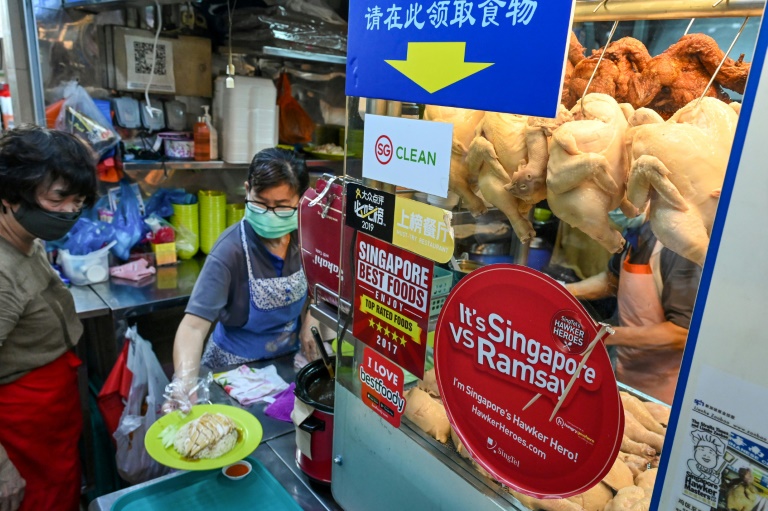
Of particular concern is the impact on chicken rice, a hugely popular dish of poached chicken, rice and chili dip, often sold at the city-state’s ubiquitous open-air food courts. 

Chicken prices “will definitely go up”, said Foo Kui Lian, founder of Tian Tian Hainanese Chicken Rice, one of the best-known stalls selling the dish in Singapore. 

“If (suppliers) raise prices by a lot we would have to raise ours a bit, or it’ll be difficult for us to survive.”

A day before the export curbs kicked in, a long queue formed at the stall as diners sought to get a taste of the dish before a feared surge in prices. 

Office worker Meilan Lim was among those who bought the dish ahead of the restrictions.

“Even though I’m not really a chicken rice person, it’s just that sometimes you do have the craving,” she told AFP.

“So if (the ban is) going to be lasting for a while, it’s going to be a problem for me.”

Some stall holders have already hiked their prices, and officials are warning about disruptions to chicken supplies. 

The city-state’s food agency has advised consumers to buy only what they need, consider buying frozen instead of refrigerated chicken, or shift to different meats.

Most chickens from Malaysia are imported to Singapore alive, and then slaughtered and chilled there. Frozen chicken is often imported from other countries, including Brazil. 

Like many other countries, Malaysia is battling rising inflation, particularly when it comes to food, which prompted it to impose the curbs. 

But Singapore — which has had a fractious relationship with Kuala Lumpur for decades — is also facing rising prices, with inflation at a decade-high. 

Other countries that have taken protectionist measures include India, which banned wheat exports and Indonesia, which temporarily halted palm oil shipments. 

The moves come as concerns grow worldwide about food insecurity caused by supply chain snarls, climate change and Russia’s invasion of Ukraine, a major grain producer.

US to send Ukraine advanced weapons, as battle for east rages

President Joe Biden has said the United States will send more advanced rocket systems to Ukraine, as Russian troops press their ferocious bid to complete the capture of a key eastern city.

The battle for Severodonetsk has grown in intensity in recent days, with heavy casualties on both the Ukrainian and Russian sides.

Russian troops hit a nitric acid tank at a chemical plant in the city on Tuesday, prompting Ukrainian President Volodymyr Zelensky to accuse Moscow of “madness”.

One of the industrial hubs on Russia’s path to taking the eastern Lugansk region, Severodonetsk has become a target of massive Russian firepower since the failed attempt to capture Kyiv.

The Russians now control most of the destroyed city, according to regional authorities.

But in a boost for the outgunned Ukrainian military, Biden has confirmed that more US weaponry is on the way.

“We will provide the Ukrainians with more advanced rocket systems and munitions that will enable them to more precisely strike key targets on the battlefield in Ukraine,” Biden wrote in The New York Times.

A US official told reporters the weapons being sent are Himars, or the High Mobility Artillery Rocket System, which have precision-guided munitions and a longer range than those currently deployed by Ukraine.

The Himars are the centrepiece of a $700 million package being unveiled Wednesday that includes air surveillance radar, more Javelin short-range anti-tank rockets, artillery ammunition, helicopters, vehicles and spare parts, the official said.

The US is attempting to help Kyiv’s war effort while not being seen as a direct belligerent, and the official stressed that while the weapons would be used to “repel Russian advances on Ukrainian territory”, they would not be “used against Russia”. 

While some analysts have suggested the Himars could be a “game-changer”, others say they should not be expected to suddenly turn the tables for Ukrainian forces struggling under Russian artillery fire.

– ‘Just crazy’ –

The US announcement came shortly after Russian forces struck the nitric acid tank in Severodonetsk, prompting the local governor to warn people to stay indoors. 

Zelensky said that “given the presence of large-scale chemical production in Severodonetsk, the Russian army’s strikes there, including blind air bombing, are just crazy”.

Ukraine’s Deputy Defence Minister Ganna Malyar said late Tuesday that the Russians were seeking to encircle Ukrainian troops but the army was “resisting very powerfully”. 

“But at the same time, we openly say that the Russian army has an advantage in terms of the number of equipment, weapons and personnel,” she said in a video on YouTube.

Meanwhile, in Brussels, European Union leaders were split over banning natural gas from Moscow after agreeing to embargo two-thirds of its oil to tighten the economic screws.

These nations played down the chances of a rapid gas ban to follow, but Zelensky nevertheless expressed his gratitude for EU action taken so far against “the terrorist state” of Russia.

Denmark on Wednesday was set to become the latest European country to be targeted by Russia over gas exports, following the Netherlands, Finland, Poland and Bulgaria.

Danish energy firm Orsted said Russian monopoly Gazprom Export would cut gas supplies after the Danes refused to pay in rubles, a demand Moscow is making of “unfriendly countries” in a bid to sidestep crippling Western sanctions. 

The situation on the eastern frontline in Donbas has become increasingly desperate, with Ukrainian towns facing near-constant shelling from Russian forces.

French journalist Frederic Leclerc-Imhoff was killed Monday while covering civilian evacuations in the Donbas.

– A ‘few thousand’ war crimes –

Ukraine’s prosecutor general Iryna Venediktova said authorities had identified a “few thousand” cases of war crimes in the Donbas, including murder, torture and the forced displacement of children.

The key Zelensky aide, who met with international counterparts in The Hague on Tuesday, said Kyiv was already going to prosecute 80 suspects for alleged war crimes on Ukrainian soil.

A Ukrainian court on Tuesday jailed two Russian soldiers for 11 and a half years for shelling two villages in the northeastern Kharkiv region. Earlier this month, another was jailed for life for murdering a civilian.

Russia’s invasion of its pro-Western neighbour is also threatening a global food crisis, with Ukraine’s huge grain harvest effectively taken off the world market. 

French President Emmanuel Macron said Tuesday that he and German Chancellor Olaf Scholz had urged Russian leader Vladimir Putin to end Russia’s blockade of the Ukrainian port of Odessa.

But Russian Foreign Minister Sergei Lavrov said it was up to the West and Kyiv to resolve the crisis, starting with the lifting of sanctions.

In Kyiv, meanwhile, Ukrainian football fans were set to watch their national side play its first official match since Russia’s invasion, facing Scotland in a World Cup qualifier later Wednesday in Glasgow.

“I am hoping for victory,” 44-year-old army serviceman, Andriy Veres, told AFP. 

“These days it is very important for the country, for all people, for all those who are fans and even for those who are not.”  

burs-sr/cwl

Close Bitnami banner
Bitnami