US Business

Asian markets mixed on inflation worry, oil edges up after drop

Asian markets fluctuated Wednesday following losses on Wall Street and data reminding traders that inflation shows no sign of easing.

Oil edged up after seeing a sharp drop earlier on reports that OPEC was considering suspending Russia from an output deal, which observers said could allow producers to pump more.

Regional equities have enjoyed a largely healthy run of late on hopes that inflation could be nearing a peak and a sell-off across markets may have run its course, while the easing of some lockdown measures in China added to the optimism.

However, investors were brought down to earth with a bump Tuesday with figures showing eurozone inflation hit a record high in May owing to rocketing energy costs.

The news puts extra pressure on the European Central Bank to act quicker to rein in prices by hiking interest rates along with the Federal Reserve.

There is a fear that acting too late could mean policymakers will have to announce harder, more painful increases later on.

“There are heightened concerns around inflation and where central banks are likely to go trying to combat inflation,” Kristina Hooper, of Invesco Advisers, told Bloomberg Radio.

“This has gone from just an inflation scare to a growth scare. Uncertainty has grown.”

Equity markets were mixed in Asian trade.

Hong Kong and Shanghai slipped along with Taipei and Manila, though Tokyo, Singapore and Wellington rose. Sydney was flat.

But ACY Securities chief economies Clifford Bennett remained wary.

“After this brief euphoria stock prices are again vulnerable to a mass ‘get-out’ frenzy as the reality of the already in full swing global slow-down accompanied by ever-higher interest rates begin to take their toll,” he said in a commentary.

Oil prices struggled to rebound after falling more than four percent late Tuesday in reaction to a Wall Street Journal report that OPEC was considering removing Russia from an agreement that has locked producers into limited output increases.

Moscow’s removal would mean an early end to the pact and allow major crude nations such as Saudi Arabia to open the taps, analysts said.

“If there’s any confirmation from OPEC+ members that the absence of Russia is being discussed, then prices can drop to as low as $100,” said Will Sungchil Yun, at VI Investment Corp. 

“There’s a need for OPEC+ to come up with a plan, as oil prices are likely to keep surging and boost inflationary pressure.”

Matthew Simpson of StoneX Financial said that it was debatable whether such a move would offset a partial European Union embargo on Russia and the expected pick-up in Chinese demand as lockdowns are eased.

But he added that “it can also be argued that much of the drivers behind oil’s recent rally has been priced in. Regardless, we can see that some wind has been taken out of the oil rally sails”.

– Key figures at around 0230 GMT –

Tokyo – Nikkei 225: UP 0.7 percent at 27,472.49 (break)

Hong Kong – Hang Seng Index: DOWN 0.4 percent at 21,326.02

Shanghai – Composite: DOWN 0.2 percent at 3,178.84

Euro/dollar: DOWN at $1.0719 from $1.0739 on Tuesday

Pound/dollar: DOWN at $1.2600 from $1.2603

Euro/pound: DOWN at 85.08  pence from 85.18 pence

Dollar/yen: UP at 129.05 yen from 128.72 yen

Brent North Sea crude: UP 0.5 percent at $116.18 per barrel

West Texas Intermediate: UP 0.6 percent at $115.31 per barrel

New York – Dow: DOWN 0.7 percent at 32,990.12 (close)

London – FTSE 100: UP 0.1 percent at 7,607.66 (close)

— Bloomberg News contributed to this story —
Morocco economic rebound threatened by drought, Ukraine war

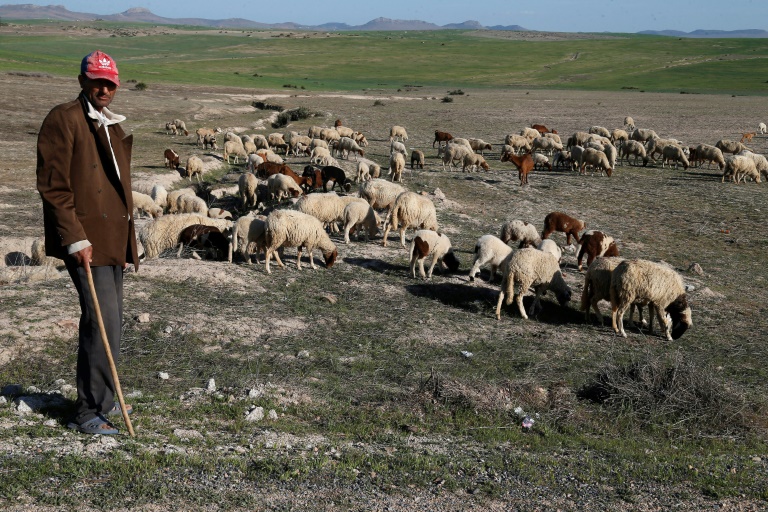
A withering drought and poor harvests plus price hikes fuelled by the war in Ukraine are threatening Morocco’s fragile economic recovery and exposing structural weaknesses, experts say.

The North African kingdom had bounced back last year after a sharp recession in 2020 due to the coronavirus pandemic, and the government of gas tycoon Aziz Akhannouch had forecast growth this year topping three percent.

But since Russia’s invasion of Ukraine he has been forced to slash that figure to at most 1.7 percent, telling parliament that “sudden external events and climate change” were to blame.

The International Monetary Fund has forecast even lower growth of 1.1 percent.

Morocco has pumped resources into diversifying its manufacturing sector, particularly by attracting auto giants such as Renault.

But those efforts “have not changed the structure of the economy”.

That is the conclusion of a 2021 report by a commission on the “New Model of Development” (NMD), a strategy announced last year which sets out ambitious plans including slashing Morocco’s wealth gap and doubling per capita economic output by 2035.

Morocco depends heavily on agriculture, a sector that accounts for 14 percent of gross domestic product and around a third of all jobs.

But farmers are on the front line of climate change, and have been hit hard in recent months with rainfall down by more than a third on the long-term average.

That has had a direct impact on crops, and the agriculture ministry now expects a cereal harvest two-thirds down on last year’s figure.

Despite an uptick in fruit and vegetable exports, the sector overall is set to shrink by 14 percent this year.

That will “directly hit jobs and the level of consumption, especially in rural areas”, said economist Abderrahim Hendouf.  

Over-reliance on agriculture, particularly for jobs, makes Morocco’s economy more vulnerable, he said.

– Profiteering, oligopolies –

But drought is not the country’s only vulnerability.

The war in Ukraine has sent grain and energy prices spiralling globally, pushing fuel prices in Morocco to record levels.

Many Moroccans have also pointed the finger at speculators and fuel distributors, accusing them of profiteering from the crisis.

In April, as Muslims marked the holy month of Ramadan, consumer inflation hit 5.9 percent on an annualised basis.

“The situation has hit Moroccans’ buying power and risks feeding social anger,” said Rachid Aourraz, a researcher at the Moroccan Institute for Policy Analysis.

Akhannouch’s government has announced a billion-euro assistance package to help farmers, as well as tackle inflation.

Aourraz predicts “the consequences of this crisis could be less severe than last time, thanks to positive developments in other sectors like services and industry”.

Since the start of the year, the government has doubled fuel and flour subsidies as well as offering direct financial aid to transport workers who had held a weeks-long strike over the crippling rise in costs.

Akhannouch has also vowed to boost state investments to create jobs.

But even prior to the current impasse, Morocco had seen a decade of slowing growth as well as gaping social and regional inequalities, with the richest fifth owning a half of the country’s wealth.

The kingdom is hoping to go beyond six percent growth by 2035, partly by bringing the large informal sector into the formal economy and by nurturing industry.

But the latter will need a major boost in private investment.

The commission for the NMD says it will also require major shifts in the business environment, currently hobbled by “oligopolies and anti-competitive practices”.

Karim Tazi, one of the report’s authors, points to the banking sector, dominated by three main operators, and the energy sector as particularly uncompetitive.

Such practices “are enough to destroy the growth of any economy,” he said.

Shanghai eases Covid curbs in step towards ending lockdown

Shanghai eased a range of Covid-19 restrictions on Wednesday in a step towards returning to normal after a two-month lockdown that confined residents of the megacity to their homes and battered China’s economy.

The commercial hub of 25 million people was closed down in sections from late March, when the Omicron virus variant fuelled China’s worst outbreak since Covid first took hold in 2020.

After some rules were gradually relaxed over the past few weeks, authorities on Wednesday began allowing residents in areas deemed low-risk to move around the city freely.

“This is a moment that we have been looking forward to for a long time,” the Shanghai municipal government said in a statement on social media.

“Because of the impact of the epidemic, Shanghai, a megacity, entered an unprecedented period of silence.”

On Wednesday morning, people were seen travelling on Shanghai’s subway and heading to office buildings, while some shops were preparing to open.

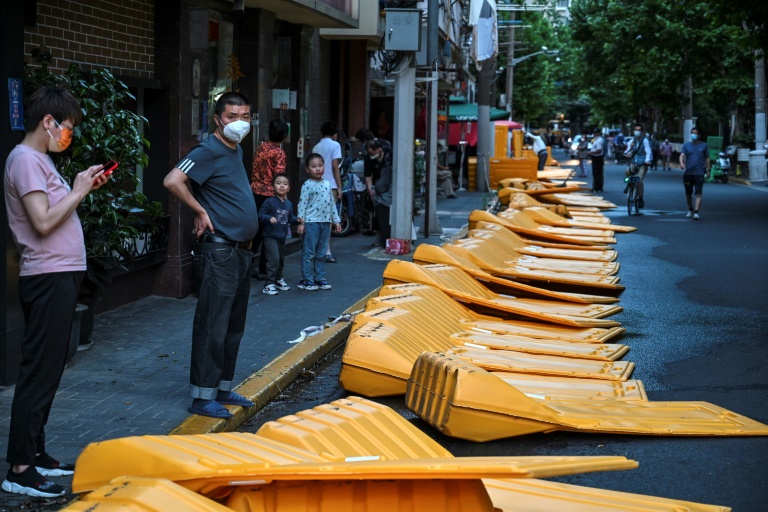
A day earlier, bright yellow barriers that had hemmed in buildings and city blocks for weeks were taken down in many areas.

The restrictions had hammered the economy of the city, snarling supply chains in China and abroad, and signs of resentment among residents emerged throughout the lockdown.

Deputy Mayor Zong Ming told reporters Tuesday that the easing will impact about 22 million people in the city.

Malls, convenience stores, pharmacies and beauty salons will be allowed to operate at 75 percent capacity, while parks and other scenic spots will gradually reopen, she added. 

But cinemas and gyms remain closed, and schools — shut since mid-March — will slowly reopen on a voluntary basis.

Buses, subway and ferry services will also resume, transport officials said.

Taxi services and private cars will also be allowed in low-risk areas, permitting people to visit friends and family outside their district.

– Not normal yet –

But the city government warned that the situation was not yet normal.

“At present, there is still no room for relaxation in consolidating the achievements of epidemic prevention and control,” it said.

China has persisted with a zero-Covid strategy, which involves rapid lockdowns, mass testing and long quarantines to try and completely eliminate infections.

But the economic costs of that policy have mounted, and the Shanghai government said Wednesday that “the task of accelerating economic and social recovery is becoming increasingly urgent”.

E-commerce professional Chen Ying said ahead of the easing that she still planned to work from home but might treat her two-year-old son to a long-awaited walk outside.

“We should have been free to begin with, so don’t expect me to be deeply grateful now they’ve given it back to us,” she told AFP.

Factories and businesses were also set to restart work after being dormant for weeks.

Trump's 'Big Lie' comes to big screen — and makes box office splash

A new movie that pushes dubious and widely debunked conspiracy theories to bolster Donald Trump’s claim that he was robbed of a second term as president has become a surprise hit at the US box office.

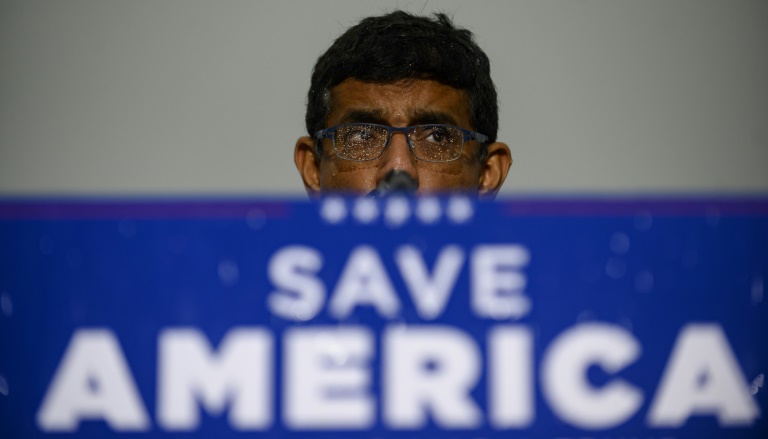
Despite warnings by experts, “2000 Mules,” a film by Dinesh D’Souza — who was convicted of violating campaign finance laws before being pardoned by the former president — has garnered more than $1.2 million at the box office since its release in late May.

With large buckets of popcorn in hand, a group of elder moviegoers crowd into a matinee screening in a cinema in a commercial district in Virginia. 

Passing by theaters showing the adventures of “Doctor Strange” or the latest “Sonic the Hedgehog” movie, the senior citizens settle down in front of the documentary promising to “expose widespread, coordinated voter fraud in the 2020 election, sufficient to change the overall outcome.”

– ‘Lifeblood of democracy’ –

The film opens with footage of anonymous voters enthusiastically slipping their ballots  into boxes stamped with the American flag, while D’Souza tells the audience that “elections are the lifeblood of our democracy.”

But, he says as the background darkens, the 2020 election “haunts the American mind.” 

Like millions of Americans, including former president Trump, D’Souza voices the debunked belief that the Democrats rigged the result of the last presidential election, relying on the widespread use of mail-in ballots during the Covid-19 pandemic.

“We can’t move on unless we know the truth,” the director says in his voiceover. 

In an attempt to prove his theory, which has been rejected by all relevant US authorities, D’Souza shows himself, leaning on a kitchen counter and phoning a group based in Texas called True the Vote, which claims to “support election integrity.” A meeting is arranged.

– ‘A cartel’ –

In a kind of hangar packed with computer servers, two members of the group claim to have proof of the existence of a well-planned operation which, “like a cartel,” hired “mules” to stuff ballot boxes in a series of states that were key to Joe Biden’s victory in 2020. 

To validate their hypothesis, they rely on vast troves of anonymous location data from smartphone apps, which they claim show the comings and goings of these “mules” between the headquarters of various NGOs and ballot boxes. 

It’s a “heist” and “a crime,” says the outraged D’Souza. 

In the theater in Virginia, the audience is sold. 

“It’s like a nuclear bomb,” says one man. 

The theories pushed in the movie have been seriously questioned by multiple disinformation experts.

They say that a delivery man, a taxi driver, or a postman working in the neighborhood could easily have given the mistaken for people making such nefarious trips. 

But for Trump and his supporters, this is the ultimate proof of the fraud they have been decrying for a year and a half. 

“They rigged and stole the 2020 election, we cannot be okay with this, we cannot simply move on,” says D’Souza as the film ends. 

And as the first notes of the American national anthem play, he issues a call to action: “The America we love needs us now more than ever.”

US girl survives rare attack by cougar

A nine-year-old American girl survived a very rare attack from a cougar during a camping trip in the western United States, wildlife officials and family members said Tuesday.

The cat attacked the girl, Lily Kryzhanivskyy, on Saturday morning while she was camping with her family in Washington state, her uncle Alex Mantsevich wrote on GoFundMe, where he was trying to raise money to cover her medical expenses.

The Washington Department of Fish and Wildlife (WDFW) said in a statement that “Lily, along with two other children, was playing hide-and-seek in the woods a short distance from the camp buildings. Lily jumped out to surprise her friends when the cougar suddenly attacked.”

Her uncle’s photos on the website featured before and after shots of his niece, the latter a photo of her unconscious in a hospital bed with scrapes and bruises from the mauling clearly visible on her face.

“She was airlifted to the hospital with many different injuries to her upper body/Face,” Mantsevich wrote.

The child underwent hours of surgery but was released from intensive care on Monday, the wildlife department said.

Since 1924, only 20 people have been attacked by cougars in the wilds of Washington state and two of them died, the state environmental protection agency says.

Officials said a probe would be carried out to try to understand the circumstances of this particular attack.

“Wild animals don’t care to be around humans any more than we want to have close encounters with them,” said Captain Mike Sprecher of the WDFW police.

The body of the cougar — which was killed by someone present on the scene — was analyzed for possible diseases, officials said.

“Tests completed over the weekend showed the animal did not have rabies,” the WDFW said. 

Also known as pumas or mountain lions, cougars can weigh from 75 to 250 pounds (35 to 115 kilos), according to bigcatrescue.org.

'Death by 1,000 cuts': activists voice fears for US democracy

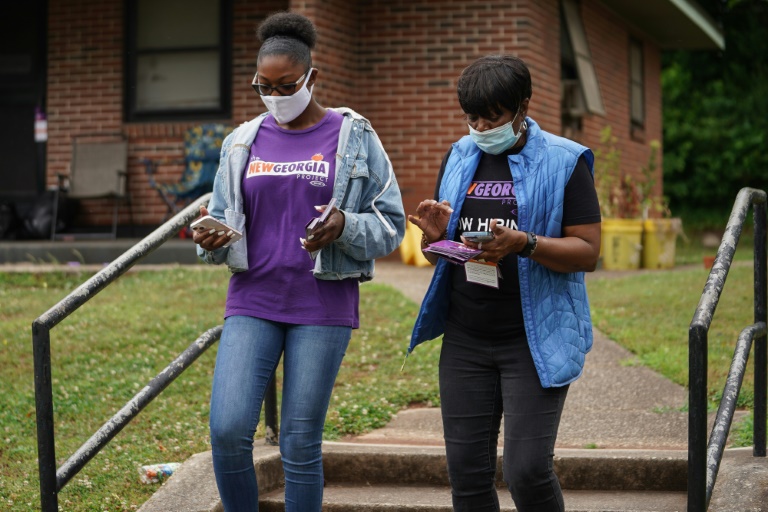
Under slate gray skies in an African American neighborhood in the southwestern outskirts of Atlanta, Mardie Hill knocks on doors, her easy charm an antidote to an unusually frigid late spring afternoon.

The 64-year-old grandmother has been going door-to-door for more than 15 years to encourage residents who may otherwise slip through the net to exercise their hard-won right to vote.

The Deep South state of Georgia is poised to become ground zero for both parties in November’s midterm elections, with broad implications for Joe Biden’s presidency and the US Congress. 

But casting ballots has been getting more difficult, says Hill, amid an unprecedented barrage of restrictions that have made the already confusing voting landscape even harder to navigate. 

“One year you will have one set of rules, the next year you have lines drawn where it wasn’t drawn before,” she told AFP during a recent “get out the vote” drive for civic engagement group the New Georgia Project in the bungalow-lined streets of East Point.

“And we have to ask our politicians: ‘Why are you doing that?’ We’ve got to hold them accountable. ‘Why do you have to keep changing things?'”

Like Republican-run states across America, Georgia has spent Biden’s term leveraging his defeated opponent Donald Trump’s false claims of a stolen election to introduce restrictive laws that opponents say are an assault on democracy.

After three presidential ballot counts and the collapse of multiple lawsuits brought by Trump’s campaign, no evidence of significant voter fraud ever surfaced in the key battleground.

Nevertheless the Republican-controlled legislature passed the Election Integrity Act of 2021, a law so far out of the mainstream that is now a crime in Georgia to hand out water to voters waiting in line if you are not a poll worker.

The controversial package also contains numerous provisions limiting voting access, including narrowing the window for requesting absentee ballots and tough new ID requirements.

– Racial discrimination –

Drop boxes have been also been severely curtailed and mobile voting centers are all but outlawed.

Long voting lines and spotty access to government issued ID tend to be a bigger issue in Black areas, leading to complaints of racial discrimination.

Defenders of the tough new rules accuse Democrats of exaggerating fears of voter suppression as a way of juicing fundraising among their base. 

They say record early turnout numbers in this year’s primaries — three times higher than in the 2018 midterm cycle — prove that the fuss around the law is bogus.

Voting rights groups and Democrats respond that the big numbers are down to a shift in tactics to mobilize voters under the new rules.

“In fact, what we’re seeing is that Georgians (are) turning out in historic numbers, in spite of their shenanigans and their attempts to make it more difficult to vote,” Nse Ufot, chief executive of the New Georgia Project, told AFP.  

“That… is much more a credit to the organizing that is being done.”

The get-out-the-vote efforts of civic engagement groups like the non-partisan NGP helped Biden become the first Democratic presidential candidate to win the state in nearly three decades.

Victory for two Democrats in runoff elections in January 2021 also gave control of the US Senate to Democrats. One of them, Raphael Warnock, is running again in November and defeat could hand the chamber back.

Biden’s victory margin in Georgia was just 11,779 votes out of nearly five million cast, meaning a small chipping away at turnout around the edges is all it would take to reverse the outcome next time.

– ‘Apple pie and baseball’ –

“What we like to say here at NGP, is that it’s death by 1,000 cuts,” Jada Richard, 23, who works in communications for the group, told AFP.

“So if they can get just 12,000 people, 5000 people, to stop voting or to feel that it’s too difficult, that’s enough at this point to decide an election.”

Asked to characterize the voting landscape in Georgia, local civil rights leader Jamal Bryant says the state is “somewhere between Jim Crow’s Dixie and South Africa’s apartheid.”

“I think that the ‘1,000 cuts’ is much too passive. I would say it’s not ‘1,000 cuts,’ it’s ‘100 bullets,'” the senior pastor of the New Birth Missionary Baptist Church tells AFP.

Voting rights groups see increasing turnout as their best weapon to ensure that the November’s election can be a fair reflection of the will of every Georgian.

In the case of the New Georgia Project, the goal is to register 55,000 new voters by the end of the year, preferably highly-motivated “super-voters” who will participate in every election. 

Meanwhile Bryant’s 9,000 seat megachurch in the city of Stonecrest, in Atlanta’s southeastern suburbs, is working with a network of faith leaders on education, registration and getting out the vote. 

“Whether you are wealthy or welfare, you have the same vote and you have the same voice,” Bryant tells AFP at his trophy-lined office behind his arena-sized sanctuary.

“It is — excuse the cliche — as American as apple pie and baseball.”

US rockets for Ukraine: a game-changer?

The United States announced Tuesday it is sending advanced missile systems to Ukraine, but the jury is out on whether they will be the game-changer hoped for in Kyiv’s war with Russia.

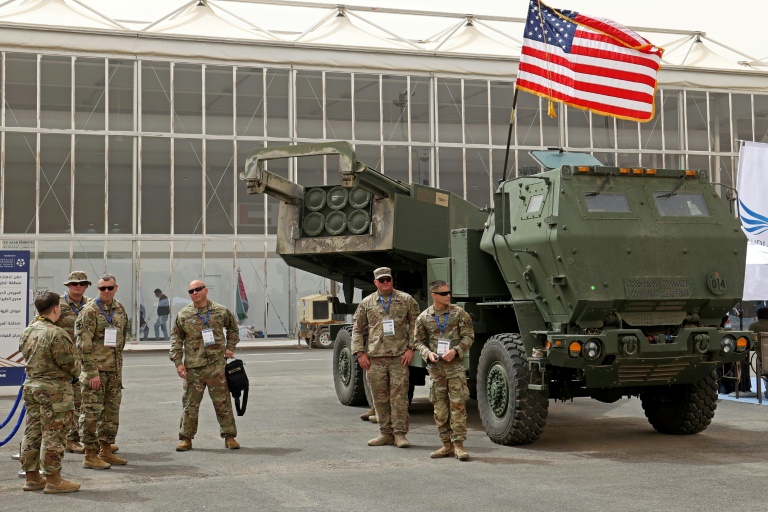
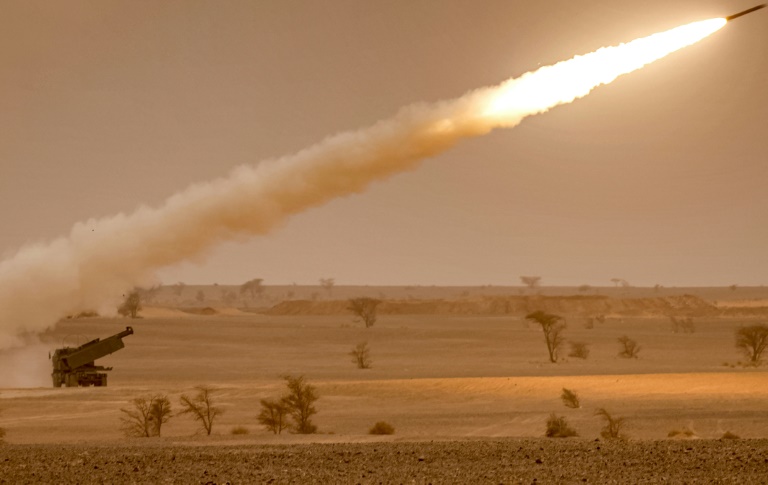
The new weapon is the Himars multiple launch rocket system, or MLRS: a mobile unit that can simultaneously launch multiple precision-guided missiles.

Both Ukraine and Russia already operate MLRS, but the Himars has superior range and precision.

President Joe Biden wrote in The New York Times that the advanced rockets will enable the Ukrainians “to more precisely strike key targets on the battlefield in Ukraine.”

Yet the US plans to limit the range of the missiles it gives Ukraine to avoid them being used to hit targets deep inside Russia.

“We are not going to send to Ukraine rocket systems that can strike into Russia,” Biden said Monday.

What system will US provide?

The M142 Himars system (High Mobility Artillery Rocket System) is a modernized, lighter and more agile wheel-mounted version of the track-mounted M270 MLRS developed in the 1970s for US and allied forces.

The Himars Washington is providing to Ukraine will have a range of about 50 miles (80 kilometers), a US official told reporters.

Himars carry one preloaded pod of six 227 mm guided missiles (the M270 carries two pods), or one large pod loaded with an ATACMS tactical missile. 

With a small crew, the Himars can remove a spent pod and load a fresh one in minutes, without other vehicles helping. The crews will require some training.

The US military already has Himars units in Europe, and NATO allies Poland and Romania have also acquired the systems.

It was not clear how many of the systems the US will send to Ukraine.

Why are they valuable?

The US MLRS will give Ukraine’s forces the ability to strike further behind Russian lines, and from distances better protected from Russia’s own long-range weaponry.

The GPS-guided missiles the Himars shoots from its six-pack pod have a range about double that of the M777 howitzers that the US recently supplied to Ukraine forces.

That roughly 80 kilometers generally puts the Himars out of the range of Russia’s own artillery, while placing the Russian batteries at risk.

It also could threaten Russian supply depots, amid western belief that the Russian forces suffer logistical problems.

The US will not supply Ukraine with the ATACMS, which has a range of 300 kilometers.

Some analysts say Himars would be a “game-changer” in the war at a time when Ukraine forces appear to be struggling under Russian artillery fire.

But others say Himars will not suddenly turn the tables in the three-month-old war.

“The Himars would even the playing field,” a senior US defense official said.

Why is Washington limiting the range?

Since Russia invaded on February 24, the United States has been sensitive to taking any action to support Kyiv that might provoke Moscow to take the war beyond Ukraine’s borders. 

That has included not overtly backing Ukraine strikes inside Russian territory. Several times Ukraine has used its own rockets, drones and helicopters to hit short-range Russian targets in neighboring Kursk and Belgorod oblasts. 

If the US provided the ATACMS for use on the Himars by Ukraine, they would theoretically have the ability to strike major Russian urban centers and military bases, including airfields from where attacks on Ukraine are launched.

The “Ukrainians have given assurances they will not use these systems against Russian territory,” a US official said.

Biden says US to send Ukraine 'advanced rocket systems' to hit 'key targets'

President Joe Biden on Tuesday confirmed the United States will send more advanced rocket systems to Ukraine with ability to strike what he called “key targets” of Russia’s invasion force.

“We will provide the Ukrainians with more advanced rocket systems and munitions that will enable them to more precisely strike key targets on the battlefield in Ukraine,” Biden wrote in The New York Times.

A US official told reporters that the weapons being sent are Himars, or the High Mobility Artillery Rocket System.

With precision-guided munitions and a longer range than weapons currently deployed by Ukraine, the multiple rocket launchers represent an important upgrade at a time when the Ukrainians are battling Russian artillery in the east of the country.

The Himars rockets “will enable the Ukrainians to more precisely strike targets on the battlefield from greater distance inside Ukraine and to help them repel Russia,” the official said, speaking on condition of anonymity.

“These systems will be used by the Ukrainians to repel Russian advances on Ukrainian territory but they will not be used against Russia.”

The Himars are the centerpiece of a $700 million package being unveiled Wednesday, also including air surveillance radars, more Javelin short-range anti-tank rockets, more artillery ammunition, helicopters, vehicles and spare parts, the official said.

Although there’d been speculation for days that Himars were going — following repeated pleas from Ukraine’s outgunned military —  the announcement also made clear the US attempt to help Kyiv’s war effort while not being seen as a direct belligerent.

For that reason, the ammunition for the Himars will not include a version able to reach some 186 miles (300 kilometers), out of fear that the Ukrainians would use it to hit deep inside Russia.

They will instead get the version extending about 50 miles (80 km), which is still significantly further than the Ukrainians’ present capabilities, the US official said. That means Ukraine’s forces will be able to strike at Russian positions with the rockets from relative safety.

The “Ukrainians have given assurances they will not use these systems against Russian territory,” the official stressed.

The new weaponry will come from a recently approved fund of $40 billion. Already the Biden administration has sent $4.5 billion in mostly military aid to Ukraine since the war began with Russia’s February invasion.

Asked what the United States considers the war aim for Ukraine, the official said it was to put Kyiv “in the strongest possible position at the negotiating table.”

While the United States does not want to “prolong the war,” it considers it vital that Russia “pay a heavy price for its actions” or it will “send a message to other would-be aggressors that they can take a territory by force,” the official said.

“We will not pressure the Ukrainian government in private or in public to make any territorial concessions,” the official said.

First funerals after Texas school shooting

The traumatized Texas town of Uvalde began on Tuesday laying to rest the 19 young children killed in an elementary school shooting that left the small, tight-knit community united in grief and anger.

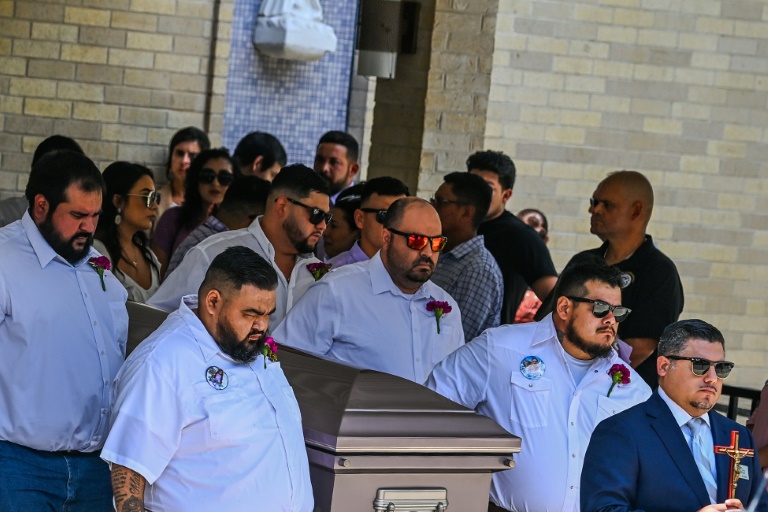
The body of Amerie Jo Garza, 10, arrived in a silver coffin and was carried into Sacred Heart Catholic Church by six pallbearers wearing white shirts with red carnations.

Mourners, some of them dressed in the purple color of Robb Elementary School across the street, gathered outside the church ahead of the funeral amid a strong police presence.

Another girl, Maite Yuleana Rodriguez, also 10, was due to be laid to rest later Tuesday, with further ceremonies scheduled through the coming weeks.

A funeral for one of the two teachers killed, 48-year-old Irma Linda Garcia, will take place Wednesday, according to a local CBS News affiliate.

As the community mourned, anger has seethed over the response of police.

Officers have come under intense criticism since the May 24 tragedy over why it took well over an hour to neutralize the gunman — the “wrong decision,” Texas Department of Public Safety (DPS) director Steven McCraw has admitted.

ABC news on Tuesday cited multiple law enforcement sources saying that the Uvalde police department and school district had stopped cooperating with the DPS’s investigation into the handling of the attack.

The great-grandfather of one of the young victims berated police near the memorial of white crosses surrounded by wreaths and bouquets of flowers.

“They could tell me ‘Oh, we made a mistake. We made the wrong decision’. But my great-granddaughter is not coming back to me,” said a distraught 78-year-old Ruben Mata Montemayor.

When President Joe Biden visited the town, about an hour’s drive from the Mexico border, over the weekend, shouts of “do something!” rang out from the crowd.

The shooting — the latest in an epidemic of gun violence in the United States that came less than two weeks after 10 people died in an attack at a Buffalo grocery store by a young gunman targeting African Americans — has spurred desperate calls for gun reform.

“There’s no words to describe (it),” said Esther Rubio, who traveled from nearby San Antonio to attend the wake on Monday for Amerie Jo.

Her pictures decorated the funeral home close to the school, where an 18-year-old gunned down 19 children and two teachers before he was killed by police.

Actor Matthew McConaughey, who grew up in Uvalde and has flirted with the idea of running for Texas governor, also visited the memorial Tuesday.

– A dozen more mass shootings –

While mass shootings draw anguished attention and spur momentary demands for change, gun regulation faces deep resistance from most Republicans and some rural-state Democrats.

Biden on Monday vowed to “continue to push” for reform, saying, “I think things have gotten so bad that everybody is getting more rational about it.”

Some key lawmakers have also voiced cautious optimism and a bipartisan group of lawmakers worked through the weekend to pursue possible areas of compromise. 

They reportedly were focusing on laws to raise the age for gun purchases or to allow police to remove guns from people deemed at risk — but not on an outright ban on high-powered rifles like the weapon used in both Uvalde and Buffalo, New York.

With the country still reeling over the Uvalde massacre — the deadliest school attack since 20 children and six staff were killed in Newtown, Connecticut in 2012 — US media reported the country was hit by a dozen more mass shootings over the three-day Memorial Day weekend.

The United States generally counts mass shootings as involving four or more deaths.

At least 132 gun deaths and 329 injuries were recorded nationwide from Saturday to Monday evening, according to the Gun Violence Archive website.

Mourners in Uvalde — a mostly Latino town of 15,000 — have echoed calls for change.

“At the end of the day, if this child cannot even sip a glass of wine because he’s too young, then guess what? He’s too young to purchase a firearm,” said Pamela Ellis, who traveled from Houston to pay her respects.

Texas law against blocking online posts on hold for now

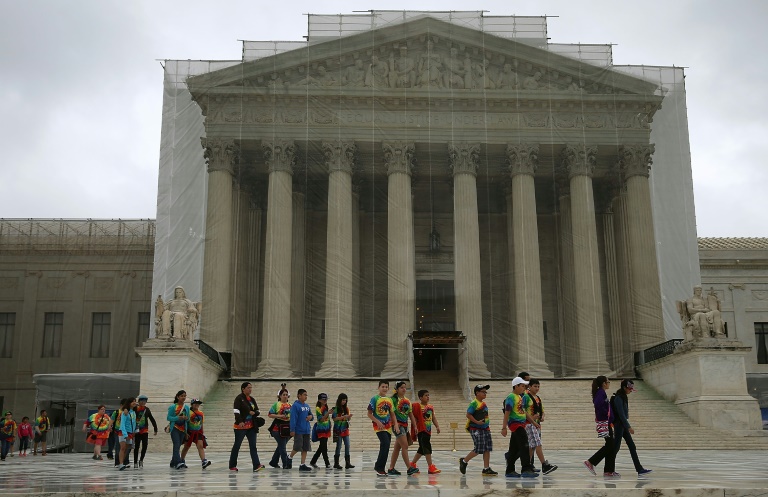
The US Supreme Court on Tuesday put back on hold a controversial Texas law barring social media platforms from “censoring” posts based on viewpoints.

The law threatens to essentially make it a crime for social media platforms to curb hate speech or bigoted tirades, or even point out when posts are demonstrably false.

Political conservatives have accused Facebook, Twitter and other social media giants of stifling their voices, providing no evidence to support the claims.

Social media platforms have consistently defended themselves against such accusations, saying content moderation decisions are based on factors such as risk of real-world harm.

Former US president Donald Trump was booted from Facebook and Twitter after a group of his supporters attacked the Capitol on January 6, 2021 in an attempt to prevent his rightly elected successor Joe Biden from taking office.

People died during the attack, and there were concerns Trump would use social media to incite further violence.

The Texas law bars social media platforms with more than 50 million users from banning people based on their political viewpoints.

NetChoice trade association, whose members include Amazon, Facebook and Google, challenged the law and convinced a federal court in Texas to stop it from being enforced until it was resolved whether it runs afoul of the US Constitution’s First Amendment.

An appeals court later sided with Texas, saying the state could go ahead with the law, prompting the matter being taken to the Supreme Court.

The top court in the United States on Tuesday backed the original decision to put Texas law HB 20 on hold while the question of whether it should be tossed out completely is resolved.

“Texas’s HB 20 is a constitutional trainwreck — or, as the district court put it, an example of ‘burning the house to roast the pig,'” NetChoice counsel Chris Marchese said in a release.

“Despite Texas’s best efforts to run roughshod over the First Amendment, it came up short in the Supreme Court.”

NetChoice welcomed the decision, which sends the case back to a district court in Texas to hear arguments regarding the law’s constitutionality.

In its original decision about the stay, the district court said social media platforms have a right to moderate content disseminated on their platforms, and that a provision against putting warning labels on misinformation even risked violating the free speech rights of internet firms.

“Texas’s law violates the First Amendment because it compels social media companies to publish speech they don’t want to publish, and because it prevents them from responding to speech they disagree with,” said attorney Scott Wilkens at Columbia University’s Knight First Amendment Institute.

“In addition, the theory of the First Amendment that Texas is advancing in this case would give government broad power to censor and distort public discourse.”

Close Bitnami banner
Bitnami