US Business

Biden, Fed chair discuss US inflation at White House

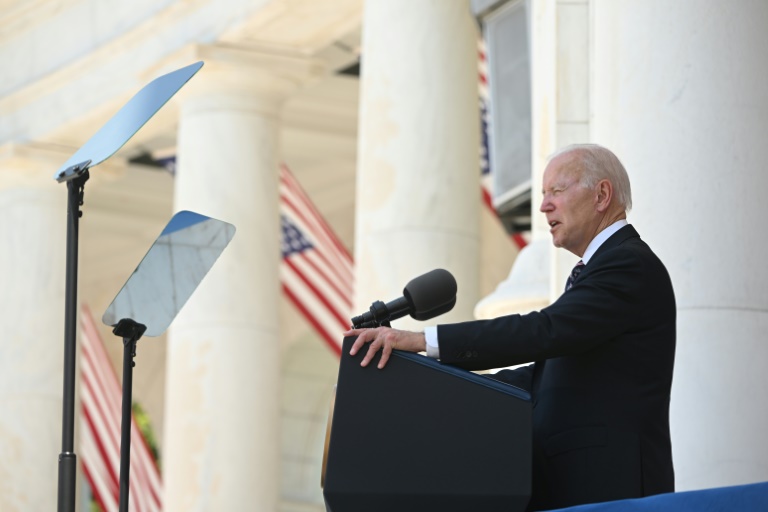
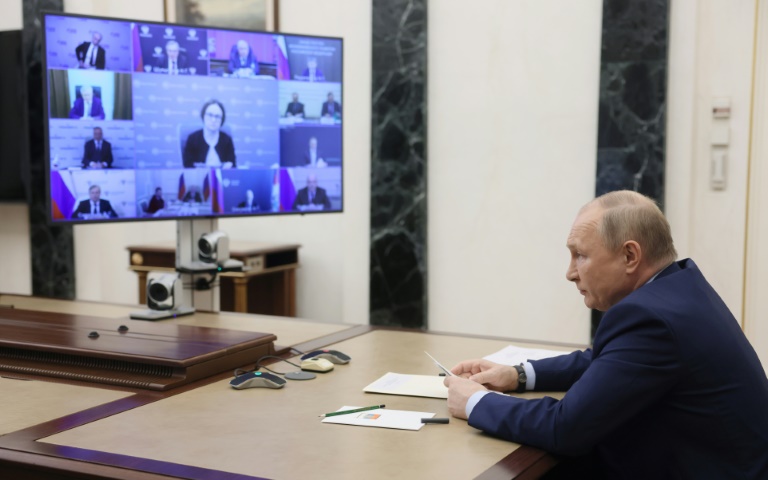
President Joe Biden on Tuesday holds a rare White House meeting with the head of the Federal Reserve, Jerome Powell, to discuss soaring inflation and White House attempts to tame the politically damaging price surge ahead of midterm elections.

In their first such meeting this year, Biden and Powell will “discuss the state of the American and global economy,” the White House said, with an emphasis on inflation.

This is Biden’s “top economic priority,” the White House said, “as we transition from a historic economic recovery to stable, steady growth that works for working families.”

Inflation of more than eight percent is casting a heavy shadow on Biden’s claims to be steering the US economy back to health after the Covid-19-induced crash.

Employment is back near pre-pandemic levels and growth is strong, but savage price increases for essentials including food and fuel are driving growing public dissatisfaction.

The Fed has raised rates three quarters of a percentage point, kicking off what central bank officials say could be a series of hikes aimed at calming down the economy, although there are fears that the unintended result may be recession.

Federal Reserve Governor Christopher Waller said Monday that he backs several more half-point rate hikes — “until I see inflation coming down closer to our two percent target.”

Biden is scrambling to ease the pressure on American consumers ahead of November midterm elections in which his Democrats are forecast to lose control of Congress to the Republicans.

Biden’s own approval ratings are barely in the 40 percent range, reflecting his inability to sell voters on his upbeat message of US economic recovery.

As the election approaches, Biden has pivoted to more aggressively trying to explain the inflation phenomenon as a byproduct of forces beyond his control.

These include the Russian invasion of Ukraine, which triggered Western sanctions disrupting the huge Russian energy industry. President Vladimir Putin’s invading forces, meanwhile, have all but put a halt to Ukraine’s important wheat exports.

Biden calls the effect “Putin’s price hike.”

Writing in the Wall Street Journal on Monday, Biden underlined the independence of the Federal Reserve, but noted that the central bank has “a primary responsibility to control inflation.”

Biden recalled that his predecessor Donald Trump frequently launched political attacks on the Fed and that other presidents had also “sought to influence its decisions inappropriately during periods of elevated inflation.”

“I won’t do this,” he pledged.

In the op-ed, Biden said his longterm plan for economic health includes easing the pace of post-Covid recovery to more sustainable levels, boosting economic productivity and reducing the federal budget deficit.

New Apple museum opens in former Warsaw factory

A new museum opening in a former metalworking factory in Warsaw brings together 1,600 exhibits linked to Apple — the result of years of painstaking efforts by a determined Polish collector.

“It is the biggest and most complete Apple collection in the world,” boasted Jacek Lupina, a 56-year-old architect, who amassed the collection spanning the entire history of the US tech giant.

The museum is housed in Fabryka Norblina, a red-brick factory from the early 19th century in central Warsaw which has been turned into a retail and entertainment space.

At the entrance is a replica of the Apple 1, released in 1976, was the first personal computer sold by the founders of the company, Steve Jobs and Steve Wozniak.

Two hundred models of the Apple 1 were produced and sold at the time for $666.66 (620 euros) each.

“My aim is for visitors to be able to see what the beginning was like — how primitive and very simple it was. The case for the Apple 1 was made of wood! Nothing like what we have today,” Lupina said.

The collector used components from the time to assemble the model and the motherboard was signed by Wozniak himself during a visit to Poland in 2018.

“He scrutinised all the soldering, the components and really appreciated the work. He also showed me the parts that he and Steve Jobs had wanted to change but never got round to,” Lupina said.

– ‘Sold the furniture’ –

The museum includes dozens of computers such as the Apple II, Lisa, iMac, Power Mac, Macbook, Mac Pro, as well as iPhones, iPods, iPads, instruction booklets, software and other objects from the Apple universe.

The walls are decorated with original advertising posters, including those from the famous “Think Different” campaign from 1997 featuring images of Bob Dylan, Pablo Picasso and Albert Einstein.

Lupina said he started collecting “just for the pleasure of seeing them” and because the products would previously have been “too expensive for a resident of post-Communist Europe”.

After some time, the collection began taking over his house on the outskirts of Warsaw — starting with his office and then the living room.

“I sold the furniture in the living room, the table, the chairs and I just left some armchairs,” he said.

In 2017, he turned his house into a museum. When he ran out of space, he found fresh premises and the new museum opened last weekend.

Lupina spent all his free time on the collection, sometimes passing entire nights following online auctions happening in different parts of the world.

It is a costly hobby, he said, adding: “I don’t have any savings or a pension, just my collection.”

Spacey to 'voluntarily appear' in UK court over sex assault charges

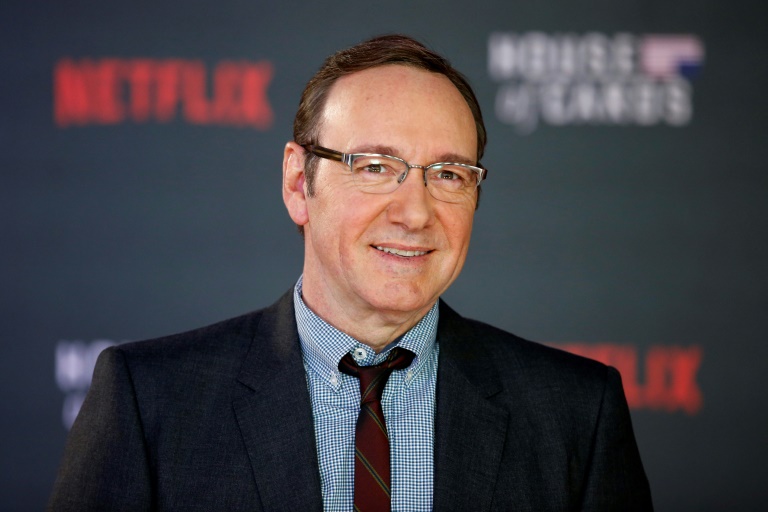
Hollywood actor Kevin Spacey will voluntarily appear in a British court over sexual assault charges, he said in a statement released Tuesday, adding he was confident he would prove his innocence.

British police and prosecutors announced last week that he faced four sexual assault charges and one charge of “causing a person to engage in penetrative sexual activity without consent.”

The two-time Oscar winner for “The Usual Suspects” and “American Beauty” was artistic director of The Old Vic Theatre in London between 2004 and 2015.

“I very much appreciate the Crown Prosecution Service’s statement in which they carefully reminded the media and the public that I am entitled to a fair trial, and innocent until proven otherwise,” Spacey said in a statement to the Good Morning America TV show.

“While I am disappointed with their decision to move forward, I will voluntarily appear in the UK as soon as can be arranged and defend myself against these charges, which I am confident will prove my innocence.”

Variety magazine said that British authorities had planned to seek Spacey’s extradition.

Allegations against him first emerged in the wake of the #MeToo movement that saw numerous claims of sexual assault and harassment in the movie industry.

That prompted an investigation by London’s Metropolitan Police, and a review by The Old Vic of the 62-year-old Spacey’s time in charge there.

Claims against Spacey in 2017 led to the end of his involvement in the filming of the final season of the political drama “House of Cards.”

Spacey, considered one of the finest actors of his generation, lives in New York. He has previously denied similar charges in the United States.

India growth slows on inflation, higher oil prices

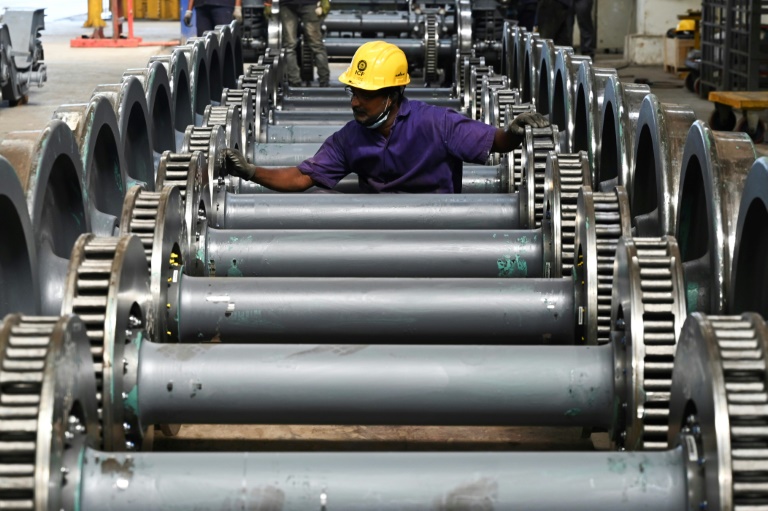
India’s growth slowed further in the first three months of 2022, the National Statistics Office said Tuesday, with inflation and higher oil prices denting a post-pandemic recovery.

Asia’s third-largest economy grew 4.1 percent, year-on-year, in the last quarter, NSO data showed.

Annual growth for the 12 months to the end of March stood at 8.7 percent.

Rising global commodity prices have sparked concern among policymakers, with India’s central bank announcing its first interest rate hike in nearly four years this month.

The country of 1.4 billion people imports more than 80 percent of its crude oil and the cost of meeting domestic fuel demand has soared since Russia invaded Ukraine in February.

India is also the world’s largest importer of edible oils, prices of which are at record highs since the conflict began.

“The pandemic may be receding, but growth has not returned,” economist Mihir Swarup Sharma of the New Delhi-based Observer Research Foundation told AFP.

“Instead, imports as a proportion of GDP — driven by higher prices for food, fuel, and other commodities — are rising.” 

Prime Minister Narendra Modi’s government this month announced tax breaks to offset higher food and petrol costs.

Higher-than-expected revenues could give New Delhi some “headroom” to cushion consumers from inflation, Sharma said.

But the $26 billion cost of the scheme will likely blow out the government’s budget deficit beyond its target for 2022-23, which it put at 6.4 percent of GDP.

Consumer inflation hit 6.95 percent in March, according to the Reserve Bank of India, which slashed its own growth forecast to 7.2 percent for the year ending March 2022.

“Alarmingly, persistent and spreading inflationary pressures are becoming more acute with every passing day,” Reserve Bank of India governor Shaktikanta Das said this month.

– Further headwinds –

India saw a dramatic uptick in economic activity in the second half of 2021 after the coronavirus pandemic sparked its worst recession since independence from Britain 75 years ago.

Extended lockdowns hit consumer spending and brought factories to a standstill during the Covid-19 outbreak, which at its peak saw thousands of people dying across the country each day, overwhelming hospitals and crematoriums.

Several Indian states briefly imposed mild restrictions on public gatherings and commercial activity after an outbreak of the highly infectious Omicron variant of the virus.

Further headwinds are likely to hit growth in the June quarter, with India this month announcing a sudden ban on wheat exports and a cap on the overseas sale of sugar.

India is the world’s second-largest producer of both crops but scorching temperatures and the country’s hottest March on record — blamed on climate change — have dented yields.

Bankrupt Sri Lanka hikes taxes

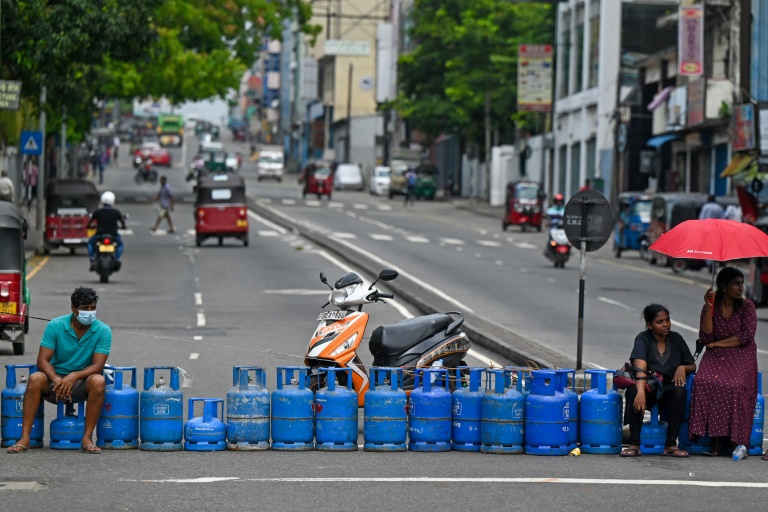
Cash-strapped Sri Lanka on Tuesday announced steep, across-the-board tax hikes to shore up revenue as the country suffers its worst economic downturn and seeks an IMF bailout.

The value-added tax (VAT) applied on almost all goods and services was raised from 8.0 percent to 12 percent with immediate effect, while corporate taxes were also increased from 24 to 30 percent.

The personal income tax exemption threshold was lowered from 3.0 million rupees ($8,330) a year to 1.8 million rupees.

The increases were a rollback of the generous cuts ordered by President Gotabaya Rajapaksa soon after he won the November 2019 elections.

Prime Minister Ranil Wickremesinghe, who is also the finance minister, said Rajapaksa’s tax cuts cost the state some 800 billion rupees ($2.22 billion) annually and widened the budget deficit sharply.

International rating agencies, as well as independent economists, have pointed to Rajapaksa’s fiscal policy as having fuelled the current financial crisis.

Wickremesinghe, an opposition legislator, was made prime minister this month.

His predecessor and the president’s elder brother Mahinda stepped down after months of anti-government protests turned deadly.

The South Asian nation is in talks with the International Monetary Fund for a bailout after running out of dollars to pay even for the most essential imports such as oil, food and medicines.

Sri Lanka has also defaulted on its $51 billion foreign debt.

Wickremesinghe said he was also removing several tax breaks granted to companies in recent years.

The government did not say how much it will raise from the new tax measures.

However, the prime minister had said they had run out of rupees to pay the salaries of 1.5 million civil servants and would have to “print money”. That would in turn fuel inflation, which is already at a record 33.8 percent.

Key Ukraine city 'divided in half' as EU oil embargo agreed

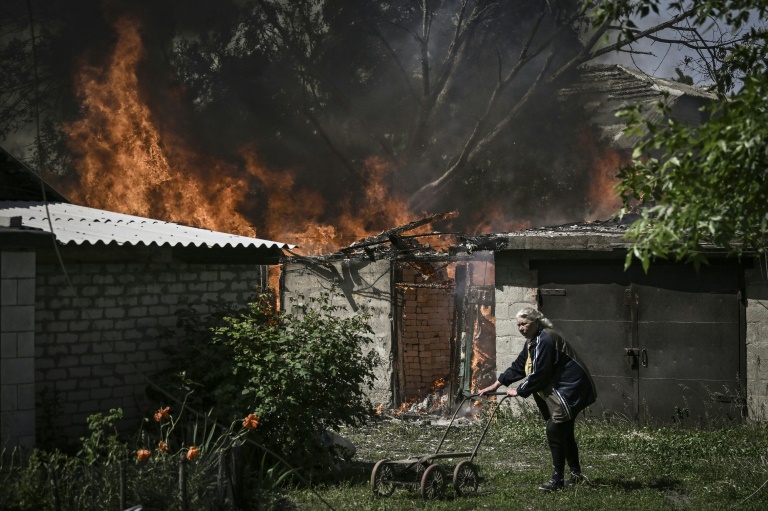
Russian forces have seized control of half of eastern Ukraine’s key city of Severodonetsk, a senior official said Tuesday, hours after EU leaders struck a watered-down deal to ban more than two-thirds of Moscow’s oil imports.

In central Ukraine, two Russian soldiers were sentenced to more than 11 years in jail each after a court found them guilty of firing artillery at civilian areas soon after Moscow’s February 24 invasion.

Severodonetsk is one of several industrial hubs that lie on Russia’s path to capturing the Donbas’s Lugansk region, where Moscow has shifted the bulk of its firepower since failing to capture Kyiv in the war’s early stages.

“Unfortunately, the front line divides the city in half. But the city is still defending itself, the city is still Ukrainian, our soldiers are defending it,” said Oleksandr Stryuk, head of Severodonetsk’s military and civil administration.

Lugansk regional governor Sergiy Gaiday earlier described the situation as “extremely complicated”, conceding that parts of the city were controlled by Russian forces.

But as Russian troops edged closer to the Severodonetsk city centre, EU leaders at a summit in Brussels were tightening the economic screws on Moscow.

A compromise oil embargo deal reached late Monday, meant to punish Russia for its invasion, cuts “a huge source of financing for its war machine,” European Council chief Charles Michel tweeted.

Hungarian Prime Minister Viktor Orban, one of the key figures who blocked an agreement by the 27-nation bloc, hailed the deal for preserving Budapest’s supply of cheap crude from Moscow.

“Families can sleep peacefully tonight, we kept out the most hair-raising idea,” Orban, whose country borders war-torn Ukraine to the west, said in a video message.

– ‘Save your lives’ –

Ukrainian President Volodymyr Zelensky had urged Europe to forge their “independence” from Russian energy. 

The situation on the eastern front line in Donbas has become increasingly desperate, with Ukrainian towns facing near constant shelling by Russian forces.

“We see some cars driving around with Ukrainian flags so we figure that means we are still part of Ukraine,” said Yevgen Onyshchenko, a 42-year-old plumber in a powerless apartment in Severodonetsk’s twin city Lysychansk.

“But otherwise, we are in the dark.”

A French journalist, Frederic Leclerc-Imhoff, was killed while covering civilian evacuations in the area on Monday.

An overnight rocket attack killed at least three people and wounded six in the city of Slovyansk, Donetsk regional governor Pavlo Kirilenko said Tuesday on Telegram.

“I repeat once again that there are no safe places in the Donetsk region, so I call again: evacuate — save your lives,” he said.

In the southern region of Kherson, the country’s military leadership said Ukrainian forces have pushed back, as prosecutors pressed ahead with prosecutions of captured Russian soldiers.

The servicemen convicted on Tuesday — Alexander Bobykin and Alexander Ivanov — were both handed sentences of 11 years and six months for firing Grad missiles on two villages in the north-eastern Kharkiv region in the early days of the war.

– Gas ‘quite different’ –

The verdict after the trial in the Poltava region comes one week after another court, in the capital Kyiv, gave a 21-year-old Russian solider a life sentence — the country’s first judicial reckoning on Russia’s invasion.

Ukraine’s prosecutor general was in The Hague on Tuesday meeting her counterpart from the International Criminal Court and other officials as they seek wider war crimes prosecutions.

But while Ukraine is pushing for solidarity from its allies, European leaders meeting on Tuesday for a second day played down the chances of a rapid embargo on Russian gas to follow the partial ban on oil imports.

Europe is heavily reliant on Russian gas.

“With gas it is quite different. Therefore the gas embargo will not be an issue in the next package of sanctions” Austrian Chancellor Karl Nehammer said.

The compromise oil deal hatched on Monday exempts deliveries by pipeline, after Orban warned halting supplies would wreck Hungary’s economy.

EU chief Ursula von der Leyen said the ban “will effectively cut around 90 percent of oil imports from Russia to the EU by the end of the year”.

The agreement also includes plans for the EU to send nine billion euros ($9.7 billion) in “immediate liquidity” to Kyiv, Michel announced.

– ‘Sit in the trench’ –

Michel said the sanctions involved disconnecting Russia’s biggest bank, Sberbank, from the global SWIFT system, banning three state broadcasters and blacklisting individuals blamed for war crimes.

Russia’s Gazprom, meanwhile, turned off the tap to the Netherlands on Tuesday, halting gas shipments after Dutch energy firm GasTerra ignored a demand that gas supplied from April 1 be paid for in rubles.

Danish energy company Orsted has also warned its gas shipments could be cut off when a Tuesday payment deadline had passed.

Washington, however, is taking a cautious line regarding weaponry for Ukraine.

US President Joe Biden said Monday he would not send long-range rocket systems that could hit Russian territory, despite urgent requests from Kyiv for exactly that.

Ukraine has received extensive US military aid, with legislators approving another $40 billion assistance package in May.

But front-line Ukrainian soldiers getting pummelled by rocket and artillery fire said without long-range weapons to hit the Russians, it was not enough.

“If you know you have a heavy weapon behind you, everyone’s spirits rise,” one soldier who uses the nom de guerre Luzhniy told AFP.

“Otherwise, you just sit in the trench staring at the horizon.”

burs-dk/jm

From oil to assets, Western sanctions target Russian economy

From oil embargoes to asset freezes and bans on new investment, the list of Western sanctions imposed on Russia’s economy since it invaded Ukraine keeps growing.

Here is an overview: 

– Energy –

European Union leaders agreed Monday to ban most Russian oil imports, following criticism for not acting sooner.

They reached a deal that bans oil imports delivered by tankers but exempts pipeline deliveries — and allows Hungary to keep receiving Russian crude.

European Commission chief Ursula von der Leyen said the accord will cut around 90 percent of the EU’s Russian oil imports by the end of the year.

The EU plans to cut imports of Russian gas by two thirds in the same period and ban European companies from making new investments in the sector. Purchases of Russian coal are set to stop from August.

Another highly symbolic decision was the suspension of the Nord Stream 2 pipeline, which was due to increase Russian gas supplies to Germany.

The United States and Canada have imposed their own embargoes of Russian oil and gas while Britain will phase them out by the end of the year.

– Transportation – 

The EU has closed its ports to Russian ships, and Russian truckers are also banned from operating in the bloc.

EU members as well as the United States, Canada, Switzerland, Norway and Iceland have closed their airspace to Russian aircraft and many Western airlines have halted flights to Russia.

The wider aviation industry is concerned as the export of aircraft, parts and equipment has been banned, as has maintenance work on Russian-registered Airbus and Boeing aircraft. Western insurers cannot provide coverage.

– Trade –

The EU sanctions include export bans on products such as cars and luxury watches, as well as semiconductors, chemicals and specialised catalysts to target Russia’s technology and industrial sectors.

The list of Russian products banned from the EU has been extended to include steel products, cement, rubber products and wood. 

Imports of Russian vodka and caviar have already been banned by the EU and the US.

They have also deprived Russia and Belarus of their “most favoured nation” trade status, imposing punitive tariffs on their exports.

– Financial sector –

EU leaders agreed Monday that their sixth package of sanctions will include a measure to exclude Russia’s Sberbank from the SWIFT financial messaging system.

Sberbank, Russia’s biggest bank, said it has not been affected by the measures, designed to make international payments difficult.

“We are working as normal — the main restrictions are already in place,” the bank said, referring to earlier US and UK sanctions that have already isolated its financial system. 

The US, EU and Britain have frozen foreign currency held by the Russian central bank and banned all transactions with the institution.

US credit card giants Visa, Mastercard and American Express have blocked Russian banks from their payment networks.

The US is also ending an exemption allowing Moscow to pay foreign debt held by American investors with funds held in Russia, a move that could push Vladimir Putin’s country closer to default.

– Key individuals –

Hundreds of Russian individuals have been hit by US and EU sanctions, including the adult daughters of Russian President Vladimir Putin.

On Monday the EU extended its blacklist to some 60 people, including the head of the Russian Orthodox Church Patriarch Kirill. They are now banned from entering the EU, and have their assets frozen.

Putin and his Belarusian counterpart Alexander Lukashenko have already been targeted by sanctions, as has Igor Sechin, the head of Russian oil firm Rosneft.

Eurozone stocks sink as inflation accelerates to record high

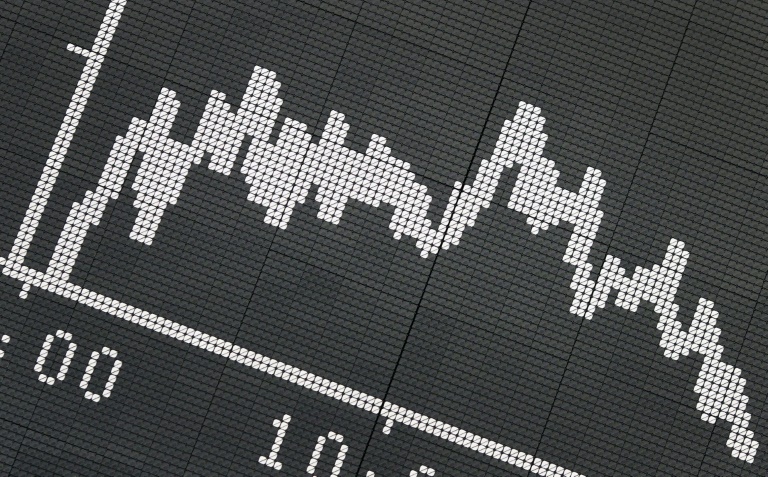
Eurozone equity markets sank Tuesday on news that the region’s inflation rate has spiked to another record high in May on fallout from Russia’s invasion of Ukraine.

The eurozone’s increase in consumer prices hit 8.1 percent, up from 7.4 percent in April, official data showed Tuesday, with energy surging the fastest.

Sentiment took another battering on fears of harsh economic fallout after the European Union reached a deal on a partial embargo of Russian oil imports in punishment for its assault on Ukraine.

The embargo also sent oil prices spiking to two-month peaks, in turn fuelling more inflationary fears and pressuring central banks to tighten monetary policy and prevent consumer prices rocketing even higher.

However, the resurgent oil market lifted the London stock market because it boosts profits and revenues for energy majors BP and Shell.

– Energy ‘may soar faster’ –

“Inflation in the eurozone increased even further,” said Jonas Keck, economist at UK-based research group the Centre for Economics and Business Research.

“As the EU reached an agreement on new sanctions targeting Russian oil supplies, energy prices may well soar even faster in the coming months.”

Markets have been rocked this year as the Ukraine conflict has fuelled massive price gains for energy and food, translating into spiking inflation that threatens to derail the post-pandemic economic recovery.

Red-hot eurozone inflation intensified calls for interest rate hikes from the European Central Bank (ECB), which has already flagged plans to hike borrowing costs in July.

“Over recent months, the ECB has faced growing pressure to shift away from its pandemic stimulus position, which has seen it hold its main policy rates at their current historic lows,” added Keck.

“This stands in contrast to other major central banks including the US Federal Reserve and Bank of England, both of which have seen at least two rate rises this year.”

With Wall Street closed for a holiday on Monday, there were few catalysts to help extend the gains enjoyed in recent days, allowing inflation and borrowing costs to take centre stage.

– Brent oil tops $124 –

In reaction to the EU’s partial embargo, Brent oil briefly broke above $124 per barrel and WTI crude breached $119.

European chiefs said the latest sanctions would ban purchases of Russian oil delivered by sea, though there would be a temporary exemption for pipelines.

While widely expected, the agreement adds further upside to crude just as China begins to ease Covid restrictions in Shanghai and Beijing, raising the likelihood of a jump in demand from the world’s number two economy.

There was some much-needed cheer from data showing China’s manufacturing shrunk in May at a slower rate than expected.

The Purchasing Managers’ Index (PMI) — a key gauge of manufacturing activity — hit 49.6 last month, improving from April’s 47.4, which was the worst reading since early 2020.

However, it remained below the 50-point mark separating growth from contraction and showed the Chinese economy was still struggling.

– Key figures at around 1115 GMT –

Frankfurt – DAX: DOWN 0.8 percent at 14,462.95

Paris – CAC 40: DOWN 1.0 percent at 6,500.16

EURO STOXX 50: DOWN 0.8 percent at 3,810.35

London – FTSE 100: UP 0.2 percent at 7,618.33 points

Brent North Sea crude: UP 1.7 percent at $123.78 per barrel

West Texas Intermediate: UP 3.1 percent at $118.65

Tokyo – Nikkei 225: DOWN 0.3 percent at 27,279.80 (close)

Hong Kong – Hang Seng Index: UP 1.4 percent at 21,415.20 (close)

Shanghai – Composite: UP 1.2 percent at 3,186.43 (close)

New York – Dow: Closed for a holiday

Euro/dollar: DOWN at $1.0698 from $1.0779 on Monday

Pound/dollar: DOWN at $1.2590 from $1.2652

Euro/pound: DOWN at 84.99 pence from 85.20 pence

Dollar/yen: UP at 128.01 yen from 127.59 yen

burs-rfj/kjm

Israel signs UAE free trade deal, its first in Arab world

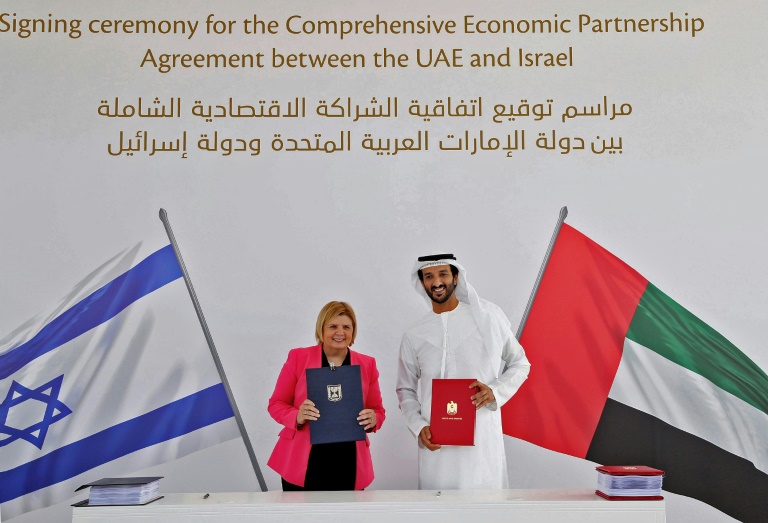
Israel signed a free trade deal with the United Arab Emirates on Tuesday, its first with an Arab country, building on their US-brokered normalisation of diplomatic relations in 2020. 

Israel’s ambassador to the oil-rich UAE, Amir Hayek, tweeted “mabruk” — congratulations in Arabic — with a photo of Emirati and Israeli officials holding documents at a signing ceremony in Dubai.   

The Emirati envoy to Israel, Mohamed Al Khaja, hailed as an “unprecedented achievement” the deal that, according to the Israeli side, scraps customs duties on 96 percent of all products traded.

“Businesses in both countries will benefit from faster access to markets and lower tariffs as our nations work together to increase trade, create jobs, promote new skills and deepen cooperation,” Khaja tweeted.

The 2020 deal was part of the US-brokered Abraham Accords that also saw Israel establish diplomatic ties with Bahrain and Morocco. 

Two-way trade between Israel and the UAE last year totalled some $900 million dollars, according to Israeli figures.

UAE-Israel Business Council president Dorian Barak predicted that trade would soon multiply between the regional powerhouse economies.

“UAE-Israel trade will exceed $2 billion in 2022, rising to around $5 billion in five years, bolstered by collaboration in renewables, consumer goods, tourism and the life sciences sectors,” he said in a statement.

“Dubai is fast becoming a hub for Israeli companies that look to South Asia, the Middle East and the Far East as markets for their goods and services.”

Nearly 1,000 Israeli companies will be working in and through the UAE by year’s end, he said.

– Trade diplomacy –

The UAE was the first Gulf country to normalise ties with Israel and only the third Arab nation to do so after Egypt and Jordan.  

Talks for a free trade agreement began in November and concluded after four rounds of negotiations.

The latest was held in March in Egypt between Israeli Prime Minister Naftali Bennett and Sheikh Mohammed bin Zayed Al-Nahyan, UAE’s long-time de facto ruler who became president this month after the death of his half-brother Sheikh Khalifa. 

Israel had in March hosted a meeting of the top diplomats from the United States, UAE, Bahrain and Morocco. 

Sudan in 2020 also agreed to normalise ties with Israel, but the strife-torn northeast African country has yet to finalise a deal.

Israel has already struck free trade agreements with other countries and blocs, including the United States, European Union, Canada and Mexico. 

In February, Israel signed a trade deal with Rabat to designate special industrial zones in Morocco.

– Palestinian issue –

The Abraham Accords broke with long-standing pan-Arab policy to isolate Israel until it withdraws from the occupied territories and accepts Palestinian statehood.

Palestinians condemned the agreements struck under then US president Donald Trump, and the conflict continues to inflame tensions, including between Israel and the UAE.

Tuesday’s signing came two days after thousands of flag-waving Israelis marched through Jerusalem’s Old City during a nationalist procession marking Israel’s 1967 capture of east Jerusalem. 

Israel annexed east Jerusalem in 1980, a move never recognised by the international community.

The UAE on Monday “strongly condemned” what it called Israel’s “storming” of Jerusalem’s Al Aqsa mosque compound, one of Islam’s holiest sites.

The UAE “reiterated its firm position on the need to provide full protection for Al Aqsa Mosque and halt serious and provocative violations taking place there”, reported the official WAM news agency. 

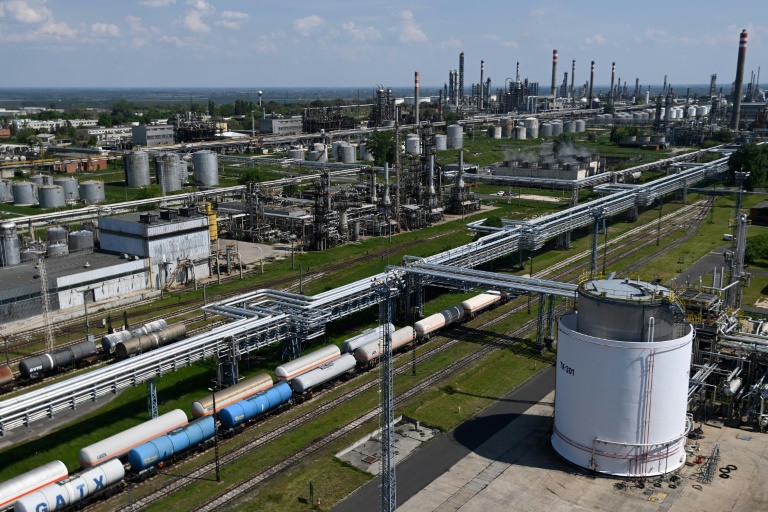
EU's Russian oil ban unlikely to affect OPEC+ decision

Saudia Arabia, Russia and their allies are likely to stick to their policy of modest oil output increases when they meet Thursday after the EU banned most imports from Moscow.

European Union leaders agreed on Monday to ban more than two-thirds of Russian oil imports, tightening economic screws on the country over its invasion of its neighbour Ukraine.

This has caused oil prices, which have already hit record highs so far this year, to soar further amid pressure on the 23-member OPEC+ to open tabs more widely and relieve the market.

Brent, the international benchmark, hit a two-month high above $124 per barrel while the US contract, WTI, topped $119.

But analysts say OPEC+ will stick to its strategy of only slightly increasing output when it holds its monthly videoconference on Thursday as it remains united with Moscow.

“With Russia being one of the two most important members of the alliance (alongside Saudi Arabia), any decision on increasing output has become highly political,” Craig Erlam, analyst at trading platform OANDA, told AFP.

“Both because (Russia) cannot sell what it’s already producing as a result of sanctions and perhaps even because it wants prices to be uncomfortably high and maintain pressure on countries it considers ‘unfriendly’,” he said.

The 13 members of the Organization of the Petroleum Exporting Countries chaired by Saudi Arabia and their 10 partners led by Russia drastically slashed output in 2020 as demand slumped because of the coronavirus pandemic and worldwide lockdowns.

They have been increasing output modestly to the tune of around 400,000 barrels per day each month since last year and have resisted pressure by top consumers, including the US, to open the tabs wider.

Ipek Ozkardeskaya, an analyst with Swissquote bank, said Thursday’s meeting “looks like a formality”.

“There is little hope to see OPEC countries announcing anything that would give a relief to the market,” she said.

– Unable to meet quotas –

Analysts have also noted even if the group was willing to increase its output, several of its members have fallen short of the quotas, resulting in a lower supply to the market.

“Ultimately, the group is missing its already modest targets by increasingly large margins every month so you have to question just how impactful any increase would be if countries simply don’t have the capacity to increase further,” Erlam said.

In a statement Friday, the Group of Seven wealthy countries noted OPEC’s “key role” and once again called on “oil and gas producing countries to act in a responsible manner and to respond to tightening international markets”.

OPEC was set up in 1960 and joined by the 10 partners through a 2016 declaration. Its mission is to “ensure the stabilisation of oil markets”.

But OPEC+ is “expected to push back against calls by the West to speed up its oil output increases, sticking to its existing plans instead,” said Victoria Scholar, an analyst at Interactive Investor.

Close Bitnami banner
Bitnami