US Business

Ukraine war boosts Africa's humanitarian emergency: UN official

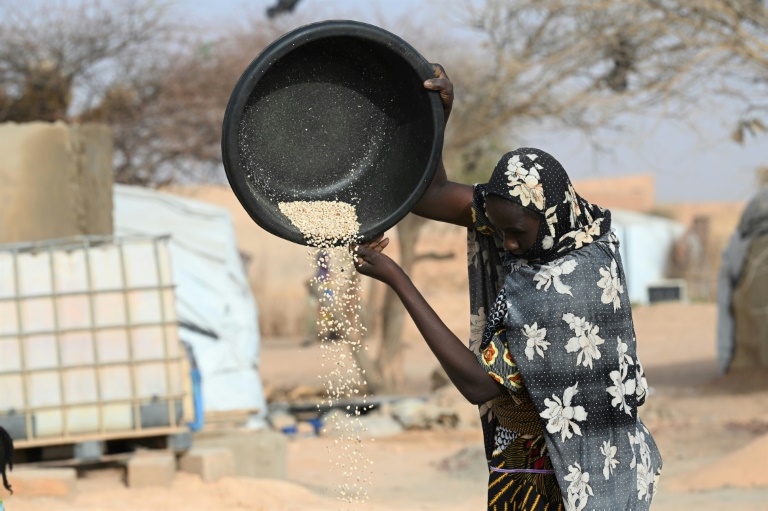
The war in Ukraine is heaping further pressure on Africa’s fast-growing population of vulnerable people, a UN refugee official says.

Cereal prices have surged because of the slump in exports from one of the world’s bread baskets.

In Africa, rising food costs are sharpening the impact of conflict and climate change, which have already driven millions into poverty or forced them from their homes, Raouf Mazou, assistant high commissioner at the UNHCR refugee agency, told AFP.

“Across Africa, rising prices and reduced food aid caused by the war in Ukraine will increase the vulnerability of refugees and other forcibly displaced populations and increase the risk of inter-communal tensions,” Mazou said in an interview.

“Food, fuel and fertiliser costs have skyrocketed and the decline in purchasing power is hitting the most vulnerable households the hardest, including refugees and displaced people.”

Mazou spoke by telephone from Malabo, the capital of Equatorial Guinea, where he attended a special summit of the African Union at the weekend to discuss the continent’s humanitarian crises.

Mazou said Africa already faced “displacement on an unprecedented scale” through the double crunch of climate-related disasters and conflicts.

The AU Commission estimates that 113 million people will need urgent assistance in 2022, while 48 million of those affected are refugees and internally displaced.

“Floods and droughts are becoming more frequent and intense, seriously affecting countries such as Ethiopia, Kenya, Somalia and South Sudan,” said Mazou, a diplomat from the Republic of Congo, also known as Congo-Brazzaville.

– Climate-conflict cycle –

“Disasters linked to climate change risk not only worsening poverty, hunger and access to natural resources such as water, but also increasing instability and violence,” he added.

He gave the example of Cameroon’s Far North region, where herders, fishermen and farmers have begun to fight over access to scarce water resources.

At least 100,000 people have fled their homes, moving inside Cameroon or to neighbouring countries.

In the southeast of the continent, cyclones have battered Mozambique, where growing violence and unrest in the north have displaced hundreds of thousands of people, said Mazou.

“The Sahel is on the front line of the climate crisis, with temperatures rising 1.5 times faster than the global average. This only worsens conflicts over limited resources, making life even more difficult for those who have been forced to flee their homes,” he added.

Mazou said humanitarian aid was falling far behind the accelerating needs.

“We are already seeing this with further cuts in food aid to refugees in Mozambique and Zambia,” he said.

“Rations will also be reduced for refugees in Sudan next month, among other countries.”

In the longer term, more needed to be done to shore up protection against climate change and to open up suitable land for farming, he said.

“The impact of the war in Ukraine on the cost and availability of food around the world… highlights the importance of taking advantage of the vast amount of fertile land available in Africa to end unnecessary dependence on imports,” said Mazou.  
Eurozone inflation soars to new record over Ukraine war

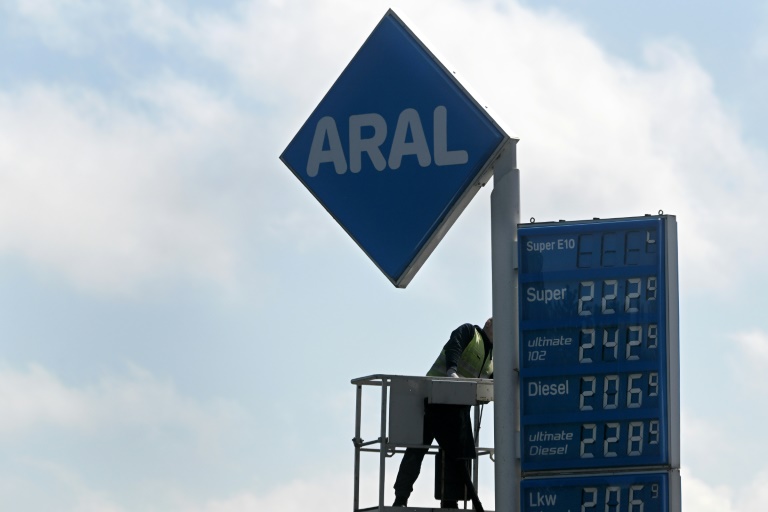
Eurozone inflation accelerated to another record high in May, data showed Tuesday, as the war in Ukraine stoked energy and food prices and threatened to flatline the economy.

The EU’s Eurostat data agency said that the increase in consumer prices in the 19 countries that use the euro reached 8.1 percent compared to the year before, up from 7.4 percent in April. 

The uninterrupted rise in prices heaped pressure on the European Central Bank to speed up interest rate rises for the first time in over a decade.

The ECB has said it plans to hike interest rates in July in order to cool the pressure on prices and is expected to officially end its bond-buying stimulus policies as early as next week.

By raising rates, the ECB would be playing catch-up with other major central banks that have already made moves to tame inflation that has spread globally.

The US Federal Reserve raised rates by an unusually large 50 basis points at the beginning of May, while the Bank of England sealed its fourth consecutive hike.

The chief economist of the European Central Bank, Philip Lane, indicated on Monday that interest rates in the eurozone will rise more cautiously, going up by 0.25 percent in July and again in September.

This would lift the ECB’s bank deposit rate out of negative territory, meaning lenders would no longer pay to park their excess cash at the central bank.

The ECB had previously argued that sharp leaps in consumer prices, driven also by the waning effect of Covid-19 pandemic, were likely to let up, downplaying the inflationary threat.

Russia’s war in Ukraine disrupted that view, worsening already disrupted supply chains and throwing up new shortages in essential material from wheat to metals.

This remained that case in May with energy prices spiking by a hair-raising 39.2 percent from a year earlier. Food prices went up by 7.5 percent. 

– Energy crunch –

Western economies including Germany — the eurozone’s biggest — are scrambling to wean themselves off Russian energy, which will also have its effects on inflation.

The EU on Monday agreed to ban two-thirds of its oil dependency by the end of the year — and German and Polish pledges to voluntarily forgo pipeline deliveries could push the cut to 90 percent — which could put still more upward pressure on prices.

The ban on Russian oil swiftly hit the market price for oil which means “that risks (to inflation) are skewed once again to the upside”, said Oxford Economics in a note.

“We think headline inflation will peak in the second quarter but will slow only gradually throughout 2022,” it added.

Policymakers will also be keeping an especially close eye on wages for fear pay increases to help workers meet high prices could stoke inflation further.

Despite the challenges, Lane on Monday stood by the ECB’s assessment that inflation in the eurozone would find its way back to its two percent target in the medium term. 

Meanwhile, fears of negative or zero growth in Europe will be fuelled by data showing the French economy contracted 0.2 percent in the first quarter from the previous three months, in a downward revision.

The European Commission this month sharply cut its eurozone growth forecast for 2022 to 2.7 percent, but warned the outlook was highly uncertain because of the war in Ukraine.

French economy shrinks as inflation dents confidence

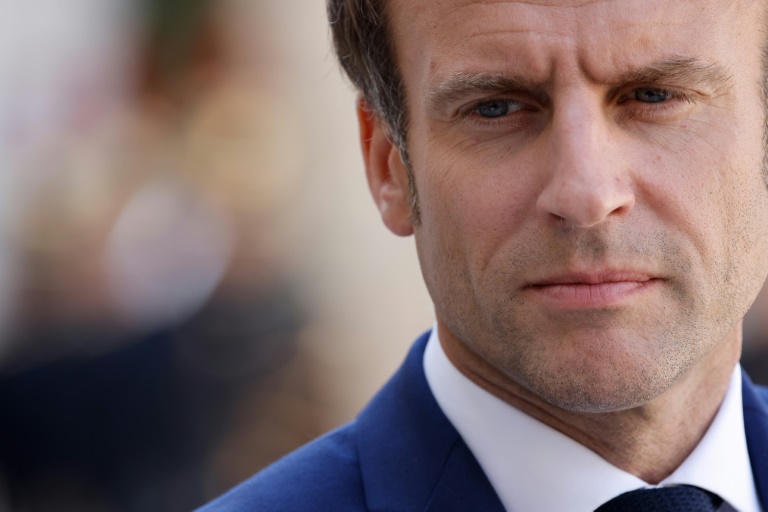
France’s economy contracted in the first quarter under the impact of soaring inflation, data showed Tuesday, increasing the risks for President Emmanuel Macron in key parliament elections less than two weeks away.

The economy shrank 0.2 percent from the previous quarter compared with a flat reading initially, statistics office INSEE said, a cold shower after last year’s strong 6.8 percent recovery as the Covid pandemic eased.

Russia’s invasion of Ukraine has derailed growth across Europe, sparking inflationary pressures that are prompting consumers to hold back on purchases of all kinds — a crucial driver of the French economy.

Household spending power dropped 1.9 percent in the first three months of the year, and price increases have only accelerated since then, with inflation hitting 5.2 percent in May compared with the same period last year.

It was the first time prices overall had crossed the five percent threshold since 1985, and before Tuesday’s data release, INSEE had been tabling on further acceleration to 5.4 percent for June.

Macron won re-election in April with a promise to defend spending power, and is hoping to secure a majority for his centrist party in the parliament elections beginning June 12.

His new government has already vowed “food checks” for needy households, pension increases and higher social subsidies, measures that will not be implemented until after the vote.

But his rivals on the left and right say the former investment banker fails to fully appreciate the pocketbook worries of the vast majority of voters, and are promising more concrete measures to lift incomes against the inflation threat.

– Energy fears –

INSEE expects the economy to edge up just 0.25 percent in the second quarter, after household spending slipped 0.4 percent in April, though that was less than the 1.4 percent drop in March. 

Fuel and food prices in particular have jumped as Europeans prepare a ban on Russian oil purchases, and the forced halt of Ukraine’s grain exports stoke worries of food shortages rippling through global markets.

Food prices climbed 4.2 percent in May while energy prices jumped 28 percent year-on-year — a brutal shock for the millions of French in smaller cities and rural areas who depend heavily on their cars.

High petrol costs were main factor behind the fiery “yellow vest” revolts against Macron’s government in 2018 and 2019, which saw him cut taxes and lift wages for the lowest workers in a string of fiscal concessions.

Inflation in France is not as bad as in neighbouring eurozone countries — Germany has reported a new record of 7.9 percent for May, while Spanish inflation jumped to 8.7 percent for the month.

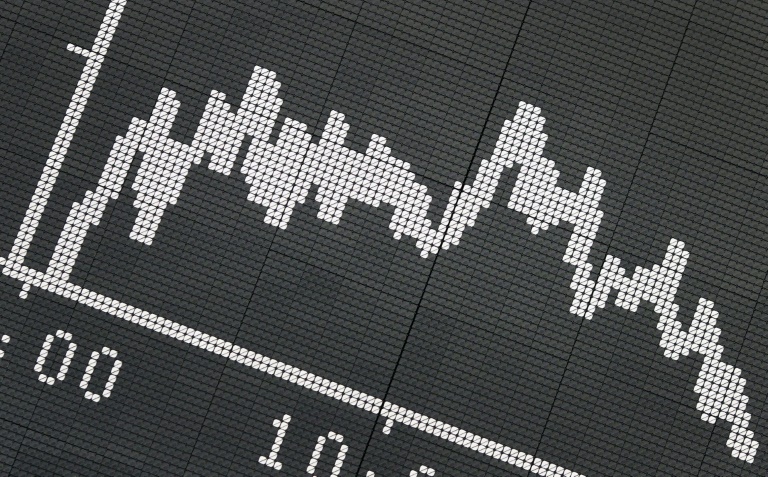
But the INSEE reports helped push the CAC-40 stock index down 0.5 percent to 6,532.37 points on Tuesday morning, with the Paris benchmark falling 8.7 percent since the start of the year.

Markets mixed as inflation, rate worries temper rally

Stock markets were mixed Tuesday as investors battled to maintain a global rally, with inflation still niggling over a pick-up in oil prices while a top Fed official pressed for a series of sharp rate hikes.

But optimism was boosted by data indicating an improvement in China’s crucial manufacturing sector, helped by the easing of some strict Covid containment measures in major cities including Shanghai.

With Wall Street closed for a holiday, there were few catalysts to help extend the gains enjoyed in recent days, allowing inflation and borrowing costs to take centre stage.

Crude prices built on Monday’s advance after the European Union reached a deal on a partial embargo of Russian imports as part of a punishment for its invasion of Ukraine.

Brent broke above $122 for the first time in two months and WTI sat around $117 as European chiefs said the latest sanctions would ban purchases of Russian oil delivered by sea, though there would be a temporary exemption for pipelines.

While widely expected, the agreement adds further upside to crude just as China begins to ease Covid restrictions in Shanghai and Beijing, raising the likelihood of a jump in demand from the world’s number two economy.

The lift in oil prices will help fan already elevated inflation and pile further pressure on central banks to tighten monetary policy to prevent prices from running out of control.

In a sign of the struggle policymakers face, German prices are rising at their fastest pace ever while Spain’s topped forecasts. 

In the United States, the chances of an extended period of rate hikes were increased after Federal Reserve Governor Christopher Waller said he favoured half-point hikes “for several meetings” until inflation slows towards the bank’s two percent target. 

Waller added that his goal was in line with market expectations, which is about 2.75 percent in December.

President Joe Biden is due to hold talks with Fed boss Jerome Powell on Tuesday to discuss the inflation situation.

Jobs data on Friday will provide an update on the state of the US economy in light of soaring prices and rising rates.

– ‘A big if’ –

The prospect of a period of rates rising higher for longer lifted the dollar against the euro, pound and yen as well as other currencies.

In Asia, there was some much-needed cheer from data showing China’s manufacturing shrunk in May at a slower rate than expected.

The Purchasing Managers’ Index (PMI) — a key gauge of manufacturing activity — hit 49.6 last month, improving from April’s 47.4, which was the worst reading since early 2020.

However, it remained below the 50-point mark separating growth from contraction and showed the Chinese economy was still struggling.

Jeffrey Halley at OANDA said: “A less worse than expected set of data has prompted a modest rally in China equities today, holding the promise of an accelerating recovery in June if the virus situation remains benign.”

But he warned: “That’s a big if.”

Hong Kong and Shanghai rose more than one percent, while Seoul, Singapore, Taipei, Jakarta, Bangkok and Wellington also advanced.

Tokyo, Sydney, Mumbai and Manila fell.

London edged up but Paris and Frankfurt dipped.

AXA Investment Managers’ Chris Iggo warned that another 10-15 percent retreat for stocks could still be a possibility.

“The mood is temporarily better in markets,” he said, adding that “I think the worst is over for bond markets but picking the bottom in equities is trickier.”

– Key figures at around 0810 GMT –

Tokyo – Nikkei 225: DOWN 0.3 percent at 27,279.80 (close)

Hong Kong – Hang Seng Index: UP 1.4 percent at 21,415.20 (close)

Shanghai – Composite: UP 1.2 percent at 3,186.43 (close)

London – FTSE 100: UP 0.2 percent at 7,618.02

Euro/dollar: DOWN at $1.0740 from $1.0779 on Monday

Pound/dollar: DOWN at $1.2616 from $1.2650

Euro/pound: DOWN at 85.13 pence from 85.21 pence

Dollar/yen: UP at 127.90 yen from 127.59 yen

Brent North Sea crude: UP 1.4 percent at $123.31 per barrel

West Texas Intermediate: UP 3.1 percent at $118.63

New York – Dow: Closed for a holiday

Russian troops take 'control' in part of key city as oil embargo agreed

Russian forces have taken partial control of a key industrial city in eastern Ukraine, a regional governor said Tuesday, hours after European Union leaders struck a deal to ban more than two-thirds of Moscow’s oil imports.

Severodonetsk is one of several urban hubs that lie on Russia’s path to capturing the Donbas’s Lugansk region, where Moscow has shifted the bulk of its firepower since failing to capture Kyiv in the war’s early stages.

“The situation is extremely complicated. Part of Severodonetsk is controlled by the Russians,” Lugansk regional governor Sergiy Gaiday said in a statement on social media, adding that Ukrainian troops still retained some areas.

But as Russian troops edged closer to the Severodonetsk city centre, officials in Brussels were tightening the economic screws on Moscow.

A compromise deal reached late Monday, meant to punish Russia for its invasion three months ago, cuts “a huge source of financing for its war machine,” European Council chief Charles Michel tweeted.

“Maximum pressure on Russia to end the war,” he said. 

Leaders of the 27-nation bloc met to negotiate the long-sought deal amid concerns raised by Hungary and other neighbouring countries reliant on Russian fuel.

The agreement also includes plans for the EU to send nine billion euros ($9.7 billion) in “immediate liquidity” to Kyiv, Michel announced.

Hours earlier, Ukrainian President Volodymyr Zelensky had called an oil embargo the “key point” to any sanctions package.

“I believe that Europe will have to give up Russian oil and oil products in any case, because this is about the independence of Europeans themselves from (weaponised) Russian energy,” he said in his daily address to the nation.

The Netherlands on Tuesday became the latest European country to have its Russian gas shipments halted after refusing to pay in rubles, a demand Moscow is making of “unfriendly countries” in a bid to sidestep crippling Western sanctions. 

“Gazprom has completely stopped gas supplies to (Dutch Energy Firm) GasTerra due to non-payment in rubles,” the Russian gas giant said in a morning statement.

– ‘Must never happen again’ –

As Europe announced its new sanctions on Moscow, Washington was taking a cautious line regarding weaponry for Ukraine.

Ukraine has received extensive US military aid, with legislators approving another $40 billion assistance package in May.

But US President Joe Biden said he would not send long-range rocket systems that could hit Russian territory, despite urgent requests from Kyiv for exactly that.

“We are not going to send to Ukraine rocket systems that can strike into Russia,” Biden told reporters in Washington.

His comments came as new US ambassador to Ukraine Bridget Brink — filling a position vacant since 2019 — and French Foreign Minister Catherine Colonna both arrived in Kyiv. 

France will “continue to reinforce arms deliveries,” Colonna said at a news conference with her Ukrainian counterpart Dmytro Kuleba.

The highest-ranking French official to visit the capital since Russia’s invasion began February 24, Colonna also visited Bucha, near Kyiv, where Russian troops have been accused of committing war crimes against civilians.

“This should never have happened,” Colonna told reporters after visiting an Orthodox church in the town. “It must never happen again.”

Her visit came as a French journalist was killed while working in Ukraine.

Frederic Leclerc-Imhoff was “on board a humanitarian bus” when “he was mortally wounded,” French President Emmanuel Macron said on Twitter.

– Oil sanctions –

Participants in Monday’s EU summit hatched a compromise deal that exempts deliveries by pipeline from the oil import ban, after Hungarian President Victor Orban warned halting supplies would wreck the country’s economy.

EU chief Ursula von der Leyen said the ban “will effectively cut around 90 percent of oil imports from Russia to the EU by the end of the year”.

Michel said the sanctions also involved disconnecting Russia’s biggest bank, Sberbank, from the global SWIFT system, banning three state broadcasters and blacklisting individuals blamed for war crimes.

Russia’s Gazprom, meanwhile, turned off the tap to the Netherlands on Tuesday, halting gas shipments after Dutch energy firm GasTerra ignored a demand that gas supplied from April 1 be paid for in rubles.

The partly state-owned firm revealed the looming shut-off a day earlier, saying it would not comply with payment requirements that breach EU sanctions.

The cutoff means that two billion cubic metres of gas will not be supplied to the Netherlands between now and October, GasTerra said, adding it had purchased gas elsewhere in anticipation of the move.

Danish energy company Orsted has also warned its gas shipments could be cut off when a Tuesday payment deadline had passed.

Russia has previously halted deliveries to Finland, Bulgaria and Poland, a move blasted by the EU as “blackmail”.

– Referendum cancelled  –

With Russia facing the oil import ban, a Georgian breakaway region delivered another blow to Moscow’s hopes for further unity among local allies, with the leader of South Ossetia scrapping a planned July referendum on joining Russia.

The Moscow-controlled enclave’s president, Alan Gagloev, warned Monday about “uncertainty of the legal consequences of the issue submitted to a referendum.”

Since failing to capture Kyiv in the war’s early stages, Russia’s army has narrowed its focus, hammering Donbas cities with relentless artillery and missile barrages.

At least three people were killed and six wounded in an overnight rocket attack on the city of Slovyansk, Donetsk regional governor Pavlo Kirilenko said Tuesday on Telegram.

“I repeat once again that there are no safe places in the Donetsk region, so I call again: evacuate — save your lives,” he said. 

But Ukrainian forces have pushed back in the southern region of Kherson, the country’s military leadership has said.

On Monday, Ukraine’s southern command centre said they had driven Russian troops from the village of Mykolayivka.

A day earlier, the army claimed to have pushed Russian forces into “unfavourable positions” around the villages of Andriyivka, Lozovo and Bilohorka, forcing Moscow to send reserves to the area.

burs-sea/cwl/je

Asian markets mixed as inflation, rate worries temper rally

Asian markets were mixed Tuesday as investors battled to maintain a global rally, with inflation continuing to niggle owing to a pick-up in oil prices while a top Federal Reserve official pressed for a series of sharp interest rate hikes.

But optimism was given a boost by data indicating China’s crucial manufacturing sector was improving, helped by the easing of some strict Covid containment measures in major cities including Shanghai.

With Wall Street closed for a holiday there were few catalysts to help extend the gains enjoyed in recent days, allowing inflation and borrowing costs to take centre stage.

Crude prices built on Monday’s advance after the European Union reached a deal on a partial embargo of Russian imports as part of a punishment for its invasion of Ukraine.

Brent broke above $122 for the first time in two months and WTI was sitting around $117 as European chiefs said the latest sanction would ban purchases of Russian oil delivered by sea, though there would be a temporary exemption for pipelines.

While widely expected, the agreement adds further upside to crude just as China begins to ease Covid restrictions in Shanghai and Beijing, raising the likelihood of a jump in demand from the world’s number two economy.

The lift in oil prices will help fan already elevated inflation and pile further pressure on central banks to tighten monetary policy to prevent it running out of control.

In a sign of the struggle policymakers face, German prices are rising at their fastest pace ever while Spain’s topped forecasts. 

In the United States, the chances of an extended period of rate hikes were increased after Federal Reserve Governor Christopher Waller said he favoured half-point hikes “for several meetings” until inflation slows towards the bank’s two percent target. 

He added that his goal was in line with market expectations, which is about 2.75 percent in December. 

Joe Biden is due to hold talks with Fed boss Jerome Powell on Tuesday to discuss the inflation situation. US jobs data Friday will provide an update on the state of the US economy in light of soaring prices and rising rates.

The prospect of a period of rates rising higher for longer lifted the dollar against the euro, pound and yen as well as other currencies. 

In Asia there was some much-needed cheer from data showing China’s manufacturing shrunk in May at a slower rate than expected.

The Purchasing Managers’ Index (PMI) — a key gauge of manufacturing activity — hit 49.6 last month, improving from April’s 47.4, which was the worst reading since early 2020.

However, the reading remained stuck below the 50-point mark separating growth from contraction and showed the world’s number two economy was still struggling.

Jeffrey Halley at OANDA said: “A less worse than expected set of data has prompted a modest rally in China equities today, holding the promise of an accelerating recovery in June if the virus situation remains benign.”

But he warned: “That’s a big if.”

Hong Kong and Shanghai rose more than one percent, while Seoul, Singapore, Taipei, Jakarta, Bangkok and Wellington also advanced. Tokyo, Sydney, Mumbai and Manila fell.

In early trade London edged up at the open but Paris and Frankfurt dipped.

But AXA Investment Managers’ Chris Iggo warned that another 10-15 percent retreat for stocks could still be a possibility.

“The mood is temporarily better in markets,” he said, adding that “I think the worst is over for bond markets but picking the bottom in equities is trickier.”

– Key figures at around 0720 GMT –

Tokyo – Nikkei 225: DOWN 0.3 percent at 27,279.80 (close)

Hong Kong – Hang Seng Index: UP 1.1 percent at 21,353.80

Shanghai – Composite: UP 1.2 percent at 3,186.43 (close)

London – FTSE 100: UP 0.1 percent at 7,604.24

Euro/dollar: DOWN at $1.0745 from $1.0779 on Monday

Pound/dollar: DOWN at $1.2609 from $1.2650

Euro/pound: UP at 85.23 pence from 85.21 pence

Dollar/yen: UP at 128.00 yen from 127.59 yen

Brent North Sea crude: UP 1.7 percent at $123.72 per barrel

West Texas Intermediate: UP 3.4 percent at $118.97

New York – Dow: Closed for a holiday

Starling bank's Anne Boden takes fintech out of London

Gazing out from the new offices of online bank Starling, Anne Boden sees the familiar, modest surroundings of the Welsh capital Cardiff rather than the skyscrapers of London’s City financial district.

“We have great universities in Cardiff, and we have great talents here, we’re using that talent to create something that’s really special for the customers,” say Boden.

Boden is the head of Starling, which has just opened the Cardiff site, where about half of its 1,800 employees will be based.

With almost three million customers and eight percent of UK business banking market share, Starling has managed to carve out a niche in the hugely competitive world of fintech, and, unlike many competitors, turn a profit.

Born into a modest family 42 miles (67 kilometres) from Cardiff in Swansea where she also studied, Boden calls the bank she started in 2014 “a force to be reckoned with”.

The same description could apply to Boden who regularly describes herself as a “five-foot (1.5-metre) Welsh woman”.

In the very masculine world of finance, she defends the position of women business leaders and has been put in charge of a government study group on the matter.

“I’m not a typical banker,” says Boden, who wants to offer her customers an experience different from that of the traditional banks she worked for until 2013.

But in the wake of the 2008 financial crisis, the former Royal Bank of Scotland (RBS) employee had to set herself apart from all the other entrepreneurs seeking to move on from the old world of finance.

Already aged over 50, Boden teamed up with Tom Blomfield, a young Oxford University graduate typical of the world of London startups. 

But in 2015, Blomfield jumped ship with much of Starling’s management team just months before its launch to start rival bank Monzo.

Boden writes in her autobiography about her struggle to keep control of Starling and of her vision: a profitable but “responsible” online bank with top-notch customer service that respects the environment.

Starling says it uses only renewable energy and recycled plastic.

The bank’s market capitalisation of £2 billion ($2.5 billion, 2.3 billion euros) is far behind Revolut ($33 billion) or Monzo ($4.5 billion), but often beats its competitors for customer satisfaction. 

– ‘No crypto gimmicks’ –

“It’s friendly rivalry, I think,” Boden says of her relationship today with the big names of British fintech, while not shy of criticising them and vaunting Starling’s more prudent approach.

In her book, “Banking On It: How I Disrupted an Industry”, she describes the tedious job of getting Starling a banking licence — the Holy Grail that permits a bank to use customers’ deposits to issue loans — to set Starling apart from some of its competitors in the UK.

Fintech giant Revolut is in fact not recognised as a bank in the UK, although it does have that status in several other European countries, and the financial press regularly reports on its efforts to obtain a licence.

Without the licence, banking startups struggle to turn a profit.

“Some of these new fintechs are trying to find ways of monetising their costumer base and are coming up with trading apps or crypto as a way of earning a revenue,” she says.

“We are not seeking gimmicks, we’re all about providing what the costumers really want.”

Although she won’t answer questions about a possible stock market flotation initially planned for the end of the year or early 2023, Boden happily discusses the bank’s future.

“If I look forward to five years’ time, people will be talking about Starling as being this global technology company that owns a very successful bank in the UK and it all started here in Cardiff,” she says.

“We go towards a future where tech is pervasive and things are happening all around you, banks have to respond,” she says. 

“Instead of paying your insurance bill by the quarter perhaps you’ll pay by the minute. Perhaps you’ll pay for your self-driving car as you self-drive down the road.”

EU leaders ban most Russian oil, as Moscow advances in Donbas

European Union leaders have agreed to ban more than two-thirds of Russian oil imports, tightening economic screws on the country even as Moscow’s forces press their offensive in Ukraine’s eastern Donbas region.

The compromise deal reached late Monday, meant to punish Russia for its invasion three months ago, cuts “a huge source of financing for its war machine,” European Council chief Charles Michel tweeted.

“Maximum pressure on Russia to end the war,” he said. 

Leaders of the 27-nation bloc had met to negotiate the long-sought deal earlier Monday in Brussels, amid concerns raised by Hungary and other neighboring countries reliant on Russian fuel.

The agreement also includes plans for the EU to send nine billion euros ($9.7 billion) in “immediate liquidity” to Kyiv, Michel announced.

Hours earlier, Ukrainian President Volodymyr Zelensky had called an oil embargo the “key point” to any sanctions package.

“I believe that Europe will have to give up Russian oil and oil products in any case, because this is about the independence of Europeans themselves from (weaponised) Russian energy,” he said in his daily address to the nation.

The Netherlands and Denmark on Tuesday were expected to join the growing list of European countries who have seen their gas shipments halted after refusing to pay Russian giant Gazprom in rubles, a demand meant to sidestep crippling Western sanctions.

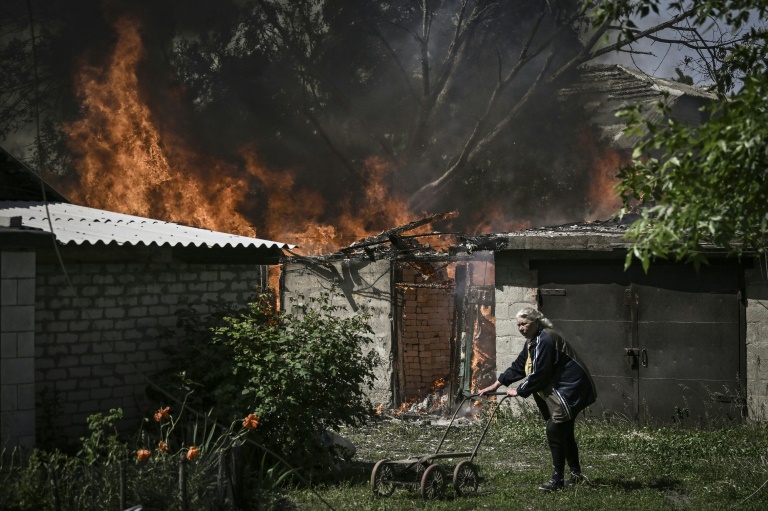
On the ground, Russian forces were making incremental gains in the Donbas region, including the industrial city of Severodonetsk, where they were edging closer to the city centre.

“The situation in Severodonetsk is as complicated as possible,” Lugansk regional governor Sergiy Gaiday said on Telegram, saying the entire region was under continuous bombardment — “air bombs, and artillery, and tanks. Everything”.

– ‘Must never happen again’ –

As Europe announced its new sanctions on Moscow, Washington was taking a cautious line regarding weaponry for Ukraine.

Ukraine has received extensive US military aid, with legislators approving another $40 billion assistance package in May.

But US President Joe Biden said he would not send long-range rocket systems that could hit Russian territory, despite urgent requests from Kyiv for exactly that.

“We are not going to send to Ukraine rocket systems that can strike into Russia,” Biden told reporters in Washington.

His comments came as new US ambassador to Ukraine Bridget Brink — filling a position vacant since 2019 — and French Foreign Minister Catherine Colonna both arrived in Kyiv. 

France will “continue to reinforce arms deliveries,” Colonna said at a news conference with her Ukrainian counterpart Dmytro Kuleba.

The highest-ranking French official to visit the capital since Russia’s invasion began February 24, Colonna also visited Bucha, near Kyiv, where Russian troops have been accused of committing war crimes against civilians.

“This should never have happened,” Colonna told reporters after visiting an Orthodox church in the town. “It must never happen again.”

Her visit came as a French journalist was killed while working in Ukraine.

Frederic Leclerc-Imhoff was “on board a humanitarian bus” when “he was mortally wounded,” French President Emmanuel Macron said on Twitter.

– Oil sanctions –

Participants in Monday’s EU summit hatched a compromise deal that exempts deliveries by pipeline from the oil import ban, after Hungarian President Victor Orban warned halting supplies would wreck the country’s economy.

EU chief Ursula von der Leyen said the ban “will effectively cut around 90 percent of oil imports from Russia to the EU by the end of the year”.

Michel said the sanctions also involved disconnecting Russia’s biggest bank, Sberbank, from the global SWIFT system, banning three state broadcasters and blacklisting individuals blamed for war crimes.

Russia’s Gazprom, meanwhile, was set to halt gas supplies to the Netherlands on Tuesday, with Denmark likely to see the tap turned off as well.

The Netherlands’ partly state-owned energy firm GasTerra revealed the looming shut-off Monday, saying it would not comply with payment requirements that breach EU sanctions.

Moscow has demanded clients from “unfriendly countries” — including EU member states — pay for gas in rubles as it attempts to avoid Western financial sanctions.

Danish energy company Orsted also warned its gas shipments could be cut off when a May 31 payment deadline passed.

Russia has previously halted deliveries to Finland, Bulgaria and Poland, a move blasted by the EU as “blackmail”.

– Referendum cancelled  –

With Russia facing the oil import ban, a Georgian breakaway region delivered another blow to Moscow’s hopes for further unity among local allies, with the leader of South Ossetia scrapping a planned July referendum on joining Russia.

The Moscow-controlled enclave’s president, Alan Gagloev, warned Monday about “uncertainty of the legal consequences of the issue submitted to a referendum.”

Since failing to capture Kyiv in the war’s early stages, Russia’s army has narrowed its focus, hammering Donbas cities with relentless artillery and missile barrages.

At least three people were killed and six wounded in an overnight rocket attack on the city of Slovyansk, Donetsk regional governor Pavlo Kirilenko said Tuesday on Telegram.

“I repeat once again that there are no safe places in the Donetsk region, so I call again: evacuate — save your lives,” he said. 

But Ukrainian forces are pushing back in the southern region of Kherson, the country’s military leadership has said.

On Monday, Ukraine’s southern command centre said they had driven Russian troops from the village of Mykolayivka.

A day earlier, the army claimed to have pushed Russian forces into “unfavourable positions” around the villages of Andriyivka, Lozovo and Bilohorka, forcing Moscow to send reserves to the area.

burs-sea/cwl/mtp

EU leaders ban most Russian oil, as Moscow advances in Donbas

European Union leaders have agreed to ban more than two-thirds of Russian oil imports, tightening economic screws on the country even as Moscow’s forces press their offensive in Ukraine’s eastern Donbas region.

The compromise deal reached late Monday, meant to punish Russia for its invasion three months ago, cuts “a huge source of financing for its war machine,” European Council chief Charles Michel tweeted.

“Maximum pressure on Russia to end the war,” he said. 

Leaders of the 27-nation bloc had met to negotiate the long-sought deal earlier Monday in Brussels, amid concerns raised by Hungary and other neighboring countries reliant on Russian fuel.

The agreement also includes plans for the EU to send nine billion euros ($9.7 billion) in “immediate liquidity” to Kyiv, Michel announced.

Hours earlier, Ukrainian President Volodymyr Zelensky had called an oil embargo the “key point” to any sanctions package.

“I believe that Europe will have to give up Russian oil and oil products in any case, because this is about the independence of Europeans themselves from (weaponised) Russian energy,” he said in his daily address to the nation.

The Netherlands and Denmark on Tuesday were expected to join the growing list of European countries who have seen their gas shipments halted after refusing to pay Russian giant Gazprom in rubles, a demand meant to sidestep crippling Western sanctions.

On the ground, Russian forces were making incremental gains in the Donbas region, including the industrial city of Severodonetsk, where they were edging closer to the city centre.

“The situation in Severodonetsk is as complicated as possible,” Lugansk regional governor Sergiy Gaiday said on Telegram, saying the entire region was under continuous bombardment — “air bombs, and artillery, and tanks. Everything”.

– ‘Must never happen again’ –

As Europe announced its new sanctions on Moscow, Washington was taking a cautious line regarding weaponry for Ukraine.

Ukraine has received extensive US military aid, with legislators approving another $40 billion assistance package in May.

But US President Joe Biden said he would not send rocket systems that could hit Russian territory, despite urgent requests from Kyiv for exactly that.

“We are not going to send to Ukraine rocket systems that can strike into Russia,” Biden told reporters in Washington.

His comments came as new US ambassador to Ukraine Bridget Brink — filling a position vacant since 2019 — and French Foreign Minister Catherine Colonna both arrived in Kyiv. 

France will “continue to reinforce arms deliveries,” Colonna said at a news conference with her Ukrainian counterpart Dmytro Kuleba.

The highest-ranking French official to visit the capital since Russia’s invasion began February 24, Colonna also visited Bucha, near Kyiv, where Russian troops have been accused of committing war crimes against civilians.

“This should never have happened,” Colonna told reporters after visiting an Orthodox church in the town. “It must never happen again.”

Her visit came as a French journalist was killed while working in Ukraine.

Frederic Leclerc-Imhoff was “on board a humanitarian bus” when “he was mortally wounded,” French President Emmanuel Macron said on Twitter.

– Oil sanctions –

Participants in Monday’s EU summit hatched a compromise deal that exempts deliveries by pipeline from the oil import ban, after Hungarian President Victor Orban warned halting supplies would wreck the country’s economy.

EU chief Ursula von der Leyen said the ban “will effectively cut around 90 percent of oil imports from Russia to the EU by the end of the year”.

Michel said the sanctions also involved disconnecting Russia’s biggest bank, Sberbank, from the global SWIFT system, banning three state broadcasters and blacklisting individuals blamed for war crimes. 

Russia’s Gazprom, meanwhile, was set to halt gas supplies to the Netherlands on Tuesday, with Denmark likely to see the tap turned off as well. 

The Netherlands’ partly state-owned energy firm GasTerra revealed the looming shut-off Monday, saying it would not comply with payment requirements that breach EU sanctions.

Moscow has demanded clients from “unfriendly countries” — including EU member states — pay for gas in rubles as it attempts to avoid Western financial sanctions.

Danish energy company Orsted also warned its gas shipments could be cut off when a May 31 payment deadline passed.

Russia has previously halted deliveries to Finland, Bulgaria and Poland, a move blasted by the EU as “blackmail”.

– Referendum cancelled  –

With Russia facing the oil import ban, a Georgian breakaway region delivered another blow to Moscow’s hopes for further unity among local allies, with the leader of South Ossetia scrapping a planned July referendum on joining Russia.

The Moscow-controlled enclave’s president, Alan Gagloev, warned Monday about “uncertainty of the legal consequences of the issue submitted to a referendum.”

Since failing to capture Kyiv in the war’s early stages, Russia’s army has narrowed its focus, hammering Donbas cities with relentless artillery and missile barrages. 

But Ukrainian forces are pushing back in the southern region of Kherson, the country’s military leadership has said.

On Monday, Ukraine’s southern command centre said they had driven Russian troops from the village of Mykolayivka.

A day earlier, the army claimed to have pushed Russian forces into “unfavourable positions” around the villages of Andriyivka, Lozovo and Bilohorka, forcing Moscow to send reserves to the area.

burs-sea/cwl/mtp

From US death-row cell, he turns to music for salvation

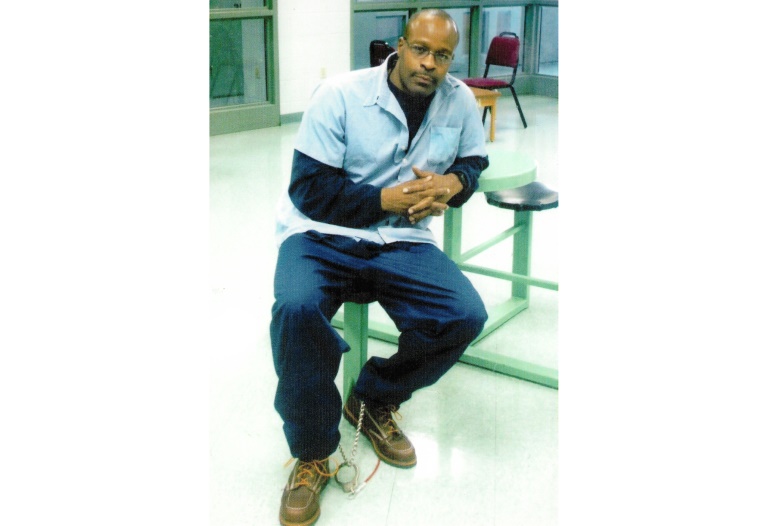
Music has helped Keith LaMar survive the mind-numbing sameness of nearly 30 years on death row in a maximum-security prison in the US state of Ohio.

Now he hopes his love and involvement in jazz — along with the intervention of musicians drawing public attention to his case — will help him escape execution for a murderous crime he insists he did not commit.

LaMar, who turns 53 on Tuesday, is accused of killing or ordering the killing of five fellow inmates during an 11-day prison riot in 1993.

His execution is already scheduled — for November 16, 2023.

LaMar said he has spent the past 30 years preparing himself psychologically, morally and legally for whatever comes next.

“So, if and when the time comes, and I am an unfortunate victim of the state … it won’t be because I didn’t try to do everything in my power to prevent that,” he told AFP by telephone.

During those decades behind bars, though, he has become a huge jazz buff.

“Music is a big part of my life,” he said.

He is particularly a fan of the music of John Coltrane, saying iconic albums like “A Love Supreme” have helped him cope with his anger and isolation.

The very first thing he does when he wakes up in the morning in a cell “the size of a closet” is to put on a CD, he said — that, and write.

– Jazz concert from behind bars –

LaMar pleaded guilty for the crime he was originally arrested for at 19: the murder of a childhood friend — an addict who had tried, at gunpoint, to steal drugs LaMar was selling.

He says he tried to turn his life around during the early years of his original 18-year sentence, completing a high-school equivalency degree before enrolling in university classes from his cell.

But he wants his case around the Lucasville Prison Riot to be reopened, contending that trial was gravely tainted by judicial irregularities.

In that regard LaMar is no longer alone. In addition to a team of lawyers working to reopen his case, several jazz musicians — including the Spaniard Albert Marques — have come together to demand “Justice for Keith LaMar” and raise awareness of his case.

Last weekend Marques’s group gave a concert at New York’s Jazz Gallery to celebrate release of the CD “Freedom First,” composed jointly by LaMar and Marques. Some of the proceeds will cover LaMar’s legal expenses.

During the concert, the firm but seductive voice of LaMar himself could often be heard over the speaker system. 

Marques said LaMar, who wrote several of the song lyrics, narrating his life and commenting on his fate, “is part of the band and earns the same as the musicians.” 

“The idea is not to play for Keith, it’s to play with Keith,” Marques told AFP.

But how could LaMar participate from a death-row cell hundreds of miles away? 

“He can make calls from jail, for which he has to pay,” Marques said, adding with a touch of sarcasm that the guards “can’t prohibit something that they can’t imagine happening.”

Marques said the band wants to “raise awareness” about a case involving one of his “best friends,” whom he has visited in maximum-security Ohio State Penitentiary in Youngstown.

– ‘Meaningful, purposeful things’ –

LaMar says in his book “Condemned” — written in his cell, then dictated by phone to a friend — that he has been “trying, with all my might, to redeem myself.” And he explains his version of what happened during the riots, which changed his life forever.

According to LaMar, prosecutors wrongfully withheld interviews with 13 inmates who witnessed or took part in the riots; evidence was destroyed; and prosecutors failed to disclose information that might have proved his innocence.

Prosecutors and appeals court judges, however, have insisted LaMar’s guilt is proven.

“When you (are) poor, Black and in a racist country, you plead guilty,” he said, referring to limited recourse he believes African Americans have in the justice system.

In a country which has seen stunning cases of wrongful conviction, “the truth can only set you free when you have enough money,” LaMar said.

But music can also deliver truth. Musician Marques has been “one of the blessings of my life,” LaMar says, and his last, best hope of drawing wider attention to his case. 

Above all, he says, he has gained a “friend.”

“I’m trying to stay caught up with meaningful, purposeful things,” LaMar said, because that gives some sense to his life — and ensures those who believe in his innocence also “believe in me as a human being.”

Close Bitnami banner
Bitnami