US Business

Equity markets extend rally as China eases curbs

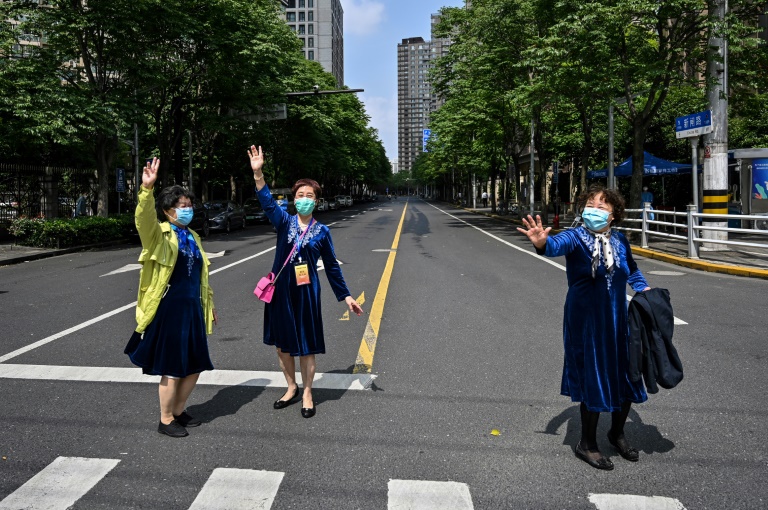
Stock markets in Asia and Europe were higher Monday as investors were cautiously optimistic, despite concerns over inflation, as China eases some of its strict Covid curbs in Shanghai and Beijing.

After Tokyo and Hong Kong closed more than two percent higher, London equities added 0.2 percent while Frankfurt and Paris closed up by more than 0.7 percent.

Fears over the soaring cost of living cast a shadow, however, as oil rose back above $120 a barrel for the first time in two months, deepening fears that central banks could raise interest rates aggressively and drag down economic recovery.

Oil prices are rising on the back of European efforts to ban Russian supplies over the Ukraine war, but also from signs that China’s economic activity could pick up as Covid-related restrictions are eased.

New data on Monday showed inflation in both Germany and Spain soaring on higher energy and food prices, turning up the pressure on the European Central Bank to speed up monetary tightening, with a first rate hike expected in July.

“Worries about global growth have eased — and hopes (are) that China’s worst Covid woes may be over,” boosting the world’s number-two economy, said Hargreaves Lansdown analyst, Susannah Streeter.

“There was a ripple of relief across European markets after authorities in Shanghai announced a lifting of restrictions from Wednesday, with more production now expected to begin across the manufacturing and tech hub.”

– Eyes turn to US –

The gains on Monday added to growing hope that a months-long sell-off may have run its course.

Markets have been pummelled this year as soaring prices forced central banks to hike interest rates and warn of more to come.

As investors look for signs on whether the inflation surge may have passed in the US, May jobs data — due for release on Friday — should provide a fresh snapshot of the economy and possibly an idea about the US Federal Reserve’s next policy moves.

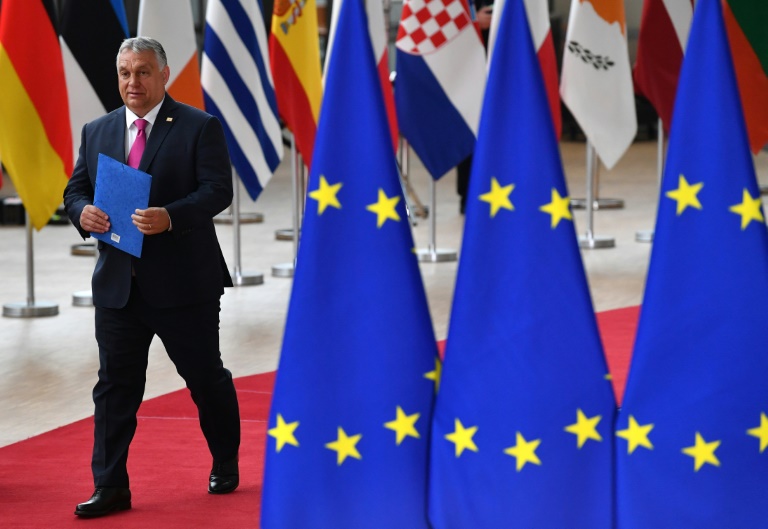
European leaders began a summit Monday to discuss a Russian oil embargo, but Hungarian Prime Minister Viktor Orban warned that the bloc has yet to come up with a compromise that he could agree to.

The 27 are “not managing to reach agreement on a ban on Russian energy as Hungary continues to refuse to wean itself off Russian oil,” said Ipek Ozkardeskaya, analyst with Swissquote.

– Key figures at around 1600 GMT –

London – FTSE 100: UP 0.2 percent at 7,600.06 points (close)

Frankfurt – DAX: UP 0.8 percent at 14,575.98 (close)

Paris – CAC 40: UP 0.7 percent at 6,548.71 (close)

EURO STOXX 50: UP 0.8 percent at 3,841.62

Tokyo – Nikkei 225: UP 2.2 percent at 27,369.43 (close)

Hong Kong – Hang Seng Index: UP 2.1 percent at 21,123.93 (close)

Shanghai – Composite: UP 0.6 percent at 3,149.06 (close)

New York – Dow: UP 1.8 percent at 33,212.96

Euro/dollar: UP at $1.0779 from $1.0735 on Friday

Pound/dollar: UP at $1.2650 from $1.2631

Euro/pound: UP at 85.21 pence from 84.99 pence

Dollar/yen: UP at 127.59 yen from 127.11 yen

Brent North Sea crude: UP 1.2 percent at $119.82 per barrel

West Texas Intermediate: UP 1.0 percent at $116.19

burs-rfj-cdw/spm
EU leaders seek to break oil ban deadlock as Russia advances in Donbas

European Union leaders met in Brussels on Monday seeking to overcome Hungarian opposition to an embargo on Russian oil, as Moscow’s forces made gains in the eastern Donbas region of Ukraine. 

Ukrainian President Volodymyr Zelensky was set to address leaders at the emergency summit, expected to press the block “to kill Russian exports” as he seeks to crank up international pressure on Moscow.

In Washington, US President Joe Biden said he would not send rocket systems to Ukraine that could hit Russian territory, despite urgent requests from Kyiv for such weapons and extensive US military aid for Ukraine since the war began.

EU diplomats have drafted a watered-down agreement that would see pipeline oil exempted from the ban, in the hopes of unblocking talks on the bloc’s sixth round of Russian sanctions.

Ahead of the meeting, Hungarian Prime Minister Viktor Orban told reporters the proposal was a “good solution” but warned there was “no agreement at all” as things stood.

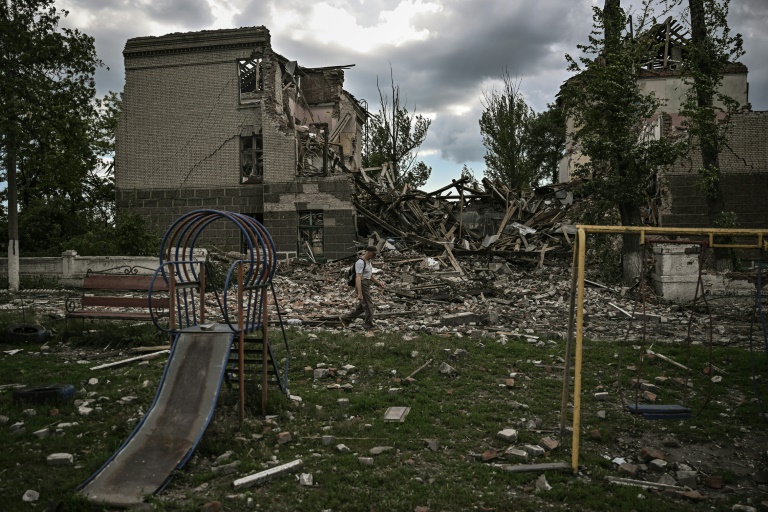
On the ground, Russian forces pressed their offensive in Donbas.

The situation in Severodonetsk, just across the Donets river from its sister city of Lysychansk, was “very difficult”, the local Lugansk regional governor Sergiy Gaiday said in a statement on social media.

“The Russians are advancing into the middle of Severodonetsk”, while the fighting continued, Gaiday said.

– Weapons supplies –

“We are not going to send to Ukraine rocket systems that can strike into Russia,” Biden told reporters in Washington.

Ukraine has received extensive US military aid since with legislators approving another $40 billion (37.1 billion euros) assistance package earlier in May.

France’s new foreign minister Catherine Colonna said on a visit to Kyiv that Paris was ready to boost military aid to Ukraine to help it counter Russia’s invasion.

France will “continue to reinforce arms deliveries,” Colonna said at a news conference with her Ukrainian counterpart Dmytro Kuleba.

The arms would arrive “in the coming weeks”, she said.

The highest-ranking French official to visit the capital since Russia invaded Ukraine on February 24, Colonna also visited the town of Bucha, where Russian troops have been accused of committing war crimes against the civilian population.

“This should never have happened. It must never happen again,” Colonna told reporters after visiting an Orthodox church in the town.

The foreign minister’s visit came as a French journalist was killed while working in Ukraine.

Frederic Leclerc-Imhoff was “on board a humanitarian bus” when “he was mortally wounded,” French president Emmanuel Macron wrote on Twitter on Monday.

– Oil sanctions –

Speaking alongside Colonna, Kuleba said he hoped “divisions will be overcome” at the EU leaders meeting.

A sixth wave of EU measures against Moscow was put on the table weeks ago, but has been rejected by Orban and resisted by neighbouring countries also reliant on pipelined Russia oil.

Macron cautiously told reporters that a long-sought-after deal was “getting closer”, but others doubted that the Hungarian leader was ready to sign on at this stage.

“I don’t think we’ll reach an agreement today,” Estonian Prime Minister Kaja Kallas said at a political meeting ahead of the summit

Hungary has asked for at least four years and 800 million euros ($860 million) in EU funds to adapt its refineries and increase pipeline capacity for alternative suppliers, like Croatia.

But under the compromise proposal the Druzhba pipeline could be excluded from a sanctions package “for the time being”, an EU official told AFP.

– ‘We’re close!’ –

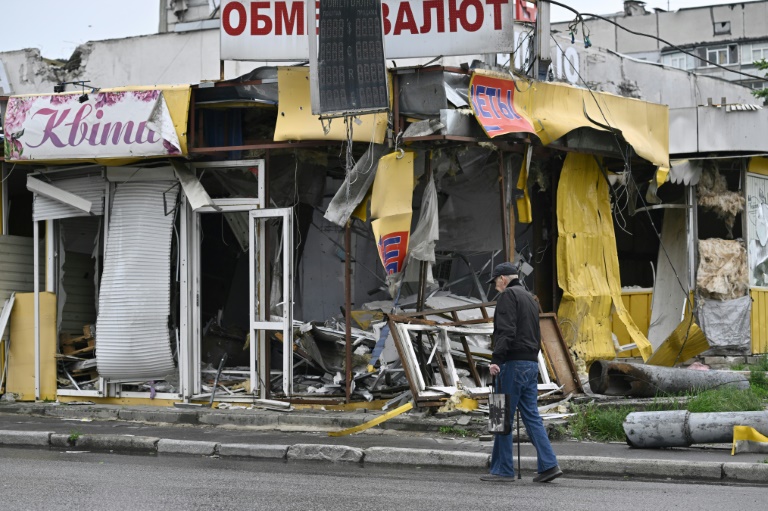
Since failing to capture Kyiv in the war’s early stages, Russia’s army has narrowed its focus, hammering Donbas cities with relentless artillery and missile barrages as it seeks to consolidate its control.

But Ukrainian forces pushed back over the weekend in the southern region of Kherson, the country’s military leadership said.

The Ukrainian general staff claimed the move had put their adversary into “unfavourable positions” around the villages of Andriyivka, Lozovo and Bilohorka and forced Moscow to send reserves to the area.

“Kherson, hold on. We’re close!” it tweeted Sunday.

At the same time, two people were injured following an explosion in the Moscow-controlled city of Melitopol in south-eastern Ukraine, with local pro-Kremlin authorities blaming Kyiv.

Russia-installed authorities said the city had been targeted by a “terrorist attack”.

“The Ukrainian government continues its war on the civilian population and the infrastructure of cities,” a statement said.

At least five people died following strikes on civilian infrastructure in Ukraine’s separatist-controlled city of Donetsk, according to Russian investigators.

Authorities in the DNR said on Telegram that two apartment blocks and three schools were hit in the attack, accusing Kyiv of using artillery and rockets with cluster munitions.

burs-sea/jm

EU leaders plead with Orban to back Russian oil ban

EU leaders were hoping Monday to persuade Prime Minister Viktor Orban to back a watered-down oil embargo against Russia after a month of haggling over a blocked sanctions package.

But the Hungarian leader, who has demanded an exemption from the ban and guarantees for his country’s energy supply, warned on arrival at the EU summit that no compromise had yet been reached.

Orban confirmed that the proposal on the table would see Russian oil arriving in the EU and in Hungary by pipeline, rather than by sea, exempted from the sanctions.

“For Hungary this is a good solution, it means that an atomic bomb won’t be thrown on the Hungarian economy,” he said. But he warned that this would not be enough to guarantee supply.

“What causes us a problem is that in the case that something happens to the pipeline carrying Russian oil, which is something that the Ukrainians and others have spoken about,” he said. 

“If Russian oil does not arrive by pipeline, then we would have the right to receive oil by sea, and have it arrive from elsewhere, that is the guarantee that we need.”

Orban said “there is no agreement at all”. He did not, however, threaten to veto the leaders’ planned summit statement, arguing that it was the European Commission’s job to fine-tune the sanctions package.

— ‘Exceptions’ being negotiated —

A sixth wave of EU measures against Moscow was put on the table weeks ago, but has been rejected by Orban and resisted by neighbouring countries also reliant on pipelined Russia oil.

French President Emmanuel Macron cautiously told reporters that a long-sought-after deal was “getting closer”, but others doubted that.

“I don’t think we’ll reach an agreement today,” Estonian Prime Minister Kaja Kallas said at a political meeting Monday ahead of the summit.

“Of course, we’re going to have discussions, but everybody needs to be on board,” she said, adding that she did not expect a solution before a summit in late June. 

EU sanctions require the backing of all 27 member states and ambassadors fell short of finalising a deal just hours before the start of the summit. 

A senior EU diplomat described the failure as the “elephant in the room”, especially given that Ukrainian President Volodymyr Zelensky was also slated to address the leaders by video link.

An EU official said the leaders would attempt to find a “political agreement” on the Russian oil ban, with exceptions for specific countries worked out “as soon as possible”.

– ‘Orban’s antics’ –

Landlocked Hungary imports 65 percent of its oil from Russia through the Druzhba pipeline and, along with Slovakia and the Czech Republic, have asked for an exception from the import ban.

Diplomats said a two-year delay to the embargo has been granted to the countries concerned, but that Budapest wants at least four years and nearly 800 million euros ($860 million) in EU funding to adapt its refineries.

“There is quite a lot of sympathy for Hungary’s oil supply issues, which are great, despite the antics by Orban,” an EU diplomat said on condition of anonymity.

The latest compromise solution would exclude the Druzhba pipeline from the embargo and only impose sanctions on oil shipped to the EU by tanker vessel, which counts for two-thirds of Russian oil imports.

“The European Council aims to reach a political agreement today on an embargo on Russian oil,” an EU official told reporters.

“Some temporary exceptions have been granted to ensure security of supply for certain member states.”

Hungary’s intransigence comes on the back of Orban’s recent resounding re-election to a fourth term and some experts are sceptical about the official claims of alarm over a Russian oil ban.  

Also complicating the stand-off is Hungary’s share of the EU’s 800-billion-euro recovery fund, which Brussels has yet to approve due to disagreements over Budapest’s respect for the rule of law and human rights.

A senior diplomat warned that some leaders had accused negotiators of going too far in their efforts to placate Orban, who before the war was Russian President Vladimir Putin’s closest EU ally.

The question of how we answer Russia is always “emotional” for certain member states and will be “one of the most sensitive issues” at the summit, the diplomat added.

Norwegian buys 50 Boeing 737 MAX, ending dispute

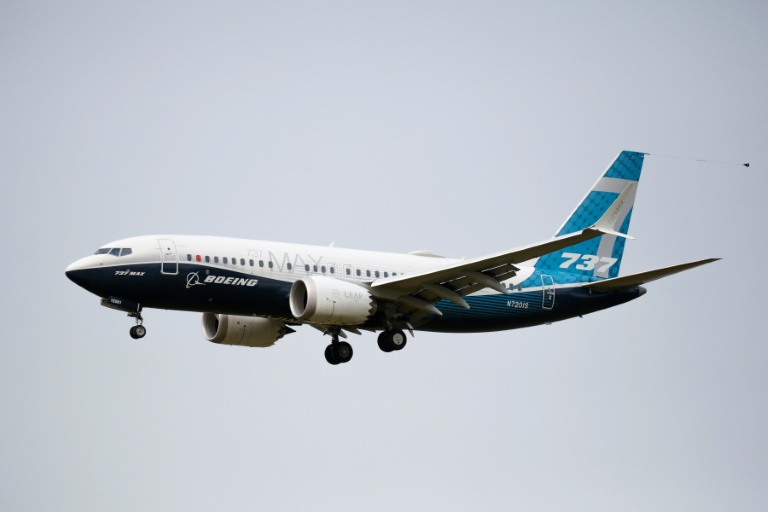
Low-cost carrier Norwegian Air Shuttle said Monday it would buy 50 Boeing 737 MAX 8 planes, ending a dispute between the companies and helping revive the US-made aircraft after two deadly crashes.

The jets will be delivered between 2025 and 2028, or around the same time that Norwegian’s aircraft leasing deals come to an end, and the contract includes an option for 30 more, the company said in a statement.

The order is welcome news for the US manufacturer’s flagship Boeing 737 MAX 8, which was grounded for 20 months following two fatal accidents and has been gradually returning to service since late 2020. 

Norwegian’s order is part of “the resolution of a dispute we have” with Boeing, the company’s chief executive Geir Karlsen told broadcaster TV2.

The Nordic low-cost carrier and Boeing have been locked in a legal battle for several years, with the Norwegian carrier launching legal proceedings against the US giant for compensation following setbacks related to its 737 MAX and 787 Dreamliner long-range jets.

Without giving further details, Karlsen mentioned “a compensation of two billion kroner ($212 million, 197 million euros) that we used to buy planes under advantageous conditions.

Norwegian said the deal remains subject to “various closing conditions” that it hopes will be concluded by the end of June.

Norwegian, which currently operates 61 aircraft, plans to ramp operations to have 70 in service this summer and 85 in the summer of 2023. 

Plagued by over-ambitious expansion, technical problems and the Covid pandemic, the company narrowly avoided bankruptcy last year via an extensive restructuring that led it, among other things, to give up its long-haul flight, reduce its fleet and cancel numerous orders.

Securing the 50 aircraft, means Norwegian is also returning to fully owning its own fleet after it was forced to rely on leased aircraft due to its financial woes.

For Boeing, this order solidifies the revival of the 737 MAX aircraft.

The 737 MAX was temporarily grounded worldwide following two crashes in Indonesia and Ethiopia, in 2018 and 2019, that killed a combined 346 people.

After Caribbean Arajet and  American Allegiant Air put in orders for the aircraft, British carrier IAG — parent company of British Airways — also just ordered 50 planes with an option for 100 more.

Norwegian on Monday also noted that the Boeing 737 MAX 8 is “approximately 14 percent more fuel-efficient compared to the previous-generation aircraft,” thus limiting emissions and cutting energy costs in view of rising fuel prices.

Russia advances in east Ukraine as EU meets on oil ban

Russian forces edged toward the centre of the eastern Ukrainian city of Severodonetsk Monday, while President Volodymyr Zelensky prepared to appeal to EU leaders at an emergency summit where a ban on Russian oil imports is on the agenda. 

Zelensky is expected to press EU officials at the summit “to kill Russian exports” as he seeks to crank up international pressure on Moscow.

Member states are searching for a compromise on a sixth round of sanctions, which has been delayed by resistance from within the bloc, namely from Hungary.

Meanwhile, Russia forces continued their push in the eastern Donbas region, upping the pressure on the twin cities of Severodonetsk and Lysychansk.

Since failing to capture Kyiv in the war’s early stages, Russia’s army has narrowed its focus, hammering cities with relentless artillery and missile barrages as it seeks to consolidate its control.

The situation in Severodonetsk, just across the Donets river from Lysychansk, was “very difficult”, the local Lugansk regional governor Sergiy Gaiday said in a statement on social media.

“The Russians are advancing into the middle of Severodonetsk”, while the fighting continued, Gaiday said.

– Pressure on the east –

While Russia concentrated its efforts in the east, Ukrainian forces pushed back over the weekend in the southern region of Kherson, the country’s military leadership said.

At the same time, two people were injured following an explosion in the Moscow-controlled city of Melitopol in southeastern Ukraine, with local pro-Kremlin authorities said pinning the blame on Kyiv.

Newly appointed French Foreign Minister Catherine Colonna also made the journey to the Ukrainian capital Monday for talks with Zelensky.

The highest-ranking French official to visit Kyiv since Russia invaded Ukraine on February 24, Colonna also visited the town of Bucha, where Russian troops have been accused of committing war crimes against the civilian population.

In the eastern Donbas region, Moscow’s forces were making slow progress towards taking the city of Severodonetsk.

Zelensky, in his daily address Sunday, described a scene of devastation in Severodonetsk. 

“All critical infrastructure has already been destroyed… More than two-thirds of the city’s housing stock has been completely destroyed,” he said. 

– ‘Constant shelling’ –

In Severodonetsk, where an estimated 15,000 civilians remain, a local official said “constant shelling” made it increasingly difficult to get in or out while the water supply is increasingly unstable.

Ukrainian forces counterattacked in the region of Kherson, the only region of the country fully controlled by Russian troops.

Russia gained control over most of Kherson, which borders Crimea, in the early stages of the war and Moscow-backed officials in the region have recently pushed for annexation.

While limited in nature, the attack could have the effect of stretching Russian forces. 

The Ukrainian general staff claimed the move had put their adversary into “unfavourable positions” around the villages of Andriyivka, Lozovo and Bilohorka and forced Moscow to send reserves to the area.

“Kherson, hold on. We’re close!” it tweeted Sunday.

In Melitopol, Russia-installed authorities said in a statement the city had been targeted by a “terrorist attack”.

According to the statement, car packed with explosives exploded in the city centre, injuring two “humanitarian aid” volunteers, a 28-year-old woman and a 25-year-old man.

“The Ukrainian government continues its war on the civilian population and the infrastructure of cities,” the officials said.

– Oil sanctions –

A new, sixth round of European sanctions has been held up by Hungary, whose Prime Minister Viktor Orban has close relations with Russian leader Vladimir Putin.

EU ambassadors made a final push ahead of the summit to persuade Hungary to accept a watered-down oil embargo against Russia.

The landlocked country is heavily dependent on Russian crude oil supplied via the Druzhba pipeline.

Hungary has asked for at least four years and 800 million euros ($860 million) in EU funds to adapt its refineries and increase pipeline capacity for alternative suppliers, like Croatia.

But under the compromise proposal the Druzhba pipeline could be excluded from a sanctions package “for the time being”, an EU official told AFP.

– ‘New face’ –

Meanwhile Zelensky on Sunday made his first visit to the embattled east since the start of the war, walking the streets of the Kharkiv region’s devastated capital in a bullet-proof vest.

While in Kharkiv, Zelensky discussed reconstruction plans with local officials, saying there was a chance for areas wrecked by Russian attacks to “have a new face”.

Despite an estimated 2,000 apartment blocks having been wholly or partially destroyed by shelling, the city has returned to a degree of normality in recent weeks.

While one-third of the northeastern region remains under Russian control, “we will for sure liberate the entire area,” the Ukrainian president said after the visit.

burs-sea/jv

Key talking points of Depp vs Heard trial

After weeks of explosive testimony, the jury is finally deliberating in the defamation case between actors Johnny Depp and his ex-wife Amber Heard.

Depp filed suit against Heard over an op-ed she wrote for The Washington Post in December 2018 in which she described herself as a “public figure representing domestic abuse.”

Heard did not name Depp in the piece, but he sued her for implying he was a domestic abuser and is seeking $50 million in damages.

Heard countersued for $100 million, claiming she suffered “rampant physical violence and abuse.”

Here are some of the key talking points from the blockbuster trial.

– The severed fingertip –

Hours of testimony during the six-week trial were devoted to a grisly incident in March 2015 in Australia, where Depp was filming the fifth installment of “Pirates of the Caribbean.”

The tip of Depp’s right-hand middle finger was severed during a heated argument with Heard at their rented home.

Depp said it occurred when Heard threw a vodka bottle at him.

Heard said she did not know how it happened but it may have been when he smashed a wall-mounted phone.

Both agreed though that Depp used his bloody digit to scrawl cryptic messages on walls, lampshades and mirrors in the home.

– Poop on the bed –

Among many bizarre incidents cited during the trial was a story about feces deposited one day on Depp’s side of the couple’s bed.

Depp said he was shown a photograph of “human fecal matter” on the bed after he and Heard argued during her 30th birthday party.

Heard tried to blame it on their dogs, Depp said, but “they’re teacup Yorkies, they weigh about four pounds each.”

Heard said the dog had bowel problems after eating some of Depp’s marijuana as a puppy.

As for the dogs, Heard accused Depp of once holding one of them out of the window of a moving car while “howling like an animal.”

The dog was unhurt.

– The witnesses –

Both sides presented multiple witnesses although rumored testimony by billionaire Elon Musk, Heard’s ex-boyfriend, and her co-star James Franco ultimately did not materialize.

But there were celebrity appearances.

Kate Moss, Depp’s former girlfriend, shot down a longstanding rumor he had once thrown the British model down a flight of stairs.

Moss said by videolink that it never happened.

Actress Ellen Barkin, another ex-girlfriend, testified Depp was jealous, controlling, and drunk “a lot of the time,” and once threw a wine bottle in a hotel room.

Other witnesses included bodyguards, agents, business managers, psychiatrists, doctors, friends, relatives, and even the former doorman of the luxury penthouse complex where the couple once lived in Los Angeles.

Doorman Alejandro Romero probably spoke for many involved in the case when he said: “I am so stressed out. I don’t want to deal with this anymore.”

– The evidence –

Audio and video recordings of heated, profanity-laced arguments between Depp and Heard were also entered into evidence.

In one video recorded by Heard in their kitchen, Depp is seen shouting, smashing glass cabinets and pouring himself an enormous glass of red wine.

Both Depp and Heard submitted photos of injuries they claimed were inflicted by the other.

Heard’s lawyers also presented photos purporting to show Depp passed out after drinking excessively or using drugs.

Text messages between Depp and various people were displayed in which he described in crude and violent language what he would like to see happen to Heard.

Depp’s lawyers downplayed the texts, saying he just had a colorful way of writing, similar to that of his late friend, the journalist Hunter S. Thompson.


– The Depp fans –

Fans of Depp queued up for hours daily to secure coveted seats in the public gallery for the trial held in Fairfax, Virginia.

While the spectators mostly behaved themselves, Judge Penney Azcarate threatened to expel them at one point during Heard’s testimony.

“If I hear one more sound, I will clear the gallery and we will continue this testimony without anybody in the courtroom,” Azcarate warned. “Understood?”

Depp fans also waged a massive campaign on social media in support of the actor with the hashtag #JusticeForJohnnyDepp.

Heard said she had received thousands of death threats. “People want to kill me and they tell me so every day,” she said.

The trial has also been closely followed online by millions of people tuning in to YouTube livestreams of proceedings. Many of them generated memes or animated GIFs in real-time, often either lauding Depp or ridiculing Heard.

– Damaged Hollywood careers –

Both Depp, a three-time Oscar nominee, and Heard claimed their careers have been damaged.

Heard, who starred in “Aquaman,” one of the top-grossing films ever, said she had to fight to retain a role in “Aquaman 2” and Depp tried to get Warner Brothers to cut her from the sequel.

Heard’s legal team presented an entertainment industry expert who estimated she has suffered $45-50 million in lost film and TV roles and endorsements.

An industry expert hired by Depp’s side said he has lost millions because of the abuse accusations, including a $22.5 million payday for a sixth “Pirates” installment.

But Tracey Jacobs, Depp’s former agent, said there never was a formal agreement for another “Pirates” film.

Jacobs also said the actor’s star had begun to dim since 2010 because of “unprofessional behavior” which included drinking and drug use.

Equity markets extend Wall St rally as China eases curbs

Markets rose Monday as investors rediscovered some verve after the release of healthy US data and as China eases some of its strict Covid curbs in Shanghai and Beijing, lifting hopes for the world’s number two economy.

The gains extended a positive end to last week for global equities with some commentators saying there was a growing hope that the months-long sell-off may have run its course.

Wall Street provided a strong lead and snapped a series of weekly losses, with Friday’s rally supported by data showing an easing of the key personal consumption expenditures (PCE) price index.

Markets have been pummelled this year as soaring prices — caused by the Ukraine war, supply chain snags and China’s lockdowns among other things — forced central banks to hike interest rates and warn of more to come.

The US reading lent hope that the worst of the inflation surge may have passed and could allow the Federal Reserve to ease back from its hawkish rate hike drive later in the year.

May jobs data — due for release on Friday — should provide a fresh snapshot of the economy and possibly an idea about the Fed’s next policy moves.

Asian investors followed the lead from their US counterparts.

Hong Kong put on more than two percent after a strong Friday performance fuelled by a rally in tech firms, while Tokyo, Sydney, Shanghai, Seoul, Mumbai, Taipei, Manila, Bangkok and Wellington were also well up.

London, Paris and Frankfurt all rallied at the open.

An easing of long-running lockdown measures in Shanghai provided a much-needed lift to sentiment, with China’s biggest city seeing a drop in Covid cases, while some curbs were also being lifted in Beijing.

Officials have also announced measures to ease the impact on the world’s number two economy, which has been hammered by the restrictions.

Still, OANDA’s Jeffrey Halley said: “The devil is in the detail of course, and workers in both cities still face challenges either going to work, or even being allowed to leave the house.”

He added that traders were also aware another flare-up could see the reimposition of tightened restrictions. 

“Such minutiae are usually ignored by markets when it doesn’t suit the preferred narrative, and so it is today. Asia is pricing in peak virus in China and a recovery in growth,” he said.

The possibility that the measures could be gradually removed helped oil prices rise, with Brent topping $120 for the first time in two months as traders bet on a pick-up in demand.

That comes as European leaders are said to be edging towards a deal to impose sanctions on imports of crude from Russia in retaliation for its invasion of Ukraine.

Still, while optimism is higher on trading floors at the moment, it remains at a premium with inflation still elevated and borrowing costs expected to rise further, while the war in Ukraine and China’s still-struggling economy continue to drag.

“We are in the middle of a bear market rally,” Mahjabeen Zaman, of Citigroup Australia, told Bloomberg Television. “I think the market is going to be trading range bound trying to figure out how soon is that recession coming or how quickly is inflation going down.”

– Key figures at around 0720 GMT –

Tokyo – Nikkei 225: UP 2.2 percent at 27,369.43 (close)

Hong Kong – Hang Seng Index: UP 2.2 percent at 21,145.89

Shanghai – Composite: UP 0.6 percent at 3,149.06 (close)

London – FTSE 100: UP 0.4 percent at 7,613.50

Euro/dollar: UP at $1.0754 from $1.0739 on Friday

Pound/dollar: UP at $1.2644 from $1.2631

Euro/pound: UP at 85.05 pence from 84.99 pence

Dollar/yen: UP at 127.11 yen from 127.09 yen 

Brent North Sea crude: UP 0.5 percent at $120.03 per barrel

West Texas Intermediate: UP 0.7 percent at $115.91 per barrel

New York – Dow: UP 1.8 percent at 33,212.96 (close)

Asian markets extend Wall St rally as China eases curbs

Asian markets rose Monday as investors rediscovered some verve after the release of healthy US data and as China eases some of its strict Covid curbs in Shanghai and Beijing, lifting hopes for the world’s number two economy.

The gains extended a positive end to last week for global equities with some commentators saying there was a growing hope that the months-long sell-off may have run its course.

Wall Street provided a strong lead and snapped a series of weekly losses, with Friday’s rally supported by data showing an easing of the key personal consumption expenditures (PCE) price index.

Markets have been pummelled this year as soaring prices — caused by the Ukraine war, supply chain snags and China’s lockdowns among other things — forced central banks to hike interest rates and warn of more to come.

The US reading lent hope that the worst of the inflation surge may have passed and could allow the Federal Reserve to ease back from its hawkish rate hike drive later in the year.

May jobs data — due for release on Friday — should provide a fresh snapshot of the economy and possibly provide an idea about the Fed’s next policy moves.

Asian investors followed the lead from their US counterparts.

Hong Kong put on more than two percent after a strong Friday performance fuelled by a rally in tech firms, while Tokyo, Sydney, Shanghai, Seoul, Taipei, Manila and Wellington were also well up.

An easing of long-running lockdown measures in Shanghai provided a much-needed lift to sentiment, with China’s biggest city seeing a drop in Covid cases, while some curbs were also being lifted in Beijing.

Officials have also announced measures to ease the impact on the world’s number two economy, which has been hammered by the restrictions.

The possibility that the measures could be gradually removed helped oil prices rise, with Brent topping $120 for the first time in two months as traders bet on a pick-up in demand.

That comes as European leaders are said to be edging towards a deal to impose sanctions on imports of crude from Russia in retaliation for its invasion of Ukraine.

Still, while optimism is higher on trading floors at the moment, it remains at a premium with inflation still elevated and borrowing costs expected to rise further, while the war in Ukraine and China’s still-struggling economy continue to drag.

“We are in the middle of a bear market rally,” Mahjabeen Zaman, of Citigroup Australia, told Bloomberg Television. “I think the market is going to be trading range bound trying to figure out how soon is that recession coming or how quickly is inflation going down.”

– Key figures at around 0240 GMT –

Tokyo – Nikkei 225: UP 2.0 percent at 27,309.35 (break)

Hong Kong – Hang Seng Index: UP 2.1 percent at 21,124.09 

Shanghai – Composite: UP 0.5 percent at 3,147.15

Euro/dollar: UP at $1.0750 from $1.0739 on Friday

Pound/dollar: UP at $1.2649 from $1.2631

Euro/pound: DOWN at 84.97 pence from 84.99 pence

Dollar/yen: DOWN at 127.00 yen from 127.09 yen 

Brent North Sea crude: UP 0.8 percent at $120.36 per barrel

West Texas Intermediate: UP 1.0 percent at $116.20 per barrel

New York – Dow: UP 1.8 percent at 33,212.96 (close)

London – FTSE 100: UP 0.3 percent at 7,585.46 (close)

Tech giant Grab's female co-founder blazes a trail

As co-founder of multi-billion dollar ride-hailing and food delivery firm Grab, Tan Hooi Ling is already smashing stereotypes in tech but she’s also trying to blaze a trail for the next generation of female entrepreneurs in the industry.

This month the company announced it will raise the proportion of women in leadership positions to 40 percent by 2030 — up from 34 percent now -– and is committed to ensuring equal pay.  

The key weapon in her arsenal for gender equality? Data.

“Data helps keep us honest,” the 38-year-old tells AFP.

“Right now, we have monthly and quarterly reports that help us look at how many female ‘Grabbers’ we have in different teams to ensure there is no unintentional bias and whether our pay parity is equal.”

Globally, tech firms suffer from a serious gender imbalance, with a study from consultancy Accenture and NGO Girls Who Code showing the proportion of women working in the sector is now smaller than in 1984.

While male tech executives such as Meta’s Mark Zuckerberg and Alibaba co-founder Jack Ma are well-known, top female tech leaders remain more lower profile.

Tan co-founded Singapore-headquartered Grab, a household name in Southeast Asia, in 2012 and now oversees hundreds of engineers. 

She hopes to be a catalyst for change in the male-dominated sector.

She insists she did not face discrimination as she built up her company, but recognises others have.

“That’s the role I’m hoping to play — to help create more of these environments where I was fortunate enough to grow up,” she adds.

– Battling sexism and inequality –

But industry experts say tech faces significant challenges in its bid for gender equality with reports of sexism and toxic cultures in some firms.

A total of 44 percent of female tech founders said they had been harassed, according to a global poll by NGO Women Who Tech, which surveyed more than a thousand people.

Last year, a female employee at Alibaba alleged she had been sexually assaulted on a work trip by her manager and a client. The Chinese e-commerce giant fired the manager — but later police dropped the case and the employee was also sacked.

And in the United States, video game giant Activision Blizzard is under investigation over accusations the firm condoned a culture of sexual harassment and discrimination.

For the climate to improve across the sector, critics say addressing gender imbalance is vital.

In Southeast Asia, 32 percent of the technology workforce is female, higher than the global average, but still lower than the 38 percent in other industries, according to a Boston Consulting Group study.

Some issues around gender diversity are a “by-product of history” Tan says — girls have not been encouraged enough to pursue science, technology, engineering and mathematics (STEM).

According to the 2017 UNESCO report Cracking the code: girls’ and women’s education in STEM, only 35 percent of students of these subjects in higher education globally are female. 

“We believe in ‘normalising’ women in tech. This starts by exposing females to many examples of women who have built their careers in tech,” Tan says. 

The company holds women’s leadership events and runs mentoring schemes to guide new female entrants to the industry.

Girls should be motivated to take up courses such as software development and data science to help drive change, she adds.

“We need to help break that bias,” she argues, adding that it is crucial to ensure a fair hiring process and female representation on interview shortlists.

Grab’s role in the growth of Asia’s gig economy has created opportunities for women who might previously not have been able to join the workforce, Tan suggests.

“Not everybody in the world can do a nine to five job, five days a week. Some of them need flexibility because they’re moms, they are parents.”

Tan adds that companies need to improve conditions for working mothers in order to ensure there’s no brain drain of female talent.  

“Being a working mother is not easy. And whether it’s in tech roles, or just in general leadership roles, I think we need to be more empathetic of the situations that they’re in and see if there are ways we can, you know, help, again, break biases.”

– Harvard to $10 billion firm – 

Tan grew up in a middle-class Malaysian family, the daughter of a civil engineer. She studied mechanical engineering in the UK, before joining McKinsey in Kuala Lumpur.

She went on to study for an MBA at Harvard, where she met Antony Tan — no relation — and the pair came up with the idea behind Grab. He is now the company’s CEO.

A decade on, the company is now worth about US$10 billion and offers services ranging from digital payments to courier deliveries.

Operating in diverse markets, from developed, orderly Singapore to the traffic-clogged streets of Jakarta and Manila, the company faces unique challenges. 

Tan, who has shadowed Grab’s drivers and spent time on the complaints desk in a bid to get to know all elements of the business, describes herself as the company’s “plumber”. 

And her firm’s local knowledge helped it to beat Uber in the region’s ride-hailing battle, and it bought its US rival’s Southeast Asian operations in 2018. 

The company does face challenges. Since listing on the Nasdaq stock exchange last year, the firm has lost nearly three-quarters of its value after reporting falls in its earnings. 

Despite the short-term challenges, Tan says Grab is committed to developing talent “for multiple generations”, and hopes women will play a leading role in the tech sector in future.

“Female empowerment has taken generations to change and it’s on a good trajectory, but it will take a bit of time,” she says. 

“I think we’re all in a better position to have more diverse teams, and diverse leadership teams as well.”

Heartbroken Texas school massacre town begs Biden to 'do something'

Desperate pleas for a stop to the gun massacres plaguing the United States rang out Sunday during President Joe Biden’s visit to Uvalde, where he prayed for the 19 children and two teachers slain by a teen gunman in the small Texas town.

“Do something!” rang out shouts from a crowd in the street as Biden left Sacred Heart Church where he attended mass with mourning relatives.

“We will. We will,” Biden responded to the crowd, before heading to private meetings with relatives of the dead and with first responders.

Biden, accompanied by his wife, Jill Biden, was in Uvalde less than two weeks after making a similar trip to the site of another mass shooting — this time targeting African Americans in a racist attack — in Buffalo, New York.

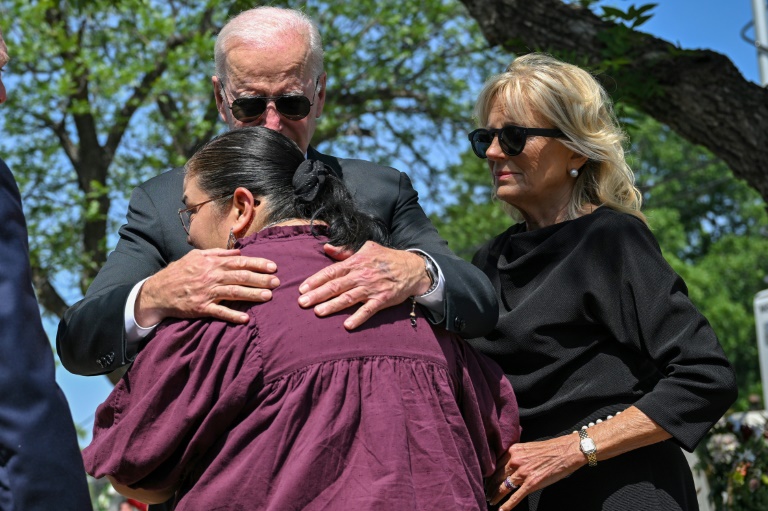
The first couple began by visiting a makeshift shrine at Robb Elementary School, where last Tuesday the teen gunman walked in with an AR-15-type semi-automatic and began his slaughter.

Both wearing black, the Bidens held hands in front of the memorial, walking slowly along the thicket of wreaths, bouquets, white crosses and blown-up photos of the slain children.

Biden, whose adult son Beau died seven years ago this Monday from cancer, and whose first wife and infant daughter perished in a car accident, made the sign of the cross, appearing to wipe away a tear.

The arrival of the Bidens’ motorcade at the school was met with applause from a crowd. However, illustrating the tension in the town, there were boos at the appearance of Republican Texas Governor Greg Abbott, who strongly opposes new restrictions on gun ownership.

“We need changes,” shouted one man.

“Our hearts are broken,” Archbishop Gustavo Garcia-Siller said at the church. 

Biden was not scheduled to speak publicly in Texas, but on Saturday he renewed his so-far fruitless call for Congress to overcome years of paralysis to toughen firearms regulations — especially on weapons like the AR-15.

“We cannot outlaw tragedy, I know, but we can make America safer,” Biden said.

Ricardo Garcia, who works at Uvalde’s hospital, said he was “honored” Biden came to visit his town, but wanted to see more action on gun control. 

The 47-year-old was at work on Tuesday when first responders brought in children from Robb. 

“I just can’t get out of my mind that screaming in the halls from the moms when they got the bad news,” Garcia said. “It’s still there. I can’t sleep at night.”

– Justice Department probes police –

Harrowing accounts emerged of the ordeal faced by survivors of Tuesday’s attack, where the behavior of the police is under severe scrutiny.

Ten-year-old Samuel Salinas was sitting in his fourth-grade classroom when the shooter, later identified as Salvador Ramos, 18, barged in and announced: “You’re all going to die.”

Then “he just started shooting,” Salinas told ABC News.

Texas authorities admitted Friday that as many as 19 police officers were in the school hallway for nearly an hour before finally breaching the room and killing Ramos, saying the officers mistakenly thought that he had stopped killing and was now barricaded.

Parents have expressed fury and on Sunday the Justice Department announced an inquiry “to identify lessons learned and best practices to help first responders prepare.”

Surviving children described making desperate, whispered pleas for help in 911 phone calls while police waited.

Some played dead to avoid drawing the shooter’s attention. Eleven-year-old Miah Cerrillo smeared the blood of a dead friend on herself to feign death. 

Salinas said he thinks Ramos fired at him, but the bullet struck a chair, sending shrapnel into the boy’s leg. “I played dead so he wouldn’t shoot me,” he said.

Another student, Daniel, whose mother would not provide his last name, said he saw Ramos fire through the glass in the classroom door, striking his teacher.

Though his teacher lay on the floor bleeding, she repeatedly told the students, “‘Stay calm. Stay where you are. Don’t move,'” Daniel told The Washington Post.

– ‘Have the courage’ –

Vice President Kamala Harris on Saturday attended the funeral of a victim of the Buffalo mass shooting — Ruth Whitfield, who was among 10 people killed on May 14, allegedly by a self-described white supremacist.

“Congress must have the courage to stand up, once and for all, to the gun lobby and pass reasonable gun safety laws,” Harris tweeted.

The Uvalde shooting was the deadliest school attack since 20 children and six staff were killed at Sandy Hook Elementary School in Newtown, Connecticut in 2012.

But Congress has repeatedly failed to agree on possible new gun regulations.

This time might be different, some lawmakers say.

Democratic Connecticut Senator Chris Murphy said Sunday there were “serious negotiations” underway involving members of both parties.

Close Bitnami banner
Bitnami