US Business

US 'concerned' after UN human rights chief visits China

The United States expressed concern on Saturday over China’s “efforts to restrict and manipulate” the UN human rights chief’s visit to the Xinjiang region where Beijing is accused of detaining over a million people in indoctrination camps.

Michelle Bachelet’s long-planned trip this week took her to the far-western Xinjiang region, where the United States has labeled China’s detention of a million Uyghurs and other Muslim minorities a “genocide.”

“We are concerned the conditions Beijing authorities imposed on the visit did not enable a complete and independent assessment of the human rights environment in (China), including in Xinjiang, where genocide and crimes against humanity are ongoing,” US Secretary of State Antony Blinken said in a statement.

The top US diplomat reiterated his country’s stance that Chinese authorities would not allow Bachelet full access during her long-planned trip, saying the United States was “concerned” about China’s “efforts to restrict and manipulate her visit.” 

Bachelet defended her visit earlier on Saturday while still inside China, saying it was “not an investigation” but called on Beijing to avoid “arbitrary and indiscriminate measures” in its crackdown in Xinjiang.

She said the trip was a chance for her to speak with “candour” to Chinese authorities as well as civil society groups and academics.

Her visit was the first to China by a UN high commissioner for human rights in 17 years and comes after painstaking negotiations over the conditions of the visit.

– ‘Warned not to complain’ –

“We are further troubled by reports that residents of Xinjiang were warned not to complain or speak openly about conditions in the region, that no insight was provided into the whereabouts of hundreds of missing Uyghurs and conditions for over a million individuals in detention,” Blinken said. 

“The High Commissioner should have been allowed confidential meetings with family members of Uyghur and other ethnic minority diaspora communities in Xinjiang who are not in detention facilities but are forbidden from traveling out of the region.”

Bachelet’s remarks were also swiftly criticised by activists and NGOs, who accused her of providing Beijing with a major propaganda win.

“Resignation is the only meaningful thing she can do for the Human Rights Council,” said Dilxat Raxit, spokesperson for the World Uyghur Congress advocacy group, while US-based Uyghur activist Rayhan Asat called it a “total betrayal” on Twitter.

The trip included a virtual meeting with President Xi Jinping in which state media suggested Bachelet supported China’s vision of human rights.

Her office later clarified that her remarks did not contain a direct endorsement of China’s rights record.

Witnesses and rights groups say more than one million people have been detained in indoctrination camps in the western Chinese region that aim to destroy the Uyghurs’ Islamic culture and forcibly integrate them into China’s Han majority. 

Beijing denies the allegations and says it is offering vocational training to reduce potential for Islamist extremism.


Russia presses battle for eastern Ukraine, claims key city surrounded

Russian forces engaged in an all-out battle in eastern Ukraine have captured the strategic town of Lyman and surrounded a key industrial centre, Moscow has claimed.

But a Ukrainian official has denied that the city of Severodonetsk — the focus of weeks of fierce fighting — has been encircled, saying government troops had repelled Russian forces from its outskirts.

As the battle for Ukraine’s industrial heartland raged on Saturday, French President Emmanuel Macron and German Chancellor Olaf Scholz called for “direct serious negotiations” between Russian leader Vladmir Putin and his counterpart Volodymyr Zelensky.

The EU leaders also “insisted on an immediate ceasefire and a withdrawal of Russian troops” in an 80-minute phone call with the Russian leader, the German chancellor’s office said. 

Since failing in its bid to capture the capital Kyiv in the war’s early stages, Russia has shifted its focus to the eastern Donbas region as it attempts to consolidate areas under its control.

“The situation is very difficult, especially in those areas in the Donbas and Kharkiv regions, where the Russian army is trying to squeeze at least some result for itself,” Ukrainian President Zelensky said in his daily address to the nation.

Earlier Saturday, Russia’s defence ministry said the “town of Krasny Liman has been entirely liberated from Ukrainian nationalists”, using Moscow’s name for Lyman.

Lyman lies on the road to Kramatorsk and Severodonetsk, which a police official in Lugansk province cited by Russian state media said was “now surrounded”.

But regional governor Sergiy Gaiday told Ukrainian television “Severodonetsk has not been cut off… there is still the possibility to deliver humanitarian aid.”

His remarks came as Russia, in another exercise in military muscle-flexing, said it had successfully tested hypersonic missiles in the Arctic.

– Noose tightens –

Inside Severodentsk, where an estimated 15,000 civilians remain, a local official said “constant shelling” made it increasingly difficult to get in or out.

“Evacuation is very unsafe, it’s isolated cases when we manage to get people out. Now the priority is for the wounded and people who need serious medical assistance,” said Oleksandr Stryuk, head of the city’s military and civil administration.

The water supply was also increasingly tenuous, as a lack of electricity meant the pumps at city wells no longer functioned, he said, adding residents had gone more than two weeks without a cellphone connection. 

The sole road maintaining contact with the outside world, meanwhile, was expected to be the focus of continued Russian attacks, Lugansk governor Gaiday said Saturday night.

“Next week will be very hard, as Russia puts all its resources into seizing Severodonetsk, or cutting off the oblast from communication with Ukraine,” he said.

– France, Germany urge talks –

As France and Germany called for talks aimed at ending a war that has created millions of refugees, Saturday’s phone call with Putin also focused on a looming global food security crisis.

In addition to capturing key port cities such as Mariupol, Russia has used its warships to cut off others still in Ukrainian hands, blocking grain supplies from being transported out.

Russia and Ukraine supply about 30 percent of the wheat traded on global markets.

Russia has tightened its own exports and Ukraine has vast amounts stuck in storage, driving up prices and cutting availability across the globe.

Putin has repeatedly rejected any responsibility, instead blaming Western sanctions.

But on Saturday, he told Macron and Scholz that Russia was “ready” to look for ways to allow more wheat onto the global market.

“Russia is ready to help find options for the unhindered export of grain, including the export of Ukrainian grain from the Black Sea ports,” the Kremlin quoted him as saying.

He also called for the lifting of sanctions to allow “an increase in the supply of Russian fertilisers and agricultural products” onto the global market.

– Putin warns on weapons –

Urgent calls by Zelensky for more advanced weaponry from Ukraine’s Western allies, meanwhile, appear to paying off, with Washington agreeing to send advanced long-range rocket systems, according to US media reports.

Pentagon spokesman John Kirby did not confirm the plans to deliver the M270 Multiple Launch Rocket System, highly mobile equipment capable of firing up to 300 kilometres (186 miles) that Kyiv has said it badly needs.

But he said Washington was “still committed to helping them succeed on the battlefield”.

In a phone call Saturday, British Prime Minister Boris Johnson told Zelensky his country would continue to help “provide the equipment they need”, his office said.

But Putin warned Macron and Scholz that ramping up arms supplies to Ukraine would be “dangerous” and risk “further destabilisation”.

He spoke after Russian forces said they had successfully fired one of their Zircon hypersonic cruise missiles some 1,000 kilometres across the Arctic.

As Zelensky seeks to ramp up international pressure on Moscow, he will speak to EU leaders at an emergency summit Monday on an embargo on Russian oil. 

Agreement on the measure is being held up by Hungary, whose Prime Minister Viktor Orban has close relations with Putin.

burs-ah/cwl/mtp

Traffic jams just a maths problem, says Israeli AI firm

Israel’s traffic congestion ranks near the worst among developed economies but an algorithm can help, says one of the country’s IT firms engaged in the auto and mobility sector.

ITC, or Intelligent Traffic Control, was one of the artificial intelligence players at Tel Aviv’s recent EcoMotion showcase where high-tech and AI firms hope to make transport more efficient and cleaner.

Its AI software collects real-time data from road cameras and then sends instructions to manipulate traffic lights based on vehicle flows.

“ITC managed to prove mathematically that many traffic jams can be prevented –- if you intervene early enough,” said its co-founder and chief technology officer Dvir Kenig, citing a 30 percent drop in traffic at the two junctions using their system.

The company says road congestion is a global scourge, calculating that the average driver spends three days a year stuck in traffic, also pumping out greenhouse gas emissions. 

The problem is acute in Israel where, the Organisation for Economic Cooperation and Development says, “transportation infrastructure lags significantly behind” most member countries and “road congestion is one of the worst in the OECD”.

– Military innovations –

EcoMotion’s founder Meir Arnon told AFP that surging global interest in smart mobility had made Israel an auto industry player, even though it doesn’t manufacture any cars. 

“Cars changed,” said the industrialist turned investor. “Cars were metal and wheels and a radio. Today these things don’t matter, they’re all mass produced by the same companies for everyone. 

“What differentiates car manufacturers today is the driving experience… the vehicle’s ability to adapt itself to the driver,” he said. 

Systems developed by Israel’s army and private defence industry — notably surveillance, communication and sensory technology — have become central to automakers, Arnon said.  

With over 600 start-ups in the field — “second only to Silicon Valley” — Israel has become a “centre of mobility,” Arnon said, noting that 35 global auto companies have operations in the country, including General Motors.       

“The future of vehicles lies outside vehicles — in the cloud, our phones, in the cars to some extent, and all these elements create an open platform,” said Gil Golan, head of GM’s local technical centre.

“This open platform is a place for innovation and creativity, which Israelis are good at.” 

– Engineers needed –

Also at EcoMotion was Rider Dome, whose cameras mounted on the front and back of motorcycles use artificial intelligence to warn riders of nearby dangers.

“A driving assistant that has become a standard in nearly every car does not exist in motorcycles,” chief executive Yoav Elgrichi said. “That’s why we decided to found Rider Dome.”

But some observers warn that Israel’s technology sector, including smart mobility, could run out of steam.

The Israel Innovation Authority says the tech sector, which accounts for half the country’s exports and one in 10 jobs, is “maturing” and the number of new startups is on the decline.

Israel needs more engineers, argues Lisya Bahar Manoah, a partner at Catalyst Investments, if it wants to keep pace with the growing mobility sector that is expected to “double in size” globally over the coming years. 

“The way that we can overcome the problem is — like in Europe, especially in Germany and Austria -– they are creating professional schools,” she said. 

“Israel needs to stop and think now about a way to create more engineers in order to support the start-up system. We need to adjust our education system accordingly.”  

UK companies to trial four-day workweek

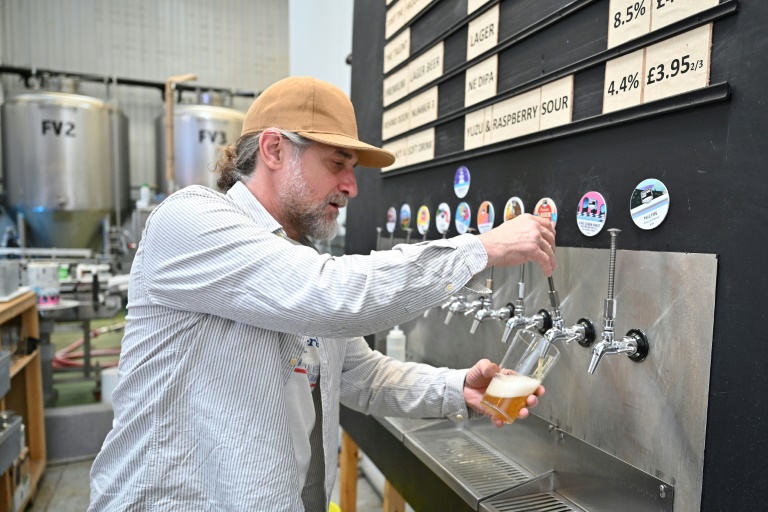
Louis Bloomsfield inspects the kegs of beer at his brewery in north London, eagerly awaiting June, when he will get an extra day off every week.

The 36-year-old brewer plans to use the time to get involved in charity work, start a long-overdue course in particle physics, and spend more time with family.

He and colleagues at the Pressure Drop brewery are taking part in a six-month trial of a four-day working week, with 3,000 others from 60 UK companies.

The pilot — touted as the world’s biggest so far — aims to help companies shorten their working hours without cutting salaries or sacrificing revenues.

Similar trials have also taken place in Spain, Iceland, the United States and Canada. Australia and New Zealand are scheduled to start theirs in August. 

Alex Soojung-Kim Pang, a programme manager at 4 Day Week Global, the campaign group behind the trial, said it will give firms “more time” to work through challenges, experiment with new practices and gather data.

Smaller organisations should find it easier to adapt, as they can make big changes more readily, he told AFP.

Pressure Drop, based in Tottenham Hale, is hoping the experiment will not only improve their employees’ productivity but also their well-being.

At the same time, it will reduce their carbon footprint.

The Royal Society of Biology, another participant in the trial, says it wants to give employees “more autonomy over their time and working patterns”.

Both hope a shorter working week could help them retain employees, at a time when UK businesses are confronted with severe staff shortages, and job vacancies hitting a record 1.3 million. 

– Not all rosy –

Pressure Drop brewery’s co-founder Sam Smith said the new way of working would be a learning process.

“It will be difficult for a company like us which needs to be kept running all the time, but that’s what we will experiment with in this trial,” he said.

Smith is mulling giving different days off in the week to his employees and deploying them into two teams to keep the brewery functioning throughout. 

When Unilever trialled a shorter working week for its 81 employees in New Zealand, it was able to do so only because no manufacturing takes place in its Auckland office and all staff work in sales or marketing.

The service industry plays a huge role in the UK economy, contributing 80 percent to the country’s GDP.

A shorter working week is therefore easier to adopt, said Jonathan Boys, a labour economist at the Chartered Institute of Personnel and Development. 

But for sectors such as retail, food and beverage, healthcare and education, it’s more problematic.

Boys said the biggest challenge will be how to measure productivity, especially in an economy where a lot of work is qualitative, as opposed to that in a factory.

Indeed, since salaries will stay the same in this trial, for a company to not lose out, employees will have to be as productive in four days as they are five.

Yet Aidan Harper, author of “The Case for a Four Day Week”, said countries working fewer hours tend to have higher productivity.

“Denmark, Sweden, the Netherlands work fewer hours than the UK, yet have higher levels of productivity,” he told AFP. 

“Within Europe, Greece works more hours than anyone, and yet have the lowest levels of productivity.”

– ‘Hiring superpower’ –

Employees in the UK work roughly 36.5 hours every week, against counterparts in Greece who clock in upwards of 40 hours, according to database company Statista. 

Phil McParlane, founder of Glasgow-based recruitment company 4dayweek.io, says offering a shorter workweek is a win-win, and even calls it “a hiring superpower”.

His company only advertises four-day week and flexible jobs.

They have seen the number of companies looking to hire through the platform rise from 30 to 120 in the past two years, as many workers reconsidered their priorities and work-life balance in the pandemic. 

WNBA players step up calls for Griner's release

WNBA players and their union leaders stepped up their calls for Brittney Griner’s release from prison in Russia on Saturday, the 100th day of the US basketball star’s detention.

“Right now, on day 100 of BG’s wrongful detainment, we are calling on everyone to use their platforms, no matter the size, to bring attention to her wrongful detainment, to get (Griner’s wife) Cherelle that meeting with President Biden and to get our sister home,” the Women’s National Basketball Players Association (WNBPA) said in a statement.

Griner was detained in February amid soaring tensions over Ukraine.

The two-time Olympic gold medallist and WNBA champion was arrested at Moscow’s airport on February 17 on charges of carrying in her luggage vape cartridges with cannabis oil, which is illegal in Russia.

However, on May 3 the US State Department said it had determined that Russia had “wrongfully detained US citizen Brittney Griner.”

On May 13, Russian state media said Griner’s pre-trial detention had been extended until June 18.

In the immediate aftermath of Griner’s detention, the WNBA had commented little on the case hoping not to inflame the situation.

Since the State Department’s declaration that she was wrongfully detained, however, there have been more vocal calls for her release.

“To athletes, of any age, ability level, team, sport or country: this is OUR teammate,” the WNBPA wrote. “A member of OUR global sports community, we need to stand up and stand together to call for her release.”

Several WNBA and NBA players tweeted about Griner on Saturday.

“Brittney Griner has been illegally detained in Russia since February 17th, 2022,” wrote Brooklyn Nets star Kyrie Irving. “I’m urging the (White House) to prioritize Brittney’s safe return home immediately! #WeAreBG”

Griner, 32, was travelling to play club basketball in Russia when she was detained.

Since then, the United States and Russia have exchanged prisoners with Russia, freeing former US Marine Trevor Reed who had been accused of drunkenly fighting with police.

The United States also says Russia has unjustly detained Paul Whelan, a former security official at a vehicle parts company who was sentenced to 16 years in prison on espionage charges.

Despite high gas prices, US refiners strain to meet summer demand

Only time will tell how much record US prices at the pump will dent driving demand this summer, but don’t expect a significant increase in gasoline supply from American refineries.

The reason: Several US gasoline refineries have shut down in recent years, or been converted to make other fuels, crimping America’s refining capacity and exacerbating the hit from high crude oil prices in the current energy crunch.

US refineries operated at 93.2 percent last week, the loftiest level since December 2019 and an exceptionally high rate for a season normally associated with plant maintenance.

It all points to a stressed US energy system ahead of the summer driving season, which kicks off this weekend with the Memorial Day holiday.

“We’re set for failure,” said Robert Yawger an analyst at Mizuho Securities. “Basically, we’re set for high prices, increasing inflation, and it doesn’t bode well.”

But limited refining capacity is also a global problem, according to a note from the Eurasia Group that described a tight fuel market with little relief in site.

“Increased demand is outstripping both storage and production capacity, leading to shortages,” Eurasia Group said. 

“Right now, demand is drawing down that storage much faster than it can be replaced, depleting inventories and driving refined product prices higher. While International Energy Agency data from this week shows global refinery throughput capacity increasing, it still remains below pre-pandemic levels.”

Besides lifting crude prices, the Ukraine invasion has also pinched supplies of some refined products exported from Russia, especially low-quality gasoil. 

– Plants are converted, closed –

Gasoline prices in the United States have soared more than 70 percent in last year to record levels, nationally averaging about $4.60 per gallon. Analysts at JPMorgan Chase believe prices go higher still this summer, surpassing $6.00 a gallon.

The number of active US refineries has fallen 13 percent in the last decade and now stands at the lowest level in the modern era.

The list of closures includes the Philadelphia Energy Solutions plant, which had been the largest in the northeastern United States prior to being shuttered in June 2019 following an explosion.

This group includes some refineries that were suspended early in the pandemic as fuel demand sank. Some, such as Marathon Petroleum’s refinery in New Mexico, were never restarted.

The issue has “become a greater concern here in the United States as we’ve shut down a million barrels a day of refining capacity over the last year,” said Andy Lipow of Lipow Oil Associates.

Large US refineries have also been shifting some of their capacity to biofuels and other renewable fuels in light of policies to address climate change favored by investors who prioritize environmental, social and governance (ESG) goals. 

At its Cheyenne, Wyoming refinery, HollyFrontier is converting a 52,000 barrel a day refinery from gasoline production to renewable diesel.

– Dwindling market share –

But many in the oil industry are loath to undertake significant new refinery projects in light of the heavy investments by automakers like General Motors and Ford building electric vehicles that will lower gasoline’s market share as a transport fuel.

Major airlines have also pledged to use more renewable fuels, lowering demand for jet fuel, another product at petroleum refineries.

Experts also pointed to policies such as ban on the sale of new gasoline-fired cars after 2035 that is being considered by the European Union.

“Laws like that are a clear signal that demand for your product at some point is going to go down,” said Bill O’Grady of Confluence Investment Management. “There is very little incentive to invest.”

Building a new refinery requires extensive capital, years of planning and regulatory approvals and would not pay off for 10-20 years, said Richard Sweeney, a professor of economics and the economy at Boston College.

“Gas prices are very, very high and diesel prices are very, very high,” said Sweeney, adding, “I don’t think anyone thinks that’s going to last years.”

Many refiners are steering extra cash made from today’s strong market towards dividends and shareholder buybacks, which are favored on Wall Street.

The last major US refinery in the United States opened in 1977 and there have only been five new plants in the last 20 years, all smaller refineries.

When refiners have added significant capacity, it has been through expansions of existing plants rather than greenfield projects.

“No community wants a refinery,” said O’Grady. “They’re dirty. They explode. They smell bad.” 

The current global refining predicament is built on a “false assumption that we can do without refining,” said Phil Flynn of the Price Futures Group. 

“We’re going to have to balance our ESG dreams versus the reality of trying to keep the market supplied with the products.”

Despite some sharp wage rises, low-paid US workers have far to go

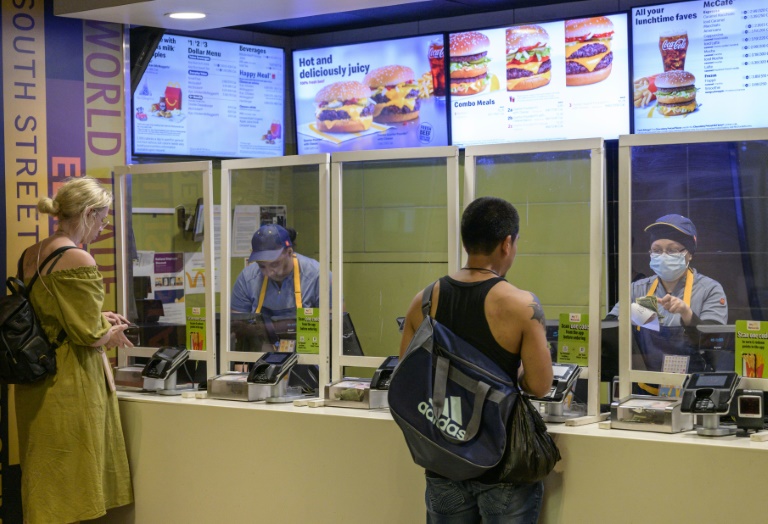
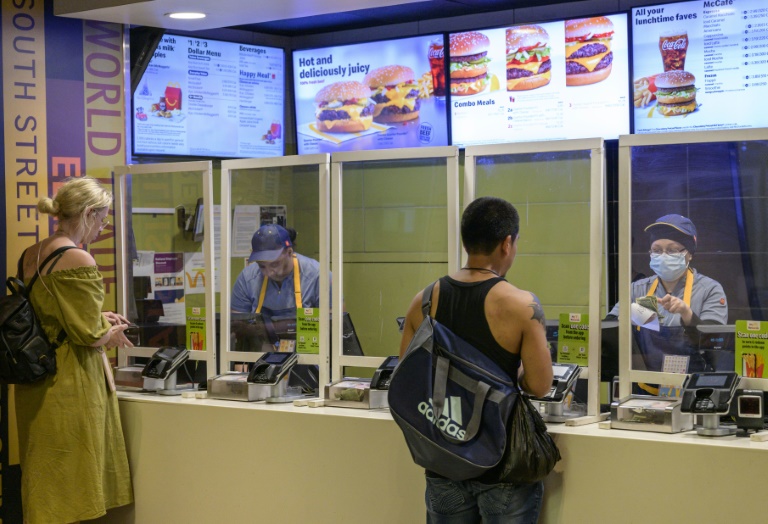
Fast-food employees in Manhattan demonstrating for a wage of $20 an hour: a demand unthinkable before the Covid-19 pandemic has become unexceptional, as short-handed companies offer big wage increases without, however, doing much to narrow a yawning income gap.

The upward wage pressure has come from several sources, including an unusually tight labor market and child-care challenges linked to the pandemic, as well as chronically underpaid workers unwilling to return to pre-pandemic conditions.

Employers have not only had to raise wages but in some cases have offered improved health care insurance and bonuses.

“The country’s major employers have understood that they need to bring wages up to scratch if they want to attract reliable workers who can help them navigate this period of major uncertainty,” said Gregory Daco, chief economist at Ernst & Young Parthenon.

Apple, after announcing it was raising its hourly minimum wage to $22, said in a statement, “Supporting and retaining the best team members in the world enables us to deliver the best, most innovative products and services for our customers.”

The tech giant said that in addition to sector-leading wages, it was providing “a robust range of benefits” for full- and part-time employees.

Higher wages may also help Apple in its efforts, like Amazon, to discourage unionization efforts. 

Apple’s $22 hourly minimum represents a 45 percent increase from the company’s minimum in 2018, the group said.

– Winning workers’ loyalty –

In the summer of 2021, facing serious labor shortages, several major companies including Amazon, Target and Chipotle pushed their base hourly wage past $15, more than double the federal minimum of $7.25, a figure unchanged since 2009. 

Bank of America announced this week that it was lifting its hourly minimum to $22, a figure set to rise to $25 by 2025.

Across the US, some of the biggest wage increases have gone to some of the lowest-paid workers — people unafraid in the Covid era to make their demands known. 

While there have been wage increases at all salary levels, only the lowest-paid workers saw rises big enough to compensate for today’s high inflation rates, according to Mahir Rasheed, an economist with Oxford Economics.

Put another way, he said, “Even with stronger incomes, most consumers are actually seeing wages down in real terms.”

– Deceptive wage hikes –

So even if the increases might appear significant — particularly for restaurant and hotel employees — workers in that sector are still earning less than the national median salary.

“The increases look huge, with some workers going from $7 to $10, from $10 to $12, from $12 to $15 or even from $15 to $20,” said Daco.

And yet, he added, “$15 an hour is $30,000 a year, considerably less than the (US) median salary of $50,000 to $60,000.”

What’s more, the increases might be a one-time affair.

“It’s unlikely that these wage gains will continue to increase at a persistent clip over the next year,” said Rasheed, even if some companies make occasional raises in a bid to attract qualified workers.

The increases are bound to slow, he added, as more and more people return to work.

As the labor market opens up, workers’ negotiating power will erode, Daco said.

“Unfortunately, I don’t expect those gains to be durable in the long term, because we haven’t seen increases in the federal minimum wage,” said Elise Gould, an economist with the Economic Policy Institute, an American think tank.  

She predicted “a decided slowdown in wage gains.”

In a study published last month, she noted that average wages rose by 4.4 percent in the first year of the pandemic in the US, but declined by 1.7 percent in the second year.

And despite the recent increases, “wage levels remain vastly unequal across the US labor market, with disparities among workers by wage level, gender and race/ethnicity remaining stark,” Gould wrote.

Despite some sharp wage rises, low-paid US workers have far to go

Fast-food employees in Manhattan demonstrating for a wage of $20 an hour: a demand unthinkable before the Covid-19 pandemic has become unexceptional, as short-handed companies offer big wage increases without, however, doing much to narrow a yawning income gap.

The upward wage pressure has come from several sources, including an unusually tight labor market and child-care challenges linked to the pandemic, as well as chronically underpaid workers unwilling to return to pre-pandemic conditions.

Employers have not only had to raise wages but in some cases have offered improved health care insurance and bonuses.

“The country’s major employers have understood that they need to bring wages up to scratch if they want to attract reliable workers who can help them navigate this period of major uncertainty,” said Gregory Daco, chief economist at Ernst & Young Parthenon.

Apple, after announcing it was raising its hourly minimum wage to $22, said in a statement, “Supporting and retaining the best team members in the world enables us to deliver the best, most innovative products and services for our customers.”

The tech giant said that in addition to sector-leading wages, it was providing “a robust range of benefits” for full- and part-time employees.

Higher wages may also help Apple in its efforts, like Amazon, to discourage unionization efforts. 

Apple’s $22 hourly minimum represents a 45 percent increase from the company’s minimum in 2018, the group said.

– Winning workers’ loyalty –

In the summer of 2021, facing serious labor shortages, several major companies including Amazon, Target and Chipotle pushed their base hourly wage past $15, more than double the federal minimum of $7.25, a figure unchanged since 2009. 

Bank of America announced this week that it was lifting its hourly minimum to $22, a figure set to rise to $25 by 2025.

Across the US, some of the biggest wage increases have gone to some of the lowest-paid workers — people unafraid in the Covid era to make their demands known. 

While there have been wage increases at all salary levels, only the lowest-paid workers saw rises big enough to compensate for today’s high inflation rates, according to Mahir Rasheed, an economist with Oxford Economics.

Put another way, he said, “Even with stronger incomes, most consumers are actually seeing wages down in real terms.”

– Deceptive wage hikes –

So even if the increases might appear significant — particularly for restaurant and hotel employees — workers in that sector are still earning less than the national median salary.

“The increases look huge, with some workers going from $7 to $10, from $10 to $12, from $12 to $15 or even from $15 to $20,” said Daco.

And yet, he added, “$15 an hour is $30,000 a year, considerably less than the (US) median salary of $50,000 to $60,000.”

What’s more, the increases might be a one-time affair.

“It’s unlikely that these wage gains will continue to increase at a persistent clip over the next year,” said Rasheed, even if some companies make occasional raises in a bid to attract qualified workers.

The increases are bound to slow, he added, as more and more people return to work.

As the labor market opens up, workers’ negotiating power will erode, Daco said.

“Unfortunately, I don’t expect those gains to be durable in the long term, because we haven’t seen increases in the federal minimum wage,” said Elise Gould, an economist with the Economic Policy Institute, an American think tank.  

She predicted “a decided slowdown in wage gains.”

In a study published last month, she noted that average wages rose by 4.4 percent in the first year of the pandemic in the US, but declined by 1.7 percent in the second year.

And despite the recent increases, “wage levels remain vastly unequal across the US labor market, with disparities among workers by wage level, gender and race/ethnicity remaining stark,” Gould wrote.

The comeback kid: ex-VP Pence steps out of Trump's shadow

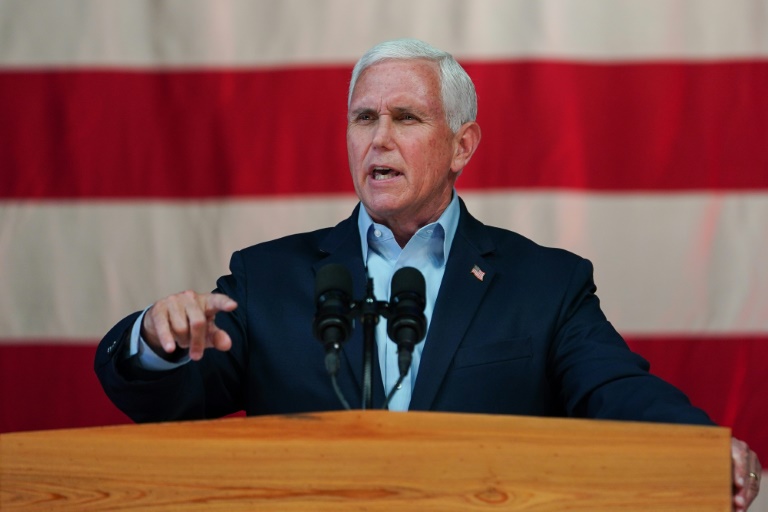
Sixteen months after the US Capitol was sacked by a pro-Trump mob chanting “hang Mike Pence,” the target of its fury is making nice with the Republican right — and hinting at a bid to rival his old boss for the 2024 presidential nomination.

The former vice president has begun setting aside years of unswervingly loyalty to Donald Trump and is showing a newly defiant, independent side as he looks increasingly likely to mount a challenge for the White House. 

It has been a torrid sabbatical for the 62-year-old evangelical Christian, who became a pariah in Trumpworld after rejecting the Republican leader’s demands that he overturn the 2020 election in his role as president of the Senate.

Berated constantly by Trump after Joe Biden’s victory — and even heckled with chants of “traitor!” at a conservative conference in Florida — Pence continued to praise his assailant in public.

But more recently he has begun to push back, saying Trump was “wrong” to insist vice presidents could overturn elections and emphasizing his differences with Trump on issues ranging from the handling of Russian leader Vladimir Putin to abortion rights.

On Monday, Pence made his most emphatic break yet with the ex-president when he headlined a rally for Trump foe Brian Kemp on the eve of the Georgia governor’s landslide victory over a Trump-backed primary challenger.

“In a little more than a year — think about it — the Biden-Harris administration has unleashed a tidal wave of left-wing policies,” Pence told the crowd, sounding distinctly like a man looking toward the next election.

“It has eroded our standing in the world and stifled the American economy. You know, frankly, Democrats have moved so fast, sometimes I don’t think the left hand knows what the far-left hand is doing.”

– ‘Lost relevance’ –

Pence’s swing from deference to defiance is uncharacteristically bold given Trump’s record of swatting away fellow Republicans with memorable sobriquets that often stick. 

Just ask his 2016 primary opponents “Lyin'” Ted Cruz, “Low Energy” Jeb Bush or “Liddle Marco” Rubio. Trump has refrained from nicknaming his erstwhile deputy — but expect that to change.

Ahead of the Kemp rally, Trump unleashed his spokesman Taylor Budowich to tell The New York Times that Pence was “desperate to chase his lost relevance” and had been heading for obscurity “before he was plucked up and his political career was salvaged” in 2016.  

Whether Pence can successfully distance himself from Trump while peeling off the ex-president’s loyal base remains to be seen.

But the runes were not encouraging in Georgia, where followers of the former commander-in-chief were picketing the Kemp rally to promote Trump’s fictions of a stolen 2020 election and show their distaste for Pence’s apostasy.

“He didn’t stand up for Trump when the time came,” said Helen Allen, 50, from the Atlanta suburb of Marietta, dismissing the prospect of a President Pence.

“Good luck with that,” scoffed another local Trumpist, 66-year-old Jan Sheffield. “I just hope he can stay out of jail… he’s a traitor because he should have stopped the elections.” 

– ‘Christian, conservative, Republican’ –

Pence hasn’t actually thrown his hat in the ring yet and wouldn’t likely do so for months, even if he decided to take the plunge. 

But more than once he has declined to rule out running in 2024, even if Trump is in the race, telling reporters he and wife Karen are praying on the issue and “will go where we’re called.”

And he has spent much of the last year touring early-nominating states such as Iowa, South Carolina and New Hampshire to reinforce his political vision as a “Christian, conservative, Republican — in that order.” 

Trump, of course, has not yet committed to running again either. And even if he declined a third tilt at the presidency, this would not clear Pence’s path to the Oval Office.

A May 9 YouGov poll on potential Republican nominees for 2024 had Trump way out in front with 55 percent, as the surveys usually do.

But Florida Governor Ron De Santis came in second with 26 percent, while Pence trailed a distant third with seven percent. 

One possibility the world can rule out for sure is another Trump-Pence ticket in 2024, as the former president has already drawn a line under the partnership.

“I don’t think the people would accept it,” Trump told the Washington Examiner in March.

“Mike and I had a great relationship except for the very important factor that took place at the end. We had a very good relationship,” Trump added. 

“I haven’t spoken to him in a long time.”

Biden to console Texas town reeling from school massacre

US President Joe Biden will visit Uvalde on Sunday to console residents mourning 19 children and two teachers who were gunned down at an elementary school in the small Texas town.

Harrowing accounts are emerging of the ordeal faced by survivors of the Tuesday attack, as Biden calls for action to prevent future massacres in a country where efforts to tighten firearms regulations have repeatedly failed.

“We cannot outlaw tragedy, I know, but we can make America safer. We can finally do what we have to do to protect the lives of the people and of our children,” Biden said Saturday in a speech at the University of Delaware.

“So I call on all Americans this hour to join hands and make your voices heard and work together to make this nation what it can and should be,” the president said.

As residents gathered in a central square in Uvalde to pay homage to the victims, haunting stories told by young students who played dead while a gunman killed their classmates and teachers were underscored by accounts of the slow reaction by police.

Ten-year-old Samuel Salinas was sitting in his fourth-grade classroom when the shooter, later identified as Salvador Ramos, 18, barged in with a chilling announcement: “You’re all going to die.”

Then “he just started shooting,” Salinas told ABC News.

Texas authorities admitted Friday that as many as 19 police officers were in the school hallway for nearly an hour without breaching the room where the shooter was, thinking he had ended his killing. Officials called this delay the “wrong decision.”

Ramos was finally killed by police.

Survivors of the attack have described making desperate, whispered pleas for help in 911 phone calls during his assault. Some played dead to avoid drawing the shooter’s attention.

Eleven-year-old Miah Cerrillo even smeared the blood of a dead friend on herself as she feigned death. 

– ‘Don’t move’ –

Salinas said he thinks Ramos fired at him, but the bullet struck a chair, sending shrapnel into the boy’s leg. “I played dead so he wouldn’t shoot me,” he said.

Another student, Daniel, whose mother would not provide his last name, said he saw Ramos fire through the glass in the classroom door, striking his teacher.

The bullets were “hot,” he told The Washington Post, and when another bullet ricocheted and struck a fellow student in the nose, he said he could hear the sickening sound it made.

Though his teacher lay on the floor bleeding, she repeatedly told the students, “‘Stay calm. Stay where you are. Don’t move,'” Daniel recalled.

He was finally rescued by police who broke the windows of his classroom. Since then, he has had recurrent nightmares.

By mid-morning Saturday, several dozen people had gathered at Uvalde’s courthouse square, which has become a somber place of homage to victims and survivors. 

Twenty-one simple white crosses have been erected around a fountain — one for each victim.

People have left growing piles of stuffed animals and flowers, as well as heart-rending messages: “Love you” and “You will be missed.”

Local resident Humberto Renovato, 33, asked those present to hold hands, form a circle around the crosses, and pray.

He also urged those gathered at the courthouse square to help survivors overcome “the trauma, the pain, the suffering” they had endured.

Vice President Kamala Harris on Saturday attended the funeral of a victim of another recent mass shooting — Ruth Whitfield, who was among 10 people killed when a self-described white supremacist opened fire in a supermarket in Buffalo, New York on May 14.

“We will not let those people who are motivated by hate to separate us or make us feel fear,” Harris said at the funeral for the 86-year-old.

– ‘Have the courage’ –

She also urged US lawmakers to take action on guns.

“Congress must have the courage to stand up, once and for all, to the gun lobby and pass reasonable gun safety laws,” Harris tweeted.

The Uvalde shooting was the deadliest school attack since 20 children and six staff were killed at Sandy Hook Elementary School in Newtown, Connecticut in 2012.

Steven McCraw, director of the Texas Department of Public Safety, revealed on Friday a series of emergency calls — including by a child begging for police help — that were made from two adjoining classrooms where the gunman was barricaded.

But, explaining the delayed reaction by law enforcement, he said the on-scene commander believed at the time that Ramos was in there with no survivors after his initial assault.

McCraw separately told reporters, however, that a 911 call from a child received at 12:16 pm reported eight or nine children still alive. 

As many as 19 officers were outside the classroom door at that time, according to McCraw’s timeline.

McCraw said the child, who dialed 911 multiple times — begged for police to come. Her final call was cut off as she made it outside.

Back at the courthouse, Bear Berman walked around with his Golden Retriever named Macy, letting children and adults approach and pet her.

“Dogs have a natural ability to lower blood pressure and cause the body to release oxytocin, which is a calming hormone,” said Berman, who traveled to Texas from Florida and is part of a group that brings emotional support dogs to the scenes of tragedies in the United States.

“So the dogs will bring that out and they’ll listen to what’s heavy on your heart, they won’t tell your secrets, they’ll just bring happiness.”

Close Bitnami banner
Bitnami