US Business

China premier issues warning on Covid-hit economy

China’s premier called for more to be done to stabilise the world’s second-largest economy, issuing an unusually stark warning as the country’s zero-Covid strategy bites into growth.

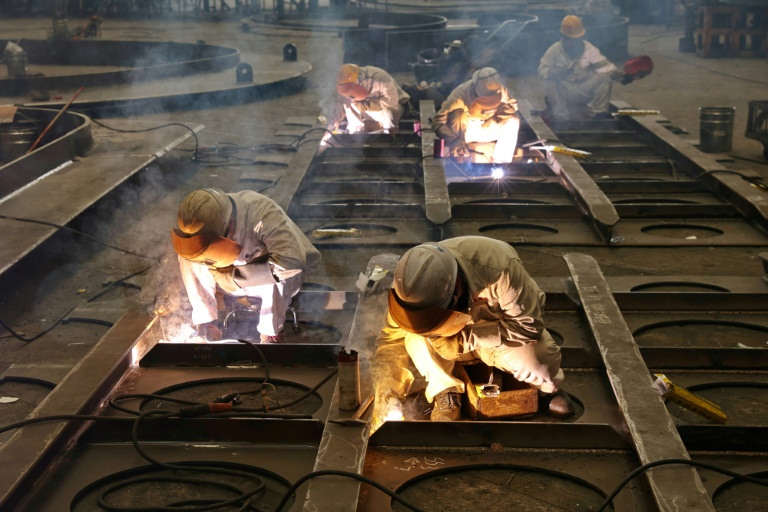
 China is the last major economy welded to a policy of mass testing and hard lockdowns to eliminate virus clusters, but the strict curbs have battered businesses.

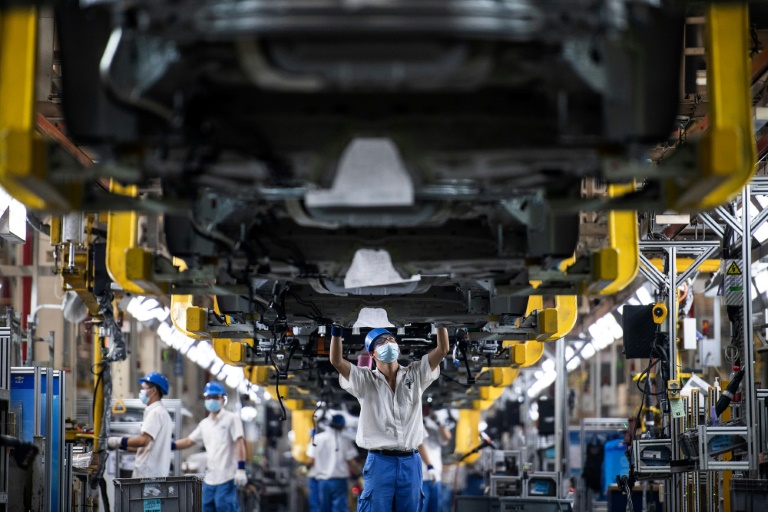
Restrictions around the nation in recent months — including on the manufacturing hubs of Shenzhen and Shanghai, as well as the breadbasket province of Jilin — have tangled supply chains and dragged economic indicators to their lowest levels in around two years.

In some ways, the challenges now are “greater than when the pandemic hit hard in 2020”, Premier Li Keqiang told a State Council meeting on Wednesday, according to a readout by the official Xinhua news agency.

“We are currently at a critical juncture in determining the economic trend of the whole year,” Xinhua quoted Li as saying.

“We must seize the time window and strive to bring the economy back onto a normal track.”

Li also said officials ought to make sure there is “reasonable” growth in the second quarter, fuelling fears that the country’s target for yearly expansion of around 5.5 percent may not be met.

Li’s remarks are the latest in a growing chorus of calls from officials and business leaders for more balance between stopping the virus and helping the ailing economy.

On Monday, the central bank and banking regulator urged financial institutions to boost lending, citing pressure on the economy, Chinese media reported.

This came as retail sales plunged 11.1 percent on year in April while factory output sank 2.9 percent — the worst showing since the early days of the Covid crisis.

And the urban unemployment rate edged back towards its February 2020 peak.

In March, and particularly in April, indicators including employment, industrial production and freight dropped “significantly”, Li said at the Wednesday meeting.

He stressed the importance of coordinating virus control and economic development, according to Xinhua.

On Thursday, the State Council will also send teams to 12 provinces to oversee local work in implementing state policies, the report said.

– Wilting growth –

The latest company to sound a warning on the impact of strict Covid measures in China was tech giant Baidu, which Thursday reported $140 million in net loss over the January-March period.

Baidu co-founder Robin Li said business had been “negatively impacted by the recent Covid-19 resurgence in China” and warned “challenges related to the virus continue to pressure” their operations.

The country’s current outbreak — fuelled by the Omicron variant — is the worst since early in the pandemic in 2020.

Financial hub Shanghai has been almost entirely sealed off since April, crushing businesses, while curbs are creeping in across the capital Beijing with no clear end in sight.

The government has offered tax relief and a bond drive to help industries, and President Xi Jinping earlier called for an “all-out” infrastructure push.

But analysts cautioned that growth will keep wilting until China eases its rigid virus controls.

S&P Global Ratings this month lowered its full-year growth forecast for China from 4.9 percent to 4.2 percent due to Covid curbs.

And Nomura analysts warned in a recent note that there is “increasing potential for negative GDP growth in the second quarter”.

Wednesday’s State Council teleconference involved an unusually large cohort of officials, Chinese outlet The Economic Observer reported.

The economic woes come in a pivotal political year for Xi, who is eyeing another term in power at the Communist Party Congress this autumn.

China’s economy is a key driver of global growth and is crucial domestically for the Communist Party, which has based its legitimacy on delivering steady expansion and improved standards of living.
Hundreds stranded after ransomware attack on Indian airline

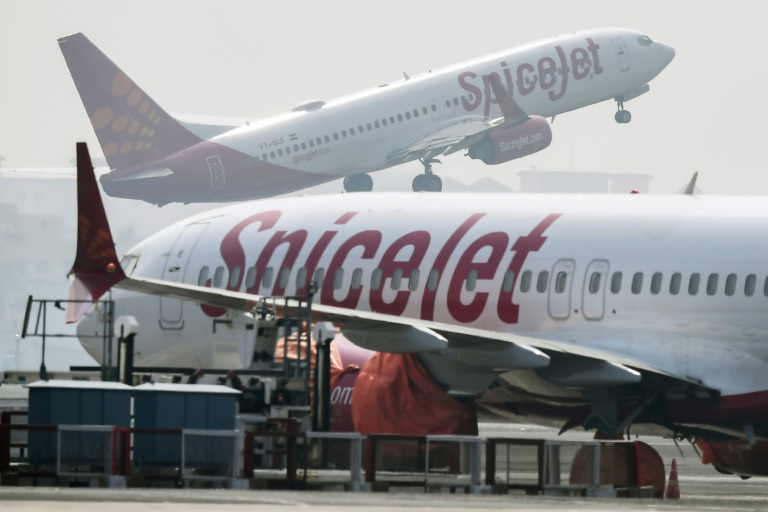
Hundreds of Indian air travellers were stranded inside their planes after the low-cost airline SpiceJet cancelled or delayed flights due to an “attempted ransomware attack”, the company has said.

Many angry passengers, some of whom were left waiting inside their planes for up to five hours earlier this week, complained about a lack of communication from the budget carrier.

“Certain SpiceJet systems faced an attempted ransomware attack last night that impacted our flight operations,” the airline said Wednesday on Twitter.

The company added that it had “to a large extent contained and rectified the situation”, but ongoing delays had forced some flights to airports with night curfews to be cancelled.

An airline official on Thursday told AFP that flight operations were back to normal, without sharing details of any investigation into the incident.

Mudit Shejwar, a SpiceJet passenger stuck waiting inside a plane Wednesday, said the only communication his flight had received was “of some server down and (an) issue with paperwork for fuel”.

“What about the losses we are going to suffer due to the delay?” he posted on Twitter, adding that his flight finally took off after a five-hour wait.

Ransomware attacks occur when hackers take control of a computer system by encrypting all its data until a ransom is paid.

They have become increasingly common as more official and commercial business is conducted online.

The United States last year offered a $10 million reward for help in tracking down leaders of the “DarkSide” gang, an outfit Washington blamed for a hack that shut down one of the country’s largest oil pipelines.

China premier issues warning on Covid-hit economy

China’s premier has sounded an unusually stark warning about the world’s second-largest economy, saying it must return to normal as the country’s zero-Covid strategy bites into growth.

China is the last major economy welded to a policy of mass testing and hard lockdowns to eliminate virus clusters, but the strict curbs have battered businesses.

Restrictions around the nation in recent months — including on the manufacturing hubs of Shenzhen and Shanghai as well as the breadbasket province of Jilin — have tangled supply chains and dragged economic indicators to their lowest levels in around two years.

In some ways, the challenges now are “greater than when the pandemic hit hard in 2020”, Premier Li Keqiang told a State Council meeting on Wednesday, according to a readout by the official Xinhua news agency.

“We are currently at a critical juncture in determining the economic trend of the whole year,” Xinhua quoted Li as saying.

“We must seize the time window and strive to bring the economy back onto a normal track.”

Li also said officials ought to make sure there is “reasonable” growth in the second quarter, fuelling fears that the country’s ambitious target for yearly expansion of around 5.5 percent may not be met.

His remarks are the latest in a growing chorus of calls from officials and business leaders for more balance between stopping the virus and helping the ailing economy.

On Monday, the central bank and banking regulator urged financial institutions to boost lending, citing pressure on the economy, Chinese media reported.

This came as retail sales plunged 11.1 percent on-year in April while factory output sank 2.9 percent — the worst showing since the early days of the Covid crisis.

And the urban unemployment rate edged back towards its February 2020 peak.

In March and particularly in April, indicators including employment, industrial production, electricity consumption and freight dropped “significantly”, Li said at the Wednesday State Council meeting.

He stressed the importance of coordinating virus control and economic development, according to Xinhua.

On Thursday, the State Council will also send teams to 12 provinces to oversee local work in implementing state policies, the report said.

– Wilting growth –

China’s current virus outbreak — fuelled by the highly transmissible Omicron variant — is the worst since the early days of the pandemic in 2020.

Its biggest city and business hub Shanghai has been almost entirely sealed off since April, crushing businesses, while curbs are creeping in across the capital Beijing with no clear end in sight.

The government has offered tax relief and a bond drive to help industries, and President Xi Jinping earlier called for an “all-out” infrastructure push.

But analysts have cautioned that growth will keep wilting until China eases its rigid virus controls.

S&P Global Ratings this month lowered its full-year growth forecast for China from 4.9 percent to 4.2 percent due to Covid curbs.

And Nomura analysts warned in a recent note that there is “increasing potential for negative GDP growth in the second quarter”.

Wednesday’s State Council teleconference involved an unusually large cohort of provincial, city and county officials, Chinese outlet The Economic Observer reported.

The economic woes come in a pivotal political year for Xi, who is eyeing another term in power at the Communist Party Congress this autumn.

China’s economy is a key driver of global growth and is crucial domestically for the ruling Communist Party, which has based its legitimacy on delivering steady expansion and improved standards of living.
Markets rose slightly on Thursday afternoon, with both Shanghai and Shenzhen indexes up about 0.4 percent.

Asian markets mostly down as Li remarks overshadow Fed minutes

Asian markets mostly fell Thursday as Chinese Premier Li Keqiang warned the world’s number two economy was in some ways worse off now than during the early days of the pandemic.

Li’s comments dealt a blow to confidence from the start and overshadowed a positive lead from Wall Street fuelled by minutes indicating a less hawkish stand from the US Federal Reserve.

The wind was immediately taken out of traders’ sails as they digested the warning, which comes as China persists with a zero-Covid policy to eradicate the fast-spreading Omicron virus variant.

The economic agony caused by lockdowns and other strict containment measures hammered growth across China and sent shockwaves globally as key supply chains were brought to a halt.

Data in recent weeks have shown that a series of pledges by Beijing to kickstart growth has essentially fallen flat owing to a lack of concrete action, while analysts say the easing of the Covid policy was the only thing investors wanted to see.

“Economic indicators in China have fallen significantly, and difficulties in some aspects and to a certain extent are greater than when the epidemic hit us severely in 2020,” Li told an emergency meeting Wednesday with representatives from local governments, state-owned companies and financial firms.

He also urged officials to work to pull unemployment down.

There is a general feeling among commentators that China’s economic growth will fall well short of the government’s target of about 5.5 percent. Expansion came in at 2.2 percent in 2020.

– ‘Anaemic recovery’ –

Economists at Goldman Sachs said: “Chinese policy makers are in greater urgency to support the economy after the very weak activity growth in April, anaemic recovery month-to-date in May, and continued increases in unemployment rates.”

Hong Kong, Tokyo, Sydney, Seoul, Mumbai, Taipei and Wellington were all down, while Shanghai, Singapore and Manila edged up.

London, Paris and Frankfurt were positive in opening trade.

Traders had been given a positive lead from Wall Street as minutes from the Fed’s May policy meeting indicated that while officials would likely hike rates by 50 basis points at each of the next two gatherings, they were aware of the impact on the economy.

With inflation surging, the central bank — and others around the world — has been forced to tighten policy but that has hammered markets and fuelled fears of a recession.

The minutes also made no mention of a 75-basis-point lift, providing some relief to beleaguered investors.

“If inflation gets tame enough over summer, there may not be continued raising of rates,” said Carol Pepper of Pepper International on Bloomberg Television.

She added that the long-feared era of stagflation — when prices rise but growth remains flat — was unlikely.

“I think we are going to be in a situation where inflation will start tapering down and then we will start going into a more normalised market,” she added.

– Key figures at around 0720 GMT –

Tokyo – Nikkei 225: DOWN 0.3 percent at 26,604.84 (close)

Hong Kong – Hang Seng Index: DOWN 0.9 percent at 19,989.05

Shanghai – Composite: UP 0.5 percent at 3,123.11 (close)

London – FTSE 100: UP 0.1 percent at 7,527.70

Euro/dollar: DOWN at $1.0672 from $1.0685 on Wednesday

Pound/dollar: DOWN at $1.2558 from $1.2579

Euro/pound: UP at 84.97 pence from 84.89 pence

Dollar/yen: DOWN at 127.20 yen from 127.26 yen 

Brent North Sea crude: UP 0.2 percent at $114.21 per barrel

West Texas Intermediate: UP 0.2 percent at $110.59 per barrel

New York – Dow: UP 0.6 percent at 32,120.28 (close)

Zelensky rebukes West as Russia closes in on key Ukraine city

Ukrainian President Volodymyr Zelensky has issued a bitter rebuke to the West for not doing enough to help Kyiv win the war, as fierce battles rage in the country’s east and Russian troops draw ever closer to encircling a key industrial city.

Calling for help “without limits”, specifically shipments of heavy weaponry, Zelensky also blasted recent suggestions a negotiated peace could include territorial concessions. 

Outside the city of Severodonetsk, now the focal point of Moscow’s renewed offensive in Ukraine’s Donbas region, fighting was “very difficult”, said Lugansk regional governor Sergiy Gaiday.

But the industrial centre has yet to be surrounded, he said in a video posted to Telegram Wednesday.

Predicting the “coming week will be decisive”, Gaiday added the city was being subjected to a “colossal amount of shelling” by Russian troops attempting to batter it into submission.

Earlier in the day, Ukrainian Foreign Minister Dmytro Kuleba told attendees at the World Economic Forum in Davos his country “badly” needs multiple-launch rocket systems to match Russian firepower in the battle for Donbas.

Zelensky echoed that plea from Kyiv.

“We need the help of our partners — above all, weapons for Ukraine. Full help, without exceptions, without limits, enough to win,” Zelensky said in his daily address to the nation.

– ‘Kissinger’s calendar’ –

Saying the world had been unprepared “for Ukrainian bravery”, Zelensky called out the international community Wednesday for paying too much attention to Russia’s interests and too little to Ukraine’s.

He took specific aim at former US Secretary of State Henry Kissinger and the New York Times for suggesting territorial sacrifices might be necessary to end the conflict.

Kissinger, the 98-year-old champion of realpolitik, this week told World Economic Forum attendees in Davos that a return to the “status quo” before Russia’s February 24 invasion would be ideal. 

Russia had formally annexed Crimea in 2014, while separatist groups aligned with Moscow have long controlled the easternmost regions of Donetsk and Lugansk.

Pushing Moscow to surrender that territory threatened to turn the conflict into a new, broader war, Kissinger warned, adding that negotiations needed to begin within two months.  

“It seems Mr Kissinger’s calendar is not 2022, but 1938,” Zelensky responded, comparing his suggestion to the agreement that ceded part of Czechoslovakia to Nazi Germany more than 80 years ago.

The New York Times editorial board also called hopes of reclaiming land seized before February unrealistic, saying eventual negotiations would present Ukrainian leadership with “painful territorial decisions that any compromise will demand”.

– ‘Clear blackmail’ –

Russia’s February 24 invasion of its pro-Western neighbour has caused global shockwaves, with the latest being fears of food shortages, particularly in Africa.

Moscow blamed the international sanctions imposed after the invasion, while the West says the shortage is mainly down to Russia’s blockade of Ukrainian ports.

“Solving the food problem requires a comprehensive approach, including the removal of sanctions that have been imposed on Russian exports and financial transactions,” said Russian deputy foreign minister Andrey Rudenko.

But Kuleba urged the West not to give in.

“This is clear blackmail. You could not find a better example of blackmail in international relations,” Kuleba said in Davos.

– ‘Extremely heavy shelling’ –

Since failing in its early objective of capturing Ukraine’s capital, Moscow’s army has plotted a slow but steady course deeper into the country’s eastern Donbas region.

In the eastern town of Soledar, Ukraine’s salt manufacturing hub, the ground shook moments after Natalia Timofeyenko climbed out of her bunker.

“I go outside just to see people. I know that there is shelling out there but I go,” the 47-year-old said after a thundering blast smashed apart a chunk of a salt mine where she worked with most of her friends and neighbours.

Ghostly frontline towns like Soledar are being hammered by Russian artillery as they sit along the crucial road that leads out of besieged Severodonetsk and its sister city Lysychansk.

Twelve people were killed by “extremely heavy shelling and attacks” in the neighbouring region of Donetsk, which also forms part of Donbas, the Ukrainian presidency said.

In a sign the rest of the country remains at risk, Russian cruise missiles struck the major southern rail hub of Zaporizhzhia, killing one person and damaging dozens of houses, the presidency added.

– ‘Here forever’ –

Russia is also seeking to tighten its grip over the parts of Ukraine it occupies, including fast-tracking citizenship for residents of two southern regions.

President Vladimir Putin on Wednesday signed a decree simplifying a procedure to obtain a Russian passport for residents of Kherson — which remains under full control of Russian troops — and partly occupied Zaporizhzhia.

Kyiv called plan a “flagrant violation” of Ukraine’s sovereignty.

Moscow-backed officials are also pushing for formal annexation by Russia. 

“The simplified system will allow all of us to clearly see that Russia is here not just for a long time but forever,” Kherson’s Moscow-appointed deputy leader Kirill Stremousov told Russian state media.

Underlining the human cost, about 200 bodies were found in the basement of a destroyed building in the port city of Mariupol, which fell to Moscow recently after a devastating siege, Ukrainian authorities said.

“It is impossible to be within the area due to the corpse smell,” Ukrainian ombudswoman Lyudmyla Denisova wrote on Telegram Wednesday. 

“The occupiers turned the entire Mariupol into a cemetery.”

burs-dk/spm/md/bgs/cwl/dhc

'Heartbroken,' pained as Texas town mourns school victims

Ryan Ramirez fought back tears at a Wednesday vigil as he spoke of his “lovable” 10-year-old daughter Alithia, an aspiring artist who was among the 19 schoolchildren killed in a cold-blooded shooting that has devastated a tight-knit community.

As mourners embraced and wept, relatives and friends of those murdered in the latest US school massacre gathered on the bleachers and on the dirt of a fairground arena in the small town of Uvalde.

Some in the crowd of about 1,000 held portraits of the dead, others squeezed stuffed animals and drawings, each struggling to comprehend the unspeakable horror of the previous day. 

“I’m just heartbroken right now,” Ramirez told AFP and others as Alithia’s mother hugged their other daughter.

“She was a real good artist” and aspired to greatness, Ramirez said, flipping through a portfolio of Alithia’s colorful paintings as well as birthday cards she drew for her mother.

“My daughter would want everybody that was involved to be strong, and keep it together. That’s what we’re trying to do.” 

Religious figures offered prayers at the bilingual vigil, where Governor Greg Abbott gripped Uvalde’s Mayor Ruben Nolasco in a long hug.

A grieving Esmeralda Bravo held a photograph of her granddaughter Nevaeh, one of those who died.

“This has no explanation, my granddaughter did not deserve this,” Bravo said quietly.

“She was a good little girl, very shy and very pretty,” she added. “It means so much to me to have this support from the community, but I would rather have my granddaughter here with me.”

Hours earlier and blocks away, Aida Hernandez shed bitter tears as she left mass at the Sacred Heart Roman Catholic church.

In the small house of worship off Uvalde’s main street, the largely Hispanic congregation prayed for the victims of America’s worst school shooting in a decade.

“My experience was of horror and pain. I knew the victims. I’m still in shock,” said Hernandez, in her sixties.

The town of 15,000 inhabitants, located 50 miles (80 kilometers) from the border with Mexico, was until 24 hours ago like every other small US town: a grid of streets dotted with shopping malls, gas stations and fast-food chains.

But on Tuesday everything changed, when an 18-year-old gunman sowed carnage at Robb Elementary School, killing 19 young children and two of their teachers.

The massacre plunged residents into both incomprehension and despair.

“When you teach and you’re in the classroom, that’s your job to protect them,” said Hernandez, who taught at Robb Elementary until she retired two years ago.

“They did more beyond what they were supposed to do.” 

– ‘Too many times’ –

Rosie Buantel was equally grief-stricken — but outraged, too.

“I’m sad and I’m angry at our government, for not doing more about gun control,” the woman in her fifties told AFP.

“We’ve gone through this one too many times. And still there’s nothing done. They’re still debating.”

Throughout the day, people in Uvalde made their way to a municipal center, where they could receive psychological support.

On the day of the shooting, many relatives and friends of the victims faced hours of anguished waiting to find out what happened to their loved ones.

In front of the municipal center, in the blazing midday Texas heat, groups of adults and children chatted, coming and going under the watchful gaze of police officers.

Volunteer psychologist Iveth Pacheco had traveled from San Antonio to provide support to those in need.

“It’s just one of those situations where you just have to be present,” she said. “We have to be ready for the child whatever questions they have, and it’s the same thing with the adults right now.”

Young Alithia had similar questions last September when she lost a close classmate, Nico, in a car crash in Dallas, her father said.

She processed the grief in one of the few ways that made sense: through art.

The girl made a richly detailed drawing of Nico up in heaven, looking down at the friend he left behind. In Alithia’s picture, “he was drawing her down there,” Ramirez said.

Grief turns to anger after gunman murders 21 at Texas school

Grief at the massacre of 19 small children at an elementary school in Texas spilled into confrontation Wednesday, as angry questions mounted over gun control — and whether this latest tragedy could have been prevented.

The tight-knit Latino community of Uvalde on Tuesday became the site of America’s worst school shooting in a decade, committed by a disturbed 18-year-old armed with a legally bought assault rifle.

Wrenching details have been steadily emerging since the tragedy, which also claimed the lives of two teachers.

Briefing reporters, Governor Greg Abbott revealed that teen shooter Salvador Ramos — who was killed by police — shot his 66-year-old grandmother in the face before heading to Robb Elementary School.

Ramos went on social media to share his plan to attack his grandmother — who though gravely injured was able to alert the police.

He then messaged again to say his next target was a school, where he headed clad in body armor and wielding an AR-15 rifle.

– ‘Pure evil’ –

Pressed on how the teen was able to obtain the murder weapon, the Texas governor repeatedly brushed aside suggestions that tougher gun laws were needed in his state — where attachment to the right to bear arms runs deep.

“I consider this person to have been pure evil,” Abbott said, articulating a position commonly held among US Republicans — that unfettered access to weapons is not to blame for the country’s gun violence epidemic.

Abbott’s stance was echoed by the powerful National Rifle Association gun lobby, which issued a statement labeling the shooter as “a lone, deranged criminal.”

But the governor was called out by a rival Democrat, who loudly interrupted the briefing to accuse him of deadly inaction.

“This is on you,” heckled Beto O’Rourke, a fervent gun control advocate who is challenging Abbott for his job come November.

“You are doing nothing!” he charged. “This is totally predictable when you choose not to do anything.”

O’Rourke’s interruption came a day after President Joe Biden, in an emotional address, called on lawmakers to take on America’s powerful gun lobby and enact tougher laws. 

Biden announced Wednesday that he would soon visit Uvalde, as he renewed his plea for “common sense gun reforms.”

“I think we all must be there for them. Everyone. And we must ask when in God’s name will we do what needs to be done to, if not completely stop, fundamentally change the amount of the carnage that goes on in this country.”

“I am sick and tired of what’s going on and continues to go on,” Biden said.

– ‘Horror and pain’ –

In the shattered community of Uvalde, a small mainly Hispanic town about an hour from the Mexican border, there was outrage, too, at how such a tragedy could have occurred.

“I’m just heartbroken right now,” said Ryan Ramirez, who lost his 10-year-old daughter Alithia in the rampage, as he and his wife Jessica attended a vigil at a local bull-riding arena together with some 1,000 other mourners. 

“She was a real good artist” and aspired to greatness, Ramirez said, flipping through a portfolio of Alithia’s colorful paintings as well as birthday cards she drew for her mother.

Earlier in the day Rosie Buantel, a middle-aged local resident, told AFP: “I’m sad, and I’m angry at our government, for not doing more about gun control.”

“We’ve gone through this one too many times. And still there’s nothing done.”

As broken families shared their news on social media, the names of the murdered children, most of Latino heritage, began coming out: they included Ellie Garcia, Jayce Carmelo Luevanos and Uziyah Garcia. 

“My little love is now flying high with the angels above,” Angel Garza, whose daughter Amerie Jo Garza had just celebrated her 10th birthday, posted on Facebook.

“I love you Amerie Jo,” he wrote. “I will never be happy or complete again.”

More than a dozen children were also wounded at the school, attended by more than 500 students aged around seven to 10 years old, most of them economically disadvantaged.

– ‘Carnage’ –

Ramos’ grandfather, 73-year-old Rolando Reyes — whose wife still needed surgery after the attack — voiced his pain for the bereaved families.

“I feel very sorry, and a lot of pain because a lot of those kids are grandkids of friends of mine,” he told CBS News.

Details have emerged of Ramos as a deeply troubled teen — he was repeatedly bullied over a speech impediment that included a stutter and a lisp and once cut up his own face “just for fun,” a former friend, Santos Valdez, told The Washington Post. 

In the days after turning 18 this month, Ramos purchased two assault rifles and several hundred rounds of ammunition, and a week later he staged his attack.

After driving his grandmother’s vehicle to Robb Elementary, where he crashed it into a ditch, Ramos was confronted by a school resource officer — but was able to enter through a back door and made his way to two adjoining classrooms.

“That’s where the carnage began,” said Steve McCraw, director of the Texas Department of Public Safety.

The Uvalde shooting was the deadliest since 20 elementary-age children and six staff were killed at the Sandy Hook school in Newtown, Connecticut in 2012.

According to the non-profit Gun Violence Archive, there have been more mass shootings — in which four or more people were wounded or killed — in 2022 than days so far this year.

Despite that, multiple attempts at national reform have failed in Congress.

Asian markets mixed as traders weigh Li remarks, Fed minutes

Asian markets were mixed Thursday as minutes indicating a less hawkish Fed were offset by China’s premier warning that the world’s number two economy was in some ways worse off now than during the early days of the pandemic.

The wind was immediately taken out of traders’ sails as they digested Li Keqiang’s warning, which comes as China sticks fast to a zero-Covid policy to eradicate the fast-spreading Omicron virus variant.

The economic agony caused by lockdowns and other strict containment measures has hammered growth across China and sent shockwaves globally as key supply chains were brought to a halt.

Data in recent weeks have shown that a series of pledges by Beijing to kickstart growth has essentially fallen flat owing to a lack of concrete action, while analysts say the easing of the Covid policy was the only thing investors wanted to see.

“Economic indicators in China have fallen significantly, and difficulties in some aspects and to a certain extent are greater than when the epidemic hit us severely in 2020,” Li told an emergency meeting Wednesday with representatives from local governments, state-owned companies and financial firms.

He also urged officials to work to pull unemployment down.

There is a general feeling among commentators that China’s economic growth will fall well short of the government’s target of about 5.5 percent. Expansion came in at 2.2 percent in 2020.

Economists at Goldman Sachs said: “Chinese policy makers are in greater urgency to support the economy after the very weak activity growth in April, anaemic recovery month-to-date in May, and continued increases in unemployment rates.”

Hong Kong and Shanghai were both down in the morning, while Sydney was also lower. Seoul, Singapore, Manila and Wellington edged up while Tokyo and Taipei were flat.

– Fed relief –

Traders got a positive lead from Wall Street as minutes from the US Federal Reserve’s May policy meeting indicated that while officials would likely hike rates by 50 basis points at each of the next two gatherings, they were aware of the impact on the economy.

With inflation surging, the central bank — and others around the world — has been forced to tighten policy but that has hammered markets and fuelled fears of a recession.

The minutes also made no mention of a 75-basis-point lift, providing some relief to beleaguered investors.

“If inflation gets tame enough over summer, there may not be continued raising of rates,” said Carol Pepper of Pepper International on Bloomberg Television.

She added that the long-feared era of stagflation — when prices rise but growth remains flat — was unlikely.

“I think we are going to be in a situation where inflation will start tapering down and then we will start going into a more normalised market,” she added.

– Key figures at around 0300 GMT –

Tokyo – Nikkei 225: FLAT at 26,685.71 (break)

Hong Kong – Hang Seng Index: DOWN 0.9 percent at 19,986.10

Shanghai – Composite: DOWN 0.1 percent at 3,104.20

Euro/dollar: UP at $1.0695 from $1.0685 on Wednesday

Pound/dollar: UP at $1.2582 from $1.2579

Euro/pound: UP at 85.00 pence from 84.89 pence

Dollar/yen: UP at 127.43 yen from 127.26 yen 

Brent North Sea crude: UP 0.5 percent at $114.56 per barrel

West Texas Intermediate: UP 0.6 percent at $111.00 per barrel

New York – Dow: UP 0.6 percent at 32,120.28 (close)

London – FTSE 100: UP 0.5 percent at 7,522.75 (close)

China premier issues warning on Covid-hit economy

China’s premier has sounded an unusually stark warning about the world’s second-largest economy, saying it must return to normal as the country’s zero-Covid strategy bites into growth.

China is the last major economy welded to a policy of mass testing and rapid lockdowns to eliminate virus clusters, but the strict curbs have battered businesses.

Restrictions on dozens of cities in recent months — including the manufacturing hubs of Shenzhen and Shanghai as well as the breadbasket of Jilin — have tangled supply chains and dragged economic indicators to their lowest levels in around two years.

In some ways, the challenges now are “greater than when the pandemic hit hard in 2020”, Premier Li Keqiang told a State Council meeting on Wednesday, according to a readout by the official Xinhua news agency.

“We are currently at a critical juncture in determining the economic trend of the whole year,” Xinhua quoted Li as saying.

“We must seize the time window and strive to bring the economy back onto a normal track.”

Li’s remarks are the latest in a growing chorus of calls from officials and business leaders for more balance between stopping the virus and helping the ailing economy.

China’s retail sales plunged 11.1 percent on-year in April while factory output sank 2.9 percent — the worst showing since the early days of the Covid crisis.

And the urban unemployment rate edged back towards its February 2020 peak, challenging policymakers’ full-year growth target of around 5.5 percent.

In March and particularly in April, indicators such as employment, industrial production, electricity consumption and freight dropped “significantly”, Li said at the State Council meeting.

He stressed the importance of coordinating virus control and economic development, according to Xinhua.

– Wilting growth –

China’s current outbreak — fuelled by the highly transmissible Omicron virus variant — is the worst since the early days of the pandemic in 2020.

Its biggest city and business hub Shanghai has been almost entirely sealed off since April, crushing businesses, while curbs are creeping in the capital Beijing.

The government has offered tax relief and a bond drive to help industries, and President Xi Jinping earlier called for an “all-out” infrastructure push.

But analysts have cautioned that growth will keep wilting until China eases its rigid virus controls.

S&P Global Ratings this month lowered its full-year growth forecast for China from 4.9 percent to 4.2 percent due to Covid curbs.

And Nomura analysts warned in a recent note that there is “increasing potential for negative GDP growth in the second quarter”.

Wednesday’s State Council teleconference involved an unusually large cohort of provincial, city and county officials, Chinese outlet The Economic Observer reported.

The economic woes come in a pivotal political year for Xi, who is eyeing another term in power at the Communist Party Congress this autumn.

Ellen DeGeneres ends pioneering talk show under cloud

For nearly two decades, “The Ellen DeGeneres Show” and its openly lesbian host have beamed into homes across America, busting stereotypes and charming daytime TV audiences with a feel-good blend of quirky comedy and celebrity cameos.

But after more than 3,000 episodes, a talk show that came to rival even Oprah Winfrey’s in terms of its cultural impact departs Thursday under a cloud, after allegations of a toxic workplace at stark odds with its “be kind” mantra.

“When we started this show in 2003, the iPhone didn’t exist. Social media didn’t exist. Gay marriage wasn’t legal,” DeGeneres said last month, after pre-taping the show’s final episode.

“We watched the world change — sometimes for the better, sometimes not.”

There is no doubt the cultural landscape has been upended since rising comedian DeGeneres came out in 1997 — simultaneously as her character on sitcom “Ellen,” and in real life with an interview on the cover of Time magazine.

DeGeneres was hailed as a gay icon, but her sitcom was cancelled a year later amid a backlash, and she spent five years in the wilderness before reinventing herself as a talk show host.

“It was a sensation, it was a landmark — and it became a political football,” said Mary Murphy, associate professor of journalism at University of Southern California.

“She led the way. She was probably — and may still be — the most famous LGBTQ person in America.” 

– No ‘gotchas’ –

While DeGeneres has never shied away from her sexuality, her Rolodex of A-list guests and light touch have been key to the talk show’s success, especially in more conservative parts of America.

For 19 seasons, Hollywood A-listers and pop stars have jostled for seats on DeGeneres’ couch, where they are invited to promote their latest projects, and never put through more than a gentle ribbing.

Some have appeared more than a dozen times — Jennifer Aniston, the show’s first-ever guest, will return for Thursday’s finale.

“She is one with the celebrities, she’s their friend. They know that. And she made it jovial,” said Murphy.

“Maybe it was because, having been so burned, as she was, she didn’t want to burn other people. There were no gotchas.”

Audience members and the latest viral YouTube stars are also regularly invited on stage to enjoy their 15 minutes of fame, in human interest segments and wacky games.

“Ellen is this funny, silly, quirky character that really didn’t take herself too seriously,” said Jeetendr Sehdev, author of “The Kim Kardashian Principle.”

“We hadn’t quite seen a daytime talk show host before that looked like her and that behaved like her… She was the cropped haired woman wearing a suit and tie while everyone else was getting blowouts.”

– ‘Full of contradictions’ –

But rumors that life was less rosy backstage came to a head with a 2020 Buzzfeed expose alleging a “toxic work culture” including sexual harassment, bullying and racism.

Three senior producers were fired, while DeGeneres was accused of failing to mind her shop — and of being less affable with employees in private than her cheery public persona would imply.

Last May, DeGeneres announced the show would end after its 19th season, but denied it was due to the workplace claims.

“I need something new to challenge me,” she told The Hollywood Reporter.

But DeGeneres has courted increasing controversy, including her defense of comedian Kevin Hart after he withdrew as Oscars host in 2018 over a series of homophobic tweets.

“Suddenly, she kind of fell from grace,” said Murphy.

“She seemed to be… in touch with celebrities, in touch with audiences, out of touch with the people working for her.”

According to Sehdev, Ellen has always “been full of contradictions.”

“That has been both partly the reason why she has also appealed to people, and has been capable of generating that mass appeal,” he said. 

“And at the same time, (it) has also been the reason why her integrity and her credibility and authenticity have been questioned.”

Close Bitnami banner
Bitnami