US Business

Singer Olya Polyakova fundraises for Ukraine with US tour

Her draped gown colored in the image of Ukraine’s flag, artist Olya Polyakova is touring the United States to raise funds for her country’s war against Russia.

At Massachusetts’ Regent Theatre on Tuesday, Polyakova had the crowd on its feet, with many of her fans — some drove hundreds of miles for the connection to home — waving flags, singing along and embracing her as she greeted them offstage.

About an hour into soundcheck, one young woman, Renata Yasinskaya, ran onstage for a tight, tearful hug from her family friend, who she was seeing for the first time since the war began.

“I love her, and she for me is like (my) mother,” said the 18-year-old. “I missed her. I miss my family. I’m here alone.”

It was a reaction to Polyakova that embodied the room’s emotion for much of the night, as the singer herself also grew tearful at points, concertgoers rallying behind her.

Her tour is an effort to fundraise “for people whose life was destroyed because of war” and also serves as a reminder of the war’s longevity, she told AFP in English.

She pleaded with the global community “to not forget about the war in my country.”

The artist is working with UNITED24 — an initiative from Ukrainian President Volodymyr Zelenskyy to organize charitable donations for his country — to collect the funds and use them towards humanitarian and military aid.

Polyakova’s own husband remains in Ukraine; the last time she saw him he was armed at a border crossing.

– ‘Means a lot’ –

Prior to the war, the opera-trained musician sang primarily in Russian, but these days she’s doing her best to perform in Ukrainian.

“Okay, I am Russian speaker… I always can sing in Russian,” said Polyakova. 

“Nobody forced me to not speak Russian,” she said, explaining that Ukraine “was a free country.”

“We could speak any language,” Polyakova said. But now, she continued, Russian is connected with the invasion and “it’s very painful.” 

“I make a lot of songs in Ukrainian language and English… to not be connected with Russian, because now this is evil, and this is our enemies.”

Prior to the show fans lined up outside, many wearing flower headpieces and vyshyvankas, a traditional Ukrainian embroidered outfit.

“It means like a lot,” said Liza Markova, 21, who drove to the concert from Canada with her family. “Growing up, I just feel like I always loved Ukraine.”

Markova said that while the current events are “tragic,” she’s grateful for the global focus on Ukraine. Now, she said “everybody kind of knows what Ukraine is, and loves it just as much as we do.”


Ellen DeGeneres: five memorable moments

After 19 seasons and well over 3,000 episodes, US talk show “The Ellen DeGeneres Show” airs its final episode Thursday.

Here are five memorable moments from over the years:

– ‘Getting married’ –

Arguably the most famous LGBTQ person in America, DeGeneres came out back in 1997, when she was still a rising comedian and sitcom star.

Immediately hailed as a gay icon, DeGeneres has since helped transform mainstream attitudes towards the lesbian community.

So when the California Supreme Court overturned a ban on gay marriage in 2008, it was little surprise that she and actress Portia de Rossi decided to tie the knot.

“I would like to say right now — for the first time, I am announcing, I am getting married,” she told her delighted audience.

– Obama dancing –

DeGeneres is known for dancing with her audiences at the start of each show.

Guests are also invited to offer a few moves — including an ambitious young senator called Barack Obama in 2007.

“You’re the best dancer so far of the presidential candidates,” DeGeneres told Obama, as he grooved to Beyonce’s “Crazy in Love.”

“It’s a low mark. But I’m pretty sure I’ve got better moves than (Rudy) Giuliani,” he replied, referring to the former Republican candidate.

– ‘Super Bass’ –

In 2011, young British girls Rosie McClelland and Sophia Grace Brownlee were invited onto the show dressed in frilly pink tutus to perform their recently viral rendition of Nicki Minaj’s “Super Bass.”

What came next melted audience and viewer hearts, and the cousins from Essex have returned multiple times since, hosting a segment called “Tea Time with Sophia Grace and Rosie” — and eventually meeting Minaj on stage.

– Dakota Johnson –

It has not all been lightness and fun on “The Ellen DeGeneres Show,” with one particularly excruciating moment coming in 2019 when actress Dakota Johnson appeared on Ellen’s couch.

DeGeneres jokingly complained that she had not been invited to the “Fifty Shades” star’s birthday party, to which Johnson bluntly replied: “That’s not the truth, Ellen.”

As the host frantically tried to backpedal, a seemingly offended Johnson stuck to her guns, adding: “Ask anybody.”

The exchange swiftly went viral and was turned into countless memes, with some detractors even alleging that this moment exposed DeGeneres’ chummy persona as less than genuine.

– Kevin Hart –

Arguably the show’s most controversial moment came in 2019, when comedian Kevin Hart appeared as a guest soon after losing his role as Oscars host over a series of homophobic tweets.

DeGeneres backed Hart and told the audience she had personally called the Academy in the hope of having him rehired.

“As a gay person… I am sensitive to all of that,” said DeGeneres, before imploring Hart to not “let those people win,” and to “host the Oscars.”

Both DeGeneres and Hart were criticized for the conversation, with LGBTQ groups accusing the host of failing to stand up for her community, and also assuming to speak on its behalf.

Boeing Starliner completes key test mission to ISS, with some hiccups

Boeing’s Starliner capsule returned to Earth Wednesday in the final step of a key uncrewed test flight to prove itself worthy of providing rides for NASA astronauts to the International Space Station.

The gumdrop-shaped spaceship landed in a puff of sand at 4:49 pm local time (2249 GMT) in the New Mexico desert, wrapping up a six-day mission crucial to restoring Boeing’s reputation after past failures.

“Just a beautiful touchdown in White Sands this evening,” said an announcer on a NASA live feed, as ground control reacted with applause, and a recovery team raced to the landing site.

Orbital Flight Test-2 (OFT-2) was the last hurdle for Starliner to clear before it carries humans in another test flight due to take place by the end of this year. If that succeeds, the spaceship will begin regular service.

Addressing reporters at a post-touchdown briefing, NASA’s Steve Stich, who oversees the commercial crew program, summed up: “We have a few things to work on…but I don’t really see any showstoppers.”

“We really do have the crewed flight test next on our focus,” he added.

NASA is looking to certify Starliner as a second “taxi” service for its astronauts to the space station — a role that Elon Musk’s SpaceX has provided since succeeding in a test mission for its Dragon capsule in 2020.

Both companies were awarded fixed-price contracts — $4.2 billion to Boeing and $2.6 billion to SpaceX — in 2014, shortly after the end of the Space Shuttle program, during a time when the United States was left reliant on Russian Soyuz rockets for rides to the ISS.

– Landing airbags –

Starliner docked with the orbital outpost on Friday, a day after blasting off from the Kennedy Space Center in Florida.

Over the weekend, astronauts living aboard the station  opened the hatch and “greeted” the capsule’s passengers: Rosie the Rocketeer, a mannequin equipped with sensors to see what astronauts would have experienced, and a plush toy named Jebediah Kerman, the ship’s zero-g indicator.

The spacecraft brought back more than 600 pounds (270 kilograms) of cargo, including tanks that provide breathable air to station crew members, which will be refurbished and taken back up on a future flight.

As it flew over the Pacific Ocean, Starliner initiated a de-orbital maneuver, and then ejected its expendable service module, leaving the remaining crew module to withstand temperatures of around 3000 degrees Fahrenheit (1650 Celsius) during atmospheric re-entry.

Having shed most of its velocity, it deployed a sequence of parachutes culminating in its three giant main chutes, colored red, white and blue. At 3,000 feet (915 meters), it jettisoned its base heat shield — revealing airbags that inflated to aid a gentle landing.

The mission wasn’t without its hiccups, which NASA and Boeing teams are now going to probe thoroughly in case they could cause future problems.

Early on, two thrusters responsible for placing Starliner in a stable orbit failed, though officials insisted there was plenty of redundancy built into the system to overcome the problem.

On the day of docking, the vessel missed its scheduled contact time by more than an hour, after a ring responsible for latching on to the station failed to deploy correctly. Engineers had to retract the ring and pop it out again before it worked the second time.

After touchdown, recovery teams detected hydrazine vapor around Starliner and had to back off until it cleared. Stich later explained that this sometimes occurs when a spaceship doesn’t burn all its propellant, and there was no evidence of a leak.

– ‘Really happy’ –

Overall, the glitches were minor compared to the troubles Starliner saw during its first test launch, back in 2019, when one software bug caused it to burn too much fuel to reach its destination, and another almost meant that the vehicle was destroyed during re-entry.

The second error was caught in time to upload a patch, and the vessel was able to land safely at White Sands Space Harbor — the same spaceport where the Space Shuttle Columbia once landed, and where Starliner touched down once more on Wednesday.

Boeing and NASA also tried to launch Starliner in August 2021, but the capsule was rolled back from the launchpad to address sticky valves that did not open as they should.

On Wednesday night, however, both NASA and Boeing officials were all smiles.

“There’s lots of emotion,” said Mark Nappi of Boeing. “(I’m) really happy for this team of people who have been working on this for years, and waiting for today.”

Boeing Starliner completes key test mission to ISS, with some hiccups

Boeing’s Starliner capsule returned to Earth Wednesday in the final step of a key uncrewed test flight to prove itself worthy of providing rides for NASA astronauts to the International Space Station.

The gumdrop-shaped spaceship landed in a puff of sand at 4:49 pm local time (2249 GMT) in the New Mexico desert, wrapping up a six-day mission crucial to restoring Boeing’s reputation after past failures.

“Just a beautiful touchdown in White Sands this evening,” said an announcer on a NASA live feed, as ground control reacted with applause, and a recovery team raced to the landing site.

Orbital Flight Test-2 (OFT-2) was the last hurdle for Starliner to clear before it carries humans in another test flight due to take place by the end of this year. If that succeeds, the spaceship will begin regular service.

Addressing reporters at a post-touchdown briefing, NASA’s Steve Stich, who oversees the commercial crew program, summed up: “We have a few things to work on…but I don’t really see any showstoppers.”

“We really do have the crewed flight test next on our focus,” he added.

NASA is looking to certify Starliner as a second “taxi” service for its astronauts to the space station — a role that Elon Musk’s SpaceX has provided since succeeding in a test mission for its Dragon capsule in 2020.

Both companies were awarded fixed-price contracts — $4.2 billion to Boeing and $2.6 billion to SpaceX — in 2014, shortly after the end of the Space Shuttle program, during a time when the United States was left reliant on Russian Soyuz rockets for rides to the ISS.

– Landing airbags –

Starliner docked with the orbital outpost on Friday, a day after blasting off from the Kennedy Space Center in Florida.

Over the weekend, astronauts living aboard the station  opened the hatch and “greeted” the capsule’s passengers: Rosie the Rocketeer, a mannequin equipped with sensors to see what astronauts would have experienced, and a plush toy named Jebediah Kerman, the ship’s zero-g indicator.

The spacecraft brought back more than 600 pounds (270 kilograms) of cargo, including tanks that provide breathable air to station crew members, which will be refurbished and taken back up on a future flight.

As it flew over the Pacific Ocean, Starliner initiated a de-orbital maneuver, and then ejected its expendable service module, leaving the remaining crew module to withstand temperatures of around 3000 degrees Fahrenheit (1650 Celsius) during atmospheric re-entry.

Having shed most of its velocity, it deployed a sequence of parachutes culminating in its three giant main chutes, colored red, white and blue. At 3,000 feet (915 meters), it jettisoned its base heat shield — revealing airbags that inflated to aid a gentle landing.

The mission wasn’t without its hiccups, which NASA and Boeing teams are now going to probe thoroughly in case they could cause future problems.

Early on, two thrusters responsible for placing Starliner in a stable orbit failed, though officials insisted there was plenty of redundancy built into the system to overcome the problem.

On the day of docking, the vessel missed its scheduled contact time by more than an hour, after a ring responsible for latching on to the station failed to deploy correctly. Engineers had to retract the ring and pop it out again before it worked the second time.

After touchdown, recovery teams detected hydrazine vapor around Starliner and had to back off until it cleared. Stich later explained that this sometimes occurs when a spaceship doesn’t burn all its propellant, and there was no evidence of a leak.

– ‘Really happy’ –

Overall, the glitches were minor compared to the troubles Starliner saw during its first test launch, back in 2019, when one software bug caused it to burn too much fuel to reach its destination, and another almost meant that the vehicle was destroyed during re-entry.

The second error was caught in time to upload a patch, and the vessel was able to land safely at White Sands Space Harbor — the same spaceport where the Space Shuttle Columbia once landed, and where Starliner touched down once more on Wednesday.

Boeing and NASA also tried to launch Starliner in August 2021, but the capsule was rolled back from the launchpad to address sticky valves that did not open as they should.

On Wednesday night, however, both NASA and Boeing officials were all smiles.

“There’s lots of emotion,” said Mark Nappi of Boeing. “(I’m) really happy for this team of people who have been working on this for years, and waiting for today.”

No slump for pump and dump cryptocurrency gangs

In a sleepy corner of the crypto-economy, the value of an obscure coin called Enzyme was tumbling downwards along with its peers earlier this month — but then something unusual happened on May 15.

Enzyme, also known as MLN, rocketed from 30 cents to 47 cents in just minutes and daily trading volumes exploded from around $3 million to more than $100 million, according to CoinGecko.

A few hours later, it crashed back down to 35 cents.

The coin had just been “pumped and dumped”, an age-old scam when traders get together and orchestrate a price hike to bag a quick profit.

“In the stock market, pump and dump is illegal, which is why criminals take advantage of the less robust regulatory framework around crypto assets,” said Mircea Mihaescu of compliance outfit Coinfirm.

The crypto economy has been torn to shreds in recent weeks with hundreds of billions knocked off the value of the sector and some currencies completely collapsing.

The scamming industry — worth some $7.8 billion last year according to Chainalysis data — has not given up though.

Scammers continue to find fertile ground on the Telegram app and Twitter, positioning themselves as benevolent heroes helping those who have lost out in the crash.

The rationale preys on the cult-like nature of crypto investing, but experts say it is far from the truth.

– ‘Shill it on Twitter’ –

The May 15 call to arms came on a Telegram group called WallStreetBets – Pumps.

After several messages building the hype, the group wrote: “The coin we are buying is $MLN… Shill it on Twitter to make it trending.”

Twitter immediately lit up.

“Whales accumulating, worth a shot!” tweeted a user called CryptoSanta, referring to the nickname of mega-rich investors.

Enzyme Finance, the firm that owns the MLN coin but has no link to the Telegram channel, quickly tried to calm things down.

“Please be careful of fake accounts looking to operate pump and dump schemes,” the firm tweeted, distancing itself from the feeding frenzy.

But everyone who saw the Telegram messages or the hype on Twitter knew their only chance to make a profit was to get in and out fast.

In reality, almost all of them would have lost. The price spike lasted for just minutes and the only ones guaranteed success were those organising the scam. 

“In any pump and dump scheme, everyone is convinced they are the pumper,” said behavioural economist Stuart Mills from the London School of Economics.

AFP was unable to reach WallStreetBets – Pumps for comment.

But it is far from the only group openly pumping coins on Telegram.

Kucoin Crypto Pumps Trading, for example, is already advertising a pump timed for next week. Monaco Pump Group claims to be run by “two of the richest whales in Monaco”.

– ‘Mega whales’ –

In fact, data scientist Matt Ranger reckons most of these schemes are run by groups of chancers and low-level career scammers with one main skill — marketing.

“You don’t have to know how to write a line of code,” he said of the pump and dump schemes.

The Telegram groups churn out messages that tap into the sense of grievance at the heart of the crypto-economy — the feeling that mainstream economic institutions have failed young people.

“This signal was meant for everyone to recover from the recent Luna events,” the WallStreetBets group said, referring to the failure of a major crypto project called terra/luna.

And the group thanked “mega whales” for helping to pump up the value.

The insular world of crypto creates its own fictions, where billionaires sacrifice themselves for the good of the community.

It goes hand-in-glove with currently popular conspiracy theories that the crash in the crypto economy was engineered by investment firms like BlackRock or Citadel.

These companies, the theory goes, deliberately crashed bitcoin so they could buy into the space at a lower price.

Stuart Mills points out that this helps the pump and dump groups to de-humanise their victims and boost their own sense of grievance.

“All of a sudden these unethical means become more justified,” said Mills. “I was screwed, so time to screw the bad guys over.”

However, Matt Ranger points out that during slumps like the current one, such scams quickly become unsustainable.

“The only buy orders are the people on that Telegram group or on Twitter,” he said. “As soon as you hit the last one, it collapses, because there’s nothing else, there’s no organic real demand.”

The victims of the tragic Texas school shooting

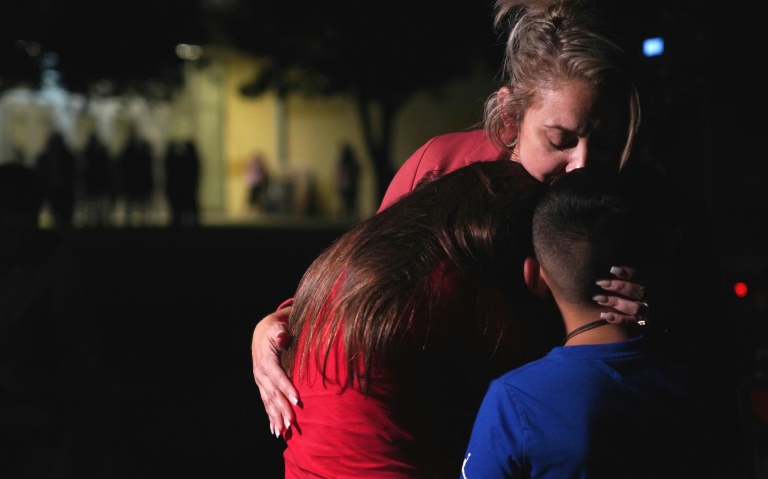
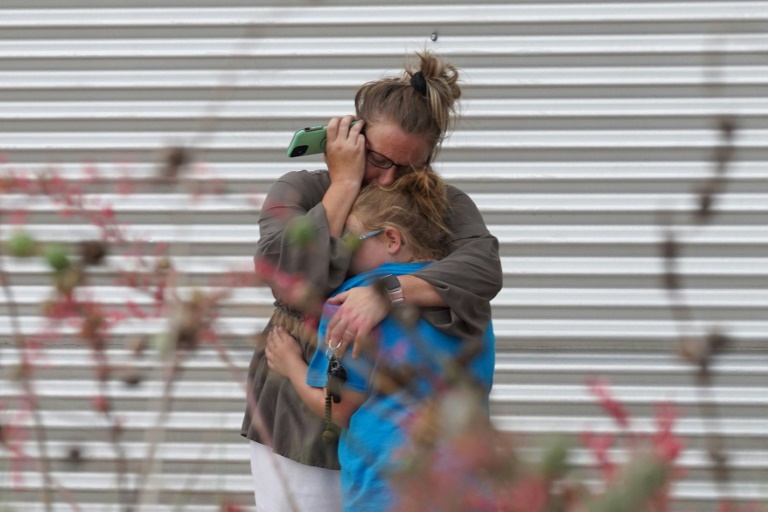
A young boy who loved to dance, a girl who was “the happiest ever” — here’s a closer look at some of the victims of the mass shooting at a Texas elementary school that claimed the lives of 19 children and two teachers.

– Amerie Jo Garza, the big sister –

Amerie Jo Garza, a young girl with a brilliant smile, had just celebrated her 10th birthday in mid-May.

For unbearably long hours on Tuesday, her father Angel Garza had no news of her.

“I don’t ask for much or hardly even post on here but please it’s been 7 hours and I still haven’t heard anything on my love,” he wrote on Facebook, along with a photo of him hugging his grinning daughter.

Several hours later, he posted again.

“Thank you everyone for the prayers and help trying to find my baby,” he said. “My little love is now flying high with the angels above.”

“I love you Amerie Jo. Watch over your baby brother for me.”

– Ellie Garcia, ‘a doll’ –

“Our Ellie was a doll and was the happiest ever,” Ellie Garcia’s father, Steven Garcia, wrote on Facebook. “I was gonna DJ for her at her party like she wanted me too!!!”

“Mom and Dad love you never forget that and please try and stay by our side,” he added.

Ellie’s mother Jennifer Lugo also posted many photos of her daughter on social media. “My heart is broken,” she wrote alongside a photo of Ellie at her first communion in 2021, dressed in white and beaming at the camera.

“I feel so numb. I miss you baby!!!!!”

– Eva Mireles, teacher –

Eva Mireles was one of two teachers killed Tuesday by the 18-year-old gunman. In her early forties, she had been teaching for 17 years.

She loved running and hiking, according to a short biography of her posted on the school website.

“And now you just might see me riding a bike!!” she added.

Mireles is survived by her husband, a daughter and three pets.

– Irma Garcia, mother of four –

Irma Garcia had been teaching for 23 years at Robb Elementary, the school targeted in the attack. She had been a co-teacher with Mireles for five years.

A mother of four who had been married for 24 years, Garcia loved to barbecue with her husband and to listen to music.

Her eldest son is in the US Marines, while another is attending Texas State University. Her eldest daughter is a sophomore in high school, and her youngest is in seventh grade.

– Xavier Lopez, the dancer –

Xavier Lopez, 10, “loved to dance,” his uncle Benito Martinez told Fox News Tuesday night.

“Oh man, he would dance even when he sweated but he didn’t care,” Martinez said of his young, dark-haired nephew.

“This past Sunday he was at my daughter’s birthday party,” Martinez said, smiling at the memory. “He was dancing.”

– Jose Flores, the good student –

Ten-year-old Jose Flores “loved going to school,” his uncle Christopher Salazar told The Washington Post.

“He was a very happy little boy. He loved both his parents… and loved to laugh and have fun,” Salazar said of the fourth grader, adding: “He was very smart.”

Just hours before the shooting, Flores received an award for making the school honor roll.

Filing says Elon Musk to borrow less in Twitter bid

Elon Musk notified US regulators on Wednesday that he will rely less on loans in his bid to buy Twitter, as he and partners put $33.5 billion into the deal.

Twitter shares climbed more than 5 percent on the news, as the market evidently took it as a sign the acquisition is moving forward despite Musk declaring it on “hold” due to his concerns about the number of accounts that might be software “bots” instead of real people.

The Tesla chief said in a filing with the US Securities and Exchange Commission that he would seek $13 billion in loans for the Twitter buy instead of using nearly double that much debt as previously indicated.

Musk has been courting major Twitter investors including co-founder Jack Dorsey in the hope of getting them to partner with him in taking the San Francisco-based company private.

Musk said in the regulatory filing that he had new commitments that will allow him to rely less on loans to buy Twitter, but did not specify whether he was reaching into his own pocket for money or had won over others with big stakes in the company.

Analysts were concerned about Musk using billions of dollars worth of his Tesla shares to back loans, meaning the electric car company’s stock price would be affected by the fortunes of Twitter.

Wedbush analyst Dan Ives said in a tweet that Musk changing the Twitter buy financing structure was a “good move” but that the buyout “game of high stakes poker continues.”

Wedbush estimated the chances of the Musk buy of Twitter happening as even odds, Ives said in the tweet.

Twitter’s share price has fallen on signs Musk might not complete his buy of the company for the offered $54.20 per share, and risen on indications the deal is moving forward.

Twitter shares were just shy of $40 each in after-market trades on Wednesday, signaling a lack of faith by investors in the original deal being culminated.

Morning of horror: The Texas shooter's path

The day after his 18th birthday, Salvador Ramos, a troubled teenager from small-town Texas, bought his first assault rifle. A week later, he walked into a local elementary school, where he shot and killed 19 young children and two of their teachers.

Authorities were still trying to piece together what drove Ramos to commit America’s worst school massacre in a decade, but here is what is known so far about the shooting:

– How the shooter attacked –

Described as a long-bullied youth with a history of self-harm, Ramos turned 18 on May 16 and bought an assault rifle the very next day. 

He purchased 375 rounds of ammunition on May 18, and then a second rifle two days after that.

Ramos — a dropout with no criminal history — messaged on Facebook Tuesday morning that he planned to attack his grandmother, whom he lived with, Texas Governor Greg Abbott said.

Ramos shot his 66-year-old relative in the face, but she was able to call the police and was airlifted in critical condition to a hospital in nearby San Antonio.

The shooter then messaged again on social media to say he had followed through on his plan to attack his grandmother, and that an elementary school was his next target. 

He drove a little over two miles (3.2 kilometers), crashing his car near Robb Elementary School.

He took an assault rifle with him and headed for the school, where more than 500 students in grades two to four — aged around seven to 10 years old — had just three days of class left before summer vacation.

Ramos, clad in black and wearing a tactical vest, was confronted by a school resource officer, but was able to enter the school through a back door. 

He then made his way to two adjoining classrooms.

“That’s where the carnage began,” said Steve McCraw, director of the Texas Department of Public Safety.

The identities of the victims have been gradually revealed as shattered families share their pain online: Xavier Lopez, a 10-year-old boy who loved to dance; Ellie Garcia, “the happiest ever” in her father’s words and Amerie Jo Garza, a girl with a brilliant smile who had just celebrated her 10th birthday.

– How he was stopped –

As a crowd grew nearby, police arrived on the scene in response to a report of a crashed vehicle. 

Hearing shots coming from the school, they ran inside and themselves came under gunfire.

Some police started to break windows and evacuate children and teachers from the premises.

Law enforcement on site helped pin the shooter in place until a tactical team that included US Border Patrol agents was assembled. 

“Upon entering the building, agents and other law enforcement officers faced gunfire from the subject, who was barricaded inside,” said Department of Homeland Security spokesperson Marsha Espinosa. 

Law enforcement officers “put themselves between the shooter and children on the scene to draw the shooter’s attention away from potential victims,” said Espinosa.

It was more than 30 minutes after Ramos entered the school that he was finally shot and killed by one of the Border Patrol agents.

– Who was the shooter? –

Ramos had been living with his grandmother for two months, McCraw said. According to Governor Abbott, no psychological problems were known to local health departments.

A cousin, Mia, told The Washington Post Ramos “wasn’t very much of a social person” after being bullied for a stutter. He loved playing video games, according to another friend.

In social media messages to a young German girl he had recently met online, Ramos explained that he had just shot his grandmother and was continuing onward to “shoot up” the school. 

The 15-year-old girl, who lives in Frankfurt, said he was angry with his grandmother that morning because she was “on the phone with AT&T,” a US telecommunications provider, on a call concerning his phone.

According to the girl, Ramos spent a lot of time alone at home and “he never had plans with his friends.”

Two years after Floyd murder, Biden a spectator to US tragedies

President Joe Biden marked the second anniversary of the murder of George Floyd on Wednesday, on day after a school shooting that came as a cruel reminder of his powerlessness to rein in America’s violent demons.

It was to be a ceremony symbolizing reconciliation, in one of the White House’s state rooms, with families of victims of police violence alongside police representatives.

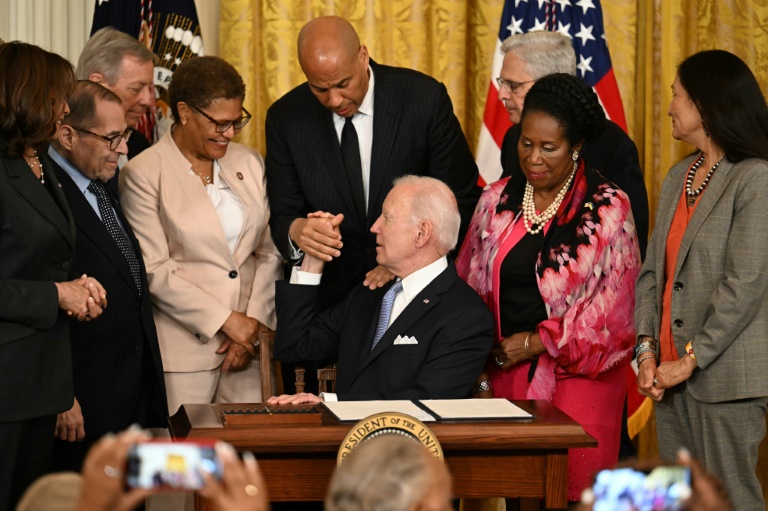
But the school massacre in Uvalde, Texas — in which 19 schoolchildren and two teachers died — was on everyone’s mind when Biden signed a decree described as historic by his administration, aimed at promoting accountability and tightening standards among federal law enforcement.

It came two years to the day after the death of Floyd in Minneapolis, which sparked protests against racism and police brutality that spread across the United States and globally.

The executive order is proof of “what we can do together to heal the very soul of this nation,” Biden said, repeating one of his favorite expressions.

Floyd, an African-American, was murdered by a police officer who knelt on his neck for nearly 10 minutes during an arrest.

Biden told Floyd’s seven-year-old daughter, Gianna, she was “getting so big” during the ceremony, surrounded by elected officials, members of the African-American community and the families of other victims of police violence.

He also reminded the crowd that the United States was a “great nation” made up of a vast majority of “good people” — remarks that rang slightly hollow following the massacre in Uvalde.

The president also announced he and his wife, Jill, will soon travel to Texas.

But the anniversary of Floyd’s death, the massacre in the school in Texas and the recent racist massacre in Buffalo are all cruel reminders of Biden’s failure to keep his promises to curtail the violence.

– Healing –

The executive order, which took months to thrash out, provides for a series of measures related to federal law enforcement: it establishes a national database of police misconduct, mandates the use of body cams and largely bans the use of chokeholds and carotid restraints.

But these restrictions will not be imposed on state and local authorities: that would require legislation, which the Democratic president has failed to push through Congress. 

Nor has Biden managed to toughen gun laws, from banning assault rifles to mandating mental health and criminal background checks on clients when buying weapons.

As with police reform, the administration has been limited in its efforts on curbing firearms to ruling by decree — for example, increasing restrictions on so-called “ghost guns.”

– Institutional paralysis –

Biden’s inability to curb the violence is partly due to the institutional landscape: despite an image of enormous power, an American president has to count on alignment with the legislative branch and the judiciary to assure his vision.

The Democratic Party has only a very slim majority in Congress and some of its senators are reluctant to blow up the procedural rules that would allow them to override Republican stonewalling on a host of issues.

In addition, Biden faces a Supreme Court which now has a resolutely right-leaning slant thanks to his predecessor Donald Trump, who appointed three conservative justices during his one term in office. 

Add to all this the personality of the 79-year-old Democrat, a centrist at heart who would like to govern by consensus, which in today’s America seems impossible.

While the United States has experienced a surge in the number of shootings since the beginning of the year, the president has still not succeeded in appointing a director to the Bureau of Alcohol, Tobacco, Firearms and Explosives.

The agency in fact hasn’t had a permanent leader since 2015.

A first nomination attempt by the White House — a candidate known as a fierce supporter of firearms regulation — was withdrawn after a fierce backlash.

Biden has put forward a new candidate, former prosecutor Steve Dettelbach, who will undertake the Senate confirmation hearing process this week, where he is likely to face unanimous Republican opposition.

'How to murder your husband' writer found guilty of killing spouse

A US romance novelist who wrote an essay entitled “How To Murder Your Husband” has been convicted of killing her spouse. 

A jury in Portland, Oregon, took just eight hours on Wednesday to return a guilty verdict against Nancy Crampton Brophy for shooting dead Daniel Brophy.

Prosecutors said the writer, whose “Wrong Never Felt So Right” series of novels include “The Wrong Husband” and “The Wrong Lover,” had been struggling financially before she shot her husband twice through the heart in June 2018 at a culinary institute where he worked.

Crampton Brophy, 71, had denied the charge, insisting security camera footage that put her at the scene of the crime merely showed her scouting for writerly inspiration.

She also claimed a missing gun police believe was the murder weapon had been bought as part of research for a novel, and denied the hundreds of thousands of dollars in life assurance she stood to gain were a motive for murder.

Crampton Brophy’s lawyers said they would appeal the second-degree murder conviction, The Oregonian newspaper reported.

“Nancy Brophy loved her husband,” attorney Kristen Winemiller told the jury at the trial. “You can see that in her eyes every time she talked about him. Her eyes lit up, they absolutely twinkled.”

Crampton Brophy was arrested in September 2018, and has been in custody ever since.

Prosecutor Shawn Overstreet laid out reams of evidence showing how Crampton Brophy had plotted to kill her husband, who was 63.

“It’s not just about the money. It’s about the lifestyle Nancy desired that Dan could not give her,” he said during the trial.

Crampton Brophy had rejected claims of penury when she took to the stand last week, insisting her monetary woes had long been resolved.

“I do better with Dan alive financially than I do with Dan dead,” she said.

“Where is the motivation I would ask you? An editor would laugh and say, ‘I think you need to work harder on this story, you have a big hole in it.’”

Crampton Brophy, who faces life in prison, will be sentenced at a later date.

The blog post “How to kill your husband,” which is still readily available online, discusses methods and motivations for dispatching an unwanted spouse.

These include financial gain and the use of a firearm, although it notes guns are “loud, messy, require some skill.”

“But the thing I know about murder is that every one of us have it in him/her when pushed far enough,” the essay says.

Close Bitnami banner
Bitnami