US Business

Zelensky rebukes West as Russia closes in on key Ukraine city

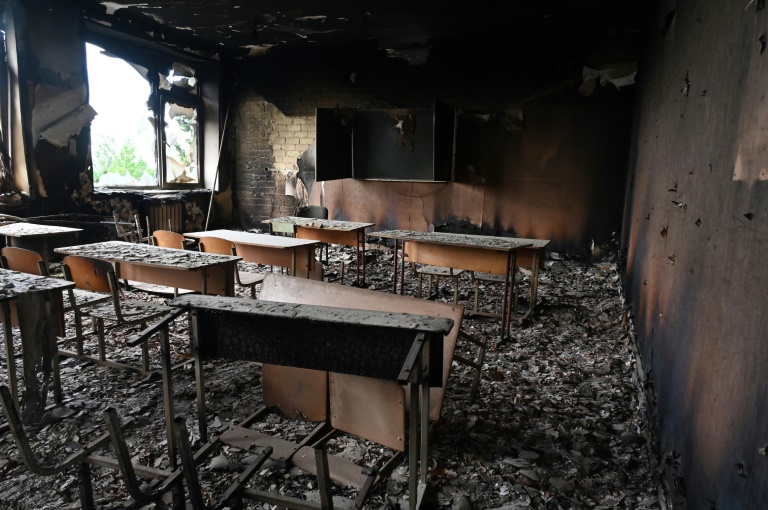
Fierce battles raged in eastern Ukraine on Wednesday, with Russian troops on the verge of encircling a key industrial city, as President Volodymyr Zelensky issued a bitter rebuke of the West for not doing enough to help Kyiv win the war.

Lugansk regional governor Sergiy Gaiday described fighting outside of the industrial city of Severodonetsk, a key military goal for Russia, as “very difficult,” saying Russian troops were shelling the city from the outskirts with mortars.

“The coming week will be decisive,” Gaiday said in a video posted on Telegram, adding he believes Russia’s goal is to “capture the Lugansk region no matter what cost”.

“There is a colossal amount of shelling,” he added. 

Earlier in the day, addressing the World Economic Forum in Davos, Ukraine’s Foreign Ministry Dmytro Kuleba compared the battle for Donbass to the epic battles fought in World War II and said his country “badly” needs multiple launch rocket systems to match Russian firepower.

In Kyiv, Zelensky echoed that plea.

“We need the help of our partners — above all, weapons for Ukraine. Full help, without exceptions, without limits, enough to win,” Zelensky said in his daily address to the nation.

And he called out the international community for paying too much attention to Russia’s interests and too little to Ukraine’s.

The Ukrainian president blasted a recent New York Times editorial and other similar statements by influential Western figures suggesting that Ukraine might have to sacrifice some territory to end the conflict.

“We must do everything in our power so that the world develops a firm habit to take Ukraine into consideration, so that the interests of Ukrainians don’t get overtaken by the interests of those rushing to yet another meeting with the dictator,” Zelensky said.

– ‘Clear blackmail’ –

Russia’s February 24 invasion of its pro-Western neighbour has caused global shockwaves, with the latest being fears of food shortages, particularly in Africa.

Moscow blamed the international sanctions imposed after the invasion, while the West says the shortage is mainly down to Russia’s blockade of Ukrainian ports.

“Solving the food problem requires a comprehensive approach, including the removal of sanctions that have been imposed on Russian exports and financial transactions,” said Russian deputy foreign minister Andrey Rudenko.

But Kuleba urged the West not to give in.

“This is clear blackmail. You could not find a better example of blackmail in international relations,” Kuleba said in Davos.

Kuleba also slammed the western military alliance NATO for “doing literally nothing” to stop Russia.

– ‘Extremely heavy shelling’ –

Moscow’s army has plotted a slow but steady course deeper into Ukraine’s eastern Donbas region since withdrawing forces from central and northern regions.

In the eastern town of Soledar, Ukraine’s salt manufacturing hub, the ground shook moments after Natalia Timofeyenko climbed out of her bunker.

“I go outside just to see people. I know that there is shelling out there but I go,” the 47-year-old said after a thundering blast smashed apart a chunk of a salt mine where she worked with most of her friends and neighbours.

Ghostly frontline towns like Soledar are being hammered by Russian artillery as they sit along the crucial road that leads out of besieged Severodonetsk and its sister city Lysychansk.

Twelve people were killed by “extremely heavy shelling and attacks” in the neighbouring region of Donetsk, which also forms part of Donbas, the Ukrainian presidency said.

In a sign that the rest of the country remains at risk, Russian cruise missiles struck the major southern rail hub of Zaporizhzhia, killing one person and damaging dozens of houses, the presidency added.

– ‘It is just war’ –

Russia also sought to tighten its grip over the parts of southern Ukraine that it occupies.

President Vladimir Putin on Wednesday signed a decree simplifying a procedure to obtain a Russian passport for residents of the southern Ukrainian regions of Kherson, under the full control of Russian troops, and partly-occupied Zaporizhzhia.

Kyiv said the plan was a “flagrant violation” of Ukraine’s sovereignty.

Moscow-backed officials are pushing for formal annexation by Russia.

“People are very apprehensive,” Kherson trolleybus driver Alexander Loginov, 47, told AFP from the cabin of his vehicle, during a press trip organised by the Russian defence ministry. 

Day-to-day life remains marked by uncertainty, especially over payment of salaries as “Ukrainian banks are closing,” he said. “To be honest, it is just war.”

Underlining the human cost, about 200 bodies were found in the basement of a destroyed building of the port city of Mariupol, which fell to Moscow recently after a devastating siege, Ukrainian authorities said.

“It is impossible to be within the area due to the corpse smell,” Ukrainian ombudswoman Lyudmyla Denisova wrote on Telegram Wednesday. “The occupiers turned the entire Mariupol into a cemetery.”

burs-dk/spm/md/bgs
Fed officials stressed 'determination' to bring down inflation

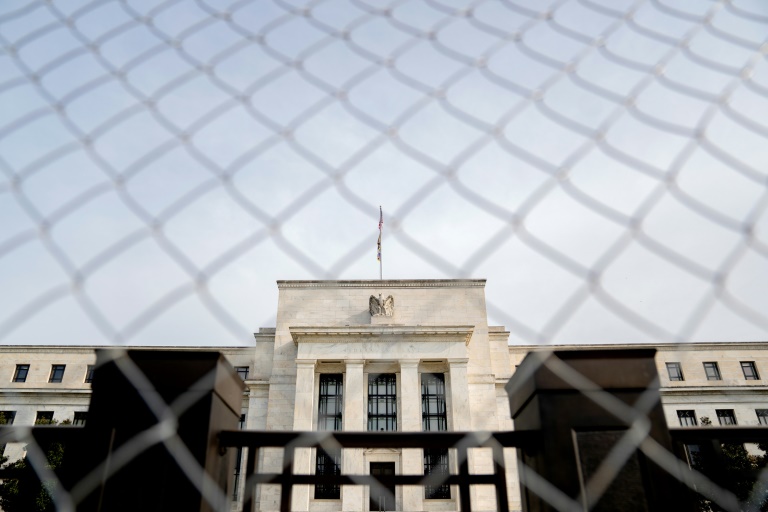
US central bankers stressed their “strong commitment and determination” to bring raging inflation under control including with more big interest rate increases, according to the minutes of the latest policy meeting released Wednesday.

With US inflation rising at the fastest pace in nearly four decades, the Fed’s policy committee early this month hiked the key rate by a half point — the biggest increase since 2000 — and most members said similar increases “would likely be appropriate at the next couple of meetings.”

The comments solidify expectations raised after Fed chair Jerome Powell said additional big moves should be “on the table” in coming discussions, and could help quiet critics who have been sounding the alarm about the inflation threat.

But the minutes show members of the Federal Reserve’s policy committee are fully aware of the danger of rising prices, which erodes incomes, and say they must move “expeditiously” to increase the benchmark borrowing rate and offload the massive bond holdings to tamp down inflation, which they said was “too high.”

While the pace of consumer price increases slowed slightly last month, jumping 8.3 percent compared to April 2021 after hitting 8.5 percent the prior month, Fed officials warned that “price pressures remained elevated and that it was too early to be confident that inflation had peaked.”

The Fed slashed interest rates to zero at the start of the pandemic to prevent a severe economic downturn and also ramped up bond purchases to pump liquidity into the financial system, but began to reel in those measures as prices accelerated as the economy recovered.

The process started in March with a quarter-point rate increase, and starting June 1, it will start to reduce its asset holdings. The next policy meeting is June 14-15.

The minutes confirm central bankers are committed to a series of moves to remove stimulus to the economy but said they may have to go even further and hit the brakes on the economy depending on how the outlook evolves.

– Less hawkish? –

“All participants reaffirmed their strong commitment and determination to take the measures necessary to restore price stability,” the minutes said.

However, there was no mention of the possibility of an even more aggressive three-quarter-point rate hike.

In fact, Ian Shepherdson of Pantheon Macroeconomics said he expects “a less hawkish tone to emerge in June” and sees potential for a smaller rate hike at the July meeting, especially amid the slowdown in the US housing market in response to rising borrowing costs and high prices.

“We can’t stress enough that the housing data are nowhere near bottom yet, and we doubt policymakers have the stomach” to continue with big rate hikes, he said.

But others said the Fed is ready to do whatever it takes to rein in the price increases.

“The Fed is focused on derailing the inflation… they know it will require heavy lifting and some ‘pain,'” Grant Thornton chief economist Diane Swonk said on Twitter.

While Fed officials say the world’s largest economy is in a solid position, they cautioned that the outlook is highly uncertain.

Russia’s invasion of Ukraine and the Covid-19 lockdowns in China “posed heightened risks for both the United States and economies around the world,” including worsening supply chain snarls and fanning inflation flames, notably prices for energy and other commodities, the minutes said.

They said “supply constraints overall were still significant and would likely take some time to be resolved.”

The current goal is to quickly move the benchmark rate to neutral, where it is neither stimulating nor restricting the economy; however, the officials said “a restrictive stance of policy may well become appropriate.”

'Horror and pain' as Texas town mourns school victims

Aida Hernandez shed bitter tears as she left mass at the Sacred Heart church in the Texas town of Uvalde, a simple gray building where dozens gathered Wednesday to mourn the 21 lives lost in a horrific school shooting.

In the small church off main street, the largely Hispanic congregation sought to process the “horror” of what happened, and pray for the victims of America’s worst school shooting in a decade.

“My experience was of horror and pain. I knew the victims. I’m still in shock,” said Hernandez, in her sixties, who taught at Robb Elementary School until she retired two years ago.

The town of just 15,000 inhabitants, located 50 miles (80 kilometers) from the border with Mexico, was until 24 hours ago like every other small US town: a grid of streets dotted with shopping malls, gas stations and fast food chains.

But on Tuesday everything changed, when an 18-year-old named Salvador Ramos sowed carnage at Robb Elementary School.

Armed with an assault rifle, he made his way to two adjoining classrooms and opened fire, killing two teachers and 19 of their young students — until he was shot dead by police. 

The massacre shook the quiet town to its core and plunged residents into both incomprehension and despair.

“When you teach and you’re in the classroom, that’s your job to protect them,” Hernandez said of the teachers who died.

“They did more beyond what they were supposed to do.” 

– ‘Too many times’ –

A few feet away, Rosie Buantel was equally grief-stricken — but she was outraged, too.

“I’m sad and I’m angry at our government, for not doing more about gun control,” the woman in her fifties told AFP.

“We’ve gone through this one too many times. And still there’s nothing done. They’re still debating.”

Eddie, a local resident in his sixties who declined to give his last name, was also feeling angry.

“I came to show my respects and also to put pressure for a change of laws so guns don’t get in the hands of children,” he said after laying flowers near the elementary school, which was still surrounded by police.

Throughout the day, people in Uvalde made their way to a municipal center, where they could receive psychological support.

On the day of the shooting, many relatives and friends of the victims faced hours of anguished waiting to find out what happened to their loved ones.

In front of the municipal center, in the blazing midday Texas heat, groups of adults and children chatted, coming and going under the watchful gaze of police officers.

Volunteer psychologist Iveth Pacheco traveled from San Antonio, to the east of Uvalde, to provide support to those in need.

“It’s just one of those situations where you just have to be present,” she said. “We have to be ready for the child whatever questions they have, and it’s the same thing with the adults right now.”

Venezuela's state bank announces partial share sale

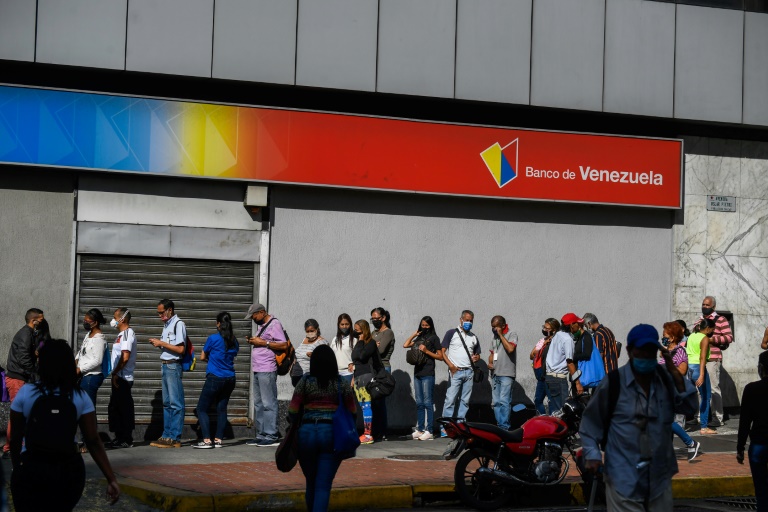
Venezuela’s state bank said on Wednesday it would sell up to 10 percent of its shares as part of the government’s plan to inject capital into public companies struggling due to a lack of investment.

Two weeks ago, Venezuela President Nicolas Maduro announced a plan to sell off parts of public companies.

The Bank of Venezuela is the only state firm so far to have declared a share sale, although it gave no details as to when that would be.

It said in a statement shared on social media that it would “begin the public offer of 5 percent progressively up to 10 percent of its social capital.”

“It is the first step by Venezuelan public companies to offer on the stock market the possibility for citizens, and national and international private economic actors, to take part in the country’s development through instruments of economic democratization.”

The first share sale was supposed to take place on May 16 with the CANTV telephone company, but it never happened and no explanation was ever given.

The Bank of Venezuela is the largest in the country with 15 million customers and was nationalized under the presidency of the late Hugo Chavez (1999-2013.)

It was under the control of the Spanish Santander Group from 1994 until the transfer of its shares to the state in 2009.

Since last year, several NGOs such as Transparency Venezuela have claimed that the government has been negotiating with the private sector with regards to state companies in fields such as farming, tourism and manufacturing.

With the collapse of Venezuela’s vital oil industry and the punishing effects of US sanctions aimed at forcing Maduro from power, the government has been forced to relax various state controls imposed under Chavez.

US files formal trade complaint against Canada over dairy

The United States on Wednesday filed a second formal trade complaint against Canada over Ottawa’s dairy import policies, which Washington says harms American producers.

Washington has requested dispute settlement consultations under the US-Mexico-Canada Agreement, saying the changes to the dairy quota system which Ottawa announced last week do not resolve the long-standing complaints and violate the trade agreement.

The policy continues to “prevent US workers, producers, farmers, and exporters from getting the full benefit of the market access that Canada committed to under the USMCA,” US Trade Representative Katherine Tai said in a statement.

Canada’s policies limit a large share of American dairy exports — including milk, butter, yogurt and ice cream — to Canadian processors under a system known as tariff rate quotas (TRQs), which US officials say restrict market access for US producers.

“I am deeply troubled by Canada’s decision to expand its dairy tariff-rate quota restrictions,” Tai said.

A TRQ applies a preferential tariff to a set volume or quota of product, and a higher duty for amounts above that level. Canada was permitted to use the system for 14 dairy product lines under USMCA — known in Canada as CUSMA — which came into force July 1, 2020, replacing the 1994 North American Free Trade Agreement.

Washington filed a first complaint in December 2020 and said it prevailed in the panel ruling released in late December 2021.

However, Ottawa says the changes announced last week fulfill the panel’s findings.

“Canada has met its obligations under CUSMA to ensure our TRQ system is compliant,” Canada’s trade minister Mary Ng said in a statement.

She said her government “will actively participate in CUSMA’s consultation process and standby our position to administer our TRQs in a manner that supports our dairy supply management system.”

If the disagreement cannot be resolved through consultations, Washington can request another dispute settlement panel to arbitrate, and potentially authorize the United States to retaliate if Canada fails to comply.

American dairy groups have called for the administration to impose punitive tariffs on Canadian goods, saying it is required by the USMCA trade pact.

US Agriculture Secretary Tom Vilsack said Canada’s “protectionist dairy policies are a top concern.” 

“Canada has failed to honor and implement its USMCA commitments by removing the trade restrictions that disadvantage and deter US dairy producers and exporters from enjoying real and meaningful access to the Canadian market,” he said in the statement.

US files formal trade complaint against Canada over dairy

The United States on Wednesday filed a second formal trade complaint against Canada over Ottawa’s dairy import policies, which Washington says harms American producers.

Washington has requested dispute settlement consultations under the US-Mexico-Canada Agreement, saying the changes to the dairy quota system announced last week do not resolve the long-standing complaints and violate the trade agreement.

The policy continues to “prevent US workers, producers, farmers, and exporters from getting the full benefit of the market access that Canada committed to under the USMCA,” US Trade Representative Katherine Tai said in a statement.

Canada’s policies limit a large share of American dairy exports — including milk, butter, yogurt and ice cream — to Canadian processors under a system known as tariff rate quotas (TRQs), which US officials say restrict market access for US producers.

“I am deeply troubled by Canada’s decision to expand its dairy tariff-rate quota restrictions,” Tai said.

A TRQ applies a preferential tariff to a set volume or quota of product, and a higher duty for amounts above that level. Canada was permitted to use the system for 14 dairy product lines under USMCA — known in Canada as CUSMA — which came into force July 1, 2020, replacing the 1994 North American Free Trade Agreement.

Washington filed a first complaint in December 2020 and said it prevailed in the panel ruling in January.

Ottawa says the changes announced last week “fully comply with the panel’s findings.”

US Agriculture Secretary Tom Vilsack said Canada’s “protectionist dairy policies are a top concern.” 

“Canada has failed to honor and implement its USMCA commitments by removing the trade restrictions that disadvantage and deter US dairy producers and exporters from enjoying real and meaningful access to the Canadian market,” he said in the statement.

After wheat, India caps sugar exports

India said it has capped sugar exports to safeguard its own supplies and ease inflation, days after a ban on wheat shipments sent global prices soaring in the wake of the Ukraine war.

India — which according to the International Sugar Organization is the world’s second-largest sugar producer and exporter after Brazil — said on Tuesday that shipments would be limited to 10 million tonnes for the current marketing year to September.

The decision was taken “with a view to maintain the domestic availability and price stability during the sugar season,” the food ministry said in a statement.

Sugar exports are forecast to hit a record high this marketing year, with contracts signed for around nine million tonnes, and 7.8 million tonnes already shipped, it said.

Citing inflation and its own food security needs, in mid-May India banned any new wheat exports without government approval after the hottest March on record — blamed on climate change — hit harvests.

Although India is a marginal player on the global market, the move sparked a further surge in already-soaring global food prices since Russia’s February invasion of agricultural powerhouse Ukraine, which previously accounted for 12 percent of global exports.

The decision also stoked fears of growing protectionism in the wake of the conflict. 

The export ban also left hundreds of thousands of tonnes of wheat stranded at a major port in western India, with long lines of thousands of trucks waiting to unload.

Authorities stressed that government-to-government requests for wheat from other countries reeling from record high prices would be permitted.

Elsewhere in Asia, Indonesia temporarily halted palm oil exports and Malaysia banned chicken exports.

Boeing's Starliner faces one more challenge as it returns to Earth

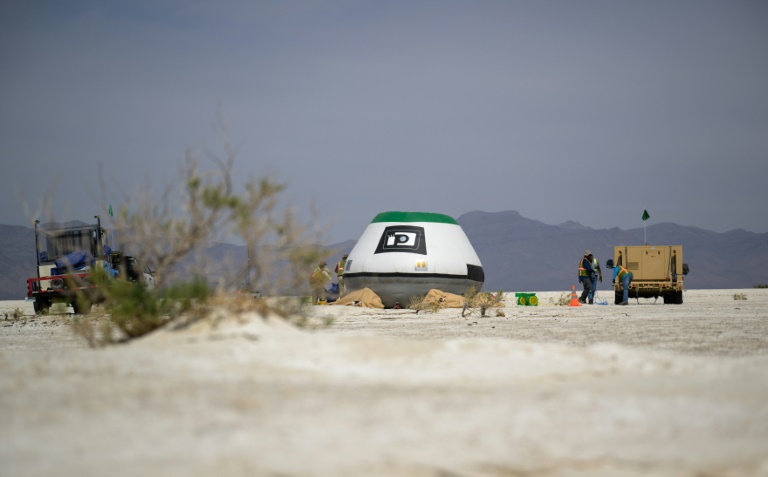
Boeing’s Starliner capsule headed back to Earth Wednesday in the final step of a key test flight to prove itself worthy of providing rides for NASA astronauts to the International Space Station.

The spaceship autonomously undocked at 2:36 pm Eastern time (1836 GMT) and was set to touch down in New Mexico just over four hours later, at 2249 GMT, wrapping up a six-day mission crucial to restoring Boeing’s reputation after past failures.

“#Starliner separation confirmed,” tweeted Boeing Space.

Orbital Flight Test-2 (OFT-2) is the last hurdle for Starliner to clear before it carries humans in another test flight that could take place by the end of this year.

Starliner docked with the ISS on Friday, a day after blasting off from the Kennedy Space Center in Florida.

Over the weekend, astronauts living aboard the research platform opened the hatch and “greeted” the capsule’s passengers: Rosie the Rocketeer, a sensor-equipped mannequin, and a plush toy named Jebediah Kerman, a video game character and the ship’s zero-g indicator.

The mission hasn’t been without its hiccups.

Two thrusters responsible for placing Starliner in a stable orbit failed, though officials insisted there was plenty of redundancy built into the system to overcome the problem.

On the day of docking, the vessel missed its scheduled contact time by more than an hour, after a ring responsible for latching on to the station failed to deploy correctly. Engineers had to retract the ring and pop it out again before it worked the second time.

– Second taxi service –

Still, the glitches are minor compared to the troubles Starliner saw during its first test launch, back in 2019, when one software bug caused it to burn too much fuel to reach its destination, and another almost meant that the vehicle was destroyed during re-entry.

The second error was caught in time to upload a patch, and the vessel was able to achieve a gentle landing, slowed by its enormous parachutes, at White Sands Space Harbor — the same spaceport where the space shuttle Columbia once landed, and where Starliner is once more expected for touchdown.

The spacecraft will bring back more than 600 pounds (270 kilograms) of cargo, including reusable tanks that provide breathable air to station crew members, which will be refurbished and taken back up on a future flight.

Boeing and NASA also tried to launch Starliner in August 2021, but the capsule was rolled back from the launchpad to address sticky valves that did not open as they should, and the ship was eventually sent back to the factory for fixes.

NASA is looking to certify Starliner as a second “taxi” service for its astronauts to the space station — a role that Elon Musk’s SpaceX has provided since succeeding in a test mission for its Dragon capsule in 2020.

Both companies were awarded fixed-price contracts — $4.2 billion to Boeing and $2.6 billion to SpaceX — in 2014, shortly after the end of the space shuttle program, during a time when the United States was left reliant on Russian Soyuz rockets for rides to the orbital outpost.

Boeing's Starliner faces one more challenge as it returns to Earth

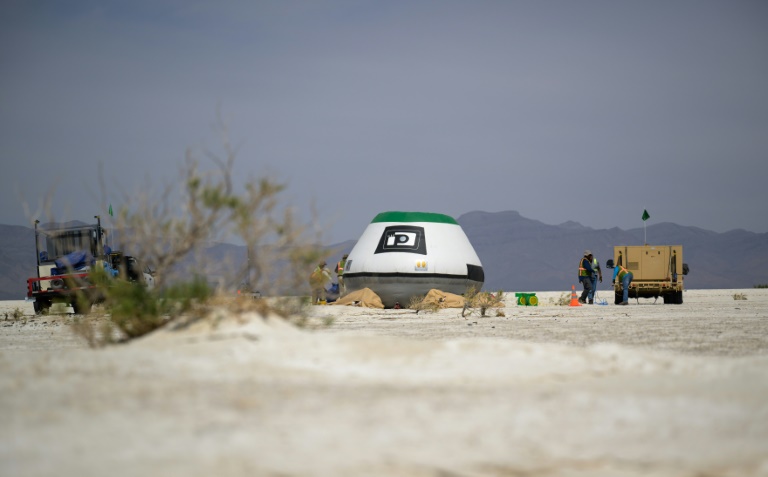
Boeing’s Starliner capsule headed back to Earth Wednesday in the final step of a key test flight to prove itself worthy of providing rides for NASA astronauts to the International Space Station.

The spaceship autonomously undocked at 2:36 pm Eastern time (1836 GMT) and was set to touch down in New Mexico just over four hours later, at 2249 GMT, wrapping up a six-day mission crucial to restoring Boeing’s reputation after past failures.

“#Starliner separation confirmed,” tweeted Boeing Space.

Orbital Flight Test-2 (OFT-2) is the last hurdle for Starliner to clear before it carries humans in another test flight that could take place by the end of this year.

Starliner docked with the ISS on Friday, a day after blasting off from the Kennedy Space Center in Florida.

Over the weekend, astronauts living aboard the research platform opened the hatch and “greeted” the capsule’s passengers: Rosie the Rocketeer, a sensor-equipped mannequin, and a plush toy named Jebediah Kerman, a video game character and the ship’s zero-g indicator.

The mission hasn’t been without its hiccups.

Two thrusters responsible for placing Starliner in a stable orbit failed, though officials insisted there was plenty of redundancy built into the system to overcome the problem.

On the day of docking, the vessel missed its scheduled contact time by more than an hour, after a ring responsible for latching on to the station failed to deploy correctly. Engineers had to retract the ring and pop it out again before it worked the second time.

– Second taxi service –

Still, the glitches are minor compared to the troubles Starliner saw during its first test launch, back in 2019, when one software bug caused it to burn too much fuel to reach its destination, and another almost meant that the vehicle was destroyed during re-entry.

The second error was caught in time to upload a patch, and the vessel was able to achieve a gentle landing, slowed by its enormous parachutes, at White Sands Space Harbor — the same spaceport where the space shuttle Columbia once landed, and where Starliner is once more expected for touchdown.

The spacecraft will bring back more than 600 pounds (270 kilograms) of cargo, including reusable tanks that provide breathable air to station crew members, which will be refurbished and taken back up on a future flight.

Boeing and NASA also tried to launch Starliner in August 2021, but the capsule was rolled back from the launchpad to address sticky valves that did not open as they should, and the ship was eventually sent back to the factory for fixes.

NASA is looking to certify Starliner as a second “taxi” service for its astronauts to the space station — a role that Elon Musk’s SpaceX has provided since succeeding in a test mission for its Dragon capsule in 2020.

Both companies were awarded fixed-price contracts — $4.2 billion to Boeing and $2.6 billion to SpaceX — in 2014, shortly after the end of the space shuttle program, during a time when the United States was left reliant on Russian Soyuz rockets for rides to the orbital outpost.

Gun violence response leaves US standing a world apart

For nearly a decade, America’s satirical “The Onion” publication has run a headline that’s come to epitomize the futility many people feel in the wake of yet another US gun massacre.

“‘No Way To Prevent This,’ Says Only Nation Where This Regularly Happens” reads the title, which the outlet published on Wednesday for the 21st time since 2014.

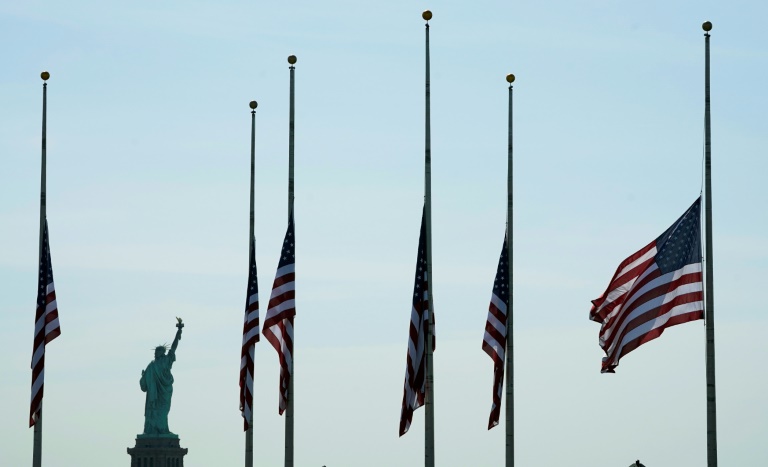
The headline routinely makes the social media rounds after mass shootings, as flags are lowered to half-staff, moments of silence are held and US lawmakers offer words of condolence, perhaps even anger or tears — but ultimately little else.

The Onion article was also run earlier this month, after a racist shooting at a grocery store in upstate New York. Less than two weeks later, a teenage gunman on Tuesday shot dead 19 primary schoolchildren and two teachers in Texas.

It echoed the school massacres that came before it: Columbine, Sandy Hook, Parkside.

The attacks remain open wounds on the American psyche but have resulted in little to no legal changes. In many places across the nation, gun ownership today is easier than ever.

The inertia in the face of cyclical violence stands in stark contrast to responses elsewhere in the world.

Hours after the Texas attack New Zealand’s prime minister, Jacinda Ardern, appeared on the US program “The Late Show with Stephen Colbert” and drove home just how uniquely American the problem is.

In 2019 a white supremacist gunman opened fire at two mosques in Christchurch, New Zealand, murdering 51 people and injuring dozens more.

Less than a month later, the country outlawed almost all semi-automatic weapons and assault rifles.

“I could not fathom how weapons that could cause such destruction and large-scale death could have been obtained legally in this country,” Ardern said at the time.

Speaking Tuesday, she explained that New Zealanders are “a very pragmatic people.”

“When we saw something like that happen, everyone said never again,” she said. “So then it was incumbent on us as politicians to respond to that.”

– ‘Carnage’ –

Ardern also invalidated fears that gun control would have an adverse impact on activities like hunting.

“We have legitimate needs for guns in our country, for things like pest control and to protect our biodiversity,” she told Colbert. “But you don’t need a military-style semi-automatic to do that.”

“And so we got rid of them.”

Australian economy ministry Jim Chalmers summed up a large part of the global reaction to the Texas attack, saying “it is hard to imagine that a great country like the United States can go on like this, with this gun violence, these mass atrocities.”

US rival China also spoke out, with foreign ministry spokesperson Wang Wenbin accusing Washington of failing to tackle gun violence, as well as racism.

“The US government has not been seen to do anything substantive to address these problems in the past decades,” he said.

The American distinction isn’t lost on politicians including President Joe Biden, who in the aftermath of the latest shooting tweeted that “these kinds of mass shootings rarely happen elsewhere in the world.”

“Why are we willing to live with this carnage? Why do we keep letting this happen?” he pleaded.

Speaking Tuesday night he urged US lawmakers to stand up to the National Rifle Association, the country’s powerful pro-gun lobby that has given millions of dollars to primarily conservative politicians in a successful bid to keep gun laws loose.

Even incremental US legislative change — including background checks, raising the minimum firearms purchasing age, and creating a system that would empower courts to keep guns away from potentially dangerous people — faces apparently insurmountable obstacles.

“The difference between America and these other nations is not that there aren’t people with homicidal thoughts in other nations,” said Senator Chris Murphy of Connecticut on MSNBC Tuesday night, after he delivered an emotional plea for gun control on the Senate floor.

“It’s that they can’t go down to their local Walmart and buy a weapon that kills 20 kids in two minutes.”

Close Bitnami banner
Bitnami