US Business

Pfizer offers to sell medicines at cost to poorest countries

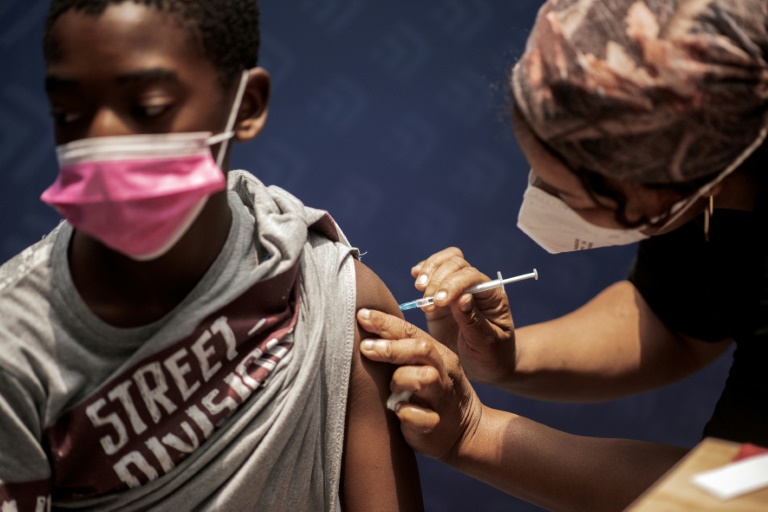
US pharmaceutical giant Pfizer on Wednesday said it would sell its patented drugs on a not-for-profit basis to the world’s poorest countries, as part of a new initiative announced at the World Economic Forum in Davos.

“The time is now to begin closing this gap” between people with access to the latest treatments and those going without, chief executive Albert Bourla told attendees at the exclusive Swiss mountain resort gathering.

“An Accord for a Healthier World” focuses on five areas: infectious diseases, cancer, inflammation, rare diseases and women’s health — where Pfizer currently holds 23 patents, including the likes of Comirnaty and Paxlovid, its Covid vaccine and oral treatment.

“This transformational commitment will increase access to Pfizer-patented medicines and vaccines available in the United States and the European Union to nearly 1.2 billion people,” Angela Hwang, group president of the Pfizer Biopharmaceuticals Group, told AFP.

Five countries: Rwanda, Ghana, Malawi, Senegal and Uganda have committed to joining, with a further 40 countries — 27 low-income and 18 lower-middle-income — eligible to sign bilateral agreements to participate.

“Pfizer’s commitment sets a new standard, which we hope to see emulated by others,” Rwanda’s President Paul Kagame said.

But he added that “additional investments and strengthening of Africa’s health systems and pharmaceutical regulators” would also be needed.

– Seven years behind –

Developing countries experience 70 percent of the world’s disease burden but receive only 15 percent of global health spending, leading to devastating outcomes.

Across sub-Saharan Africa, one child in 13 dies before their fifth birthday, compared to one in 199 in high-income countries.

Cancer-related mortality rates are also far higher in low and middle-income countries — causing more fatalities in Africa every year than malaria.

All this is set to a backdrop of limited access to the latest drugs. 

Essential medicines and vaccines typically take four to seven years longer to reach the poorest countries, and supply chain issues and poorly resourced health systems make it difficult for patients to receive them once approved. 

“The Covid-19 pandemic further highlighted the complexities of access to quality healthcare and the resulting inequities,” said Hwang.

“We know there are a number of hurdles that countries have to overcome to gain access to our medicines. That is why we have initially selected five pilot countries to identify and come up with operational solutions and then share those learnings with the remaining countries.”

– ‘Very good model’ –

Specifically, the focus will be on overcoming regulatory and procurement challenges in the countries, while ensuring adequate levels of supply from Pfizer’s side.

The “not-for-profit” price tag takes into account the cost to manufacture and transport of each product to an agreed upon port of entry, with Pfizer charging only manufacturing and minimum distribution costs.

If a country already has access to a product at a lower price tier, for example vaccines supplied by GAVI, a public-private global partnership, that lower price will be maintained.

Hwang acknowledged that even an at-cost approach could be challenging for the most cash-strapped countries, and “this is why we have reached out to financial institutions to brief them on the Accord and ask them to help support country level financing.”

Pfizer will also reach out to other stakeholders — including governments, multilateral organizations, NGOs and even other pharmaceuticals — to ask them to join the Accord.

It is also using funding from the Bill & Melinda Gates Foundation to advance work on a vaccine against Group B Streptococcus (GBS), the leading cause of stillbirth and newborn mortality in low-income countries.

“This type of accord is a very good model, it’s going to help get medicines out,” Gates told the Davos conference, adding that “partnerships with companies like Pfizer have been key to the progress we have made” on efforts like vaccines.

British retailer Marks and Spencer exits Russia

British clothing-to-food retailer Marks and Spencer on Wednesday announced a full exit from Russia following the country’s invasion of Ukraine.

After halting product shipments to Russia at the start of March, Marks and Spencer said it had decided “to fully exit” its Russian franchise run by Turkish conglomerate Fiba Group.

The exit, plus disruption to M&S operations in Ukraine run also by franchisee Fiba, is costing the British company £31 million ($39 million, 36 million euros).

“Unfortunately, our Ukrainian business has also been partially closed as a result of war impacts, and we are working with our partner to reopen as and when possible,” the company added in a statement.

An M&S spokeswoman confirmed to AFP that the group’s “brand will no longer be used in Russia”.

Its exit from Russia comes also after Marks and Spencer last year shut more than half its stores in France as Brexit affected supplies of fresh and chilled products.

M&S on Wednesday said it had taken a charge of £10.3 million following the French shakeup.

It had blamed the move on “supply chain complexities” following Britain’s formal exit from the European Union at the start of 2021.

M&S on Wednesday added that the group swung back into profit during its last financial year, or 12 months to the start of April.

It was heavily boosted by strong sales online in Britain and abroad.

Ahead, M&S pointed to “difficult and unpredictable headwinds” owing to ongoing fallout from the pandemic in addition to geopolitical and economic uncertainties.

The company said a cost-of-living crisis caused by soaring inflation would hit sales growth.

The update also marked the end of Steve Rowe’s time as chief executive.

The group had already announced that he would step down after six years, making way for a new joint CEO team of current M&S executives Stuart Machin and Katie Bickerstaffe.

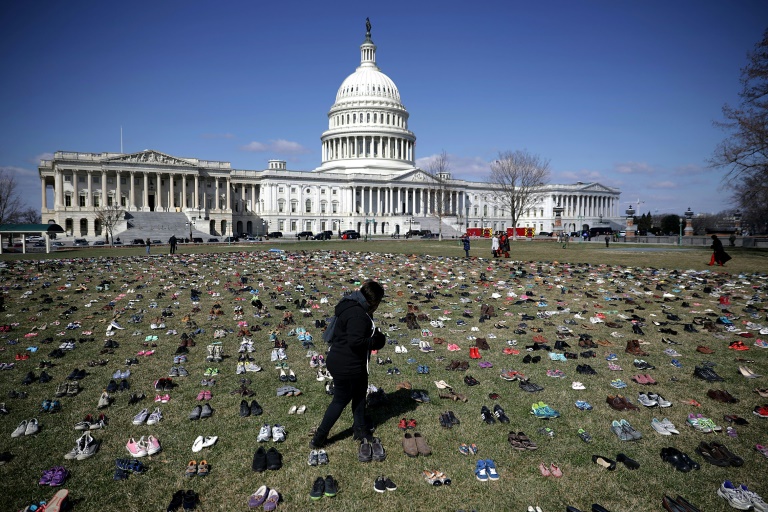
Gunman kills 19 children, two teachers at Texas elementary school

A teenage gunman killed at least 19 young children and two teachers at an elementary school in Texas on Tuesday, prompting a furious President Joe Biden to denounce the US gun lobby and vow to end the nation’s cycle of mass shootings.

The attack in Uvalde — a small community about an hour from the Mexican border — was the deadliest US school shooting in years, and the latest in a spree of bloody gun violence across America.

“It’s time to turn this pain into action for every parent, for every citizen of this country,” Biden said, his voice heavy with emotion.

“It’s time for those who obstruct or delay or block common-sense gun laws — we need to let you know that we will not forget,” he said.

“As a nation, we have to ask when in God’s name are we going to stand up to the gun lobby? When in God’s name will we do what we all know in our gut needs to be done?”

Texas Governor Greg Abbott named the suspect as Salvador Ramos, an 18-year-old local resident and a US citizen.

“He shot and killed, horrifically and incomprehensibly,” Abbott said.

Texas Department of Public Safety (DPS) officials told CNN the gunman was believed to have shot his grandmother before heading to Robb Elementary School around noon where he abandoned his vehicle and entered with a handgun and a rifle, wearing body armor.

– Over a dozen children wounded –

The gunman was killed by responding officers, the officials said, adding later two teachers also died in the attack.

“Right now there’s 19 children that were killed by this evil gunman, as well as two teachers from this school,” DPS spokesman Lieutenant Chris Olivarez told NBC News.

Fourth-grade teacher Eva Mireles was shot and killed while trying to protect her students, her aunt Lydia Martinez Delgado told the New York Times.

“I’m furious that these shootings continue, these children are innocent, rifles should not be easily available to all,” she said in a separate statement to US media.

More than a dozen children were also wounded in the attack at the school, which teaches more than 500 students aged around seven to 10 years old, mostly Hispanic and economically disadvantaged.

Uvalde Memorial Hospital said on Facebook it had received 13 children while University Health hospital in San Antonio said on Twitter it had received a 66-year-old woman and a 10-year-old girl, both in critical condition, and two other girls aged nine and 10.

At least one Border Patrol agent responding to the incident was wounded in an exchange of gunfire with the shooter, Department of Homeland Security spokeswoman Marsha Espinosa tweeted.

It was the deadliest such incident since the 2012 Sandy Hook shooting in Connecticut, in which 20 children and six staff were killed.

– ‘Happens nowhere else’ –

Ted Cruz, a pro-gun rights Republican senator from Texas, tweeted that he and his wife were “lifting up in prayer the children and families in the horrific shooting in Uvalde.”

But Senator Chris Murphy, a Democrat from Connecticut, where the Sandy Hook shooting took place, made an impassioned appeal for concrete action to prevent further violence.

“This isn’t inevitable, these kids weren’t unlucky. This only happens in this country and nowhere else. Nowhere else do little kids go to school thinking that they might be shot that day,” Murphy said on the Senate floor in Washington.

“I’m here on this floor to beg, to literally get down on my hands and knees and beg my colleagues: Find a path forward here. Work with us to find a way to pass laws that make this less likely.”

Among the international leaders reacting, Pope Francis was “heartbroken by the massacre” while Ukrainian President Volodymyr Zelensky said it was “terrible to have victims of shooters in peaceful times.”

President Emmanuel Macron said France shared “the shock and grief of the American people, and the rage of those who are fighting to end the violence.”

Spanish Prime Minister Pedro Sanchez tweeted: “We have to stop this daily horror in the US.”

And German Chancellor Olaf Scholz said his thoughts were with “the injured and the bereaved of the victims of this inconceivable massacre for which hardly any words can be found.”

The deadly assault in Texas follows a series of mass shootings in the United States this month.

On May 14, an 18-year-old self-declared white supremacist shot 10 people dead at a Buffalo, New York grocery store.

The following day, a man blocked the door of a church in Laguna Woods, California and opened fire on its Taiwanese-American congregation, killing one person and wounding five.

Despite recurring mass-casualty shootings, multiple initiatives to reform gun regulations have failed in the US Congress, leaving states and local councils to strengthen — or weaken — their own restrictions.

The National Rifle Association has been instrumental in fighting against stricter US gun laws.

The United States suffered 19,350 firearm homicides in 2020, up nearly 35 percent on 2019, the Centers for Disease Control and Prevention said in its latest data.

Another mass shooting, another US gun control debate

A mass shooting that left 19 schoolchildren and two teachers dead in the deeply pro-gun state of Texas on Tuesday increased pressure on US politicians to take action over the ubiquity of firearms — but also brought the grim expectation of little or no change.

It was the eighth mass shooting this year, according to the Everytown gun control group, and came 10 days after another 18-year-old murdered 10 African Americans at a supermarket in New York.

But nearly 10 years after a man slaughtered 20 children and six others in an attack on the Sandy Hook elementary school in Newtown, Connecticut, and four years after 17 were killed at a Florida high school, restrictions on gun purchases and ownership have not significantly changed.

“I had hoped, when I became president, I would not have to do this, again,” a distraught President Joe Biden said as he led national mourning, vowing to overcome the US gun lobby and find a way to tighten gun ownership laws.

“Another massacre… an elementary school. Beautiful, innocent, second, third, fourth graders,” he said. “I am sick and tired of it. We have to act. And don’t tell me we can’t have an impact on this carnage.”

But guns of all kinds, especially high-powered assault rifles and semi-automatic pistols are cheaper and more widely available than ever across the United States.

And the all-too-familiar arguments over guns, public safety and rights re-opened immediately on the news of Tuesday’s mass shooting.

– Gun massacres ‘politicized’? –

The debate is set to intensify going into the weekend when Houston, Texas hosts the annual convention of the country’s leading pro-gun lobby, the National Rifle Association.

Scheduled to speak at the convention is former president Donald Trump, Texas Governor Greg Abbott, Texas Senator Ted Cruz and other prominent Republicans.

Senator Chris Murphy, who represents Connecticut, made an emotional call on the Senate floor on Tuesday for lawmakers to take action.

“Nowhere else does that happen except here in the United States of America and it is a choice. It is our choice to let it continue,” he said.

But Cruz quickly pushed back, saying people will use the shooting to attack the right of people under the US Constitution’s 2nd Amendment to own guns.

“When there’s a crime of this kind, it almost immediately gets politicized,” Cruz said.

Attacking constitutional gun rights “is not effective in stopping these sort of crimes,” he added.

– More guns, more shootings –

Yet data shows the grim national cost of gun crime.

Last week, the Centers for Disease Control and Prevention said the number of gun deaths in the United States underwent a “historic” increase in 2020.

And the US racked up 19,350 firearm homicides in 2020, up nearly 35 percent over 2019, and 24,245 gun suicides, up 1.5 percent.

At 6.1 deaths per 100,000 inhabitants in 2020, the firearm homicide rate was the highest in a quarter century. 

Mass shootings have also risen, according to Everytown.

“Since 2009, there have been 274 mass shootings in the United States, resulting in 1,536 people shot and killed and 983 people shot and wounded,” the group says.

The country is swamped with guns. US firearms makers produced more than 139 million guns for the commercial market over the two decades from 2000, and the country imported another 71 million.

That includes high-powered assault rifles, which can be found for $500, and 9 millimeter pistols that combine ease of use, high accuracy and semi-automatic triggers with prices as low as $200.

– Gun laws eased in Texas –

But at every incident, proposals by state and federal lawmakers to tighten laws are rebuffed by conservative colleagues, who count on voter support from a sizeable portion of the public opposed to gun control.

Last year, a Pew poll said just 53 percent of Americans want stricter gun laws, and only 49 percent think tougher laws would decrease mass shootings.

Politicians like Abbott have instead moved to ease controls. Last year, the Texas governor signed a law allowing anyone in the state over 18 to openly carry a handgun without a license or training.

Shannon Watts, the founder of Moms Demand, an activist arm of Everytown, pointed out that Texas is one of the country’s largest gun markets and has a high firearms death rate.

“If more guns and fewer laws made Texas safer, it would be the safest state with declining rates of gun violence,” Watts wrote on Twitter.

“But it has high rates of gun suicide and homicide, and is home to four of the 10 deadliest mass shootings.”

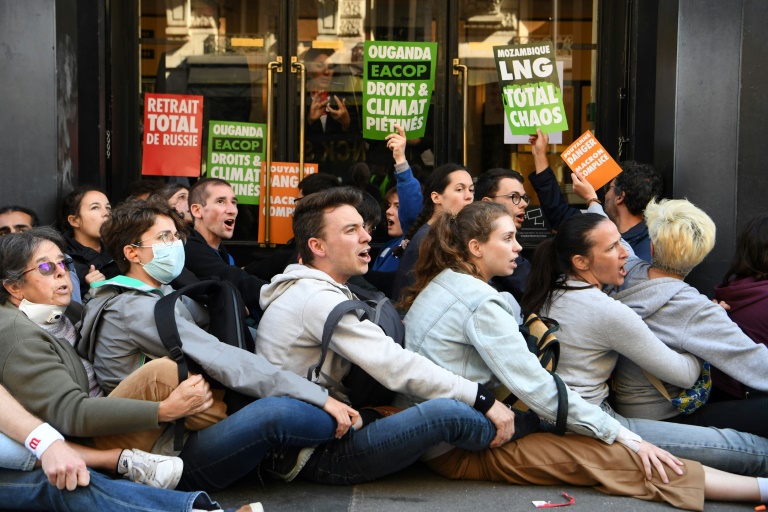
French green activists block TotalEnergies' annual meeting

More than 100 activists sought to block oil giant TotalEnergies’ annual general meeting in central Paris on Wednesday to protest the energy firm’s climate policies and continued presence in Russia following the invasion of Ukraine. 

Greenpeace, Friends of the Earth and Alternatiba protesters handcuffed themselves to each other and impeded shareholders’ access to the building, claiming that TotalEnergies is not doing enough to fight climate change.

“It is no longer possible for the old world to serenely meet to validate projects that are destructive to the climate, human rights and peace,” the French branch of Friends of the Earth said on Twitter. 

Activists unfurled a five-metre (16-foot) long banner saying, “no retreat, no general assembly”, a reference to the energy firm’s presence in Russia, where it runs liquified gas extraction projects. 

The meeting at the Salle Pleyel concert hall in central Paris was eventually declared open by TotalEnergies chief executive Patrick Pouyanne, but with the venue almost empty as so few shareholders had been able to enter.

He said that the AGM could go ahead “as a certain number of shareholders are present”.

TotalEnergies is aiming for net-zero carbon emissions by mid-century and has pledged to reduce emissions of its petroleum products by 30 percent compared to 2015. 

Earlier on Wednesday, the group announced it had bought a 50-percent stake in the US renewables producer Clearway Energy Group, as it seeks to expand its portfolio in the sector in the United States.

Shareholders at TotalEnergies’ AGM are due to vote on the group’s climate plans, with some announcing in advance that they would vote against. 

A group of shareholders representing 0.78 percent of the giant’s capital deposited a resolution — that was rejected — asking for the group to respect the Paris climate deal, which seeks to limit global warming to 2 degrees Celsius and if possible 1.5 degrees.

“There are shareholders who recognise the climate emergency but on the whole they are still too passive,” Greenpeace France campaigner Edina Ifticene told AFP. 

On Tuesday, oil giant Shell’s general assembly in central London was suspended for two hours due to disruption from climate change activists.

els-mto-cdc-ech/sjw/kjm

Stock markets mixed as traders weigh dark outlook

Markets were mixed Wednesday, with little sign of any relief from recent dour performances as investors remain fearful about the economic outlook owing to the impact of inflation, higher interest rates, China’s slowdown and the Ukraine war.

A series of weak indicators around the world and downbeat forecasts from big firms have chilled trading floors in recent weeks as the surge in prices begins to drag on consumer confidence, with warnings now swirling of a possible global recession.

The tech sector was again in the firing line after Snap, the parent of social media app Snapchat, provided a gloomy economic outlook, sending its shares diving more than 40 percent.

Wall Street titans followed Snap down, with Facebook-parent Meta and Google-parent Alphabet tanking.

The mood was not helped by news that US new home sales tanked in April while the Richmond Fed manufacturing index also fell, with both at the lowest levels since the coronavirus pandemic began in 2020.

“The market is moving its focus — and has been for the last month or so — from inflation concerns to growth concerns,” said Ellen Hazen of FL Putnam.

Hong Kong, Shanghai, Sydney, Seoul, Taipei, Manila and Bangkok rose, while Tokyo, Mumbai, Singapore, Jakarta and Wellington fell.

London, Paris and Frankfurt were up in the morning after falling Tuesday.

Investors are now awaiting the Fed’s next move on interest rates, with expectations for more half-point hikes to come as officials struggle to bring inflation down from four-decade highs.

There was a little hope after one policymaker, Atlanta Fed chief Raphael Bostic, suggested a break in the increases in September could make sense as the bank tries to avert a recession.

National Australia Bank’s Tapas Strickland said that, while it was not clear that the Fed was close to being more supportive of markets, “it is clear that growth headwinds are becoming more evident in the data, particularly stemming from the profit reporting season”. 

“The Fed of course remains focused on inflation, but if inflation reads were to start to moderate, then Bostic has opened up the possibility of a Fed pause.”

Minutes from the Fed’s most recent policy meeting are due later in the day and will be closely watched for an idea about its plans. 

Meanwhile, China continues to struggle with the fast-spreading Omicron coronavirus variant, with leaders sticking to their zero-Covid strategy despite the dire impact of lockdowns on the economy.

And with no easing of that policy in sight, observers warned that a series of recent support measures would not be enough to lift optimism.

“Fiscal multipliers will be minimal in an economy where economic interaction and activity have slowed sharply,” said Stephen Innes of SPI Asset Management.

“Moving beyond mobility restrictions in short order is a pre-condition, but not a guarantee, for an Asia-led economic recovery.”

– Key figures at around 0810 GMT –

Tokyo – Nikkei 225: DOWN 0.3 percent at 26,677.80 (close)

Hong Kong – Hang Seng Index: UP 0.3 percent at 20,171.27 (close)

Shanghai – Composite: UP 1.2 percent at 3,107.46 (close)

London – FTSE 100: UP 0.4 percent at 7,516.69

Euro/dollar: DOWN at $1.0682 from $1.0739 on Tuesday

Pound/dollar: UP at $1.2543 from $1.2535

Euro/pound: DOWN at 85.15 pence from 85.64 pence

Dollar/yen: UP at 127.09 yen from 126.86 yen 

Brent North Sea crude: UP 1.0 percent at $114.69 per barrel

West Texas Intermediate: UP 1.0 percent at $110.86 per barrel

New York – Dow: UP 0.2 percent at 31,928.62 (close)

— Bloomberg News contributed to this story —

Stock markets mixed as traders weigh dark outlook

Markets were mixed Wednesday, with little sign of any relief from recent dour performances as investors remain fearful about the economic outlook owing to the impact of inflation, higher interest rates, China’s slowdown and the Ukraine war.

A series of weak indicators around the world and downbeat forecasts from big firms have chilled trading floors in recent weeks as the surge in prices begins to drag on consumer confidence, with warnings now swirling of a possible global recession.

The tech sector was again in the firing line after Snap, the parent of social media app Snapchat, provided a gloomy economic outlook, sending its shares diving more than 40 percent.

Wall Street titans followed Snap down, with Facebook-parent Meta and Google-parent Alphabet tanking.

The mood was not helped by news that US new home sales tanked in April while the Richmond Fed manufacturing index also fell, with both at the lowest levels since the coronavirus pandemic began in 2020.

“The market is moving its focus — and has been for the last month or so — from inflation concerns to growth concerns,” said Ellen Hazen of FL Putnam.

Hong Kong, Shanghai, Sydney, Seoul, Taipei, Manila and Bangkok rose, while Tokyo, Mumbai, Singapore, Jakarta and Wellington fell.

London, Paris and Frankfurt rose after tanking on Tuesday.

Investors are now awaiting the Fed’s next move on interest rates, with expectations for more half-point hikes to come as officials struggle to bring inflation down from four-decade highs.

There was a little hope after one policymaker, Atlanta Fed chief Raphael Bostic, suggested a break in the increases in September could make sense as the bank tries to avert a recession.

National Australia Bank’s Tapas Strickland said that, while it was not clear that the Fed was close to being more supportive of markets, “it is clear that growth headwinds are becoming more evident in the data, particularly stemming from the profit reporting season”. 

“The Fed of course remains focused on inflation, but if inflation reads were to start to moderate, then Bostic has opened up the possibility of a Fed pause.”

Minutes from the Fed’s most recent policy meeting are due later in the day and will be closely watched for an idea about its plans. 

Meanwhile, China continues to struggle with the fast-spreading Omicron coronavirus variant, with leaders sticking to their zero-Covid strategy despite the dire impact on the economy of lockdowns.

And with no easing of that policy in sight, observers warned that a series of recent support measures would not be enough to lift optimism.

“Fiscal multipliers will be minimal in an economy where economic interaction and activity have slowed sharply,” said Stephen Innes of SPI Asset Management.

“Moving beyond mobility restrictions in short order is a pre-condition, but not a guarantee, for an Asia-led economic recovery.”

– Key figures at around 0720 GMT –

Tokyo – Nikkei 225: DOWN 0.3 percent at 26,677.80 (close)

Hong Kong – Hang Seng Index: UP 0.5 percent at 20,201.89 

Shanghai – Composite: UP 1.2 percent at 3,107.46 (close)

London – FTSE 100: UP 0.6 percent at 7,525.38

Euro/dollar: DOWN at $1.0687 from $1.0739 on Tuesday

Pound/dollar: UP at $1.2542 from $1.2535

Euro/pound: DOWN at 85.20 pence from 85.64 pence

Dollar/yen: UP at 127.08 yen from 126.86 yen 

Brent North Sea crude: UP 0.8 percent at $114.49 per barrel

West Texas Intermediate: UP 0.8 percent at $110.65 per barrel

New York – Dow: UP 0.2 percent at 31,928.62 (close)

Pfizer offers to sell medicines at cost to world's poorest countries

US pharmaceutical giant Pfizer on Wednesday said it would sell its patented drugs at a not-for-profit basis to the world’s poorest countries, as part of a new initiative announced at the World Economic Forum in Davos.

“An Accord for a Healthier World” focuses on five areas: infectious diseases, cancer, inflammation, rare diseases and women’s health — where Pfizer currently holds 23 patents, including the likes of Comirnaty and Paxlovid, its Covid vaccine and oral treatment.

“This transformational commitment will increase access to Pfizer- patented medicines and vaccines available in the United States and the European Union to nearly 1.2 billion people,” Angela Hwang, group president of the Pfizer Biopharmaceuticals Group told AFP.

Five countries: Rwanda, Ghana, Malawi, Senegal and Uganda have committed to joining, with a further 40 countries — 27 low-income and 18 lower-middle-income — eligible to sign bilateral agreements to participate.

Developing countries experience 70 percent of the world’s disease burden but receive only 15 percent of global health spending, leading to devastating outcomes.

Across sub-Saharan Africa, one child in 13 dies before their fifth birthday, compared to one in 199 in high-income countries.

Cancer-related mortality rates are also far higher in low and middle-income countries — causing more fatalities in Africa every year than malaria.

All this is set to a backdrop of limited access to the latest drugs. 

Essential medicines and vaccines typically take four to seven years longer to reach the poorest countries, and supply chain issues and poorly resourced health systems make it difficult for patients to receive them once approved. 

“The Covid-19 pandemic further highlighted the complexities of access to quality healthcare and the resulting inequities,” said Hwang.

“We know there are a number of hurdles that countries have to overcome to gain access to our medicines. That is why we have initially selected five pilot countries to identify and come up with operational solutions and then share those learnings with the remaining countries.”

Specifically, the focus will be on overcoming regulatory and procurement challenges in the countries, while ensuring adequate levels of supply from Pfizer’s side.

The “not-for-profit” price tag takes into account the cost to manufacture and transport of each product to an agreed upon port of entry, with Pfizer charging only manufacturing and minimum distribution costs.

If a country already has access to a product at a lower price tier, for example vaccines supplied by GAVI, that lower price will be maintained.

Hwang acknowledged that even an at-cost approach could be challenging for the most cash-strapped countries, and “this is why we have reached out to financial institutions to brief them on the Accord and ask them to help support country level financing.”

Pfizer will also reach out to other stakeholders — including governments, multilateral organizations, NGOs and even other pharmaceuticals — to ask them to join the Accord.

It is also using funding from the Bill & Melinda Gates Foundation to advance work on a vaccine against Group B Streptococcus (GBS), the leading cause of stillbirth and newborn mortality in low-income countries.

Reacting to the news, Amesh Adalja, of Johns Hopkins Center for  Health Security, said: “The Pfizer Accord program will facilitate access to some of their critical medicines and hopefully lead to better control of the targeted diseases which include: Covid, antibiotic-resistant bacteria, meningococcal disease, tick-borne encephalitis, and pneumococcal disease.” 

Two decades of deadly gun violence in US schools

Nineteen students and two teachers were shot dead Tuesday when an 18-year-old gunman opened fire at their Texas elementary school, the latest in the United States’ relentless cycle of school mass shootings.

Here are America’s deadliest classroom gun massacres in the last two decades.

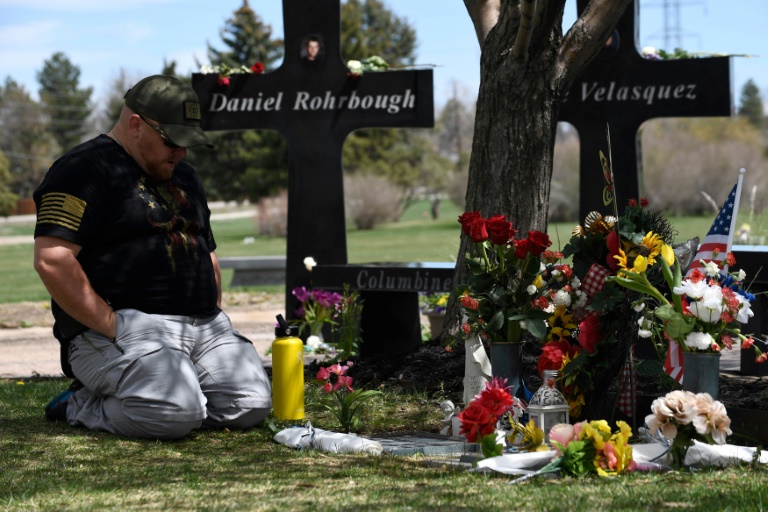
– Columbine High School (1999) –

Two teenagers from Columbine, Colorado, armed with an assortment of weapons and homemade bombs, went on a rampage at their local high school.

Twelve students and a teacher were killed during the April 20 massacre. Another 24 people were wounded.

Columbine, whose name has become synonymous with school shootings, is one of the first — and still among the deadliest — such shootings in the United States.

– Virginia Tech (2007) –

A South Korean student at the Virginia Polytechnic Institute opened fire on the Blacksburg, Virginia, campus, killing 32 students and professors before committing suicide.

Thirty-three people were wounded.

The gunman had apparently idolized the Columbine shooters, referring to them as “martyrs” in a video, part of a hate-filled manifesto he mailed to police during the shooting.

– Sandy Hook Elementary School (2012) –

A 20-year-old man with a history of mental health issues killed his mother in Newtown, Connecticut, on December 14 before blasting his way into Sandy Hook Elementary School.

Twenty children, aged six and seven, were shot dead, as well as six adults. The shooter then committed suicide.

The parents of Sandy Hook victims have led numerous campaigns to toughen gun control laws, but their efforts have largely failed.

Some conspiracy theorists insist the massacre was a government hoax, claiming the shooting involved “actors” in a plot to discredit the gun lobby.

– Marjory Stoneman Douglas High School (2018) –

On February 14, a 19-year-old former student at Marjory Stoneman Douglas High School who was expelled for disciplinary reasons returned to the Parkland, Florida, school and opened fire.

He killed 14 students and three adult staff.

Stoneman Douglas students have become crusaders against gun violence under the banner “March for Our Lives,” lobbying for tougher gun control laws and organizing protests and rallies.

Their campaign has taken off on social media, mobilizing hundreds of thousands of young Americans.

– Santa Fe High School (2018) –

Ten people, including eight students, were killed when a 17-year-old student armed with a shotgun and a revolver opened fire on his classmates in rural Santa Fe, Texas.

Classes had just started on the morning of May 18 when the shooting began.

Following the tragedy, Texas Governor Greg Abbott unveiled 40 recommendations, mainly focused on increasing armed security on school campuses and stepping up mental health screenings to identify troubled children. 

Gun ownership can be a point of pride for many Texans, and even some Santa Fe High School students spoke out against linking the shooting to the need for better gun control.

After wheat, India caps sugar exports

India said it has capped sugar exports to safeguard its own supplies and ease inflation, days after a ban on wheat shipments sent global prices soaring in the wake of the Ukraine war.

The world’s largest sugar producer and number two exporter after Brazil said on Tuesday that shipments would be limited to 10 million tonnes for the current marketing year to September.

The decision was taken “with a view to maintain the domestic availability and price stability during the sugar season,” the food ministry said in a statement.

Sugar exports are forecast to hit a record high this marketing year, with contracts signed for around nine million tonnes, and 7.8 million tonnes already shipped, it said.

Citing inflation and its own food security needs, in mid-May India banned any new wheat exports without government approval after the hottest March on record — blamed on climate change — hit harvests.

Although India is a marginal player on the global market, the move sparked a further surge in already-soaring global food prices since Russia’s February invasion of agricultural powerhouse Ukraine, which previously accounted for 12 percent of global exports.

The decision also stoked fears of growing protectionism in the wake of the conflict. 

The export ban also left hundreds of thousands of tonnes of wheat stranded at a major port in western India, with long lines of thousands of trucks waiting to unload.

Authorities stressed that government-to-government requests for wheat from other countries reeling from record high prices would be permitted.

Elsewhere in Asia, Indonesia temporarily halted palm oil exports and Malaysia banned chicken exports.

Close Bitnami banner
Bitnami