US Business

Boeing's Starliner faces one more challenge as it returns to Earth

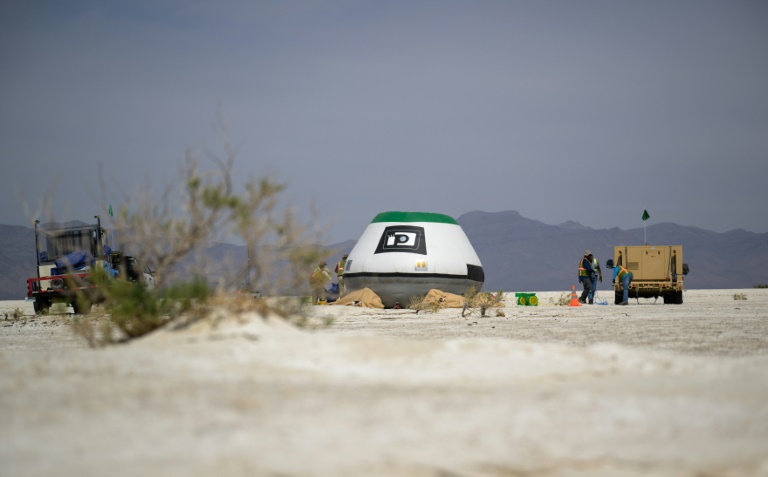
Boeing’s Starliner capsule is readying to return to Earth on Wednesday in the final step of a key test flight to prove itself worthy of providing rides for NASA astronauts to the International Space Station.

The spaceship is scheduled to autonomously undock at 2:36 pm Eastern Time (1836 GMT) and touch down in New Mexico just over four hours later, at 2249 GMT, wrapping up a six-day mission crucial to restoring Boeing’s reputation after past failures.

Orbital Flight Test-2 (OFT-2) is the last hurdle for Starliner to clear before it carries humans in another test flight that could take place by the end of this year.

Starliner rendezvoused with the ISS on Friday, a day after blasting off from the Kennedy Space Center in Florida.

Over the weekend, astronauts living aboard the research platform opened the hatch and “greeted” the capsule’s sole passenger: Rosie the Rocketeer, a mannequin equipped with sensors to understand what human crew would have experienced in the journey. 

The mission hasn’t been without its hiccups. These include propulsion problems early on Starliner’s journey that saw two thrusters responsible for placing it in a stable orbit failing, though officials insisted there was plenty of redundancy built into the system.

On the day of docking, the vessel missed its scheduled contact time by more than an hour, after a ring responsible for latching on to the station failed to deploy correctly. Engineers had to retract the ring then pop it out again before it worked the second time.

Still, the glitches are little compared to the troubles Starliner saw during its first test launch, back in 2019, when one software bug caused it to burn too much fuel to reach its destination, and another almost meant that the vehicle was destroyed during re-entry.

The second error was caught in time to upload a patch, and the vessel was able to achieve a gentle landing, slowed by its enormous parachutes, at White Sands Space Harbor — the same spaceport where Space Shuttles once launched, and where Starliner is once more expected for touchdown.

Boeing and NASA also tried to launch Starliner in August 2021, but the capsule was rolled back from the launchpad to address sticky valves that weren’t opening as they should and the ship was eventually sent back to the factory for fixes.

NASA is looking to certify Starliner as a second “taxi” service for its astronauts to the space station — a role that Elon Musk’s SpaceX has provided since succeeding in a test mission for its Dragon capsule in 2020.

Boeing's Starliner faces one more challenge as it returns to Earth

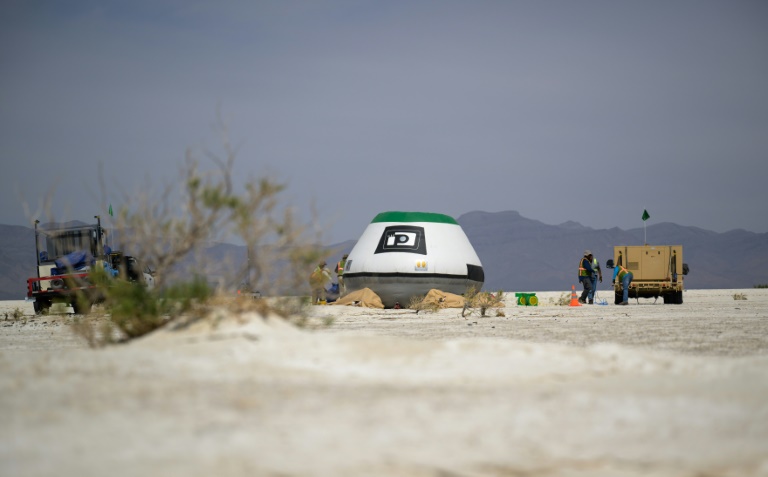
Boeing’s Starliner capsule is readying to return to Earth on Wednesday in the final step of a key test flight to prove itself worthy of providing rides for NASA astronauts to the International Space Station.

The spaceship is scheduled to autonomously undock at 2:36 pm Eastern Time (1836 GMT) and touch down in New Mexico just over four hours later, at 2249 GMT, wrapping up a six-day mission crucial to restoring Boeing’s reputation after past failures.

Orbital Flight Test-2 (OFT-2) is the last hurdle for Starliner to clear before it carries humans in another test flight that could take place by the end of this year.

Starliner rendezvoused with the ISS on Friday, a day after blasting off from the Kennedy Space Center in Florida.

Over the weekend, astronauts living aboard the research platform opened the hatch and “greeted” the capsule’s sole passenger: Rosie the Rocketeer, a mannequin equipped with sensors to understand what human crew would have experienced in the journey. 

The mission hasn’t been without its hiccups. These include propulsion problems early on Starliner’s journey that saw two thrusters responsible for placing it in a stable orbit failing, though officials insisted there was plenty of redundancy built into the system.

On the day of docking, the vessel missed its scheduled contact time by more than an hour, after a ring responsible for latching on to the station failed to deploy correctly. Engineers had to retract the ring then pop it out again before it worked the second time.

Still, the glitches are little compared to the troubles Starliner saw during its first test launch, back in 2019, when one software bug caused it to burn too much fuel to reach its destination, and another almost meant that the vehicle was destroyed during re-entry.

The second error was caught in time to upload a patch, and the vessel was able to achieve a gentle landing, slowed by its enormous parachutes, at White Sands Space Harbor — the same spaceport where Space Shuttles once launched, and where Starliner is once more expected for touchdown.

Boeing and NASA also tried to launch Starliner in August 2021, but the capsule was rolled back from the launchpad to address sticky valves that weren’t opening as they should and the ship was eventually sent back to the factory for fixes.

NASA is looking to certify Starliner as a second “taxi” service for its astronauts to the space station — a role that Elon Musk’s SpaceX has provided since succeeding in a test mission for its Dragon capsule in 2020.

Crisis-hit Sri Lanka appoints PM to helm finance ministry

Sri Lanka’s Prime Minister Ranil Wickremesinghe was on Wednesday given the additional responsibility of running the finance ministry as the island nation grapples with its worst-ever economic crisis.

The South Asian island nation has suffered months of dire shortages and anti-government protests, with importers unable to finance vital food, fuel and medicines.

Wickremesinghe, 73, was sworn in as finance minister after two weeks of wrangling among coalition partners for the crucial position ahead of bailout talks with the International Monetary Fund.

His appointment was delayed by a dispute between Wickremesinghe and the Sri Lanka Podujana Peramuna (SLPP) party of President Gotabaya Rajapaksa over who would take the post.

“The president’s party had wanted the finance portfolio, but the PM insisted he wanted it if he is to lead the country out of the economic chaos,” a top politician involved in the negotiations told AFP, on condition of anonymity.

Wickremesinghe is expected to soon unveil a revised budget promising relief for poorer Sri Lankans suffering through record inflation and spiralling food prices. 

Staff-level talks with the IMF concluded on Tuesday, but it is expected to take six more months for the Washington-based lender to agree on a bailout package, central bank officials said.

Sri Lanka has already defaulted on its $51 billion foreign debt and appointed international consultants on Tuesday to help restructure its international sovereign bonds and other bilateral loans.

The government has effectively ended subsidies on fuel by raising prices to a record high on Tuesday, and Wickremesinghe’s administration is expected to hike electricity and water tariffs to raise much-needed revenue. 

Petrol and diesel both remain in short supply and motorists are forced to queue, sometimes for days, to fill up.

-Fresh loan-

The government this week announced it was seeking a fresh $500 million loan from India to purchase fuel, in addition to two credit lines worth $700 million already provided by New Delhi.

The census office reported Monday that the country’s overall inflation last month was a staggering 33.8 percent year on year, with food inflation at an even higher 45.1 percent.

Sri Lanka’s foreign reserves shrank dramatically from 2020 as the coronavirus pandemic hit tourism and remittances from Sri Lankans abroad.

The pandemic compounded liquidity problems triggered by huge tax cuts introduced in 2019 soon after President Rajapaksa took office.

Protesters have demanded the president quit over government mismanagement of the crisis. 

His elder brother, Mahinda Rajapaksa stepped down as prime minister two weeks ago, clearing the way for Wickremesinghe’s appointment.

Gunman kills 19 children, two teachers at Texas elementary school

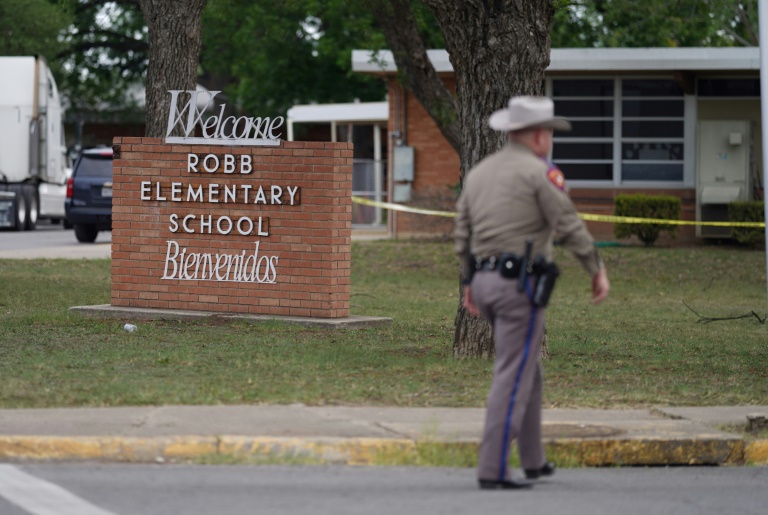
A teenage gunman killed at least 19 young children and two teachers at an elementary school in Texas on Tuesday, prompting a furious President Joe Biden to denounce the US gun lobby and vow to end the nation’s cycle of mass shootings.

The attack in Uvalde — a small community about an hour from the Mexican border — was the deadliest US school shooting in years, and the latest in a spree of bloody gun violence across America.

“It’s time to turn this pain into action for every parent, for every citizen of this country,” Biden said, his voice heavy with emotion.

“It’s time for those who obstruct or delay or block common sense gun laws — we need to let you know that we will not forget,” he said.

“As a nation, we have to ask when in God’s name are we going to stand up to the gun lobby? When in God’s name will we do what we all know in our gut needs to be done?”

Texas Governor Greg Abbott, addressing an earlier news conference, named the suspect as Salvador Ramos, an 18-year-old local resident and a US citizen.

“He shot and killed, horrifically and incomprehensibly,” Abbott said.

Texas Department of Public Safety officials told CNN the gunman is believed to have shot his grandmother before heading to Robb Elementary School around noon where he abandoned his vehicle and entered with a handgun and a rifle, wearing body armor.

– More than dozen children wounded –

The gunman was killed by responding officers, the officials said, adding later two teachers also died in the attack.

“Right now there’s 19 children that were killed by this evil gunman, as well as two teachers from this school,” DPS spokesman Lieutenant Chris Olivarez told NBC News.

More than a dozen children were also wounded in the attack at the school, which teaches more than 500, mostly Hispanic and economically disadvantaged students.

Uvalde Memorial Hospital said on Facebook it had received 13 children while University Health hospital in San Antonio said on Twitter it had received a 66-year-old woman and a 10-year-old girl, both in critical condition, and two other girls aged nine and 10.

At least one Border Patrol agent responding to the incident was wounded in an exchange of gunfire with the shooter, Department of Homeland Security spokeswoman Marsha Espinosa tweeted.

Footage showed small groups of children weaving through parked cars and yellow buses, some holding hands as they fled under police escort from the school, which teaches students aged around seven to 10 years old.

It was the deadliest such incident since the 2012 Sandy Hook shooting in Connecticut, in which 20 children and six staff were killed.

The White House ordered flags to be flown at half-mast in mourning for the victims — whose deaths sent a wave of shock through a country still scarred by the horror of Sandy Hook.

– ‘Happens nowhere else’ –

Ted Cruz, a pro-gun rights Republican senator from Texas, tweeted that he and his wife were “lifting up in prayer the children and families in the horrific shooting in Uvalde.”

But Senator Chris Murphy, a Democrat from Connecticut, where the Sandy Hook shooting took place, made an impassioned appeal for concrete action to prevent further violence.

“This isn’t inevitable, these kids weren’t unlucky. This only happens in this country and nowhere else. Nowhere else do little kids go to school thinking that they might be shot that day,” Murphy said on the Senate floor in Washington.

“I’m here on this floor to beg, to literally get down on my hands and knees and beg my colleagues: Find a path forward here. Work with us to find a way to pass laws that make this less likely.”

The deadly assault in Texas follows a series of mass shootings in the United States this month.

On May 14, an 18-year-old man shot 10 people dead at a Buffalo, New York grocery store.

Wearing heavy body armor and wielding an AR-15 rifle, the self-declared white supremacist livestreamed his attack, having reportedly targeted the store because of the large surrounding African American population.

The following day, a man blocked the door of a church in Laguna Woods, California and opened fire on its Taiwanese-American congregation, killing one person and wounding five.

Despite recurring mass-casualty shootings, multiple initiatives to reform gun regulations have failed in the US Congress, leaving states and local councils to strengthen — or weaken — their own restrictions.

The National Rifle Association has been instrumental in fighting against stricter US gun laws. Abbott and Cruz are listed as speakers at a forum that is being held by the powerful lobby in Houston, Texas later this week.

The United States suffered 19,350 firearm homicides in 2020, up nearly 35 percent compared to 2019, the Centers for Disease Control and Prevention said in its latest data.

Another mass shooting, another US gun control debate

A mass shooting that left 19 schoolchildren dead in the deeply pro-gun state of Texas on Tuesday increased pressure on US politicians to take action over the ubiquity of firearms — but also brought the grim expectation of little or no change.

It was the eighth mass shooting this year, according to the Everytown gun control group, and came 10 days after another 18-year-old murdered 10 African Americans at a supermarket in New York.

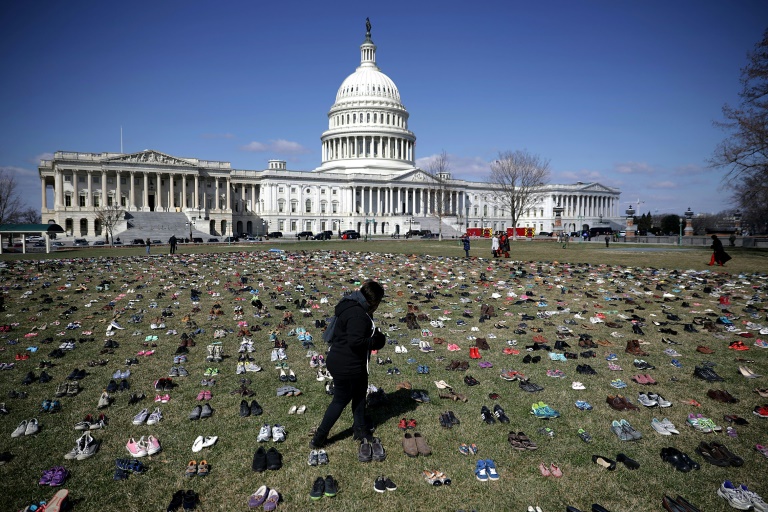
But nearly 10 years after a man slaughtered 20 children and six others in an attack on the Sandy Hook elementary school in Newtown, Connecticut, and four years after 17 were killed at a Florida high school, restrictions on gun purchases and ownership have not significantly changed.

“I had hoped, when I became president, I would not have to do this, again,” a distraught President Joe Biden said as he led national mourning, vowing to overcome the US gun lobby and find a way to tighten gun ownership laws.

“Another massacre… an elementary school. Beautiful, innocent, second, third, fourth graders,” he said. “I am sick and tired of it. We have to act. And don’t tell me we can’t have an impact on this carnage.”

But guns of all kinds, especially high-powered assault rifles and semi-automatic pistols are cheaper and more widely available than ever across the United States.

And the all-too-familiar arguments over guns, public safety and rights re-opened immediately on the news of Tuesday’s mass shooting.

– Gun massacres ‘politicized’? –

The debate is set to intensify going into the weekend when Houston, Texas hosts the annual convention of the country’s leading pro-gun lobby, the National Rifle Association.

Scheduled to speak at the convention is former president Donald Trump, Texas Governor Greg Abbott, Texas Senator Ted Cruz and other prominent Republicans.

Senator Chris Murphy, who represents Connecticut, made an emotional call on the Senate floor on Tuesday for lawmakers to take action.

“Nowhere else does that happen except here in the United States of America and it is a choice. It is our choice to let it continue,” he said.

But Cruz quickly pushed back, saying people will use the shooting to attack the right of people under the US Constitution’s 2nd Amendment to own guns.

“When there’s a crime of this kind, it almost immediately gets politicized,” Cruz said.

Attacking constitutional gun rights “is not effective in stopping these sort of crimes,” he added.

– More guns, more shootings –

Yet data shows the grim national cost of gun crime.

Last week, the Centers for Disease Control and Prevention said the number of gun deaths in the United States underwent a “historic” increase in 2020.

And the US racked up 19,350 firearm homicides in 2020, up nearly 35 percent over 2019, and 24,245 gun suicides, up 1.5 percent.

At 6.1 deaths per 100,000 inhabitants in 2020, the firearm homicide rate was the highest in a quarter century. 

Mass shootings have also risen, according to Everytown.

“Since 2009, there have been 274 mass shootings in the United States, resulting in 1,536 people shot and killed and 983 people shot and wounded,” the group says.

The country is swamped with guns. US firearms makers produced more than 139 million guns for the commercial market over the two decades from 2000, and the country imported another 71 million.

That includes high-powered assault rifles, which can be found for $500, and 9 millimeter pistols that combine ease of use, high accuracy and semi-automatic triggers with prices as low as $200.

– Gun laws eased in Texas –

But at every incident, proposals by state and federal lawmakers to tighten laws are rebuffed by conservative colleagues, who count on voter support from a sizeable portion of the public opposed to gun control.

Last year, a Pew poll said just 53 percent of Americans want stricter gun laws, and only 49 percent think tougher laws would decrease mass shootings.

Politicians like Abbott have instead moved to ease controls. Last year, the Texas governor signed a law allowing anyone in the state over 18 to openly carry a handgun without a license or training.

Shannon Watts, the founder of Moms Demand, an activist arm of Everytown, pointed out that Texas is one of the country’s largest gun markets and has a high firearms death rate.

“If more guns and fewer laws made Texas safer, it would be the safest state with declining rates of gun violence,” Watts wrote on Twitter.

“But it has high rates of gun suicide and homicide, and is home to four of the 10 deadliest mass shootings.”

Georgia rebukes Trump over US voter fraud 'Big Lie'

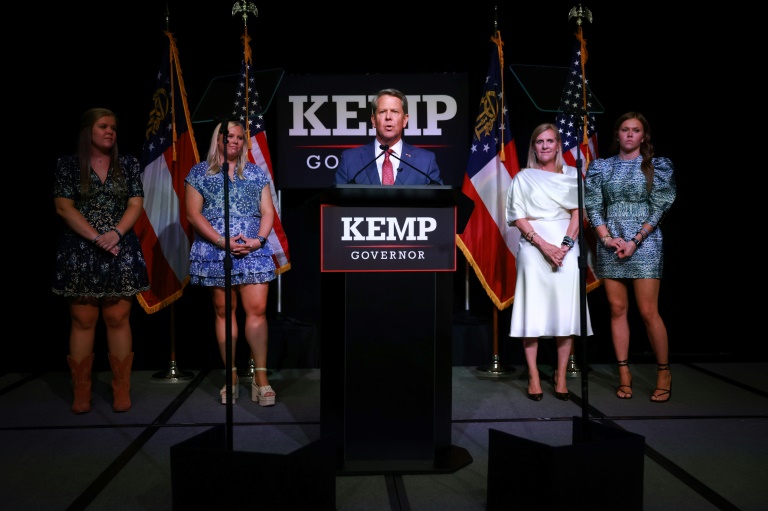
Republican voters delivered a stark repudiation Tuesday of Donald Trump’s “Big Lie” that the 2020 US election was stolen, backing Georgia Governor Brian Kemp for re-election by a huge margin over a candidate recruited by the former president.

Trump had banked much of his own political capital hand-picking David Perdue to oust Kemp in the nominating contest to compete for the governor’s mansion in November’s midterm elections.

Perdue made Trump’s bogus claims about 2020 a centerpiece of his campaign, in a direct appeal to his endorser’s supporters who continue wrongly to question the validity of the outcome.

But the former senator was forced to concede, in an embarrassing blow for Trump, as the early count showed him trailing by almost 50 points less than 90 minutes after polls closed.

“Four years of the Kemp administration will mean that you keep all of your hard-earned money,” Kemp said in his victory address.

“Your communities will be safe. Your kids will be in school without fear of partisan agendas in the classroom. Parents will have a voice and we’ll keep working to bring good paying jobs to every corner of our state.”

Kemp, frequently the target of Trump’s wrath for refusing to help overturn the election, was always expected to win, but the margin of defeat represents a stinging rebuke of Trump from a state he lost by the narrowest of margins in 2020.

Five states were holding nominating contests for congressional elections that will decide which party controls the US Senate and House of Representatives for the remainder of President Joe Biden’s first term.

But all eyes are on Georgia, where wounds from the 2020 presidential election are still festering two years after Biden won the state by under 12,000 votes.

Up and down the ballot, the Republican side of the Georgia primary pitted candidates peddling the former president’s election fraud claims against hopefuls who pushed back in defense of the Constitution.

– ‘Inelegant delivery’ – 

The race to be Georgia’s secretary of state is seen as equally consequential as the contest for governor, as these are the officials who oversee elections in the United States.

Democrats fear that, across the country, Trump will be able to install loyalists who can weaponize specious fraud accusations from 2020 to make it harder for his opponents to vote in 2024.

As the man responsible for certifying Georgia’s 2020 election results, Brad Raffensperger was in lockstep with Kemp in pushing back against Trump, making him another key target for the former president’s vengeance.

He defeated Jody Hice, one of more than a dozen Trump-backed candidates across America bidding to become secretary of state and professing to believe the 2020 election was stolen.

With 98 of precincts reporting, Raffensperger had 52 percent of the vote, clearing the 50 percent threshold that allowed him to avoid going into a head-to-head run-off and enabling him to declare victory outright.

In a grueling night for Trump, another of the election deniers he endorsed, John Gordon, lost his challenge to Georgia Attorney General Chris Carr.

Biden was the first Democratic presidential candidate since 1992 to win Georgia, while Raphael Warnock and Jon Ossoff triumphed in runoff elections in January 2021 that wrested control of the US Senate from Republicans.

Warnock cruised through his primary and will face Trump-backed football star Herschel Walker, who had an easy night too, sailing to the Republican nomination for Senate.

Georgia’s Democrats are doing all they can to cement their 2021 gains, headlined by Democratic star campaigner Stacey Abrams, who is unopposed in her bid for governor.

Abrams courted controversy over the weekend with remarks that Georgia is the “worst state in the country to live,” citing its healthcare and crime statistics, rising incarceration rates and falling wages.

At a news conference Tuesday, she attempted to clean up a comment that Republicans have seized on as a sign of her lack of local pride, faulting herself for an “inelegant delivery” of her message.

In a brief concession speech, Perdue backed Kemp in his bid to see off Abrams’s challenge.

“We’re going to make sure Stacey Abrams is not governor of the state,” he said.

Nominating contests are also being held in Minnesota, Alabama, Arkansas and Texas, where a school shooting that left 19 children dead had cast a grim pall over the state’s primary.

Biden channels personal losses to console families after Texas gun atrocity

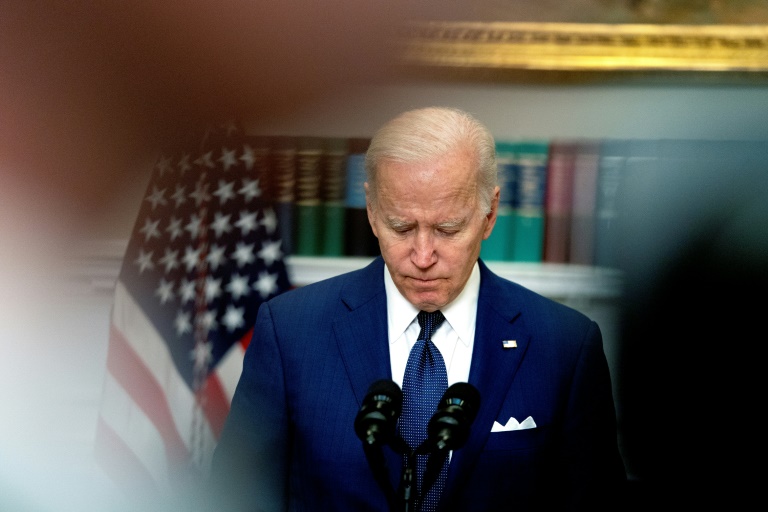
“To lose a child is like having a piece of your soul ripped away,” said US President Joe Biden — a twice-bereaved father channeling his own heartache to console a nation devastated by another mass shooting on Tuesday.

Over his long years in public office, the 79-year-old Democrat has often spoken about the tragic death of his infant daughter.

Naomi, aged one, died in a 1972 car crash, which also took the life of Biden’s first wife Neilia.

Biden has also publicly mourned the 2015 death of his eldest son Beau, taken by brain cancer at just 46 years old.

But on Tuesday, he reached for those two instances of life-changing grief to comfort a new set of families whose lives have been torn asunder.

Hours after a teenage gunman killed at least 19 young children at an elementary school in Ulvade, Texas, Biden stepped up to a presidential lectern in the Roosevelt Room of the White House.

Like his successors, Biden was being called on to deliver remarks that would explain the inexplicable to Americans and to the world.

But his thoughts, and his remarks quickly turned to a much narrower audience.

“There are parents who will never see their child again, never have them jump in bed and cuddle with them. Parents who will never be the same,” he said.

“There’s a hollowness in your chest, and you feel like you’re being sucked into it and never going to be able to get out,” he said, eyes occasionally flitting downward and his hands tightening.

“It’s suffocating. And it’s never quite the same.”

When Biden has given speeches after such shootings — most recently after a racist massacre in Buffalo, New York — or after disasters, he has often reached for words of hope, as well as condolences.

He has promised bereaved families that a day will come when their pain would ease, when the memory of a loved one will bring smiles and not just tears.

But on Tuesday, he offered no such a horizon.

Instead, this devoutly Catholic president turned to his wife of more than four decades, first lady Dr Jill Biden, and to a faith that has comforted him over the years.

“‘The Lord is near to the brokenhearted and saves the crushed in spirit,’  So many crushed spirits,” he said.

“So, tonight, I ask the nation to pray for them, to give the parents and siblings the strength in the darkness they feel right now.”

“Our prayer tonight is for those parents, lying in bed and trying to figure out, ‘Will I be able to sleep again?  What do I say to my other children? What happens tomorrow?'”

Russian troops aim to 'destroy everything' in Donbas: Zelensky

Russian troops are advancing in eastern Ukraine, pounding key cities and aiming “to destroy everything there”, President Volodymyr Zelensky has said, as Moscow signalled it was digging in for a long war against its neighbour. 

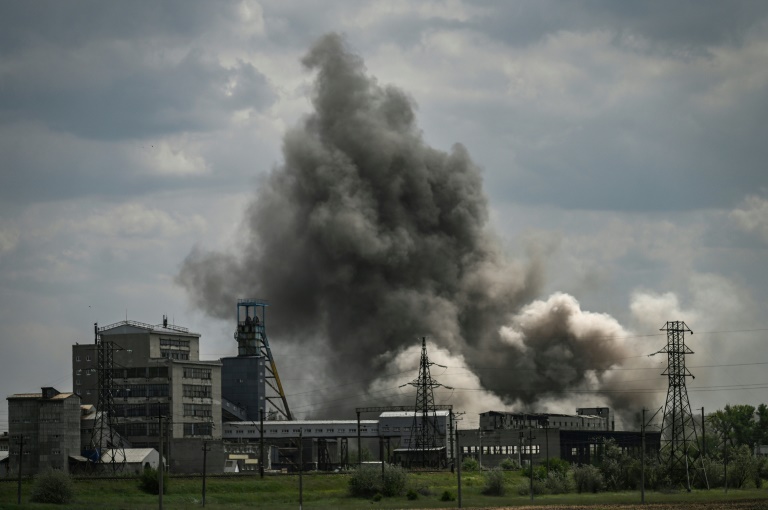
As the war entered its fourth month on Wednesday, Russian forces were relentlessly bombarding the industrial city of Severodonetsk while attempting its encirclement, a key goal of recent fighting in the Donbas region.

Zelensky mourned the thousands of Ukrainian men and women who have perished since the start of the Russian invasion while renewing calls for heavy weapons from foreign partners, saying arms for Kyiv were “the best investment in stability in the world.”

Sergiy Gaidai, governor of the eastern region of Lugansk, said Severodonetsk was being hammered by air strikes, rockets, artillery and mortars in a bid to solidify control over the province and move further into Ukraine.

“The situation is very difficult and unfortunately it is only getting worse,” Gaidai said, describing what he termed a “full-scale offensive in all directions” in a video on Telegram. 

“The Russian army has decided to completely destroy Severodonetsk. They are simply erasing Severodonetsk from the face of the earth,” he said.

Thousands of troops were sent to capture Lugansk region, Gaidai said, adding that the bombardment of Severodonetsk was so intense it was too late for its 15,000 civilians to leave.

In Moscow, Russian Defence Minister Sergei Shoigu made it clear Russia was settling in for a long war.

“We will continue the special military operation until all the objectives have been achieved,” he said, using Moscow’s name for the war.

In his daily address to the nation late Tuesday, Zelensky called the situation in Donbas “extremely difficult”.

“All the strength of the Russian army which they still have was thrown there for the offensive,” Zelensky said. “The occupiers want to destroy everything there.”

Supplying Ukraine with rocket-propelled grenades, tanks, anti-ship missiles and other weapons is “the best investment” in preventing future Russian aggression, Zelensky said.

“The longer this war lasts, the greater will be the price of protecting freedom, not only in Ukraine, but also in the whole free world.”

– ‘Three months of mass heroism’ –

Western funds and weapons have helped Ukraine hold off its neighbour’s advances in many areas, including the capital Kyiv.

Russia is now focused on expanding its gains in eastern Donbas, home to pro-Russian separatists, as well as the southern coast.

In the village of Yakovlivka, 55-year-old Ukrainian soldier Andriy hid in a ditch as shells fired by encroaching Russians whistled past.

“Our guys have stopped firing back,” he whispered after glancing up and down the road.

“We do not want to provoke them, because then the Russians will start shooting at us even harder.”

Speaking to regional counterparts from the Moscow-led Collective Security Treaty Organization, Russia’s defence chief Shoigu blamed his country’s slow advance on a “deliberate” attempt to avoid civilian casualties. 

“We are not rushing to meet deadlines,” the secretary of Russia’s Security Council, Nikolai Patrushev, added in an interview.

Zelensky dismissed Moscow’s claims, saying Russia has suffered heavy losses in the war, including nearly 30,000 soldiers.

“These have been three months of war crimes by the Russian occupiers. Three months of shelling, destruction, siege. And three months of mass heroism by the people who are defending their own land, their country.”

But Kyiv says it needs more help.

The head of Ukrainian military intelligence, Kyrylo Budanov, said delays in getting arms to the frontline had left Kyiv “catastrophically short of heavy weapons”.

However, he expected a “turning point” by August, he told news outlet Ukrainska Pravda.

The United States, meanwhile, announced that an exemption allowing Moscow to pay foreign debts with dollars in Russia would end at 0401 GMT Wednesday, two days before the country’s next debt service payment was due.

– ‘It is just war’ –

Russia’s Defence Ministry said the waters of the port in Mariupol — a strategic southern city that fell after a devastating siege — had been demined and that operations were under way to “restore the port infrastructure”.

But mayor Vadym Boychenko, speaking to Davos via video-link, warned that 100,000 people were without water, food and electricity, and warned disease risked further fatalities.

About 400 kilometres (240 miles) west of Mariupol, the capital of Ukraine’s Kherson region — which has the same name — appeared to be largely spared the ravages of a war that has left much of the country ruins. 

The region has been fully controlled by Russian forces since early in the war, and Moscow-backed officials continued to push for formal annexation — even as residents expressed concerns about the future.

“People are very apprehensive,” trolleybus driver Alexander Loginov, 47, told AFP from the cabin of his vehicle, during a press trip organised by the Russian defence ministry. 

But day-to-day life remains marked by uncertainty, as Loginov told AFP about the “instability” — especially over payment of salaries as “Ukrainian banks are closing”.

“To be honest, it is just war,” Loginov added, using a term Russia has outlawed in favour of “special military operation”.

“Many people don’t yet understand what has happened.”

burs-ar/wd/md/bgs/cwl/dhc

Oil, gas firms use Ukraine war to resist climate efforts: report

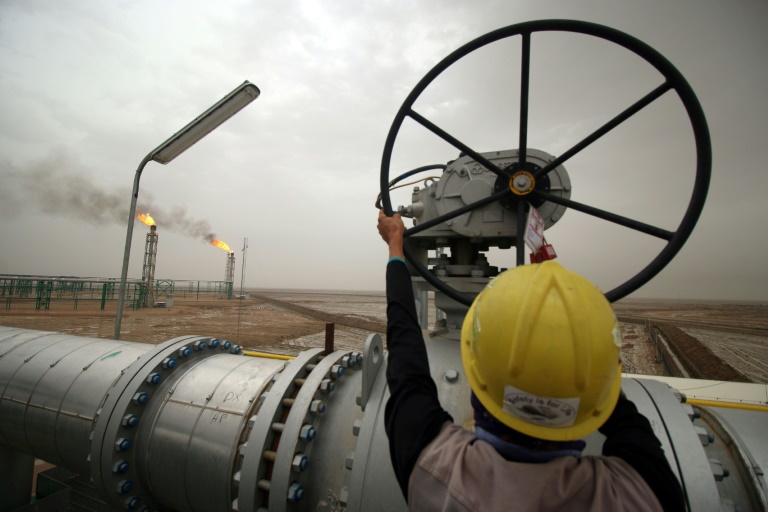
US oil and gas firms took advantage of energy worries over the Ukraine war to push their fossil fuel products and resist climate change regulatory measures, an analysis showed on Wednesday.

The London-based think tank InfluenceMap analysed advertisements and declarations by the companies in the weeks before and after Russia’s invasion of Ukraine on February 24.

It said the companies spread the misleading message that US climate change policies were to blame for rising energy prices and that more US-produced oil and gas was the solution.

As Western countries that import Russian hydrocarbons looked for alternatives in order to cut ties with Russia, InfluenceMap detected “an active effort from the US oil and gas industry to capitalise on the war in Ukraine”.

They pushed “long-standing policy asks relating to the continued expansion of oil and gas,” despite the widely-documented role such operations play in driving deadly global climate change, InfluenceMap said.

The group identified one of the key players in the messaging effort as the American Petroleum Institute, a lobbying organisation that has numerous major fossil fuel companies among its members.

InfluenceMap said it detected a surge in the number of ads about US-based energy and energy independence placed via one of the API’s Facebook pages in the weeks before and after the Russian invasion.

One series of ads received nearly 20 million views on the social platform.

– Surge in prices –

“The sector has quickly mobilised around the war in Ukraine and high gas prices to promote the need for more ‘American-made energy’, often relying on potentially misleading or questionable claims,” InfluenceMap Program Manager Faye Holder said in the report.

It also analysed public statements by oil and gas executives, finding that several of them publicly blamed climate change policies or promoted US-produced energy as part of the solution to the energy crisis.

The report documented cases where it said the sector had succeeded in securing some of its demands since the invasion, such as a commitment by authorities to speed up approvals for new gas projects.

Many posts by users on social media have blamed a surge in gasoline and crude oil prices on US President Joe Biden’s decisions to limit drilling and to halt the Keystone XL pipeline project as part of his low-carbon energy transition plan.

Biden’s March 8, 2022 announcement of a ban on Russian oil imports did lead to a jump in prices.

But analysts told AFP in March that swings in energy prices in 2022 were due to a variety of factors, including a rebound in economic activity following the Covid-19 pandemic.

AFP Fact Check published an article on March 10 debunking false claims about the causes of rising fuel prices. It can be read here: http://u.afp.com/wLUU

Oil, gas firms use Ukraine war to resist climate efforts: report

US oil and gas firms took advantage of energy worries over the Ukraine war to push their fossil fuel products and resist climate change regulatory measures, an analysis showed on Wednesday.

The London-based think tank InfluenceMap analysed advertisements and declarations by the companies in the weeks before and after Russia’s invasion of Ukraine on February 24.

It said the companies spread the misleading message that US climate change policies were to blame for rising energy prices and that more US-produced oil and gas was the solution.

As Western countries that import Russian hydrocarbons looked for alternatives in order to cut ties with Russia, InfluenceMap detected “an active effort from the US oil and gas industry to capitalise on the war in Ukraine”.

They pushed “long-standing policy asks relating to the continued expansion of oil and gas,” despite the widely-documented role such operations play in driving deadly global climate change, InfluenceMap said.

The group identified one of the key players in the messaging effort as the American Petroleum Institute, a lobbying organisation that has numerous major fossil fuel companies among its members.

InfluenceMap said it detected a surge in the number of ads about US-based energy and energy independence placed via one of the API’s Facebook pages in the weeks before and after the Russian invasion.

One series of ads received nearly 20 million views on the social platform.

– Surge in prices –

“The sector has quickly mobilised around the war in Ukraine and high gas prices to promote the need for more ‘American-made energy’, often relying on potentially misleading or questionable claims,” InfluenceMap Program Manager Faye Holder said in the report.

It also analysed public statements by oil and gas executives, finding that several of them publicly blamed climate change policies or promoted US-produced energy as part of the solution to the energy crisis.

The report documented cases where it said the sector had succeeded in securing some of its demands since the invasion, such as a commitment by authorities to speed up approvals for new gas projects.

Many posts by users on social media have blamed a surge in gasoline and crude oil prices on US President Joe Biden’s decisions to limit drilling and to halt the Keystone XL pipeline project as part of his low-carbon energy transition plan.

Biden’s March 8, 2022 announcement of a ban on Russian oil imports did lead to a jump in prices.

But analysts told AFP in March that swings in energy prices in 2022 were due to a variety of factors, including a rebound in economic activity following the Covid-19 pandemic.

AFP Fact Check published an article on March 10 debunking false claims about the causes of rising fuel prices. It can be read here: http://u.afp.com/wLUU

Close Bitnami banner
Bitnami