US Business

China offers bonds, tax breaks as new medicine for ailing economy

Tax breaks and a bond drive for Chinese aviation and railway firms are among a blizzard of fresh measures agreed by China’s economic planners to gee up an economy stunted by a coronavirus surge.

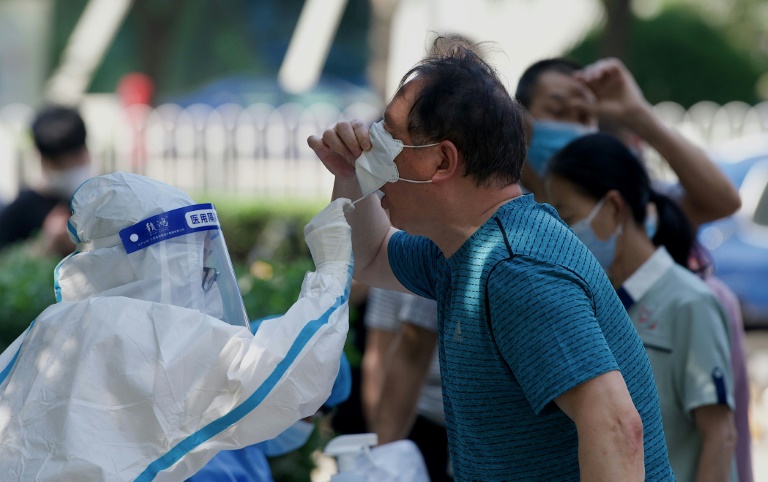
China is the last major economy bolted to a zero-Covid strategy of mass testing and tough lockdowns to stamp out infections.

Movement curbs have hit dozens of cities in recent months — from the manufacturing hubs of Shenzhen and Shanghai to the breadbasket of Jilin — seizing up supply chains and crushing retail sales and industrial output to their lowest levels in around two years.

The State Council on Monday announced measures to “stabilise the country’s economy and bring it back onto a normal track”, according to the official Xinhua news agency. 

Beijing will expand the quota of value-added tax refunds by 140 billion yuan ($21 billion), the agency said.

This takes the overall target of tax refunds, cuts and fee reductions to 2.64 trillion yuan this year, according to a readout of the State Council meeting on Xinhua.

Authorities will also double the lending quota for banks to help smaller enterprises, while allowing some borrowers to postpone their repayments, the report added.

The government will also issue 200 billion yuan in bonds to support the aviation industry, cut the purchase tax on some cars, and support the issuance of 300 billion yuan in railway construction bonds, Xinhua said.

“We believe these measures will provide some help and alleviate the severity of the growth slowdown… (but) remain cautious about growth prospects for this year,” Nomura analysts said in a note on Tuesday.

The moves come as Chinese cities roll out more regular Covid testing, crowding out other fiscal spending, Nomura said.

Meanwhile, the zero-Covid strategy is likely to bog down private demand, analysts added.

Markets remained gloomy despite the pledges, with the Shanghai Composite Index down 1.2 percent on Tuesday, while the Shenzhen Composite Index slid two percent in afternoon trade.
Brazil's Bolsonaro fires third Petrobras chief as fuel prices soar

Brazilian President Jair Bolsonaro on Monday dismissed the president of state oil giant Petrobras, who had been in the job for only 40 days.

Fuel prices in Brazil have increased more than 33 percent in the past year, according to official figures, driving annual inflation of more than 12 percent and hurting Brazilians’ wallets.

Inflation is a central issue as the far-right Bolsonaro seeks re-election in October and trails leftist ex-president Luiz Inacio Lula da Silva in the polls.

“The Federal Government, as controlling shareholder of Petroleo Brasileiro S.A., Petrobras, advises that it decided to make a change to the Company’s presidency,” said the Ministry of Mines and Energy in a statement.

Without giving specific reasons for the dismissal, it thanked Jose Mauro Coelho for his service but said: “Brazil is currently experiencing a challenging moment, due to the effects of the extreme volatility of hydrocarbons in international markets.”

Coelho was appointed in April to finish the term of his predecessor, Joaquim Silva e Luna, and became the third Petrobras president to be dumped by Bolsonaro with fuel prices soaring.

The government proposed for Coelho to be replaced by Caio Mario Paes de Andrade, the current secretary for de-bureaucratization at the Economy Ministry.

He must be confirmed by the company’s board of directors.

– Inflation worries –

Earlier this month, Bolsonaro also replaced his longtime energy minister, Bento Albuquerque, days after Petrobras reported record quarterly profits.

Bolsonaro said those profits amounted to “rape,” and called on Albuquerque and Coelho to stop Petrobras from raising prices.

However, Albuquerque and the energy ministry had no direct role in price decisions by Petrobras, whose pricing policy is based on the international oil market.

Disregarding the president’s fervent demands, Petrobras went on to hike diesel prices by an additional 8.9 percent in the following days.

According to a statement by the Ministry of Mines and Energy, the proposed new Petrobras president Andrade holds degrees from Harvard and Duke universities in the United States.

“The nominee has all the qualifications to lead the company to overcome the challenges imposed by the current situation,” the government statement said.

But according to economist Andre Perfeito of the consulting firm Necton, Brazilians should likely expect more of the same given Andrade’s background.

“It does not seem reasonable to assume that Petrobras’ pricing policy will change, quite the contrary,” Perfeito said in a statement.

“Andrade is a professional with liberal values and close to (Economy) Minister Paulo Guedes,” who launched a study of privatizing Petrobras, added Perfeito.

To use rather than collect, the second coming of NFTs

NFTs have been called everything from fads to outright scams, but early adopters see a future for them as uniquely useful tools for business, health and the arts that goes beyond mere digital collecting.

The non-fungible token (NFT) craze, just over a year old, has given the world works that have sold for millions and includes collections from the “Bored Ape Yacht Club” to an image of a naked Donald Trump following his 2020 election defeat.

This booming world of digital assets has opened up a new market into which tens of billions of dollars have been poured, while also provoking discussions about how they could be useful in the real world. 

“NFTs are very rudimentary right now,” said Sandy Khaund, founder of start-up Credenza, which helps companies adopt new technologies based on blockchain, which underlies cryptocurrencies and NFTs. 

Beyond the art world, “they don’t have a lot of functionality. They don’t have a lot of utility,” Khaund added.

“Most of them are just monkeys or apes or whatever that do nothing,” agreed Juan Otero, CEO of Travala, an online travel site, in reference to the famous “Bored Apes”. 

Yet there is a class of the digital assets bridging the real and virtual worlds.

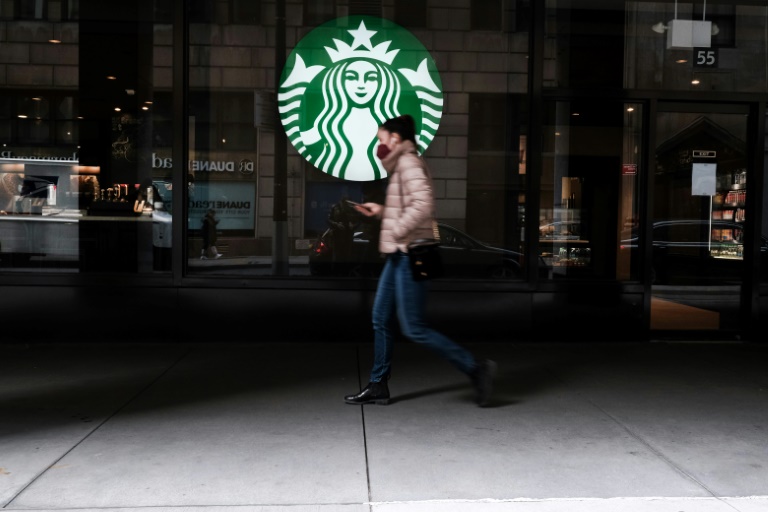
Starbucks, which will soon launch its own NFTs, sees them as a “programmable, brandable digital asset, that also doubles as an access pass.” 

Owning one of the coffee giant’s NFTs, will open access to “unique experiences,” as well as to a “community,” a new vision of a loyalty program, based on the blockchain. 

This technology, on which cryptocurrencies and NFTs are based, allows the same token to be used for different applications. 

On the institutional side, the tiny republic of San Marino, nestled within Italy, launched a coronavirus vaccine passport in July that incorporates NFT technology. 

While the European digital Covid certificate was designed for the European Union, this passport was intended to be able to be verified anywhere, without requiring a dedicated mobile application. 

– ‘Guaranteed insanity’ –

Credenza, for its part, is in discussions with sports teams and leagues to set a multi-purpose vision for NFTs. 

NFTs and blockchain are “accessible by multiple worlds whether you are physically at the arena ready to go see a New York Knicks game, or you’re ready to go to the metaverse and you want to see a concert there,” said Khaund.

Jenn McMillen of marketing firm Incendio cited rock band Kings of Leon, which have integrated the technology into their work.

As part of the NFT release of their album “When You See Yourself,” the group issued eight “golden tickets,” each of which guaranteed four front-row seats on all of the band’s future tours.

“If you were a brand, think of the most desirable experiences, the most insider-y access, or something that was guaranteed to go viral and just start working backwards from there,” McMillen said.

“(It’s) guaranteed insanity because of the scarcity,” she added.

Among the most successful examples is the travel booking platform Travala, which claims more than 300,000 monthly active users.

The site, which was already accepting cryptocurrency payments, launched the Travel Tiger loyalty program in January.

On the surface, each of the NFTs distributed to existing customers of the platform is a digital drawing of a tiger, reminiscent of the “Bored Apes” designs.

But associated with it is a series of privileges, from entry to exclusive events, in the real world and the metaverse, discounts or loyalty points. 

“It’s about retaining these users, making sure that these users continue to use the platform,” said Juan Otero, CEO of Travala. 

“For these to really push to mainstream and more traditional corporate players and so on, we’ll probably have to wait another two to three years,” he added.

Regardless, NFTs, in conjunction with growing interest in the metaverse and a decentralized vision for the internet’s future, dubbed web3, are part of building wave of growth. 

“The next wave, when it comes, I think is going to be unprecedented,” Otero said. 

Asian markets fall on China growth concerns

Asian stocks retreated Tuesday on concerns over the impact of China’s Covid restrictions on the world’s second-largest economy as investment banks slashed their forecasts.

A strong rally on Wall Street, where the Dow closed 2.0 percent higher, did not carry over to Asia, and Beijing’s announcement of a fresh raft of measures to stimulate the economy did little to calm nerves.

The package announced on Monday includes more than 140 billion yuan ($21 billion) in additional tax rebates, bringing the total amount of tax relief this year to 2.64 trillion yuan, Xinhua news agency reported following a meeting of the State Council chaired by Premier Li Keqiang.

China’s economy has taken a hit from Beijing’s zero-Covid approach to the pandemic, which has resulted in lengthy lockdowns of major cities and mass testing of millions of people.

Prolonged virus lockdowns have constricted supply chains, dampened demand and stalled manufacturing.

Investment banks UBS Group and JPMorgan Chase cut their China economic growth forecasts due to the impact of the coronavirus strategy.

UBS on Tuesday cut its 2022 GDP growth forecast to 3.0 percent from 4.2 percent while JPMorgan on Monday trimmed its forecast to 3.7 percent from 4.3 percent, Bloomberg News reported.

“The lingering restrictions and lack of clarity on an exit strategy from the current Covid policy will likely dampen corporate and consumer confidence and hinder the release of pent-up demand,” UBS economists including Tao Wang wrote in a research note, according to Bloomberg.

China has targeted full-year growth of around 5.5 percent, but data published in April showed that first-quarter growth slowed to 4.8 percent after its economy lost steam in the latter half of last year.

Concerns over the economic fallout from China’s dogged pursuit of a zero-Covid approach and its knock-on impact on supply chains and the wider global economy spooked investors, with Asian markets well into the red on Tuesday.

Tokyo was off 0.5 percent while Hong Kong was down 1.5 percent after the city’s leader Carrie Lam said there would likely be no relaxation of quarantine travel restrictions for the remainder of her term, which ends on June 30.

Shanghai and Seoul were both down 0.8 percent, while Taiwan, Bangkok, Sydney and Manila also retreated. Singapore was one of the few markets to post gains.

Later in the week, investors will be eyeing the minutes from the latest Federal Reserve rate-setting meeting for clues about further rate hikes aimed at reining in inflation. A raft of economic figures will also provide insights into the state of the US economy.

“If inflation remains sticky and the Fed needs to be more aggressive, assets are not cheap enough yet -– in that world, more recession risk will need to be priced through lower earnings,” said Stephen Innes of SPI Asset Management. 

“However, if inflation does cool down, there are many compelling opportunities, significantly if ‘storm clouds’ over the economy dissolve.”

Oil was lower, with both contracts down 0.4 percent.

“Energy traders see choppy waters ahead for oil prices as uncertainty persists with the global economic outlook and over the EU’s progress with a ban on Russian oil,”  said Edward Moya of OANDA

– Key figures at around 0330 GMT –

Tokyo – Nikkei 225: DOWN 0.5 percent at 26,863.33 (break)

Hong Kong – Hang Seng Index: DOWN 1.5 percent at 20,172.28

Shanghai – Composite: DOWN 1.1 percent at 3,112.37

Dollar/yen: DOWN at 127.73 yen from 127.90 yen at 2030 GMT Monday

Euro/dollar: UP at $1.0670 from $1.0692

Pound/dollar: DOWN at $1.2564 from $1.2587

Euro/pound: UP at 84.93 pence from 84.92 pence

Brent North Sea crude: DOWN 0.4 percent at $112.94 per barrel

West Texas Intermediate: DOWN 0.4 at $109.81 per barrel

New York – Dow: UP 2.0 percent at 31,880.24 (close)

London – FTSE 100: UP 1.7 percent at 7,513.44 (close) 

Slight rise in US births in 2021 after pandemic plummet

The number of births in the United States rose slightly in 2021, the first increase in seven years, according to preliminary data published by authorities Tuesday.

There were 3,659,289 births recorded in 2021, up one percent from 2020, a report by the National Center for Health Statistics said.

With the exception of 2014, the number of US births has been declining every year since 2008 — and fell four percent in 2020 compared to 2019.

The drop in 2020 was accentuated by the Covid-19 pandemic, according to the US Census bureau, and it’s possible people who postponed having babies had them in 2021.

The general fertility rate in 2021 was 1.66 children per woman, again up one percent from the previous year, which had set an all-time low.

Despite this slight increase, the fertility rate remained well below the rate necessary for a generation to be replaced (2.1 births per woman), which the United States has been generally below since 1971 and consistently below since 2007.

The birth rate for teenagers ages 15 to 19 declined by six percent in 2021 to 14.4 births per 1,000 females.

The rate among this age group has declined by 65 percent since 2007, the most recent peak, the report said.

The cesarean delivery rate shot up 32.1 percent in 2021. 

Rates of C-sections have been rising as more patients request them and more doctors carry them out for reasons of convenience. 

The preterm birth rate rose four percent to 10.5 percent — the highest level since 2007.

At Mexico-US border, migrants pray children will be born in US

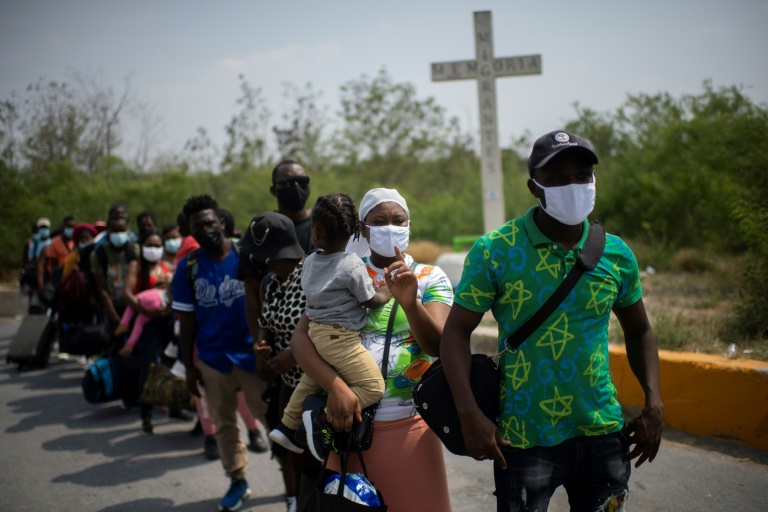
Haitian asylum seekers Jocelyn and Berline Jean-Philippe breathed a sigh of relief as they entered the United States legally from Mexico — in time, they hoped, for their unborn child to become a US citizen.

It is a dream shared by other parents-to-be who make the often-dangerous journey fleeing poverty and violence in their countries in search of a better life for their children.

“If my son’s born there (the United States), it’s better for me and for him,” Jocelyn Jean-Philippe said before crossing from Reynosa in northern Mexico to McAllen, Texas.

It was the culmination of a journey that began in 2015 when the couple left Haiti and included a stay in Chile where their first child was born.

“He’s Chilean. He can live there without any problem. Not us. So if my son is born there (in the United States) he won’t need any visa,” Jocelyn Jean-Philippe said, his two-year-old asleep in his arms.

“I want a stable life,” said his wife Berline, 25, who is four months pregnant with her second child.

“I want a better life for him. I suffered a lot,” she said.

Under the US constitution, a child born in the United States is automatically entitled to citizenship.

But after so many ordeals, the Jean-Philippe family was not celebrating yet.

“Only God knows” if their son will be born a US citizen, the father-to-be said.

The couple, who hope to join relatives in the southeastern state of Georgia, are among hundreds of Haitian migrants who have arrived in the Mexican border city of Reynosa in recent weeks. 

– ‘Unjust arrest’ –

Every day, thousands of migrants cross Mexico in the hope of entering the United States.

Those traveling with young children tend to have a better chance of being accepted by US immigration authorities.

Carolina, a Honduran women in her 30s who did not want to give her real name, said she fled her home country to save her three adolescent sons from forced recruitment into the ranks of a street gang.

Her youngest was born in April in Tapachula, a city in southern Mexico near the border with Guatemala and Mexico.

Resting in a reception center on the banks of the Rio Grande river along the southern US border, she said Mexican authorities detained her for 12 days, which she called an “unjust arrest.”

“They said they couldn’t deport me because the baby is Mexican,” she added.

She expects to be granted permanent residency in Mexico, but her aim is to join the baby’s father, who lives in Houston.

One of her sons said he was ready to swim across the Rio Grande if needed.

In the end it was not necessary: Carolina and her four children were able to cross the border legally.

Many are less fortunate.

On Friday, a US judge ruled that a rule known as Title 42 imposed during the Covid-19 pandemic must remain in place.

Meant to stem the spread of the coronavirus, it can effectively prevent anyone without a visa from entering the United States, even to claim asylum.

– ‘We’re afraid’ –

At one migrant shelter in Reynosa, “Senda Vida” (Path of Life), there are now 200 pregnant women, said Pastor Hector Silva, whose refuge is overwhelmed.

Pascale, a mother of two from Haiti, spent the night in hospital after suffering a miscarriage.

“They said it was due to stress,” explained the 25-year-old, who said she had paid about 700 pesos ($35) in medical expenses.

Some women in Reynosa have not had any medical check-up even though they are six months pregnant, said Anayeli Flores, of the aid group Doctors Without Borders.

“With this new influx of people, we’ve seen an increase in our consultations — at least double the number of pregnant women in about three weeks,” she added.

Other migrants have left children behind at home, including one couple who fled violence in Honduras.

It was hard to say goodbye to their children aged one, eight and 10, they said, adding: “We’re afraid. But we trust in God.”

Gaffes or trial balloons? Biden loose lips rattle world stage

From promising to defend Taiwan militarily to suggesting regime change in Russia, US President Joe Biden has developed a knack for off-the-cuff pronouncements that have rattled diplomacy.

For journalists following Biden abroad, it has almost become routine — the frank-speaking US president making headlines with a loaded or brusque answer, and the White House then quickly insisting he was not setting new policy.

In the last moments of a news conference in Tokyo on Monday, Biden answered affirmatively that the United States would defend Taiwan militarily if it is attacked by China, which claims the self-governing democracy as its own.

It was not the first time Biden has made waves with a formulation on Taiwan. For more than four decades, under a policy set when he was a senator, the United States has provided the island weapons for its self-defense but stayed deliberately ambiguous on whether it would intervene.

Both a White House official and Defense Secretary Lloyd Austin swiftly said that US policy had not changed, as Beijing voiced fury and Taiwan saluted what it considered evidence of ironclad commitment.

The episode comes two months after Biden ad-libbed in a speech in Poland about Russian President Vladimir Putin, “For God’s sake, this man cannot remain in power.”

The White House promptly denied that Biden was advocating the removal of Putin, which would be a major escalation of the US campaign that Biden himself had said was limited to supporting Ukraine.

Before Putin invaded Ukraine in February, Biden, who had been warning of dire consequences if Russia went ahead with an attack, also raised eyebrows by suggesting a lighter Western reaction for a “minor incursion.”

But Biden, who throughout his life in politics has been known for wearing his emotions on his sleeve and has limited the opportunities at home for verbal blunders, sometimes digs in.

Biden has stood firm on accusing Russia of “genocide” in Ukraine and, well before the rest of his administration, accused Moscow of “war crimes.”

– ‘Two-level game’? –

Each time, Biden’s remarks prompt questions. Is the 79-year-old simply speaking from his heart? Or is he setting a new policy — or perhaps testing one out?

“It’s very hard to say whether these are gaffes or a two-level game. But if it is a two-level game, it is incredibly dangerous,” said Joshua Shifrinson, an associate professor of international relations at Boston University.

“It can exacerbate tensions; it generates uncertainty,” he added.

Biden took office with more experience in foreign affairs than any president in decades and had promised more predictability than his voluble and volatile predecessor Donald Trump.

Trump frequently stunned the world with his undiplomatic pronouncements, from insulting leaders of allied nations to threatening war over Twitter.

“With Trump there was no predictability but Biden was expected to be the very consistent kind of guy,” Shifrinson said.

“Bluntness can be a very good thing but in a situation like Taiwan it can be quite dangerous.”

Bonnie Glaser, an expert on Taiwan at the German Marshall Fund of the United States, said that Biden no doubt believed what he was saying.

“But it is a gaffe in the sense that he is misstating US policy,” she said.

“I don’t think it serves US interests to have the president misstating what our policy is,” she added.

“I think that it is more effective if our policy is clear and understandable to our friends, our allies and our enemies.”

Some hawks that usually feud with Biden gave him credit for his remarks.

Republican Senator Lindsey Graham tweeted that Biden’s statement was “the right thing to say and the right thing to do.”

But others saw risks in seemingly loose talk after months of US-backed efforts to rally support for Ukraine.

“The West’s robust response to Russian aggression in Ukraine could serve to deter China from invading Taiwan,” tweeted Stephen Wertheim, a senior fellow at the Carnegie Endowment for International Peace.

“But Biden’s statement risks undoing the potential benefit and instead helping to bring about a Taiwan conflict.”

Airbnb stops booking stays in China: source

Home rental service Airbnb is shutting down its business in China as a pandemic lockdown shows no sign of ending there, a source close to the company told AFP Monday.

Airbnb will no longer book stays or visitor “experiences” in China, focusing instead on helping people there with travel plans outside the country, the source said.

The San Francisco based company declined to comment.

Airbnb launched its business in China six years ago, and has booked stays at homes there for some 25 million guests. Bookings at residences in China have accounted for only one percent of Airbnb bookings in recent years, the company has reported.

Airbnb faced strong competition in China, and Covid-19 made its operations there more complicated and expensive.

China has persisted with its zero-Covid policy, imposing hard lockdowns and movement restrictions on several cities, even as much of the rest of the world has transitioned to living with the coronavirus.

The curbs, including stay-at-home orders in the economic hub of Shanghai and creeping restrictions across Beijing, have inflicted a heavy economic toll.

Airbnb expects outbound tourism from China that had been booming prior to the pandemic to rebound as Covid-19 restrictions ease and borders reopen.

Bookings on Airbnb hit a new high in this year’s first quarter, the firm said in a recent earnings report, signalling that travel demand stifled by the Covid-19 pandemic is being unleashed.

Despite the Omicron surge and a persistent level of infections, Airbnb bookings for lodging and travel “experiences” topped 102 million in the first three months of this year, setting a new quarterly record, the company said in an earnings release.

“Guests are booking more than ever before,” Airbnb told shareholders in a letter.

“Looking ahead, we see strong sustained pent-up demand.”

The company said that trends of people booking stays away from urban areas and staying relatively close to home continue, but that guests are returning to cities and making cross-border trips.

TikTok lets creators charge monthly subscriptions

TikTok on Monday said it will start letting some popular accounts at the video-snippet streaming star charge subscriptions for live streams.

Similar money-making tools have been added to rivals such as Instagram and Facebook as the social media platforms compete for online personalities that attract audiences.

“LIVE Subscription is an extension of our efforts to build diversified creator monetization opportunities that suit a range of creator needs,” TikTok said in a blog post.

TikTok said the subscription feature being introduced this week will only be available to creators by invitation for now but will be expanded globally in coming months. The company did not disclose pricing.

Creators will be able to switch into a chat mode exclusive to subscribers, “enhancing an even more personal connection between creator and viewer,” the company said.

To access the LIVE Subscription feature, creators will need to be at least 18 years old, while users will have to be at least the same age to subscribe, TikTok said in the post.

Subscriber perks will include digital badges and, in some cases, the ability to control camera angles during streamed sessions, according to video clips posts by TikTok creators invited to take part.

TikTok early this month announced an ad revenue-sharing program with the social media platform’s most prominent creators, moving closer to a model already used by its competitors.

The short-video format app has become wildly popular in recent years with more than a billion active users globally, but has been criticized for not providing a way for creators to effectively monetize content.

Under a TikTok Pulse program to be rolled out in the United States next month, companies can place their ads next to user content in specific categories and creators will get a cut.

“We will begin exploring our first advertising revenue share program with creators, public figures and media publishers,” the company, a subsidiary of Chinese tech firm ByteDance, said in a statement.

Other major social networks that focus on video, such as YouTube, Instagram and Snapchat, have already implemented revenue-sharing systems.

Bill Cosby sex assault case starts in California

A trial against Bill Cosby began Monday in California, with a civil suit alleging the disgraced comedian sexually assaulted a teenage girl almost five decades ago.

Judy Huth says the man once known as “America’s Dad” attacked her at the Playboy Mansion in the mid-1970s when she was around 15 years old.

Huth says she suffered “psychological damage and mental anguish” as a result of the alleged assault.

The case is the latest in a raft of legal actions against 84-year-old Cosby, who was once one of the most popular performers on US television.

Dozens of women have said they suffered sexual assault at his hands.

Huth’s case was originally filed in 2014, but had been on hold while Cosby faced aggravated indecent assault charges in Pennsylvania.

Cosby was convicted of drugging and sexually assaulting a woman 17 years ago, but freed from his prison sentence after the state’s supreme court ruled he had been denied a fair trial.

His release from prison — he had served more than two years of his three-to-10 year sentence — infuriated many advocates of the #MeToo movement.

His conviction was the first sexual assault guilty verdict against a celebrity since the advent of the worldwide reckoning against sexual violence and abuse of power.

But the court did not exonerate him, rather it overturned the conviction on a technicality.

Judges wrote that a non-prosecution agreement between a former district attorney and Cosby over evidence he gave in a different civil case meant the actor shouldn’t have been criminally charged in the first place.

In the case that local broadcasters reported had started Monday, Huth claims she met Cosby on a film set, and days later was invited to his tennis club.

There, she says, he gave her alcohol and took her to the Playboy Mansion, where he forced her to perform a sex act.

Cosby has denied her version of events.

The defence has leapt on apparent discrepancies in Huth’s claim.

The assault was initially alleged to have happened in 1974, when she was 15 years old, but more recently has said it took place a year later.

The case is being heard in Santa Monica, next to Los Angeles, and begins with jury selection.

Opening arguments are set for next week.

Close Bitnami banner
Bitnami