US Business

China rate cut boosts Asian, European stocks

Asian and European stocks rebounded Friday on China’s interest rate cut, but US equities continued to slump on fears that sky-high inflation will spark a global downturn.

“Markets have been looking for an excuse to bounce, and a China rate cut provided the reason,” IG analyst Chris Beauchamp told AFP.

China’s central bank announced it would lower its five-year loan prime rate — a key interest rate governing how lenders base their mortgage rates — to 4.45 percent from 4.6 percent.

The news comes in contrast to other major central banks — like the US Federal Reserve and the Bank of England — that are raising borrowing costs to combat rocketing consumer prices.

“It isn’t much when set against the broader (rate) tightening we are seeing globally, but equities do look a bit stretched to the downside in the short term,” Beauchamp added.

The Chinese move sparked optimism among traders that it could boost the world’s second-largest economy from its Covid-induced stupor.

“The rate cut announced by the PBOC (People’s Bank of China) is obviously good news and is clearly targeted at revitalising the ailing property market which continues to suffer due to the crackdown last year and Covid lockdowns this,” said Craig Erlam, senior market analyst at OANDA.

“This could help to revive a hugely important part of the economy,” he added, but “whether it’s enough to help China hit its 5.5 percent growth target this year is another thing.” 

Asian stocks closed with gains, as did Europe’s main markets although those faded as the day wore on. 

Wall Street opened higher, but then sank lower in morning trading. 

“Stocks remain on a shaky footing,” said market analyst Fawad Razaqzada at City Index and FOREX.com.

He said investors are worried about inflation, interest rate hikes, low economic growth, stagflation, and recession.

“Perhaps most importantly for stocks, the Fed is not there to provide cushion, like before,” he added, as the US central bank is raising interest rates to get to grips with inflation.

– Rollercoaster ride –

Markets had taken a beating Thursday on intensifying recession worries.

Wall Street has faced the brunt of selling, suffering its worst batterings in two years over the past couple of sessions.

Downcast earning reports from retailers have heightened market uncertainty at a time of rising interest rates, surging energy prices, China’s Covid lockdowns and Russia’s ongoing war on Ukraine.

“It has been a rollercoaster ride for markets this week after Thursday’s bloodbath when US equities suffered their worse session since 2020 with that negativity reverberating across global stock markets,” said Victoria Scholar, head of investment at trading firm Interactive Investor.

Major stock indices have lost huge portions of their value in recent months, with the tech-heavy Nasdaq Composite down 30 percent from the peak it set in November, while the blue-chip Dow is off 15.9 percent.

In Europe, both Paris and Frankfurt stocks are down between 14 and 15 percent, while London’s main index has shed a modest 3.9 percent.

– Key figures at around 1530 GMT –

New York – Dow: DOWN 0.7 percent at 31,026.51 points

EURO STOXX 50: UP 0.5 percent at 3,657.03

London – FTSE 100: UP 1.2 percent at 7,389.98 (close)

Frankfurt – DAX: UP 0.7 percent at 13,981.91 (close)

Paris – CAC 40: UP 0.2 percent at 6,285.24 (close)

Hong Kong – Hang Seng Index: UP 3.0 percent at 20,717.24 (close)

Shanghai – Composite: UP 1.6 percent at 3,146.57 (close)

Tokyo – Nikkei 225: UP 1.3 percent at 26,739.03 (close)

Brent North Sea crude: UP 0.4 percent at $112.52 per barrel

West Texas Intermediate: UP 0.4 percent at $112.65 per barrel

Euro/dollar: DOWN at $1.0555 from $1.0588

Pound/dollar: UP at $1.2475 from $1.2467

Euro/pound: DOWN at 84.61 pence from 84.93 pence

Dollar/yen: UP at 127.88 yen from 127.79

burs-rl/pvh

Ukraine orders end to defence of Mariupol

Ukraine on Friday ordered its last troops holed up in Mariupol’s besieged Azovstal steelworks to lay down their arms after nearly three months of desperate resistance against a ferocious Russian assault.

Russia’s flattening of the strategic port city has drawn multiple accusations of war crimes, including a deadly attack on a maternity ward, and Ukraine has begun a reckoning for captured Russian troops.

The first post-invasion trial of a Russian soldier for war crimes neared its climax in Kyiv, after 21-year-old sergeant Vadim Shishimarin admitted to killing an unarmed civilian early in the offensive. The verdict is due on Monday.

Shishimarin told the court on Friday that he was “truly sorry”. But his lawyer said in closing arguments that the young soldier was “not guilty” of premeditated murder and war crimes.

While Ukrainian forces fended off the Russian offensive around Kyiv, helped by a steady infusion of Western arms, both eastern Ukraine and Mariupol in the south have borne the brunt of a remorseless ground and artillery attack.

“Russian occupation forces are conducting intense fire along the entire line of contact and trying to hit artillery deep into the defences of Ukrainian troops,” Ukrainian defence ministry spokesman Oleksandr Motuzyanyk told reporters.

The fighting is fiercest in the eastern region of Donbas, a Russian-speaking area that has been partially controlled by pro-Kremlin separatists since 2014.

“In Donbas, the occupiers are trying to increase pressure,” President Volodymyr Zelensky said in his nightly video address late on Thursday. “There’s hell — and that’s not an exaggeration.”

In the eastern city of Severodonetsk, 12 people were also killed and another 40 wounded by Russian shelling, the regional governor said.

– Burial with honours –

Zelensky described the bombardment of Severodonetsk as “brutal and absolutely pointless”, as residents cowering in basements described an unending ordeal of terror.

The city forms part of the last pocket of Ukrainian resistance in Lugansk, which along with the neighbouring region of Donetsk comprises the Donbas war zone.

Russian Defence Minister Sergei Shoigu said his forces’ campaign in Lugansk was “nearing completion”.

Also apparently complete is the capture of the Azovstal steelworks, a totemic symbol of Ukraine’s dogged resistance since Russian President Vladimir Putin launched the invasion on February 24.

A total of 1,908 Ukrainian troops have surrendered this week at the steelworks, according to Russia’s defence ministry, after releasing a video showing bedraggled defenders being taken into captivity.

Ukraine’s Azov battalion commander Denys Prokopenko said only the dead remained.

“The higher military command has given the order to save the lives of the soldiers of our garrison and to stop defending the city,” he said in a video on Telegram.

“I now hope that soon, the families and all of Ukraine will be able to bury their fighters with honours.”

Ukraine wants to exchange the surrendering Azovstal soldiers for Russian prisoners. But in Donetsk, the pro-Kremlin authorities are in turn threatening to put some of them on trial.

The International Committee of the Red Cross urged both sides to grant it access to prisoners of war and civilian internees, “wherever they are held”. 

“Many more families need answers,” it said in a statement. 

In Washington, Pentagon spokesman John Kirby said all prisoners of war should “be treated in accordance with the Geneva Convention and the law of war”.

US President Joe Biden has cast the Ukraine war as part of a US-led struggle pitting democracy against authoritarianism.

The US Congress approved a $40-billion (38-billion-euro) aid package, including funds to enhance Ukraine’s armoured vehicle fleet and air defence system.

– Underground living –

And meeting in Germany, G7 industrialised nations pledged $19.8 billion to shore up Ukraine’s shattered public finances.

Biden offered “full, total, complete backing” to Finland and Sweden in their bid to join the NATO military alliance, when he welcomed their leaders to the White House on Thursday.

But all 30 existing NATO members need to agree on any new entrants, and Turkey has condemned the historically non-aligned Nordic neighbours’ alleged toleration of Kurdish militants.

Shoigu said the Kremlin would respond to any NATO expansion by creating more military bases in western Russia.

Russia’s own expansion in Ukraine has ebbed around the northeastern city of Kharkiv, its troops forced to retreat from a rearguard offensive by defending forces.

But Kharkiv remains in Russia artillery range, and hundreds of people are refusing to leave the relative safety of its metro system.

“We’re tired. You can see what home comforts that we have,” said Kateryna Talpa, 35, pointing to mattresses and sheets on the ground, and some food in a cardboard box.

She and her husband Yuriy are doing their best to cope in the Soviet-era station called “Heroes of Labour”, alongside their cats Marek and Sima.

“They got used to it,” Talpa said.

burs-jit/har 

Israeli firm hopes AI can curb drownings

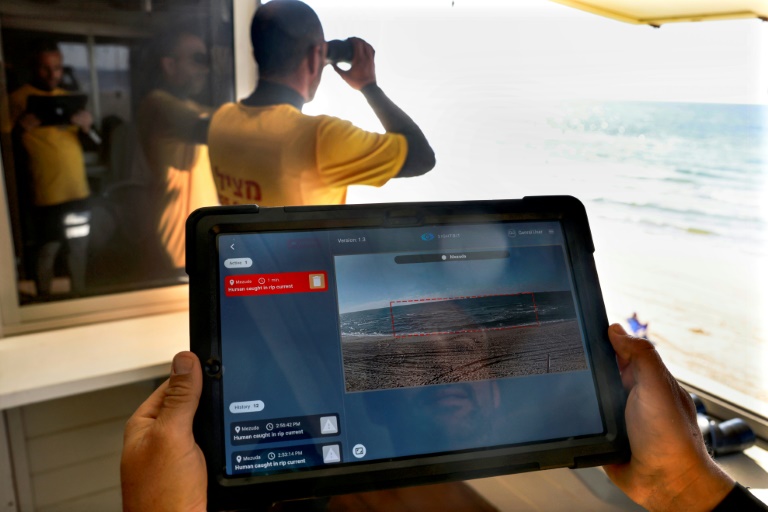
An Israeli city is testing whether an artificial intelligence programme that detects drowning threats can help save lives off its beaches.

The programme, developed by a company called SightBit, uses information collected from surveillance cameras to determine who is in the water — an adult or child, for example — if they are moving or limp, and the current’s movement at that location.

If a threat is determined, the programme sends an alert to a tablet held by the user — a lifeguard, in this case — with urgent instructions to act.

SightBit’s chief executive Netanel Eliav told AFP that he developed the technology after identifying a shortfall in how closed-circuit footage was being applied to boost safety in the water.

The programme has been in use for more than a year in Ashdod, a city on Israel’s Mediterranean coast that chose to deploy SightBit technology in an area at a distance from the nearest lifeguard.

“We chose to locate the technology in areas away from the lifeguard towers, so the additional ‘eyes’ there help the lifeguards very much,” said Arie Turjeman, director of Ashdod’s coast division.

Eliav voiced confidence that SightBit can “save lives”, in a country that sees dozens of drowning deaths a year. 

According to official figures, last year 29 people died during Israel’s March to October beach season, 22 of them in the Mediterranean, and 21 in areas with no lifeguard services.

Thirty-two people drowned during the 2020 season and 27 in 2019.

Elon Musk in Brazil to launch plan to survey and connect Amazon

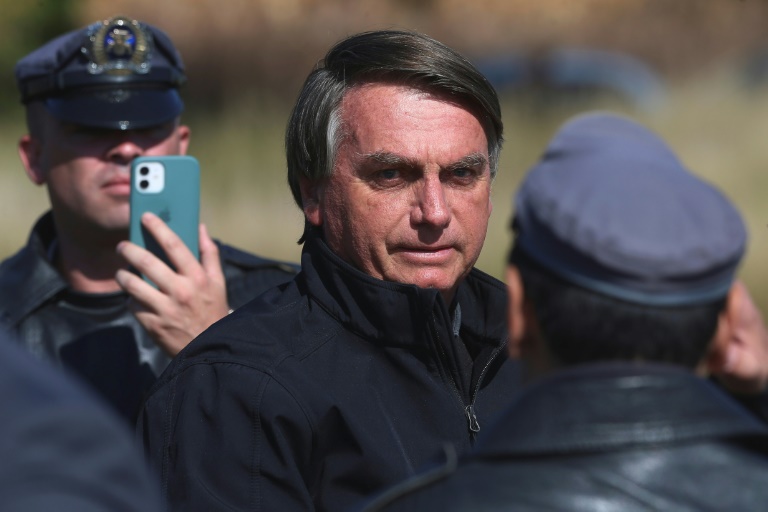
Billionaire Elon Musk arrived in Brazil Friday, announcing a project to bring internet access to schools in the Amazon and improve satellite monitoring of the rainforest.

The world’s richest man touched down in a private jet at an airfield outside Sao Paolo, according to the G1 news portal.

Mush was set to meet Brazil’s far-right President Jair Bolsonaro at a luxury hotel in Porto Feliz, some 100 kilometers (60 miles) outside Sao Paulo, according to the O Globo newspaper.

“Super excited to be in Brazil for launch of Starlink for 19,000 unconnected schools in rural areas & environmental monitoring of Amazon!” tweeted Musk, CEO of SpaceX and Tesla.

Communications Minister Fabio Faria, who met Musk in Texas last November, tweeted the businessman was visiting “to discuss Connectivity and Protection of the Amazon with the Brazilian government.” 

He added: “Since we are going to connect the Amazon, we brought one of the largest entrepreneurs in the world to help us in this mission.”

A large security detail kept journalists at a distance from the hotel where the meeting was to take place. An AFP reporter saw two helicopters land nearby.

– ‘A very important person’ –

On Thursday, Bolsonaro announced he would have a meeting “with a very important person who is recognized throughout the world.”

“He is coming to offer his help for our Amazon,” the president said in his weekly social media broadcast, without naming Musk.

The Amazon is a hot topic in Brazil, with deforestation rising sharply under the government of Bolsonaro — which is accused of promoting impunity for gold miners, farmers and timber traffickers who illegally clear the rainforest.

The Brazilian government said in November it was negotiating with SpaceX to secure satellite internet in the Amazon rainforest and boost detection of illegal deforestation.

In a bid to provide high-speed internet around the world, especially to areas underserved by fixed and mobile networks, Musk’s SpaceX company has placed thousands of Starlink satellites into orbit, with many more launches planned.

The service has more than 100,000 subscribers worldwide.

Musk attracted renewed worldwide attention when he announced last month that he planned to buy Twitter in a deal worth $44 billion dollars.

His comments on loosening restrictions in the name of free expression were welcomed by many supporters of Bolsonaro, who is accused of using fake news as a political weapon and has had several social media posts deleted.

O Globo said Faria and Defense Minister Paulo Sergio Nogueira would attend the Musk-Bolsonaro meeting, along with 13 business leaders including bosses of the country’s main telecommunications companies. 

The meeting comes hours after Musk rejected allegations on Twitter that he groped and exposed himself to a flight attendant six years ago.

Beijing, Huawei condemn Canada 5G ban as 'groundless' and 'political'

Beijing hit out Friday at Canada for banning two Chinese telecoms giants from Canadian 5G networks, calling Ottawa’s security concerns “groundless”, while Huawei said barring its services was a “political decision”.

Canada’s long-awaited measure on Thursday follows the United States and other key allies, and comes on the heels of a diplomatic row between Ottawa and Beijing over the detention of a senior Huawei executive on a US warrant, which has now been resolved.

The United States has warned of the security implications of giving Chinese tech companies access to telecommunications infrastructure that could be used for state espionage.

Along with Huawei, Chinese telecoms firm ZTE was also banned.

Both Huawei and Beijing have rejected the US security allegations.

“China is firmly opposed to this and will conduct a comprehensive and serious assessment,” foreign ministry spokesman Wang Wenbin told reporters in response to the 5G block. 

“The Canadian side has excluded these Chinese companies from the Canadian market under the pretext of groundless security risks and without any solid evidence.” 

He added that Beijing would “take all necessary measures” to protect Chinese companies.

“This move runs counter to market economy principles and free trade rules,” he said, accusing the Canadian government of “seriously damaging the legitimate rights and interests of Chinese companies.”

Huawei called the ban “an unfortunate political decision” that cannot be justified on national security grounds.

“Huawei Canada is disappointed by the Canadian government’s decision,” the company’s Canadian subsidiary said in an email to AFP. “This is an unfortunate political decision that has nothing to do with cyber security or any of the technologies in question.”

It said that Huawei hardware and software has been “routinely and closely scrutinised” by the Canadian government and its security agencies, and to date there have been “zero security incidents caused by Huawei equipment”.

Canada had been reviewing the 5G technology and network access for several years, repeatedly delaying a decision that was first expected in 2019.

It remained silent on the telecoms issue after China jailed two Canadians — diplomat Michael Kovrig and businessman Michael Spavor — in what observers believed was in retaliation for the arrest of Huawei chief financial officer Meng Wangzhou in Vancouver in December 2018 at the request of the United States.

All three were released in September 2021 after Meng reached a deal with US prosecutors on the fraud charges, ending her extradition fight.

But Canadian Industry Minister Francois-Philippe Champagne made the 5G announcement on Thursday, citing the “intention to prohibit the inclusion of Huawei and ZTE products and services in Canada’s telecommunication systems”.

Champagne said Canadian telecommunications companies “will not be permitted to include in their networks products or services that put our national security at risk”.

“Providers who already have this equipment installed will be required to cease its use and remove it,” he said.

– ‘Hostile actors’ –

Huawei already supplies some Canadian telecommunications firms with 4G equipment.

Most, if not all, had held off using Huawei in their fifth-generation (5G) wireless networks that deliver speedier online connections with greater data capacity. Others have looked to other suppliers while Ottawa hemmed and hawed.

Canadian Public Safety Minister Marco Mendicino warned Thursday of “many hostile actors who are ready to exploit vulnerabilities” in telecom networks.

The United States, Australia, Britain, New Zealand, Japan and Sweden have already blocked or restricted the use of Huawei technology in their 5G networks.

The US government considers Huawei a potential security threat due to the background of its founder and CEO Ren Zhengfei, a former Chinese army engineer who is Meng’s father.

The US State Department on Friday welcomed Canada’s decision.

Concerns about Huawei escalated as the firm rose to become the world leader in telecoms networking equipment and one of the top smartphone manufacturers. 

Beijing also passed a law in 2017 obliging Chinese companies to assist the government in matters of national security.

The decision could prove to be “a major expense for Canada,” Kendra Schaefer, tech policy researcher at consultancy Trivium China, told AFP.

“Not only have local telecom providers already invested… in Huawei equipment, but additionally they are going to go back and have to rip out everything they’ve already installed,” she added.

Biden begins Asia trip in S. Korea, under North nuclear shadow

US President Joe Biden arrived in South Korea Friday, his first Asia trip as US leader, aiming to cement ties with regional security allies despite growing fears of a North Korean nuclear test.

Biden wants the trip to boost a years-long US pivot to Asia, where rising Chinese commercial and military power is undercutting Washington’s dominance.

He received a warm welcome from South Korea’s new President Yoon Suk-yeol, but there is growing concern that North Korea’s unpredictable leadership could conduct a nuclear test while he is in the region.

There is a “real risk of some kind of provocation”, US National Security Advisor Jake Sullivan said, as South Korean intelligence warned this week that Pyongyang had completed preparations for a nuclear test.

Biden, in his first remarks since arriving in South Korea at the start of a trip meant to demonstrate US resolve to lead in Asia, said the two countries’ alliance was “a lynchpin of peace, stability and prosperity” in the world.

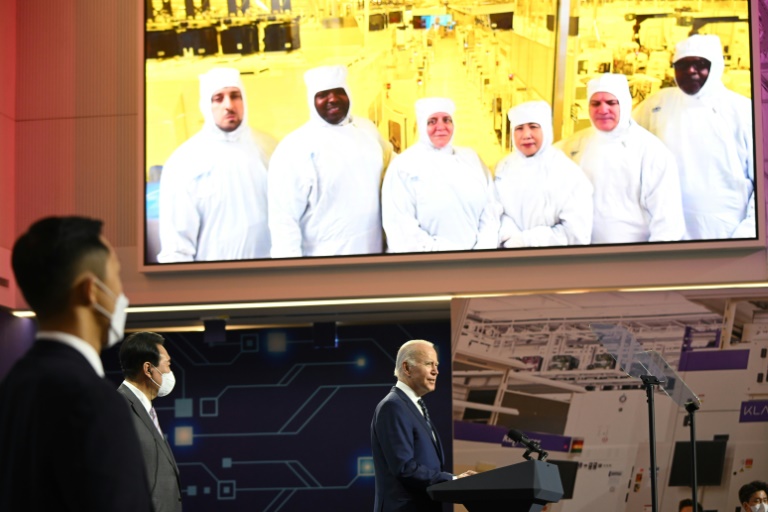
Speaking at a huge Samsung semiconductor factory in Pyeongtaek, alongside Yoon, Biden described the advanced chips manufactured there as “a wonder of innovation” and crucial to the world’s economy.

The tiny, smart wafers “enable our modern lives” and are “the key to propelling us into the next era of humanity’s technological development”, he added.

– ‘Don’t forget to vote’ –

Semiconductors — the microchips essential to most modern devices from phones to cars and high-tech weapons — are at the heart of a global supply chain slowdown that threatens to disrupt the world’s post-Covid economic recovery.

South Korea and the United States need to work to “keep our supply chains resilient, reliable and secure”, Biden said.

For the US leader, whose Democratic Party faces a severe pounding in midterm elections this year, the issue is also an acute domestic political challenge, with Americans increasingly frustrated over rising prices and stuttering economic reopening.

Ahead of the speech, Biden toured the huge Samsung plant, taking in lengthy presentations from staff clad in hazmat suits on the equipment used to produce semiconductors.

After a briefing from a US representative from a California company working with Samsung, Biden quipped: “Don’t forget to vote Peter.”

Samsung employs about 20,000 people within the United States and work is underway to build a new semiconductor plant in Texas, opening in 2024.

South Korea is a semiconductor powerhouse, supplying about 70 percent of chips globally, Yoon said in his speech.

Biden’s visit could help the two allies forge a new “economic and security alliance based on advanced technology and supply-chain cooperation”, Yoon said.

“Semiconductors became something akin to a strategic commodity now,” Vladimir Tikhonov, professor of Korean studies at the University of Oslo, told AFP. 

China is trying to reduce reliance on US-influenced Dutch and Taiwanese suppliers, and the United States is trying to rebuild its domestic industry, he said.

Biden “needs Samsung’s collaboration in this regard”, he added.

– North Korea nukes –

Security issues were not top of the agenda Friday, but the fact that Biden is visiting Seoul first on his Asia tour indicates that Washington is looking to re-focus on the Korean Peninsula, Soo Kim, a former CIA analyst, told AFP.

Both Seoul and Washington may be looking to “bridge the policy gap” and plan how the security allies could better coordinate to address challenges in the region and beyond, Kim, now with the RAND Corporation, said.

Biden heads to Japan from South Korea on Sunday. He will hold talks with the leaders of both countries, as well as joining a regional summit of the Quad — a grouping of Australia, India, Japan and the United States — while in Tokyo.

Sullivan said ahead of the trip that Biden is bound for Asia with “the wind at our back” after successful US leadership in the Western response to President Vladimir Putin’s now almost three-month-long invasion of Ukraine.

The high military, diplomatic and economic cost imposed on Russia is seen in Washington as a cautionary tale for China, given Beijing’s stated ambitions to gain control over democratic Taiwan, even if that means going to war.

Sullivan said the administration wants not so much to confront China on the trip as to use Biden’s diplomacy to show that the West and its Asian partners will not be divided and weakened.

“We hope that the US will match its words with its deeds,” Wang Wenbin, a spokesman for China’s foreign ministry, said Friday.

The United States should “work with other countries in the region to promote unity and cooperation in Asia-Pacific, instead of plotting division and confrontation”, he added.

Stock markets rebound on China rate cut

Asian and European stocks rebounded Friday on China’s interest rate cut, after sinking the previous day on fears that sky-high inflation would spark a global downturn.

“Markets have been looking for an excuse to bounce, and a China rate cut provided the reason,” IG analyst Chris Beauchamp told AFP.

“It isn’t much when set against the broader (rate) tightening we are seeing globally, but equities do look a bit stretched to the downside in the short term.”

China’s central bank announced it would lower its five-year loan prime rate — a key interest rate governing how lenders base their mortgage rates — to 4.45 percent from 4.6 percent.

That injected optimism among traders that it could boost the world’s second-largest economy from Covid-induced stupor.

The news comes in contrast to other major central banks — like the US Federal Reserve and the Bank of England — that are raising borrowing costs to combat rocketing consumer prices.

European equities were buoyed Friday also by a surprise jump in UK retail sales last month, despite the nation’s inflation striking a 40-year peak of nine percent.

“European markets are staging gains to round up a hectic week for markets,” said Victoria Scholar, head of investment at trading firm Interactive Investor.

Markets had taken a beating Thursday on intensifying recession worries.

Wall Street has faced the brunt of selling, suffering its worst batterings in two years over the past couple of sessions.

Downcast earning reports from retailers have heightened market uncertainty at a time of rising interest rates, surging energy prices, China’s Covid lockdowns and Russia’s ongoing war on Ukraine.

– Rollercoaster ride –

“It has been a rollercoaster ride for markets this week after Thursday’s bloodbath when US equities suffered their worse session since 2020 with that negativity reverberating across global stock markets,” added Scholar.

World oil prices edged lower as traders paused for breath at the end of a volatile trading week.

In Paris, EDF shares rose two percent to 8.46 euros despite announcing even more delays and vast cost over-runs for its planned giant nuclear plant in southwest England.

The French energy giant revealed Thursday that the cost will balloon to as much as £26 billion — and not begin generating electricity until June 2027.

Hinkley Point C, which aims to provide seven percent of Britain’s total power needs, had previously been expected to cost up to £23 billion with a start-up date of one year earlier.

EDF said in its statement that there would be no additional cost to British consumers.

– Key figures at around 1100 GMT –

London – FTSE 100: UP 1.9 percent at 7,437.83 points

Frankfurt – DAX: UP 1.8 percent at 14,133.45

Paris – CAC 40: UP 1.4 percent at 6,358.04

EURO STOXX 50: UP 1.6 percent at 3,700.34

Hong Kong – Hang Seng Index: UP 3.0 percent at 20,717.24 (close)

Shanghai – Composite: UP 1.6 percent at 3,146.57 (close)

Tokyo – Nikkei 225: UP 1.3 percent at 26,739.03 (close)

New York – Dow: DOWN 0.8 percent at 31,253.13 (close)

Brent North Sea crude: DOWN 0.2 percent at $111.77 per barrel

West Texas Intermediate: DOWN 0.3 percent at $111.84 per barrel

Euro/dollar: DOWN at $1.0579 from $1.0588

Pound/dollar: UP at $1.2471 from $1.2467

Euro/pound: DOWN at 84.84 pence from 84.93 pence

Dollar/yen: UP at 127.90 yen from 127.79

burs-rfj/bcp/lth

UK finance minister makes rich list for first time

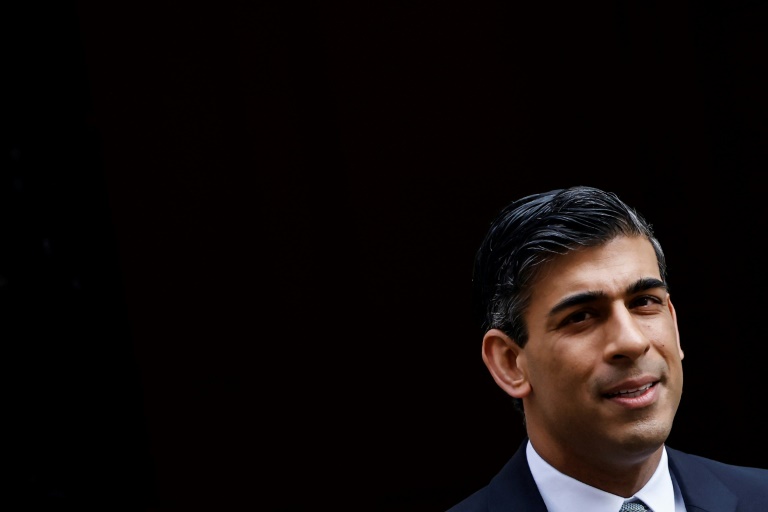
Finance minister Rishi Sunak became Friday the first high-profile British politician to make the Sunday Times Rich List, weeks after his family’s tax arrangements attracted controversy and amid a cost-of-living crisis.

Sunak and his Indian wife Akshata Murty, whose father co-founded the IT behemoth Infosys, made the annual list for the first time with their joint £730 million ($911 million, 861 million euros) fortune.

The bulk of their wealth is believed to come from Murty’s £690-million stake in Infosys, but Sunak also had a highly lucrative career in finance before entering politics in 2015.

The listing, which started in 1989, this year estimates the minimum wealth of Britain’s 250 richest people or families, and features far fewer Russian billionaires due to Western sanctions following the invasion of Ukraine.

Sunak’s inclusion comes a month after it was revealed that his wife was sheltered from paying tax on foreign earnings to his Treasury department after claiming so-called non-domiciled status.

The “non-dom” scheme has become controversial in recent years, particularly now that Britons face tax rises and the cost-of-living crisis, with some opposition parties calling for its abolition.

It has been estimated Murty’s non-dom status could have saved her £20 million in taxes on dividends from her shares in Infosys.

Soon after the revelations emerged, she announced she would start paying UK tax on “all worldwide income”, noting that she did not want her tax affairs to be a “distraction” for her husband.

Sunak has also faced persistent criticism for doing too little to help hard-pressed Britons as his once-rosy prospects of succeeding Prime Minister Boris Johnson have ebbed rapidly.

Critics have accused him of hypocrisy for raising taxes on people as various prices surge, while his own family has seen millions of pounds in Infosys dividends shielded from his own Exchequer.

Just this week, he warned in a keynote speech to business leaders that Britons faced a “tough” few months ahead, with inflation confirmed as the highest rate in decades at nine percent.

The Sunday Times’ list calculates identifiable wealth — land, property, racehorses, art or significant shares in publicly quoted companies — but is unable to measure bank account balances and small shareholdings in private equity portfolios.

Sri and Gopi Hinduja, who run the Mumbai-based conglomerate Hinduja Group, topped the latest ranking after their wealth grew by more than £11 billion to £28.47 billion.

Entrepreneur James Dyson and his family climbed to second with a wealth estimate of £23 billion.

However, one billionaire who headed in the opposite direction was Roman Abramovich.

The Russian former owner of Chelsea Football Club dropped from eighth to 28th after his finances plummeted from £12.2 billion last year to £6 billion this year in the wake of Western sanctions.

China condemns Canada's Huawei 5G ban over 'groundless' security risks

Beijing hit out at Canada for banning telecoms giants Huawei and ZTE from Canadian 5G networks on Friday, calling Ottawa’s concerns for security risks “groundless” and warning of retribution.  

Canada’s long-awaited measure on Thursday follows the United States and other key allies, and comes on the heels of a diplomatic row between Ottawa and Beijing over the detention of a senior Huawei executive on a US warrant, which has now been resolved.

The United States has warned of the security implications of giving Chinese tech companies access to telecommunications infrastructure that could be used for state espionage.

Both Huawei and Beijing have rejected the allegations.

“China is firmly opposed to this and will conduct a comprehensive and serious assessment,” foreign ministry spokesman Wang Wenbin told reporters in response to the 5G block. 

“The Canadian side has excluded these Chinese companies from the Canadian market under the pretext of groundless security risks and without any solid evidence.” 

He added that Beijing would “take all necessary measures” to protect Chinese companies.

“This move runs counter to market economy principles and free trade rules,” he said, accusing the Canadian government of “seriously damaging the legitimate rights and interests of Chinese companies.”

Canada had been reviewing the 5G technology and network access for several years, repeatedly delaying a decision that was first expected in 2019.

It remained silent on the telecoms issue after China jailed two Canadians — diplomat Michael Kovrig and businessman Michael Spavor — in what observers believed was in retaliation for the arrest of Huawei chief financial officer Meng Wangzhou in Vancouver in December 2018 at the request of the United States.

All three were released in September 2021 after Meng reached a deal with US prosecutors on the fraud charges, ending her extradition fight.

But Canadian Industry Minister Francois-Philippe Champagne made the 5G announcement on Thursday, citing the “intention to prohibit the inclusion of Huawei and ZTE products and services in Canada’s telecommunication systems.”

Champagne said Canadian telecommunications companies “will not be permitted to include in their networks products or services that put our national security at risk.”

“Providers who already have this equipment installed will be required to cease its use and remove it,” he said.

– ‘Hostile actors’ –

Huawei already supplies some Canadian telecommunications firms with 4G equipment.

Most, if not all, had held off using Huawei in their fifth-generation (5G) wirelesss networks that deliver speedier online connections with greater data capacity. Others have looked to other suppliers while Ottawa hemmed and hawed.

Canadian Public Safety Minister Marco Mendicino warned Thursday of “many hostile actors who are ready to exploit vulnerabilities” in telecom networks.

The United States, Australia, Britain, New Zealand, Japan and Sweden have already blocked or restricted the use of Huawei technology in their 5G networks.

The US government considers Huawei a potential security threat due to the background of its founder and CEO Ren Zhengfei, a former Chinese army engineer who is Meng’s father.

The concern escalated as Huawei rose to become the world leader in telecoms networking equipment and one of the top smartphone manufacturers. 

Beijing also passed a law in 2017 obliging Chinese companies to assist the government in matters of national security.

The decision could prove to be “a major expense for Canada,” Kendra Schaefer, tech policy researcher at consultancy Trivium China, told AFP.

“Not only have local telecom providers already invested… in Huawei equipment, but additionally they are going to go back and have to rip out everything they’ve already installed,” she added.

Asian markets up after China cuts key interest rate

Asian markets saw a sustained bump Friday following China’s decision to lower a key benchmark rate, injecting optimism among traders that it could boost the world’s second-largest economy from its Covid-battered knees.

Downcast earning reports from retailers this week have heightened uncertainty in the world markets at a time of rising interest rates, surging energy prices, China’s Covid lockdowns and Russia’s ongoing war in Ukraine.

Wall Street took a beating Thursday, adding to its very bad week as the markets reacted to back-to-back earnings misses from Walmart and Target which revealed difficulties managing rising costs, as well as weaker-than-expected Chinese economic data.

On Friday morning, China’s central bank announced it would lower its five-year loan prime rate — a key interest rate governing how lenders base their mortgage rates — from 4.6 percent to 4.45 percent.

The move will help reduce mortgage costs, serving as a boost for demand as China undergoes a property slump and its economy bleeds from stopped ports and factories due to Covid lockdowns.

It is “without doubt a positive in terms of raising the market’s sentiment,” Niu Chunbao, fund manager at Shanghai Wanji Asset Management, told Bloomberg.

Tokyo, Seoul, Singapore and Sydney all saw a sustained one percent boost, while Hong Kong’s Hang Seng led the rally — up by more than 3 percent in the afternoon. 

The gains filtered through to Europe, where London, Frankfurt and Paris opened higher.

A strong fiscal stimulus “is also expected” from the central government given persistent headwinds to growth, said Chaoping Zhu, a Shanghai-based global market strategist with JP Morgan Asset Management.

“In addition to the conventional approaches including infrastructure investment and tax deduction, direct subsidies or cash payout to consumers may be adopted to stabilize domestic demand and employment,” he said. 

Data released this week from China showed the extent of economic pain inflicted by Beijing’s strict zero-Covid policy, with retail sales and factory production slumping to their lowest in over two years.

The unemployment rate also climbed in April to 6.1 percent — the highest in more than two years.

– Recession fears –

Leading indices in recent weeks have see-sawed at even the slightest anticipation of volatility — or relief — and the risk of a global recession is “top-of-mind” for investors, said Stephen Innes of SPI Asset Management.

“But as the procession to recession shortens, growth concerns are rising, leaving equities vulnerable to the negative feedback loop,” he added.

“What would typically be met with a shoulder shrug, incrementally weaker data can now amplify downside move. And with few positive developments of late, the market remains vulnerable to the prevailing narrative, with the negative feedback loop only growing louder in recent sessions.”

Fuelling worries are sky-high inflation across the world. This week, Japan posted consumer price figures for April that were at a seven-year high, while Britain’s inflation rocketed to a 40-year peak.

The US Federal Reserve — where inflation figures are also at a four-decade high — has tightened monetary policy, and Fed head Jerome Powell has said they would raise interest rates until there is “clear and convincing” evidence that inflation is in retreat. 

“There was no single trigger for the negative sentiment prevailing in markets this week, but rather a build-up of concerning information,” said Silvia Dall’Angelo, a senior economist at Federated Hermes Limited.

– Key figures at around 0830 GMT –

Hong Kong – Hang Seng Index: UP 3.0 percent at 20,717.24 (close)

Shanghai – Composite: UP 1.6 percent at 3,146.57 (close)

London – FTSE 100: UP 1.5 percent at 7,409.15 

Tokyo – Nikkei 225: UP 1.3 percent at 26,739.03 (close)

Brent North Sea crude: DOWN 0.4 percent at $111.58 per barrel

West Texas Intermediate: DOWN 0.5 percent at $111.65 per barrel

Euro/dollar: DOWN at $1.0568 from $1.0586 at 2030 GMT Thursday

Pound/dollar: FLAT at $1.2473 from $1.2473

Euro/pound: DOWN at 84.73 pence from 84.84 pence

Dollar/yen: UP at 127.95 yen from 127.80

New York – Dow: DOWN 0.8 percent at 31,253.13 (close)

— Bloomberg News contributed to this story —

Close Bitnami banner
Bitnami