US Business

Hive mind: Tunisia beekeepers abuzz over early warning system

Elias Chebbi inspected a beehive in a field in Tunisia, minutes after a buzz on his phone warned him of a potential problem.

The 39-year-old beekeeper opened a flap in the hive to reveal a low-cost, locally made sensor dedicated to measuring key environmental variables. An app on his phone then warns him if action needs to be taken.

“Thanks to this, I can relax,” he said. “It tells me remotely everything that’s happening.”

Chebbi has two of the sensors, entirely produced in Tunisia by the only company of its kind in North Africa.

He periodically places one in each of the 100 or so hives he keeps, on a grassy hillside an hour’s drive from the capital Tunis.

The devices, each costing under 300 Tunisian dinars (around 92 euros), send live updates on temperature, humidity and the weight of the hive to a central computer.

It then analyses the data and helps him react quickly to potential problems — as well as selecting the most resilient, productive queens for breeding.

That is a major asset as bee colonies face multiple threats, including climate change and increasingly common collapses of entire hives.

– Key role of bees –

Chebbi remembers being stung by a sudden heatwave in 2013, before he started using the system, when he lost around a quarter of his hives.

“I had big losses, 26 hives, because of humidity and the sudden change in temperature,” he said.

But since he started using the SmartBee system — developed in 2020 by a group of young Tunisian engineering graduates — his losses have dropped dramatically, to under 10 percent of his hives in a given year.

He has also boosted his honey production by 30-40 percent.

Today, Khaled Bouchoucha, 34-year-old CEO of manufacturer Beekeeper Tech, says the sensors gather “a huge amount of information on the bees’ yield and the threats they face”. 

The gadgets “gather reliable data in real time, so beekeepers can make good decisions and avoid collapse of their hives”, he said.

This data is then fed wirelessly to the company’s cloud computing system, which analyses it to identify potential problems.

If it does, it sends a warning to the beekeeper to intervene — by cooling overheating hives, adding insulation to those that are dangerously cold, or providing sugar solution to those whose weight shows that they have not produced enough honey to survive the winter.

Beekeeper Tech has sold over 1,000 of the systems, mostly in Tunisia and neighbouring countries.

Bouchoucha says customers are swarming to the app and the firm’s workers are preparing another 1,500 orders for customers in Libya, Algeria, Saudi Arabia and even New Zealand.

– Boosting food security –

Bee populations around the world are facing disaster from overuse of pesticides, mites and temperature extremes due to climate change.

That also spells catastrophe for humans, as we depend on pollination by bees for over a quarter of all the food we consume. 

According to the UN’s Food and Agriculture Organization, three quarters of the world’s main crops depend on pollinators — but the insects are in decline worldwide, mostly due to human activities.

Beekeeping itself is also a vital livelihood for many.

In Tunisia, with its population of 11 million, the sector employs some 13,000 people and produces some 2,800 tonnes of honey every year, according to its agricultural union.

The FAO marks a World Bee Day every year on May 20 to raise awareness about “the essential role bees and other pollinators play in keeping people and the planet healthy.”

The SmartBee app offers more than an early warning system.

The data it collects also tells beekeepers about the health and productivity of each hive, its resistance to changes in climate.

Mnaouer Djemali, chief scientific officer at the National Agronomic Institute of Tunisia and a co-founder of Beekeeper Tech, said data from the hives “enables us to measure the profitability of each queen” and to select the best for breeding.

“That can help us boost our food security and sovereignty,” he said. “We are sorely in need of that in a world full of diseases and wars.”

Japan's Quad summit eyes unity on China, if not Ukraine

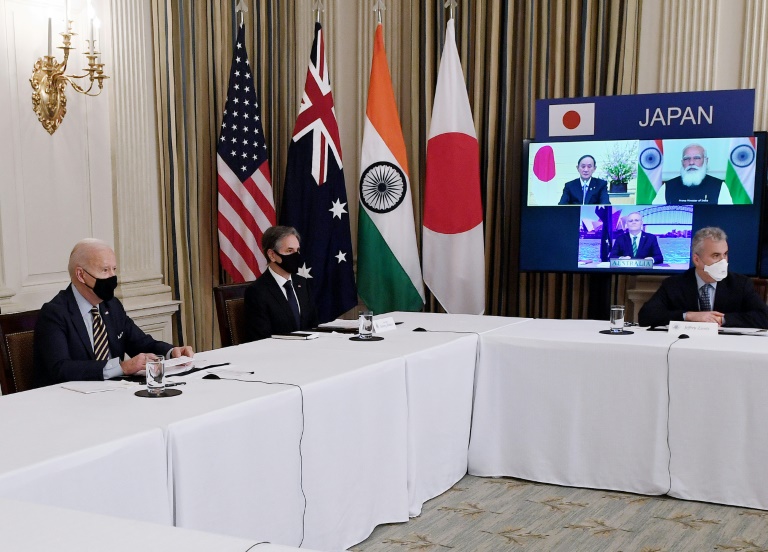
The leaders of Japan, India, Australia and the United States meet in Tokyo next week seeking common ground on countering China, despite differences over Russia’s invasion of Ukraine.

The loosely organised “Quad” grouping is united by its desire for a counterweight to China’s expanding economic, military and technological influence.

But it is divided on Ukraine, with India the only member not to have explicitly criticised or imposed sanctions on Moscow, instead increasing its imports of Russian oil.

Many observers are convinced that Beijing is eyeing the international response to the war in Ukraine as it considers its options for “reunifying” Taiwan with the mainland.

Quad leaders “will be talking about ways they can increase deterrence and military cooperation” concerning China, said Robert Dujarric, co-director of Institute of Contemporary Asian Studies at Temple University.

The May 24 forum “will show Beijing that they are working together to contain, to deter, against China,” he told AFP.

US President Joe Biden will be in Japan for the first time since taking office and is expected to use bilateral talks with Japanese Prime Minister Fumio Kishida to hammer home concerns about Beijing.

Reports suggest the pair will issue a joint statement warning they are ready to “respond” to actions by China that undermine regional stability.

But the tone of any Quad statement is likely to be softer, echoing past calls for a “free and open Indo-Pacific” and warnings against “unilateral” moves in the region — without directly naming China.

The mood is already tense, and the entire summit could yet be overshadowed by North Korea, which is believed to be preparing fresh missile launches or even a nuclear test.

Elsewhere, Japan has regularly raised concern about increasing Chinese patrols around disputed islands and there is growing talk about how the United States and allies should respond to threats to Taiwan.

– ‘Not a negative message’ –

Japan’s foreign minister this week held his first talks with his Chinese counterpart in six months, calling on Beijing to play “a responsible role” internationally and warning that public opinion in Japan is “extremely severe to China.”

Beijing’s rhetoric has been sharp, with warnings that reports “the US and Japan would join forces against China” were “clouding the air.”

China’s top diplomat Yang Jiechi also explicitly put Washington on notice over Taiwan, saying if it “goes further and further down the wrong road, it will certainly lead the situation to a dangerous point.”

Washington has appeared to be trying to tamp down tensions, with National Security Advisor Jake Sullivan insisting Biden’s focus was “not a negative message and it’s not targeted at any one country.”

Biden and Kishida, along with Indian Prime Minister Narendra Modi and the winner of Australia’s May 21 elections, are seeking to find common ground on economic cooperation, including fixing supply chain disruptions and securing semiconductor supplies.

The United States will unveil its Indo-Pacific Economic Framework, a new economic grouping seen as a bid by Washington to build supply chains without China.

It comes after Washington under then-president Donald Trump abruptly pulled out of the Trans-Pacific Partnership that groups countries surrounding China.

But behind the common front will be lingering differences with India on Ukraine.

“The difference of attitudes over the Ukraine war have prompted a question in the minds of the United States and Europe as to whether India is a nation that shares the same values,” said Michito Tsuruoka, an associate professor at Keio University who studies defence issues and European politics.

“The Quad started as a security framework, but now we are seeing more of an economic agenda” partly due to difficulties with India on defence subjects, he added.

And the summit is unlikely to change that, said Jitendra Nath Mishra, a former ambassador and adjunct professor at O.P. Jindal Global University.

Washington and its allies “have shown understanding of India’s need to protect its strategic and military ties with Russia to develop China-facing capabilities,” he said.

“Pressurising India does not advance the West’s need to build a coalition to counter an aggressive China.”

hih-burs/sah/oho

New one year delay at UK Hinkley Point nuclear plant: EDF

An already-delayed giant nuclear plant in southwest England will open a year later than planned and cost up to £3 billion more than previously thought, French electricity giant EDF said Thursday.

The total cost of Hinkley Point C, which aims to provide seven percent of Britain’s total power needs, had already swelled to as much as £23 billion and had been due to begin generation in June 2026, already well behind schedule.

Hinkley Point is Britain’s first new nuclear power plant in more than two decades.

“The start of electricity generation for Unit 1 is targeted for June 2027, the risk of further delay of the two units is assessed at 15 months, assuming the absence of a new pandemic wave and no additional effects of the war in Ukraine,” EDF said in a statement adding that costs were now estimated between £25 billion ($31 billion, 30 billion euros) and £26 billion. 

EDF said in its statement that there would be no additional cost to British consumers.

“During more than two years of the Covid-19 pandemic, the project continued without stopping. This protected the integrity of the supply chain and allowed the completion of major milestones. However, people, resources and supply chain have been severely constrained and their efficiency has been restricted. 

“In addition, the quantities of materials and engineering as well as the cost of such activities, including, in particular marine works have risen,” it added.

– ‘Risky and expensive’ –

Britain has a total of 15 nuclear reactors at eight sites around the country, but many of them are now approaching the end of their lifespan.

However, the government wants to maintain the 20 percent of electricity it generates from nuclear to help meet its pledge to reduce carbon emissions to net zero by 2050 and tackle climate change.

Critics have focused on the proposed design, which uses a new European Pressurised Reactor (EPR) system that has been beset by huge cost overruns and delays at sites in France and Finland.

Britain’s National Audit Office has long criticised the scheme, with the watchdog saying the government has “locked consumers into a risky and expensive project with uncertain strategic and economic benefits”.

Launched in 1992 as the pinnacle of French nuclear technology, the EPR was originally developed by Areva in a joint venture with Germany’s Siemens, which later withdrew.

Later taken over by EDF, the project called for a plant able to operate for 60 years using pressurised water technology, the most widely-used in reactors around the world.

Similar problems to those at Hinkley have hit EDF’s project at Flamanville in western France, although the firm has successfully launched two reactors with Chinese partners in Taishan, China.

Rihanna welcomes first child after high-fashion, self-affirming pregnancy

Superstar Rihanna and rapper A$AP Rocky have reportedly welcomed their first child, after a pregnancy the singer flaunted in a radical revamp of normally covered-up maternity style.

The entertainment and fashion mogul behind the hits “Diamonds” and “Umbrella” gave birth to a boy on May 13 in Los Angeles, according to TMZ, which first reported the news. 

People Magazine confirmed the celebrity birth, citing a source close to the couple who said they are at home with the baby and that “Rihanna is doing well. They are very excited to be parents.”

Representatives for the couple did not immediately respond to an AFP request for confirmation.

No other details, including the child’s name, have been made public.

The Barbadian-born Robyn Rihanna Fenty, 34, in recent years has become a billionaire, parlaying her music achievements into successful makeup, lingerie and high-fashion brands.

Rumors that she and A$AP Rocky, 33, were dating swirled for years before the pair confirmed last year that their romance was official.

The pair announced they were expecting in January with a set of glamorous snow-dusted images taken in Harlem, the mother-to-be sporting a long pink jacket buttoned only at the top, paired with a long bejeweled necklace over her bare belly.  

Since then, Rihanna has triggered a paparazzi frenzy and left the fashion industry in awe, appearing in barely-there maternity looks that showcased her growing baby bump, no holds barred.

Weeks after announcing her pregnancy, the pop icon dazzled the fashion week circuit in look after look, notably arriving in Paris in a completely see-through Dior lace cocktail dress, under which she donned lingerie from her own Savage X Fenty line.

Paired with spiky heeled knee-high boots, a leather trench coat, and silver necklaces, the star walked with such grace and confidence she appeared to float.

“You’re late!” shouted someone off-camera in a viral clip.

Rihanna slowly turned her head, held her bump and narrowed her piercing eyes: “No shit.”

– ‘Rewriting’ pregnancy rules –

It’s a quip that’s come to encapsulate the artist’s embrace of her changing body — Rihanna didn’t just bare her belly, she boasted of it, adorning herself in jewels, sequined bras, and low-slung miniskirts.

“She’s changed something profound in fashion — single-handedly rewriting the rules of pregnancy dressing with one jaw-dropping style maneuver after another,” wrote Vogue, which featured Rihanna on its May cover.

“I’m hoping that we were able to redefine what’s considered ‘decent’ for pregnant women,” the performer told the magazine.

“My body is doing incredible things right now, and I’m not going to be ashamed of that. This time should feel celebratory.”

She’s far from the first celebrity to show off her pregnant belly: Demi Moore posed nude while expecting on Vanity Fair’s cover in 1991, a stunning move for the time.

Since then, Britney Spears, Cindy Crawford and Serena Williams have all sat for similar glossy pregnancy portraits. Beyonce meanwhile announced her twins with a highly polished, belly-baring Instagram post chock full of art-world references including Botticelli’s Venus.

But Rihanna’s scantily clad looks have been far less calculated and far more frequent, a statement on maternity that goes beyond the magazine cover to be an everyday celebration of self.

“Right now I’m really into pushing the idea of sexy,” she told the lifestyle website Refinery29 in February. “When women get pregnant, society tends to make it feel like you hide, hide your sexy.”

“I don’t believe in that shit,” she continued. “So I’m trying stuff that I might not have even had the confidence to try before I was pregnant.”

“The strappiest, the thinnest, and the more cut-outs — the better for me.”

Canada bans Huawei and ZTE from 5G networks

Canada will ban Chinese telecommunications giants Huawei and ZTE from its 5G wireless networks due to national security concerns, officials said Thursday.

The long-awaited move follows the United States and other key allies, and comes on the heels of a diplomatic row between Ottawa and Beijing over the detention of a senior Huawei executive on a US warrant, which has now been resolved.

The United States has warned of the security implications of giving Chinese tech companies access to telecommunications infrastructure that could be used for state espionage.

Both Huawei and Beijing have rejected the allegations, while Beijing warned of repercussions for nations placing restrictions on the telecoms equipment provider.

The company did not immediately respond to an AFP request for comment on Canada’s ban.

Canadian Industry Minister Francois-Philippe Champagne and Public Safety Minister Marco Mendicino made the announcement at a news conference.

“Today, we’re announcing our intention to prohibit the inclusion of Huawei and ZTE products and services in Canada’s telecommunication systems,” Champagne said.

“This follows a full review by our security agencies and in consultation with our closest allies.”

Canada had been reviewing the 5G technology and network access for several years, repeatedly delaying a decision that was first expected in 2019.

It remained silent on the telecoms issue after China jailed two Canadians — diplomat Michael Kovrig and businessman Michael Spavor — in what observers believed was in retaliation for the arrest of Huawei chief financial officer Meng Wangzhou in Vancouver in December 2018 at the request of the United States.

All three were released in September 2021 after Meng reached a deal with US prosecutors on the fraud charges, ending her extradition fight.

Champagne said Canadian telecommunications companies “will not be permitted to include in their networks products or services that put our national security at risk.”

“Providers who already have this equipment installed will be required to cease its use and remove it,” he said.

– ‘Hostile actors’ –

Huawei already supplies some Canadian telecommunications firms with 4G equipment.

Most, if not all, had held off using Huawei in their fifth-generation (5G) wirelesss networks that deliver speedier online connections with greater data capacity, or looked to other suppliers while Ottawa hemmed and hawed.

Mendicino said 5G innovation “represents a major opportunity for competition and growth” but “also comes risks.”

“There are many hostile actors who are ready to exploit vulnerabilities” in telecom networks, he said.

The United States, Australia, Britain, New Zealand, Japan and Sweden have already blocked or restricted the use of Huawei technology in their 5G networks.

The US government considers Huawei a potential security threat due to the background of its founder and CEO Ren Zhengfei, a former Chinese army engineer who is Meng’s father.

The concern escalated as Huawei rose to become the world leader in telecoms networking equipment and one of the top smartphone manufacturers, and following Beijing’s passage of a 2017 law obliging Chinese companies to assist the government in matters of national security.

Canada’s two spy agencies had reportedly been divided initially over whether or not to ban Huawei from Canada’s 5G networks — one favouring a ban while the other argued risks could be mitigated.

The Canadian Security Intelligence Service and the Communications Security Establishment had been tasked with conducting a cybersecurity review to evaluate the risks as well as the economic costs to Canadian telecoms and consumers of blacklisting the equipment supplier.

Huawei was already prohibited from bidding on Canadian government contracts and core network equipment such as routers and switches.

Oklahoma legislature passes ban on nearly all abortions

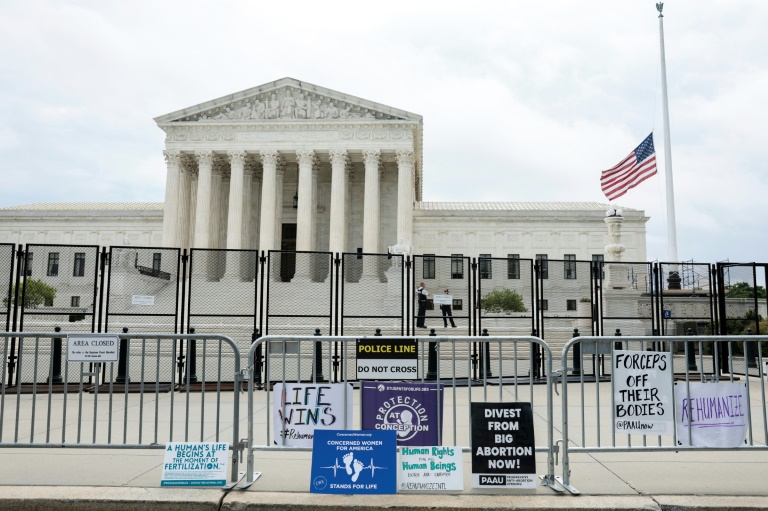
The Oklahoma state legislature on Wednesday passed a bill banning abortions from the moment of fertilization, with some exceptions, the strictest ban so far in the United States.

The action by Oklahoma follows steps taken in other Republican-led states to restrict access to abortions in anticipation of the US Supreme Court soon overturning Roe v. Wade, the 1973 landmark decision allowing nation-wide access to abortion.

The bill now heads to the desk of Governor Kevin Stitt, a Republican, who is expected to sign it — at which point it would immediately come into effect.

Democratic Vice President Kamala Harris condemned the new law in a tweet Wednesday, saying it is “the latest in a series of blatant attacks on women by extremist legislators.”

Other Republican-led states such as Florida, Mississippi, and Texas have all enacted laws that previously would have been rejected by the Supreme Court under its Roe v. Wade precedent, but a new conservative majority seems likely to now permit them.

Of the nine justices on the highest US court, six are conservative — three of whom were appointed by former president Donald Trump, who promised to only pick jurists who would overturn the nearly 50-year Roe v. Wade precedent.

The Oklahoma legislation uses a novel enforcement procedure first enacted by Texas, which allows private citizens — not the state — to sue anyone who “performs or induces an abortion,” or “aids or abets” someone seeking an abortion.

The person filing suit under the new law would receive a minimum of $10,000 for each abortion performed, as well as court costs and attorney fees.

The Oklahoma bill includes exceptions for instances of rape or incest, but requires that they be first reported to authorities.

It also allows exceptions for pregnancies which pose a risk to the life of the mother.

Oklahoma had also followed in Texas’s footsteps last month, by enacting a law banning abortions after a heartbeat can be detected, usually around six weeks into pregnancy.

Earlier this month, a highly uncommon leak of a draft Supreme Court decision showed that the conservative justices were considering outright overturning Roe v. Wade, in favor of state-by-state legislating on the matter.

That leak prompted protests across the country, and promises by Democrats to make access to abortion a key part of their electoral campaign in the November midterm elections.

“It has never been more urgent that we elect pro-choice leaders at the local, state, and federal level,” Harris said in her tweet, echoing similar calls by President Joe Biden and Democratic congressional leaders.

The Supreme Court’s final decision should be known by the end of June.

Ukraine steelworks troops surrender as Russian soldier says sorry

Russia said Thursday that 1,730 Ukrainian soldiers had surrendered this week at Mariupol’s Azovstal steel plant, after a desperate battle that has become emblematic of the nearly three-month-old war.

The number included 80 wounded who were taken to a hospital in Russia-controlled territory in eastern Ukraine, Moscow said.

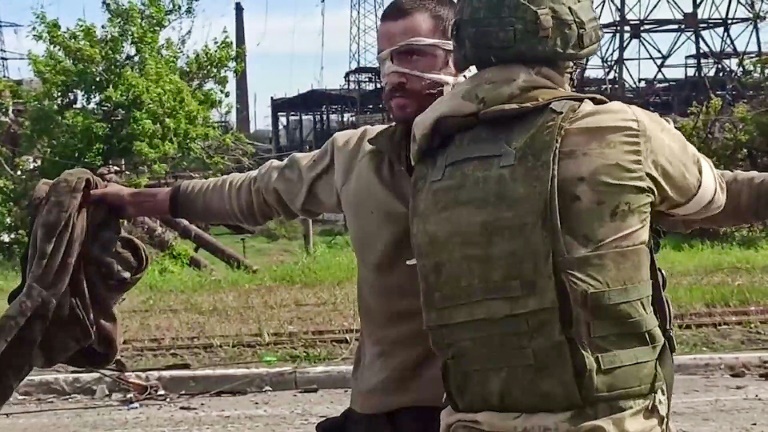
The Russian defence ministry released a video appearing to show exhausted Ukrainian soldiers trudging out of the sprawling steelworks, after a weeks-long siege forced the defenders and civilians to huddle in tunnels, enduring dire shortages of food, water and medicine.

Russian troops patted down those surrendering and inspected their bags as they left, signalling the effective end of what Ukraine’s government had called a “heroic” resistance.

The International Committee of the Red Cross said it had registered “hundreds of Ukrainian prisoners of war” from the plant in Mariupol, a port city obliterated by Russian shelling.

Ukraine is hoping to exchange the Azovstal soldiers for Russian prisoners. But pro-Kremlin authorities in Ukraine’s eastern Donetsk region said some of them could be put on trial.

The United States warned Thursday it would be watching the situation closely.

“Our expectation is… that all prisoners of war will be treated in accordance with the Geneva Convention and the law of war,” Pentagon spokesman John Kirby said.

Ukraine has already begun its own process of trying captured troops for crimes they are alleged to have committed, with prosecutors detailing 12,595 counts — including the horrific bombing of a maternity ward in Mariupol.

– ‘Please forgive me’ –

The first Russian soldier to go on trial in Ukraine begged for forgiveness Thursday.

Vadim Shishimarin has admitted shooting dead Oleksandr Shelipov, an unarmed 62-year-old man, on February 28 — four days into the invasion. 

“I know that you will not be able to forgive me, but nevertheless I ask you for forgiveness,” the 21-year-old sergeant told Shelipov’s widow in the cramped courtroom in Kyiv.

The West’s support for Kyiv stiffened further Thursday when a $40 billion aid package was approved by an unusually united US Congress.

It includes $6 billion earmarked for Ukraine to boost its armoured vehicle inventory and air defence system. 

Germany also said it would contribute one billion euros to shore up Ukrainian government coffers as G7 finance ministers met to coordinate action.

Ukraine’s President Volodymyr Zelensky, who has been lauded in Europe and the United States for his leadership in the face of Russian aggression, welcomed the package, but insisted it would not only benefit his country.

“For our partners, it’s not just expenses or a gift, it’s their contribution to their own safety,” he said.

“The defence of Ukraine also represents their own defence against new wars or crises that Russia can provoke.” 

– Famine warning –

Russia’s actions are already redrawing the security map of Europe. 

US President Joe Biden welcomed the leaders of Finland and Sweden after the Nordic nations decided to abandon decades of military non-alignment and join NATO.

“They meet every NATO requirement and then some,” Biden told reporters.

Admission to the bloc must be approved unanimously by current members, and Turkey is a fly in the ointment, with President Recep Tayyip Erdogan calling Sweden a “complete terror haven”.

Turkey has rebuked the two countries for what it describes as leniency towards the Kurdistan Workers’ Party (PKK) and other armed Kurdish groups.

The PKK has waged an insurgency against the Turkish state since 1984 and is blacklisted as a “terrorist organisation” by Turkey and Western allies such as the European Union — which includes Finland and Sweden. 

NATO Secretary General Jens Stoltenberg said the alliance was “addressing the concerns that Turkey has expressed”.

US Secretary of State Antony Blinken echoed that remark, saying: “If concerns are raised by any members of the alliance, they’ll be addressed.”

“I’m very confident that as this process moves forward, there will be a strong consensus for bringing both countries under the Alliance,” he added.

In Finland, where previously lukewarm support for NATO membership has exploded since Russia’s invasion of Ukraine, one brewery produced a special NATO beer.

It tastes of “security, with a hint of freedom”, brewer Petteri Vanttinen said.

– Famine –

The global ramifications of Russia’s invasion continued to be felt, with UN Secretary-General Antonio Guterres warning it could spark enduring food insecurity in some parts of the world.

“Malnutrition, mass hunger and famine” could follow “in a crisis that could last for years”, Guterres warned, urging Russia to release grain exports from occupied Ukraine.

Russia and Ukraine produce 30 percent of the world’s wheat supply, and the war has already sent food prices surging around the world.

Ukrainian presidential administration head Andriy Yermak said the squeeze on global staples was a deliberate ploy to weaken international resolve.

“Being unable to access nearly one-third of our croplands, the systematic destruction by Russian forces of Ukrainian agriculture and transport infrastructure, the blockade of our seaports — these are part of Russia’s strategy of exerting pressure on the international community,” he said.

– Civilians under fire –

Despite their last-ditch resistance in places such as Mariupol, and the successful defence of Kyiv, Ukrainian forces are retreating in the east.

The losses often come after weeks of battles over urban hubs that are pulverised by artillery fire by the time the Russians surround them.

Ukraine’s defence ministry said Thursday that Russia was intensifying its attacks in the eastern Donbas region and preventing civilians from fleeing to Ukrainian-controlled territory.

In Severodonetsk, 12 people were killed and another 40 wounded when Russian forces shelled the eastern city, the regional governor said.

In the Kharkiv region, one man was killed and five others injured Thursday, while five civilians were killed and six others wounded in Donetsk.

Severodonetsk resident Nella Kashkina sat in her basement next to an oil lamp and prayed.

“I do not know how long we can last,” the 65-year-old said.

“We have no medicine left and a lot of sick people — sick women — need medicine. There is simply no medicine left at all.”

burs-jit-hg/amz/wd

Johnny Depp was jealous, controlling: actress Ellen Barkin

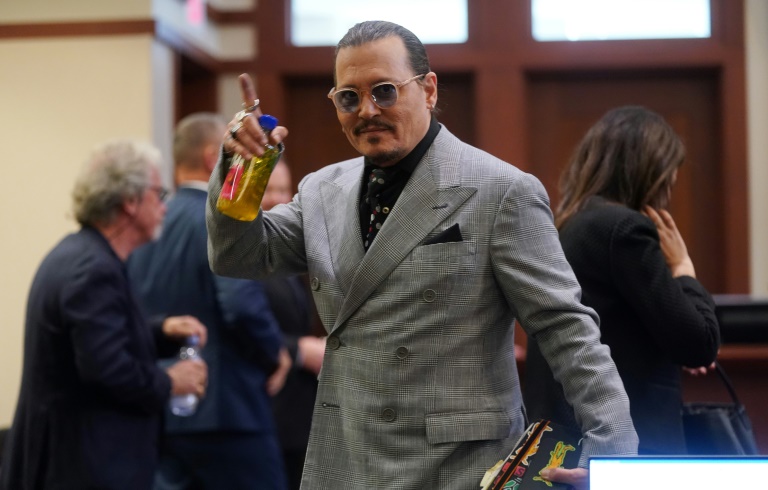
Johnny Depp was jealous, controlling and frequently drunk, and once threw a wine bottle in his hotel room in Las Vegas, his former girlfriend, the actress Ellen Barkin, said in pre-recorded testimony Thursday.

Barkin, 68, testifying as a witness in the defamation suit filed by Depp against his ex-wife Amber Heard, said she had a brief “sexual relationship” with Depp in the 1990s.

Barkin’s testimony was videotaped in November 2019 and played for the seven-person jury hearing the defamation case in Fairfax County Circuit Court in Virginia.

The jury also heard testimony from Depp’s former talent agent, his former business manager, and the agent for the 36-year-old Heard, who has accused Depp of domestic abuse.

The 58-year-old Depp, during his four days on the witness stand, denied ever striking Heard or any other woman and claimed that she was the one who was frequently violent.

Barkin said that during the several months they were together, Depp was often drunk and was exceedingly jealous.

“He was drunk a lot of the time,” she said. “He was a red wine drinker.”

“He’s just a jealous man, controlling — ‘Where are you going? Who are you going with? What did you do last night?'” she said.

“I had a scratch on my back once that got him very, very angry because he insisted it came from me having sex with a person who wasn’t him.”

Barkin recounted an incident during the filming of the 1998 movie “Fear and Loathing in Las Vegas.”

“Mr Depp threw a wine bottle across the room, the hotel room in Las Vegas,” she said.

“I don’t know why he threw the bottle,” Barkin said, although she recalled that Depp may have had an argument with friends or with his assistant.

– ‘Unprofessional behavior’ –

Depp filed suit against Heard over an op-ed she wrote for The Washington Post in December 2018 in which she described herself as a “public figure representing domestic abuse.”

Heard, who had a starring role in “Aquaman,” did not name Depp in the op-ed, but he sued her for implying he was a domestic abuser and is seeking $50 million in damages.

The Texas-born Heard countersued, asking for $100 million and claiming she suffered “rampant physical violence and abuse” at his hands.

Depp’s former agent and business manager testified that the actor’s career and finances were already in serious trouble before Heard first accused him of domestic violence in 2016.

Tracey Jacobs, Depp’s former agent, said he “became the biggest star in the world” during the decades she represented him in Hollywood.

But his reputation had begun to dim after 2010 because of “unprofessional behavior,” Jacobs said, including drug and alcohol use and consistently showing up late on set.

“Crews don’t love sitting around for hours and hours and hours waiting for the star of the movie to show up,” she said. “It’s a small community and it made people reluctant to use him toward the end.”

Jacobs said Depp was in such “financial desperation” in January 2016 that he came to the agency and asked for $20 million.

– ‘Extremely concerned’ –

Josh Mandel, Depp’s former business manager, said he became “extremely concerned” about Depp’s financial situation in 2015.

Depp was spending $300,000 a month on full-time staff at one point.

There were “constant” conversations about curbing his spending, he said, but it “never seemed to happen.”

Jessica Kovacevic, Heard’s agent, said the “constant tweets and negativity” against the actress after she accused Depp of abuse have severely damaged her career.

Mandel was fired by Depp in 2016 and subsequently sued by the actor. They settled the case in 2018.

Jacobs was fired by Depp in 2016.

Depp’s lawyers put experts on the stand who testified that the actor lost millions because of the abuse accusations, including a $22.5-million payday for a sixth installment of “Pirates of the Caribbean.”

Depp filed the defamation complaint in the United States after losing a separate libel case in London in November 2020 that he brought against The Sun for calling him a “wife-beater.”

Depp, a three-time Oscar nominee, and Heard were married in February 2015. Their divorce was finalized two years later.

Judge Penney Azcarate has scheduled closing arguments in the case for May 27.

US to fly in baby formula on military contracted planes

The US government will fly in baby formula on commercial planes contracted by the military in an airlift aimed at easing the major shortage plaguing the country, the White House said on Wednesday.

The lack of formula — the result of a perfect storm of supply chain issues and a massive recall — is leaving parents increasingly desperate, and has become a political headache for President Joe Biden as midterm elections loom.

The Department of Defense “will use its contracts with commercial air cargo lines, as it did to move materials during the early months of the Covid pandemic, to transport products from manufacturing facilities abroad that have met Food and Drug Administration (FDA) safety standards,” the White House said.

“Bypassing regular air freighting routes will speed up the importation and distribution of formula and serve as an immediate support as manufacturers continue to ramp up production,” it said, dubbing the effort “Operation Fly Formula.”

Biden has also invoked the Defense Production Act to give baby formula manufacturers first priority in supplies.

“Directing firms to prioritize and allocate the production of key infant formula inputs will help increase production and speed up in supply chains,” the White House said.

Initially caused by supply chain blockages and a lack of production workers due to the pandemic, the shortage was exacerbated in February when, after the death of two infants, manufacturer Abbott announced a “voluntary recall” for formula made at its factory in Michigan and shut down that location.

A subsequent investigation cleared the formula, and the FDA reached an agreement on Monday with Abbott to resume production. But it will take weeks to get the critical product back on store shelves.

– Bridging the gap –

Biden wrote in a letter to the heads of the Departments of Agriculture and Health and Human Services that imports of formula “will serve as a bridge to this ramped up production.”

“I request that you work expeditiously to identify any and all avenues to speed the importation of safe infant formula into the United States and onto store shelves,” the president wrote.

The shortage has left many parents frantic and fearful their infants may starve. Formula is a necessity for many families, particularly in low-income households in which mothers have to return to work almost immediately after giving birth and cannot breastfeed.

A further issue is that prices for the formula that remains have skyrocketed.

The desperation of parents is highlighted on social media, where posts shared hundreds of thousands of times urge people to make formula at home — a move pediatricians warn against.

“It won’t meet your baby’s essential nutritional needs, can be very dangerous to their growth and development, and can even make your baby sick,” Tanya Altmann, author of several parenting books and founder of Calabasas Pediatrics in California, told AFP.

The formula shortage also has political consequences, with the Republican opposition — which has set its sights on wresting back control of Congress in November’s midterm elections — seizing on the issue to berate Biden and the Democrats.

The United States relies on domestic producers for 98 percent of the baby formula it consumes. The average out-of-stock rate for the key product hit 43 percent earlier this month, according to Datasembly, which collected information from more than 11,000 retailers.

Twitter adds warning labels to false Ukraine war posts

Twitter on Thursday said it will put warning labels on demonstrably false posts about Russia’s war in Ukraine under a new “crisis misinformation policy.”

Tweets violating the new rule will be hidden behind messages saying that misleading information in the posts could cause real-world harm, said Twitter head of safety and integrity Yoel Roth.

Twitter users will then have to click on a link to see an offending post.

“While this first iteration is focused on international armed conflict, starting with the war in Ukraine, we plan to update and expand the policy to include additional forms of crisis,” Roth said in a blog post.

Examples of the kinds of posts that would merit warning labels included false reports about what is happening on the ground and how the international community is responding.

Twitter said it will make a priority of adding warning labels to tweets from high-profile accounts such as state-affiliated media outlets, governments, and users whose identities have been verified.

“Conversation moves quickly during periods of crisis, and content from accounts with wide reach are most likely to rack up views and engagement,” Roth said.

He added that the new policy will guide Twitter’s efforts “to elevate credible, authoritative information, and will help to ensure viral misinformation isn’t amplified or recommended by us during crises.”

The content moderation move comes as Twitter faces the prospect of being bought by billionaire Elon Musk.

The controversial Tesla chief openly advocates for anyone to be able to say whatever they want on Twitter, no matter how untrue, as long as it doesn’t break the law.

Close Bitnami banner
Bitnami