US Business

Harley-Davidson shares fall as it suspends plants for 2 weeks

Harley-Davidson suspended most assembly operations and shipments for two weeks due to an unspecified supply chain problem, the motorcycle maker announced Thursday.

Shares of the transport company tumbled following the announcement, which affects factories in Wisconsin and Pennsylvania.

The move does not affect operations of Harley’s LiveWire electric motorcycle business, the company said. 

“This decision, taken out of an abundance of caution, is based on information provided by a third-party supplier to Harley-Davidson late on Tuesday concerning a regulatory compliance matter relating to the supplier’s component part,” Harley-Davidson said.

A Harley spokesperson declined further comment.

The motorcycle maker has previously been among the many companies in transport to cite the shortage of semiconductors as a drag on operations, leading to leaner profit margins in the most recent quarter.

Shares fell about 10 percent to $32.22 in early-afternoon trading.

Harley-Davidson shares fall as it suspends plants for 2 weeks

Harley-Davidson suspended most assembly operations and shipments for two weeks due to an unspecified supply chain problem, the motorcycle maker announced Thursday.

Shares of the transport company tumbled following the announcement, which affects factories in Wisconsin and Pennsylvania.

The move does not affect operations of Harley’s LiveWire electric motorcycle business, the company said. 

“This decision, taken out of an abundance of caution, is based on information provided by a third-party supplier to Harley-Davidson late on Tuesday concerning a regulatory compliance matter relating to the supplier’s component part,” Harley-Davidson said.

A Harley spokesperson declined further comment.

The motorcycle maker has previously been among the many companies in transport to cite the shortage of semiconductors as a drag on operations, leading to leaner profit margins in the most recent quarter.

Shares fell about 10 percent to $32.22 in early-afternoon trading.

Biden leaves for Asia under Ukraine, N.Korea nuclear shadows

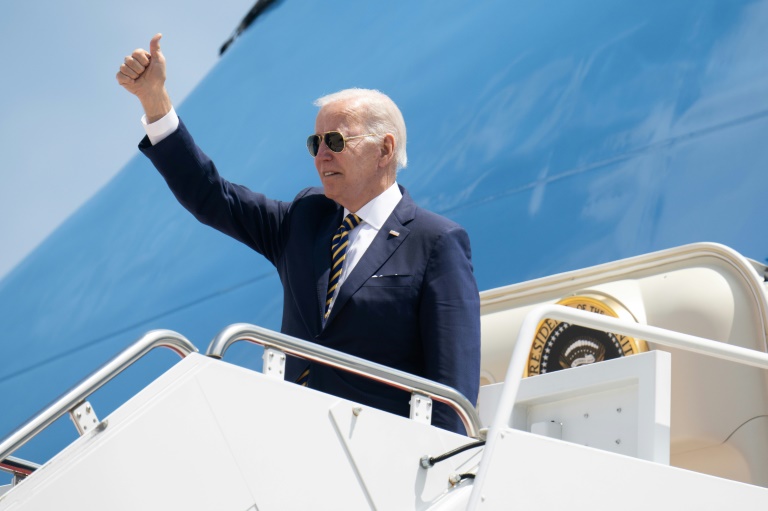
President Joe Biden left Thursday for South Korea and Japan to cement US leadership in Asia at a time when the White House’s attention has been pulled back to Russia and Europe — and amid fears of a North Korean nuclear test during his trip.

Biden wants the trip to build on recent moves accelerating a years-long US pivot to Asia, where rising Chinese commercial and military power is undercutting Washington’s dominance.

But highlighting the competing demands from Europe, Biden met right before his departure with the leaders of Finland and Sweden to celebrate their applications for joining NATO — a seismic development sparked by Russia’s invasion of Ukraine.

Also overshadowing Biden’s first Asia trip as president is fear that the unpredictable leadership in North Korea will choose the moment to grab attention with a test of its nuclear capable missiles or even a test explosion.

Despite a spiralling Covid outbreak, Pyongyang’s “preparations for a nuclear test have been completed and they are only looking for the right time,” South Korean lawmaker Ha Tae-keung said after being briefed by Seoul’s spy agency.

US intelligence also says there is a “genuine possibility” that North Korea’s Kim Jong Un could stage this “provocation” after Biden arrives in Seoul late Friday, a senior US official said.

Biden will head to Japan from South Korea on Sunday. He will hold talks with the leaders of both countries, as well as joining a regional summit of the Quad — a grouping of Australia, India, Japan and the United States — while in Tokyo.

During the first leg, he will visit US and South Korean troops, but will not make the traditional presidential trek to the fortified frontier known as the DMZ between South and North Korea, the White House said.

Hours ahead of Biden arriving, South Korea’s newly elected, strongly pro-US President Yoon Suk-yeol signaled a warm welcome, tweeting “A mountain shows its way to the summit to those who seek it. I am confident the ROK-US alliance that seeks to uphold the values of democracy and human rights shall only elevate in the future.” 

– Taiwan lessons? –

Briefing reporters on Wednesday, National Security Advisor Jake Sullivan said Biden is bound for Asia with “the wind at our back” after successful US leadership in the Western response to President Vladimir Putin’s now almost three-month-long invasion of Ukraine.

The high military, diplomatic and economic cost imposed on Russia is seen in Washington as a cautionary tale for China, given Beijing’s stated ambitions to gain control over democratic-ruled Taiwan, even if that means going to war.

Earlier this month, CIA Director William Burns said Beijing is watching “carefully.”

“I think they’ve been struck by the way in which particularly the transatlantic alliance has come together to impose economic costs on Russia as a result of that aggression,” he said.

Sullivan said the administration wants not so much to confront China on the trip as to use Biden’s diplomacy to show that the West and its Asian partners will not be divided and weakened.

He pointed to cooperation from South Korea and Japan, among others, in the sanctions regime against Russia led by European powers and the United States. He also referred to Britain’s role in the recently created security partnership AUKUS.

This “powerful message” will be “heard in Beijing,” Sullivan said, “but it’s not a negative message and it’s not targeted at any one country.”

– North Korean wild card –

Officials say North Korea’s nuclear weapons program is a wild card on the trip.

Sullivan said it was possible that North Korea, which has defied UN sanctions in conducting an array of nuclear-capable missile tests this year, could use Biden’s visit to sabre rattle.

This could mean “further missile tests, long-range missile tests or a nuclear test, or frankly both, in the days leading into, on or after the president’s trip,” he said.

The Biden administration is prepared to “make both short and longer-term adjustments to our military posture” in response.

Sullivan said the situation was being “closely” coordinated with South Korea and Japan and that he had also spoken about the issue with his Chinese counterpart on Wednesday.

Third launch attempt for Boeing's beleaguered Starliner spacecraft

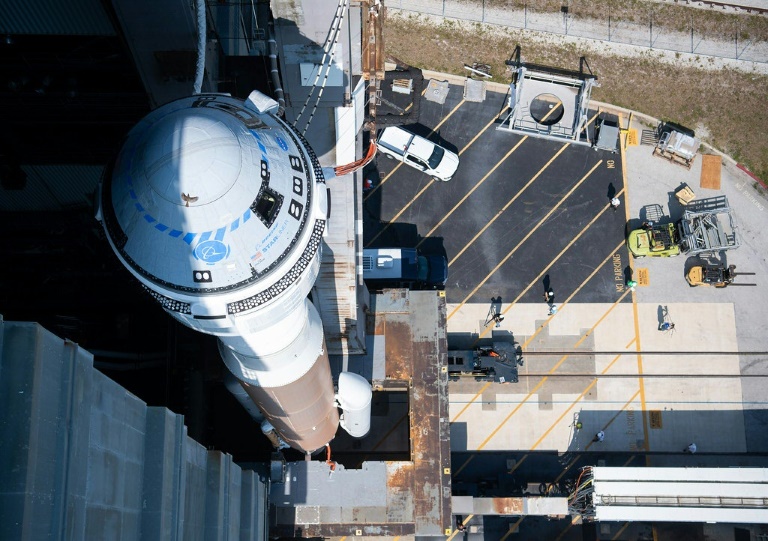
American aerospace giant Boeing is making a third attempt to reach the International Space Station Thursday in a critical uncrewed test flight for its Starliner capsule, which has been beset by numerous failures and false starts.

Lift-off for Orbital Test Flight 2 (OFT-2) is scheduled for 6:54 pm Eastern Time (2254 GMT) from the Kennedy Space Center in Florida, with the spaceship fixed atop a United Launch Alliance Atlas V rocket.

The mission’s success is key to repairing Boeing’s frayed reputation after the first bid, back in 2019, failed to dock with the ISS due to software bugs — one that led to it burning too much fuel to reach its destination, and another that could have destroyed the vehicle during re-entry. 

A second try was scheduled in August of last year, but was rolled back from the launchpad to address sticky valves that weren’t opening as they should, and the capsule was eventually sent back to the factory for fixes.

Boeing and NASA say the drama is now behind them.

“There’s really no outstanding issues and we’re ready,” Mark Nappi, vice president and program manager of the Boeing Commercial Crew Program, said at a press conference this week. 

NASA is looking to certify Starliner as a second “taxi” service for its astronauts to the space station — a role that Elon Musk’s SpaceX has provided since succeeding in a test mission for its Dragon capsule in 2020.

– Redemption day –

Both companies were awarded fixed-price contracts — $4.2 billion to Boeing, and $2.6 billion to SpaceX — in 2014, shortly after the end of the Space Shuttle program, during a time when the United States was left reliant on Russian Soyuz rockets for rides to the orbital outpost. 

Boeing, with its hundred-year history, was considered by many as the sure shot, while then-upstart SpaceX was less proven. 

In reality, it was SpaceX that rocketed ahead, and recently sent its fourth routine crew to the research platform — while Boeing’s development delays have cost the company hundreds of millions of dollars.

Starliner should dock with the ISS about 24 hours after launch, and deliver more than 500 pounds (226 kilograms) of cargo — including food and provisions like clothes and sleeping bags for the current crew on the station.

Its sole passenger is a mannequin named Rosie the Rocketeer — a play on the World War II campaign icon Rosie the Riveter — whose job is to collect flight data with her sensors in order to learn what human astronauts would experience.

“We are a little jealous of Rosie,” said NASA astronaut Mike Fincke, who is expected to be among the first crew selected for a manned demonstration mission should OFT-2 succeed.

The gumdrop-shaped capsule will spend about five to ten days in space, then undock and return to Earth, using giant parachutes to land in the desert of the western United States. 

NASA sees a second provider to low Earth orbit as a vital backup, should SpaceX encounter problems. 

“It’s a really critical step for us and moving towards having two routinely flying crewed vehicles who can bring our crew to and from ISS,” Dana Weigel, deputy program manager for the ISS, told reporters. 

Third launch attempt for Boeing's beleaguered Starliner spacecraft

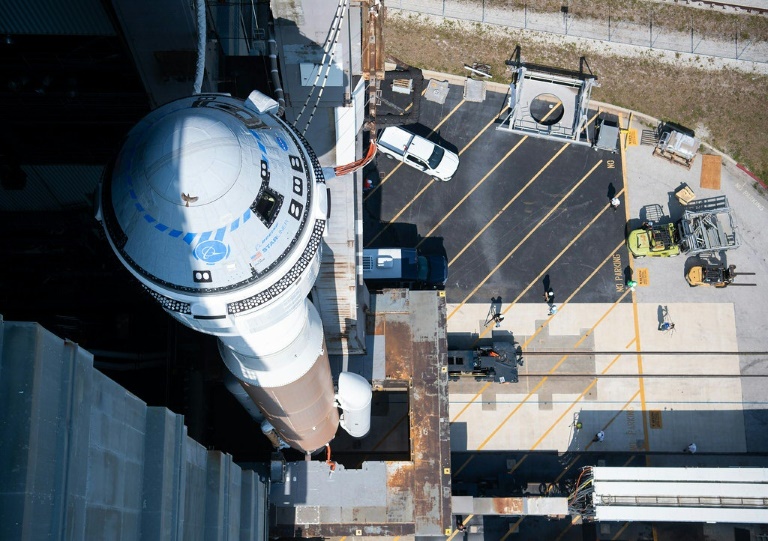
American aerospace giant Boeing is making a third attempt to reach the International Space Station Thursday in a critical uncrewed test flight for its Starliner capsule, which has been beset by numerous failures and false starts.

Lift-off for Orbital Test Flight 2 (OFT-2) is scheduled for 6:54 pm Eastern Time (2254 GMT) from the Kennedy Space Center in Florida, with the spaceship fixed atop a United Launch Alliance Atlas V rocket.

The mission’s success is key to repairing Boeing’s frayed reputation after the first bid, back in 2019, failed to dock with the ISS due to software bugs — one that led to it burning too much fuel to reach its destination, and another that could have destroyed the vehicle during re-entry. 

A second try was scheduled in August of last year, but was rolled back from the launchpad to address sticky valves that weren’t opening as they should, and the capsule was eventually sent back to the factory for fixes.

Boeing and NASA say the drama is now behind them.

“There’s really no outstanding issues and we’re ready,” Mark Nappi, vice president and program manager of the Boeing Commercial Crew Program, said at a press conference this week. 

NASA is looking to certify Starliner as a second “taxi” service for its astronauts to the space station — a role that Elon Musk’s SpaceX has provided since succeeding in a test mission for its Dragon capsule in 2020.

– Redemption day –

Both companies were awarded fixed-price contracts — $4.2 billion to Boeing, and $2.6 billion to SpaceX — in 2014, shortly after the end of the Space Shuttle program, during a time when the United States was left reliant on Russian Soyuz rockets for rides to the orbital outpost. 

Boeing, with its hundred-year history, was considered by many as the sure shot, while then-upstart SpaceX was less proven. 

In reality, it was SpaceX that rocketed ahead, and recently sent its fourth routine crew to the research platform — while Boeing’s development delays have cost the company hundreds of millions of dollars.

Starliner should dock with the ISS about 24 hours after launch, and deliver more than 500 pounds (226 kilograms) of cargo — including food and provisions like clothes and sleeping bags for the current crew on the station.

Its sole passenger is a mannequin named Rosie the Rocketeer — a play on the World War II campaign icon Rosie the Riveter — whose job is to collect flight data with her sensors in order to learn what human astronauts would experience.

“We are a little jealous of Rosie,” said NASA astronaut Mike Fincke, who is expected to be among the first crew selected for a manned demonstration mission should OFT-2 succeed.

The gumdrop-shaped capsule will spend about five to ten days in space, then undock and return to Earth, using giant parachutes to land in the desert of the western United States. 

NASA sees a second provider to low Earth orbit as a vital backup, should SpaceX encounter problems. 

“It’s a really critical step for us and moving towards having two routinely flying crewed vehicles who can bring our crew to and from ISS,” Dana Weigel, deputy program manager for the ISS, told reporters. 

Recession fears, rising inflation spook global markets

European and Asian markets took a beating Thursday after Wall Street suffered one of its worst batterings in two years over recession fears after decades-high inflation.

Downcast earnings reports from retailers have heightened worries about consumer resilience at a time of rising interest rates, surging energy prices, China lockdowns and the Ukraine war.

“Inflation is catching up and profit margins are taking a hit. Soon enough though, those higher costs will continue to be passed on and consumers will stop dipping into savings and start being more careful with their spending,” said Craig Erlam, senior market analyst at OANDA.

“The question is whether we’re going to see a slowdown or a recession,” he said.

Leading European and Asian stock indices closed in the red. 

On Wall Street, the Dow was lower in late morning trading but both the broader S&P 500 and tech-heavy Nasdaq Composite were higher.

Shares in Chinese tech giants plunged after Tencent reported lacklustre profits, fuelling wider concerns over China’s economic outlook.

Tencent shares plunged more than eight percent in early trading before paring losses slightly, a day after it posted its slowest revenue gain since going public in 2004.

Among other tech titans, Alibaba dropped more than six percent.

On Wall Street Wednesday, all three major US indices dived, with the Dow sinking more than 1,150 points or 3.6 percent.

The Nasdaq plunged 4.7 percent by the close.

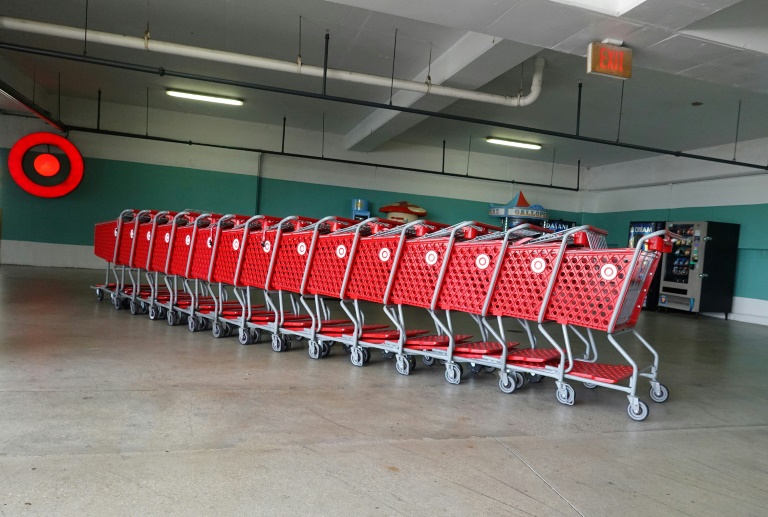
“Consumer confidence is likely to drop further as incomes are squeezed. Those big falls in shares of retailers –- Target and Walmart -– and others such as Amazon and Apple we saw on Wednesday certainly point towards this trend,” said Fawad Razaqzada, market analyst at City Index and FOREX.com.

“Inflation is not going to be easing significantly any time soon, at a time when the economic outlook also appears grim.”

Michael Hewson, chief market analyst at CMC Markets, said the US dollar suffered as well on Thursday “driven by lower yields as concerns grow about the resilience of the US economy over the course of the rest of the year”.

In some of his most hawkish remarks to date, Federal Reserve Chair Jerome Powell this week said the US central bank would raise interest rates until there is “clear and convincing” evidence that inflation is in retreat. 

But higher borrowing costs increases debt, heaping further pressure on consumers and businesses.

The United States is facing the fastest inflation in four decades, as is Britain, causing the Bank of England to also raise interest rates.

– Key figures at around 1530 GMT –

New York – Dow: DOWN 0.3 percent at 31,385.97 points

EURO STOXX 50: DOWN 1.3 percent at 3,640.55 

London – FTSE 100: DOWN 1.8 percent at 7,302.74 (close)

Frankfurt – DAX: DOWN 0.9 percent at 13,882.30 (close)

Paris – CAC 40: DOWN 1.2 percent at 6,272.71 (close)

Hong Kong – Hang Seng Index: DOWN 2.5 percent at 20,120.60 (close)

Shanghai – Composite: UP 0.4 percent at 3,096.96 (close)

Tokyo – Nikkei 225: DOWN 1.9 percent at 26,402.84 (close)

Brent North Sea crude: UP 0.9 percent at $110.18 per barrel

West Texas Intermediate: UP 0.21 percent at $109.82 per barrel

Euro/dollar: UP at $1.0587 from $1.0479 at 2100 GMT Wednesday

Pound/dollar: UP at $1.2501 from $1.2346

Euro/pound: DOWN at 84.70 pence from 84.88 pence

Dollar/yen: DOWN at 127.38 yen from 128.58

Even streaming services fall short on diversity: Viola Davis

Streaming services have cracked open a door for communities long shut out of Hollywood, Oscar winner Viola Davis told the Cannes Film Festival on Thursday, but more imagination is still needed around black roles.

Davis, 56, currently starring as Michelle Obama in the television series “The First Lady”, admitted even her groundbreaking show “How to Get Away With Murder” had produced only fragile momentum for black women in entertainment.

“I know that when I left ‘How to Get Away With Murder’ — I don’t see a lot of dark-skinned women in big roles in TV, not even in streaming services,” she said of the show that made her the first black lead actress to win an Emmy. 

Even with a trophy case full of awards, she said she was still held back by the industry’s limited imagination of who can play daring roles.

“If I wanted to play a mother whose son… was a gang member who died in drive-by shooting, I can get that made,” Davis said.

“If I play the woman who was looking to recreate herself by flying to Nice and sleeping with five men at the age of 56 looking like me, I’m going to have a hard time pushing that one even as Viola Davis because people can’t reconcile the blackness with spiritual awakening and sexuality — it’s too much.”

– ‘You have to fight’ –

Netflix, long hailed as a champion of more diverse entertainment and performers, recently reported a loss in subscribers for the first time in more than a decade.

The gloomy news sparked a round of layoffs and spending cuts.

A 2021 study of Netflix content showed that 52 percent of its series and movies had women in starring roles and more than one in three featured underrepresented groups — far higher than entertainment released in cinemas.

Davis won an Academy Award in 2017 for Best Supporting Actress for “Fences” opposite Denzel Washington and received three more nominations including as best actress in “Ma Rainey’s Black Bottom”, which ran on Netflix after a brief theatrical release.

“I see that there is quantity — there’s more out there because there are 400 shows and streaming services,” Davis told a Kering Women in Motion talk at the world’s top film festival.

“But in terms of storytelling that is as expansive as one’s imagination, that’s not happening yet… You have to really fight for those stories.”

– Rejection ‘hurts’ –

Davis on Wednesday attended the Cannes screening of the Tom Cruise flick “Top Gun: Maverick”, the sequel to the 1986 blockbuster, joined by her husband, actor Julius Tennon.

The couple have a film and television production company, JuVee, which she said they founded in response to her anger over sexism, racism and colourism — discrimination due to darker skin — despite her now decades of success in Hollywood.

“It hurts when people reject you,” she said.

“When people said that I was not pretty enough for a role — it really gets on my damn nerves, it breaks my heart, and it makes me angry.”

She said a director she had known for a decade had once repeatedly called her Louise on set which she learned was his maid’s name.

With her own company, “I can do exactly what I want to do. That was my response to all of that rejection.”

Ukraine steelworks troops surrender as Russian soldier says sorry

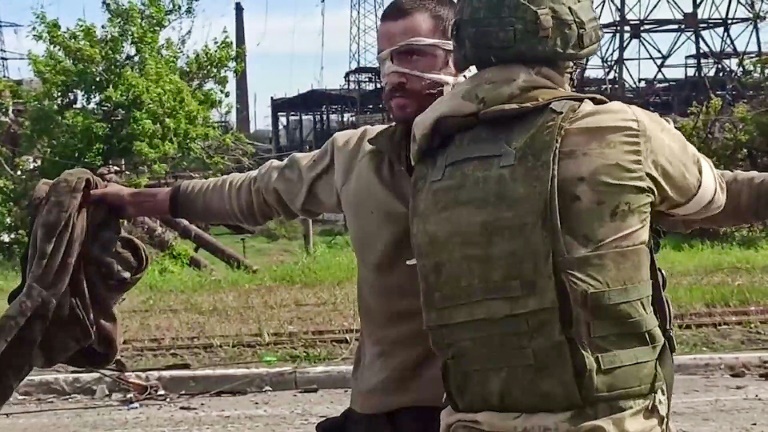
Russia said Thursday that 1,730 Ukrainian soldiers had surrendered this week at the Azovstal steel plant in Mariupol, showing some emerging on crutches after a desperate battle that has become emblematic of the nearly three-month-old war.

The number included 80 who were wounded and taken to a hospital in Russia-controlled territory in eastern Ukraine, the defence ministry in Moscow said.

The ministry released a video appearing to show exhausted Ukrainian soldiers trudging out of the sprawling steelworks, after a weeks-long siege forced the defenders and civilians to huddle in tunnels with dire shortages of food, water and medicine.

Russian troops patted down those surrendering and inspected their bags as they exited, signalling the effective end of what Ukraine’s government had called a “heroic” resistance.

The International Committee of the Red Cross said it had registered “hundreds of Ukrainian prisoners of war” from the plant in Mariupol, a port city obliterated by Russian shelling.

Ukraine is hoping to exchange the Azovstal soldiers for Russian prisoners. But pro-Kremlin authorities in Ukraine’s eastern Donetsk region said some of them could be put on trial.

Ukrainian prosecutors have so far listed 12,595 alleged war crimes by the invaders, including the bombing of a maternity ward in Mariupol, and on Wednesday opened the first trial of a Russian soldier. 

– Please forgive me –

Vadim Shishimarin pleaded guilty to a war crime in shooting dead Oleksandr Shelipov, an unarmed 62-year-old man, in northeastern Ukraine on February 28 — four days into the invasion. 

The 21-year-old sergeant, who faces a life sentence, was remorseful as he took the dock for a second day on Thursday, as two other Russian soldiers went on trial elsewhere in Ukraine.

“I know that you will not be able to forgive me, but nevertheless I ask you for forgiveness,” Shishimarin said, addressing Shelipov’s widow in the cramped courtroom in Kyiv.

While Mariupol has fallen, Ukraine’s President Volodymyr Zelensky said the wider invasion was an “absolute failure” as he marked “Vyshyvanka Day”, an annual celebration of Ukrainian folk traditions.

Wearing an embroidered shirt instead of his usual military khaki top, Zelensky said on the Telegram social media platform that his people remained “strong, unbreakable, brave and free”.

Zelensky’s defiance, and his army’s dogged resistance, have earned the West’s admiration and a steady flow of military support. G7 finance ministers were meeting in Germany to thrash out more cash support.

G7 partners have to “assure Ukraine’s solvency within the next days, few weeks”, German Finance Minister Christian Lindner told the newspaper Die Welt.

But German Chancellor Olaf Scholz said there could be “no shortcuts” to membership of the European Union for Ukraine. Ukraine’s Foreign Minister Dmytro Kuleba condemned the “second-class treatment” of his country.

– Famine warning –

Russia’s actions are already redrawing the security map of Europe. 

US President Joe Biden hosted the leaders of Finland and Sweden to discuss their bids to join NATO, after the neighbouring nations decided to abandon decades of military non-alignment.

“They meet every NATO requirement and then some,” Biden told reporters with the Nordic leaders at his side, offering the “full, total, complete backing of the United States of America”.

However, NATO member Turkey is “determined” to block the applications, its President Recep Tayyip Erdogan said, calling Sweden in particular a “complete terror haven”.

NATO Secretary General Jens Stoltenberg said the alliance was “addressing the concerns that Turkey has expressed”.

Beyond Europe, the invasion also threatens to bring famine, UN Secretary-General Antonio Guterres said.

“Malnutrition, mass hunger and famine” could follow “in a crisis that could last for years,” Guterres warned, urging Russia to release grain exports from occupied Ukraine.

Russia and Ukraine produce 30 percent of the global wheat supply, and the war has already sent food prices surging around the world.

– Civilians under fire –

Despite their last-ditch resistance in places such as Mariupol, and the successful defence of Kyiv, Ukrainian forces are retreating in the east.

The losses often come after weeks of battles over urban hubs that are pulverised by artillery fire by the time the Russians surround them.

In Severodonetsk, 12 people were killed and another 40 wounded when Russian forces “randomly” shelled the eastern city, the regional governor.

Severodonetsk resident Nella Kashkina sat in her basement next to an oil lamp and prayed.

“I do not know how long we can last,” the 65-year-old said.

“We have no medicine left and a lot of sick people — sick women — need medicine. There is simply no medicine left at all.”

burs-jit/har

Namibia comes to Europe to sell its sunshine

As Europe struggles to decarbonise its economy and wean itself off Russian oil and gas, one of the world’s sunniest and most arid nations is pitching itself to the continent as an answer to its problems.

A delegation from sub-Saharan Africa’s driest country has been touring Europe to tout their nation as a potential powerhouse of clean energy.

They say Namibia can produce so much solar power it will soon be self-sufficient in electricity — and, by the end of the decade, could become an exporter of so-called green hydrogen.

“We came to Europe saying we have this amazing sun,” said James Mnyupe, economic adviser to the Namibian presidency.

He was in Rotterdam earlier this month for the “World Hydrogen Summit” trade fair and on Wednesday was making a pitch in Paris ahead of a trip to Davos.

A huge, chiefly desert country in southwestern Africa with a population of just 2.5 million, Namibia is sun-drenched and bone-dry.

That makes it perfect for erecting gigantic solar farms, whose power can be used to help make hydrogen — which in turn can be used for fuel or converted into ammonia to make fertiliser.

Producing hydrogen entails splitting water into its component parts of hydrogen and oxygen, using an energy-gobbling technique called electrolysis.

Namibia says it is in a unique position to make the process clean.

Boasting a vast coastline on the South Atlantic, it would use sea water that is desalinated and then electrolysed using clean renewables.

The hydrogen would be piped to a terminal and then exported, “to Rotterdam, Germany or South Africa” as well as used at home, said Mnyupe.   

– European needs –

The European Union plans to produce 10 million tonnes of green hydrogen from its own resources by 2030.

But it is also counting on 10 million tonnes of imports to replace coal, oil and gas in some industrial and transport sectors.

“We understand we cannot produce all this hydrogen in Europe domestically — it’s impossible,” said Jorgo Chatzimarkakis, secretary-general of the European trade association Hydrogen Europe.

“We have not enough sun all over Europe and not enough wind. That’s why the prime partner is Africa.”

The Europe-Namibia energy connection took an important step forward last November, three months before Russia invaded Ukraine and turned up the heat under the EU to diversify its sources.

Namibia selected Hyphen Hydrogen Energy, a joint venture between German renewables group Enertrag and investment vehicle Nicholas Holdings as its preferred bidder for a solar farm and green hydrogen project in Tsau Khaeb in the southwest of the country.

If all goes according to schedule, the first phase of electricity production will become operational from 2026. 

At full peak, the site could generate 300,000 tonnes of green hydrogen annually.

– ‘Emancipation’ –

But the investment at Tsau Khaeb also gives an idea of the funds that Namibia needs to lure if it hopes to become a hydrogen giant.

Hyphen on its website puts the overall commitment at $9.4 billion. That figure compares with Namibia’s annual GDP of $10.7 billion, according to World Bank statistics.

Chinese companies are “knocking at our door and they want to get involved,” Mnyupe  said.

Namibia, he said, will work “with everyone who is aligned with our vision to industrialise Namibia.”

The country hopes to get out of the rut in which many African countries find themselves — exporters of raw materials rather than of refined products that have higher added value.

One of the goals of solar investment is to achieve self-sufficiency in energy itself — around two-thirds of the country’s electricity is imported, mainly from South Africa.

“That’s the first step of economic emancipation,” said Mnyupe.

US Congress ready to approve another $40 bln for Ukraine

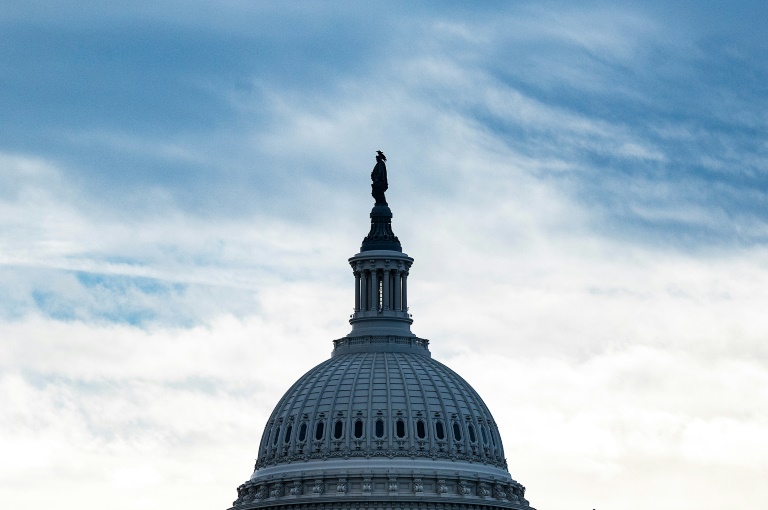
The US Congress prepared Thursday to approve a $40 billion aid package for Ukraine in the latest fulfillment of President Joe Biden’s promise of unwavering support for Kyiv as it fights off the Russian invasion.

Passage of the money is an unusually bipartisan move for harshly divided Washington. 

“Aid for Ukraine goes far beyond charity,” Republican Senate Minority Leader Mitch McConnell said. 

“The future of American security and core strategic interests will be shaped by the outcome of this fight,” he added, hours before Congress’ upper chamber was expected to vote through the package easily. 

– ‘Continuity of government’ –

Contained in the bundle is $6 billion earmarked to allow Ukraine to boost its armored vehicle inventory and air defense system. 

Nearly $9 billion is set aside to help with Ukrainian “continuity of government,” among other items, including humanitarian aid. 

Congress already approved almost $14 billion for Ukraine in mid-March, only weeks after Russia’s invasion. 

But as fighting has shifted away from the capital and to the eastern and southern parts of the country, Biden has been calling for another round of financial support for weeks.

The US president has often repeated his desire to lead in what he depicts as a great struggle of democracy against authoritarianism. But funds already designated for Ukraine support were about to run out, he said. 

The US House of Representatives already approved the $40 billion package — the equivalent to the 2020 GDP of Cameroon — last week. 

– ‘Pay now or pay later’ –

Such bipartisan support is rare in a Congress often divided right down party lines. 

“When it comes to Putin, either we pay now or we pay later,” said Republican Senator Lindsey Graham, who earlier in the conflict took to Twitter to call for the Russian president to be assassinated. 

Though it originally stuck to sending weapons seen as defensive, Washington has moved on to supplying artillery, helicopters and drones to the Ukrainian army, whose troops are trained to use them in the United States or in third countries before heading back to deploy them at the front. 

Another $9 billion of the latest package is also set to help the United States re-supply its own weapons back-stock. 

And the Senate further fulfilled its traditional role as the president’s ally in foreign affairs Wednesday morning by confirming Bridget Brink, a career diplomat, as the next US ambassador to Ukraine. 

The position had been vacant since 2019.

Close Bitnami banner
Bitnami