US Business

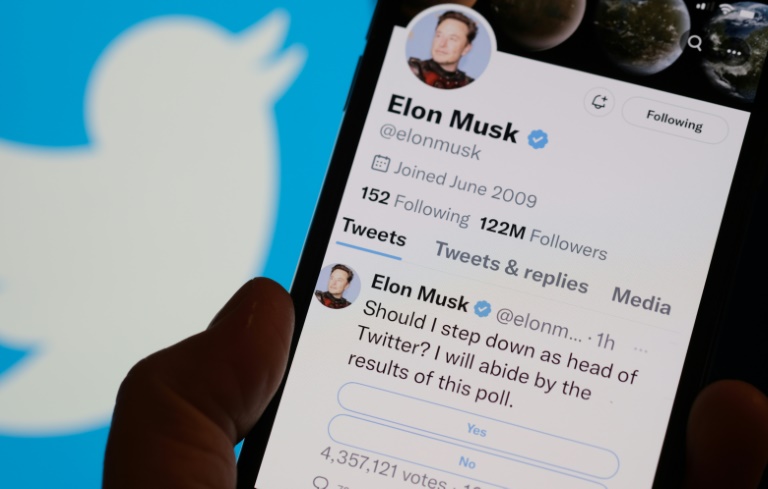
Twitter users vote to oust Elon Musk as CEO

Twitter users voted on Monday to oust owner Elon Musk as CEO in a highly unscientific poll he organized and promised to honor, just weeks after he took charge of the social media giant.

A total of 57.5 percent of more than 17 million accounts voted for him to step down. Musk, who is also the boss of car maker Tesla and rocket firm SpaceX, has not yet responded.

“The question is not finding a CEO, the question is finding a CEO who can keep Twitter alive,” the South African-born billionaire tweeted before the vote closed.

In a response to another tweet he added: “No one wants the job who can actually keep Twitter alive. There is no successor.”

Musk has fully owned Twitter since October 27 and has repeatedly courted controversy as CEO, sacking half of its staff, readmitting far-right figures to the platform, banning journalists and trying to charge for previously free services.

Analysts have also pointed out that the stock price of Tesla has slumped by one-third since the Twitter takeover and the share price briefly rallied by 3.3 percent on Monday before fading.

“It’s hard to ignore the numbers since [Twitter] deal closed,” tweeted investment expert Gary Black, saying he reckoned Tesla’s board was putting pressure on Musk to quit his Twitter role.

In discussions with users after posting his latest poll, Musk renewed his warnings that the platform could be heading for bankruptcy.

– ‘Won’t happen again’ –

Resorting to Twitter’s polling feature has been a favorite strategy of Musk’s to push through decisions, including the reinstatement of the account of former president Donald Trump.

Paris-based Reporters Without Borders, which defends the freedom of the press around the world, said the polls were a “crude and cynical” ploy.

“These methods appear to be democratic procedures, but in reality they are…the opposite of democracy,” said the group’s head Christophe Deloire.

The unpredictable entrepreneur posted his latest poll shortly after trying to extricate himself from yet another controversy.

On Sunday, Twitter users were told they would no longer be able to promote content from other social media sites.

But Musk seemed to reverse course a few hours later, writing that the policy would be limited to “suspending accounts only when that account’s *primary* purpose is promotion of competitors.”

“Going forward, there will be a vote for major policy changes. My apologies. Won’t happen again,” he tweeted.

The attempted ban had prompted howls of disapproval and even bemused Twitter cofounder Jack Dorsey, who had backed Musk’s takeover.

He questioned the new policy with a one-word tweet: “Why?”

– ‘Perfect storm’ –

Musk has generated a series of controversies in his short reign.

Analyst Dan Ives from Wedbush called his tenure a “perfect storm.” 

He flagged that “advertisers have run for the hills and left Twitter squarely in the red ink potentially on track to lose roughly $4 billion per year.”

Shortly after taking over the platform, Musk announced the site would charge $8 a month to verify account holders’ identities, but had to suspend the “Twitter Blue” plan after an embarrassing rash of fake accounts. It has since been relaunched.

On November 4, with Musk saying the company was losing $4 million a day, Twitter laid off half of its 7,500-strong staff.

Musk also reinstated the account of Donald Trump — though the former US president indicated he had no interest in the platform — and said Twitter would no longer work to combat Covid-19 disinformation.

In recent days, he suspended the accounts of several journalists after complaining some had published details about the movements of his private jet, which he claimed could endanger his family.

Employees of CNN, The New York Times and The Washington Post were among those affected in a move that drew sharp criticism, including from the European Union and the United Nations.

The Washington Post’s executive editor Sally Buzbee said the suspension of journalist Taylor Lorenz’s account “further undermines Elon Musk’s claim that he intends to run Twitter as a platform dedicated to free speech.”

Some of the suspended accounts have since been reactivated.
Putin insists no plan to absorb Belarus on visit in Ukraine shadow

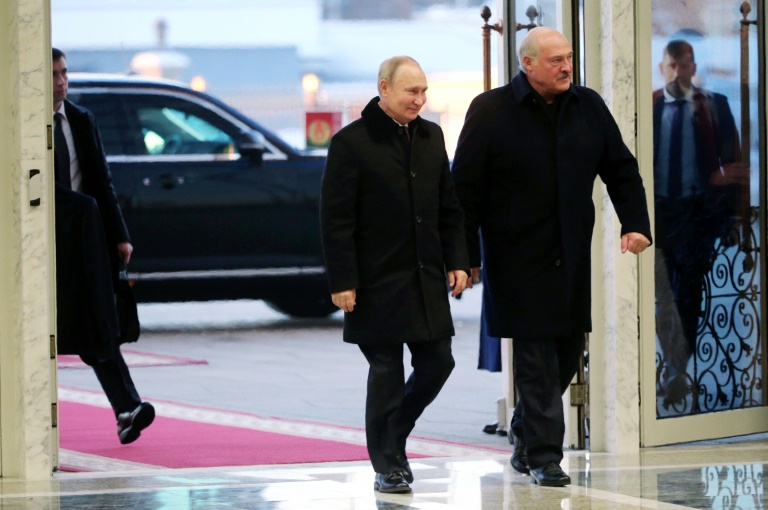
President Vladimir Putin denied plans to absorb Belarus as he paid a rare visit Monday to the country whose strongman assisted his invasion of neighbouring Ukraine.

Putin flew into Minsk with his defence and foreign ministers in tow, hours after Russian forces launched a swarm of attack drones at critical infrastructure in Kyiv, which provoked emergency blackouts in a dozen regions.

Putin said that Russia and Belarus — slapped with new Western sanctions since President Alexander Lukashenko was declared the winner of a sixth term in 2020 elections widely criticised as fraudulent — were “united by a common history and spiritual values”.

Putin called the countries “closest allies and strategic partners” but said that rumours that Russia sought to take over Belarus came from “ill-wishers”.

“Russia has no interest in absorbing anyone, this would simply make no sense,” Putin said.

In Washington, State Department spokesman Ned Price scoffed at Putin’s remarks.

“I think a statement like that has to be treated as the height of irony coming from a leader who is seeking at the present moment — right now — to violently absorb his other, peaceful next-door neighbour,” Price said.

“We have seen the Lukashenko regime essentially cede its sovereignty — cede its independence — to Russia,” Price said.

Belarus has let Russian forces use its territory and hours before Putin touched down in Minsk, Moscow released footage of drills with Belarusian forces including tank manoeuvres and sniper fire at a snow-dusted training ground.

Lukashenko urged closer military cooperation and said that Russia and Belarus are “open for dialogue with other states, including European ones.”

“I hope that soon they will listen to the voice of reason,” Lukashenko said.

Speculation mounted ahead of the Russian leader’s visit that he would pressure Lukashenko to send troops to Ukraine to fight alongside the Russians after Moscow suffered a string of defeats in nearly 10 months of fighting.

Kremlin spokesman Dmitry Peskov, however, dismissed the reports “as totally stupid, groundless fabrications.”

In October, Belarus announced the formation of a joint regional force with Moscow with several thousand Russian servicemen arriving in the ex-Soviet country.

– New explosions near Kyiv –

The drone attacks wounded three people near Kyiv. They came as Russia said it shot down several US-made missiles over its airspace near Ukraine.

“I first heard the air raid siren… I thought there is going to be a drone attack. For the first time, it scared me,” said Natalia Dobrovolska, a 68-year-old resident of Kyiv.

She described hearing multiple explosions before power shut off in her building in western Kyiv. Officials said Russia had flown in 35 attack drones nationwide, including 23 over Kyiv.

Ukraine said it downed 30 of the aerial weapons, including Iranian-made “Shaheds”, which have pummelled the capital in recent weeks.

Mayor Vitali Klitschko said critical infrastructure facilities were damaged while regional authorities said nine homes had been scarred by the attacks.

Ukraine has experienced frequent and deadly aerial attacks. After a series of battlefield setbacks, Moscow stepped up its aerial campaign to target the country’s energy grid.

– Russia ‘must fail’ –

With winter setting in, missile and drone attacks have plunged cities around the country into darkness, and severed water and heat supplies to millions of Ukrainians.

Speaking to the leaders of several NATO countries via video link on Monday, President Volodymyr Zelensky urged Ukraine’s allies to supply its military with more weapons.

“Russian aggression can and must fail. And our task now is to accelerate it,” he told the leaders assembled in Riga.

He said in a late-night address Sunday that some nine million of Ukraine’s estimated 40 million people had their electricity restored after Russia’s previous missile barrage last week.

UN Secretary-General Antonio Guterres, in a year-end news conference, said with regret that he expected the war “will go on.”

“I am not optimistic about the possibility of effective peace talks in the immediate future,” Guterres said.

– Gas price cap –

The West has sought to keep the pressure on Russia. European Union ministers, after months of wrangling, on Monday decided on a price gap on Russian natural gas, following an agreement that came in force this month on Russian oil.

The price ceiling on natural gas was fixed at 180 euros per megawatt hour, although the European Commission said it may suspend the cap if “the risks outweigh the benefits” following protracted negotiations involving Germany, the continent’s largest economy which backs Ukraine but is highly dependent on imported energy.

“It wasn’t an easy thing to achieve,” Maltese Energy Minister Miriam Dalli said.

The Kremlin lashed out at the latest measure, with Peskov saying the cap was “unacceptable” and a violation of market processes.

EU reaches gas price cap agreement, angering Russia

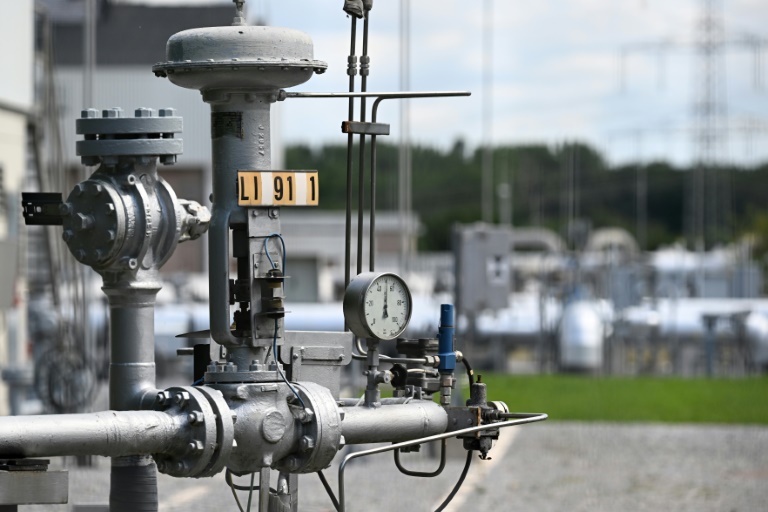
EU energy ministers on Monday overcame months of wrangling to agree a price cap for natural gas in the bloc, drawing an immediate warning from Russia that the move was “unacceptable”.

The price ceiling was fixed at 180 euros per megawatt hour, but with conditions attached and a word of caution from the European Commission that it may suspend the measure if “the risks outweigh the benefits”.

The aim of the cap on gas prices traded within the European Union is to mitigate an energy crunch brought on by Russia’s invasion of Ukraine.

EU countries are worried that they will have a hard time filling gas storage tanks in time for next winter.

Russia — before the war, the top exporter of gas to the EU — has turned off the taps in retaliation for a series of crippling sanctions against it designed to deplete its income used for its war.

The Kremlin has already said it won’t supply oil to countries applying a distinct EU embargo on its shipments of crude, and on Monday lashed out at the gas price cap.

“This is a violation of the market price-setting, an infringement on market processes, any reference to a (price) cap is unacceptable,” Kremlin spokesman Dmitry Peskov was cited as saying by Russian state-run news agencies. 

– Divisive issue –

The EU price cap will apply from February 15 and run for a year.

It will be triggered if the European benchmark price for natural gas futures goes above 180 euros per megawatt hour for three consecutive days.

That ceiling would then apply on trades for at least following 20 working days. For the cap to be deactivated, there has to be three consecutive days of trading below the 180-euro ceiling.

The mechanism is in response to high gas prices seen in Europe in August, which briefly soared to nearly 340 euros per megawatt hour, rattling EU governments.

The price of gas in Europe has since fallen, but remains historically high, and was trading at just under 112 euros per megawatt hour on Monday.

The gas price cap divided EU countries. 

Many said it was urgent to bring it in to force down energy costs. But others — led by economic powerhouse Germany — feared it could provoke suppliers of liquified natural gas (LNG) to snub Europe in favour of more lucrative Asian markets.

– Consequences –

The European Commission was also wary of the consequences of a price cap, and it initially proposed a ceiling of 275 euros and a two-week period above that number before it could be activated.

But that proposal met fierce objections from countries, such as Spain and Greece which made other broadly-backed energy measures — including joint gas purchases and speeded-up authorisations for renewable energy sources — contingent on a viable price cap.

Monday’s meeting saw Germany agree to the much lower price cap, and the much shorter triggering period to unlock the entire package.

“It wasn’t an easy thing to achieve,” Maltese Energy Minister Miriam Dalli said.

In acknowledgement of Germany’s concerns, a condition attached to the price cap is that futures prices for gas in Europe must to be at least 35 euros more than that paid for LNG on global markets.

EU energy commissioner Kadri Simson also said the European Securities and Markets Authority (ESMA) and the bloc’s Agency for the Cooperation of Energy (ACER) would present a “data report” on the likely consequences of the unprecedented price cap before it takes effect.

“The Commission stands ready to suspend ex-ante the activation of the mechanism, if an analysis from ECB (European Central Bank), ESMA and ACER shows that the risks outweigh the benefits,” she said.

France’s energy minister, Agnes Pannier-Runacher, said that, with the price cap agreed, attention must now turn to a longer-term reform of the EU’s energy market, notably unhitching the price of gas from that of electricity.

Ethiopia's largest bank says Tigray services resume

The Commercial Bank of Ethiopia said Monday that it has resumed financial services in some towns in the war-torn region of Tigray, enabling residents to access their funds after a shutdown lasting more than a year.

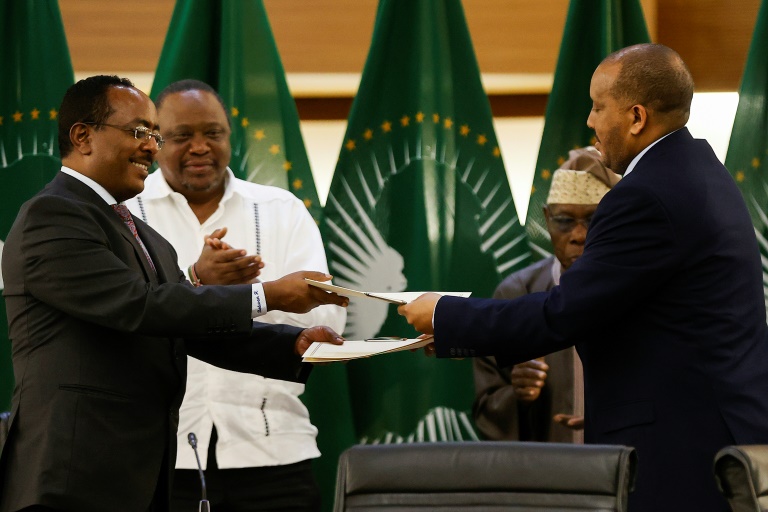
The announcement follows the signing of a peace deal between the federal government and Tigrayan rebels last month, aimed at ending the brutal two-year conflict and humanitarian crisis in northern Ethiopia.

“Following the peace agreement reached recently, the (CBE) branches we have in Shire, Alamata and Korem cities have started receiving money sent from abroad and locally as well as depositing money,” the country’s largest bank said in a statement.

“Our bank was forced to suspend its banking services because of the instability in the northern part of the country,” the statement said.

“Conditions permitting we will continue with our efforts to expand our services and step by step restart services in all branches.”

Access to northern Ethiopia is severely restricted and Tigray has been under a communications blackout for more than a year, making it impossible for journalists to independently verify the situation on the ground.

– Humanitarian disaster –

Since the November 2 peace agreement inked in South Africa, fighting between federal troops and the Tigray People’s Liberation Front has ceased, with the TPLF saying that 65 percent of its forces have “disengaged” from battle lines.

Earlier this month, the country’s electricity operator announced that the capital of Tigray had been reconnected to the national power grid after more than a year of cuts caused by the conflict.

The war left Tigray devastated and lacking access to basic services including banking, electricity, fuel and communications for more than a year.

Humanitarian aid has trickled into the north since the agreement but remains well short of meeting the population’s acute needs.

The death toll resulting from the war is unclear, but the International Crisis Group think-tank and Amnesty International have described it as one of the bloodiest in the world. 

All sides have been accused of abuses, while the United Nations says the conflict has displaced more than two million people and driven hundreds of thousands to the brink of famine.

The peace deal is aimed at ending the hostilities, disarming Tigrayan fighters, restoring federal government authority and reopening access to the region.

But the agreement makes no mention about the withdrawal of Eritrean forces, who have backed Ethiopia’s government during the conflict and been accused of horrific abuses.

Since the truce was agreed, the TPLF has regularly denounced Eritrean troops for allegedly committing human rights violations in Tigray.

According to the UN World Food Programme, more than 13 million people in northern Ethiopia now depend on humanitarian aid, including more than 90 percent of Tigray’s population of six million.

Prime Minister Abiy Ahmed sent troops to Ethiopia’s northernmost region in November 2020, accusing the TPLF, then the regional ruling party, of attacking federal army camps.

The TPLF dominated politics in the Horn of Africa nation for nearly three decades before Nobel Peace Prize laureate Abiy took office in 2018.

Honeywell to pay $160 mn to settle US, Brazil bribe case

US industrial giant Honeywell will pay $160 million to settle criminal and civil probes in Brazil and the United States over bribes in order to win business from two national oil companies, the government said Monday.

Company officials offered about $4 million in payments to a former high-ranking Petrobras official between 2010 and 2014 to win a $425 million contract to design and build an oil refinery for the Brazilian petroleum giant, the Department of Justice said in a statement.

In exchange for the bribe, the Petrobras official provided “inside information and secret assistance” that enabled a Honeywell unit to win a contract from which it made $105.5 million in profits, the DOJ said.

“Honeywell UOP conspired to bribe a high-ranking official at Petrobras to win a contract from the company, effectively stifling competition,” said Michael Glasheen, an acting assistant director of the FBI Washington Field Office, which worked with agents in Brazil on the matter.

“Bribery schemes like this one transcend borders, and collaboration with our foreign partners is crucial to the fight against international corruption.”

About half of the $160 million in penalties went to settle a parallel civil case launched by the US Securities and Exchange Commission.

Besides the Petrobras matter, the SEC settlement also concerned charges that Honeywell in 2011 paid more than $75,000 in bribes to Algerian government officials to win business with Sonatrach, Algeria’s state-owned oil company.

Record year for auction houses Christie's and Sotheby's

Auction house Christie’s on Monday announced record sales of $8.4 billion in 2022, outshining its rival Sotheby’s, which also posted its best-ever result at $8 billion for the year.

Christie’s racked up $7.2 billion in auctions and another $1.2 billion in private sales, easily topping the $7.1 billion it made in 2021 as the art world emerged from the Covid-19 pandemic, which greatly hindered auction operations.

“In 2022, despite a challenging macro-environment, Christie’s has achieved our highest ever global sales,” chief executive officer Guillaume Cerutti said, referring to economic challenges sparked by inflation and the war in Ukraine.

He noted “the resilience of the art and luxury markets, the remarkable success of several major art collections — including the unforgettable Paul Allen sale — and the expertise and hard work of our teams around the world.”

Allen, the co-founder of Microsoft alongside Bill Gates, died in 2018. In 2009, he signed the “Giving Pledge” — a promise to donate the majority of one’s wealth to charity.

His extensive collection, spanning 500 years of art history, raked in a massive $1.6 billion. Five works went for more than $100 million each, including a Cezanne, a Van Gogh and a Gauguin.

And at a separate Christie’s sale in May, a famed Andy Warhol portrait of Marilyn Monroe — “Shot Sage Blue Marilyn” — sold for $195 million, setting a record for a piece of 20th century art.

– Who was buying? –

This year at Christie’s, buyers from North and South America accounted for more of total sales as compared with 2021 — 40 percent of the value versus 35 percent — while Asian buyers were on the decline.

Nevertheless, according to French billionaire Francois Pinault, whose holding company Artemis controls Christie’s, Asian buyers were “absolutely crucial” to the overall success of the Allen sale. 

The auction house said its banner year was fueled by a “new generation of collectors”: 35 percent of all buyers in 2022 were first-time clients, and 34 percent of them qualify as millennials.

Asia has the “fastest-growing base of new collectors,” Christie’s said. 

Cerutti noted that cars and real estate did not figure in the results.

Last week, Sotheby’s announced a year-end total sales projection of $8 billion, as compared with $7.3 billion in 2021. That data includes art and luxury items, but also homes and collector cars.

The auction house — owned by French-Israeli telecoms magnate Patrick Drahi — also noted that its client base in Asia was “rapidly expanding,” and that those collectors were “spending more per person on average than collectors from elsewhere.”

US lawmakers mull calling for charges against 'unfit' Trump

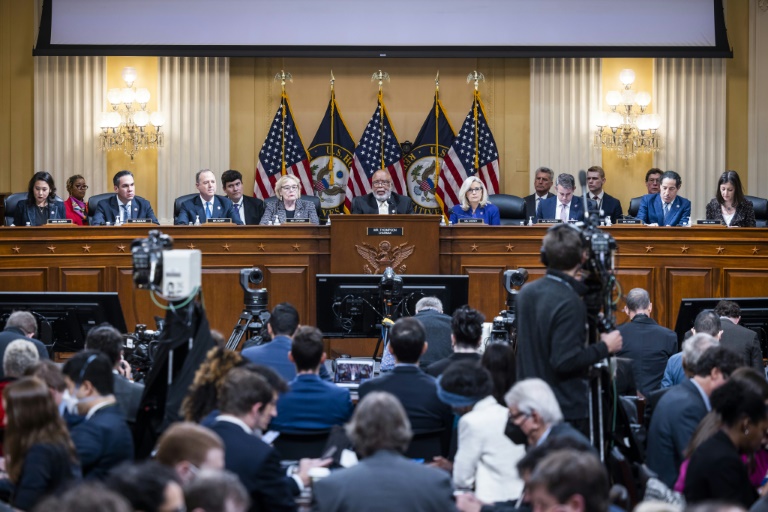
Lawmakers probing last year’s deadly assault on the US Capitol held a final public meeting Monday that is expected to end in a vote on whether to recommend criminal charges against former president Donald Trump.

The decision will be the culmination of an 18-month probe by a House of Representatives select committee that interviewed more than 1,000 witnesses and held explosive public hearings on the storming of Congress on January 6, 2021.

At least five people died after a mob whipped up by Trump’s false claims of a stolen election, and directed to march on Congress by the defeated president, ransacked the seat of US democracy in a thwarted bid to prevent the transfer of power to President Joe Biden.

The committee is expected to urge the Justice Department to pursue Trump on at least three charges related to the violence — inciting an insurrection, obstructing an official proceeding and conspiring to defraud the United States.

Vice-chair Liz Cheney accused Trump of “a clear dereliction of duty” in failing to immediately attempt to stop the riot and called him “unfit for any office.” 

“No man who would behave that way at that moment in time can ever serve in any position of authority in our nation again,” she said.

The referrals would be largely symbolic, as the panel has no control over charging decisions, which rest with the Justice Department.

Jack Smith, a largely independent special prosecutor appointed by Attorney General Merrick Garland, is leading his own investigation into Trump related to the 2020 election.

But the lawmakers’ move would nevertheless be historic, as Congress has never made a criminal referral against a sitting or former president. 

It would also be a major blow to Trump amid a series of missteps in the weeks since he announced a comeback bid for the White House.

Charges could result in a ban from public office for the 76-year-old tycoon, who still wields considerable power in the Republican Party, and even prison time.

“To cast a vote in the United States is an act of faith and hope,” committee chairman Bennie Thompson said.

“That faith in our system is the foundation of American democracy. If the faith is broken, so is our democracy. Donald Trump broke that faith.”

– ‘Congress cannot remain silent’ –

The seven Democratic and two Republican panel members are winding down their work before the end of the year, and have compiled their findings into an eight-chapter report set to be released on Wednesday. 

The executive summary is expected to be issued Monday.

The committee maintains that Trump “oversaw and coordinated a sophisticated seven-part plan to overturn the presidential election and prevent the transfer of presidential power.”

Investigators say the plot began with Trump’s campaign to spread allegations he knew were false that the election was marred by widespread fraud.

He is accused of trying to corrupt the Justice Department and of pressuring his vice president Mike Pence, as well as state election officials and legislators, to overturn the vote by violating the Constitution and the law.

Trump is also accused of summoning and assembling the mob in Washington, and directing it toward the Capitol despite knowing it was armed with assault rifles, handguns and numerous other weapons. 

And he ignored pleas from his team to take action to stop the violence, lawmakers say.

The committee’s case was bolstered by a federal judge in California who found it “more likely than not that President Trump corruptly attempted to obstruct the Joint Session of Congress on January 6.” 

Lawmakers are also mulling criminal referrals of other figures in Trump’s inner circle, including lawyer John Eastman, one of the architects of the defeated president’s bid to cling to power.

“We’re focused on key players… where there is sufficient evidence or abundant evidence that they committed crimes,” committee member Jamie Raskin told reporters last week.

“And we’re focused on crimes that go right to the heart of the constitutional order such that the Congress cannot remain silent.”

Authorities say some 140 officers were assaulted during the riot. Around 900 people have been arrested on suspicion of taking part in the attack and more than 800 have been charged with crimes ranging from trespass and assaulting police to seditious conspiracy.

Trump has repeatedly disparaged the House panel on his own Truth Social platform, calling the members “Democrats, misfits and thugs.”

Sedition trial of Proud Boys begins for US Capitol attack

Jury selection began on Monday in the trial of five members of the right-wing extremist group the Proud Boys charged with sedition in connection with last year’s assault on the US Capitol.

Proud Boys leader Enrique Tarrio and the other defendants are accused of trying to stop the January 6, 2021 certification by Congress of Democrat Joe Biden’s presidential election victory over Donald Trump.

Tarrio, the former “national chairman” of the Proud Boys, was not in Washington on January 6 but is alleged to have directed the storming of the Capitol by members of the neofascist organization.

Four of his lieutenants — Dominic Pezzola, Joseph Biggs, Ethan Nordean and Zachary Rehl — are accused of directly taking part in the assault on Congress.

In widely-viewed video footage, Pezzola can be seen using a riot shield stolen from police to break a window at the Capitol.

Tarrio was arrested in Miami in March and also faces charges along with the others of conspiracy to obstruct an official proceeding, obstruction of law enforcement and destruction of government property.

More than 900 people have been arrested in connection with the storming of Congress by Trump supporters, but only a handful have been charged with seditious conspiracy, which carries a sentence of up to 20 years in prison.

Two leaders of another far-right group, the Oath Keepers, were found guilty of seditious conspiracy last month, including the founder, Stewart Rhodes.

The 12-person jury acquitted three other members of the Oath Keepers who faced the sedition charge, but it convicted them of lesser offenses such as obstructing an official proceeding.

According to Tarrio’s indictment, he met with Rhodes on January 5 in an underground parking garage in Washington and was in contact with members of the Proud Boys who breached the Capitol.

The Proud Boys trial, which is expected to last several weeks, is being held at the same federal courthouse in Washington where the members of the Oath Keepers went on trial. 

The assault on Congress left at least five people dead and 140 police officers injured and followed a fiery speech by Trump to thousands of his supporters near the White House.

Trump was impeached for a historic second time by the House after the Capitol riot — he was charged with inciting an insurrection — but was acquitted by the Senate.

Attorney General Merrick Garland named a special counsel this month to oversee the investigation into Trump’s own efforts to overturn the election result and the attack on Congress.

A House committee which has been investigating the Capitol riot is expected to recommend on Monday that the Justice Department pursue criminal charges against Trump.

Amber Heard settles defamation case with ex Johnny Depp

Actress Amber Heard announced Monday that she had made the “very difficult” decision to settle the multimillion dollar defamation case brought by her former husband Johnny Depp.

Heard, in a post on Instagram, did not reveal the terms of the settlement, which comes after a Virginia jury ordered her to pay $10 million to the “Pirates of the Caribbean” star.

The entertainment website TMZ, citing sources with direct knowledge, said the settlement calls for the 36-year-old Heard to pay $1 million to her 59-year-old former husband.

Heard, who had a starring role in the movie “Aquaman,” said she was dropping her appeal of the damages awarded by the jury and settling the case because she “simply cannot go through” another trial.

“After a great deal of deliberation I have made a very difficult decision to settle the defamation case,” she said.

“I make this decision having lost faith in the American legal system, where my unprotected testimony served as entertainment and social media fodder,” she said.

“Now I finally have an opportunity to emancipate myself from something I attempted to leave over six years ago and on terms I can agree to,” she said. “I have made no admission. This is not an act of concession.”

The jury found Depp and Heard liable for defamation — but sided more strongly with the “Pirates” star following an intense six-week trial riding on bitterly contested allegations of domestic abuse.

The jury awarded $10.35 million in damages to Depp.

Heard, who had countersued, was awarded $2 million.

– ‘Defended my truth’ –

Depp sued Heard over an op-ed she wrote for The Washington Post in December 2018 in which she described herself as a “public figure representing domestic abuse.”

The Texas-born Heard did not name Depp in the piece, but he sued her for implying he was a domestic abuser and sought $50 million in damages.

Heard countersued for $100 million, saying she was defamed by statements made by Depp’s lawyer, Adam Waldman, who told the Daily Mail her abuse claims were a “hoax.”

The case, live streamed to millions, featured lurid and intimate details about the Hollywood celebrities’ private lives.

Heard’s lawyers said following the trial that the actress did not have the resources to pay Depp the $10 million in damages.

In her Instagram post, Heard said she “defended my truth and in doing so my life as I knew it was destroyed.

“The vilification I have faced on social media is an amplified version of the ways in which women are revictimised when they come forward,” she said.

“I was exposed to a type of humiliation that I simply cannot relive.

“Even if my US appeal is successful, the best outcome would be a retrial where a new jury would have to consider the evidence again,” she said. “I simply cannot go through that for a third time.”

EU reaches gas price cap agreement at 180 euros/MWh

EU energy ministers on Monday overcame months of wrangling to agree a price cap for natural gas in the bloc of 180 euros per megawatt hour, effective from mid-February.

“It wasn’t an easy thing to achieve,” Maltese Energy Minister Miriam Dalli said.

The agreement, set out in a European Council statement, unlocks other pre-agreed measures to mitigate an energy crunch Europe is facing as a consequence of Russia’s war in Ukraine. 

They include joint gas purchases, a future new benchmark for pricing gas, and speedier authorisations for renewable energy sources.

It took four months for the 27 EU member states to overcome divisions on the issue.

One camp wanted to urgently bring down gas prices sent soaring by Russia’s war in Ukraine by limiting how high the price for gas used in electricity generation could go. 

The other, led by heavyweight Germany, was leery of a too-easily-triggered price cap that could scare off liquified natural gas (LNG) supplies to more lucrative markets in Asia.

In the end, Germany voted in favour of the 180-euro price cap, which was sharply lower than a 275-euro limit initially proposed by the European Commission.

Tough conditions the commission had suggested for triggering the price cap were significantly eased, but strings were still attached.

The EU document said the price cap regime — in force from February 15 — would require the 180-euro limit to be breached for three consecutive days, instead of the two-week period initially suggested by the commission.

It would also require the month-ahead price for gas in Europe to be at least 35 euros more than that paid for LNG on global markets.

Europe’s benchmark price for natural gas delivered via pipeline was trading at just under 112 euros per megawatt hour on Monday. It briefly soared to nearly 340 euros per megawatt hour over the summer.

“We have managed to reach a very important agreement on the price ceiling for gas,” said Czech Industry Minister Jozef Sikela, who chaired the meeting under his country’s EU presidency.

“Europe will thus have a package of measures to help it prepare for next winter and protect citizens and businesses from extreme price volatility.”

It was “not easy to understand its ultimate impact, given all the safeguards included,” tweeted Simone Tagliapietra, an expert at the Bruegel think tank in Brussels who analyses EU energy issues.

“This is no silver bullet,” he warned, saying EU countries still needed to cut back on public and business demand for gas-powered energy, and to focus more on transitioning to greener sources.

France’s energy minister, Agnes Pannier-Runacher, said that, with the price cap agreed, attention must now turn to a longer-term reform of the EU’s energy market, notably unhitching the price of gas from that of electricity.

Close Bitnami banner
Bitnami