US Business

Twitter users vote to oust Elon Musk as CEO

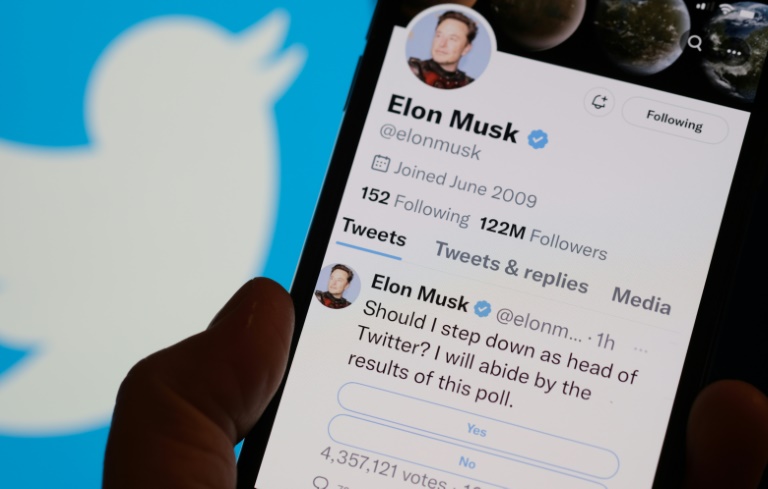
Twitter users voted on Monday to oust controversial owner Elon Musk as CEO in an unscientific poll he organized and promised to honor, just weeks after he took charge of the social media giant.

A total of 57.5 percent of more than 17 million accounts voted for him to step down. Musk, who is also the boss of car maker Tesla and rocket firm SpaceX, has not yet responded.

Musk has fully owned Twitter since October 27 and has repeatedly courted controversy as CEO, sacking half of its staff, readmitting far-right figures to the platform, banning journalists and trying to charge for previously free services.

Analysts have also pointed out that the stock price of Tesla has slumped by one-third since the Twitter takeover and the share price briefly rallied by 3.3 percent on Monday before fading.

“It’s hard to ignore the numbers since [Twitter] deal closed,” tweeted investment expert Gary Black, saying he reckoned Tesla’s board was putting pressure on Musk to quit his Twitter role.

In discussions with users after posting his latest poll, Musk claimed he had no successor in mind and renewed his warnings that the platform could be heading for bankruptcy.

– Dorsey bemused –

The unpredictable billionaire posted the poll shortly after trying to extricate himself from yet another controversy.

On Sunday, Twitter users were told they would no longer be able to promote content from other social media sites.

But Musk seemed to reverse course a few hours later, writing that the policy would be limited to “suspending accounts only when that account’s *primary* purpose is promotion of competitors.”

“Going forward, there will be a vote for major policy changes. My apologies. Won’t happen again,” he tweeted.

The attempted ban had prompted howls of disapproval and even bemused Twitter cofounder Jack Dorsey, who had backed Musk’s takeover.

He questioned the new policy with a one-word tweet: “Why?”

– ‘Perfect storm’ –

Musk has generated a series of controversies in his short reign.

Analyst Dan Ives from Wedbush called his tenure a “perfect storm.” 

He flagged that “advertisers have run for the hills and left Twitter squarely in the red ink potentially on track to lose roughly $4 billion per year we estimate.”

Shortly after taking over the platform, Musk announced the site would charge $8 a month to verify account holders’ identities, but had to suspend the “Twitter Blue” plan after an embarrassing rash of fake accounts. It has since been relaunched.

On November 4, with Musk saying the company was losing $4 million a day, Twitter laid off half of its 7,500-strong staff.

Musk also reinstated the account of Donald Trump — though the former US president indicated he had no interest in the platform — and said Twitter would no longer work to combat Covid-19 disinformation.

In recent days, he suspended the accounts of several journalists after complaining some had published details about the movements of his private jet, which he claimed could endanger his family.

Employees of CNN, The New York Times and The Washington Post were among those affected in a move that drew sharp criticism, including from the European Union and the United Nations.

The Washington Post’s executive editor Sally Buzbee said the suspension of journalist Taylor Lorenz’s account “further undermines Elon Musk’s claim that he intends to run Twitter as a platform dedicated to free speech.”

Some of the suspended accounts have since been reactivated.
Twitter users vote to oust Elon Musk as CEO

Twitter users voted on Monday to oust controversial owner Elon Musk as CEO in an unscientific poll he organized and promised to honor, just weeks after he took charge of the social media giant.

A total of 57.5 percent of more than 17 million accounts voted for him to step down. Musk, who is also the boss of car maker Tesla and rocket firm SpaceX, has not yet responded.

Musk has fully owned Twitter since October 27 and has repeatedly courted controversy as CEO, sacking half of its staff, readmitting far-right figures to the platform, banning journalists and trying to charge for previously free services.

Analysts have also pointed out that the stock price of Tesla has slumped by one-third since the Twitter takeover and the share price briefly rallied by 3.3 percent on Monday before fading.

“It’s hard to ignore the numbers since [Twitter] deal closed,” tweeted investment expert Gary Black, saying he reckoned Tesla’s board was putting pressure on Musk to quit his Twitter role.

In discussions with users after posting his latest poll, Musk claimed he had no successor in mind and renewed his warnings that the platform could be heading for bankruptcy.

– Dorsey bemused –

The unpredictable billionaire posted the poll shortly after trying to extricate himself from yet another controversy.

On Sunday, Twitter users were told they would no longer be able to promote content from other social media sites.

But Musk seemed to reverse course a few hours later, writing that the policy would be limited to “suspending accounts only when that account’s *primary* purpose is promotion of competitors.”

“Going forward, there will be a vote for major policy changes. My apologies. Won’t happen again,” he tweeted.

The attempted ban had prompted howls of disapproval and even bemused Twitter cofounder Jack Dorsey, who had backed Musk’s takeover.

He questioned the new policy with a one-word tweet: “Why?”

– ‘Perfect storm’ –

Musk has generated a series of controversies in his short reign.

Analyst Dan Ives from Wedbush called his tenure a “perfect storm.” 

He flagged that “advertisers have run for the hills and left Twitter squarely in the red ink potentially on track to lose roughly $4 billion per year we estimate.”

Shortly after taking over the platform, Musk announced the site would charge $8 a month to verify account holders’ identities, but had to suspend the “Twitter Blue” plan after an embarrassing rash of fake accounts. It has since been relaunched.

On November 4, with Musk saying the company was losing $4 million a day, Twitter laid off half of its 7,500-strong staff.

Musk also reinstated the account of Donald Trump — though the former US president indicated he had no interest in the platform — and said Twitter would no longer work to combat Covid-19 disinformation.

In recent days, he suspended the accounts of several journalists after complaining some had published details about the movements of his private jet, which he claimed could endanger his family.

Employees of CNN, The New York Times and The Washington Post were among those affected in a move that drew sharp criticism, including from the European Union and the United Nations.

The Washington Post’s executive editor Sally Buzbee said the suspension of journalist Taylor Lorenz’s account “further undermines Elon Musk’s claim that he intends to run Twitter as a platform dedicated to free speech.”

Some of the suspended accounts have since been reactivated.
European stocks attempt pre-Christmas rebound

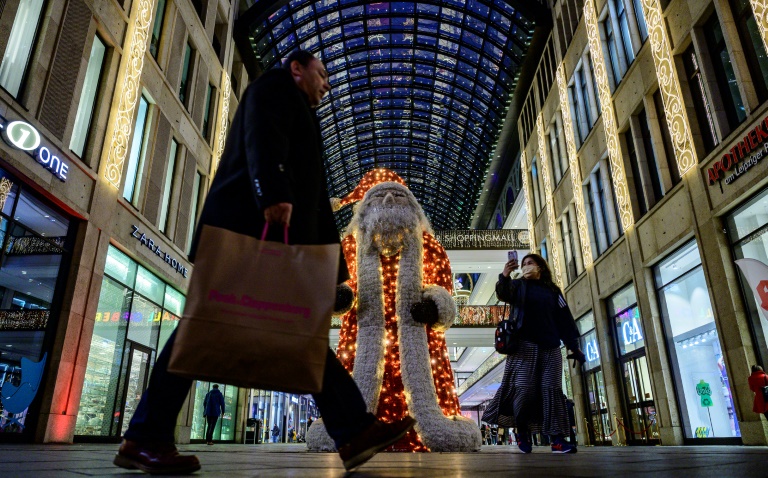
European equities rose Monday in light pre-Christmas trade, rebounding gently from last week’s losses that followed bumper interest rate hikes, but Wall Street and Asian markets failed to get into the festive spirit.

Equity markets often experience a so-called Santa rally, when prices rise during thin year-end trading dominated by small investors in a festive mood.

“Everyone, it seems, is waiting to see if Santa is going to come around, which leaves the market stuck between feelings of hope and angst,” said market analyst Patrick O’Hare at Briefing.com.

“Accordingly, there isn’t much happening at the broad market level this morning,” he added.

The blue-chip Dow edged lower in late morning trading, while the broader S&P 500 and tech-heavy Nasdaq Composite showed deeper losses.

Michael Hewson at CMC Markets said that most investors are likely “content to sit on the side-lines with the main focus likely to be on this week’s core PCE inflation data and personal spending numbers for November which are due on Friday.”

Meanwhile in Europe, stocks moved timidly higher.

Both Frankfurt and London rose 0.4 percent, while Paris added 0.3 percent.

“Markets are grinding higher as some traders are optimistic about valuations which seem to them somewhat attractive,” AvaTrade analyst Naeem Aslam told AFP.

“We really don’t have much volume in markets as traders are away for holidays,” he added.

“Overall I think it’s going to be pretty subdued trading, given the lack of significant data to react to,” noted analyst Susannah Streeter at stockbroker Hargreaves Lansdown.

Asian indices, however, fell on lingering concern over a possible global recession caused by moves to fight inflation from top central banks.

Equities took a turn south last week after monetary policymakers around the world signalled that while price rises appeared to be stabilising, more work would be needed to get them under control.

All three main indexes on Wall Street ended sharply lower Friday after the Federal Reserve warned it would continue tightening monetary policy into 2023.

That was followed by similar warnings from the European Central Bank and Bank of England, while data suggested economies were feeling the pinch, dealing a blow to sentiment heading into the Christmas break.

“With no shortage of economic headwinds, investors struggle to find something cheerful about this holiday week after the two most dominant central banks cast a pall over the proceedings,” said SPI Asset Management’s Stephen Innes.

The US sell-off fed through to Asia, where Tokyo shed more than one percent, while Hong Kong, Shanghai, Taipei, Manila, Bangkok, Jakarta and Wellington were in negative territory, but Singapore and Mumbai edged up.

Adding to the downbeat mood was a spike in Covid-19 cases in China following the country’s reopening after almost three years of strict containment measures.

While the move is expected to boost the world’s number two economy, there is a worry that businesses and China’s health system will be hit in the near term.

Still, Beijing flagged a number of measures aimed at kickstarting growth next year, including support for the beleaguered property sector.

An expected pick-up in Chinese demand helped propel oil prices higher, as did plans by the United States to refill its strategic oil reserves.

– Key figures around 1630 GMT –

New York – Dow: DOWN less than 0.1 percent at 32,897.24 points

EURO STOXX 50: UP 0.2 percent at 3,811.24

London – FTSE 100: UP 0.4 percent at 7,361.31 (close)

Frankfurt – DAX: UP 0.4 percent at 13,942.87 (close)

Paris – CAC 40: UP 0.3 percent at 6,473.29 (close)

Tokyo – Nikkei 225: DOWN 1.1 percent at 27,237.64 (close)

Hong Kong – Hang Seng Index: DOWN 0.5 percent at 19,352.81 (close)

Shanghai – Composite: DOWN 1.9 percent at 3,107.11 (close)

Euro/dollar: UP at $1.0614 from $1.0586 on Friday

Pound/dollar: UP at $1.2174 from $1.2148

Euro/pound: UP at 87.19 pence from 87.14 pence

Dollar/yen: UP at 136.98 yen from 136.60 yen

West Texas Intermediate: UP 1.6 percent at $75.47 per barrel

Brent North Sea crude: UP 1.2 percent at $79.95 per barrel

burs-rl/lc

Amber Heard settles defamation case with ex Johnny Depp

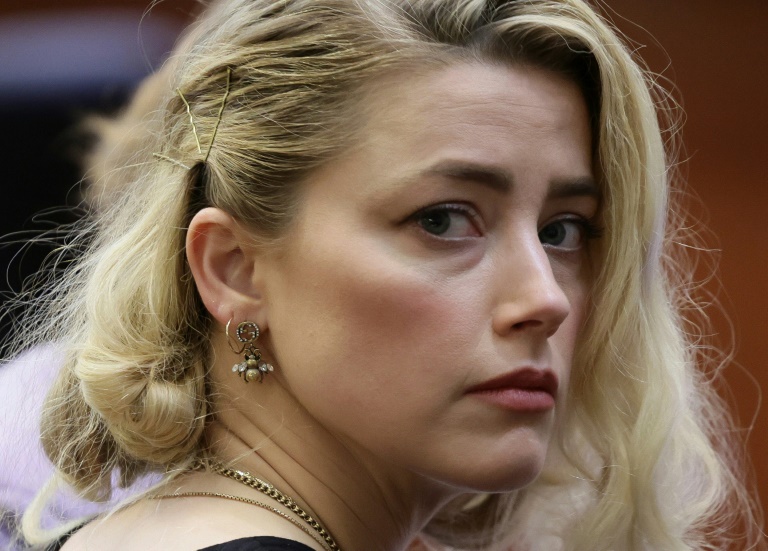
Actress Amber Heard announced Monday that she had made the “very difficult” decision to settle the multimillion dollar defamation case brought against her by her former husband Johnny Depp.

Heard, in a post on Instagram, did not reveal the terms of the settlement, which comes after a Virginia jury ordered her to pay $10 million to the “Pirates of the Caribbean” star.

Heard said she was dropping her appeal of the damages awarded by the jury and settling the case because she “simply cannot go through” another trial.

“I make this decision having lost faith in the American legal system, where my unprotected testimony served as entertainment and social media fodder,” she said.

“Now I finally have an opportunity to emancipate myself from something I attempted to leave over six years ago and on terms I can agree to,” Heard said.

The jury found Depp and Heard liable for defamation — but sided more strongly with the “Pirates” star following an intense six-week trial riding on bitterly contested allegations of domestic abuse.

The jury awarded $10 million in damages to Depp after finding that a 2018 newspaper article penned by Heard on her experience of “sexual violence” was defamatory.

Heard, who had countersued, was awarded $2 million.

The case, live streamed to millions, featured lurid and intimate details about the Hollywood celebrities’ private lives.

Tesco faces UK lawsuit over forced labour in Thailand

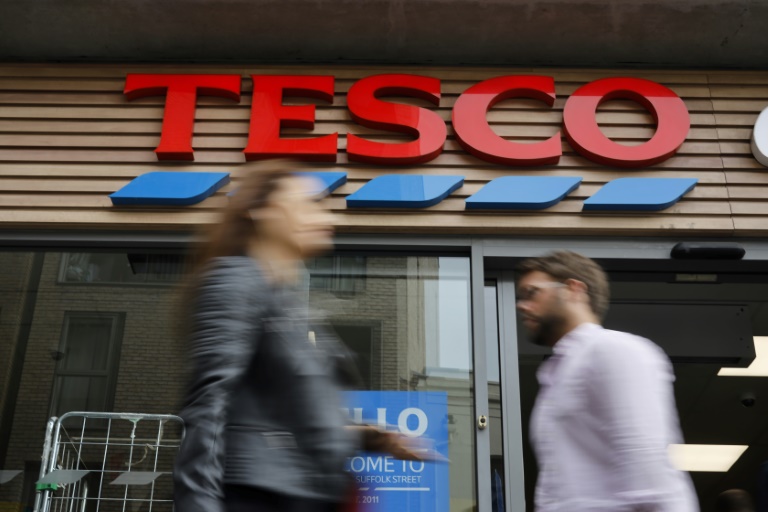
Tesco is facing a UK lawsuit brought by Burmese migrants in Thailand, who claim that one of the supermarket giant’s former clothing suppliers used their forced labour, lawyers said on Monday.

“Burmese migrants were made to work up to 99 hours a week on unlawful wages and in forced labour conditions at a Thailand factory making clothes for Tesco’s F&F fashion range,” said law firm Leigh Day, which represents the 130 claimants. 

The claimants are demanding compensation from Tesco and its Thai subsidiary at the time, Ek-Chai, which it sold in 2020.

They accuse the companies of being “unjustly enriched at the expense of the adult workers”.  

The suit will also target Intertek, the insurance and auditing group which inspected the factory where the alleged forced labour took place. 

If a settlement is not reached, the case will be pursued in the High Court in London, the legal firm warned in a statement. 

The workers were employed in the VK Garments factory in Mae Sot, northwest Thailand, between 2017 and 2020, where they cut, made and packed garments to be sold in Thailand. 

They were paid a maximum of £4.00 (4.60 euros) per day, and claim they were worked at a relentless pace for seven days a week and lived in tiny dormitories where they slept on a concrete floor. 

Tesco told AFP in a statement Monday that the claims were “incredibly serious” and that if it had “identified issues like this at the time they took place, we would have ended our relationship with this supplier immediately”.

While Tesco was not involved in the day-to-day running of the factory, it said “we would continue to urge” its former supplier “to reimburse employees for any wages they’re owed”. 

Compensation has so far only been awarded by the Thai courts, and only for severance pay. 

Intertek also said the allegations were serious, but it would not comment while legal proceedings were ongoing. 

Separately, 10 investment companies with assets totalling around £800 billion, including Schroders and Quilter Cheviot, on Monday signed a joint appeal calling for UK food retailers and the government to be increasingly vigilant about forced migrant labour in British agriculture. 

Many migrant workers in the UK have had to stump up large travel costs and “excessive fees to agents and middlemen”, often finding themselves saddled with debts, they warned. 

The UK’s main farming union warned in early December that the UK was heading for a food-supply crisis, mainly due to a lack of visas to bring in seasonal workers, who are in short supply after Brexit. 

The government announced on Friday plans to increase the number of seasonal visas available next year from a maximum of 40,000 to 45,000, with the possibility of an additional 10,000 if needed.

FTX chief Bankman-Fried could accept extradition from Bahamas

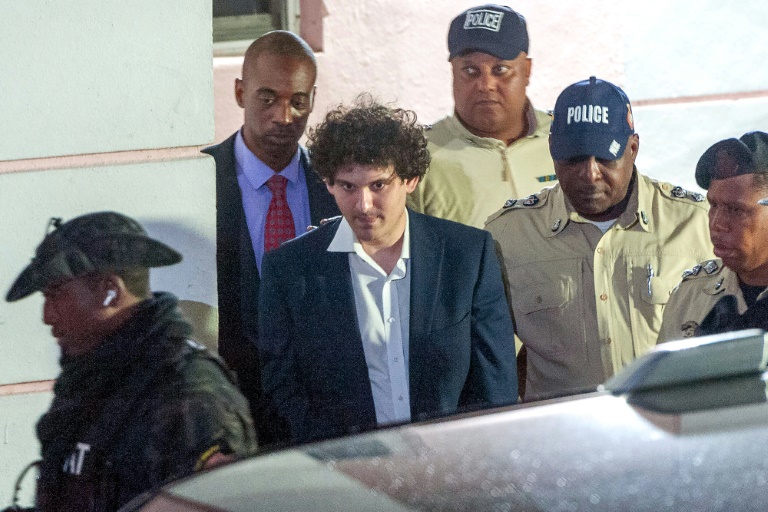
Cryptocurrency tycoon Samuel Bankman-Fried arrived at Bahamas magistrate court Monday where he could move to accept extradition to the United States to face charges over the multibillion-dollar collapse of his FTX group.

Bahamas television showed Bankman-Fried, once the wunderkind of the global digital currency world, arriving at the court in Nassau under heavy security after leaving a local jail, where he has been held since his arrest one week ago.

Local and US media reported that he is mulling reversing his decision last week to fight extradition and accept to be sent to the United States for trial.

His hearing is scheduled to begin around 11:00 am (1600 GMT), local media reported.

Last week the US Justice Department and the Securities and Exchange Commission (SEC) filed criminal and civil charges against the one-time crypto billionaire and media star, alleging that he cheated investors in FTX and misused funds that belonged to FTX customers.

FTX’s spectacular rise from 2019 to become a leading player in the virtual currency industry based in the Bahamas ended dramatically in November when the company and its sister trading firm Alameda Research collapsed into insolvency. 

Bankman-Fried was arrested at his Nassau apartment one week ago at the request of federal prosecutors in New York.

He was charged in the United States with eight counts including conspiracy, wire fraud, money laundering and election finance violations.

Separately the SEC accused him of violating securities laws.

FTX chief Bankman-Fried could accept extradition from Bahamas

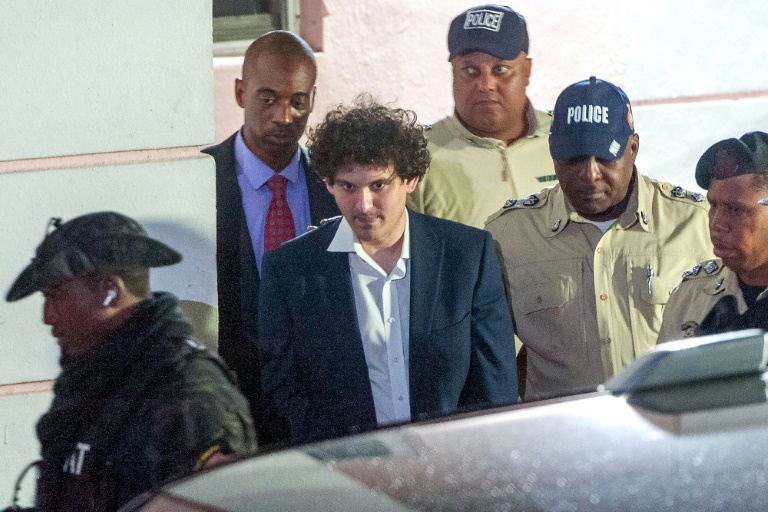
Cryptocurrency tycoon Samuel Bankman-Fried arrived at Bahamas magistrate court Monday where he could move to accept extradition to the United States to face charges over the multibillion-dollar collapse of his FTX group.

Bahamas television showed Bankman-Fried, once the wunderkind of the global digital currency world, arriving at the court in Nassau under heavy security after leaving a local jail, where he has been held since his arrest one week ago.

Local and US media reported that he is mulling reversing his decision last week to fight extradition and accept to be sent to the United States for trial.

His hearing is scheduled to begin around 11:00 am (1600 GMT), local media reported.

Last week the US Justice Department and the Securities and Exchange Commission (SEC) filed criminal and civil charges against the one-time crypto billionaire and media star, alleging that he cheated investors in FTX and misused funds that belonged to FTX customers.

FTX’s spectacular rise from 2019 to become a leading player in the virtual currency industry based in the Bahamas ended dramatically in November when the company and its sister trading firm Alameda Research collapsed into insolvency. 

Bankman-Fried was arrested at his Nassau apartment one week ago at the request of federal prosecutors in New York.

He was charged in the United States with eight counts including conspiracy, wire fraud, money laundering and election finance violations.

Separately the SEC accused him of violating securities laws.

Belarus strongman urges unity with Moscow in 'difficult times'

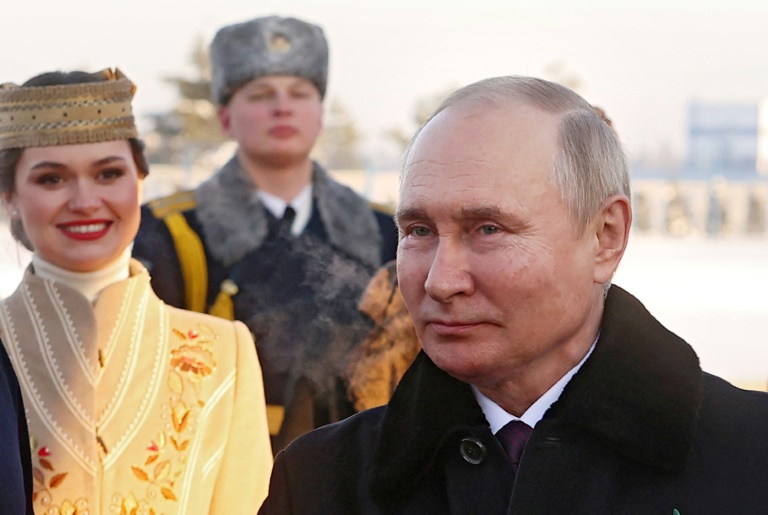
Belarus strongman Alexander Lukashenko urged closer military cooperation with Russia on Monday during a rare visit from President Vladimir Putin, who launched his invasion of Ukraine from his neighbour’s territory.

Putin landed in Minsk with his defence and foreign minister in tow, hours after Russian forces launched a swarm of attack drones at critical infrastructure in Kyiv, which provoked emergency blackouts in a dozen regions.

“Difficult times require us to have political will and to focus on getting results on all topics of the bilateral agenda,” Lukashenko told Putin.

“The main issues lately have been defence and security issues,” he added.

The Kremlin has for years sought to deepen integration with Belarus, which relies on Moscow for cheap oil and loans, but Lukashenko had resisted outright unification with Russia despite being a key ally.

Speculation mounted ahead of the Russian leader’s visit that he would pressure Lukashenko to send troops to Ukraine to fight alongside the Russians after Moscow suffered a string of defeats in nearly 10 months of fighting.

Kremlin spokesman Dmitry Peskov, however, dismissed the reports “as totally stupid, groundless fabrications.”

– ‘Open for dialogue’ –

“Russia and Belarus are open for dialogue with other states, including European ones. I hope that soon they will listen to the voice of reason,” Lukashenko said.

Putin told his Belarusian ally that he hoped to deepen economic ties between the countries during the visit and praised Belarus as “our ally in the truest sense of the word”.

The drone attacks over Ukraine, which wounded three people near Kyiv, came as Russia said it shot down several US-made missiles over its airspace near Ukraine.

“I first heard the air raid siren… I thought there is going to be a drone attack. For the first time, it scared me,” Natalia Dobrovolska, a 68-year-old resident of Kyiv, told AFP.

She described hearing multiple explosions before power shut off in her building in western Kyiv. Officials said Russia had dispatched 35 attack drones nationwide, including 23 over Kyiv.

Ukraine said it downed 30 of the aerial weapons, including Iranian-made “Shaheds”, which have pummelled the capital in recent weeks.

Mayor Vitali Klitschko said critical infrastructure facilities were “damaged” while regional authorities said nine homes had been scarred by the attacks.

Energy operator Ukrenergo announced that emergency electricity outages were scheduled in the capital and nearly a dozen regions.

– Belarus border a ‘priority’ –

Ukraine has experienced frequent and deadly aerial attacks in the 10 months since Russia invaded in late February.

After a series of battlefield setbacks and territory lost this summer and autumn, Moscow stepped up its aerial campaign to target the country’s energy grid.

With winter setting in, missile and drone attacks have plunged cities around the country into darkness, and severed water and heat supplies to millions of Ukrainians.

Speaking to the leaders of several NATO countries via video link on Monday, President Volodymyr Zelensky urged Ukraine’s allies to supply its military with more weapons.

“Russian aggression can and must fail. And our task now is to accelerate it,” he told the leaders assembled in Riga.

He said in a late-night address Sunday that some nine million people had their electricity restored after Russia’s previous missile barrage last week.

Ukraine has an estimated population of 40 million.

Before Putin’s visit, Ukraine’s leader also described the situation on Ukraine’s border with Russia and Belarus as a “constant priority”. 

“We are preparing for all possible defence scenarios,” Zelensky said.

Lukashenko, who has been in power since 1994, is a long-time Kremlin ally and allowed Russian troops to attack Ukraine from his country on February 24.

– Russian-Belarusian military drills –

Hours before Putin touched down in Minsk, Russia announced its forces were running military drills with Belarusian forces.

The defence ministry released footage of drills in Belarus, showing soldiers conducting tank manoeuvres, and practising artillery and sniper fire at a snow-dusted training ground.

“From the morning until the evening twilight — there is not a single second of silence at the training grounds of Belarus,” the ministry said.

It did not say where the drills were taking place or how long they would last.

In October, Belarus announced the formation of a joint regional force with Moscow with several thousand Russian servicemen arriving in the ex-Soviet country, fuelling concerns Minsk could also send troops to Ukraine.

On Monday, Governor Vyacheslav Gladkov said Ukrainian strikes left around 14,000 people without power in a district of southern Russia’s Belgorod region.

German gas giant's shareholders back nationalisation

Shareholders of troubled German gas giant Uniper on Monday approved the company’s nationalisation after it was pushed to the brink of collapse following Russia’s invasion of Ukraine. 

After Moscow sent its forces into Ukraine in February, crucial Russian gas supplies to Germany were drastically slashed in suspected retaliation for Western sanctions. 

Starved of Russian deliveries, Uniper was left facing bankruptcy, prompting the German government to announce it would nationalise the firm over fears its failure could send shockwaves through Europe’s top economy.

Shareholders backed the deal “by a large majority” in a vote at an extraordinary general meeting, Uniper said in a statement. 

The vote was seen as a formality after the majority shareholder, Finnish state-owned energy company Fortum, agreed to the measures in September. 

The European Commission still needs to agree to the nationalisation under state aid laws. Uniper, Germany’s biggest gas importer, said this approval is expected “in the near future”.

Ahead of the vote, company CEO Klaus-Dieter Maubach said that “by stabilising the company, the federal government recognises the central role that Uniper plays for the security of supply in Germany and Europe”. 

Earlier Monday, the German government and Uniper concluded a framework agreement related to the rescue package. 

Berlin had initially agreed to an eight-billion-euro ($8.5 billion) cash injection for Uniper, but the debt-laden company said last month the government would need to spend an additional 25 billion euros.

Uniper has reported a 40-billion-euro net loss for the first nine months of the year, one of the biggest losses in German corporate history.

The government will finance the rescue out of a 200-billion-euro fund designed to cushion the impact of the energy crisis on households and businesses.

With Russian supplies slashed, Uniper has been forced to pay high prices on the open market. 

And while costs have come down since the summer, they remain elevated. 

“We are still in a situation where we have to buy gas on the (spot) markets, where the prices have reached a level that is — in general — higher than the purchase price of our customers,” Holger Kreetz, Uniper’s chief operating officer for asset management, told AFP.

“We are still in a tight situation,” he said, adding this would remain the case until existing long-term contracts expire.

Uniper is seeking damages at an international tribunal from Gazprom over what it claims is the Russian energy giant’s failure to deliver contractually agreed gas supplies. 

Gazprom has said it does not recognise the legitimacy of the claims. 

European stocks attempt pre-Christmas rebound

European equities rose Monday in light pre-Christmas trade, rebounding gently from last week’s losses that followed bumper interest rate hikes, but Wall Street and Asian markets failed to get into the festive mood.

Equity markets often experience a so-called Santa rally, when prices rise during the low-level holiday trading.

“Everyone, it seems, is waiting to see if Santa is going to come around, which leaves the market stuck between feelings of hope and angst,” said market analyst Patrick O’Hare at Briefing.com.

“Accordingly, there isn’t much happening at the broad market level this morning,” he added.

The blue-chip Dow opened marginally lower, with the broader S&P 500 and tech-heavy Nasdaq Composite were flat.

Meanwhile in Europe, London rose 0.6 percent in afternoon trading, while Frankfurt and Paris both added 0.5 percent.

“Markets are grinding higher as some traders are optimistic about valuations which seem to them somewhat attractive,” AvaTrade analyst Naeem Aslam told AFP.

“We really don’t have much volume in markets as traders are away for holidays,” he added.

“Overall I think it’s going to be pretty subdued trading, given the lack of significant data to react to,” noted analyst Susannah Streeter at stockbroker Hargreaves Lansdown.

Asian indices, however, fell on lingering concern over a possible global recession caused by moves to fight inflation from top central banks.

Equities took a turn south last week after monetary policymakers around the world signalled that while price rises appeared to be stabilising, more work would be needed to get them under control.

All three main indexes on Wall Street ended sharply lower Friday after the Federal Reserve warned it would continue tightening monetary policy into 2023.

That was followed by similar warnings from the European Central Bank and Bank of England, while data suggested economies were feeling the pinch, dealing a blow to sentiment heading into the Christmas break.

“With no shortage of economic headwinds, investors struggle to find something cheerful about this holiday week after the two most dominant central banks cast a pall over the proceedings,” said SPI Asset Management’s Stephen Innes.

The US sell-off fed through to Asia, where Tokyo shed more than one percent, while Hong Kong, Shanghai, Taipei, Manila, Bangkok, Jakarta and Wellington were in negative territory, but Singapore and Mumbai edged up.

Adding to the downbeat mood was a spike in Covid-19 cases in China following the country’s reopening after almost three years of strict containment measures.

While the move is expected to boost the world’s number two economy, there is a worry that businesses and China’s health system will be hit in the near term.

Still, Beijing flagged a number of measures aimed at kickstarting growth next year, including support for the beleaguered property sector.

An expected pick-up in Chinese demand helped propel oil prices higher.

– Key figures around 1430 GMT –

London – FTSE 100: UP 0.6 percent at 7,374.60 points

Frankfurt – DAX: UP 0.5 percent at 13,960.89

Paris – CAC 40: UP 0.5 percent at 6,482.31

EURO STOXX 50: UP 0.4 percent at 3,819.75

New York – Dow: DOWN less than 0.1 percent at 32,894.27

Tokyo – Nikkei 225: DOWN 1.1 percent at 27,237.64 (close)

Hong Kong – Hang Seng Index: DOWN 0.5 percent at 19,352.81 (close)

Shanghai – Composite: DOWN 1.9 percent at 3,107.11 (close)

Euro/dollar: UP at $1.0610 from $1.0586 on Friday

Pound/dollar: UP at $1.2187 from $1.2148

Euro/pound: DOWN at 87.09 pence from 87.14 pence

Dollar/yen: DOWN at 136.59 yen from 136.60 yen

West Texas Intermediate: UP 1.9 percent at $75.72 per barrel

Brent North Sea crude: UP 1.7 percent at $80.35 per barrel

burs/cw

Close Bitnami banner
Bitnami