US Business

Musk says no Twitter deal without clarity on spam accounts

Billionaire Elon Musk said Tuesday that his purchase of Twitter would not go ahead unless he was given assurances on the bots he says plague the platform, further complicating his acrimonious bid for the social media giant.

The chief of SpaceX as well as Tesla, Musk is currently listed by Forbes as the world’s wealthiest person, with a fortune of about $230 billion, much of it in Tesla stock.

Seen by his champions as an iconoclastic genius and by his critics as erratic and power-hungry, Musk surprised many investors in April with news that he wanted to purchase Twitter.

But his $44 billion bid for the company is now “temporarily on hold,” pending questions over its estimates of the number of fake accounts, or bots.

“Yesterday, Twitter’s CEO publicly refused to show proof of <5%,” tweeted Musk, who has almost 94 million followers on the social network. 

“This deal cannot move forward until he does.”

Twitter chief executive Parag Agrawal has said the platform suspends more than a half-million seemingly bogus accounts daily, usually before they are even seen, and locks millions more weekly that fail checks to make sure they are controlled by humans and not by software.

Internal measures show that fewer than five percent of accounts active on any given day at Twitter are spam, but that analysis cannot be replicated externally due to the need to keep user data private, Agrawal contended.

Musk — who posted that the real number of bots may be four times what Twitter claims and “could be *much* higher,” and has said he would make getting rid of them a priority if he owned the platform — responded to that tweet by Agrawal with a poo emoji.

“So how do advertisers know what they’re getting for their money?” Musk tweeted in a subsequent response about the need to prove Twitter users are real people.

“This is fundamental to the financial health of Twitter.”

– ‘Under pressure’ –

The process used to estimate how many accounts are bots has been shared with Musk, Agrawal insisted.

According to an estimate published Friday by software firm SparkToro, 19.42 percent of Twitter accounts are fake or spam, but the company acknowledges its methodology for determining bots is likely different from that used by Twitter. 

SparkToro has a tool on its website that shows more than 70 percent of Musk’s followers are fake accounts. 

“It appears the spam/bot issue is cascading and clearly making the Twitter deal a confusing one,” Wedbush analyst Dan Ives said in a note to investors.

“The bot issue at the end of the day was known by the New York City cab driver and feels more to us like the ‘dog ate the homework’ excuse to bail on the Twitter deal or talk down a lower price.”

Twitter shares “will be under pressure this morning again as the chances of a deal ultimately getting done is not looking good now,” Ives said, adding it is “likely a 60%+ chance from our view Musk ultimately walks from the deal and pays the breakup fee.”

Shares of Twitter were down roughly 2.4 percent early Tuesday in pre-market trading.

Meanwhile, in a filing to Wall Street regulator the Securities and Exchange Commission, Twitter urged its shareholders to vote in favor of Musk’s buyout for $54.20 per share in cash, at an upcoming special meeting.

Musk has described his motivation as stemming from a desire to ensure freedom of speech on the platform and to boost monetization of a website that is massively influential but has struggled to attain profitable growth.

He has also said he favored lifting the ban on Donald Trump, who was kicked off the platform in January 2021 shortly after the then-US president’s efforts to overturn his election defeat led to the January 6 assault on the US Capitol.

burs-oho/mlm/wd
Vodafone calls up surging annual profit

British telecoms giant Vodafone on Tuesday logged surging annual net profit on rising sales and sliding tax, one day after revealing that an Emirati firm has become its biggest investor.

Profit after tax jumped to almost 2.1 billion euros ($2.2 billion) in the financial year to March, Vodafone said in a results statement.

That compared with a profit of 112 million euros in its previous annual report, when its performance was severely disrupted by fallout from the Covid pandemic.

Revenues swelled four percent to 45.6 billion euros this time around on strong growth in Africa and Europe.

“We delivered a good financial performance in the year with growth in revenues, profits and cash flows,” said chief executive Nick Read.

“Whilst we are not immune to the macroeconomic challenges in Europe and Africa, we are positioned well to manage them and we expect to deliver a resilient financial performance in the year ahead.”

Vodafone shares flatlined at 120 pence in London midday deals.

The stock had rallied Monday on news that state-controlled Emirates Telecommunications Group Company had become its biggest shareholder.

The group — known also as Etisalat or “e&” and whose majority stake holder is the United Arab Emirates government — has bought almost ten percent of Vodafone for $4.4 billion.

It stressed it would not launch a takeover.

The UAE group decided to invest in Vodafone to gain significant exposure to a global leader in connectivity and digital services.

Read, Vodafone’s CEO since 2018, is reportedly faces increasing criticism over his leadership.

British media reports suggest that activist investor fund Cevian Capital has built up a Vodafone stake and wants to force a sale of assets.

Vodafone in 2021 floated its European mast division Vantage Towers in Frankfurt, in a partial initial public offering that enabled it to slash debt.

Indian insurance giant slumps after country's biggest-ever IPO

Indian state-owned insurance giant LIC slumped on its market debut Tuesday following the country’s biggest-ever initial public offering, closing nearly eight percent below the IPO price.

Prime Minister Narendra Modi’s government raised $2.7 billion by selling 3.5 percent of Life Insurance Corporation of India as his administration seeks to sell off state assets to bolster tattered public finances.

But it was forced to cut back the offer from a planned five percent after markets turned volatile following Russia’s invasion of Ukraine and China’s Covid lockdowns.

The offer price of 949 rupees ($12.22) had valued LIC at $77 billion, but the stock traded under pressure all day, closing 7.75 percent lower at 875.45 rupees a share.

The muted debut could test market appetite as Modi seeks to privatise more shares in nationalised companies to plug an estimated 16.6 trillion rupee ($214 billion) fiscal deficit.

Market analyst Arun Kejriwal said the slump on LIC’s first day of trading was a “learning” experience, adding that the government will have to do more to convince investors if it wants to sell more of its stake.

But the IPO saw enthusiastic participation from small investors — including many first-timers — and was oversubscribed nearly three times.

“I knew it won’t be a great listing but it doesn’t matter to me,” said 30-year-old Ayush, a recent market entrant, who was unbowed by the decrease in share price.  

“I bought the shares for the long-term.”

Global equities have been tumultuous for most of 2022. Foreign investors have withdrawn a net 1.71 trillion rupees ($22 billion) from Indian markets so far this year, stock exchange data showed, as US monetary policy tightening further roiled sentiment.

– Synonymous with life insurance –

India was heavily regulated for decades after independence, and the state still retains an outsize role in the economy.

Hundreds of companies are owned by national or lower-level governments, operating in fields ranging from mining and resources to electricity and construction.

Modi has pledged to “monetise and modernise” the sometimes moribund sector, and the insurance giant’s IPO followed a years-long effort by bankers and bureaucrats to appraise the mammoth firm and prepare it for listing.

Founded in 1956 by nationalising and combining more than 240 firms, LIC was a monopoly until private companies were allowed to enter the market in 2000.

It continues to lead the pack with a 61 percent market share and an army of 1.3 million “LIC agents” giving it huge reach, particularly in remote rural areas.

But its dominance has declined steadily in the face of competition from net-savvy private insurers offering specialised products.

The firm warned in its regulatory filing that “there can be no assurance that our corporation will not lose further market share” to private companies.

– ‘Enormous’ potential –

In a country where only three percent of the 1.4 billion population has life insurance, analyst Kejriwal said LIC’s potential remains “enormous”. 

“It has actually bounced back in the last two-three years. And Covid has seen a turnaround in the fortunes of LIC,” he told AFP, pointing to its digitisation efforts.

Going public will also force more transparency on the insurance behemoth.

“The IPO is going to galvanise LIC into being much more effective than it was,” Kejriwal added.

LIC is also India’s largest asset manager, with 39.55 trillion rupees under management as of September 30, including significant stakes in Indian blue chips such as Reliance and Infosys.

LIC’s real estate assets include vast offices at prime urban Indian locations, including a 15-storey office in Chennai that was once the country’s tallest building.

The firm is also believed to own a large collection of rare and valuable artwork that includes paintings by MF Husain — known as the Pablo Picasso of India — although the value of these holdings has not been made public.

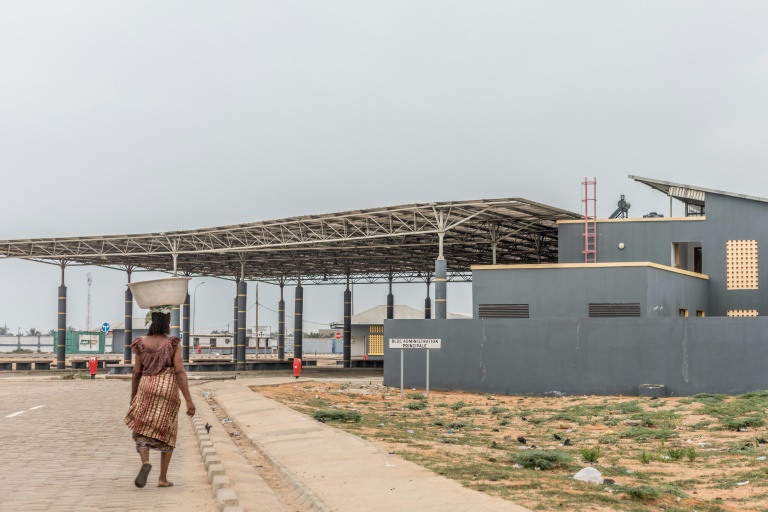
Togo reopens its borders after two years

The West African state of Togo said it would reopen its land borders on Tuesday after closing them more than two years ago to help prevent the spread of coronavirus. 

The country recorded only 32 cases so far this month, with zero deaths. 

“Considering the slowdown in cases of Covid-19, all of our land borders will reopen starting on Tuesday 17 May at 00:00 GMT,” the government said in a statement late on Monday.

“Free movement can resume as long as travellers present a proof of vaccination,” it added. 

Togo’s neighbours are Burkina Faso to the north, Ghana to the west and Benin to the east.

The authorities called however for “vigilance” and “continued adherence to preventive measures.”

The government also said the vaccination campaign, which started in March last year, should continue.

At the end of April, 32 percent of the country’s adult population was fully vaccinated according to official data.

Civil society groups and opposition parties had been calling for a relaxation of measures in recent months, as the number of Covid-19 cases plummeted. 

Togo’s land and air borders were closed in March 2020, although the air borders reopened in August that year. The sea borders were never closed.

Last August, some youths protested at the border with Ghana, asking for borders to reopen and trade to resume. 

Since the start of the pandemic, Togo has recorded 37,023 cases of which 273 were fatal. 

Asian stocks rally on hopes of Shanghai gradually reopening

Hong Kong led a rally across Asian markets Tuesday on hopes that China’s economic engine Shanghai will ease its weeks-long lockdown and gradually reopen businesses, though analysts cautioned there may be little long-term relief. 

Much of the city of 25 million has been under stay-at-home orders since April as Beijing attempts to stamp out an Omicron-fuelled virus surge under its strict zero-Covid policy.

Shanghai Vice Mayor Chen Tong said Sunday that the city would gradually reopen businesses starting this week. 

Though no details were given and residents were still in their homes on Tuesday, Asian markets cheered the announcement.

“Hopes that the Shanghai lockdowns will ease, along with the ensuing supply chain disruptions, have been enough to lift Asian equities as well, which are staging a modest bounce,” said Jeffrey Halley of OANDA.

Tuesday’s rally coincided with the third day in a row that Shanghai recorded no Covid-19 cases outside of its quarantine facilities, he said. 

“We should continue watching the headline ticker for daily Omicron cases. Most especially, in Shanghai, where if literally one case appears again, any relief rally in Chinese markets could disappear in a puff of smoke.”

The impact of Beijing’s zero-Covid strategy on the world’s second-largest economy was revealed Monday when official data showed retail sales and industrial production in April on-year had slumped to their lowest levels in more than two years.

World markets have also been roiled by surging inflation and Russia’s war in Ukraine — leaving investors jittery.

“Markets remain in fight or flight mode while rolling the dice on recession odds,” Stephen Innes of SPI Asset Management said.

“Investors’ hopes remain elevated that yesterday’s worse than expected Chinese outruns could prove to be a ‘whatever it takes’ moment, and local policymakers will step hard on the stimulus pedal.”

China has announced measures to help young people find jobs, with the urban unemployment rate at its highest in over two years, and officials have lowered the mortgage rate for first-time homebuyers.

On Tuesday Hong Kong closed higher by more than three percent, while mainland China’s two indices — the Shanghai Composite Index and Shenzhen Composite Index — also saw a bounce.

Manila, Singapore, Seoul, and Sydney were also in positive territory all day.

European markets followed the lead, with Frankfurt, Paris and London all trading up at opening. 

– Commodities concerns –

In commodities trade, wheat prices soared to a record after major producer India banned exports because of a heatwave hitting production.

New Delhi said the move was needed to protect the food security of its 1.4 billion people in the face of lower production and steep global prices.

Worldwide wheat prices had already surged on supply concerns after Russia’s February invasion of agricultural powerhouse Ukraine, which previously accounted for 12 percent of global exports.

By Monday’s close of the Euronext market, the price of wheat had jumped to 438.25 euros ($456.68) per tonne, breaking the previous closing record of 422.40 struck on March 7, according to trader Damien Vercambre at grains brokerage Inter-Courtage.

Oil also jumped overnight, and by Tuesday US crude benchmark WTI hovered around $114 a barrel. 

“The EU’s rising tensions with Russia and the resulting uncertainties over the bloc’s oil and gas supply remain front and centre,” Vandana Hari, founder of Vanda Insights in Singapore, told Bloomberg.

“Having said that, with a $10 jump since last Tuesday, it’s hard to see much more upside in crude unless events take a sudden turn for the worse.”

– Key figures at around 0900 GMT –

Hong Kong – Hang Seng Index: UP 3.3 percent at 20,602.52 (close) 

Shanghai – Composite: UP 0.7 percent at 3,093.70 (close)

London – FTSE 100: UP 0.6 percent at 7,509.81

Tokyo – Nikkei 225: UP 0.4 percent at 26,659.75 (close)

West Texas Intermediate: UP 0.2 percent at $114.44 per barrel

Brent North Sea crude: UP 0.3 percent at $114.60 per barrel

Euro/dollar: UP at $1.0479 from $1.0436 at 2030 GMT Monday

Pound/dollar: UP at $1.2481 from $1.2323

Euro/pound: DOWN at 83.97 pence from 84.67 pence

Dollar/yen: UP at 129.26 yen from 129.08 yen

New York – Dow: UP 0.1 percent at 32,223.42 (close)

— Bloomberg News contributed to this story —

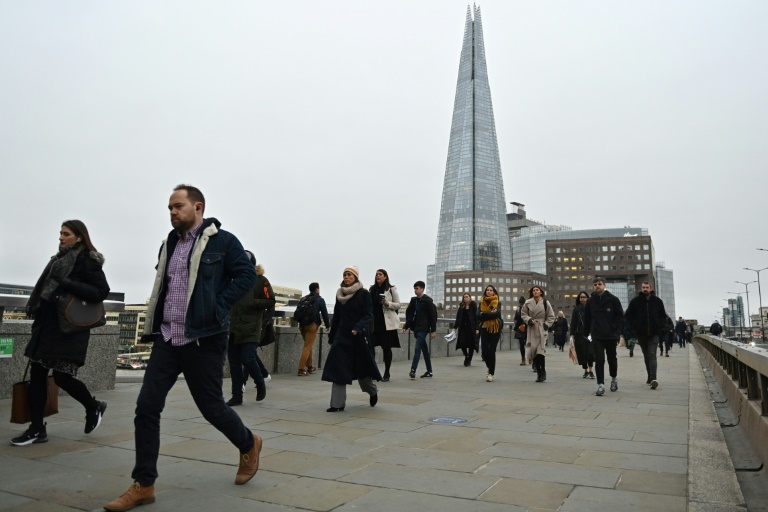
UK unemployment dips but wages hit by inflation

Britain’s unemployment rate has fallen further to a near five-decade low, official data showed Tuesday, but the value of wages continues to erode as inflation soars.

The unemployment rate eased to 3.7 percent in the three months to the end of March, the Office for National Statistics (ONS) said in a statement, sending the pound rising against the dollar on expectations of another interest rate hike.

That was the lowest level in more than 47 years and compared with a rate of 3.8 percent in the quarter to the end of February.

Bank of England (BoE) governor Andrew Bailey on Monday warned that fallout from surging prices driven by the Ukraine war would cause unemployment to increase.

He described as “apocalyptic” the situation surrounding soaring food costs — which he said were fuelled by major wheat and cooking oil producer Ukraine finding itself unable to export its goods.

Addressing British MPs, Bailey spoke also of a “very real income shock” coming from surging energy and food prices.

While average wages are rising in the UK, the ONS on Tuesday said they continued to sink in real terms as Britain, like other countries, faces runaway inflation.

The pound on Tuesday rallied 1.3 percent to $1.2480 as traders bet that soaring inflation, lifted in part by UK wage rises, would force the BoE to raise interest rates further, despite growing fears of recession.

“There continued to be a mixed picture for the labour market,” said Darren Morgan, ONS director of economic statistics.

Total employment remained below its pre-pandemic level, with job vacancies at a record-high of almost 1.3 million at the end of April.

“Indeed, with the latest fall in unemployment to its lowest rate since 1974, there were actually fewer unemployed people than job vacancies for the first time since records began,” Morgan said.

While companies struggle to fill posts after the pandemic caused people to change careers, Morgan noted that since the outbreak of Covid, about half a million more people in the UK “have completely disengaged from the labour market”.

For those in work, regular earnings excluding bonuses were “falling sharply in real terms”, he added.

– ‘Unemployment to rise’ –

Bailey on Monday said “the main driver of inflation and what brings it down is the very big, real income shock which is coming from outside forces and, particularly, energy prices and global goods prices. 

“That will have an impact on domestic demand and it will dampen activity, and I’m afraid it looks like it will increase unemployment.”

He described inflation fallout from the war in Ukraine as “a major worry” for Britain and the developing world.

“Sorry for being apocalyptic but that is a major concern,” Bailey said.

He spoke after official data last week showed Britain’s economy shrank in March on fallout from soaring inflation, increasing the prospect of the country falling into recession.

Earlier this month, the BoE warned that Britain risks falling into recession with UK inflation expected to top 10 percent, a four-decade high, by the end of the year.

It came as the central bank raised its main interest rate by a quarter-point to one percent to tackle rocketing prices.

That was the fourth straight increase by the BoE, while its key rate now stands at the highest level since the global financial crisis in 2009.

Raised rates have lifted borrowing costs for consumers and businesses, further impacting spending.

Ukraine's key IT sector booming despite Russian invasion

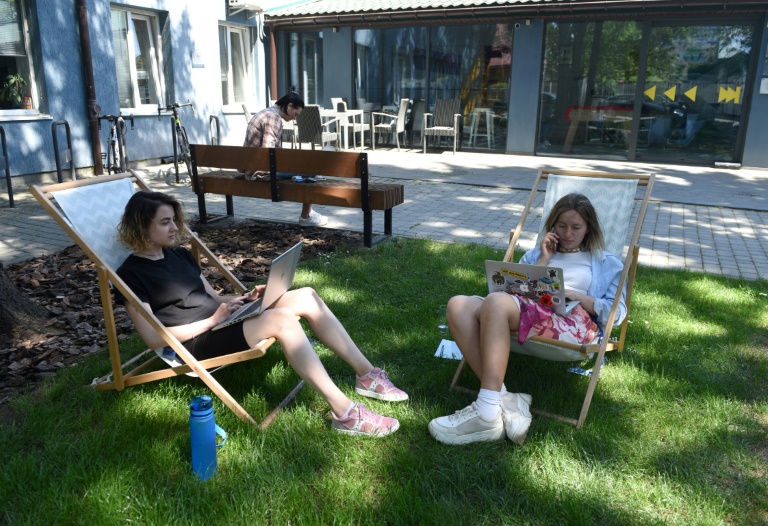
Ukraine’s IT sector is booming despite the Russian invasion. Workers with stickers on their laptops recline on beach chairs outside a warehouse for start-ups in the west Ukraine city of Lviv giving off major Silicon Valley vibes.

But the atmosphere inside is different.

Through the glass doors of the complex, young Ukrainians zig-zag between stacks of bulletproof vests and cardboard boxes filled with helmets ready for the front.

They are part of Ukraine’s burgeoning tech sector which was forced to adapt after Russia’s invasion and has become key to supporting the war effort.

“Most tech companies had developed contingency plans” in case of war said Stepan Veselovskiy, the head of the “IT Cluster Lviv” community.

He told AFP that companies transferred servers to secure locations and established back-up systems outside the country before Russia invaded on February 24.

When Russian bombing started, IT companies shut offices in the capital Kyiv and eastern city of Kharkiv and engineers found refuge in western Ukraine or Poland next door.

Veselovskiy said there were already around 500 tech companies in Lviv before the war but now estimates that 80 percent of the sector is in the western city. 

One is Infopulse, which provides various digital services to mainly European customers.

It brought 300 of its 2,300 employees to Lviv, where it has offices in one of the city’s few buildings equipped with a bunker.

There are bunk beds and stable internet underground so employees can continue working in the event of an air raid.

There are also generators in case Russian forces target power stations and terminals for Elon Musk’s Starlink internet service.

“Even in the most drastic conditions, business can continue,” regional manager Ivan Korzhov said. 

They can even thrive. 

– Tech army –

Since the start of the war, Infopulse has gained four new customers and in April — the second month of the Russian invasion — it created 25 new jobs in Ukraine.

It is not the only tech company in Ukraine to do so. 

Veselovskiy says February — when Russia attacked — was a historically good month for Ukraine’s tech sector and its estimated 200,000 employees. 

“It slowed down a bit in March, but we are very optimistic for the future because the war doesn’t stop us from growing,” he said.

This is a stark contrast to other industries, battered by the invasion. Exports for traditional sectors such as steel and agriculture have collapsed.

But the tech sector, naturally, has not been affected by the destruction of bridges, roads or the blocking of ports. 

It has, according to Veselovskiy, made more than $2 billion since the start of the war and has become the country’s leading exporter. 

“It’s a good thing for Ukraine because we generate income in dollars every month when the country really needs it,” Korzhov said.

“We pay our taxes and give a lot of money” to the government. 

The IT Cluster Lviv has already allocated $2 million, mainly to buy equipment for Ukrainian soldiers.

That’s how its offices ended up looking like an army depot.

The sector has also offered its brightest to help the military.

Softserve — one of Ukraine’s biggest tech companies — has worked on the military’s websites for free and IT Cluster Lviv modernised one of the military’s command centres.

Infopulse also participates in a joint project by the Ukrainian army and the ministry of digital transformation.

“Specialists in tech and cybersecurity work with the government on the information front,” its regional manager Korzhov said. 

He then repeated a popular slogan in Ukraine: “We are not waiting for peace, but for victory.”

Musk says no Twitter deal without clarity on spam accounts

Billionaire Elon Musk said Tuesday that his purchase of Twitter would not go ahead unless he was given assurances on the bots that he says plague the platform, further complicating his acrimonious bid for the social media giant.

The chief of SpaceX as well as Tesla, Musk is currently listed by Forbes as the world’s wealthiest person, with a fortune of about $230 billion, much of it in Tesla stock.

Seen by his champions as an iconoclastic genius and by his critics as an erratic megalomaniac, Musk surprised many investors in April with news that he wanted to purchase Twitter.

But his $44 billion bid for Twitter is now “temporarily on hold,” pending questions over the social media company’s estimates of the number of fake accounts, or “bots.”

“Yesterday, Twitter’s CEO publicly refused to show proof of <5%,” tweeted Musk, who has almost 94 million followers on the social network. 

“This deal cannot move forward until he does.”

Twitter chief executive Parag Agrawal has said the platform suspends more than a half-million seemingly bogus accounts daily, usually before they are even seen, and locks millions more weekly that fail checks to make sure they are controlled by humans and not by software.

Internal measures show that fewer than five percent of accounts active on any given day at Twitter are spam, but that analysis can’t be replicated externally due to the need to keep user data private, Agrawal contended.

Musk, who has said bots plague Twitter and that he would make getting rid of them a priority if he owned the platform, responded to that tweet by Agrawal with a poo emoji.

“So how do advertisers know what they’re getting for their money?” Musk tweeted in a subsequent response about the need to prove Twitter users are real people.

“This is fundamental to the financial health of Twitter.”

The process used to estimate how many accounts are bots has been shared with Musk, Agrawal insisted.

“It appears the spam/bot issue is cascading and clearly making the Twitter deal a confusing one,” Wedbush analyst Dan Ives said in a note to investors.

“The bot issue at the end of the day was known by the New York City cab driver and feels more to us like the ‘dog ate the homework’ excuse to bail on the Twitter deal or talk down a lower price.”

Musk has described his motivation as stemming from a desire to ensure freedom of speech on the platform and to boost monetization of a website that is massively influential but has struggled to attain profitable growth.

He has also said he favored lifting the ban on Donald Trump, who was kicked off the platform in January 2021 shortly after the former US president’s efforts to overturn his election defeat led to the January 6 assault on the US Capitol.

burs-oho/je

US urges India to reverse ban on wheat exports

The United States hopes India will reverse its ban on wheat exports, Washington’s top diplomat to the United Nations said Monday, warning the move would worsen global shortages of the commodity.

“We’re encouraging countries not to restrict exports because we think any restrictions on exports will exacerbate the food shortages,” Linda Thomas-Greenfield said during a ministerial gathering on food security ahead of a meeting of the UN Security Council.

The UN meeting — to be chaired by US Secretary of State Antony Blinken — will include Vellamvelly Muraleedharan, India’s minister of state for external affairs. 

India holds a non-permanent seat on the UN Security Council.

“We hope that (India) can, as they hear the concerns being raised by other countries, that they would reconsider that position,” Thomas-Greenfield said.

India, the world’s second-largest producer of wheat, on Saturday announced it would ban exports without special authorisation from the government in the face of falling production caused primarily by an extreme heatwave. 

New Delhi — which had previously pledged to supply wheat to countries once dependent on exports from Ukraine — said it wanted to ensure “food security” for India’s 1.4 billion people.

Blinken is on Wednesday set to hold another UN meeting also related to food security.

That session aims to “bring countries together to look at what countries might be able to help fill the gap” in wheat supplies caused by Russia’s invasion of Ukraine — two major exporters of the commodity, said Thomas-Greenfield.

The talks would also identify “countries who need the support from countries who can fill the gap,” she added.

The United States could be included in these countries, she said, adding that discussions were already underway with American farmers on the topic.

Wheat prices hit a record high in the European market Monday in the wake of India’s decision.

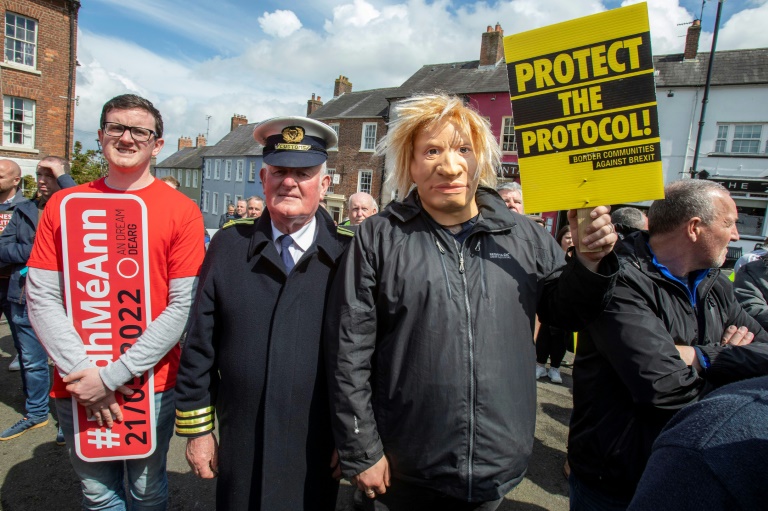
UK to unveil unilateral plans for post-Brexit trade in N.Ireland

Britain will detail Tuesday how it plans to overhaul post-Brexit trade rules in Northern Ireland which have sparked a political crisis in the province, amid fears it is risking a UK-EU trade war.

Foreign Secretary Liz Truss will “set out the rationale for our approach” in a statement to MPs in parliament, according to Prime Minister Boris Johnson’s spokesman.

The UK government is yet to confirm what that entails, but media reports have said it is planning legislation allowing London to unilaterally override some of the rules around Northern Irish trade.

London wants to rewrite the so-called Northern Ireland protocol, which it agreed as part of its 2019 divorce deal with the European Union, amid trading frictions since it came into force last year.

The arrangements, which mandate checks on goods arriving into Northern Ireland from England, Scotland and Wales, have angered the province’s unionists who claim they undermine its place within the UK.

Secretary of State for Northern Ireland Brandon Lewis said Tuesday that the protocol “doesn’t work for business, it doesn’t work for anybody in Northern Ireland”.

He told Sky News that problems should be solved “preferably by agreement with the European Union” but “we will do what we need to do to ensure that products can move to Northern Ireland in the way they should be able to… from Great Britain as part of the United Kingdom’s internal market.”

The largest pro-British party, the Democratic Unionist Party (DUP), is currently refusing to resume power-sharing in Belfast with pro-Irish rivals Sinn Fein until the protocol is reworked.

Its stance comes nearly two weeks after Sinn Fein won a historic first victory in elections for the devolved Stormont assembly, which entitle the party to the role of first minister in a joint executive with the DUP. 

– ‘Legislative solution’ –

The impasse threatens to leave Northern Ireland, which suffered three decades of sectarian conflict until a 1998 accord largely ended the violence, without a government.

Johnson is adamant the current situation risks peace and stability in Northern Ireland and that his government has the right to act if the EU refuses to meet its demands.

“We don’t want to scrap it, but we think it can be fixed,” he told reporters during a visit Monday to Northern Ireland to meet its political leaders.

Reports say the mooted draft law, which will allow UK ministers to selectively disapply parts of the protocol, may not be tabled yet and would in any case take months to progress through parliament.

That could prove insufficient to persuade unionists to resume power-sharing in Northern Ireland, with the DUP saying Monday it needed “decisive action” not “the tabling of legislation”.

– ‘Keep their word’ –

The EU, which has been in discussions for months with the UK over improving the implementation of the protocol, has insisted it cannot be renegotiated.

European leaders have warned London against taking unilateral steps, and suggested it could jeopardise their entire Brexit deal, resulting in punitive tariffs and an effective trade war.

“This is an international treaty, it’s international law, we can’t just pretend it doesn’t exist,” Ireland’s Foreign Minister Simon Coveney said Monday in Brussels.

Johnson’s government says that checks on goods heading to Northern Ireland from England, Scotland and Wales are undermining peace in the province, with unionist protests already turning violent in the past 18 months.

The separate trading arrangements, which bind the province to many European rules, were agreed because it has the UK’s only land border with the EU. 

Keeping the border open with neighbouring Ireland, an EU member, was mandated in the Good Friday Agreement, given the frontier was a frequent flashpoint for violence.

But it means checks have to be done elsewhere, to prevent goods getting into the EU single market and customs union by the back door via Northern Ireland.

The United States, which was a guarantor of the Good Friday Agreement, has expressed alarm at suggestions the UK could scrap the protocol.

Close Bitnami banner
Bitnami