US Business

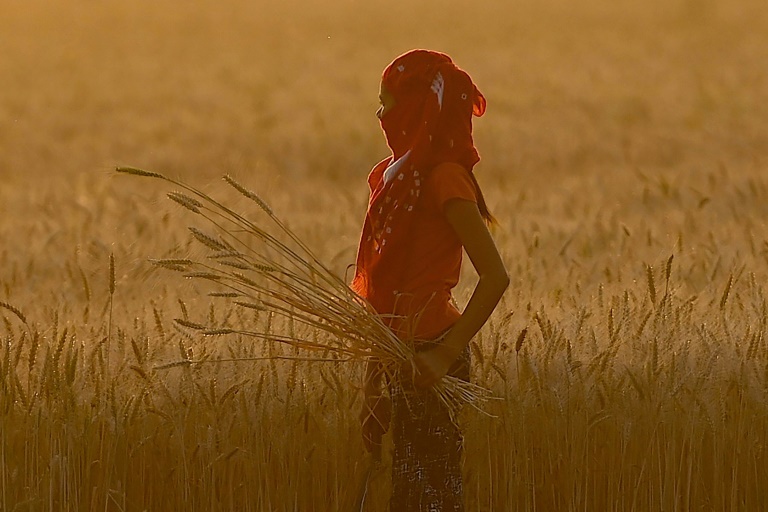
Wheat-laden trucks, ships stranded at Indian port

Hundreds of thousands of tonnes of wheat were stranded at a major port in India on Tuesday after New Delhi’s surprise ban on exports over inflation and food security worries.

India, the world’s second-largest grower of wheat, last week ordered that traders could not enter into new export deals without government approval.

The snap announcement has led to chaos at the port in Kandla, in Gujarat, where about 4,000 trucks are stuck in queues outside, according to the port operator.

Four ships partially loaded with about 80,000 tonnes of wheat are also docked at the facility.

Port officials said trucks that arrived before May 13, when the government announced the export ban, would be allowed to unload the grain onto ships waiting to take it to countries including Egypt and South Korea under prior agreements.

“However, those wheat-laden trucks that arrived at the port after May 13 will have to return with the commodity,” said Om Prakash Dadlani, spokesman for operator Deendayal Port Trust.

The Gandhidham Chamber of Commerce estimated that about 400,000 tonnes of wheat from Punjab, Haryana, Madhya Pradesh and other wheat-growing states were stranded.

Between 500 and 700 warehouses near the port were “full of wheat for export”, said Teja Kangad, president of the chamber.

The government should have given prior notice before announcing the ban, he said. 

“This has led to a chaotic situation where the truckers and traders are left uncertain of what will happen to the goods. Also, wheat being a perishable commodity, it can’t be kept in the open for long,” Kangad told AFP.

The wheat ban has drawn criticism from the Group of Seven nations worried about protectionism as inflation soars in the wake of the Ukraine war.

India had previously said it was ready to help fill some of the supply shortages caused by Russia’s February invasion of Ukraine, which had accounted for 12 percent of global exports.

While India is a small exporter, its assurances of supplies from its large buffer stocks had provided some support to global prices and soothed fears of major shortages. 

India’s wheat production has been hit by searing temperatures — the country recorded its warmest March on record — prompting the government to predict output would fall at least five percent this year from 109 million tonnes in 2021.  

Wheat prices surged to a record high on Monday, jumping to 435 euros ($453) per tonne as the European market opened.
Thailand's economy rebounds after Covid battering

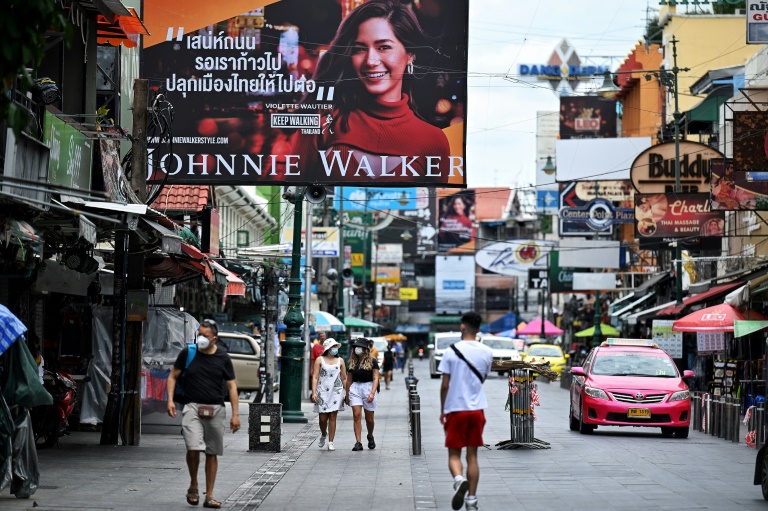
Thailand’s economy grew 2.2 percent in the first quarter as exports and tourism rebounded after the relaxation of pandemic restrictions, the country’s main economic agency said Tuesday.

During the pandemic, Southeast Asia’s second-largest economy suffered its worst economic performance since the 1997 Asian financial crisis, with visitor numbers crashing from roughly 40 million annually.

But this month the tourism-dependent kingdom dropped almost all restrictions for fully vaccinated visitors, including the need for Covid-19 tests to travel.

“The export sector is good… the tourism industry is getting better due to the relaxation of entry requirements for tourists,” National Economic and Social Development Council secretary general Danucha Pichayanan said.

The agency said the economy grew by 2.2 percent in January to March compared with the same period last year, and by 1.1 percent compared with the previous quarter.

The figures are a stark turnaround from the depths of the pandemic, which saw the economy contract by 6.1 percent in 2020.

The agency said global market volatility from Russia’s invasion of Ukraine, and a slowdown in China’s economy thanks to virus lockdowns across various cities, were affecting the pace of the kingdom’s economic recovery.

Ukraine is a key exporter of fertiliser and the war has reduced supply in Thailand.

The Thai government has sought to ease the shortage by sourcing fertiliser from Saudi Arabia.

The agency also raised its inflation forecasts this year to between 4.2-5.2 percent, up from the earlier range of 1.5-2.5 percent.

Danucha attributed the inflation increase to rising energy prices.

The country has a weekly average of more than 6,500 daily new coronavirus infections, although testing is limited.

China's zero-Covid policy to hit Asia aviation recovery: IATA

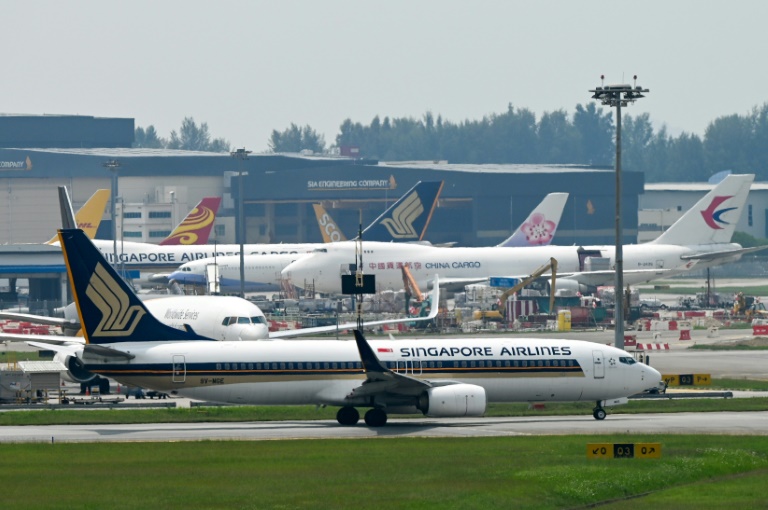
China’s zero-Covid policy will hold back a full air travel recovery in the Asia-Pacific region, a top airline industry group warned Tuesday, adding to calls for Beijing to ease its hardline stance.

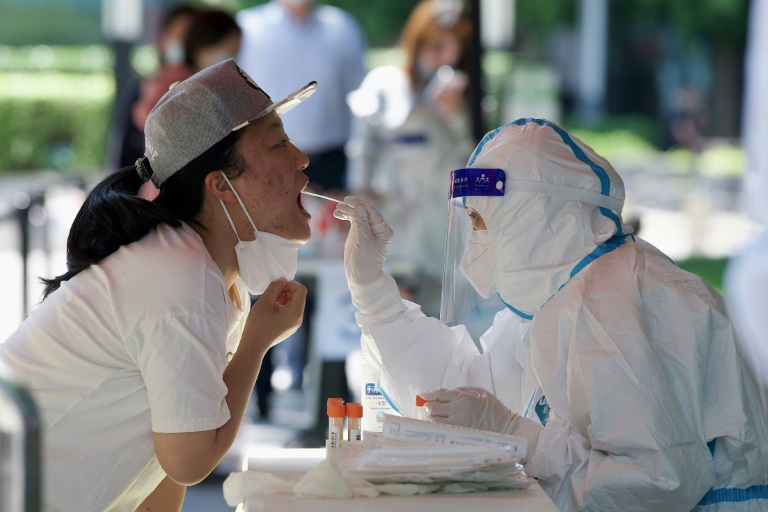
The world’s second-biggest economy is seeking to stamp out the coronavirus entirely, with rapid lockdowns and mass testing, and the measures have hammered both domestic and international air travel.

The aviation sector’s recovery in Asia was already relatively slow, and Willie Walsh, the International Air Transport Association (IATA) chief, warned Beijing’s approach made the picture bleaker.

“It has been a brutal two years for airlines. But we are seeing signs of recovery now,” he told an aviation conference in Singapore.

“Unfortunately, (the) Asia-Pacific region will lag this recovery as China continues to pursue zero-Covid.”

In 2021 in Asia, international travel was only seven percent of what it was in 2019, compared with a worldwide figure of 25 percent, he said. 

While the picture had improved at the start of this year, there was still a “long way to go”, he added.

China’s decision to stick with zero-Covid has put it at odds with many Asian governments, which have started reopening borders and dropping quarantine and testing requirements in recent months.

“The science supports these initiatives,” Walsh told the Changi Aviation Summit, attended by top industry officials. 

IATA is “convinced that this science supports the removal of testing and quarantine for unvaccinated travellers from areas of high population immunity, including many parts of this region,” he said.

China, the last major economy still closed off to the world, is facing mounting calls to drop the zero-Covid policy which has left millions in Shanghai locked down for weeks. 

Last week, the World Health Organization said the approach was unsustainable. 

Indian insurance giant slumps after country's biggest-ever IPO

Indian state-owned insurance giant LIC slumped on its market debut Tuesday following the country’s biggest-ever initial public offering, opening seven percent below the offer price.

Prime Minister Narendra Modi’s government raised $2.7 billion by selling 3.5 percent of Life Insurance Corporation of India as his administration seeks to privatise state assets to plug a gaping budget deficit. 

But it was forced to cut back the offer from a planned five percent after markets turned volatile following Russia’s invasion of Ukraine and China’s Covid lockdowns.

The offer price of 949 rupees had valued LIC at $77 billion, but it opened Tuesday on Mumbai’s exchange trading seven percent lower. The share price dropped to 9.4 percent down, before recovering slightly.

The muted debut could test the appetite of new shareholders for further flotations of nationalised companies as Modi seeks to sell off state assets to plug an estimated 16.6 trillion rupee ($213.5 billion) fiscal deficit.

The IPO saw enthusiastic participation from small investors and was oversubscribed nearly three times during the six-day application period.

But foreign investors have withdrawn a net 1.71 trillion rupees ($22 billion) from Indian equities so far this year, stock exchange data showed, as the US monetary policy tightening further roiled sentiment.

– Synonymous with life insurance –

Founded in 1956 by nationalising and combining more than 240 firms, LIC was for decades synonymous with life insurance in post-independence India, until the entry of private companies in 2000.

It continues to lead the pack with a 61 percent share of the market in India, with its army of 1.3 million “LIC agents” giving it huge reach, particularly in remote rural areas.

But LIC’s market share has declined steadily in the face of competition from net-savvy private insurers offering specialised products.

The firm warned in its regulatory filing that “there can be no assurance that our corporation will not lose further market share” to private companies.

The IPO followed a years-long effort by bankers and bureaucrats to appraise the mammoth insurer and prepare it for listing.

LIC is also India’s largest asset manager, with 39.55 trillion rupees under management as of September 30, including significant stakes in Indian blue chips such as Reliance and Infosys.

LIC’s real estate assets include vast offices at prime urban Indian locations, including a 15-storey office in Chennai that was once the country’s tallest building.

The firm is also believed to own a large collection of rare and valuable artwork that includes paintings by MF Husain — known as the Pablo Picasso of India — although the value of these holdings has not been made public.

Asian stocks up after Wall Street dip on China's Covid-bruised data

Asian stocks rose Tuesday despite a lukewarm lead from Wall Street after weak Chinese economic data showed the deep cuts of Beijing’s zero-Covid policy and added to inflation worries.

China has persisted in its strict zero-Covid policy to stamp out an Omicron-fuelled wave, ordering lockdowns in various cities and shuttering factories and ports. 

The impact of this strategy on the world’s second-largest economy was revealed Monday when official data showed that retail sales and industrial production in April on-year had slumped to their lowest levels in more than two years.

World markets have also been roiled by surging inflation and Russia’s war in Ukraine — leaving investors jittery.

“Markets remain in fight or flight mode while rolling the dice on recession odds,” Stephen Innes of SPI Asset Management said.

“Investors’ hopes remain elevated that yesterday’s worse than expected Chinese outruns could prove to be a ‘whatever it takes’ moment, and local policymakers will step hard on the stimulus pedal.”

Authorities in Shanghai — China’s biggest city — over the weekend announced they will reopen in stages, news that provided some cheer to Asian markets.

China also announced measures to help young people find jobs — as the urban unemployment rate rose to its highest in over two years — while officials have lowered the mortgage rate for first-time homebuyers.

On Tuesday, Asia markets opened higher with Hong Kong leading the way — the Hang Sang Index rose more than two percent.

– Commodities concerns –

In commodities trade, wheat prices soared to a record after major producer India banned its export because of a heatwave hitting production.

New Delhi said the move was needed to protect the food security of its 1.4 billion people in the face of lower production and steep global prices.

Global wheat prices had already surged on tight supply concerns since Russia’s February invasion of agricultural powerhouse Ukraine, which previously accounted for 12 percent of world exports.

By Monday’s close of the Euronext market, the price of wheat jumped to 438.25 euros ($456.68) per tonne, breaking the previous closing record of 422.40 struck on March 7, according to trader Damien Vercambre at grains brokerage Inter-Courtage. 

Oil also jumped overnight, and by Tuesday morning US crude benchmark WTI traded at nearly $114 a barrel. 

“The EU’s rising tensions with Russia and the resulting uncertainties over the bloc’s oil-and-gas supply remain front-and-centre,” Vandana Hari, founder of Vanda Insights in Singapore, told Bloomberg. 

“Having said that, with a $10 jump since last Tuesday, it’s hard to see much more upside in crude unless events take a sudden turn for the worse.”

– Key figures at around 0230 GMT –

Hong Kong – Hang Seng Index: UP 2.1 percent at 20,375.29 

Shanghai – Composite: UP 0.2 percent at 3,080.78 

Tokyo – Nikkei 225: UP 0.2 percent at 26,601.03 (break)

Brent North Sea crude: DOWN 0.2 percent at $114.04 per barrel

West Texas Intermediate: DOWN 0.3 percent at $113.87 per barrel

Euro/dollar: UP at $1.0440 from $1.0436 at 2030 GMT Monday

Pound/dollar: UP at $1.2334 from $1.2323

Euro/pound: DOWN at 84.63 pence from 84.67 pence

Dollar/yen: UP at 129.21 yen from 129.08 yen

New York – Dow: UP 0.1 percent at 32,223.42 (close)

London – FTSE 100: UP 0.6 percent at 7,464.80 (close)

— Bloomberg News contributed to this story —

White House hits back after Bezos knocks Biden on economy

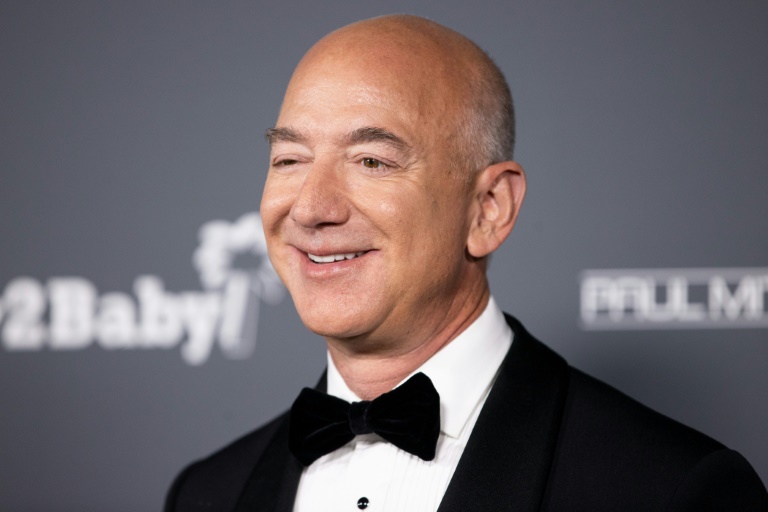
The White House on Monday uncharacteristically lashed out at Amazon founder Jeff Bezos, after he openly criticized the Biden administration’s fiscal and economic policies on Twitter.

“It doesn’t require a huge leap to figure out why one of the wealthiest individuals on Earth opposes an economic agenda for the middle class,” said Andrew Bates, deputy press secretary.

“It’s also unsurprising that this tweet comes after the president met with labor organizers, including Amazon employees,” he added.

Bates was referring to President Joe Biden’s recent White House meeting with Christian Smalls, the president of the Amazon Labor Union, which caused a shock in early April when it became the company’s first labor union in the United States.

The White House released a video of the meeting, during which Biden hugged Smalls, who wore a jacket with the slogan “Eat the rich” emblazoned on it.

“You’re trouble man,” Biden told Smalls, adding: “I like you, you’re my kind of trouble.”

In recent days, Bezos criticized Biden in in several posts on Twitter.

The US president has recently encouraged increasing taxes on wealthy corporations as a means of fighting rampant US inflation, an idea which seemed to irk the Amazon billionaire.

“Raising corp taxes is fine to discuss. Taming inflation is critical to discuss. Mushing them together is just misdirection,” Bezos tweeted.

Additionally, referencing Biden’s social spending Build Back Better bill, which stalled in Congress, Bezos criticized the administration for having “tried hard to inject even more stimulus into an already over-heated, inflationary economy.”

US accuses Venezuela doctor of selling ransomware to cybercriminals

A French-Venezuelan cardiologist was accused Monday by the US of selling ransomware to cybercriminals and instructing them on how to extort money from the victims they hacked. 

The Brooklyn district attorney’s office said Moises Luis Zagala, 55, who lives in the Venezuelan city of Ciudad Bolivar, “not only created and sold ransomware products to hackers, but also trained them in their use.” 

It said the French-Venezuelan doctor “sold the tools for conducting ransomware attacks, trained the attackers about how to extort victims, and then boasted about successful attacks, including by malicious actors associated with the government of Iran.”

The ransomware would encrypt information on the computers that had been hacked, then the attackers would demand money to decrypt it. 

One of the first products developed by Zagala was a data hijacking program called “Jigsaw v. 2”, which had a “doomsday” counter that kept track of the times the user had tried to destroy it.

“If the user kills the ransomware too many times, then it’s clear he won’t pay so better erase the whole hard drive,” Zagala instructed his clients, according to the US authorities.

In early 2019, Zagala began advertising his new tool on the web, a “Private Ransomware Builder” which he named “Thanos” after the Marvel Comics villain responsible for destroying the half of life in the universe, as well as Thanatos in Greek mythology, associated with death. 

The “multi-tasking doctor,” as the Brooklyn DA described him, allowed criminals to either buy the program — and create their own customized ransom notes — or to join an “affiliate program” to gain access to the program in exchange for a share of the ill-gotten gains, which could be paid in cryptocurrency or regular cash. 

His preferred aliases were “Aesculapius,” referring to the ancient Greek god of medicine, and “Nosophoros,” which means “sickness” in Greek.

Zagala allegedly boasted in specialized hacker forums that the Thanos program was practically undetectable by antivirus programs and that once the encryption was finished the program would self-delete, making it almost impossible for the victim to be able to detect it and retrieve their documents. 

Zagala even asked his clients “if you have time and it’s not too much trouble” to rate their experience online.  

If found guilty, he could be sentenced to 10 years in jail.

Major US baby formula producer agrees with regulators on restarting production

Amid a US shortage of baby formula, officials announced Monday a previously closed manufacturer would re-open and encouraged foreign companies to apply to import their products — although it will take weeks to see more stock back on store shelves.

A “consent decree” agreement between the Food and Drug Administration (FDA) and major formula manufacturer Abbott outlines steps needed to restart production at the company’s plant in Michigan, which was shut down due to a recall, Abbott said in a statement.

“Once the FDA confirms the initial requirements for start-up have been met, Abbott could restart the site within two weeks,” the statement said.

However, the company cautioned that “from the time Abbott restarts the site, it will take six to eight weeks before product is available on shelves.”

Abbott, which produces the popular Similac brand used by millions of American families, announced a voluntary recall on February 17 after the death of two babies.

In a separate move, the FDA also said Monday it plans to accept applications from international baby formula manufacturers “who don’t normally distribute their infant formula products in the US,” FDA Commissioner Robert Califf said in a statement. 

Currently, the United States produces about 98 percent of the formula it consumes.

– Import applications –

The FDA plans to work to quickly review such applications, especially ones that come from “countries that have health and safety inspection systems similar” to the United States, according to a senior White House official. 

The process would also prioritize applications showing “clear quality and safety and nutritional adequacy,” a different senior administration official added. 

According to Califf, foreign-made baby formula could appear on US shelves within “weeks.” 

The Biden administration was also reaching out to US manufacturers to offer help with logistical challenges, such as shipping, the officials said. 

US families have grown increasingly desperate for formula amid a perfect storm of supply chain issues and the massive recall.

The average out-of-stock rate for baby formula hit 43 percent earlier this month, according to Datasembly, which collected information from more than 11,000 retailers.

Abbott’s agreement with the FDA to restart production at the plant in Sturgis, Michigan also needs to be reviewed by a federal court after the Justice Department filed a complaint on Monday.

The complaint says the facility “failed to comply with regulations designed to ensure the quality and safety of infant formula, including protection against the risk of contamination from bacteria.”

“The actions we are announcing today will help to safely increase the supply of baby formula for families,” US Attorney General Merrick Garland said in a statement.

Robert Ford, chairman and chief executive officer of Abbott said he regretted the situation and that the company already had begun “working to implement improvements and take corrective action.”

“We know millions of parents and caregivers depend on us and we’re deeply sorry that our voluntary recall worsened the nationwide formula shortage,” he said in the statement.

The FDA and White House officials reiterated Monday that parents who are concerned about running out of baby formula should talk to their child’s doctor, and that it is not safe to water down existing formula or to make your own at home. 

The scarcity is the latest crisis to confound President Joe Biden’s push to get the US economy on sound footing amid the highest inflation in four decades and the ongoing global supply chain bottlenecks.

McDonald's to exit Russia, sell business in country

American fast-food giant McDonald’s said Monday it will exit Russia in the wake of the Ukraine invasion, ending a more than three-decade run begun in the hopeful period near the end of the Cold War.

The restaurant chain, which launched in Moscow in January 1990 to great fanfare almost two years before the Soviet Union was dissolved, characterized the withdrawal as difficult but necessary.

“The humanitarian crisis caused by the war in Ukraine, and the precipitating unpredictable operating environment, have led McDonald’s to conclude that continued ownership of the business in Russia is no longer tenable, nor is it consistent with McDonald’s values,” the company said in a statement.

The chain is looking to sell “its entire portfolio of McDonald’s restaurants in Russia to a local buyer.”

The burger giant is one of numerous foreign firms that have pulled out of the country or suspended operations following Moscow’s invasion of Ukraine in late February.

Earlier on Monday, French automaker Renault announced it had handed over its Russian assets to the government, marking the first major nationalization since the onset of Western sanctions against Moscow’s military campaign.

Russia’s President Vladimir Putin ordered troops into pro-Western Ukraine on February 24, triggering unprecedented sanctions and sparking an exodus of foreign corporations including H&M, Starbucks and Ikea.

In March, citing “unspeakable suffering to innocent people,” McDonald’s closed all of its 850 restaurants in the country, where it says it employs 62,000 workers.

But on Monday the “Big Mac” maker went a step further, saying the company “is pursuing the sale of its entire portfolio of McDonald’s restaurants in Russia to a local buyer.”

After the sale, the restaurants would no longer be able to use the McDonald’s name, logo, branding or menu, though the company will retain its trademark in the country, it said.

Russia currently accounts for nine percent of the company’s revenue and three percent of its operating profit.

McDonald’s expects a one-time charge of $1.2 billion to $1.4 billion to write off the investment.

– A ‘new era’ –

The withdrawal offers a stark contrast to the optimism that surrounded the arrival of the quintessentially American brand in Russia in the waning days of the Cold War.

The company began discussing Russian business at the 1976 Olympics in Canada where McDonald’s let Russian athletes use the “Big Mac Bus” in a sign of good will.

That led to 14 years of negotiations, “culminating in the glorious day in January of 1990 when the first McDonald’s opened to so much hope and excitement in Pushkin Square,” recalled McDonald’s Chief Executive Chris Kempczinski in a message to employees.

“In the history of McDonald’s, it was one of our proudest and most exciting milestones,” Kempczinski said. “After nearly half a century of Cold War animosity, the image of the Golden Arches shining above Pushkin Square heralded for many, on both sides of the Iron Curtain, the beginning of a new era.”

In the subsequent decades, McDonald’s operations in Russia expanded far beyond Moscow as the company invested billions of dollars and grew its supply chain.

But Kempczinski said the Russia investment was no longer viable in terms of business, or consistent with company values. 

Still, he closed his message on a hopeful note, saying, “let us not end by saying, ‘goodbye’… (but) ‘Until we meet again.'”

The company’s decision to divest “underlines a view that relations with Russia will not soon be normalized,” said Neil Saunders, a retail expert at GlobalData.

The conditions of the exit, including the financial challenges facing prospective Russian buyers means “it is unlikely the sale price will be anywhere near the pre-invasion book value of the business,” said Saunders, adding that the departure “will leave a hole” in McDonald’s growth plans “that is not easily filled in the near-term.”

Shares of McDonald’s fell 0.4 percent to $244.04.

Twitter defends anti-bot efforts, Musk replies with poo emoji

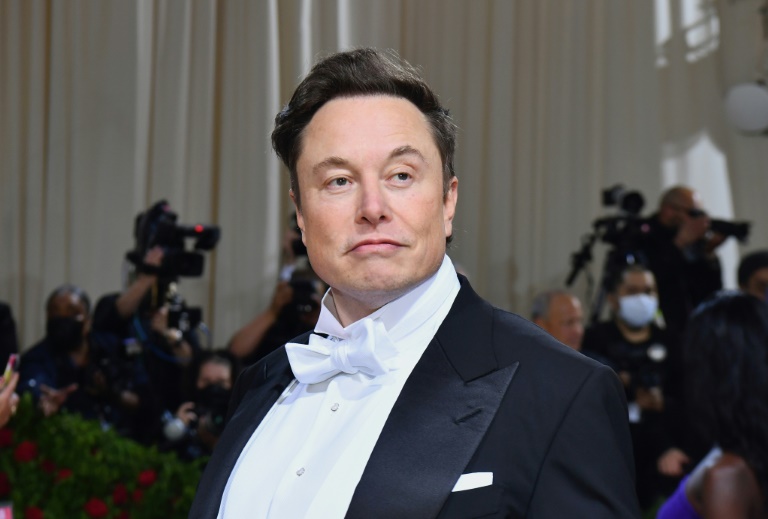
Twitter’s chief on Monday defended the messaging platform’s battle against “bots” that aspiring buyer Elon Musk says vex the platform, only to have the billionaire respond with a poo emoji.

The exchange played out in tweets as Musk’s $44 billion buy of Twitter remained “temporarily on hold,” pending questions over the social media company’s estimates of the number of fake accounts, or “bots.”

“It appears the spam/bot issue is cascading and clearly making the Twitter deal a confusing one,” Wedbush analyst Dan Ives said in a note to investors.

“The bot issue at the end of the day was known by the New York City cab driver and feels more to us like the ‘dog ate the homework’ excuse to bail on the Twitter deal or talk down a lower price.”

Twitter chief executive Parag Agrawal said the platform suspends more than a half-million seemingly bogus accounts daily, usually before they are even seen, and locks millions more weekly that fail checks to make sure they are controlled by humans and not by software.

Internal measures show that fewer than five percent of accounts active on any given day at Twitter are spam, but that analysis can’t be replicated externally due to the need to keep user data private, Agrawal contended.

Musk, who has said bots plague Twitter and that he would make getting rid of them a priority if he owned the platform, responded to that tweet by Agrawal with a poo emoji.

“So how do advertisers know what they’re getting for their money?” Musk tweeted in a subsequent response about the need to prove Twitter users are real people.

“This is fundamental to the financial health of Twitter.”

The process used to estimate how many accounts are bots has been shared with Musk, Agrawal said.

The chief of SpaceX as well as Tesla, Musk is currently listed by Forbes as the world’s wealthiest person, with a fortune of some $230 billion, much of it in Tesla stock.

Seen by his champions as an iconoclastic genius and by his critics as an erratic megalomaniac, Musk surprised many investors in April with his pursuit of Twitter.

Musk has described his motivation as stemming from a desire to ensure freedom of speech on the platform and to boost monetization of an Internet site that is influential in media and political circles but has struggled to attain profitable growth.

Musk said he favored lifting the ban on Donald Trump, who was kicked off the platform in January 2021 shortly after the former US president’s efforts to overturn his election defeat led to the January 6 assault on the US Capitol.

Close Bitnami banner
Bitnami