US Business

Twitter execs exit, hirings halt as Musk buy looms

Twitter confirmed Thursday that two senior executives are heading for the exit and it has paused most hiring, as Elon Musk stands poised to become the global messaging platform’s new owner.

Kayvon Beykpour, a general manager who leads research, design and engineering at Twitter, is leaving along with head of products Bruce Falck, a Twitter spokesperson told AFP.

Beykpour however said he was ousted from the San Francisco-based tech company.

“The truth is that this isn’t how and when I imagined leaving Twitter, and this wasn’t my decision,” Beykpour, who is on paternity leave, said in a tweet.

Twitter chief Parag Agrawal “asked me to leave after letting me know that he wants to take the team in a different direction,” he added.

Twitter also confirmed that, effective this week, it is pausing all hiring except for business-critical roles.

Musk’s $44-billion deal to buy Twitter was announced last month but still needs the backing of shareholders and regulators.

The takeover is expected to close later in 2022, with Musk — who runs space exploration endeavor SpaceX and electric automaker Tesla — stepping in as its boss at least for a little while. 

Musk is on record saying he would lift the ban Twitter slapped on Donald Trump, contending that kicking the former US president off the platform “alienated a large part of the country.”

Musk’s endorsement of a Trump return triggered fears among activists that Musk would “open the floodgates of hate.”

Trump has stated publicly he would not come back to Twitter if permitted, sticking instead with his own social network, Truth Social, which has failed to gain traction.

Trump was booted from Twitter and other online platforms after supporters, fired up by his tweets and speech alleging election fraud, attacked the US Capitol on January 6, 2021 in a deadly bid to stop Joe Biden from being certified as winner of the presidential election two months earlier.

Musk reasoned that permanent bans at Twitter should be rare, and reserved for accounts that are spam, scams or run by software “bots.”

Activist groups have called on Twitter advertisers to boycott the service if it opens the gates to abusive and misinformative posts with Musk as its owner.

The fate of Twitter’s top attorney, deemed a moral champion of the platform, has been in doubt since Musk tweeted displeasure with content moderation she had carried out.

The lawyer, Vijaya Gadde, has led efforts to battle bullying and posts that could lead to real-world harm such as the US Capitol riot.

She was involved in the decision to ban Trump, and others including removing political advertising from the app.
US Senate confirms Powell for second term as central bank chief

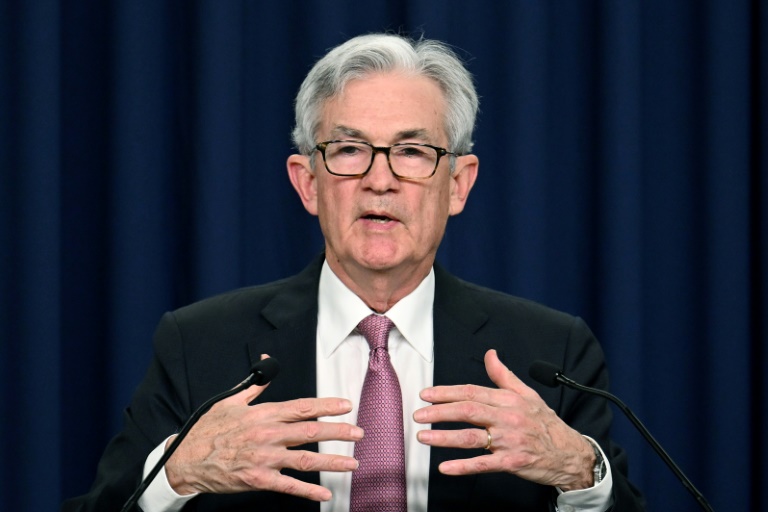
The US Senate on Thursday confirmed Jerome Powell to a second term as head of the Federal Reserve, as the central bank fights to crush soaring inflation.

The 80-19 vote came amid inflation that has hit a 40-year high, fueled by the conflict in Ukraine and ensuing sanctions imposed on Russia, as well as Covid-19 restrictions in China that have raised concerns the global supply snarls may worsen.

Powell, a Republican who enjoyed broad bipartisan support, had continued at the helm of the central bank although his first four-year term officially expired February 4.

His confirmation was delayed by a drawn-out process to approve Lisa Cook to join the Fed board — the first Black woman to serve in the post — who was finally confirmed on Tuesday with only Democratic votes.

The vote on Powell came the day after the upper house of Congress approved the nomination of Philip Jefferson of Davidson College, marking the first time the Fed board has had more than one Black governor.

US President Joe Biden, whose popularity has taken a hit from the soaring inflation and record gasoline prices, has repeatedly said that tackling the issue is primarily a job for the Fed.

“I am pleased to see the Senate take a step forward on my agenda to get inflation under control by confirming my nominees to the Fed,” he said in a statement after the vote.

– Bringing down inflation –

Powell, who first joined the Fed board in 2012, led the central bank as it slashed the benchmark interest rate to zero at the start of the pandemic in March 2020 and pumped money into the financial system to prevent a severe downturn in the world’s largest economy.

Now he is overseeing efforts to cool price pressures impacting American families.

The Fed last week announced its largest rate hike since 2000 and signaled similar increases were likely in the coming months.

The challenge for Powell and the Fed is to turn down the heat on inflation without tipping the United States into recession, but he has expressed confidence that the economy is strong enough to withstand the tighter monetary policy.

With the latest additions, the Fed board will be just one short of its full complement of seven governors. 

The Senate last month confirmed longtime Fed governor Lael Brainard as vice chair of the board.

In his statement, Biden urged the Senate to confirm his final nominee, Michael Barr, as vice chair for supervision.

The US president’s initial nominee for the role of top Fed banking cop, Sarah Bloom Raskin, withdrew her name from consideration in March when it became clear she would not have sufficient support.

She had previously won bipartisan approval for senior roles at the Fed and Treasury, but faced opposition from Republicans and from a key Democratic lawmaker over her stance on climate change issues in banking supervision.

The Republican opposition in the Senate boycotted a committee vote on her nomination and the four other top Fed positions, which she cited as the main factor in her decision to drop out.

Cook and Jefferson each have researched inequality in the labor market. 

Powell has repeatedly stressed the importance of ensuring economic opportunities extend to disadvantaged groups — a notable change of focus in an economy where Black workers face far higher unemployment rates than other racial groups.

Cook, a professor of economics and international relations at Michigan State University, has focused her research on how discrimination has harmed the American economy and the damage downturns do to the poor.

Jefferson, also an economics professor, is only the fourth Black man to serve as a Fed governor.

Biden administration cancels 3 offshore oil lease sales

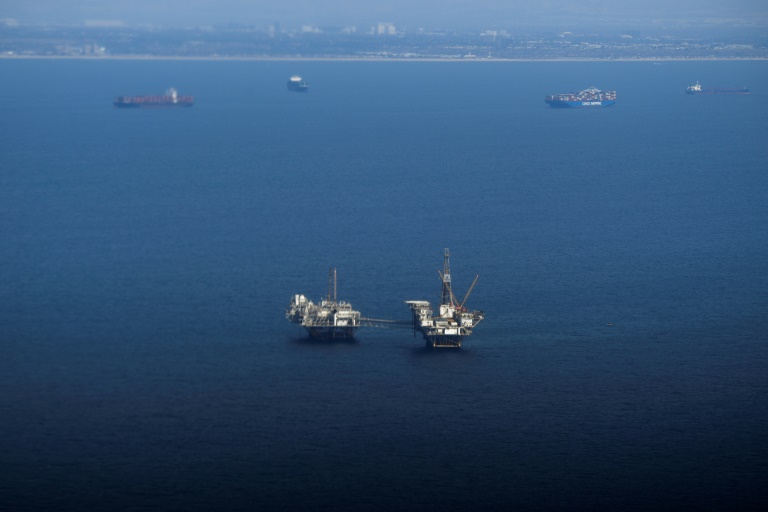
The Biden administration has scotched plans to hold three offshore oil and gas lease sales in Alaska and the Gulf of Mexico, a government spokeswoman said Thursday. 

Citing a lack of interest from the industry, the Interior Department won’t offer tracts at the proposed Cook Inlet in Alaska, an agency spokeswoman said.

The department also will not undertake a pair of lease sales in the Gulf of Mexico “as a result of delays due to factors including conflicting court rulings that impacted work on these proposed lease sales,” the spokeswoman said.

The action comes as polling shows US President Joe Biden struggling with low approval ratings amid consumer fury at high gasoline prices and inflation in other household staples.

Reaching first oil and gas production from a federal offshore lease typically takes at least one or two years of drilling and other work. That means the decision on the lease sales will not affect the near-term supply outlook driving commodity prices.

Still, Republican politicians and business lobby groups slammed the Biden administration’s energy policy, which has emphasized the need for more green energy to address climate change.

“President Biden’s administration is actively making high gas prices worse,” said Senator Bill Cassidy, Republican of Louisiana.

“When we need to unleash American energy production, the Biden administration kills opportunities at every turn. The administration’s actions over the past year and a half have been an all-out assault on American energy, Louisiana jobs, and families’ pocketbooks.”

The US Chamber of Commerce and the American Petroleum institute also blasted the decision, with the latter pointing to a problematic “pattern” in which the Biden administration “talks about the need for more supply and acts to restrict it.”

But the Alaska Wilderness League called the development “great news for Alaska,” touting it as a “huge win for the environment, our climate, and endangered Cook Inlet belugas.”

Low French rainfall adds new cloud to global food market

French farmer Robin Lachaux is worried about his wheat. In normal years, it flowers and bulks up in May thanks to regular spring rainfall, but this year hot and dry conditions risk stunting its progress.

“If we don’t water it today, we’ll lose 50 percent of our output,” the young farmer in an orange cap and sweatshirt from Sully-sur-Loire in central France told AFP.  

“We wouldn’t normally water at this time of the year but the dry periods are coming earlier and earlier,” he added as he positioned his pressure hoses and irrigation equipment.

France is Europe’s agricultural powerhouse, the biggest grain producer in the 27-country bloc and the world’s fourth or fifth biggest wheat exporter.

Its annual production influences global prices which are already at record levels because the war in Ukraine looks set to wipe out a chunk of the country’s production, leading to fears of a global hunger crisis.

On Monday, the French agricultural ministry warned about the impact of an unseasonably hot and dry stretch which “will have an impact on cereal production” in France following lower-than-average rainfall over the winter period.

As well as wheat, other crops sown in winter such as barley are in a key development stage in May, while corn and sunflower production over the summer could also be hit.

“There’s not a region that’s not affected,” the head of French farmers’ union FNSEA, Christiane Lambert, told AFP.

“Each day that passes, we’re seeing the ground cracking more… if it carries on like this, those that can irrigate will be okay, but the others will have dramatic decreases in production.”

The French national weather service said the country was in the grip of a hot spell that is “notable for its timing, its duration and its geographical spread”, with a 20-percent drop in rainfall between September 2021 and April 2022.

– Record highs – 

World food prices hit an all-time high in March following Russia’s invasion of Ukraine, which accounted for 20 percent of global wheat and maize exports over the past three years, according to the UN’s Food and Agriculture Organization.

Ukrainian ports are blockaded by Russian naval vessels and French data analysis firm Kayrrosa recently calculated that the area planted with wheat had been reduced by a third this year because of the conflict, according to satellite imagery.

Production could fall by as much as 50 percent this year, according to government and industry forecasts, with some farmers abandoning their fields to join the army.

The strains on global markets have led to warnings from NGOs and the United Nations that hunger or even famine could strike vulnerable import-dependent countries across Africa and the Middle East.

With top wheat-producing states in the United States such as Kansas and Oklahoma also suffering from drought-like conditions, poor French yields could be particularly significant in 2022.

“We already had markets that were very nervous. This is adding to tensions,” Nathan Cordier, a grain market analysts at agricultural consultancy Agritel, told AFP. “France is one of the major players in the wheat market and people are counting on it.

“The question is whether export volumes will be enough.”

– Hunger – 

Current wheat prices in Europe are at a record 400 euros a tonne ($420), up from an already high level of around 260 euros a tonne at the start of the year before Russia’s invasion of Ukraine.

The high prices are expected to stimulate more planting in the United States and the FAO has forecast that higher yields in Canada and Russia, as well as Pakistan and India could help compensate below-average harvests in western Europe.

Some of the recent price rises are down to short-term shortages caused by the sudden end to Ukrainian supplies, as well as some farmers holding back from selling their produce in anticipation of higher prices going forward.

“As prices are very high, with wheat at more than 400 euros a tonne for delivery in September, they’re waiting,” Edward de Saint-Denis, a commodities trader at Plantureux and Associates, a French brokerage.

But as traders and farmers scan the weather forecasts and devise their trading strategies, aid groups warn that lives are at risk in some of the most vulnerable places on earth such as war-wracked Yemen or countries in the arid Sahel region of northern Africa.

“According to our research, food price rises caused by Russia’s invasion of Ukraine mean that some local communities in developing countries are already spending more than triple what they were previously paying for food, causing families to skip meals and take their children out of school,” Teresa Anderson from ActionAid, a British charity, told AFP.

A prolonged drought in France could make that much worse.

“It would deepen hunger, poverty and debt for low-income families in Africa, Asia and Latin America, making an already desperate situation much worse,” she said.   

Global stocks down, euro slumps over growth and inflation worries

World equities mostly fell Thursday and the euro hit a five-year dollar low as investors worried about growth amid stubborn inflation and rising interest rates.

Frankfurt, London and Paris stock markets each sank following heavy falls in Asia.

Meanwhile, Wall Street was mostly lower in late morning trading, with the Dow down 0.3 percent.

Panic-stricken investors also sent virtual unit bitcoin tumbling to the lowest level since late 2020 after a dramatic collapse in some stablecoin cryptocurrencies.

Oil prices pushed higher as investors focused on supply issues.

– ‘Sticky inflation’ worries –

Data released Wednesday showed US inflation slowed to 8.3 percent in April after a four-decade peak of 8.5 percent in March, but that was less than what experts had forecast and prompted concerns inflation will remain high.

Wednesday’s stock trading is “pointing to a market that is becoming more concerned about slowing growth, and sticky inflation, aka rising stagflation and, or recession risk”, according to analyst Michael Hewson at CMC Markets. 

The dollar has gotten a boost, both as the greenback is seen as a haven in uncertain times and as the US Federal Reserve has taken the lead in raising interest rates in the face of surging inflation.

The dollar is currently at a two-decade high against a trade-weighted index of rival currencies, and on Thursday the euro slumped to a five-year dollar low at $1.0389.

“Given the combination of a relatively hawkish monetary policy stance and a dollar-positive global backdrop, we expect the dollar to grind higher against nearly all developed and emerging market currencies over the course of the Fed’s current tightening cycle,” said analysts at Capital Economics. 

Interest rates are being hiked worldwide to tackle decades-high inflation, which is fuelled mostly by rocketing energy costs. 

Both raising prices and borrowing costs threaten to halt growth in many countries, however.

London’s stock market was slammed Thursday also by news that the UK economy shrank in March on fallout from soaring inflation, increasing the prospect of a recession — or two quarters of contraction in a row.

The data sent the pound sliding to a May 2020 low at $1.2166.

World markets have been volatile for much of 2022 owing to China’s Covid-19 lockdowns, Russia’s invasion of Ukraine, and as surging inflation weighed on consumer sentiment. 

Cryptocurrency trading has also been dampening investor sentiment after two so-called stablecoins proved to be anything but. Supposedly pegged to the dollar, both TerraUSD and Tether saw the values collapse. 

“The worry is that there will be a spillover to other risk assets like stocks, which could be treated as a source of funds to meet margin calls or which could simply be subjected to an exacerbation of the negative sentiment that has had a vice grip on the market for most of the year,” said market analyst Patrick O’Hare at Briefing.com.

Bitcoin slumped below $27,000, before recovering to stand down around 6 percent at $29,091.39.

– Key figures at around 1630 GMT –

New York – Dow: DOWN 0.3 percent at 31,729.22 points

EURO STOXX 50: DOWN 0.9 percent at 3,613.43

London – FTSE 100: DOWN 1.6 percent at 7,233.34 (close)

Frankfurt – DAX: DOWN 0.6 percent at 13,739.64 (close)

Paris – CAC 40: DOWN 1.0 percent at 6,206.26 (close)

Hong Kong – Hang Seng Index: DOWN 2.2 percent at 19,380.34 (close)  

Shanghai – Composite: DOWN 0.1 percent at 3,054.99 (close) 

Tokyo – Nikkei 225: DOWN 1.8 percent at 25,748.72 (close)

Brent North Sea crude: UP 0.8 percent at $108.34 per barrel

West Texas Intermediate: UP 1.2 percent at $107.00 per barrel

Euro/dollar: DOWN at $1.0413 from $1.0513 at 2100 GMT Wednesday

Pound/dollar: DOWN at $1.2228 from $1.2251

Euro/pound: DOWN at 85.18 pence from 85.81 pence

Dollar/yen: DOWN at 128.23 yen from 129.97 yen

burs-lcm/rl/har

US Senate set to confirm Powell for second term as central bank chief

The US Senate was poised Thursday to confirm Jerome Powell to a second term as head of the Federal Reserve, as the central bank works to crush soaring inflation.

The vote will come as inflation has hit a 40-year high, fueled by the conflict in Ukraine and ensuing sanctions imposed on Russia, as well as Covid-19 restrictions in China that have raised concerns the global supply snarls may worsen.

Powell, a Republican who enjoys broad bipartisan support, has continued at the helm of the central bank although his first term officially expired February 4.

His confirmation was delayed by a drawn-out process to approve Lisa Cook to join the Fed board — the first Black woman to serve in the post — who was finally confirmed on Tuesday with only Democratic votes.

The vote on Powell comes the day after the upper house of Congress approved the nomination of Philip Jefferson of Davidson College, marking the first time the Fed board has had more than one Black governor.

US President Joe Biden, whose popularity has taken a hit from the soaring inflation and record gasoline prices, has said repeatedly that tackling the issue is primarily a job for the Fed.

“I put forward highly qualified nominees to lead that institution, and I strongly urge the Senate to confirm them without delay,” he said Tuesday.

Powell led the central bank as is slashed the benchmark interest rate to zero at the start of the pandemic in March 2020 and pumped money into the financial system to prevent a severe downturn in the world’s largest economy, and is now overseeing efforts to cool price pressures impacting American families.

The Fed last week announced its largest rate hike since 2000 and signaled similar increases were likely in the coming months.

The challenge for Powell and the Fed is to turn down the heat on inflation without tipping the United States into recession, but he has expressed confidence that the economy is strong enough to withstand the tighter monetary policy.

With the latest additions, the Fed board will be just one short of its full complement of seven governors.

Cook and Jefferson each have researched inequality in the labor market. 

Powell has repeatedly stressed the importance of ensuring economic opportunities extend to disadvantaged groups — a notable change of focus in an economy where Black workers face far higher unemployment rates than other racial groups.

Cook, a professor of economics and international relations at Michigan State University, has focused her research on how discrimination has harmed the American economy and the damage downturns do to the poor.

Jefferson, also an economics professor, is only the fourth Black man to serve as a Fed governor.

Crisis-hit Sri Lanka appoints new PM to replace president's brother

Sri Lanka’s embattled president swore in a new prime minister Thursday to replace his brother, who was banned from leaving the country after his supporters launched violent attacks on a protest against the nation’s economic crisis. 

The new premier, Ranil Wickremesinghe, has already served in the office five times — but it remains to be seen whether he will be able to get any legislation through parliament.

The 73-year-old will be tasked with navigating Sri Lanka through the worst downturn in its history as an independent nation, with months of shortages and blackouts inflaming public anger.

“We want to return the nation to a position where our people will once again have three meals a day,” Wickremesinghe said after his appointment.

“Our youth must have a future.”

In a bid to win over opposition lawmakers demanding he quit, President Gotabaya Rajapaksa, 72, had pledged to give up most of his executive powers and pave the way for a new cabinet.

Mahinda Rajapaksa, the president’s brother, resigned as prime minister on Monday after his supporters attacked anti-government demonstrators who had been protesting peacefully for weeks.

This marked a turning point and unleashed several days of chaos and violence in which at least nine people were killed and over 200 injured, with dozens of Rajapaksa loyalist homes set on fire.

On Thursday, a court banned Mahinda, his politician son Namal, and more than a dozen allies from leaving the country after ordering an investigation into the violence.

“Congratulations to the newly appointed Prime Minister,” Mahinda tweeted from the Trincomalee naval base on the country’s east coast, where he took refuge after fleeing the capital Colombo. 

“I wish you all the best as you navigate these troubled times.”

Security forces patrolling in armoured personnel carriers with orders to shoot looters on sight have largely restored order.

A curfew was lifted Thursday morning — only to be reimposed after a six-hour break allowing Sri Lanka’s 22 million people to stock up on essentials.

– ‘Collapse beyond redemption’ –

Sri Lankans have suffered months of severe shortages of food, fuel and medicine — as well as long power cuts — after the country burnt through foreign currency reserves needed to pay for vital imports.

The central bank chief warned Wednesday that the economy would “collapse beyond redemption” unless a new government was urgently appointed.

Wickremesinghe is seen as a pro-West free-market reformist, potentially making bailout negotiations with the International Monetary Fund and others smoother.

With many from Rajapaksa’s party having defected in recent months, no group in the 225-member assembly has an absolute majority, making parliamentary approval of the unity government’s legislation potentially tricky.

Wickremesinghe insisted he had enough support to govern when speaking to reporters after his appointment. 

But it remains to be seen whether a new cabinet will be enough to calm public anger if Rajapaksa continues to resist calls for his resignation.

“What he has done is despicable, he has brought all of us to this state of hunger and poverty,” Abu Nawaz, a small business owner in Colombo, told AFP.

“What is the point of keeping him as the president?” he added. “Will this end our miseries?”

– ‘We can’t wait any longer’ – 

Wickremesinghe had already been working closely with Rajapaksa before his appointment to push through sweeping policy changes, an official close to their discussions told AFP. 

The central bank almost doubled key interest rates and announced a default on Sri Lanka’s $51-billion external debt as part of the policy shift, officials said. 

“His appointment as PM, and the quick formation of an inclusive government, are first steps to addressing the crisis,” US ambassador to Sri Lanka Julie Chung tweeted.

The main opposition SJB party was initially invited to lead a new government, but its leader Sajith Premadasa insisted the president first step down.

In recent days the party has split, with a dozen SJB lawmakers pledging support to Wickremesinghe.

“We must address the economic crisis,” said the party’s Harin Fernando. “We can’t wait any longer.”

Wickremesinghe was greeted by a small group of supporters as he arrived to pray at a Buddhist temple in Colombo after he was sworn in.

But members of Sri Lanka’s influential Buddhist clergy have already signalled their dissatisfaction with the appointment of the veteran politician, who served as premier as recently as 2019.

“What we asked for is a new government that will include fresh blood, not those whose who have already been rejected by the people,” said leading monk Omale Sobitha.

Russia using energy 'as weapon', says Berlin

German Economy Minister Robert Habeck accused Russia on Thursday of using energy as “a weapon”, after Moscow slapped sanctions on Western energy firms and slowed gas flows to Europe.

“It has to be said that the situation is coming to a head, in such a way that the use of energy as a weapon is now being realised in several areas,” Habeck told reporters in Berlin.

Ukrainian Foreign Minister Dmytro Kuleba, on a visit to the German capital, said Moscow had shown itself to be an unreliable supplier. 

Kuleba urged Europe to end its heavy dependence on Russian gas that was helping to finance Moscow’s war machine.

“This energy oxygen for Russia must be turned off and that is especially important for Europe,” Kuleba said at a joint press conference with Habeck.

“Europe must get rid of this complete dependence on Russian gas, since Russia has shown… that it is not a reliable partner and Europe cannot afford that.”

Russia on Thursday said it would stop sending natural gas via the Polish section of the Yamal-Europe pipeline as part of retaliation for Western sanctions over its invasion of Ukraine.

The move comes a day after Russia issued a government decree imposing sanctions on 31 EU, US and Singaporean energy firms.

Most of the companies belong to the Gazprom Germania group of subsidiaries of Russian energy giant Gazprom. 

The sanctions include a ban on transactions and the entry into Russian ports of vessels linked to the affected companies.

Meanwhile, operators on Thursday reported a drop in gas supplies from Russia via Ukraine for a second day, after Kyiv said it would suspend flows through a key eastern transit pipeline called Sokhranivka because the area was no longer under Ukrainian control.

But Gazprom has denied there was a case for the Ukrainian side to declare “force majeure” and said it was impossible to reroute all the supplies through another Ukrainian pipeline.

– ‘Blackmail’ fears –

Gazprom told the Interfax news agency that supplies transiting Ukraine on Thursday were at 50.6 million cubic metres in total, compared to 72 million cubic metres the day before.

Germany, which is hugely reliant on Russian energy, said it had been able to make up the shortfall through gas imports from Norway and the Netherlands.

The head of Germany’s Federal Network Agency, Klaus Mueller, also noted that Russia had been very “surgical” about its pick on which companies to sanction, selecting only storage and trading companies, and “not the operators”.

This “very well-planned, precise decree allows it to keep doing business with Germany, but not on old contract conditions”, rather under new conditions that other gas dealers would then have to conclude with Russia, said Mueller.

Europe’s biggest economy is racing to wean itself off Russian energy and has already almost completely phased out Russian coal. 

But ditching Russian oil and gas will be more difficult.

With fears growing that Russia could abruptly turn off the energy taps, Habeck said Germany was focusing on building up gas reserves to prepare for winter.

“The gas storage facilities must be full by winter or else we will be in a situation where we can easily be blackmailed,” he warned.

Crisis-hit Sri Lanka appoints new PM to replace president's brother

Sri Lanka’s president swore in a new prime minister Thursday to replace his brother, who was banned from leaving the country after his supporters launched violent attacks on a protest against the nation’s dire economic crisis. 

The new premier, Ranil Wickremesinghe, has already served in the office five times — but it remains unclear if he will be able to get any legislation through parliament.

The 73-year-old will be tasked with navigating Sri Lanka through its worst downturn in its history as an independent nation, with months of shortages and blackouts inflaming public anger.

“A cabinet is likely to be appointed tomorrow,” Sudewa Hettiarachchi, a spokesman for President Gotabaya Rajapaksa, told AFP.

In a televised address to the nation on Wednesday night, Rajapaksa stopped short of yielding to weeks of countrywide protests calling for him to resign.

But in a bid to win over opposition lawmakers demanding he quit, Rajapaksa, 72, pledged to give up most of his executive powers and set up a new cabinet this week.

“I will name a prime minister who will command a majority in parliament and the confidence of the people,” he said.

Mahinda Rajapaksa, the president’s brother, resigned as prime minister on Monday after his supporters attacked anti-government demonstrators who had been protesting peacefully for weeks.

This marked a turning point and unleashed several days of chaos and violence in which at least nine people were killed and over 200 injured, with dozens of Rajapaksa loyalist homes set on fire.

Mahinda has since fled the capital Colombo and taken refuge at the Trincomalee naval base on the country’s east coast.

On Thursday, a court banned him, his politician son Namal, and more than a dozen allies from leaving the country after ordering an investigation into the violence.

Security forces patrolling in armoured personnel carriers with orders to shoot looters on sight have largely restored order.

A curfew was lifted Thursday morning — only to be reimposed after a six-hour break allowing Sri Lanka’s 22 million people to stock up on essentials.

– ‘Collapse beyond redemption’ –

Sri Lankans have suffered months of severe shortages of food, fuel and medicines — as well as long power cuts — after the country burnt through foreign currency reserves needed to pay for vital imports.

The central bank chief warned Wednesday that the economy would “collapse beyond redemption” unless a new government was urgently appointed.

Wickremesinghe, 73, is seen as a pro-West free-market reformist, potentially making bailout negotiations with the International Monetary Fund and others smoother.

With many from Rajapaksa’s party having defected in recent months, no group in the 225-member assembly has an absolute majority, making parliamentary approval of the unity government’s legislation potentially tricky.

It also remains to be seen whether a new cabinet will be enough to calm public anger if Rajapaksa continues to resist calls for his resignation.

“What he has done is despicable, he has brought all of us to this state of hunger and poverty,” Abu Nawaz, a small business owner in Colombo, told AFP.

“What is the point of keeping him as the president?” he added. “Will this end our miseries?”

Wickremesinghe had already been working closely with Rajapaksa before his appointment, to shake up the finance ministry and the central bank with sweeping policy changes, an official close to their discussions told AFP. 

– ‘We can’t wait any longer’ –

The central bank almost doubled key interest rates and announced a default on Sri Lanka’s $51-billion external debt as part of the policy shift, officials said. 

The main opposition SJB party was initially invited to lead a new government, but its leader Sajith Premadasa insisted the president first step down.

In recent days the party has split, with a dozen SJB lawmakers pledging support to Wickremesinghe.

“We can’t be imposing conditions that cannot be fully met. First, we must address the economic crisis,” said the party’s Harin Fernando.

“We need at least $85 million a week to finance essential imports. We must collectively find a way to raise this money urgently,” he added.

Fernando said he expected a new ministry to be formed by Friday. “We can’t wait any longer,” he added.

UK will act unless N.Ireland Brexit deal is changed: FM Truss

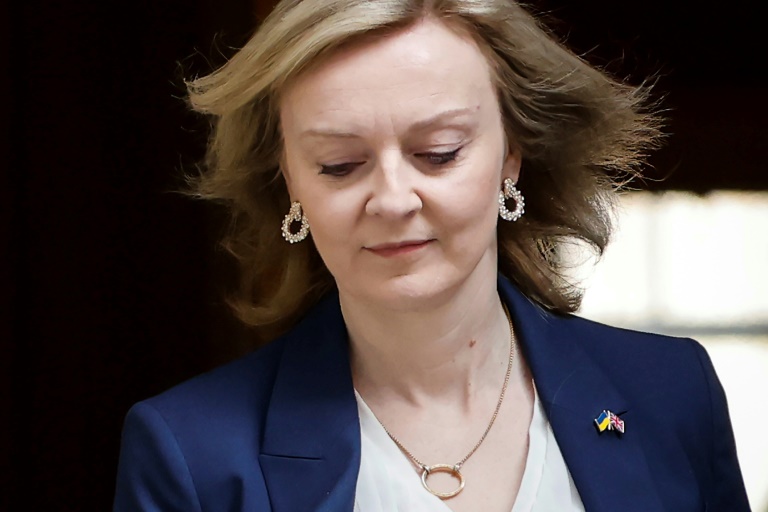
The UK will have “no choice but to act” unless the European Union agrees to change post-Brexit trading arrangements in Northern Ireland, Foreign Secretary Liz Truss said on Thursday. 

Political tensions have risen in the UK province after elections last week saw pro-Irish nationalists Sinn Fein become the biggest party for the first time and now bid to lead a power-sharing executive.

But pro-UK unionists, who believe the Brexit deal’s Northern Ireland Protocol is driving a wedge between the province and mainland Great Britain, are refusing to join the executive in Belfast until it is changed.

Truss spoke to European Commission vice president Maros Sefcovic on Thursday, telling him that the situation was “a matter of internal peace and security for the United Kingdom.

If the EU does not “show the requisite flexibility to help solve those issues, then as a responsible government we would have no choice but to act,” she said. 

London has repeatedly said it is prepared to trigger the protocol’s Article 16 suspension clause unless the deal it signed up to is changed — a move the EU has warned could lead to a wider trade war.

Sefcovic responded by warning that any move by the UK ignore post-Brexit trade rules in Northern Ireland would be unacceptable and threaten the 1998 peace deal that ended decades of violence over British rule in the province.

“Unilateral action… is simply not acceptable,” Sefcovic said in a statement.

“This would undermine trust between the EU and UK as well as compromise our ultimate objective – to protect the Good Friday (Belfast) Agreement. 

“Upholding the rule of law and living up to international obligations is a necessity,” he added.

– ‘Two-tier system’ –

Either party can invoke Article 16 if it believes the protocol is leading to “serious economic, societal or environmental difficulties that are liable to persist”.

The UK government says that checks on goods heading from to Northern Ireland from England, Scotland and Wales are undermining peace in the province, with unionists protests already turning violent.

Separate trading arrangements for Northern Ireland, which bind the province bound to many European rules, were agreed because the province has the UK’s only land border with the EU. 

Keeping the border open with neighbouring Ireland, an EU member, was mandated in the Good Friday Agreement, given the frontier was a frequent flashpoint for violence.

But it means checks have to be done elsewhere, to prevent goods getting into the EU single market and customs union by the back door via Northern Ireland.

Unionists believe it has created a border in the Irish Sea which threatens Northern Ireland’s place as part of the wider UK, and makes a united Ireland more likely.  

Truss told Sefcovic that the UK’s priority was “to protect peace and stability in Northern Ireland”. 

“She also noted that the current situation was causing unacceptable disruption to trade and had created a two-tier system where people in Northern Ireland weren’t being treated the same as everyone else in the UK,” according to a read out of the phone call released by her office.

Truss added that the EU “bore a responsibility to show more pragmatism and ensure the Protocol delivered on its original objectives,” claiming that the government had proposed measures to remove trade barriers within the UK while protecting the EU single market.

Sefcovic said that the EU had already proposed “wide-ranging and impactful solutions” that would “substantially improve the way the protocol is implemented,” but that London had rejected them.

Close Bitnami banner
Bitnami