US Business

Solomons PM dismisses concerns over China maritime deal

Solomon Islands’ prime minister dismissed criticism of a new maritime investment deal with China on Wednesday, saying there was nothing “sinister” in the draft agreement.

The new agreement, a copy of which has been leaked to the media, comes after a controversial security pact was signed last month.

The security pact gave Beijing a military foothold in the South Pacific, and sparked alarm in Australia and the United States.

On Wednesday, Solomon Islands Prime Minister Manasseh Sogavare shrugged off criticism about the separate leaked memorandum of understanding on maritime investment, describing it as a “normal bilateral development initiative” that is yet to be formalised.

“There is nothing sinister nor trivial about the Blue Economy Memorandum of Understanding,” his office said in a statement.

A day earlier, Australian Prime Minister Scott Morrison had expressed concern regarding the memorandum, which covers undersea cables, port wharves, shipbuilding and other areas.

Morrison said he was “very concerned, as many other Pacific leaders are, about the interference and intrusion of the Chinese Government into these types of arrangements”.

Solomon Islands’ warming ties with China have been a key issue in Australia’s election campaign since a draft of the Solomons security agreement with China was first leaked on social media in March.

That draft allowed for Chinese naval deployments in the Solomon Islands, eliciting a warning from the United States that it would “respond accordingly” if China installed a military base in the Pacific archipelago. 

In April, Solomon Islands PM Sogavare said that his government would not allow a Chinese military base to be built in his country “under its watch”. 

The latest leaked maritime investment deal, dated just “2022”, covered investment in wharves, shipbuilding and ship repair, offshore gas and oil exploration and other “blue economy” industries.

Sogavare’s Wednesday statement said the memorandum of understanding was a broad document, which would be followed by a more detailed agreement.
'The Rock' diamond goes under the hammer

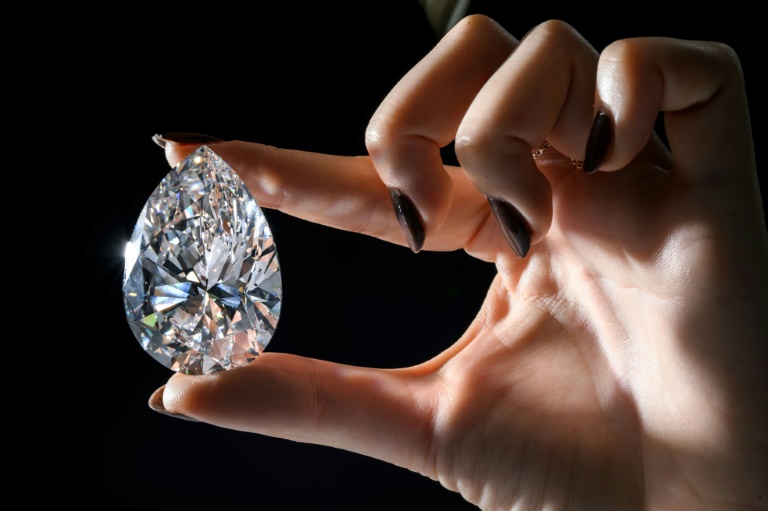
“The Rock”, the biggest white diamond ever to be sold at auction, will go under the hammer in Geneva on Wednesday and could fetch up to $30 million — or more.

The 228.31-carat stone, larger than a golf ball, is “a truly exceptional pear-shaped diamond”, said Max Fawcett, head of the jewels department at Christie’s auction house in Geneva.

It is “the largest white diamond ever to be offered at auction”, he told AFP at a preview.

The Magnificent Jewels auction at the luxury Hotel des Bergues in Geneva begins at 1400 GMT. 

The Rock, currently in the hands of an unnamed owner from North America, is lot 26 in the sale and could break records at the sale. 

“It’s perfectly symmetrical and is estimated at $20 to $30 million — and I expect there to be fireworks” at the auction, Fawcett said.

The equivalent in euros is 19 to 28 million.

The expert said that there were only a handful of diamonds of similar size and quality to The Rock. The Christie’s record for a similar white diamond is $33.7 million, fetched in Geneva in 2017 for a 163.41-carat gem.

The large diamond was extracted from a mine in South Africa in the early 2000s and has been shown in Dubai, Taipei and New York ahead of the sale in Geneva.

– Red Cross gem –

The Rock is up for grabs alongside a historic intense yellow diamond associated for more than a century with the Red Cross, which will receive some of the profits from its sale.

The Red Cross Diamond is a cushion-shaped, 205.07-carat canary yellow jewel, which has a price estimate of seven to 10 million Swiss francs ($7.09 to $10.13 million).

“I expect that it will achieve much more on the day of sale,” said Fawcett.

A large chunk of the proceeds will be donated to the International Committee of the Red Cross, which is headquartered in Geneva.

The original rough stone was found in 1901 in a De Beers company mine in South Africa and is said to have weighed around 375 carats.

As well as ranking among the largest diamonds in the world, a striking feature is its pavilion, which naturally bears the shape of a Maltese cross.

The stone was first put up for sale on April 10, 1918 at Christie’s in London. It was offered by the Diamond Syndicate in aid of the British Red Cross Society and the Order of St John.

The Red Cross Diamond fetched £10,000 — approximately £600,000 ($740,000) in today’s money. It was bought by the London jewellers S.J. Phillips.

It was sold again by Christie’s in Geneva in 1973, fetching 1.8 million Swiss francs, and is now being offered by the auction house for a third time.

– Russia restrictions –

Several other diamond rings, necklaces and bracelets could fetch over $1 million at the auction.

Also being sold is a tiara that belonged to princess Irma of Furstenberg (1867-1948), a member of one of the most pre-eminent aristocratic families in the Habsburg Empire.

It is estimated to go for 400,000 to 600,000 Swiss francs.

“The diamond market at the moment is very, very strong,” said Fawcett.

He said rising demand, supply constraints due to “geopolitical issues” and inflationary pressure on commodities, including precious stones, was pushing the market to highs not seen since its 2013-2014 peak.

The Russian invasion in Ukraine has had a major impact.

More than 40 percent of the world’s diamonds are mined in Russia, including the famous Alrosa mine, but international markets no longer have access to Russian gems, said Fawcett.

The supply constraint has created major price hikes and with the sanctions imposed on Moscow following the February 24 invasion, “prices will only continue to increase”, he said.

Malaysia central bank hikes interest rate to tame inflation

Malaysia’s central bank raised its key interest rate on Wednesday for the first time since 2020, in a surprise move aimed at taming inflation.

Bank Negara Malaysia joins other central banks around the world in tightening monetary policy as the cost of everyday goods is pushed higher by supply chain problems and surging commodity prices.

The bank lifted its main rate 25 basis points to two percent, despite most economists having predicted no change until later in the year.

It was the first hike since July 2020, when rates were slashed to a historic low to combat the impact of the coronavirus pandemic. 

“Inflationary pressures have increased sharply due to a rise in commodity prices, strained supply chains and strong demand conditions, particularly in the US,” the central bank said in a statement. 

With life returning to normal as the pandemic abates, the Malaysian economy is now on a “firmer footing”, giving policymakers room to start tightening policy to head off inflation, it said. 

Malaysia’s headline inflation was 2.2 percent in March, lower than in many other countries, but food inflation jumped four percent and economists expect further increases.

Fears are growing that inflation could accelerate further worldwide as China’s pandemic lockdowns heighten pressure on global supply chains and the Ukraine war pushes up commodity prices.

Where's the money? Japan town sues after $360,000 subsidy mix-up

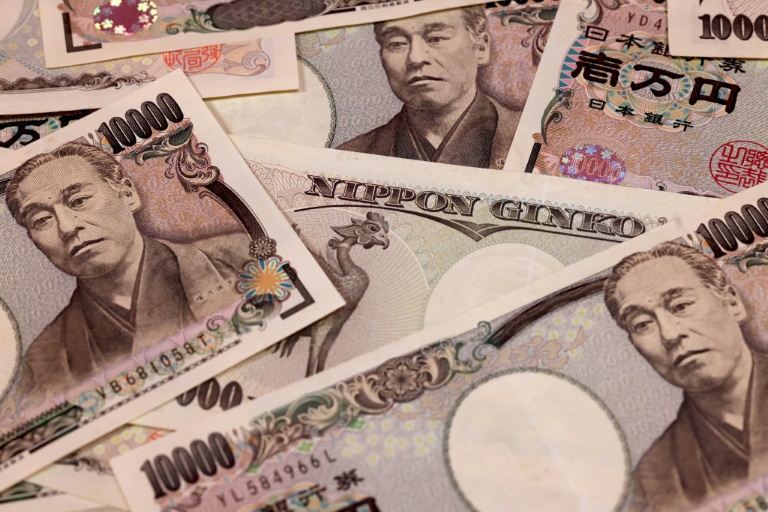
A Japanese town that accidentally sent a resident $360,000 in financial aid said on Wednesday it has been forced to file a lawsuit after the recipient refused to return the funds.

“We’re sorry to cause trouble to residents… We’re now suing this household,” an official from Abu told AFP, adding that the decision would be approved at a council meeting on Thursday.

Last month, the town in western Yamaguchi prefecture, sent 100,000 yen ($768) each to 463 low-income households affected by the pandemic. 

But in the process, they mistakenly transferred an additional lump sum of 46.3 million yen to a single household. 

Red-faced officials immediately visited the recipient, who has not been identified, and were told the money would be returned.

But despite frantic follow-up letters and calls, there was no sign of the money.

When they finally made face-to-face contact again, according to a letter released by the mayor, the recipient admitted having “moved the money and being unable to return it but said they were willing to atone for the sin.”

The incident has made headlines in Japan, with the local mayor releasing a video of apology to his contituents, saying he was “deeply sorry” for the mistake.

Toyota posts record full-year net profit, forecasts cautious

Toyota on Wednesday posted a record full-year net profit helped by strong sales and a cheaper yen, but issued cautious forecasts as the pandemic and the war in Ukraine disrupt supply chains.

The Japanese auto giant, which kept its crown as the world’s top-selling carmaker in 2021, reported a net profit of 2.85 trillion yen ($22 billion), up 26.9 percent from the previous year. 

But for the current year to March 2023, it said it expects to post an annual net profit of 2.26 trillion yen ($17.3 billion), citing ongoing uncertainties.

Toyota said its robust results were due in part to beneficial foreign exchange rates, with a cheaper yen helping inflate profits from sales abroad.

It also cited cost reduction efforts and stronger sales helped by marketing efforts.

In the year to March 2022, operating profit surged 36.3 percent year-on-year to three trillion yen, as sales increased 15.3 percent to 31.4 trillion yen — also a record.

Toyota’s strong sales came despite the firm being forced to repeatedly adjust production targets because of supply chain issues ranging from the semiconductor shortage to pandemic-linked factory closures.

On Tuesday, it said it was suspending production at eight domestic plants for six days due to the impact of China’s tough Covid measures — particularly in economic engine Shanghai, which has been under lockdown since April.

The closure forced Toyota to lower its global production target in May by 50,000 units to 700,000 vehicles, the latest in a string of revisions.

Operations were also hit by an earthquake in Japan and a cyberattack on a Toyota supplier.

The firm set a production target for the current fiscal year of 9.7 million units, after meeting a revised target of 8.5 million units for the year to March 2022.

“This fiscal year it’s going to be even more difficult than other years to make a forecast,” said chief communications officer Jun Nagata.

“Overall recovery from Covid-19 is going to be a big positive factor,” he said, but “raw material prices are soaring and the inflation in various areas will have an impact on the daily lives of people.”

“And then there is the Ukrainian factor, that is causing a lot of concerns in many areas,” he added, noting continuing constraints also with the supply of chips and other parts.

– Chips, currency, Covid, conflict –

Russia’s invasion of Ukraine is the most unpredictable factor for now, said Masayuki Kubota, chief strategist of Rakuten Securities.

“The chip shortage and the impact of Covid are issues that have been there for a while and drag on, but the more serious problem is Russia,” he told AFP.

“It is not clear how the Russia situation will turn out,” so companies are likely to issue conservative full-year forecasts, he added.

In March, Toyota said it would suspend operations at its only factory in Russia and stop shipping vehicles to the country.

Other factors though are likely to be more positive for the automaker, including the slide in the yen. The currency has touched 20-year lows against the dollar in recent weeks.

A weaker yen inflates the value of Toyota’s profits made overseas and some analysts believe this will help the firm and other Japanese automakers offset some of the challenges of the current business environment.

Rising commodity prices could also be a boon, said Kubota.

“Surge in gasoline prices have in the past worked in favour of fuel-efficient Japanese gasoline cars,” he said, though pricier commodities can also affect production costs.

Like other automakers, Toyota is still struggling with the impact of a global shortage of semiconductors — an essential component of modern vehicles.

Toyota has found itself unable to escape the crisis but is better placed than some rivals, having developed strong ties with domestic suppliers after Japan’s 2011 earthquake and tsunami.

Elon Musk says he would lift Twitter ban on Trump

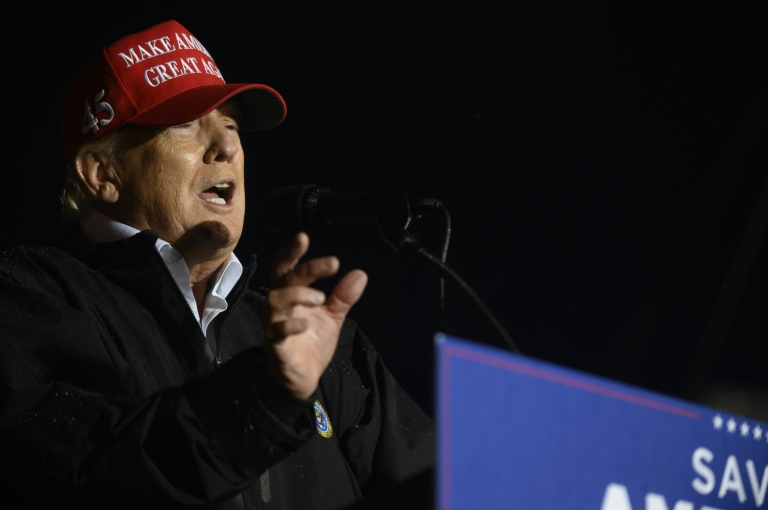
Elon Musk said on Tuesday that as owner of Twitter he would lift the ban on Donald Trump, contending that kicking the former US president off the platform “alienated a large part of the country.”

Musk’s endorsement of a Trump return to the global messaging platform triggered fears among activists that Musk would “open the floodgates of hate.”

“I would reverse the permanent ban,” the billionaire said at a Financial Times conference, noting that he doesn’t own Twitter yet, so “this is not like a thing that will definitely happen.”

Trump has stated publicly that he would not come back to Twitter if permitted, opting instead to stick with his own social network, which has failed to gain traction.

The Tesla chief’s $44-billion deal to buy Twitter must still get the backing of shareholders and regulators, but he has voiced enthusiasm for less content moderation and “time-outs” instead of bans.

Trump was booted from Twitter and other online platforms after supporters fired up by his tweets and speech alleging election fraud attacked the US Capitol on January 6, 2021 in a deadly bid to stop Joe Biden from being certified as the victor in the US presidential election.

“I think that was a mistake because it alienated a large part of the country, and did not ultimately result in Donald Trump not having a voice,” Musk said.

Musk maintained that permanent bans undermine trust in Twitter as an online town square where everyone can be heard.

“Elon Musk would open the floodgates of hate and disinformation on Twitter,” said Media Matters for America president Angelo Carusone.

“Whether Elon Musk is a fully red-pilled right-wing radical or just someone very interested in enabling right-wing extremists, the result is the same.”

The American Civil Liberties Union (ACLU), however, backed Musk’s perspective.

“Elon Musk’s decision to re-platform President Trump is the right call,” said organization director Anthony Romero.

“Like it or not, president Trump is one of the most important political figures in this country, and the public has a strong interest in hearing his speech.”

Romero pointed out that some of Trump’s controversy causing tweets have wound up being evidence in lawsuits against the former president by the ACLU and others.

Musk reasoned that permanent bans at Twitter should be rare, and reserved for accounts that are spam, scams or run by software “bots.”

“That doesn’t mean that somebody gets to say whatever they want to say,” Musk said.

“If they say something that is illegal or otherwise just destructive to the world, then there should be a perhaps a timeout, a temporary suspension, or that particular tweet should be made invisible or have very limited attraction.”

– Ad boycott? –

Activist groups have called on Twitter advertisers to boycott the service if it opens the gates to abusive and misinformative posts with Musk as its owner.

“Under Musk’s management, Twitter risks becoming a cesspool of misinformation, with your brand attached,” said an open letter signed by more than two dozen groups including Media Matters, Access Now and Ultraviolet.

Twitter makes most of its revenue from ads, and that could be jeopardized by advertisers’ reaction to content posted on the platform, the San Francisco-based tech firm said in a filing with US regulators.

“We believe that our long-term success depends on our ability to improve the health of the public conversation on Twitter,” the company said in a regulatory filing.

Efforts toward that goal include fighting abuse, harassment, and spam, Twitter told regulators.

“Elon Musk owes the world a better explanation of how the platform will deal with the likes of Trump than an edict that his ouster was wrong because it proved unpopular in some places,” said Suzanne Nossel, chief of human rights nonprofit PEN America.

The Knight Foundation said that a survey it commissioned found that only 41 percent of adults in the United States believe Trump was deprived of free expression rights by social media platforms that banned him.

“People died because of Donald Trump’s Twitter account,” said Muslim Advocates senior policy counsel Sumayyah Waheed.

“I’m terrified of what else would be allowed under Musk’s watch.”

EA Sports to end FIFA video-game partnership after three decades

The wildly popular FIFA video-game series will be rebranded EA Sports FC next year, its publisher Electronic Arts said on Tuesday, ending a three-decade relationship with football’s governing body.

Launched in 1993, a generation of millions of football fans and gamers across the globe grew up playing the game and it became a huge money-spinner.

But “months of tense negotiations” between California-based Electronic Arts (EA) and governing body FIFA failed to end in an agreement to extend the partnership, The New York Times reported.

FIFA reportedly wanted the $150 million it gets annually from EA to be increased to $250 million or more. 

The game has more than 150 million player accounts, according to EA, and The New York Times said it had generated more than $20 billion in sales over the past two decades.

No major changes to how the game plays are anticipated and EA said that it has retained relationships with other leagues and associations, such as UEFA, the Premier League and Spain’s La Liga.

However, FIFA events such as the World Cup will not feature.

“Our vision for EA Sports FC is to create the largest and most impactful football club in the world, at the epicenter of football fandom,” said EA chief executive Andrew Wilson.

“For nearly 30 years, we’ve been building the world’s biggest football community with hundreds of millions of players, thousands of athlete partners, and hundreds of leagues, federations, and teams. 

“EA Sports FC will be the club for every one of them, and for football fans everywhere.”

FIFA swiftly responded by saying that it will launch “new football video games developed with third-party studios and publishers”.

“I can assure you that the only authentic, real game that has the FIFA name will be the best one available for gamers and football fans,” said its president Gianni Infantino.

The 1997 chess game that thrust AI into the spotlight

With his hand pushed firmly into his cheek and his eyes fixed on the table, Garry Kasparov shot a final dark glance at the chessboard before storming out of the room: the king of chess had just been beaten by a computer.

May 11, 1997 was a watershed for the relationship between man and machine, when the artificial intelligence (AI) supercomputer Deep Blue finally achieved what developers had been promising for decades. 

It was an “incredible” moment, AI expert Philippe Rolet told AFP, even if the enduring technological impact was not so huge. 

“Deep Blue’s victory made people realise that machines could be as strong as humans, even on their territory,” he said.

Developers at IBM, the US firm that made Deep Blue, were ecstatic with the victory but quickly refocused on the wider significance. 

“This is not about man versus machine. This is really about how we, humans, use technology to solve difficult problems,” said Deep Blue team chief Chung-Jen Tan after the match, listing possible benefits from financial analysis to weather forecasting. 

Even Chung would have struggled to comprehend how central AI has now become — finding applications in almost every field of human existence.

“AI has exploded over the last 10 years or so,” UCLA computer science professor Richard Korf told AFP. 

“We’re now doing things that used to be impossible.”

– ‘One man cracked’ –

After his defeat, Kasparov, who is still widely regarded as the greatest chess player of all time, was furious.

He hinted there had been unfair practices, denied he had really lost and concluded that nothing at all had been proved about the power of computers. 

He explained that the match could be seen as “one man, the best player in the world, (who) has cracked under pressure”.

The computer was beatable, he argued, because it had too many weak points. 

Nowadays, the best computers will always beat even the strongest human chess players. 

AI-powered machines have mastered every game going and now have much bigger worlds to conquer.

Korf cites notable advances in facial recognition that have helped make self-driving cars a reality. 

Yann LeCun, head of AI research at Meta/Facebook, told AFP there had been “absolutely incredible progress” in recent years. 

LeCun, one of the founding fathers of modern AI, lists among the achievements of today’s computers an ability “to translate any language into any language in a set of 200 languages” or “to have a single neural network that understands 100 languages”. 

It is a far cry from 1997, when Facebook didn’t even exist. 

– Machines ‘not the danger’ –

Experts agree that the Kasparov match was important as a symbol but left little in the way of a technical legacy.

“There was nothing revolutionary in the design of Deep Blue,” said Korf, describing it as an evolution of methods that had been around since the 1950s.

“It was also a piece of dedicated hardware designed just to play chess.”

Facebook, Google and other tech firms have pushed AI in all sorts of other directions.

They have fuelled increasingly powerful AI machines with unimaginable amounts of data from their users, serving up remorselessly targeted content and advertising and forging trillion-dollar companies in the process. 

AI technology now helps to decide anything from the temperature of a room to the price of vehicle insurance. 

Devices from vacuum cleaners to doorbells come with arrays of sensors to furnish AI systems with data to better target consumers. 

While critics bemoan a loss of privacy, enthusiasts believe AI products just make everyone’s lives easier. 

Despite his painful history with machines, Kasparov is largely unfazed by AI’s increasingly dominant position. 

“There is simply no evidence that machines are threatening us,” he told AFP last year. 

“The real danger comes not from killer robots but from people — because people still have a monopoly on evil.”

Asian stocks open mixed as investors fret over oil prices

Asian stocks opened mixed on Wednesday, following a volatile day on Wall Street that had investors concerned about surging inflation and sent global oil prices retreating. 

Equities have been on a roller coaster ride in recent weeks, fuelled by inflationary pressures, Russia’s war in Ukraine and concerns about China’s Covid-19 lockdowns affecting the global supply chain. 

The mainland’s sinking April exports — the lowest in almost two years — have not reassured global investors, and on Tuesday it reported that its consumer inflation had risen at its quickest pace in nearly half a year.

But while the tea leaves remain far from clear for market readers, many are preparing for the worst.

“Equity investors are positioning for a recession; that pressure will remain acute until they see calming in rate volatility,” said Stephen Innes of SPI Asset Management. 

“The market seems to be fighting too many things to find its footing… The unavoidable growth concerns related to China are leaving a colossal contagion footprint across a plethora of global assets.”

Millions across China — particularly in its economic engine Shanghai — have been under a Covid-spurred lockdown for weeks, while restrictions have crept up in the capital Beijing. 

The World Health Organization on Tuesday said Beijing’s zero-Covid strategy is not sustainable given the behavior of recent ultra-contagious variants.

But it is also wreaking havoc on the political and economic fronts, stopping up ports and factories, while inciting rare outrage from residents forced to stay at home with no end in sight.

In New York, the Dow fell for the fourth straight day at Tuesday’s close, while the broader S&P 500 edged back up above 4,000 points and Nasdaq jumped one percent. 

European markets were more positive — London, Paris and Frankfurt ended on slight gains. 

But Asia’s equities on Tuesday showed deep uncertainty, with Tokyo, Hong Kong and Korea opening slightly up, while Singapore, Sydney and Seoul volleyed in the negatives. 

Crude was sent on a ride, with benchmark US crude contract WTI falling below $100 a barrel on Tuesday. By Wednesday morning, it crept up to about $101. 

Despite it being a temporary dip, “energy traders won’t forget how tight the oil market is”, said Edward Moya, senior market analyst at OANDA. 

“Everything in the past 48 hours seems to have turned bearish for oil prices as EU sanctions on Russian energy have completely stalled and as the US dollar rallies over economic growth concerns.”

– Key figures at around 0230 GMT –

Hong Kong – Hang Seng Index: UP 0.8 percent at 19,801.05   

Shanghai – Composite: UP 1.2 percent at 3,073.11

Tokyo – Nikkei 225: UP 0.3 percent at 26,249.83 (break)

Brent North Sea crude: UP 1.5 percent at $104.03 per barrel

West Texas Intermediate: UP 1.5 percent at $101.22 per barrel

Euro/dollar: DOWN at $1.0534 from $1.0534 on Tuesday 

Pound/dollar: FLAT at $1.2319 from $1.2332

Euro/pound: DOWN at 85.41 pence from 85.49 pence

Dollar/yen: DOWN at 130.34 yen from 130.41 yen

New York – Dow: DOWN 0.3 percent at 32,160.74 (close)

London – FTSE 100: UP 0.4 percent at 7,243.22 (close) 

Ukraine war revives France-Spain MidCat gas pipeline project

Since Russia invaded Ukraine, Madrid has revived calls to build a huge gas pipeline between Spain and France dubbed MidCat that would boost Europe’s energy independence from Russia.

What is MidCat?

Initially launched in 2003, the 190-kilometre (120-mile) Midi-Catalonia (MidCat) pipeline would pump gas across the Pyrenees from Hostalric just north of Barcelona to Barbaira in southern France.

Its aim was to transport gas from Algeria through Spain to the rest of the European Union. There are currently only two small gas pipelines linking Spain and France.

But following several years of work, the project was abandoned in 2019 after energy regulators from both countries rejected it amid questions over its environmental impact and profitability.

Why restart it?

Since Russia invaded Ukraine in February, the EU has vowed to end its dependence on gas from Russia, which currently supplies nearly 40 percent of the bloc’s gas needs.

A 750-kilometre deepwater pipeline called Medgaz already links gas-rich Algeria with southern Spain.

A second underwater pipeline, called GME links Spain to Algeria via Morocco but Algiers in November shut supply through it due to a diplomatic conflict with Rabat.

Spain also has six terminals for regasifying and storing liquefied natural gas (LNG) transported by sea, the largest network in Europe.

Gas which arrives in Spain by sea and pipeline from Algeria could then be sent on to the rest of Europe though MidCat.

The MidCat pipeline is “crucial” to reduce the EU’s reliance on fossil fuels and “end the Kremlin’s blackmail”, EU commission chief Ursula von der Leyen said Friday in Barcelona in a reference to Russia’s threats to halt its gas supplies to the bloc.

What are the obstacles?

The MidCat pipeline faces several hurdles, starting with its huge price tag estimated in 2018 at 440 million euros ($460 million). It would also take three to four years to complete.

“MidCat cannot be approached as a short-term solution,” France’s ambassador to Spain, Jean-Michel Casa, said during an interview with Barcelona-based daily newspaper La Vanguadia in March.

In addition, there is a lack of connections between France and Germany, the country which is most interested in finding alternatives to Russian gas.

It would be “much simpler to bring gas directly by boat to Germany,” said Thierry Bros, an energy expert at the Science Po university in Paris.

“This would of course require building gas terminals in Germany” but their cost would not be higher than building MidCat, he told AFP.

What support?

Despite the debate over its usefulness, MidCat enjoys significant support, especially in Spain where the authorities are pushing for Brussels to declare the project to be of “community interest”.

France has so far been more reserved but according to Madrid this position is changing.

There is a new “perception of the risks and opportunities” that MidCat brings, Spanish Energy Minister Teresa Ribera said, adding Paris “has understood” that Midcat “must” be built.

There are also questions over the financing for the project.

Madrid argues Brussels should foot the bill, not Spanish taxpayers, because the project would benefit the entire EU.

But the European commission has not yet committed to funding it.

Spain also wants the pipeline to be compatible with the transport of green hydrogen, in the hopes this will boost its appeal to Brussels which has made financing renewable energy projects a priority.

Close Bitnami banner
Bitnami