US Business

Mexico enlists private sector to help tame inflation

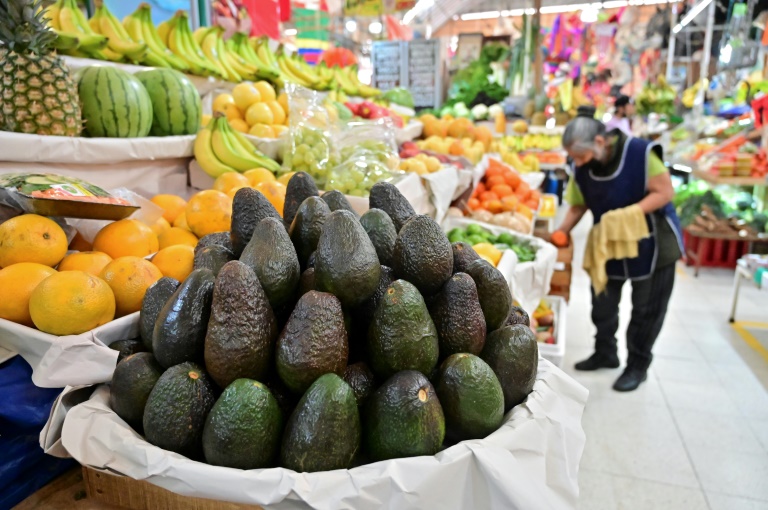
Mexico announced Wednesday an agreement with members of the private sector aimed at maintaining prices of staple foods in the face of the highest inflation in two decades.

“This is not about price controls. It’s an agreement, an alliance to guarantee that the basic food basket is priced fairly,” President Andres Manuel Lopez Obrador told reporters.

The non-binding pact is designed to keep prices of basic foods stable for at least six months, Finance Minister Rogelio Ramirez de la O said.

Baked goods giant Bimbo pledged to maintain the price of white bread.

Telmex, the communications giant owned by tycoon Carlos Slim, promised not to raise telephone and internet prices this year.

Like many countries, Mexico is facing a sharp rise in consumer prices that is pushing up the cost of living.

Mexican inflation hit 7.45 percent in March, well above the central bank’s target of around 3.0 percent.

Mexico already subsidizes fuel, using money generated by its oil and gas industry, without which inflation would be around 10 percent, Ramirez de la O said.

The measures presented by the government also aim to boost production of corn, rice and beans to prevent any shortages.

Two million more tons of fertilizer — a product facing a supply squeeze because of the war in major producer Ukraine — will be distributed to the agricultural sector.

The government said it would boost road security to prevent food theft and pledged not to increase tolls and rail transport fees.

The Mexican central bank has raised its benchmark interest rate at seven consecutive meetings, to 6.5 percent, in an attempt to rein in soaring consumer prices.

With concerns mounting about inflation and weaker US growth, the Bank of Mexico downgraded its economic outlook in March, forecasting growth of 2.4 percent this year.

Stocks waver as Fed rate looms, oil soars on EU embargo

Global stock markets wavered on Wednesday as investors braced for an expected half-point interest rate hike from the inflation-fighting US Federal Reserve.

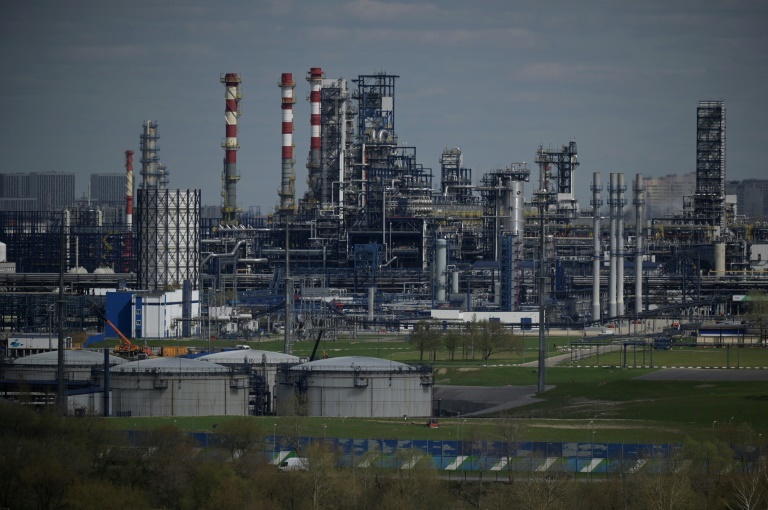
Oil prices rebounded sharply after the European Commission proposed a gradual ban on Russian crude over Moscow’s invasion of Ukraine.

European stocks closed down, after a broadly downbeat session in Asia, although key bourses including Shanghai and Tokyo remained shut.

On Wall Street, stocks were little changed, with all eyes on the central bank’s policy setting Federal Open Market Committee (FOMC), which opened the final session of its two-day meeting on Wednesday.

“The Fed’s rate hike move might be broadly priced in, but markets are clearly nervous that an even more hawkish FOMC might prompt a surge in volatility that could push indices back below last week’s lows,” Chris Beauchamp, chief market analyst at online trading platform  IG, said.

The dollar drifted lower versus the euro and yen.

– Trading ‘cautiously’ –

“Stocks across Europe are trading cautiously ahead of today’s Fed announcement,” City Index analyst Fiona Cincotta told AFP.

“Stock markets often fall in reaction to rising interest rates because the cost of borrowing becomes more expensive and earnings and growth slows.”

The Fed is forecast to unveil a half-percentage-point interest rate hike — its biggest increase since 2000 — as global central banks race to tame galloping inflation in the wake of the Ukraine war.

The announcement is due one day before the Bank of England is also predicted to deliver a hike.

India’s central bank unexpectedly ramped up its key rate by 40 basis points to 4.4 percent on Wednesday.

Policymakers are seeking to tackle runaway prices but risk damaging global economic recovery from the pandemic.

Investor sentiment also remains dogged by fallout from Russia’s ongoing Ukraine invasion, which has fuelled bumper gains for many raw materials including crude.

That has, in turn, sent inflation accelerating to multi-decade highs in nations including Britain and the United States.

Oil was more than three-percent higher after the latest EU crackdown on Russia, which is a major producer of crude.

“We now propose a ban on Russian oil. This will be a complete import ban on all Russian oil, seaborne and pipeline, crude and refined,” European Commission chief Ursula von der Leyen told the European Parliament.

But, she added, “we will make sure that we phase out Russian oil in an orderly fashion”, with crude banned gradually over the next six months and refined fuels by the end of the year.

Hungary, however, warned it could not vote for the ban “in this form”. The country is highly dependent on Russian crude.

The EU executive also proposed excluding Russian bank Sberbank from the SWIFT network among its measures.

– ‘EU tightens screw’ –

“As the EU tightens the sanctions screw on Russia by bringing in a phased ban on its crude oil, worries about global supply have reared up again,” said Susannah Streeter, senior analyst at Hargreaves Lansdown.

“The price of the benchmark Brent scurried up … to above $108 a barrel after the toughened up stance emerged.”

Oil traders were already on tenterhooks before Thursday’s gathering of OPEC and other key producers including Russia, who will discuss whether or not to lift output more than expected.

– Key figures at around 1545 GMT –

London – FTSE 100: DOWN 0.90 percent at 7,493.45 points (close)

Frankfurt – DAX: DOWN 0.49 percent at 13,970.82 points (close) 

Paris – CAC 40: DOWN 1.24 percent at 6,395.68 points (close)  

EURO STOXX 50: DOWN 0.96 percent at 3,724.99  

New York – Dow: DOWN 0.2 percent at 33,059.98 

Brent North Sea crude:  percent at $ per barrel

West Texas Intermediate:  percent at $ per barrel

Hong Kong – Hang Seng Index: DOWN 1.1 percent at 20,869.52 (close)

Tokyo – Nikkei 225: Closed for a holiday

Shanghai – Composite: Closed for a holiday

Euro/dollar: UP at $1.0546 from $1.0521 on Tuesday

Pound/dollar: DOWN at $1.2491 from $1.2499

Euro/pound: UP  at 84.46 pence from 84.18 pence

Dollar/yen: DOWN at 129.99 yen from 130.14 yen

EU eyes Russian oil import ban as Azovstal under fresh fire

The European Commission proposed a gradual ban on Russian oil imports to punish Moscow for its invasion of Ukraine Wednesday, as officials in the destroyed city of Mariupol reported heavy fighting at the Azovstal steel plant.

The EU also pledged to “significantly increase” its support for Ukraine’s neighbour Moldova, which has seen a series of attacks in a Moscow-backed separatist region, sparking fears it could be drawn into the conflict.

European Commission chief Ursula von der Leyen said the bloc would “phase out Russian supply of crude oil within six months, and refined products by the end of the year”.

If approved, the oil ban would be the EU’s toughest move yet against Russia’s strategic energy sector that helps the Kremlin finance its war. But will still not touch its huge gas exports.

Within hours, however, Hungary said it could not support the plan “in this form”, as it would “completely destroy” the security of its energy supply.

Ukraine’s Foreign Minister Dmytro Kuleba said EU countries blocking an oil embargo would be “complicit” in Russia’s crimes in Ukraine.

– Fighting in Azovstal –

The EU is also mulling moves against Russia’s biggest bank, Sberbank, and against Patriarch Kirill, the head of the Russian Orthodox Church.

Ukraine’s allies have sent money and, increasingly, heavy weapons to Kyiv to help it defend itself in a war US President Joe Biden has framed as a historic battle for democracy.

Biden said Wednesday he was “open” to imposing more sanctions on Russia and would be discussing measures with allies from the G7 in the coming days.

Russian forces are currently focused on the east and south of Ukraine, in what Kyiv says is an attempt to consolidate a land bridge between separatist pro-Russian areas in the east and annexed Crimea.

The strategic southern port of Mariupol has been under siege since Russia invaded Ukraine on February 24 and is now largely controlled by Moscow’s forces. The last Ukrainian soldiers are holding out at the Azovstal steelworks.

Mariupol’s mayor, Vadym Boichenko, said there was “heavy fighting” at the plant Wednesday and that city officials had “lost contact” with Ukrainian forces inside.

Russia was attacking with heavy artillery, tanks, and war planes, and war ships off the coast were also involved, he told Ukrainian television.

“There are local residents there, civilians — hundreds of them there,” he added. “There are children waiting for rescue. There are more than 30 kids.”

Kremlin spokesman Dmitry Peskov on Wednesday denied Russian forces were storming the plant.

There were instances of “exacerbation” at the site when Ukrainian “militants take up firing positions”, he said, insisting that these were “suppressed very quickly”.

– Civilians rescued –

Before the fighting resumed, the United Nations and Red Cross had confirmed Tuesday that more than 100 civilians had been evacuated from the plant, another 58 joining the convoy from the city of Mangush, outside Mariupol.

Azovstal evacuees who emerged from a caravan of white buses in Ukraine-held Zaporizhzhia were met at a makeshift reception centre by crying loved ones and dozens of journalists.

“We are so thankful for everyone who helped us,” evacuee Anna Zaitseva said, holding her six-month-old baby in her arms. “There was a moment we lost hope, we thought everyone forgot about us.”

Apart from the steelworks, Mariupol was now largely calm, AFP journalists note during a recent press tour organised by Russian forces. Remaining locals were emerging from hiding to a ruined city.

Ukraine’s military intelligence accused Russia of planning to hold a parade in Mariupol on May 9 to celebrate victory over the Nazis in World War II.

“A large-scale propaganda campaign is under way. Russians will be shown stories about the ‘joy’ of locals on meeting the occupiers,” it said. 

In a briefing on the army’s plan for May 9, Russian Defence Minister Sergei Shoigu made no mention of a celebratory march in Mariupol.

In the eastern Lugansk region meanwhile, governor Sergiy Gaiday said two people had died in the last 24 hours, adding “the whole region is under fire completely, there is no safe place”.

– Attacks in the west –

Russian attacks periodically stray close to Ukraine’s western border with the EU.

Both sides on Wednesday reported Russian strikes on infrastructure sites around the western city of Lviv, near Poland, and Transcarpathia, a region bordering Hungary.

Russia’s defence ministry said Wednesday that its air- and sea-based weapons had destroyed six electrical substations near railways including around Lviv, near Odessa to the south, and near Dnipropetrovsk to the south-east.

It said Ukrainian troops in the eastern Donbas region had used the railway stations to transport weapons and ammunition from the EU and United States.

In Ukraine’s western neighbour Moldova, there are fears the conflict will spill over the border.

Visiting the tiny ex-Soviet republic Wednesday, European Council President Charles Michel offered the EU’s “full solidarity” and support including in the areas of logistics and cyber defence.

“This year we plan to significantly increase our support to Moldova by providing its armed forces with additional military equipment,” he told a press conference with President Maia Sandu.

Ukraine has accused Russia of wanting to destabilise Moldova’s separatist region of Transnistria to create a pretext for a military intervention.

– Japan-Russia tensions –

The war in Ukraine has killed thousands of people and displaced more than 13 million, creating the worst refugee crisis in Europe since World War II.

The US and Europe have led the sanctions against Russia, but Japan has also joined — prompting Moscow Wednesday to announce it had banned entry to several dozen Japanese officials.

The foreign ministry accused the administration of Prime Minister Fumio Kishida — among those banned — of an “unprecedented anti-Russian campaign”.

But Kishida, speaking to journalists during a visit to Rome and the Vatican City, said Moscow was to blame for deteriorating ties between the two countries.

Russia’s “killing of innocent civilians is a significant violation of international humanitarian law,” he said. “We cannot forgive this.”

burs-ar/jj

EU targets Russian oil, patriarch in new sanctions

The European Union’s executive unveiled Wednesday plans for a gradual ban on Russian oil imports as part of a raft of new sanctions to punish Moscow for invading Ukraine.

The European Commission also proposed slapping sanctions on Russia’s biggest bank and on Patriarch Kirill, the head of the Russian Orthodox Church.

If approved by member states, the oil ban would be the EU’s toughest move yet against the Russian energy sector, which helps the Kremlin finance its war.

But it will still not touch Russia’s huge gas exports — and several EU member states are demanding an extension while they secure new sources of fuel.

The proposal “cannot be responsibly supported in this form, we cannot responsibly vote for it,” said Hungary’s Foreign Minister Peter Szijjarto in a Facebook video message.

The oil embargo would be part of the bloc’s sixth sanction package and would be phased-in over the rest of the year. It needs to be adopted unanimously by the EU’s 27 countries.

The EU is the biggest consumer of Russian crude. Last year Russia supplied 30 percent of the bloc’s oil and 15 percent of its petroleum products.

– Extra year –

“We now propose a ban on Russian oil. This will be a complete import ban on all Russian oil: seaborne and pipeline, crude and refined,” European Commission chief Ursula von der Leyen told the European Parliament.

But, she added, “we will make sure that we phase out Russian oil in an orderly fashion”. The ban would come in gradually over the next six months, and for refined fuels by the end of the year. 

EU ambassadors met on Wednesday to assess her plan and hoped to overcome their divisions by the end of the week, diplomats said.

Kremlin spokesman Dmitry Peskov — whose wife, son and daughter were also targeted on Wednesday — said the EU would “pay a high price in trying to hurt us.

“The cost of sanctions for the citizens of Europe will grow by the day,” he added.

The proposal asks that Hungary and Slovakia, both dependent on Russian oil, be given an extra year to meet the ban, according to a document seen by AFP. 

Czech Prime Minister Petr Fiala told reporters his country also wanted a postponement, of two to three years.

“We support the toughest sanctions possible against Russia… but from the start we have been saying the sanctions must not harm Czech citizens more than Russia,” he said.

The Czech news agency CTK quoted Slovak Economy Minister Richard Sulik saying his country also wanted a three-year phase-out. 

– ‘Miracle of God’ –

German Economy Minister Robert Habeck said the embargo could lead to supply “disruptions” and price increases, but that Berlin backed it, having overcome earlier reluctance.

Confirming his fears, oil prices soared more than four percent to above $108 a barrel when news of the plan hit the markets.

“As the EU tightens the sanctions screw… worries about global supply have reared up again,” said Susannah Streeter, senior analyst at Hargreaves Lansdown.

Von der Leyen also said her proposal would deny Sberbank, Russia’s biggest bank, access to SWIFT, the global banking communications system.

By hitting Sberbank and two other banks, “we hit banks that are systemically critical to the Russian financial system and Putin’s ability to wage destruction,” she said.

Her proposal also targeted Patriarch Kirill, calling him “a long-time ally of President Vladimir Putin who has become one of the most prominent supporters” of the war.

Kirill once described Putin’s rule as a “miracle of God” and has railed against the “forces of evil” opposed to a historic “unity” between Russia and Ukraine.

Von der Leyen said the new list also includes Russian military personnel deployed to Ukraine “who committed war crimes in Bucha and who are responsible for the inhuman siege of the city of Mariupol”.

“This sends another important signal to all perpetrators of the Kremlin’s war: We know who you are, and you will be held accountable.”

The EU also proposed banning more Russian broadcasters from the airwaves in Europe. 

The bloc has already banned media outlets RT and Sputnik in March and pressured tech giants to remove them from their platforms.

Markets on edge as Fed prepares renewed salvo against inflation

Wall Street has grown nervous as the Federal Reserve is set to make its biggest rate hike in more than two decades to crush inflation that has reached levels not seen since the 1980s.

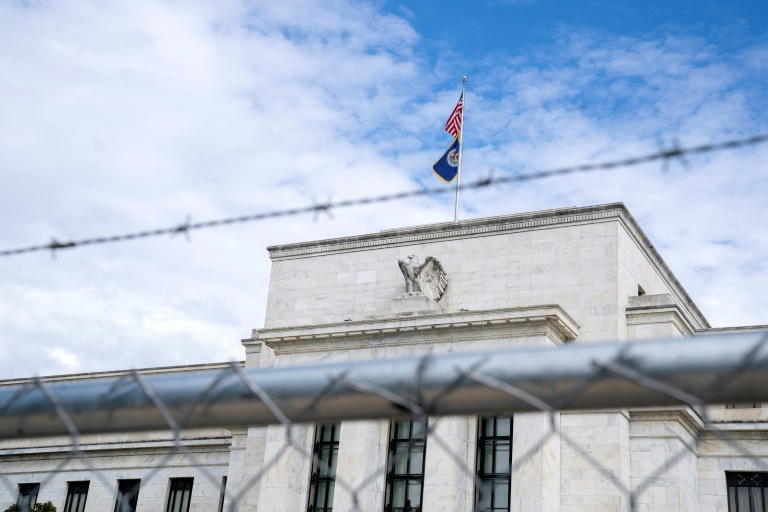
The central bank’s policy setting Federal Open Market Committee (FOMC) opened the final session of its two-day meeting on Wednesday and is seen as certain to announce a half-percentage point rate hike, which would have repercussions for car loans, mortgages and business credit.

The increase would take the key borrowing rate above 0.75 percent after sitting at zero from the start of the pandemic through 2021, even as inflation picked up speed.

The expected move is part of what the Fed has billed as a tightening cycle likely to continue throughout this year and into 2023, with the goal of taking the steam out an inflation wave that has pushed consumer prices to the highest levels in four decades, far above the Fed’s two percent target.

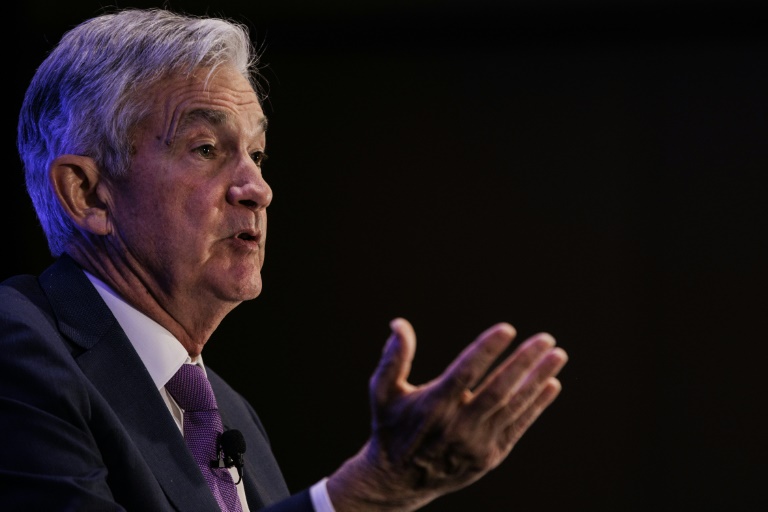
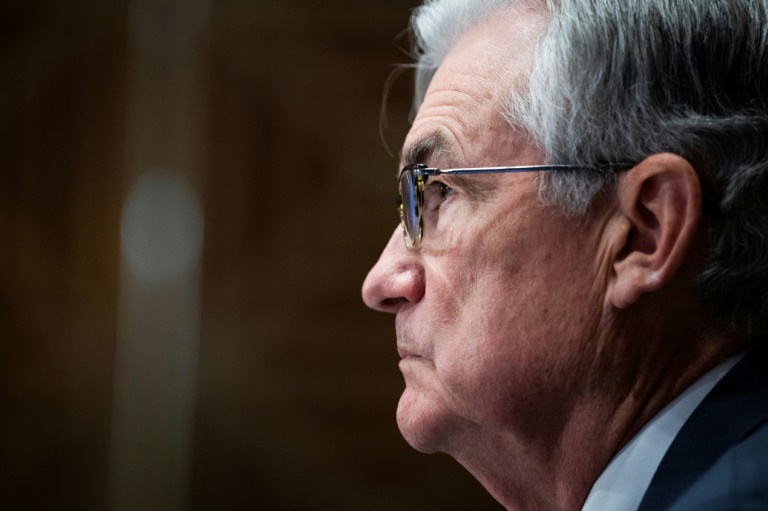
The US central bank hiked rates by a quarter percentage point in March, the first increase since 2018, but top officials including Fed Chair Jerome Powell have said officials will move quickly and front-load the increases. 

While Wall Street sentiment has showed signs of improving this week, the central bank’s hawkish posture played a role in the equity bloodletting seen in recent weeks.

April was the worst month for the S&P 500 since the pandemic, while the Nasdaq’s tech stocks, which are particularly sensitive to higher interest rates, suffered their biggest loss since October 2008.

Shares were mixed in early trading on Wednesday, with the Nasdaq down but the other indices showing modest gains.

The Fed’s goal is to engineer a “soft landing,” reining in inflation but avoiding a contraction in economic activity.

But with China’s pandemic lockdowns worsening global supply snarls and the war in Ukraine pushing commodity prices higher, analysts fear factors beyond the central bank’s control could undermine that goal, and perhaps plunge the world’s largest economy into a recession.

“The Fed’s goal is to avoid a recession and engineer a soft landing, which will no doubt be a challenge,” Rubeela Farooqi of High Frequency Economics said.

She added that central bankers may become more cautious later in the year, and Powell “has shown a willingness to quickly change course, as needed.”

The Fed chief will speak following the FOMC announcement scheduled for 1800 GMT, and could provide more insight into the committee’s thinking.

– Call for caution –

Interest rate hikes are aimed at dampening demand and taking the steam out of consumer prices that rose 8.5 percent over the 12 months to March, the biggest annual jump since December 1981, caused in part by consumers spending more for scarce goods.

Fed officials have signaled they view the economy as healthy enough to withstand higher rates, since unemployment has retreated almost to where it was before the pandemic, and recent data has shown strong consumer and business spending, even though the economy contracted in the first quarter.

However, in addition to the external factors, central bankers cannot engineer a solution for the worker shortages that have challenged businesses and raised fears of a wage-price spiral, when employees demand higher salaries and fuel price increases. 

On Wednesday, payroll services firm ADP reported private employers added a weaker-than-expected 247,000 workers in April, a sign that companies are struggling to find available labor, while government data released Tuesday showed there are nearly two openings for every job seeker.

“We don’t know if a recession will be realized; it will depend critically upon what the Fed does and how quickly the Ukrainian situation is resolved,” Robert Eisenbeis of Cumberland Advisors said in a note. 

He warned, “Near-term probabilities are not favorable and suggest caution.”

The policy committee is also expected to provide details on the plans for shedding its massive holdings of bonds built up during the pandemic to keep credit flowing through the economy. 

That could also unsettle financial markets and act as a brake on activity.

Sri Lanka crisis will last at least two more years: govt

Sri Lanka will have to endure its unprecedented economic hardships for at least two more years, the country’s finance minister said Wednesday while warning of an imminent cash crunch.

Months of blackouts and acute shortages of food, fuel and pharmaceuticals have brought widespread suffering across the South Asian island nation.

Public anger has sparked sustained protests demanding the government resign over its mismanagement of the economic crisis, Sri Lanka’s worst since independence in 1948.

“People should know the truth. I don’t know if people realise the gravity of the situation,” Finance Minister Ali Sabry told parliament.

“We won’t be able to resolve this crisis in two years, but the actions we take today will determine how much longer this problem will drag.”

Sabry said the country now has less than $50 million in usable foreign exchange reserves, needed to finance essential goods to keep Sri Lanka’s import-dependent economy ticking over.

Official data shows $1.7 billion in reserves, but most of that figure includes a Chinese currency swap which cannot be used to pay for imports from other countries.

Sabry said the government had erred by delaying an approach to the International Monetary Fund for a bailout.

Negotiations with the IMF are ongoing but Sri Lanka’s central bank chief has said any assistance from the lender is months away.

The government will unveil a new budget soon and raise taxes to replenish state revenue.

“It was a historic mistake to sharply reduce taxes in 2019,” Sabry said, adding that the previous central bank chief had also blundered by exhausting foreign reserves to defend Sri Lanka’s overvalued currency. 

Sri Lanka’s economic crisis took hold after the coronavirus pandemic hammered income from tourism and remittances.

Unable to pay for fuel imports, utilities have imposed daily blackouts to ration electricity, while long lines of people snake around service stations for petrol and kerosene.

Hospitals are short of vital medicines and the government has appealed to citizens abroad for donations.

Last month Sri Lanka announced it was defaulting on its $51 billion foreign debt.

President Gotabaya Rajapaksa has said he is willing to form a unity government to manage the country through the crisis.

But the opposition has refused to join an administration with the president or any other members of the powerful Rajapaksa family still in power. 

Protesters have been camped outside the president’s seafront office for nearly a month to pressure him into stepping down.

Trade unions, which staged a strike last week, have said they will stop work again on Friday to pressure the entire government to resign.

US trade deficit hits highest on record as imports soar

A surge in imports of goods and services in March drove the US trade gap to the highest level ever recorded, with huge increases in purchases of autos, computers, furniture and clothing, the government reported Wednesday.

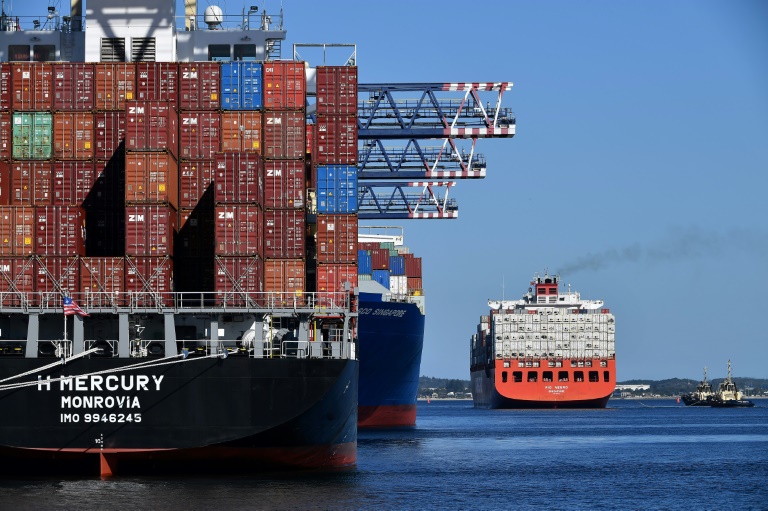
The trade deficit jumped more than 22 percent to $109.8 billion, as the double-digit increase in imports to an all-time high of $351.5 billion outstripped the more modest gain in exports, the Commerce Department said.

But US exports also hit a record of $241.7 billion, the data showed.

As the world’s largest economy showed a robust recovery from the pandemic disruptions in recent months, businesses have been hampered by global supply chain snarls and shortages that meant relatively modest import gains.

But the data showed a shift in March with a $3.2 billion increase in imports of autos, parts and engines — including a $2.5 jump in passenger cars alone — a $1.5 billion rise in computers, and $1.3 billion gain for computer accessories.

Purchases of furniture and household goods jumped $1.3 billion, while toys, games and sporting goods rose by a similar amount, the report said.

A strong American consumer is likely to support continued demand for imports, while slower recoveries among US trading partners could hold down export growth, economists say.

“The prevailing domestic and overseas economic environment could keep the deficit pinned near record levels and impose a significant headwind to US GDP growth,” said Mahir Rasheed of Oxford Economics. 

The Federal Reserve is raising interest rates as it grapples with accelerating inflation, which could tamp down demand.

In the first three months of the year, the goods and services deficit increased $84.8 billion, or 41.5 percent, from the same period in 2021, the report said.

“However, we expect aggressive policy tightening (and) somewhat softer domestic demand growth to cool import growth and allow the deficit to stabilize,” Rasheed said.

Even with the ongoing Covid-19 lockdowns in China, which raised fears of increasing difficulties sourcing products, the trade gap with the world’s number two economy jumped $7.4 billion to $48.6 billion, the report said.

The deficits with Vietnam and Taiwan were the highest ever, according to the data.

US businesses struggled to hire in April amid low unemployment

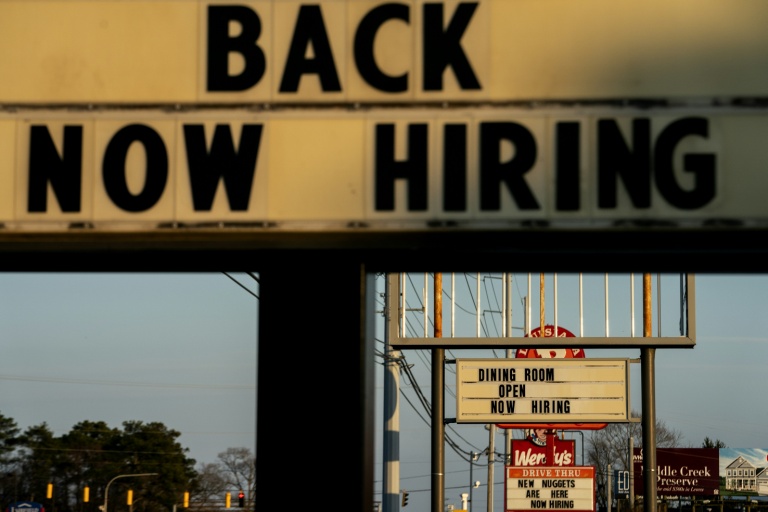
US private businesses saw surprisingly weak hiring in April, a survey showed Wednesday, amid low unemployment that’s made their quest to find workers even more difficult.

Payroll services firm ADP reported private employment rose 247,000 last month, considerably less than expected and down from March’s upwardly revised total.

The survey is considered a preview of the government jobs report due out Friday, and could foreshadow weak hiring overall last month in the US economy, where unemployment has nearly returned to the level it had before Covid-19 caused mass layoffs two years ago.

ADP’s chief economist Nela Richardson said the survey’s undershoot was not a sign that jobs weren’t available, but rather of a shortage of workers.

“While hiring demand remains strong, labor supply shortages caused job gains to soften for both goods producers and services providers,” she said. 

“As the labor market tightens, small companies, with fewer than 50 employees, struggle with competition for wages amid increased costs.”

Small businesses lost 120,000 positions last month, particularly those with between one and 19 employees, which lost 96,000, the data said.

Large businesses however added 321,000 jobs, while medium businesses added 46,000.

Service providers made up the bulk of the job gains, with 202,000 positions added. 

Leisure and hospitality, the sector comprising the bars and restaurants that suffered greatly from Covid-19, added the most positions in that sector with 77,000, while professional and business services firms added 50,000.

Goods producers added 46,000 positions, the data said.

Rubeela Farooqi of High Frequency Economics said despite the miss in the ADP survey, there’s reason to be optimistic about Friday’s jobs report.

“Recent data on the labor market including the downtrend in layoffs and ongoing job growth are signaling positive momentum, even as the supply side remains a constraint,” she said in an analysis.

Volkswagen trains sights on US as profits jump

Volkswagen’s first-quarter net profit almost doubled as the German automaker looked anew to the North American market to drive growth after years of muted presence there over “dieselgate”, company results showed Wednesday.

Over the first three months of the year, Volkswagen raked in a net profit of 6.7 billion euros ($7 billion), up from 3.4 billion euros in the same period last year.

The Wolfsburg-based group has shown “resilience” in the face of supply bottlenecks which have tormented automakers over the past year, CEO Herbert Diess said in a statement. 

Volkswagen was able to “mitigate” the impact of supply bottlenecks for parts, Diess said, with the group recently able to supply factories in the United States and China with unused semiconductors from Europe. 

The reduced availability of the chips, a key component in both conventional and electric vehicles made scarce by the coronavirus pandemic, forced intermittent stoppages at the carmaker last year.

Russia’s invasion of Ukraine has added to supply chain disruptions, limiting the availability of cables produced in the region.

– ‘Strategic potential’ –

“Even in a more polarized world, Volkswagen is firmly committed to expanding its global footprint,” Diess said. 

At the centre of the strategy was North America, where the world’s second-largest automotive group is aiming to more than double its market share to 10 percent by 2030.

Volkswagen recorded its first profit in years in the region in 2021, overcoming the 2015 dieselgate emissions-cheating scandal, after which the group had scaled back its US operation.

The group — whose 12 brands include Audi, Porsche and Skoda — announced in March it was pumping $7.1 billion into its North American production facilities, while Diess has lavished attention on the region, promoting the reimagined ID.Buzz electric camper van.

The US market has the “biggest strategic potential”, Diess told journalists at a press conference.

“We think America will be basically untouched by what’s happening in Europe, so for sure it should be geostrategically a region where we should invest more,” the CEO said. 

Battery-powered vehicles will play a “central” role in Volkswagen’s North American push, the group said. 

But for now, all the electric vehicles the company plans to produce for the US and Europe have already been reserved by waiting customers.

Volkswagen otherwise confirmed preliminary figures, which saw its operating profit rise to 8.5 billion euros in the first quarter, up from 4.8 billion euros last year.

The group’s first-quarter result was supported by a shift towards “higher equipped vehicles” with chunkier margins, chief financial officer Arno Antlitz said.

The changed emphasis enabled the auto giant to boost is figures despite delivering over 20 percent fewer cars, while bottlenecks have limited production.

Stocks drop before expected Fed hike; oil soars on EU embargo

Global stock markets slid Wednesday in cautious deals before an expected half-point interest rate hike from the inflation-fighting US Federal Reserve.

Oil prices meanwhile rebounded sharply after EU chief Ursula von der Leyen said the bloc would impose a gradual ban on Russian crude over Moscow’s invasion of Ukraine.

European stocks fell after a broadly downbeat session in Asia, although key bourses including Shanghai and Tokyo remained shut.

The dollar drifted lower versus the euro and yen.

– Trading cautiously –

“Stocks across Europe are trading cautiously ahead of today’s Fed announcement,” City Index analyst Fiona Cincotta told AFP.

“Stock markets often fall in reaction to rising interest rates because the cost of borrowing becomes more expensive and earnings and growth slows.”

The Fed is Wednesday forecast to unveil a half-percentage-point interest rate hike — its biggest increase since 2000 — as global central banks race to tame galloping inflation in the wake of the Ukraine war.

The announcement is due one day before the Bank of England is also predicted to deliver a hike.

India’s central bank unexpectedly ramped up its key rate by 40 basis points to 4.4 percent on Wednesday.

Policymakers are seeking to tackle runaway prices — but risk damaging global economic recovery from the pandemic.

Investor sentiment also remains dogged by fallout from Russia’s ongoing Ukraine invasion, which has fuelled bumper gains for many raw materials including crude.

That has in turn sent inflation accelerating to multi-decade highs in nations including Britain and the United States.

Oil jumped almost four percent Wednesday after the latest EU crackdown on Russia, which is a major producer of crude.

“We now propose a ban on Russian oil. This will be a complete import ban on all Russian oil, seaborne and pipeline, crude and refined,” von der Leyen told the European Parliament.

But, she added, “we will make sure that we phase out Russian oil in an orderly fashion”, with crude banned gradually over the next six months and refined fuels by the end of the year.

The EU executive also proposed sanctioning the head of the Russian Orthodox Church, Patriarch Kirill, and excluding Russian bank Sberbank from the SWIFT network.

– ‘EU tightens screw’ –

“As the EU tightens the sanctions screw on Russia by bringing in a phased ban on its crude oil, worries about global supply have reared up again,” said Susannah Streeter, senior analyst at Hargreaves Lansdown.

“The price of the benchmark Brent scurried up … to above $108 a barrel after the toughened up stance emerged.”

Oil traders were already on tenterhooks before Thursday’s gathering of OPEC and other key producers including Russia, who will discuss whether or not to lift output more than expected.

The alliance known as OPEC+ had slashed output in 2020 when oil prices crashed due to the pandemic.

When demand picked up again last year as countries emerged from lockdowns, the coalition began to modestly increase production.

– Key figures at around 1030 GMT –

London – FTSE 100: DOWN 0.6 percent at 7,518.79 points

Frankfurt – DAX: DOWN 0.2 percent at 14,015.37

Paris – CAC 40: DOWN 0.5 percent at 6,442.56

EURO STOXX 50: DOWN 0.5 percent at 3,744.34

Brent North Sea crude: UP 3.7 percent at $108.87 per barrel

West Texas Intermediate: UP 3.7 percent at $106.26 per barrel

Hong Kong – Hang Seng Index: DOWN 1.1 percent at 20,869.52 (close)

Tokyo – Nikkei 225: Closed for a holiday

Shanghai – Composite: Closed for a holiday

New York – Dow: UP 0.2 percent at 33,128.79 (close)

Euro/dollar: UP at $1.0528 from $1.0521 on Tuesday

Pound/dollar: UP at $1.2514 from $1.2499

Euro/pound: DOWN at 84.12 pence from 84.18 pence

Dollar/yen: DOWN at 129.96 yen from 130.14 yen

Close Bitnami banner
Bitnami