US Business

EU eyes Russian oil import ban as Moscow strikes western Ukraine

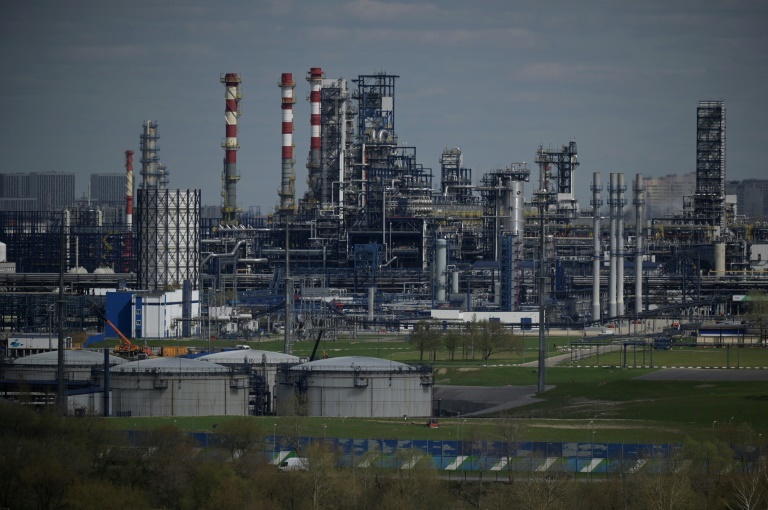
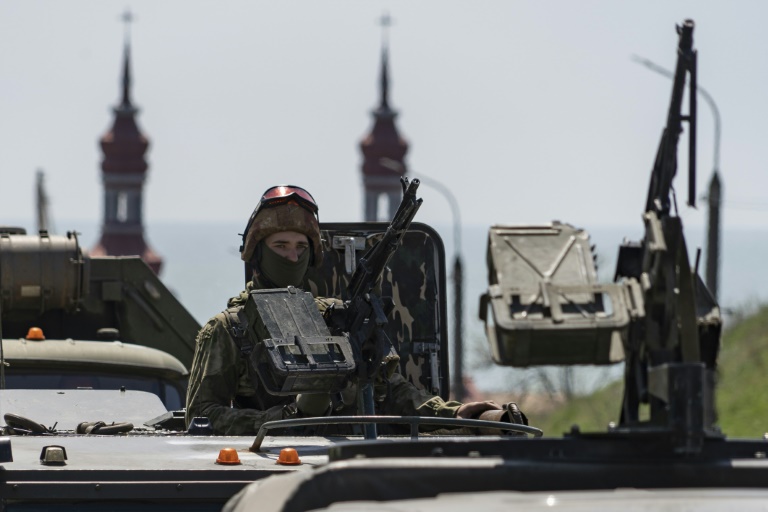
The European Commission proposed a gradual ban on Russian oil imports Wednesday to punish Moscow for its invasion of Ukraine, as Russian forces pounded sites to the east of the country and hit targets in the far west near the EU border.

The EU also pledged to “significantly increase” its support for Moldova, Ukraine’s neighbour that has seen a series of attacks in a Moscow-backed separatist region, sparking fears it could be drawn into the conflict.

European Commission chief Ursula von der Leyen announced the bloc would “phase out Russian supply of crude oil within six months, and refined products by the end of the year”.

If approved, the oil ban would be the EU’s toughest move yet against Russia’s strategic energy sector that helps the Kremlin finance its war, but will still not touch its huge gas exports.

Hungary and Slovakia, both hugely dependent on Russian oil, would be given more time to meet the ban under the proposed plan, which will need unanimous approval before going into effect.

The proposed new sanctions also include moves against Russia’s biggest bank, Sberbank, and the targeting of Patriarch Kirill, the head of the Russian Orthodox Church.

– Solidarity for Moldova –

Western allies continue to provide Kyiv with cash and weapons in a bid to force Russian President Vladimir Putin to pull back, alongside unprecedented sanctions.

But more than two months after the February 24 invasion, Russian forces continue to batter the south and east, where 21 civilians were killed and 28 wounded in a series of assaults in Donetsk on Tuesday.

Both sides on Wednesday also reported Russian strikes on key transport infrastructure around the western city of Lviv, near Poland, and Transcarpathia, a region bordering Hungary.

In neighbouring Moldova, there are fears the conflict will spill over the border.

Visiting the tiny ex-Soviet republic Wednesday, European Council President Charles Michel offered the EU’s “full solidarity” and support including in the areas of logistics and cyber defence.

“This year we plan to significantly increase our support to Moldova by providing its armed forces with additional military equipment,” he told a press conference with President Maia Sandu.

Ukraine has accused Russia of wanting to destabilise Moldova’s separatist region of Transnistria to create a pretext for a military intervention.

– ‘No storming’ of Azovstal –

The war in Ukraine has killed thousands of people and displaced more than 13 million, creating the worst refugee crisis in Europe since World War II.

There was some rare good news on Tuesday with the arrival in the Ukrainian-held city of Zaporizhzhia of more than 150 civilians evacuated from the devastated southern port city of Mariupol.

Further evacuations from the city, now almost entirely under Russian control after two months of siege, were to take place Wednesday with the help of the United Nations and the Red Cross, a Mariupol mayoral adviser said.

Osnat Lubrani, UN humanitarian coordinator for Ukraine, had earlier said that 101 of the civilians had been evacuated from the immense underground galleries of the Azovstal steelworks, but more could be trapped.

The Russian army said Tuesday that its forces and pro-Moscow separatists were attacking “firing positions” in Azovstal where Ukrainian fighters are making their last stand.

But Kremlin spokesman Dmitry Peskov on Wednesday denied Ukrainian claims that it had launched a “powerful assault”, telling reporters: “There is no storming.”

“The order was publicly given by the supreme commander-in-chief to cancel the assault,” he said, referring to an order given by Putin last month not to pursue an attack on the area.

– Bombing every second –

Azovstal evacuees who emerged from a caravan of white buses in Zaporizhzhia were met at a makeshift reception centre by crying loved ones and dozens of journalists.

“We are so thankful for everyone who helped us. There was a moment we lost hope, we thought everyone forgot about us,” evacuee Anna Zaitseva said, holding her six-month-old baby in her arms.

Elyna Tsybulchenko, 54, who worked at the site doing quality control before the war trapped her there, described days and nights of endless barrages.

“They bombed like every second… everything was shaking. Dogs barked and children screamed,” she told AFP. “But the hardest moment was when we were told our bunker would not survive a direct hit.”

– ‘No safe place’ –

Since abandoning early attempts to capture Ukraine’s capital Kyiv, Russian forces have shifted to the east, including largely Russian-speaking areas, and the south.

Ukraine’s general staff said Wednesday the Russian assault continued with the aim of establishing “full control” of the regions of Lugansk and Donetsk, and to maintain a land corridor to occupied Crimea.

Russia’s defence ministry said Wednesday that its air- and sea-based weapons had destroyed six electrical substations near railways including around Lviv, near Odessa to the south, and near Dnipropetrovsk to the south-east.

It said Ukrainian troops in the eastern Donbas region had used the railway stations to transport weapons and ammunition from the EU and United States.

Meanwhile in the eastern Lugansk region, governor Sergiy Gaiday said two people had died in the last 24 hours, and “the whole region is under fire completely, there is no safe place”.

– Battle for democracy –

US President Joe Biden on Tuesday framed the war as a historic battle for democracy in a speech to workers at a factory producing Javelin missiles, which have wreaked havoc on Russian tanks.

Reprising one of his presidency’s core themes, Biden said the fight by democratic Ukraine against Putin’s Russia was a front in a wider contest between democracies and autocracies worldwide, including China.

Chinese leader Xi Jinping had told him that democracies can no longer “keep up,” Biden said.

Ukraine is the “first” battle “to determine whether that’s going to happen,” he said.

Elsewhere, diplomats said Russia will boycott a UN Security Council meeting Wednesday with the EU’s Political and Security Committee (PSC), a further sign of deteriorating relations between Moscow and its United Nations partners.

burs-ar/spm

Inflation prompts surprise India interest rate hike

India’s central bank announced a surprise interest rate hike on Wednesday, as Asia’s third-biggest economy reels from galloping inflation in the wake of the Ukraine war.

The announcement came hours before the US Federal Reserve was expected to undertake its largest rate hike in two decades in response to accelerating inflation in the world’s biggest economy.

This could spark capital outflows from emerging markets such as India.

In its first increase in borrowing costs since August 2018, the Reserve Bank of India increased the policy repo rate by 40 basis points to 4.40 per cent with immediate effect.

“As several storms hit together, our actions today are important steps to steady the ship,” RBI governor Shaktikanta Das said in a televised address.

“Most alarmingly, persistent and spreading inflationary pressures are becoming more acute with every passing day.”

Das added that shortages of edible oils due to the conflict in Europe and export bans by key producers — Indonesia imposed a complete ban on palm oil exports last week — were causing food prices in India to shoot up.

The Indian economy bounced back strongly from the coronavirus pandemic with one of the world’s fastest growth rates, but in common with other developing economies is now grappling with rising costs as global commodity prices skyrocket.

India is the world’s largest importer of edible oils including palm oil and soya oil, which are trading at record highs.

The country of 1.4 billion people also imports more than 80 percent of its crude oil needs, with its dependence growing as domestic production falls.

Consumer inflation has consistently overshot the RBI’s two-to-six percent target range in the first three months of the year, hitting a 17-month high of 6.95 percent in March.

Economists expect inflation crossed seven percent in April.

The rate hike is “very well timed, as our own CPI inflation projection for April 2022 is an eye-watering 7.4 percent,” ICRA chief economist Aditi Nayar said.

“By advancing the rate decision by approximately one month, the MPC has focused on preventing inflationary expectations from unanchoring in an increasingly uncertain environment.”

The central bank’s next scheduled meeting to set interest rates wasn’t until June 8.

Last month, all six members of the RBI’s monetary policy committee voted to hold the key rate unchanged at a historic low of four percent for the 11th straight meeting.

But in its first clear signal of a future rate hike, Das had said the bank was “focusing on withdrawal of accommodation to ensure that inflation remains within the target going forward, while supporting growth”.

It had also lowered its growth forecast to 7.2 percent for the 2022-23 financial year, from 7.8 percent projected earlier.

It had raised its inflation forecast to 5.7 percent for the fiscal year that started April 1, up from 4.5 percent estimated in February.

Indian stocks fell to a two-month low after the announcement, with the benchmark Sensex closing 2.29 percent lower. Bond yields rose sharply.

EU targets Russian oil, Patriarch in new sanctions

The European Union’s executive unveiled Wednesday plans for a gradual ban on Russian oil imports as part of a raft of new sanctions to punish Moscow for invading Ukraine.

The proposed measures include moves against Russia’s biggest bank and the targeting of Patriarch Kirill, the head of the Russian Orthodox Church.

If approved, the oil ban would be the EU’s toughest move yet against Russia’s strategic energy sector that helps the Kremlin finance its war, but will still not touch its huge gas exports.

The embargo is part of the bloc’s sixth sanction package, and would be phased-in over the rest of the year to help countries adapt.

The EU is the biggest consumer of Russia’s crude oil. Last year Russia supplied the bloc’s 27 members with 30 percent of their crude and 15 percent of their petroleum products.

“We now propose a ban on Russian oil. This will be a complete import ban on all Russian oil, seaborne and pipeline, crude and refined,” European Commission chief Ursula von der Leyen told a session of the European Parliament in Strasbourg.

But, she added, “we will make sure that we phase out Russian oil in an orderly fashion”, with crude banned gradually over the next six months and refined fuels by the end of the year. 

Ambassadors from the 27 European Union countries met on Wednesday to assess her plan, and it will need unanimous approval before going into effect.

The proposal also asked that Hungary and Slovakia, both hugely dependent on Russian oil, be given an extra year to meet the ban, a document seen by AFP showed. 

In a statement sent to AFP, Hungary said it saw no guarantee for its energy security in the proposed ban.

Asked if this meant Hungary outrightly rejected the EU’s proposal, the government press office did not immediately answer.

– ‘War supporter’ –

Von der Leyen also said her proposal would deny Sberbank, Russia’s biggest bank, access to SWIFT, the global banking communications system.

By hitting Sberbank and two other banks, “we hit banks that are systemically critical to the Russian financial system and Putin’s ability to wage destruction,” she said.

Her proposal also singled out Patriarch Kirill, calling him “a long-time ally of President Vladimir Putin who has become one of the most prominent supporters” of the war.

The new list mainly includes Russian military personnel, but also the wife, daughter and son of Kremlin spokesman Dmitry Peskov.

Von der Leyen said the high-ranking military officers included those “who committed war crimes in Bucha and who are responsible for the inhuman siege of the city of Mariupol”.

“This sends another important signal to all perpetrators of the Kremlin’s war: We know who you are, and you will be held accountable,” von der Leyen said.

The EU also proposed banning more Russian broadcasters from the airwaves in Europe. 

The bloc already banned media outlets RT and Sputnik in March and pressured tech giants to remove them from their platforms.

Social media threatening press freedom: Nobel laureate

The rise of social media has allowed dangerous propaganda to flourish and left professional journalists facing constant threat of attack, according to Philippine journalist and Nobel Peace Prize laureate, Maria Ressa.

The situation for media workers around the world at the moment is “bleak”, Ressa told AFP in an interview, saying much of the blame lies with the dramatic shift in the way information is distributed.

Speaking on the sidelines of an event in Geneva on Tuesday to mark World Press Freedom Day, the 58-year-old co-founder of the news website Rappler highlighted how social media had made it far easier to spread propaganda, reject facts and change historical realities.

She pointed to the Philippines, which appears set next week to hand the presidency to Ferdinand Marcos Jr, whose dictator father and namesake presided over massive plunder and human rights abuses in the country.

“He looks set to win, and the only way that is possible is because history shifted in front of our eyes,” Ressa said.

Marcos Jr’s links to his father have made him one of the nation’s most polarising politicians.

But he has benefitted from a deluge of fake and misleading posts on social media platforms targeting a largely young electorate with no memory of the corruption, killings and other abuses committed during the elder Marcos’s 20-year rule. 

– Separate realities –

Ressa pointed at how Marcos Jr has refused to participate in debates and to answer questions from traditional journalists, seeming to follow the playbook of populist politicians like Brazilian President Jair Bolsonaro.

“This is the problem with social media: It has allowed propaganda to flourish and literally has allowed public figures like Marcos, like Bolsonaro to ignore (media) checks and balances… and to create their own realities,” Ressa said.

“That’s not a good thing.”

In the face of such challenges, “the mission of journalism is more important today than ever,” Ressa said.

She says social media first enabled split global narratives around Russia’s annexation of Crimea back in 2014.

That dangerous fragmenting of media narratives has obviously worsened dramatically since Russia’s invasion of Ukraine in February, bringing with it fears of looming nuclear attacks and World War III.

In such an environment, access to reliable facts is vital, Ressa said.

“I think this is one of those moments where everything that (journalists) do will matter, because that’s… how close we are to the edge.” 

– ‘No guardrails’ –

The dramatic technological shift in the industry has meanwhile left journalists far more vulnerable to attacks and threats.

“There are no guardrails,” Ressa said, pointing to the largely lawless world of social media, often based on algorithms that promote the outrage and hateful debate that drive traffic, and where “troll armies” can easily be unleashed on critics.

“Every time you do a difficult story to try to hold power to account, you have to be ready to get personally attacked.” 

Ressa, who shared the 2021 Nobel Peace Prize with Russian journalist Dmitri Muratov, has seen her share of threats, attacks and intimidation.

The vocal critic of Philippines President Rodrigo Duterte and his deadly drug wars faces multiple criminal lawsuits, which she says could see her sent to prison for 100 years.

Ressa sees the Nobel win as “vindication”, voicing “relief” that the Nobel Committee had recognised how difficult journalists’ jobs have become and that “risks have increased.”

The win did not, however, lessen her legal woes, she said, adding that the legal complaints against her and Rappler had in fact “accelerated”.

Ressa said it was unfair that the journalists were being “asked to sacrifice so much”, urging governments and the global community to step up and regulate the technologies that have transformed our information society.

“Guardrails have to be put in place so we can do our jobs.”

Until then, journalists “have no choice” but to continue holding the line as best they can in defence of democracy, Ressa said.

“We’re just putting our finger in the dam and hoping that the rest of society kicks in.”

Asian markets drop ahead of key Fed rate decision

Equities fell in Asian trade Wednesday as traders nervously awaited what is expected to be the biggest Federal Reserve interest rate hike in more than two decades.

With inflation showing little sign of easing from its 40-year highs, the US central bank has set itself on a hawkish course of tightening this year, sending shivers through world markets.

The prospect of higher borrowing costs has been compounded by a range of crises including the war in Ukraine, elevated oil prices and China’s Covid lockdowns that have strangled crucial global supply chains.

The Fed now has to walk a fine line between getting control of surging prices and making sure it does not knock the recovery in the world’s top economy off course.

“The Fed remains very focused on bringing inflation down, however, any further hawkish pivots will likely be tempered to some extent by the desire to achieve a soft landing,” said Blerina Uruci at T. Rowe Price.

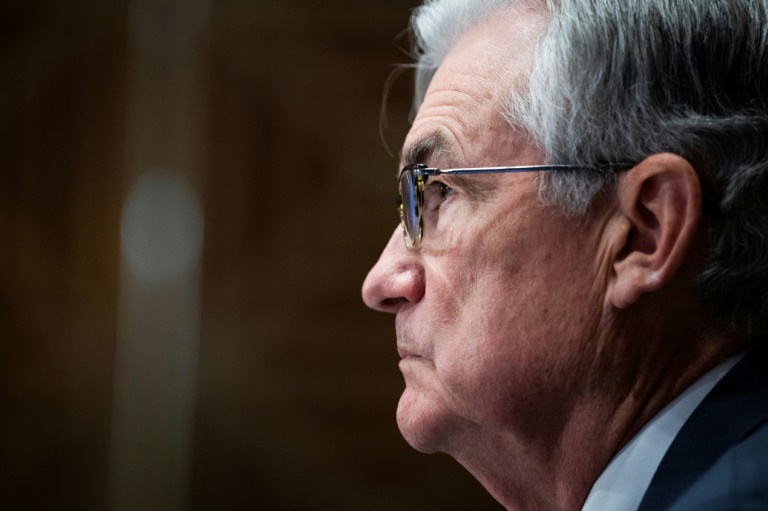
The Fed is expected to announce a half-percentage point lift Wednesday — its biggest since 2000 — but boss Jerome Powell’s post-meeting news conference will be closely watched for an idea about future hikes.

Speculation was swirling that 75 basis points could be on the table at some point this year.

“Powell will fall back to ‘we are not on pre-set rate hikes’ or something along those lines — ‘we go in with an open mind each meeting and will talk it over and we’ll see where we go from there’,” said Tony Farren, managing director at Mischler Financial Group.

“The market would take that as hawkish. For his comments to seem dovish, he’d have to shut down the talk of 75 basis points. And while I don’t think he’ll endorse it, I don’t think he’ll shut it down.”

– Russian oil ban –

After a broadly positive lead from Wall Street, Asian markets struggled in holiday-thinned trade.

Hong Kong, Sydney, Seoul, Mumbai and Singapore slipped, but Taipei and Manila rose while Wellington was flat.

Tokyo, Shanghai, Jakarta, Kuala Lumpur and Bangkok were closed.

London, Paris and Frankfurt fell in early exchanges.

Oil prices rose after European Commission president Ursula von der Leyen on Wednesday said the European Union would impose a gradual Russian oil ban in retaliation for the war in Ukraine.

The news offset the expected hit to demand from China’s coronavirus lockdowns, including in the country’s biggest city, Shanghai.

A huge release of crude from reserves by dozens of countries including the United States has also helped keep prices tempered.

Investors are waiting for a meeting Thursday of OPEC and other major producers including Russia, where they will discuss whether or not to lift output more than expected.

– Key figures at around 0810 GMT –

Hong Kong – Hang Seng Index: DOWN 1.1 percent at 20,869.52 (close)

London – FTSE 100: DOWN 0.3 percent at 7,541.82

Tokyo – Nikkei 225: Closed for a holiday

Shanghai – Composite: Closed for a holiday

Euro/dollar: UP at $1.0524 from $1.0519 on Tuesday

Pound/dollar: UP at $1.2510 from $1.2491

Euro/pound: DOWN at 84.13 pence from 84.17 pence

Dollar/yen: DOWN at 130.09 yen from 130.14 yen

West Texas Intermediate: UP 2.9 percent at $105.37 per barrel

Brent North Sea crude: UP 2.8 percent at $107.89 per barrel

New York – Dow: UP 0.2 percent at 33,128.79 (close)

Sri Lanka tea exports lowest in 23 years

Crisis-struck Sri Lanka’s vital tea exports have dropped to their lowest level in 23 years, official figures showed Wednesday, hit by a fertiliser ban and the war in Ukraine.

Tea is the island nation’s biggest export commodity, bringing in about $1.3 billion annually before the current economic downturn, the worst since independence in 1948.

But a bungled ban on fertiliser imports last year — introduced in a doomed effort to save foreign currency and avoid a debt default — hit growers hard, with production falling 18 per cent on-year for the period from November 2021 to February 2022.

Customs data showed that first-quarter exports in 2022 correspondingly plunged to 63.7 million kilos (140 million pounds), down from 69.8 million kilos in the January-March period last year. 

The tally was the lowest since the first quarter of 1999, when the country shipped out 60.3 million kilos of tea.

Export earnings for the first quarter also declined, to $287 million from $338 million.

Tea brokering firm Asia Siyaka blamed the drop on the agro chemical ban, which was portrayed by the government as a push to turn Sri Lankan farming 100-percent organic.

The ban was lifted by October following backlash from the industry, but farmers were left unable to access imported fertiliser as the country simultaneously ran out of dollars.

Industry officials added that about 10 percent of Sri Lanka’s tea exports had also been affected by Russia’s invasion of Ukraine. Both countries are top buyers of the island’s aromatic black tea.

The country of 22 million lacks enough foreign currency to finance even the most essential imports such as food, fuel and medicines. 

Dire shortages and galloping inflation have led to widespread protests calling for President Gotabaya Rajapaksa to step down. 

Asian markets drop ahead of key Fed rate decision

Equities fell in Asian trade Wednesday as traders nervously awaited what is expected to be the biggest Federal Reserve interest rate hike in more than two decades.

With inflation showing little sign of easing from its 40-year highs, the US central bank has set itself on a hawkish course of tightening this year, sending shivers through world markets.

The prospect of higher borrowing costs has been compounded by a range of crises including the war in Ukraine, elevated oil prices and China’s Covid lockdowns that have strangled crucial global supply chains.

The Fed now has to walk a fine line between getting control of surging prices and making sure it does not knock the recovery in the world’s top economy off course.

“The Fed remains very focused on bringing inflation down, however, any further hawkish pivots will likely be tempered to some extent by the desire to achieve a soft landing,” said Blerina Uruci at T. Rowe Price.

The Fed is expected to announce a 50 percentage point lift Wednesday — its biggest since 2000 — but boss Jerome Powell’s post-meeting news conference will be closely watched for an idea about future hikes.

Speculation was swirling that 75 points could be on the table at some point this year.

“Powell will fall back to ‘we are not on pre-set rate hikes’ or something along those lines — ‘we go in with an open mind each meeting and will talk it over and we’ll see where we go from there’,” said Tony Farren, managing director at Mischler Financial Group.

“The market would take that as hawkish. For his comments to seem dovish, he’d have to shut down the talk of 75 basis points. And while I don’t think he’ll endorse it, I don’t think he’ll shut it down.”

– Russian oil ban –

After a broadly positive lead from Wall Street, Asian markets struggled in holiday-thinned trade.

Hong Kong, Sydney, Seoul, Mumbai and Singapore slipped but Taipei and Manila rose while Wellington was flat.

Tokyo, Shanghai, Jakarta, Kuala Lumpur and Bangkok were closed.

London, Paris and Frankfurt rose in the opening minutes.

Oil prices rose after European Commission president Ursula von der Leyen on Wednesday said the European Union would impose a gradual Russian oil ban in retaliation for the war in Ukraine.

The news offset the expected hit to demand from China’s coronavirus lockdowns, including in the country’s biggest city Shanghai.

A huge release of crude from reserves by dozens of countries including the United States has also helped keep prices tempered.

Investors are waiting for a meeting Thursday of OPEC and other major producers including Russia, where they will discuss whether or not to lift output more than expected.

– Key figures at around 0720 GMT –

Hong Kong – Hang Seng Index: DOWN 1.2 percent at 20,856.96 

London – FTSE 100: UP 0.1 percent at 7,565.78

Tokyo – Nikkei 225: Closed for a holiday

Shanghai – Composite: Closed for a holiday

Euro/dollar: DOWN at $1.0512 from $1.0519 on Tuesday

Pound/dollar: DOWN at $1.2486 from $1.2491

Euro/pound: UP at 84.18 pence from 84.17 pence

Dollar/yen: UP at 130.15 yen from 130.14 yen

West Texas Intermediate: UP 1.4 percent at $103.79 per barrel

Brent North Sea crude: UP 1.2 percent at $106.19 per barrel

New York – Dow: UP 0.2 percent at 33,128.79 (close)

Volkswagen trains sights on US as profits jump

Volkswagen’s first-quarter net profit almost doubled as the German automaker looked anew to the North American market to drive growth after years of muted presence there over “dieselgate”, company results showed Wednesday.

Over the first three months of the year, Volkswagen raked in a net profit of 6.7 billion euros ($7 billion), up from 3.4 billion euros in the same period last year.

The Wolfsburg-based group had shown “resilience” in the face of supply bottlenecks which have tormented automakers over the past year, CEO Herbert Diess said in a statement. 

Volkswagen was able to “mitigate” the impact of supply bottlenecks for parts, such as semiconductors, by redistributing production across its global network of factories, Diess said.

The reduced availability of the chips, a key component in both conventional and electric vehicles made scarce by the coronavirus pandemic, forced intermittent stoppages at the carmaker last year.

Russia’s invasion of Ukraine has added to supply chain disruptions, limiting the availability of cables produced in the region.

“Even in a more polarized world, Volkswagen is firmly committed to expanding its global footprint,” Diess said. 

At the centre of the strategy was North America, where the world’s second-largest automotive group is aiming to more than double its market share to 10 percent by 2030

Volkswagen recorded its first profit in years in the region in 2021, overcoming the 2015 dieselgate emissions-cheating scandal, after which the group had scaled back its US operation.

The group — whose 12 brands include Audi, Porsche and Skoda — announced in March it was pumping $7.1 billion into its North American production facilities, while Diess has lavished attention on the region, promoting the reimagined ID.Buzz camper.

The electric mini-van, with its iconic place in American pop culture, was designed with the market in mind and reflects battery-powered vehicles’ “central” role, according to the group.

Volkswagen otherwise confirmed preliminary figures, which saw its operating profit rise to 8.5 billion euros in the first quarter, up from 4.8 billion euros last year.

The group’s first-quarter result was supported by a shift towards “higher equipped vehicles” with chunkier margins, chief financial officer Arno Antlitz said.

The changed emphasis enabled the auto giant to boost is figures despite delivering over 20 percent fewer cars, while bottlenecks have limited production.

Asian markets drift ahead of key Fed rate decision

Investors shifted cautiously in Asian trade Wednesday as they nervously awaited what is expected to be the biggest Federal Reserve interest rate hike in more than two decades.

With inflation showing little sign of easing from its 40-year highs, the US central bank has set itself on a hawkish course of tightening this year, sending shivers through world markets.

The prospect of higher borrowing costs has been compounded by a range of crises including the war in Ukraine, elevated oil prices and China’s Covid lockdowns that have strangled crucial global supply chains.

The Fed now has to walk a fine line between getting control of surging prices and making sure it does not knock the recovery in the world’s top economy off course.

“The Fed remains very focused on bringing inflation down, however, any further hawkish pivots will likely be tempered to some extent by the desire to achieve a soft landing,” said Blerina Uruci at T. Rowe Price.

The Fed is expected to announce a 50 percentage point lift Wednesday — its biggest since 2000 — but boss Jerome Powell’s post-meeting news conference will be closely watched for an idea about future hikes.

Speculation was swirling that 75 points could be on the table at some point this year.

“Powell will fall back to ‘we are not on pre-set rate hikes’ or something along those lines — ‘we go in with an open mind each meeting and will talk it over and we’ll see where we go from there’,” said Tony Farren, managing director at Mischler Financial Group.

“The market would take that as hawkish. For his comments to seem dovish, he’d have to shut down the talk of 75 basis points. And while I don’t think he’ll endorse it, I don’t think he’ll shut it down.”

After a broadly positive lead from Wall Street, Asian markets were mixed in holiday-thinned trade.

Hong Kong, Singapore and Manila slipped but Sydney, Seoul, Taipei and Wellington dropped.

Tokyo, Shanghai, Jakarta, Kuala Lumpur and Bangkok were closed.

Oil prices enjoyed gains after another drop on Tuesday fuelled by the expected hit to demand from China’s coronavirus lockdowns, including in the country’s biggest city Shanghai.

The measures have offset supply concerns caused by the Ukraine war and bans on imports of Russian fuel, even as the European Union discusses following US and British embargoes.

A huge release of crude from reserves by dozens of countries including the United States has also helped keep prices tempered.

Investors are waiting for a meeting Thursday of OPEC and other major producers including Russia, where they will discuss whether or not to lift output more than expected.

– Key figures at around 0230 GMT –

Hong Kong – Hang Seng Index: DOWN 0.8 percent at 20,943.01 

Tokyo – Nikkei 225: Closed for a holiday

Shanghai – Composite: Closed for a holiday

Euro/dollar: UP at $1.0528 from $1.0519 on Tuesday

Pound/dollar: UP at $1.2494 from $1.2491

Euro/pound: UP at 84.28 pence from 84.17 pence

Dollar/yen: DOWN at 130.09 yen from 130.14 yen

West Texas Intermediate: UP 1.0 percent at $103.43 per barrel

Brent North Sea crude: UP 0.9 percent at $105.93 per barrel

New York – Dow: UP 0.2 percent at 33,128.79 (close)

London – FTSE 100: UP 0.2 percent at 7,561.33 (close)

Markets on edge as Fed prepares renewed salvo against inflation

Wall Street has grown nervous as the Federal Reserve is set to make its biggest rate hike in more than two decades to crush inflation that has reached levels not seen since the 1980s.

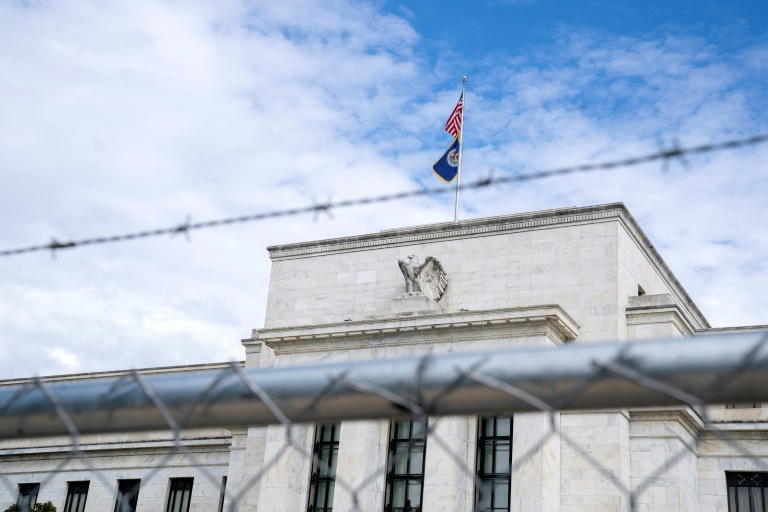
The central bank’s policy setting Federal Open Market Committee (FOMC) wraps up its two-day meeting on Wednesday and is expected to announce a half-percentage point rate hike, taking the key borrowing rate above 0.75 percent after sitting at zero from the start of the pandemic through 2021, even as inflation picked up speed.

The expected hike is part of what the Fed has billed as a tightening cycle likely to continue throughout this year and into 2023, with the goal of taking the steam out an inflation wave that has pushed consumer prices to the highest levels in four decades.

The US central bank hiked rates by a quarter percentage point in March, the first increase since 2018, but top officials including Fed Chair Jerome Powell have said officials will move quickly and front-load the increases. 

While Wall Street sentiment has showed signs of improving this week, the central bank’s hawkish posture played a role in the equity bloodletting seen in recent weeks.

April was the worst month for the S&P 500 since the pandemic, while the Nasdaq’s tech stocks, which are particularly sensitive to higher interest rates, suffered their biggest loss since October 2008.

The Fed’s goal is to engineer a “soft landing,” reining in inflation but avoiding a contraction in economic activity.

But with China’s pandemic lockdowns worsening global supply snarls and the war in Ukraine pushing commodity prices higher, analysts fear factors beyond the central bank’s control could undermine that goal, and perhaps plunge the world’s largest economy into a recession.

“We don’t know if a recession will be realized; it will depend critically upon what the Fed does and how quickly the Ukrainian situation is resolved,” Robert Eisenbeis of Cumberland Advisors said in a note. 

He warned, “Near-term probabilities are not favorable and suggest caution.”

– Many shocks –

Interest rate hikes are aimed at dampening demand, to take the steam out of consumer prices that jumped 8.5 percent over the 12 months to March, the biggest annual jump since December 1981, caused in part by consumers spending more for scarce goods.

Fed officials have signaled they view the economy as healthy enough to withstand higher rates, since unemployment has retreated almost to where it was before the pandemic, and recent data has shown strong consumer and business spending, even though the economy fell in the first quarter.

However, in addition to the external factors, central bankers cannot engineer a solution for the worker shortages that have challenged businesses and raised fears of a wage-price spiral, when employees demand higher salaries and fuel price increases. 

Powell, who will speak following the FOMC meeting — the announcement is scheduled for 1800 GMT — and could provide more insight on the Fed’s thinking.

The policy committee also is expected to provide details on the plans for shedding its massive holdings of bonds built up during the pandemic, a strategy to keep credit flowing through the economy. 

That also could unsettle financial markets and act as a brake on activity.

Kathy Bostjancic of Oxford Economics said that for the moment, signals point to “relatively low but rising odds of a recession in the next 12 months” but she warned the chances will increase if the factors driving inflation worsen.

Close Bitnami banner
Bitnami