US Business

Marvel's 'Doctor Strange' tests appeal of movie 'multiverse'

After 27 box office-shattering blockbusters, the Marvel superhero films have no more worlds to conquer — so they are headed off to parallel universes instead.

The highly anticipated “Doctor Strange in the Multiverse of Madness,” out Friday, sends Benedict Cumberbatch’s sorcerer hopping between colorful, creepy and downright bizarre new dimensions, with the help of teenager America Chavez (Xochitl Gomez).

It explores the “multiverse” concept popularized by superhero comic books, in which infinite universes — and infinite versions of each hero and villain — exist side-by-side.

“Oh yeah, we crack that door wide open,” said Cumberbatch at this week’s Los Angeles world premiere.

“And I’ll tell you one thing about it. It’s beautiful. It’s very, very beautiful.”

But for a Hollywood franchise that has thrived by making the sometimes arcane world of comic-book lore accessible to the broadest possible audiences, is it all getting a little too complicated? 

“Multiverse of Madness” — the second standalone “Doctor Strange” movie — is packed with references not just to films that preceded it, but also to Disney+ television series “WandaVision” and “Loki.”

A review from The Hollywood Reporter says the parallel universes concept — on top of Marvel films’ previous time-travel forays — “starts to look like a franchise-sustaining crutch.”

Marvel films already contain “a practically infinite number of weird characters and unlikely events” without the “rapidly aging plot device” of parallel universes, wrote reviewer John Defore.

Variety’s Owen Gleiberman said Marvel is already “the kind of place that even the most ardent comic-book fans have to dedicate themselves to keeping up with.”

Gleiberman called the film “a ride, a head trip… a what-is-reality Marvel brainteaser and, at moments, a bit of an ordeal.”

“It’s a somewhat engaging mess, but a mess all the same.”

– ‘Perfect time’ –

Still, recent history has taught Hollywood watchers to never underestimate the allure of the “Marvel Cinematic Universe” (MCU).

The franchise turned conventional wisdom about attention spans of Gen Z teens upside-down with hits like 2019’s “Avengers: Endgame” — the culmination of more than 20 interconnected movies and storylines going back to the original “Iron Man” (2008).

It earned almost $2.8 billion at the global box office, briefly becoming the highest grossing film of all time.

“Marvel are the epitome of success in Hollywood right now,” said Jeff Bock, senior analyst at Exhibitor Relations.

“And that’s why when we talk about $150 million, $200 million openings, nobody blinks an eye anymore.”

Kevin Feige, the president of Marvel Studios, said last week that planning for “the next decade” of the superhero films is well underway.

And the concept of multiple versions of beloved characters has already been successful, including December’s smash hit “Spider-Man: No Way Home.”

“Characters have come out of other universes into our own in the last Spider-Man picture,” said director Sam Raimi at Monday’s premiere.

“But this will be the first time that characters from our MCU journey out into other universes.”

Beyond the Marvel franchise, the recent, critically adored indie sci-fi hit “Everything Everywhere All at Once” also explores the idea of parallel universes.

“I think ‘Doctor Strange’ actually hits at the perfect time because everybody’s still talking about how great this multiverse concept is — it’s not played out,” said Bock.

– ‘Opening a box’ –

So far, “Multiverse of Madness” has a highly respectable — if below the Marvel average — 79 percent on review aggregator website Rotten Tomatoes.

IndieWire called the movie a “a violent, wacky, drag-me-to-several-different-hells at once funhouse of a film.”

“We are opening a box. And there’s going to be a lot of opportunities for storytelling moving forward,” said Elizabeth Olsen, who reprises her role as Wanda Maximoff.

“I’m looking forward to seeing what we do with that.”

Airbnb says record bookings signal travel rebound

Bookings on Airbnb hit a new high in this year’s first quarter, the home rental platform reported Tuesday, in a fresh signal that travel demand stifled by the Covid-19 pandemic is being unleashed.

Despite the Omicron surge and a persistent level of infections, Airbnb bookings for lodging and travel “experiences” topped 102 million in the first three months of this year, setting a new quarterly record, the company said in an earnings release.

“Guests are booking more than ever before,” Airbnb told shareholders in a letter.

“Looking ahead, we see strong sustained pent-up demand.”

The company’s stock price rose more than 3 percent to $150.50 in after-market trades following the release of the earnings figures.

Revenue in the first quarter was $1.5 billion, up 70 percent from the same period a year earlier, the company said, adding that its quarterly loss shrank to $19 million from a loss of $1.2 billion in the first quarter of 2021.

The San Francisco-based company’s earnings reflect an ongoing recovery in the travel industry and show that Airbnb is gaining share in the market, Baird analyst Colin Sebastian said in an investment note.

“Airbnb exceeded expectations on almost every line item, with strong bookings trends for the summer and balance of the year,” Sebastian told investors.

“Looking further ahead, travel recovery in urban areas, cross-border and (the Asia-Pacific region) should fuel additional bookings growth.”

The company said that trends of people booking stays away from urban areas and staying relatively close to home continue, but that guests are returning to cities and making cross-border trips.

The strong earnings come a week before a May 11 event at which chief executive Brian Chesky is to announce what the company bills as the biggest change to Airbnb in a decade.

“We will introduce a new Airbnb for a new world of travel,” the company said in their earnings letter, adding that “with a completely new way to search, guests will be able to discover millions of unique homes they never thought to search for.”

The booking platform has found traction around the globe, but is fighting various regulatory challenges in several jurisdictions.

In March, the European Union’s top court ruled that the property rental platform must share booking data with regional tax authorities in Brussels.

Schultz vows new investments as Starbucks aims to head off union push

Interim Starbucks CEO Howard Schultz unveiled fresh investments in US stores and employees Tuesday as the company seeks to head off a unionization campaign, while it reported strong North American sales that offset weakness in China.

Schultz, the longtime architect of Starbucks tapped as interim CEO in March, said the company plans $200 million in additional investments in “our core US business” in 2022.

“We do not have adequate capacity,” said Schultz, outlining new investments on store equipment and technology needed to address rising and shifting demand as more consumers order via mobile channels.

Schultz also announced another wage hike in light of staff turnover that accelerated during the pandemic..

“We’ve always been ahead of the curve, but we have to recognize that we haven’t done enough,” said Schultz. “And I think we have to recognize that there is a lot of pressure on our people.”

The announcement came as Starbucks reported a 2.3 percent rise in profits to $674.5 million in the quarter ending April 3 following a 14.5 percent jump in revenues to $7.6 billion.

The coffee giant scored a 12 percent jump in comparable sales in North America, while suffering a 23 percent slide in China amid that country’s latest Covid-19 outbreak.

In light of uncertainty over China and the inflation outlook, Starbucks did not offer a forecast for the rest of the year.

Still, shares rocketed higher during the conference call, as Schultz emphasized the solidity of demand, noting the company had enacted multiple price hikes over the last year with only a “negligible” impact on sales.

– ‘Even more’ –

The new employee investments come as Starbucks faces a unionization campaign at US stores that has accelerated since a pair of upstate New York stores voted to unionize in December. 

Some 250 Starbucks stores have launched unionization campaigns in the United States, with employees voting for a union in 47 stores, said the group, Starbucks Workers United.

The movement has been propelled by mostly younger staff frustrated over pandemic working conditions and seeking more say. 

Schultz, who has long resisted unionization at Starbucks, tried to reset the debate even as he sketched out the reasons for his opposition to the union. 

“We are highly empathic to the root causes of the frustration and anxieties that Gen Z Americans are facing, having come of age during turbulent moments in our history,” Schultz said. 

But Schultz defended the company, noting it has historically paid better than peers and offered better benefits, such as education aid.

Schultz said Starbucks was committed to doing “even more,” such as allowing customers to tip baristas directly through the app.

“Ensuring success through wages and benefits with our partners is among our core values and has been for 50 years,” Schultz said. “And our values are not and never have been the result of demands or interference from any outside entity.”

While previously announced pay hikes will still go into effect at unionized Starbucks, the company is barred under federal law from additional benefits at any stores that have voted to unionize, Schultz said. 

“Partners at (unionized) stores will receive the wages increases that we announced in October 2021 but federal law prohibits us from promising new wages and benefits at stores involved in union organizing and by law we cannot implement unilateral changes at stores that have a union,” said Schultz, who is participating in the search for a new CEO who is expected to be announced later in 2022. 

Shares of Starbucks jumped 5.1 percent to $78.10 in after-hours trading.

Families of crash victims challenge Boeing settlement in US court

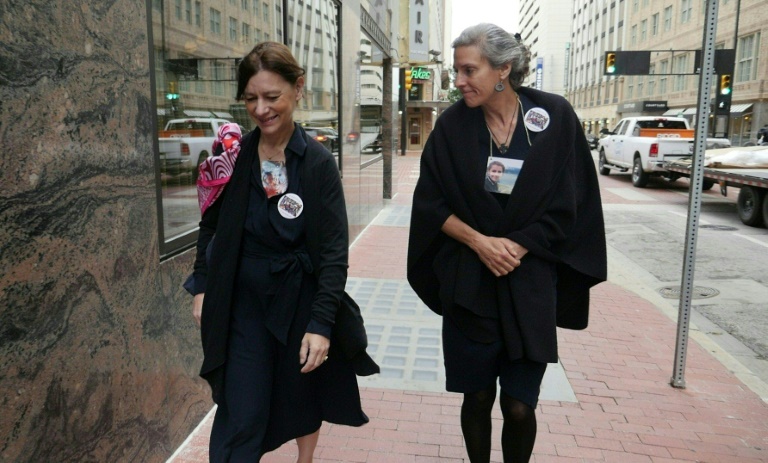
The families of victims of the two Boeing 737 MAX crashes in October 2018 and March 2019 asked a Texas judge Tuesday to overturn a $2.5-billion settlement between the aircraft manufacturer and the US government. 

Under that agreement, Boeing admitted to having committed fraud in exchange for the Department of Justice dropping some of the proceedings against it over the deadly crashes of Lion Air in Indonesia and Ethiopian Airlines, which killed 346 people total and caused the MAX to be grounded globally for 20 months. 

This January 7, 2021 arrangement was the focus of a court hearing Tuesday in Fort Worth, Texas.

“They messed up by making the crime fraud rather than manslaughter,” said Catherine Berthet, a French woman who lost her 28-year-old daughter when the Ethiopian Airlines plane crashed near Addis Ababa on March 10, 2019.

“We believe that the rights of the victims’ families have not been respected,” she told AFP. “We have not been consulted. We ask to be heard.”

The January 2021 agreement included a $500 million compensation fund for victims’ relatives, $1.77 billion in compensation to the airlines and a $243 million criminal fine. 

Boeing has admitted that two of its employees had misled a group within the Federal Aviation Authority that was to prepare training for pilots in using Boeing’s new MCAS flight software, which was implicated in both crashes.

“The judge listened carefully and I think had a lot of concerns about how was it that the Justice Department can seal this agreement from the families,” said Paul Cassell, lawyer for the families in the audience.

Relatives of the victims are now hoping for a quick decision from the Fort Worth judge.

“It’s been three years and I never go to sleep before four or five in the morning,” Berthet said. “I still have panic attacks. There are things I don’t do anymore. There are films that I can no longer see, music that I can no longer listen to.”

“I would like to see that the US Department of Justice is responsible enough to make sure that corporations don’t get away with murder,” said Paul Njoroge, who lost his 33-year-old wife, his children aged nine months, four and six, as well as his mother-in-law in the Ethiopia crash.

EU members seek opt-outs from Russian oil embargo

EU officials late Tuesday handed over a draft plan to member states on a new package of sanctions to punish Russia for its invasion of Ukraine, but some members are jockeying to opt out of an oil embargo.

Several EU officials and European diplomats in Brussels told AFP there were divisions over the plan.

It was only adopted late at night due to the stance of one of the member states. 

Ambassadors from the 27 European Union countries will meet on Wednesday to give the plan a once-over, and it will need unanimous approval before going into effect.

The commission’s proposal would phase in a ban on oil imports from Russia over six to eight months, with Hungary and Slovakia allowed to take a few months longer, EU officials told AFP.

But Slovakia, which like Hungary is almost 100 percent dependent for fuel on Russian crude coming through the Druzbha pipeline, has said it will need several years.

Slovakia’s refinery is designed to work with Russian oil and would need to be thoroughly overhauled or replaced to deal with imports from elsewhere — an expensive and lengthy process.

Other officials, speaking on condition of anonymity during the legally and diplomatically fraught negotiation, said Bulgaria and the Czech Republic could also seek sanctions opt-outs.

One European diplomat warned that granting exemptions to one or two highly-dependent states could trigger a domino effect of exemption demands that would undermine the embargo.

The European Commission is not planning to unveil the draft in public before its president, Ursula von der Leyen, addresses the European Parliament on Wednesday. 

Pfizer sees high demand for Covid-19 pill as profits jump

Pfizer executives said Tuesday they are confident of strong demand for the company’s Covid-19 antiviral treatment amid easing pandemic rules as the big drugmaker reported another round of strong earnings.

The US pharmaceutical giant, reporting surging first-quarter profits based on a big jump in revenues from its Covid-19 vaccine, said its Paxlovid treatment for the virus would be a valuable means for governments to limit the severity of outbreaks as they ease social distancing and masking rules.

Pfizer Chief Executive Albert Bourla said the company is seeing “very strong signs of increasing demand for Paxlovid as it remains one of the best tools we have.”

Citing rising vaccine fatigue, Bourla said the company is also focused on a Covid-19 vaccine booster that provides immunity for a year.

“People are tired of the repeated booster, so it is extremely important to come to a vaccine that could be a yearly vaccine,” Bourla told analysts on a conference call, adding that while the company has made progress on this front, “it’s not technically easy to achieve.”

“There’s a tremendous pressure across the world to get our lives back,” Bourla said of the social and political impetus to ease pandemic rules. “As a result of these things it’s very clear that we will have waves” of Covid-19 infections.

– ‘Rebound’ risk –

The US drugmaker reported first-quarter profits of $7.9 billion, up 61 percent, based on a 77 percent surge in revenues to $25.7 billion.

Pfizer lowered its full-year adjusted profits by 10 cents to $6.25 to $6.45 a share, due in part to currency movements.

But the company confirmed its full-year revenue forecast of about $100 billion, which is an approximately 23 percent increase on the 2021 level. More than half the revenues are expected to come from the Covid-19 vaccine and therapeutic.

Pfizer, which has shipped some 3.4 billion doses of vaccine to 179 countries, has won regulatory approval for its shot in most age groups, but continues to study its use in children younger than five.

In the first quarter, Paxlovid took in $1.5 billion in global sales. But Pfizer expects 2022 sales of the medicine of $22 billion as it ramps up production and distribution.

The company expects to produce 120 million courses of the Paxlovid oral pills in 2022, with distribution programs scaling up in the United States and other markets.

The treatment has received emergency or conditional approval in 40 countries so far, the company said.

“What we are seeing is… there is demand for this product,” said Pfizer biopharmaceuticals group president Angela Hwang, citing the removal of mask mandates as a factor in spreading cases. 

“What we’re also seeing is that we don’t have any inventory on hand,” Hwang said. “Every dose that we produce is being shipped out.”

Pfizer executives said they were researching “rebound” Covid-19 cases in which some patients who took Paxlovid have reported renewed symptoms. 

But company officials said the data thus far suggests that the amount of cases is small and may have to do with unusual patient characteristics rather than the drug itself. 

The World Health Organization last month “strongly recommended” the antiviral pill Paxlovid for patients with milder forms of the disease who were still at a high risk of hospitalization. 

But WHO said it was “extremely concerned” that low- and middle-income countries would be “pushed to the end of the queue” amid tight global supplies.

Shares of Pfizer rose 2.0 percent Tuesday to $49.29.

Activists urge ad boycott if Musk turns Twitter toxic

Activist groups called on Twitter advertisers Tuesday to boycott the service if it opens the gates to abusive and misinformative posts with billionaire Elon Musk as its owner.

The Tesla chief’s $44-billion deal to buy the global messaging platform must still get the backing of shareholders and regulators, but he has voiced enthusiasm for dialing back content moderation to a legal minimum and no longer banning people for using the platform to instigate real-world harm.

“Your brand risks association with a platform amplifying hate, extremism, health misinformation, and conspiracy theorists,” said an open letter signed by more than two dozen groups including Media Matters, Access Now and Ultraviolet.

“Under Musk’s management, Twitter risks becoming a cesspool of misinformation, with your brand attached.”

The groups urged advertisers to require that Twitter maintain its content moderation policies as a non-negotiable term of doing business with the platform.

Twitter makes most of its revenue from ads, and that could be jeopardized by advertisers’ reaction to content posted on the platform, the San Francisco-based tech firm said in a filing with US regulators.

Ad revenue at Twitter increased 16 percent to $1.2 billion in the recently ended quarter, while revenue from subscriptions and other means decreased to $94.4 million, the company said in the filing.

While Musk has not revealed nitty-gritty details of how he would run the business side of Twitter, he has expressed a preference for making money from subscriptions.

Analysts doubt that Twitter users would flock to pay for premium content or features such as retweeting posts when social media platforms such as Facebook are free of charge.

As of the end of March, an average 229 million people used Twitter daily, an increase of nearly 16 percent from the first three months of last year, Twitter said in the filing.

The user growth was driven in part by the war in Ukraine, with people using the service to find news and support, the company told regulators.

“We believe that our long-term success depends on our ability to improve the health of the public conversation on Twitter,” the company said in the filing.

Efforts toward that goal include fighting abuse, harassment, spam and “malicious automation,” or when software instead of people manages accounts, Twitter told regulators.

Musk has said he would make fighting such automated “bots” at Twitter a priority.

Twitter estimated that false or spam accounts made up less than five percent of its daily active users in the first quarter of this year, the filing said.

Pfizer sees high demand for Covid-19 pill as profits jump

Pfizer executives said Tuesday they are confident of strong demand for the company’s Covid-19 antiviral treatment amid easing pandemic rules as the big drugmaker reported another round of strong earnings.

The US pharmaceutical giant, reporting surging first-quarter profits based on a big jump in revenues from its Covid-19 vaccine, said its Paxlovid treatment for the virus would be a valuable means for governments to limit the severity of outbreaks as they ease social distancing and masking rules.

Pfizer Chief Executive Albert Bourla said the company is seeing “very strong signs of increasing demand for Paxlovid as it remains one of the best tools we have.” 

Citing rising vaccine fatigue, Bourla said the company is also focused on a Covid-19 vaccine booster that provides immunity for a year. 

“People are tired of the repeated booster, so it is extremely important to come to a vaccine that could be a yearly vaccine,” Bourla told analysts on a conference call, adding that while the company has made progress on this front, “it’s not technically easy to achieve.”

“There’s a tremendous pressure across the world to get our lives back,” Bourla said of the social and political impetus to ease pandemic rules. “As a result of these things it’s very clear that we will have waves” of Covid-19.

– ‘Rebound’ risk –

The US drugmaker reported first-quarter profits of $7.9 billion, up 61 percent, based on a 77 percent surge in revenues to $25.7 billion.

Pfizer lowered its full-year adjusted profits by 10 cents to $6.25 to $6.45 a share, due in part to currency movements.

But the company confirmed its full-year revenue forecast of about $100 billion, which is an approximately 23 percent increase on the 2021 level. More than half the revenues are expected to come from the Covid-19 vaccine and therapeutic.

Pfizer, which has shipped some 3.4 billion doses of vaccine to 179 countries, has won regulatory approval for its shot in most age groups, but continues to study its use in children younger than five.

In the first quarter, Paxlovid took in $1.5 billion in global sales. But Pfizer expects 2022 sales of the medicine of $22 billion as it ramps up production and distribution.

The company expects to produce 120 million courses of the Paxlovid oral pills in 2022, with distribution programs scaling up in the United States and other markets.

The treatment has received emergency or conditional approval in 40 countries so far, the company said.

“What we are seeing is… there is demand for this product,” said Pfizer biopharmaceuticals group president Angela Hwang, citing the removal of mask mandates as a factor in spreading cases. 

“What we’re also seeing is that we don’t have any inventory on hand,” Hwang said. “Every dose that we produce is being shipped out.”

Pfizer executives said they were researching “rebound” Covid-19 cases in which some patients who took Paxlovid have reported renewed symptoms. 

But company officials said the data thus far suggests that the amount of cases is small and may have to do with unusual patient characteristic rather than the drug itself. 

The World Health Organization last month “strongly recommended” the antiviral pill Paxlovid for patients with milder forms of the disease who were still at a high risk of hospitalization. 

But WHO said it was “extremely concerned” that low- and middle-income countries would be “pushed to the end of the queue” amid tight global supplies.

Shares of Pfizer rose 1.7 percent to $49.17 in afternoon trading.

Rio to host top tech conference Web Summit

The head of Web Summit, the huge technology conference dubbed the “Davos for geeks,” announced Tuesday that Rio de Janeiro will host the first edition of the event outside Europe.

The iconic Brazilian beach city will host the conference from May 1 to 4, 2023 — supplementing, not replacing, the annual event currently held in Lisbon, Portugal, said Web Summit chief executive Paddy Cosgrave.

“We are delighted to bring a brand new Web Summit event to one of the most iconic cities in the world,” the Irish tech guru told an online news conference.

“Rio is widely seen as one of the hottest destinations for the tech industry. International investors are looking at Latin America, and Brazil, in particular, attracted by some of the hottest startups in the region.”

Under Rio’s contract with organizers, the city will host the event for the next three years, with an option to extend, he said.

The Lisbon event will continue to be held at least through 2028.

Rio Mayor Eduardo Paes said the 2023 event alone was forecast to draw 10,000 participants and generate an economic impact of at least one billion reais ($200 million) for the city.

“But it’s much, much bigger than that,” he told the news conference.

“This positions Rio as the innovation hub of Latin America.”

Launched in 2009, Web Summit was first held in Dublin, Ireland, then moved to Lisbon in 2016.

Organizers have launched spinoff events in other parts of the world, such as Collision in Toronto and RISE in Hong Kong.

Web Summit speakers typically include tech titans such as Tesla and SpaceX chief executive Elon Musk and celebrities such as U2 frontman Bono.

Cosgrave said the idea behind the Rio event was to leverage the breakneck growth of startups in Latin America.

He cited a Miami Herald article reporting the region received $19.5 billion in investments in startups in 2021, triple the previous year.

Nearly half went to Brazil, home to 27 “unicorns,” or startups valued at $1 billion or more.

Stock markets rise as Fed set to hike rate

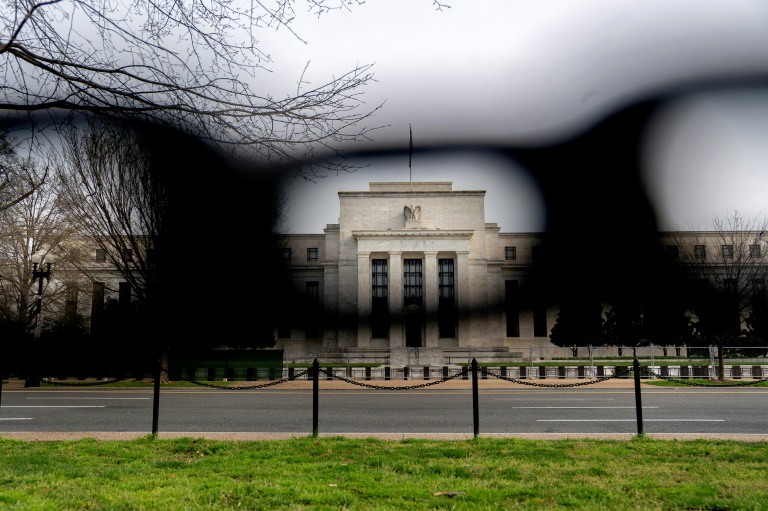
Stock markets rose on Tuesday as the US Federal Reserve began a two-day meeting that is expected to conclude with a big rate increase to tame decades-high inflation.

Central banks worldwide are tightening borrowing costs despite concerns such action could hamper financial recovery from the pandemic and even push major economies into recession.

The US central bank is expected to lift borrowing costs by half a percentage point for the first time since 2000.

With the increase widely forecast, investors will be closely looking for clues on the outlook for futures rate rises after consumer prices accelerated to 8.5 percent in March, the highest level in more than 40 years.

“The markets remain edgy, as the Fed is expected to be aggressive in this monetary policy tightening cycle,” said analysts at Charles Schwab investment firm.

“Moreover, sentiment continues to be hampered by the ongoing war in Ukraine, the recent jump in interest rates, the continued rally in the US dollar, and the economic impact of the covid lockdowns in China,” they wrote.

On Tuesday, the Reserve Bank of Australia lifted interest rates 25 basis points, the first hike since 2010 and by more than expected. Officials also indicated further increases were in the pipeline.

The move sent the Australian dollar briefly rallying more than one percent against the greenback before settling back slightly. 

Victoria Scholar, head of investment at Interactive Investor, said the Bank of England is expected to announce another rate hike on Thursday to its highest level since 2009.

Wall Street was up in midday trading, with the Dow Jones Industrial Average 0.7 percent higher, the S&P 500 gaining one percent and the tech-heavy Nasdaq rising by 0.6 percent.

European markets finished higher, with London up 0.2 percent, Paris adding 0.8 percent and Frankfurt gaining 07 percent following sharp losses Monday.

Traders continued to pore over earnings results from some of the world’s biggest companies.

US drug maker Pfizer reported a 77-percent jump in first quarter revenue thanks to its Covid vaccine, though it lowered its full-year profit forecast due in part of shifts in foreign exchange.

– Oil down –

British energy giant BP said its decision to pull out of Russia as a result of the war in Ukraine pushed it deep into the red in the first three months of this year.

But its underlying performance was strong thanks to a recent surge in oil and gas prices.

On Tuesday, crude futures declined ahead of a regular meeting this week of OPEC+.

The body comprising the Organization of Petroleum Exporting Countries plus Russia and other oil-producing nations must decide on output policy amid tight supply fears triggered by the Ukraine war.

The European Union is preparing a Russian oil embargo but some countries highly dependent on Moscow’s crude are seeking opt-outs from the possible ban.

China’s strict Covid lockdown has weighed on crude prices due to concerns about demand in the world’s top importer of oil.

– Key figures at around 1600 GMT –

New York – Dow: UP 0.7 percent at 33,306.99 points

London – FTSE 100: UP 0.2 percent at 7,561.33 (close)

Frankfurt – DAX: UP 0.7 percent at 14,039.47 (close)

Paris – CAC 40: UP 0.8 percent at 6,476.18 (close)

EURO STOXX 50: UP 0.8 percent at 3,761.19

Hong Kong – Hang Seng Index: UP 0.1 percent at 21,101.89 (close)

Tokyo – Nikkei 225: Closed for a holiday

Shanghai – Composite: Closed for a holiday

Euro/dollar: UP at $1.0519 from $1.0506 on Monday

Pound/dollar: UP at $1.2498 from $1.2489

Euro/pound: UP at 84.16 pence from 84.09 pence

Dollar/yen: UP at 130.17 yen from 130.16 yen

Brent North Sea crude: DOWN 1.1 percent at $106.37 per barrel

West Texas Intermediate: DOWN 1.3 percent at $103.82 per barrel

Close Bitnami banner
Bitnami