US Business

Asian markets track US losses on recession worries

Asian markets fell on Monday as traders weighed the prospect of a global recession caused by central bank moves to fight inflation.

Equities took a turn south last week after monetary policymakers around the world signalled that while price rises appeared to be stabilising, more work would be needed to get them under control.

All three main indexes on Wall Street ended sharply lower Friday after the Federal Reserve warned that it would continue tightening monetary policy into 2023.

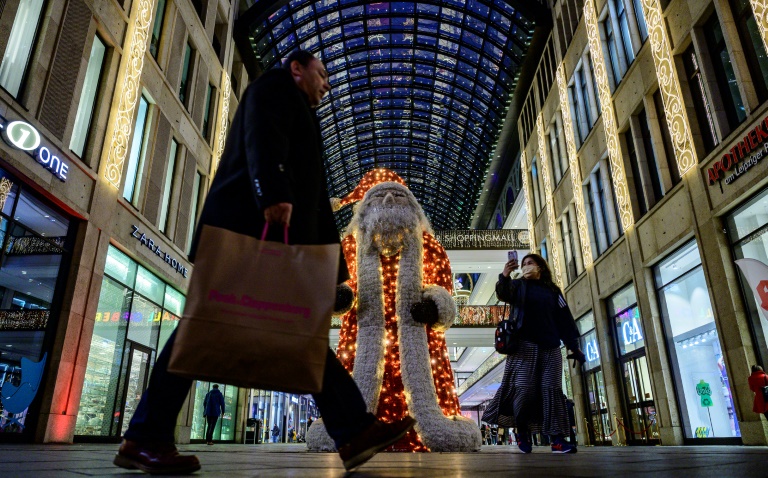
That was followed by similar warnings from the European Central Bank and Bank of England, while data suggested economies were feeling the pinch, dealing a blow to sentiment heading into the Christmas break.

“With no shortage of economic headwinds, investors struggle to find something cheerful about this holiday week after the two most dominant central banks cast a pall over the proceedings,” said SPI Asset Management’s Stephen Innes.

The sell-off in New York fed through to Asia, where Tokyo shed more than one percent, while Hong Kong, Shanghai, Taipei, Manila, Bangkok, Jakarta and Wellington were all in negative territory.

However, Singapore and Mumbai edged up, while London, Paris and Frankfurt opened higher.

“A Santa rally looks doubtful given elevated growth risks and hawkish central banks rhetoric,” said National Australia Bank’s Tapas Strickland.

Adding to the downbeat mood was a spike in Covid-19 cases in China following the country’s reopening after almost three years of strict containment measures.

While the move is expected to boost the world’s number two economy, there is a worry that businesses and China’s health system will be hit in the near term.

Still, Beijing flagged a number of measures aimed at kickstarting growth next year, including support for the beleaguered property sector.

Sylvia Jablonski of Defiance ETFs had an upbeat outlook.

She told Bloomberg Radio that “the market will look through the expectations of a future recession at some point and come back in because equities are starting to look cheaper and cheaper as we go along here”.

An expected pick-up in demand from the country helped drive a rally in oil prices, with both main contracts up more than one percent.

– Key figures around 0820 GMT –

Tokyo – Nikkei 225: DOWN 1.1 percent at 27,237.64 (close)

Hong Kong – Hang Seng Index: DOWN 0.5 percent at 19,352.81 (close)

Shanghai – Composite: DOWN 1.9 percent at 3,107.11 (close)

London – FTSE 100: UP 0.4 percent at 7,355.10

Euro/dollar: UP at $1.0633 from $1.0589 on Friday

Pound/dollar: UP at $1.2201 from $1.2140

Euro/pound: DOWN at 87.13 pence from 87.22 pence

Dollar/yen: DOWN at 135.83 yen from 136.68 yen

West Texas Intermediate: UP 0.4 percent at $74.58 per barrel

Brent North Sea crude: UP 0.5 percent at $79.46 per barrel

New York – Dow: DOWN 0.9 percent at 32,920.46 (close)
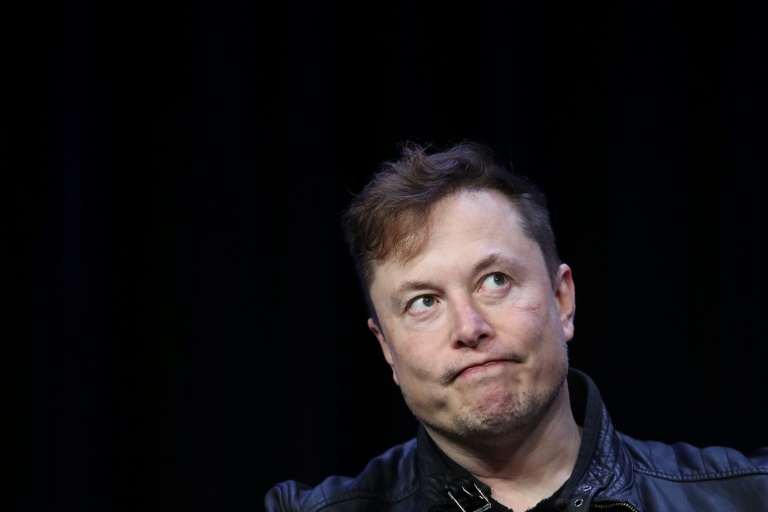
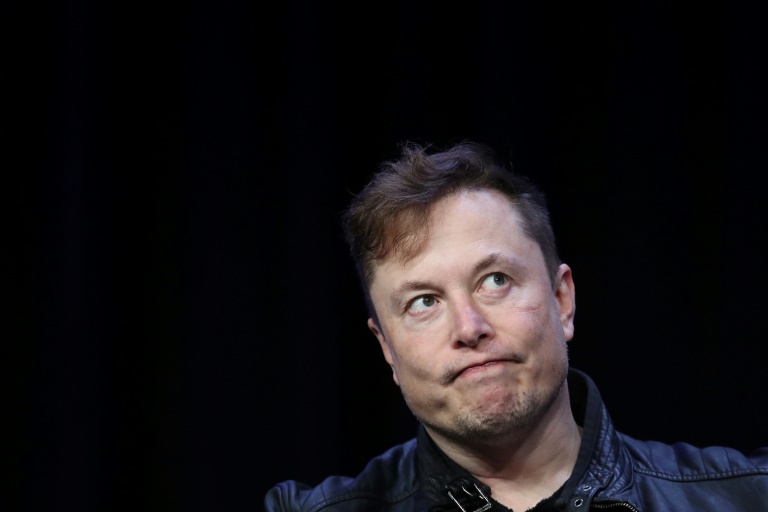
Musk polls Twitter users on his future as CEO

Elon Musk appeared to put his future in charge of Twitter on the line, posting a poll asking whether he should step down and vowing to abide by the results.

“Should I step down as head of Twitter?” he tweeted, asking the site’s users to click yes or no.

“I will abide by the results of this poll.”

With four hours until the end of the poll on Monday, 56.7 percent of nearly 14 million respondents had voted yes.

In Twitter exchanges with followers, Musk said he did not have a replacement lined up.

“No one wants the job who can actually keep Twitter alive. There is no successor,” he said.

Making a “fun suggestion” to Musk, MIT research scientist Lex Fridman offered to run the platform for a bit for no salary.

In a downbeat response, Musk said Twitter was “in the fast lane to bankruptcy.”

“You must like pain a lot. One catch: you have to invest your life savings in Twitter and it has been in the fast lane to bankruptcy since May. Still want the job?” Musk asked.

The unpredictable billionaire posted the poll shortly after apparently acknowledging he had made a mistake banning Twitter users from promoting their accounts on rival social media platforms.

“Going forward, there will be a vote for major policy changes. My apologies. Won’t happen again,” he tweeted.

The sudden shift in the rules was the latest in a series of controversial changes made by Musk since he took over the company in October — upheaval that has led a growing number of users to encourage followers to view their posts on other sites.

Twitter had announced that the company would “no longer allow free promotion of specific social media platforms.”

Users would thus be barred, for example, from posting “Follow me @username on Instagram,” Twitter said.

Twitter co-founder Jack Dorsey questioned the new policy with a one-word tweet: “Why?”

After some notable accounts were suspended under the new policy, including tech investor Paul Graham, Musk tweeted that instead of considering individual tweets, the policy would be limited to “suspending accounts only when that account’s *primary* purpose is promotion of competitors.”

– Series of controversies –

Musk has generated a series of controversies in his short tenure at the helm of Twitter, including layoffs, reinstatement of some far-right accounts and the suspension of several journalists.

Shortly after taking over the platform, he announced the site would charge $8 per month to verify account holders’ identities, but had to suspend the “Twitter Blue” plan after an embarrassing rash of fake accounts. It has since been relaunched.

On November 4, with Musk saying the company was losing $4 million a day, Twitter laid off half its 7,500-strong staff.

Musk also reinstated the account of former president Donald Trump and said Twitter would no longer work to combat Covid-19 disinformation.

In recent days, he suspended the accounts of several journalists — most recently, Washington Post reporter Taylor Lorenz — after complaining some had divulged details about the movements of his private jet that could endanger his family.

The suspension of the journalists — employees of CNN, The New York Times and The Washington Post were among those affected — has drawn sharp criticism, including from the European Union and the United Nations.

The US Federal Trade Commission said it was tracking developments at Twitter “with deep concern.”

The Washington Post’s executive editor Sally Buzbee said the suspension of Lorenz’s account “further undermines Elon Musk’s claim that he intends to run Twitter as a platform dedicated to free speech.”

Some of the suspended accounts have since been reactivated.

Musk polls Twitter users on his future as CEO

Elon Musk appeared to put his future in charge of Twitter on the line, posting a poll asking whether he should step down and vowing to abide by the results.

“Should I step down as head of Twitter?” he tweeted, asking the site’s users to click yes or no.

“I will abide by the results of this poll.”

With four hours until the end of the poll on Monday, 56.7 percent of nearly 14 million respondents had voted yes.

In Twitter exchanges with followers, Musk said he did not have a replacement lined up.

“No one wants the job who can actually keep Twitter alive. There is no successor,” he said.

Making a “fun suggestion” to Musk, MIT research scientist Lex Fridman offered to run the platform for a bit for no salary.

In a downbeat response, Musk said Twitter was “in the fast lane to bankruptcy.”

“You must like pain a lot. One catch: you have to invest your life savings in Twitter and it has been in the fast lane to bankruptcy since May. Still want the job?” Musk asked.

The unpredictable billionaire posted the poll shortly after apparently acknowledging he had made a mistake banning Twitter users from promoting their accounts on rival social media platforms.

“Going forward, there will be a vote for major policy changes. My apologies. Won’t happen again,” he tweeted.

The sudden shift in the rules was the latest in a series of controversial changes made by Musk since he took over the company in October — upheaval that has led a growing number of users to encourage followers to view their posts on other sites.

Twitter had announced that the company would “no longer allow free promotion of specific social media platforms.”

Users would thus be barred, for example, from posting “Follow me @username on Instagram,” Twitter said.

Twitter co-founder Jack Dorsey questioned the new policy with a one-word tweet: “Why?”

After some notable accounts were suspended under the new policy, including tech investor Paul Graham, Musk tweeted that instead of considering individual tweets, the policy would be limited to “suspending accounts only when that account’s *primary* purpose is promotion of competitors.”

– Series of controversies –

Musk has generated a series of controversies in his short tenure at the helm of Twitter, including layoffs, reinstatement of some far-right accounts and the suspension of several journalists.

Shortly after taking over the platform, he announced the site would charge $8 per month to verify account holders’ identities, but had to suspend the “Twitter Blue” plan after an embarrassing rash of fake accounts. It has since been relaunched.

On November 4, with Musk saying the company was losing $4 million a day, Twitter laid off half its 7,500-strong staff.

Musk also reinstated the account of former president Donald Trump and said Twitter would no longer work to combat Covid-19 disinformation.

In recent days, he suspended the accounts of several journalists — most recently, Washington Post reporter Taylor Lorenz — after complaining some had divulged details about the movements of his private jet that could endanger his family.

The suspension of the journalists — employees of CNN, The New York Times and The Washington Post were among those affected — has drawn sharp criticism, including from the European Union and the United Nations.

The US Federal Trade Commission said it was tracking developments at Twitter “with deep concern.”

The Washington Post’s executive editor Sally Buzbee said the suspension of Lorenz’s account “further undermines Elon Musk’s claim that he intends to run Twitter as a platform dedicated to free speech.”

Some of the suspended accounts have since been reactivated.

Drones attack Kyiv as Ukraine watches Belarus border

Drones attacked Kyiv early Monday, days after the Ukrainian capital withstood one of the biggest missile attacks since the start of Russia’s February invasion. 

The latest strikes came as Russian President Vladimir Putin travels to Belarus, Ukraine’s neighbour in the north, where Moscow’s troops stationed as part of a regional force are due to hold military exercises.

“During the air alert, 23 enemy UAVs were recorded in the sky above the capital. Air defence destroyed 18 drones,” the Kyiv city military administration said on social media. 

It added that the Russian forces were using barrage ammunition from “Shaheds”, Iranian-made weapons that have pummelled the capital in recent weeks.

Kyiv’s civil administration announced an initial air alert at 1:56 am (2356 GMT) which lasted for just over three hours. A second siren at 5:24 am (0324 GMT) was called off within a half hour.

Mayor Vitali Klitschko confirmed that “explosions” had occurred in the capital’s central Shevchenkivskyi and the Solomianskyi district in the west.

He said a critical infrastructure facilities were “damaged” but there were no known casualties. 

Ukrainian energy operator DTEK said emergency power cuts will be carried out in the capital following the attack.

Ukraine has been subjected to frequent and deadly aerial attacks in the 10 months since Russia’s invasion in late February.

After a series of key battlefield setbacks and lost territory this summer and autumn, Moscow pivoted strategies and stepped up its aerial campaign.

But with temperatures dropping, the missile and drone attacks have plunged cities around the country into darkness, and severed water and heat supplies to millions of Ukrainians.

– Putin to visit Belarus –

France and the European Union have said Russia’s assault on civilian infrastructure constitutes war crimes, with the bloc’s foreign policy chief calling the bombings “barbaric”.

After a major assault on multiple cities involving more than 70 missiles on Friday, the national electricity operator was forced to impose emergency rolling blackouts as it raced to repair the battered energy grid. 

Ukrainian President Volodymyr Zelensky said as of Sunday evening, nine million people have had their energy restored. 

In his nightly address, Zelensky also said the situation on Ukraine’s border with Russia and Belarus was a “constant priority”. 

“We are preparing for all possible defence scenarios,” Zelensky said, adding that the border situation was discussed at a meeting with his military commanders. 

Belarus President Alexander Lukashenko, who has been in power since 1994, is a long-time Kremlin ally and allowed Russian troops to use Belarusian territory as a launchpad for Moscow’s invasion. 

Lukashenko is hosting Putin in the capital Minsk on Monday, in what will be the Russian leader’s first visit to Belarus in over three years. 

Earlier on Monday, the Interfax news agency cited the defence ministry in Moscow as saying that Russian troops will conduct military exercises in Belarus.

In October, Belarus announced the formation of a joint regional force with Moscow with several thousand Russian servicemen arriving in the ex-Soviet country.  

It did not say when and where the drills will take place and how long they will last.

The deployment of Russian troops in Belarus had raised fears that Belarusian troops could join them in their offensive in Ukraine.

Asian markets track US losses on recession worries

Asian markets fell on Monday as traders weighed the prospect of a global recession caused by central bank moves to fight inflation.

Equities took a turn south last week after monetary policymakers around the world signalled that while price rises appeared to be stabilising, more work would be needed to get them under control.

All three main indexes on Wall Street ended sharply lower Friday after the Federal Reserve warned that it would continue tightening monetary policy into 2023.

That was followed by similar warnings from the European Central Bank and Bank of England, while data suggested economies were feeling the pinch, dealing a blow to sentiment heading into the Christmas break.

“With no shortage of economic headwinds, investors struggle to find something cheerful about this holiday week after the two most dominant central banks cast a pall over the proceedings,” said SPI Asset Management’s Stephen Innes.

The sell-off in New York fed through to Asia, where Tokyo shed more than one percent, while Hong Kong, Shanghai, Taipei, Seoul, Manila, Jakarta and Wellington were all in negative territory.

“A Santa rally looks doubtful given elevated growth risks and hawkish central banks rhetoric,” said National Australia Bank’s Tapas Strickland.

Adding to the downbeat mood was a spike in Covid-19 cases in China following the country’s reopening after almost three years of strict containment measures.

While the move is expected to boost the world’s number two economy, there is a worry that businesses and the country’s health system will be hit in the near term.

Still, Beijing flagged a number of measures aimed at kickstarting growth next year, including support for the beleaguered property sector.

However, Sylvia Jablonski of Defiance ETFs had an upbeat outlook.

She told Bloomberg Radio that “the market will look through the expectations of a future recession at some point and come back in because equities are starting to look cheaper and cheaper as we go along here”.

An expected pick-up in demand from the country helped drive a rally in oil prices, with both main contracts up more than one percent.

– Key figures around 0230 GMT –

Tokyo – Nikkei 225: DOWN 1.1 percent at 27,221.29 (break)

Hong Kong – Hang Seng Index: DOWN 0.9 percent at 19,282.35

Shanghai – Composite: DOWN 1.1 percent at 3,134.33

Euro/dollar: UP at $1.0607 from $1.0589 on Friday

Pound/dollar: UP at $1.2186 from $1.2140

Euro/pound: DOWN at 87.02 pence from 87.22 pence

Dollar/yen: DOWN at 136.06 yen from 136.68 yen

West Texas Intermediate: UP 1.4 percent at $75.32 per barrel

Brent North Sea crude: UP 1.4 percent at $80.17 per barrel

New York – Dow: DOWN 0.9 percent at 32,920.46 (close)
London – FTSE 100: DOWN 1.3 percent at 7,332.12 (closing)

US Capitol riot panel to meet, vote on Trump criminal referrals

Wrapping up an 18-month probe into last year’s deadly attack on the US Capitol, lawmakers will convene Monday to vote on whether to recommend criminal charges against former president Donald Trump and some of his closest aides.

The select House of Representatives committee has interviewed more than 1,000 witnesses and held explosive public hearings into what happened on January 6, 2021 — and who was responsible for it.

The panel, made up of seven Democrats and two Republicans, will meet at 1:00 pm (1800 GMT) to unveil the findings on their investigation into the deadly riot, in which Trump supporters — who falsely claimed that the 2020 election was stolen from him by Joe Biden — ransacked the Capitol.

At least five people died in connection with the melee and 140 police officers were injured. About 900 people have been arrested in connection with the violent rampage, which sent shockwaves across the country and around the world.

The panel will decide whether or not to recommend that the Justice Department seek charges against Trump — who is running to retake the Oval Office in the 2024 election — on at least three counts, according to reports.

Those charges would be inciting an insurrection, obstruction of an official proceeding and conspiracy to defraud the US government, NBC News reported Sunday. 

Lawmakers cannot authorize charges themselves but can make recommendations to the Justice Department, which has already appointed a special counsel to look into Trump’s role in the Capitol riot and his efforts to overturn the 2020 election.

Their vote is nonbinding and largely symbolic — the decision on charges for Trump will ultimately rest with Attorney General Merrick Garland.

But the three charges reportedly being considered could result in prison time and a ban from public office for the former president, who still wields considerable power in the Republican Party. 

“I think that the evidence is there that Donald Trump committed criminal offenses in connection with his efforts to overturn the election,” Democratic committee member Adam Schiff, a former federal prosecutor, told CNN on Sunday.

The committee may also make legislative recommendations to protect the process of certifying election results.

Its final report is due for release on Wednesday. 

– ‘Democrats, misfits and thugs’ –

Schiff did not offer details on possible criminal referrals against Trump, or even say how he himself would vote. 

But on CNN’s “State of the Union” news program, he did say: “I think the president has violated multiple criminal laws. And I think you have to be treated like any other American who breaks the law, and that is, you have to be prosecuted.”

Trump has repeatedly disparaged the House panel on his own Truth Social platform, calling the members “Democrats, misfits and thugs.”

He has defended the speech he gave before the January 6 riot and his other actions that day as “mild & loving.”

On that day, he called on his supporters to “fight like hell.”

– ‘Attempted coup’ –

Since July 2021, the House select committee has sought to shed light on the former president’s actions before and during January 6, 2021.

Across eight hearings this past summer, the panel unveiled reams of evidence on Trump’s involvement in a labyrinthine series of connected schemes to overturn the election — and the impossibility of the Republican not knowing he had lost to Biden.

Trump was “at the center” of “an attempted coup,” the head of the committee, Representative Bennie Thompson, has said.

The panel interviewed several Trump aides including his then Attorney General Bill Barr and even his daughter Ivanka. In snippets of interviews shown to the public, many of them said they never believed there had been election fraud.

The committee also revealed the pressure Trump had placed on his own vice president Mike Pence and other officials, notably in the key states of Georgia and Arizona, in a campaign of intimidation aimed at invalidating the November 2020 election.

Twitter to ban users from promoting rival social platforms

Twitter announced Sunday it would no longer allow users to promote their accounts on several rival social media platforms including Facebook and Instagram, but the site’s mercurial owner Elon Musk appeared to backtrack on the new policy just hours later.

The sudden shift in the rules was the latest in a series of controversial changes made by Musk since he took over the company in October — upheaval that has led a growing number of users to encourage followers to view their posts on other sites.

The unpredictable billionaire even put his future as Twitter’s CEO to a vote.

“Should I step down as head of Twitter?” he tweeted, asking the site’s users to click yes or no. 

“I will abide by the results of this poll,” he added, with the vote open until the early hours of Monday.

Twitter had announced that the company would “no longer allow free promotion of specific social media platforms.”

“At both the Tweet level and the account level, we will remove any free promotion of prohibited 3rd-party social media platforms, such as linking out (i.e. using URLs) to any of the below platforms on Twitter, or providing your handle without a URL,” the company explained in a statement.

Users would thus be barred, for example, from posting “Follow me @username on Instagram,” Twitter said.

Twitter co-founder Jack Dorsey questioned the new policy with a one-word tweet: “Why?”

After some notable accounts were suspended under the new policy, including tech investor Paul Graham, Musk tweeted that instead of considering individual tweets, the policy would be limited to “suspending accounts only when that account’s *primary* purpose is promotion of competitors.”

He later said: “Going forward, there will be a vote for major policy changes. My apologies. Won’t happen again.”

– Changes under Musk –

The move was the latest in a growing series of controversies generated by Musk in his short tenure at the helm of Twitter, including layoffs, reinstatement of some far-right accounts and the suspension of several journalists.

Shortly after taking over the platform, he announced the site would charge $8 per month to verify account holders’ identities, but had to suspend the “Twitter Blue” plan after an embarrassing rash of fake accounts. It has since been relaunched.

On November 4, with Musk saying the company was losing $4 million a day, Twitter laid off half its 7,500-strong staff.

Musk also reinstated the account of former president Donald Trump and said Twitter would no longer work to combat Covid-19 disinformation.

In recent days, he suspended the accounts of several journalists — most recently, Washington Post reporter Taylor Lorenz — after complaining some had divulged details about the movements of his private jet that could endanger his family.

The suspension of the journalists — employees of CNN, The New York Times and The Washington Post were among those affected — has drawn sharp criticism, including from the European Union and the United Nations.

The US Federal Trade Commission said it was tracking developments at Twitter “with deep concern.”

Washington Post executive editor Sally Buzbee said the suspension of Lorenz’s account “further undermines Elon Musk’s claim that he intends to run Twitter as a platform dedicated to free speech.”

Some of the suspended accounts have since been reactivated.

Twitter to ban users from promoting rival social platforms

Twitter announced Sunday it would no longer allow users to promote their accounts on several rival social media platforms including Facebook and Instagram, but the site’s mercurial owner Elon Musk appeared to backtrack on the new policy just hours later.

The sudden shift in the rules was the latest in a series of controversial changes made by Musk since he took over the company in October — upheaval that has led a growing number of users to encourage followers to view their posts on other sites.

The unpredictable billionaire even put his future as Twitter’s CEO to a vote.

“Should I step down as head of Twitter?” he tweeted, asking the site’s users to click yes or no. 

“I will abide by the results of this poll,” he added, with the vote open until the early hours of Monday.

Twitter had announced that the company would “no longer allow free promotion of specific social media platforms.”

“At both the Tweet level and the account level, we will remove any free promotion of prohibited 3rd-party social media platforms, such as linking out (i.e. using URLs) to any of the below platforms on Twitter, or providing your handle without a URL,” the company explained in a statement.

Users would thus be barred, for example, from posting “Follow me @username on Instagram,” Twitter said.

Twitter co-founder Jack Dorsey questioned the new policy with a one-word tweet: “Why?”

After some notable accounts were suspended under the new policy, including tech investor Paul Graham, Musk tweeted that instead of considering individual tweets, the policy would be limited to “suspending accounts only when that account’s *primary* purpose is promotion of competitors.”

He later said: “Going forward, there will be a vote for major policy changes. My apologies. Won’t happen again.”

– Changes under Musk –

The move was the latest in a growing series of controversies generated by Musk in his short tenure at the helm of Twitter, including layoffs, reinstatement of some far-right accounts and the suspension of several journalists.

Shortly after taking over the platform, he announced the site would charge $8 per month to verify account holders’ identities, but had to suspend the “Twitter Blue” plan after an embarrassing rash of fake accounts. It has since been relaunched.

On November 4, with Musk saying the company was losing $4 million a day, Twitter laid off half its 7,500-strong staff.

Musk also reinstated the account of former president Donald Trump and said Twitter would no longer work to combat Covid-19 disinformation.

In recent days, he suspended the accounts of several journalists — most recently, Washington Post reporter Taylor Lorenz — after complaining some had divulged details about the movements of his private jet that could endanger his family.

The suspension of the journalists — employees of CNN, The New York Times and The Washington Post were among those affected — has drawn sharp criticism, including from the European Union and the United Nations.

The US Federal Trade Commission said it was tracking developments at Twitter “with deep concern.”

Washington Post executive editor Sally Buzbee said the suspension of Lorenz’s account “further undermines Elon Musk’s claim that he intends to run Twitter as a platform dedicated to free speech.”

Some of the suspended accounts have since been reactivated.

'Avatar' sequel dominates N.America movie screens

Sci-fi epic “Avatar: The Way of Water,” the long-awaited sequel to James Cameron’s 2009 blockbuster, swamped the competition at North American theaters, taking in an estimated $134 million, industry estimates showed Sunday.

That big number — roughly 10 times the total take of the next four films on the top 10 — was nevertheless below analysts’ expectations for the Friday-through-Sunday period.

Still, international ticket sales of an additional $300 million gave the “Avatar” sequel a sizable $434 million total, according to industry tracker Exhibitor Relations.

That makes it one of the biggest cinematic openings in pandemic times, and its combination of dazzling visuals and big-screen lure are expected to be a box office draw for weeks.

“Expectations aside, this is outstanding,” said David A. Gross of Franchise Entertainment research. “The movie is set up for a very strong run through the holidays.”

“The Way of Water” picks up the story of the extrasolar moon Pandora more than a decade after the events portrayed in the 2009 original. 

US Marine Jake Sully (played by Sam Worthington) has by now transitioned into one of the tall, blue Na’vi people and works with them to protect their home from an ominous threat.

Disney/Marvel powerhouse sequel “Black Panther: Wakanda Forever,” which had topped the box office for five weeks, was pushed back into a distant second by “Avatar,” with a weekend take of $5.4 million. 

Its domestic total now stands at a solid $419 million.

In third place was action comedy “Violent Night” from Universal at $5 million. David Harbour stars as Santa Claus, with a twist: he is forced to fight a team of mercenaries who have taken a wealthy family hostage in Connecticut.

Disney’s computer-animated feature “Strange World” settled into fourth place with a take of $2.2 million. 

And rounding out the top five was Searchlight’s horror-comedy “The Menu,” starring Ralph Fiennes, at $1.7 million.

The rest of the top 10 is as follows:

“Devotion” ($825,000)

“The Fabelmans” ($750,000)

“Black Adam” ($500,000)

“I Heard the Bells” ($309,000)

“Empire of Light” ($235,000)

Key things to know about legal cannabis in New York

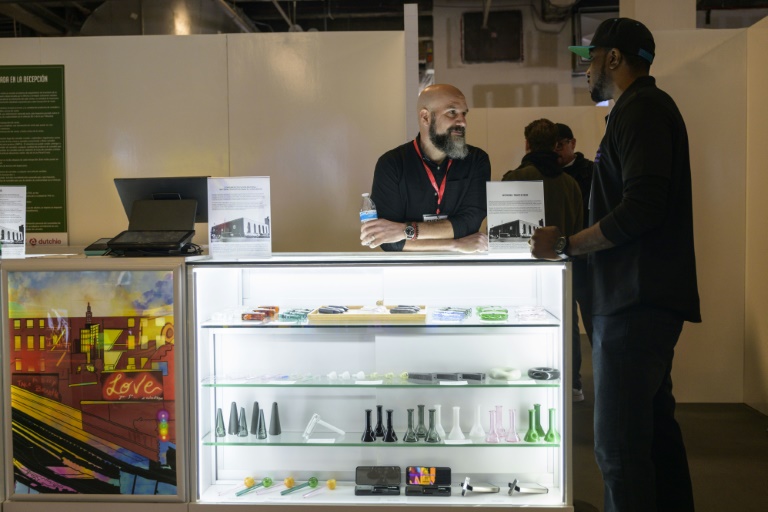
As New York state prepares to open its first legal cannabis stores, possibly before the end of the year, AFP details what you need to know about the new market.

– Offenders and non-profits –

Adult recreational use of cannabis is already legal in about 20 American states. In terms of social equity, New York’s policy goes further than most, according to observers.

The state plans to grant the first 150 licenses to people previously convicted for possession or sale of the drug, and associations who help such offenders.

The intention is to offer reparations of sorts to African-American and Hispanic communities whose members were disproportionately arrested and charged during the decades weed was illegal.

Some 900 applications have been filed and 28 permits issued to businesses. Eight associations have also received licenses.

What could be the first official store is backed by the Housing Works non-profit, which helps ex-prisoners, the homeless and people with HIV and AIDS.

– Deliveries and restrictions –

After the first 150 licenses are granted, the market will open up to all businesses, but with rules to reduce market dominance.

Specifically, a company that grows or processes cannabis will not be allowed to distribute the drug, and vice versa. Retailers will be allowed to deliver cannabis but will be restricted to 25 employees for that purpose.

As with alcohol, sales are allowed only to people over 21 years old. An adult can possess up to 85 grams of cannabis flower or 24 grams of concentrated cannabis, which is more potent. A store cannot sell someone more than this limit. 

Cannabis is theoretically still prohibited under US federal law, meaning it is illegal to possess it when crossing state lines or entering and leaving the country.

– Potency tax –

In addition to the taxes paid by the consumer at purchase, New York plans to tax vendors based on the plant’s psychoactive content. Higher tetrahydrocannabinol, or THC, means higher taxes.

Dan Livingston, executive director of the Cannabis Association of New York, fears this will lead to high prices and competition from illegal sellers. He also worries it will encourage vendors to sell stronger cannabis without properly labeling it as such.  

“The consumer could end up getting a lot more high than they really anticipated,” he said.

New York state promises to use tax revenues generated by cannabis sales for addiction prevention, education and grants to associations who help users.

In a 2018 report, it estimated the illegal market was worth $1.7 billion to $3.5 billion annually, equating to between $248 million and $677 million in potential annual taxes. 

– Legal challenge –

The granting of licenses has been slowed because of a legal challenge by a company whose application was rejected, mainly on the grounds that its majority owner was convicted of a cannabis-related offense in the state of Michigan.

A federal judge hearing the case has ordered that no licenses be issued in the five jurisdictions involved in the dispute, including Brooklyn, New York City’s most populous borough.

Close Bitnami banner
Bitnami