US Business

Beloved 'Hollywood Cat' mountain lion euthanized in Los Angeles

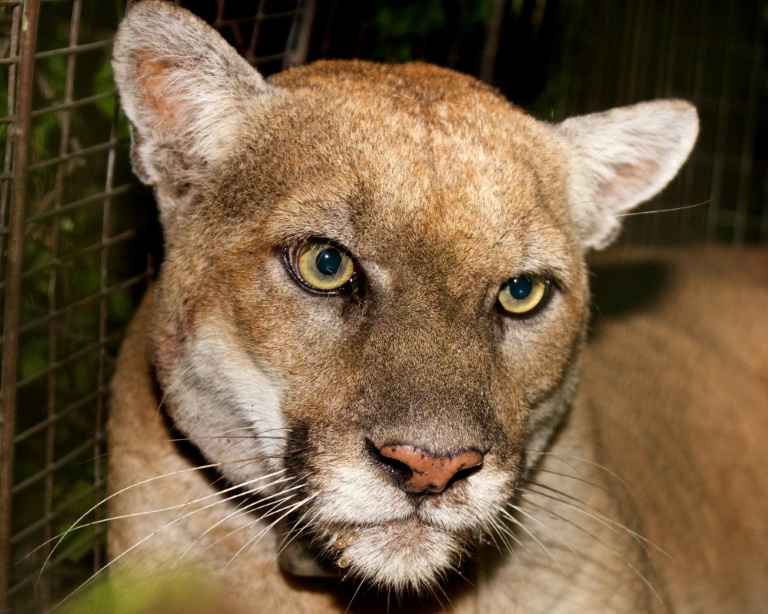
Los Angeles residents and animal lovers Sunday were mourning the death of the sprawling US city’s most famous feline, a wild mountain lion whose often erratic encounters with people prompted reflections about humanity’s connection with nature.

The beloved big cat, often sighted around the city’s Griffith Park, was euthanized Saturday, wildlife officials said.

For years, he was known to prowl around the hillside “Hollywood” sign visible around much of Los Angeles, a fitting setting for a celebrity.

It earned the nickname Hollywood Cat, but the mountain lion — estimated to be around 11 years old and described by at least one expert as “the Brad Pitt of the cougar world” — was officially named P-22.

State and federal wildlife officers decided earlier this month to capture it due to its volatile behavior, perhaps associated with being struck by a vehicle.

Veterinarians found “significant trauma” to its head, right eye and internal organs, California’s Department of Fish and Wildlife said in a statement.

The experts also found underlying health issues, including “irreversible kidney disease, chronic weight loss, extensive parasitic skin infection over his entire body and localized arthritis.”

“The most difficult, but compassionate choice was to respectfully minimize his suffering and stress by humanely ending his journey,” the statement said.

“Mountain lion P-22 has had an extraordinary life and captured the hearts of the people of Los Angeles and beyond.”

Mountain lions typically have a lifespan of up to 10 years in the wild, or up to 21 years in captivity, according to the National Wildlife Federation. 

Euthanizing the cougar was a punch to the gut for game experts who had grown to love the animal.

“This really hurts,” said Chuck Bonham, director of the Department of Fish and Wildlife, when he announced P-22’s death, according to USA Today.

“It’s been an incredibly difficult several days.”

– ‘Our favorite celebrity’ –

Congressman Adam Schiff, who represents part of Los Angeles County, said he was “heartbroken” at P-22’s passing.

“He was our favorite celebrity neighbor, occasional troublemaker, and beloved L.A. mascot,” Schiff tweeted.

“But most of all he was a magnificent, wild creature, who reminded us that we are part of a natural world much bigger than ourselves.”

California Governor Gavin Newsom praised P-22’s “incredible journey” in a statement.

“P-22’s survival on an island of wilderness in the heart of Los Angeles captivated people around the world,” Newsom said.

Griffith Park, where P-22 lived for perhaps a decade, is hemmed in by busy 10-lane freeways and urban sprawl. It is a nine-square-mile (23-square-kilometer) isolated patch of nature.

Experts marveled at how the wildcat got across either of two major Los Angeles freeways — the 405 and 101 — to get to Griffith Park as early as 2012.

Officials said they were not looking for the driver who struck the animal.

“This situation is not the fault of P-22, nor of a driver who may have hit him,” the California Department of Fish and Wildlife said.

“Rather, it is an eventuality that arises from habitat loss and fragmentation, and it underscores the need for thoughtful construction of wildlife crossings and well-planned spaces that provide wild animals room to roam.”

In a profile of P-22 done long before its death, the National Park Service lamented that Griffith Park is too small for a second cougar, and “it’s unlikely he will ever find love with a female lion.”

The cat’s renown was due to frequent sightings, video doorbell cameras and physical encounters.

Early on his mystique grew, particularly after wildlife photographer Steve Winter captured stunning images of the mountain lion prowling the brown hills above LA.

Beth Pratt, California director of the National Wildlife Federation, said she was one of the experts who comforted the cat before he was put down, and that knowing him was a “gift.”

“He changed us. He changed the way we look at LA,” Pratt wrote.

“And his influencer status extended around the world, as he inspired millions of people to see wildlife as their neighbors,” she added. “He made us more human, made us connect more to that wild place in ourselves.”
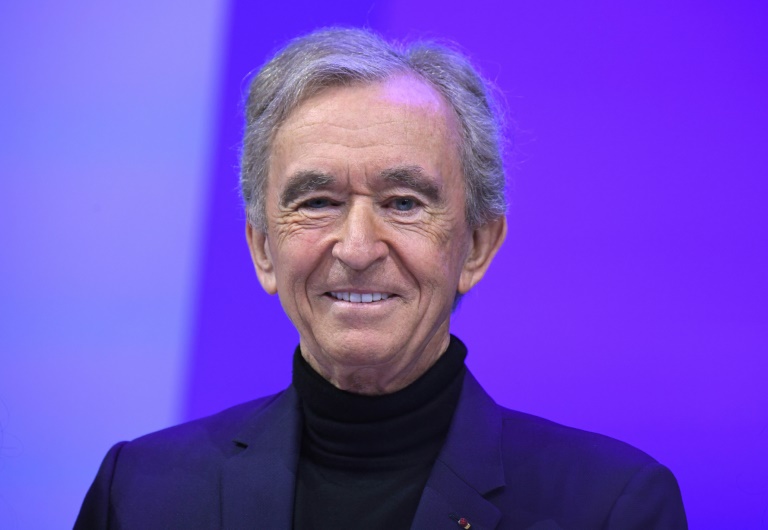

Bernard Arnault, emperor of luxury and world's top fortune

Bernard Arnault — who with his family now tops the wealth of Elon Musk — gradually built LVMH into a global luxury empire by buying up iconic brands, sealing his reputation as a formidable and insatiable businessman.

With $184 billion on Thursday, the 73-year-old Frenchman and his family moved to the top of Forbes’ billionaire list, knocking the Tesla, SpaceX and Twitter boss off the top spot.

LVMH — the world’s leading luxury group — boasts more than 75 brands, acquired over time.

They include some of the most recognisable names in fashion and prestige goods, from Louis Vuitton and Kenzo to Moet Hennessy and Tiffany.

“An essential quality in our family is patience,” Arnault acknowledged in a 2012 TV profile of him.

A decade later — by which time LVMH’s annual sales had more than doubled to over 64 billion euros ($68 billion) — he told France’s Radio Classique: “We can continue to progress — but let’s be patient. 

“No rush,” he said.

The businessman has also invested in the French media, a move he described during a Senate hearing in January 2022 as “more on the patronage side”.

During a hearing in the French Senate earlier this year Arnault said he had intervened to stop LVMH advertising in the Liberation newspaper, after it irked him with a front-page article.

– ‘Invest in something promising’ – 

Arnault was born in the northern French city of Roubaix on March 5, 1949 and joined his father’s public works building company at the age of 22.

He had just left the elite Ecole Polytechnique and convinced his father to transform the construction business into real-estate development instead.

In 1981, after socialist Francois Mitterrand was elected president, Arnault left France for the United States.

On his return three years later, he bought the debt-ridden textiles company Boussac, prevailing against several serious competitors with a promise to save jobs.

However, he embarked on a drastic reorganisation of the firm, only retaining some of its businesses, including the fashion house Christian Dior.

By then, Arnault was 35 years old.

“My father was surprised when I went to see him saying: ‘We’re going to redirect the family group and try to invest in something more promising, Christian Dior’,” the businessman recalled recently on Radio Classique.

It would be the foundation stone for his luxury empire.

LVMH was born out of the merger in 1987 of trunk-maker Louis Vuitton and the wines and spirits group Moet Hennessy.

Rivalry between the families owning the two companies aided Arnault’s ascendancy and he took control of the group in 1989 after no fewer than 17 legal proceedings.

“He’s a tough negotiator but unmatched, a visionary who knows how to surround himself with good people and who in the end always gets his way one way or another,” Arnaud Cadart, portfolio manager at financial services firm Flornoy, told AFP.

Arnault’s rise, however, has not been without some failures.

– Corporate criticisms – 

He lost Italian fashion and leather goods house Gucci to his French rival Francois Pinault, head of the PPR group, in 1999.

Arnault also tried in vain to take over Hermes, known for its silk scarves and leather handbags, by secretly building up a stake in the firm.

He rarely speaks publicly and does not like the limelight.

When the use of private jets by celebrities was being tracked on social media earlier this year, Arnault sold the LVMH jet.

“The upshot now is that no one else can know where I’m going because I lease planes,” he said on Radio Classique.

“It’s the French businessman’s lot to embody — sometimes in a totally unjustified way — the criticisms of the day since the mindset has for a few years now been a bit anti-corporate,” he lamented on France 2 in 2016.

That same year he was skewered in a satirical documentary entitled “Merci Patron!” (Thank you Boss!) by filmmaker and now politician Francois Ruffin, who often has Arnault in his crosshairs.

– Obama, Putin, Trump, Macron… –

Last year, LVMH paid a 10-million-euro fine to settle a case as part of a probe into spying.

Arnault abandoned his bid to secure Belgian nationality in 2013 issuing a mea culpa after it whipped up a storm of controversy which rumbled on for months amid public debate over the tax arrangements of the wealthy.

In 2011, he was received at the White House by president Barack Obama; Russian President Vladimir Putin welcomed him to Moscow five years later; former French president Francois Hollande cut the ribbon on his Louis Vuitton Foundation, while Donald Trump did the same for a Vuitton workshop in Texas.

And when the historic Samaritaine department store, owned by LVMH, reopened last year, French President Emmanuel Macron was a guest at the inauguration.

In Japan, China and the Middle East, the luxury mogul has access to top leaders.

Arnault has five children, all of whom work for LVMH, but shows little sign of slowing down — or handing over the reins just yet.

Every week he makes a point of touring all the group’s Paris-based companies.

At its last general meeting, the age limit for his role as LVMH chief executive was extended to 80 years old, ensuring the luxury conglomerate stays in family hands.

Married to a pianist and art lover, Arnault also created the Louis Vuitton Foundation, one of Paris’ most prestigious exhibition locations for contemporary art.

EU reaches deal on major carbon market reform

EU member states and parliamentarians on Sunday announced an agreement for a major reform to the bloc’s carbon market, the central plank of its ambitions to reduce emissions and invest in climate-friendly technologies.

The deal aims to accelerate emissions cuts, phase out free allowances to industries and targets fuel emissions from the building and road transport sectors, according to a European Parliament statement.

The EU Emissions Trading System (ETS) allows electricity producers and industries with high energy demands such as steel and cement to purchase “free allowances” to cover their carbon emissions under a “polluter pays” principle.

The quotas are designed to decrease over time to encourage them to emit less and invest in greener technologies as part of the European Union’s ultimate aim of achieving carbon neutrality.

Negotiators representing member states and the parliament had spent more than 24 hours in intense talks before reaching an agreement on Saturday night that widens the scope of the carbon market.

The deal means emissions in the ETS sectors are to be cut by 62 percent by 2030 based on 2005 levels, up from a previous goal of 43 percent. Concerned industries must cut their emissions by that amount.

The agreement also seeks to accelerate the timetable for phasing out the free allowances, with 48.5 percent phased out by 2030 and a complete removal by 2034, a schedule at the centre of fierce debates between MEPs and member states.

The carbon market will be progressively extended to the maritime sector and intra-European flights. Waste incineration sites will be included from 2028, depending on a favourable report by the commission.

Climate Action Network, a coalition of NGOs, criticised the agreement, saying it would allow major polluters to continue to receive billions of euros in free quotas for another decade while households would receive little.

– ‘Ambitious carbon price’ –

French MEP Pascal Canfin, president of the European Parliament’s environment committee, said the carbon price for industries affected by the ETS would be around 100 euros per tonne.

“No other continent has such an ambitious carbon price,” he tweeted.

A “carbon border tax”, which imposes environmental standards on imports into the bloc based on the carbon emissions linked to their production, will offset the reduction of free allowances and allow industries to compete with more polluting non-EU rivals.

The agreement also aims to make households pay for emissions linked to fuel and gas heating from 2027, but the price will be capped until 2030.

The European Commission had proposed a second carbon market targeting building heating and road fuels, but the plan raised concerns as households grapple with soaring energy prices exacerbated by Russia’s invasion of Ukraine.

The second carbon market would have obliged suppliers of fuel and gas to buy quotas to cover their emissions, but MEPs argued the measure should be limited to offices and large vehicles.

If energy prices continue to spiral, the application of this part of the agreement will be delayed by a year. 

Funds from this second market will go to a “Social Climate Fund” designed to help vulnerable households and businesses weather the energy price crisis.

– ‘Moment of truth’ –

“This deal will provide a huge contribution towards fighting climate change at low costs,” European Parliament rapporteur Peter Liese said in the statement.

“It will give breathing space for citizens and industry in difficult times and provide a clear signal to European industry that it pays off to invest in green technologies.”

The conservative German MEP added the bloc would have until 2026 to invest in green sources and energy efficiency, after which it would be “the moment of truth: we must reduce our emissions by then, or pay dear”.

The commission first proposed the carbon market reform in July 2021 as part of plans to reduce the bloc’s greenhouse gas emissions by at least 55 percent by 2030 compared with 1990 levels.

The ETS was created in 2005 and applies to around 40 percent of EU emissions.

Beloved 'Hollywood Cat' mountain lion euthanized in Los Angeles

Hollywood Cat is no longer.

The Los Angeles area’s most famous mountain lion, an aged wild male feline sighted around the city’s Griffith Park, was euthanized Saturday, wildlife officials said.

For years, it was known to prowl around the hillside “Hollywood” sign visible around much of Los Angeles, a fitting setting for a celebrity cat.

It earned the nickname Hollywood Cat, but the mountain lion — estimated to be around 11 years old — is officially called P-22.

State and federal wildlife officers decided earlier this month to capture it due to its erratic behavior, perhaps associated with being struck by a vehicle.

Veterinarians found “significant trauma” to its head, right eye and internal organs, California’s Department of Fish and Wildlife said in a statement.

The experts also found underlying health issues, including “irreversible kidney disease, chronic weight loss, extensive parasitic skin infection over his entire body and localized arthritis.”

“The most difficult, but compassionate choice was to respectfully minimize his suffering and stress by humanely ending his journey,” the statement said.

“Mountain lion P-22 has had an extraordinary life and captured the hearts of the people of Los Angeles and beyond.”

Euthanizing the cougar was a punch to the gut for game experts who had grown to love the animal.

“This really hurts,” said Chuck Bonham, director of the Department of Fish and Wildlife, when he announced P-22’s death, according to USA Today.

“It’s been an incredibly difficult several days.”

– ‘Our favorite celebrity’ –

Congressman Adam Schiff, who represents part of Los Angeles County, said he was “heartbroken” at P-22’s passing.

“He was our favorite celebrity neighbor, occasional troublemaker, and beloved L.A. mascot,” Schiff tweeted.

“But most of all he was a magnificent, wild creature, who reminded us that we are part of a natural world much bigger than ourselves.”

California Governor Gavin Newsom praised P-22’s “incredible journey” in a statement.

“P-22’s survival on an island of wilderness in the heart of Los Angeles captivated people around the world,” Newsom said.

Griffith Park, where P-22 lived for perhaps a decade, is hemmed in by freeways and urban sprawl. It is a nine-square-mile (23-square-kilometer) isolated patch of nature.

Experts marveled at how the wild cat got across either of two major Los Angeles freeways — the 405 and 101 — to get to Griffith Park as early as 2012.

Officials said they were not looking for the driver who hit it.

“This situation is not the fault of P-22, nor of a driver who may have hit him,” the California Department of Fish and Wildlife said.

“Rather, it is an eventuality that arises from habitat loss and fragmentation, and it underscores the need for thoughtful construction of wildlife crossings and well-planned spaces that provide wild animals room to roam.”

In a profile of P-22 done long before its death, the National Park Service lamented that Griffith Park is too small for a second cougar, and “it’s unlikely he will ever find love with a female lion.”

The cat’s renown was due to frequent sightings, video doorbell cameras and physical encounters.

A Facebook page in honor of the cougar has more than 20,000 followers.

Beloved 'Hollywood Cat' mountain lion euthanized in Los Angeles

Hollywood Cat is no longer.

The Los Angeles area’s most famous mountain lion, an aged wild male feline sighted around the city’s Griffith Park, was euthanized Saturday, wildlife officials said.

For years, it was known to prowl around the hillside “Hollywood” sign visible around much of Los Angeles, a fitting setting for a celebrity cat.

It earned the nickname Hollywood Cat, but the mountain lion — estimated to be around 11 years old — is officially called P-22.

State and federal wildlife officers decided earlier this month to capture it due to its erratic behavior, perhaps associated with being struck by a vehicle.

Veterinarians found “significant trauma” to its head, right eye and internal organs, California’s Department of Fish and Wildlife said in a statement.

The experts also found underlying health issues, including “irreversible kidney disease, chronic weight loss, extensive parasitic skin infection over his entire body and localized arthritis.”

“The most difficult, but compassionate choice was to respectfully minimize his suffering and stress by humanely ending his journey,” the statement said.

“Mountain lion P-22 has had an extraordinary life and captured the hearts of the people of Los Angeles and beyond.”

Euthanizing the cougar was a punch to the gut for game experts who had grown to love the animal.

“This really hurts,” said Chuck Bonham, director of the Department of Fish and Wildlife, when he announced P-22’s death, according to USA Today.

“It’s been an incredibly difficult several days.”

– ‘Our favorite celebrity’ –

Congressman Adam Schiff, who represents part of Los Angeles County, said he was “heartbroken” at P-22’s passing.

“He was our favorite celebrity neighbor, occasional troublemaker, and beloved L.A. mascot,” Schiff tweeted.

“But most of all he was a magnificent, wild creature, who reminded us that we are part of a natural world much bigger than ourselves.”

California Governor Gavin Newsom praised P-22’s “incredible journey” in a statement.

“P-22’s survival on an island of wilderness in the heart of Los Angeles captivated people around the world,” Newsom said.

Griffith Park, where P-22 lived for perhaps a decade, is hemmed in by freeways and urban sprawl. It is a nine-square-mile (23-square-kilometer) isolated patch of nature.

Experts marveled at how the wild cat got across either of two major Los Angeles freeways — the 405 and 101 — to get to Griffith Park as early as 2012.

Officials said they were not looking for the driver who hit it.

“This situation is not the fault of P-22, nor of a driver who may have hit him,” the California Department of Fish and Wildlife said.

“Rather, it is an eventuality that arises from habitat loss and fragmentation, and it underscores the need for thoughtful construction of wildlife crossings and well-planned spaces that provide wild animals room to roam.”

In a profile of P-22 done long before its death, the National Park Service lamented that Griffith Park is too small for a second cougar, and “it’s unlikely he will ever find love with a female lion.”

The cat’s renown was due to frequent sightings, video doorbell cameras and physical encounters.

A Facebook page in honor of the cougar has more than 20,000 followers.

Beloved 'Hollywood Cat' mountain lion euthanized in Los Angeles

Hollywood Cat is no longer.

The Los Angeles area’s most famous mountain lion, an aged wild male feline sighted around the city’s Griffith Park, was euthanized Saturday, wildlife officials said.

For years, it was known to prowl around the hillside “Hollywood” sign visible around much of Los Angeles, a fitting setting for a celebrity cat.

It earned the nickname Hollywood Cat, but the mountain lion — estimated to be around 11 years old — is officially called P-22.

State and federal wildlife officers decided earlier this month to capture it due to its erratic behavior, perhaps associated with being struck by a vehicle.

Veterinarians found “significant trauma” to its head, right eye and internal organs, California’s Department of Fish and Wildlife said in a statement.

The experts also found underlying health issues, including “irreversible kidney disease, chronic weight loss, extensive parasitic skin infection over his entire body and localized arthritis.”

“The most difficult, but compassionate choice was to respectfully minimize his suffering and stress by humanely ending his journey,” the statement said.

“Mountain lion P-22 has had an extraordinary life and captured the hearts of the people of Los Angeles and beyond.”

Euthanizing the cougar was a punch to the gut for game experts who had grown to love the animal.

“This really hurts,” said Chuck Bonham, director of the Department of Fish and Wildlife, when he announced P-22’s death, according to USA Today. 

“It’s been an incredibly difficult several days.”

California Governor Gavin Newsom praised P-22’s “incredible journey” in a statement.

“P-22’s survival on an island of wilderness in the heart of Los Angeles captivated people around the world,” Newsom said.

Griffith Park, where P-22 lived for perhaps a decade, is hemmed in by freeways and urban sprawl. It is a nine-square-mile (23-square-kilometer) isolated patch of nature.

Experts marveled at how the wild cat got across either of two major Los Angeles freeways — the 405 and 101 — to get to Griffith Park as early as 2012.

In a profile of P-22 done long before its death, the National Park Service lamented that Griffith Park is too small for a second cougar, and “it’s unlikely he will ever find love with a female lion.”  

The cat’s renown was due to frequent sightings, video doorbell cameras and physical encounters.

A Facebook page in honor of the cougar has over 20,000 followers.

Ukraine races to restore power after Russian missiles batter grid

Ukraine worked Saturday to restore electricity and water supplies after Russia’s latest wave of attacks pitched multiple cities into darkness and forced people to endure sub-zero temperatures without heating or running water.

The volley of missiles unleashed Friday came as President Vladimir Putin held extensive meetings with the military top brass overseeing Russia’s invasion of Ukraine, where Moscow has stepped up bombardments.

Ukrainian President Volodymyr Zelensky said late Saturday electricity had been restored to almost six million Ukrainians, but noted ongoing problems with heat and water supplies, and “large-scale outages” in many regions.

“The main thing today is energy,” he said in his nightly address. “There is still a lot of work to do to stabilise the system.”

In the capital Kyiv, the metro had stopped running so that people wrapped in winter coats could take shelter at underground stations, but Mayor Vitali Klitschko said Saturday the service had resumed. 

Water supply had also been restored and 75 percent of the city’s population had their heating supply back.

In the eastern city of Kharkiv, power had also been fully returned, regional governor Oleg Sinegubov said on Saturday, after the strikes had left Ukraine’s second city without electricity.

Ukraine’s national energy provider Ukrenergo had imposed emergency blackouts in response to the strikes, warning the extent of the damage in the north, south and centre of the country meant it could take longer to restore supplies than after previous attacks.

The country’s energy system “continues to recover”, it said on Saturday.

– ‘Barbaric’ attacks –

In Russia, Putin sought proposals from his military commanders on how to proceed with the Ukraine offensive, according to the Kremlin.

The Kremlin released footage Friday of Putin presiding over a round-table meeting with Defence Minister Sergei Shoigu and Chief of General Staff Valery Gerasimov among other top brass.

After a series of humiliating battlefield defeats, Russia has since October pursued an aerial campaign against what Moscow says are military-linked facilities.

But France and the European Union have said the suffering inflicted on freezing civilians constitutes war crimes, with the bloc’s foreign policy chief calling the bombings “barbaric”.

Russia’s defence ministry said Saturday the strikes had targeted Ukraine’s military and energy facilities, while also disrupting “the transfer of weapons and ammunition of foreign production”.

“All assigned targets were hit,” the ministry said in its daily briefing.

Russia fired 74 — mainly cruise — missiles Friday, 60 of which were shot down by anti-aircraft defences, according to the Ukrainian army.

Ukraine’s military command said in a statement Saturday: “The enemy continues to focus its efforts on conducting offensive actions in the Bakhmut and Avdiivka directions”, referring to two cities in the eastern Donetsk region.

Russian troops were also trying to regain lost ground around Lymanskyi, in the south, the statement added.

Zelensky said the strikes hit power and water supplies in Kyiv and 14 regions.

Regional officials said their air defence forces had shot down 37 out of 40 missiles.

In the central city of Kryvyi Rig, where Zelensky was born, Friday’s air strikes hit a residential building.

The missiles killed a 64-year-old woman and a young couple with a son, governor Valentyn Reznichenko said Saturday, wounding 13 others.

In the south, fresh Russian shelling in Kherson, recently recaptured by Ukraine, killed a 36-year-old man and injured a 70-year-old woman, governor Yaroslav Yanushevich said Saturday morning.

A separate strike hit a geriatric centre in the village of Stepanivka just north of Kherson, he added later, but there were no casualties reported.

Kherson has been subjected to persistent Russian shelling since Moscow’s forces retreated in November, and power was cut in the city earlier this week.

– Protracted war –

Moscow has said the strikes on Ukrainian infrastructure are a response to an explosion on the Kerch bridge connecting the Russian mainland to the Crimean peninsula, annexed from Ukraine in 2014.

Ukrainian defence officials said this week that their forces had downed over a dozen Iranian-made attack drones launched at Kyiv, a sign that Western-supplied systems are having an impact.

The country’s military leaders have also warned Moscow is preparing for a major winter offensive, including a fresh attempt to take Kyiv.

Russia meanwhile on Saturday accused Moldova of “political censorship” after it suspended the broadcasting licence of six television channels over accusations of misinformation.

Moldova — which sits on Ukraine’s southwestern border — said on Friday the decision was made because of the “lack of correct information” in their coverage of national events and Russia’s military campaign in Ukraine.

Moscow also responded to the EU’s decision Friday to impose further sanctions, adding restrictions on the export of drone engines to Russia or countries like Iran looking to supply Moscow with weapons.

The new package of “illegitimate unilateral restrictive measures” would not achieve its goal, Russia’s foreign ministry said Saturday.

Ukraine races to restore power after Russian missiles batter grid

Ukraine worked Saturday to restore electricity and water supplies after Russia’s latest wave of attacks pitched multiple cities into darkness and forced people to endure sub-zero temperatures without heating or running water.

The volley of missiles unleashed Friday came as President Vladimir Putin held extensive meetings with the military top brass overseeing Russia’s invasion of Ukraine, where Moscow has stepped up bombardments.

Ukrainian President Volodymyr Zelensky said late Saturday electricity had been restored to almost six million Ukrainians, but noted ongoing problems with heat and water supplies, and “large-scale outages” in many regions.

“The main thing today is energy,” he said in his nightly address. “There is still a lot of work to do to stabilise the system.”

In the capital Kyiv, the metro had stopped running so that people wrapped in winter coats could take shelter at underground stations, but Mayor Vitali Klitschko said Saturday the service had resumed. 

Water supply had also been restored and 75 percent of the city’s population had their heating supply back.

In the eastern city of Kharkiv, power had also been fully returned, regional governor Oleg Sinegubov said on Saturday, after the strikes had left Ukraine’s second city without electricity.

Ukraine’s national energy provider Ukrenergo had imposed emergency blackouts in response to the strikes, warning the extent of the damage in the north, south and centre of the country meant it could take longer to restore supplies than after previous attacks.

The country’s energy system “continues to recover”, it said on Saturday.

– ‘Barbaric’ attacks –

In Russia, Putin sought proposals from his military commanders on how to proceed with the Ukraine offensive, according to the Kremlin.

The Kremlin released footage Friday of Putin presiding over a round-table meeting with Defence Minister Sergei Shoigu and Chief of General Staff Valery Gerasimov among other top brass.

After a series of humiliating battlefield defeats, Russia has since October pursued an aerial campaign against what Moscow says are military-linked facilities.

But France and the European Union have said the suffering inflicted on freezing civilians constitutes war crimes, with the bloc’s foreign policy chief calling the bombings “barbaric”.

Russia’s defence ministry said Saturday the strikes had targeted Ukraine’s military and energy facilities, while also disrupting “the transfer of weapons and ammunition of foreign production”.

“All assigned targets were hit,” the ministry said in its daily briefing.

Russia fired 74 — mainly cruise — missiles Friday, 60 of which were shot down by anti-aircraft defences, according to the Ukrainian army.

Ukraine’s military command said in a statement Saturday: “The enemy continues to focus its efforts on conducting offensive actions in the Bakhmut and Avdiivka directions”, referring to two cities in the eastern Donetsk region.

Russian troops were also trying to regain lost ground around Lymanskyi, in the south, the statement added.

Zelensky said the strikes hit power and water supplies in Kyiv and 14 regions.

Regional officials said their air defence forces had shot down 37 out of 40 missiles.

In the central city of Kryvyi Rig, where Zelensky was born, Friday’s air strikes hit a residential building.

The missiles killed a 64-year-old woman and a young couple with a son, governor Valentyn Reznichenko said Saturday, wounding 13 others.

In the south, fresh Russian shelling in Kherson, recently recaptured by Ukraine, killed a 36-year-old man and injured a 70-year-old woman, governor Yaroslav Yanushevich said Saturday morning.

A separate strike hit a geriatric centre in the village of Stepanivka just north of Kherson, he added later, but there were no casualties reported.

Kherson has been subjected to persistent Russian shelling since Moscow’s forces retreated in November, and power was cut in the city earlier this week.

– Protracted war –

Moscow has said the strikes on Ukrainian infrastructure are a response to an explosion on the Kerch bridge connecting the Russian mainland to the Crimean peninsula, annexed from Ukraine in 2014.

Ukrainian defence officials said this week that their forces had downed over a dozen Iranian-made attack drones launched at Kyiv, a sign that Western-supplied systems are having an impact.

The country’s military leaders have also warned Moscow is preparing for a major winter offensive, including a fresh attempt to take Kyiv.

Russia meanwhile on Saturday accused Moldova of “political censorship” after it suspended the broadcasting licence of six television channels over accusations of misinformation.

Moldova — which sits on Ukraine’s southwestern border — said on Friday the decision was made because of the “lack of correct information” in their coverage of national events and Russia’s military campaign in Ukraine.

Moscow also responded to the EU’s decision Friday to impose further sanctions, adding restrictions on the export of drone engines to Russia or countries like Iran looking to supply Moscow with weapons.

The new package of “illegitimate unilateral restrictive measures” would not achieve its goal, Russia’s foreign ministry said Saturday.

Key points from the Capitol Hill assault investigation

After a year and a half of hearings and more than 1,000 depositions, the committee that investigated Donald Trump’s responsibility in the early 2021 attack on the US Capitol delivers its findings on Monday.

At a public hearing at 1 pm (18:00 GMT), the elected members of the House January 6 committee will present the eight chapters of its long investigation and will vote to recommend prosecution.  

Here are some of the main elements of the investigation. 

– ‘An attempted coup’ – 

The commission, comprising seven Democrats and two Republicans, was tasked with shedding light on the former president’s actions before and during January 6, 2021, the day that shook the pillars of American democracy.

The probe attempted to show that  Trump’s rejection of the November 2020 presidential election results was not simply a tantrum of a sore loser but a core part of a careful strategy to defy the constitution and retain power. 

Trump was “at the center” of “an attempted coup,” the head of the committee, Representative Bennie Thompson said of the events on January 6, 2021.

– Pressure on the vice president –

In a series of high-profile hearings, the committee provided evidence that it was impossible for Trump not to know that he had lost the election to Joe Biden.

His “voter fraud” theories did not convince several members of his inner circle, including a series of advisers, his attorney general and even his own daughter Ivanka, who spoke in on-camera testimony.

In an attempt to invalidate the presidential election, Trump pressured election officials, particularly in Georgia and Arizona. The commission revealed the extent of this intimidation, inviting several of them to testify in person. 

The Republican then called on his vice president, Mike Pence, to block the January 6, 2021, certification by Congress of his rival Joe Biden’s victory.

“What the former president was willing to sacrifice — potentially the vice president — in order to stay in power is pretty jarring,” Democratic panel member Pete Aguilar said at one of the hearings.  

– Passivity on January 6 –

Trump summoned his supporters to come to Washington on January 6, calling on them to “fight like hell.”

In the crowd gathered a short distance from the White House, Trump knew that some of the protesters were armed and potentially dangerous, former White House aide Cassidy Hutchinson told a hearing in June.

Trump nevertheless sought to join the throng on its way to Congress, attempting to grab the wheel of the presidential SUV from a Secret Service agent, according to Hutchinson’s explosive testimony.

He then spent three hours watching television images of the unfolding violence on Capitol Hill without intervening.

The members of the committee deemed that he had, at the very least, engaged in “complete dereliction of duty” as commander in chief. 

– Recommending charges –

The committee will conduct its final public hearing Monday, in which it will recommend charges over the insurrection, and issue its final report on Wednesday.  

Several legal experts said Trump could be criminally prosecuted  for “obstructing an official government proceeding” or on a broader charge of “conspiracy to defraud” the government by disrupting the functioning of institutions.

The decision to press charges will ultimately rest with Attorney General Merrick Garland, who in mid-November appointed a special prosecutor to independently investigate Trump.

The commission may also make legislative recommendations to protect the process of certifying election results so that the events of January 6, 2021, can never happen again.

Key things to know about legal cannabis in New York

As New York state prepares to open its first legal cannabis stores, possibly before the end of the year, AFP details what you need to know about the new market.

– Offenders and non-profits –

Adult recreational use of Cannabis is already legal in about 20 American states. In terms of social equity, New York’s policy goes further than most, according to observers.

The state plans to grant the first 150 licenses to people previously convicted for possession or sale of the drug, and associations who help such offenders.

The intention is to offer reparations of sorts to African-American and Hispanic communities who were disproportionately arrested and charged during the decades weed was illegal.

Some 900 applications have been filed and 28 permits issued to businesses. Eight associations have also received licenses.

What could be the first official store is backed by the Housing Works non-profit, which helps ex-prisoners, the homeless and people with HIV and AIDS.

– Deliveries and restrictions –

After the first 150 licenses are granted, the market will open up to all businesses but with rules to reduce market dominance.

Specifically, a company that grows or processes cannabis will not be allowed to distribute the drug and vice versa. Retailers will be allowed to deliver cannabis but will be restricted to 25 employees for that purpose.

As with alcohol, sales are only allowed to people over 21 years old. An adult can possess up to 85 grams of cannabis flower or 24 grams of concentrated cannabis, which is more potent. A store cannot sell someone more than this limit. 

Cannabis is theoretically still prohibited under US federal law, meaning it is illegal to possess it when crossing state lines or entering and leaving the country.

– Potency tax –

In addition to the taxes paid by the consumer at purchase, New York plans to tax vendors based on the plant’s psychoactive content. Higher tetrahydrocannabinol, or THC, means higher taxes.

Dan Livingston, director of the Cannabis Association of New York, fears this will lead to high prices and competition from illegal sellers. He also worries it will encourage vendors to sell stronger cannabis.  

“The consumer could end up getting a lot more high than they really anticipated,” he said.

New York state promises to use tax revenues generated by the sale of cannabis for addiction prevention, education and grants to associations who help users.

In a 2018 report, it estimated the illegal market was worth between $1.7 billion and $3.5 billion annually, equating to between $248 million and $677 million in potential annual taxes. 

– Legal challenge –

The granting of licenses has been slowed down because of a legal challenge by a company whose application was rejected, mainly on the grounds that its majority owner was convicted of a cannabis-related offense in the state of Michigan and not in New York.

A federal judge hearing the case has ordered that no licenses be issued in the five jurisdictions involved in the dispute, including Brooklyn, New York City’s most populous borough.

Close Bitnami banner
Bitnami