US Business

Asian markets drop as traders brace for Fed hike

Asia stocks fell Tuesday as markets braced for a sharp US interest rate hike and similar moves by other central banks as they struggle to control inflation, with traders increasingly worried about another possible recession.

Surging prices, moves to tighten monetary policy, China’s Covid lockdowns, the Ukraine war and a stronger dollar have come together in recent weeks to cause a massive headache for investors, sending them running to the hills.

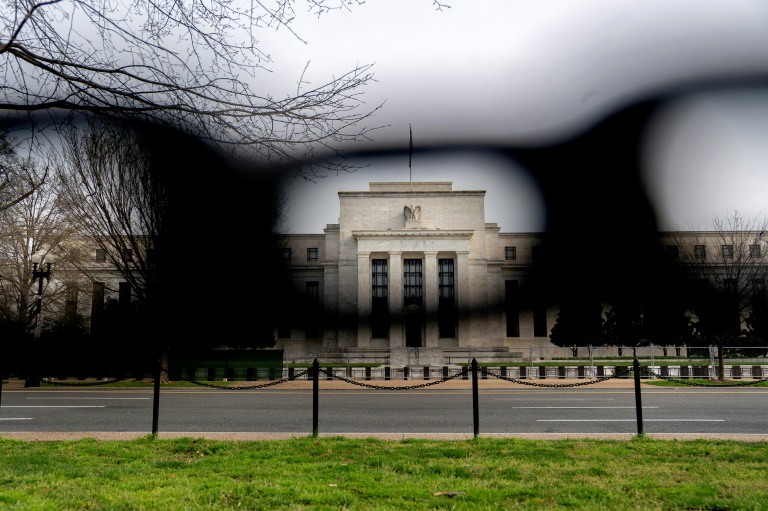
All eyes are on the conclusion Wednesday of the US Federal Reserve’s two-day policy meeting, where it is expected to lift borrowing costs 0.5 percentage points for the first time since 2000.

However, while officials see a hawkish move as necessary to control 40-year high inflation while still allowing for economic growth, there is a growing unease that they could knock the fragile pandemic recovery off course and even cause a recession.

Meanwhile, the policy board is also expected to discuss offloading the trillions of dollars worth of bonds bought to help keep prices subdued in the past, a move known as quantitative easing.

“With a 50 basis point hike… all but certain, the (post meeting) press conference will provide important colour around the prospects of a soft landing, the neutral fed funds rate and balance sheet normalisation,” said SPI Asset Management’s Stephen Innes.

“One question on everyone’s mind: Are 75 basis point increments on the table?”

Forecasts for a swift run-up in rates this year have hammered tech firms who are reliant on debt to fund growth, though dip-buying helped them record a much-needed gain Monday in New York.

– Australia rate hike –

Asian traders were unable to track the positive lead with liquidity thinned by public holidays around the region.

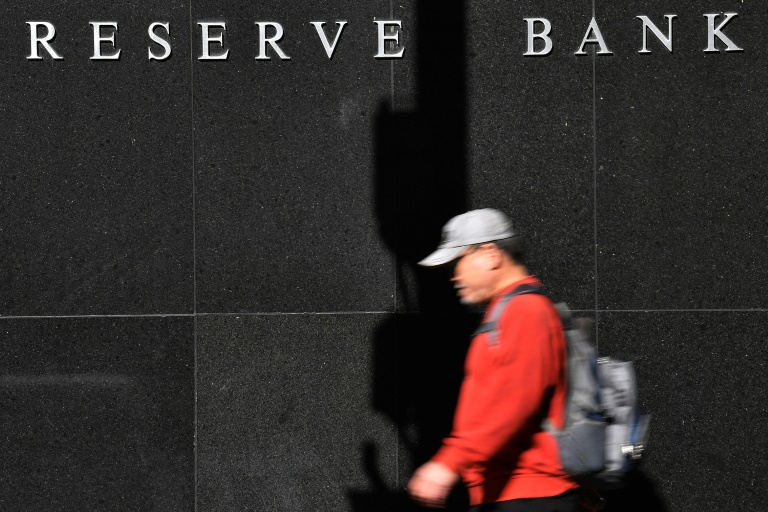
Sydney fell after the Reserve Bank of Australia lifted interest rates 25 basis points, the first hike since 2010 and more than the 15 points expected. Officials also indicated further increases were in the pipeline.

The move sent the Australian dollar briefly rallying more than one percent against the greenback before settling back slightly.

Shares in Seoul, Taipei, Bangkok and Wellington were also down, while London was on the back foot in early trade. Frankfurt and Paris edged up.

Tokyo, Shanghai, Mumbai, Singapore and Jakarta were closed for holidays.

Hong Kong returned from a long weekend break to shed more than two percent in early exchanges before reversing the losses to extend a more than four percent surge Friday.

Alibaba was a key support in the bounce as it recovered from an initial drop of more than nine percent in reaction to a report by Chinese state broadcaster CCTV that officials in Hangzhou, where the firm is based, had imposed curbs on an individual surnamed Ma — raising worries about founder Jack Ma.

The losses were soon erased, however, after police indicated the accused person’s name was spelled with three Chinese characters. Jack Ma’s Chinese name is Ma Yun.

Investors were also reeling from a sharp slowdown in Chinese activity caused by lockdowns in key parts of the country including financial hub Shanghai, and strict containment in Beijing.

The measures, and Chinese leaders’ refusal to shift from their zero-Covid policy, have hamstrung the world’s number two economy and figures in other countries including the United States suggest they are now having a global impact.

The strife in China weighed on oil prices owing to fears about the impact on demand from the biggest crude importer.

Oil prices edged up as European Union chiefs discuss a possible embargo on shipments from Russia linked to its invasion of Ukraine.

A sanctions plan is being put together by the European Commission that could be put to member states Wednesday, sources said, adding that the ban would be introduced over six to eight months to give countries time to diversify their supply.

– Key figures at around 0810 GMT –

Hong Kong – Hang Seng Index: UP 0.1 percent at 21,101.89 (close)

London – FTSE 100: DOWN 0.1 percent at 7,538.33

Tokyo – Nikkei 225: Closed for a holiday

Shanghai – Composite: Closed for a holiday

Euro/dollar: UP at $1.0522 from $1.0506 on Monday

Pound/dollar: UP at $1.2552 from $1.2489

Euro/pound: DOWN at 83.84 pence from 84.09 pence

Dollar/yen: DOWN at 130.15 yen from 130.16 yen

West Texas Intermediate: DOWN 0.5 percent at $104.66 per barrel

Brent North Sea crude: DOWN 0.6 percent at $106.92 per barrel

New York – Dow: UP 0.3 percent at 33,061.50 (close)
Asian markets drop as traders brace for Fed hike

Asia stocks fell Tuesday as markets braced for a sharp US interest rate hike and similar moves by other central banks as they struggle to control inflation, with traders increasingly worried about another possible recession.

Surging prices, moves to tighten monetary policy, China’s Covid lockdowns, the Ukraine war and a stronger dollar have come together in recent weeks to cause a massive headache for investors, sending them running to the hills.

All eyes are on the conclusion Wednesday of the US Federal Reserve’s two-day policy meeting, where it is expected to lift borrowing costs 0.5 percentage points for the first time since 2000.

However, while officials see a hawkish move as necessary to control 40-year high inflation while still allowing for economic growth, there is a growing unease that they could knock the fragile pandemic recovery off course and even cause a recession.

Meanwhile, the policy board is also expected to discuss offloading the trillions of dollars worth of bonds bought to help keep prices subdued in the past, a move known as quantitative easing.

“With a 50 basis point hike… all but certain, the (post meeting) press conference will provide important colour around the prospects of a soft landing, the neutral fed funds rate and balance sheet normalisation,” said SPI Asset Management’s Stephen Innes.

“One question on everyone’s mind: Are 75 basis point increments on the table?”

Forecasts for a swift run-up in rates this year have hammered tech firms who are reliant on debt to fund growth, though dip-buying helped them record a much-needed gain Monday in New York.

– Australia rate hike –

Asian traders were unable to track the positive lead with liquidity thinned by public holidays around the region.

Hong Kong returned from a long weekend break to shed more than two percent in early exchanges before paring these losses following a more than four percent surge Friday.

Alibaba was a key support in the bounce as it recovered from an initial drop of more than nine percent in reaction to a report by state broadcaster CCTV that officials in Hangzhou, where the firm is based, had imposed curbs on an individual surnamed Ma — raising worries about founder Jack Ma.

The losses were soon erased, however, after police indicated the accused person’s name was spelled with three Chinese characters. Jack Ma’s Chinese name is Ma Yun.

Sydney fell after the Reserve Bank of Australia lifted interest rates 25 basis points, the first hike since 2010 and more than the 15 points expected. Officials also indicated further increases were in the pipeline.

The move sent the Australian dollar briefly rallying more than one percent against the greenback before settling back slightly.

Shares in Seoul, Taipei, Bangkok and Wellington were also down, while London opened on the back foot. Frankfurt and Paris edged up.

Tokyo, Shanghai, Mumbai, Singapore and Jakarta were closed for holidays.

Investors were also reeling from a sharp slowdown in Chinese activity caused by lockdowns in key parts of the country including financial hub Shanghai, and strict containment in Beijing.

The measures, and Chinese leaders’ refusal to shift from their zero-Covid policy, have hamstrung the world’s number two economy and figures in other countries including the United States suggest they are now having a global impact.

The strife in China weighed on oil prices owing to fears about the impact on demand from the biggest crude importer.

Oil prices edged up as European Union chiefs discuss a possible embargo on shipments from Russia linked to its invasion of Ukraine.

A sanctions plan is being put together by the European Commission that could be put to member states Wednesday, sources said, adding that the ban would be introduced over six to eight months to give countries time to diversify their supply.

– Key figures at around 0720 GMT –

Hong Kong – Hang Seng Index: DOWN 0.1 percent at 21,066.10

London – FTSE 100: DOWN 0.8 percent at 7,481.02

Tokyo – Nikkei 225: Closed for a holiday

Shanghai – Composite: Closed for a holiday

Euro/dollar: DOWN at $1.0502 from $1.0506 on Monday

Pound/dollar: UP at $1.2518 from $1.2489

Euro/pound: DOWN at 83.84 pence from 84.09 pence

Dollar/yen: DOWN at 130.15 yen from 130.16 yen

West Texas Intermediate: DOWN 0.5 percent at $104.69 per barrel

Brent North Sea crude: DOWN 0.5 percent at $107.08 per barrel

New York – Dow: UP 0.3 percent at 33,061.50 (close)

Australia hikes interest rates for first time since 2010

Australia’s central bank raised interest rates for the first time in more than a decade on Tuesday, a pre-election hike designed to tame soaring consumer prices.

The Reserve Bank of Australia raised the main lending rate by 25 basis points to 0.35 percent, the first increase since November 2010. 

Ending record-low rates, the bank said inflation had “picked up significantly and by more than expected” while signalling that “further increases in interest rates” would come.

The move plunged the bank into the centre of a fierce political debate about the health of Australia’s economy, just weeks before a May 21 election. 

Prime Minister Scott Morrison, who is trailing in the polls, said he sympathised with mortgage borrowers who would now face rising costs.

But he insisted Australia is faring better than its peers and that rising inflation is a result of worldwide trends.

Like consumers around the world, Australians have been hit by soaring prices for food and fuel. Australia’s annual inflation rate is currently at 5.1 percent. 

But house prices have been rising for years even as wages have stagnated. Sydney and Melbourne are among the most expensive cities in the world to live. 

Morrison pointed to the impact of supply chain constraints caused by the pandemic and a war in Ukraine that has caused “the single largest energy shock we’ve seen around the world since the 1970s.”

The opposition Labor party painted the rate rise as evidence of a weakening economy and the conservative government’s economic maladministration.

“If only you could pay your mortgage with Scott Morrison’s excuses,” said opposition economic spokesman Jim Chalmers.

The rate rise is expected to be the first of several, which could have serious implications for Australia’s once-perennially growing economy.

Higher interest rates will spell higher borrowing costs for millions of already heavily indebted Australians, in a country where real estate market speculation is something like a national pastime.

Interest rates of two percent would cost the average homeowner about US$362 a month, according to financial services website RateCity.com.au.

“That’s going to be a lot for many borrowers to swallow, particularly anyone already struggling to make the monthly budget add up,” said RateCity’s Sally Tindall.

Australia’s vast resource wealth has for decades provided insulation from global financial headwinds and underpinned high standards of living.

The country is among the world’s largest producers and exporters of iron ore, gas and coal.

But there are growing concerns that the “lucky country’s” run of good fortune may be coming to an end. 

In early 2020 the economy fell into recession for the first time in almost three decades, largely because of devastating bushfires and the start of the Covid-19 pandemic. 

Climate-fuelled floods, bushfires and droughts are proving increasingly costly.

This year’s east coast floods cost an estimated Aus$3.35 billion (US$2.4 billion) in insured losses, making it the costliest flood in Australia’s history, according to the Insurance Council of Australia.

BP plunges into $20.4-bn loss on Russia exit

British energy giant BP on Tuesday plunged into a huge net loss in the first quarter after it decided to exit Russia over the country’s invasion of neighbour Ukraine.

The loss after tax stood at $20.4 billion (19.4 billion euros) following BP’s decision in February to pull its 19.75-percent stake in energy group Rosneft, ending more than three decades of investment in Russia.

BP had posted a net profit of $4.7 billion in the first quarter of 2021.

“Our decision… to exit our shareholding in Rosneft resulted in the material non-cash charges and headline loss,” BP chief executive Bernard Looney said in a statement.

The group booked a pre-tax charge of $25.5 billion owing to its break with Rosneft.

That wiped out the benefit of surging energy prices, which have been fuelled by fears of tight supplies following the invasion by major oil and gas producer Russia.

BP revenue jumped 40 percent to $51 billion in the first quarter from a year earlier.

“In a quarter dominated by the tragic events in Ukraine and volatility in energy markets, BP’s focus has been on supplying the reliable energy our customers need,” Looney said. 

The European Commission will on Tuesday propose to member states a new package of sanctions to punish President Vladimir Putin’s Kremlin for its invasion of Ukraine, including an embargo on Russian oil, officials said.

It comes after the EU on Monday warned member states to prepare for a possible complete breakdown in gas supplies from Russia, insisting it would not cede to Moscow’s demand that imports be paid for in rubles.

Australia hikes interest rates for first time since 2010

Australia’s central bank raised interest rates for the first time in more than a decade on Tuesday, a pre-election hike designed to curb soaring consumer prices.

The Reserve Bank of Australia raised the main lending rate by 25 basis points to 0.35 percent, the first increase since November 2010. 

Ending record-low rates, the bank cited inflation levels that had “picked up more quickly, and to a higher level, than was expected”. 

The move thrusts the bank to the centre of a fierce political debate about the health of Australia’s economy just weeks before the May 21 elections. 

The opposition Labor party has seized on the prospect of a rate rise as evidence of a weakening economy and the conservative government’s economic maladministration.

Prime Minister Scott Morrison, who is trailing in the polls, has insisted inflation is a result of worldwide trends, including the war in Ukraine. 

The annual inflation rate is currently at 5.1 percent. 

Like consumers around the world, Australians have been hit by soaring prices for food and fuels. 

But house prices have been rising for years even as wages have stagnated. Sydney and Melbourne are among the world’s most expensive cities in the world to live. 

The rate rise is expected to be the first of several, which could have serious implications for Australia’s once-perennially growing economy.

Higher interest rates will spell higher borrowing costs for millions of already heavily indebted Australians, in a country where real estate market speculation at times appears to be a national pastime.

Interest rates of two percent would cost the average homeowner about US$362 a month, according to financial services website RateCity.com.au. 

“That’s going to be a lot for many borrowers to swallow, particularly anyone already struggling to make the monthly budget add up,” said RateCity’s Sally Tindall.

Australia’s vast resource wealth has for decades provided insulation from global financial headwinds and underpinned high standards of living.

The country is among the world’s largest producers and exporters of iron ore, gas and coal. 

But there are growing concerns that the “lucky country’s” run of good fortune may be coming to an end. 

In early 2020 the economy fell into recession for the first time in almost three decades, largely because of devastating bushfires and the start of the Covid-19 pandemic. 

Climate-fuelled floods, bushfires and droughts are proving increasingly costly.

This year’s east coast floods cost an estimated Aus$3.35 billion (US$2.4 billion) in insured losses, making it the costliest flood in Australia’s history, according to the Insurance Council of Australia.

Floods, fires drive Australian home insurance 'crisis'

Fiercer floods, winds and bushfires whipped up by warmer temperatures mean more than half a million homes in Australia will cost too much to insure by 2030, according to an analysis by a climate advocacy group published Tuesday.

The Climate Council non-profit group issued the report after storms and floods battered Australia’s east coast in February-March this year, and following the 2019-20  “Black Summer” bushfires that killed 33 people as well as an estimated tens of millions of wild animals.

“Climate change is creating an insurability crisis in Australia due to worsening extreme weather and sky-rocketing insurance premiums,” the report said.

By 2030, about 520,940 properties — or about one in 25 of the national total — would suffer projected annual damage equal to one percent of the entire replacement cost, it said, making insurance policies effectively too pricey to afford.

“It’s striking how the number of affected properties grows under higher emissions scenarios,” said Karl Mallon, chief executive of Climate Valuation, which conducted the analytical work based on property, geographical, extreme weather and climate data for every address in Australia.

“Reducing emissions would potentially save thousands of homes from worsening damage,” he said.

The Climate Council analysis echoes similar warnings by Australia’s insurance industry, which has called for federal and state governments to invest more heavily in stronger homes and protection, such as flood levees, against extreme weather events. 

– ‘Big decisions’ –

This year’s east coast floods cost an estimated 3.35 billion Australian dollars (US$2.4 billion) in insured losses, making it the costliest flood in the country’s history, the Insurance Council of Australia said on Tuesday.

“The string of extreme weather, particularly in the last decade, has made us very much at the top of the list when it comes to costly payouts,” Insurance Council of Australia chief executive Andrew Hall told AFP.

A 2015 study estimated that about two percent of Australia’s housing stock was at risk of constant flooding and 15 percent was at risk of occasional flooding, he said.

During this year’s east coast floods, which claimed at least 21 lives, the northeastern New South Wales town of Lismore was among the worst hit.

Record 14.3-metre (47-foot) floodwaters engulfed homes, swept away cars and stranded locals on the roofs of their homes awaiting rescue by boat or helicopter.

This week, Lismore City Council released a “discussion paper”, calling for feedback to a series of proposals to rebuild after the floods left thousands of people homeless and damaged many businesses.

It proposed a “retreat” from the highest flood-risk areas of the city, saying it would call on the state and federal governments to pay for a land swap allowing residents to abandon their land and move to higher ground.

“With rising temperatures predicted to significantly increase the likelihood of more frequent and heavier rain events leading to more frequent and severe flooding, Lismore is facing some big decisions about rebuilding and future growth,” the council said in a statement.

EU readies for end of Russia gas, warns won't pay in rubles

The European Union warned member states Monday to prepare for a possible complete breakdown in gas supplies from Russia, insisting it would not cede to Moscow’s demand that imports be paid for in rubles.

The European Commission will on Tuesday propose to member states a new package of sanctions to punish President Vladimir Putin’s Kremlin for its invasion of Ukraine, including an embargo on Russian oil, officials said.

But energy and environment ministers meeting in Brussels on Monday addressed the larger and potentially more complicated issue of Russia’s natural gas, upon which several countries — including EU top economy Germany — depend for much of their power generation.

Moscow has demanded clients from “unfriendly countries” — including EU member states — pay for gas in rubles, a way to sidestep Western financial sanctions against its central bank. It has cut off Bulgaria and Poland after their firms refused to comply.

After the talks, the French chair of the meeting, ecological transition minister Barbara Pompili, and the European commissioner for energy, Kadri Simson, said the 27 member states were united with Poland and Bulgaria and would stockpile gas to be prepare for a breakdown.

Simson said that “following the full procedure as set out by Russia constitutes a breach of sanctions” imposed by the European Union.

She said that, to her knowledge, no European company was preparing to follow Putin’s decree and change its payment methods.

– ‘Tricky’ problem –

But several countries are to renew supply contracts at the end of May, and reports suggest some could seek to work around the sanctions by following the method put forward by Moscow.

This would entail a firm opening two accounts in Russian state energy giant Gazprom’s bank. Payments would be deposited in one account in euros or dollars, then be passed through the sanctioned Russian central bank, before arriving in the second account in rubles.

Kadri and some ministers seemed to say that this would still constitute a sanctions breach. But other member states demanded further clarification from the European Commission’s experts.

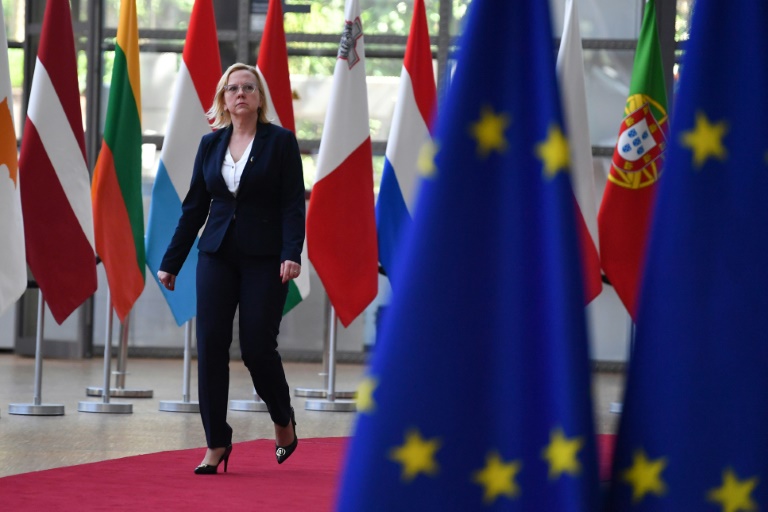
“What has happened today is that the European Commission and the presidency have confirmed that paying in rubles is unacceptable, that it is a breach of sanctions and a breach of European solidarity,” Poland’s environment minister Anna Moskwa said.

“Many countries, including the Baltic states, Denmark, the Netherlands and Finland, have today reaffirmed solidarity and that they will certainly not pay in rubles,” she said.

But Sweden’s Khashayar Farmanbar, minister for energy and digital development, said: “I think the clarification is still ongoing … it is a complex process.” 

“I mean, paying with one currency is one thing, but if that involves another country’s central bank, then it becomes part of a different part of the package, and that is going to be a bit tricky.”

The Czech minister of industry and trade, Jozef Sikela, said he had asked for a “clear explanation of how to proceed”.

During the meeting, European officials were forced to deal with media reports that Italy wants to continue to pay in rubles until there is a legal alternative.

Kadri said she had spoken to Italian minister Roberto Cingolani, who did not attend the meeting, and that the report was “misleading” — but she promised to provide him and all EU capitals with clearer guidance on resisting Putin’s ultimatum.

She added that Russia’s actions showed “they are not reliable suppliers and that means that all the member states have to have plans in place for full disruption”.

– Phased-out oil –

Germany’s minister for economic affairs and climate Robert Habeck said Berlin would follow EU policy but also suggested the dual Gazprombank accounts plan could be “a face-saving solution for Putin”. 

On Tuesday, the EU will propose a phased-out ban on imports of Russian oil — but not gas. 

The commission will propose a tapered ban over six to eight months, to give time to diversify supply. One senior official said there could be opt-outs for the most dependent countries, like Hungary. 

The sixth package of anti-Russian measures will also target the country’s largest bank, Sberbank, which will be excluded from the global banking communications system SWIFT, diplomats said. 

On Monday, the EU’s top diplomat, Josep Borrell, said the new sanctions package would result in “more Russian banks that will leave SWIFT” during a visit to Panama. 

Japan's 'womenomics' pioneer says mindsets must change

Three million women joined Japan’s workforce in the past decade, and it’s at least partly thanks to top executive Kathy Matsui, who coined the “womenomics” catchphrase that inspired government policy.

But with many women holding precarious part-time jobs, often in sectors hit hard by Covid-19, she says the world’s third largest economy must try harder to tap underused talent.

That means chipping away at managers’ sexist attitudes and challenging Japan’s long-hours work culture, as well as encouraging start-ups with “more diverse founders”.

“We have a very low ratio of female entrepreneurs in this country,” Matsui, the former vice-president of US investment bank Goldman Sachs in Japan, told AFP.

“But if you want to be driving your own destiny, becoming an entrepreneur is one of the best ways to do that.”

Matsui, 57, is one of the few women at the top of Japan’s male-dominated business world, as co-director of a firm founded last year that invests in ethically minded young companies.

The Japanese-American was at Goldman Sachs in 1999 when she began publishing studies on the economic benefits of boosting female participation in the Japanese workforce, which she dubbed “womenomics”.

To her surprise, the ideas were adopted by former prime minister Shinzo Abe in 2012 as part of his signature plan to revive the ailing Japanese economy.

Since then, the proportion of women in Japan who work has risen from 60 percent to over 70 percent, equivalent to around three million people, according to OECD figures.

But even now, only 15 percent of managers at Japanese companies are women, compared to around 40 percent in the United States.

– Pandemic problems –

“Trying to change the mindset and behaviour of very established organisations… is not impossible, but it just takes a long time,” unlike start-ups which can be more flexible, Matsui said.

Recent progress has been so slow that Japan’s government was forced to postpone its 30-percent target for women in management positions by a whole decade in 2020.

And like in other countries, the Covid crisis has not helped.

Worldwide, women were more likely than men to report a loss of employment in the pandemic’s first 18 months, according to a University of Washington study published this year in the Lancet that analysed data from 193 countries.

In Japan, many women juggle looking after children or elderly relatives while working part-time, often in the Covid-hit service industries, Matsui said.

She thinks helping women into full-time roles where they are more likely to be promoted is not just the government’s responsibility, but also that of managers.

Evaluations should be “much more focused on output and performance, as opposed to the time factor”, and managers should undergo training to tackle prejudices.

“A lot of times I come across women who are passed over for promotion, because they just got married” and their boss doesn’t want to “risk” them taking maternity leave, she said.

And it’s urgent — as Japan’s rapidly ageing population causes its workforce to shrink, “the fastest thing you can do is try to tap into the talent that is staring you in the face.”

– New perspectives –

Matsui grew up in California as the daughter of Japanese immigrants who ran a flower-growing business, which taught her the “value of work”.

She studied at Harvard, where she majored in social studies. After graduation, she won a scholarship to study in Japan — her first time in her parents’ home country — and stayed to build a career in finance.

Her “womenomics” argument struck a chord with ministers because it offered a new perspective on the benefits of equality, she believes.

As well as targets and requirements for large companies to disclose data on gender balance, Matsui has also seen a shift in how the issue is viewed in Japan, from a niche issue to a “daily topic of conversation”.

But she remains committed to her original principles of crunching data and finding solutions, rather than just talking about the problems faced by women in the workforce.

“You cannot manage what you don’t measure,” she said.

Now, as co-director of the venture capital company MPower Partners, which invests in businesses that prioritise environmental, social and corporate governance (ESG), Matsui wants to grow Japan’s relatively small start-up scene.

“Part of why it’s so small is because there’s not enough diversity, or because (the companies) don’t think globally enough. Those are two angles where we at MPower really want to help change,” she said.

But firms seeking investment should beware of resorting to superficial tactics like so-called greenwashing: “We’re not so interested in companies just trying to tick the box.”

Most Asian markets drop as traders brace for Fed hike

Asia stocks mostly fell Tuesday as markets brace for a sharp US interest rate hike and similar moves by other central banks as they struggle to control inflation, with traders increasingly worried about another possible recession.

Surging prices, moves to tighten monetary policy, China’s Covid lockdowns, the Ukraine war and a stronger dollar have come together in recent weeks to cause a massive headache for investors, sending them running to the hills.

All eyes are on the conclusion Wednesday of the Federal Reserve’s two-day policy meeting, where it is expected to lift borrowing costs 0.5 percentage points for the first time since 2000.

However, while officials see a hawkish move as necessary to control 40-year high inflation while still allowing for economic growth, there is a growing unease that they could knock the fragile pandemic recovery off course and even cause a recession.

Meanwhile, the policy board is also expected to discuss offloading the trillions of dollars worth of bonds bought to help keep prices subdued in the past, a move known as quantitative easing.

“With a 50 basis point hike… all but certain, the (post meeting) press conference will provide important colour around the prospects of a soft landing, the neutral fed funds rate and balance sheet normalisation,” said SPI Asset Management’s Stephen Innes.

“One question on everyone’s mind: Are 75 basis point increments on the table?”

Forecasts for a swift run-up in rates this year have hammered tech firms who are reliant on debt to fund growth, though dup-buying helped them record a much-needed gain Monday in New York.

However, Asian traders were unable to track the positive lead with liquidity thinned out by public holidays around the region.

Hong Kong returned from a long weekend break to lead the retreat, shedding more than two percent at one point before paring those losses, following a more than four percent surge Friday.

Sydney also fell ahead of an expected interest rate hike by the Reserve Bank of Australia later in the day, while Taipei and Wellington were also down. Still, Seoul edged up slightly.

Tokyo, Shanghai, Mumbai, Singapore and Jakarta were closed.

Investors are also reeling from a sharp slowdown in Chinese activity caused by lockdowns in key parts of the country including financial hub Shanghai, and strict containment in Beijing.

The measures, and leaders’ refusal to shift from their zero-Covid policy, have hamstrung the world’s number two economy and figures in other countries including the United States suggest they are now having a global impact.

The strife in China continues to weigh on oil prices owing to fears about the impact on demand from the biggest crude importer.

That has offset bets on a European Union ban on 

Oil prices edged up as European Union chiefs discuss a possible embargo on shipments from Russia linked to its invasion of Ukraine.

A sanctions plan is being put together by the European Commission that could be put to member states Wednesday, sources, adding that the ban would be introduced over six to eight months to give countries time to diversify their supply.

– Key figures at around 0220 GMT –

Hong Kong – Hang Seng Index: DOWN 0.5 percent at 20,980.03

Tokyo – Nikkei 225: Closed for a holiday

Shanghai – Composite: Closed for a holiday

Euro/dollar: UP at $1.0524 from $1.0506 on Monday

Pound/dollar: UP at $1.2521 from $1.2489

Euro/pound: DOWN at 84.05 pence from 84.09 pence

Dollar/yen: DOWN at 130.05 yen from 130.16 yen

West Texas Intermediate: UP 0.3 percent at $105.46 per barrel

Brent North Sea crude: UP 0.3 percent at $107.90 per barrel

New York – Dow: UP 0.3 percent at 33,061.50 (close)
London – FTSE 100: Closed for a holiday

New York Amazon workers deal setback to union drive

Workers at an Amazon facility in New York have roundly voted against unionization — dealing a setback to a burgeoning organized labor movement one month after a landmark win at a nearby warehouse.

Sixty-two percent of workers at the Staten Island facility opposed the union push, with 618 employees voting no and 380 in support, according to results released Monday by US officials.

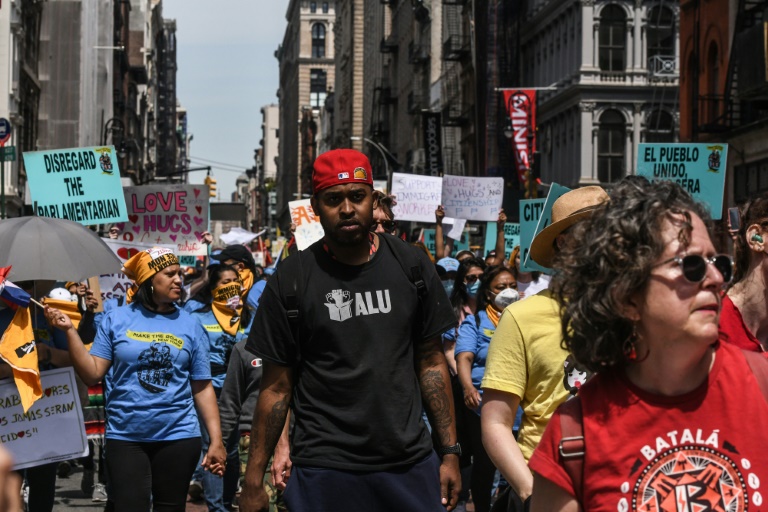
The election at the LDJ5 warehouse followed on the heels of an upset April 1 win by the Amazon Labor Union (ALU) at the much larger JFK8 Staten Island company site — which established the first American union at the retail colossus.

Last month’s win stood as one of the biggest recent victories by US organized labor, winning plaudits from President Joe Biden and other leading unions, some of which visited Staten Island ahead of the second vote.

But the ALU acknowledged its latest setback at Amazon — the second biggest private employer in the United States after Walmart.

“The count has finished. The election has concluded without the union being recognized,” the ALU said on Twitter. “The organizing will continue at this facility and beyond. The fight has just begun.”

Backers of the union drive said Amazon was well prepared for the latest vote, and had aggressively campaigned to quash momentum from the earlier victory.

Further complicating their efforts, union leaders were not as well known as at JFK8, where the ALU’s president Christian Smalls had previously worked. 

Smalls launched the drive after being fired in March 2020 for organizing a protest for personal protective equipment during New York’s first major Covid-19 outbreak.

“At the end of the day, this is a marathon not a sprint,” Smalls told reporters. “We all know there are going to be wins and losses, we’re going to fight another day.”

– More wins needed –

On the other side of the fight, Amazon spokeswoman Kelly Nantel said the company was “glad that our team at LDJ5 were able to have their voices heard.”

“We look forward to continuing to work directly together as we strive to make every day better for our employees.”

Since its launch in the 1990s, Amazon has fiercely fought to remain union-free, seeking to maintain its direct line to workers and boosting pay and benefits during the pandemic when “essential workers” in logistics kept the economy going.

Eric Milner, an attorney representing the ALU, called Monday’s result “disappointing” but said it reflected the effects of “illegal conduct” on Amazon’s part in patterns of disciplining workers and otherwise working to “chill” union activity.

Analyzing the result, Patricia Campos-Medina, co-director of the Worker Institute at Cornell University, said Smalls’ experience as an employee gave him “credibility” with workers — but that he had lacked time to build credibility at the second facility.

She said it will be pivotal for the union to “keep winning” to put pressure on Amazon to negotiate, drawing on backing from the Teamsters and other established unions.

“They already expressed willingness to support ALU, logistically and legally,” Campos-Medina said. 

“What now needs to happen is actually all these unions who were planning to organize Amazon, they actually now need to do it. It has to be a multifaceted organizing effort of the corporation, it cannot just be one by one.”

For now, Amazon is challenging the ALU’s April victory, saying representatives of the labor group intimidated workers and that US officials with the National Labor Relations Board were biased against the company.

A hearing on the Amazon complaints is set for May 23 in Phoenix.

The ALU has rejected the Amazon complaints as groundless, arguing the company is using stalling tactics to avoid negotiations on a contract.

Close Bitnami banner
Bitnami