US Business

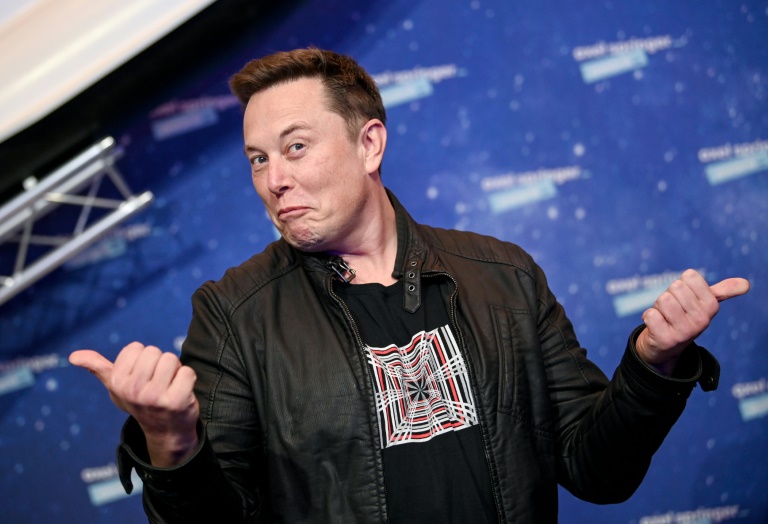
Elon Musk launches hostile takeover bid for Twitter

Tesla chief Elon Musk has launched a hostile takeover bid for Twitter, insisting it was a “best and final offer” and that he was the only person capable of unlocking the full potential of the platform.

Musk offered $54.20 a share, which values the social media firm at $43.4 billion, in a filing dated Wednesday April 13 with the Securities and Exchange Commission.

Twitter’s board said it would carefully review what it termed Musk’s “unsolicited, non-binding” offer and decide on a course of action that was “in the best interest of the Company and all Twitter stockholders.”

Musk’s latest move toward Twitter comes just days after he turned down a seat on the board following his acquisition of a 9.2 percent stake in the microblogging platform.

“I invested in Twitter as I believe in its potential to be the platform for free speech around the globe, and I believe free speech is a societal imperative for a functioning democracy,” Musk said in his filing.

“However, since making my investment I now realize the company will neither thrive nor serve this societal imperative in its current form,” he said.

“Twitter needs to be transformed as a private company. As a result, I am offering to buy 100% of Twitter for $54.20 per share in cash, a 54% premium over the day before I began investing in Twitter.”

– ‘Popcorn time’ –

Musk, Twitter’s biggest shareholder, said his “offer is my best and final offer” and he would reconsider his position as a shareholder if it was rejected.

“Twitter has extraordinary potential. I will unlock it,” he said.

Wedbush analysts said the Twitter board would likely be forced to accept the bid or seek another buyer. 

“It’s get out the popcorn time as we expect many twists and turns in the weeks ahead as Twitter and Musk walk down this marriage path,” the analysis said, with a host of questions likely to swirl around issues of financing, regulatory aspects and balancing Musk’s time between his many companies.

Currently the world’s richest man, and with more than 80 million followers on the microblogging platform, Musk last week disclosed a purchase of 73.5 million shares — or 9.2 percent — of Twitter’s common stock. His announcement sent Twitter shares soaring more than 25 percent.

He was offered a seat on the board but turned it down at the weekend.

Musk’s move comes after he tweeted Saturday asking whether the social media network was “dying” and to call out users such as singer Justin Bieber, who are highly followed but rarely post.

“Most of these ‘top’ accounts tweet rarely and post very little content,” the Tesla boss wrote, captioning a list of the 10 profiles with the most followers — which includes himself at number eight, with 81 million followers.

In other weekend tweets, Musk posted joke polls on whether to drop the “w” from Twitter’s name and on converting its San Francisco headquarters to a homeless shelter “since no one shows up anyway.”

He also suggested removing ads, Twitter’s main source of revenue.

The billionaire tech entrepreneur is a frequent Twitter user, regularly mixing in inflammatory and controversial statements about issues or other public figures with remarks that are whimsical or business-focused. 

He has also sparred repeatedly with federal securities regulators, who cracked down on his social media use after a purported effort to take Tesla private in 2018 fell apart.
Crane ship nearly topples after Norway lifting accident

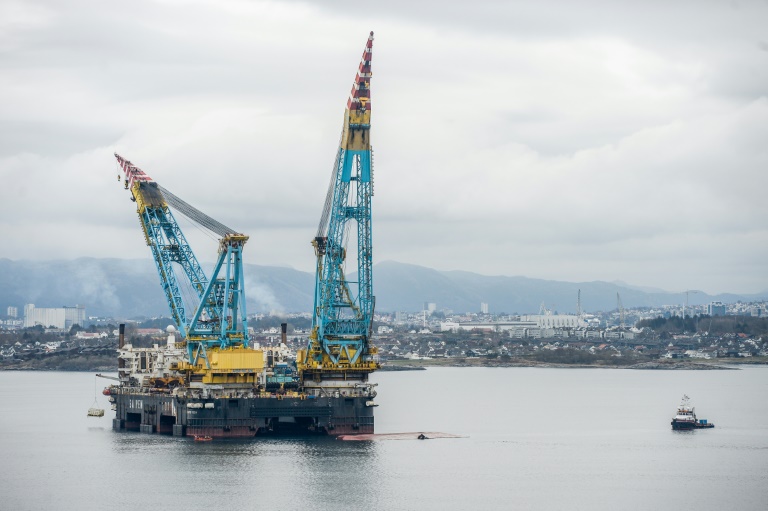
A huge crane ship was left listing outside the harbour of Stavanger in southwestern Norway on Thursday after a steel wire snapped during a loading operation, police said.

The Saipem 7000, operated by Italian oil services company Saipem, ended up tilting sharply, according to witness photos released by the Norwegian media, but no injuries were reported among the 275-strong crew.

The huge specialised vessel, which police say suffered significant material damage, was brought upright according to live footage from public broadcaster NRK.

The accident occurred during a lift at around 10 am (0800 GMT) in a fjord adjacent to Stavanger, a hub of Norway’s offshore oil industry, police said.

“A steel wire snapped during a loading operation,” Brit Randulff, police superintendent, told AFP.

“Witnesses heard a loud bang, but there was no indication of an explosion,” she added when asked about initial media reports mentioning an explosion.

“No people were hurt, but there was damage to the ship and there is a barge that tipped over and is floating upside down,” Randulff said.

Built in Italy in the 1980s, the specialised vessel, one of the largest in the world, can be partially submerged to lay pipelines and lines for the oil industry.

New PM Sharif orders 'Pakistan speed' to fix stagnant economy

Pakistan’s new Prime Minister Shehbaz Sharif said Thursday the country’s economy had stagnated under his predecessor Imran Khan, setting the tone for possibly months of bitterness before an election that must be held by October next year.

Sharif, sworn in Monday after Khan was ousted by a no-confidence vote in parliament, is still finalising his cabinet but has called for “Pakistan speed” to hurry along development projects and fix the economy.

On Thursday the 70-year-old notorious workaholic visited a metro bus project in Rawalpindi and complained about the pace of infrastructure development.

“Almost all sectors of economy remained stagnant under IK,” he later tweeted, referring to his predecessor by his initials.

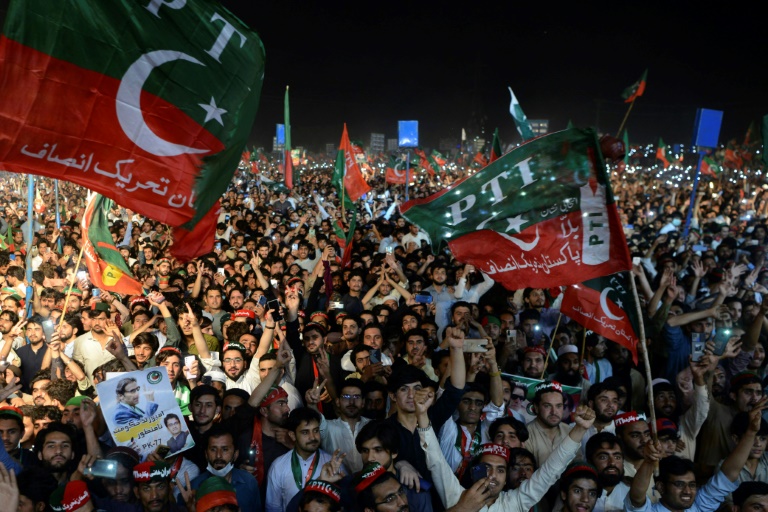
His early-morning visit came after Khan on Wednesday night held a huge rally in Peshawar.

Khan — along with most of his Pakistan Tehreek-e-Insaf (PTI) lawmakers — quit the national assembly after losing Sunday’s no-confidence vote, saying he would take his fight to the people to press for an early election.

On Wednesday, Khan said he would stage twice-weekly rallies across the country until a new poll date was set.

“Young people, get ready, I will take to the streets with you. I will go out in every city, and I will continue to go out until they are forced to hold election.”

Sharif, younger brother of three-time prime minister Nawaz Sharif, set out his stall on Tuesday by ordering the government to adopt a six-day work-week, instead of the previous five, and bringing forward office opening hours to 8 am from 10 am.

His “Pakistan speed” policy is an extension of a similar programme he introduced as chief minister of Punjab, the country’s most populous province, where he was credited with launching a series of high-profile — and vote-catching — projects.

– Broken economy –

The government would take unspecified “emergency measures” to stabilise the economy, Sharif’s office said later, focusing on steps to improve the condition of ordinary people.

Sharif inherits crippling national debt, galloping inflation and a feeble rupee — although analysts say Khan also took over a broken economy in 2018 that was further battered by the Covid-19 pandemic.

Khan’s ouster heralds the return of two dynastic parties that have dominated Pakistan politics for decades.

Sharif’s centrist Pakistan Muslim League-N (PML-N) joined forces with the centre-left Pakistan Peoples Party (PPP) — fiefdom of the Bhutto family — to press the no-confidence vote.

Khan tried everything to stay in power after losing his majority in parliament through defections by his own lawmakers and a coalition partner — including dissolving the assembly and calling a fresh election.

But the Supreme Court deemed all his actions illegal and ordered them to reconvene and vote.

On Thursday Pakistan’s military insisted it played no role in the PM’s ousting, although the head of its public relations wing said Khan had consulted them on his options.

There have been four coups since Pakistan attained independence in 1947 and the country has spent more than three decades under army rule.

“All what happened in recent days was part of a political process,” Major-General Babar Iftikhar told a press conference, urging parties “not to drag the army into politics”.

Khan insists he has been the victim of a “regime change” conspiracy involving Washington and his opponents, and vowed to take his fight to the streets in the hope of forcing an early election.

On Wednesday night Khan told thousands of supporters that the new government was “imported”, saying Pakistan needed to forge an independent global path.

He has said Washington wanted him removed because he refused to take sides in the Russia-Ukraine conflict, and because of his close links to China.

Washington, Moscow and Beijing have all congratulated Sharif since he took over.

Sri Lankans abandon holiday celebrations for protests

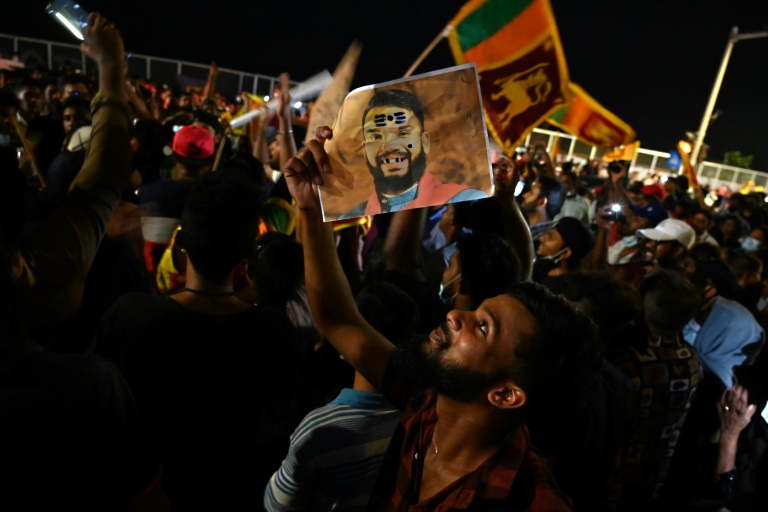
Life usually stops in Sri Lanka’s capital during April’s holiday period, but with an economic crisis derailing traditional home celebrations, Colombo’s city centre is instead teeming with frustrated crowds.

Sri Lankans ritually boil milk on the first day of the island nation’s New Year, but the commodity is one of many in short supply — along with the liquid gas and kerosene used to heat stoves in many Colombo households, and rice to serve family members.

Demonstrators this year brought the custom out of their homes and heated clay pots over makeshift bonfires outside the capital’s Presidential Secretariat, highlighting the plight of households now forced to cook with firewood.

The seafront park by the neoclassical office has since the weekend hosted a running protest vigil, demanding the government’s resignation over Sri Lanka’s worst financial crisis in memory. 

“The economic situation is unbearable for many people,” Hemakumara Perera, who joined the protest from a small town south of the capital, told AFP. 

Perera, his wife and two children camped at the site overnight to “show solidarity” with fellow Sri Lankans suffering through what is usually a joyous family celebration. 

“We support their call for the president and the prime minister to step down,” he said. 

Other New Year customs have been abandoned, such as the buying of new garments to symbolise fresh beginnings.

“We are not in a mood to wear new clothes and celebrate when we know how people are suffering,” said Lakshika Gunawardena, who joined the protest carrying her five-month-old baby. 

– ‘We can’t go’ –

Sri Lanka’s New Year is usually a private affair, with families sharing meals at home and giving sweets to neighbours as commercial activity comes to a standstill.

The crowds now thronging public spaces are an unusual sight for this time of year — as is the silence from the country’s besieged leaders. 

The government skipped its usual handout photographs of top politicians celebrating the occasion with their families. 

And there was no sign of a text message holiday greeting from Prime Minister Mahinda Rajapaksa, sent to every mobile phone in the country in previous years.

Both he and younger brother Gotabaya Rajapaksa — Sri Lanka’s president — have been accused of mismanaging the economy and blindly leading the country into its present predicament. 

The country is now in default of its $51 billion foreign debt ahead of negotiations for an International Monetary Fund bailout, and authorities have begged Sri Lankans abroad to send money home to help alleviate the crisis.

The president has not returned to his office since the protest began on the weekend, and a bolstered security presence is keeping watch over the encampment. 

But interactions between police and the crowd were jovial and even festive, with demonstrators chatting to officers and sharing traditional New Year food and sweets.

“The demonstrators won’t go until the government goes,” said a traffic constable standing watch outside the building while sheltering from the scorching morning sun. 

“And we can’t go until both leave,” he added.

New PM Sharif orders 'Pakistan speed' to fix stagnant economy

Pakistan’s new Prime Minister Shehbaz Sharif said Thursday the country’s economy had stagnated under his predecessor Imran Khan, setting the tone for possibly months of bitterness before an election that must be held by October next year.

Sharif, sworn in Monday after Khan was ousted by a no-confidence vote in parliament, is still finalising his cabinet but has called for “Pakistan speed” to hurry along development projects and fix the economy.

On Thursday the 70-year-old notorious workaholic visited a metro bus project in Rawalpindi and complained about the pace of infrastructure development.

“Almost all sectors of economy remained stagnant under IK,” he later tweeted, referring to his predecessor by his initials.

His early-morning visit came after Khan on Wednesday night held a huge rally in Peshawar.

Khan — along with most of his Pakistan Tehreek-e-Insaf (PTI) lawmakers — quit the national assembly after losing Sunday’s no-confidence vote, saying he would take his fight to the people to press for an early election.

On Wednesday, Khan said he would stage twice-weekly rallies across the country until a new poll date was set.

“Young people, get ready, I will take to the streets with you. I will go out in every city, and I will continue to go out until they are forced to hold election.”

– ‘Pakistan speed’ –

Sharif, younger brother of three-time prime minister Nawaz Sharif, set out his stall on Tuesday by ordering the government to adopt a six-day work-week, instead of the previous five, and bringing forward office opening hours to 8 am from 10 am.

His “Pakistan speed” policy is an extension of a similar programme he introduced as chief minister of Punjab, the country’s most populous province, where he was credited with launching a series of high-profile — and vote-catching — projects.

The government would take unspecified “emergency measures” to stabilise the economy, Sharif’s office said later, focusing on steps to improve the condition of ordinary people.

Sharif inherits crippling national debt, galloping inflation and a feeble rupee — although analysts say Khan also took over a broken economy in 2018 that was further battered by the Covid-19 pandemic.

Khan’s ouster heralds the return of two dynastic parties that have dominated Pakistan politics for decades.

Sharif’s centrist Pakistan Muslim League-N (PML-N) joined forces with the centre-left Pakistan Peoples Party (PPP) — fiefdom of the Bhutto family — to press the no-confidence vote.

Khan tried everything to stay in power after losing his majority in parliament through defections by his own lawmakers and a coalition partner — including dissolving the assembly and calling a fresh election.

But the Supreme Court deemed all his actions illegal and ordered them to reconvene and vote.

The cricketer-turned-politician insists he has been the victim of a “regime change” conspiracy involving Washington and his opponents, and vowed to take his fight to the streets in the hope of forcing an early election.

On Wednesday night Khan told thousands of supporters that the new government was “imported”, saying Pakistan needed to forge an independent global path.

He has said Washington wanted him removed because he refused to take sides in the Russia-Ukraine conflict, and also because of his close links to China.

Washington, Moscow and Beijing have all congratulated Sharif since he took over.

Taiwan's TSMC reports record first-quarter revenue

Taiwanese tech giant TSMC posted record revenue for the first three months of the year Thursday as demand soared for chips used in everything from smartphones and cars to missiles.

Taiwan Semiconductor Manufacturing Company (TSMC) operates the world’s largest silicon wafer factories and produces some of the most advanced microchips.

Its first-quarter revenue rose 36 percent on-year and 12 percent on-quarter, respectively, to a record Tw$491.1 billion (US$17.6 billion), according to a company statement.

It also posted a 45 percent year-on-year profit of Tw$202.7 billion in the January-March period. 

That was up 22 percent from the 2021 fourth quarter.

CEO C.C. Wei said first-quarter revenue was “above the high-end of our guidance mainly due to better demand from smartphone and automotive-related applications than our forecast three months ago”. 

TSMC had forecast Q1 sales of between Tw$458.16 billion and Tw$474.72 billion at an investor conference in January.

Smartphone and high-performance computing (HPC) accounted for 40 percent and 41 percent of net revenue respectively, while automotive represented five percent in the first three months, company figures showed. 

Revenue from HPC and automotive both rose 26 percent in this period from the fourth quarter in 2021. 

A global chip shortage fulled by the coronavirus pandemic has not eased and wait time for semiconductor delivery reportedly grew again in March partly due to China’s strict Covid lockdowns.

“Moving into second quarter 2022, we expect our business to be supported by HPC and automotive-related demand, partially offset by smartphone seasonality,” Wei said. 

TSMC forecast its revenue in the April-June period to be between US$17.6 billion and US$18.2 billion, said chief financial officer Wendell Huang. 

“Despite the manufacturing cost challenges… we continue to believe a long-term growth margin of 53 percent and higher is achievable,” he added.

Uniqlo operator lifts profit outlook despite China lockdowns

Fast Retailing, the operator of Japanese casualwear giant Uniqlo, revised its annual net profit forecast upwards on Thursday even as business in China is hit by fresh lockdowns.

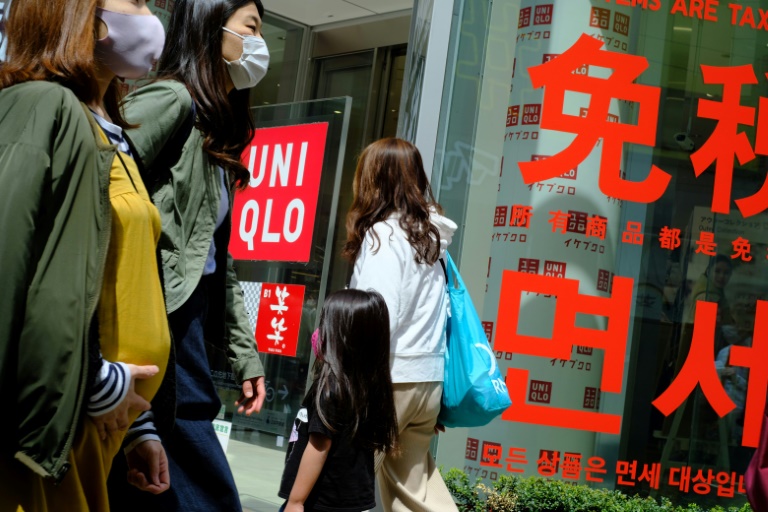
China is a key market for Uniqlo, but consumer spending has been hampered by tough lockdowns imposed on cities like Shanghai under the country’s zero-Covid policy.

Uniqlo operations in mainland China saw “a decrease in revenue and a large decline in profit” for the six months to February, Fast Retailing said, attributing the falls to curbs on movement.

In a news conference, Fast Retailing president Tadashi Yanai described the effect of China’s zero-Covid policy on profits as “very troubling”.

But elsewhere in Asia, business was brisk — buoyed by a strong performance in countries including Malaysia, where virus restrictions were eased.

In North America, strengthened branding efforts helped boost sales, the company said, unveiling plans to increase its stores in the traditionally money-losing region from 57 to 200 within five years.

Overall, the group reported that net profit for the first half jumped 38.7 percent on-year to 146.8 billion yen ($1.2 billion).

Operating profit was up 12.7 percent on-year “even after stripping out the impact of yen depreciation”, the company said.

The cheap-chic Japanese clothing group — which rivals Zara, Gap and H&M — revised its full-year net profit forecast from the previous 175 billion yen to 190 billion yen.

Despite pandemic restrictions, Fast Retailing has aggressively expanded in China, where it aims to open 100 new stores each year.

But it has suspended sales in Russia and now expects a loss for the second half of the fiscal year, after a U-turn on an initial decision to stay open despite Moscow’s invasion of Ukraine.

Yanai came under fire for his original plan to keep Uniqlo stores open, and he touched only broadly on the conflict on Thursday, saying he remains “strongly opposed to all kinds of war”.

“The ongoing war must be stopped immediately, and we must think in earnest how we can solve serious conflicts between nations, create a peaceful world and ensure people around the world will live happy lives,” he added.

Asian, eurozone markets rise but inflation haunts outlook

Asian and eurozone stocks rose Thursday after a recovery on Wall Street, but investors remained cautious about the ongoing impact of skyrocketing inflation and the war in Ukraine.

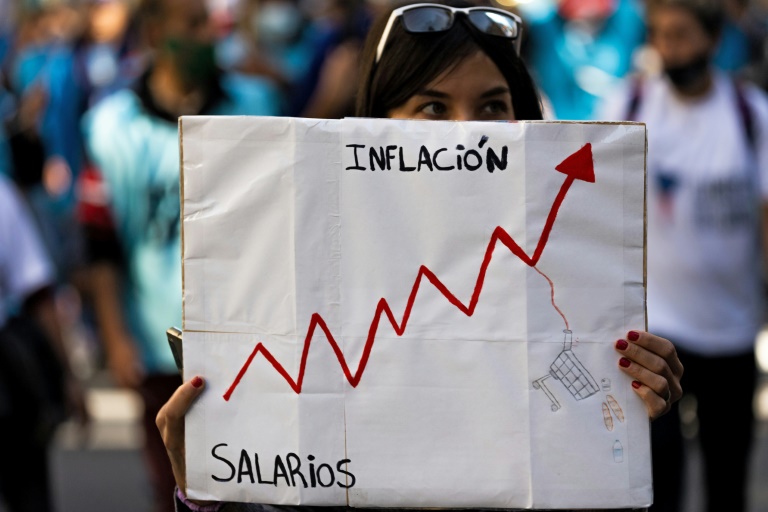
Prices were already soaring in major economies when Russia’s invasion of Ukraine sent shockwaves through the global energy, food and commodity markets.

Despite lingering concerns about the US Federal Reserve’s next moves to contain prices, Wall Street enjoyed a buoyant session — especially the tech-rich Nasdaq, which surged 2.0 percent.

Asia was in a similar mood Thursday as Tokyo closed 1.2 percent higher, while Hong Kong and Shanghai also ended in positive territory.

Sydney rose 0.6 percent as Australia posted its lowest unemployment rate — a smidge under four percent — in 48 years.

Seoul was flat, meanwhile, as South Korea’s central bank raised its key interest rate to the highest level since August 2019 to tame rising inflation.

Analysts had warned overnight that the uncertainty was far from over.

“With a thicker fog of war starting to roll in and engulf the global markets again, it is another worrying setup amid the widespread bearish sentiment out there,” Stephen Innes of SPI Asset Management said in a note.

Frankfurt and Paris opened higher as eyes turned to the European Central Bank policymakers meeting on Thursday, with the outlook for the eurozone economy still murky.

Elsewhere, London’s FTSE 100 index dropped at the open.

– ‘Countervailing forces’ –

Data this week from the United States — the world’s biggest economy — and Britain showed inflation at levels not seen in decades.

The grim outlook was reflected in the latest earnings report from JP Morgan Chase, the largest American bank by assets.

“There’s this very strong underlying economy,” its chief executive Jamie Dimon said.

But he pointed to “countervailing forces”, including rising interest rates, inflation and the war in Ukraine.

“And those things are going to collide at one point, probably sometime next year,” he said in a conference call with reporters.

“I’m not predicting a recession… But is it possible? Absolutely.”

Analysts said, however, that markets had welcomed an indication that US inflation may be approaching its peak.

Both main oil contracts stayed above the $100 per barrel mark, with fears swirling about global supply constraints over the invasion of Ukraine by Russia — a major producer of oil and gas.

“The oil complex is heavily fixated on the short-term,” Vandana Hari of Singapore-based Vanda Insights told Bloomberg News.

“The prospect of an EU ban on Russian oil will keep the market on edge as long as Ukraine festers.”

– Key figures around 0810 GMT –

Tokyo – Nikkei 225: UP 1.2 percent at 27,172.00 (close)

Hong Kong – Hang Seng: UP 0.7 percent at 21,518.08 (close)

Shanghai – Composite: UP 1.2 percent at 3,225.64 (close)

London – FTSE 100: DOWN 0.3 percent at 7,561.35

Euro/dollar: UP at 1.0911 from $1.0894 at 2100 GMT

Pound/dollar: UP at $1.3136 from $1.3109

Euro/pound: UP at 83.07 pence from 83.03 pence

Dollar/yen: DOWN at 125.35 from 125.59

Oil – Brent: DOWN 1.1 percent at 107.63 per barrel

Oil – WTI: DOWN 1.2 percent at 102.98 per barrel

New York – Dow: UP 1.0 percent at 34,564.59 (close)

— Bloomberg News contributed to this story —

Uniqlo operator lifts profit outlook despite China lockdowns

Fast Retailing, the operator of Japanese casualwear giant Uniqlo, revised its annual net profit forecast upwards on Thursday even as business in China is hit by fresh lockdowns.

China is a key market for Uniqlo, but consumer spending has been hampered as coronavirus cases surge in cities such as Shanghai, prompting authorities to impose tough lockdowns under the country’s zero-Covid policy.

Uniqlo operations in mainland China saw “a decrease in revenue and a large decline in profit” for the six months to February, Fast Retailing said, attributing the falls to curbs on movement.

But elsewhere in Asia, business was brisk, buoyed by strong performance in countries such as Malaysia where virus restrictions were eased.

In North America, too, strengthened branding efforts helped boost sales, the company said.

These factors, coupled with what the group described as a “greater diversification” of its revenue streams, led to net profit for the first half jumping 38.7 percent on-year to 146.8 billion yen ($1.2 billion).

“Operating profit reached a record high, even after stripping out the impact of yen depreciation,” the company said as it logged 189.2 billion yen in operating profit in the first half, up 12.7 percent on-year.

The cheap-chic Japanese clothing group, which rivals Zara, Gap and H&M, revised its full-year net profit forecast from the previous 175 billion yen to 190 billion yen.

Pandemic restrictions have not stopped Fast Retailing from aggressively expanding in Greater China, where it aims to open 100 new stores each year.

The war in Ukraine has also forced the company to strike a delicate balance between politics and profitability.

Moscow’s invasion has prompted the temporary closure of Uniqlo operations in Russia, where Fast Retailing now expects to “report a loss in the second half of fiscal 2022”.

This suspension was announced in March, in a U-turn from the Japanese firm’s earlier decision to stay open in Russia.

“Clothing is a necessity of life. The people of Russia have the same right to live as we do,” Fast Retailing president Tadashi Yanai initially said in comments that prompted calls for a boycott.

Judge slashes Tesla's damages to ex-employee in racism case

A San Francisco judge on Wednesday slashed the $137 million in damages Tesla was told to pay a former employee in a racial discrimination case down to $15 million but upheld the verdict.

In his ruling, US District Court Judge William Orrick said “the weight of the evidence amply supports the jury’s liability findings” but the damages ordered were “excessive,” citing constitutional limitations on punitive damages set by the Supreme Court.

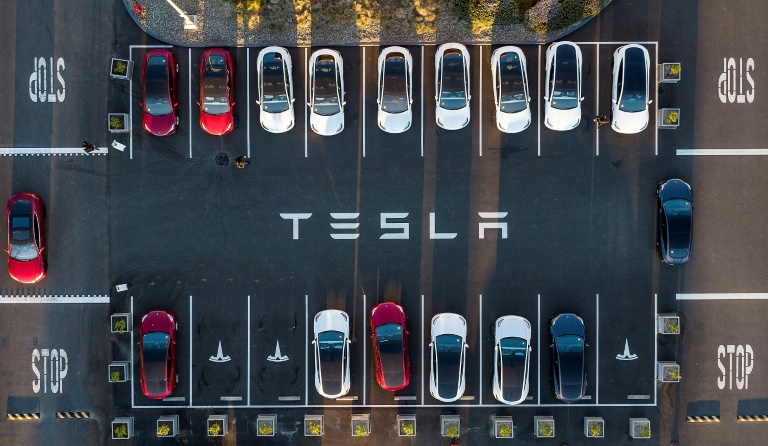
Tesla was ordered in October to pay Black former employee Owen Diaz $137 million in damages for turning a blind eye to racism the man encountered at the firm’s Silicon Valley auto plant.

Rejecting Tesla’s request for a retrial, Orrick said “Tesla’s indifference to Diaz’s complaints is striking.”

He said the evidence presented to the jurors was “disturbing.”

“The jury heard that the Tesla factory was saturated with racism. Diaz faced frequent racial abuse, including the N-word and other slurs,” the judge wrote.

“His supervisors, and Tesla’s broader management structure, did little or nothing to respond. 

“And supervisors even joined in on the abuse, one going so far as to threaten Diaz and draw a racist caricature near his workstation.”

The original award comprised $130 million in punitive damages and $6.9 million for emotional distress, which Orrick cut to $13.5 million in punitive damages and $1.5 million for emotional harm, “the maximum amount supportable by proof.”

Hired through a staffing agency, Diaz had worked as an elevator operator between June 2015 and July 2016 at the Fremont plant, where he was subjected to racist abuse and a hostile work environment, according to the court filing.

In his lawsuit filed in 2017, Diaz said African-American employees at the factory, where his son also worked, were regularly subjected to racist epithets and derogatory imagery.

Diaz also said that, despite complaints to supervisors, Tesla took no action over the regular racist abuse.

Following the October verdict, Tesla released a blog post by human resources vice president Valerie Capers Workman, which downplayed the allegations of racist abuse in the lawsuit but acknowledged that at the time Diaz worked there, Tesla “was not perfect.”

Workman said Tesla had responded to Diaz’s complaints, firing two contractors and suspending a third.

In February, the California Department of Fair Employment and Housing, which enforces the state’s civil rights laws, sued Tesla over discrimination and harassment against Black workers at the same factory, which the complaint called a “racially segregated workplace.”

The agency said it had received hundreds of complaints from workers at the Fremont plant.

Close Bitnami banner
Bitnami