US Business

Future in balance for German refinery fed on Russian oil

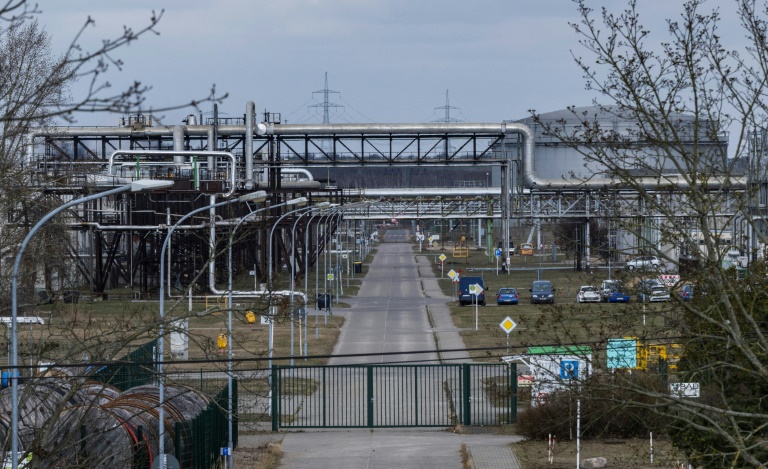
The PCK refinery in the German town of Schwedt has been processing crude oil from Russia since before reunification, but with a ban on Russian oil looming its future could be in doubt.

The mass of metal tubes and canisters in the former East Germany near the border with Poland employs 1,200 people, and many local businesses depend on the custom it brings to the area.

“The sense of not knowing what will happen tomorrow is very similar to how it felt after the fall of the Wall,” said Buckhard Opitz, 60, who has worked at the plant since 1977 and is a member of the local energy workers’ union.

Opitz has not forgotten the economic turbulence that came with reunification in 1990 — the dismantled industrial sites and painful wave of privatisations.

The Schwedt refinery survived, after a drastic restructuring, because “it was one of the most modern, because we were always on top”, Opitz said.

But since Russia invaded Ukraine on February 24, uncertainty has once again descended on the plant.

Although the PCK refinery supplies around 90 percent of the oil consumed in Berlin and the surrounding region, including Berlin Brandenburg airport, doubts still remain.

And the situation is complicated by the fact that Russian oil giant Rosneft, controlled by the Kremlin, is a majority shareholder in the site.

– ‘Friendship’ –

Though the EU’s latest package of sanctions agreed on Thursday was focused on coal, European Council President Charles Michel has said that the EU will have to impose oil and gas sanctions “sooner or later”.

Germany has ruled out an immediate embargo on all Russian energy, especially gas. But it aims to end Russian oil imports by the end of this year.

Oil pumped in from Russia is the lifeblood of the Schwedt refinery, which is serviced by a branch of the Druzhba pipeline, the world’s longest oil pipeline. 

The Druzhba project was commissioned in the 1960s to transport oil from the Soviet Union to Eastern Europe and remains a vital source of crude for many central European refineries. 

“Druzhba” means “friendship” in Russian.

In late 2021, Rosneft announced plans to increase its stake in the PCK refinery from 54 to 92 percent by buying shares from Shell.

Germany’s Federal Cartel Office approved the transaction a few days before the outbreak of the war but the Economy Ministry is examining whether it can still be stopped. 

Rosneft is chaired by Igor Sechin, an oligarch close to President Vladimir Putin and who has been the target of Western sanctions.

“The world was still normal then. There was no reason to refuse Russian involvement, just as there was German involvement in Russia,” Alexander von Gersdorff, a spokesman for the German oil industry association En2x, told AFP.

– ‘Pure speculation’ –

But Von Gersdorff now has a stark prediction: “Without oil from Russia, the Schwedt refinery would have to be shut down. There would be no petrol or diesel for Berlin, the surrounding region and western Poland.”

A spokeswoman for the refinery told AFP it was still examining the “feasibility of different logistical and technological scenarios as well as their operational feasibility”. 

Some media reports have proposed that Berlin temporarily take control of the plant —  a measure applied recently to Russian gas giant Gazprom’s German subsidiary.

But Opitz is convinced that alternatives to Russian oil can be found to keep the refinery alive.

Another pipeline ending in the German port city of Rostock could receive crude oil from other parts of the world, he said, and Poland could supply more via the port of Gdansk.

Von Gerstoff believes this is “unrealistic”.

Rostock cannot accommodate large enough tankers, he said, while Poland needs all its capacity to service its own energy needs. Plus the refineries in eastern Germany were specifically designed to operate with Russian crude oil.

But Opitz still has hope. “All this is pure speculation,” he said. “The final decision will be political.”

Elon Musk no longer joining Twitter board: CEO

Elon Musk is no longer joining the board of Twitter, the CEO of the social media company said late Sunday, in a reversal less than a week after announcing the Tesla and SpaceX chief would be appointed.

Musk was named to join the Twitter board after buying a major stake in the firm and becoming its largest shareholder.

“Elon has decided not to join our board,” Twitter CEO Parag Agrawal tweeted.

“Elon’s appointment to the board was to become officially effective 4/9, but Elon shared that same morning he will no longer be joining the board,” Agrawal said.

“I believe this is for the best.”

Currently the world’s richest man and with more than 80 million followers on the microblogging platform, Musk last week disclosed a purchase of 73.5 million shares — or 9.2 percent — of Twitter’s common stock. His announcement sent Twitter shares soaring more than 25 percent.

Agrawal had announced on Tuesday that Musk would be joining the board, describing him as “a passionate believer and intense critic of the service which is exactly what we need”.

Musk himself tweeted that he was “Looking forward to working with Parag & Twitter board to make significant improvements to Twitter in coming months!”

In his announcement Sunday, Agrawal shared a note he sent to Twitter, which said Musk’s appointment to the board would be contingent on a background check and that he would have to act in the best interests of the company once appointed.

“We have and will always value input from our shareholders, whether they are on our board or not,” he said.

“Elon is our biggest shareholder and we will remain open to his input,” Agrawal added.

Musk had agreed to limit his Twitter stake to a maximum of 14.9 percent while serving on the board but could now in theory increase his holding beyond that.

– Polarizing figure –

In an apparent reaction to the news, Musk tweeted a smirking emoji, without any other comment.

The billionaire tech entrepreneur is a frequent Twitter user, regularly mixing in inflammatory and controversial statements about issues or other public figures with remarks that are whimsical or business-focused. 

He has also sparred repeatedly with federal securities regulators, who cracked down on his social media use after a purported effort to take Tesla private in 2018 fell apart.

Musk’s decision not to take a seat on the Twitter board came after he tweeted Saturday asking whether the social media network was “dying” and to call out users such as singer Justin Bieber, who are highly followed but rarely post.

“Most of these ‘top’ accounts tweet rarely and post very little content,” the Tesla boss wrote, captioning a list of the 10 profiles with the most followers — a list which includes himself at number eight, with 81 million followers.

“Is Twitter dying?” he asked.

In other weekend tweets, Musk posted joke polls on whether to drop the “w” from Twitter’s name and on converting its San Franciso headquarters to a homeless shelter since no one shows up anyway”.

He also suggested removing ads, Twitter’s main source of revenue.

An outspoken and polarizing figure, the announcement of his appointment to the board had sparked misgiving among some Twitter employees, according to a Washington Post report.

Workers at the California-based social media company cited worries about Musk’s statements on transgender issues and his reputation as a difficult and driven leader, according to statements on Slack reviewed by the Post.

A California agency has sued Tesla, alleging discrimination and harassment against Black workers. The electric carmaker has rejected the charges, saying it opposes discrimination.

Ukraine crisis, inflation risks loom over ECB meeting

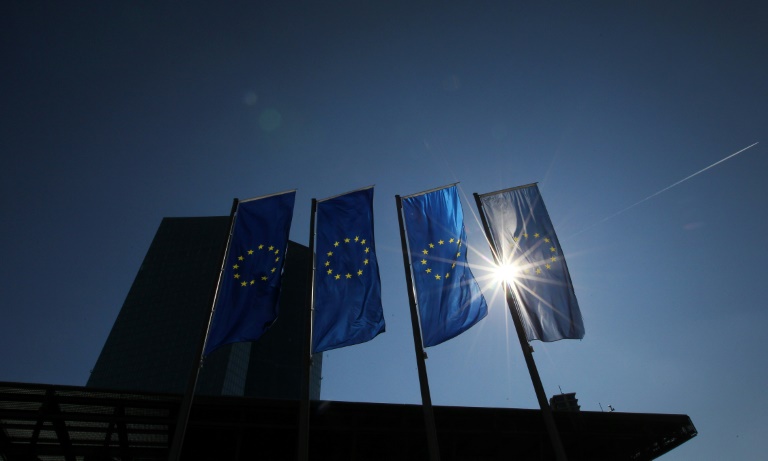
European Central Bank governors meet Thursday to ponder record-high inflation and fresh economic uncertainty caused by the war in Ukraine, with policymakers signalling a willingness to take action sooner rather than later.

At its last meeting in March, the ECB said it would accelerate the winding down of its bond-buying stimulus, with a view to ending the scheme in the third quarter.

An interest rate hike — the ECB’s first in over a decade — would follow “some time” after that, it said.

But since then prices have continued to spiral, with costs for energy, commodities and food surging in the wake of the war in Ukraine, adding to fears that the conflict will stunt a post-Covid recovery.

The US Federal Reserve and the Bank of England have already announced their first rate hikes to combat price pressures, leaving the ECB looking out of step.

Inflation jumped to a record 7.5 percent in the euro area last month, well beyond the ECB’s two-percent target.

Although no major policy changes are expected on Thursday, ECB chief Christine Lagarde’s press conference will be scoured for clues of the bank shifting into more aggressive inflation-fighting mode.

“In our view, policymakers are likely to bring forward their plans to raise interest rates,” said Capital Economics in a client note, “as inflation continues to surprise to the upside”.

Lagarde tested positive for Covid-19 last week but is still set to chair the meeting and take part in the virtual press conference afterwards.

– ‘Too late’ –

Central bankers use interest rate rises as a tool to tame inflation, but pulling the trigger too soon risks hurting economic growth.

The ECB’s dilemma has been complicated by Russia’s invasion of Ukraine and Western sanctions against Moscow, as the fallout from the upheaval to international trade and energy markets remains difficult to predict.

Minutes from the last ECB meeting revealed that many members of the 25-member governing council wanted “immediate further steps” to tackle inflation despite the darkening economic picture.

Some governors called for ending the bond purchases in the summer, opening the door to a rate hike in the third quarter.

The minutes showed that the ECB “has become more hawkish”, said ING bank economist Carsten Brzeski, describing those advocating for a tightening of monetary policy.

Joachim Nagel, the head of Germany’s powerful Bundesbank central bank, is among several ECB members who have said they expect the first rate rises this year.

He has cautioned against “acting too late”.

– Gloomy consumers –

The ECB has for years maintained an ultra-loose monetary policy, pushing interest rates to historic lows to stoke growth and drive up below-target inflation. 

It even set a negative deposit rate of minus 0.5 percent, meaning banks pay to park excess cash at the ECB.

It has also hoovered up billions of euros in government and corporate bonds each month to keep credit flowing in the 19-nation currency club. The massive stimulus is now being phased out, a move the ECB always said would come before any interest rate changes.

Capital Economics analysts said they now expect the ECB to raise the deposit rate as early as July, followed by two more hikes before the end of the year.

Lagarde recently warned that higher energy costs as a result of Europe’s reliance on Russian oil and gas would worsen Europe’s cost-of-living squeeze.

Households were becoming more pessimistic, she said, and could cut back further on spending.

“The longer the war lasts, the higher the economic costs will be and the greater the likelihood we end up in more adverse scenarios,” she said.

Lagarde, a former French finance minister, has urged European governments to help cushion the blow through fiscal policy.

France, Spain, Germany and other countries have already moved to ease the burden on households and companies, including through fuel tax cuts or subsidies for heating.

Elon Musk no longer joining Twitter board: CEO

Elon Musk is no longer joining the board of Twitter, the CEO of the social media company said late Sunday, in a reversal less than a week after announcing the Tesla chief would be appointed.

Musk was named to join the Twitter board after buying a major stake in the firm and becoming its largest shareholder.

“Elon has decided not to join our board,” Twitter CEO Parag Agrawal tweeted.

“Elon’s appointment to the board was to become officially effective 4/9, but Elon shared that same morning he will no longer be joining the board,” Agrawal said.

“I believe this is for the best.”

Currently the world’s richest man and with more than 80 million followers on the microblogging platform, Musk last week disclosed a purchase of 73.5 million shares — or 9.2 percent — of Twitter’s common stock.

Agrawal had announced on Tuesday that Musk would be joining the board, describing him as “a passionate believer and intense critic of the service which is exactly what we need”.

Musk himself tweeted that he was “Looking forward to working with Parag & Twitter board to make significant improvements to Twitter in coming months!”

In his announcement Sunday, Agrawal shared a note he sent to Twitter, which said Musk’s appointment to the board would be contingent on a background check and that he would have to act in the best interests of the company once appointed.

“Elon is our biggest shareholder and we will remain open to his input,” Agrawal added.

– Polarizing figure –

In an apparent reaction to the news, Musk tweeted a smirking emoji, without any other comment.

The billionaire tech entrepreneur is a frequent Twitter user, regularly mixing in inflammatory and controversial statements about issues or other public figures with remarks that are whimsical or business-focused. 

He has also sparred repeatedly with federal securities regulators, who cracked down on his social media use after a purported effort to take Tesla private in 2018 fell apart.

Musk’s decision not to take a seat on the Twitter board came after he tweeted Saturday asking whether the social media network was “dying” and to call out users such as singer Justin Bieber, who are highly followed but rarely post.

“Most of these ‘top’ accounts tweet rarely and post very little content,” the Tesla boss wrote, captioning a list of the 10 profiles with the most followers — a list which includes himself at number eight, with 81 million followers.

“Is Twitter dying?” he asked.

An outspoken and polarizing figure, the announcement of his appointment to the board had sparked misgiving among some Twitter employees, according to a Washington Post report.

Workers at the California-based social media company cited worries about Musk’s statements on transgender issues and his reputation as a difficult and driven leader, according to statements on Slack reviewed by the Post.

A California agency has sued Tesla, alleging discrimination and harassment against Black workers. The electric carmaker has rejected the charges, saying it opposes discrimination.

Asia tracks Wall St losses on Fed tightening concerns

Asian stocks opened with losses on Monday, as unease lingered over tightening monetary policy by the Fed and investors awaited earnings reports by retailers due this week.

Wall Street stocks mostly fell Friday. Both the S&P 500 and the Nasdaq retreated as the yield on the 10-year US Treasury note climbed above 2.7 percent, a signal markets are preparing for more tightening as the Federal Reserve battles inflation.

The losses continued Monday in Tokyo, as well as in Hong Kong and Shanghai where the main indexes lost more than two percent.

Taipei and Seoul were also down, while Sydney and Jakarta posted slight gains.

“Stocks are soft at the Monday open on increasing evidence the Federal Reserve will take a more committed approach to its monetary policy inflation-fighting stance,” said Stephen Innes at SPI Asset Management.

“However, markets have been surprisingly resilient as discussions under the surface debated whether this week’s US March CPI data will hint at the peak of the inflation cycle and help the Fed’s chance to better engineer a soft landing, however narrow that path may seem.”

And Takashi Hiroki, chief strategist of Monex, added: “Focus this week is on the US and Chinese consumer price indexes for March,” among other data, to glean clues on the Fed’s monetary policy and that of other central banks.

The US central bank has recently taken a hawkish tone as it embarks on an aggressive tightening path, prompting traders to fret over the prospect of higher interest rates.

The euro climbed as much as 0.7 percent against the dollar before paring the gain, suggesting some relief over the French election but ongoing wariness.

Investors had fretted about the implications of a victory for President Emmanuel Macron’s nationalist rival Marine Le Pen in the midst of the war in Ukraine, given her long-standing sympathies for Russia.

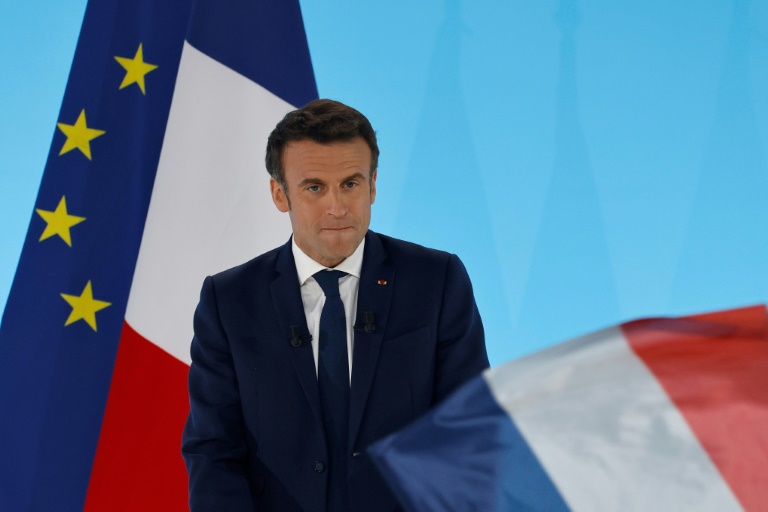
Macron was set to beat Le Pen in the first round of elections Sunday by a larger-than-expected margin, the two candidates advancing to a run-off later this month.

“Make no mistake: nothing is decided,” Macron told supporters.

– Key figures around 0230 GMT –

Tokyo – Nikkei 225: DOWN 0.71 percent at 26,793.46 (break)

Hong Kong – Hang Seng Index: DOWN 2.59 percent at 21,305.79

Shanghai – Composite: DOWN 2.38 percent at 4,129.91

Brent North Sea crude: DOWN 2.87 percent at $99.91 per barrel

West Texas Intermediate: DOWN 2.91 percent at $95.35 per barrel

Euro/dollar: DOWN at $1.0877 from $1.0910 Friday

Pound/dollar: DOWN at $1.3025 from $1.3081

Euro/pound: UP at 83.51 pence from 83.41 pence

Dollar/yen: UP at 124.34 yen from 123.63 yen

New York – Dow: UP 0.4 percent at 34,721.12 (close)

London – FTSE 100: UP 1.6 percent at 7,669.56 (close)

— Bloomberg News contributed to this report —

Indian sari weavers toil to keep tradition alive

In a dim room near the banks of India’s Ganges river, arms glide over a creaking loom as another silken fibre is guided into place with the rhythmic clack of a wooden beam.

Mohammad Sirajuddin’s cramped studio is typical of Varanasi’s dwindling community of artisans painstakingly working by hand to produce silk saris, uniquely cherished among their wearers as the epitome of traditional Indian sartorial style.

The city he calls home is revered among devout Hindus, who believe that cremation on the banks of its sacred waterway offers the chance to escape the infinite cycle of death and rebirth. 

But Sirajuddin’s own reflections on mortality are centred on his craft, with competition from more cost-efficient mechanised alternatives and cheap imports from China leaving his livelihood hanging by a thread. 

“If you walk around this whole neighbourhood, you’ll see that this is the only house with a handloom,” the 65-year-old tells AFP.

“Even this will be here only as long as I am alive. After that, nobody in this house will continue.”

Varanasi’s hand-weavers have cultivated a reputation for excellence over centuries, specialising in intricate patterns, floral designs and radiant golden brocades. 

The Banarasi saris — so-called in reference to the city’s ancient name — they produce are widely sought after by Indian brides and are often passed on from one generation to the next as family heirlooms.

The elegant garments fetch handsome prices — Sirajuddin’s current work will go on sale for 30,000 rupees ($390) — but the cost of inputs and cuts taken by middlemen leave little left for weavers. 

“Compared to the hard work that goes into making the sari, the profit is negligible,” Sirajuddin says.

His neighbours have all switched to electric looms for their garments, which lack the subtleties of hand-woven textiles and sell for just a third of the price but take a fraction of the time to finish. 

– ‘Thriving industries got killed’ – 

The fortunes of India’s textile trade — historically a cottage industry — have long been subject to sudden and devastating upheavals from abroad.

Its delicate fabrics were prized by the 18th century European elite but British colonisation and England’s industrial-era factories flooded India with much cheaper textiles, decimating the market for hand-woven garments. 

Decades of socialist-inspired central planning after independence bought some reprieve by shielding local handicrafts from the international market.

But economic reforms in the early 1990s opened the country up to cheap goods just as the country’s northern neighbour was establishing itself as the globalised world’s workshop.

“Chinese yarn and fabric came in everywhere,” said author and former politician Jaya Jaitly, who has written a book on Varanasi’s woven textiles, adding that sari factories there had for years been emulating the city’s unique patterns and detail.

“All of these thriving industries got killed… through Chinese competition, and their ability to produce huge quantities at very low prices.” 

– ‘Tradition to be proud of’ –

Jaitly said local weavers needed urgent protection from government to preserve a wealth of artisanal traditions that otherwise risked disappearing. 

“We have the largest number of varieties of handloom, techniques, skills… more than anywhere else in the world,” she said. 

“I think that’s truly a tradition to be proud of.”

Demand for Banarasi saris, already limited to a select Indian clientele able to justify spending at a premium, has also suffered in the wake of the Covid-19 pandemic. 

The virus threat may have receded in India, but job losses and a big dent to the economy have taken their toll.

“The weavers are suffering a lot. They are not getting the right price for their products, payments are also coming late,” said local sari merchant Mohammad Shahid, his store empty but for sales assistants stacking silk garments on the shelves.

Shahid was nonetheless hopeful that well-heeled and discerning customers would return.

“Those who know the value of handloom will continue to buy and cherish our saris. The handlooms can dwindle but they will never go away,” Shahid, 33, told AFP.

Crisis-hit Sri Lanka nearly out of medicine, doctors warn

Sri Lanka’s doctors warned on Sunday they were nearly out of life-saving medicines and said the island nation’s economic crisis threatened a worse death toll than the coronavirus pandemic.

Weeks of power blackouts and severe shortages of food, fuel and pharmaceuticals have brought widespread misery to Sri Lanka, which is suffering its worst downturn since independence in 1948.

The Sri Lanka Medical Association (SLMA) said that all hospitals in the country no longer had access to imported medical tools and vital drugs.

Several facilities have already suspended routine surgeries since last month because they were dangerously low on anaesthetics, but the SLMA said that even emergency procedures may not be possible very soon.

“We are made to make very difficult choices. We have to decide who gets treatment and who will not,” the group said Sunday, after releasing a letter they had sent President Gotabaya Rajapaksa days earlier to warn him of the situation.

“If supplies are not restored within days, the casualties will be far worse than from the pandemic.”

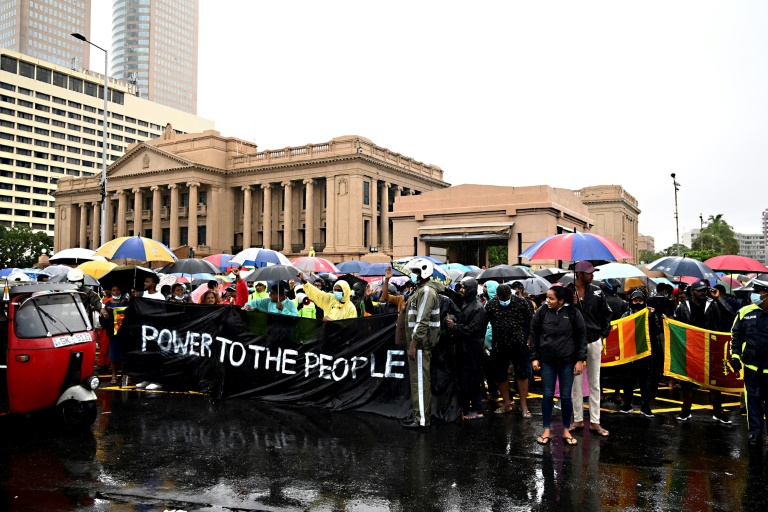
Mounting public anger over the crisis has seen large protests calling for Rajapaksa’s resignation.

Thousands of people braved heavy rains to keep up a demonstration outside the leader’s seafront office in the capital Colombo for a second day.

Business leaders joined calls for the president to step down on Saturday and said the island’s chronic fuel shortages had seen their operations haemorrhage cash.

Rajapaksa’s government is seeking an IMF bailout to help extricate Sri Lanka from the crisis, which has seen skyrocketing food prices and the local currency collapse in value by a third in the past month. 

Finance ministry officials have said sovereign bond-holders and other creditors may have to take a haircut as Colombo seeks to restructure its debt.

New finance minister Ali Sabry told parliament on Friday that he expects $3 billion from the IMF to support the island’s balance of payments in the next three years.

A critical lack of foreign currency has left Sri Lanka struggling to service its ballooning $51 billion foreign debt, with the pandemic torpedoing vital revenue from tourism and remittances.

Economists say Sri Lanka’s crisis has been exacerbated by government mismanagement, years of accumulated borrowing and ill-advised tax cuts.

Crypto-curious corporations struggle to find right recipe

Four years ago, fried-chicken chain KFC tweeted from its Canadian account that it would accept bitcoin as payment for its “buckets”.

The company told AFP its tongue-in-cheek campaign — “digital tender for chicken tenders” — sold out in an hour and the chain has not taken crypto payments since, but online articles regularly recycle the claim that KFC “accepts” bitcoin.

Many other companies have tried to harness crypto payments before abandoning their efforts, Tesla and Dell among them.

Bitcoin will almost certainly never be practical for everyday purchases because its value fluctuates wildly, and each transaction is expensive, energy-hungry and takes at least half an hour.

“No one’s going to walk into a KFC to buy a chicken burger and then have to wait 30 minutes for a payment,” South African developer and crypto expert Andre Cronje told AFP.

But there are now thousands of smaller cryptocurrencies with faster processing times and more stable prices.

Analysts say the total market value of cryptocurrencies has now topped $2 trillion, roughly half of which is bitcoin.

Companies are gagging to get in on the act and developers like Cronje are building the infrastructure to enable the virtual coins to be used to pay for everyday items.

But public buy-in is crucial, and corporations seem to be struggling to find the perfect formula.

– ‘Watch the jockeying’ –

Microsoft typifies the emerging pattern of big companies dabbling in crypto.

The first rule: keep it at arm’s length from the core business.

The tech giant has stressed that shareholders will not be exposed to the ups and downs of crypto prices.

PayPal and Apple, two other crypto-curious corporations, have made similar pledges to their shareholders.

To keep crypto off its balance sheet, Microsoft partnered with a firm called Bakkt that allows clients to convert crypto assets into products like gift cards for Xbox, or charge their Starbucks payment card.

Bakkt, which has received investments from Microsoft’s venture capital fund M12, went public last year and a flurry of big partnership announcements with the likes of Mastercard sent its share price soaring.

But then came the nose-dive as it reported widening losses and its business came under scrutiny.

The firm had said it expected to have nine million customers by the end of 2021, yet its executives gave a figure of 1.7 million transacting accounts late last year.

PayPal, meanwhile, garnered a lot of publicity for a “checkout with crypto” feature launched in the US and UK last year.

PayPal’s system converts users’ cryptoassets into money before passing on payment to the vendors.

But it is unclear how popular any of these services are — none of these companies responded to AFP requests for details of the uptake.

Market watchers say it is too early to tell how these forays into crypto will play out.

“My view is to not get too excited yet but just watch the jockeying,” said analyst John Freeman of CFRA research, accepting the hot air made it difficult to predict what would happen next.

– ‘When, not if’ –

The barriers to widespread adoption of direct crypto payments for everyday items are considerable — perhaps even unsurmountable.

Developer Cronje said he functioned largely without the need for regular cash or banks by using services like BitPay and BitRefill, which allow crypto to be spent anywhere from Amazon to Uber.

But he accepted his less tech-savvy friends “would be broke very quickly” if they tried to rely on the blockchain, the technology that underpins cryptocurrencies.

Instead, he envisages a future where people will continue to use credit cards and banks but back-end tasks will be largely automated on the blockchain.

“This is a technology that conservatively is going to save them between 20 percent and 25 percent of their overheads and their costs,” he said. 

“So it’s not a matter of if, it’s a matter of when.”

Meanwhile, non-financial businesses will continue to throw themselves into the crypto space, often to emerge slightly wiser but no richer.

The Pavilions hotel chain, for example, partnered with a payments firm last year to allow customers to use crypto but found it made little difference to its business.

“It turns out no one likes to spend their bitcoins, even on holidays!” Pavilions spokesman Tim Sargeant told AFP in an email.

“It has shown us that bitcoin is more an investment tool than something people wish to part with for payment.”

Favourable breezes boost Spain's wind power sector

Buoyed by a surge in investment and new projects, wind power has become Spain’s main source of electricity generation just as Europe seeks to curb its energy imports from Russia.

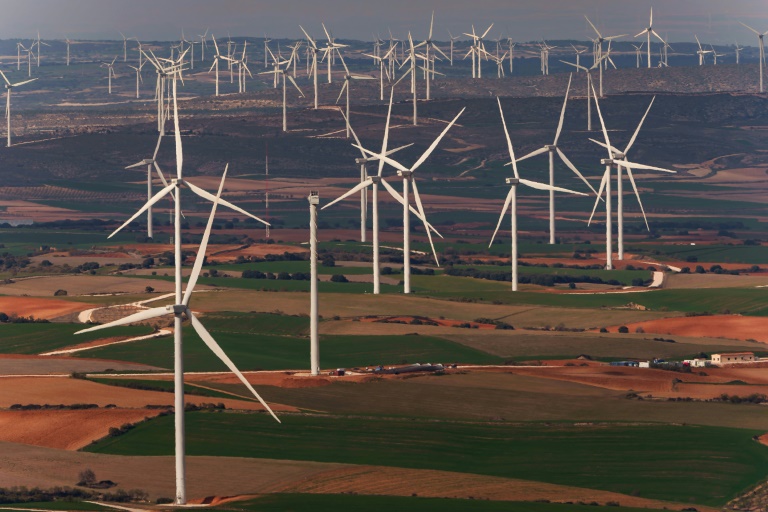
“We are on suitable ground here,” said Joaquin Garcia Latorre, project director at Enel Green Power Espana, pointing to gigantic masts erected on the heights of the tiny northeastern village of Villar de los Navarros.

The Spanish-Italian firm picked this spot, which is well exposed to the wind, to set up a 180-megawatt wind farm, one of the country’s biggest.

Dubbed Tico Wind, its 43 wind turbines started producing power in November, said Latorre while workers around him tended to the turbines, which are over 100 metres (328 feet) high.

“There are between 2,500 and 3,000 hours of wind here per year,” he added.

The wind farm will be able to produce 471 gigawatt hours per year — enough to meet the demands of 148,000 households — after it becomes fully operational in a month.

These types of projects have popped up across Spain in recent years, making it Europe’s second-biggest wind power producer after Germany for installed capacity and the world’s fifth biggest.

Wind power became the main source of electricity production in Spain last year, accounting for 23 percent, ahead of nuclear (21 percent) and gas (17 percent), according to national grid operator REE.

The sector “benefits from a favourable situation” although “brakes” remain on its development, such as a dependency on government auctions, said Francisco Valverde Sanchez, renewables specialist at electricity consultants Menta Energia.

– Investor interest –

Following a boom in the 2000s thanks to generous public financial aid, the sector suffered a sudden halt when subsidies were slashed in 2013 during Spain’s economic crisis.

It has since charged ahead. Spain, which has a total of 1,265 wind farms, had an installed wind power capacity of 28.1 gigawatts in 2021, up from 23.4 gigawatts in 2018, according to industry group AEE.

With large swathes of sparsely populated land, a favourable legal framework and cutting edge wind turbine makers, Spain is one of the most “interesting” markets for wind power investors, said AEE director general Juan Virgilio Marquez.

Spain is home to several sector heavyweights such as Iberdrola and Naturgay, making it a top exporter of wind power equipment. “This explains the dynamism of the sector,” said Marquez.

Investor interest has even come from outside of the energy sector.

In November Spain’s Amancio Ortega, the founder of fast fashion giant Zara and one of the world’s richest men, injected 245 million euros ($268 million) in a wind farm in the northeastern region of Aragon.

– Energy ‘breadbasket’ –

Spain in 2020 pledged to generate 74 percent of its electricity from renewable sources by 2030, up from 47 percent.

To meet this target, Spain is counting on the development of offshore wind power, a sector that is in its infancy.

But since Spain has thousands of kilometres of coastline, offshore wind has lots of room to grow.

“This is an ambitious goal,” said Valverde Sanchez, arguing that government bureaucracy around wind farm projects must be reduced for it to be met.

Nearly 600 wind power projects are currently under study by the government, according to AEE.

As part of its plan to respond to the economic fallout from Russia’s invasion of Ukraine, Spain has pledged to speed up the approval of wind power projects of less than 75 megawatts.

“Our country had enough natural resources to become Europe’s leading producer and exporter of renewable energy,” Prime Minister Pedro Sanchez said Wednesday, adding this could be key to help the European Union meet its goal of “energy independence”.

Since Russia invaded Ukraine on February 24, Brussels has declared a mission to cut the EU’s Russian gas imports by two thirds this year and to end the use of Russian gas by 2027.

Spain “could become the energy ‘breadbasket’ of Europe,” said Virgilio Marquez.

After Covid blues, French saxophone maker hits the right note

After the financial blues of the Covid pandemic, the French saxophone maker favoured by American jazz greats celebrates its 100th birthday looking to expand further in Asia and the United States.

Selmer experienced two difficult years after the pandemic began in 2020, the company’s executive chairman Thierry Oriez tells AFP.

“The Covid crisis affected us together with our customers” because “the world of music stopped”, whether that meant shows or conservatory classes.

But now Oriez looks to the future, with sales brimming once more.

“(I’m) convinced we could do more in the United States.”

Around 90 percent of sales are international, with China accounting for one-fifth of them ahead of Japan, South Korea and the United States. The company did not provide any sales figures.

While order books are full, Selmer, like many other companies, faces recruitment difficulties while Covid-19 continues to pose absenteeism problems.

The company was founded by clarinet player Henri Selmer in 1885 but produced its first saxophone in 1922.

Selmer’s instruments have been played by jazz legends including John Coltrane, Stan Getz and Sonny Rollins.

– ‘Musical evolution’ –

The family business was sold in 2018 by its heirs to European private equity group Argos Soditec. A delivery subsidiary for Asia was established in 2020.

Oriez took over the business in July from Jerome Selmer, a great-grandson of Henri Selmer.

The instruments are made at a factory in Mantes-La-Ville, just west of Paris. The company also owns a laboratory that works with musicians to develop new models.

Finishing touches and assembly of Selmer’s Axos series, a new collection less expensive than the company’s other instruments, are completed in China. An alto saxophone costs 3,150 euros ($3,430) while a tenor is worth 4,150 euros ($4,500).

Oriez says the new collection “allows us to be more aggressive in the Chinese market”.

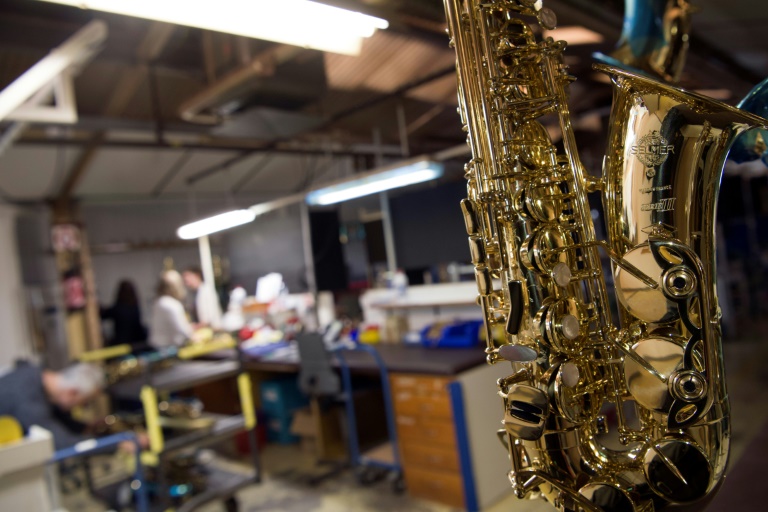
While the Mantes-La-Ville factory has motorised precision machinery to craft some of the 700 pieces that make up each instrument, a large part of the work is still carried out by hand.

Artisans cut sheets of brass, use blowtorches to bend them into shape, mount the keys on the tube, polish the instrument and engrave Selmer’s logo on it.

Engraver Morgane Duhamel spots an imperfection and adds by hand “a small engraving that will be personalised and will offer the customer a unique instrument”.

Eric Bruel, who makes the saxophones’ horns by turning the brass tubes on a mandrel, said the search for new tones “has an influence on the treatment of the metal: the reheating temperature with the blowtorch, it will be more or less strong, more or less long”.

“Selmer has always walked the line between modernity regarding tools and the other slightly Amish side: we still do the forging, the welding and polishing by hand,” Bruel said.

“In almost 30 years at the company, I’ve seen many changes in tools, the families of instruments, the musical evolution with young saxophone players who do not necessarily have the same sounds as their elders,” he said.

Close Bitnami banner
Bitnami