US Business

Global ambitions drive Algerian tech start-up Yassir

It’s the Algerian start-up that made good: despite the country’s notoriously complex business climate, taxi and home-delivery firm Yassir has millions of users and is expanding across Africa.

“We made it our mission to create a model of success that was genuinely, 100-percent Algerian, to develop local talent and show that it’s possible to create added value in Algeria,” said co-founder Noureddine Tayebi.

Patience has been key as they navigate the country’s archaic bureaucracy, the bugbear of investors and one that creates particularly tough terrain for new entrants.

“Bureaucracy is one obstacle that we have to overcome. I can’t say it’s easy, but you have to deal with it and move forward,” Tayebi told AFP.

It’s a sign of changing times in Algeria, which in 2020 passed a law on start-ups and created a ministry to promote them.

Since he launched Yassir five years ago with fellow engineer Mehdi Yettou, the company has rolled out across the Maghreb region and beyond.

Late last year they raised some $30 million from American investors, cash they plan to pump into an ambitious expansion plan.

The firm has indirectly created more than 40,000 driver and delivery jobs and its revenue is skyrocketing at up to 40 percent a month.

Tayebi studied in Algiers before earning his doctorate in electronic engineering at the United States’s prestigious Stanford University.

That led to a job with chip manufacturer Intel — but after eight years in Silicon Valley, he decided to return home and set up Yassir along with Yettou.

– Expanding in Africa –

The name is a play on the words for “easy” and “drive” in Algerian Arabic.

The pair launched their taxi app in 2017 in Algiers, a capital with a population of four million and desperately lacking public transport.

The firm has since branched out into deliveries of fast food and groceries, with sister app Yassir Express.

Today Yassir has some four million subscribers in 25 cities across Algeria, neighbouring Morocco and Tunisia, as well as Canada and France.

Tayebi says he now has his sights set on West Africa — the app already works in Senegal — and other major markets on the continent such as South Africa, Nigeria and Egypt.

While its growth has been explosive, the business faces tough competition from Uber, Heetch and others.

To succeed, it will need to hire hundreds of highly skilled technicians.

It is already the biggest tech employer in the Maghreb region with some 600 engineers, a figure it wants to triple or even quadruple.

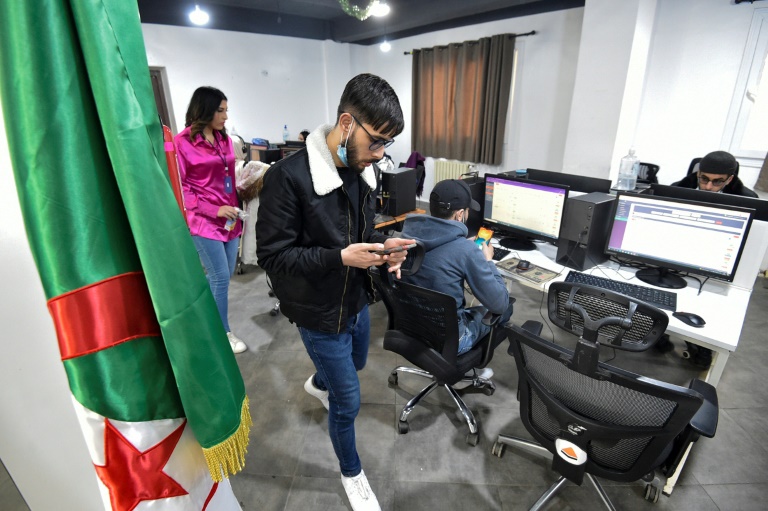
In Algiers, 30 or so young call centre operators are on hand to deal with around 6,000 orders a day.

“The average delivery time for meals is 30 minutes,” said Wissem, who runs the call centre.

– Big ambitions –

Tayebi also wants to provide an online payment system — a rarity in Algeria, where customers pay cash on delivery.

“Most of the population in Algeria and across Africa don’t have bank accounts — not because there’s no banking system, but because people don’t trust it,” Tayebi said.

He hopes to change that by capitalising on the trust the company has among its growing customer base.

“That’s the strength of our model and what sets us apart, particularly from Uber,” he said.

It also means the firm needs to keep a squeaky-clean image.

One Yassir taxi driver told AFP he had been given training in communication before being hired.

Tayebi said there was “a rigorous process for selecting drivers”. 

“We verify their police records, training and education. There’s even a psychological interview.”

It’s all part of a business for which he has set ambitious targets.

“The goal is to create the biggest tech company not just in Africa but in the world,” Tayebi said. 

“To get there, you need to be in lots of markets.”

Twitter stakeholder Elon Musk tweets 'Is Twitter dying?'

Twitter’s newest board member and largest stakeholder Elon Musk tweeted Saturday to ask if the social media network was “dying” and to call out users such as singer Justin Bieber, who are highly followed but rarely post.

“Most of these ‘top’ accounts tweet rarely and post very little content,” the Tesla boss wrote, captioning a list of the 10 profiles with the most followers — a list which includes himself at number eight, with 81 million followers.

“Is Twitter dying?” he wrote. 

Former US President Barack Obama appears at the top with 131 million followers, followed by stars such as Bieber, Katy Perry, Rihanna and Taylor Swift, as well as Indian prime minister Narendra Modi and football star Cristiano Ronaldo, among others. 

“For example, @taylorswift13 hasn’t posted anything in 3 months,” Musk continued.

“And @justinbieber only posted once this entire year.”

The social media company named Musk to the board on Tuesday after the outspoken and polarizing executive disclosed he had acquired a more than nine percent stake in the company, making him Twitter’s largest shareholder.

Musk said he looked forward to soon making “significant improvements to Twitter,” and began polling his followers on whether to add an “edit” button to the service, a long-discussed tweak.

Twitter has now said that it will start experimenting with one.

On Thursday, Musk tweeted a photo of himself smoking marijuana on a Joe Rogan podcast in 2018, with the caption, “Twitter’s next board meeting is gonna be lit.”

His antics often raise eyebrows and occasionally draw condemnation, as when Jewish groups blasted his tweet comparing Canadian leader Justin Trudeau to Adolf Hitler over Covid-19 vaccine mandates. Musk later deleted the tweet without apologizing.

The appointment has sparked misgivings among some employees, according to a Washington Post report.

Workers at the California-based social media company cited worries about Musk’s statements on transgender issues and his reputation as a difficult and driven leader, according to statements on Slack reviewed by the Post.

A California agency has sued Tesla, alleging discrimination and harassment against Black workers. The electric carmaker has rejected the charges, saying it opposes discrimination.

Sri Lanka's embattled leader faces biggest street protest

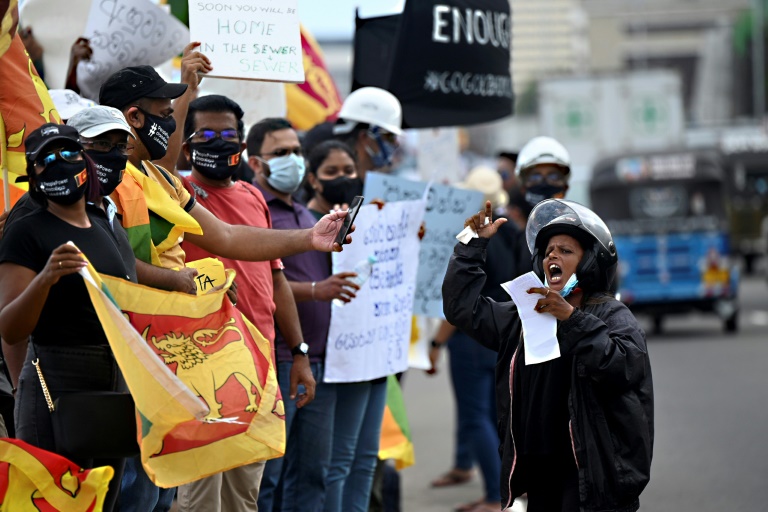
Tens of thousands marched on beleaguered Sri Lankan President Gotabaya Rajapaksa’s office on Saturday, in the biggest protest to date over the country’s dire economic and political crisis.

Sri Lanka’s 22 million people have seen weeks of power blackouts and severe shortages of food, fuel and other essentials in the country’s worst downturn since independence in 1948.

Saturday’s social-media organised protest drew the largest numbers since the crisis blew up last month according to AFP reporters. And pressure on Rajapaksa intensified further as the country’s powerful business community also began withdrawing support for the president. 

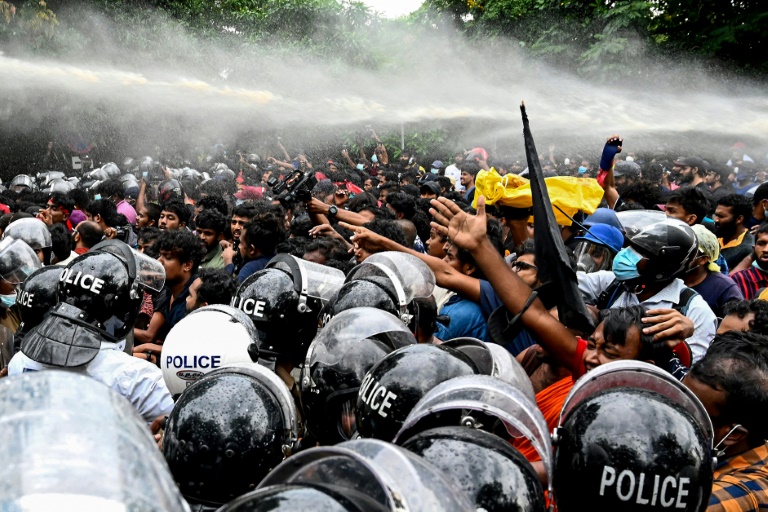
Men and women poured onto Colombo’s seafront promenade and laid siege to the colonial-era Presidential Secretariat, chanting “Go home Gota” and waving the national lion flag. 

Others carried handwritten placards that read “It’s time for you to leave” and “enough is enough.”

Barricades blocked the entrance to the president’s office with police in riot gear taking up positions inside the tightly guarded compound.

“These are innocent people here. we are all struggling to live. The government must go and allow a capable person to lead the country,” one man told the crowd.

The protests appeared to be peaceful, but a police official said teargas and water cannon were at the ready if needed. On Friday security forces fired water cannon at demonstrating students.

Residents said there were widespread protests in the suburbs of the capital too while the Catholic and Anglican churches also brought their followers onto the streets.

The head of the Catholic Church, Cardinal Malcolm Ranjith led a protest in the town of Negombo, just north of Colombo, urging people to continue protesting till the Rajapaksa administration resigned. 

“Everyone must get on the streets till the government leave, these leaders must go. You must go. You have destroyed this country.”

– Fuelling losses –

Sri Lanka’s business community, which largely funded Rajapaksa’s election campaign, also appeared to ditch the president on Saturday. 

“The current political and economic impasse simply cannot continue any further, we need a cabinet and interim government within a week at most,” said Rohan Masakorala, head of Sri Lanka Association of Manufacturers and Exporters of Rubber products.

His association joined 22 other business and industry organisations, seeking a change of government, saying daily losses had reached around $50 million due to the fuel shortage alone.

In a joint statement, they said that they were responsible for generating nearly a quarter of the country’s $80.17 billion gross domestic product and warned millions of jobs would be in jeopardy.

Newly appointed central bank governor Nandalal Weerasinghe said a series of monetary policy blunders had led to the current crisis with no dollars to finance many imports.

In a desperate attempt to shore up the free-falling rupee, Weerasinghe on Friday implemented the country’s biggest-ever interest rate hike of 700 basis points.

“We are now in damage control mode,” he said. 

Weerasinghe added he expected the rupee to stabilise and dollar inflows to improve as he relaxes his predecessor’s tight foreign exchange restrictions which he described as counter-productive.

The government is preparing for bailout negotiations with the International Monetary Fund next week, with finance ministry officials saying that sovereign bond-holders and other creditors may have to take a haircut.

New finance minister Ali Sabry told parliament on Friday that he expects $3 billion from the IMF to support the island’s balance of payments in the next three years.

“We hope to get about a billion dollars a year in the next three years totalling a support of three billion,” he said adding that Colombo will also seek a debt moratorium.

Rising petrol prices fuel uncertainty at oil giant Petrobras

Brazil’s state-run oil company Petrobras is once again in crisis: caught in a political tug of war over rising fuel costs.

Far-right President Jair Bolsonaro, seeking re-election in October, is widely blamed by voters for double-digit inflation, polls show, on the back of skyrocketing fuel prices.

Feeling the heat, Bolsonaro last week fired Petrobras CEO Joaquim Silva e Luna, saying the petrol price was “unaffordable” and amounted to a “crime” against Brazilians.

Tied to international market movement, fuel prices in Brazil rose 33 percent in the past year even as the economy recovers from the effects of the coronavirus pandemic.

Russia’s war in Ukraine has led to a spike in crude prices in recent weeks, adding to the pressure.

“Manipulating tariff policy is like manipulating the law of gravity,” Silva e Luna said after his firing last week.

Inflation in Brazil, meanwhile, rose more than 11 percent in a year, and opinion polls show that three-quarters of Brazilians blame Bolsonaro for their thinning wallets.

Bolsonaro’s main rival, leftist former president Luiz Inacio Lula da Silva, has also vowed to “Brazilianize the fuel price” — meaning to adapt it to the reality on the ground.

Lula, a former trade unionist and popular ex-leader, is the polled favorite ahead of October’s vote.

– Sacrificial firing –

With the fuel price in both men’s crosshairs, the future of Petrobras — which determines the price of petrol at the pump — depends very much on the outcome of October’s elections.

The company has hardly had time to settle after the 2014-2021 Operation Car Wash corruption probe that saw several top politicians and business executives convicted for embezzlement of billions of dollars from the oil giant.

After a tough year in 2020 due to the coronavirus pandemic freezing global travel, Petrobras posted a record net profit of nearly $20 billion in 2021.

But the results were not enough to satisfy the political bosses.

According to economist Gesner Oliveira, Silva e Luna was sacrificed by Bolsonaro “to satisfy his electorate”. 

Silva e Luna’s predecessor, Roberto Castello Branco, was fired by the president a year earlier for similar reasons.

But replacing the latest CEO has turned out to be more difficult than foreseen.

Bolsonaro’s pick, economist Adriano Pires, withdrew his name from the race this week due to a possible conflict of interest over his other role as head of an energy consulting firm.

Another nominee of the president, Rodolfo Landim, also withdrew to concentrate his attention on the Flamengo football club of which he is president.

Several other possible candidates had declined the job, according to the Brazilian press.

Then on Wednesday, the government nominated Jose Mauro Coelho, who was in charge of oil issues at the Ministry of Mines and Energy. 

His appointment could be approved at a shareholders’ meeting on April 13, making him the 40th Petrobras CEO in 68 years.

– ‘Complex economic problem’ –

Whoever is at the helm, the pressure from the top will be intense.

“This is a position exposed to very strong political pressure, and each dismissal is an easy political response to a complex economic problem,” Adriano Laureno of consulting firm Prospectiva told AFP.

Analysts say that internal regulations at Petrobras, which is listed on the New York and Sao Paulo stock exchanges, as well as Brazil’s reliance on imported oil, prevent any drastic change in pricing policy.

“A stabilization fund could be set up to mitigate price fluctuations, but it is not possible to change the tariff policy in depth,” said Oliveira.

Petrobras is also under threat of privatization, a move favored by Bolsonaro and several of his top political backers.

Amazon labor leader eyes national push after New York win

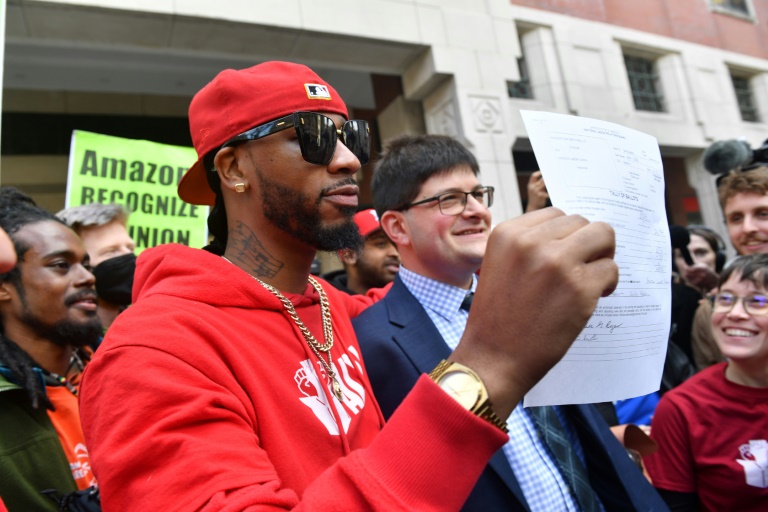
Leaders of the Amazon unionization campaign have heard from workers at some 100 other company facilities following last week’s upset election win in New York, the union’s president said Friday.

“We are witnessing a revolution,” Christian Smalls, president of Amazon Labor Union, said a week after the election at the JFK8 warehouse in Staten Island established the first union at a US Amazon facility.

Friday’s 90-minute event — part pep rally, part press conference — had a celebratory feel as Smalls and other leaders of the upstart union dismissed Amazon’s objections to the Staten Island vote and cheered a nascent campaigns at other Amazon facilities.

“All 50 states have contacted us, even overseas,” said Smalls, who plans a national conference call in May to share election tips with workers from other sites.

“We’re going to help them,” Smalls said. “I don’t know what that looks like, but we’re going to try.”

Amazon has signaled plans to fight the Staten Island result, telling the National Labor Relations Board it will file “substantial” objections to last week’s election based on alleged problematic election conduct on the part of the union and the board’s officials. 

The union has dismissed the Amazon statements as a stall tactic, with Smalls calling the allegations “trash.”

Smalls said he and other leaders in the New York campaign were willing to travel to other parts of the United States to assist organization and election drives.

He cited Starbucks as an example for growing a national movement. 

More than 180 Starbucks cafes have seen unionization campaigns after a pair of cafes in upstate New York voted to unionize in December. 

On Friday, three more Starbucks cafes in upstate New York voted to unionize, taking the national total to 16.

US stocks pressured amid interest rate angst as euro gyrates

Wall Street stocks mostly fell Friday amid lingering unease over tightening US monetary policy, while the euro gyrated ahead of France’s presidential election.

Both the S&P 500 and Nasdaq retreated as the yield on the 10-year US Treasury note climbed above 2.7 percent, a signal markets are preparing for more Federal Reserve monetary tightening.

All three major US indices notched losses for the week.

“Uneasiness and trepidation appeared to drive a relatively quiet session as investors continued to weigh the potential implications of a highly aggressive Fed monetary policy tightening cycle,” Charles Schwab investment bank said in a note.

The euro sank as low to $1.0837 before bouncing back, a reflection of uncertainty ahead of Sunday’s first-round French presidential vote.

The single currency has also been dented by European officials’ reticence to move as aggressively as the Fed on tackling soaring inflation.

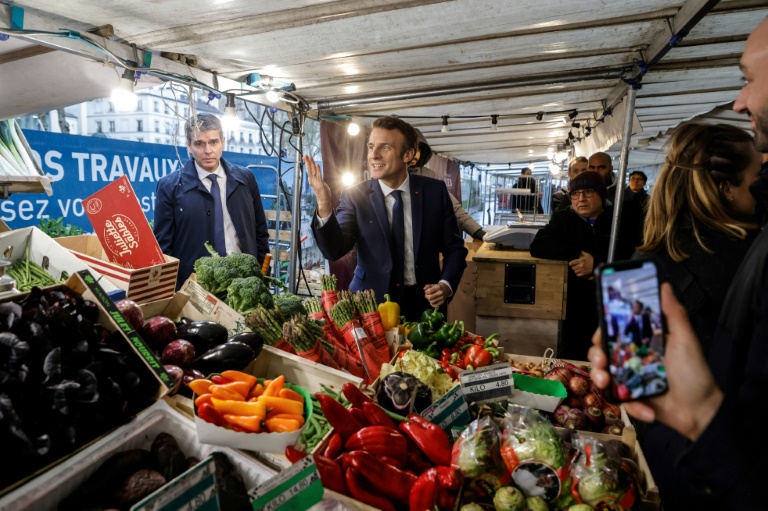
The volatility in the euro comes as polls show a tight race by French President Emmanuel Macron and his main election rival, far-right leader Marine Le Pen.

The president is projected to come out on top in Sunday’s first round of voting, but far short of the majority needed to avoid a run-off between the top two candidates on April 24 — and with Le Pen close behind.

The euro would experience a “knee-jerk” drop of about 1.5 percent in its value against the dollar if Le Pen ultimately is elected, and then will “continue falling,” Wells Fargo bank said in a note.

“Even if Le Pen wins the presidency, her party is very unlikely to garner a working parliamentary majority, but ousting or even weakening Macron could be a blow to EU integration and economic policy,” Wells Fargo said.

The lower euro helped boost bourses in Paris and Frankfurt, both of which rose more than one percent.

“Today’s positive session for European markets appears to have more to do with the fact that the strength of the US dollar has pushed both the pound and the euro lower, with the pound falling to its lowest levels since November 2020,” CMC Markets analyst Michael Hewson said.

– Key figures around 2050 GMT –

New York – Dow: UP 0.4 percent at 34,721.12 (close)

New York – S&P 500: DOWN 0.3 percent at 4,488.28 (close)

New York – Nasdaq: DOWN 1.3 percent at 13,711.00 (close)

London – FTSE 100: UP 1.6 percent at 7,669.56 (close)

Frankfurt – DAX: UP 1.5 percent at 14,283.67 (close)

Paris – CAC 40: UP 1.3 percent at 6,548.22 (close)

EURO STOXX 50: UP 1.4 percent at 3,858.37 (close)

Tokyo – Nikkei 225: UP 0.4 percent at 26,985.80 (close)

Hong Kong – Hang Seng Index: UP 0.3 percent at 21,872.01 (close)

Shanghai – Composite: UP 0.5 percent at 3,251.85 (close)

Euro/dollar: DOWN at $1.0878 from $1.0879 late Thursday

Pound/dollar: DOWN at $1.3036 from $1.3075

Euro/pound: UP at 83.43 pence from 83.20 pence

Dollar/yen: UP at 124.30 yen from 123.95 yen

Brent North Sea crude: UP 2.2 percent at $102.78 per barrel

West Texas Intermediate: UP 2.3 percent at $98.26 per barrel

burs-jmb/cs

Russia's ruble stages rebound despite Western sanctions

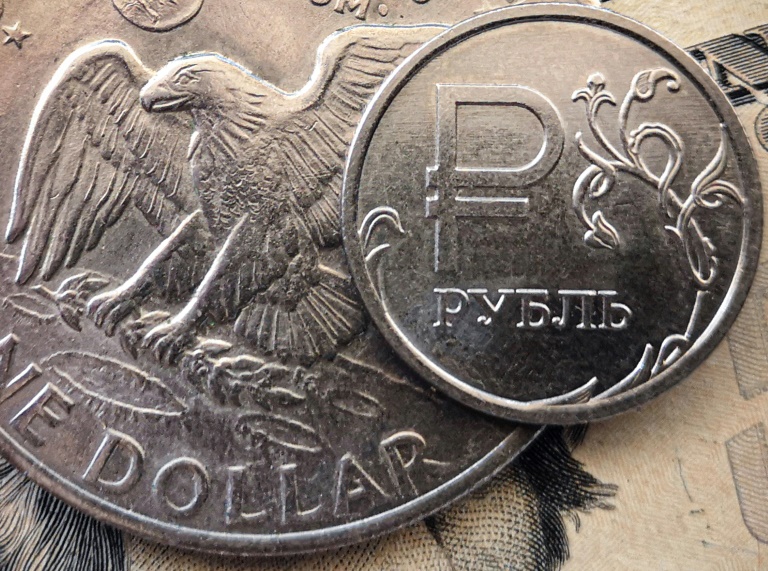
After a historic collapse in the wake of Russia’s military offensive in Ukraine, the ruble has staged a spectacular bounceback, supported by strict capital controls and energy exports. 

But analysts say that success is in many ways artificial and does not bode well for the health of the Russian economy.

The February 24 military operation triggered unprecedented Western sanctions on Moscow, sending the ruble into free-fall and accelerating already high inflation. 

Four days after President Vladimir Putin sent troops into the pro-Western country, the central bank more than doubled its key interest rate to 20 percent to prop up the financial system. 

In a surprise move on Friday, the central bank lowered the rate to 17 percent, saying risks to financial stability had “ceased to increase” for now.

“It’s clear that the Central Bank of Russia assesses that Russia’s economy is now emerging from the most acute phase of its crisis and that such restrictive monetary conditions are no longer warranted,” said Liam Peach, emerging Europe economist at Capital Economics.

The ruble’s return to levels last seen before the start of Moscow’s military campaign is a sign that the economy may be adjusting to the sanctions, economists say.

– ‘Exports are solid’ – 

Sofya Donets, chief economist at Renaissance Capital, said the ruble recovery has been aided by an unprecedented trade surplus amid high energy prices.

“There has been a decline in imports, partly because of sanctions, partly because of uncertainty and logistical disruptions,” she told AFP.

“But exports are solid, and with commodity prices high we expect a historically high account surplus of $20-25 billion in March.”

Oil and gas, Russia’s main exports, keep flowing abroad, filling Russia’s coffers. 

The United States has banned Russian oil imports and the EU adopted a ban on Russian steel imports but those penalties have largely spared key Russian exports.

“It only affects five percent of Russian exports, so it’s not that much,” said Donets.

Robust exports have been supplemented by harsh capital controls introduced by the central bank.

The West froze some $300 billion of Russia’s foreign currency reserves abroad, a move that Foreign Minister Sergei Lavrov has described as “theft”.

To counter the sanctions, exporting companies were forced to sell 80 percent of their export earnings to buy rubles. 

Russians have also been barred from withdrawing more than $10,000 in foreign currency or taking more than that amount out of the country, and foreign investors have been banned from selling Russian assets.

Late Friday the central bank relaxed some curbs, saying that from April 18 it was scrapping the ban on buying dollars and euros introduced in early March.

 – ‘PR campaign’ – 

The rapid ruble recovery does not equal a strong economy, however, analysts said.

“Russian equities and the ruble currently remain decoupled from global macro factors and news flow due to capital controls,” Alfa Bank said in a note.

The lender estimates that the ruble will be trading at around 80-85 to the dollar in the near future. 

Economists believe that the worst economic impact of the sanctions is still to come and expect Russia, which has relied heavily on imports of manufacturing equipment and consumer goods, to plunge into a deep recession.

Russia’s inflation rate reached 16.7 percent year-on-year in March, the state statistics agency said on Friday, a level not seen since 2015, while food prices have risen even more steeply.

Capital Economics pointed out that the 7.6 percent month on month rise in consumer prices in Russia in March was “the highest monthly increase since the 1990s.”

Renaissance Capital analysts predict that annual inflation will peak at 24 percent this summer.

Donets said that “the market is destroyed in a sense.”

“We have a closed financial system now,” she added.

“Where would the ruble rate be if there were no capital controls? It’s very hard to say, there has been no precedent.”

Timothy Ash, an emerging markets strategist at BlueBay Asset Management, was more blunt, saying the Bank of Russia was “heavily managing/manipulating this.”

“It’s not a liquid market,” he told AFP in emailed comments.

“This is a PR campaign by the Central Bank of Russia as a tool of the Kremlin.”

Crisis-hit Sri Lanka hikes rates as protests spiral

Cash-strapped Sri Lanka’s central bank hiked interest rates by a record 700 basis points Friday as police fired tear gas at hundreds of students protesting over the economic crisis.

Severe shortages of food and fuel, alongside lengthy electricity blackouts, have led to weeks of widespread anti-government demonstrations — with calls for President Gotabaya Rajapaksa to resign.

The latest protests saw students try to march Friday to the national parliament, and police used water cannons in efforts to disburse the angry crowds.

Monks, who had largely rallied the Sinhala-Buddhist majority to elect Rajapaksa at the November 2019 polls, were also seen joining demonstrations in the capital Colombo, where some defiantly stood opposite police wearing gas masks and holding riot shields.

Demonstrators nationwide carried placards saying “Gota go home”, demanding Rajapaksa and his administration step down over the country’s worst economic crisis since independence in 1948.

– Damage control –

The Central Bank of Sri Lanka said its benchmark lending rate had been raised to 14.5 percent to “stabilise the exchange rate” after the rupee tumbled over 35 percent in a month.

The rate for deposits was also increased by seven percentage points to 13.5 percent as reports said Sri Lanka’s rupee was the worst-performing currency in the world, edging out the Russian ruble.

The bank’s newly appointed governor, Nandalal Weerasinghe, said attempts to control foreign exchange markets and keep interest rates artificially low in the past year had contributed to the unprecedented economic chaos.

“We are now in damage control mode,” Weerasinghe said at his first press conference since replacing Ajith Cabraal, who was virtually forced out Monday with the country facing bankruptcy.

“We would not have had to make such a sharp increase if rates had been raised incrementally over a period of time,” Weerasinghe said, vowing to relax exchange controls introduced by his predecessor.

The bank said the shock-treatment rate hike was due to its belief that the embattled island’s inflation, already at record levels, could get worse.

The Colombo Consumer Price Index rose 18.7 percent in March while food inflation topped 25 percent, but private analysts placed inflation at over 50 percent in the month.

International rating agencies have downgraded Sri Lanka as fears grow it could default on its $51 billion external debt.

This week, Rajapaksa appointed a panel of experts to organise a restructuring of foreign debt.

His government is preparing for bailout negotiations with the International Monetary Fund, and finance ministry officials said the panel will prepare a programme for sovereign bond-holders and other creditors to take a haircut.

“What Sri Lanka is keen to do is avoid a hard default,” a source from the ministry who requested anonymity told AFP. 

“It will be a negotiated restructuring of the debt with the help of the IMF.”

Meetings with the IMF are set to begin by next week but finance minister Basil Rajapaksa, the president’s brother, resigned Sunday along with nearly the entire cabinet. 

The country is still without a replacement, with his successor Ali Sabry quitting after just one day in office. Sabry told parliament Friday he was still in the job because no one was willing to accept the finance portfolio.

– European push –

Colombo-based diplomats from European Union member states, which form a key export market for Sri Lanka, on Friday asked the government to immediately begin reforms to revive the economy.

“We stress the extreme urgency of the situation, which requires the authorities to start in-depth discussions with the International Monetary Fund,” the diplomats said in a joint statement.

Public anger is at fever pitch, and on Saturday thousands of people are expected to take part in what likely will be the biggest protest since the crisis began.

Opposition parties have rejected a presidential overture to form a unity administration and instead joined calls for Rajapaksa to step down.

The shortages of essentials have been caused by a wide-ranging import ban as Sri Lanka seeks to conserve its meagre foreign currency reserves to pay its debts.

In recent years the vital tourism sector has also been hit hard by Islamist bomb attacks in 2019 and the coronavirus pandemic, which dried up remittances from Sri Lankans abroad.

Economists say the crisis has been exacerbated by government mismanagement, years of accumulated borrowing and ill-advised tax cuts.

US jury convicts ex-Goldman banker in 1MDB scandal

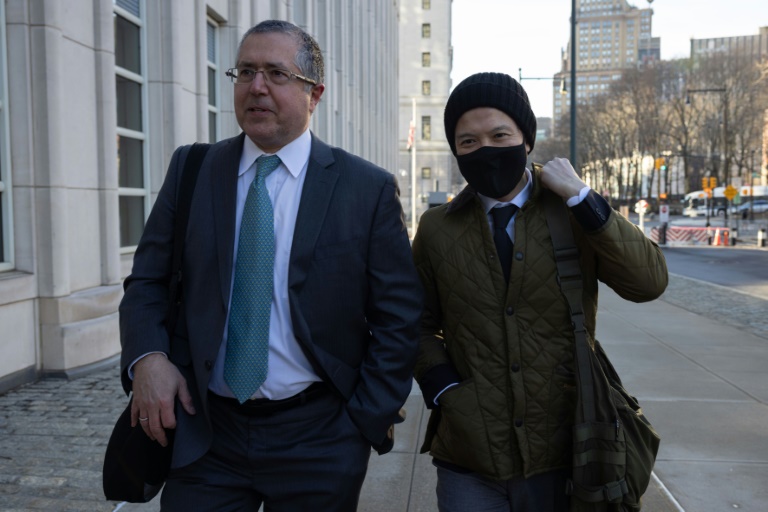
A New York jury on Friday convicted a former Goldman Sachs banker for his role in propagating a massive bribery and money laundering scheme involving a state-owned Malaysian investment fund.

The jury found Roger Ng, a managing director at Goldman from 2005 to 2014, guilty on all three counts connected to the massive 1MDB bribery scheme, which involved the embezzlement of billions of dollars of funds originally raised by investment bank.

The 1MDB fund was set up to promote the Malaysian economy, but was spectacularly looted in a scandal that roiled the country’s politics and marred Goldman’s reputation.

Ng and his co-conspirators paid more than $1 billion in bribes to government officials to secure three bond large transactions for Goldman with 1MDB, according to the US Department of Justice.

The conspirators laundered billions of dollars in funds from 1MDB, including some of the funds from the Goldman transactions. 

Some of the money went to luxury items, such as a $51 million Jean-Michael Basquiat painting and millions of dollars in Hermes handbags, the Justice Department said.

The eight-week trial included testimony from Timothy Leissner, a former Goldman partner who has pleaded guilty in the case and testified at length on his role and that of Ng in the scheme.

Attorneys for Ng had argued that Leissner’s testimony should be discounted in light of his plea and that Ng was a pawn in the larger conspiracy.

Ng faces up to a 30-year sentence following his conviction, a department spokesman said.

“Today’s verdict is a victory for not only the rule of law, but also for the people of Malaysia for whom the fund was supposed to help,” US Attorney Breon Peace said. 

“With today’s verdict, a powerful message has been delivered to those who commit financial crimes motivated by greed,” Peace said. “You will be caught, prosecuted and convicted, like Ng, and face a long prison sentence.”

The Goldman Sachs bond deals raised $6.5 billion, yielding the prestigious New York investment bank $600 million in fees and revenue, while Ng garnered some $35 million in kickbacks, the Justice Department said.

In October 2020, Goldman agreed to pay $2.9 billion in penalities in a DOJ settlement that included a guilty plea in US court by a Malaysian unit of the bank. 

First private mission launches for International Space Station

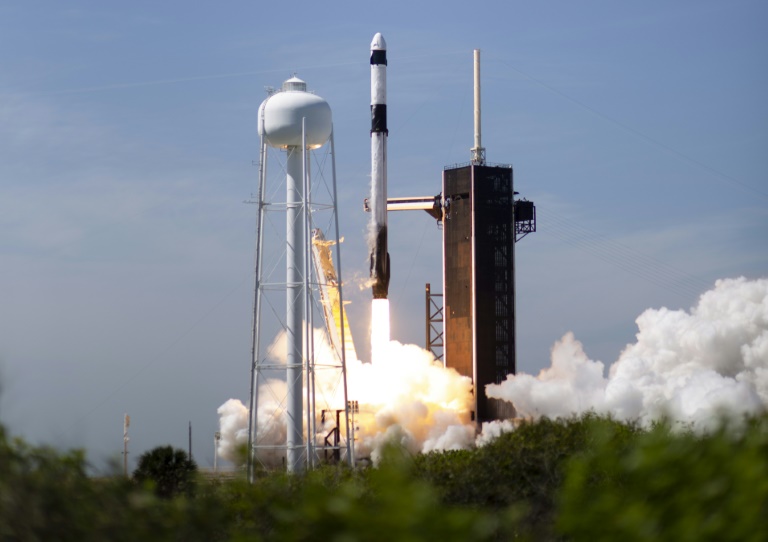
The first fully private mission to the International Space Station blasted off from Florida Friday with a four-member crew from startup company Axiom Space.

NASA has hailed the three-way partnership with Axiom and SpaceX as a key step towards commercializing the region of space known as “Low Earth Orbit,” leaving the agency to focus on more ambitious voyages deeper into the cosmos.

A SpaceX Falcon 9 rocket with the Crew Dragon capsule Endeavor launched at 11:17 am (1517 GMT) from the Kennedy Space Center, and the spaceship should dock at around 1145 GMT Saturday.

“We’re taking commercial business off the face of the Earth and putting it up in space,” said NASA chief Bill Nelson.

“To say that we’re excited is a huge understatement,” Axiom Space CEO Michael Suffredini told reporters after the launch, adding it was the culmination of years of work for the Houston-based company, founded in 2016.

Commanding the Axiom Mission 1 (Ax-1) is former NASA astronaut Michael Lopez-Alegria, a dual citizen of the United States and Spain, who flew to space four times over his 20-year-career, and last visited the ISS in 2007.

He is joined by three paying crewmates: American real estate investor Larry Connor, Canadian investor and philanthropist Mark Pathy, and Israeli former fighter pilot, investor and philanthropist Eytan Stibbe.

The widely reported price for tickets — which includes eight days on the outpost, before eventual splashdown in the Atlantic — is $55 million. 

While wealthy private citizens have visited the ISS before, Ax-1 is the first mission featuring an all-private crew flying a private spacecraft to the outpost. Axiom pays SpaceX for transportation, and NASA also charges Axiom for use of the ISS.

– Research projects –

On board the ISS, which orbits 250 miles (400 kilometers) above sea level, the quartet will carry out 25 research projects, including an MIT technology demonstration of smart tiles that form a robotic swarm and self-assemble into space architecture.

Another experiment involves using cancer stem cells to grow mini tumors, and then leveraging the accelerated aging environment of microgravity to identify biomarkers for early detection of cancers.

“The distinction is that our guys aren’t going up there and floating around for eight days taking pictures and looking out of the cupola,” Derek Hassmann, operations director of Axiom Space, told reporters at a pre-launch briefing. 

In addition, crewmember Stibbe plans to pay tribute to his late friend Ilan Ramon, Israel’s first astronaut, who died in the 2003 Space Shuttle Columbia disaster when the spaceship disintegrated upon reentry.

Surviving pages from Ramon’s space diary, as well as mementos from his children, will be brought to the station by Stibbe.

The Axiom crew will live and work alongside the station’s regular crew: currently three Americans and a German on the US side, and three Russians on the Russian side.

The company has partnered for a total of four missions with SpaceX, and NASA has already approved in principle the second, Ax-2. 

Axiom sees the voyages as the first steps of a grander goal: to build its own private space station. The first module is due to launch in 2024.

The plan is for the station to initially be attached to the ISS, before eventually flying autonomously when the latter retires and is deorbited sometime after 2030.

Close Bitnami banner
Bitnami