US Business

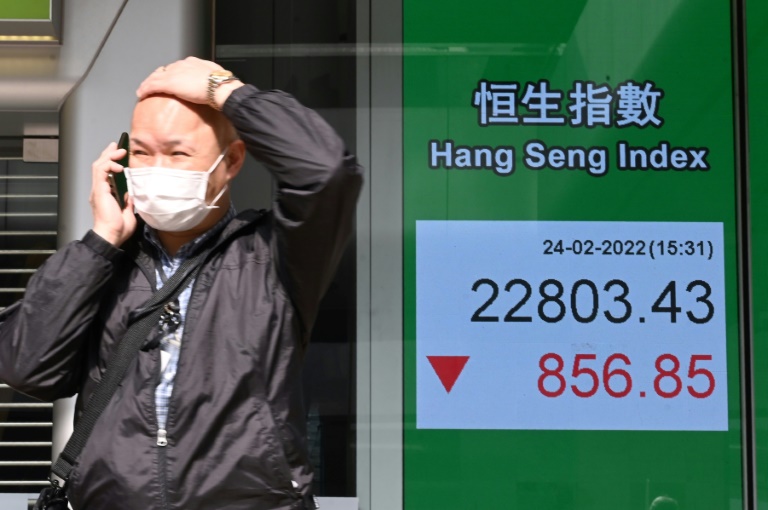
Asia markets open lower ahead of key US data

Most Asian markets opened lower Tuesday, after a weak lead from Wall Street and with eyes on key US inflation data later in the day.

Tokyo was down more than one percent, while Hong Kong dipped slightly into the red.

There were small gains in Taipei and Jakarta.

This followed a weak lead Monday from Wall Street and Europe, with sentiment souring on flat UK economic growth and expectations for another strong US inflation report, which will likely bring aggressive US interest rate hikes.

The US S&P 500 fell 1.7 percent in the first trading day of the holiday-shortened week.

The government is set to release the US consumer price index for March on Tuesday, after inflation rose 7.9 percent over the 12 months to February, the biggest increase in 40 years.

Calling it the “Putin price hike” in reference to the economic ramifications of Russia’s invasion of Ukraine, White House Press Secretary Jen Psaki told reporters: “We expect March headline inflation to be extraordinarily elevated.”

Economists are expecting annual US inflation to spike to nearly 8.5 percent, which would be the highest since late 1981.

“What we’re faced with this year is stagflation,” Kathryn Rooney Vera, head of global macro research at Bulltick LLC, told Bloomberg Television. “It’s a very complicated environment that the Fed has found itself in” and the market is pricing in potentially 50 basis points of hikes at each of the next two policy meetings, she added.

“Risk assets are starting to respond to the relentless rise in yields with US equities falling sharply overnight as the US 10-year yield hit 2.79 percent, its highest in three years,” said Tapas Strickland of National Australia Bank in a note.

All those concerns were weighing on the Tokyo market, Okasan Online Securities said in a note.

“Investors will then likely refrain from making major moves ahead of the release of the March US consumer prices data later in the day. The market will likely lose a sense of clear direction” until the data’s release, the brokerage said.

Hong Kong’s modest gains were fuelled by tech shares after China’s approval of the first batch of new video game licences since July. That step may ease some of the worst concerns about Beijing’s gaming-sector curbs.

Oil steadied, with Brent crude back just over $100 a barrel, after a tumble that erased most of the commodity’s gains sparked by Russia’s war in Ukraine. China’s coronavirus outbreaks and mobility curbs are imperilling demand.

– Key figures around 0230 GMT –

Tokyo – Nikkei 225: DOWN 1.37 percent at 26,454.87 (break)

Hong Kong – Hang Seng Index: DOWN 0.09 percent at 21,188.38

Shanghai – Composite: UP 0.03 percent at 3,168.00

Brent North Sea crude: UP 1.81 percent at $100.26 per barrel

West Texas Intermediate: UP 1.94 percent at $96.12 per barrel

Euro/dollar: DOWN at $1.0871 from $1.0882

Pound/dollar: DOWN at $1.3021 from $1.3029

Euro/pound: FLAT at 83.49 pence

Dollar/yen: UP at 125.40 yen from 125.37 yen

New York – Dow: DOWN 1.19 percent at 34,308.08 (close)

London – FTSE 100: DOWN 0.67 percent at 7,618.31 (close)

— Bloomberg News contributed to this report —

Meta tests sale of virtual goods in metaverse

Meta, the parent company of Facebook and Instagram, will give content creators the opportunity to sell virtual items to users in Horizon Worlds, its main platform in the metaverse, the company said Monday. 

“For example, someone could make and sell attachable accessories for a fashion world or offer paid access to a new part of a world,” the Californian tech group said in a press release.

The metaverse, touted by Meta and other companies as the future of the internet, consists of a set of parallel “universes” accessed primarily through augmented and virtual reality platforms. 

It already exists in a basic way in the form of video games such as Minecraft, Fortnite and Roblox and social platforms such as Horizon Worlds, and VRChat, where people come together not only to play, but also to interact and participate in events. 

Meta, whose income is overwhelmingly dependent on large-scale targeted advertising, has made it its mission to make a major contribution to the emergence of the metaverse, and is staking out its place in the next battle for the public’s attention. 

To that end, the social networking giant is seeking to attract content creators who are likely in turn to attract more new users. 

It had already set up a $10 million fund for creators on Horizon in October, where more than 10,000 different “worlds” already exist, according to the company.

“While we’re launching this today as a test with a handful of creators to get their feedback, these types of tools are steps toward our long-term vision for the metaverse where creators can earn a living and people can purchase digital goods, services, and experiences,” Meta said.

The company also plans to test bonuses for creators who achieve certain goals — such as “building worlds that attract the most time spent.” 

These bonuses will not be “subject to fees and will be paid to creators in full,” Meta said, unlike revenue from virtual items, which is subject to a commission. 

Horizon Worlds has more than 300,000 users in the United States and Canada, according to an article by the specialized site The Verge published in February.

Pregnancy trap for workers in controversial Japan scheme

When Vanessa, a worker with Japan’s “technical intern” programme, told her supervisors she was pregnant, she says they first suggested an abortion and then pressured her to quit.

It’s an example, activists say, of the abuses faced by vulnerable workers in a controversial programme that helps Japan meet its labour needs.

The programme, which had around 275,000 workers from countries including China and Vietnam last year, is supposed to give participants specialised experience that will be of use in their home country.

It’s a valuable source of labour given Japan’s ageing population and small pool of migrant workers, but the scheme has been dogged by allegations of discrimination and physical abuse.

And female technical interns can face particular pressure around pregnancy.

Vanessa, who asked to be identified by her first name only, was working in a care home in southern Japan’s Fukuoka when she discovered she was pregnant, and hoped to return to work after the birth. 

Instead, the 25-year-old Filipina says bosses pushed her and her partner for an abortion despite terminations being both taboo and a crime in her deeply Catholic homeland.

“I thought, ‘how dare (they),'”. “Having an abortion is a mother’s choice, not someone else’s,” she told AFP. 

When she refused to have an abortion, her supervisors forced her to quit.

Japan’s health ministry says 637 technical interns quit because of pregnancy or childbirth between 2017 and 2020, including 47 who said they wished to continue the programme.

But advocates say that is likely the “tip of the iceberg”, and no statistics capture how many others have been pressured to avoid or end pregnancies.

– Interchangeable, cheap labour –

“Most technical interns are of reproductive age… but the idea of them getting pregnant during their stay in Japan is often considered out of the question,” said Masako Tanaka, a Sophia University professor who studies the reproductive rights of migrant women.

Technical interns are covered by Japanese laws banning harassment or discrimination based on pregnancy.

But “maternity harassment” remains a problem for Japanese women, and foreign technical interns are often even more vulnerable. 

Reports of pregnancy-based discrimination in 2019 prompted Japan’s immigration agency to remind employers about the rights of interns.

“We understand that it’s entirely possible that technical interns, as human beings, get pregnant and give birth, and they shouldn’t suffer detrimental treatment for that,” an immigration agency official told AFP.  

Hiroki Ishiguro, a lawyer who has represented technical interns, says employers often consider them interchangeable cheap labour. 

“For some employers, it’s easier to just send them back home and have them replaced with entirely new trainees, rather than go through these extra burdens (to accommodate pregnancy),” he told AFP. 

Now back in the Philippines, Vanessa says she was told her pregnancy would give fellow Filipina trainees a bad reputation. 

They said “because of my situation… the ‘value’ of Filipino trainees will decrease,” she recalled. 

– ‘I’m sorry you two’ –

Financial pressures, including debt from recruitment fees and the needs of family, also weigh on interns like Le Thi Thuy Linh, a Vietnamese worker on a farm in southern Japan’s Kumamoto who found out she was pregnant in July 2020.

She feared her family back home would be “destroyed financially” if she was deported over the pregnancy, said Ishiguro, who is representing Linh.

She hid the pregnancy from her employer and sought a termination.

But abortion pills are not approved in Japan, where surgical terminations typically cost upwards of 100,000 yen ($815), and some interns fear clinics could reveal the procedure to their employers.

That leaves some women seeking unauthorised abortion pills — a “very risky act that could see them charged with foeticide,” Tanaka said.

Linh took abortion pills that she got over the internet soon after she discovered her pregnancy in July, but to no avail.

Her employer began to suspect the pregnancy, though Linh denied it, and warned her of “difficulties” if she gave birth and raised a child, Ishiguro said.

In November, she gave birth prematurely, alone and at home, to stillborn twin boys.

Exhausted, she wrapped them in a towel and placed them in a cardboard box in her room, tucking a note inside: “I’m sorry you two.”

She sought help the following day from a doctor, who reported her to authorities. In January, she received a three-month suspended sentence for having “abandoned” her babies’ bodies. She is appealing.

Vanessa’s story ended differently — she gave birth to her son in the Philippines, but still hopes to return to Japan.

“I want to prove that it’s possible for a pregnant trainee to give birth in her country and go back to Japan to finish her contract,” she said.

Italy freezes villa of Russian F1 driver and father

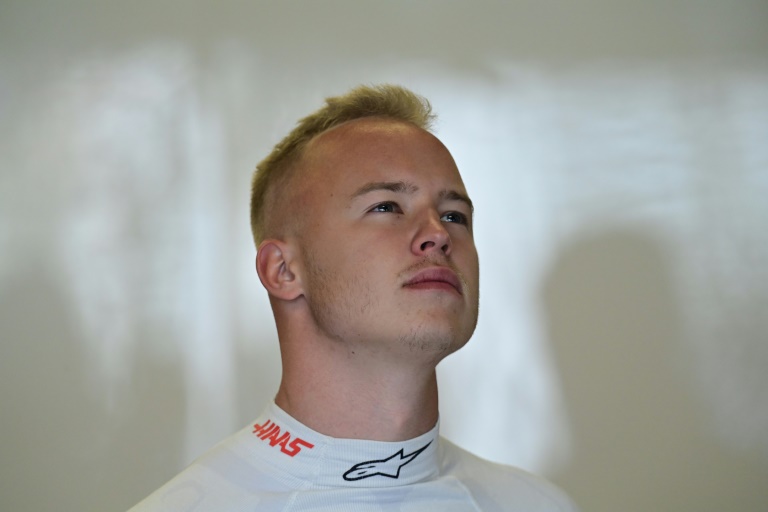
Italian authorities said Monday they have frozen a 100-million-euro ($109 million) Sardinia villa linked to Russian motor racing driver Nikita Mazepin and his oligarch father Dmitry.

The financial police imposed a freezing order on the Rocky Ram villa in Porto Cervo, on the spectacular Costa Smeralda coast on the northeast of the Italian island, a government official said.

Nikita Mazepin, 23, was sacked by the Haas Formula One team last month after Russia’s invasion of Ukraine.

Days later, he was added to a list of Russians sanctioned by the European Union, alongside his father, Dmitry Mazepin, the owner and chief executive of chemical giant Uralchem.

Italy has blocked hundreds of millions of euros of property, notably villas and luxury yachts, linked to Russian oligarchs sanctioned following Moscow’s invasion of its neighbour.

Gas tank graveyard has Mexico City residents up in arms

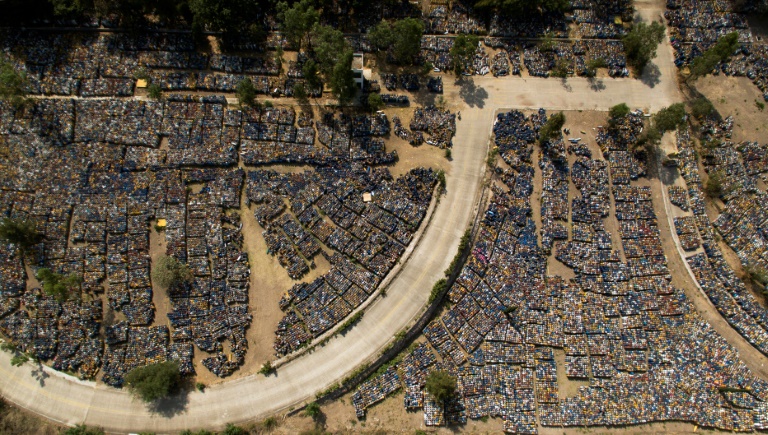
Thousands of disused gas cylinders sit outside under the sun at a former refinery in Mexico City, producing a foul smell that neighbors say has made their lives a nightmare.

Almost every night, Cesar Rivera and his wife leave their apartment because the odor becomes too much, the 37-year-old web programmer told AFP.

“The smell is so strong at night — so unbearable — that it’s like the stove isn’t turned off properly,” he said.

The couple also fear that the liquefied petroleum gas seeping from the cylinders — which are used by many households in Mexico City — will cause an explosion or make them sick.

“The building administration has asked us not to smoke or use the stove burners when the smell’s stronger. It has completely changed our lives,” said Rivera.

“It’s a time bomb,” he added.

Aerial images taken by AFP show what looks like a huge graveyard in the west of the capital, surrounded by residential districts.

But instead of human remains the disused refinery of state-owned oil giant Pemex has become the resting place of thousands of old multicolored gas cylinders.

Rivera said that he and his wife had suffered due to the smell for eight months, but only discovered in January what the source was.

– ‘Vomiting, headaches –

LP gas, made up mainly of butane and propane, is odorless so producers add mercaptan to give it a nauseating smell that allows it to be detected.

Although “the gases produced by its combustion are not toxic or carcinogenic” a leak can cause a build-up that “can be explosive and can suffocate people in small spaces,” Mexico’s National Commission for the Efficient Use of Energy says on its website.

The tanks were stored at the old refinery by the state firm Gas Bienestar, which was created in 2021 to expand competition in the sector, after exchanging old or damaged cylinders free of charge for new ones.

In January, the Mexico City authorities said in a statement that Pemex was in the process of removing them.

Contacted by AFP, the company said it was unable to give an interview about the matter.

Mexican civil protection authorities did not respond to a request for information about the risks posed by the cylinders.

According to Ricardo Torres, an expert at the National Autonomous University of Mexico, LP contributes to the formation of ozone, which at ground level is a harmful pollutant for people and the environment.

Firefighters at a nearby station said they receive daily reports of gas leaks, when in fact the odor comes from the disused tanks.

“We’ve gone to the former refinery, but they don’t see us,” says station chief Cesar Suarez.

Juan Macias, who runs a carpentry workshop next door to the old refinery, said that he now closes the windows in the afternoon despite the stifling heat.

“We feel like vomiting and have really bad headaches,” he said.

“The authorities say there’s nothing to worry about,” the 44-year-old added.

“But everyone here thinks there’s some danger, so we always take care not to light anything when it smells a lot for fear of an explosion,” he said.

Italy PM signs Algeria gas deals to reduce Russia reliance

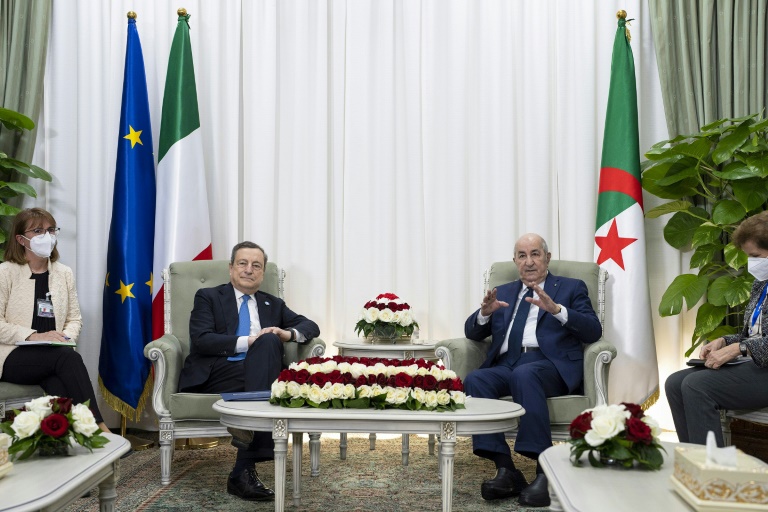
Italian Prime Minister Mario Draghi announced a deal on Monday to boost gas deliveries from energy heavyweight Algeria, as he steps up efforts to reduce Rome’s heavy reliance on Russian imports.

Addressing journalists after meeting President Abdelmadjid Tebboune, Draghi told journalists the two governments had signed a preliminary deal on energy cooperation.

“There is also a deal between ENI and Sonatrach to boost gas exports to Italy,” he said, referring to the Italian energy giant and Algeria’s state hydrocarbons firm.

The firms agreed to boost gas exports through the Transmed undersea pipeline starting this autumn, gradually “increasing volumes of gas… up to 9 billion cubic meters per year in 2023-24”, ENI said in a statement.

The Ukraine war has sparked a Western push for sanctions against Moscow, including moves to drastically cut purchases of Russian gas.

Italy buys the vast majority of its natural gas from overseas, and is one of the most Russia-reliant gas importers in Europe, with over 40 percent of its imports coming from the country.

But Italy also imports significant amounts from Algeria, including some 6.4 billion cubic metres of Algerian gas during the first quarter of 2021, a 109 percent uptick from the previous year.

The war in Ukraine and the subsequent campaign of Western sanctions have prompted Rome to step up the search for alternative sources, with gas giant Algeria an obvious option.

“Immediately after the invasion of Ukraine I announced that Italy would organise quickly to reduce its dependence on Russian gas,” Draghi said.

“The deals today are a significant response to reach this strategic goal, and others will follow.”

– Spare capacity –

Draghi arrived in Algeria weeks after Foreign Minister Luigi Di Maio made the same trip, during which he confirmed that Italy was “committed to increasing energy supplies, notably in gas”, including from Algeria, which he said had “always been a reliable supplier”.

Algeria’s Sonatrach said at the time that it was prepared to increase deliveries, notably via the Transmed pipeline linking Algeria to Italy.

Its CEO Toufik Hakkar said Europe is the “natural market of choice” for Algerian gas, which accounts for about 11 percent of Europe’s gas imports.

But he said any boost to exports would depend on first satisfying Algeria’s ever-growing domestic needs.

Sonatrach and Italy’s ENI jointly operate the Transmed pipeline, which has a capacity of some 32 billion cubic metres per year.

Aydin Calik, an energy analyst at the Middle East Economic Survey, said Monday’s deal implied additional exports that would push the limits of the Transmed pipeline.

“That’s assuming Algeria actually has the capacity to supply more, given its other commitments,” he told AFP. “There are lots of questions.”

Former Algerian energy minister Abdelmajid Attar previously told AFP that “Algeria exports a maximum of 22 billion cubic metres (per year) via the Transmed pipeline”, leaving some 10 billion in spare capacity.

Attar, also a former CEO of Sonatrach, said that Algeria’s liquefaction facilities, which allow gas to be exported by ship, are “only being used at 50-60 percent of capacity”.

He noted that in the short term, Algeria could boost its gas exports to the EU by at most three billion cubic metres per year, meaning “it can’t make up for a fall in Russian gas supplies on its own”.

However, “within four of five years, Algeria could send bigger quantities” to Italy, he added.

Algeria expects to invest some $40 billion on gas and oil exploration, production and refining between 2022 and 2026.

Draghi did not say how much exports were to be boosted under Monday’s deal.

The two countries have a contract for gas deliveries up until 2027.

Draghi said last week that Italy would “follow the decisions of the European Union” on new sanctions against Russia, including a possible gas embargo.

His visit also follows a spike in tensions between Algeria and Spain, another major gas importer, after Madrid dropped a decades-long policy of neutrality over the Western Sahara and backed an autonomy plan put forward by Algeria’s arch-rival Morocco.

Sonatrach warned earlier this month it could increase the price of its gas sales to Spain, which make up more than 40 percent of the country’s imports.

Illegal mining, abuses surge on Brazil indigenous land: report

Illegal gold mining surged by a record amount last year on Brazil’s biggest indigenous reservation, said a report published Monday, which carried chilling accounts of abuses by miners, including extorting sex from women and girls.

The area scarred by “garimpo,” or wildcat gold mining, on the Yanomami reservation in the Amazon rainforest increased by 46 percent in 2021, to 3,272 hectares (8,085 acres), the biggest annual increase since monitoring began in 2018, said the report by the Hutukara Yanomami Association (HAY).

“This is the worst moment of invasion since the reservation was established 30 years ago,” said the indigenous-rights group, in a report based on satellite images and interviews with inhabitants.

“In addition to deforesting our lands and destroying our waters, illegal mining for gold and cassiterite (a key tin ingredient) on Yanomami territory has brought an explosion of malaria and other infectious diseases… and a frightening surge of violence against indigenous people.”

Illegal mining has soared in the Amazon as gold prices have surged recently.

Mining destroyed a record 125 square kilometers (nearly 50 square miles) of the Brazilian Amazon basin last year, according to official figures.

Illegal miners with links to organized crime are accused of numerous abuses in indigenous communities, including sometimes deadly attacks on residents and poisoning rivers with the mercury used to separate gold from sediment.

The report comes as far-right President Jair Bolsonaro pushes legislation to legalize mining on native lands, drawing protests from indigenous groups and environmentalists.

The Yanomami, one of the Amazon’s most iconic indigenous groups, related a harrowing series of abuses.

They included miners giving Yanomami alcohol and drugs, then sexually abusing and raping women and girls.

The Yanomami said miners often demanded sex in exchange for food. One miner reportedly demanded an arranged “marriage” with an adolescent girl in exchange for “merchandise” he never delivered.

“Indigenous women see the miners as a terrible threat,” said HAY, condemning “a climate of terror and permanent fear.”

The Yanomami reservation spans 9.7 million hectares in northern Brazil, with around 29,000 inhabitants, including the Yanomami, the Ye’kwana and six isolated groups who have almost no contact with the outside world.

Brazilian environmental and indigenous authorities did not immediately respond to requests for comment.

Federal prosecutors said they would investigate the report’s allegations with a view to possibly bringing criminal charges.

They said they had already filed a court case last month aimed at forcing Bolsonaro’s government, which has been accused of going easy on illegal mining, to “resume protective actions and police operations against illegal ‘garimpo’ on the Yanomami reservation.”

Global shares retreat, but Paris gets a boost from vote

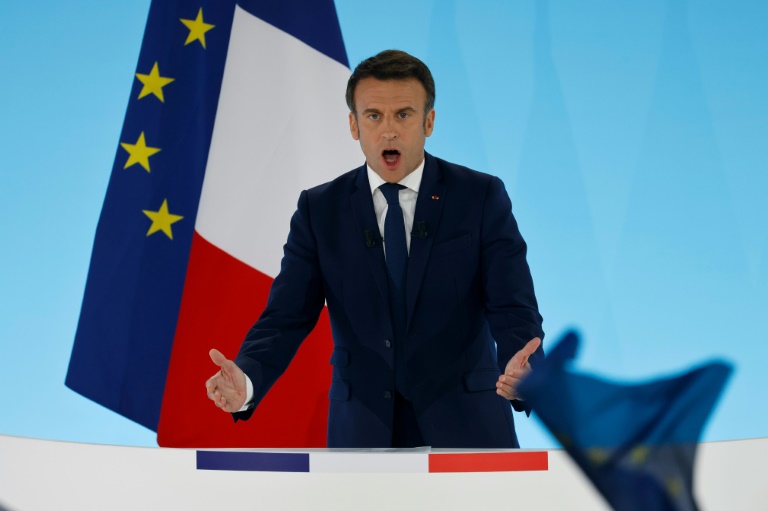
The Paris stock market and the euro received a boost on Monday from French President Emmanuel Macron’s election performance, with investors reassured about his re-election chances.

New York, Frankfurt, London and Asian exchanges moved lower, with sentiment souring on flat UK economic growth and expectations for another strong US inflation report, which likely will bring aggressive US interest rate hikes.

The US S&P 500 fell 1.7 percent in the first trading day of the holiday-shortened week.

The government is set to release the US consumer price index for March on Tuesday, after inflation rose 7.9 percent over the 12 months to February, the biggest increase in 40 years. 

Calling it the “Putin price hike,” White House Press Secretary Jen Psaki told reporters: “We expect March headline inflation to be extraordinarily elevated.”

Economists are expecting annual US inflation to spike to nearly 8.5 percent, which would be the highest since late 1981.

Meanwhile, oil prices tumbled more than five percent at one point on Chinese demand fears arising from Covid-19 lockdowns, and on dimming hope of a European embargo on Russian crude, dealers said.

“It is above all the bad news from China that is weighing on prices, as the number of Covid cases continues to surge,” said Commerzbank analyst Barbara Lambrecht.

In China, wholesale inflation was higher than expected in March, official data showed, as Russia’s war on Ukraine pushes up oil prices while a domestic Covid resurgence strains food supplies and consumer costs.

– ‘Solid result’ –

Macron topped France’s first-round presidential vote on Sunday, leading far-right rival Marine Le Pen by a larger-than-expected margin.

The incumbent president won 27.85 percent of votes, while Le Pen scored 23.15 percent.

“A solid result for incumbent Emmanuel Macron… has helped to allay fears of a Le Pen presidency,” said economist Jessica Hinds at research consultancy Capital Economics. 

“But the latest polls still point to a very tight race.”

Investors had fretted about the implications of a victory for Le Pen in the midst of the war in Ukraine, given her long-standing sympathies for Russia.

“All attention will now turn to the second round (vote) on April 24, and the big question for that will be where the supporters of the defeated first-round candidates go,” wrote Deutsche Bank analysts in a client note.

Most of the gains on the Paris exchange’s main CAC40 index evaporated as the day wore on.

On the downside, London stocks slid on official data showing that the UK economy had ground to a near halt in February, growing by just 0.1 percent.

– Dollar eyes 2002 yen peak –

Elsewhere, the dollar hit a 2015 high at 125.77 yen on expectations of more US Federal Reserve interest rate hikes, in contrast with the Bank of Japan’s loose policy.

The high was not far from the greenback’s two-decade peak of 125.86 yen before it reversed course in US trading hours.

Hewson at CMC Markets said the dollar has “the potential to move above 125.90 and an almost 20-year low, as the gap between US and Japanese yields continues to widen out.”

– Key figures at around 2100 GMT –

New York – Dow: DOWN 1.2 percent at 34,308.08 (close)

New York – S&P 500: DOWN 1.7 percent at 4,412.53 (close)

New York – Nasdaq: DOWN 2.2 percent at 13,411.96 (close)

EURO STOXX 50: DOWN 0.5 percent at 3,839.62 (close)

Paris – CAC 40: UP 0.1 percent at 6,555.81 (close)

London – FTSE 100: DOWN 0.7 percent at 7,618.31 (close)

Frankfurt – DAX: DOWN 0.6 percent at 14,192.78 (close)

Tokyo – Nikkei 225: DOWN 0.61 percent at 26,821.52 (close)

Hong Kong – Hang Seng Index: DOWN 3.03 percent at 21,208.30 (close)

Shanghai – Composite: DOWN 2.61 percent at 3,167.13 (close)

Euro/dollar: UP at $1.0882 from $1.0877 late Friday

Pound/dollar: UP at $1.3029 from $1.3025

Euro/pound: DOWN at 83.49 pence from 83.51 pence

Dollar/yen: UP at 125.37 yen from 124.34 yen

Brent North Sea crude: DOWN 3.4 percent at $99.25 a barrel

West Texas Intermediate: DOWN 3.1 percent at $95.18. a barrel

burs-rl/hs/sw

Musk dodges limits in Twitter board seat refusal: experts

Elon Musk’s rejection of a Twitter board seat frees him to boost his ownership stake in the social media platform and dodge obligations to promote its best interests, experts warned Monday.

News last week that the controversy-courting Tesla boss had become Twitter’s largest shareholder sparked a roller-coaster of developments that ended with the platform’s CEO saying Musk had walked away.

Close watchers of the firm speculated about what could come next, but saw potentially ominous signs in the world’s richest person’s intentions regarding Twitter.

“This now goes from a Cinderella story with Musk joining the Twitter board and keeping his stake under 14.9 percent, helping move Twitter strategically forward, to likely a ‘Game of Thrones’ battle between Musk and Twitter,” Wedbush analyst Dan Ives said in a note to investors.

Musk’s deal to join the board included an agreement to keep his share in the company under 15 percent.

But now, he can continue to amass stock and push for change without having to play nice with Twitter board members, said Techsponential analyst Avi Greengart.

“Everyone seems to think Musk wants a bigger part of the company than the board would let him have,” said Creative Strategies analyst Carolina Milanesi.

Musk confirmed Monday he wouldn’t be joining the board, while offering no explicit explanation in an updated filing to US market authorities.

But he reserved the right to take a range of actions like sell his shares or buy more and engage Twitter’s board or management in discussions “without limitation” on topics ranging from structure and governance, to management or strategy, the filing said.

Possible scenarios now include Musk trying to force his will on Twitter, or even push to sell the company, said Ives.

Musk could also decide the game is over and shift focus to his many other endeavors, such as electric cars, space exploration and even linking human brains to computers, Ives added.

– Critic or conquerer? –

A tech world star with more than 81 million followers on the microblogging platform, Musk last week disclosed a purchase of 73.5 million shares — or 9.2 percent — of Twitter’s common stock.

Twitter chief executive Parag Agrawal had announced that Musk would be joining the board, describing him as “a passionate believer and intense critic of the service which is exactly what we need.”

Musk himself tweeted that he was “looking forward to working with Parag & Twitter board to make significant improvements to Twitter in coming months!”

Musk’s appointment was to be contingent on a background check and a requirement that he would have to act in the best interests of the company once appointed, Agrawal said in a statement.

Musk fired off a series of barbs at Twitter over the weekend that have since vanished. 

The tweets included ideas for the platform, such as giving blue authentication check marks to paying Twitter Blue subscribers and turning the company’s San Francisco office into a homeless shelter because employees don’t use it.

Musk’s reversal of position regarding the board came after he tweeted asking whether the social media network was “dying” and to call out users such as singer Justin Bieber, who are highly followed but rarely post.

He recently conducted a poll about a long-desired edit button at Twitter and once quipped in a tweet that the company should remove the “w” from its name.

And while the serial entrepreneur has a devoted cadre of fans, having millions of Twitter followers doesn’t mean he knows best how to make money from the unique one-to-many messaging platform.

“There really is room for Twitter to grow its subscription revenue and advertising beyond what it is today, so perhaps Musk sees this as an investment,” Greengart said.

“Or perhaps he is just doing it for the ‘lolz,'” he added, referring to internet slang for making a joke at someone else’s expense.

Musk dodges limits in Twitter board seat refusal: experts

Elon Musk’s rejection of a Twitter board seat frees him to buy greater stock sway over his preferred social media platform and dodge obligations to promote its best interests, experts warned Monday.

News last week that the controversy-courting Tesla boss had become Twitter’s largest shareholder sparked a roller coaster of developments that ended with the platform’s CEO saying Musk had walked away.

Close watchers of the firm speculated about what could come next, but saw potentially ominous signs in the world’s richest person’s intentions regarding Twitter.

“This now goes from a Cinderella story with Musk joining the Twitter board and keeping his stake under 14.9 percent, helping move Twitter strategically forward, to likely a ‘Game of Thrones’ battle between Musk and Twitter,” Wedbush analyst Dan Ives said in a note to investors.

Musk’s deal to join the board included an agreement to keep his share in the company under 15 percent.

But now, he can continue to amass stock and push for change without having to play nice with Twitter board members, said Techsponential analyst Avi Greengart.

“Everyone seems to think Musk wants a bigger part of the company than the board would let him have,” said Creative Strategies analyst Carolina Milanesi.

“He would never have followed the rules, it doesn’t suit him,” she said of Musk joining the board.

Musk fired off a series of barbs at Twitter over the weekend that have since vanished. 

The tweets included ideas for the platform, such as giving blue authentication check marks to paying Twitter Blue subscribers and turning the company’s San Francisco office into a homeless shelter because employees don’t use it.

Possible scenarios now include Musk trying to force his will on Twitter, or even push to sell the company, said Ives. 

Musk could also decide the game is over and shift focus to his many other endeavors, such as electric cars, space exploration and even linking human brains to computers, Ives added.

– Critic or conquerer? –

A tech world star with more than 81 million followers on the microblogging platform, Musk last week disclosed a purchase of 73.5 million shares — or 9.2 percent — of Twitter’s common stock.

Twitter chief executive Parag Agrawal had announced that Musk would be joining the board, describing him as “a passionate believer and intense critic of the service which is exactly what we need.”

Musk himself tweeted that he was “looking forward to working with Parag & Twitter board to make significant improvements to Twitter in coming months!”

Musk’s appointment to the board was to be contingent on a background check and a requirement that he would have to act in the best interests of the company once appointed, Agrawal said in a statement.

The only response from Musk on the announcement of his rejection of the seat has been a smirking emoji, posted on Monday.

Musk’s reversal of position regarding the board came after he tweeted asking whether the social media network was “dying” and to call out users such as singer Justin Bieber, who are highly followed but rarely post.

He recently conducted a poll about a long-desired edit button at Twitter and once quipped in a tweet that the company should remove the “w” from its name.

“It seems like Musk has all of these ideas that he is pulling out of a hat,” Milanesi said. “It is clear that he does whatever he wants to do.”

And while the serial entrepreneur has a devoted cadre of fans, having millions of Twitter followers doesn’t mean he knows best how to make money from the unique one-to-many messaging platform, she added.

“There really is room for Twitter to grow its subscription revenue and advertising beyond what it is today, so perhaps Musk sees this as an investment,” Greengart said.

“Or perhaps he is just doing it for the ‘lolz,'” he added, referring to internet slang for making a joke at someone else’s expense.

Close Bitnami banner
Bitnami