US Business

Eurozone stocks climb but London slips

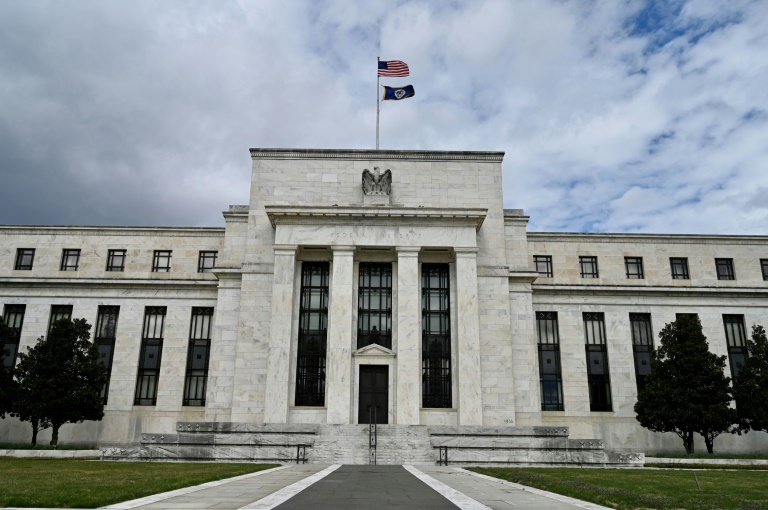
Eurozone stocks rose Thursday but London drooped as investors digested news that the Federal Reserve held off from a bigger interest rate hike last month owing to Ukraine turmoil, dealers said.

Asian equities closed lower as investors examined minutes from the US central bank’s March monetary policy gathering.

Oil prices recovered some of the previous day’s heavy losses that had been triggered by concerns about weaker demand because of economic slowdown.

The Fed in March opted to raise US borrowing costs rates by a quarter percentage point, mindful of “greater near-term uncertainty associated with Russia’s invasion of Ukraine”.

Some policymakers had been in favour of lifting rates half a percentage point.

“As suspected, the war in Ukraine did temper the Federal Reserve’s decision to hike rates at its meeting in March,” said CMC Markets chief analyst Michael Hewson.

“However, an abundance of caution prompted them to stay their hand until events became clearer knowing that they had the option to go harder and faster later on.”

– Inflation fight –

The prospect of rates rising at a quicker pace over the coming months has added to a wave of uncertainty across trading floors.

Central banks across the world are under fierce pressure to tackle runaway inflation, which has soared further on a Ukraine-driven spike in commodities like gas, oil and wheat.

March was the first Fed hike since it slashed US rates to zero when the Covid-19 pandemic broke out two years ago.

While current US data points to a healthy economy, commentators warn of possible hard times ahead.

Wall Street tumbled for the second day in a row on Wednesday, with the Nasdaq again losing more than two percent, as tech firms are more susceptible to higher rates.

In London on Thursday, shares in gambling group 888 surged 21 percent on the British capital’s second-tier FTSE 250 index after the company won a discount on its planned purchase of the non-US operations belonging to rival William Hill.

– Key figures around 1115 GMT –

London – FTSE 100: DOWN 0.1 percent at 7,581.52 points

Frankfurt – DAX: UP 0.7 percent at 14,250.18

Paris – CAC 40: UP 0.9 percent at 6,554.65

EURO STOXX 50: UP 0.9 percent at 3,859.29

Tokyo – Nikkei 225: DOWN 1.7 percent at 26,888.57 (close)

Hong Kong – Hang Seng Index: DOWN 1.2 percent at 21,808.98 (close)

Shanghai – Composite: DOWN 1.4 percent at 3,236.70 (close)

New York – Dow: DOWN 0.4 percent at 34,496.51 (close)

Brent North Sea crude: UP 1.2 percent at $102.27 per barrel

West Texas Intermediate: UP 1.1 percent at $97.26 per barrel

Euro/dollar: DOWN at $1.0889 from $1.0896 late Wednesday

Pound/dollar: UP at $1.3072 from $1.3069

Euro/pound: DOWN at 83.30 pence from 83.37 pence

Dollar/yen: DOWN at 123.73 yen from 123.80 yen

burs-rfj/bcp/lth
Pakistan rupee nosedives against dollar as political crisis rocks confidence

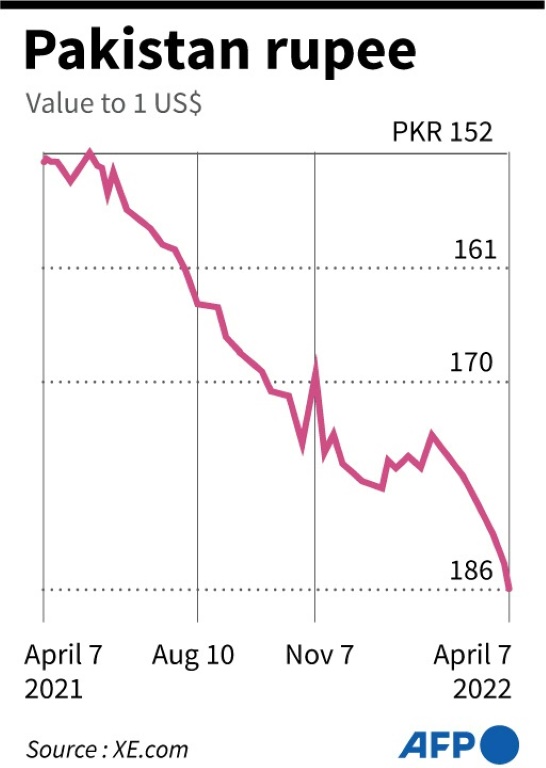
The Pakistan rupee dropped to a historic low of 191 rupees to the dollar Thursday as an ongoing political crisis rocked confidence in the currency.

The rupee has been declining for months, but the fall became precipitous in March when opposition parties tabled a no-confidence motion against Prime Minister Imran Khan that led to the dissolution of the national assembly last week.

The rupee has lost over six percent in a month, and on the open market Thursday was at 191 — and 189 at the interbank rate.

“The political mess has ensued from uncertainty and this badly reflects on the rupee,” said Mohammad Sohail, chief of Topline Securities, a Karachi based brokerage and economic research house.

Pakistan’s supreme court was sitting Thursday to rule on the legality of political manoeuvres that led Khan to dissolve the national assembly.

Pakistan’s foreign exchange reserves, which rely on remittances from the diaspora, have failed to stop a growing trade deficit.

Reserves have fallen to $12 billion from $16 billion since March as the deficit hit 70 percent for the nine months of the fiscal year spanning 2021-22.

Since July 2021, the rupee has lost 18 percent of its value against the dollar.

Relations with the United States and International Monetary Fund (IMF) are also critical factors.

The IMF has approved a $6 billion bailout package for Pakistan to support its balance of payment issue in 2019.

Half was disbursed, but the rest is being renegotiated.

Energy giant Shell hikes Russian exit hit to $5 bn

Shell on Thursday warned that its exit from Russia over the Ukraine war would cost the British energy giant up to $5 billion, but it would fulfil pre-conflict contracts to buy fuel from Moscow.

Despite the massive financial hit, energy majors are generally enjoying soaring revenues as oil and gas prices remain high on tight supply worries caused by the war and as economies reopen from pandemic lockdowns.

Shell, which is gradually withdrawing from Russia owing to the war, said impairment from assets — or loss in their value — and extra charges relating to activities in the country would be between $4 billion and $5 billion (3.7 billion and 4.6 billion euros) in the first quarter just ended.

The London-listed company in late February announced that it would sell its stakes in all joint ventures with Russian state energy giant Gazprom after the Kremlin launched its assault on Ukraine.

At the end of last year, Shell valued these Russian ventures at $3 billion.

– ‘Legally obliged’ –

Shell is withdrawing from Russian gas and oil in line with UK government policy.

However, the company on Thursday revealed it is “legally obliged to take delivery of crude bought under contracts that were signed before the invasion”.

Shell previously apologised for buying a cargo of Russian oil at a vast discount following the invasion.

Britain, which is far less dependent than the rest of Europe on Russian energy, plans to wean itself off oil imports by the end of the year and eventually stop importing its gas.

A UK government energy strategy update Thursday called for more renewable power from nuclear, offshore wind and solar.

Nations around the globe and their companies have axed business ties with Russia since President Vladimir Putin ordered the invasion of Ukraine on February 24.

Shell’s rival BP is pulling its near 20-percent stake in state energy giant Rosneft.

– Oil prices jump –

The Ukraine crisis has sent shockwaves across the global oil and gas markets because Russia is a major producer of fossil fuels.

Oil prices, which rocketed close to $140 per barrel in early March, have since fallen back to around $100 on peace talk hopes.

Shell, which on Thursday cautioned that the crude market remains “volatile”, saw its share price slide 1.4 percent in morning deals on London’s benchmark FTSE 100 index, which was steady.

“Shell has put an even higher figure of the costs of its write-down… which appears to have unnerved investors,” noted Susannah Streeter, senior investment and markets analyst at Hargreaves Lansdown.

“But despite the eye watering costs, the share price should continue to stay reasonably resilient given the divestment far outweighs the reputational damage which could be caused had it not pulled out.”

Its first-quarter earnings are due on May 5.

Shell had swung back into massive profit last year, as oil and gas prices jumped on recovering demand and geopolitical unrest.

Net profit stood at $20.1 billion after a loss after tax of $21.7 billion in 2020 at the height of the pandemic.

At the start of 2022, Shell switched headquarters from the Netherlands to Britain after a century and dropped Royal Dutch from its name.

Shell said the move was designed to strengthen its competitiveness, while accelerating shareholder distributions and its transition to a net-zero emissions business.

UK denies climate retreat despite rethink on fossil fuels

Britain insisted Thursday it was sticking to its climate change goals despite unveiling a new energy strategy that foresees new drilling for North Sea fossil fuels.

After weeks of cabinet infighting, the government finally released its strategy as Britons struggle with soaring energy prices following Russia’s invasion of Ukraine.

The plan envisions eight new nuclear power stations, a five-fold increase in solar and enough electricity from offshore wind to power every UK home by 2030.

But to the dismay of environmentalists, the politically charged problem of onshore wind turbines — cheaper and quicker to build than offshore — was left on the backburner. 

And campaign groups said plans to offer new licences to drill for North Sea oil and gas made a mockery of Prime Minister Boris Johnson’s legally enshrined commitment to make Britain carbon net zero by 2050.

“This isn’t an energy security strategy and will do nothing to bring down energy bills,” argued Ed Matthew, campaigns director at climate change think tank E3G. 

“It is a national security threat and the person who will be happiest with it is (Russian President) Vladimir Putin,” he said.

But the government says the market shock from sanctions on Russia has forced a temporary reappraisal of fossil fuels, as Britons confront the worst cost-of-living crisis since the 1950s.

Business and Energy Secretary Kwasi Kwarteng denied the government had turned its back on net zero.

“Not at all,” he told Sky News. “It’s still in the law of the land, we’re focused on that.

“But of course given what’s happening around the world, given the pressure on energy prices, we’re also doing lots of other things to make sure we get energy independence back into the UK,” he said.

The government acknowledges that the strategy will do little to curb household energy bills in the near term, which Johnson said had “absolutely soared” after Putin’s invasion of Ukraine.

– ‘Madness’ –

But in a social media video promoting the new strategy, the prime minister stressed: “We just can’t carry on like this.”

The plan would make British energy “cleaner, more affordable and more secure”, he said.

Johnson vowed that “instead of a new reactor every decade, we will have a new reactor every year”.

He went on to visit a new nuclear plant under construction at Hinkley Point in southwest England — which is years overdue and billions over budget.

The plan flagged a new competition to find UK manufacturers of electric heat pumps — which are much more efficient than gas-fired household boilers, but also much more expensive.

Otherwise, as critics noted, it had nothing to say about cutting down on energy wastage and improving efficiency in homes, after the finance ministry reportedly vetoed new spending on that front.

“This strategy comprehensively fails to stand up to Putin’s violence, to take the sting out of soaring energy bills, or take control of the spiralling climate crisis,” said Rebecca Newsom, head of politics at Greenpeace UK.

United Nations secretary-general Antonio Guterres, marking the launch Monday of the latest UN report on climate change, said it was “moral and economic madness” to invest any more in fossil fuels.

The 3,000-page report warned that countries risk ending up with trillions in worthless assets such as offshore platforms and pipelines when demand for fossil fuels wanes in coming decades.

For the UK government, however, political pressure to tackle the energy crisis has been heating up ahead of nationwide local elections on May 5.

Ed Miliband, climate spokesman for the opposition Labour party, said Conservative backbenchers opposed to onshore turbines in rural England were “holding the government’s energy policy to ransom”.

“And people are paying higher bills as a result,” he told BBC radio.

Asian markets track Wall St down with Fed set to tighten screws

Asian equity markets fell Thursday after minutes from the Federal Reserve’s latest policy meeting indicated it is preparing to aggressively wind back its monetary policy, while oil prices pared another big drop.

The eagerly awaited summary dealt another blow to traders, who have grown increasingly concerned that officials will not be able to rein in 40-year-high inflation while also preventing the world’s top economy from tipping into recession.

According to the minutes, several policymakers were in favour of lifting interest rates half a percentage point while they also talked about offloading their bond holdings at a rate of $95 million per month — a process known as quantitative tightening.

The Fed’s balance sheet runs to about $9 trillion. 

News that such measures were being considered comes after several members of the policy board made hawkish comments about lifting rates. The next meeting takes place May 3-4.

The prospect of borrowing costs rising at a quicker pace and to a higher level over the coming months has added to a wave of uncertainty across trading floors caused by the war in Ukraine.

And while data at the moment points to a healthy economy, commentators warn of possible hard times ahead.

“This job of orchestrating a soft landing (for the economy) is going to be difficult,” Tracie McMillion, at Wells Fargo Investment Institute, told Bloomberg Television.

“We’ve only seen quantitative tightening once before and it was to a lesser degree than it will be this time, and it ended shortly after it started.”

Wall Street tumbled for the second day in a row, with the Nasdaq again losing more than two percent, as tech firms are more susceptible to higher rates.

“The minutes… show that Fed officials are becoming increasingly alarmed at how inflationary pressures are increasing and are determined to send a message to markets that they will act decisively to keep it in check,” said CMC markets analyst Michael Hewson.

Investors are now awaiting the release of minutes from the European Central Bank’s most recent meeting, looking for signs that officials there are preparing to change from their more dovish approach to policy.

Asia broadly followed New York down, with Tokyo, Sydney, Seoul, Taipei, Singapore, Mumbai, Wellington, Bangkok and Manila all in the red.

Hong Kong and Shanghai were also sharply lower, having given up early gains fuelled by hopes that China will ease monetary policy as its giant economy struggles under the weight of lockdowns in various parts of the country.

Authorities will step in to use tools at an “appropriate time”, according to the readout of a State Council meeting chaired by Premier Li Keqiang, adding they would also look at other ways to increase consumption. 

London fell in the morning but Paris and Frankfurt rose.

On oil markets, both main contracts enjoyed gains a day after tanking more than five percent on concerns about demand caused by a possible economic slowdown.

The commodity had also been hit by an announcement from the International Energy Agency that it will release tens of millions of barrels to offset those lost through sanctions on Russia, and owing to China’s Covid lockdowns.

“With the IEA release and the US (reserves) releases now priced in, Asia has walked in and bought the dips in both contracts,” said OANDA’s Jeffrey Halley.

“That is consistent with the usual behaviour of buyers from the energy-hungry region, with plenty of Asian interest to buy on any and all pullbacks.”

– Key figures around 0810 GMT –

Tokyo – Nikkei 225: DOWN 1.7 percent at 26,888.57 (close)

Hong Kong – Hang Seng Index: DOWN 1.2 percent at 21,808.98 (close)

Shanghai – Composite: DOWN 1.4 percent at 3,236.70 (close)

London – FTSE 100: DOWN 0.3 percent at 7,562.36

Brent North Sea crude: UP 0.4 percent at $101.44 per barrel

West Texas Intermediate: UP 0.4 percent at $96.62 per barrel

Euro/dollar: UP at $1.0900 from $1.0900 late Wednesday

Pound/dollar: UP at $1.3087 from $1.3071

Euro/pound: UP at 83.67 pence from 83.38 pence

Dollar/yen: DOWN at 123.72 yen from 123.79 yen

New York – Dow: DOWN 0.4 percent at 34,496.51 (close)

Asian markets track Wall St down with Fed set to tighten screws

Asian equity markets fell Thursday after minutes from the Federal Reserve’s latest policy meeting indicated it is preparing to aggressively wind back its monetary policy, while oil prices rebounded from another big drop.

The eagerly awaited summary dealt another blow to traders, who have grown increasingly concerned that officials will not be able to rein in 40-year-high inflation while also preventing the world’s top economy from tipping into recession.

According to the minutes, several policymakers were in favour of lifting interest rates half a percentage point while they also talked about offloading their bond holdings at a rate of $95 million per month — a process known as quantitative tightening.

The Fed’s balance sheet runs to about $9 trillion. 

News that such measures were being considered comes after several members of the policy board made hawkish comments about lifting rates. The next meeting takes place May 3-4.

The prospect of borrowing costs rising at a quicker pace and to a higher level over the coming months has added to a wave of uncertainty across trading floors caused by the war in Ukraine.

And while data at the moment points to a healthy economy, commentators warn of possible hard times ahead.

“This job of orchestrating a soft landing (for the economy) is going to be difficult,” Tracie McMillion, at Wells Fargo Investment Institute, told Bloomberg Television.

“We’ve only seen quantitative tightening once before and it was to a lesser degree than it will be this time, and it ended shortly after it started.”

Wall Street tumbled for the second day in a row, with the Nasdaq again losing more than two percent, as tech firms are more susceptible to higher rates.

“The minutes… show that Fed officials are becoming increasingly alarmed at how inflationary pressures are increasing and are determined to send a message to markets that they will act decisively to keep it in check,” said CMC markets analyst Michael Hewson.

Investors are now awaiting the release of minutes from the European Central Bank’s most recent meeting, looking for signs that officials there are preparing to change from their more dovish approach to policy.

Asia broadly followed New York down, with Tokyo, Sydney, Seoul, Taipei, Singapore, Mumbai, Wellington, Bangkok and Manila all in the red.

Hong Kong and Shanghai were also sharply lower, having given up early gains fuelled hopes that China will ease monetary policy as its giant economy struggles under the weight of lockdowns in various parts of the country.

London opened lower but Paris and Frankfurt edged up.

Authorities will step in to use tools at an “appropriate time”, according to the readout of a State Council meeting chaired by Premier Li Keqiang, adding they would also look at other ways to increase consumption. 

On oil markets, both main contracts enjoyed healthy gains of more than one percent a day after tanking more than five percent on concerns about demand caused by a possible economic slowdown.

The commodity had also been hit by an announcement from the International Energy Agency that it will release tens of millions of barrels to offset those lost through sanctions on Russia, and owing to China’s Covid lockdowns.

“With the IEA release and the US (reserves) releases now priced in, Asia has walked in and bought the dips in both contracts,” said OANDA’s Jeffrey Halley.

“That is consistent with the usual behaviour of buyers from the energy-hungry region, with plenty of Asian interest to buy on any and all pullbacks.”

– Key figures around 0720 GMT –

Tokyo – Nikkei 225: DOWN 1.7 percent at 26,888.57 (close)

Hong Kong – Hang Seng Index: DOWN 0.9 percent at 21,891.51

Shanghai – Composite: DOWN 1.4 percent at 3,236.70 (close)

London – FTSE 100: DOWN 0.1 percent at 7,578.56

Brent North Sea crude: UP 1.1 percent at $102.20 per barrel

West Texas Intermediate: UP 1.2 percent at $97.38 per barrel

Euro/dollar: UP at $1.0915 from $1.0900 late Wednesday

Pound/dollar: UP at $1.3089 from $1.3071

Euro/pound: UP at 83.39 pence from 83.38 pence

Dollar/yen: UP at 123.80 yen from 123.79 yen

New York – Dow: DOWN 0.4 percent at 34,496.51 (close)

Shell to take hit of up to $5 bn on Russia exit

British energy giant Shell warned Thursday that it would take a hit of up to $5 billion (4.6 billion euros) on its exit from Russia, following Moscow’s invasion of Ukraine.

Impairment from assets and additional charges relating to Russia activities were expected to be between $4 billion and $5 billion in the first quarter, Shell said in a statement after recently signalling its gradual withdrawal.

The news comes after the London-listed energy major announced in late February that it would sell its stakes in all joint ventures with Russian state energy giant Gazprom after the Kremlin launched its assault on Ukraine.

The group said at the time that the ventures were worth about $3 billion.

Shell then announced in March that it would withdraw from Russian gas and oil in line with UK government policy, and also immediately stopped purchases of its crude on the spot market.

The company had also apologised for buying a cargo of Russian oil at a vast discount, adding that it should not have happened.

However, Shell revealed Thursday that it would continue to fulfil contracts on buying fuel from Russia that had been signed before the Ukraine war.

“Shell has not renewed longer-term contracts for Russian oil, and will only do so under explicit government direction, but we are legally obliged to take delivery of crude bought under contracts that were signed before the invasion,” it said in the statement.

And the group warned that the state of global oil markets remains “volatile” after prices rocketed to near record levels last month on the back of the conflict.

Britain, which is far less dependent than the rest of Europe on Russian energy, plans to phase out oil imports by the end of the year and eventually stop importing its gas. 

A wide range of international companies have stopped doing business in Russia since President Vladimir Putin ordered the invasion of Ukraine on February 24.

– Oil prices jump –

Shell’s main rival BP has also announced its departure.

BP said in late February that it would pull its 19.75-percent stake in state energy giant Rosneft, ending more than three decades of investment in Russia.

Shell’s first-quarter earnings are scheduled for publication on May 5.

It had swung back into massive profit last year, as oil and gas prices jumped on recovering demand and geopolitical unrest.

Net profit stood at $20.1 billion after a loss after tax of $21.7 billion in 2020, as economies reopened from pandemic lockdowns.

The Ukraine crisis then sent shockwaves across the global oil market because Russia is a major producer.

Oil prices rocketed close to record levels of close to $140 per barrel in early March, although they have since fallen back to around $100 on peace talk hopes.

Shell this year switched headquarters from the Netherlands to Britain after a century and dropped Royal Dutch from its name, in a move aimed at simplifying tax and share arrangements.

The race to dominate satellite internet heats up

Though satellite internet has existed for years, the competition is about to rapidly intensify, with companies planning to launch thousands of their own systems into low Earth orbit.

The latest move in the industry came on Tuesday from Amazon, which took a major step towards getting its $10 billion Kuiper constellation off the ground by sealing deals with three rocket companies.

The US online retail giant wants to strengthen its lucrative diversification into IT services, and “provide low-latency broadband to a wide range of customers,” including those “working in locations without a reliable internet connection.”

“Satellite solutions are an indispensable complement to fiber,” said Stephane Israel, chief executive of Arianespace, one of the Amazon rocket providers.

“There are situations in which fiber is much too expensive compared to satellite connections, especially to reach the last inhabitant of a remote area,” he explained.

In addition to the satellites themselves, Amazon plans “small, affordable client terminals” along the lines of Echo smart-homes and Kindle e-readers, and promises to “provide service at a price that is affordable and accessible to customers,” with no further pricing details immediately.

Will Amazon be able to break through the increasingly crowded market?

Satellite internet already exists: US customers have access to HughesNet and Viasat, while in Europe, Orange subsidiary Nordnet — among others — uses the power of the Eutelsat Konnect satellite to offer broadband to its customers.

Costs for users start under 60 euros ($70) per month, excluding terminal and antenna, and increase according to the bandwidth.

But because these services use satellites at geostationary orbit —  more than 35,000 kilometers (22,000 miles) from Earth’s surface — their speed cannot match that of fiber, prohibiting use for high-speed tasks like gaming.

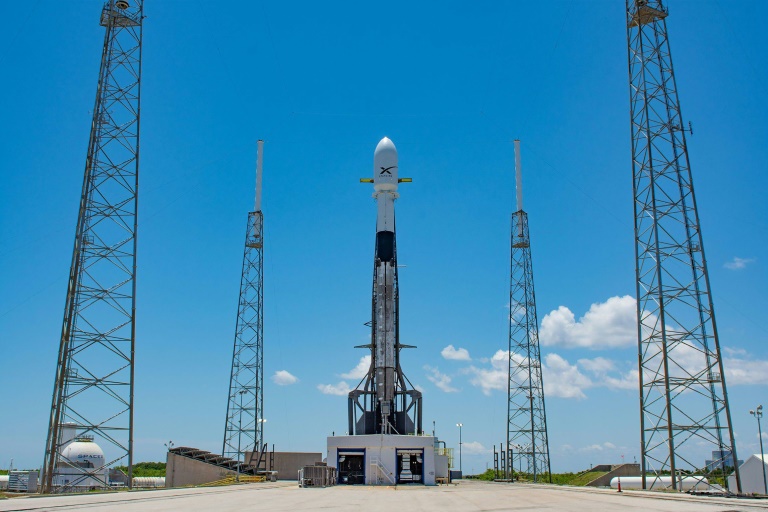
Amazon’s future satellites, like those already launched by Starlink, a subsidiary of Elon Musk’s SpaceX, will operate in low Earth orbit (LEO), only 600 km high. 

– Low orbit more vulnerable –

“The advantage of LEO is that you reduce the latency, (and) by reducing the latency you maximize the uses,” said Israel.

On the other hand, being closer to Earth makes it necessary to send many more spacecraft into orbit: more than 3,200 for Amazon, and thousands for Starlink, of which around 1,500 are already active.

British company OneWeb has launched 428 of the 648 satellites in its LEO constellation, and China plans to deploy around 13,000 “GuoWang” satellites.

Beyond the issues of national competition, the rapid expansion responds to an equally growing need.

In late March, the United Nation’s International Telecommunication Union remarked that “once considered a luxury, internet connectivity became crucial for many during the COVID-19 pandemic as populations faced stay-at-home orders and many practices moved online.”

“The need for bandwidth has skyrocketed around the world, and we will never launch enough satellites to meet the demand,” predicts an executive AFP met this week in Colorado Springs, on the sidelines of the world’s biggest space technology trade show.

But the bandwidth marketing specialist, who asked to remain anonymous, also noted that low-orbiting spacecraft are far more vulnerable than geostationary ones, as demonstrated by the recent loss of dozens of Starlinks after a magnetic storm.

As a result, “they will have to be constantly replaced.”

The rocket companies will not mind that.

The metaverse threat: 'TV will die with its audience'

TV companies will need to radically adapt themselves to the fast-evolving world of online entertainment if they hope to survive, experts have warned. 

Broadcasters are already playing catch-up with online gaming giants in the battle for the attention of young audiences and the advertising dollars that follow. 

On the horizon is the so-called “metaverse” — a loose term covering the growing eco-system of interactive online worlds, games and 3D meeting places that are already attracting millions of users. 

While older consumers are still wedded to traditional TV, viewership among under-35s has halved in a decade, according to Statista, and will drop precipitously as the metaverse develops.

“Young people have evolved from passive spectators of TV to active players, and they’ve turned away from screens to smartphones,” said Frederic Cavazza, co-founder of Sysk, a French firm specialising in digital transformation.

“TV channels are going to die with their audiences.”

– ‘Part of the story’ –

To reach young people, broadcasters will have to compete with gaming platforms like Roblox, Fortnite and Minecraft — seen as precursors to the metaverse — that are already establishing a dominant position. 

Half of all 9-12-year-olds in the US use Roblox at least once a week, according to media research firm Dubit — doing everything from playing games to watching concerts to just hanging out with friends.

The audiences can be enormous: 33 million people watched rapper Lil Nas X perform on Roblox in 2020 — more than three times the number that watched him on TV at the Grammys this week. 

Broadcasters must choose whether they are sticking with a shrinking market for traditional TV programming, or start bringing their characters and brands into metaverse platforms, said Matthew Warneford, co-founder of Dubit.

“It means bringing people into a world, making them part of the story, playing alongside their friends — the same way that Disneyland allows you and your friends to be in their world with Mickey Mouse,” he said.

– ‘Stay relevant’ –

TV companies have time to adapt, but they face a major challenge in catering at once to older people watching traditional broadcasts, middle-aged people shifting to streaming and young people wanting interactive and social entertainment. 

“If we want to stay relevant, we will have to position ourselves across all these usages,” said Kati Bremme, head of innovation for France Televisions.

The national broadcaster is still in research mode, she said, toying with augmented and virtual reality to build immersive cultural and sporting experiences. 

The biggest challenge, however, may be financial. 

Up to now, TV firms have been insulated from tech disruption because their advertising revenue was largely unaffected — unlike other traditional media like newspapers.

That could change “faster than people realise,” said Warneford.

It was previously hard to move TV ads into the gaming world because they were created by individual companies “who locked them down and captured all the value,” he said. 

But with the more open field of the metaverse, brands will have much more scope to promote themselves and sell goods directly to users. 

Indeed, fashion and luxury labels are already making millions selling virtual clothes and accessories on Roblox, Fortnite and other platforms. 

“If they want to reach young people, do companies keep going to TV or do they go to where young people actually are — in gaming and the metaverse?” 

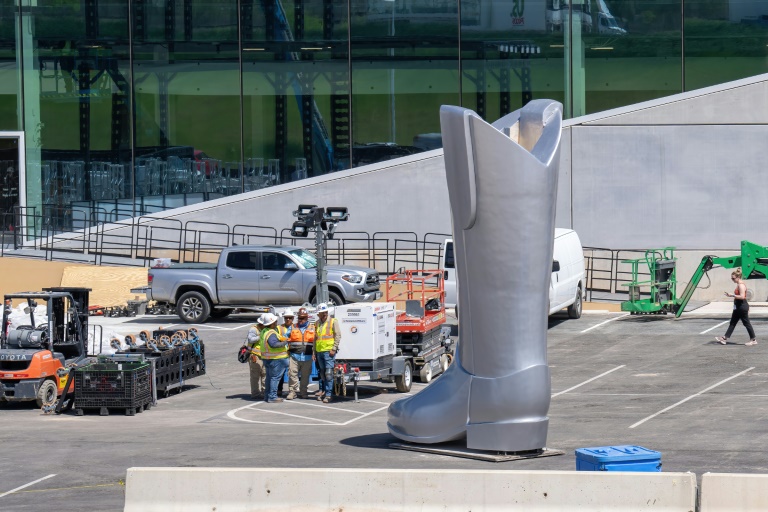
'Cyber Rodeo' bash fetes new Tesla plant in Texas

Electric car lovers are flocking to Austin for an enormous party Thursday celebrating a new Tesla “gigafactory” in Texas the size of 100 professional soccer fields.

Online buzz has swelled ever since Tesla’s colorful but controversial founder and chief executive Elon Musk tweeted word of the event, with reports of perhaps as many as 15,000 guests taking part in the official plant opening.

Tesla owners posted plans for cross country road trips, while others urged the uninvited to just show up and find a way inside.

The company has remained mum about details of the extravaganza, but rumors abound, including reports of an open bar and concert at Tesla’s 74-acre home in Texas.

Tesla fans have posted drone footage and other video showing sightings of what could be new vehicle models on display at the event.

“I got a golden ticket!” Luke Metger, president of a Texas environmental organization, tweeted on the eve of the party, attaching a screen-shot of his invite to the Cyber Rodeo – Giga Texas gala.

But will Texas be Musk’s land of promise?

– Farewell Silicon Valley –

The move to a US state known for conservative Republican politics is seen by some as Musk stepping away from the liberal Silicon Valley culture in which he made his fortune.

The South African serial entrepreneur is now ranked the world’s richest man. He founded Tesla in Silicon Valley in 2003, but shifted its headquarters to Texas late last year.

Musk has clashed with California regulators, particularly when health precautions mandated at the height of the pandemic closed Tesla’s Fremont plant.

California is also investigating whether discrimination took place at Tesla’s plant there.

It remains to be seen how Musk will navigate conservative policies in Texas, such as the state’s restrictive new abortion law and limits on seeking health services for transgender children.

Part of the Texas allure is a lack of corporate or personal income taxes. Tesla received more than $60 million in tax breaks to build the factory, which is expected to employ 10,000 people over time.

While Musk has spoken of a desire for a shift away from climate-wrecking fossil fuels, Texas is known for oil rigs and gas-guzzling cars and trucks.

“I think he is having a bit of an identity crisis and forgotten who his customer is, and it is going to come back to bite him,” tech analyst Rob Enderle said of Musk.

“He is drifting to the right; what he doesn’t seem to remember is that most of the people who buy electric cars are the liberals.”

– Cybertruck –

Giga Texas has been in operation since late last year. It is the fifth and largest gigafactory cranking out battery packs and vehicles for Tesla.

Since starting with a car plant in Silicon Valley, Tesla has gone global with mega-factories in Berlin and Shanghai as well as in US states New York and Nevada.

The Austin plant will produce Model 3 and Y cars and eventually a Cybertruck pickup and a semi for hauling cargo trailers set to go into production next year, according to Edmunds analyst Jessica Caldwell.

Tesla demand is outstripping supply to the point that some Model Y and 3 cars are being delivered months late in some parts of the world, according to Wedbush analyst Dan Ives.

“The solution is mainly in Austin and Berlin,” Ives said.

Gigafactory Berlin officially opened last month.

Tesla wants to ramp up production by some 50 percent annually, and should easily top that goal this year, Musk said recently.

He has delivered more than a million vehicles during the past 12 months despite production constraints caused by a global chip shortage plaguing many industries.

Close Bitnami banner
Bitnami