US Business

Ukraine works to restore power after Russian missiles batter grid

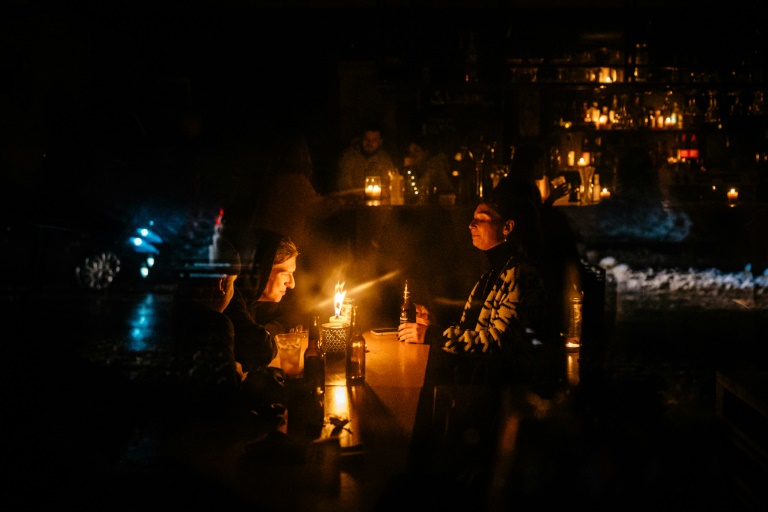
Ukraine worked Saturday to restore electricity and water supplies after Russia’s latest wave of attacks pitched multiple cities into darkness and forced people to endure sub-zero temperatures without heating or running water.

The volley of missiles unleashed Friday came as President Vladimir Putin held extensive meetings with the military top brass overseeing Russia’s invasion of Ukraine, where Moscow has stepped up bombardments. 

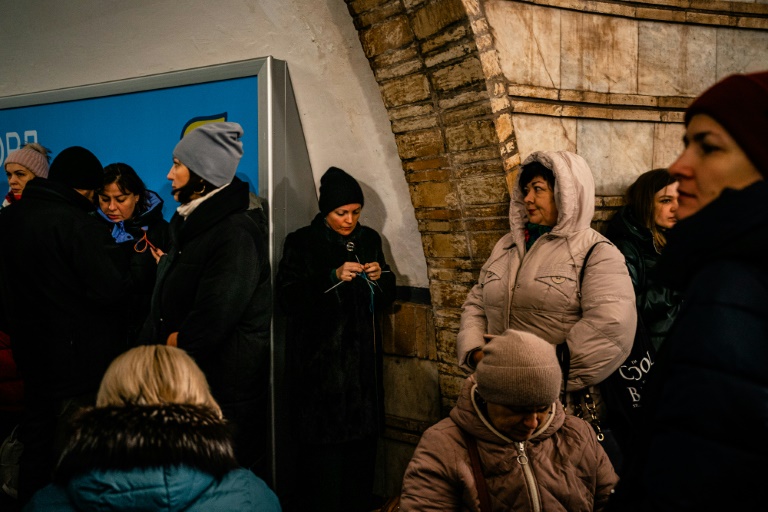
In the capital Kyiv, the metro had stopped running so that people wrapped in winter coats could take shelter at underground stations after air raid sirens rang out on Friday morning.

Kyiv mayor Vitali Klitschko said the metro service was relaunched early Saturday and water supply had been restored.

However, a third of Kyiv residents were still without power, Klitschko added. 

Power was also restored throughout the eastern city of Kharkiv on Saturday, regional governor Oleg Sinegubov said, after the strikes left Ukraine’s second city without electricity.

Ukraine’s national energy provider imposed emergency blackouts, saying on Saturday that the energy system “continues to recover”. 

Ukrenergo had warned the extent of the damage in the north, south and centre of the country meant it could take longer to restore supplies than after previous attacks.

During a visit to the army staff Friday, Putin sought out proposals from his military commanders on how Russia should proceed with the Ukraine offensive, according to the Kremlin.

The Kremlin released footage of Putin presiding over a round-table meeting with Defence Minister Sergei Shoigu and Chief of General Staff Valery Gerasimov among other top brass.

– ‘Inhumane attacks’ –

After a series of humiliating battlefield defeats, Russia since October has pursued an aerial onslaught against what Moscow says are military-linked facilities.

But France and the European Union have said the suffering inflicted on freezing civilians constitutes war crimes, with the bloc’s foreign policy chief calling the bombings “barbaric”.

Russia fired 74 missiles — mainly cruise missiles — on Friday, 60 of which were shot down by anti-aircraft defences, according to the Ukrainian army.

Kyiv withstood one of the biggest missile attacks since the start of the invasion. Regional officials said their air defence forces had shot down 37 out of 40 missiles.

Ukrainian President Volodymyr Zelensky said the strikes left hit power and water supplies in Kyiv and 14 regions.

In the central city of Kryvyi Rig, where Zelensky was born, the air strikes hit a residential building.

A 64-year-old woman and a young couple with a little son died, governor Valentyn Reznichenko said Saturday, adding that 13 others had been wounded.

In the south, fresh Russian shelling in Kherson, recently recaptured by Ukraine, killed a 36-year-old man and injured a 70-year-old woman, governor Yaroslav Yanushevich said.

Kherson has been subjected to persistent Russian shelling since Moscow’s forces retreated in November, and power was cut in the city earlier this week.

– Protracted war –

Moscow has said the strikes on Ukrainian infrastructure are a response to an explosion on the Kerch bridge connecting the Russian mainland to the Crimean peninsula, annexed from Ukraine in 2014.

Ukrainian defence officials said this week that their forces had downed over a dozen Iranian-made attack drones launched at Kyiv, a sign that Western-supplied systems are having an impact.

Ukrainian military leaders have warned Moscow is preparing for a major winter offensive, including a fresh attempt to take Kyiv.

Aiming to push Moscow to the negotiating table, the EU on Friday imposed further sanctions, adding restrictions on the export of drone engines to Russia or countries like Iran looking to supply Moscow with weapons. 

NATO chief Jens Stoltenberg told AFP that Russia was readying for a protracted war. 

“We see that they are mobilising more forces, that they are willing to suffer also a lot of casualties, that they are trying to get access to more weapons and ammunition,” he said.
Musk says will restore suspended Twitter accounts of journalists

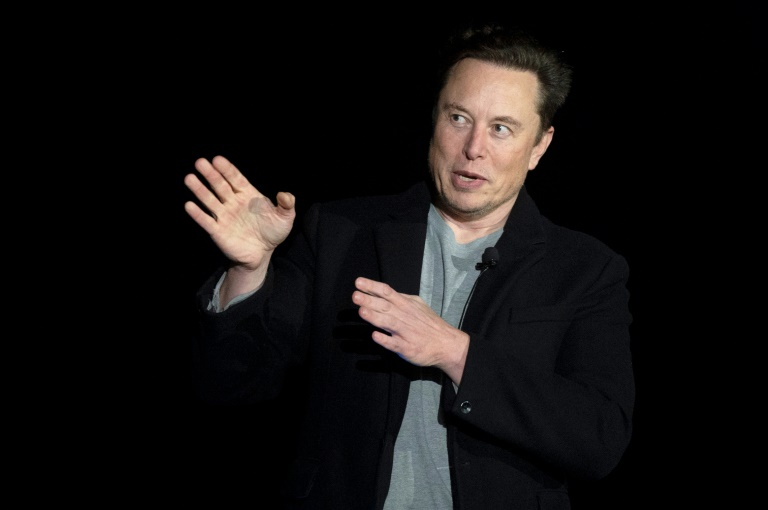
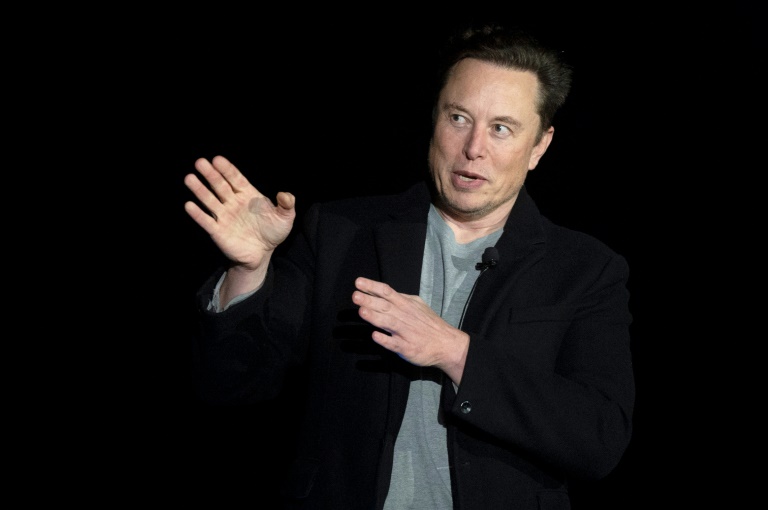
Elon Musk said late Friday he would reinstate the Twitter accounts of several journalists who were suspended after he accused them of endangering his family.

Musk had drawn anger and warnings from the EU and UN after suspending the accounts of more than half a dozen prominent journalists from the New York Times, CNN and the Washington Post.

“The people have spoken. Accounts who doxxed my location will have their suspension lifted now,” the Twitter owner tweeted.

Musk carried out a Twitter poll asking whether he should restore the suspended accounts now or in a week’s time. Nearly 59 percent of the 3.69 million who took part said he should restore the accounts now.

Some of the suspended accounts appeared to have been reactivated, with former Vox journalist Aaron Rupar tweeting again.

“I was pretty bummed about getting suspended initially but quickly realized it’d be fine because I’m blessed to have an amazing online community,” Rupar tweeted, thanking people for their support.

The latest controversy began when Musk on Wednesday suspended @elonjet, an account that tracked flights of his private plane.

Musk said the move was necessary after a car in Los Angeles carrying one of his children was followed by “a crazy stalker” and seemed to blame the tracking of his jet for the incident.

Some of the journalists had reported on the affair, including tweets linking to the suspended @elonjet account, which Musk said amounted to offering “assassination coordinates” against him and his family.

In a chat hosted live on Twitter, Musk had provided no evidence for his claim but told some of the suspended reporters that on Twitter “everyone’s going to be treated the same… they’re not special because you’re a journalist.”

Pressed further on his allegations, Musk ended the conversation. Twitter Spaces, the feature where the chat took place, was then suspended.

Musk’s move to suspend the journalists’ accounts had drawn sharp criticism from media organizations, the European Union and UN.

“News about arbitrary suspension of journalists on Twitter is worrying,” EU commissioner Vera Jourova posted on Twitter, warning the influential platform could face hefty fines through European laws.

“Elon Musk should be aware of that. There are red lines. And sanctions, soon,” she added.

The spokesman for UN chief Antonio Guterres called it a “dangerous precedent at a time when journalists all over the world are facing censorship, physical threats and even worse.”

– Controversies –

Twitter has lurched from one controversy to the next since Musk took control after paying $44 billion, mainly by selling shares in Tesla, his successful electric car company. 

The billionaire’s talk of unfettered speech has scared off major advertisers and caught the attention of regulators.

Musk has reinstated the account of former US president Donald Trump and lashed out against the outgoing key advisor for the US response to the Covid-19 pandemic, Anthony Fauci, a frequent target of vitriol in right-wing media.

CNN has reported that Twitter’s former head of trust and safety fled his home after baseless attacks on Twitter content moderation, endorsed by Musk.

Meanwhile, a purge initiated by Musk at Twitter left more than half of its 7,500 employees out of work, and now many of them are taking the SpaceX and Tesla tycoon to court.

Musk at one point signaled he was going to war with Apple over the App Store, only to later tweet that it was a “misunderstanding.”

Market tracker Insider Intelligence forecast that Twitter would experience an exodus of users.

“There won’t be one catastrophic event that ends Twitter,” said Insider Intelligence analyst Jasmine Enberg.

“Instead, users will start to leave the platform next year as they grow frustrated with technical issues and the proliferation of hateful or other unsavory content.”

Musk says will restore suspended Twitter accounts of journalists

Elon Musk said late Friday he would reinstate the Twitter accounts of several journalists who were suspended after he accused them of endangering his family.

Musk had drawn anger and warnings from the EU and UN after suspending the accounts of more than half a dozen prominent journalists from the New York Times, CNN and the Washington Post.

“The people have spoken. Accounts who doxxed my location will have their suspension lifted now,” the Twitter owner tweeted.

Musk carried out a Twitter poll asking whether he should restore the suspended accounts now or in a week’s time. Nearly 59 percent of the 3.69 million who took part said he should restore the accounts now.

Some of the suspended accounts appeared to have been reactivated, with former Vox journalist Aaron Rupar tweeting again.

“I was pretty bummed about getting suspended initially but quickly realized it’d be fine because I’m blessed to have an amazing online community,” Rupar tweeted, thanking people for their support.

The latest controversy began when Musk on Wednesday suspended @elonjet, an account that tracked flights of his private plane.

Musk said the move was necessary after a car in Los Angeles carrying one of his children was followed by “a crazy stalker” and seemed to blame the tracking of his jet for the incident.

Some of the journalists had reported on the affair, including tweets linking to the suspended @elonjet account, which Musk said amounted to offering “assassination coordinates” against him and his family.

In a chat hosted live on Twitter, Musk had provided no evidence for his claim but told some of the suspended reporters that on Twitter “everyone’s going to be treated the same… they’re not special because you’re a journalist.”

Pressed further on his allegations, Musk ended the conversation. Twitter Spaces, the feature where the chat took place, was then suspended.

Musk’s move to suspend the journalists’ accounts had drawn sharp criticism from media organizations, the European Union and UN.

“News about arbitrary suspension of journalists on Twitter is worrying,” EU commissioner Vera Jourova posted on Twitter, warning the influential platform could face hefty fines through European laws.

“Elon Musk should be aware of that. There are red lines. And sanctions, soon,” she added.

The spokesman for UN chief Antonio Guterres called it a “dangerous precedent at a time when journalists all over the world are facing censorship, physical threats and even worse.”

– Controversies –

Twitter has lurched from one controversy to the next since Musk took control after paying $44 billion, mainly by selling shares in Tesla, his successful electric car company. 

The billionaire’s talk of unfettered speech has scared off major advertisers and caught the attention of regulators.

Musk has reinstated the account of former US president Donald Trump and lashed out against the outgoing key advisor for the US response to the Covid-19 pandemic, Anthony Fauci, a frequent target of vitriol in right-wing media.

CNN has reported that Twitter’s former head of trust and safety fled his home after baseless attacks on Twitter content moderation, endorsed by Musk.

Meanwhile, a purge initiated by Musk at Twitter left more than half of its 7,500 employees out of work, and now many of them are taking the SpaceX and Tesla tycoon to court.

Musk at one point signaled he was going to war with Apple over the App Store, only to later tweet that it was a “misunderstanding.”

Market tracker Insider Intelligence forecast that Twitter would experience an exodus of users.

“There won’t be one catastrophic event that ends Twitter,” said Insider Intelligence analyst Jasmine Enberg.

“Instead, users will start to leave the platform next year as they grow frustrated with technical issues and the proliferation of hateful or other unsavory content.”

Kyiv warns of long cuts after Russian missiles batter grid

Ukraine was working Saturday to restore electricity to hospitals, heating systems and other critical infrastructure in major cities after Russia’s latest wave of attacks on the power grid prompted accusations of “war crimes”.

The volley of missiles unleashed Friday pitched multiple cities into darkness, cutting water and heat and forcing people to endure below-freezing temperatures. 

In the capital, where the mayor said only a third of residents had heat or water, people wrapped in winter coats crammed into underground metro stations after air raid sirens rang out in the morning.

“I woke up, I saw a rocket in the sky,” Kyiv resident 25-year-old Lada Korovai said. “I saw it and understood that I have to go to the tube.”

Ukraine’s national energy provider imposed emergency blackouts, saying its system had lost more than half its capacity after strikes targeted “backbone networks and generation facilities”. 

Ukrenergo warned the extent of the damage in the north, south and centre of the country meant it could take longer to restore supplies than after previous attacks.

“Priority will be given to critical infrastructure: hospitals, water supply facilities, heat supply facilities, sewage treatment plants,” Ukrenergo said in a statement Friday.

By evening, second city Kharkiv had restored power to just over half its residents, while hoping to have a fully operational grid by midnight. 

After a series of embarrassing battlefield defeats, Russia since October has pursued an aerial onslaught against what Moscow says are military-linked facilities.

But France and the European Union said the suffering inflicted on freezing civilians constitutes war crimes, with the bloc’s foreign policy chief calling the bombings “barbaric”.

“These cruel, inhumane attacks aim to increase human suffering and deprive Ukrainian people,” Josep Borrell said.

– ‘Biggest’ missile attack –

Russia fired 74 missiles — mainly cruise missiles — on Friday, 60 of which were shot down by anti-aircraft defences, according to the Ukrainian army. 

Ukrainian President Volodymyr Zelensky said the strikes left the capital Kyiv and 14 regions affected by power and water cuts.

“All their targets today are civilian, and these are mainly energy and heat supply facilities,” he said in his nightly address.

“Probably, as a result of this war, the meaning of the word ‘terror’ for most people in the world will be associated primarily with such crazy actions of Russia.”

In the central city of Kryvyi Rig, where Zelensky was born, the airstrikes hit a residential building.

“A 64-year-old woman and a young couple died. Their little son still remains under the rubble of the house,” regional governor Valentyn Reznichenko said, adding that 13 others had been wounded.

Oleksandr Starukh, head of the frontline Zaporizhzhia region, home to Europe’s largest nuclear power plant, said his territory had been targeted by more than a dozen Russian missiles.

Kyiv, meanwhile, withstood one of the biggest missile attacks since the beginning of the full-scale invasion. Regional officials said their air defence forces had shot down 37 out of 40 missiles.

Kyiv Mayor Vitali Klitschko said only 40 percent of residents had electricity and that the metro had stopped running so people could take shelter underground.

– ‘Survive winter’ –

With about half of Ukraine’s energy grid damaged, the national operator warned Friday of emergency blackouts.

In Ukrainian-held Bakhmut — an eastern city at the epicentre of the war — some residents received wood stoves distributed by volunteers, AFP journalists said.

Oleksandra, 85, braved the cold to collect medication at a pharmacy in the Donetsk region city.

“I’ll survive winter. I’ll just walk more to get warm,” the old woman told AFP. 

In the south, fresh Russian shelling in Kherson, recently recaptured by Ukraine, killed one person and wounded three more.

Kherson has been subjected to persistent Russian shelling since Moscow’s forces retreated in November, and power was cut in the city earlier this week.

On Thursday, Russian attacks killed 14 people, deputy head of the president’s office Kyrylo Tymoshenko said. 

In the Russian-controlled region of Lugansk in eastern Ukraine, Moscow-installed officials said shelling from Kyiv’s forces had killed eight and wounded 23.

“The enemy is conducting barbaric shelling of cities and districts of the republic,” Leonid Pasechnik, the Russian-installed leader of Lugansk, said on social media.

– Protracted war –

Moscow has said the strikes on Ukrainian infrastructure are a response to an explosion on the Kerch bridge connecting the Russian mainland to the Crimean peninsula.

The Kremlin has said it holds Kyiv ultimately responsible for the humanitarian impact for refusing Russian negotiation terms.

Ukrainian defence officials said this week that their forces had shot down more than a dozen Iranian-made attack drones launched at Kyiv, a sign that Western-supplied systems are having an impact.

Ukrainian military leaders have warned Moscow is preparing for a major winter offensive, including a fresh attempt to take Kyiv.

Aiming to push Moscow to the negotiating table, the EU on Friday imposed further sanctions, adding restrictions on the export of drone engines to Russia or countries like Iran looking to supply Moscow with weapons. 

But NATO chief Jens Stoltenberg told AFP that Russia was readying for a protracted war. 

“We see that they are mobilising more forces, that they are willing to suffer also a lot of casualties, that they are trying to get access to more weapons and ammunition,” he said.
Germany to cut the ribbon on first LNG terminal

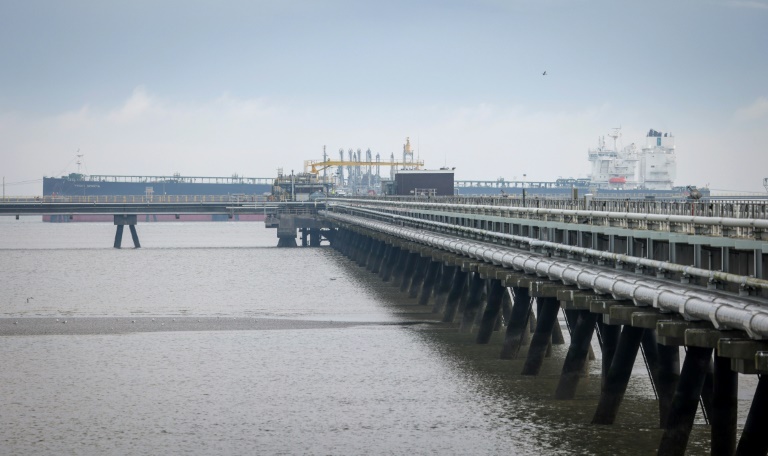
Germany will on Saturday inaugurate its first liquefied natural gas (LNG) terminal, built in record time, as the country scrambles to adapt to life without Russian energy.

The rig in the North Sea port of Wilhelmshaven will be opened by Chancellor Olaf Scholz at a ceremony on board a specialist vessel known as an FSRU, named the Hoegh Esperanza.

The ship has already been stocked with gas from Nigeria that could supply 50,000 homes for a year, and the terminal is set to begin deliveries on December 22.

Germany plans to open four more government-funded LNG terminals over the next few months as well as a private terminal in the port of Lubmin.

Together, the terminals could deliver 30 billion cubic metres of gas a year from next year, or a third of Germany’s total gas needs — if Berlin can find enough LNG to service them.

LNG terminals allow for the import by sea of natural gas which has been chilled and turned into a liquid to make it easier to transport.

The FRSU stocks the LNG, then turns it back into a ready-to-use gas.

Until now, Germany had no LNG terminals and relied on cheap gas delivered through pipelines from Russia for 55 percent of its supply.

– Supply worries –

But since Russia’s invasion of Ukraine, gas supplies to Germany have been throttled and Berlin has been forced to rely on LNG processed by Belgian, French and Dutch ports, paying a premium for transport costs.

The government decided to invest in building its own LNG terminals as quickly as possible and has spent billions of euros on hiring FSRUs to service them.

However, Germany has not yet signed a single major long-term contract to begin filling the terminals from January.

“The import capacity is there. But what worries me are the deliveries,” Johan Lilliestam, a researcher at the University of Potsdam, told AFP.

A contract has been signed with Qatar for LNG to supply the Wilhelmshaven terminal, but deliveries are not set to begin until 2026.

Suppliers want long-term contracts, while the German government is not keen to be locked into multi-year gas deals as it wants the country to become climate-neutral by 2045. 

“Companies need to know that the purchasing side in Germany will eventually diminish if we want to meet climate protection targets,” economy minister Robert Habeck has said.

– Cold winter –

The country could initially be forced to buy LNG from the expensive spot markets, which would lead to higher prices for consumers.

The market could also be squeezed next year by renewed demand in China as it emerges from strict Covid-19 curbs, Andreas Schroeder, an expert at the ICIS energy research institute, told AFP. 

“If Europe has been able to receive so much LNG in recent months, it is because Chinese demand was low,” Schroeder said. 

China recently signed a deal to buy gas from Qatar for 27 years — the longest such deal in history, according to Doha.

Germany has also had a cold winter so far, with the gas tanks emptying faster than expected.

“Gas consumption is increasing. This is a risk, especially if the cold spell continues,” said Klaus Mueller, the head of the country’s Federal Network Agency regulatory body, in a recent interview.

As a result, there is a real risk that Germany could experience temporary supply disruptions next winter, according to Schroeder.

Gas usage is currently down 13 percent compared to last year, but the government wants that figure to be closer to 20 percent.

In Europe, the gap between supply and demand could reach 27 billion cubic metres in 2023, according to an IEA report — equivalent to 6.5 percent of the EU’s annual consumption.

Robot plant grows, wilts on fate of UN nature talks

It’s not always easy to make sense of the complex environmental diplomacy taking place at a UN summit billed as humanity’s last hope to save nature.

That’s why a scientist and artist have teamed up to build a large, data-driven robotic plant that withers or flourishes depending on countries’ policy commitments: a tangible demonstration of how human actions will impact the world’s threatened species.

Called “ECONARIO,” the 5.5-meter (18-foot) tall artwork took a year to build from recycled steel and is currently on display in Montreal Convention Centre, keeping policymakers at the COP15 meeting on their toes as they attempt to hammer out a deal to protect ecosystems.

Its creator, Dutch artist Thijs Biersteker, told AFP the idea behind it is simple: “If the research does not reach us, then how can the research teach us?”

“Art reflects the time we’re in, and it should reflect these important issues.”

The plant feeds on data from the Biodiversity Intactness Index (BII) — an estimated percentage of the original number of species that remain, and their abundance in any given area, despite human impacts.

Data scientist Adriana De Palma of London’s Natural History Museum, who serves as research lead for the BII, told AFP it is based on a robust, peer-reviewed and open access methodology.

As negotiations happen, the team behind BII input, for example, how many countries have committed to implement a cornerstone pledge of protecting 30 percent of lands and oceans by 2030.

“We can then predict what that is going to mean for biodiversity in 20, 50 or 100 years,” she said.

– Rooting for success –

New funding pledges by wealthy countries to assist lower income nations in protecting their biodiversity have helped to nudge up slightly the predicted global average of BII to 70.7 percent by 2050 — meaning the average ecosystem will have that percentage of its natural ecological community left.

The current figure is 68.5 percent, set to drop to 66.4 percent if “business as usual” continues but rise to 76.4 percent in case of “real action” which the UN summit was meant to deliver.

For now, ECONARIO is cycling between the pessimistic and optimistic scenarios in order to show what could be possible — but if policymakers fail to achieve an ambitious target, that will be reflected in a very sorry looking robotic plant.

“We shouldn’t shy away from the hard numbers, it’s not time to sugarcoat anymore,” said Biersteker.

De Palma added they were in talks with North American museums to loan the artwork out after the UN summit concludes, and it will eventually return to Europe. 

“Using a piece of art like this to really connect with people so they see the damage that individual choices, company choices and government choices are having on the world, is incredibly valuable,” she said.

At COP15, businesses urged to act for nature

Widely blamed for ravaging Earth’s ecosystems, big businesses are nevertheless being turned to as key players in a deal to save nature at the COP15 biodiversity conference.

With hundreds of billions of dollars needed for the task, public funds can only fill part of the gap. Campaigners and experts at the talks are demanding companies act to reduce their impact — and firms in turn are asking for clear rules of engagement.

Ministers at the meeting in Montreal are thrashing out a global agreement for the next decade to curb damage to Earth’s forests, oceans and species — with conservation and finance top of the agenda.

“One of the other things at stake in this COP is getting businesses involved,” said Pierre Cannet of the Worldwide Fund for Nature, on the sidelines of the talks.

“Whatever the outcome of the summit, they will have to ask themselves how they can curb the fall in biodiversity.”

Elizabeth Mrema, the head of the UN Convention on Biological Diversity that underpins COP15, said a record number of private-sector parties registered for this year’s summit, where delegates are working on a new Global Biodiversity Framework.

“Clearly they’ve listened,” she told AFP.

“They have understood or they are getting there now, understanding also the impact of their operations on nature, the nature biodiversity which we all depend on and (they) also depend (on) for their businesses,” she added.

“If they are not part of the framework, their businesses will also suffer.”

– Invest in nature –

Some $900 billion a year is needed to move from “an economy that devours nature to a neutral and then a positive economy,” says Gilles Kleitz of the French state development agency AFD.

For this, “the role of businesses is fundamental,” said Didier Babin, a researcher at Cirad, an institute that focuses on sustainable agriculture.

“More businesses have to be brought on board” to help fund the targets, he added. “They depend on biodiversity and they must invest more in the capital of nature. Nature needs to be thought of as an asset.”

One of the targets in the framework under discussion at COP15 is a section aimed at obliging big companies and financial groups to measure and publish their impacts on the natural world and their exposure to it.

The World Economic Forum said in a 2020 report that more than half of global production depends heavily (15 percent) or moderately (37 percent) on nature and services related to it. 

It calculated the value of businesses’ exposure to degraded ecosystems at $44 trillion.

The report found that the construction sector was the most exposed with $4 trillion, followed by agriculture with $2.5 trillion and the food and drink industry with $1.4 trillion.

– Measuring biodiversity impact –

At COP15, a grouping of 330 businesses called Business for Nature is pushing for a uniform framework for all corporations to report their impacts and exposure.

With collective turnover of more than $1.5 trillion, they include big names such as Unilever, Ikea, Danone, BNP Paribas and Tata Steel.

“There will be no economy, there will be no business on a dead planet,” said the grouping’s executive director, Eva Zabey.

“And so now we need governments to adopt an ambitious global biodiversity framework that will provide the political certainty and it will require businesses to contribute.”

Brune Poirson, director of sustainable development at the hotel group Accor, said COP15 “must be a key milestone” in this process.

“We need a framework with all the actors in the sector,” she said.

Efforts are gaining pace to make companies disclose their contribution to the carbon emissions that drive climate change — but relatively few companies currently declare their impact on the ecosystems that support all life.

“This summit needs to be a turning point in humanity’s relationship with nature and to do so it needs to kick off fundamental changes in the way the economy works,” said Eliot Whittington of the Cambridge Institute for Sustainability Leadership.

“More and more businesses and financial institutions are realizing how essential action on nature and biodiversity is, but they need governments to provide the right rules and incentives to solve market failures and make change possible.”

Stocks, oil prices extend losses on recession fears

Stock markets dropped further Friday on prospects of more aggressive rises in interest rates to fight inflation, renewing concerns over the global economy entering recession next year.

After a healthy rally in recent weeks fueled by signs that price rises were slowing, the US Federal Reserve, European Central Bank and Bank of England this week dampened the holiday cheer by hiking borrowing costs again by sizable amounts and warning of more pain.

While inflation in many leading economies has started coming down — helped by a drop in energy costs — it still remains at or near multi-decade highs.

Observers have warned that economies could be heading for a period of stagflation where prices keep rising but growth stalls.

“In a nutshell, it is all about fears over a sharper economic slowdown in 2023 than previously expected,” noted Fawad Razaqzada, market analyst at City Index trading group.

“While macro data have been weak of late, there was still hope that the downturn might be short-lived and that a recession might be avoided in some regions altogether, amid signs of inflation peaking in some regions like the US.”

The latest rate hikes came as data showed US and UK retail sales dropping in November as consumers — key drivers of growth — feel the pinch from high prices and rate hikes.

– Recession on horizon? –

Eurozone and London shares all closed firmly in the red.  

Wall Street stocks meanwhile extended losses too, with major indices ending about one percent lower.

OANDA analyst Craig Erlam said the prospect of a “Santa rally” was fading.

“Going into December, there was growing optimism that policymakers could be a source of optimism going into the new year but instead, they’ve taken on the role of grinch, bringing a swift end to the celebrations,” he added.

Earlier, Asia had also seen losses, with Tokyo closing down 1.9 percent.

On the upside, Hong Kong rose on progress in talks over allowing US officials to audit Chinese firms listed in New York, easing concerns about a possible delisting of some big names such as Alibaba and Tencent.

The news provided a little more help to Hong Kong traders, whose sentiment has been lifted also by China’s shift away from the economically damaging zero-Covid policy as well as moves to open the city further to overseas visitors.

And a report in Hong Kong’s South China Morning Post said the border with mainland China would be fully reopened next month, providing another much-needed boost to the beleaguered economy.

However, the mood was soured a little by a US decision to put 36 Chinese companies including top producers of advanced computer chips on a trade blacklist, severely restricting their access to any US technology.

– Key figures around 2230 GMT –

New York – Dow: DOWN 0.9 percent at 32,920.46 (close)

New York – S&P 500: DOWN 1.1 percent at 3,852.36 (close)

New York – Nasdaq: DOWN 1.0 percent at 10,705.41 (close)

London – FTSE 100: DOWN 1.3 percent at 7,332.12 (closing)

Frankfurt – DAX: DOWN 0.7 percent at 13,893.07 (closing)

Paris – CAC 40: DOWN 1.1 percent at 6,452.63 (closing)

EURO STOXX 50: DOWN 0.8 percent at 3,804.02 (close)

Tokyo – Nikkei 225: DOWN 1.9 percent at 27,527.12 (close)

Hong Kong – Hang Seng Index: UP 0.4 percent at 19,450.67 (close)

Shanghai – Composite: FLAT at 3,167.86 (close)

West Texas Intermediate: DOWN 2.4 percent at $74.29 per barrel

Brent North Sea crude: DOWN 2.7 percent at $79.04 per barrel

Euro/dollar: DOWN at $1.0589 from $1.0628 on Thursday

Pound/dollar: DOWN at $1.2140 from $1.2178

Euro/pound: DOWN at 87.22 pence from 87.27 pence

Dollar/yen: DOWN at 136.68 yen from 137.78 yen

Stocks, oil prices extend losses on recession fears

Stock markets dropped further Friday on prospects of more aggressive rises in interest rates to fight inflation, renewing concerns over the global economy entering recession next year.

After a healthy rally in recent weeks fueled by signs that price rises were slowing, the US Federal Reserve, European Central Bank and Bank of England this week dampened the holiday cheer by hiking borrowing costs again by sizable amounts and warning of more pain.

While inflation in many leading economies has started coming down — helped by a drop in energy costs — it still remains at or near multi-decade highs.

Observers have warned that economies could be heading for a period of stagflation where prices keep rising but growth stalls.

“In a nutshell, it is all about fears over a sharper economic slowdown in 2023 than previously expected,” noted Fawad Razaqzada, market analyst at City Index trading group.

“While macro data have been weak of late, there was still hope that the downturn might be short-lived and that a recession might be avoided in some regions altogether, amid signs of inflation peaking in some regions like the US.”

The latest rate hikes came as data showed US and UK retail sales dropping in November as consumers — key drivers of growth — feel the pinch from high prices and rate hikes.

– Recession on horizon? –

Eurozone and London shares all closed firmly in the red.  

Wall Street stocks meanwhile extended losses too, with major indices ending about one percent lower.

OANDA analyst Craig Erlam said the prospect of a “Santa rally” was fading.

“Going into December, there was growing optimism that policymakers could be a source of optimism going into the new year but instead, they’ve taken on the role of grinch, bringing a swift end to the celebrations,” he added.

Earlier, Asia had also seen losses, with Tokyo closing down 1.9 percent.

On the upside, Hong Kong rose on progress in talks over allowing US officials to audit Chinese firms listed in New York, easing concerns about a possible delisting of some big names such as Alibaba and Tencent.

The news provided a little more help to Hong Kong traders, whose sentiment has been lifted also by China’s shift away from the economically damaging zero-Covid policy as well as moves to open the city further to overseas visitors.

And a report in Hong Kong’s South China Morning Post said the border with mainland China would be fully reopened next month, providing another much-needed boost to the beleaguered economy.

However, the mood was soured a little by a US decision to put 36 Chinese companies including top producers of advanced computer chips on a trade blacklist, severely restricting their access to any US technology.

– Key figures around 2230 GMT –

New York – Dow: DOWN 0.9 percent at 32,920.46 (close)

New York – S&P 500: DOWN 1.1 percent at 3,852.36 (close)

New York – Nasdaq: DOWN 1.0 percent at 10,705.41 (close)

London – FTSE 100: DOWN 1.3 percent at 7,332.12 (closing)

Frankfurt – DAX: DOWN 0.7 percent at 13,893.07 (closing)

Paris – CAC 40: DOWN 1.1 percent at 6,452.63 (closing)

EURO STOXX 50: DOWN 0.8 percent at 3,804.02 (close)

Tokyo – Nikkei 225: DOWN 1.9 percent at 27,527.12 (close)

Hong Kong – Hang Seng Index: UP 0.4 percent at 19,450.67 (close)

Shanghai – Composite: FLAT at 3,167.86 (close)

West Texas Intermediate: DOWN 2.4 percent at $74.29 per barrel

Brent North Sea crude: DOWN 2.7 percent at $79.04 per barrel

Euro/dollar: DOWN at $1.0589 from $1.0628 on Thursday

Pound/dollar: DOWN at $1.2140 from $1.2178

Euro/pound: DOWN at 87.22 pence from 87.27 pence

Dollar/yen: DOWN at 136.68 yen from 137.78 yen

US to begin refilling oil reserve after huge Biden release

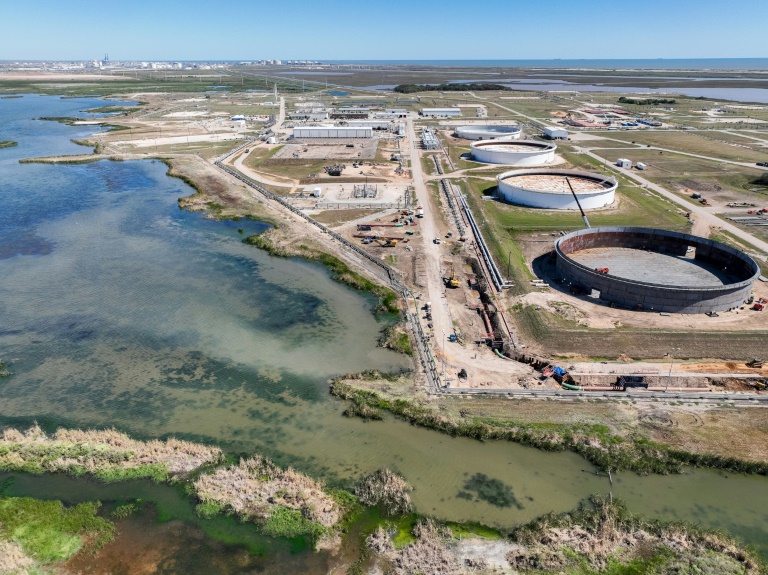
The US Energy Department announced Friday a plan to add oil back to the Strategic Petroleum Reserve (SPR) after a historically large release undertaken by the Biden administration.

The policy marks a significant shift after President Biden authorized the biggest-ever release earlier this year following Russia’s invasion of Ukraine, which sent oil prices to $120 a barrel.

The plan represents “an opportunity to secure a good deal for American taxpayers by repurchasing oil at a lower price than the $96 per barrel average price it was sold for, as well as to strengthen energy security,” the Department of Energy (DOE) said in a news release. 

The agency said it will buy up to three million barrels of oil under a pilot program designed to attract sellers who can lock in prices.

The SPR currently holds 382 million barrels of crude, down some 216 million barrels from its level before September 2021.

A Biden official said in October that the administration planned to purchase oil to refill the reserve as soon as prices hit around $67-72 a barrel.

Crude prices have fallen significantly from their peak levels earlier in the year. On Friday, US benchmark West Texas Intermedia dropped 2.4 percent to $74.29 a barrel.

The DOE announcement noted that gasoline prices have dropped by more than $1.80 a gallon from their June 2022 apex and now stand at the cheapest level since September 2021.

Close Bitnami banner
Bitnami